Coumarin– and Dipicolylamine–Terpenoid Hybrids as Selective Carbonic Anhydrases IX and XII Inhibitors: Mechanistic Insights and Selective Anti-Cancer Potential

 ,
,  ,
,  ,
,  , ,
, ,  , ,
, ,  and
and 
Abstract
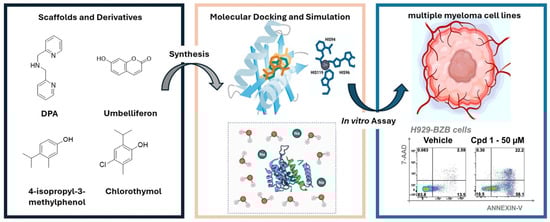
1. Introduction
2. Results and Discussion
2.1. Rationale of the Study
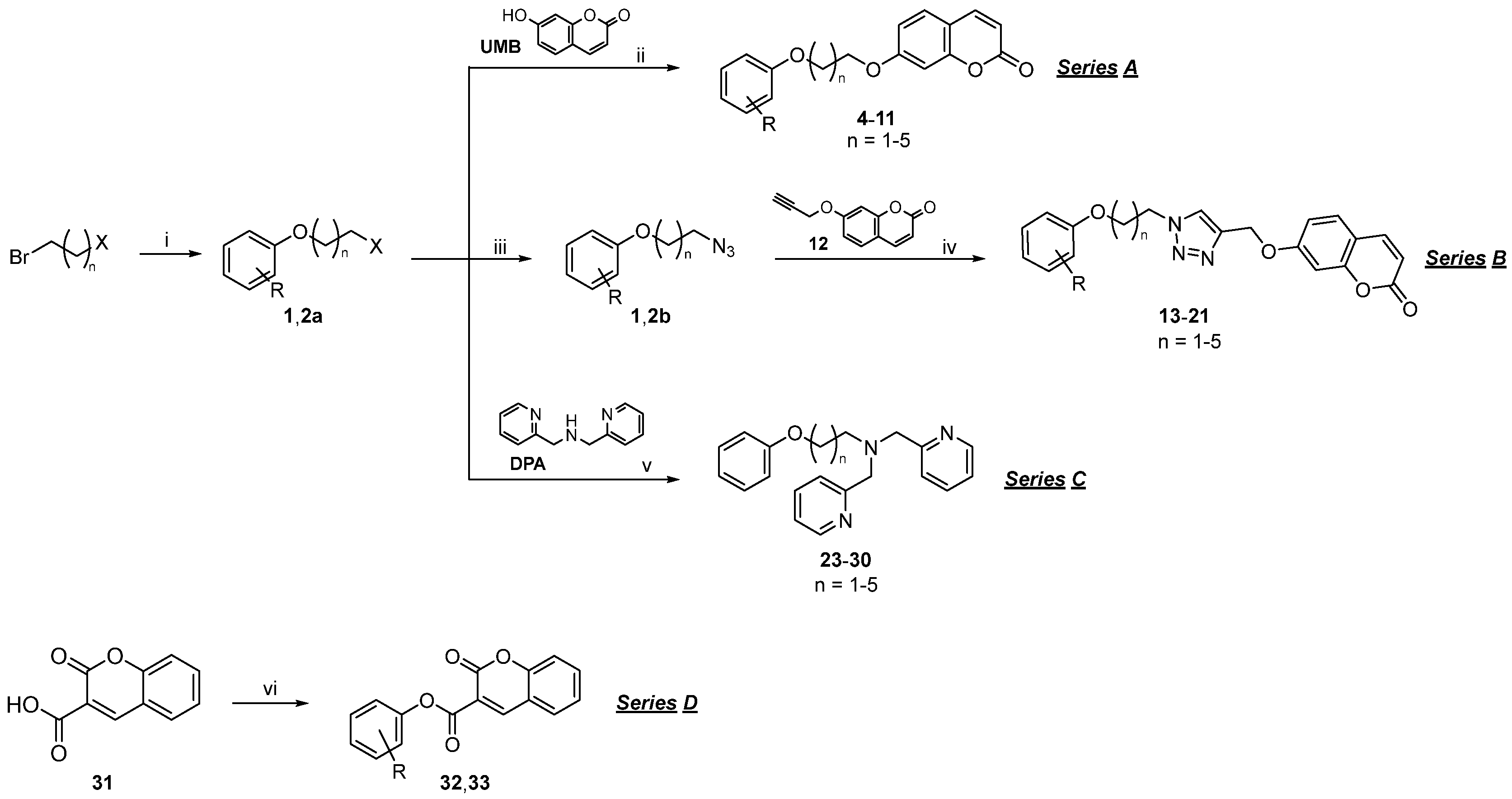
2.2. Synthesis of the New Derivatives
2.3. CA Inhibitory Assays
2.4. Structure-Activity Relationships
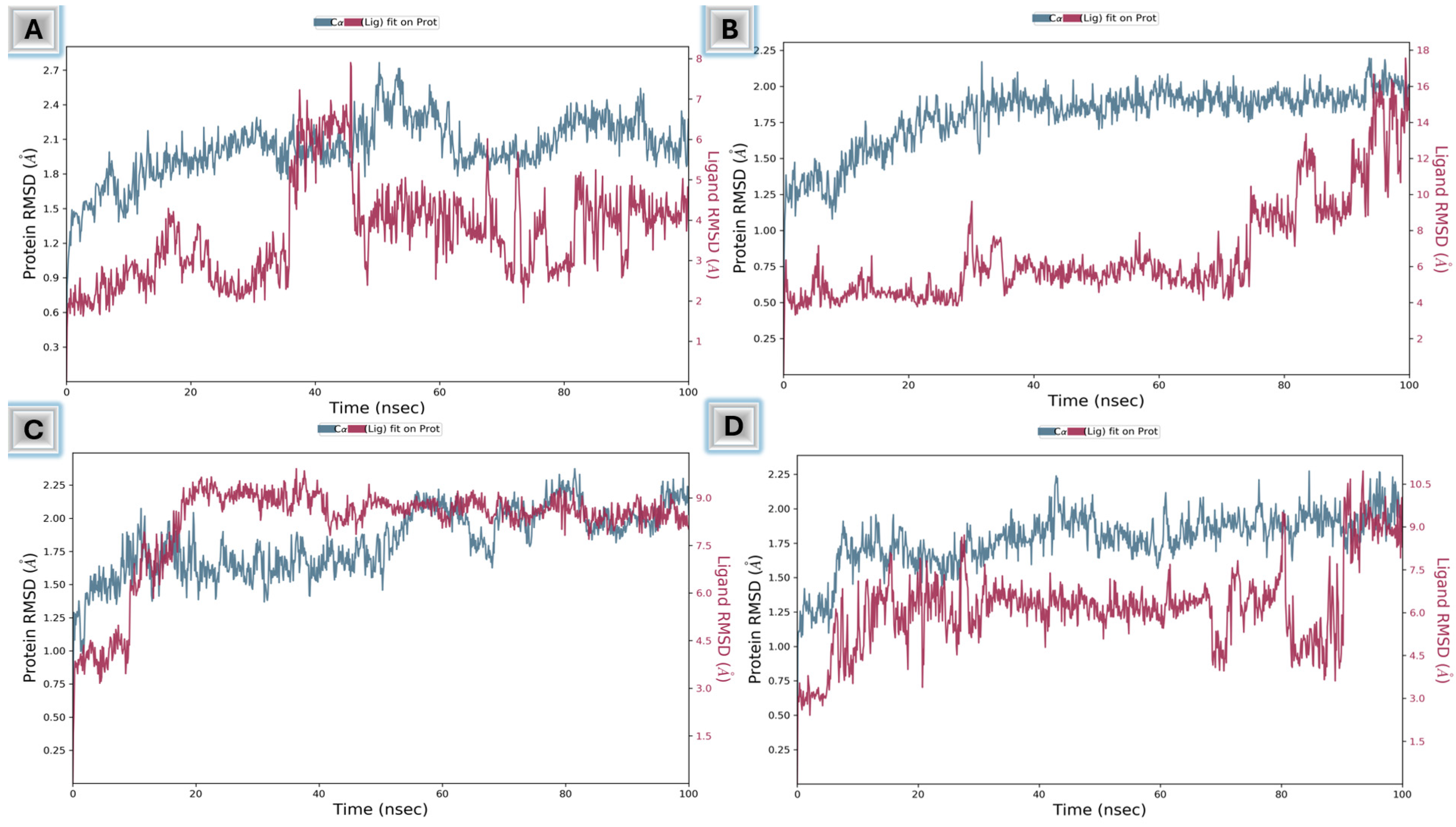
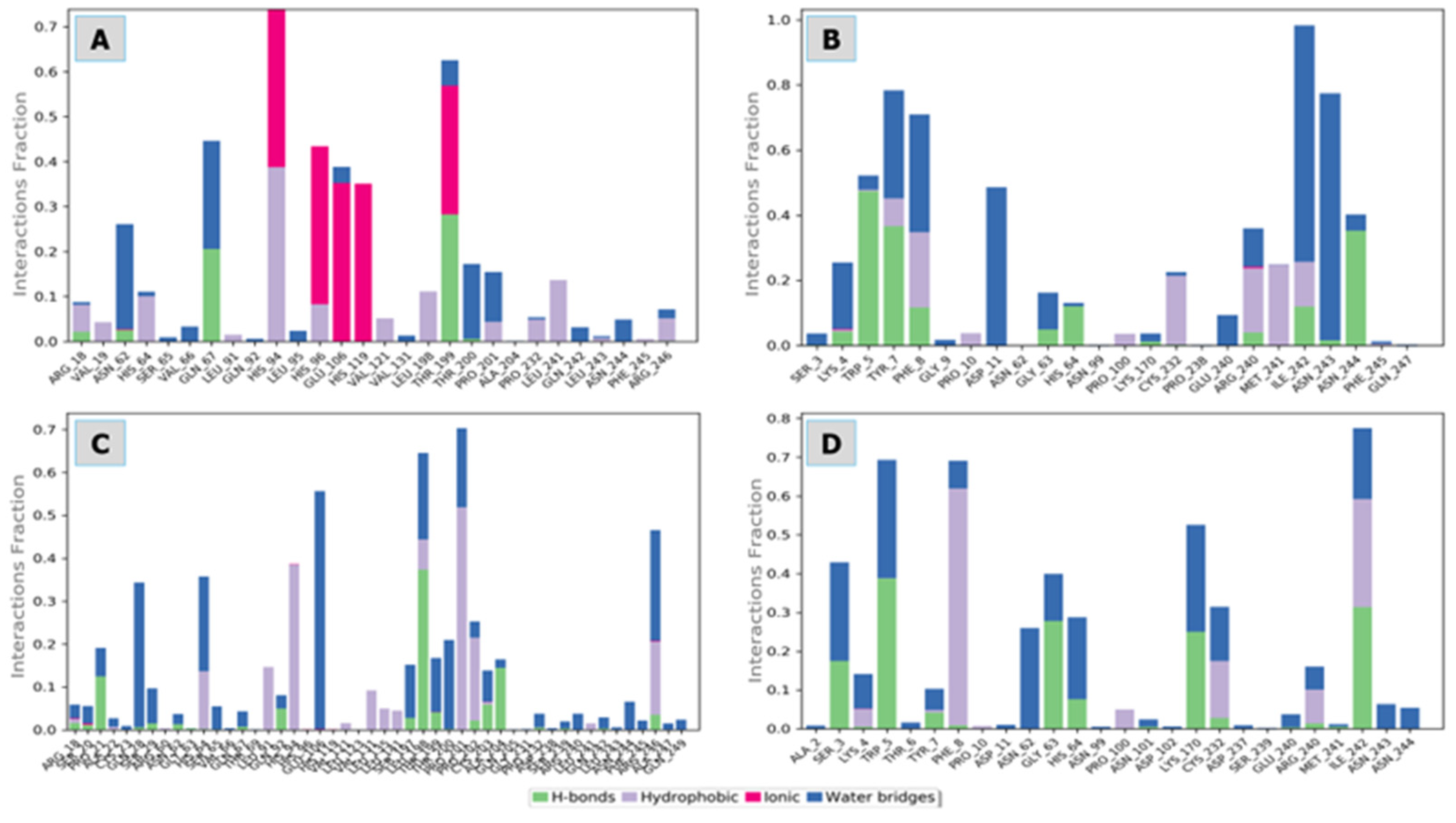
2.5. Molecular Docking and Dynamics
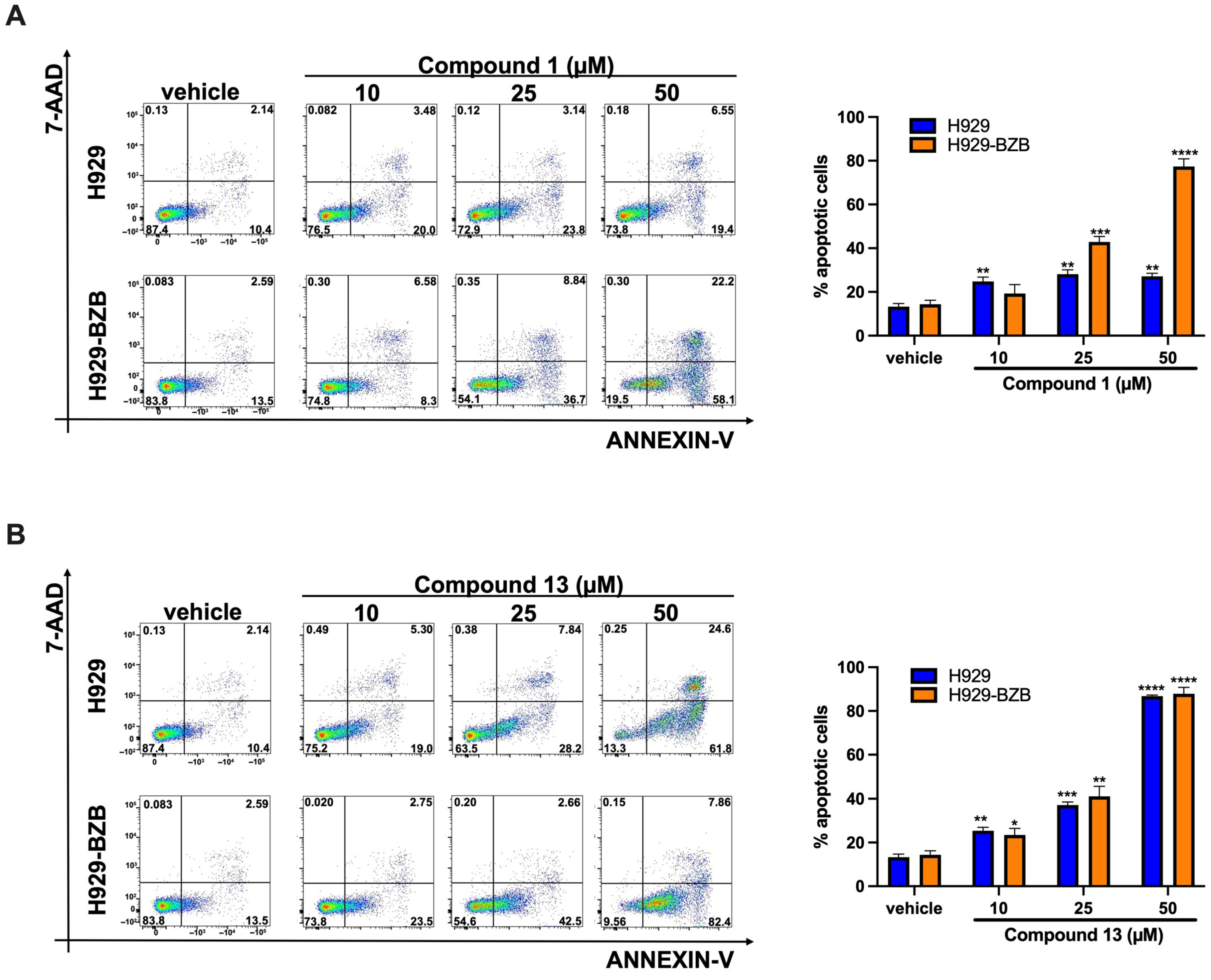
2.6. Cell-Based Assay on Multiple Myeloma (MM) Cells
2.7. Antioxidant Activity
3. Materials and Methods
3.1. Synthesis of the Compound Library
3.1.1. General Chemistry
3.1.2. Synthetic Procedure and Characterization Data
General Procedure for the Synthesis of Compounds 4–11 (Series A)
- 7-(2-(4-chloro-2-isopropyl-5-methylphenoxy)ethoxy)-2H-chromen-2-one (4). Pale yellow solid, m.p. 107–109 °C, 60% yield. 1H NMR (300 MHz, Chloroform-d) δ 1.02–1.35 (s, 6H, 2 × CH3 iPro), 2.32 (s, 3H, ArCH3), 3.11–3.32 (m, 1H, CH iPro), 4.35 (d, J = 18.4 Hz, 4H, OCH2CH2O), 6.26 (m, 1H, Ar), 6.72 (s, 1H, Ar), 6.87 (m, 2H, Ar), 7.14 (m, 1H, Ar), 7.38 (m, 1H, Ar), 7.64 (m, 1H, Ar). 13C NMR (75 MHz, Chloroform-d) δ 19.9, 22.5, 26.7, 26.7, 29.7, 66.9, 67.1, 101.7, 112.8, 112.9, 113.4, 113.4, 113.5, 114.4, 126.4, 126.8, 128.8, 133.7, 136.8, 143.2, 143.3, 154.2, 155.8, 161.0, 161.0, 161.8. Anal. calcd for C21H21ClO4: C, 67.65; H, 5.68. Found: C, 67.55; H, 5.70.
- 7-(2-(4-isopropyl-3-methylphenoxy)ethoxy)-2H-chromen-2-one (5). White solid, m.p. 153–155 °C, 72% yield. 1H NMR (300 MHz, Chloroform-d) δ 1.20 (d, J = 6.9 Hz, 6H, 2 × CH3 iPro), 2.31 (s, 3H ArCH3), 3.07 (p, J = 6.9 Hz, 1H CH iPro), 4.34 (m, 4H, OCH2CH2O), 6.25 (d, J = 9.5 Hz, 1H Ar), 6.72–6.81 (m, 2H, Ar), 6.84–6.94 (m, 2H, Ar), 7.16 (d, J = 8.2 Hz, 1H, Ar), 7.37 (dd, J = 8.3, 0.7 Hz, 1H, Ar), 7.63 (dd, J = 9.5, 0.6 Hz, 1H, Ar). 13C NMR (75 MHz, Chloroform-d) δ 19.5, 23.4, 28.6, 28.7, 66.1, 67.2, 101.6, 112.0, 112.8, 113.0, 113.3, 116.6, 125.7, 128.8, 136.5, 139.8, 143.4, 155.8, 156.0, 161.2, 161.9. Anal. calcd for C21H22O4: C, 74.54; H, 6.55. Found: C, 74.61; H, 6.59.
- 7-(3-(4-chloro-2-isopropyl-5-methylphenoxy)propoxy)-2H-chromen-2-one (6). White solid, m.p. 103–105 °C, 60% yield. 1H NMR (300 MHz, Chloroform-d) δ 1.16 (d, J = 6.9 Hz, 6H, 2 × CH3 iPro), 2.27–2.35 (m, 5H, overlapped OCH2CH2CH2O and ArCH3), 3.22 (hept, J = 6.9 Hz, 1H CH iPro), 4.13 (t, J = 5.9 Hz, 2H OCH2CH2CH2O), 4.23 (t, J = 6.1 Hz, 2H, OCH2CH2CH2O), 6.25 (d, J = 9.5 Hz, 1H, Ar), 6.70 (s, 1H, Ar), 6.81–6.89 (m, 2H, Ar), 7.12 (s, 1H, Ar), 7.36 (d, J = 9.2 Hz, 1H, Ar), 7.62 (d, J = 9.4 Hz, 1H, Ar). 13C NMR (75 MHz, Chloroform-d) δ 19.9, 22.5, 22.6, 26.7, 29.2, 64.4, 65.1, 101.4, 112.6, 112.8, 113.2, 113.9, 125.8, 126.6, 128.8, 133.6, 136.3, 143.3, 154.3, 155.9, 161.1, 162.0. Anal. calcd for C22H23ClO4: C, 68.30; H, 5.99. Found: C, 68.39; H, 5.95.
- 7-(3-(4-isopropyl-3-methylphenoxy)propoxy)-2H-chromen-2-one (7). Pale yellow solid, m.p. 80–82 °C, 78% yield. 1H NMR (300 MHz, Chloroform-d) δ 1.19 (d, J = 6.9 Hz, 6H, 2 × CH3 iPro), 2.22–2.32 (m, 5H, overlapped OCH2CH2CH2O and ArCH3), 3.06 (p, J = 6.9 Hz, 1H, CH iPro), 4.13 (t, J = 6.0 Hz, 2H, OCH2CH2CH2O), 4.21 (t, J = 6.1 Hz, 2H, OCH2CH2CH2O), 6.24 (d, J = 9.5 Hz, 1H, Ar), 6.69–6.75 (m, 2H, Ar), 6.81–6.86 (m, 2H, Ar), 7.14 (d, J = 8.3 Hz, 1H, Ar), 7.33–7.37 (m, 1H, Ar), 7.62 (dd, J = 9.5, 0.6 Hz, 1H, Ar). 13C NMR (75 MHz, Chloroform-d) δ 19.5, 19.5, 23.4, 28.6, 28.6, 29.1, 63.8, 65.1, 101.5, 111.8, 112.5, 112.8, 113.1, 116.4, 125.7, 128.7, 136.4, 139.4, 143.4, 155.9, 156.3, 161.2, 161.2, 162.1. Anal. calcd for C22H24O4: C, 74.98; H, 6.86. Found: C, 74.88; H, 6.89.
- 7-(4-(4-isopropyl-3-methylphenoxy)butoxy)-2H-chromen-2-one (8). White solid, m.p. 90–92 °C, 64% yield.1H NMR (300 MHz, Chloroform-d) δ 1.20 (d, J = 6.8 Hz, 6H, 2 × CH3 iPro), 1.88–2.09 (m, 4H, OCH2CH2CH2CH2O), 2.30 (s, 3H, ArCH3), 3.06 (hept, J = 6.8 Hz, 1H, CH iPro), 4.01 (t, J = 5.7 Hz, 2H, OCH2CH2CH2CH2O), 4.09 (t, J = 5.9 Hz, 2H, OCH2CH2CH2CH2O), 6.24 (d, J = 9.5 Hz, 1H, Ar), 6.65–6.77 (m, 2H, Ar), 6.77–6.88 (m, 2H, Ar), 7.13 (d, J = 8.3 Hz, 1H, Ar), 7.29–7.40 (m, 1H, Ar), 7.62 (d, J = 9.5 Hz, 1H, Ar). 13C NMR (75 MHz, Chloroform-d) δ 19.5, 23.4, 25.9, 26.0, 28.6, 67.1, 68.2, 101.4, 111.7, 112.5, 112.9, 113.0, 116.3, 125.6, 128.7, 136.4, 139.2, 143.4, 155.9, 156.5, 161.3, 162.3. Anal. calcd for C23H26O4: C, 75.38; H, 7.15. Found: C, 75.45; H, 7.19.
- 7-((5-(4-isopropyl-3-methylphenoxy)pentyl)oxy)-2H-chromen-2-one (9). Yellow oil, 59% yield. 1H NMR (300 MHz, Chloroform-d) δ 1.20 (d, J = 6.9 Hz, 6H, 2 × CH3 iPro), 1.67 (q, J = 8.1, 7.6 Hz, 2H, OCH2CH2CH2CH2CH2O), 1.87 (m, 4H, OCH2CH2CH2CH2CH2O), 2.31 (s, 3H, ArCH3), 3.07 (p, J = 6.9 Hz, 1H, CH iPro), 4.01 (dt, J = 22.5, 6.3 Hz, 4H, OCH2CH2CH2CH2O), 6.24 (dd, J = 9.5, 1.3 Hz, 1H, Ar), 6.71 (m, 2H, Ar), 6.83 (m, 2H, Ar), 7.13 (d, J = 8.2 Hz, 1H, Ar), 7.35 (d, J = 8.4 Hz, 1H, Ar), 7.62 (d, J = 9.4 Hz, 1H, Ar). 13C NMR (75 MHz, Chloroform-d) δ 19.5, 22.7, 23.4, 28.6, 28.8, 29.1, 29.7, 67.5, 68.4, 101.3, 111.7, 112.4, 113.0, 116.4, 125.6, 128.7, 136.3, 139.1, 143.4, 155.9, 156.6, 161.2, 161.3, 162.3. Anal. calcd for C24H28O4: C, 75.76; H, 7.42. Found: C, 75.82; H, 7.48.
- 7-((6-(4-chloro-2-isopropyl-5-methylphenoxy)hexyl)oxy)-2H-chromen-2-one (10). Pale yellow solid, m.p. 104–105 °C, 50% yield. 1H NMR (300 MHz, Chloroform-d) δ 1.17 (d, J = 6.9 Hz, 6H, 2 × CH3 iPro), 1.54–1.59 (m, 4H, OCH2CH2CH2CH2CH2CH2O), 1.76–1.91 (m, 4H, OCH2CH2CH2CH2CH2CH2O), 2.31 (s, 3H, ArCH3), 3.23 (hept, J = 6.9 Hz, 1H, CH iPro), 3.94 (t, J = 6.2 Hz, 2H, OCH2CH2CH2CH2CH2CH2O), 4.03 (t, J = 6.5 Hz, 2H, OCH2CH2CH2CH2CH2CH2O), 6.25 (d, J = 9.5 Hz, 1H, Ar), 6.67 (s, 1H, Ar), 6.76–6.87 (m, 2H, Ar), 7.11 (s, 1H, Ar), 7.36 (d, J = 8.4 Hz, 1H, Ar), 7.63 (d, J = 9.5 Hz, 1H, Ar). 13C NMR (75 MHz, Chloroform-d) δ 56.6, 111.4, 112.3, 123.2, 128.8, 130.2, 131.3, 149.3, 150.0, 189.9. Anal. calcd for C25H29ClO4: C, 70.00; H, 6.81. Found: C, 70.10; H, 6.87.
- 7-((6-(4-isopropyl-3-methylphenoxy)hexyl)oxy)-2H-chromen-2-one (11). Yellow oil, 59% yield. 1H NMR (300 MHz, Chloroform-d) δ 1.19 (d, J = 6.9 Hz, 6H, 2 × CH3 iPro), 1.54 (m, 4H, OCH2CH2CH2CH2CH2CH2O), 1.81 (m, 4H, OCH2CH2CH2CH2CH2CH2O), 2.30 (s, 3H, ArCH3), 3.06 (p, J = 6.9 Hz, 1H, CH iPro), 3.95 (t, J = 6.5 Hz, 2H, OCH2CH2CH2CH2CH2CH2O), 4.02 (t, J = 6.5 Hz, 2H, OCH2CH2CH2CH2CH2CH2O), 6.23 (dd, J = 9.5, 0.8 Hz, 1H, Ar), 6.67–6.74 (m, 1H, Ar m, 2H, Ar), 6.79– 6.84 (m, 2H, Ar), 7.12 (d, J = 8.3 Hz, 1H, Ar), 7.34 (d, J = 8.7 Hz, 1H, Ar), 7.62 (dd, J = 9.5, 0.8 Hz, 1H, Ar). 13C NMR (75 MHz, Chloroform-d) δ 19.5, 23.4, 25.8, 25.9, 28.6, 28.9, 29.3, 67.6, 68.5, 101.3, 111.7, 112.4, 112.9, 113.0, 116.4, 125.6, 128.7, 136.3, 139.0, 143.4, 155.9, 156.7, 161.3, 162.4. Anal. calcd for C25H30O4: C, 76.11; H, 7.67. Found: C, 76.17; H, 7.70.
General Procedure for the Synthesis of Compounds 13–21 (Series B)
- 7-((1-(2-(4-chloro-2-isopropyl-5-methylphenoxy)ethyl)-1H-1,2,3-triazol-4-yl)methoxy)-2H-chromen-2-one (13). White solid, m.p. 133–135 °C, 69% yield. 1H NMR (300 MHz, DMSO-d6) δ 0.92 (d, J = 6.9 Hz, 6H, 2 × CH3 iPro), 2.23 (s, 3H, ArCH3), 2.87–2.97 (m, 1H, CH iPro), 4.37 (t, J = 5.0 Hz, 2H, OCH2CH2N), 4.79 (t, J = 5.0 Hz, 2H, OCH2CH2N), 5.24 (s, 2H, OCH2), 6.27 (d, J = 9.5 Hz, 1H, Ar), 6.89–7.01 (m, 2H, Ar), 7.02–7.15 (m, 2H, Ar), 7.60 (d, J = 8.7 Hz, 1H), 7.93–8.00 (m, 1H, Ar), 8.30 (s, 1H, triazole). Anal. calcd for C24H24ClN3O4: C, 63.51; H, 5.33; N, 9.26. Found: C, 63.59; H, 5.38; N, 9.30.
- 7-((1-(3-(4-chloro-2-isopropyl-5-methylphenoxy)propyl)-1H-1,2,3-triazol-4-yl)methoxy)-2H-chromen-2-one (14). White solid, m.p. 104–106 °C, 58% yield. 1H NMR (300 MHz, DMSO-d6) δ 1.12 (d, J = 6.9 Hz, 6H, 2 × CH3 iPro), 2.23 (s, 3H, ArCH3), 2.30 (q, J = 6.4 Hz, 2H, OCH2CH2CH2N), 3.09–3.21 (m, 1H, CH iPro), 3.94 (t, J = 5.9 Hz, 2H, OCH2CH2CH2N), 4.54 (t, J = 6.9 Hz, 2H, OCH2CH2CH2N), 5.24 (s, 2H, OCH2), 6.28 (d, J = 9.5 Hz, 1H, Ar), 6.86 (d, J = 0.7 Hz, 1H, Ar), 6.98 (dd, J = 8.6, 2.4 Hz, 1H, Ar), 7.08–7.16 (m, 2H, Ar), 7.61 (d, J = 8.6 Hz, 1H, Ar), 7.97 (dd, J = 9.6, 0.6 Hz, 1H, Ar), 8.31 (s, 1H, triazole). 13C NMR (75 MHz, DMSO-d6) δ 19.8, 22.8, 26.5, 29.8, 47.2, 61.9, 65.2, 101.9, 113.0, 113.5, 114.8, 125.0, 125.3, 126.4, 130.0, 133.9, 136.4, 142.6, 144.9, 154.4. Anal. calcd for C25H26ClN3O4: C, 64.17; H, 5.60; N, 8.98. Found: C, 64.10; H, 5.64; N, 8.94.
- 7-((1-(3-(4-isopropyl-3-methylphenoxy)propyl)-1H-1,2,3-triazol-4-yl)methoxy)-2H-chromen-2-one (15). White solid, m.p. 98–100 °C, 62% yield. 1H NMR (300 MHz, Chloroform-d) δ 1.19 (d, J = 6.8 Hz, 6H, 2 × CH3 iPro), 2.30 (s, 3H, ArCH3), 2.33–2.45 (m, 2H, OCH2CH2CH2N), 3.06 (hept, J = 6.9 Hz, 1H, CH iPro), 3.93 (t, J = 5.9 Hz, 2H, OCH2CH2CH2N), 4.60 (t, J = 6.9 Hz, 2H, OCH2CH2CH2N), 5.24 (s, 2H, OCH2), 6.26 (d, J = 9.5 Hz, 1H, Ar), 6.65–6.71 (m, 2H, Ar), 6.89–6.94 (m, 2H, Ar), 7.14 (d, J = 8.0 Hz, 1H, Ar), 7.35–7.40 (m, 1H, Ar), 7.61–7.67 (m, 2H, overlapped Ar and triazole). 13C NMR (75 MHz, Chloroform-d) δ 19.5, 21.5, 23.4, 28.6, 29.9, 47.3, 62.3, 63.7, 102.1, 111.7, 112.7, 113.0, 113.5, 116.3, 123.6, 125.7, 128.9, 136.5, 139.7, 142.8, 143.3, 155.7, 155.9, 161.1, 161.3. Anal. calcd for C25H27N3O4: C, 69.27; H, 6.28; N, 9.69. Found: C, 69.37; H, 6.30; N, 9.65.
- 7-((1-(4-(4-chloro-2-isopropyl-5-methylphenoxy)butyl)-1H-1,2,3-triazol-4-yl)methoxy)-2H-chromen-2-one (16). White solid, m.p. 102–104 °C, 72% yield. 1H NMR (300 MHz, DMSO-d6) δ 1.09 (d, J = 6.9 Hz, 6H, 2 × CH3 iPro), 1.68 (p, J = 6.2 Hz, 2H, OCH2CH2CH2CH2N), 1.92–2.03 (m, 2H, OCH2CH2CH2CH2N), 2.24 (s, 4H, ArCH3), 3.11 (q, J = 6.9 Hz, 1H, CH iPro), 3.96 (t, J = 6.2 Hz, 2H, OCH2CH2CH2CH2N), 4.45 (t, J = 7.0 Hz, 2H, OCH2CH2CH2CH2N), 5.24 (s, 2H, OCH2), 6.28 (d, J = 9.5 Hz, 1H, Ar), 6.89 (s, 1H, Ar), 6.99 (dd, J = 8.6, 2.4 Hz, 1H, Ar), 7.07–7.16 (m, 2H, Ar), 7.62 (d, J = 8.7 Hz, 1H, Ar), 7.98 (dd, J = 9.6, 0.5 Hz, 1H, Ar), 8.29 (s, 1H, triazole). 13C NMR (75 MHz, Chloroform-d + DMSO-d6 due to solubility issues) δ 24.7, 27.3, 31.0, 31.2, 31.8, 54.7, 66.9, 71.9, 106.6, 117.7, 117.8, 118.7, 128.5, 130.0, 131.1, 134.0, 138.2, 140.9, 147.4, 148.6, 159.1, 160.3, 165.7, 166.1, 229.0. Anal. calcd for C26H28ClN3O4: C, 64.79; H, 5.86; N, 8.72. Found: C, 64.86; H, 5.90; N, 8.75.
- 7-((1-(4-(4-isopropyl-3-methylphenoxy)butyl)-1H-1,2,3-triazol-4-yl)methoxy)-2H-chromen-2-one (17). White solid, m.p. 108–109 °C, 76% yield. 1H NMR (300 MHz, Chloroform-d) δ 1.19 (d, J = 6.8 Hz, 6H, 2 × CH3 iPro), 1.80 (m, 2H, OCH2CH2CH2CH2N), 2.13 (, 2H, OCH2CH2CH2CH2N), 2.30 (s, 3H, ArCH3), 3.06 (hept, J = 6.9 Hz, 1H, CH iPro), 3.96 (t, J = 5.9 Hz, 2H, OCH2CH2CH2N), 4.47 (t, J = 7.2 Hz, 2H, OCH2CH2CH2N), 5.25 (s, 2H, OCH2), 6.25 (d, J = 9.5 Hz, 1H, Ar), 6.62–6.73 (m, 2H, Ar), 6.88–6.98 (m, 2H, Ar), 7.13 (d, J = 8.2 Hz, 1H, Ar), 7.31–7.42 (m, 1H, Ar), 7.62 (d, J = 9.5 Hz, 1H, Ar), 7.67 (s, 1H, triazole). 13C NMR (75 MHz, Chloroform-d) δ 19.5, 23.4, 26.2, 27.3, 28.6, 50.2, 62.4, 66.7, 102.2, 111.7, 112.7, 113.0, 113.5, 116.3, 122.9, 125.7, 128.9, 136.4, 139.4, 143.0, 143.3, 155.7, 156.3, 161.0, 161.3. Anal. calcd for C26H29N3O4: C, 69.78; H, 6.53; N, 9.39. Found: C, 69.70; H, 6.50; N, 9.34.
- 7-((1-(5-(4-chloro-2-isopropyl-5-methylphenoxy)pentyl)-1H-1,2,3-triazol-4-yl)methoxy)-2H-chromen-2-one (18). White solid, m.p. 106–108 °C, 83% yield. 1H NMR (300 MHz, DMSO-d6) δ 1.09 (d, J = 6.9 Hz, 6H, 2 × CH3 iPro), 1.31–1.47 (m, 2H, OCH2CH2CH2CH2CH2N), 1.75 (p, J = 6.8 Hz, 2H, OCH2CH2CH2CH2CH2N), 1.90 (p, J = 7.1 Hz, 2H, OCH2CH2CH2CH2CH2N), 2.25 (s, 3H, ArCH3), 3.11 (p, J = 6.9 Hz, 1H, CH iPro), 3.92 (t, J = 6.2 Hz, 2H, OCH2CH2CH2CH2CH2N), 4.40 (t, J = 7.0 Hz, 2H, OCH2CH2CH2CH2CH2N), 5.25 (s, 2H, OCH2), 6.29 (d, J = 9.5 Hz, 1H, Ar), 6.89 (s, 1H, Ar), 7.00 (dd, J = 8.6, 2.5 Hz, 1H, Ar), 7.07–7.18 (m, 2H, Ar), 7.63 (d, J = 8.6 Hz, 1H, Ar), 7.99 (d, J = 9.5 Hz, 1H, Ar), 8.28 (s, 1H, Ar).13C NMR (75 MHz, DMSO-d6) δ 20.0, 22.5, 23.3, 26.7, 28.7, 30.0, 50.4, 62.4, 67.6, 102.1, 112.7, 113.0, 113.5, 113.7, 122.7, 125.5, 126.5, 126.6, 128.9, 133.6, 136.3, 143.0, 143.3, 154.5, 155.7, 161.0, 161.3. Anal. calcd for C27H30ClN3O4: C, 65.38; H, 6.10; N, 8.47. Found: C, 65.45; H, 6.14; N, 8.42.
- 7-((1-(5-(4-isopropyl-3-methylphenoxy)pentyl)-1H-1,2,3-triazol-4-yl)methoxy)-2H-chromen-2-one (19). White solid, m.p. 109–110 °C, 57% yield. 1H NMR (300 MHz, Chloroform-d) δ 1.19 (d, J = 6.8 Hz, 6H, 2 × CH3 iPro), 1.46–1.60 (m, 2H, OCH2CH2CH2CH2CH2N), 1.73–1.88 (m, 2H, OCH2CH2CH2CH2CH2N), 2.01 (dt, J = 15.0, 7.5 Hz, 2H, OCH2CH2CH2CH2CH2N), 2.30 (s, 3H, ArCH3), 3.06 (hept, J = 6.9 Hz, 1H, CH iPro), 3.91 (t, J = 6.1 Hz, 2H, OCH2CH2CH2CH2CH2N), 4.40 (t, J = 7.2 Hz, 2H, OCH2CH2CH2CH2CH2N), 5.26 (d, J = 0.6 Hz, 2H, OCH2), 6.26 (d, J = 9.5 Hz, 1H, Ar), 6.62–6.73 (m, 2H, Ar), 6.89–6.98 (m, 2H, Ar), 7.12 (d, J = 8.2 Hz, 1H, Ar), 7.33–7.42 (m, 1H, Ar), 7.62 (d, J = 9.2 Hz, 2H, Ar). 13C NMR (75 MHz, Chloroform-d) δ 19.5, 23.3, 23.4, 28.6, 28.7, 30.0, 50.4, 62.4, 67.1, 102.2, 111.7, 112.7, 113.0, 113.5, 116.3, 122.8, 125.6, 128.9, 136.3, 139.2, 142.9, 143.3, 155.7, 156.5, 161.0, 161.3. Anal. calcd for C27H31N3O4: C, 70.26; H, 6.77; N, 9.10. Found: C, 70.32; H, 6.80; N, 9.14.
- 7-((1-(6-(4-chloro-2-isopropyl-5-methylphenoxy)hexyl)-1H-1,2,3-triazol-4-yl)methoxy)-2H-chromen-2-one (20). White solid, m.p. 107–109 °C, 60% yield. 1H NMR (300 MHz, Chloroform-d) δ 1.17 (d, J = 6.9 Hz, 6H, 2 × CH3 iPro), 1.33–1.48 (m, 2H, OCH2CH2CH2CH2CH2CH2N), 1.54 (m, 2H, OCH2CH2CH2CH2CH2CH2N), 1.71–1.86 (m, 2H, OCH2CH2CH2CH2CH2CH2N), 1.97 (m, 2H, OCH2CH2CH2CH2CH2CH2N), 2.30 (s, 3H, ArCH3), 3.21 (hept, J = 6.9 Hz, 1H, CH iPro), 3.90 (t, J = 6.2 Hz, 2H, OCH2CH2CH2CH2CH2CH2N), 4.39 (t, J = 7.2 Hz, 2H, OCH2CH2CH2CH2CH2CH2N), 5.25 (s, 2H, OCH2), 6.26 (d, J = 9.5 Hz, 1H, Ar), 6.64 (s, 1H, Ar), 6.88–6.98 (m, 2H, Ar), 7.11 (s, 1H, Ar), 7.33–7.43 (m, 1H, Ar), 7.58–7.67 (m, 2H, overlapped Ar and triazole). 1H NMR (75 MHz, Chloroform-d) δ 14.1, 20.0, 22.6, 25.6, 26.2, 26.7, 29.1, 30.2, 50.4, 62.4, 67.8, 102.1, 112.7, 113.0, 113.5, 113.7, 122.8, 125.4, 126.5, 128.9, 133.5, 136.3, 142.9, 143.3, 154.6, 155.7, 161.1, 161.3. Anal. calcd for C28H32ClN3O4: C, 65.94; H, 6.32; N, 8.24. Found: C, 65.99; H, 6.30; N, 8.28.
- 7-((1-(6-(4-isopropyl-3-methylphenoxy)hexyl)-1H-1,2,3-triazol-4-yl)methoxy)-2H-chromen-2-one (21). White solid, m.p. 101–102 °C, 64% yield 1H NMR (300 MHz, Chloroform-d) δ 1.17 (d, J = 7.2 Hz, 6H, 2 × CH3 iPro), 1.38–1.48 (m, 4H, OCH2CH2CH2CH2CH2CH2N), 1.62–1.73 (m, 2H, OCH2CH2CH2CH2CH2CH2N), 1.89–1.97 (m, 2H, OCH2CH2CH2CH2CH2CH2N), 2.29 (s, 3H, ArCH3), 2.98–3.07 (m, 1H, CH iPro), 3.83–3.91 (m, 2H, OCH2CH2CH2CH2CH2N), 4.30–4.39 (m, 2H, OCH2CH2CH2CH2CH2N), 5.24 (s, 2H, OCH2), 6.25 (d, J = 9.9 Hz, 1H, Ar), 6.62–6.69 (m, 2H, Ar), 6.87–6.93 (m, 2H, Ar), 7.06–7.13 (m, 1H, Ar), 7.03–7.38 (m, 1H, Ar), 7.56–7.63 (m, 2H, 1 from Ar and 1 from Triazole). 13C NMR (75 MHz, Chloroform-d) δ 19.5, 23.4, 25.5, 26.2, 28.6, 29.1, 30.2, 50.4, 62.4, 67.3, 102.1, 111.7, 112.7, 113.0, 113.5, 116.3, 122.8, 125.6, 128.9, 136.3, 139.1, 142.9, 143.3, 155.7, 156.6, 161.0, 161.3. Anal. calcd for C28H33N3O4: C, 70.71; H, 6.99; N, 8.84. Found: C, 70.77; H, 7.03; N, 8.88.
General Procedure for the Synthesis of Compounds 23–30 (Series C)
- 2-(4-isopropyl-3-methylphenoxy)-N,N-bis(pyridin-2-ylmethyl)ethan-1-amine (23). Green oil, 57% yield. 1H NMR (300 MHz, Chloroform-d) δ 1.18 (d, J = 6.9 Hz, 6H, 2 × CH3 iPro), 2.28 (s, 3H, ArCH3), 3.03 (m, 3H, overlapped OCH2CH2N and CH iPro), 3.96 (s, 4H, NCH2-pyr), 4.07 (t, J = 5.8 Hz, 2H, OCH2CH2N), 6.62–6.70 (m, 2H, Ar), 7.07–7.17 (m, 3H, Ar), 7.57 (d, J = 7.8 Hz, 2H, Ar), 7.60–7.68 (m, 2H, Ar), 8.52 (d, J = 4.9 Hz, 2H, Ar). 13C NMR (75 MHz, Chloroform-d) δ 19.5, 23.4, 28.6, 53.1, 60.9, 66.0, 111.8, 116.3, 122.0, 123.0, 125.5, 136.3, 136.5, 139.1, 149.0, 156.3, 159.6. Anal. calcd for C24H29N3O: C, 76.76; H, 7.78; N, 11.19. Found: C, 76.68; H, 7.74; N, 11.15.
- 3-(4-isopropyl-3-methylphenoxy)-N,N-bis(pyridin-2-ylmethyl)propan-1-amine (24). Brown oil, 55% yield. 1H NMR (300 MHz, Methanol-d4) δ 1.18 (dt, J = 6.7, 1.4 Hz, 6H, 2 × CH3 iPro), 1.95 (p, J = 6.3 Hz, 2H, OCH2CH2CH2N), 2.27 (s, 3H, ArCH3), 2.74 (t, J = 6.7 Hz, 2H, OCH2CH2CH2N), 3.08 (m, 1H, CH iPro), 3.84 (s, 4H, NCH2-pyr), 3.95 (t, J = 5.8 Hz, 2H, OCH2CH2CH2N), 6.48–6.66 (m, 2H, Ar), 7.08 (d, J = 8.4 Hz, 1H, Ar), 7.24 (m, 2H, Ar), 7.57 (dd, J = 7.9, 1.2 Hz, 2H, Ar), 7.69 (td, J = 7.6, 1.7 Hz, 2H, Ar), 8.33–8.47 (m, 2H, Ar). 13C NMR (75 MHz, Methanol-d4) δ 19.6, 23.9, 27.8, 29.7, 52.1, 61.1, 66.3, 112.9, 117.4, 123.8, 124.9, 126.4, 137.0, 138.7, 140.1, 149.4, 157.9, 160.2. Anal. calcd for C25H31N3O: C, 77.08; H, 8.02; N, 10.79. Found: C, 77.12; H, 8.05; N, 10.83.
- 4-(4-chloro-2-isopropyl-5-methylphenoxy)-N,N-bis(pyridin-2-ylmethyl)butan-1-amine (25). Brown oil, 50% yield. 1H NMR (300 MHz, Chloroform-d) δ 1.13 (d, J = 6.9 Hz, 6H, 2 × CH3 iPro), 1.69–1.80 (m, 4H, OCH2CH2CH2CH2N), 2.29 (s, 3H, ArCH3), 2.62 (t, J = 6.7 Hz, 2H, OCH2CH2CH2CH2N), 3.18 (hept, J = 6.9 Hz, 1H, CH iPro), 3.83 (m, 6H, overlapped OCH2CH2CH2CH2N and NCH2-pyr), 6.59 (s, 1H, Ar), 7.06–7.19 (m, 3H, Ar), 7.52 (dt, J = 7.9, 1.1 Hz, 2H, Ar), 7.63 (td, J = 7.6, 1.8 Hz, 2H, Ar), 8.51 (m, 2H, Ar). 13C NMR (75 MHz Chloroform-d) δ 20.0, 22.5, 23.8, 26.6, 27.1, 53.9, 60.4, 67.8, 113.7, 121.9, 122.9, 125.2, 126.4, 133.4, 136.3, 136.4, 149.0, 154.6, 159.8. Anal. calcd for C26H32ClN3O: C, 71.30; H, 7.36; N, 9.59. Found: C, 71.38; H, 7.39; N, 9.55.
- 4-(4-isopropyl-3-methylphenoxy)-N,N-bis(pyridin-2-ylmethyl)butan-1-amine (26). Brown oil, 70% yield. 1H NMR (300 MHz, Methanol-d4) δ 1.18 (dd, J = 6.9, 2.7 Hz, 6H, 2 × CH3 iPro), 1.71 (m, 4H, OCH2CH2CH2CH2N), 2.26 (d, J = 2.3 Hz, 3H, ArCH3), 2.60 (m, 2H, OCH2CH2CH2CH2N), 3.08 (m, 1H, CH iPro), 3.81 (m, 6H, overlapped OCH2CH2CH2CH2N and NCH2-pyr), 6.61 (m, 2H, Ar), 7.08 (dd, J = 8.4, 2.4 Hz, 1H, Ar), 7.27 (m, 2H, Ar), 7.62 (d, J = 7.9, 2H, Ar), 7.77 (tt, J = 7.7, 2.8 Hz, 2H, Ar), 8.42 (m, 2H, Ar). 13C NMR (75 MHz, Methanol-d4) δ 19.6, 23.9, 24.5, 28.0, 29.7, 55.1, 61.1, 68.4, 113.0, 117.3, 123.8, 124.9, 126.5, 137.1, 138.7, 140.0, 149.4, 158.0, 160.6. Anal. calcd for C26H33N3O: C, 77.38; H, 8.24; N, 10.41. Found: C, 77.44; H, 8.28; N, 10.45.
- 5-(4-chloro-2-isopropyl-5-methylphenoxy)-N,N-bis(pyridin-2-ylmethyl)pentan-1-amine (27). Brown oil, 48% yield. 1H NMR (300 MHz, Chloroform-d) δ 1.15 (d, J = 6.9 Hz, 6H, 2 × CH3 iPro), 1.41–1.52 (m, 2H, OCH2CH2CH2CH2CH2N), 1.58 (dt, J = 14.4, 7.2 Hz, 2H, OCH2CH2CH2CH2CH2N), 1.65–1.76 (m, 2H, OCH2CH2CH2CH2CH2N), 2.30 (s, 3H, ArCH3), 2.48–2.62 (m, 2H, OCH2CH2CH2CH2CH2N), 3.20 (p, J = 6.9 Hz, 1H, CH iPro), 3.81 (s, 4H, NCH2-Pyridine), 3.86 (t, J = 6.3 Hz, 2H, Ar), 6.63 (s, 1H, Ar), 7.08–7.17 (m, 2H, Ar), 7.53 (d, J = 7.9 Hz, 2H, Ar), 7.63 (td, J = 7.6, 1.8 Hz, 2H, Ar), 8.47–8.55 (m, 2H, Ar). 13C NMR (75 MHz, Chloroform-d) δ 20.2, 22.7, 24.0, 26.8, 26.9, 29.3, 54.4, 60.6, 68.1, 113.9, 122.0, 122.9, 125.4, 126.6, 133.6, 136.4, 136.5, 149.1, 154.8, 160.1. Anal. calcd for C27H34ClN3O: C, 71.74; H, 7.58; N, 9.30. Found: C, 71.79; H, 7.60; N, 9.35.
- 5-(4-isopropyl-3-methylphenoxy)-N,N-bis(pyridin-2-ylmethyl)pentan-1-amine (28). Brown oil, 60% yield. 1H NMR (300 MHz, Methanol-d4) δ 1.17 (d, J = 6.9 Hz, 6H, 2 × CH3 iPro), 1.35–1.50 (m, 2H, OCH2CH2CH2CH2CH2N), 1.54–1.69 (m, 4H, OCH2CH2CH2CH2CH2N), 2.26 (s, 3H, ArCH3), 2.51–2.62 (m, 2H, OCH2CH2CH2CH2CH2N), 3.07 (hept, J = 6.9 Hz, 1H, CH iPro), 3.80 (s, 4H, NCH2-pyr), 3.86 (t, J = 6.3 Hz, 2H, OCH2CH2CH2CH2CH2N),), 6.59–6.70 (m, 2H, Ar), 7.09 (d, J = 8.3 Hz, 1H, Ar), 7.26 (ddd, J = 7.5, 5.0, 1.3 Hz, 2H, Ar), 7.62 (dt, J = 7.9, 1.1 Hz, 2H. Ar), 7.76 (td, J = 7.7, 1.8 Hz, 2H, Ar), 8.41–8.43 (m, 2H, Ar). 13C NMR (75 MHz, Chloroform-d) δ 19.6, 23.6, 23.9, 28.8, 29.3, 29.9, 54.4, 60.5, 67.7, 111.9, 116.5, 122.2, 123.1, 125.7, 136.4, 139.1, 149.2, 156.9. Anal. calcd for C27H35N3O: C, 77.66; H, 8.45; N, 10.06. Found: C, 77.75; H, 8.48; N, 10.10.
- 6-(4-chloro-2-isopropyl-5-methylphenoxy)-N,N-bis(pyridin-2-ylmethyl)hexan-1-amine (29). Brown oil, 68% yield. 1H NMR (300 MHz, Methanol-d4) δ 1.14 (d, J = 6.9 Hz, 6H, 2 × CH3 iPro), 1.25–1.48 (m, 4H, OCH2CH2CH2CH2CH2CH2N), 1.47–1.65 (m, 2H, OCH2CH2CH2CH2CH2CH2N), 1.72 (dt, J = 7.9, 6.2 Hz, 2H, OCH2CH2CH2CH2CH2CH2N), 2.29 (s, 3H, ArCH3), 2.51–2.59 (m, 2H, OCH2CH2CH2CH2CH2CH2N), 3.19 (p, J = 6.9 Hz, 1H, CH iPro), 3.79 (s, 4H, NCH2-pyr), 3.90 (t, J = 6.2 Hz, 2H, OCH2CH2CH2CH2CH2CH2N), 6.76 (s, 1H, Ar), 7.06 (s, 1, Ar H), 7.26 (ddd, J = 7.5, 5.0, 1.3 Hz, 2H, Ar), 7.61 (d, J = 7.9 Hz, 2H, Ar), 7.77 (td, J = 7.7, 1.8 Hz, 2H, Ar), 8.42 (dd, J = 5.0, 1.8 Hz, 2H, Ar). 13C NMR (75 MHz, Chloroform-d) δ 17.9, 21.2, 21.9, 22.2, 63.3, 109.0, 117.2, 118.1, 121.7, 128.7, 131.6, 144.3. Anal. calcd for C28H36ClN3O: C, 72.16; H, 7.79; N, 9.02. Found: C, 72.25; H, 7.82; N, 9.00.
- 6-(4-isopropyl-3-methylphenoxy)-N,N-bis(pyridin-2-ylmethyl)hexan-1-amine (30). Brown oil, 55% yield. 1H NMR (300 MHz, Methanol-d4) δ 1.18 (d, J = 6.9 Hz, 6H, 2 × CH3 iPro), 1.26–1.43 (m, 4H, OCH2CH2CH2CH2CH2CH2N), 1.56 (p, J = 7.1 Hz, 2H, OCH2CH2CH2CH2CH2CH2N), 1.62–1.73 (m, 2H, OCH2CH2CH2CH2CH2CH2N), 2.27 (s, 3H, ArCH3), 2.56 (t, J = 7.4 Hz, 2H, OCH2CH2CH2CH2CH2CH2N), 3.07 (p, J = 6.9 Hz, 1H, CH iPro), 3.81 (s, 4H, NCH2-pyr), 3.86 (t, J = 6.4 Hz, 2H, OCH2CH2CH2CH2CH2CH2N), 6.60–6.71 (m, 2H, Ar), 7.09 (d, J = 8.2 Hz, 1H, Ar), 7.26 (ddd, J = 7.5, 5.0, 1.3 Hz, 2H, Ar), 7.62 (dt, J = 7.9, 1.2 Hz, 2H, Ar), 7.76 (td, J = 7.7, 1.8 Hz, 2H, Ar), 8.43 (dd, J = 5.0, 1.8 Hz, 2H, Ar). 13C NMR (75 MHz, Chloroform-d) δ 47.7, 52.0, 55.1, 56.0, 56.1, 57.9, 58.5, 83.8, 89.3, 96.9, 141.2, 145.5, 151.9, 153.0, 154.7, 165.3, 166.8, 168.2, 177.5, 186.3, 188.7. Anal. calcd for C28H37N3O: C, 77.92; H, 8.64; N, 9.74. Found: C, 77.96; H, 8.68; N, 9.79.
General Procedure for the Synthesis of Compounds 32 and 33 (Series D)
- 4-chloro-2-isopropyl-5-methylphenyl 2-oxo-2H-chromene-3-carboxylate (32). White solid, m.p. 115–117 °C, 56% yield. 1H NMR (300 MHz, Chloroform-d) δ 1.21 (d, J = 6.9 Hz, 6H, 2 × CH3 iPro), 2.34 (s, 3H, ArCH3), 3.09 (m, 1H, CH iPro), 7.02 (s, 1H, Ar), 7.23–7.46 (m, 3H, Ar), 7.66–7.68 (m, 2H, Ar), 8.72 (s, 1H, Ar). 13C NMR (75 MHz, Chloroform-d) δ 19.8, 22.6, 23.1, 27.4, 117.1, 117.5, 117.9, 124.5, 125.2, 127.4, 130.0, 132.3, 134.7, 135.1, 139.6, 146.2, 150.2, 155.6, 156.5, 162.1. Anal. calcd for C20H17ClO4: C, 67.33; H, 4.80. Found: C, 67.30; H, 4.84.
- 4-isopropyl-3-methylphenyl 2-oxo-2H-chromene-3-carboxylate (33). White solid, m.p. 128–130 °C, 88% yield. 1H NMR (300 MHz, Chloroform-d) δ 1.24 (m, 6H, 2 × CH3 iPro), 2.32–2.41 (m, 3H, ArCH3), 3.08–3.18 (m, 1H CH iPro), 7.04 (ddt, J = 8.6, 5.9, 3.5 Hz, 2H, Ar), 7.23–7.47 (m, 3H), Ar, 7.65–7.72 (m, 2H, Ar), 8.68–8.77 (m, 1H, Ar). 13C NMR (75 MHz, Chloroform-d) δ 19.5, 23.4, 25.1, 25.7, 29.1, 34.0, 117.0, 117.9, 118.0, 119.0, 122.9, 125.1, 125.9, 129.9, 134.9, 136.8, 145.0, 148.0, 149.8, 155.5, 156.6, 161.9. Anal. calcd for C20H18O4: C, 74.52; H, 5.63. Found: C, 74.59; H, 5.68.
3.2. CA Inhibition Assay
3.3. Molecular Docking and Dynamics Simulation Studies
3.4. Cell-Based Assays
3.4.1. Cell Cultures
3.4.2. Cell Viability and Apoptosis Assays
3.5. Antioxidant Assays
4. Conclusions
Supplementary Materials
Author Contributions
Funding
Institutional Review Board Statement
Informed Consent Statement
Data Availability Statement
Conflicts of Interest
References
- Luo, Q.; Smith, D.P. Global cancer burden: Progress, projections, and challenges. Lancet 2025, 406, 1536–1537. [Google Scholar] [CrossRef] [PubMed]
- Vishakha, S.; Navneesh, N.; Kurmi, B.D.; Gupta, G.D.; Verma, S.K.; Jain, A.; Patel, P. An Expedition on Synthetic Methodology of FDA-approved Anticancer Drugs (2018–2021). Anticancer Agents Med. Chem. 2024, 24, 590–626. [Google Scholar] [CrossRef] [PubMed]
- Roma-Rodrigues, C.; Mendes, R.; Baptista, P.V.; Fernandes, A.R. Targeting Tumor Microenvironment for Cancer Therapy. Int. J. Mol. Sci. 2019, 20, 840. [Google Scholar] [CrossRef]
- Angeli, A.; Carta, F.; Nocentini, A.; Winum, J.Y.; Zalubovskis, R.; Akdemir, A.; Onnis, V.; Eldehna, W.M.; Capasso, C.; Simone, G.; et al. Carbonic Anhydrase Inhibitors Targeting Metabolism and Tumor Microenvironment. Metabolites 2020, 10, 412. [Google Scholar] [CrossRef]
- Robat-Jazi, B.; Mahalleh, M.; Dashti, M.; Nejati, N.; Ahmadpour, M.; Alinejad, E.; Mohammadi, S.; Lorestani, P.; Hamidieh, A.A.; Habibi, M.A.; et al. A Systematic Review and Meta-analysis on the Safety and Efficacy of CAR T Cell Therapy Targeting GPRC5D in Patients with Multiple Myeloma: A New Insight in Cancer Immunotherapy. Anticancer Agents Med. Chem. 2025, 25, 1017–1028. [Google Scholar] [CrossRef] [PubMed]
- Camacho, X.; Cabrera, M.; Perroni, C.; Tassano, M.; Fernández, M.; Oddone, N.; Riva, E.; Gambini, J.P.; Cabral, P. Theranostic Potential of [177Lu]Lu-DOTA-Tocilizumab in Multiple Myeloma: A Preclinical Evaluation. Anticancer Agents Med. Chem. 2026. Epub ahead of print. [Google Scholar] [CrossRef] [PubMed]
- Radandish, M.; Mashhadi, N.; Aghayan, A.H.; Taghizadeh, M.; Salehianfard, S.; Yahyazadeh, S.; Vakili, O.; Igder, S. In-depth insight into tumor-infiltrating stromal cells linked to tertiary lymphoid structures and their prospective function in cancer immunotherapy. Exp. Hematol. Oncol. 2025, 14, 105. [Google Scholar] [CrossRef]
- Qian, Y.R.; Liu, P.; Xu, H.; Lv, Y.; Zhang, X.F.; Xiang, J.X. Microenvironment plays a critical role in modulating tumor cell dormancy: Current perspectives and potential treatment options. World J. Clin. Oncol. 2026, 17, 114298. [Google Scholar] [CrossRef]
- Liao, S.; Wu, G.; Xie, Z.; Lei, X.; Yang, X.; Huang, S.; Deng, X.; Wang, Z.; Tang, G. pH regulators and their inhibitors in tumor microenvironment. Eur. J. Med. Chem. 2024, 267, 116170. [Google Scholar] [CrossRef]
- Flinck, M.; Kramer, S.H.; Pedersen, S.F. Roles of pH in control of cell proliferation. Acta Physiol. 2018, 223, e13068. [Google Scholar] [CrossRef]
- Hunter, A.; Hendrikse, A.; Renan, M.; Abratt, R. Does the tumor microenvironment influence radiation-induced apoptosis? Apoptosis 2006, 11, 1727–1735. [Google Scholar] [CrossRef]
- Dhup, S.; Dadhich, R.K.; Porporato, P.E.; Sonveaux, P. Multiple biological activities of lactic acid in cancer: Influences on tumor growth, angiogenesis and metastasis. Curr. Pharm. Des. 2012, 18, 1319–1330. [Google Scholar] [CrossRef]
- Kato, Y.; Ozawa, S.; Miyamoto, C.; Maehata, Y.; Suzuki, A.; Maeda, T.; Baba, Y. Acidic extracellular microenvironment and cancer. Cancer Cell Int. 2013, 13, 89. [Google Scholar] [CrossRef] [PubMed]
- Yu, M.; Yang, D.; Chen, X.; Yang, Y.; Zhang, B.; Jiang, X.; Xing, L.; Yang, Y.; Sun, Y.; Li, N. Metabolic reprogramming in cancer: Dysregulation of glucose, lipid, and amino acid pathways and therapeutic opportunities. Mol. Biomed. 2026, 7, 25. [Google Scholar] [CrossRef] [PubMed]
- Kalinin, S.; Malkova, A.; Sharonova, T.; Sharoyko, V.; Bunev, A.; Supuran, C.T.; Krasavin, M. Carbonic Anhydrase IX Inhibitors as Candidates for Combination Therapy of Solid Tumors. Int. J. Mol. Sci. 2021, 22, 13405. [Google Scholar] [CrossRef]
- Yang, H.; Chen, R.; Zheng, X.; Luo, Y.; Yao, M.; Ke, F.; Guo, X.; Liu, X.; Liu, Q. Cooperative Role of Carbonic Anhydrase IX/XII in Driving Tumor Invasion and Metastasis: A Novel Targeted Therapeutic Strategy. Cells 2025, 14, 693. [Google Scholar] [CrossRef] [PubMed]
- Wykoff, C.C.; Beasley, N.J.; Watson, P.H.; Turner, K.J.; Pastorek, J.; Sibtain, A.; Wilson, G.D.; Turley, H.; Talks, K.L.; Maxwell, P.H.; et al. Hypoxia-inducible expression of tumor-associated carbonic anhydrases. Cancer Res. 2000, 60, 7075–7083. [Google Scholar]
- McDonald, P.C.; Dedhar, S. Carbonic anhydrase IX (CAIX) as a mediator of hypoxia-induced stress response in cancer cells. Subcell. Biochem. 2014, 75, 255–269. [Google Scholar] [CrossRef]
- Gastelum, G.; Kraut, J.; Veena, M.; Baibussinov, A.; Lamb, C.; Lyons, K.; Chang, E.Y.; Frost, P. Acidification of intracellular pH in MM tumor cells overcomes resistance to hypoxia-mediated apoptosis in vitro and in vivo. Front. Oncol. 2023, 13, 1268421. [Google Scholar] [CrossRef]
- Filippi, I.; Saltarella, I.; Aldinucci, C.; Carraro, F.; Ria, R.; Vacca, A.; Naldini, A. Different Adaptive Responses to Hypoxia in Normal and Multiple Myeloma Endothelial Cells. Cell. Physiol. Biochem. 2018, 46, 203–212. [Google Scholar] [CrossRef]
- Melfi, F.; D’Agostino, I.; Carradori, S.; Carta, F.; Angeli, A.; Costa, G.; Renzi, G.; Čikoš, A.; Vullo, D.; Rešetar, J.; et al. O-derivatization of natural tropolone and β-thujaplicin leading to effective inhibitors of human carbonic anhydrases IX and XII. Eur. J. Med. Chem. 2025, 290, 117552. [Google Scholar] [CrossRef]
- Martin, S.K.; Diamond, P.; Gronthos, S.; Peet, D.J.; Zannettino, A.C. The emerging role of hypoxia, HIF-1 and HIF-2 in multiple myeloma. Leukemia 2011, 25, 1533–1542. [Google Scholar] [CrossRef] [PubMed]
- Alipoor, S.D.; Shrestha, M.; Liu, A.; Chang, H. Deciphering epigenetic crosstalk in multiple myeloma pathogenesis and treatment. Clin. Epigenetics 2026. Epub ahead of printing. [Google Scholar] [CrossRef] [PubMed]
- Hu, A.; Chen, H.; Liang, J.; Liu, C.; Li, F.; Mu, C. Cell-based therapeutics for the treatment of hematologic diseases inside the bone marrow. J. Control. Release 2021, 339, 1–13. [Google Scholar] [CrossRef] [PubMed]
- Paradzik, T.; Bandini, C.; Mereu, E.; Labrador, M.; Taiana, E.; Amodio, N.; Neri, A.; Piva, R. The Landscape of Signaling Pathways and Proteasome Inhibitors Combinations in Multiple Myeloma. Cancers 2021, 13, 1235. [Google Scholar] [CrossRef]
- Bilski, R.; Kupczyk, D.; Kaczorowska-Bilska, K.; Tkaczenko, H.; Kurhaluk, N.; Kosmalski, T.; Słomka, A.; Studzińska, R. Oxidative Stress in Multiple Myeloma: Pathogenic Mechanisms, Biomarkers, and Redox-Targeted Therapeutic Strategies. Int. J. Mol. Sci. 2026, 27, 3001. [Google Scholar] [CrossRef]
- Ikeda, S.; Tagawa, H. Impact of hypoxia on the pathogenesis and therapy resistance in multiple myeloma. Cancer Sci. 2021, 112, 3995–4004. [Google Scholar] [CrossRef]
- Muz, B.; de la Puente, P.; Azab, F.; Luderer, M.; Azab, A.K. Hypoxia promotes stem cell-like phenotype in multiple myeloma cells. Blood Cancer J. 2014, 4, e262. [Google Scholar] [CrossRef]
- Tiwari, A.; Trivedi, R.; Lin, S.Y. Tumor microenvironment: Barrier or opportunity towards effective cancer therapy. J. Biomed. Sci. 2022, 29, 83. [Google Scholar] [CrossRef]
- De Raeve, H.R.; Vermeulen, P.B.; Vanderkerken, K.; Harris, A.L.; Van Marck, E. Microvessel density, endothelial-cell proliferation and carbonic anhydrase IX expression in haematological malignancies, bone-marrow metastases and monoclonal gammopathy of undetermined significance. Virchows Arch. 2004, 445, 27–35. [Google Scholar] [CrossRef]
- Petrilla, C.; Galloway, J.; Kudalkar, R.; Ismael, A.; Cottini, F. Understanding DNA Damage Response and DNA Repair in Multiple Myeloma. Cancers 2023, 15, 4155. [Google Scholar] [CrossRef]
- Caillot, M.; Dakik, H.; Mazurier, F.; Sola, B. Targeting Reactive Oxygen Species Metabolism to Induce Myeloma Cell Death. Cancers 2021, 13, 2411. [Google Scholar] [CrossRef]
- Yen, C.H.; Hsu, C.M.; Hsiao, S.Y.; Hsiao, H.H. Pathogenic Mechanisms of Myeloma Bone Disease and Possible Roles for NRF2. Int. J. Mol. Sci. 2020, 21, 6723. [Google Scholar] [CrossRef] [PubMed]
- Xu, J.; Dong, X.; Dong, J.; Peng, Y.; Xing, M.; Chen, L.; Zhao, Q.; Chen, B. Leveraging diverse cellular stress patterns for predicting clinical outcomes and therapeutic responses in patients with multiple myeloma. J. Cell. Mol. Med. 2024, 28, e70054. [Google Scholar] [CrossRef]
- Liang, Q.; Zhang, L.; Huang, Q.; Lv, W.; Liang, Z.; Liu, S.; Nie, R.; Xia, Z.; Liang, Y.; Wang, Y. Oxidative Stress Score as a Simplified Surrogate for Prognostic Stratification and Therapeutic Decision-Making in Multiple Myeloma. Pharmaceuticals 2025, 18, 878. [Google Scholar] [CrossRef]
- Abe, K.; Ikeda, S.; Nara, M.; Kitadate, A.; Tagawa, H.; Takahashi, N. Hypoxia-induced oxidative stress promotes therapy resistance via upregulation of heme oxygenase-1 in multiple myeloma. Cancer Med. 2023, 12, 9709–9722. [Google Scholar] [CrossRef] [PubMed]
- Gastelum, G.; Veena, M.; Lyons, K.; Lamb, C.; Jacobs, N.; Yamada, A.; Baibussinov, A.; Sarafyan, M.; Shamis, R.; Kraut, J.; et al. Can Targeting Hypoxia-Mediated Acidification of the Bone Marrow Microenvironment Kill Myeloma Tumor Cells? Front. Oncol. 2021, 11, 703878. [Google Scholar] [CrossRef] [PubMed]
- Lin, Z.; Cheng, X.; Zheng, H. Umbelliferon: A review of its pharmacology, toxicity and pharmacokinetics. Inflammopharmacology 2023, 31, 1731–1750. [Google Scholar] [CrossRef]
- Lacy, A.; O’Kennedy, R. Studies on coumarins and coumarin-related compounds to determine their therapeutic role in the treatment of cancer. Curr. Pharm. Des. 2004, 10, 3797–3811. [Google Scholar] [CrossRef]
- Sharma, Y.; Kalra, S.; Vashisht, A.; Sharma, R. Coumarin-based Strategies for Breast Cancer: A Multifaceted Perspective. Mini Rev. Med. Chem. 2025, 25, 1395–1419. [Google Scholar] [CrossRef]
- Sharmah, H.; Ahmed, L.A.; Kemisetti, D.; Kumar, S.; Samanthula, K.S.; Panigrahy, U.P.; Ghosh, N.S. Current advances in 7-hydroxycoumarin derivatives as potential therapeutic agents for Alzheimer’s disease. Mol. Divers. 2026. Epub ahead of printing. [Google Scholar] [CrossRef] [PubMed]
- Singh, S.; Kaushik, N.; Paliwal, A.; Sengar, M.S.; Paliwal, D. Biological Activity and Therapeutic Potential of Coumarin Derivatives: A Comprehensive Review. Curr. Drug Discov. Technol. 2025, 22, e15701638374546. [Google Scholar] [CrossRef]
- Peter, S.; Sibali, L.L. Recent Developments on Coumarin Hybrids as Antimicrobial Agents. Antibiotics 2025, 14, 1226. [Google Scholar] [CrossRef]
- Chavez Alvarez, A.C.; Moreau, E. Coumarin-Based Prodrugs: Therapeutic Promise or Still Confined to Preclinical Exploration? Pharmaceutics 2026, 18, 341. [Google Scholar] [CrossRef] [PubMed]
- Moi, D.; Carradori, S.; Gallorini, M.; Mencarelli, N.; Deplano, A.; Angeli, A.; Vittorio, S.; Supuran, C.T.; Onnis, V. Investigation on Human Carbonic Anhydrase IX and XII Inhibitory Activity and A549 Antiproliferative Activity of a New Class of Coumarinamides. Pharmaceuticals 2025, 18, 372. [Google Scholar] [CrossRef] [PubMed]
- Redij, A.; Carradori, S.; Petreni, A.; Supuran, C.T.; Toraskar, M.P. Coumarin-pyrazoline Hybrids as Selective Inhibitors of the Tumor-associated Carbonic Anhydrase IX and XII. Anticancer Agents Med. Chem. 2023, 23, 1217–1223. [Google Scholar] [CrossRef]
- Melfi, F.; Mencarelli, N.; Carradori, S.; Gallorini, M.; Angeli, A.; Poli, G.; Cataldi, A.; D’Agostino, I.; Di Credico, A.; Di Baldassarre, A.; et al. Hybridization Approach Applied to Umbelliferon and Vanilloids toward New Inhibitors of Carbonic Anhydrases IX and XII with In Vitro Antiproliferative and Anti-inflammatory Activities. J. Med. Chem. 2026, 69, 1454–1472. [Google Scholar] [CrossRef]
- Rahman, F.; Wushur, I.; Malla, N.; Åstrand, O.A.H.; Rongved, P.; Winberg, J.O.; Sylte, I. Zinc-Chelating Compounds as Inhibitors of Human and Bacterial Zinc Metalloproteases. Molecules 2021, 27, 56. [Google Scholar] [CrossRef]
- Kildahl-Andersen, G.; Schnaars, C.; Prandina, A.; Radix, S.; Le Borgne, M.; Jordheim, L.P.; Gjøen, T.; Andresen, A.M.S.; Lauksund, S.; Fröhlich, C.; et al. Synthesis and biological evaluation of zinc chelating compounds as metallo-β-lactamase inhibitors. Med. Chem. Commun. 2019, 10, 528–537. [Google Scholar] [CrossRef]
- Singh, A.K.; Kumar, A.; Singh, H.; Sonawane, P.; Paliwal, H.; Thareja, S.; Pathak, P.; Grishina, M.; Jaremko, M.; Emwas, A.H.; et al. Concept of Hybrid Drugs and Recent Advancements in Anticancer Hybrids. Pharmaceuticals 2022, 15, 1071. [Google Scholar] [CrossRef]
- Deng, S.; Wen, X.; Wang, J. Recent Advances in the Linkers of Drug Conjugates. Curr. Med. Chem. 2025, 32, 9367–9386. [Google Scholar] [CrossRef]
- Mishra, K.B. 1,5-Disubstituted 1,2,3-triazoles: Molecular scaffolds for medicinal chemistry and biomolecular mimetics. Eur. J. Med. Chem. 2025, 291, 117614. [Google Scholar] [CrossRef]
- Khandelwal, R.; Vasava, M.; Abhirami, R.B.; Karsharma, M. Recent advances in triazole synthesis via click chemistry and their pharmacological applications: A review. Bioorg. Med. Chem. Lett. 2024, 112, 129927. [Google Scholar] [CrossRef] [PubMed]
- Herrera-Bravo, J.; Belén, L.H.; Reyes, M.E.; Silva, V.; Fuentealba, S.; Paz, C.; Loren, P.; Salazar, L.A.; Sharifi-Rad, J.; Calina, D. Thymol as adjuvant in oncology: Molecular mechanisms, therapeutic potentials, and prospects for integration in cancer management. Naunyn Schmiedebergs Arch. Pharmacol. 2024, 397, 8259–8284. [Google Scholar] [CrossRef]
- Noman, A.M.; Sultan, M.T.; Zafar, S.; Maaz, M.; Mazhar, A.; Hussain, M.; Imran, M.; Mujtaba, A.; Hussain, M.T.; Alsagaby, S.A.; et al. Thymol and Carvacrol: Molecular Mechanisms, Therapeutic Potential, and Synergy With Conventional Therapies in Cancer Management. Food Sci. Nutr. 2025, 13, e70936. [Google Scholar] [CrossRef]
- Patwa, N.; Singh, G.; Sharma, V.; Chaudhary, P.; Sharma, B.; Haque, S.; Yadav, V.; Satapathy, S.R.; Tuli, H.S. Targeting Gastrointestinal Cancers with Carvacrol: Mechanistic Insights and Therapeutic Potential. Biomolecules 2025, 15, 777. [Google Scholar] [CrossRef] [PubMed]
- Musmula, M.; Akkoc, S. Apoptotic effect of carvacrol on different cancer cells and its potential as an active medicine ingredient. J. Asian Nat. Prod. Res. 2026, 28, 617–634. [Google Scholar] [CrossRef] [PubMed]
- Kornicka, A.; Balewski, Ł.; Lahutta, M.; Kokoszka, J. Umbelliferone and Its Synthetic Derivatives as Suitable Molecules for the Development of Agents with Biological Activities: A Review of Their Pharmacological and Therapeutic Potential. Pharmaceuticals 2023, 16, 1732. [Google Scholar] [CrossRef]
- Chen, X.; Lim, C.S.; Lee, D.; Lee, S.; Park, S.J.; Kim, H.M.; Yoon, J. Two-photon fluorescence sensors for imaging NMDA receptors and monitoring release of Zn2+ from the presynaptic terminal. Biosens. Bioelectron. 2017, 91, 770–779. [Google Scholar] [CrossRef]
- Xu, H.; Wang, Z.; Li, Y.; Ma, S.; Hu, P.; Zhong, X. A quantum dot-based "off-on" fluorescent probe for biological detection of zinc ions. Analyst 2013, 138, 2181–2191. [Google Scholar] [CrossRef]
- Guan, Q.; Xing, S.; Wang, L.; Zhu, J.; Guo, C.; Xu, C.; Zhao, Q.; Wu, Y.; Chen, Y.; Sun, H. Triazoles in Medicinal Chemistry: Physicochemical Properties, Bioisosterism, and Application. J. Med. Chem. 2024, 67, 7788–7824. [Google Scholar] [CrossRef]
- Mizukami, Y.; Kakehi, Y.; Li, F.; Yamamoto, T.; Tajima, K.; Isono, T.; Satoh, T. Chemically Recyclable Unnatural (1→6)-Polysaccharides from Cellulose-Derived Levoglucosenone and Dihydrolevoglucosenone. ACS Macro Lett. 2024, 13, 252–259. [Google Scholar] [CrossRef] [PubMed]
- Citarella, A.; Amenta, A.; Passarella, D.; Micale, N. Cyrene: A Green Solvent for the Synthesis of Bioactive Molecules and Functional Biomaterials. Int. J. Mol. Sci. 2022, 23, 15960. [Google Scholar] [CrossRef] [PubMed]
- Camp, J.E. Bio-available Solvent Cyrene: Synthesis, Derivatization, and Applications. ChemSusChem 2018, 11, 3048–3055. [Google Scholar] [CrossRef] [PubMed]
- Kasana, S.; Nigam, V.; Singh, S.; Kurmi, B.D.; Patel, P. A New Insight into The Huisgen Reaction: Heterogeneous Copper Catalyzed Azide-Alkyne Cycloaddition for the Synthesis of 1,4-Disubstituted Triazole (From 2018-2023). Chem. Biodivers. 2024, 21, e202400109. [Google Scholar] [CrossRef]
- Munawar, S.; Zahoor, A.F.; Hussain, S.M.; Ahmad, S.; Mansha, A.; Parveen, B.; Ali, K.G.; Irfan, A. Steglich esterification: A versatile synthetic approach toward the synthesis of natural products, their analogues/derivatives. Heliyon 2023, 10, e23416. [Google Scholar] [CrossRef]
- Mahammad Ghouse, S.; Bahatam, K.; Angeli, A.; Pawar, G.; Chinchilli, K.K.; Yaddanapudi, V.M.; Mohammed, A.; Supuran, C.T.; Nanduri, S. Synthesis and biological evaluation of new 3-substituted coumarin derivatives as selective inhibitors of human carbonic anhydrase IX and XII. J. Enzym. Inhib. Med. Chem. 2023, 38, 2185760. [Google Scholar] [CrossRef]
- Saleem, B.A.A.; Qurtam, A.A.; Ahmed, M.; Al-Aouadi, R.F.A.; Alrikabi, A.A.A.; Hetta, H.F.; Bräse, S.; Alotaibi, G.; Alkhammash, A.; Farhan, S.M. Discovery of a Novel Coumarin/Thiazole Chalcone Hybrid as a Potent Dual Inhibitor of Tubulin and Carbonic Anhydrases IX and XII with Promising Anti-Proliferative Activity. Molecules 2026, 31, 917. [Google Scholar] [CrossRef]
- Satyo, L.; Amoako, D.G.; Somboro, A.M.; Sosibo, S.C.; Kumalo, H.M.; Mhlongo, N.N.; Khan, R.B. Molecular Insights Into Di(2-Picolyl) Amine-Induced Cytotoxicity and Apoptosis in Human Kidney (HEK293) Cells. Int. J. Toxicol. 2020, 39, 341–351. [Google Scholar] [CrossRef]
- Wang, J.; Meng, F.; Chen, Z.; He, Y.; Kim, J.S.; Parra, K.G.; Jiang, K.; Sargent, T.G.; Yeo, Y. Phosphatidylserine blockade by dipicolylamine-zinc enhances chemoimmunotherapy of B16F10 melanoma. J. Pharm. Sci. 2025, 114, 104065. [Google Scholar] [CrossRef]
- Liu, S.; Zhang, M.; Sun, X.; Wang, P.; Zhang, G.; Li, W. Application of Hypoxia-Activated Prodrugs in Tumor Therapy: Design Strategies and Perspectives. J. Med. Chem. 2025, 68, 22055–22094. [Google Scholar] [CrossRef]
- Maresca, A.; Temperini, C.; Vu, H.; Pham, N.B.; Poulsen, S.A.; Scozzafava, A.; Quinn, R.J.; Supuran, C.T. Non-zinc mediated inhibition of carbonic anhydrases: Coumarins are a new class of suicide inhibitors. J. Am. Chem. Soc. 2009, 131, 3057–3062. [Google Scholar] [CrossRef]
- Alhujaily, M.; Alahmari, M.; Asiri, A.; Shafie, A. Advances in Coumarin-Based Dual-Mode Probes for Bioimaging and Cytotoxicity Evaluation: A Review. Crit. Rev. Anal. Chem. 2026. Epub ahead of printing. [Google Scholar] [CrossRef]
- Leal, L.E.; Moreira, E.S.; Correia, B.L.; Bueno, P.S.A.; Comar, J.F.; de Sá-Nakanishi, A.B.; Cuman, R.K.N.; Bracht, A.; Bersani-Amado, C.A.; Bracht, L. Comparative study of the antioxidant and anti-inflammatory effects of the natural coumarins 1,2-benzopyrone, umbelliferone and esculetin: In silico, in vitro and in vivo analyses. Naunyn Schmiedebergs Arch. Pharmacol. 2024, 397, 173–187. [Google Scholar] [CrossRef] [PubMed]
- Delgado-Marín, L.; Sánchez-Borzone, M.; García, D.A. Neuroprotective effects of gabaergic phenols correlated with their pharmacological and antioxidant properties. Life Sci. 2017, 175, 11–15. [Google Scholar] [CrossRef]
- Allegra, A.; Petrarca, C.; Di Gioacchino, M.; Casciaro, M.; Musolino, C.; Gangemi, S. Modulation of Cellular Redox Parameters for Improving Therapeutic Responses in Multiple Myeloma. Antioxidants 2022, 11, 455. [Google Scholar] [CrossRef]
- Xiong, S.; Chng, W.J.; Zhou, J. Crosstalk between endoplasmic reticulum stress and oxidative stress: A dynamic duo in multiple myeloma. Cell. Mol. Life Sci. 2021, 78, 3883–3906. [Google Scholar] [CrossRef] [PubMed]
- Admas, S.; Teketelew, B.B.; Alemu, N.; Marelgn, L.; Gelaw, Y. The role of antioxidants in multiple myeloma: Diagnostic, prognostic, and therapeutic applications: A narrative review. Ther. Adv. Hematol. 2026, 17, 20406207261419810. [Google Scholar] [CrossRef]
- Pekarik, V.; Peskova, M.; Duben, J.; Remes, M.; Heger, Z. Direct fluorogenic detection of palladium and platinum organometallic complexes with proteins and nucleic acids in polyacrylamide gels. Sci. Rep. 2020, 10, 12344. [Google Scholar] [CrossRef]
- Khalifah, R.G. The carbon dioxide hydration activity of carbonic anhydrase. I. Stop flow kinetic studies on the native human isoenzymes B and C. J. Biol. Chem. 1971, 246, 2561–2573. [Google Scholar] [CrossRef] [PubMed]
- Paciotti, R.; Carradori, S.; Angeli, A.; D’Agostino, I.; Ferraroni, M.; Coletti, C.; Supuran, C.T. Unprecedented carbonic anhydrase inhibition mechanism: Targeting histidine 64 side chain through a halogen bond. Arch. Pharm. 2025, 358, e2400776. [Google Scholar] [CrossRef]
- Kazokaitė, J.; Niemans, R.; Dudutienė, V.; Becker, H.M.; Leitāns, J.; Zubrienė, A.; Baranauskienė, L.; Gondi, G.; Zeidler, R.; Matulienė, J.; et al. Novel fluorinated carbonic anhydrase IX inhibitors reduce hypoxia-induced acidification and clonogenic survival of cancer cells. Oncotarget 2018, 9, 26800–26816. [Google Scholar] [CrossRef] [PubMed]
- Whittington, D.A.; Waheed, A.; Ulmasov, B.; Shah, G.N.; Grubb, J.H.; Sly, W.S.; Christianson, D.W. Crystal structure of the dimeric extracellular domain of human carbonic anhydrase XII, a bitopic membrane protein overexpressed in certain cancer tumor cells. Proc. Natl. Acad. Sci. USA 2001, 98, 9545–9550. [Google Scholar] [CrossRef]
- Saravanan, V.; Chagaleti, B.K.; Packiapalavesam, S.D.; Kathiravan, M. Ligand based pharmacophore modelling and integrated computational approaches in the quest for small molecule inhibitors against hCA IX. RSC Adv. 2024, 14, 3346–3358. [Google Scholar] [CrossRef]
- Torcasio, R.; Gallo Cantafio, M.E.; Veneziano, C.; De Marco, C.; Ganino, L.; Valentino, I.; Occhiuzzi, M.A.; Perrotta, I.D.; Mancuso, T.; Conforti, F.; et al. Targeting of mitochondrial fission through natural flavanones elicits anti-myeloma activity. J. Transl. Med. 2024, 22, 208. [Google Scholar] [CrossRef]
- Cairone, F.; Cesa, S.; Arpante, I.; Di Simone, S.C.; Mendez, A.H.; Ferrante, C.; Menghini, L.; Filippi, A.; Fraschetti, C.; Zengin, G.; et al. Pomegranate Juices: Analytical and Bio-Toxicological Comparison of Pasteurization and High-Pressure Processing in the Development of Healthy Products. Foods 2025, 14, 315. [Google Scholar] [CrossRef]



| Compound | Structure | KI (nM) * | |||
|---|---|---|---|---|---|
| hCA I | hCA II | hCA IX | hCA XII | ||
| Chloro thymol 1 |  | 91,300 | 55,850 | 66,500 | 34,700 |
| 4-isopropyl-3-methylphenol 2 |  | >100,000 | >100,000 | 38,800 | 24,900 |
| Umbelliferon (UMB) 3 |  | >10,000 | >10,000 | 24.9 | 45.1 [47] |
| 4 |  | >100,000 | >100,000 | 30.4 | 85.8 |
| 5 | 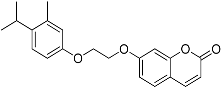 | >100,000 | >100,000 | 93.8 | 390.3 |
| 6 |  | >100,000 | >100,000 | 56.9 | 484.1 |
| 7 |  | >100,000 | >100,000 | 22.8 | 81.4 |
| 8 |  | >100,000 | >100,000 | 63.9 | 195.7 |
| 9 |  | >100,000 | >100,000 | 29.2 | 86.8 |
| 10 |  | >100,000 | >100,000 | 61.8 | 213.4 |
| 11 |  | >100,000 | >100,000 | 29.7 | 279.7 |
| 12 |  | >10,000 | >10,000 | 1350 | 730 [47] |
| 13 |  | >100,000 | >100,000 | 27.6 | 418.4 |
| 14 |  | >100,000 | >100,000 | 64.9 | 217.0 |
| 15 |  | >100,000 | >100,000 | 178.3 | 82.4 |
| 16 |  | >100,000 | >100,000 | 92.1 | 458.6 |
| 17 |  | >100,000 | >100,000 | 61.5 | 91.8 |
| 18 |  | >100,000 | >100,000 | 65.9 | 281.7 |
| 19 |  | >100,000 | >100,000 | 42.3 | 372.6 |
| 20 |  | >100,000 | >100,000 | 32.0 | 9.3 |
| 21 |  | >100,000 | >100,000 | 200.0 | 71.9 |
| 22 DPA |  | >100,000 | >100,000 | >100,000 | >100,000 |
| 23 |  | >100,000 | >100,000 | >100,000 | >100,000 |
| 24 |  | >100,000 | >100,000 | >100,000 | >100,000 |
| 25 |  | >100,000 | >100,000 | >100,000 | >100,000 |
| 26 |  | >100,000 | >100,000 | >100,000 | >100,000 |
| 27 |  | >100,000 | >100,000 | >100,000 | >100,000 |
| 28 |  | >100,000 | >100,000 | >100,000 | >100,000 |
| 29 | 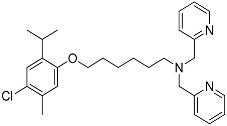 | >100,000 | >100,000 | >100,000 | >100,000 |
| 30 |  | >100,000 | >100,000 | >100,000 | >100,000 |
| 31 |  | 93,000 | 447,000 | 47,000 | 9000 [67] |
| 32 |  | >100,000 | >100,000 | 2295 | 4589 |
| 33 |  | >100,000 | >100,000 | 2934 | 6940 |
| Acetazolamide AAZ |  | 250.0 | 12.1 | 25.7 | 5.7 |
| Compound | hCA IX Binding Energy | hCA XII Binding Energy |
|---|---|---|
| 9(E) | −7.352 kcal/mol | −6.328 kcal/mol |
| 9(Z) | −7.345 kcal/mol | −5.959 kcal/mol |
| 20(E) | −7.353 kcal/mol | −4.741 kcal/mol |
| 20(Z) | −6.727 kcal/mol | −4.861 kcal/mol |
| Multiple Myeloma Cell Lines (IC50, µM) | ||||
|---|---|---|---|---|
| AMO | ABZB | H929 | H929-BZB | |
| 1 Chlorothymol | 14.9 ± 0.6 | 14.1 ± 4.4 | 9.8 ± 0.2 | 17.5 ± 0.2 |
| 2 4-isopropyl-3-methylphenol | 47.5 ± 5.1 | >100 | 40.9 ± 1.6 | 91.5 ± 1.4 |
| 3 (UMB) Umbelliferon | >200 | >100 | >200 | >200 |
| 7 | 76.9 ± 0.8 | 85.4 ± 5.2 | 57.3 ± 1.5 | 38.6 ± 4.5 |
| 9 | >200 | >100 | >100 | 70.0 ± 2.5 |
| 13 | 15.8 ± 6.1 | 58.6 ± 0.1 | 19.5 ± 4.1 | 27.5 ± 5.6 |
| 20 | >200 | >100 | >200 | >200 |
| AAZ | >200 | >100 | >200 | >200 |
| Compounds | DPPH (mg TE/g) | ABTS (mg TE/g) | CUPRAC (mg TE/g) | FRAP (mg TE/g) | Chelating (mg EDTAE/g) |
|---|---|---|---|---|---|
| 4 | 4.33 ± 0.13 de | 28.46 ± 0.63 j | 154.06 ± 0.71 i | 13.66 ± 0.49 kl | na |
| 5 | na | 18.04 ± 0.32 kl | 123.68 ± 1.76 l | 46.09 ± 2.13 hi | 6.62 ± 0.18 g |
| 6 | na | 16.49 ± 0.75 kl | 181.34 ± 0.96 d | 50.01 ± 3.29 ghi | na |
| 7 | 2.25 ± 0.14 fg | 28.67 ± 1.94 j | 181.25 ± 2.69 d | 59.71 ± 0.59 de | na |
| 8 | na | 13.93 ± 1.78 lm | 179.91 ± 0.65 de | 68.38 ± 3.74 c | 39.98 ± 0.15 c |
| 9 | 2.31 ± 0.39 fg | 27.64 ± 1.93 j | 143.48 ± 2.56 j | 19.41 ± 0.65 k | na |
| 10 | 2.47 ± 0.55 fg | 25.48 ± 2.17 j | 145.25 ± 2.08 j | 15.39 ± 0.75 kl | na |
| 11 | 1.49 ± 0.56 gh | 28.20 ± 2.36 j | 161.28 ± 0.43 h | 29.81 ± 1.56 j | na |
| 13 | na | 9.58 ± 1.03 mn | 85.79 ± 1.56 m | 28.53 ± 1.67 j | na |
| 14 | 0.54 ± 0.10 hi | 16.26 ± 1.61 kl | 144.41 ± 0.68 j | 56.97 ± 2.92 ef | na |
| 15 | 0.47 ± 0.01 hi | 14.51 ± 0.45 kl | 125.98 ± 0.29 l | 48.73 ± 1.63 ghi | na |
| 16 | 3.55 ± 0.90 ef | 41.27 ± 1.22 h | 76.95 ± 2.75 n | 6.52 ± 0.28 mn | na |
| 17 | na | 6.75 ± 0.04 no | 181.71 ± 1.14 d | 82.00 ± 4.52 ab | na |
| 18 | na | 7.97 ± 0.51 no | 164.35 ± 1.28 gh | 65.70 ± 2.22 cd | na |
| 19 | na | 5.58 ± 0.12 no | 170.72 ± 0.22 fg | 53.95 ± 5.30 efg | na |
| 20 | na | 17.87 ± 0.13 kl | 185.96 ± 1.95 d | 77.60 ± 0.10 b | 8.69 ± 0.50 fg |
| 21 | na | 3.50 ± 0.38 o | 169.99 ± 2.90 fg | 68.59 ± 1.47 c | na |
| 23 | 13.12 ± 1.15 a | 92.44 ± 0.76 a | 286.38 ± 2.99 a | 85.76 ± 0.14 a | 48.12 ± 3.33 a |
| 24 | 11.39 ± 1.04 b | 82.75 ± 0.74 b | 251.48 ± 2.82 b | 51.23 ± 0.03 fgh | 38.75 ± 2.37 c |
| 25 | 12.63 ± 0.48 ab | 54.11 ± 1.71 f | 135.20 ± 4.14 k | 44.93 ± 0.04 i | 9.00 ± 0.70 fg |
| 26 | 9.45 ± 0.65 c | 68.10 ± 2.01 d | 56.19 ± 0.48 o | 16.58 ± 0.01 kl | 44.79 ± 3.03 b |
| 27 | 9.46 ± 0.86 c | 62.27 ± 0.99 e | 83.76 ± 0.50 mn | 13.44 ± 0.40 kl | 42.61 ± 0.50 b |
| 28 | 3.93 ± 0.08 e | 47.37 ± 0.25 g | 36.51 ± 1.89 p | 12.10 ± 0.05 lm | 19.14 ± 2.27 e |
| 29 | na | 46.39 ± 4.14 g | 14.79 ± 2.75 q | 4.58 ± 0.01 n | 32.97 ± 0.34 d |
| 30 | 4.76 ± 0.11 de | 36.14 ± 0.80 i | 41.05 ± 0.02 p | 10.33 ± 0.19 lmn | na |
| 32 | 5.56 ± 0.21 d | 75.17 ± 0.28 c | 228.15 ± 4.74 c | 50.24 ± 1.35 ghi | 9.56 ± 0.68 f |
| 33 | na | 18.78 ± 0.67 k | 174.06 ± 2.94 ef | 69.43 ± 0.10 c | na |
Disclaimer/Publisher’s Note: The statements, opinions and data contained in all publications are solely those of the individual author(s) and contributor(s) and not of MDPI and/or the editor(s). MDPI and/or the editor(s) disclaim responsibility for any injury to people or property resulting from any ideas, methods, instructions or products referred to in the content. |
© 2026 by the authors. Licensee MDPI, Basel, Switzerland. This article is an open access article distributed under the terms and conditions of the Creative Commons Attribution (CC BY) license.
Share and Cite
Saravanan, V.; Angeli, A.; Melfi, F.; Amodio, N.; Valentino, I.; Gentile, M.; D’Agostino, I.; Muthukumaradoss, K.; Zengin, G.; Moi, D.; et al. Coumarin– and Dipicolylamine–Terpenoid Hybrids as Selective Carbonic Anhydrases IX and XII Inhibitors: Mechanistic Insights and Selective Anti-Cancer Potential. Pharmaceuticals 2026, 19, 717. https://doi.org/10.3390/ph19050717
Saravanan V, Angeli A, Melfi F, Amodio N, Valentino I, Gentile M, D’Agostino I, Muthukumaradoss K, Zengin G, Moi D, et al. Coumarin– and Dipicolylamine–Terpenoid Hybrids as Selective Carbonic Anhydrases IX and XII Inhibitors: Mechanistic Insights and Selective Anti-Cancer Potential. Pharmaceuticals. 2026; 19(5):717. https://doi.org/10.3390/ph19050717
Chicago/Turabian StyleSaravanan, Venkatesan, Andrea Angeli, Francesco Melfi, Nicola Amodio, Ilenia Valentino, Massimo Gentile, Ilaria D’Agostino, Kathiravan Muthukumaradoss, Gokhan Zengin, Davide Moi, and et al. 2026. "Coumarin– and Dipicolylamine–Terpenoid Hybrids as Selective Carbonic Anhydrases IX and XII Inhibitors: Mechanistic Insights and Selective Anti-Cancer Potential" Pharmaceuticals 19, no. 5: 717. https://doi.org/10.3390/ph19050717
APA StyleSaravanan, V., Angeli, A., Melfi, F., Amodio, N., Valentino, I., Gentile, M., D’Agostino, I., Muthukumaradoss, K., Zengin, G., Moi, D., Simsek, R., Supuran, C. T., & Carradori, S. (2026). Coumarin– and Dipicolylamine–Terpenoid Hybrids as Selective Carbonic Anhydrases IX and XII Inhibitors: Mechanistic Insights and Selective Anti-Cancer Potential. Pharmaceuticals, 19(5), 717. https://doi.org/10.3390/ph19050717