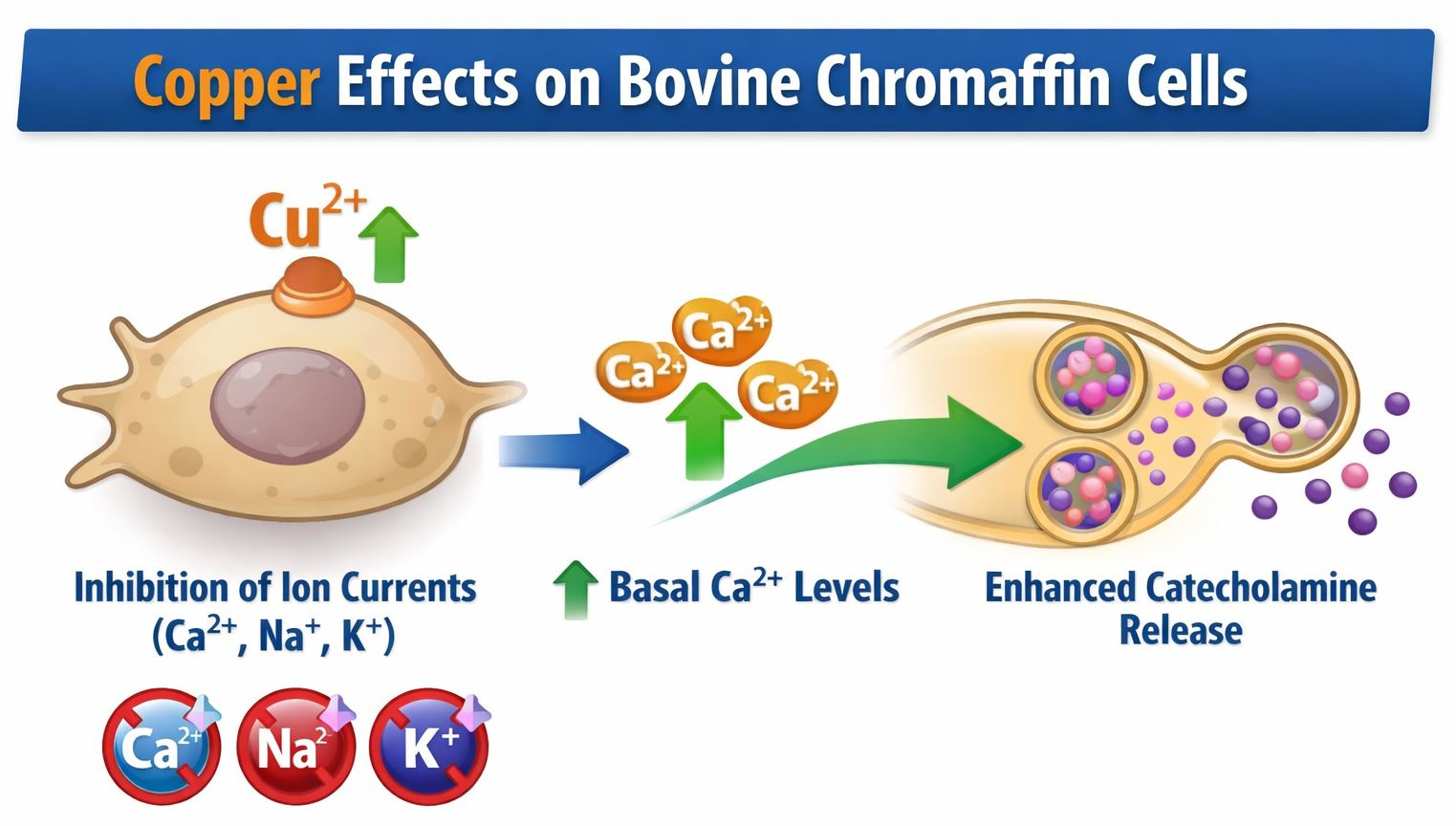
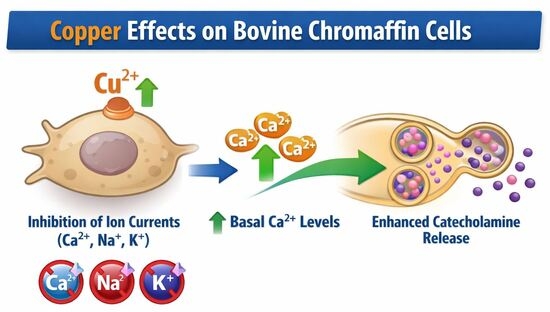
Copper (Cu2+) Inhibits Voltage-Dependent Ionic Currents While Enhancing Neurotransmitter Release in Bovine Chromaffin Cells
 , , and
Abstract
1. Introduction
2. Results
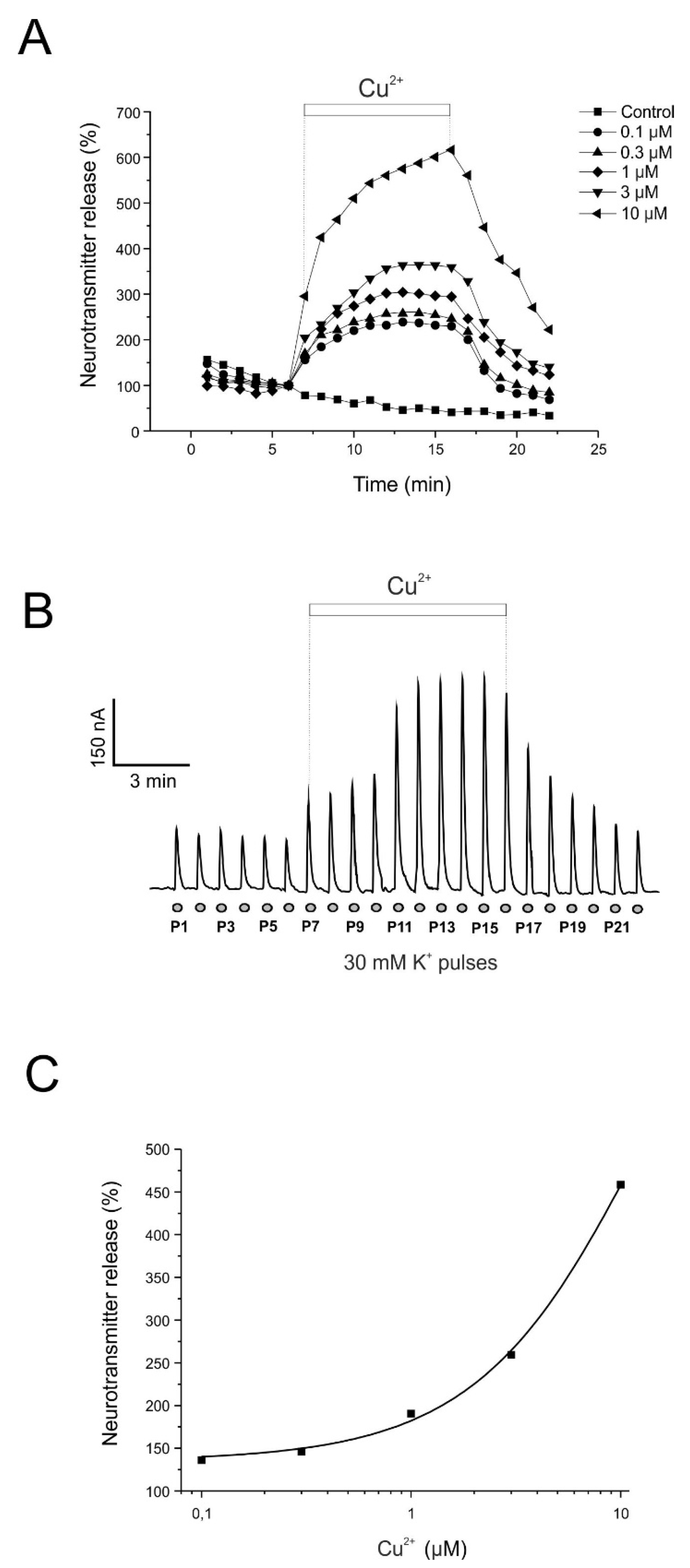
2.1. Cu2+ Increases Neurotransmitter Release
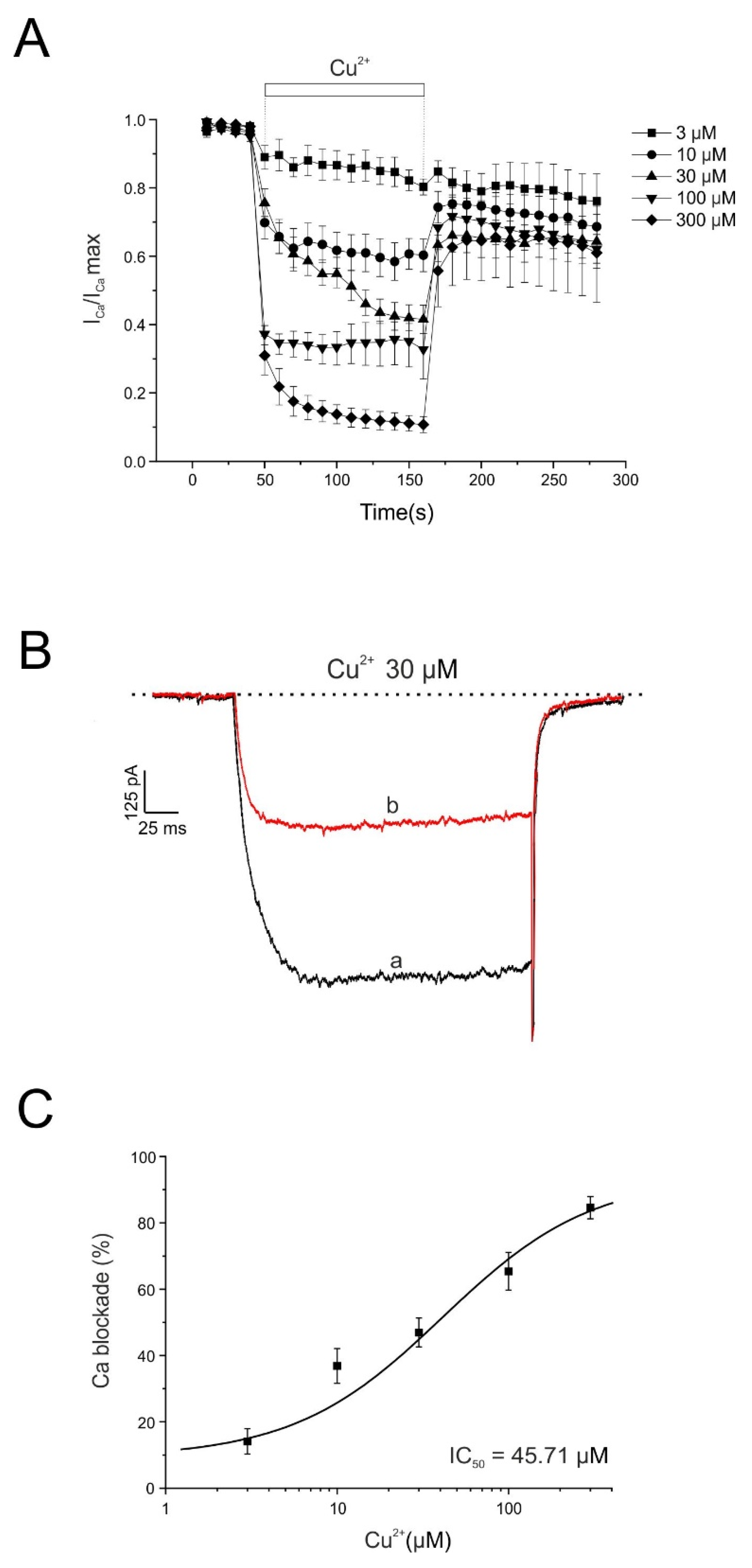
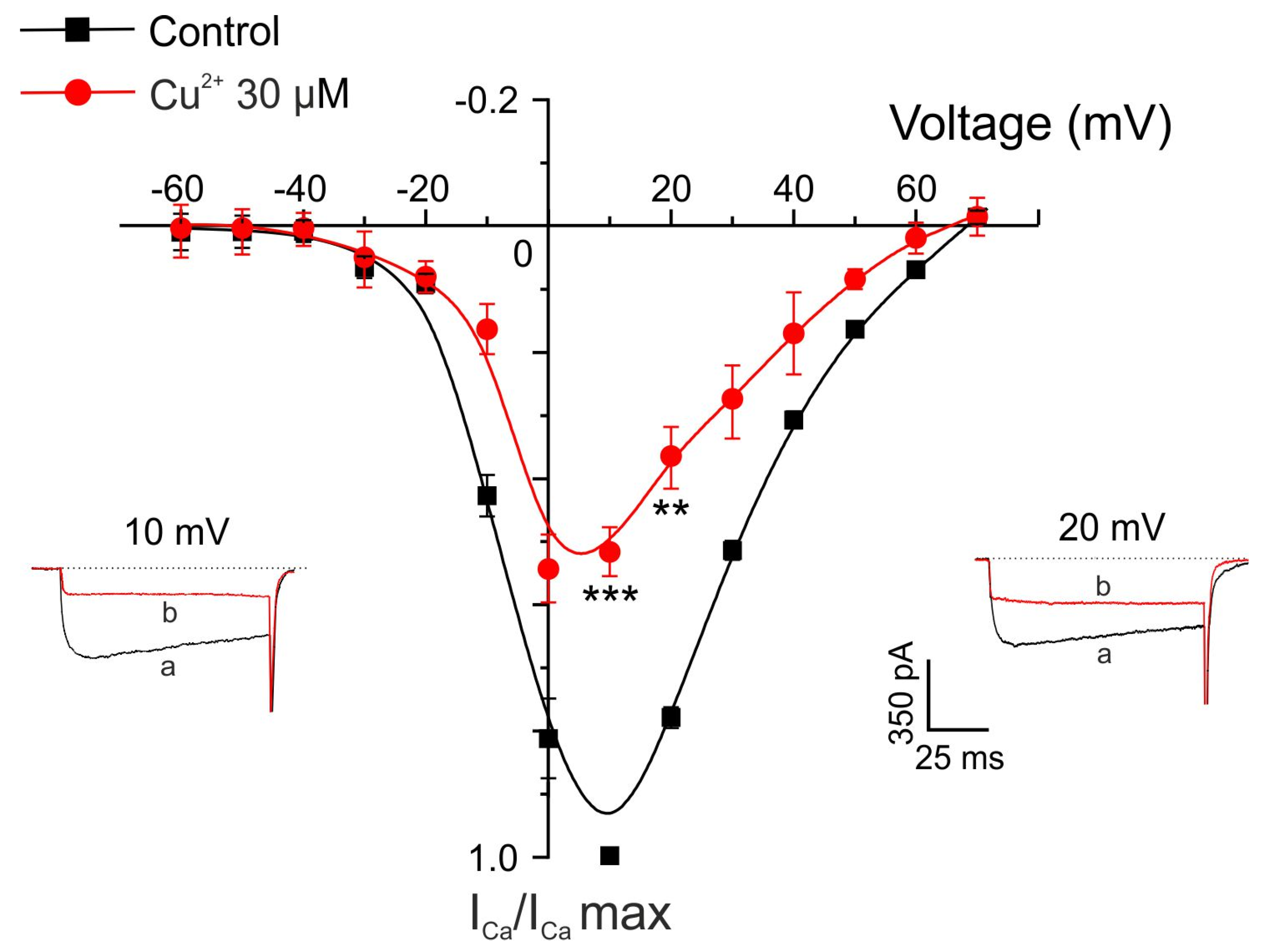
2.2. Time- and Concentration-Dependent Blockade of ICa by Copper
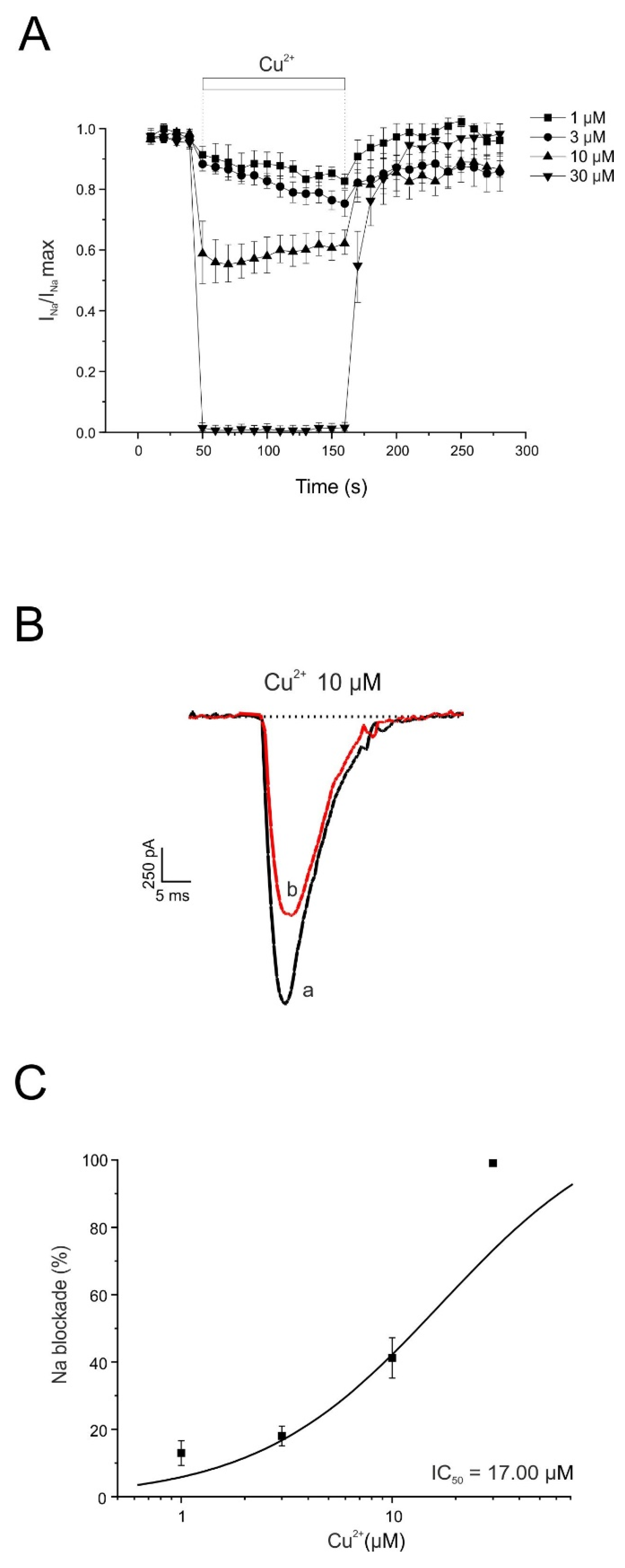
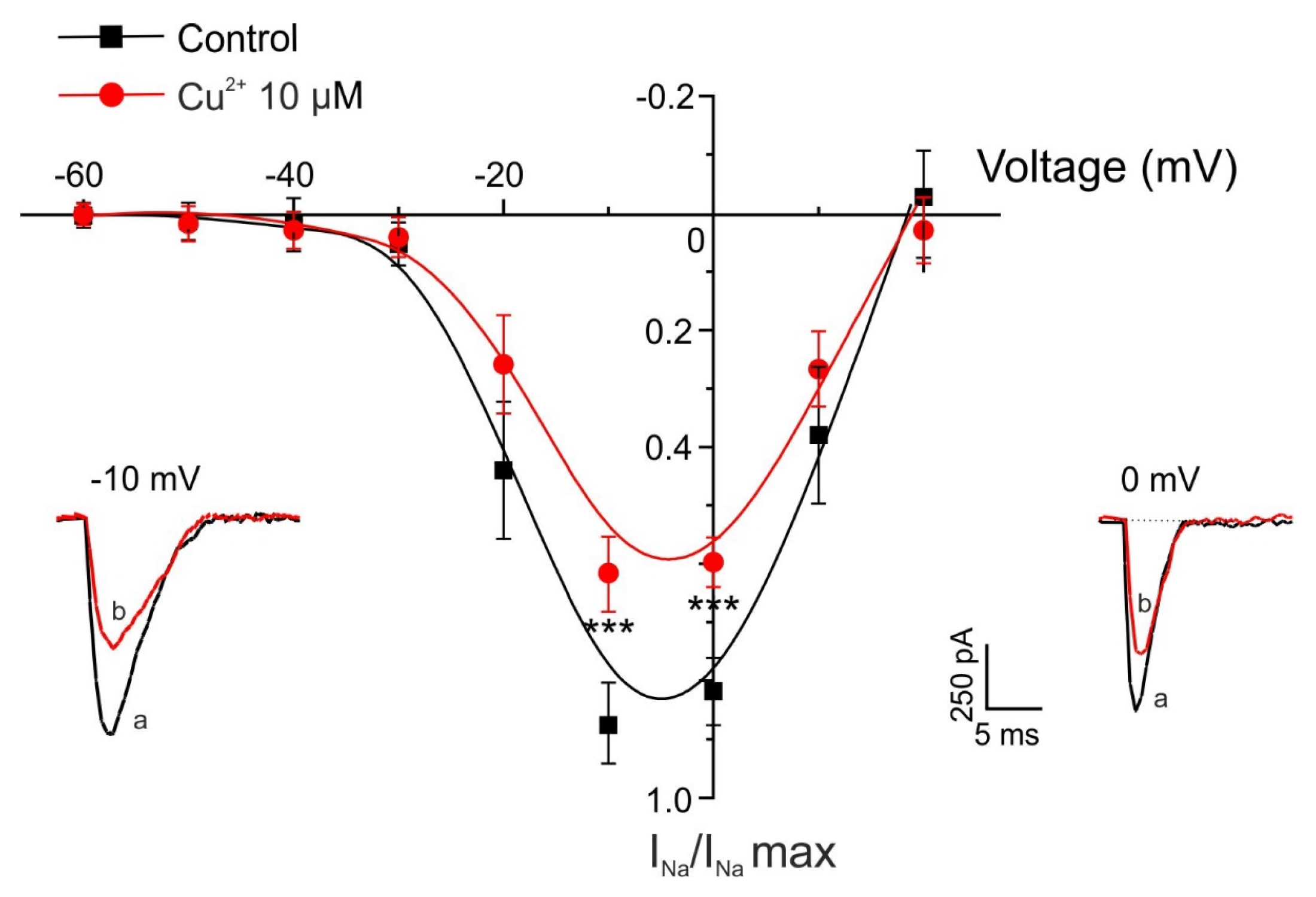
2.3. Time- and Concentration-Dependent Blockade of INa by Copper
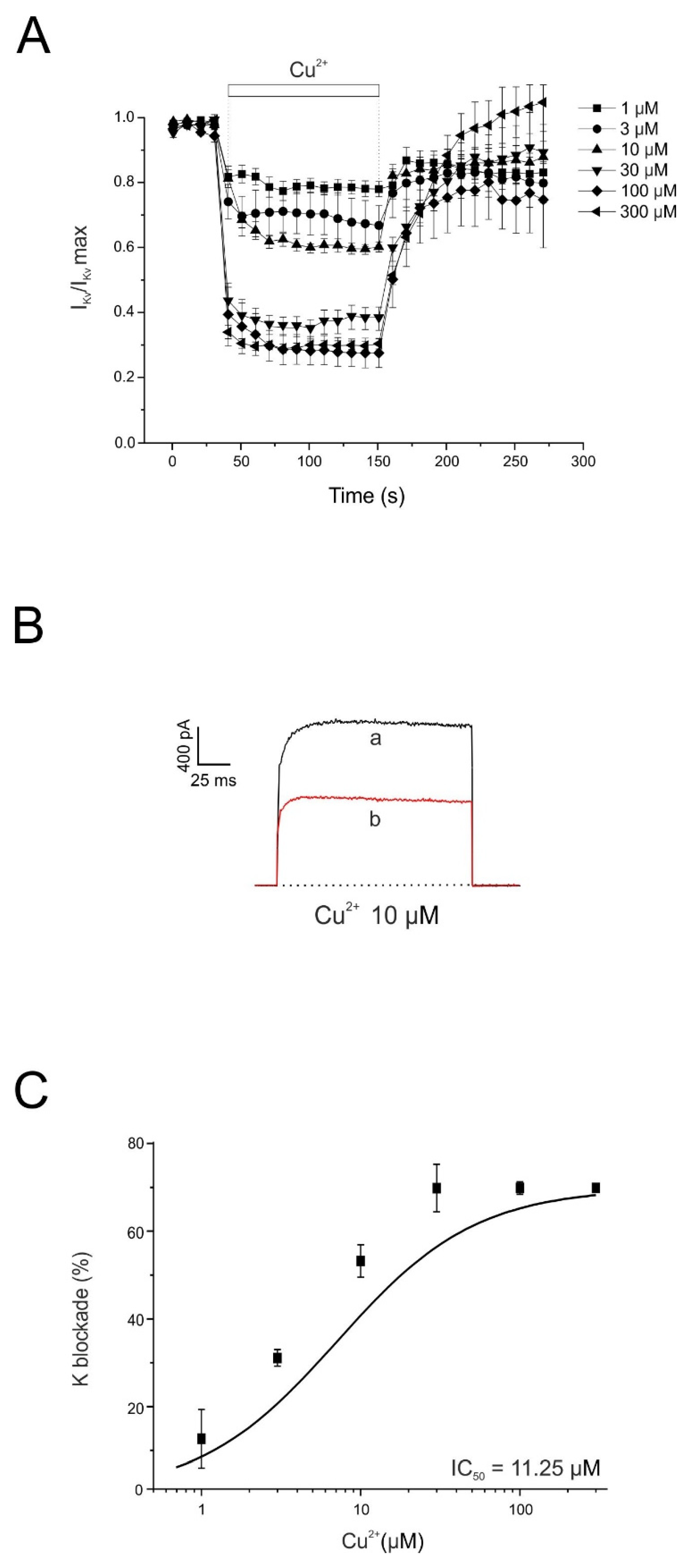
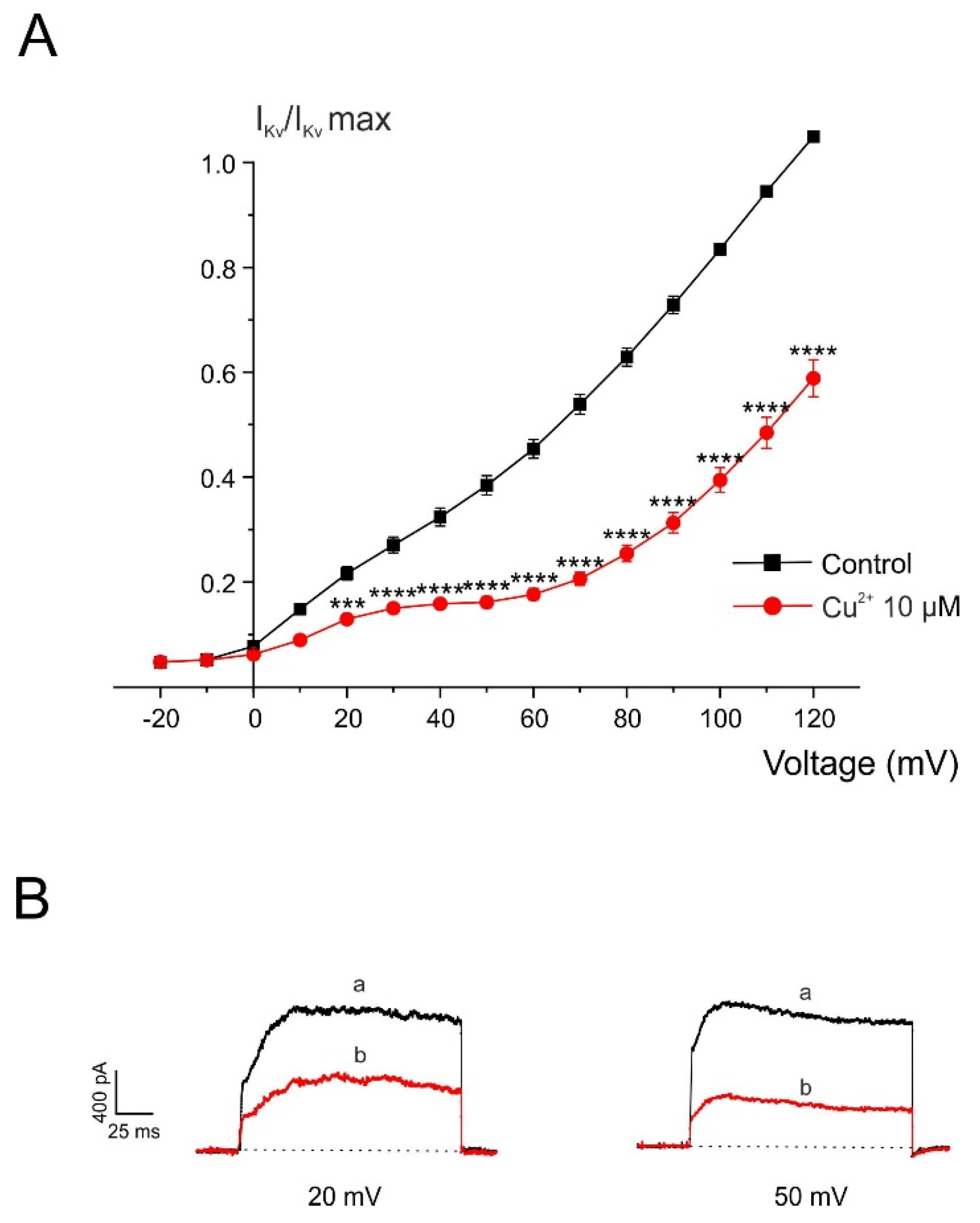
2.4. Time- and Concentration-Dependent Blockade of IKv by Copper
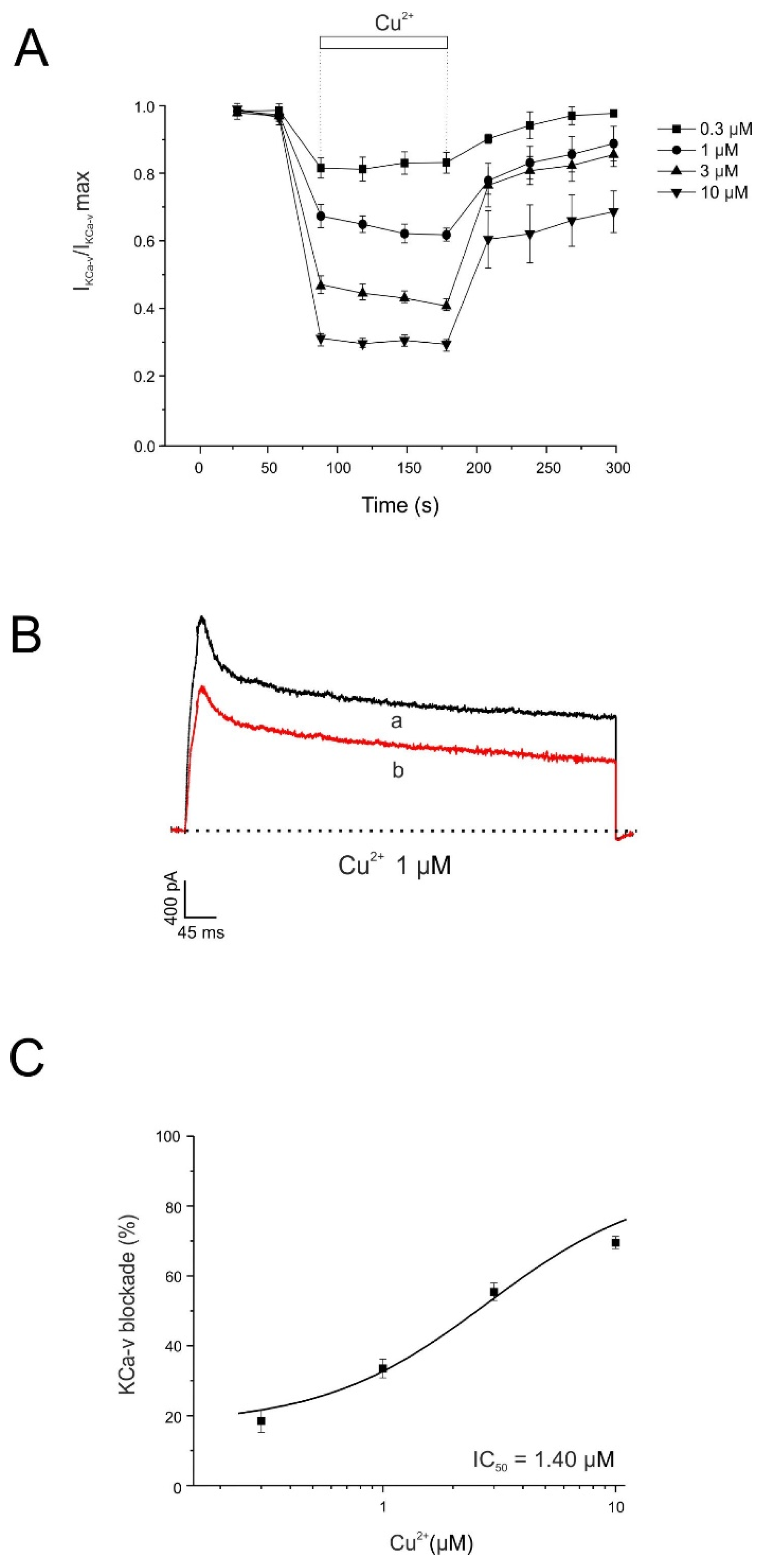
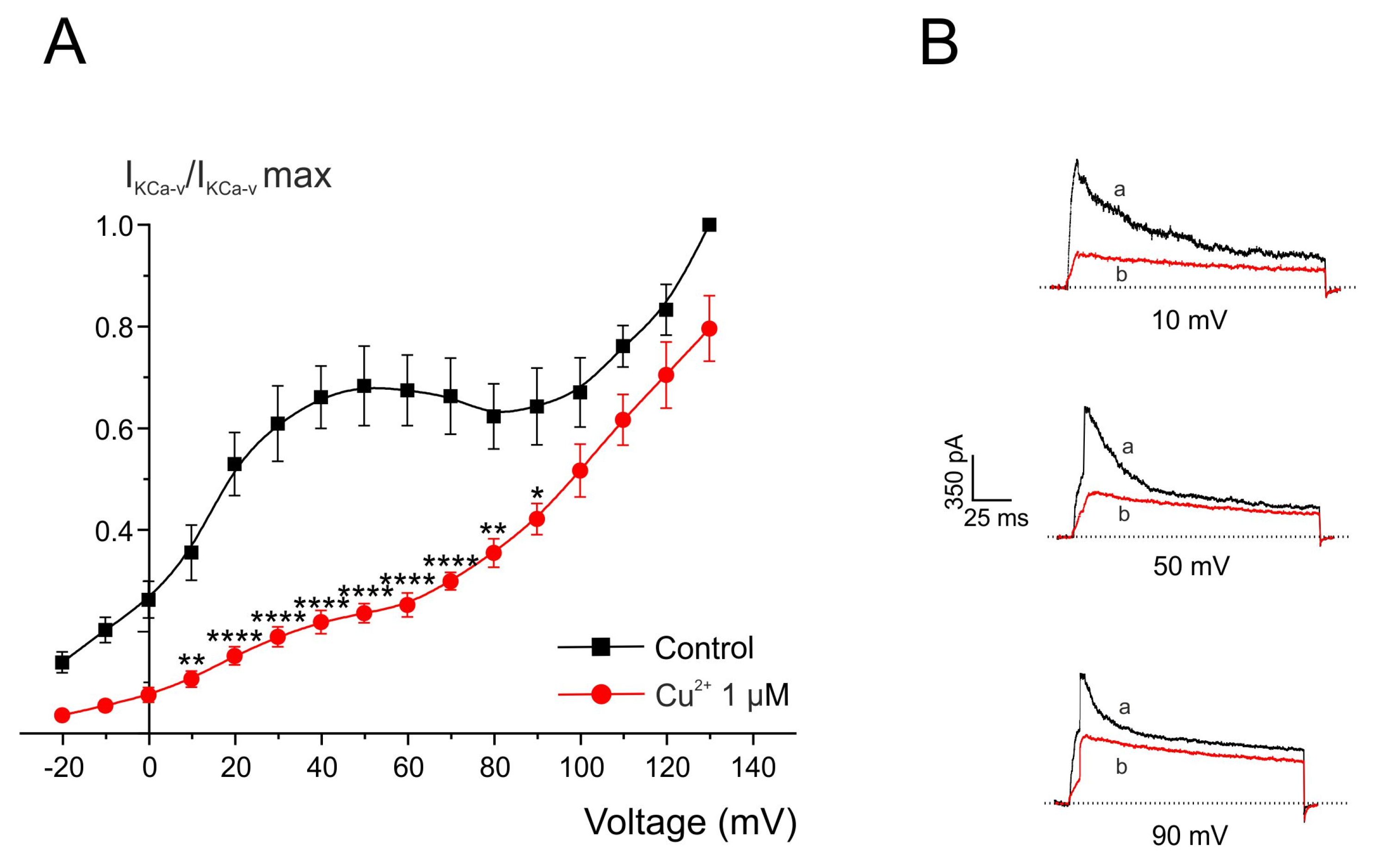
2.5. Copper Induced a Blockade of the Calcium Modulated Voltage-Dependent Potassium Channels
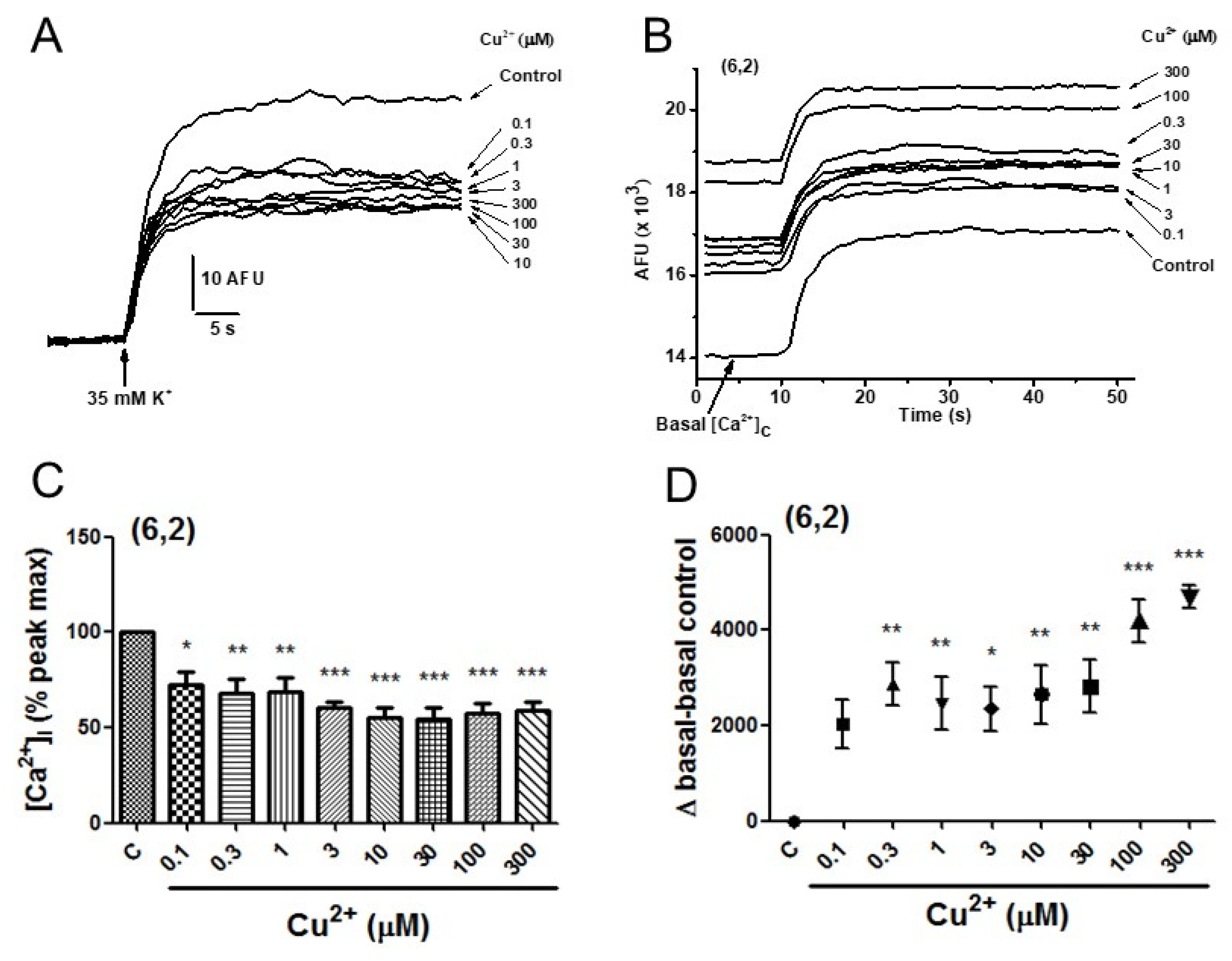
2.6. Effects of Cu2+ on the Cytosolic Calcium Transients
3. Discussion
4. Materials and Methods
4.1. Isolation and Culture of Bovine Chromaffin Cells
4.2. On-Line Measurement of Neurotransmitter Release
4.3. Electrophysiological Recording and Data Analysis
4.4. Monitoring of Cytosolic Calcium Levels
4.5. Chemicals
4.6. Statistical Analysis
5. Conclusions
Author Contributions
Funding
Institutional Review Board Statement
Data Availability Statement
Conflicts of Interest
References
- Scheiber, I.; Dringen, R.; Mercer, J.F.B. Copper: Effects of Deficiency and Overload. In Interrelations Between Essential Metal Ions and Human Diseases; Metal Ions in Life Sciences; Springer: Dordrecht, The Netherlands, 2013; Volume 13, pp. 359–387. [Google Scholar] [CrossRef]
- Popovic, D.M.; Leontyev, I.V.; Beech, D.G.; Stuchebrukhov, A.A. Similarity of Cytochrome c Oxidases in Different Organisms. Proteins 2010, 78, 2691–2698. [Google Scholar] [CrossRef]
- Perry, J.J.P.; Shin, D.S.; Getzoff, E.D.; Tainer, J.A. The Structural Biochemistry of the Superoxide Dismutases. Biochim. Biophys. Acta 2010, 1804, 245–262. [Google Scholar] [CrossRef]
- Hellman, N.E.; Gitlin, J.D. Ceruloplasmin Metabolism and Function. Annu. Rev. Nutr. 2002, 22, 439–458. [Google Scholar] [CrossRef]
- Klinman, J.P. The Copper-Enzyme Family of Dopamine Beta-Monooxygenase and Peptidylglycine Alpha-Hydroxylating Monooxygenase: Resolving the Chemical Pathway for Substrate Hydroxylation. J. Biol. Chem. 2006, 281, 3013–3016. [Google Scholar] [CrossRef]
- Uriu-Adams, J.Y.; Scherr, R.E.; Lanoue, L.; Keen, C.L. Influence of Copper on Early Development: Prenatal and Postnatal Considerations. BioFactors 2010, 36, 136–152. [Google Scholar] [CrossRef]
- Rucker, R.B.; Kosonen, T.; Clegg, M.S.; Mitchell, A.E.; Rucker, B.R.; Uriu-Hare, J.Y.; Keen, C.L. Copper, Lysyl Oxidase, and Extracellular Matrix Protein Cross-Linking. Am. J. Clin. Nutr. 1998, 67, 996S–1002S. [Google Scholar] [CrossRef] [PubMed]
- Hung, L.W.; Villemagne, V.L.; Cheng, L.; Sherratt, N.A.; Ayton, S.; White, A.R.; Crouch, P.J.; Lim, S.; Leong, S.L.; Wilkins, S.; et al. The Hypoxia Imaging Agent CuII(Atsm) Is Neuroprotective and Improves Motor and Cognitive Functions in Multiple Animal Models of Parkinson’s Disease. J. Exp. Med. 2012, 209, 837–854. [Google Scholar] [CrossRef] [PubMed]
- Liu, X.; Zhang, W.; Wu, Z.; Yang, Y.; Kang, Y.J. Copper Levels Affect Targeting of Hypoxia-Inducible Factor 1α to the Promoters of Hypoxia-Regulated Genes. J. Biol. Chem. 2018, 293, 14669–14677. [Google Scholar] [CrossRef]
- Lutsenko, S.; Washington-Hughes, C.; Ralle, M.; Schmidt, K. Copper and the Brain Noradrenergic System. J. Biol. Inorg. Chem. JBIC Publ. Soc. Biol. Inorg. Chem. 2019, 24, 1179–1188. [Google Scholar] [CrossRef] [PubMed]
- Rotilio, G.; Carrì, M.T.; Rossi, L.; Ciriolo, M.R. Copper-Dependent Oxidative Stress and Neurodegeneration. IUBMB Life 2000, 50, 309–314. [Google Scholar] [CrossRef]
- Scheiber, I.F.; Mercer, J.F.B.; Dringen, R. Metabolism and Functions of Copper in Brain. Prog. Neurobiol. 2014, 116, 33–57. [Google Scholar] [CrossRef] [PubMed]
- Forte, G.; Bocca, B.; Senofonte, O.; Petrucci, F.; Brusa, L.; Stanzione, P.; Zannino, S.; Violante, N.; Alimonti, A.; Sancesario, G. Trace and Major Elements in Whole Blood, Serum, Cerebrospinal Fluid and Urine of Patients with Parkinson’s Disease. J. Neural Transm. 2004, 111, 1031–1040. [Google Scholar] [CrossRef]
- Nischwitz, V.; Berthele, A.; Michalke, B. Speciation Analysis of Selected Metals and Determination of Their Total Contents in Paired Serum and Cerebrospinal Fluid Samples: An Approach to Investigate the Permeability of the Human Blood-Cerebrospinal Fluid-Barrier. Anal. Chim. Acta 2008, 627, 258–269. [Google Scholar] [CrossRef]
- Gaier, E.D.; Eipper, B.A.; Mains, R.E. Copper Signaling in the Mammalian Nervous System: Synaptic Effects. J. Neurosci. Res. 2013, 91, 2–19. [Google Scholar] [CrossRef] [PubMed]
- Que, E.L.; Domaille, D.W.; Chang, C.J. Metals in Neurobiology: Probing Their Chemistry and Biology with Molecular Imaging. Chem. Rev. 2008, 108, 1517–1549. [Google Scholar] [CrossRef] [PubMed]
- Davies, K.M.; Hare, D.J.; Cottam, V.; Chen, N.; Hilgers, L.; Halliday, G.; Mercer, J.F.B.; Double, K.L. Localization of Copper and Copper Transporters in the Human Brain. Met. Integr. Biometal Sci. 2013, 5, 43–51. [Google Scholar] [CrossRef]
- Rajan, K.S.; Colburn, R.W.; Davis, J.M. Distribution of Metal Ions in the Subcellular Fractions of Several Rat Brain Areas. Life Sci. 1976, 18, 423–431. [Google Scholar] [CrossRef]
- Hartter, D.E.; Barnea, A. Evidence for Release of Copper in the Brain: Depolarization-Induced Release of Newly Taken-up 67copper. Synapse 1988, 2, 412–415. [Google Scholar] [CrossRef]
- Hopt, A.; Korte, S.; Fink, H.; Panne, U.; Niessner, R.; Jahn, R.; Kretzschmar, H.; Herms, J. Methods for Studying Synaptosomal Copper Release. J. Neurosci. Methods 2003, 128, 159–172. [Google Scholar] [CrossRef]
- Lu, L.; Wang, C.; Gao, X.; Xu, P.; Wang, J.; Wang, Q.; Cheng, J.; Xiao, H. Effects of Copper on T-Type Ca2+ Channels in Mouse Spermatogenic Cells. J. Membr. Biol. 2009, 227, 87–94. [Google Scholar] [CrossRef]
- McGee, T.P.; Houston, C.M.; Brickley, S.G. Copper Block of Extrasynaptic GABAA Receptors in the Mature Cerebellum and Striatum. J. Neurosci. 2013, 33, 13431–13435. [Google Scholar] [CrossRef]
- Gasperini, L.; Meneghetti, E.; Pastore, B.; Benetti, F.; Legname, G. Prion Protein and Copper Cooperatively Protect Neurons by Modulating NMDA Receptor through S-Nitrosylation. Antioxid. Redox Signal. 2015, 22, 772–784. [Google Scholar] [CrossRef]
- Salazar-Weber, N.L.; Smith, J.P. Copper Inhibits NMDA Receptor-Independent LTP and Modulates the Paired-Pulse Ratio after LTP in Mouse Hippocampal Slices. Int. J. Alzheimers Dis. 2011, 2011, 864753. [Google Scholar] [CrossRef]
- Niu, Z.-D.; Yu, K.; Gu, Y.; Wang, M.; She, J.-Q.; Chen, W.-H.; Ruan, D.-Y. Effects of Copper on A-Type Potassium Currents in Acutely Dissociated Rat Hippocampal CA1 Neurons. NeuroReport 2005, 16, 1585–1589. [Google Scholar] [CrossRef] [PubMed]
- Leiva, J.; Palestini, M.; Infante, C.; Goldschmidt, A.; Motles, E. Copper Suppresses Hippocampus LTP in the Rat, but Does Not Alter Learning or Memory in the Morris Water Maze. Brain Res. 2009, 1256, 69–75. [Google Scholar] [CrossRef] [PubMed]
- Goldschmith, A.; Infante, C.; Leiva, J.; Motles, E.; Palestini, M. Interference of Chronically Ingested Copper in Long-Term Potentiation (LTP) of Rat Hippocampus. Brain Res. 2005, 1056, 176–182. [Google Scholar] [CrossRef] [PubMed]
- Kaler, S.G. ATP7A-Related Copper Transport Diseases-Emerging Concepts and Future Trends. Nat. Rev. Neurol. 2011, 7, 15–29. [Google Scholar] [CrossRef]
- Loudianos, G.; Gitlin, J.D. Wilson’s Disease. Semin. Liver Dis. 2000, 20, 353–364. [Google Scholar] [CrossRef]
- O’Brien, R.J.; Wong, P.C. Amyloid Precursor Protein Processing and Alzheimer’s Disease. Annu. Rev. Neurosci. 2011, 34, 185–204. [Google Scholar] [CrossRef]
- Wang, X.; Moualla, D.; Wright, J.A.; Brown, D.R. Copper Binding Regulates Intracellular Alpha-Synuclein Localisation, Aggregation and Toxicity. J. Neurochem. 2010, 113, 704–714. [Google Scholar] [CrossRef]
- Biales, B.; Dichter, M.; Tischler, A. Electrical Excitability of Cultured Adrenal Chromaffin Cells. J. Physiol. 1976, 262, 743–753. [Google Scholar] [CrossRef]
- Huber, K. The Sympathoadrenal Cell Lineage: Specification, Diversification, and New Perspectives. Dev. Biol. 2006, 298, 335–343. [Google Scholar] [CrossRef]
- Tischler, A.S. Chromaffin Cells as Models of Endocrine Cells and Neurons. Ann. N. Y. Acad. Sci. 2002, 971, 366–370. [Google Scholar] [CrossRef]
- Carbone, E.; Borges, R.; Eiden, L.E.; García, A.G.; Hernández-Cruz, A. Chromaffin Cells of the Adrenal Medulla: Physiology, Pharmacology, and Disease. Compr. Physiol. 2019, 9, 1443–1502. [Google Scholar] [CrossRef] [PubMed]
- Guérineau, N.C. Cholinergic and Peptidergic Neurotransmission in the Adrenal Medulla: A Dynamic Control of Stimulus-Secretion Coupling. IUBMB Life 2020, 72, 553–567. [Google Scholar] [CrossRef]
- García, A.G.; García-De-Diego, A.M.; Gandía, L.; Borges, R.; García-Sancho, J. Calcium Signaling and Exocytosis in Adrenal Chromaffin Cells. Physiol. Rev. 2006, 86, 1093–1131. [Google Scholar] [CrossRef]
- Lingle, C.J.; Martinez-Espinosa, P.L.; Guarina, L.; Carbone, E. Roles of Na+, Ca2+, and K+ Channels in the Generation of Repetitive Firing and Rhythmic Bursting in Adrenal Chromaffin Cells. Pflug. Arch. 2018, 470, 39–52. [Google Scholar] [CrossRef]
- Marty, A.; Neher, E. Potassium Channels in Cultured Bovine Adrenal Chromaffin Cells. J. Physiol. 1985, 367, 117–141. [Google Scholar] [CrossRef] [PubMed]
- Prakriya, M.; Lingle, C.J. BK Channel Activation by Brief Depolarizations Requires Ca2+ Influx through L- and Q-Type Ca2+ Channels in Rat Chromaffin Cells. J. Neurophysiol. 1999, 81, 2267–2278. [Google Scholar] [CrossRef]
- Prakriya, M.; Lingle, C.J. Activation of BK Channels in Rat Chromaffin Cells Requires Summation of Ca2+ Influx from Multiple Ca2+ Channels. J. Neurophysiol. 2000, 84, 1123–1135. [Google Scholar] [CrossRef] [PubMed]
- Pizarro, G.E.; Vargas, I.T.; Pastén, P.A.; Calle, G.R. Modeling MIC Copper Release from Drinking Water Pipes. Bioelectrochemistry 2014, 97, 23–33. [Google Scholar] [CrossRef]
- Alengebawy, A.; Abdelkhalek, S.T.; Qureshi, S.R.; Wang, M.-Q. Heavy Metals and Pesticides Toxicity in Agricultural Soil and Plants: Ecological Risks and Human Health Implications. Toxics 2021, 9, 42. [Google Scholar] [CrossRef]
- Katz, B.; Miledi, R. The Role of Calcium in Neuromuscular Facilitation. J. Physiol. 1968, 195, 481–492. [Google Scholar] [CrossRef]
- Takahashi, T.; Momiyama, A. Different Types of Calcium Channels Mediate Central Synaptic Transmission. Nature 1993, 366, 156–158. [Google Scholar] [CrossRef] [PubMed]
- Marcantoni, A.; Vandael, D.H.F.; Mahapatra, S.; Carabelli, V.; Sinnegger-Brauns, M.J.; Striessnig, J.; Carbone, E. Loss of Cav1.3 Channels Reveals the Critical Role of L-Type and BK Channel Coupling in Pacemaking Mouse Adrenal Chromaffin Cells. J. Neurosci. 2010, 30, 491–504. [Google Scholar] [CrossRef] [PubMed]
- Hodgkin, A.L.; Huxley, A.F. A Quantitative Description of Membrane Current and Its Application to Conduction and Excitation in Nerve. J. Physiol. 1952, 117, 500–544. [Google Scholar] [CrossRef]
- Sun, L.; Xiong, Y.; Zeng, X.; Wu, Y.; Pan, N.; Lingle, C.J.; Qu, A.; Ding, J. Differential Regulation of Action Potentials by Inactivating and Noninactivating BK Channels in Rat Adrenal Chromaffin Cells. Biophys. J. 2009, 97, 1832–1842, Correction in Biophys. J. 2009, 97, 2863. [Google Scholar] [CrossRef]
- Marrion, N.V.; Tavalin, S.J. Selective Activation of Ca2+-Activated K+ Channels by Co-Localized Ca2+ Channels in Hippocampal Neurons. Nature 1998, 395, 900–905. [Google Scholar] [CrossRef] [PubMed]
- Wisgirda, M.E.; Dryer, S.E. Functional Dependence of Ca2+-Activated K+ Current on L- and N-Type Ca2+ Channels: Differences between Chicken Sympathetic and Parasympathetic Neurons Suggest Different Regulatory Mechanisms. Proc. Natl. Acad. Sci. USA 1994, 91, 2858–2862. [Google Scholar] [CrossRef] [PubMed]
- Philipson, K.D.; Nicoll, D.A. Sodium-Calcium Exchange: A Molecular Perspective. Annu. Rev. Physiol. 2000, 62, 111–133. [Google Scholar] [CrossRef]
- Berrocal, M.; Mata, A.M. The Plasma Membrane Ca2+-ATPase, a Molecular Target for Tau-Induced Cytosolic Calcium Dysregulation. Neuroscience 2023, 518, 112–118. [Google Scholar] [CrossRef]
- Peterková, L.; Kmoníčková, E.; Ruml, T.; Rimpelová, S. Sarco/Endoplasmic Reticulum Calcium ATPase Inhibitors: Beyond Anticancer Perspective. J. Med. Chem. 2020, 63, 1937–1963. [Google Scholar] [CrossRef]
- Alevriadou, B.R.; Patel, A.; Noble, M.; Ghosh, S.; Gohil, V.M.; Stathopulos, P.B.; Madesh, M. Molecular Nature and Physiological Role of the Mitochondrial Calcium Uniporter Channel. Am. J. Physiol. Cell Physiol. 2021, 320, C465–C482. [Google Scholar] [CrossRef]
- Takeuchi, A.; Matsuoka, S. Physiological and Pathophysiological Roles of Mitochondrial Na+-Ca2+ Exchanger, NCLX, in Hearts. Biomolecules 2021, 11, 1876. [Google Scholar] [CrossRef]
- Benders, A.A.; Li, J.; Lock, R.A.; Bindels, R.J.; Bonga, S.E.; Veerkamp, J.H. Copper Toxicity in Cultured Human Skeletal Muscle Cells: The Involvement of Na+/K+-ATPase and the Na+/Ca2+-Exchanger. Pflug. Arch. 1994, 428, 461–467. [Google Scholar] [CrossRef]
- Viarengo, A.; Mancinelli, G.; Pertica, M.; Fabbri, R.; Orunesu, M. Effects of Heavy Metals on the Ca2+-ATPase Activity Present in Gill Cell Plasma-Membrane of Mussels (Mytilus galloprovincialis Lam.). Comp. Biochem. Physiol. C 1993, 106, 655–660. [Google Scholar] [CrossRef]
- Burlando, B.; Bonomo, M.; Caprì, F.; Mancinelli, G.; Pons, G.; Viarengo, A. Different Effects of Hg2+ and Cu2+ on Mussel (Mytilus galloprovincialis) Plasma Membrane Ca2+-ATPase: Hg2+ Induction of Protein Expression. Comp. Biochem. Physiol. Toxicol. Pharmacol. 2004, 139, 201–207. [Google Scholar] [CrossRef] [PubMed]
- Fatemi, N.; Sarkar, B. Structural and Functional Insights of Wilson Disease Copper-Transporting ATPase. J. Bioenerg. Biomembr. 2002, 34, 339–349. [Google Scholar] [CrossRef]
- Mandal, A.; Das, S.; Chakraborti, T.; Kar, P.; Ghosh, B.; Chakraborti, S. Solubilization, Purification and Reconstitution of Ca2+-ATPase from Bovine Pulmonary Artery Smooth Muscle Microsomes by Different Detergents: Preservation of Native Structure and Function of the Enzyme by DHPC. Biochim. Biophys. Acta 2006, 1760, 20–31. [Google Scholar] [CrossRef] [PubMed]
- Belyaeva, E.A.; Korotkov, S.M.; Saris, N.-E. In Vitro Modulation of Heavy Metal-Induced Rat Liver Mitochondria Dysfunction: A Comparison of Copper and Mercury with Cadmium. J. Trace Elem. Med. Biol. Organ Soc. Miner. Trace Elem. 2011, 25, S63–S73. [Google Scholar] [CrossRef] [PubMed]
- Tuluc, P.; Carbone, E. Excitation-secretion Coupling in Chromaffin Cells of the Adrenal Gland: Where Does Calcium Come From? Pflug. Arch. 2024, 476, 3–4. [Google Scholar] [CrossRef]
- Jiménez-Pompa, A.; Albillos, A. Nicotinic Receptors in Human Chromaffin Cells: Characterization, Functional and Physical Interactions between Subtypes and Regulation. Int. J. Mol. Sci. 2024, 25, 2304. [Google Scholar] [CrossRef]
- D’Ambrosi, N.; Rossi, L. Copper at Synapse: Release, Binding and Modulation of Neurotransmission. Neurochem. Int. 2015, 90, 36–45. [Google Scholar] [CrossRef]
- Kardos, J.; Héja, L.; Simon, Á.; Jablonkai, I.; Kovács, R.; Jemnitz, K. Copper Signalling: Causes and Consequences. Cell Commun. Signal. 2018, 16, 71, Correction in Cell Commun. Signal. 2018, 16, 80. [Google Scholar] [CrossRef]
- Kawahara, M.; Tanaka, K.I.; Kato-Negishi, M. Zinc, Copper, and Calcium: A Triangle in the Synapse for the Pathogenesis of Vascular-Type Senile Dementia. Biomolecules 2024, 14, 773. [Google Scholar] [CrossRef]
- Ma, Z.; Wong, K.Y.; Horrigan, F.T. An Extracellular Cu2+ Binding Site in the Voltage Sensor of BK and Shaker Potassium Channels. J. Gen. Physiol. 2008, 131, 483–502. [Google Scholar] [CrossRef] [PubMed]
- Chen, J.; Myerburg, M.M.; Passero, C.J.; Winarski, K.L.; Sheng, S. External Cu2+ Inhibits Human Epithelial Na+ Channels by Binding at a Subunit Interface of Extracellular Domains. J. Biol. Chem. 2011, 286, 27436–27446. [Google Scholar] [CrossRef] [PubMed]
- Leszczyszyn, D.J.; Jankowski, J.A.; Viveros, O.H.; Diliberto, E.J.; Near, J.A.; Wightman, R.M. Nicotinic Receptor-Mediated Catecholamine Secretion from Individual Chromaffin Cells. Chemical Evidence for Exocytosis. J. Biol. Chem. 1990, 265, 14736–14737. [Google Scholar] [CrossRef] [PubMed]
- Green, D.J.; Perlman, R.L. On-line Measurement of Catecholamine Secretion. Anal. Biochem. 1981, 110, 270–276. [Google Scholar] [CrossRef]


Disclaimer/Publisher’s Note: The statements, opinions and data contained in all publications are solely those of the individual author(s) and contributor(s) and not of MDPI and/or the editor(s). MDPI and/or the editor(s) disclaim responsibility for any injury to people or property resulting from any ideas, methods, instructions or products referred to in the content. |
© 2026 by the authors. Licensee MDPI, Basel, Switzerland. This article is an open access article distributed under the terms and conditions of the Creative Commons Attribution (CC BY) license.
Share and Cite
Varea-Tierno, V.; Carretero, V.J.; Almodóvar, M.R.; Hernández Campano, J.; Tejedor, M.A.; de Pascual, R.; Hernández-Guijo, J.M. Copper (Cu2+) Inhibits Voltage-Dependent Ionic Currents While Enhancing Neurotransmitter Release in Bovine Chromaffin Cells. Pharmaceuticals 2026, 19, 716. https://doi.org/10.3390/ph19050716
Varea-Tierno V, Carretero VJ, Almodóvar MR, Hernández Campano J, Tejedor MA, de Pascual R, Hernández-Guijo JM. Copper (Cu2+) Inhibits Voltage-Dependent Ionic Currents While Enhancing Neurotransmitter Release in Bovine Chromaffin Cells. Pharmaceuticals. 2026; 19(5):716. https://doi.org/10.3390/ph19050716
Chicago/Turabian StyleVarea-Tierno, Víctor, Victoria Jiménez Carretero, Minerva Reyes Almodóvar, Javier Hernández Campano, María Arribas Tejedor, Ricardo de Pascual, and Jesús M. Hernández-Guijo. 2026. "Copper (Cu2+) Inhibits Voltage-Dependent Ionic Currents While Enhancing Neurotransmitter Release in Bovine Chromaffin Cells" Pharmaceuticals 19, no. 5: 716. https://doi.org/10.3390/ph19050716
APA StyleVarea-Tierno, V., Carretero, V. J., Almodóvar, M. R., Hernández Campano, J., Tejedor, M. A., de Pascual, R., & Hernández-Guijo, J. M. (2026). Copper (Cu2+) Inhibits Voltage-Dependent Ionic Currents While Enhancing Neurotransmitter Release in Bovine Chromaffin Cells. Pharmaceuticals, 19(5), 716. https://doi.org/10.3390/ph19050716