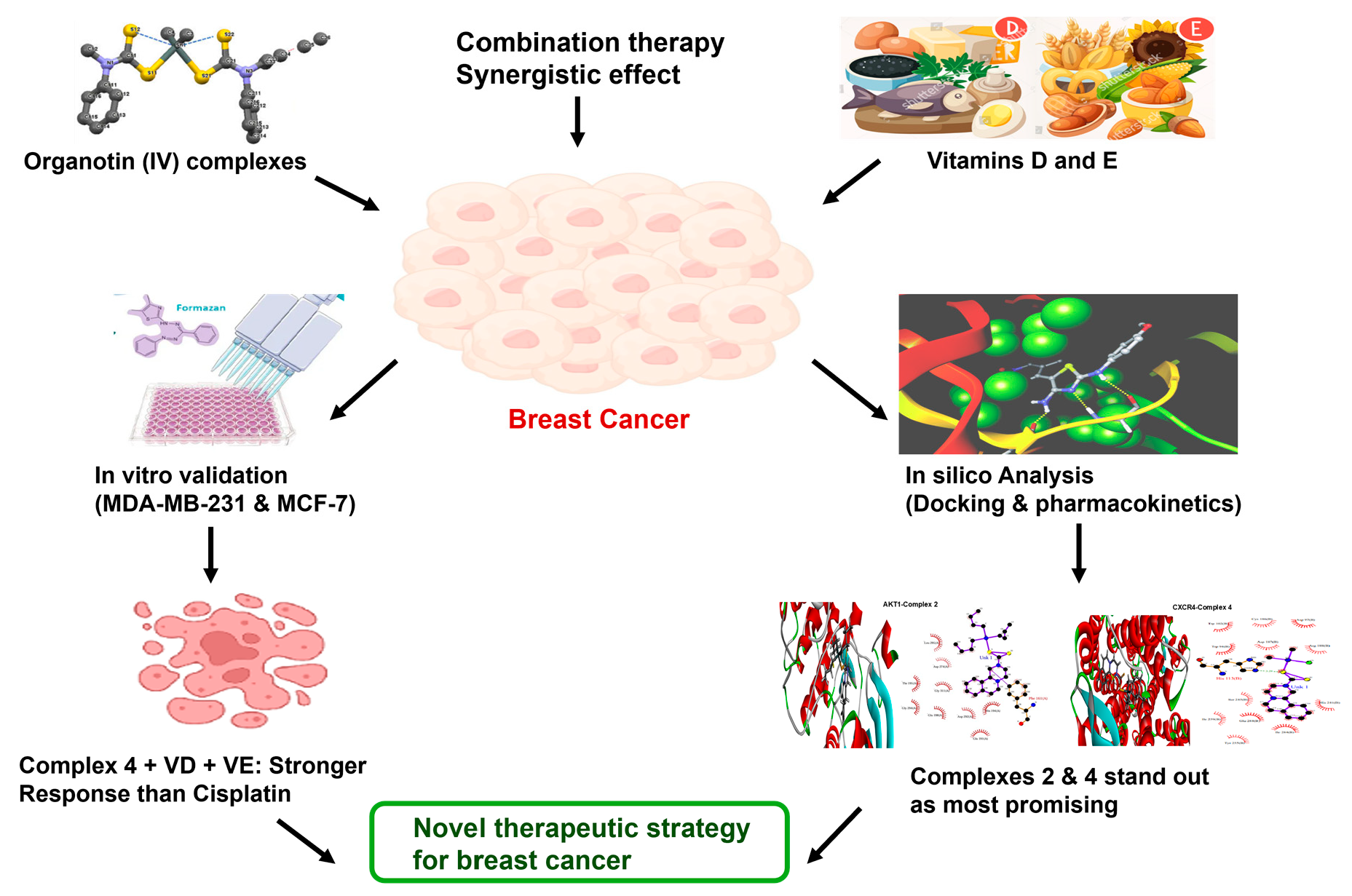
Synergistic Potential of Organotin(IV) Carbodithioate Derivatives with Vitamins D and E in MCF-7 and MDA-MB-231 Breast Cancer Cells

 ,
,
Abstract
1. Introduction
2. Results and Discussion
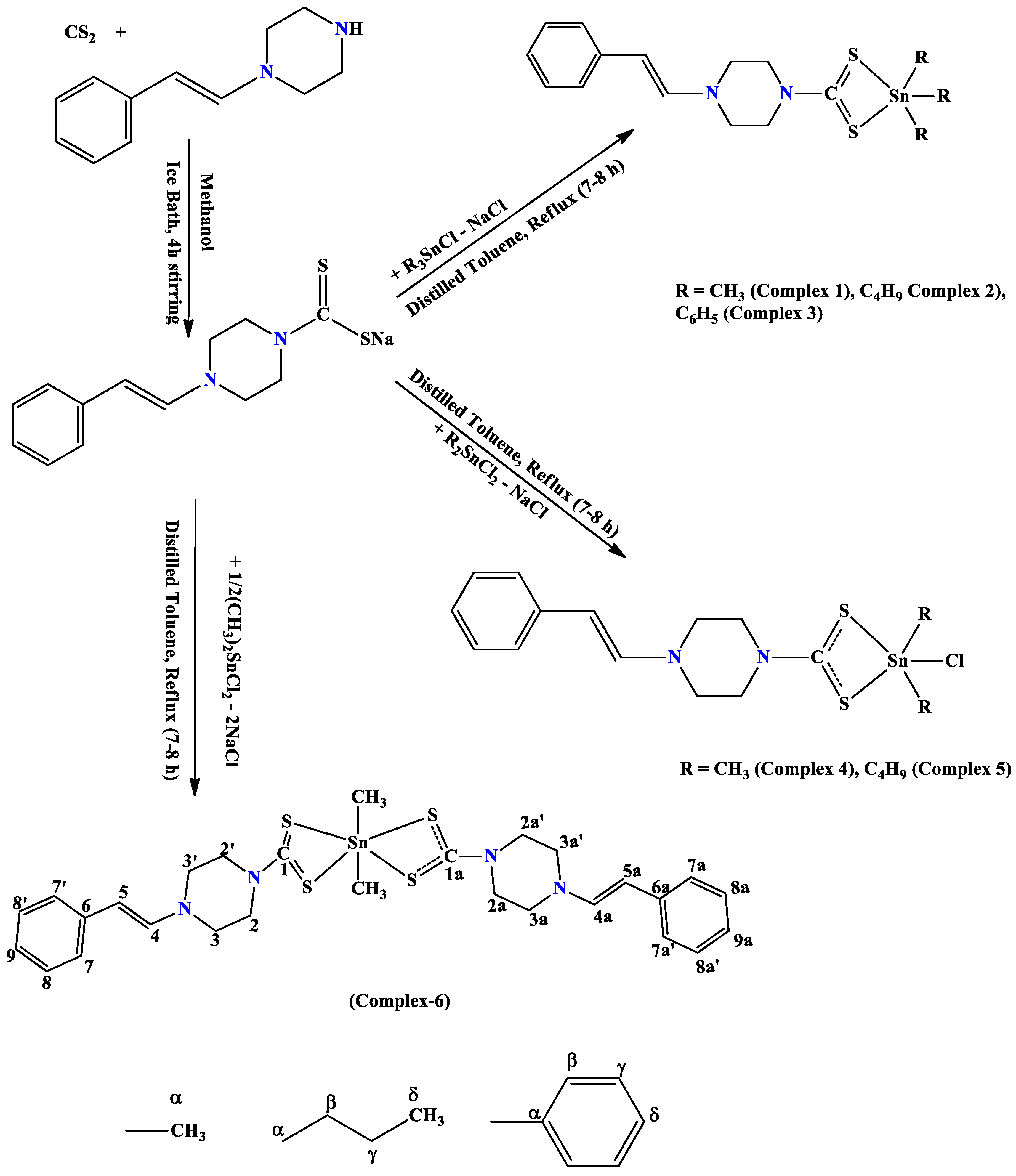
2.1. Synthesis of Organotin(IV) Complexes
2.2. FT-IR Spectral Data
2.3. UV–Visible Spectroscopy
2.4. NMR Spectroscopy
2.5. Differential Expression Pattern of Proteins
2.6. Construction of Protein–Protein Interaction Map
2.7. Molecular Docking Analysis
2.8. Molecular Docking Simulations
2.9. Drug Likeliness of Compounds Through Swiss ADME Server
2.10. Toxicity Prediction Through Protox-II Server
2.11. Results of Biological In Vitro Assays
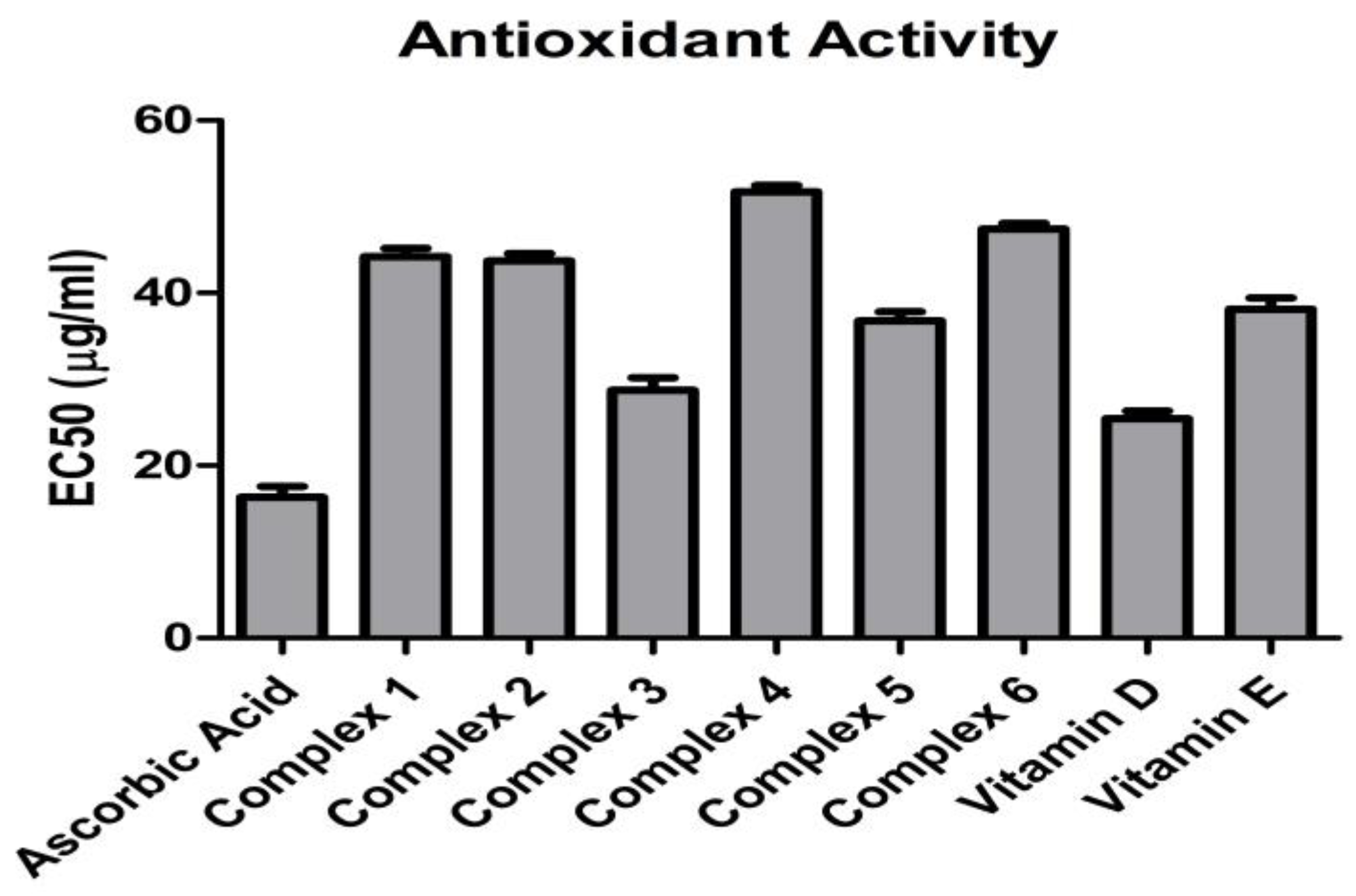
2.11.1. Antioxidant Activity
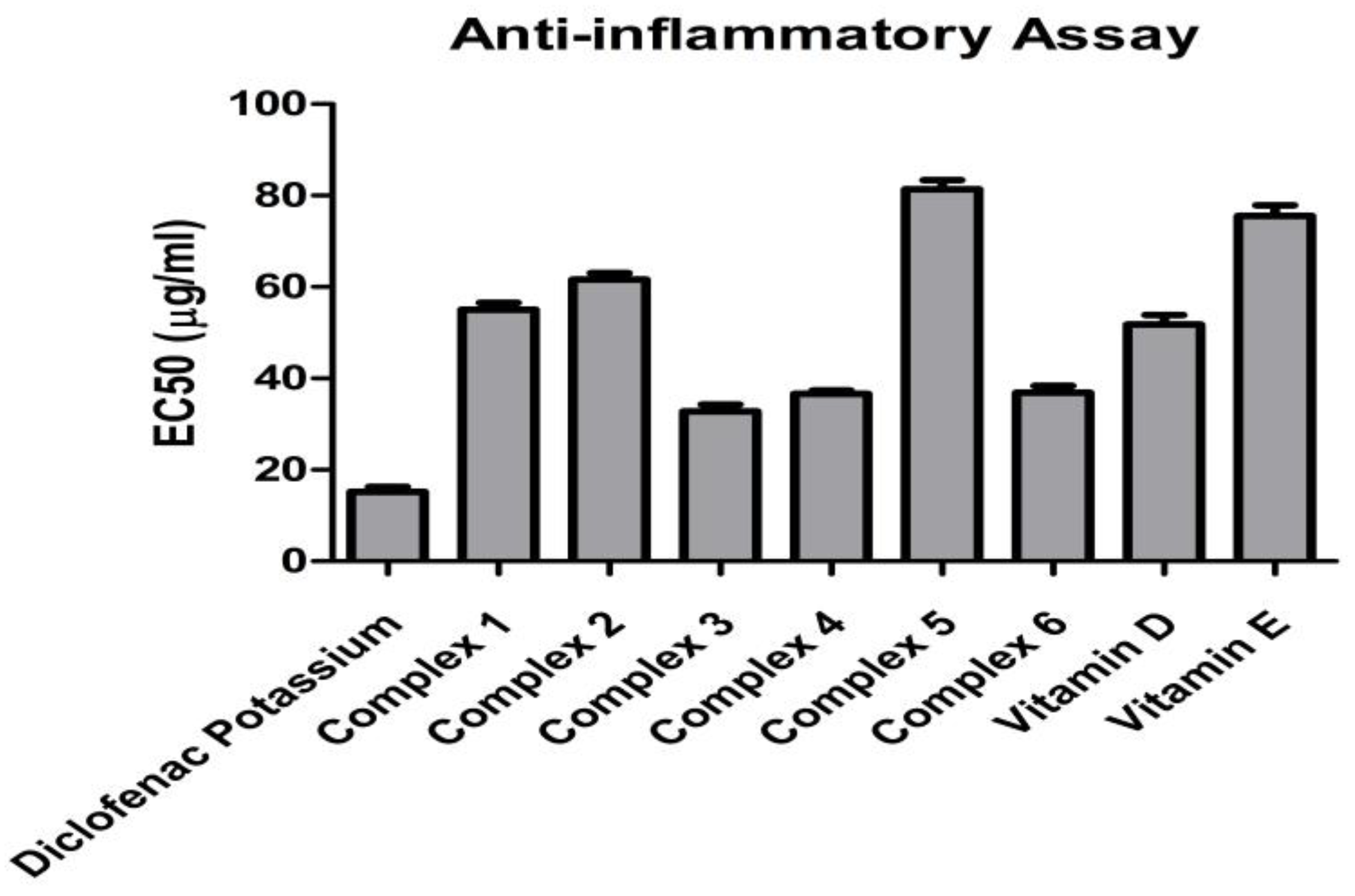
2.11.2. Anti-Inflammatory Assay
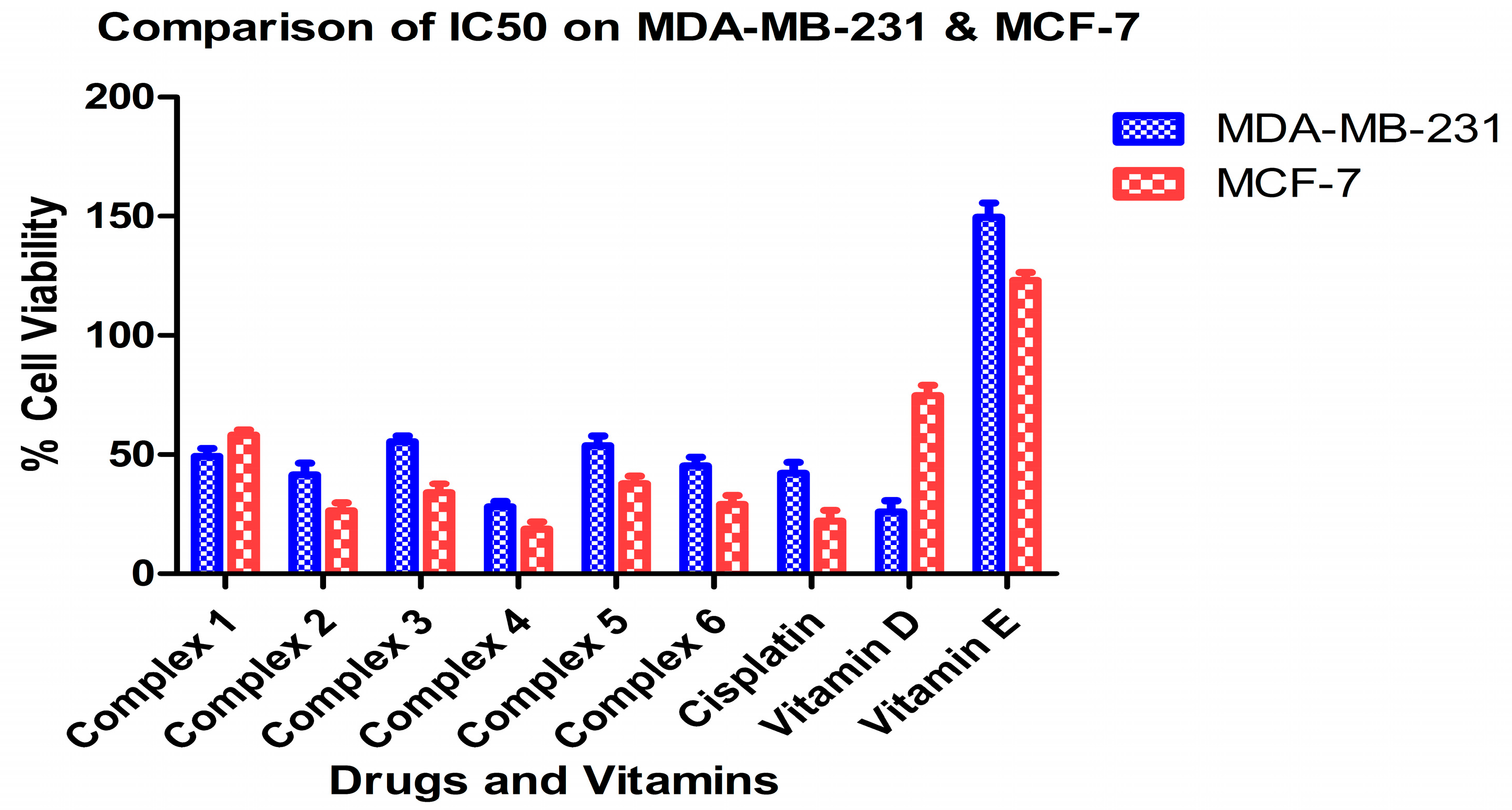
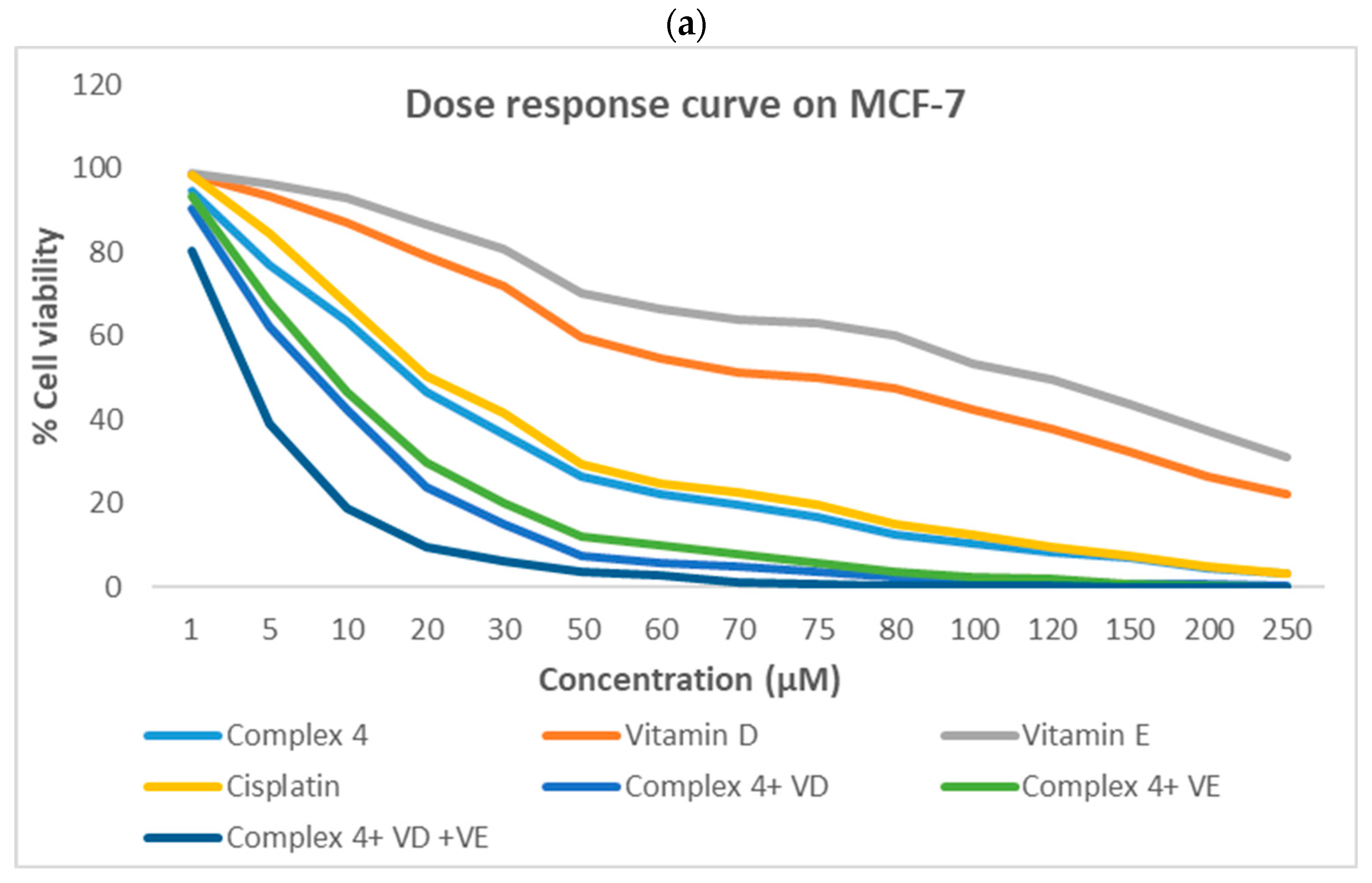
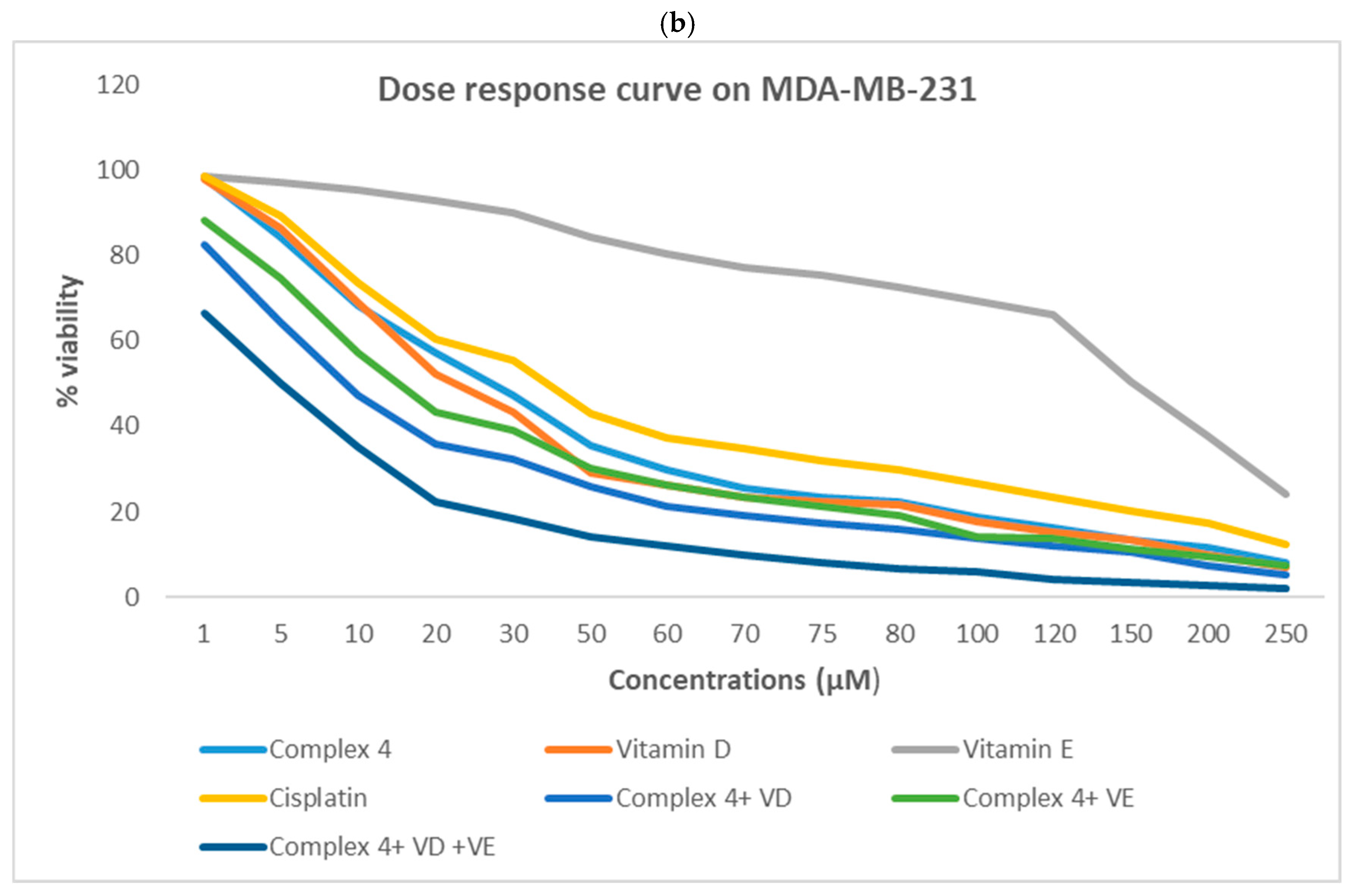
2.11.3. Cytotoxicity Assay and Cell Viability Assay
3. Materials and Methods
3.1. Drugs and Reagents
3.2. Equipment Used for Elemental Analyses
3.3. Synthesis of Sodium(E)-4-Styryl Piperazine-1-Carbodithioate
3.4. General Procedure for the Synthesis of Complexes
3.5. Synthesis of Trimethylstannyl (E)-4-Styrylpiperazine-1-Carbodithioate (1)
3.6. Synthesis of Tributylstannyl (E)-4-Styrylpiperazine-1-Carbodithioate (2)
3.7. Synthesis of Triphenylstannyl (E)-4-Styrylpiperazine-1-Carbodithioate (3)
3.8. Synthesis of Chlorodimethylstannyl (E)-4-Styrylpiperazine-1-Carbodithioate (4)
3.9. Synthesis of Chlorodibutylstannyl (E)-4-Styrylpiperazine-1-Carbodithioate (5)
3.10. Synthesis of Dimethylstannyl Bis-(E)-4-Styrylpiperazine-1-Carbodithioate (6)
3.11. In Silico Analysis
3.11.1. Data Collection
3.11.2. Protein–Protein Interaction (PPI) Analysis
3.12. Molecular Docking
3.12.1. Data Source
3.12.2. Ligand Preparation
3.12.3. Receptor/Protein Preparation
3.12.4. Proteins Molecular Docking Analysis
3.12.5. Molecular Operating Environment (MOE)
3.12.6. Interaction Analysis
3.12.7. Molecular Docking Simulations
3.12.8. Pharmacokinetic Analysis
3.13. In Vitro Analysis
3.13.1. Antioxidant Assay
3.13.2. Anti-Inflammatory Assay
3.13.3. Cell Culture
3.13.4. MTT Assay
3.13.5. Statistical Analysis
4. Conclusions
Limitations and Future Directions
Supplementary Materials
Author Contributions
Funding
Institutional Review Board Statement
Informed Consent Statement
Data Availability Statement
Conflicts of Interest
References
- Fu, M.; Peng, Z.; Wu, M.; Lv, D.; Li, Y.; Lyu, S. Current and future burden of breast cancer in Asia: A GLOBOCAN data analysis for 2022 and 2050. Breast 2025, 79, 103835. [Google Scholar] [CrossRef]
- Zhou, L.; Ou, S.; Liang, T.; Li, M.; Xiao, P.; Cheng, J.; Zhou, J.; Yuan, L. MAEL facilitates metabolic reprogramming and breast cancer progression by promoting the degradation of citrate synthase and fumarate hydratase via chaperone-mediated autophagy. FEBS J. 2023, 290, 3614–3628. [Google Scholar] [CrossRef]
- Zeng, Q.; Chen, C.; Chen, C.; Song, H.; Li, M.; Yan, J.; Lv, X. Serum Raman spectroscopy combined with convolutional neural network for rapid diagnosis of HER2-positive and triple-negative breast cancer. Spectrochim. Acta Part. A Mol. Biomol. Spectrosc. 2023, 286, 122000. [Google Scholar] [CrossRef]
- Faruk, M. Breast cancer resistance to chemotherapy: When should we suspect it and how can we prevent it? Ann. Med. Surg. 2021, 70, 102793. [Google Scholar] [CrossRef]
- Obidiro, O.; Battogtokh, G.; Akala, E.O. Triple Negative Breast Cancer Treatment Options and Limitations: Future Outlook. Pharmaceutics 2023, 15, 1796. [Google Scholar] [CrossRef]
- Curigliano, G.; Criscitiello, C. Successes and limitations of targeted cancer therapy in breast cancer. Prog. Tumor Res. 2014, 41, 15–35. [Google Scholar] [PubMed]
- Clarke, R.; Jones, B.C.; Sevigny, C.M.; Hilakivi-Clarke, L.A.; Sengupta, S. Experimental models of endocrine responsive breast cancer: Strengths, limitations, and use. Cancer Drug Resist. 2021, 4, 762. [Google Scholar] [CrossRef] [PubMed]
- Welsh, J. Vitamin D and Breast Cancer: Mechanistic Update. JBMR Plus 2021, 5, e10582. [Google Scholar] [CrossRef] [PubMed]
- de Oliveira, V.A.; Pereira, I.C.; Nogueira, T.R.; Martins, J.A.; Péres-Rodrigues, G.; Silva, V.C.; Júnior, D.D.; Leal, F.L.T.; de Castro e Sousa, J.M.; da Silva, F.C.C. The Role of Vitamin E in Breast Cancer Treatment and Prevention: Current Perspectives. Curr. Nutr. Food Sci. 2021, 17, 134–143. [Google Scholar] [CrossRef]
- Khallouki, F.; Hajji, L.; Saber, S.; Bouddine, T.; Edderkaoui, M.; Bourhia, M.; Mir, N.; Lim, A.; El Midaoui, A.; Giesy, J.P. An update on tamoxifen and the chemo-preventive potential of vitamin E in breast cancer management. J. Pers. Med. 2023, 13, 754. [Google Scholar] [CrossRef]
- Das Gupta, S.; Sae-Tan, S.; Wahler, J.; So, J.Y.; Bak, M.J.; Cheng, L.C.; Lee, M.-J.; Lin, Y.; Shih, W.J.; Shull, J.D. Dietary γ-Tocopherol–Rich Mixture Inhibits Estrogen-Induced Mammary Tumorigenesis by Modulating Estrogen Metabolism, Antioxidant Response, and PPARγInhibition of Estrogen-Induced Tumorigenesis by Tocopherols. Cancer Prev. Res. 2015, 8, 807–816. [Google Scholar] [CrossRef] [PubMed]
- Welsh, J. Vitamin D and breast cancer: Past and present. J. Steroid Biochem. Mol. Biol. 2018, 177, 15–20. [Google Scholar] [CrossRef] [PubMed]
- Abd Aziz, N.A.; Awang, N.; Chan, K.M.; Kamaludin, N.F.; Anuar, N.N.M. Organotin (IV) Dithiocarbamate Compounds as an Anticancer Agent: A Review of Synthesis and Cytotoxicity Study. Molecules 2023, 28, 5841. [Google Scholar] [CrossRef]
- Abbas, K.; Zahid, A.; Parveen, B.; Amin, I.; Hussain, S.; Ahmed, F.; Munawar, K.S. Comprehensive Investigation of Organotin (IV) Complexes Derived from a Novel Schiff Base: Synthesis, Characterization, Antioxidant, ADME Profiling, and In Vitro Biological Evaluation. Appl. Organomet. Chem. 2025, 39, e7761. [Google Scholar] [CrossRef]
- Shaheen, F.; Sirajuddin, M.; Ali, S.; Dyson, P.J.; Shah, N.A.; Tahir, M.N. Organotin (IV) 4-(benzo [d][1, 3] dioxol-5-ylmethyl) piperazine-1-carbodithioates: Synthesis, characterization and biological activities. J. Organomet. Chem. 2018, 856, 13–22. [Google Scholar] [CrossRef]
- Ortega, M.A.; Fraile-Martínez, O.; Asúnsolo, Á.; Buján, J.; García-Honduvilla, N.; Coca, S. Signal Transduction Pathways in Breast Cancer: The Important Role of PI3K/Akt/mTOR. J. Oncol. 2020, 2020, 9258396. [Google Scholar] [CrossRef] [PubMed]
- Xu, C.; Zhao, H.; Chen, H.; Yao, Q. CXCR4 in breast cancer: Oncogenic role and therapeutic targeting. Drug Des. Devel. Ther. 2015, 9, 4953–4964. [Google Scholar]
- George, B.; Gui, B.; Raguraman, R.; Paul, A.M.; Nakshatri, H.; Pillai, M.R.; Kumar, R. AKT1 Transcriptomic Landscape in Breast Cancer Cells. Cells 2022, 11, 2290. [Google Scholar] [CrossRef]
- Jing, X.; Liang, H.; Hao, C.; Hongxia, L.; Cui, X. Analyses of an epigenetic switch involved in the activation of pioneer factor FOXA1 leading to the prognostic value of estrogen receptor and FOXA1 co-expression in breast cancer. Aging 2019, 11, 7442. [Google Scholar] [CrossRef]
- Jiang, R.; Sun, B. IL-22 signaling in the tumor microenvironment. Adv. Exp. Med. Biol. 2021, 1290, 81–88. [Google Scholar]
- Biswas, P.K.; Park, S.R.; An, J.; Lim, K.M.; Dayem, A.A.; Song, K.; Choi, H.Y.; Choi, Y.; Park, K.S.; Shin, H.J. The Orphan GPR50 Receptor Regulates the Aggressiveness of Breast Cancer Stem-like Cells via Targeting the NF-kB Signaling Pathway. Int. J. Mol. Sci. 2023, 24, 2804. [Google Scholar] [CrossRef] [PubMed]
- Koromilas, A.E.; Sexl, V. The tumor suppressor function of STAT1 in breast cancer. Jak-Stat 2013, 2, e23353. [Google Scholar] [CrossRef]
- Sainorudin, M.H.; Sidek, N.M.; Ismail, N.; Rozaini, M.Z.H.; Harun, N.A.; Sabiqah Tuan Anuar, T.N.; Abd Rahman Azmi, A.A.; Yusoff, F. Synthesis, Characterization and Biological Activity of Organotin (IV) Complexes featuring di-2-ethylhexyldithiocarbamate and N-methylbutyldithiocarbamate as Ligands. GSTF J. Chem. Sci. 2015, 2, 2. [Google Scholar] [CrossRef]
- Fayyaz, S.; Shaheen, F.; Ali, S.; Naseer, S.; Rosario, S. Structural elucidation and antibacterial activity of new dialkylstannyl-and chlorodialkylstannyl (IV) 3, 4-dihydroisoquinoline-2-(1H)-carbodithioate. J. Mol. Struct. 2021, 1244, 131213. [Google Scholar] [CrossRef]
- Shah, A.; Muhammad, N.; Ali, S.; Qureshi, R.; Butler, I.S. Synthesis, characterization and DNA binding studies of penta-and hexa-coordinated diorganotin (IV) 4-(4-nitrophenyl) piperazine-1-carbodithioates. J. Organomet. Chem. 2009, 694, 1998–2004. [Google Scholar]
- Adeyemi, J.O.; Onwudiwe, D.C. Organotin (IV) dithiocarbamate complexes: Chemistry and biological activity. Molecules 2018, 23, 2571. [Google Scholar] [CrossRef]
- Mahato, M.; Mukherji, S.; Van Hecke, K.; Harms, K.; Ghosh, A.; Nayek, H.P. Mononuclear homoleptic organotin (IV) dithiocarbamates: Syntheses, structures and antimicrobial activities. J. Organomet. Chem. 2017, 853, 27–34. [Google Scholar] [CrossRef]
- Adli, H.K.; Sidek, N.M.; Ismail, N.; Khairul, W.M. Several organotin (IV) complexes featuring 1-methylpiperazinedithiocarbamate and N-methylcyclohexyldithiocarbamate as ligands and their anti-microbial activity studies. Chiang Mai J. Sci. 2013, 40, 117. [Google Scholar]
- Lockhart, T.P.; Manders, W.F. Structure determination by NMR spectroscopy. Dependence of |2J (119Sn, 1H)| on the Me-Sn-Me angle in methyltin (IV) compounds. Inorg. Chem. 1986, 25, 892–895. [Google Scholar] [CrossRef]
- Javed, F.; Ali, S.; Shahzadi, S.; Sharma, S.K.; Qanungo, K.; Munawar, K.S.; Khan, I. Synthesis, characterization, and biological activity of organotin (IV) complexes with 4-oxo-4-[3-(trifluoromethyl) phenylamino] butanoic acid. Russ. J. Gen. Chem. 2017, 87, 2409–2420. [Google Scholar] [CrossRef]
- Adeyemi, J.O.; Olasunkanmi, L.O.; Fadaka, A.O.; Sibuyi, N.R.S.; Oyedeji, A.O.; Onwudiwe, D.C. Synthesis, theoretical calculation, and biological studies of mono-and diphenyltin (IV) complexes of N-methyl-N-hydroxyethyldithiocarbamate. Molecules 2022, 27, 2947. [Google Scholar] [CrossRef]
- Debnath, P.; Debnath, P.; Roy, M.; Sieroń, L.; Maniukiewicz, W.; Aktar, T.; Maiti, D.; Novikov, A.S.; Misra, T.K. Novel Organotin (IV) Complexes of 2-[4-Hydroxy-3-((2-hydroxyethylimino) methyl) phenylazo] benzoic Acid: Synthesis, Structure, Noncovalent Interactions and In Vitro Antibacterial Activity. Crystals 2022, 12, 1582. [Google Scholar] [CrossRef]
- Holeček, J.; Nadvornik, M.; Handlíř, K.; Lyčka, A. 13C and 119Sn NMR spectra of Di-n-butyltin (IV) compounds. J. Organomet. Chem. 1986, 315, 299–308. [Google Scholar] [CrossRef]
- Xu, T.P.; Shen, H.; Liu, L.X.; Shu, Y.Q. The impact of chemokine receptor CXCR4 on breast cancer prognosis: A meta-analysis. Cancer Epidemiol. 2013, 37, 725–731. [Google Scholar] [CrossRef]
- Hou, Y.; Li, X.; Li, Q.; Xu, J.; Yang, H.; Xue, M.; Niu, G.; Zhuo, S.; Mu, K.; Wu, G.; et al. STAT1 facilitates oestrogen receptor α transcription and stimulates breast cancer cell proliferation. J. Cell. Mol. Med. 2018, 22, 6077–6086. [Google Scholar] [CrossRef]
- Li, B.; Lu, Y.; Yu, L.; Han, X.; Wang, H.; Mao, J.; Shen, J.; Wang, B.; Tang, J.; Li, C. miR-221/222 promote cancer stem-like cell properties and tumor growth of breast cancer via targeting PTEN and sustained Akt/NF-κB/COX-2 activation. Chem. Biol. Interact. 2017, 277, 33–42. [Google Scholar] [CrossRef] [PubMed]
- Aziz, M.; Ejaz, S.A.; Tamam, N.; Siddique, F.; Riaz, N.; Qais, F.A.; Chtita, S.; Iqbal, J. Identification of potent inhibitors of NEK7 protein using a comprehensive computational approach. Sci. Rep. 2022, 12, 6404. [Google Scholar] [CrossRef]
- Sahu, A.; Pradhan, D.; Raza, K.; Qazi, S.; Jain, A.K.; Verma, S. In silico library design, screening and MD simulation of COX-2 inhibitors for anticancer activity. In Proceedings of the 12th International Conference on Bioinformatics and Computational Biology, San Francisco, CA, USA, 23–25 March 2020; pp. 21–32. [Google Scholar]
- Gomha, S.M.; Riyadh, S.M.; Huwaimel, B.; Zayed, M.E.M.; Abdellattif, M.H. Synthesis, Molecular Docking Study, and Cytotoxic Activity against MCF Cells of New Thiazole–Thiophene Scaffolds. Molecules 2022, 27, 4639. [Google Scholar] [CrossRef]
- Lockman, P.R.; Mittapalli, R.K.; Taskar, K.S.; Rudraraju, V.; Gril, B.; Bohn, K.A.; Adkins, C.E.; Roberts, A.; Thorsheim, H.R.; Gaasch, J.A.; et al. Heterogeneous blood-tumor barrier permeability determines drug efficacy in experimental brain metastases of breast cancer. Clin. Cancer Res. 2010, 16, 5664–5678. [Google Scholar] [CrossRef]
- Sivakumar, S.; Girija, A.S.S.; Priyadharsini, J.V. Evaluation of the inhibitory effect of caffeic acid and gallic acid on tetR and tetM efflux pumps mediating tetracycline resistance in Streptococcus sp., using computational approach. J. King Saud. Univ. 2020, 32, 904–909. [Google Scholar] [CrossRef]
- Hashim, D.J.; Hassen, T.F.; Hadi, A.G. Enhanced Antioxidant Activity of Di- and Triorganotin Complexes Derived from Mefenamic Acid. Egypt. J. Chem. 2022, 65, 483–490. [Google Scholar] [CrossRef]
- Sardar, S.; Chakraboarty, A.; Chatterjee, M. Comparative effectiveness of vitamin D3 and dietary vitamin E on peroxidation of lipids and enzymes of the hepatic antioxidant system in Sprague—Dawley rats. Int. J. Vitam. Nutr. Res. 1996, 66, 39–45. [Google Scholar]
- Calton, E.K.; Keane, K.N.; Newsholme, P.; Soares, M.J. The Impact of Vitamin D Levels on Inflammatory Status: A Systematic Review of Immune Cell Studies. PLoS ONE 2015, 10, e0141770. [Google Scholar] [CrossRef] [PubMed]
- Meydani, S.N.; Han, S.N.; Wu, D. Vitamin E and immune response in the aged: Molecular mechanisms and clinical implications. Immunol. Rev. 2005, 205, 269–284. [Google Scholar] [CrossRef]
- Saracligil, B.; Ozturk, B.; Unlu, A.; Abusoglu, S.; Tekin, G. The effect of vitamin D on MCF-7 breast cancer cell metabolism. Bratisl. Lek. List. 2017, 118, 101–106. [Google Scholar] [CrossRef]
- Wei, C.W.; Yu, Y.L.; Lu, J.Y.; Hung, Y.T.; Liu, H.C.; Yiang, G.T. Anti-Cancer Effects of Sulfasalazine and Vitamin E Succinate in MDA-MB 231 Triple-Negative Breast Cancer Cells. Int. J. Med. Sci. 2019, 16, 494. [Google Scholar] [CrossRef] [PubMed]
- Gómez, E.; Galván-Hidalgo, J.M.; Pérez-Cuéllar, G.; Huerta-Landa, K.A.; González-Hernández, A.; Gómez-García, O.; Andrade-Pavón, D.; Ramírez-Apan, T.; Rodríguez Hernández, K.D.; Hernández, S. New organotin (iv) compounds derived from dehydroacetic acid and thiosemicarbazides: Synthesis, rational design, cytotoxic evaluation, and molecular docking simulation. Bioinorg. Chem. Appl. 2023, 2023, 7901843. [Google Scholar] [CrossRef]
- Rasli, N.R.; Hamid, A.; Awang, N.; Kamaludin, N.F. Series of organotin (IV) compounds with different dithiocarbamate ligands induced cytotoxicity, apoptosis and cell cycle arrest on jurkat E6. 1, T acute lymphoblastic leukemia cells. Molecules 2023, 28, 3376. [Google Scholar] [CrossRef]
- Powała, A.; Żołek, T.; Brown, G.; Kutner, A. Structure and the Anticancer Activity of Vitamin D Receptor Agonists. Int. J. Mol. Sci. 2024, 25, 6624. [Google Scholar] [CrossRef]
- Ungurianu, A.; Zanfirescu, A.; Nițulescu, G.; Margină, D. Vitamin E beyond its antioxidant label. Antioxidants 2021, 10, 634. [Google Scholar] [CrossRef]
- Ullah, K.; Ali, S.; Haider, A.; Naz, S.; Yousuf, S.; Munawar, K.S.; Jan, M.S.; Zafar, R.; Kumar, R. Investigation of pivalic acid-derived organotin (IV) carboxylates: Synthesis, structural insights, interaction with biomolecules, and computational studies. J. Mol. Struct. 2025, 1322, 140444. [Google Scholar] [CrossRef]
- Arjmand, F.; Parveen, S.; Tabassum, S.; Pettinari, C. Organo-tin antitumor compounds: Their present status in drug development and future perspectives. Inorganica Chim. Acta 2014, 423, 26–37. [Google Scholar] [CrossRef]
- Carraher, C.E.; Roner, M.R.; Lambert, R.E.; Arroyo, L.; Miller, L.C. Synthesis of organotin polyamine ethers containing thiamine (vitamin B 1) and preliminary ability to inhibit select cancer cell lines. J. Inorg. Organomet. Polym. Mater. 2015, 25, 1414–1424. [Google Scholar] [CrossRef]
- Strouhalova, D.; Toporova, L.; Lastovickova, M.; Macejova, D.; Bobalova, J.; Brtko, J. Novel insights into the combined effect of triorganotin compounds and all-trans retinoic acid on expression of selected proteins associated with tumor progression in breast cancer cell line MDA-MB-231: Proteomic approach. Gen. Physiol. Biophys. 2019, 38, 135–144. [Google Scholar] [CrossRef]
- Díaz-García, D.; Montalbán-Hernández, K.; Mena-Palomo, I.; Achimas-Cadariu, P.; Rodríguez-Diéguez, A.; López-Collazo, E.; Prashar, S.; Ovejero Paredes, K.; Filice, M.; Fischer-Fodor, E. Role of folic acid in the therapeutic action of nanostructured porous silica functionalized with organotin (IV) compounds against different cancer cell lines. Pharmaceutics 2020, 12, 512. [Google Scholar] [CrossRef]
- Attanzio, A.; D’Agostino, S.; Busà, R.; Frazzitta, A.; Rubino, S.; Girasolo, M.A.; Sabatino, P.; Tesoriere, L. Cytotoxic activity of organotin (IV) derivatives with triazolopyrimidine containing exocyclic oxygen atoms. Molecules 2020, 25, 859. [Google Scholar] [CrossRef]
- Quigley, M.; Rieger, S.; Capobianco, E.; Wang, Z.; Zhao, H.; Hewison, M.; Lisse, T.S. Vitamin D modulation of mitochondrial oxidative metabolism and mTOR enforces stress adaptations and anticancer responses. J. Bone Min. Res. Plus 2022, 6, e10572. [Google Scholar]
- Ricca, C.; Aillon, A.; Bergandi, L.; Alotto, D.; Castagnoli, C.; Silvagno, F. International Journal of Molecular Science 2019 Best Paper Award. Int. J. Mol. Sci. 2018, 19, 1672. [Google Scholar] [CrossRef]
- Jiang, Q. Natural forms of vitamin E as effective agents for cancer prevention and therapy. Adv. Nutr. 2017, 8, 850–867. [Google Scholar] [CrossRef] [PubMed]
- Chiaramonte, R.; Sauro, G.; Giannandrea, D.; Limonta, P.; Casati, L. Molecular Insights in the Anticancer Activity of Natural Tocotrienols: Targeting Mitochondrial Metabolism and Cellular Redox Homeostasis. Antioxidants 2025, 14, 115. [Google Scholar] [CrossRef]
- Chen, Y.; Zhang, J.; Ge, X.; Du, J.; Deb DKLi, Y.C. Vitamin D receptor inhibits nuclear factor κB activation by interacting with IκB kinase β protein. J. Biol. Chem. 2013, 288, 19450–19458. [Google Scholar] [CrossRef] [PubMed]
- Younes, M.; Loubnane, G.; Sleiman, C.; Rizk, S. Tocotrienol isoforms: The molecular mechanisms underlying their effects in cancer therapy and their implementation in clinical trials. J. Integr. Med. 2024, 22, 1–11. [Google Scholar] [CrossRef]
- Dallavalasa, S.; Tulimilli, S.V.; Bettada, V.G.; Karnik, M.; Uthaiah, C.A.; Anantharaju, P.G.; Nataraj, S.M.; Ramashetty, R.; Sukocheva, O.A.; Tse, E. Vitamin D in cancer prevention and treatment: A review of epidemiological, preclinical, and cellular studies. Cancers 2024, 16, 3211. [Google Scholar] [CrossRef]
- Shpakovsky, D.B.; Banti, C.N.; Mukhatova, E.M.; Gracheva, Y.A.; Osipova, V.P.; Berberova, N.T.; Albov, D.V.; Antonenko, T.A.; Aslanov, L.A.; Milaeva, E.R.; et al. Synthesis, antiradical activity and in vitro cytotoxicity of novel organotin complexes based on 2, 6-di-tert-butyl-4-mercaptophenol. Dalton Trans. 2014, 43, 6880–6890. [Google Scholar] [CrossRef]
- Milaeva, E.R.; Shpakovsky, D.B.; Gracheva, Y.A.; Antonenko, T.A.; Ksenofontova, T.D.; Nikitin, E.A.; Berseneva, D.A. Novel selective anticancer agents based on Sn and Au complexes. Mini-review. Pure Appl. Chem. 2020, 92, 1201–1216. [Google Scholar] [CrossRef]
- Andrew, F.P.; Ajibade, P.A. Synthesis, characterization, and electrochemical studies of Co (II, III) dithiocarbamate complexes. J. Coord. Chem. 2019, 72, 1171–1186. [Google Scholar] [CrossRef]
- Javed, F. Synthesis, Structural Elucidation, and Therapeutic Screening of Organotin (IV) derivatives of oxo-ethyl carbonodithioate. J. Chem. Soc. Pak. 2023, 45, 345. [Google Scholar] [CrossRef]
- Wu, M.; Li, Q.; Wang, H. Identification of novel biomarkers associated with the prognosis and potential pathogenesis of breast cancer via integrated bioinformatics analysis. Technol. Cancer Res. Treat. 2021, 20, 1533033821992081. [Google Scholar] [CrossRef] [PubMed]
- Mughees, M.; Wajid, S.; Samim, M. Cytotoxic potential of Artemisia absinthium extract loaded polymeric nanoparticles against breast cancer cells: Insight into the protein targets. Int. J. Pharm. 2020, 586, 119583. [Google Scholar] [CrossRef] [PubMed]
- Siddiqui, S.; Upadhyay, S.; Ahmad, R.; Gupta, A.; Srivastava, A.; Trivedi, A.; Husain, I.; Ahmad, B.; Ahamed, M.; Khan, M.A. Virtual screening of phytoconstituents from miracle herb nigella sativa targeting nucleocapsid protein and papain-like protease of SARS-CoV-2 for COVID-19 treatment. J. Biomol. Struct. Dyn. 2022, 40, 3928–3948. [Google Scholar] [CrossRef]
- Chemical Computing Group Inc. Molecular Operating Environment (MOE). 2016. Available online: https://www.chemcomp.com/en/Products.htm (accessed on 12 June 2025).
- Halgren, T.A. Merck molecular force field. II. MMFF94 van der Waals and electrostatic parameters for intermolecular interactions. J. Comput. Chem. 1996, 17, 520–552. [Google Scholar] [CrossRef]
- Ahmad, R. Steroidal glycoalkaloids from Solanum nigrum target cytoskeletal proteins: An in silico analysis. PeerJ 2019, 7, e6012. [Google Scholar] [CrossRef]
- Ismatullah, H.; Jabeen, I.; Saeed, M.T. Biological Regulatory Network (BRN) Analysis and Molecular Docking Simulations to Probe the Modulation of IP3R Mediated Ca2+ Signaling in Cancer. Genes 2020, 12, 34. [Google Scholar] [CrossRef]
- Trott, O.; Olson, A.J. AutoDock Vina: Improving the speed and accuracy of docking with a new scoring function, efficient optimization, and multithreading. J. Comput. Chem. 2010, 31, 455–461. [Google Scholar] [CrossRef] [PubMed]
- Ismatullah, H.; Jabeen, I. Combined pharmacophore and grid-independent molecular descriptors (GRIND) analysis to probe 3D features of inositol 1, 4, 5-trisphosphate receptor (IP3R) inhibitors in cancer. Int. J. Mol. Sci. 2021, 22, 12993. [Google Scholar] [CrossRef]
- Nabuurs, S.B.; Wagener, M.; De Vlieg, J. A flexible approach to induced fit docking. J. Med. Chem. 2007, 50, 6507–6518. [Google Scholar] [CrossRef]
- Moradipoodeh, B.; Jamalan, M.; Zeinali, M.; Fereidoonnezhad, M.; Mohammadzadeh, G. In vitro and in silico anticancer activity of amygdalin on the SK-BR-3 human breast cancer cell line. Mol. Biol. Rep. 2019, 46, 6361–6370. [Google Scholar] [CrossRef] [PubMed]
- Mukhtar, M.; Wajeeha, A.W.; Bibi, N. Engineering Modified mRNA-Based Vaccine against Dengue Virus Using Computational and Reverse Vaccinology Approaches. Int. J. Mol. Sci. 2022, 23, 13911. [Google Scholar] [CrossRef] [PubMed]
- Kuriata, A.; Gierut, A.M.; Oleniecki, T.; Ciemny, M.P.; Kolinski, A.; Kurcinski, M.; Kmiecik, S. CABS-flex 2.0: A web server for fast simulations of flexibility of protein structures. Nucleic Acids Res. 2018, 46, W338–W343. [Google Scholar] [CrossRef]
- Rakib, A.; Ahmed, S.; Islam, M.A.; Haye, A.; Uddin, S.N.; Uddin, M.M.N.; Hossain, M.K.; Paul, A.; Emran, T.B. Antipyretic and hepatoprotective potential of Tinospora crispa and investigation of possible lead compounds through in silico approaches. Food Sci. Nutr. 2020, 8, 547–556. [Google Scholar] [CrossRef]
- Al-Shuhaib, M.B.S.; Hashim, H.O.; Al-Shuhaib, J.M.B.; Obayes, D.H. Artecanin of Laurus nobilis is a novel inhibitor of SARS-CoV-2 main protease with highly desirable druglikeness. J. Biomol. Struct. Dyn. 2022, 41, 2355–2367. [Google Scholar] [CrossRef] [PubMed]
- Gomaa, E.Z. In vitro antioxidant, antimicrobial, and antitumor activities of bitter almond and sweet apricot (Prunus armeniaca L.) kernels. Food Sci. Biotechnol. 2013, 22, 455–463. [Google Scholar] [CrossRef]
- Fratianni, F.; d’Acierno, A.; Ombra, M.N.; Amato, G.; De Feo, V.; Ayala-Zavala, J.F.; Coppola, R.; Nazzaro, F. Fatty acid composition, antioxidant, and in vitro anti-inflammatory activity of five cold-pressed Prunus seed oils, and their anti-biofilm effect against pathogenic bacteria. Front. Nutr. 2021, 8, 775751. [Google Scholar] [CrossRef] [PubMed]
- Chou, T.-C. Drug combination studies and their synergy quantification using the Chou-Talalay method. Cancer Res. 2010, 70, 440–446. [Google Scholar] [CrossRef]



Disclaimer/Publisher’s Note: The statements, opinions and data contained in all publications are solely those of the individual author(s) and contributor(s) and not of MDPI and/or the editor(s). MDPI and/or the editor(s) disclaim responsibility for any injury to people or property resulting from any ideas, methods, instructions or products referred to in the content. |
© 2026 by the authors. Licensee MDPI, Basel, Switzerland. This article is an open access article distributed under the terms and conditions of the Creative Commons Attribution (CC BY) license.
Share and Cite
Kanwal, B.; Shaheen, F.; Shah, S.S.; Cheema, Y.; Ali, S.; Hanif, R. Synergistic Potential of Organotin(IV) Carbodithioate Derivatives with Vitamins D and E in MCF-7 and MDA-MB-231 Breast Cancer Cells. Pharmaceuticals 2026, 19, 571. https://doi.org/10.3390/ph19040571
Kanwal B, Shaheen F, Shah SS, Cheema Y, Ali S, Hanif R. Synergistic Potential of Organotin(IV) Carbodithioate Derivatives with Vitamins D and E in MCF-7 and MDA-MB-231 Breast Cancer Cells. Pharmaceuticals. 2026; 19(4):571. https://doi.org/10.3390/ph19040571
Chicago/Turabian StyleKanwal, Balquees, Farzana Shaheen, Syeda Saba Shah, Yasmeen Cheema, Saqib Ali, and Rumeza Hanif. 2026. "Synergistic Potential of Organotin(IV) Carbodithioate Derivatives with Vitamins D and E in MCF-7 and MDA-MB-231 Breast Cancer Cells" Pharmaceuticals 19, no. 4: 571. https://doi.org/10.3390/ph19040571
APA StyleKanwal, B., Shaheen, F., Shah, S. S., Cheema, Y., Ali, S., & Hanif, R. (2026). Synergistic Potential of Organotin(IV) Carbodithioate Derivatives with Vitamins D and E in MCF-7 and MDA-MB-231 Breast Cancer Cells. Pharmaceuticals, 19(4), 571. https://doi.org/10.3390/ph19040571