Review

Anti-Inflammatory Activity of Cyclic Imide Derivatives

by
Aleksandra Redzicka
1,
Beata Tylińska
2,* and
Anna Wójcicka
2,*
1
Department of Medicinal Chemistry, Faculty of Pharmacy, Wroclaw Medical University, Borowska 211, 50-556 Wrocław, Poland
2
Department of Organic Chemistry and Pharmaceutical Technology, Faculty of Pharmacy, Wroclaw Medical University, Borowska 211A, 50-556 Wrocław, Poland
*
Authors to whom correspondence should be addressed.
Pharmaceuticals 2026, 19(3), 457; https://doi.org/10.3390/ph19030457
Submission received: 5 February 2026 / Revised: 2 March 2026 / Accepted: 6 March 2026 / Published: 11 March 2026

Abstract

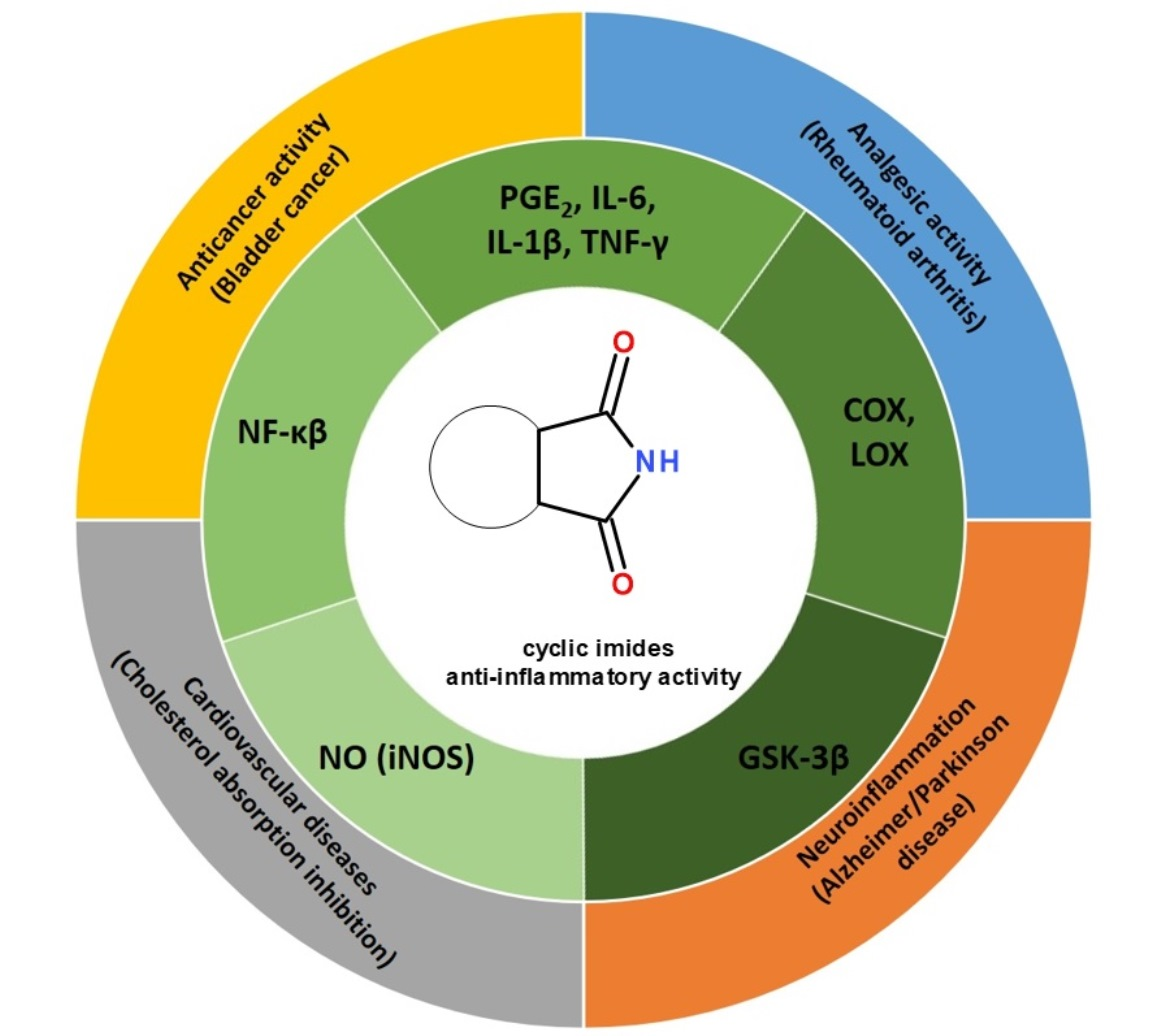
Imide derivatives constitute an interesting group of compounds exhibiting broad biological activity. Structures containing the imide moiety [–CO–N(R)–CO–] occur in both natural and synthetic compounds. Several drugs containing an imide moiety are in therapeutic use. In this review, we present the structures and describe the effects of cyclic imide derivatives, which primarily exhibit anti-inflammatory activity. Some of the presented derivatives have been studied in detail, and their additional analgesic, anticancer, and antibacterial effects have been described. The relative neuroprotective properties of imide derivatives are also described, as are reports of their effect on lowering cholesterol and triglyceride levels. In this review, we discuss monocyclic imide derivatives (succinimide, glutarimide, maleimide, and hydantoin), bicyclic derivatives (e.g., phthalimide), and polycyclic imides.

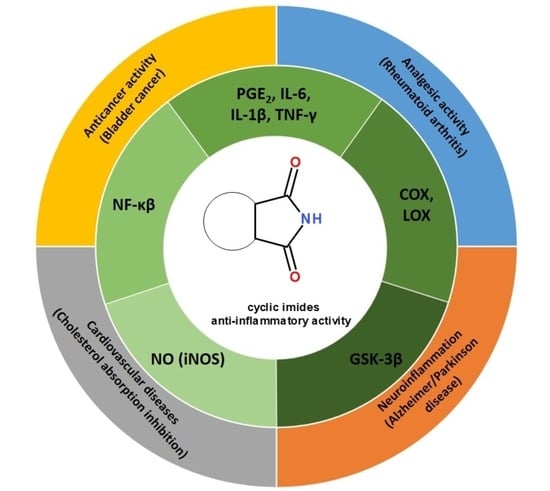
Graphical Abstract

1. Introduction

Cyclic imides constitute an important class of heterocyclic compounds that have emerged as versatile structural scaffolds in the design of bioactive molecules [1]. The properties of imide derivatives largely depend on the nature of the substituents present on the imide ring. Both the size and electrophilic character of these substituents significantly influence the steric properties of the molecule [2]. The presence of specific nitrogen- and oxygen-containing functional groups contributes to their pharmacological activity [3,4]. In addition, imide-based compounds are often electrically neutral and hydrophobic, which facilitates their permeation across biological membranes [2,5].
Structures containing the imide fragment [–CO–N(R)–CO–] occur in both natural and synthetic compounds [6]. This motif has been identified in several natural metabolites, including cladoniamide A, lamprolobine, and migrastatin [7], and it is also present in the alkaloid phyllanthimide, isolated from Phyllanthus sellowianus, which serves as a precursor for the synthesis of more complex derivatives [8]. Synthetic cyclic imides exhibit a broad spectrum of biological activities, including antimicrobial effects [9,10,11,12], anticancer activity [13,14,15,16], and carbonic anhydrase inhibition [17], as well as antidiabetic and hypolipidemic properties [18,19,20]. Moreover, they are capable of modulating central nervous system functions [21,22,23] and demonstrate anti-inflammatory activity [24].
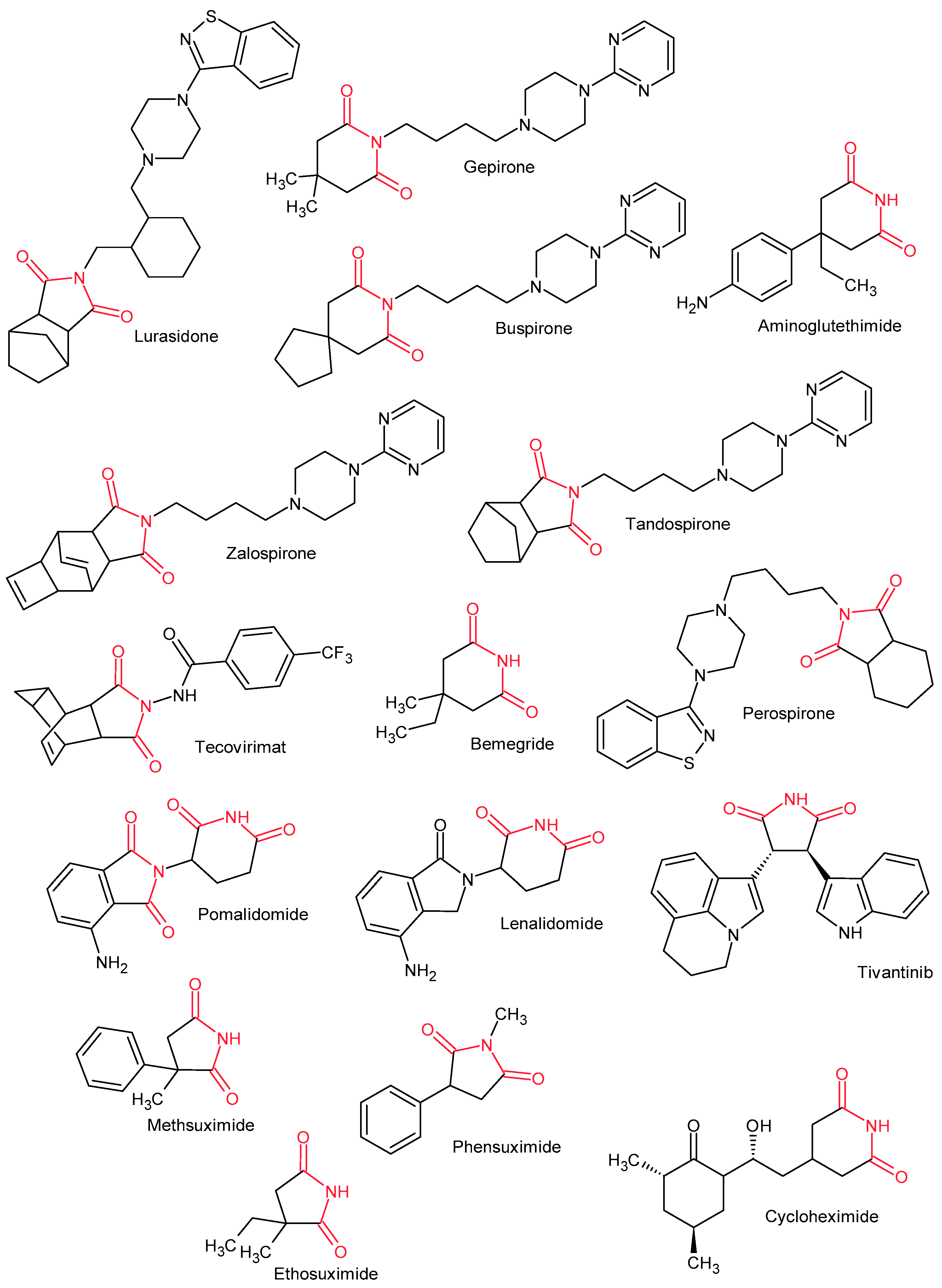
The clinical relevance of cyclic imides is underscored by their presence in several drugs approved for therapeutic use. These include ethosuximide, phensuximide, and methsuximide, used in the treatment of epilepsy, as well as antipsychotic agents such as lurasidone, perospirone, tandospirone, gepirone, and zalospirone [6] (Figure 1). The imide ring motif is also present in anticancer agents, including aminoglutethimide [6], pomalidomide [6], lenalidomide, and tivantinib [25] (Figure 1). The glutarimide scaffold occurs in the structures of the antifungal antibiotic cycloheximide and the respiratory stimulant bemegride [26]. Furthermore, the imide fragment is found in tecovirimat [27], the first antiviral drug approved for the treatment of smallpox.
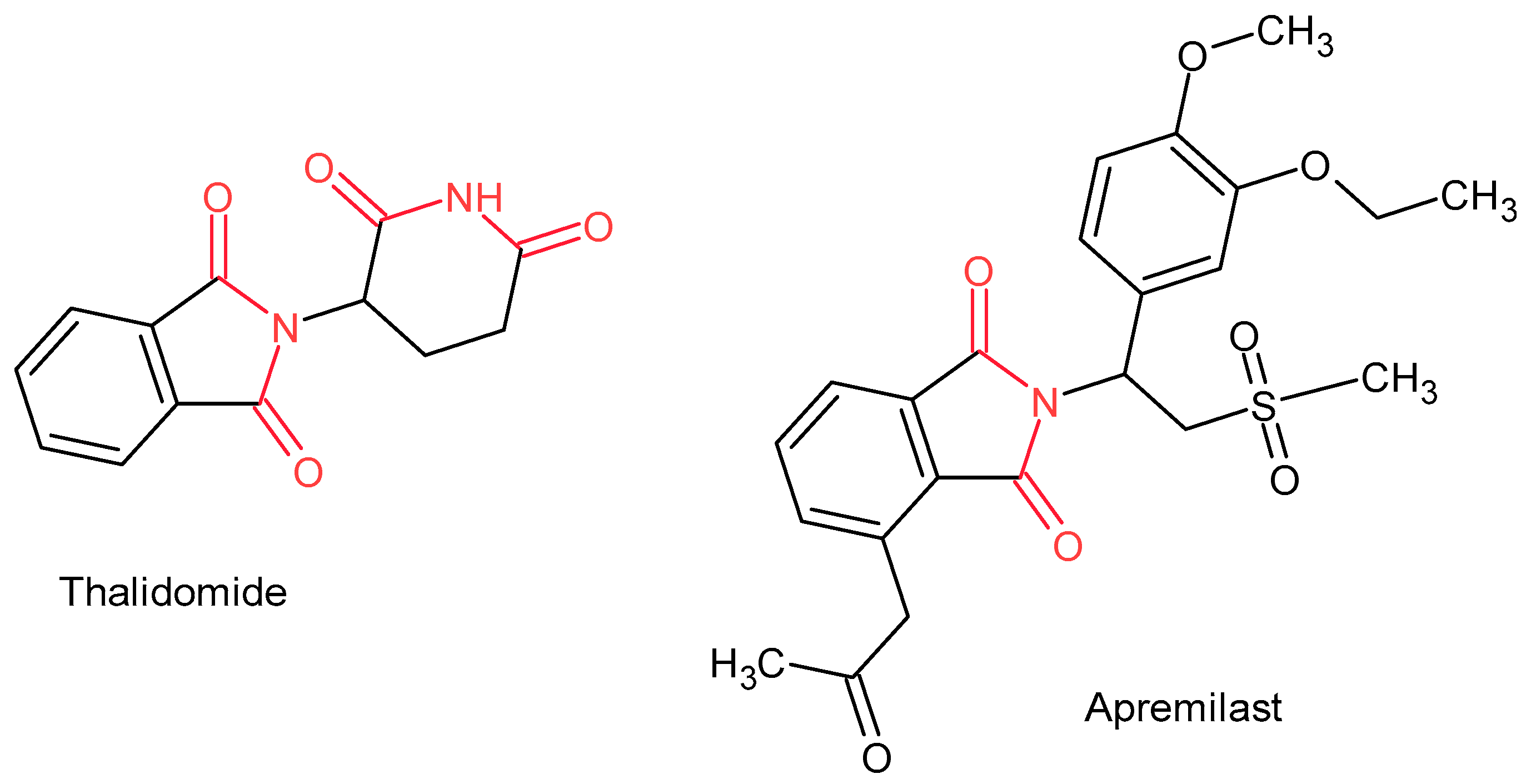
Among imide-containing drugs, anti-inflammatory properties are exhibited by thalidomide—a potent inhibitor of tumor necrosis factor-α (TNF-α) production [28]—and apremilast, a selective phosphodiesterase 4 (PDE4) inhibitor approved for the treatment of psoriasis and psoriatic arthritis [29] (Figure 2).
Inflammation is a tightly regulated physiological response to tissue injury and pathogenic challenges, aimed at eliminating the initiating stimulus and restoring homeostasis. The inflammatory process involves coordinated vascular and cellular events, including increased blood flow, enhanced vascular permeability, and recruitment of leukocytes to the site of injury [1,30]. During the inflammatory response, immune cells release mediators such as cytokines (IL-1β, IL-6, and TNF-α), eicosanoids, and reactive oxygen and nitrogen species [31]. Key molecular pathways regulating the expression of pro-inflammatory mediators include NF-κB activation via Toll-like receptor 4 (TLR4) and the arachidonic acid cascade mediated by cyclooxygenase isoenzymes COX-1 and COX-2, leading to the production of pro-inflammatory prostaglandins, particularly PGE2 [31,32]. Targeting pro-inflammatory cytokines such as IL-1β, IL-6, and TNF-α, as well as COX-2 and PDE4, remains a central strategy in contemporary anti-inflammatory drug discovery [1,31,32].
Although inflammation is essential for host defense, its unresolved or excessive form contributes to the pathogenesis of numerous chronic diseases, including neurodegenerative, autoimmune, and metabolic disorders [33]. These observations highlight the urgent need for the development of novel anti-inflammatory agents capable of selectively modulating key signaling pathways.
In this context, cyclic imides represent a promising class of compounds whose structural diversity enables the design of molecules with targeted anti-inflammatory activity. The principal subclasses include monocyclic imides (succinimides, glutarimides, and maleimides), bicyclic imides (e.g., phthalimides), and polycyclic imides (e.g., naphthalimides) [34].
This review aims to present the current state of knowledge regarding cyclic imides with anti-inflammatory activity, with particular emphasis on their chemical structures, subclass classification, and potential therapeutic applications.

2. Cyclic Imides with Anti-Inflammatory Activities

Cyclic imides exhibiting anti-inflammatory activity encompass structurally diverse subclasses, including monocyclic compounds, bicyclic derivatives, and more complex polycyclic systems.

2.1. Monocyclic Imide Derivatives

2.1.1. Succinimide Derivatives

Succinimides are heterocyclic compounds containing a pyrrolidine-2,5-dione scaffold. Succinimides are used as antiepileptic drugs (phensuximide, methsuximide, and ethosuximide), antipsychotic drugs (tandospirone, lurasidone, and perospirone), and as drugs for treating smallpox (tecovirimat) and cancer (tivantinib) (Figure 1) [35]. Succinimide derivatives have not yet been introduced in the treatment of anti-inflammatory diseases, but many studies are being conducted on the synthesis of new derivatives of these systems with anti-inflammatory activity.
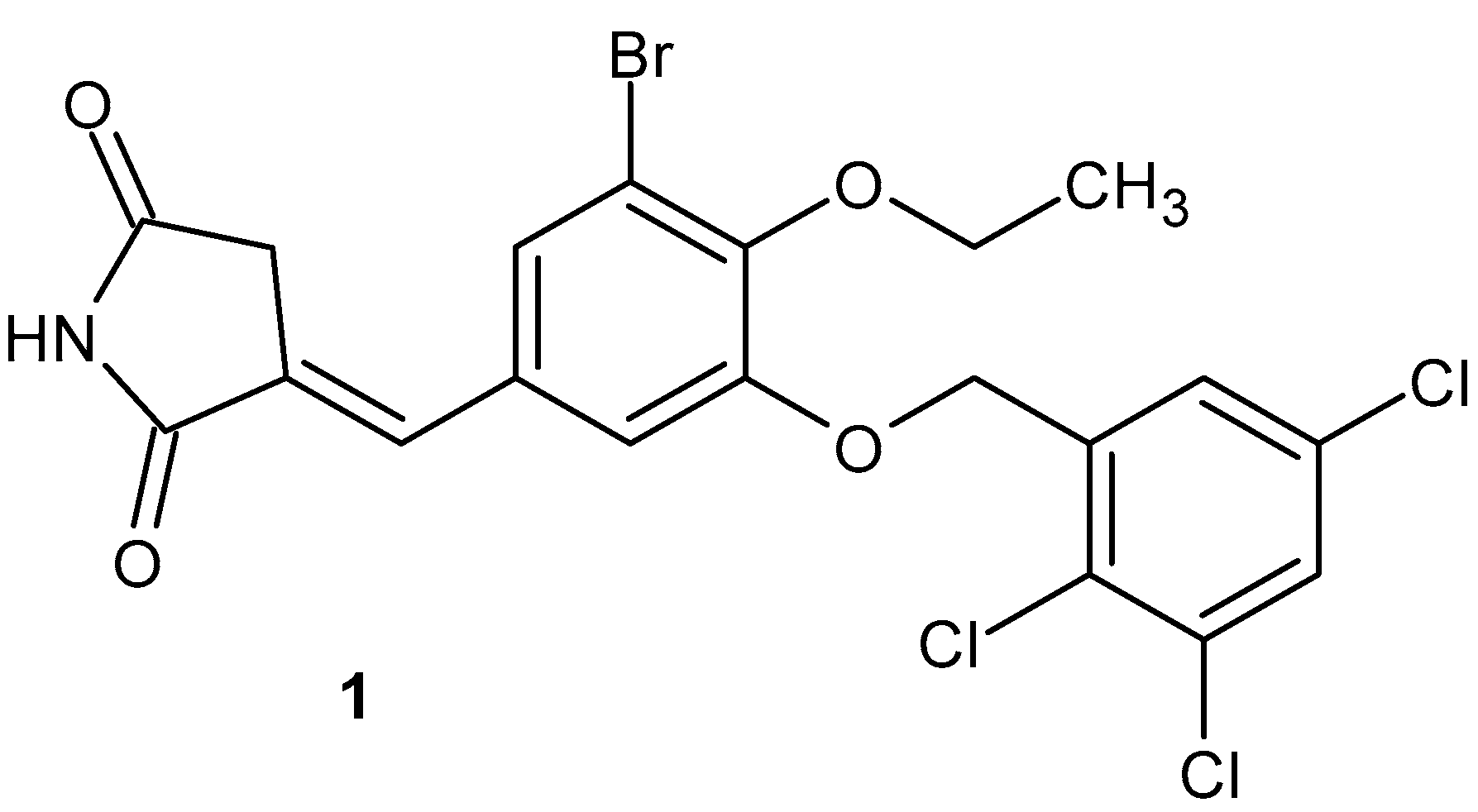
3-Benzylidene succinimide analogues were evaluated by Zhang et al. [36] as potent spleen tyrosine kinase (Syk) inhibitors. The most active was (E)-3-(3-bromo-4-ethoxy-5-((2,3,5-trichlorobenzyl)oxy)-benzylidene)pyrrolidine-2,5-dione 1 (Figure 3) with a Syk-inhibitory IC50 = 1.3 µM. Derivative 1 demonstrated the potential to inhibit IL-6 and MMP-3 secretion, as well as oral efficacy in a mouse model of collagen-induced arthritis (CIA). Compound 1 was tested for its effect in a mouse CIA model, which mirrored the clinical progression of human rheumatoid arthritis. Administration of derivative 1 alleviated typical symptoms of acute inflammation, such as edema and swelling [36].
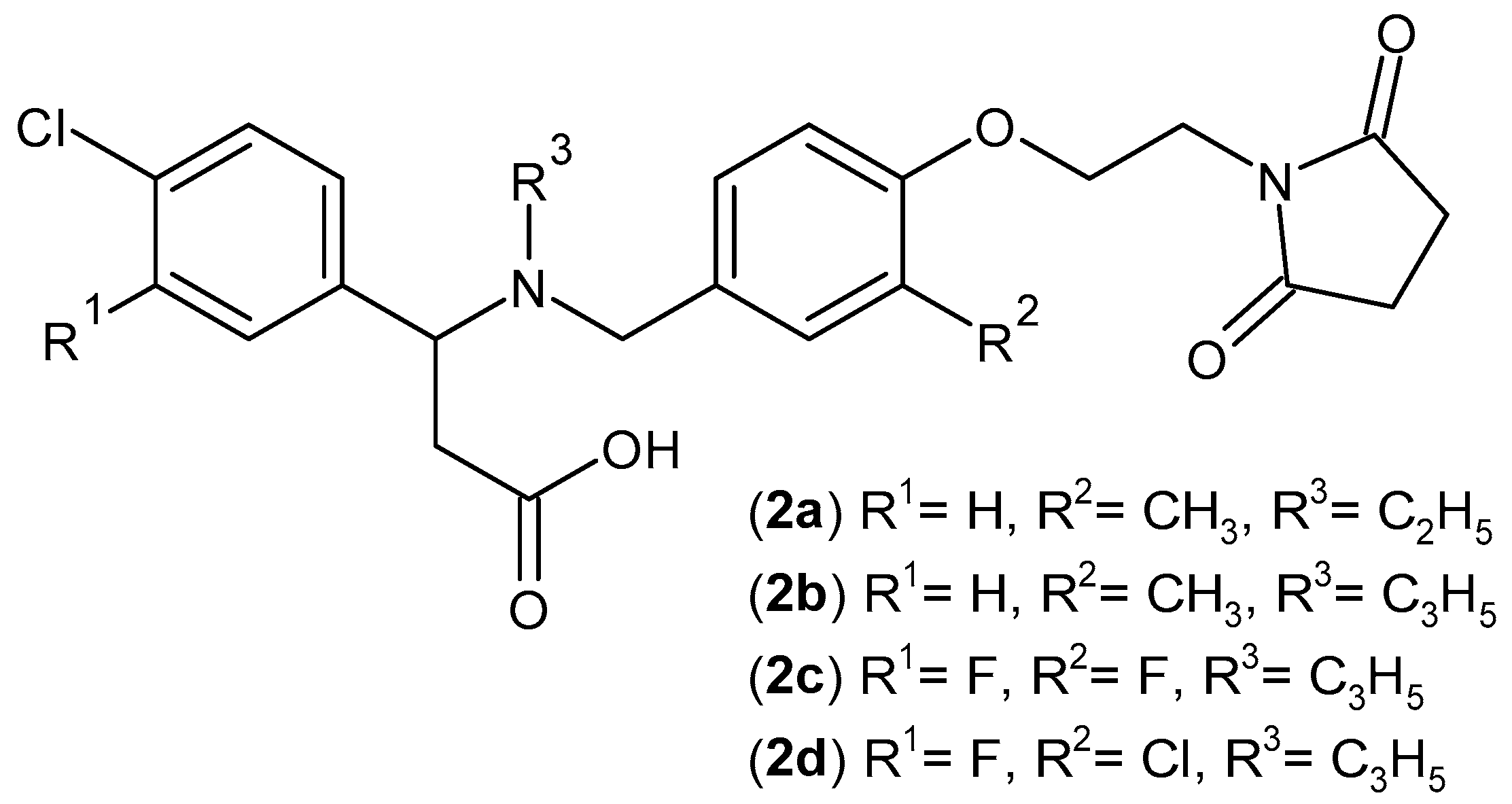
CXCR3 is a chemokine receptor that participates in the recruitment of inflammatory cells. N,N-disubstituted benzylamine derivatives with succinimide scaffolds 2ad (Figure 4) were evaluated as CXCR3 antagonists. Compound 2a (IC50 = 21 nM) proved to be the most effective in the initial assay. However, considering the Caco-2 permeability profile and hERG safety, compounds 2b (IC50 = 36 nM), 2c (IC50 = 58 nM), and 2d (IC50 = 40 nM), showing an hERG IC50 > 10 μM and no micronucleus acid test (MNT) and mutagenicity assay (AMES II) alerts, were considered the best candidates for further studies [37].
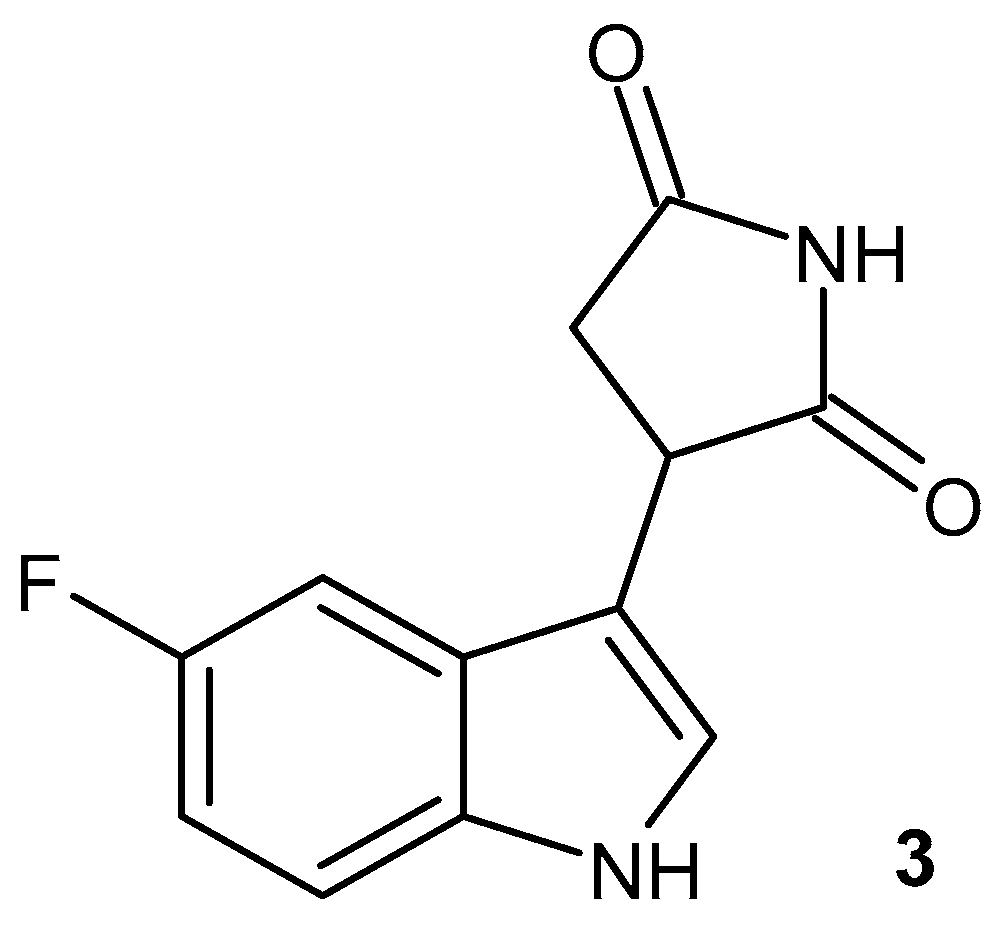
Indoleamine-pyrrole-2,3-dioxygenase (IDO) is an immunomodulatory enzyme involved in tryptophan catabolism. It inhibits T and NK lymphocytes and generates Treg lymphocytes. IDO expression is induced by interferon gamma in response to inflammatory stimuli. COX-2 inhibitors reduce the activity of indoleamine 2,3-dioxygenase, which leads to a reduction in the activity of pro-inflammatory cytokines. 3-(3-Indolyl)-succinimide and its derivatives were obtained as hIDO-1 inhibitors. Replacements of the indole core with alternative heterocycles (naphthalene, indazole, benzimidazole, azaindole, isoquinoline, quinoline, indole, substituted benzofurans, and benzothiophenes) were found to be significantly less active. The most active, 3-(5-fluoro-1H-indol-3-yl)pyrrolidine-2,5-dione 3 (Figure 5), was selected to advance to clinical trials as a novel hIDO-1 inhibitor (a First in Patient Study in Malignant Gliomas—NCT02764151). After analyzing all available data from enrolled patients, the sponsor decided to terminate the study and not apply for marketing authorization for the drug in the indication of malignant glioma [38].
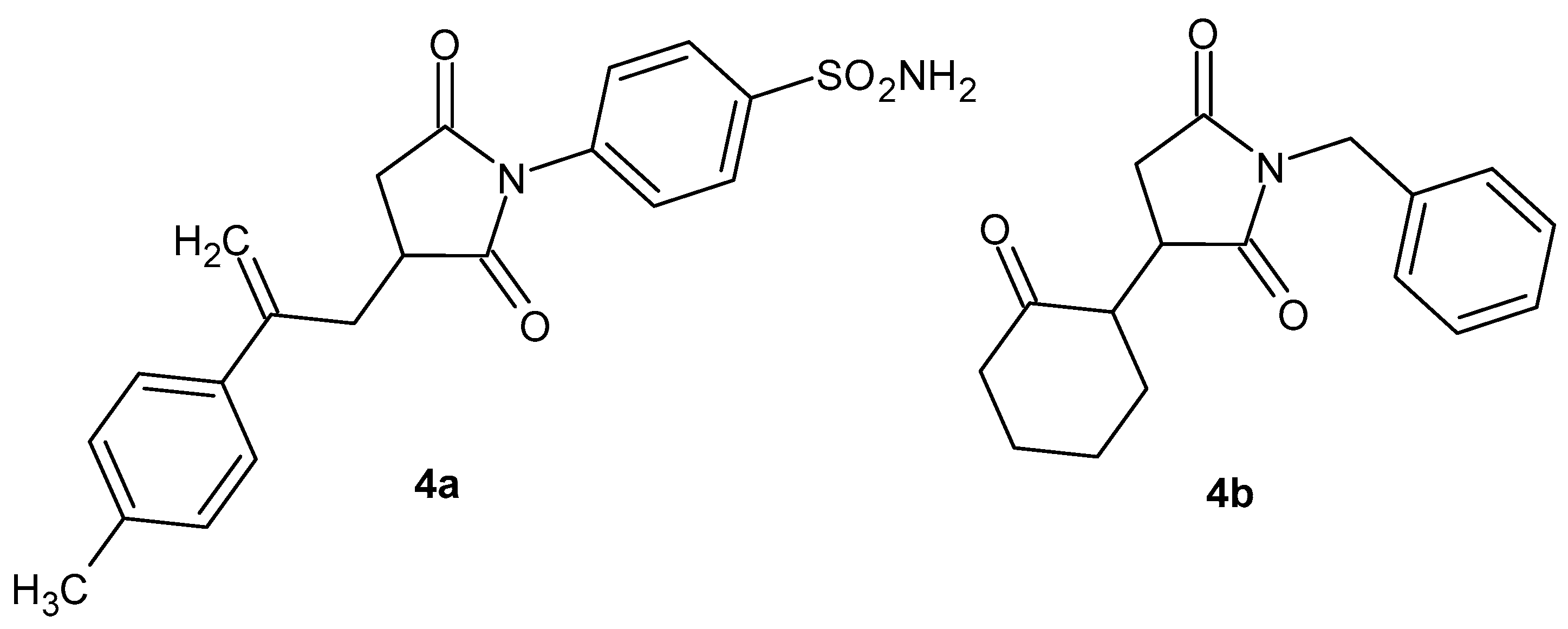
Anti-inflammatory activity of N-substituted pyrrolidine-2,5-dione derivatives was determined using different in vitro assays like cyclooxygenase-1 (COX-1), cyclooxygenase-2 (COX-2), 5-lipoxygenase (5-LOX), anti-protease, and albumin denaturation assays [39], and the compounds exhibited good to excellent inhibition of 5-LOX and selectivity against COX-2 isozyme. The anti-inflammatory activity of the most potent inhibitors of COX-2 (Figure 6), 4a (IC50 = 0.98 µM) and 4b (IC50 = 19.98 µM), was assessed using a carrageenan-induced paw edema model in mice with various mediators like histamine, bradykinin, prostaglandin (PGE2), and leukotriene. The tested compounds, 4ab, showed less activity in bradykinin and histamine-induced inflammation as compared to the positive control. Compounds 4ab significantly reduced the PGE2-induced paw edema (by 64.60% and 81.80% until the fifth hour of the procedure). The effect of derivative 4a on paw edema induced by leukotriene was comparable to that of the standard drug, montelukast. In vivo acute toxicity testing demonstrated the safety of compounds 4ab at doses up to 1000 mg/kg [39].
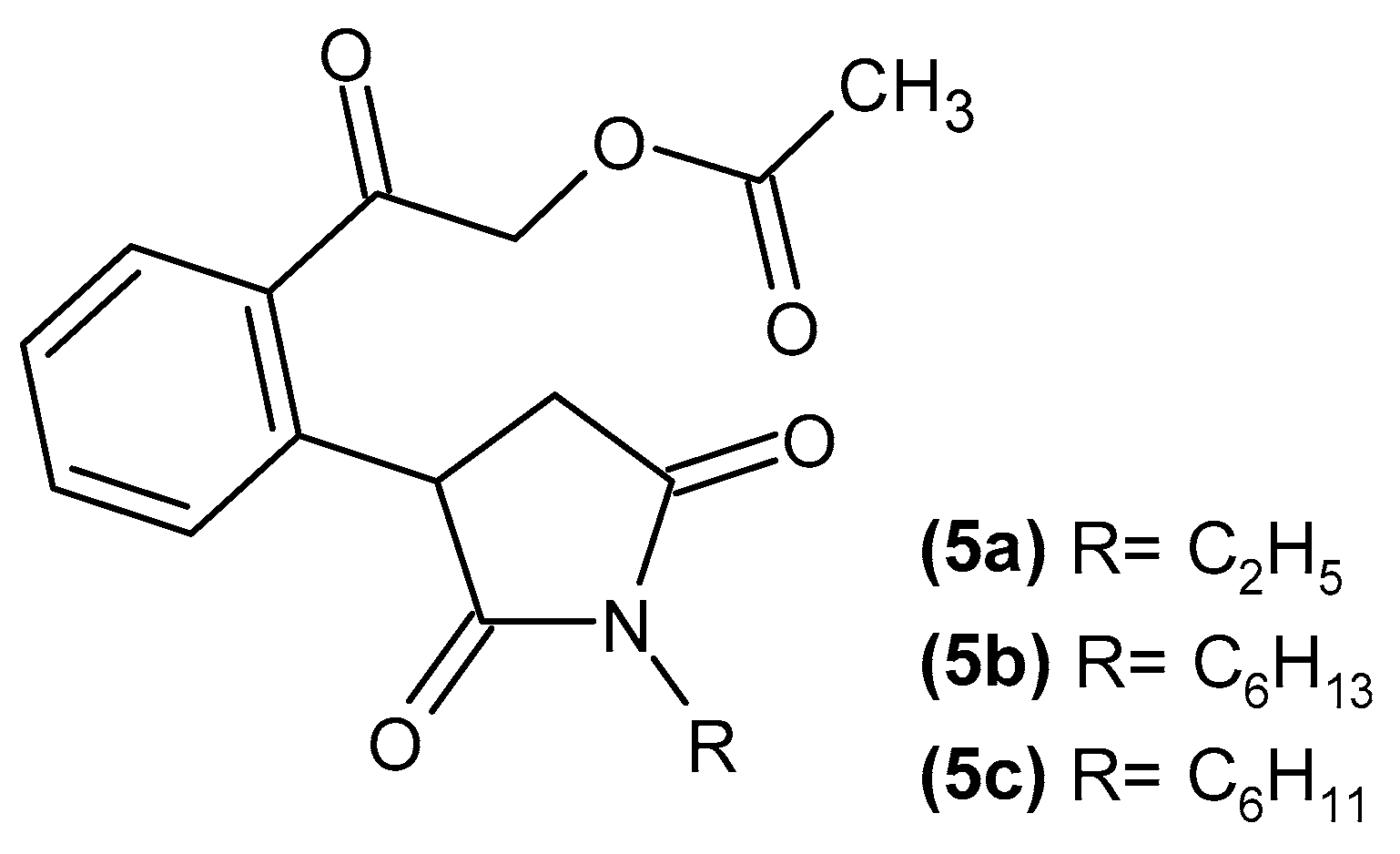
Protein denaturation is a key indicator of inflammatory processes, and compounds that can effectively prevent this denaturation are promising candidates for anti-inflammatory therapies. Sivakumar et al. [40] obtained 2-(2-(1-alkyl-2,5-dioxopyrrolidin-3-yl)phenyl)-2-oxoethyl acetate derivatives, 5ac (Figure 7), which exhibited greater inhibition of protein denaturation (using the egg albumin denaturation method) than the anti-inflammatory drug diclofenac.

2.1.2. Glutarimide Derivatives

Glutarimide derivatives are heterocyclic compounds with a piperidine-2,6-dione ring. Glutarimides exhibit a broad spectrum of pharmacological activity, and the piperidine-2,6-dione scaffold is present in some drugs, e.g., cykloheksimide, gepirone, buspirone, bemegride, and aminoglutethimide (Figure 1) [26].
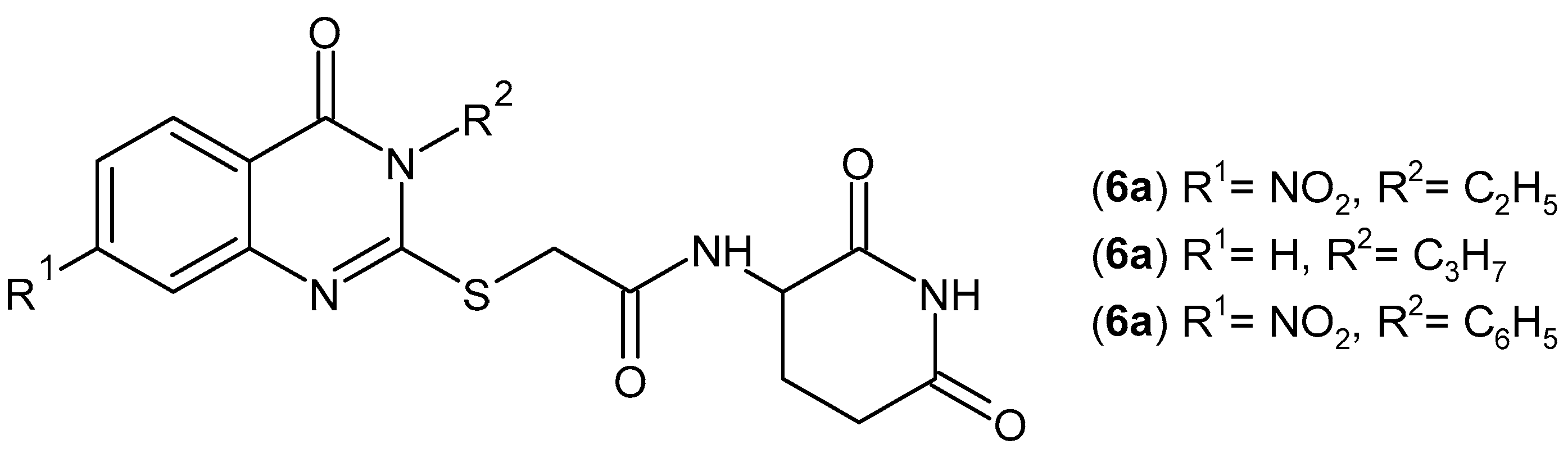
Glutarimide derivatives with a quinazolinone moiety have been synthesized by Abdallah et al. [41] as potent inhibitors of the pro-inflammatory factors TNF-α and IL-6. The most potent compounds, 6ac (Figure 8), also showed inhibitory activity on both COX-1 and COX-2 and were more effective than thalidomide. The most active compound, 6a, showed a significant reduction in TNF-α and IL-6 levels, comparable to dexamethasone and more effective than thalidomide.
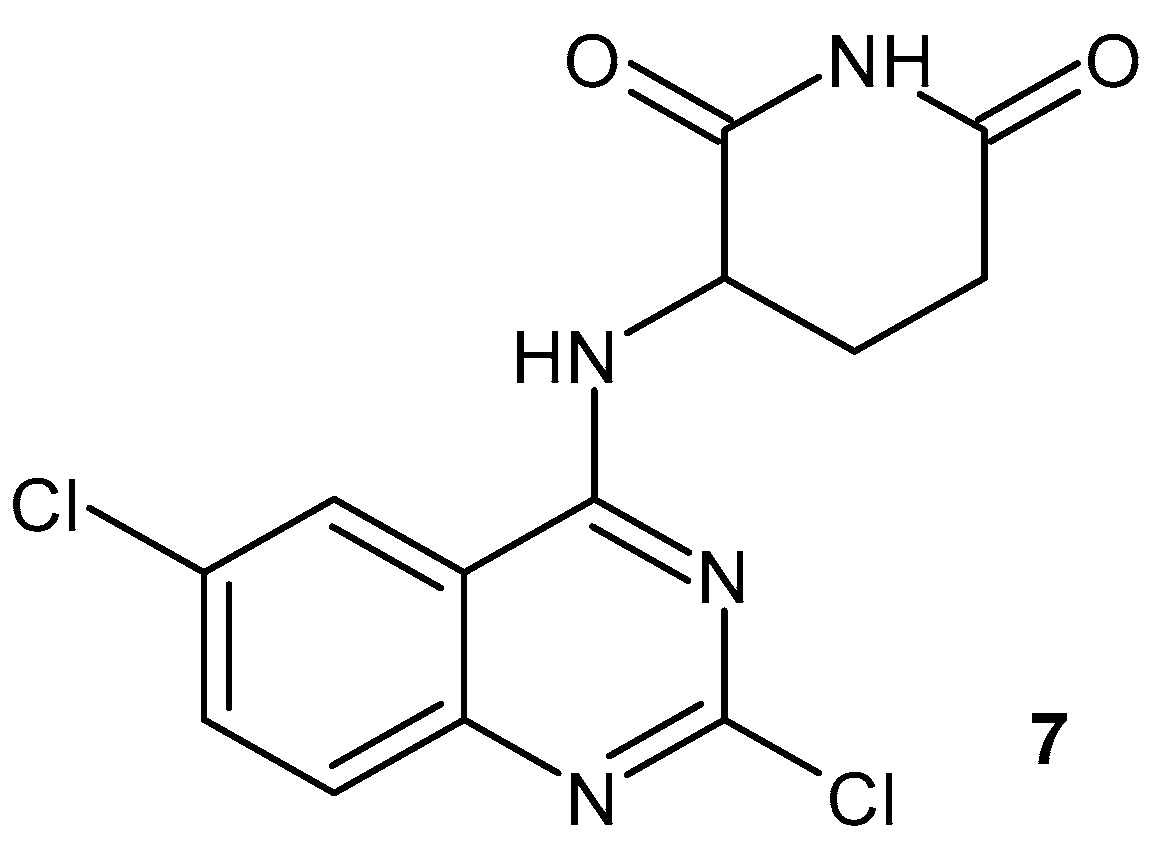
Other glutarimide derivatives with a quinazoline scaffold were synthesized and evaluated for their activities on the pro-inflammatory factors TNF-α and IL-6 using thalidomide and dexamethasone as reference drugs [42]. 3-((2,6-Dichloroquinazolin-4-yl)amino)piperidine-2,6-dione 7 (Figure 9) exhibited significant reductions in TNF-α (76.14%) and IL-6 (80.65%), stronger than thalidomide and dexamethasone. This compound, 7, also inhibited COX-1 (IC50 values of 0.85 μM) and COX-2 (IC50 values of 0.06 μM) and is more potent than thalidomide (IC50 values of 4.57 μM and 1.38 μM, respectively).
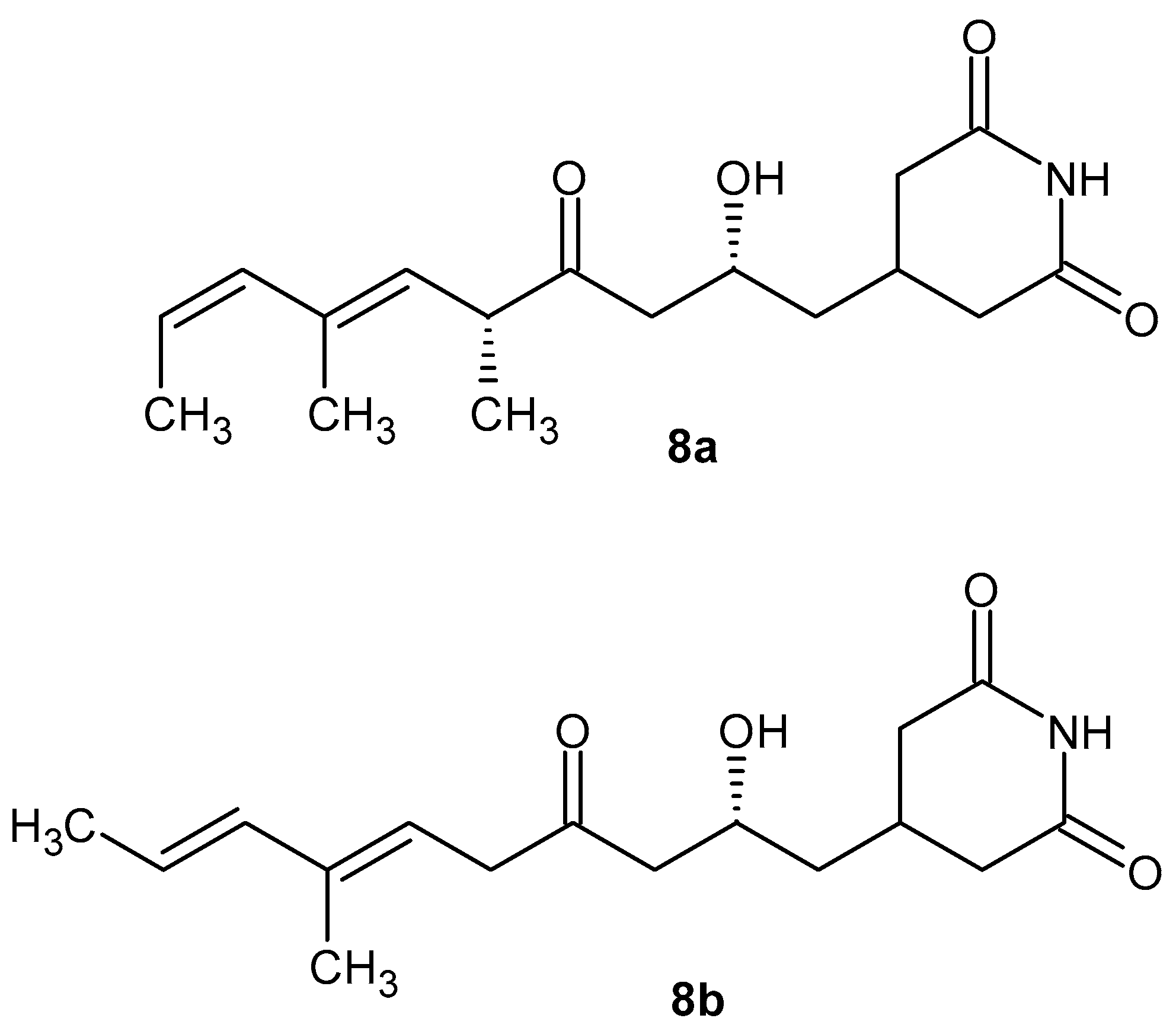
Glutarimide-containing polyketides (GPs) are a large group of natural products isolated from various microorganisms, primarily from Streptomycetes. GPs exhibit antifungal, antibacterial, anticancer, and anti-inflammatory properties [43]. 9-Methylstreptimidone 8a (Figure 10) was isolated from Streptomyces species as a novel inhibitor of NF-κB [44]. The synthetic thioester analogs of compound 8a also inhibit LPS-induced NO production comparable to that of 9-methylstreptimidone 8a [44]. Glutarimide antibiotic S632A3 8b (Figure 10) isolated from Streptomyces hygroscopicus S632 exhibits good anti-inflammatory activity. S632A3 8b inhibits NF-κB transcription activity induced by LPS and the expression levels of LPS-induced pre-inflammatory factors such as iNOS, COX-2, TNF-α, and IL-6 by inhibiting GSK-3β and the related ASK1-p38 signaling pathway in Raw264.7 cells [45].
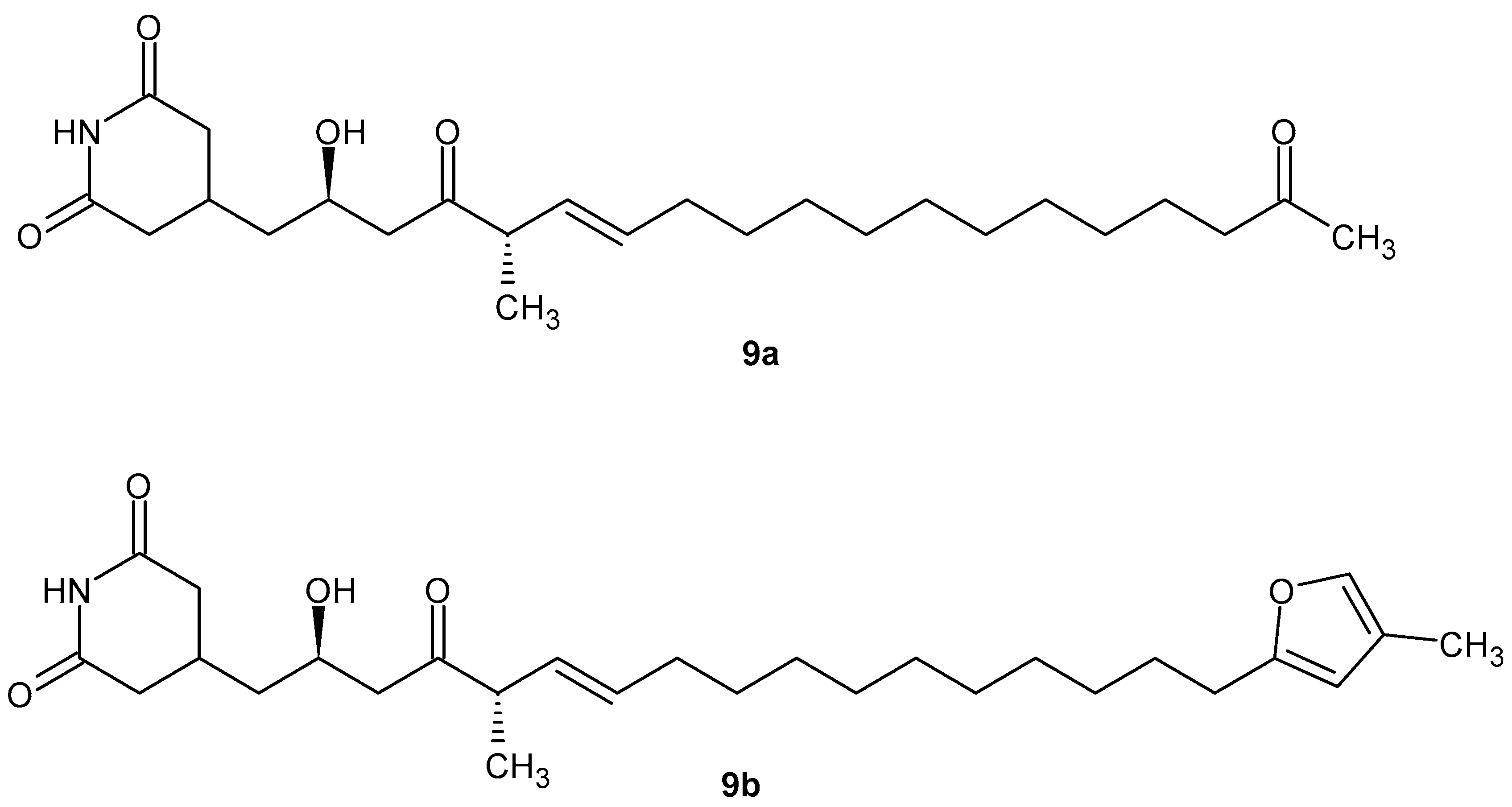
Gladiofungins C 9a and E 9b, isolated by Chen et al. [46] from Burkholderia gladioli (Figure 11), showed moderate anti-inflammatory activities for their inhibition of NO production in LPS-induced RAW 264.7 macrophages.
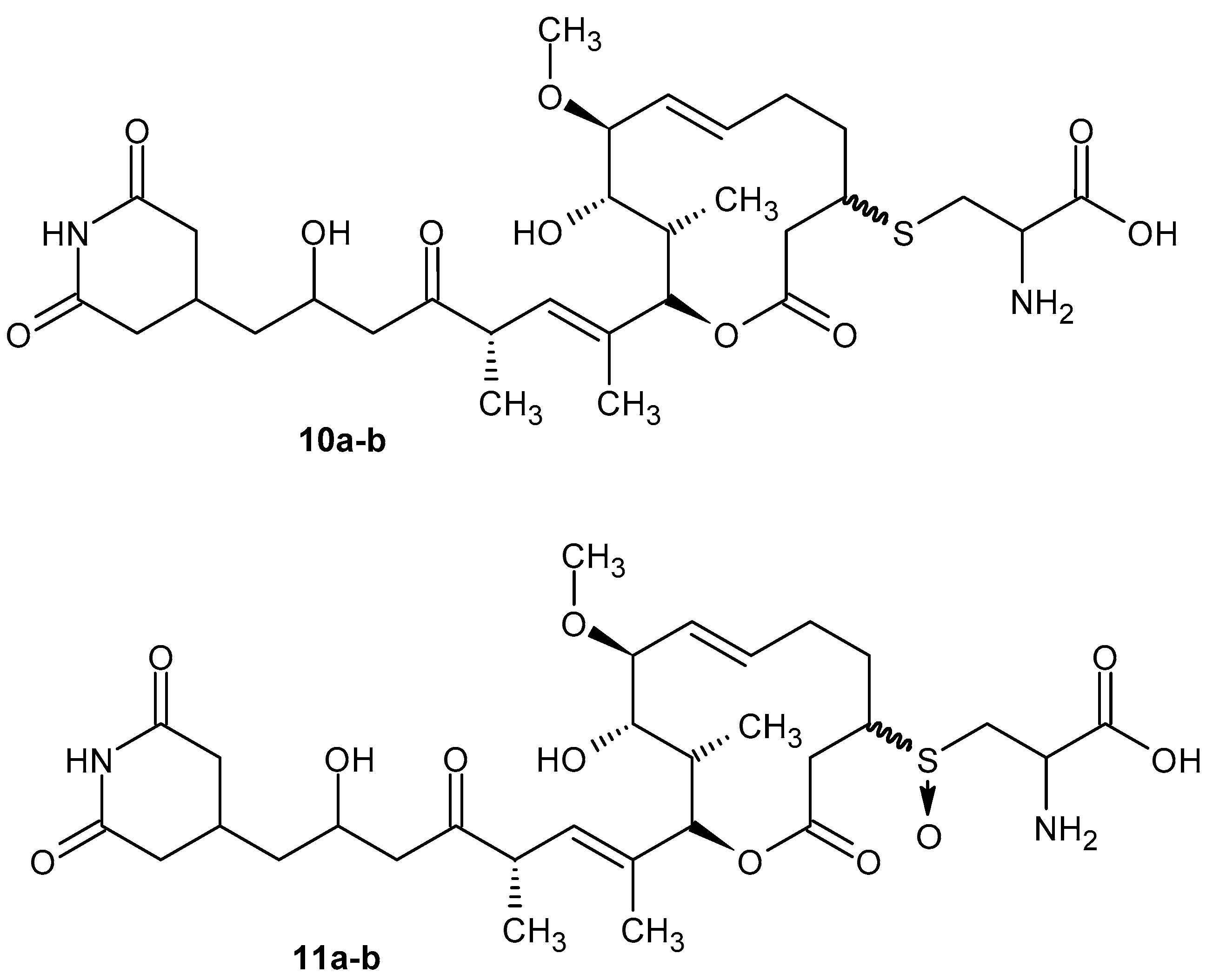
Glutarimides with macrolide in side chains NK30424A and NK30424B 10ab (Figure 12) as isomers isolated from Streptomycetes exhibit anti-inflammatory activity by inhibiting lipopolysaccharide-induced TNF-α production [47]. Next, new sulfoxide derivatives of NK30424A/B, as well as stereoisomers 11ab, were synthesized (Figure 12). These diastereoisomers, 11ab, have more powerful anti-inflammatory activity [48].
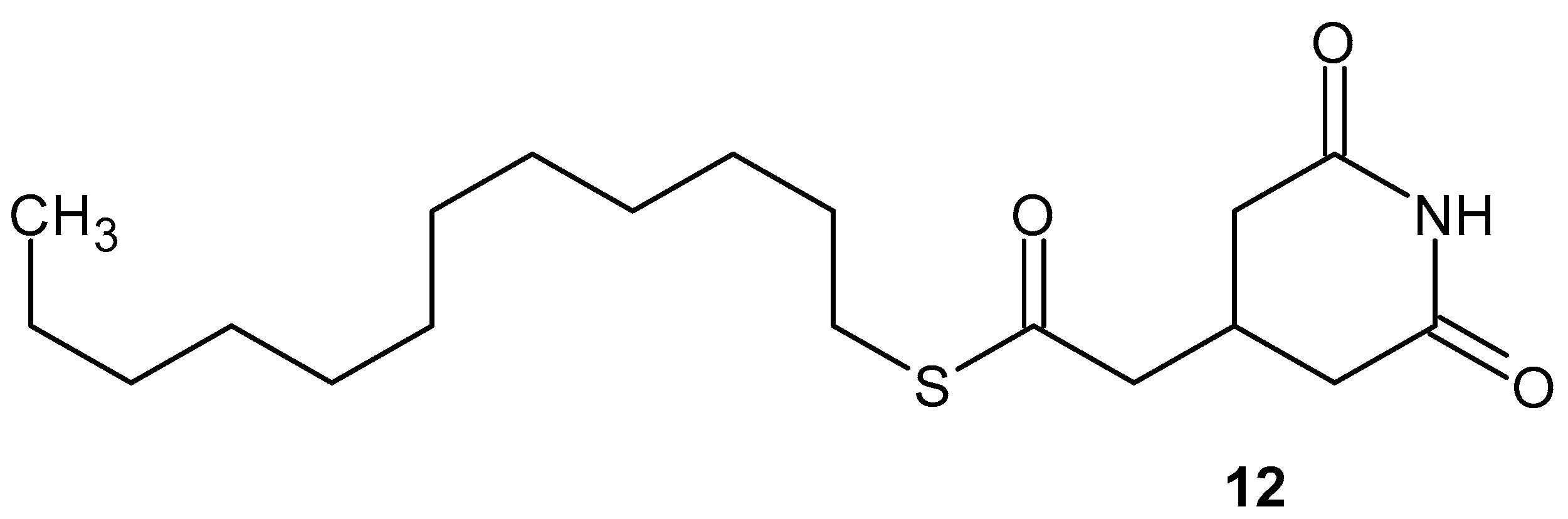
3-[(dodecylthiocarbonyl)methyl] glutarimide DTCM-G 12 (Figure 13), synthesized by Ishikawa et al. [44], exhibits anti-inflammatory activity by inhibiting LPS-induced NO production, AP-1 activation, and the expression of iNOS and COX-2 in a mouse macrophage cell line, RAW264.7. DTCM-G 12 does not inhibit LPS-induced NF-κB activation or LPS-induced IL-6 secretion [49]. DTCM-G 12 is highly effective in inhibiting sodium dextran sulfate-induced colon inflammation in rats [50].

2.1.3. Hydantoin Derivatives

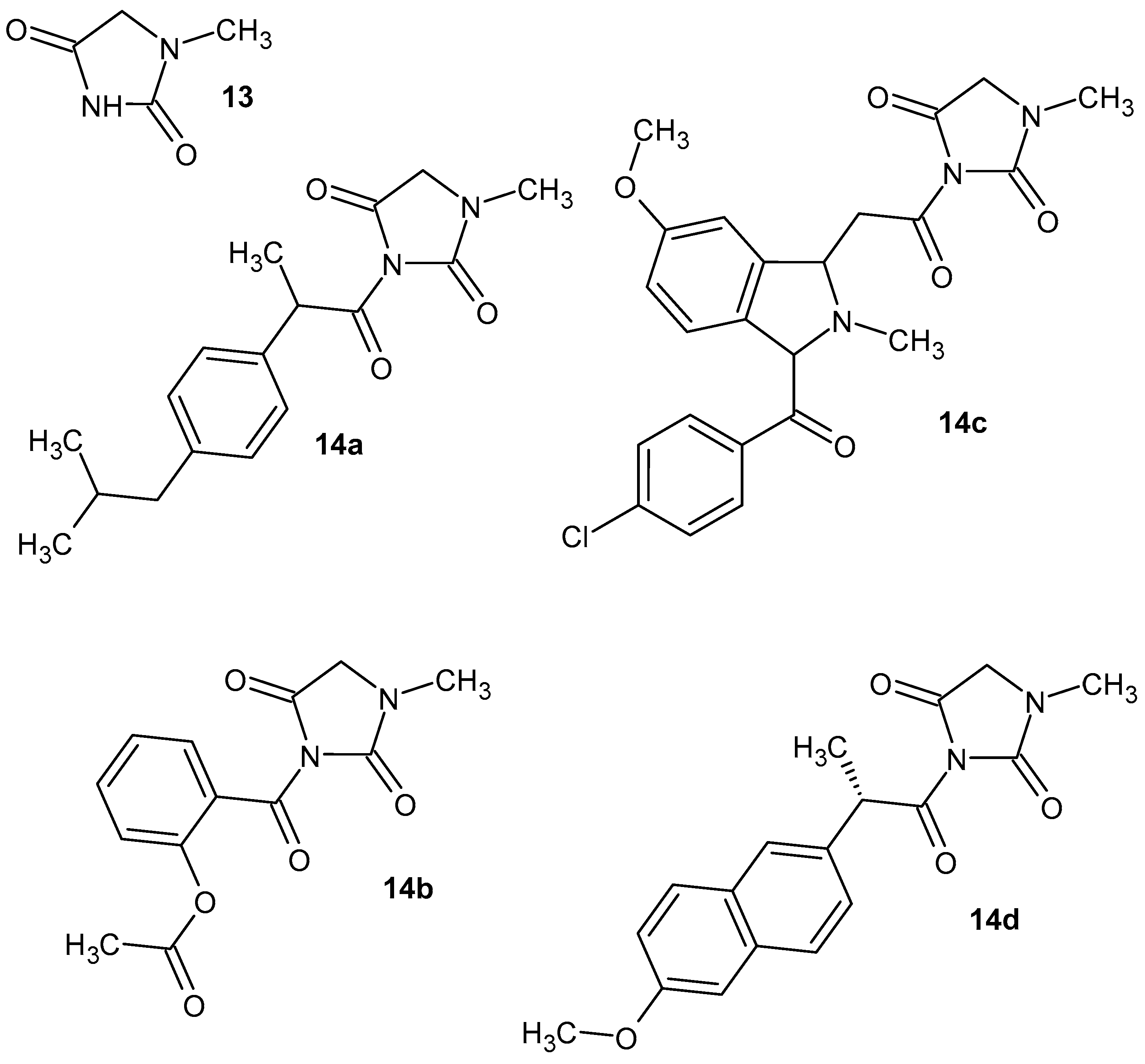
Hydantoin derivatives contain an imidazolidine-2,4-dione ring and exhibit a variety of biological activities, including anti-inflammatory activity. 1-Methylhydantoin 13 (Figure 14) was isolated from Oviductus ranae [51] and exhibited a good anti-inflammatory effect by reducing ear edema in mice caused by xylene [52]. Next, 1-methylhydantoin conjugates with various molecules with anti-inflammatory activity, ibuprofen, aspirin, indomethacin, and naproxen, were synthesized (14ad) (Figure 14). The anti-inflammatory assay showed that compound 14b exhibited an enhanced anti-inflammatory effect in acute pneumonia induced by particulate matter (PM2.5) compared to the reference compounds: 1-methylhydantoin and aspirin [51].
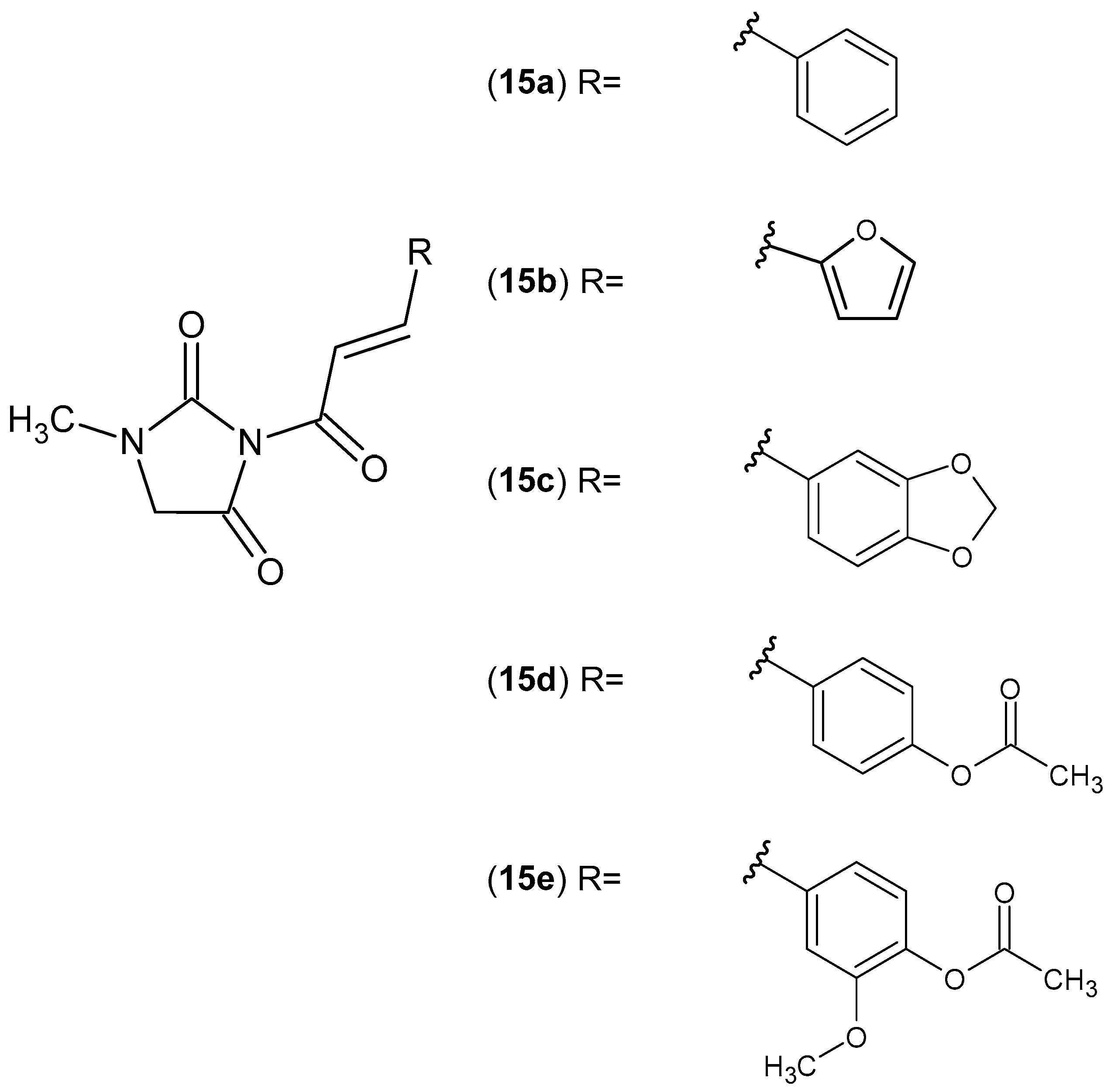
The anti-inflammatory activity of 1-methylhydantoin cinnamic imides 15 (Figure 15) was investigated. All derivatives, 15ae, showed obvious anti-inflammatory activity by reducing the degree of ear swelling in mice. Compounds 15b and 15d best inhibited the secretion of inflammatory factors IL-1β and TNF-α, as well as NO release [52].
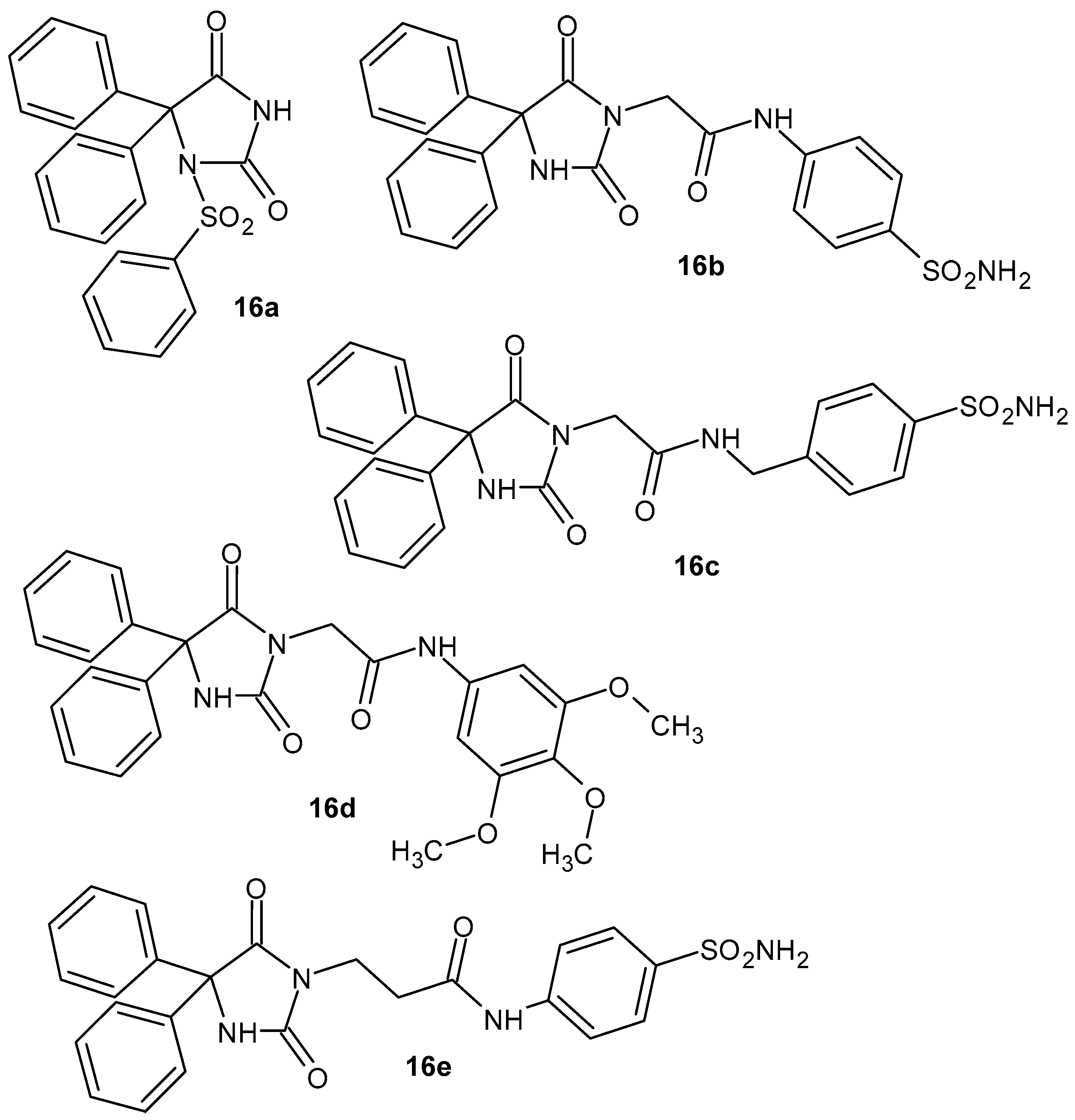
1-Benzenesulfonyl-5,5-diphenylhydantoine 16a (Figure 16) exhibits anti-inflammatory activity as a prostaglandin synthetase inhibitor [53]. Next, other 5,5-diphenylimidazolidine-2,4-dione derivatives with potent anti-inflammatory activity were synthesized by Abdel-Aziz et al. [54]. Among them, compounds 16be (Figure 16) exhibited a high COX-2 inhibitory effect (IC50 = 0.70, 0.44, 0.61, and 0.41 mM, respectively) and a better selectivity index (range of 142–243) compared to celecoxib [54].
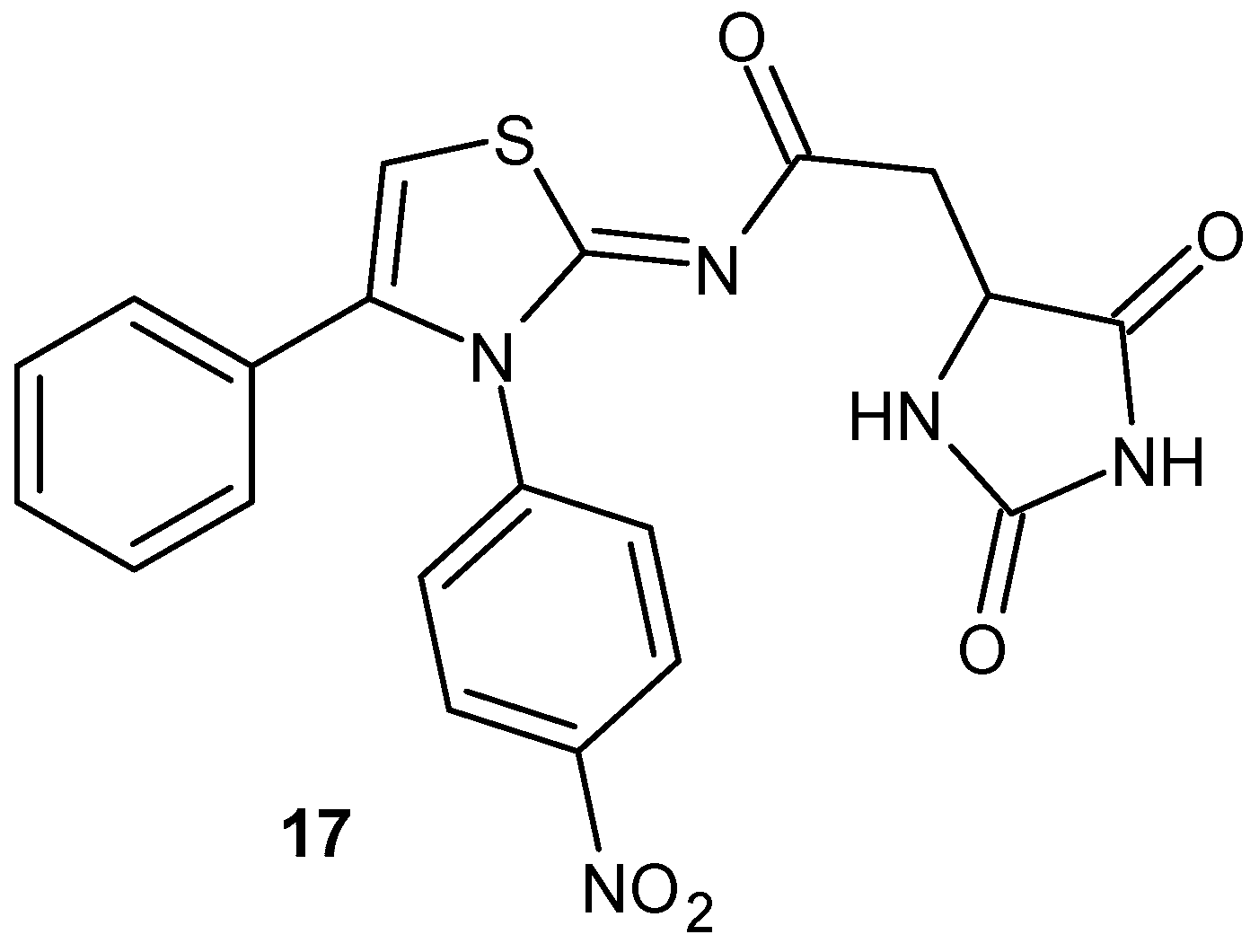
2-(2,5-Dioxoimidazolidin-4-yl)-N-(3-(4-nitrophenyl)-4-phenylthiazol-2(3H)-ylidene) acetamide 17 (Figure 17), synthesized by Sondhi et al. [55], showed good anti-inflammatory activity in the carrageenan-induced paw edema test, similar to ibuprofen (34% at 50 mg/kg p.o.).
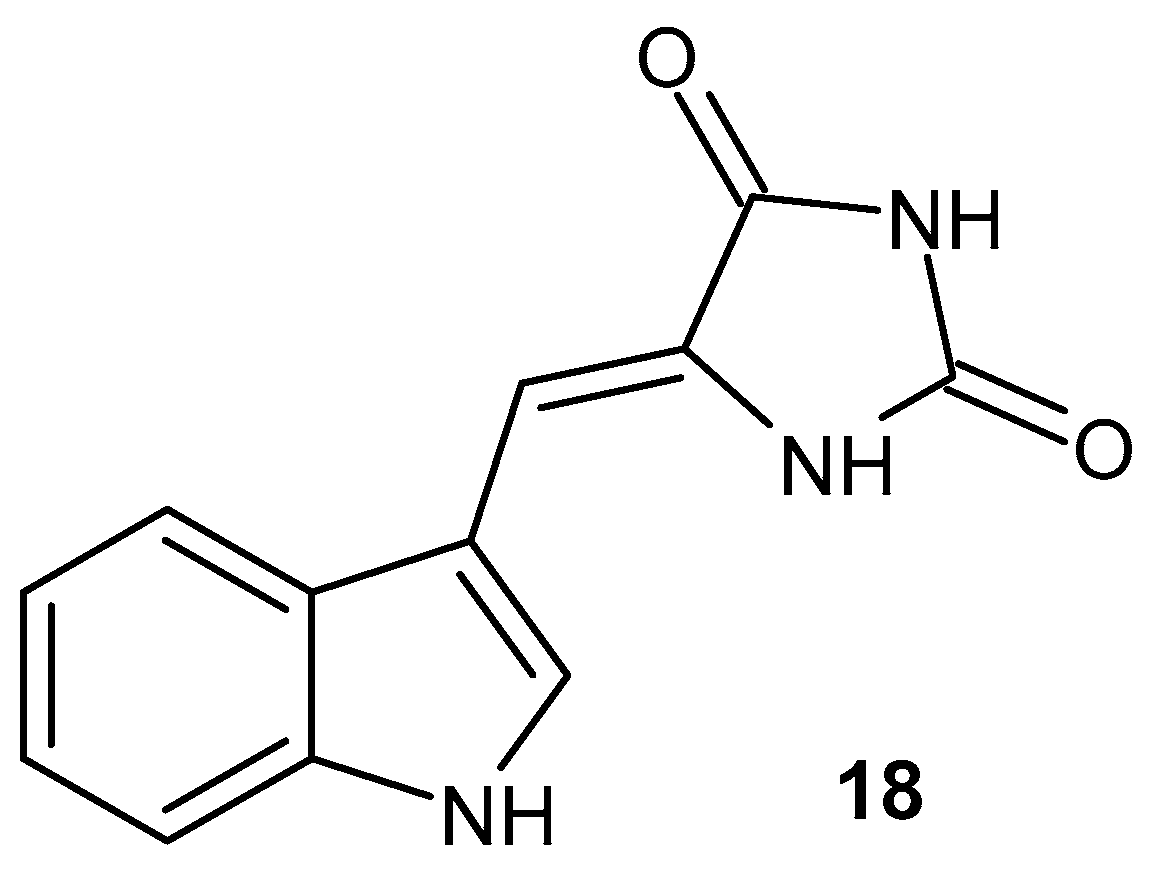
Lin et al. [56] synthesized indole-hydantoin derivative 18 (Figure 18) with anti-inflammatory activity. (Z)-5-(1H-indole-3-ylmethylene) imidazolidine-2,4-dione 18 significantly inhibits the LPS-induced production of NO, secretion of chemokines (CCL2 and CXCL1), and activation of NF-κB [56].
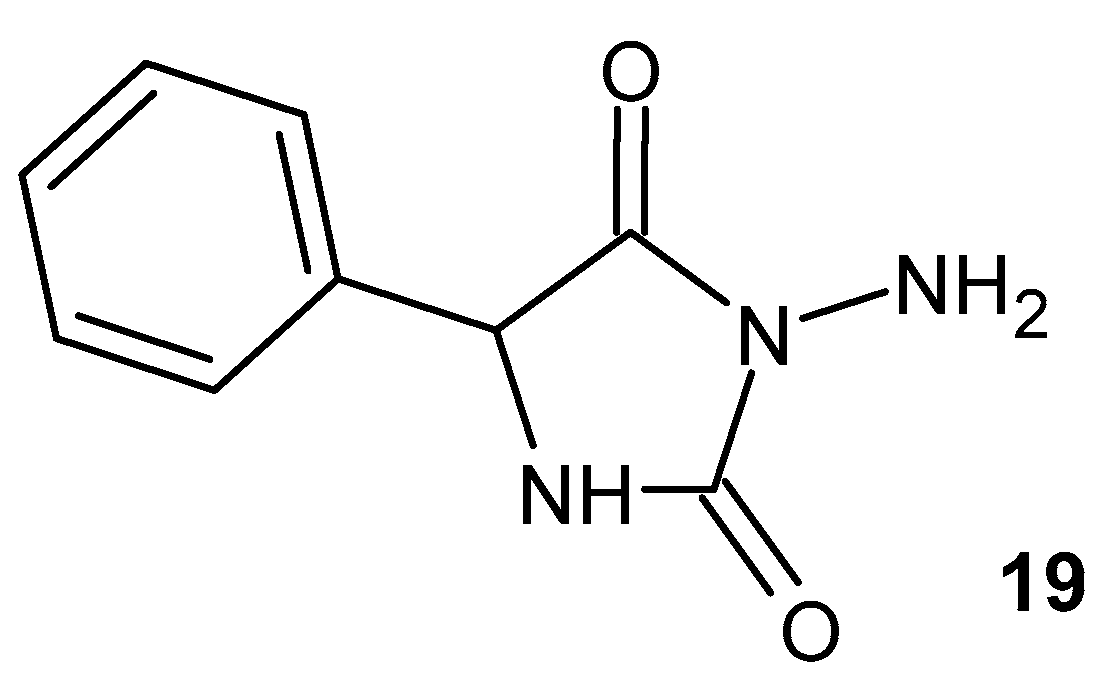
3-Amino-5-benzylimidazolidine-2,4-dione 19 (Figure 19) exhibits anti-inflammatory effects by reducing the increase in the expression of pro-inflammatory markers (iNOS and IL-1β) induced by LPS [57].
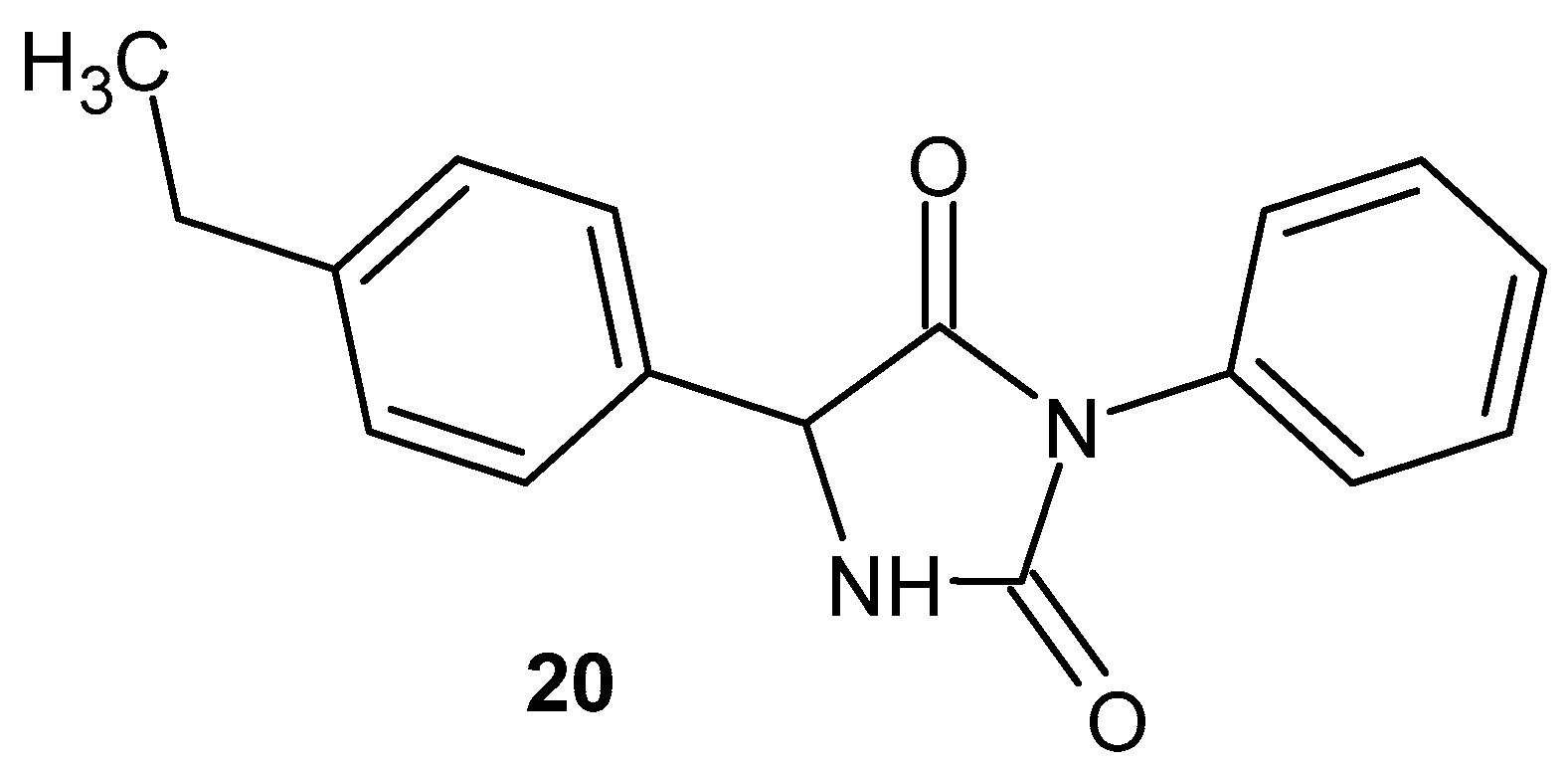
3-Phenyl-5-(4-ethylphenyl)imidazolidine-2,4-dione 20 (Figure 20) shows antinociceptive effects in the acetic acid-induced writhing test in mice, mediated by anti-inflammatory mechanisms (probably by reducing the level of pro-inflammatory cytokines: TNF-α and IL-1) [58].
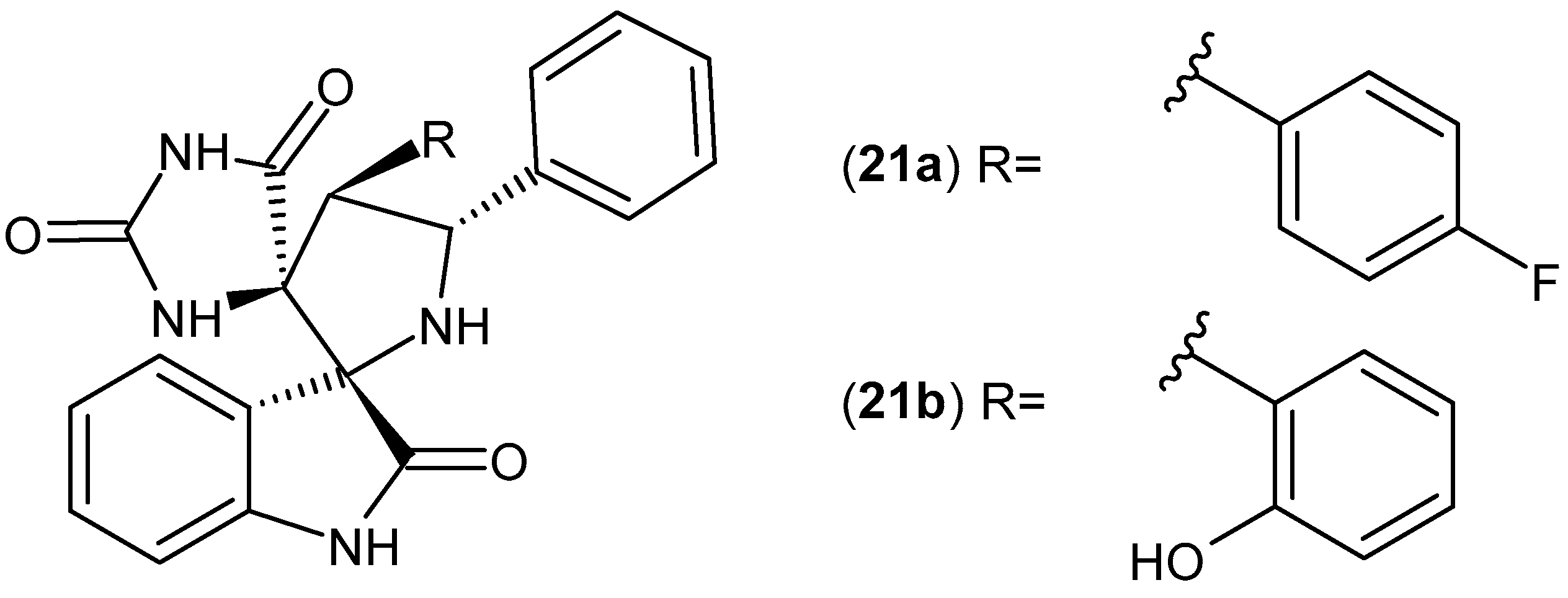
A series of spirooxindolopyrrolidine-hydantoins 21 was obtained and evaluated for their anti-inflammatory activity by Toumi et al. [59]. Derivatives 21ab (Figure 21) significantly inhibited the lipoxygenase-5 (LOX-5) enzyme, more potently than diclofenac sodium (IC50 = 1.09 and 1.01 mg/mL, respectively). Compounds 21ab also showed better anti-inflammatory effects than diclofenac in the carrageenan-induced rat paw edema test [59].
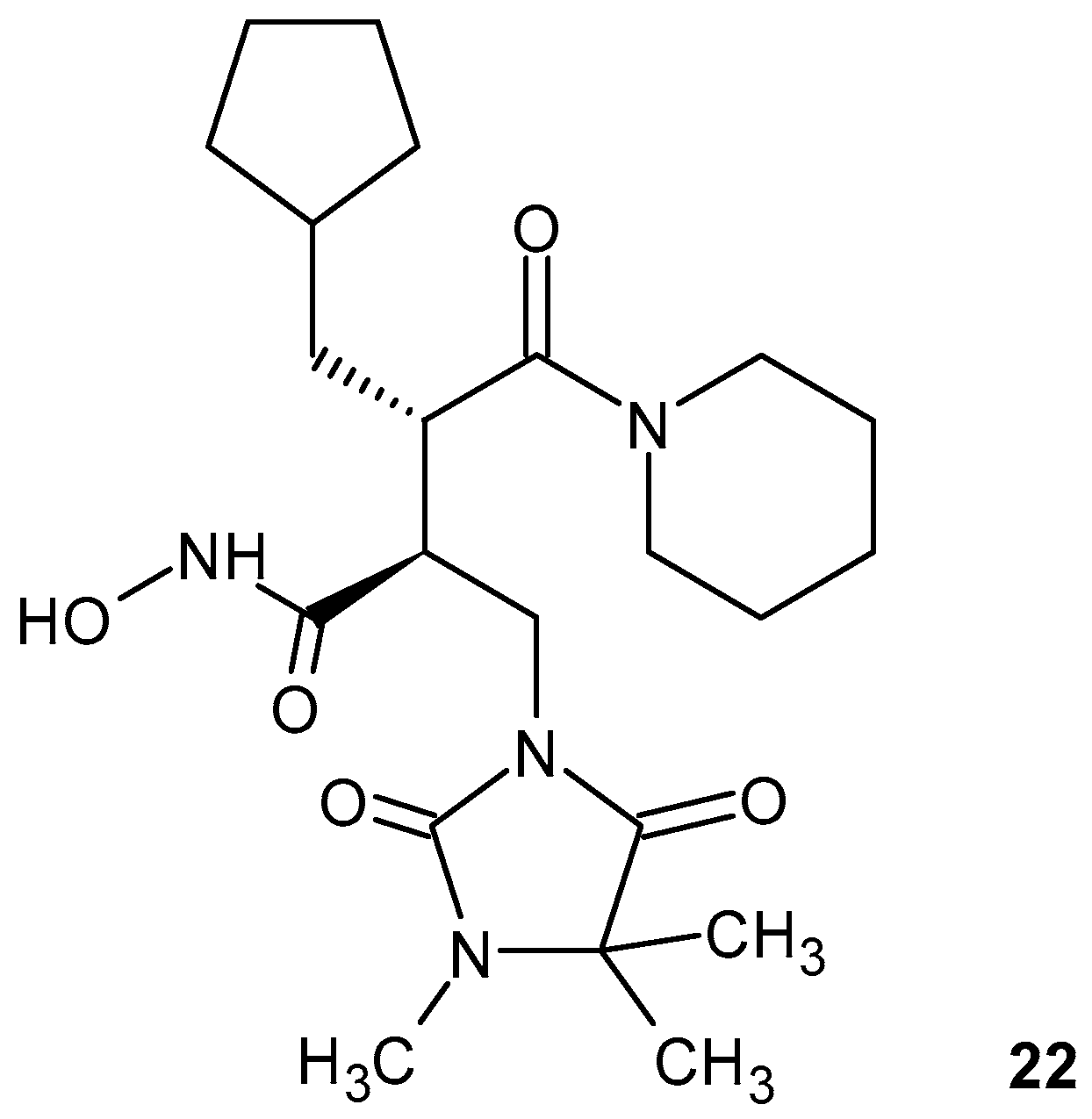
Cipemastat (Ro-32-3555) 22 (Figure 22), developed by Roche, is a selective inhibitor of matrix metalloproteinases (MMPs) and is used for rheumatoid arthritis treatment [60,61,62]. (2R,3R)-3-(cyclopentylmethyl)-N-hydroxy-4-oxo-4-piperidin-1-yl-2-[(3,4,4-trimethyl-2,5-dioxoimidazolidin-1-yl)methyl]butanamide 22 inhibits interleukin-1-induced cartilage collagen degradation [63].
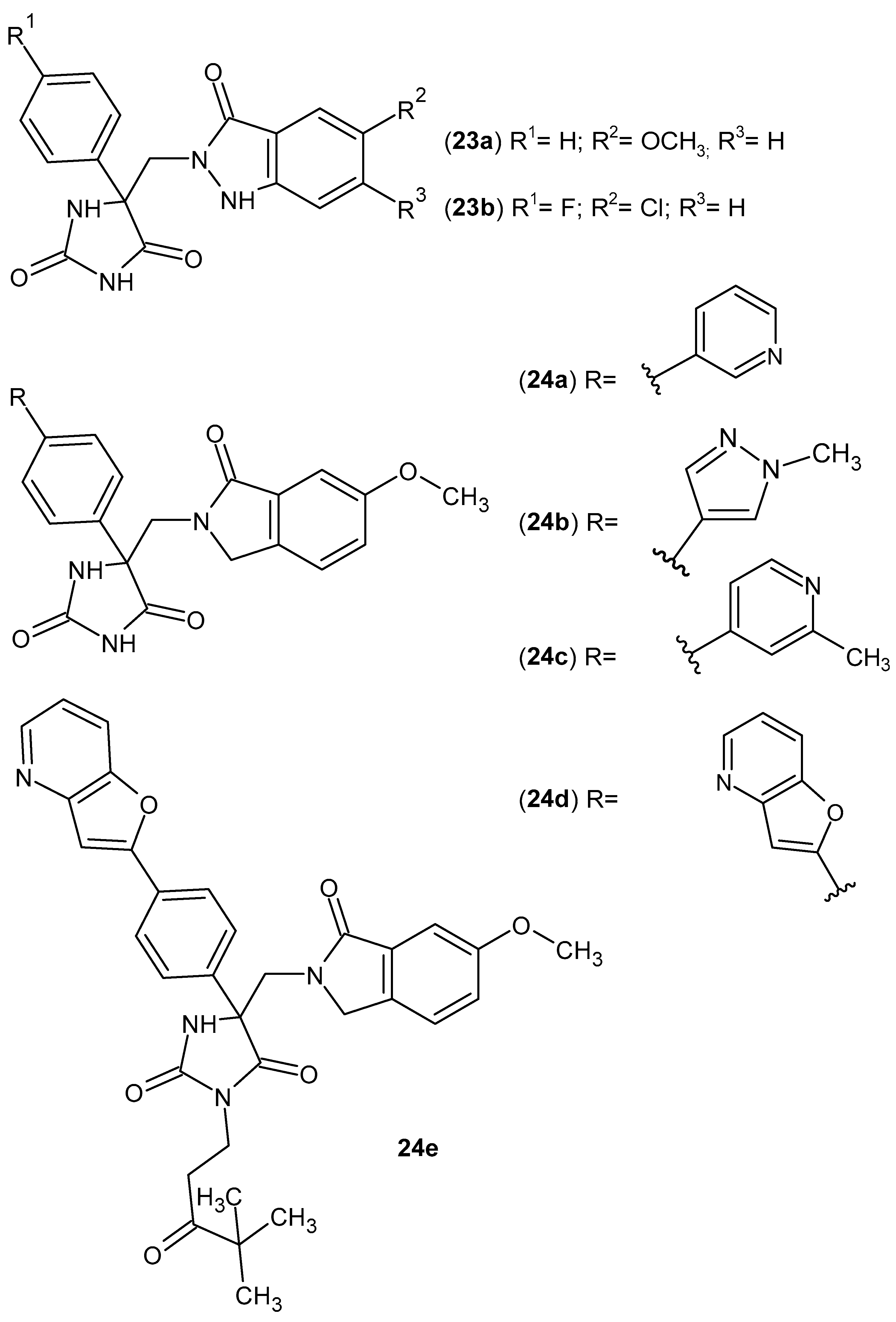
TNF-α converting enzyme (TACE) is a metalloproteinase that converts the membrane-bound precursor of TNFα into a soluble component. TACE inhibitors modulate TNF-α levels and may therefore have potential in the treatment of related inflammatory diseases. Studies have shown that the imide nitrogen of the hydantoin moiety binds to the active site of the enzyme [64]. A series of hydantoin derivatives were synthesized as potent TACE inhibitors. Among them, most active were derivatives containing indazol-3-one 23ab and isoindol-1-one 24ad scaffolds (Figure 23) [64,65]. Subsequently, to improve the pharmacokinetic properties of compound 24d, a series of N-substituted derivatives were prepared, of which pivalate derivative 24e (Figure 23) demonstrated the best bioavailability [66].

2.1.4. Maleimide Derivatives

Maleimide is an example of a cyclic dicarboximide in which two carbonyl groups bound to the nitrogen atom form a 1H-pyrrole-2,5-dione structure. These structures constitute an important pharmacophore in the design of compounds with potential anti-inflammatory activity. The anti-inflammatory activity of maleimide derivatives is associated both with the presence of the maleimide ring itself and with substituents at the nitrogen atom or at the 3- and 4-positions of the ring [67].
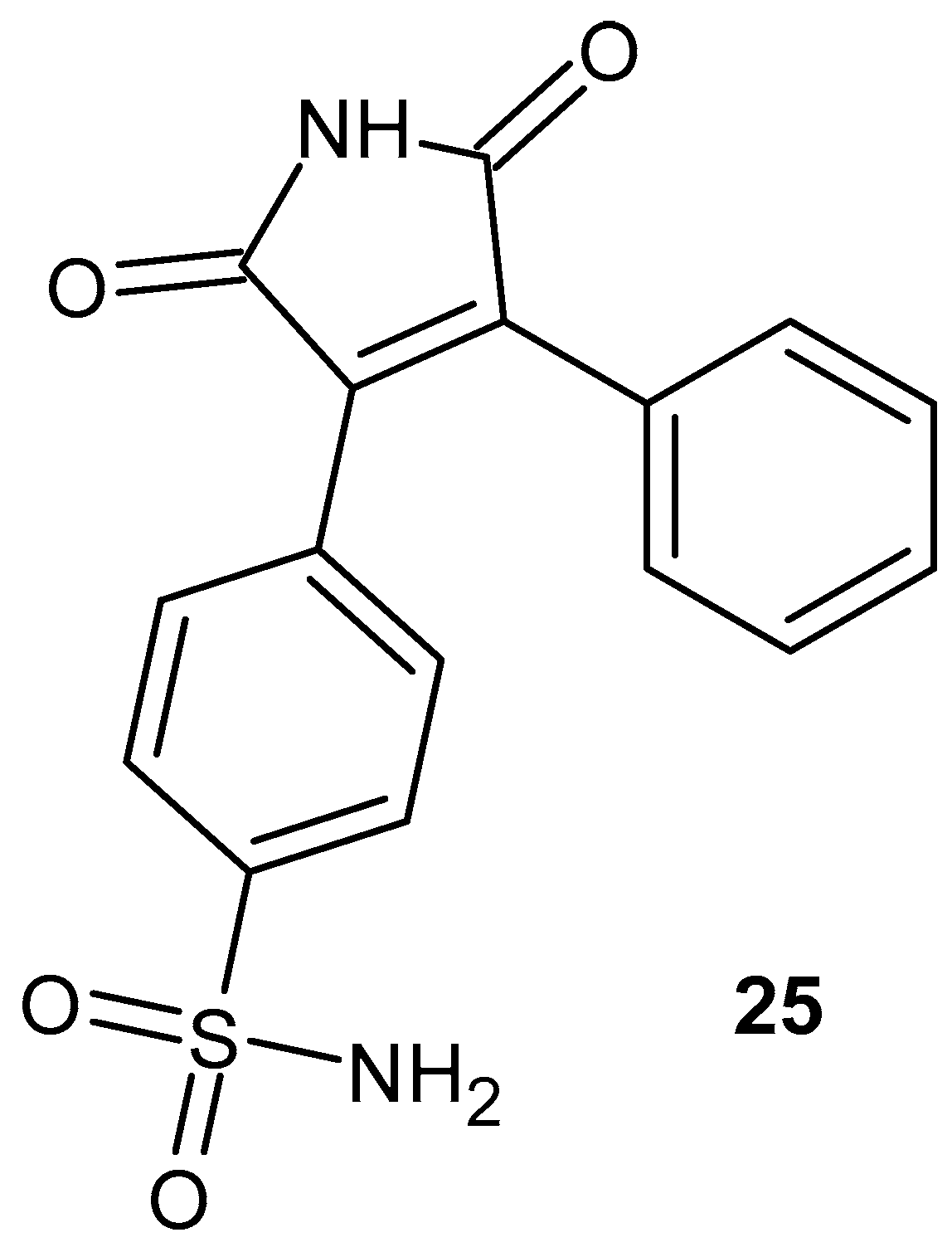
Moon et al. [68] synthesized a series of 1H-pyrrole-2,5-dione derivatives bearing a benzenesulfonamide substituent. The anti-inflammatory activity of these compounds was evaluated in RAW 264.7 macrophages, assessing both cytotoxicity and the ability to inhibit lipopolysaccharide (LPS)-induced prostaglandin E2 (PGE2) production. NS-398 was used as the reference compound in the PGE2 inhibition assay, while Dup-697 served as the control inhibitor in the COX-2 activity assay. All tested derivatives exhibited no cytotoxicity at concentrations up to 100 µM. The most active compound in the series was 1H-3-(4-sulfamoylphenyl)-4-phenyl-pyrrole-2,5-dione 25 (Figure 24), which inhibited PGE2 production with an IC50 value of 0.61 µM, demonstrating markedly higher potency than the reference inhibitor NS-398.
Compound 25 was further evaluated for its inhibitory activity on PGE2 production induced by both peptidoglycan and poly(I:C) in RAW 264.7 macrophages, using NS-398 as a positive control [69]. The compound effectively suppressed PGE2 synthesis, exhibiting activity comparable to or exceeding that of classical nonsteroidal anti-inflammatory drugs (NSAIDs). Under comparative conditions, its IC50 was 0.61 µM, versus 0.86 µM for ibuprofen and 0.09 µM for meloxicam [69]. COX-1/COX-2 enzymatic assays revealed moderate but distinct selectivity toward the inducible isoform, with IC50 values of 126.78 µM for COX-1 and 9.10 µM for COX-2, corresponding to a selectivity index (SI) of 13.93. By contrast, ibuprofen exhibited markedly lower selectivity (SI= 1.15). Notably, compound 25 did not significantly affect other inflammatory markers, including nitric oxide (NO) production, inducible nitric oxide synthase (iNOS) expression, TNF-α secretion, or the mRNA levels of IL-1β and IL-6 [69].
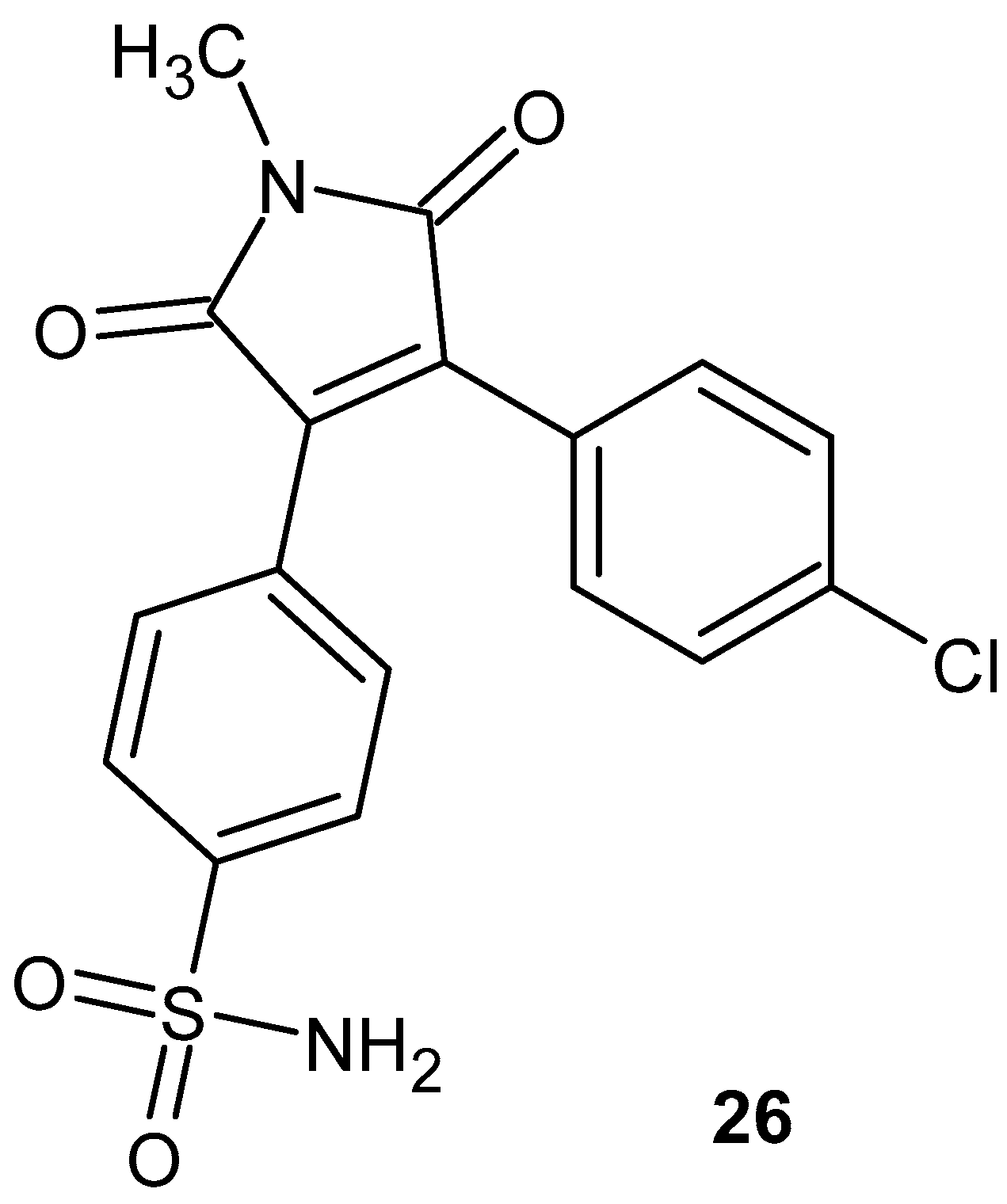
Kim et al. [70] synthesized a series of 1-methyl-1H-pyrrole-2,5-dione derivatives, designing them as potentially potent and selective cyclooxygenase-2 (COX-2) inhibitors. Their biological activity was evaluated in vitro using LPS-stimulated RAW 264.7 macrophages to induce prostaglandin E2 (PGE2) production, along with enzymatic assays assessing COX-1 and COX-2 inhibition. Within the synthesized series, the most active compound was 26, also referred to as MPO-0029 (Figure 25).
Compound 26 exhibited strong COX-2 inhibition, with an IC50 value of 6.0 nM, and effectively reduced PGE2 production in cells (IC50 = 8.7 nM). The selectivity index for COX-2 exceeded SI > 168, confirming its pronounced preference for the inflammation-induced isoform while exerting minimal effects on COX-1. Compound 26 showed higher potency and selectivity toward COX-2 compared with the reference drug, celecoxib [70].
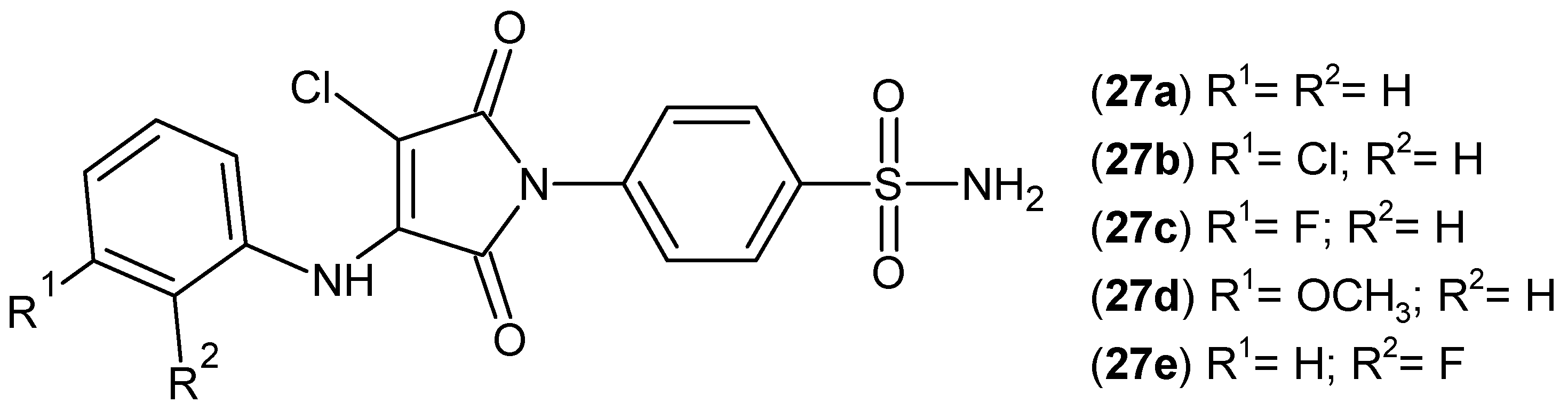
The synthesis of maleimide derivatives 27 incorporating a benzenesulfonamide moiety (Figure 26) has also been described by Firke and Bari [71].
The anti-inflammatory activity of these compounds was evaluated in vitro via cyclooxygenase inhibition assays (COX-1 and COX-2) and in vivo using the carrageenan-induced rat paw edema model. Most derivatives exhibited potent and selective COX-2 inhibition, with minimal effect on COX-1. Compounds 27ae demonstrated the highest biological activity, among which compound 27c displayed the most pronounced anti-inflammatory effect, reaching maximal in vivo efficacy at 5 h, comparable to the reference drug, celecoxib (at 5 h) [71].
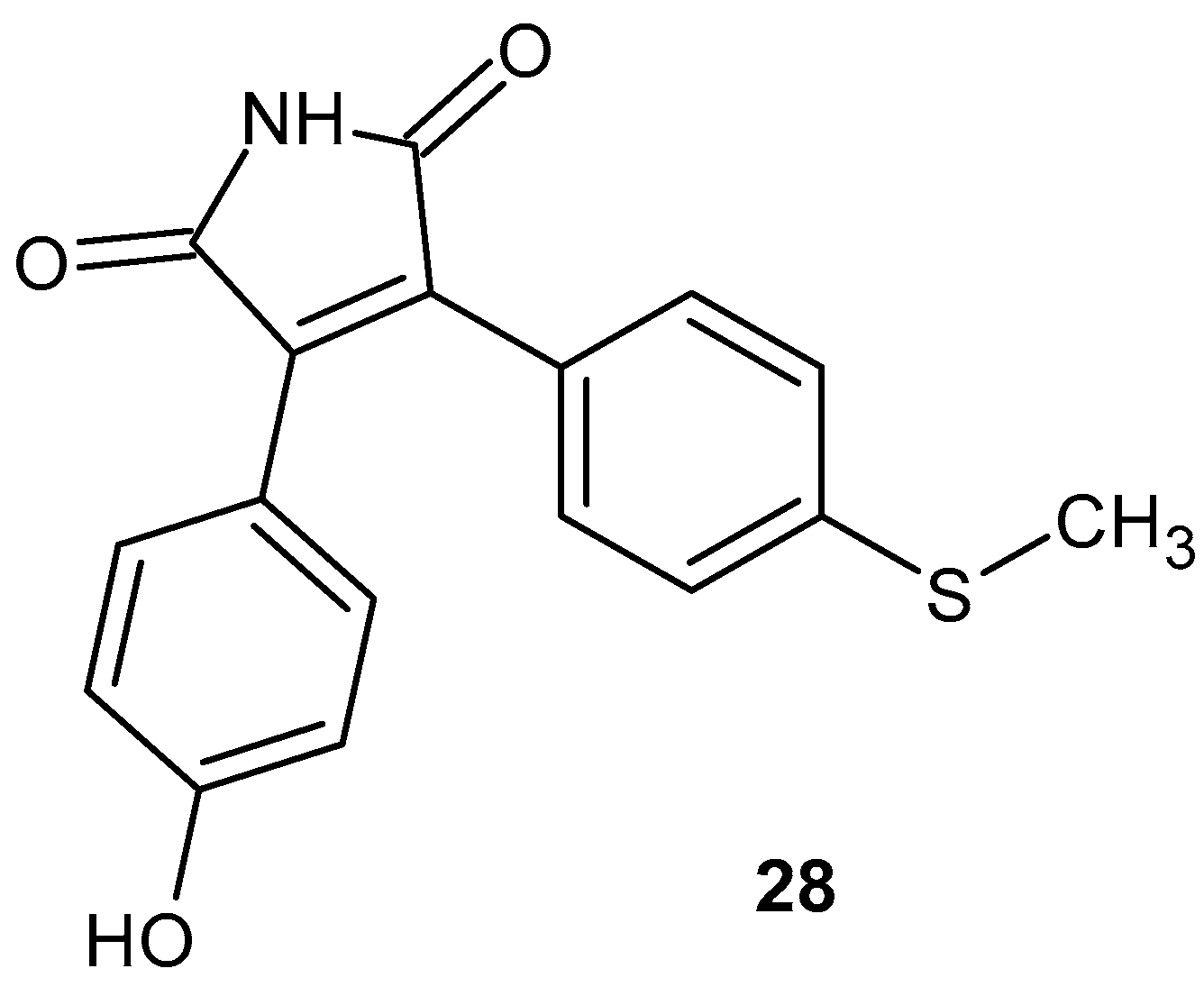
In the search for compounds with potential therapeutic applications in rheumatoid arthritis, 3-(4-hydroxyphenyl)-4-(4-thiomethoxyphenyl)-1H-pyrrole-2,5-dione 28 (HMP, Figure 27) was investigated [72].
In vitro studies in LPS-stimulated RAW 264.7 macrophages demonstrated that HMP 28 inhibited prostaglandin E2 (PGE2) production with an IC50 of 0.61 µM and selectively blocked COX-2 activity (IC50 = 21.01 µM) without affecting COX-1, showing no cytotoxicity at concentrations up to 100 µM. The compound also suppressed the expression of pro-inflammatory cytokines IL-1β and IL-6, as well as nitric oxide (NO) production, by downregulating the protein and mRNA levels of inducible nitric oxide synthase (iNOS) [72]. In animal models, HMP 28 reduced paw swelling in carrageenan-induced acute inflammation at oral doses of 25–50 mg/kg, concomitantly decreasing tissue PGE2 levels and myeloperoxidase (MPO) activity. In the adjuvant-induced arthritis (AIA) model in rats, daily oral administration of HMP (50 mg/kg) reduced paw volume by 53% and plasma PGE2 concentration by 42%. It significantly decreased the arthritis index, including paw edema, erythema, and joint dysfunction [72].
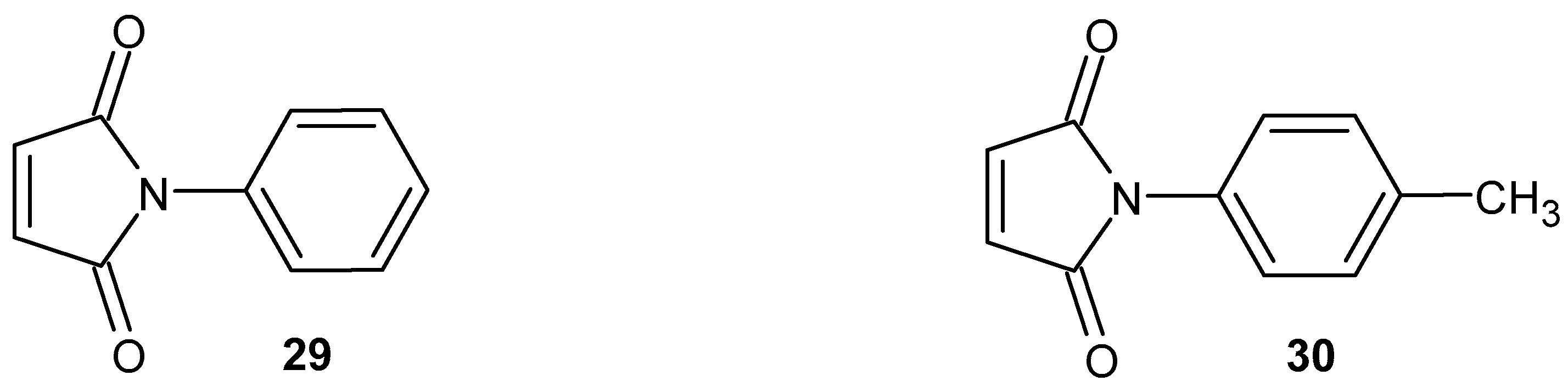
The anti-inflammatory activity of N-phenylmaleimide derivatives 29 and 30 (Figure 28) was evaluated both in vitro and in vivo using myeloperoxidase (MPO) activity assays and acute inflammation models [73].
In in vitro studies, 4-methyl-N-phenylmaleimide (Me-NFM, 30) (Figure 28) significantly increased MPO activity in lung homogenate supernatants as well as in purified enzyme preparations, with K0.5 values of 84 ± 0.3 µM and 62.85 ± 3.52 µM, respectively. In primary neutrophil cultures, a one-hour incubation with Me-NFM 30 resulted in a comparable induction of MPO activity (K = 54.47 µM), while NFM 29 (Figure 28) exhibited similar potency (K = 58.9 µM) [73]. In in vivo studies using a carrageenan-induced acute inflammation model, Me-NFM 30 enhanced leukocyte migration and MPO activity. Total leukocyte counts increased by 44–48%, neutrophils by 27–33%, and mononuclear cells by 130–148% compared with the control group. In contrast, NFM 29 did not produce significant changes in leukocyte migration or MPO activity [73].
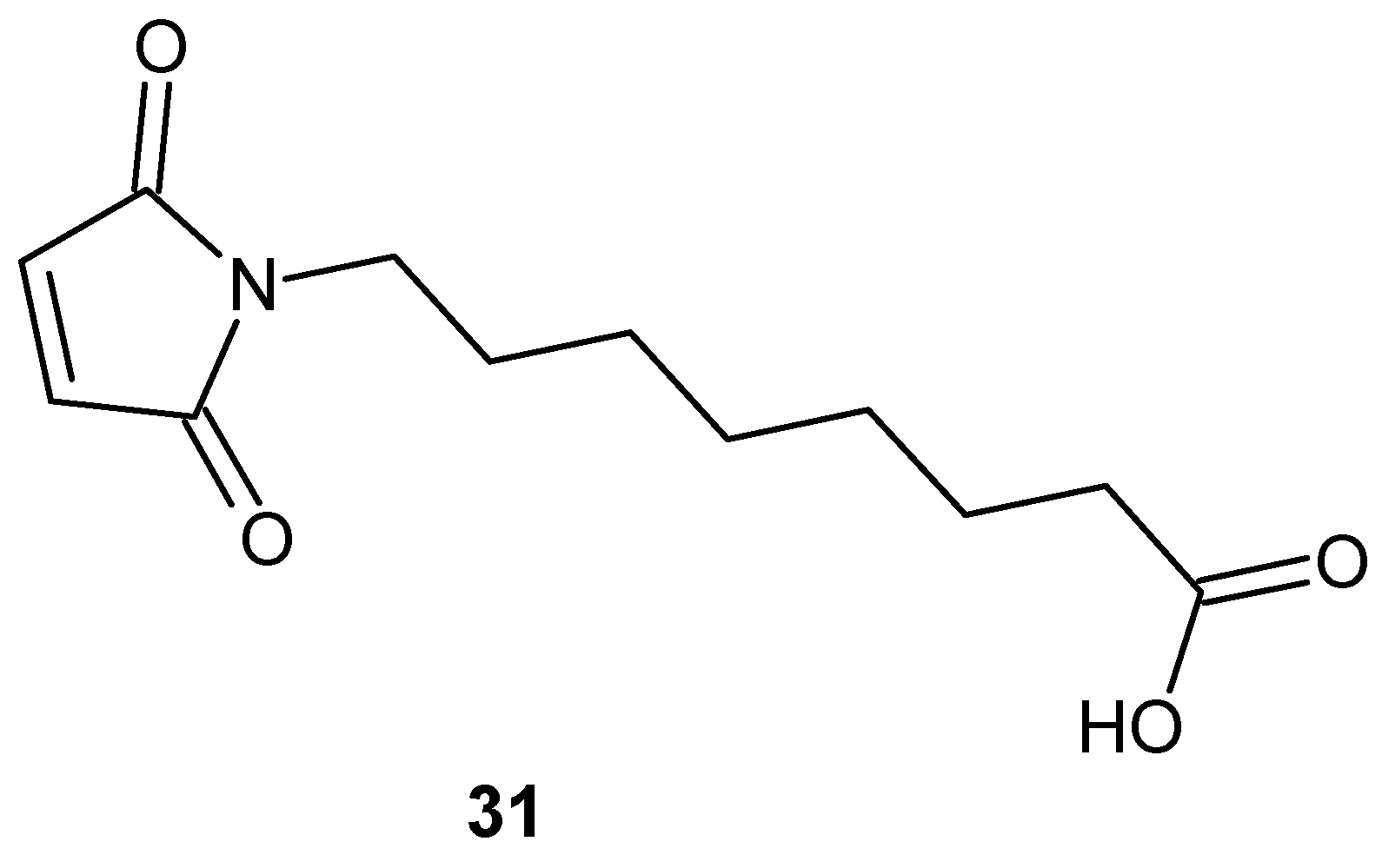
Kalgutkar et al. [74] developed a series of N-substituted maleimide derivatives as potential inhibitors of prostaglandin H synthase-1 and -2 (PGHS-1 and PGHS-2). Within this series, N-(carboxyalkyl)maleimides displayed the most pronounced biological activity, producing rapid and concentration-dependent inactivation of cyclooxygenase function.
The most potent compound, N-(carboxyheptyl)maleimide 31 (Figure 29), induced rapid, stoichiometric inactivation of COX-1 activity, consistent with a non-equilibrium, covalent mechanism rather than classical reversible inhibition.
The carboxylate group was identified as a critical structural element, ensuring proper positioning of the inhibitor within the fatty acid substrate access channel and thereby enabling efficient enzyme inactivation [74].
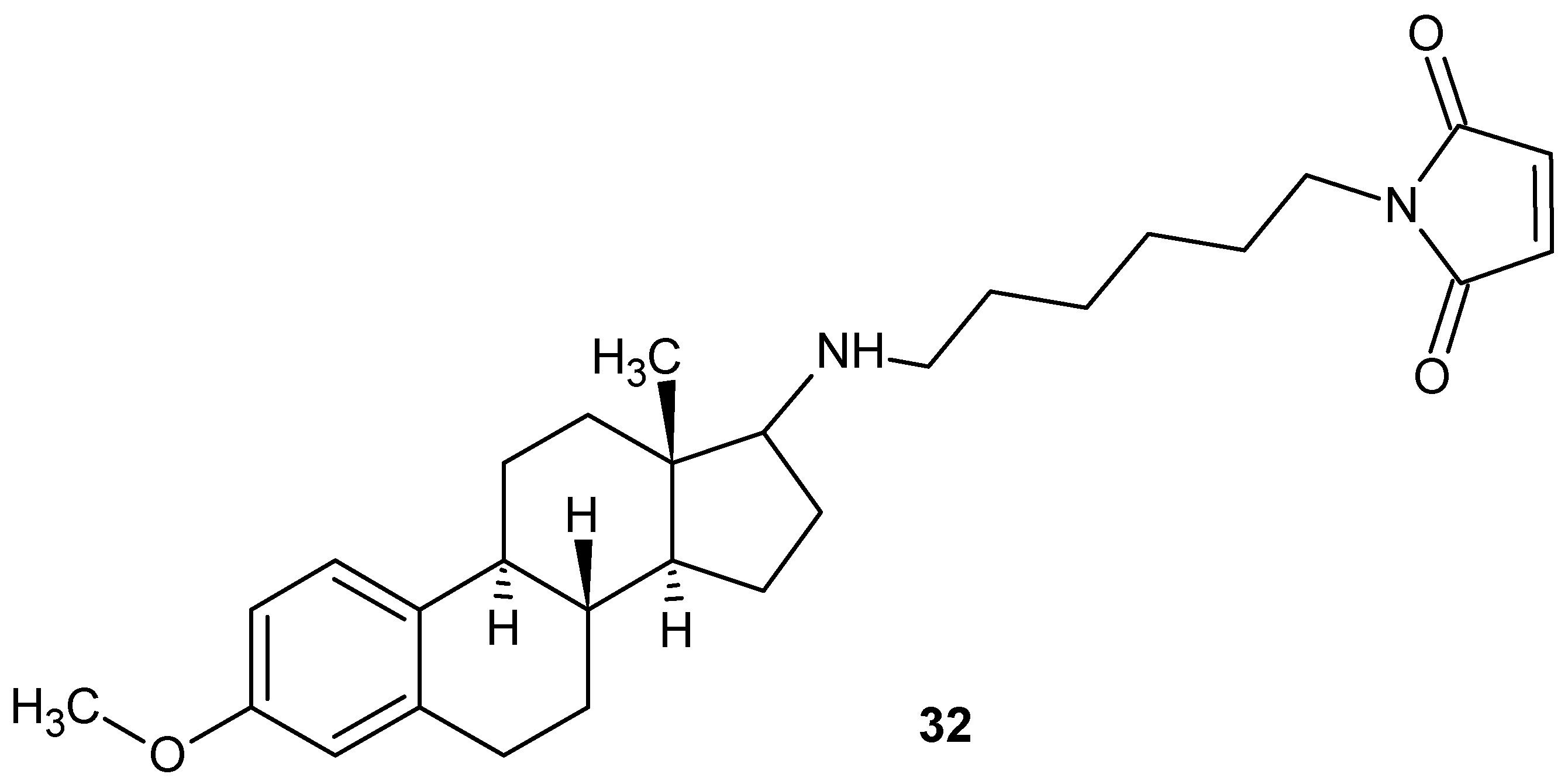
Hou et al. [75] synthesized and evaluated the activity of U73122—1-(6-((17-3-methoxyestra-1,3,5(10)-trien-17-yl)amino)hexyl)-1H-pyrrole-2,5-dione 32 (Figure 30), a selective phospholipase C (PLC) inhibitor.
Compound 32 demonstrated pronounced anti-inflammatory activity in vivo, particularly in acute inflammation models, as evidenced by reduced edema and inflammatory cell infiltration. Subsequent studies by Feißt et al. [76] identified the pyrrole-2,5-dione moiety as a key structural element mediating anti-inflammatory signaling; U73122 32 inhibited GPCR-dependent intracellular Ca2+ mobilization in human polymorphonuclear leukocytes with IC50 values of 2–4 µM, without affecting receptor-independent calcium pathways. Moreover, the compound potently inhibited 5-lipoxygenase activity in a Ca2+-independent manner, with IC50 values of 2.4 µM in PMNL homogenates and 30 nM against recombinant human 5-LOX, indicating high affinity of the maleimide scaffold for this enzyme [76].
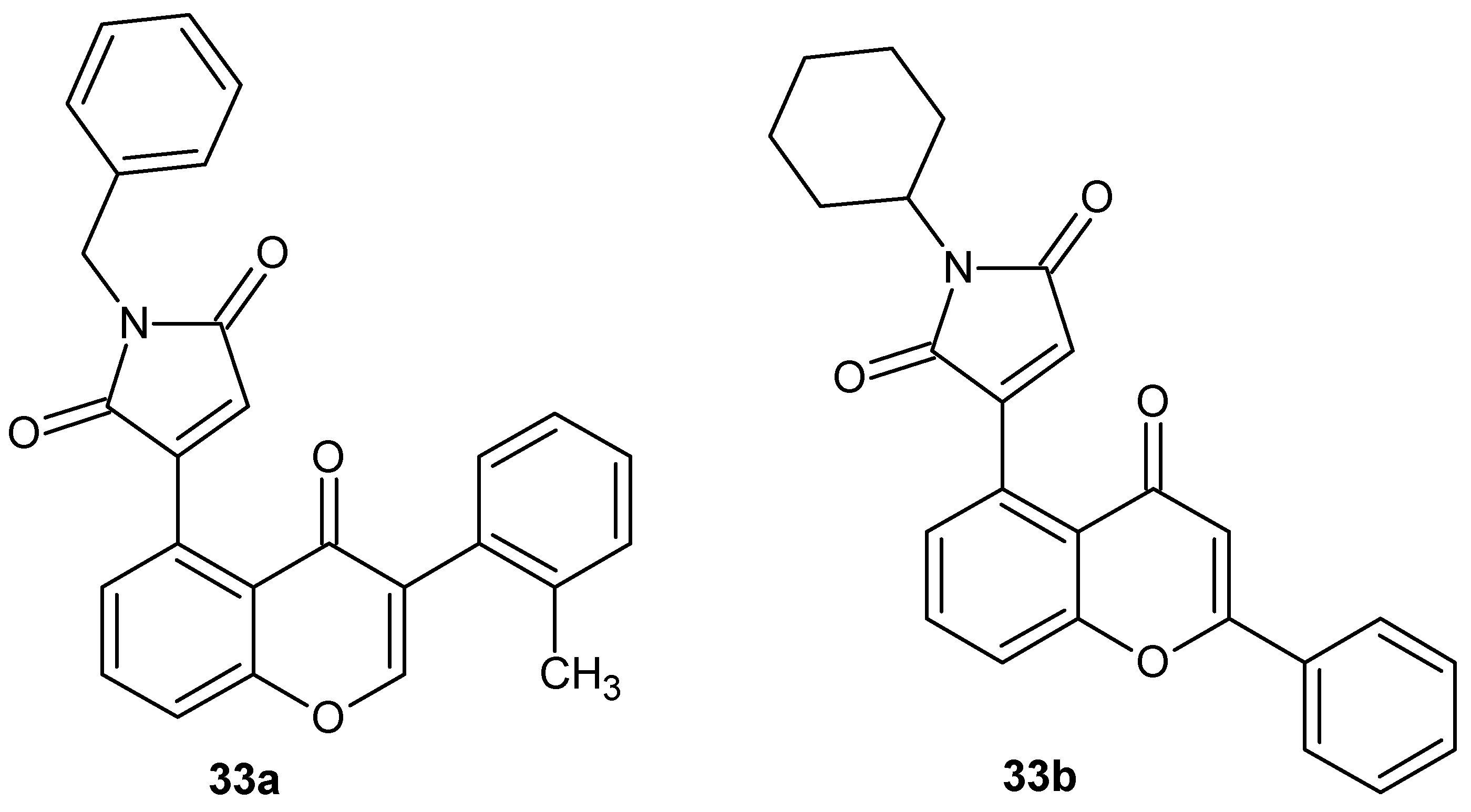
To counteract acute lung injury (ALI) associated with excessive inflammatory responses, in which increased release of pro-inflammatory cytokines such as TNF-α and IL-6 plays a central role, forty novel chromone–maleimide hybrids were designed and synthesized [77]. The majority of these hybrids exhibited pronounced anti-inflammatory activity, with the most pharmacologically active structures, 33a and 33b, shown in Figure 31.
Compounds 33a and 33b demonstrated dose-dependent inhibition of TNF-α and IL-6 release with the following IC50 values: 33a: (IL-6) IC50 = 0.35 µM, (TNF-α) IC50 = 0.69 µM; 33b: (IL-6) IC50 = 0.34 µM, (TNF-α) IC50 = 0.88 µM. In in vivo studies, both compounds significantly attenuated LPS-induced ALI, reducing inflammation and the severity of lung tissue damage. Preliminary SAR analysis indicated that the inhibitory activity of the chromone–maleimide hybrids was dependent on substitution of the chromone ring with a phenyl group at the C2 or C3 positions and the presence of a cyclohexyl or benzyl group at the nitrogen of the maleimide [77].
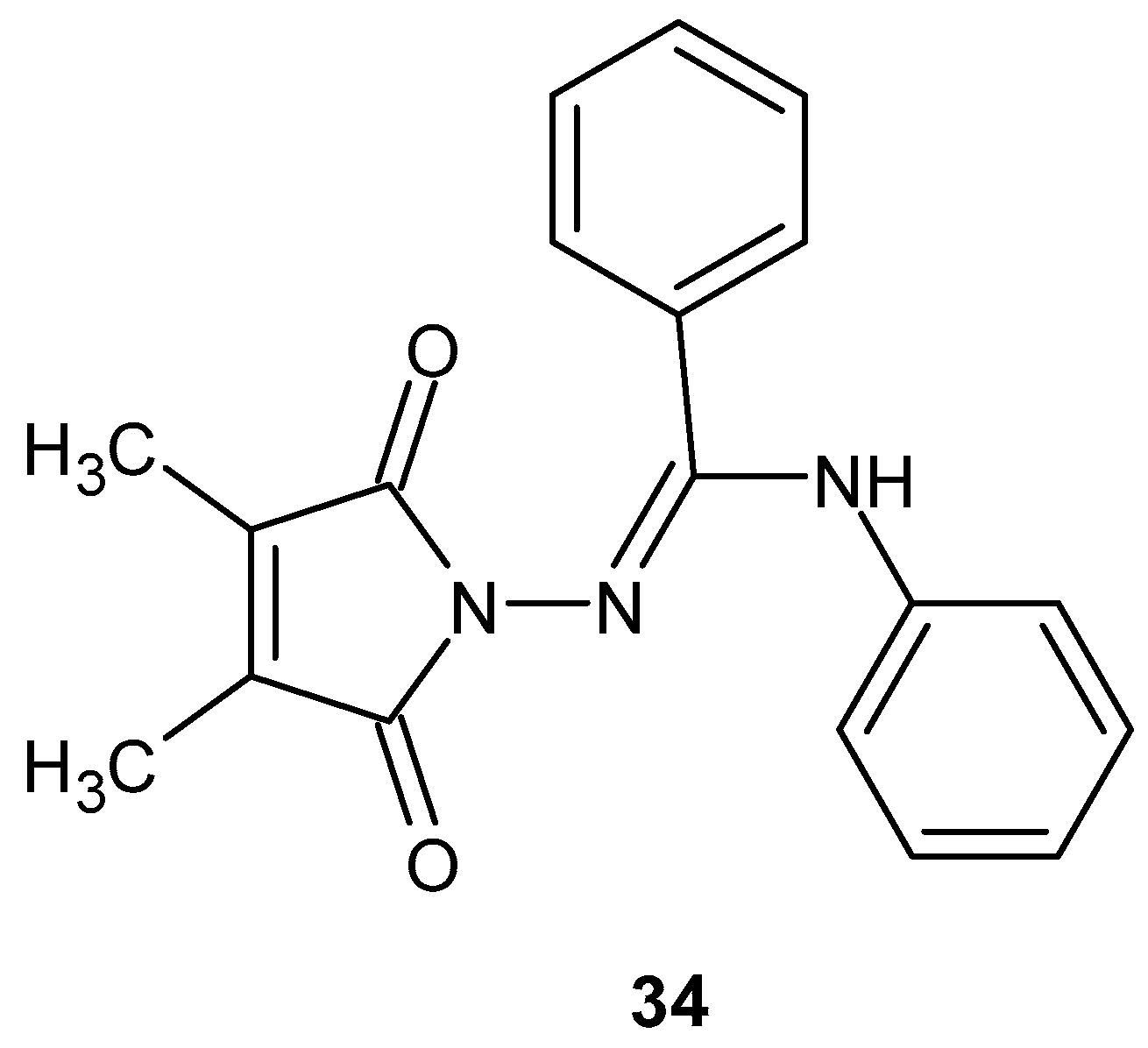
Paprocka et al. [78] investigated a series of 3,4-dimethyl-1H-pyrrole-2,5-dione derivatives, synthesized via the reaction of N3-substituted amidrazones with 2,3-dimethylmaleic anhydride, for their anti-inflammatory potential.
In lipopolysaccharide (LPS)-stimulated peripheral blood mononuclear cell (PBMC) cultures, derivative 34 (Figure 32) demonstrated the most pronounced inhibitory effect, reducing IL-6 and TNF-α production only at the highest tested concentration (100 µg/mL) by 64% and 65%, respectively, substantially exceeding the effects observed for the reference drug, ibuprofen (11% and 6%, respectively) [78].
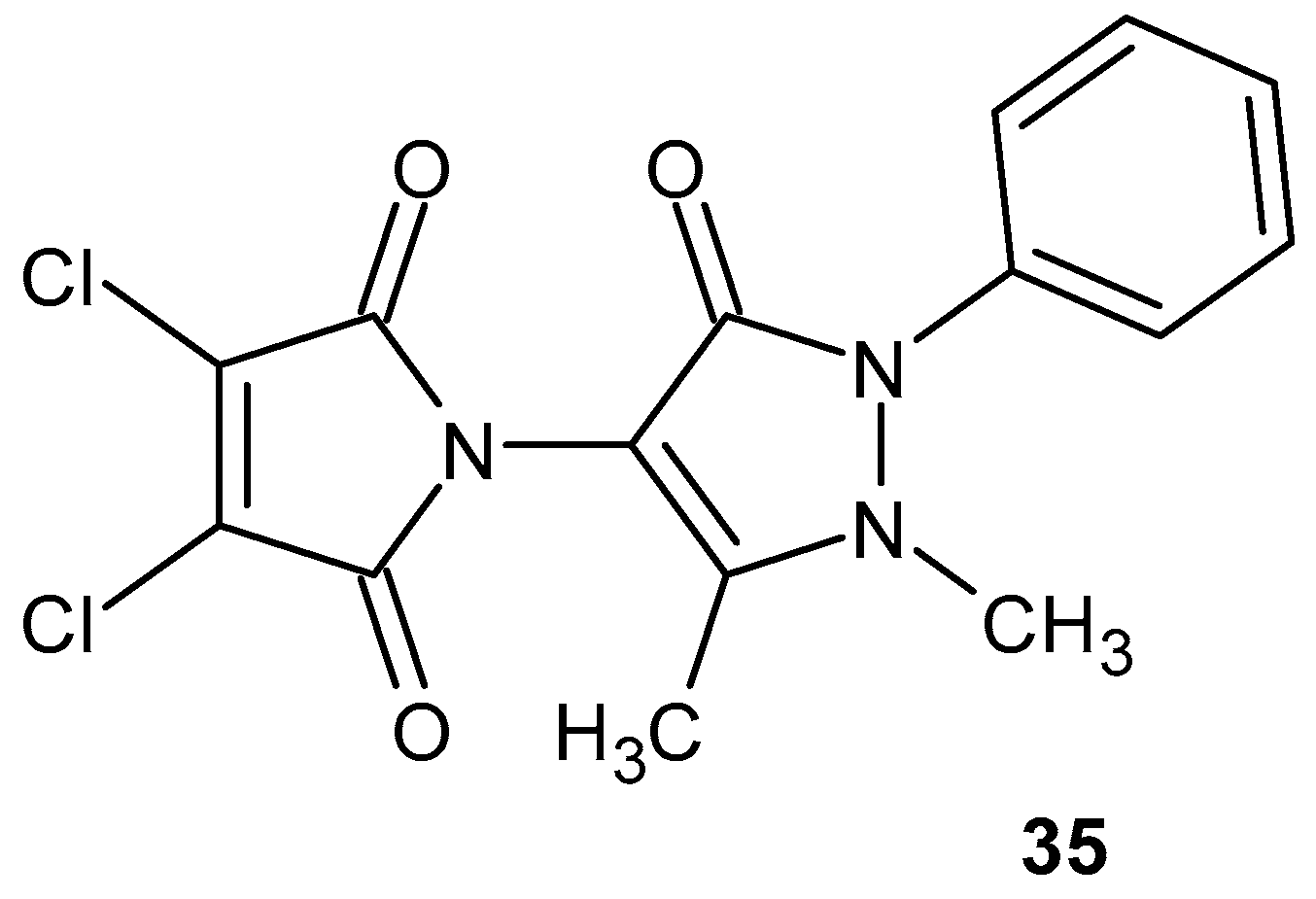
De Campos et al. [79] synthesized N-antipyrine-3,4-dichloromaleimide (NA-3,4-DCM) 35 (Figure 33) and demonstrated its significant antinociceptive activity in models of acute pain, including the acetic acid-induced writhing test and the formalin test.
In the latter, the compound selectively inhibited the inflammatory phase, indicating a mechanism of action independent of the opioid system [79]. In subsequent studies, Quintão and co-workers [80] extended the pharmacological evaluation of NA-3,4-DCM 35 to models of chronic inflammatory and neuropathic pain. The compound significantly reduced carrageenan-induced mechanical hypernociception by 61% ± 8%. In the formalin test, systemic administration of NA-3,4-DCM 35 selectively inhibited the inflammatory phase (ID50 = 16.2 µmol/kg), whereas local, intrathecal, and supraspinal administration resulted in inhibition of both phases of nociceptive behavior. Mechanistic investigations suggested the involvement of glutamatergic pathways, as the compound inhibited nociceptive responses induced by glutamate, while not affecting responses mediated by AMPA or substance P [80].
Mahle et al. [81] synthesized new cyclic imide derivatives via the reaction of N-antipyrine-3,4-dichloromaleimides 36 (Figure 34) with various aromatic amines and evaluated their analgesic and anti-inflammatory activities. All compounds were initially tested in the acetic acid-induced writhing model in mice. Most derivatives, particularly aniline and halogenated compounds with para-substitution, 36ad, exhibited strong analgesic effects, being 33–284 times more potent than the reference drugs, ASA (acetylsalicylic acid) and MET (metamizole).
The most active derivatives were subsequently evaluated in the formalin-induced pain model. In this assay, compounds 36a, 36c, and 36d exhibited significant inhibition of the second (inflammatory) phase of nociception, with compound 36d demonstrating approximately six-fold greater anti-inflammatory activity compared with acetylsalicylic acid (ASA). These findings indicate that para-positioned electron-withdrawing substituents markedly enhance both analgesic and anti-inflammatory activities [81].
Based on previous reports on the pharmacological activity of N-antipyrine-3,4-dichloromaleimide derivatives [81], Fratoni et al. [82] conducted an in-depth evaluation of their anti-inflammatory potential in the RAW 264.7 murine macrophage cell line. In the first stage, six selected derivatives (35, 36a, and 37ad; Figure 35) were assessed for their ability to inhibit lipopolysaccharide (LPS)-induced nitric oxide (NO) production as an early marker of anti-inflammatory activity.
Among the compounds tested, the most pronounced NO inhibition was observed for 35, 36a, and 37c. Therefore, further studies focused on these three derivatives. Compounds 35, 36a, and 37c were then evaluated for their effects on cytokine profiles in LPS-stimulated macrophages. All three compounds reduced the levels of the pro-inflammatory cytokines IL-1β and TNF-α. Additionally, compounds 35 and 36a inhibited the production of IL-6 and MCP-1, while none of the tested compounds affected IFN-γ levels. Moreover, compounds 35 and 36a significantly inhibited phosphorylation of the p65 subunit of NF-κB. Importantly, these derivatives not only suppressed the pro-inflammatory response but also promoted an anti-inflammatory profile, stimulating the secretion of IL-4 (35) and IL-13 (36a) [82].
Jung et al. [83] synthesized a series of twenty thalidomide analogues in which the benzene rings of the phthalimide moiety were replaced with two separate diphenyl rings within the maleimide ring, and the N-glutarimide moiety was substituted with various phenyl groups (Figure 36). These structural modifications were aimed at enhancing the anti-inflammatory activity of thalidomide, specifically in the context of inhibiting nitric oxide (NO) production in lipopolysaccharide (LPS)-stimulated BV2 microglial cells.
Among the synthesized compounds, the dimethylaminophenyl-substituted analogue 38b exhibited the highest pharmacological activity, with an IC50 of 7.1 μM, representing a significant improvement compared to the glutarimide reference analogue 38a (IC50 > 50 μM) [83].
Compound 38b inhibited NO production in a dose-dependent manner without inducing cytotoxicity. Furthermore, it suppressed the release of pro-inflammatory cytokines as well as the expression of key inflammatory enzymes, including inducible nitric oxide synthase (iNOS) and cyclooxygenase-2 (COX-2). The authors suggested that the mechanism of action of compound 38b involves the inhibition of the NF-κB and p38 MAPK signaling pathways, which play critical roles in the initiation of inflammatory responses [83].
Derivatives of 1H-pyrrole-2,5-dione were investigated as potential inhibitors of cholesterol absorption. In vitro studies were performed using the human embryonic kidney cell line HEK293 and the murine macrophage cell line RAW 264.7 [84]. The biological activity of the synthesized compounds was evaluated using biochemical assays measuring cholesterol uptake, together with cytotoxicity assays to assess cellular safety.
Among all the synthesized derivatives, compound 39 (Figure 37) exhibited the highest inhibitory activity against cholesterol absorption in vitro, surpassing the reference drug, ezetimibe.
Compound 39 showed no significant cytotoxicity toward HEK293 and RAW 264.7 cells (LC50 > 100 μM for both cell lines). Further studies demonstrated that compound 39 effectively suppressed lipid accumulation in macrophages. It induced a dose-dependent reduction in the release of lactate dehydrogenase (LDH) and tumor necrosis factor-α (TNF-α), as well as a decrease in the generation of reactive oxygen species (ROS). Collectively, these results indicate that compound 39 may effectively inhibit foam cell formation and the associated inflammatory response, highlighting its potential relevance in the context of atherosclerosis and related metabolic disorders [84].
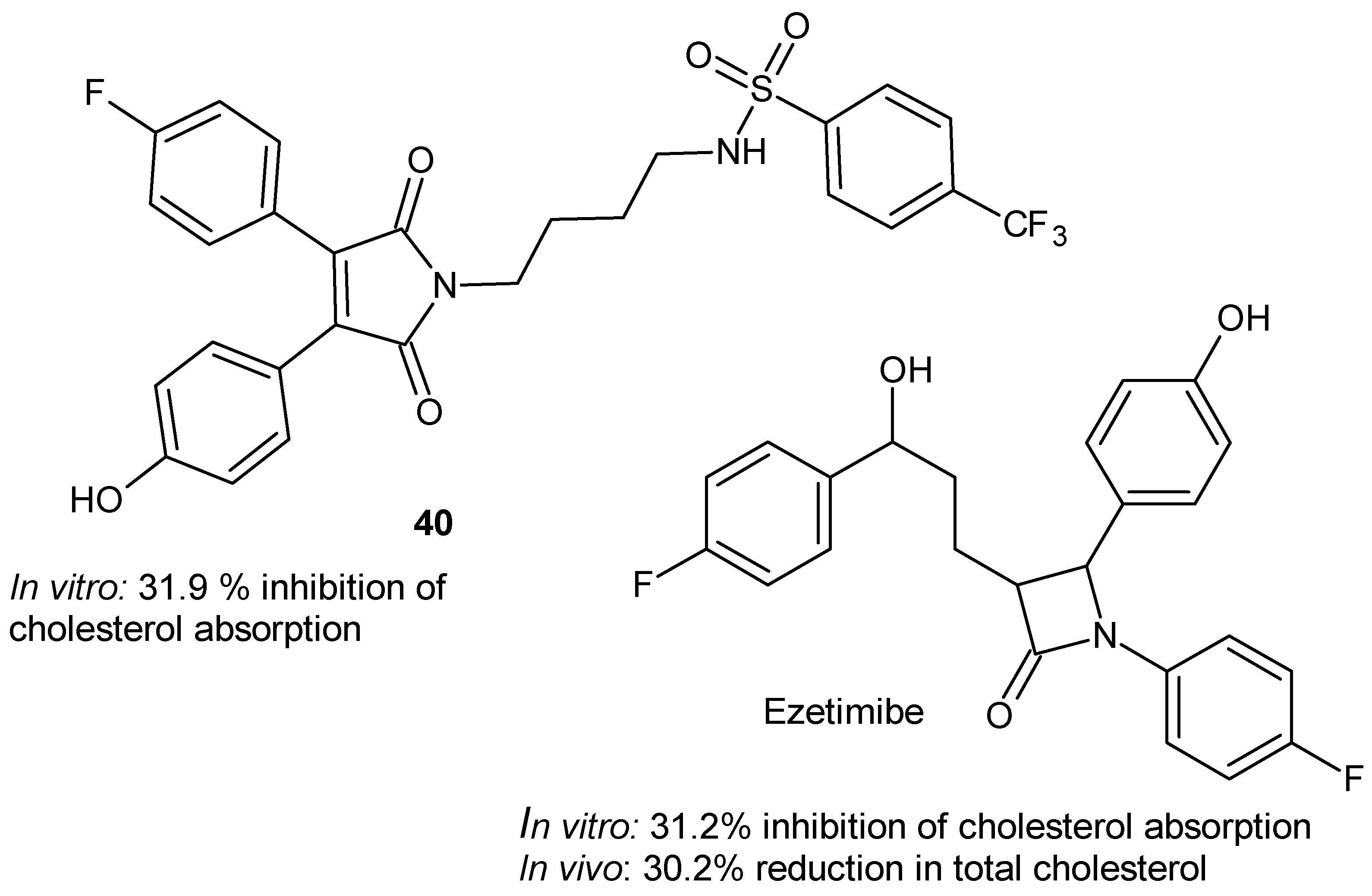
Cholesterol absorption inhibitors (CAIs) targeting the Niemann–Pick C1-like 1 (NPC1L1) protein have been proposed as a novel strategy for the treatment of hyperlipidemia, with ezetimibe being the only CAI currently available on the market. To develop new CAIs with improved therapeutic efficacy, Yuan et al. [85] synthesized thirteen 1H-pyrrole-2,5-dione derivatives bearing a sulfonamide group in the side chain. The pharmacological activity of the most potent maleimide derivative, 40, was comparable to that of ezetimibe (Figure 38).
These results suggest that the 1H-pyrrole-2,5-dione ring can effectively serve as a replacement for 2-azetidinone, leading to the development of pharmacologically active structures [85].
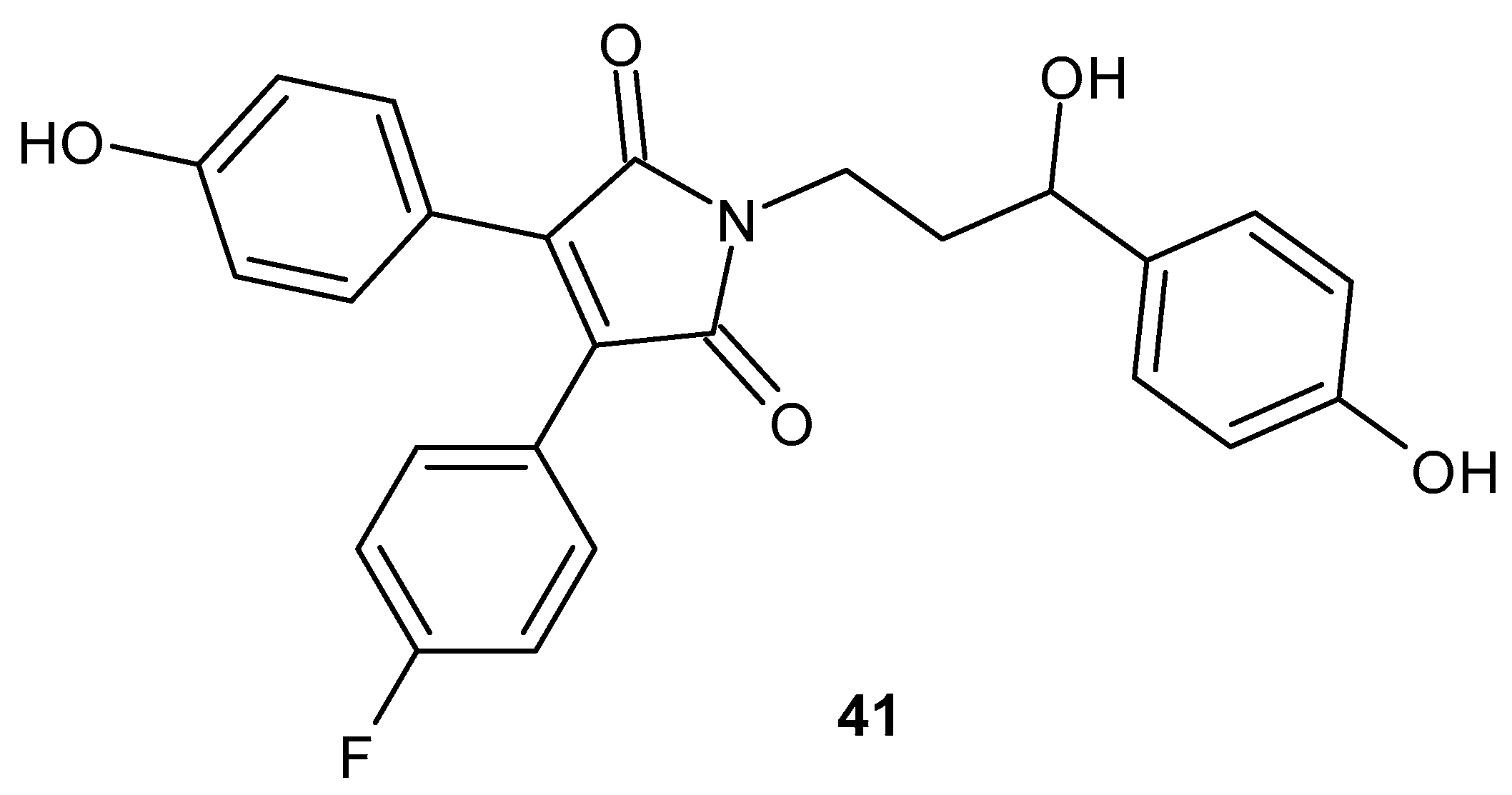
Continuing the research on maleimide derivatives affecting cholesterol reduction, Xia et al. [86] synthesized seven 2-azetidinone derivatives and eighteen 1H-pyrrole-2,5-dione derivatives, most of which significantly inhibited cholesterol uptake in vitro. Moreover, one of the most active inhibitors, 3-(4-fluorophenyl)-1-[(3S)-3-hydroxy-3-(4-hydroxyphenyl)propyl]-4-(4-hydroxyphenyl)-1H-pyrrole-2,5-dione 41 (Figure 39), exhibited no cytotoxicity in L02 and HEK293T cell lines.
Further analyses demonstrated that compound 41 markedly reduced levels of TNF-α, ROS, MDA, and LDH in vitro, indicating its potential as a novel cholesterol absorption inhibitor [86].
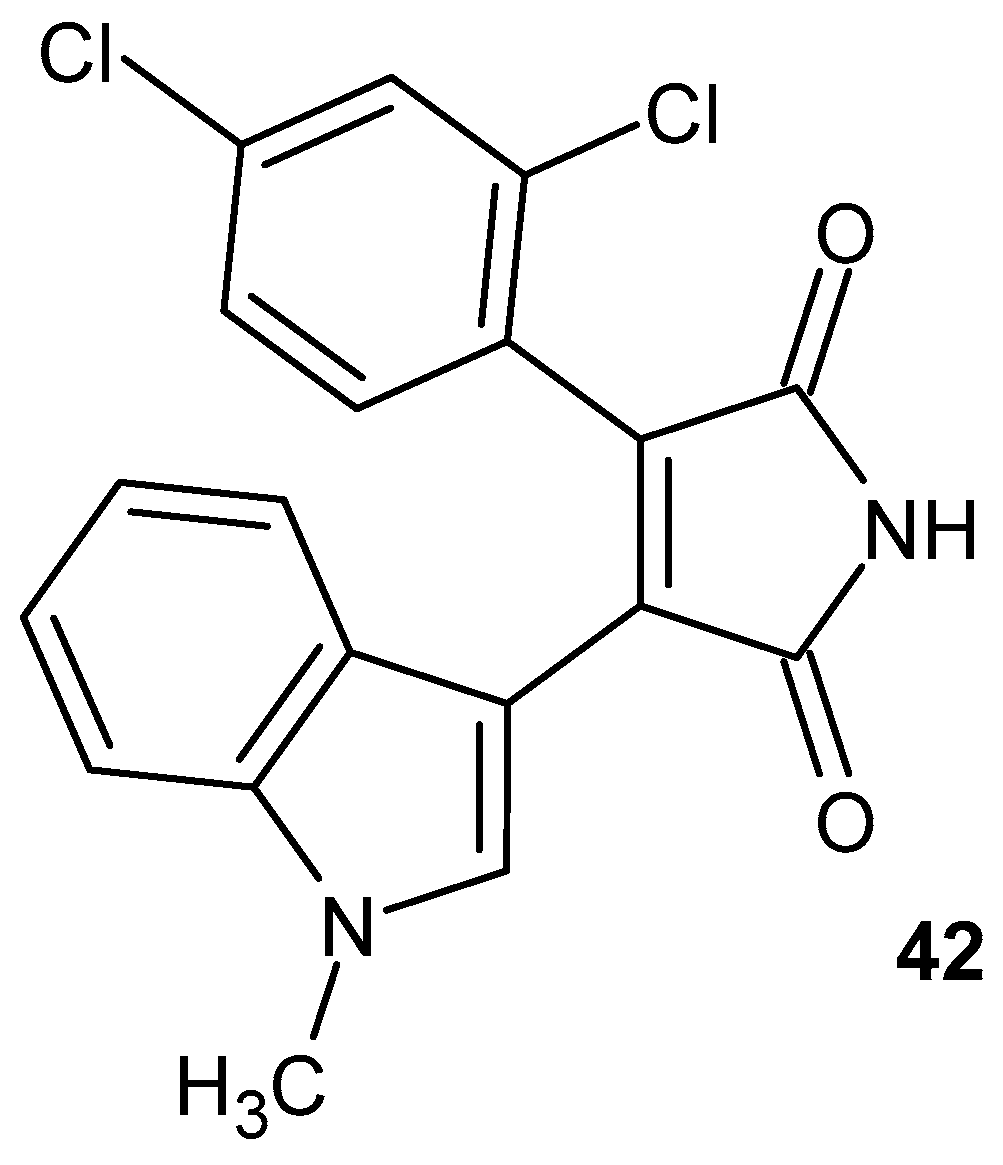
Inflammation, a major contributing factor to a variety of diseases, including neurodegenerative disorders (e.g., Alzheimer’s disease), metabolic dysfunctions, and certain malignancies, is closely associated with excessive GSK-3β activity. Selective inhibitors of this kinase have emerged as promising modulators of the inflammatory response, capable of attenuating the production of pro-inflammatory cytokines and mitigating oxidative stress. Among these, the maleimide derivative SB216763 42 (Figure 40) is a potent inhibitor of both GSK-3α and GSK-3β, with an IC50 of 34.3 nM for GSK-3β. SB216763 acts as an ATP-competitive inhibitor, effectively suppressing the enzymatic activity of GSK-3 isozymes. Beyond its anti-inflammatory potential, SB216763 42 also exhibits neuroprotective properties, preventing neuronal cell death mediated via the PI3-kinase signaling pathway [87].
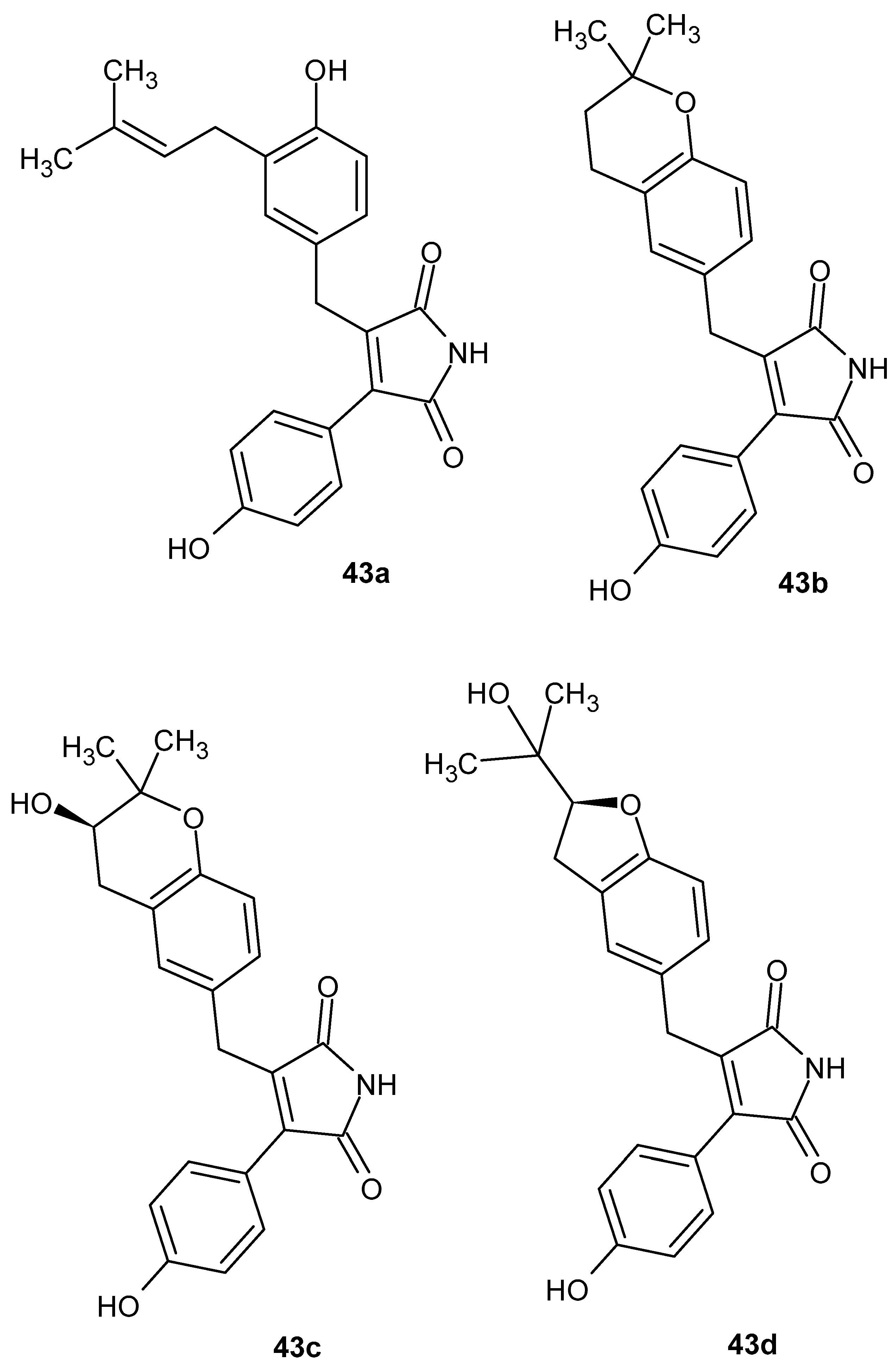
The anti-inflammatory activity of maleimide derivatives has also been investigated among natural products, in which the maleimide ring constitutes a key structural feature of newly isolated butenolides from Aspergillus terreus SC1550. In this study, four new aromatic butenolides—asperimides A-D 43ad (Figure 41)—were isolated [88].
Biological activity was evaluated using an LPS-stimulated RAW 264.7 macrophage model by assessing the inhibition of nitric oxide production using the Griess assay. Asperimides 43c and 43d, both containing a 1H-pyrrole-2,5-dione core, exhibited the most pronounced anti-inflammatory effects, with IC50 values of 0.78 ± 0.06 μM and 1.26 ± 0.11 μM, respectively, markedly surpassing the activity of indomethacin (IC50 = 37.5 ± 1.6 μM). Asperimides 43a and 43b were less active. The MTT assay revealed no significant cytotoxicity of the tested compounds at their effective concentrations. Collectively, these results unequivocally confirm the crucial role of the maleimide ring in the anti-inflammatory activity of the isolated structures [88].
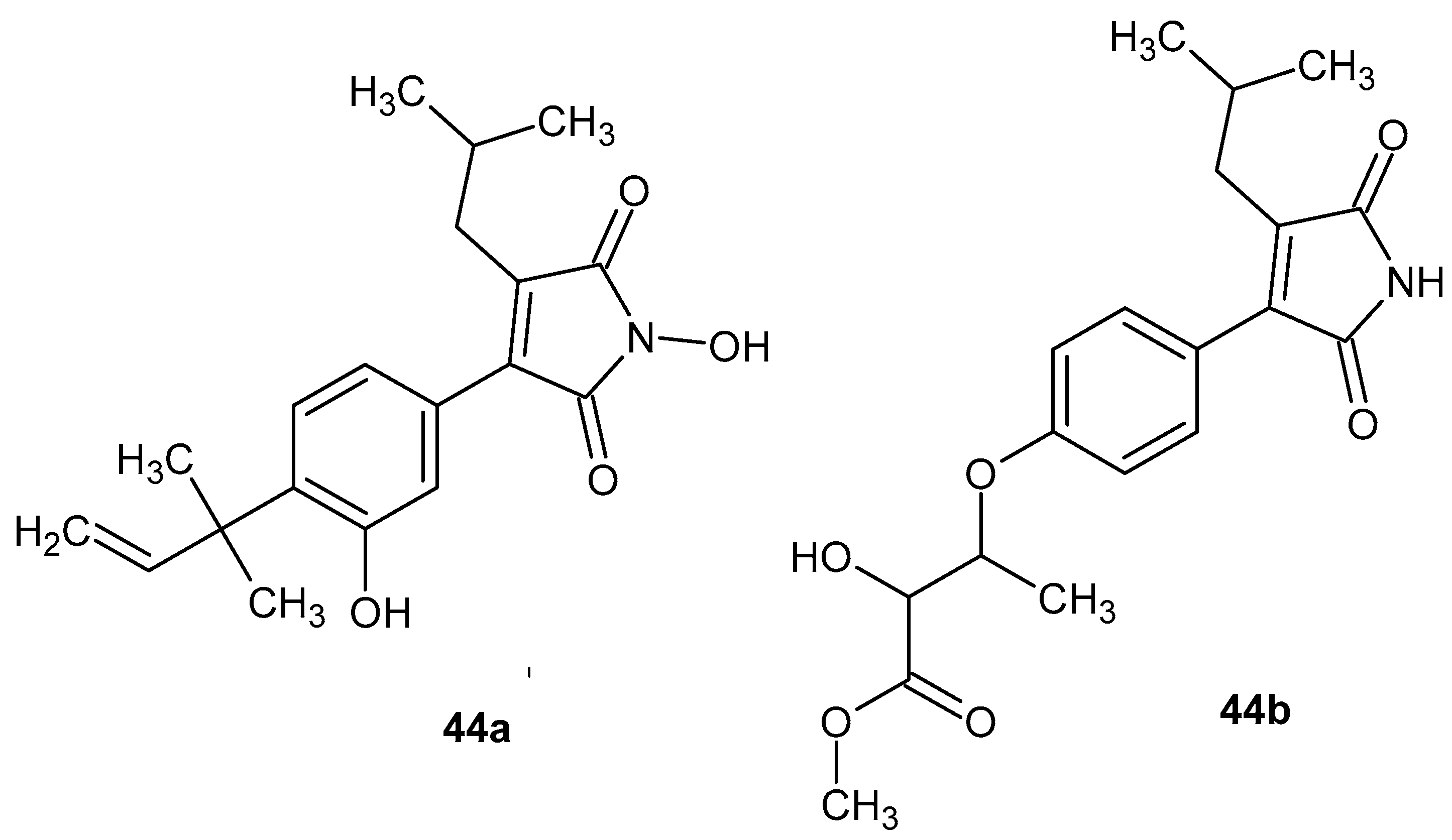
Another example of naturally derived compounds is maleimide derivatives isolated from the mycelium of the fungus Antrodia cinnamomea [89]. Among the identified metabolites by Wu et al. [90], antrocinnamomin F 44a and antrocinnamomin H 44b exhibited the highest anti-inflammatory activity (Figure 42)Their biological activity was evaluated in an in vitro model based on the inhibition of lipopolysaccharide (LPS)-induced nitric oxide (NO) production in RAW 264.7 murine macrophages. Antrocinnamomin F 44a and antrocinnamomin H 44b inhibited NO production with IC50 values of 30.1 ± 0.3 µM and 29.9 ± 1.5 µM, respectively, demonstrating potent anti-inflammatory activity comparable to or stronger than that of quercetin, used as a positive control [90].
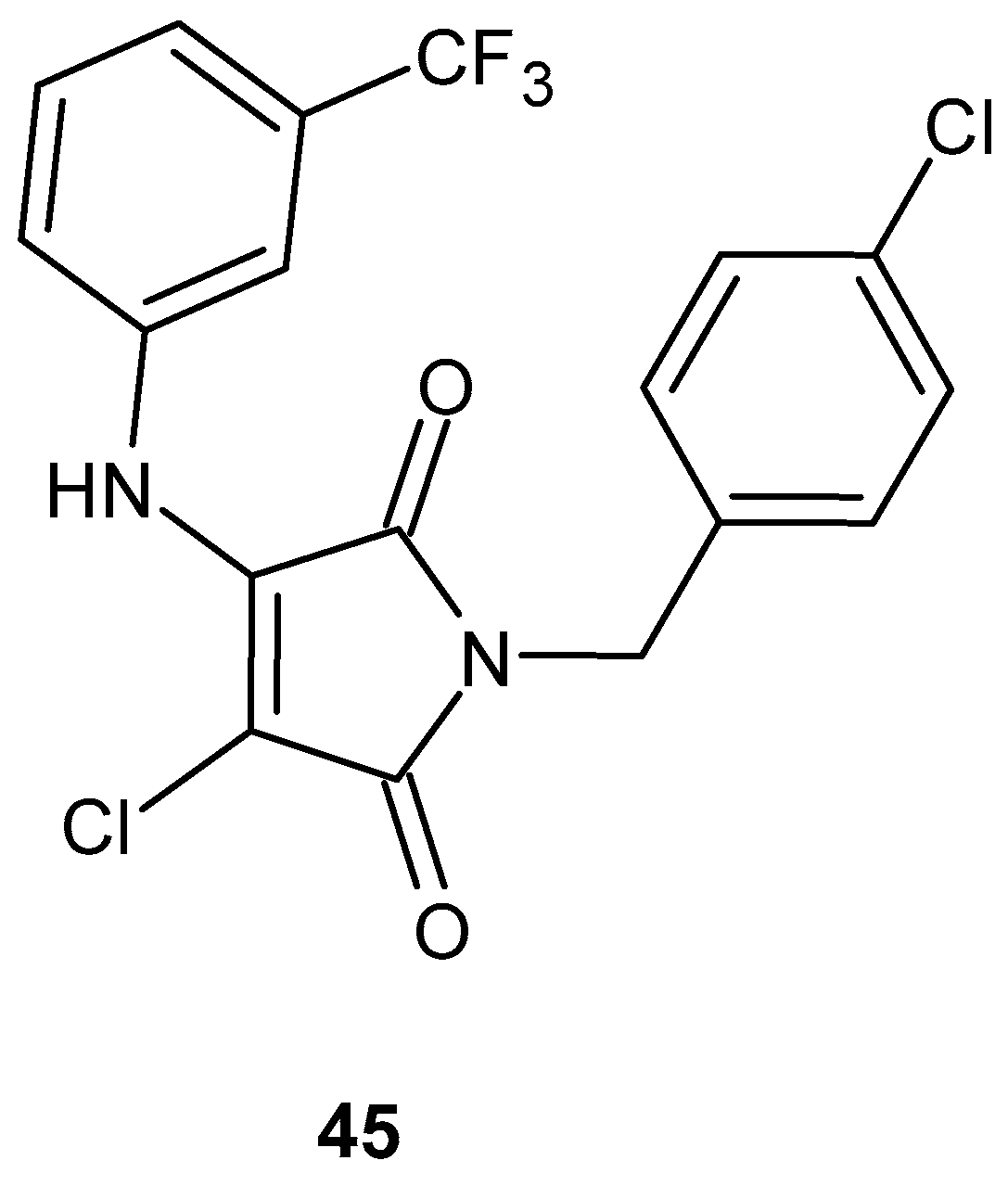
Kuznietsova et al. [91,92] conducted a series of studies investigating the anti-inflammatory effects of synthetic pyrrole derivatives, including 1-(4-chlorobenzyl)-3-chloro-4-(trifluoromethylphenylamino)-1H-pyrrol-2,5-dione (MI-1) 45 (Figure 43), in various rat models of inflammation.
In their preliminary study, Kuznietsova et al. [91] investigated the anti-inflammatory potential of the multikinase inhibitor MI-1 45 in experimental models of α-naphthylisothiocyanate-induced acute (3 days) and chronic (28 days) cholangitis in rats. Histopathological evaluation demonstrated that MI-1 markedly alleviated hepatic injury, fibrosis, and inflammatory infiltration, with reductions ranging from 46% to 86% relative to control groups. These tissue-level improvements were accompanied by normalization of serum biochemical parameters and leukocyte profiles, indicating attenuation of the systemic inflammatory response. Notably, the therapeutic effects persisted after a 28-day recovery period without further administration of the compound. Complementary in vitro assays revealed that MI-1 reduced the viability of HL60, HepG2, and human peripheral blood lymphocytes, with IC50 values of 0.6, 9.5, and 8.3 µg/mL, respectively, while normal NIH3T3 fibroblasts remained largely unaffected [91].
In a subsequent study, Kuznietsova et al. [92] investigated (MI-1) 45 in a rat model of chronic ulcerative colitis (UC). Oral administration of (MI-1) 45 for 14 days substantially improved colonic mucosal integrity, lowering the gastrointestinal tissue index (GTI) to nearly control levels. Additionally, MI-1 45 modulated oxidative stress markers, decreasing malondialdehyde (MDA) levels, normalizing protein carbonyl content, and restoring superoxide dismutase (SOD) activity. Comparative analysis demonstrated that MI-1 45 was more effective than prednisolone in reducing tissue damage [92].
Kotlyar et al. [93] demonstrated that MI-1 45 markedly reduced oxidative stress and intestinal damage in a rat model of acetic acid-induced chronic ulcerative colitis, showing effects comparable to prednisolone.
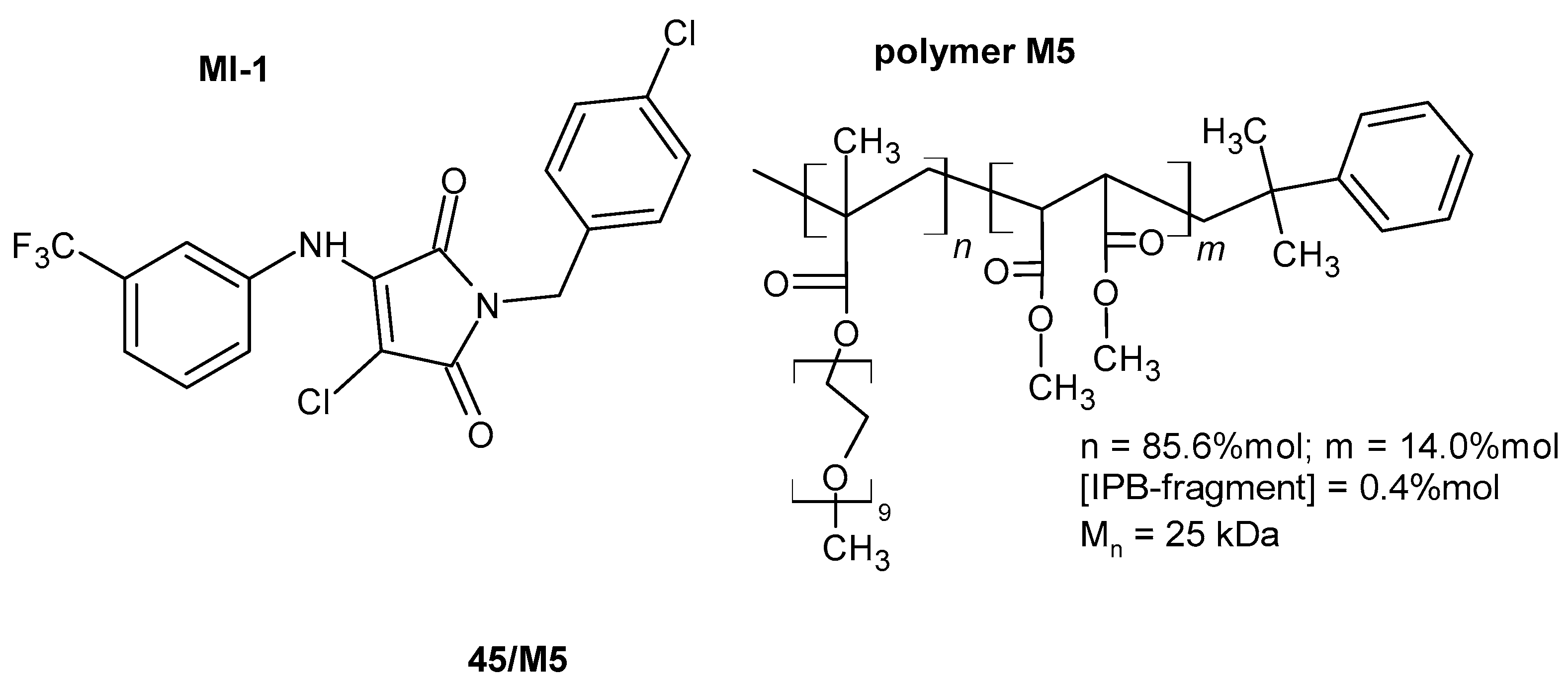
In further studies, the multikinase inhibitor MI-1 45 was immobilized on a poly(PEGMA-co-DMM) polymeric carrier to improve its water solubility and biological performance. The 45/M5 complex (Figure 44) was evaluated using in vitro cell viability, clonogenic, apoptosis, DNA damage, and cell cycle assays, demonstrating preserved or enhanced activity with high selectivity toward transformed cells.
The observed effects on apoptosis induction and cell cycle regulation support the involvement of MI-1 45 in pathways relevant to inflammation-associated hyperproliferative processes [94].
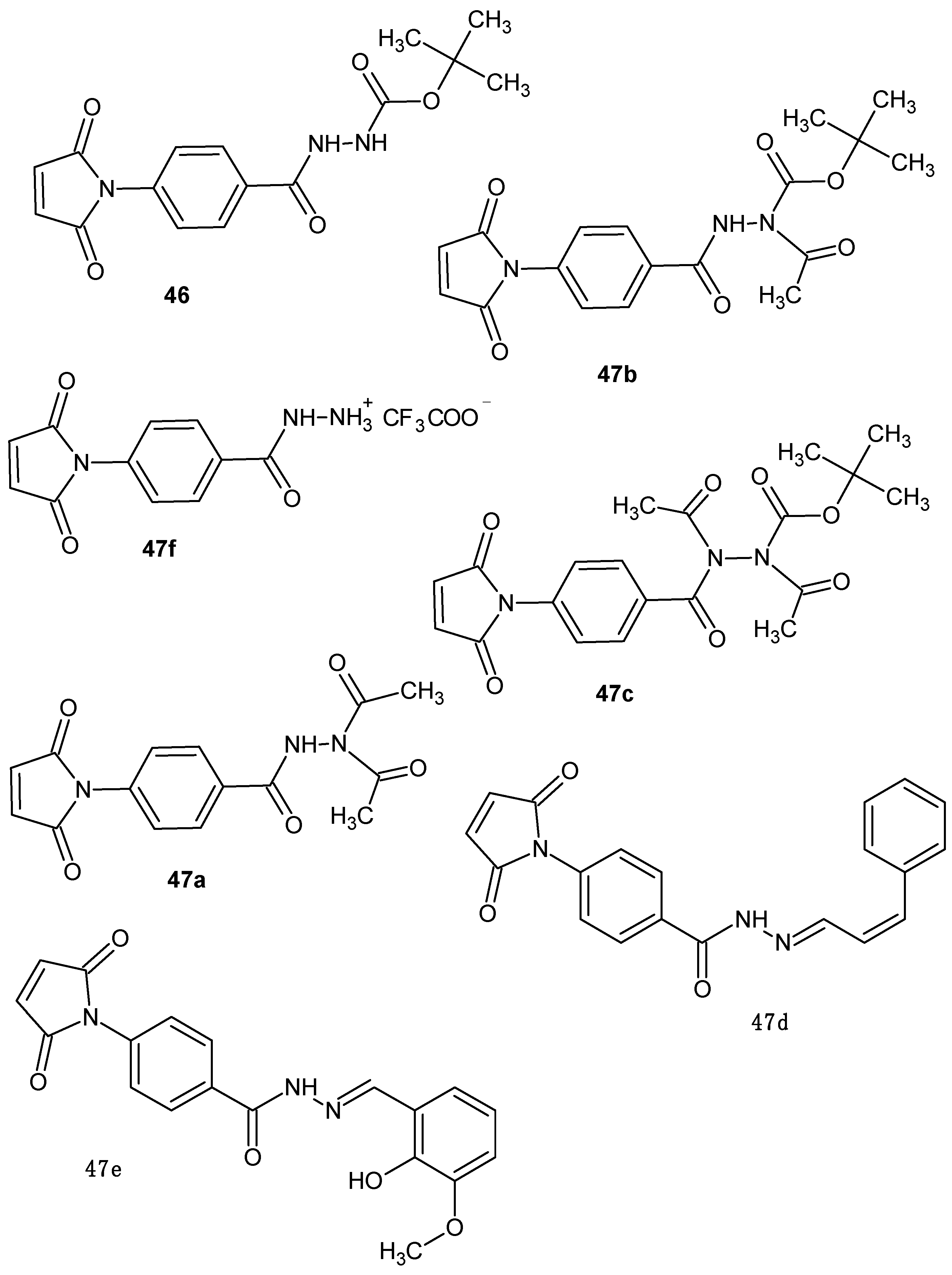
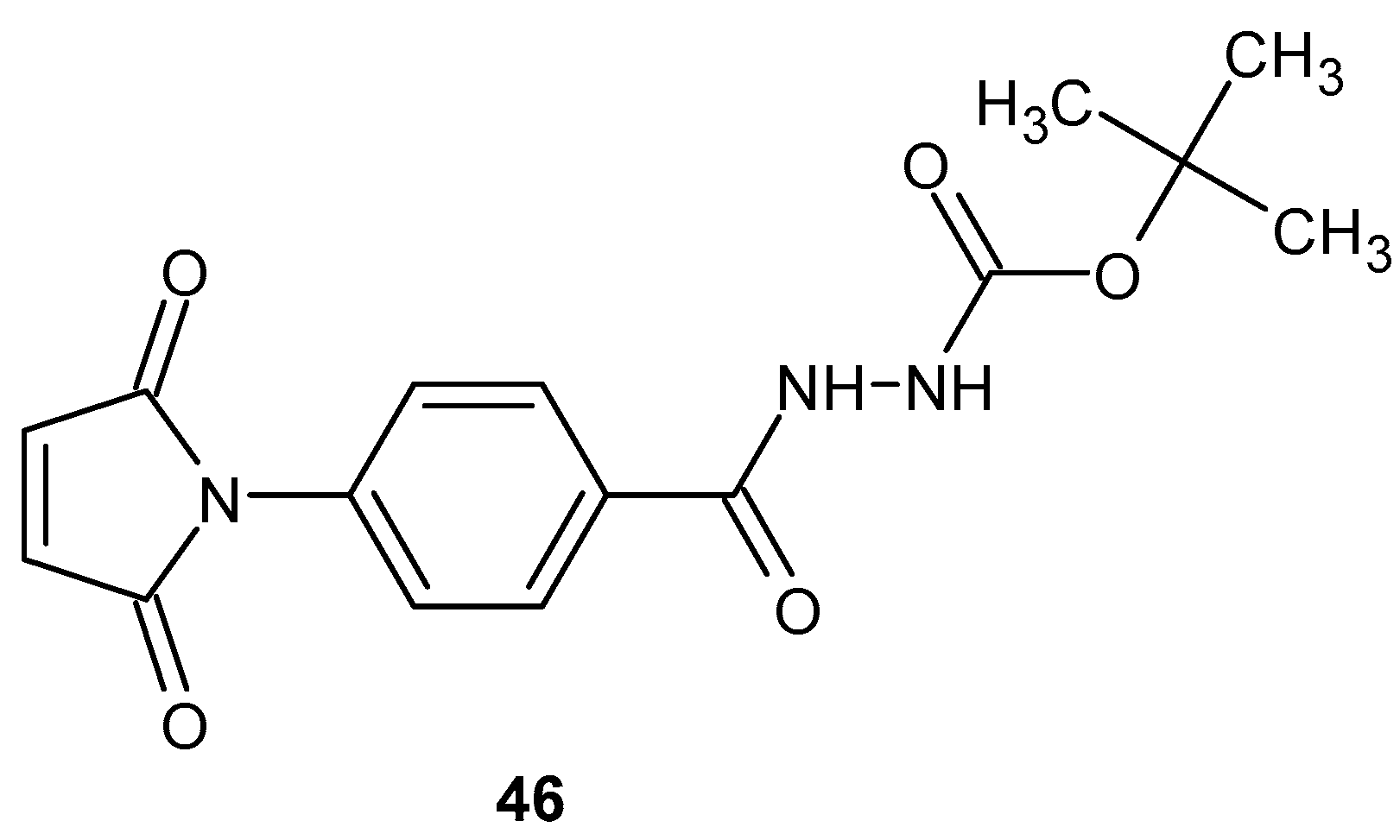
Inflammation is a critical factor driving cancer progression, including bladder cancer, highlighting the need for compounds with both anti-inflammatory and anticancer properties. Hamelin-Morrissette et al. [95] identified a novel compound, designated as compound 46, a maleimide derivative (Figure 45), which exhibits anti-inflammatory activity and potential anticancer effects.
Compound 46 was subjected to detailed in vitro evaluation in human macrophages (hMϕs) and macrophage-like J774A.1 cells. In vitro studies demonstrated that compound 46 at a concentration of 10 µM significantly inhibited the activation of STAT1 and STAT3 signaling pathways in cells stimulated with IFN-γ and IL-6, reducing their activity by 38% and 64%, respectively. Following a 3 h pre-treatment in IFN-γ-stimulated cells, the expression of pro-inflammatory markers was markedly suppressed, with CD40 decreased by 87% and MHC II by 49%. In macrophage migration assays, compound 46 reduced IL-6-induced cell motility by 92%. Moreover, in J774A.1 cells stimulated with IFN-γ and TNF-α, treatment with 25 µM of compound 46 decreased nitric oxide (NO) production by approximately 91%, as measured by the Griess assay [95].
Oufqir et al. [96] synthesized a new generation of maleimide derivatives aimed at developing compounds with enhanced anti-inflammatory and anticancer properties, potentially applicable for the treatment of bladder cancer. The starting point of this research was the earlier synthesis of DAB-1 46, which contains maleimide and hydrazide moieties and exhibited promising biological activity; however, its activity profile and cytotoxicity were not optimal [96]. To improve the structure of DAB-1 46, the authors designed a series of five DAB-1 analogues, including DAB-2-28 47a, DAB-2-31A 47b, and DAB-2-31B 47c, and two third-generation compounds, DAB-3-27 47d and DAB-3-33 47e, primarily modifying the hydrazide portion of the molecule to enhance its pharmacological properties (Figure 46).
All five molecules were evaluated in vitro for their anti-inflammatory and antiproliferative activities. In vitro, ex vivo, and in vivo studies demonstrated that DAB-2-28 47a exhibited lower cytotoxicity compared with DAB-1 46, while more effectively inhibiting nitric oxide (NO) production induced by pro-inflammatory cytokines (IFN-γ and TNF-α), as well as more efficiently blocking the IL-6/STAT3 and TNF-α/NF-κB signaling pathways, which play crucial roles in inflammatory processes and tumor progression. In peritoneal macrophages stimulated with IFN-γ and LPS, DAB-2-28 47a effectively suppressed the induction of the pro-inflammatory enzymes iNOS and COX-2 [93].
The compound DAB-2-28 47a was further investigated by Fortin et al. [97] in 2025 in MCF-7 and MDA-MB-231 breast cancer cells. The compound demonstrated strong anti-inflammatory activity, reducing cell migration and invasion, MMP9 expression, and gelatinase activity induced by macrophage-derived factors. Moreover, DAB-2-28 47a inhibited the phosphorylation of key pro-EMT transcription factors, including NF-κB, STAT3, SMAD2, CREB, and AKT, suggesting that its anti-inflammatory effect contributes to the suppression of EMT processes in breast cancer cells [97].
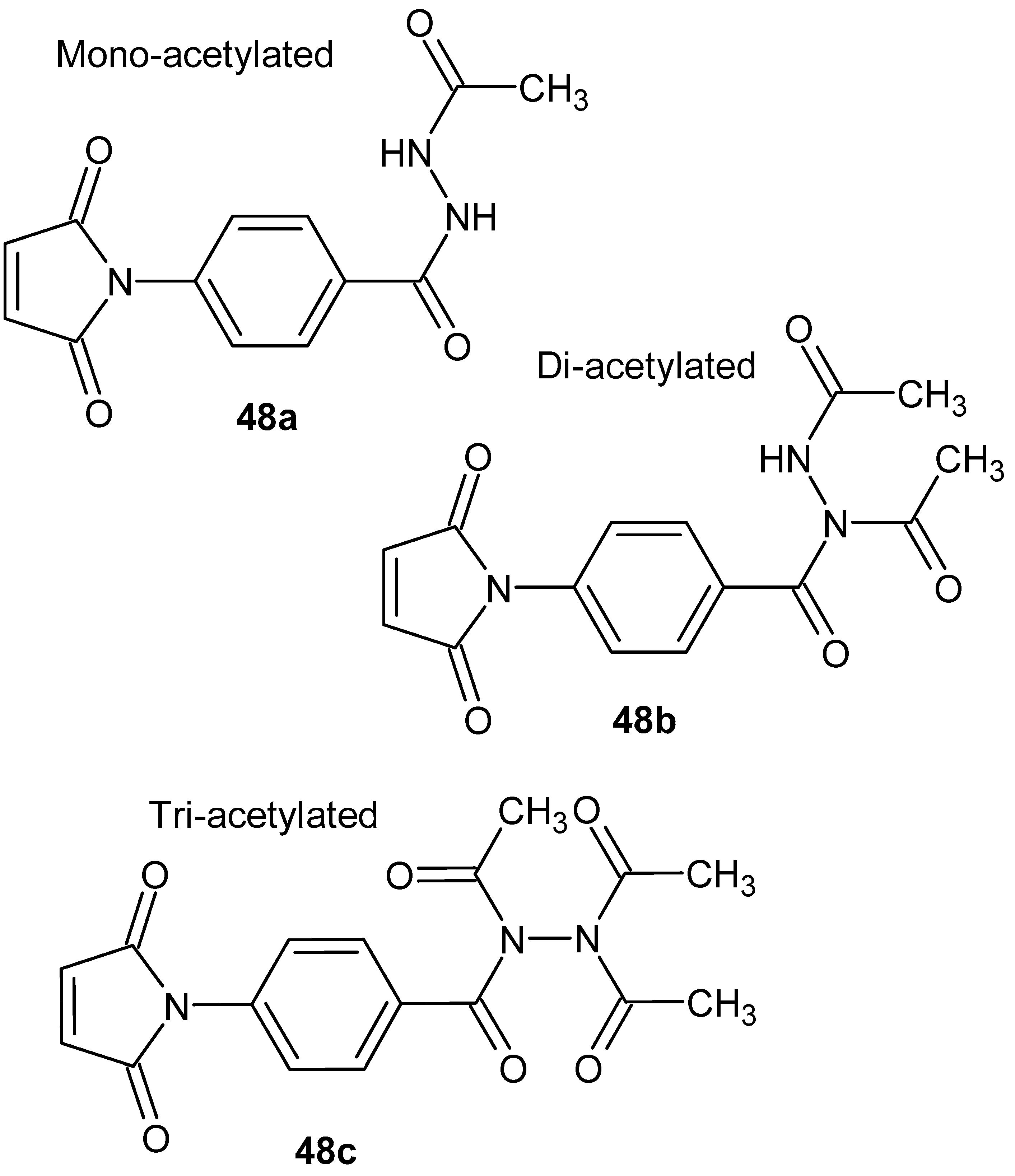
The high anti-inflammatory activity of DAB-1 46 served as an inspiration for further structural modifications. Cloutier et al. [98] designed new derivatives with varied acylation patterns on the hydrazide core. They obtained a monoacetylated product, 48a; a diacetylated regioisomer, 48b; and a triacetylated compound, 48c (Figure 47).
Additionally, three higher homologs, both monoacylated and diacylated, were prepared using appropriate anhydrides. All monoacylated hydrazide derivatives were effective in inhibiting nitric oxide (NO) production, as measured by the Griess assay. Using the MTT assay, it was observed that these same compounds exhibited slightly lower toxicity (average cell viability: ~90%) in murine bladder cancer MB49-I cells compared to the reference DAB-1 46 molecule (85%). The most active monoacetylated derivative, 1, demonstrated approximately 83% inhibition of NO production relative to the number of viable/proliferating cells [98].
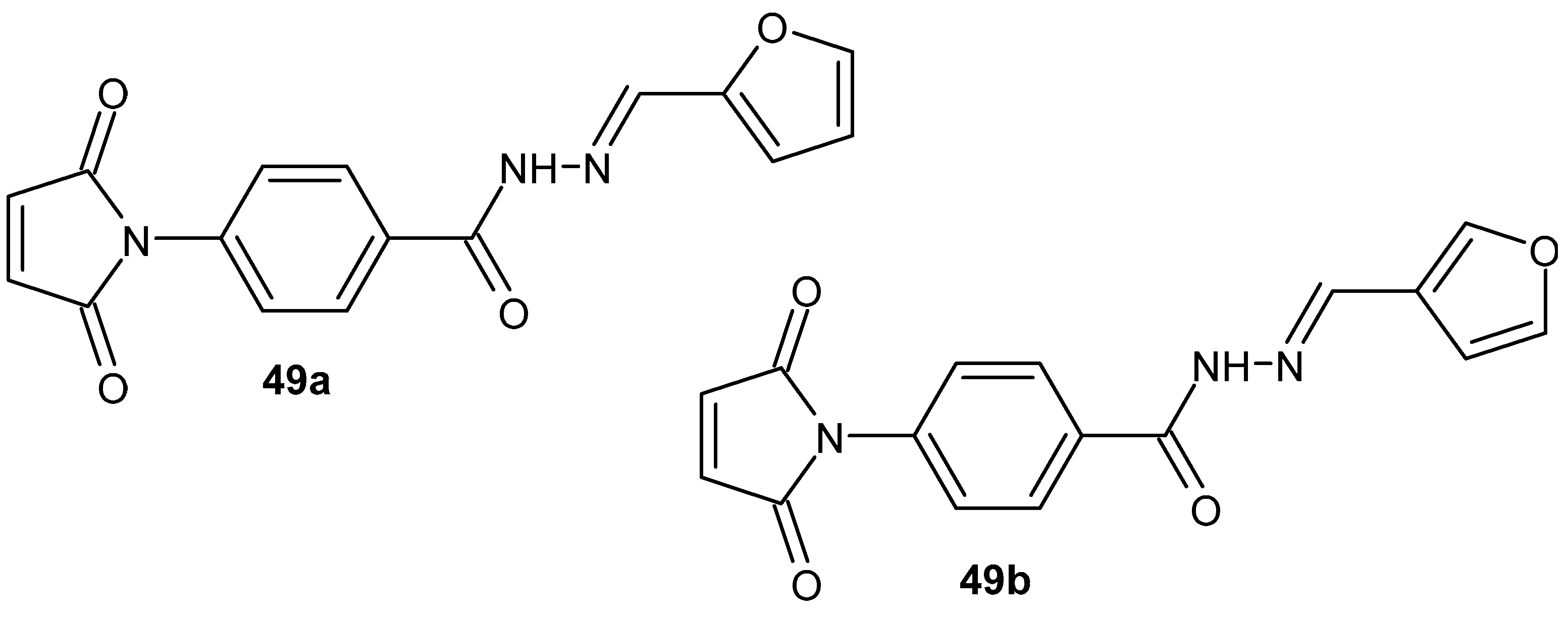
Continuing their investigations, Cloutier et al. [99] synthesized a series of DAB-1 46 hydrazide derivatives. The anti-inflammatory activity of these compounds was evaluated both in vitro and in vivo. Most of the new compounds were found to be essentially non-toxic to RAW 264.7 cells. Their anti-inflammatory potential was assessed by measuring the effect on nitric oxide production in cells using the Griess assay. Some of the derivatives significantly inhibited nitric oxide production, proving to be substantially more effective than the parent compound, DAB-1 46. The most active compound of the series was derivative 47e (Figure 46), which was four times more potent than DAB-1 46. In addition to the compounds 47e, furan-containing derivatives 49a and 49b (Figure 48) merit attention, as they exhibited normalized NO inhibition of 71% and 75%, respectively, without detectable cytotoxicity toward RAW 264.7 cells, indicating pronounced anti-inflammatory potential [97].
In vivo studies in models of acute inflammation and invasive bladder cancer tumors demonstrated that derivative 49 reduced inflammation in mice, exhibited comparable anti-inflammatory activity, and displayed higher anti-tumor activity compared to DAB-1 46, without apparent signs of toxicity [99].
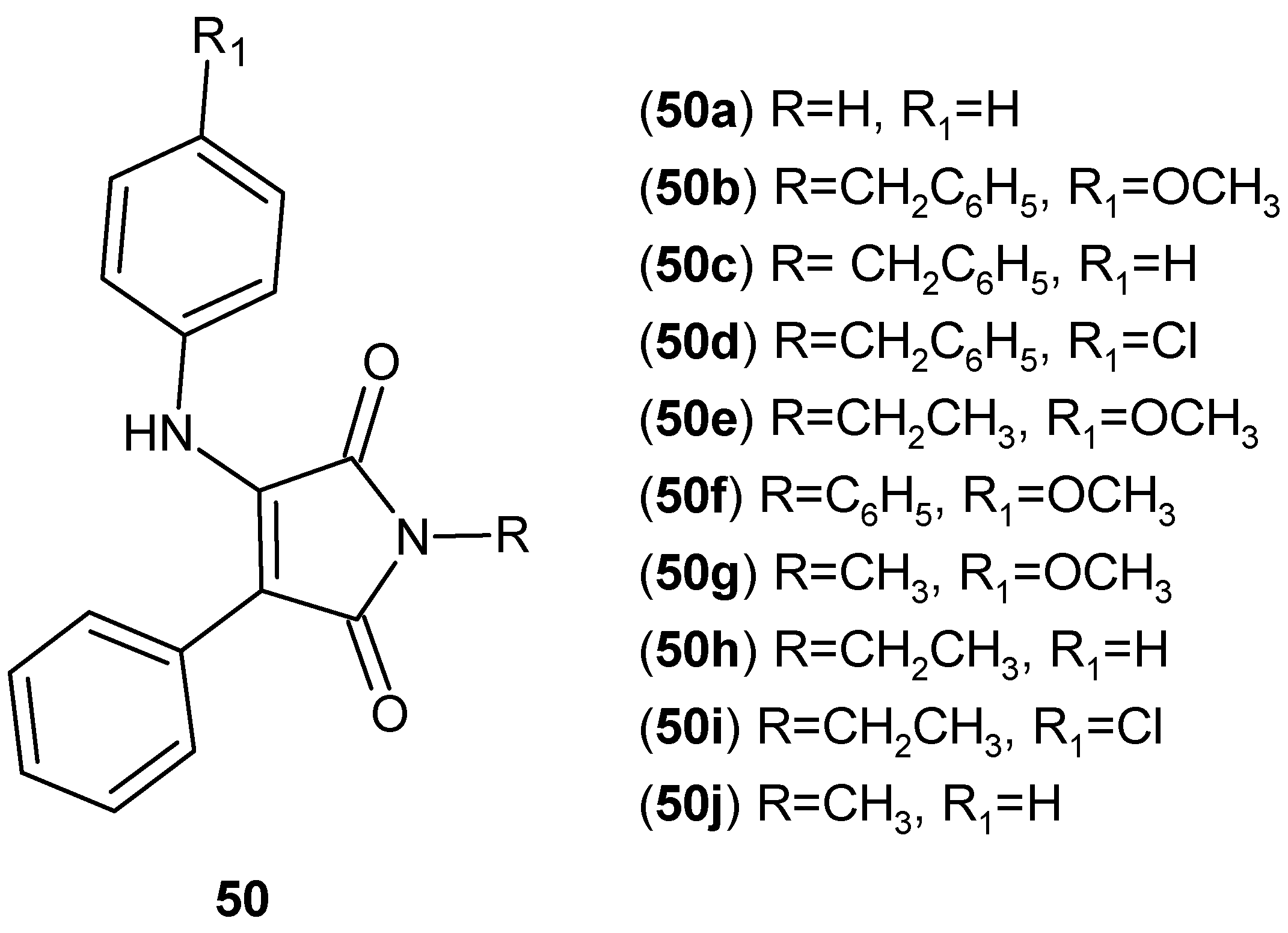
Jaye et al. [100] reported the synthesis of a series of substituted maleimide derivatives 50aj (Figure 49) and their evaluation as agonists of liver X receptors (LXRα and LXRβ).
The compounds 50aj were assessed in vitro using coactivator recruitment and LXR reporter assays, revealing high agonistic potency with EC50 values ranging from 40 to 150 nM. In cellular models, LXR activation by selected maleimide derivatives resulted in suppression of pro-inflammatory gene expression, including TNF-α, IL-6, and COX-2, indicating their anti-inflammatory potential mediated via LXR signaling [100].

2.2. Bicyclic Derivatives

2.2.1. Bicyclic Imides Fused to a Benzene Ring

Phthalimide is an organic chemical compound belonging to the acid imide group. It is a derivative of phthalic acid, in which two carbonyl groups are bonded to a single nitrogen atom, forming a characteristic imide ring. It is also used in the pharmaceutical and chemical industries, as well as in the synthesis of biologically active compounds.
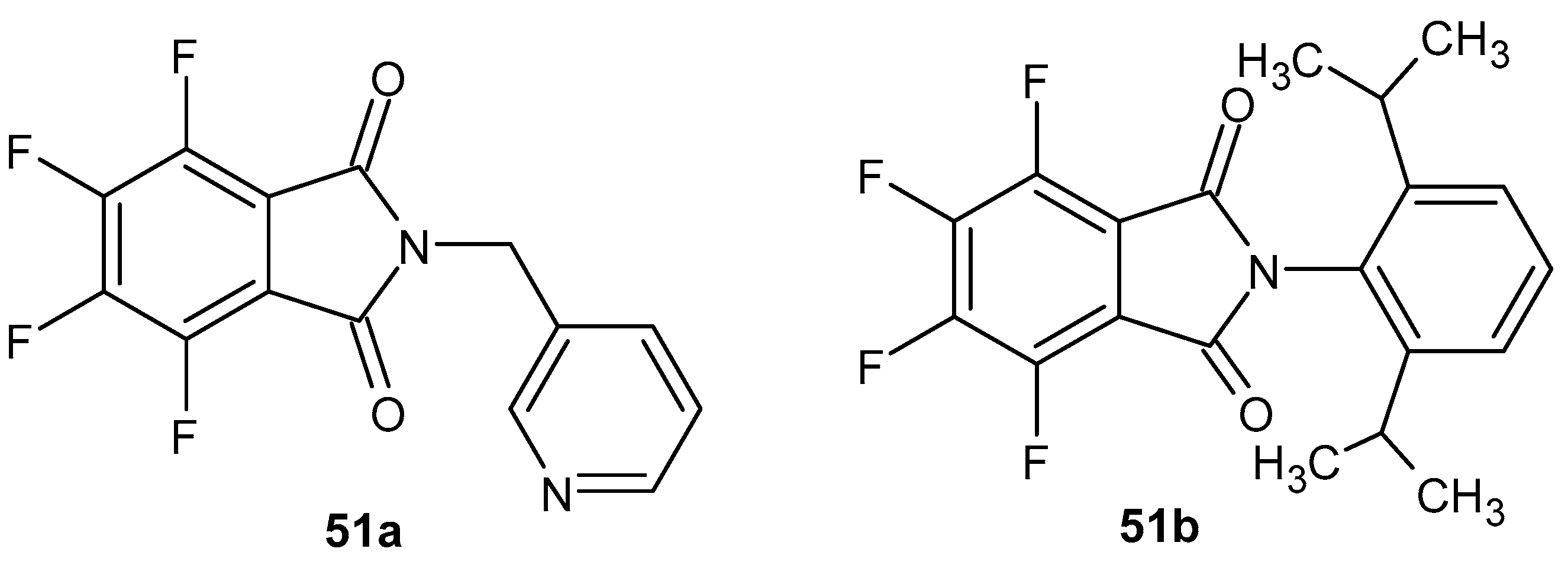
Tetrafluorophthalimide derivatives 51ab (Figure 50) were synthesized by Colina et al. [101]. N-(pyridin-3-ylmethyl)-4,5,6,7-tetrafluorophthalimide 51a was the most potent compound in the series tested, demonstrating slightly greater (84%) inhibition of TNF-α production than 2-[2,6-di(propan-2-yl)phenyl]-4,5,6,7-tetrafluoro-1H-isoindole-1,3(2H)-dione 51b (73%) and proved highly effective in reducing ear thickness in mice following topical administration at a dose of 2 × 500 µg, achieving 79% inhibition of the inflammatory process. Although its effect was weaker than that of dexamethasone, this compound remained significantly active even at the lower dose of 2 × 100 µg; the toxicity of compound 51a was LD50 = 1.05 ± 0.27 mM kg−1. Evaluation of the ID50 value in the carrageenan-induced rat paw edema model following oral administration showed that derivative 51a had an ID50 = 0.14 µM·kg−1 and a potency similar to that of compound 51b (ID50 = 0.15 µM·kg−1).
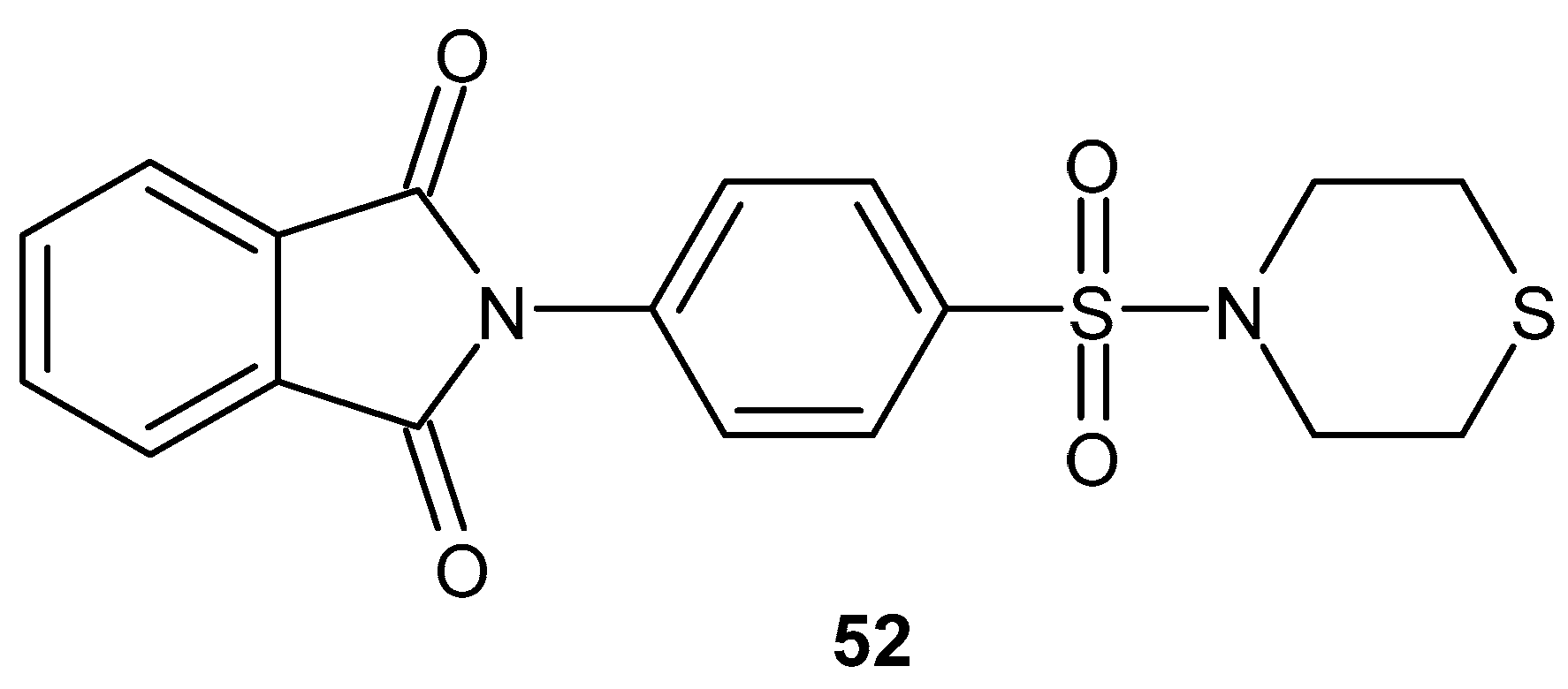
The synthesis and activity of compounds containing a sulfonylthiomorpholine were described by Lima et al. [102]. 2-[4-(1,4-Thiazinan-4-ylsulfonyl)phenyl]-1,3-isoindoline dione 52 (Figure 51) demonstrated significant anti-inflammatory activity, strongly limiting LPS-induced neutrophil recruitment at ED50 = 2.5 mg·kg−1. The inhibitory capacity of the tested compound, 52, was 72 ± 7.2%, while for the reference drug, thalidomide, it was 50 ± 8.6%. The derivative 52 also inhibited TNF-α production.
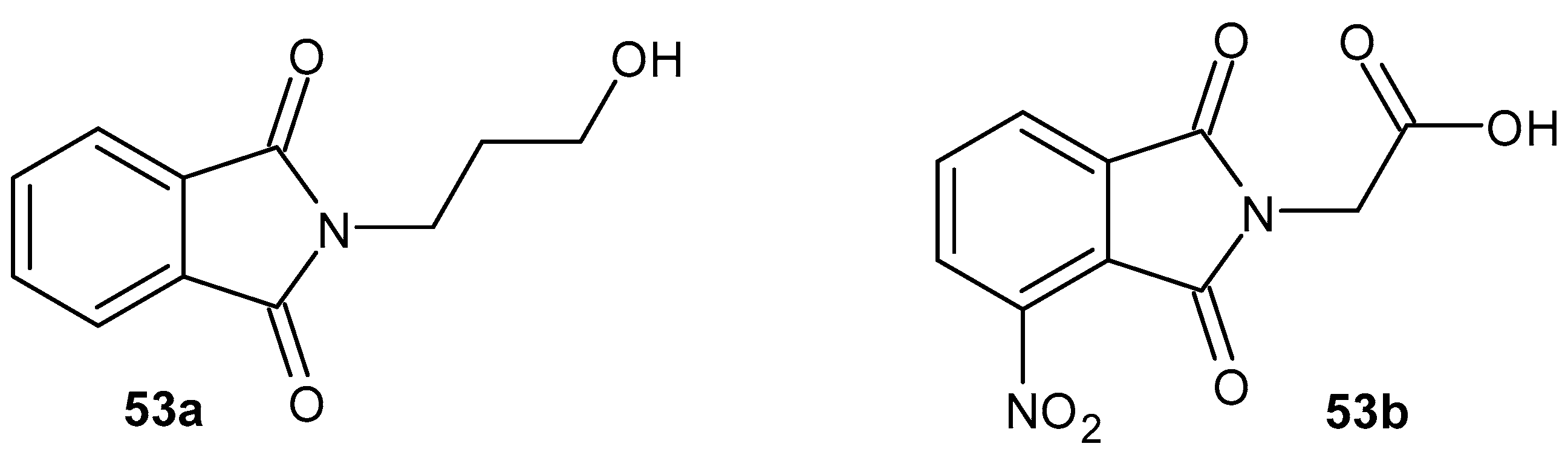
Batista et al. [103] analyzed the effects of five phthalimide analogues lacking the glutarimide moiety in experimental models of acute and chronic inflammatory neuropathic pain. Among the substances evaluated, two compounds (Figure 52), N-3-hydroxypropylphthalimide 53a (546 mg/kg) and N-carboxymethyl-3-nitrophthalimide 53b (700 mg/kg), showed analgesic activity in various models, including chronic inflammatory and neuropathic pain models.
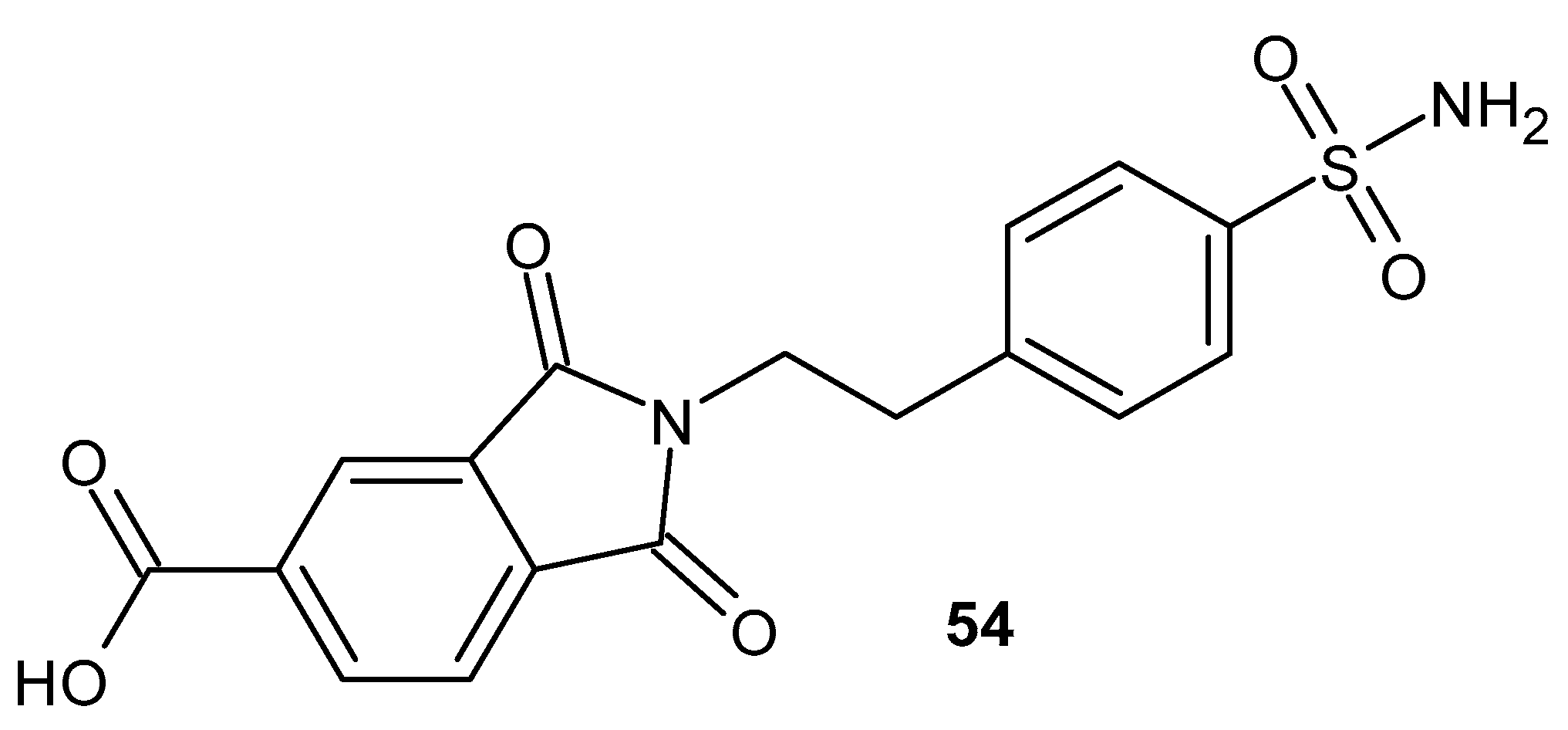
Abdel-Azis et al. [104] presented the synthesis of phthalimide derivatives and conducted studies on their anti-inflammatory, ulcerogenic, and cytotoxic effects in vitro. 1,3-Dioxo-2-(4-sulfamoylphenethyl)isoindole-5-carboxylic acid 53 (Figure 53) was found to be the most potent COX-2 inhibitor (IC50 = 0.10 µM), characterized by optimal selectivity (COX-1 IC50 = 49.0 µM) and comparable to celecoxib (COX-1, IC50 > 50 µM; COX-2, IC50 = 0.12 µM). The derivative 54 reduced edema by 86.6% in an in vivo anti-inflammatory activity study in a conventional carrageenan-induced paw edema model in rats, while the reference drug, celecoxib, inhibited edema by 85.2%.
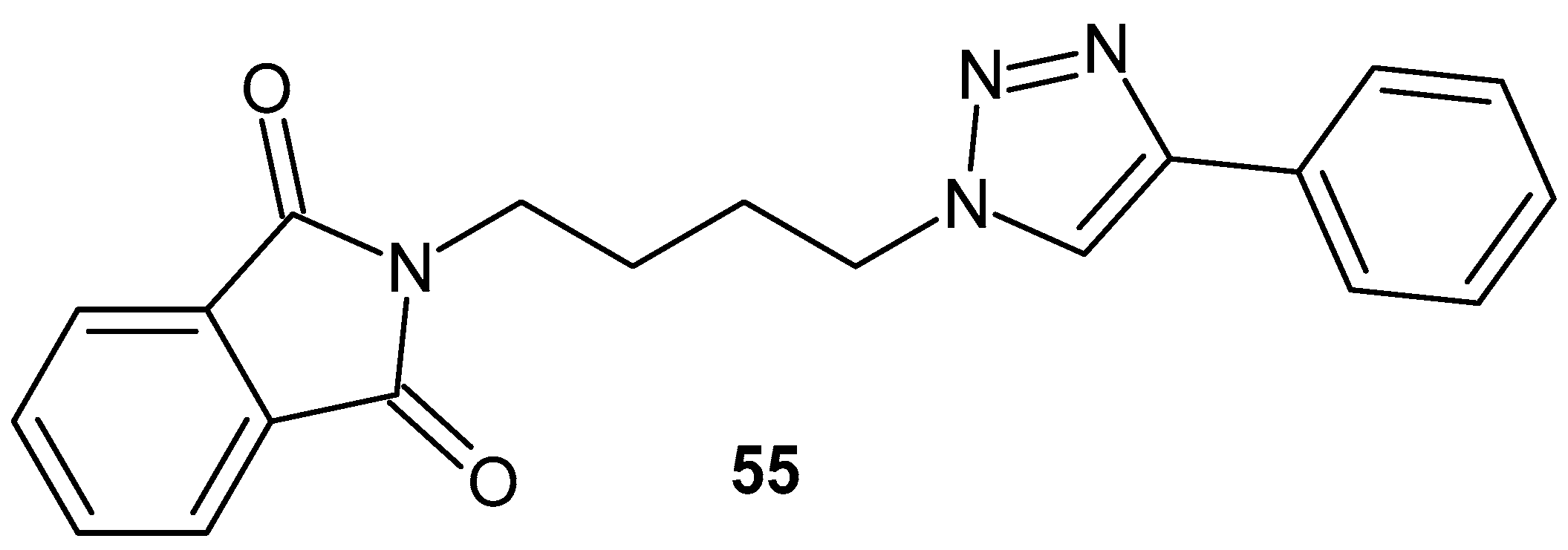
N-substituted phthalimide derivatives exhibited interesting anti-inflammatory effects, and studies showed that activity increased with the size of the aliphatic chain [105]. 4-Phenyl-1-[4-(phthalimido-4-yl)butyl]-1H-1,2,3-triazole 55 (Figure 54) demonstrated the highest anti-inflammatory activity, reducing carrageenan-induced paw edema by 48.9% after 4 h and by 22.4% after 24 h. It was superior to the standard acetylsalicylic acid (ASA) by 41.5% after 4 h and to ibuprofen by 45.2%. SAR studies show that the phthalimide and triazole fragments play an important role in the design of potent anti-inflammatory compounds.
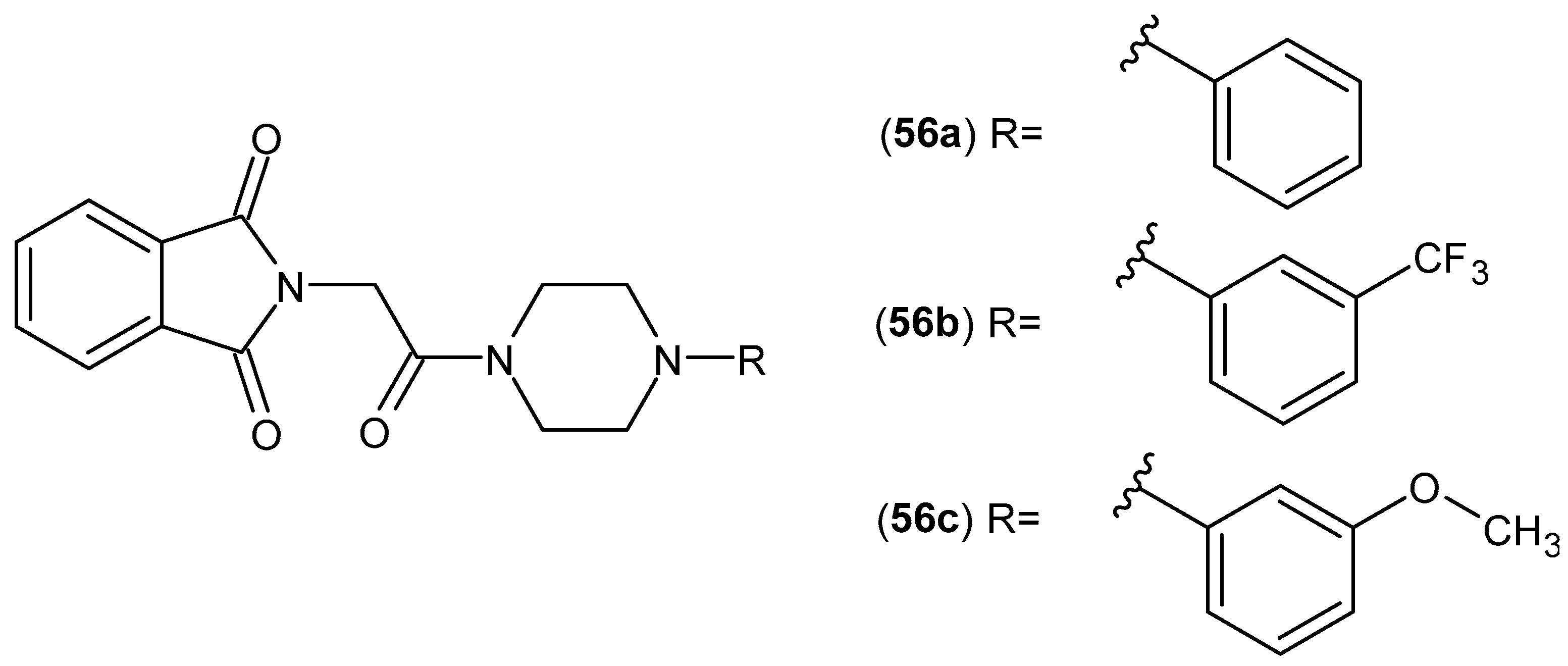
Isoindoline-1,3-dione derivatives 56 (Figure 55), synthesized by Szkatuła et al. [106], showed stronger affinity for COX-2 than for COX-1. Compounds 56ac showed stronger COX-2 inhibition than the reference compound, meloxicam. The selectivity of compound 56a (COX-1 IC50 = 76.7 µM, COX-2 IC50 = 53.4 µM, COX-2/COX-1 0.70) is comparable to that of meloxicam (COX-1 IC50 = 83.7 µM, COX-2 IC50 = 59.2 µM, COX-2/COX-1 0.71), whereas compounds 56b (COX-1 IC50 = 171.0 µM, COX-2 IC50 = 47.6 µM, COX-2/COX-1 0.28) and 56c (COX-1 IC50 = 176.4 µM, COX-2 IC50 = 43.8 µM, COX-2/COX-1 0.25) showed almost three times higher selectivity than the reference drug, meloxicam.
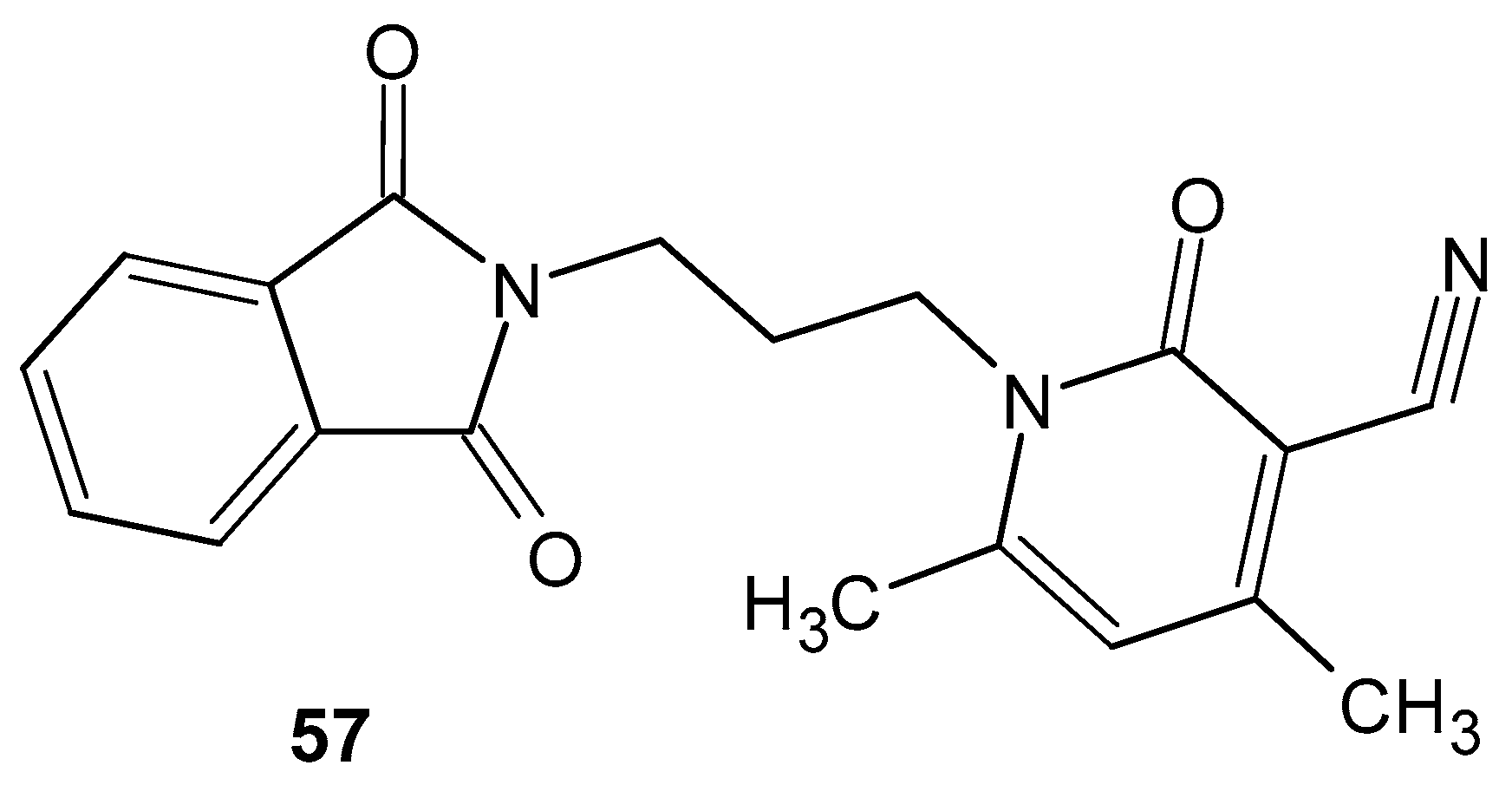
Singh et al. [107] synthesized phthalimide derivatives and analyzed the resulting compounds for docking at the active site of the COX-2 enzyme, comparing them with the standard drugs, lumiracoxib and nimesulide. Structure-activity analysis (SAR) showed that almost all compounds exhibited strong binding affinity for COX-2 compared with lumiracoxib. All compounds were subjected to in vivo anti-inflammatory studies using the carrageenan-induced paw edema model, with nimesulide as the reference drug. 1-(3-(1,3-Dioxoisoindolin-2-yl)propyl)-4,6-dimethyl-2-oxo-1,2-dihydropyridine-3-carbonitrile 57 (Figure 56) showed maximum anti-inflammatory activity; after 30 min the inhibition of edema was 11.4%, after 90 min 20.4%, and after 180 min 9.1%, while the standard drug (nimesulide) inhibited it after 30 min to 13.7%, after 90 min to 23.5%, and after 180 min to 13.7%.
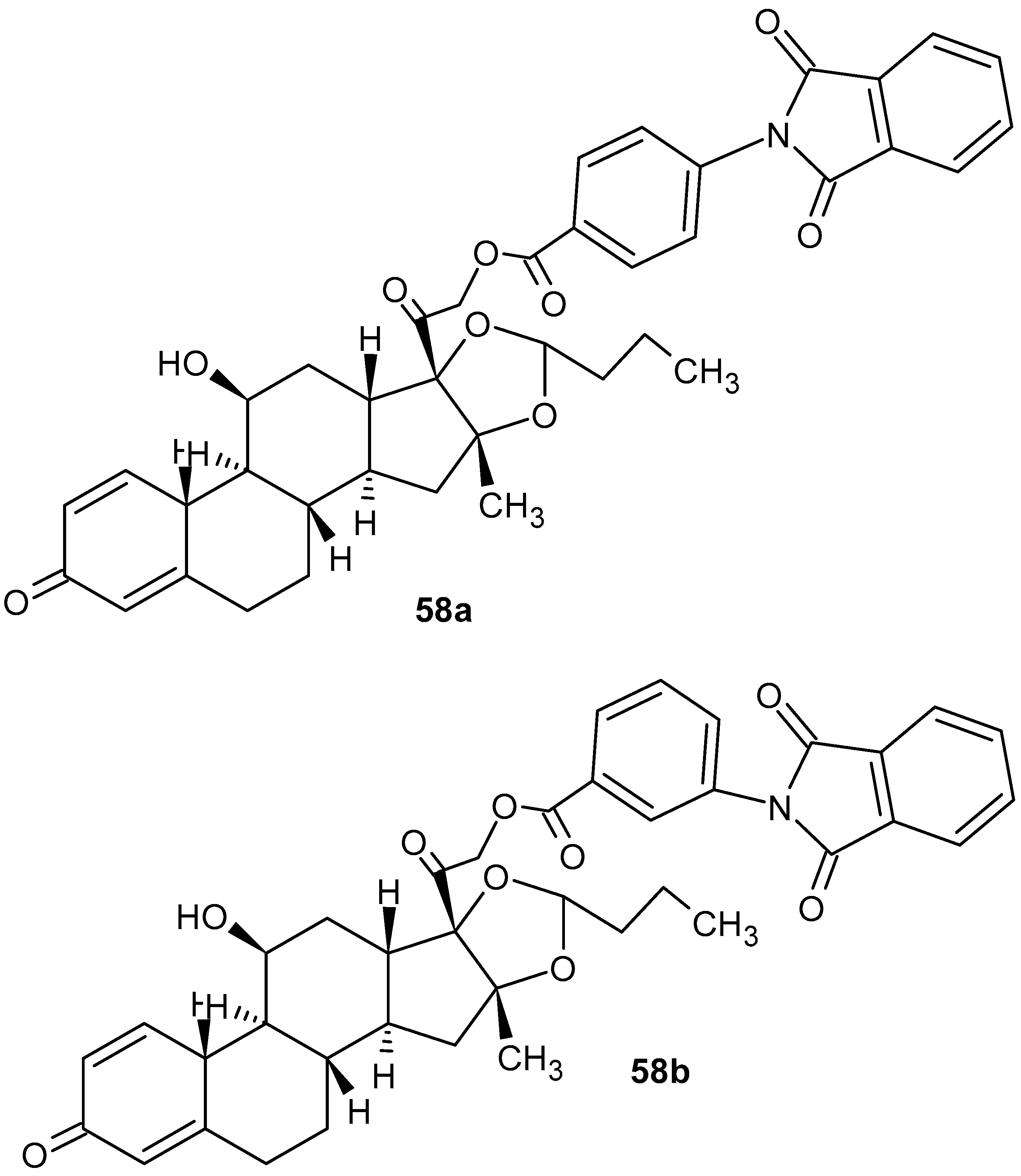
Glucocorticoid derivatives were synthesized by Machado et al. [108], and their anti-inflammatory effects were evaluated in rat models of ulcerative colitis. Two compounds, 58a and 58b (Figure 57), demonstrated complete ulcer regression in 83.3% and 75% of treated animals, respectively. These levels are higher than those observed with prednisolone.
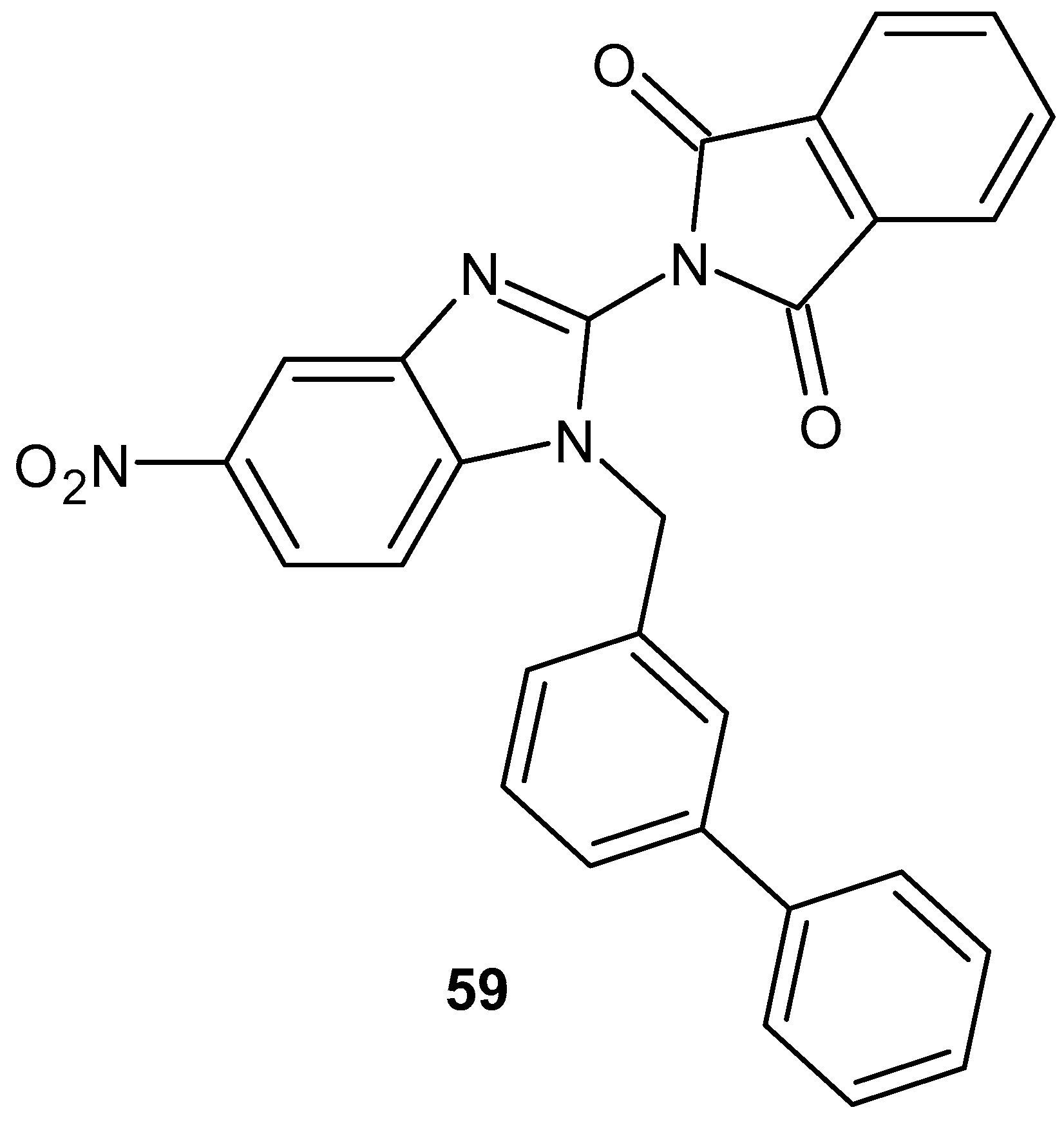
The benzimidazole derivatives synthesized by Kaur et al. [109], benzimidazole derivatives combined with phthalimide, were tested for their analgesic and anti-inflammatory activity. The most active compound, 59 (Figure 58), was docked with COX-2 and 5-LOX, which was confirmed by in vivo studies. The benzimidazole and phthalimide derivative 59 showed interesting analgesic, anti-inflammatory, and broad inhibitory activity on COX-1/2 and 5-/15-LOX enzymes (COX-1 IC50 = 9.85 µM; COX-2 IC50 = 1.00 µM; SI = 9.85; 5-LOX IC50 = 0.32 µM; 15-LOX IC50 = 1.02 µM).
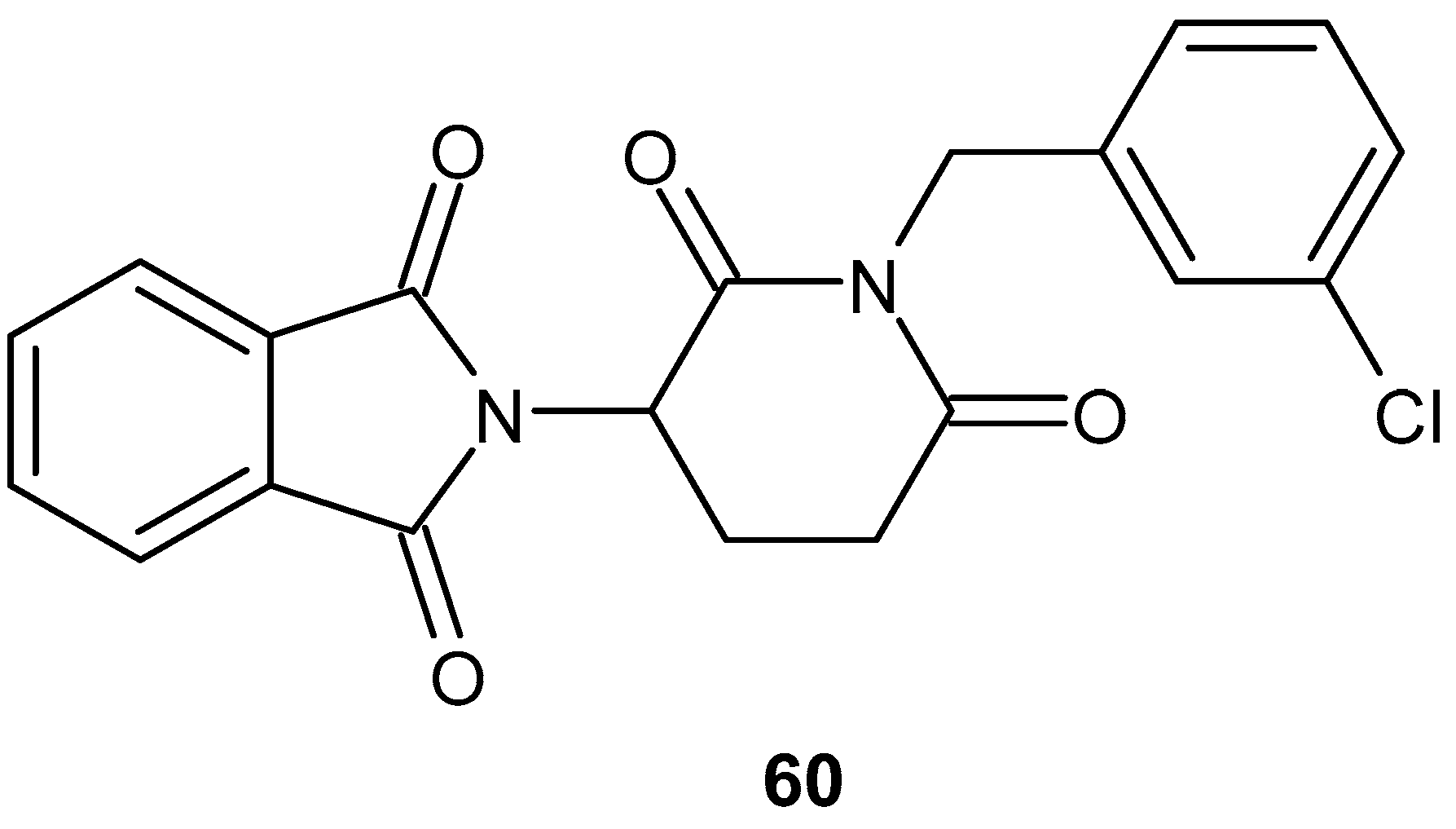
Tang et al. [110] synthesized a series of thalidomide derivatives that were evaluated for their anti-inflammatory activity. The most promising compound, which showed no significant cytotoxicity at a concentration of 10 μM, was 2-[1-(3-chlorobenzyl)-2,6-dioxopiperidin-3-yl]isoindoline-1,3-dione 60 (Figure 59). This derivative inhibited the expression of IL-6 (69.44%) and TNF-α (75.01%) in HaCaT cells with greater potency than thalidomide, which inhibited IL-6 (48.70%) and TNF-α (22.97%).
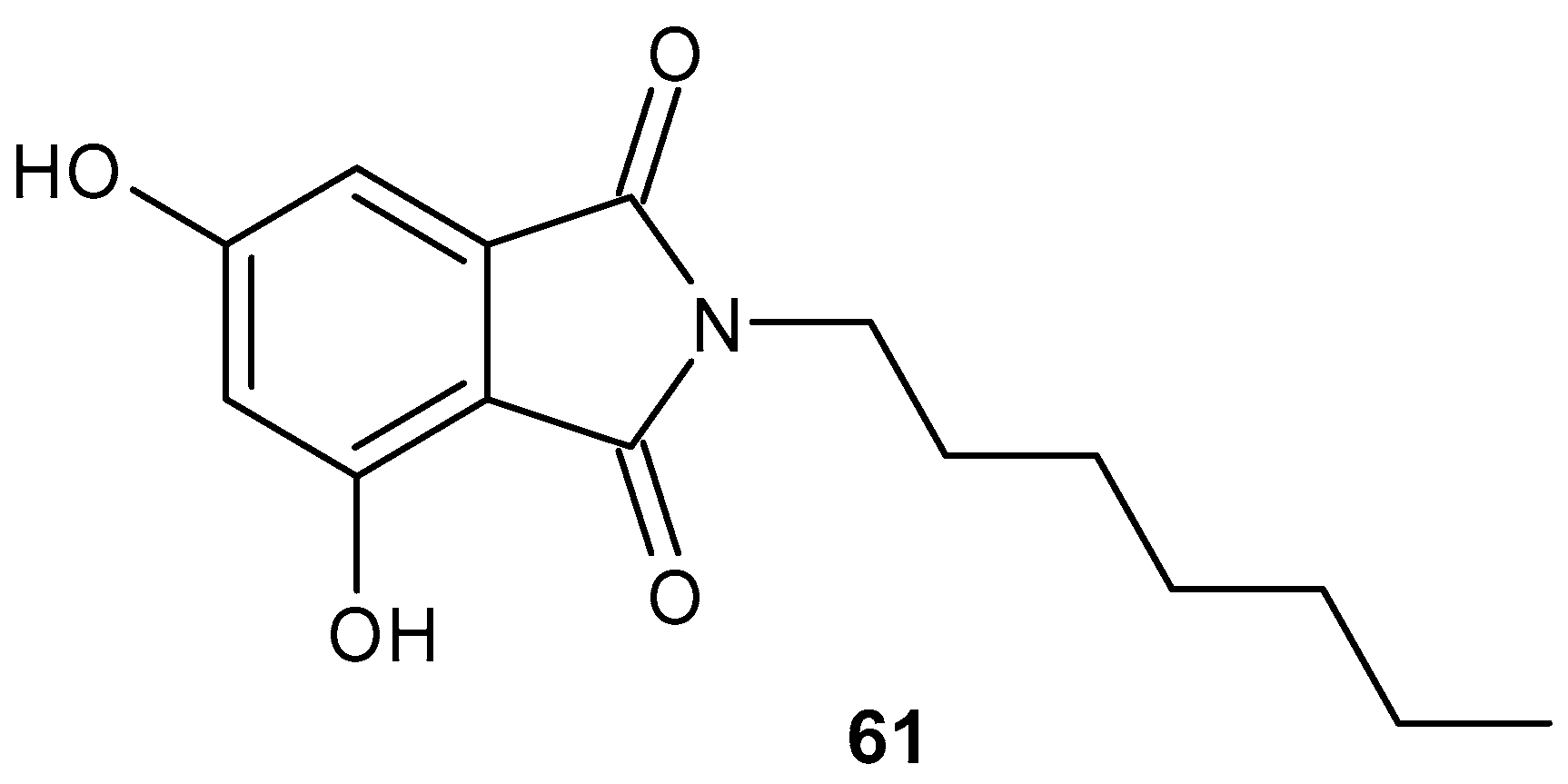
Based on the hypothesis that overproduction of nitric oxide (NO) plays a significant role in inflammatory processes, in 2017 scientists synthesized a series of phthalimide derivatives and tested their anti-inflammatory properties using lipopolysaccharide (LPS)-stimulated NO production in cultured RAW 264.7 mouse macrophage cells [111]. N-heptyl-3,5-dihydroxyphthalimide 61 (Figure 60) demonstrated the greatest inhibitory activity with an IC50 of 8.7 µg/mL. Subsequent studies showed that the inhibitory activity of compound 61 correlated with a decrease in mRNA and protein expression of LPS-stimulated inducible nitric oxide synthase (iNOS).
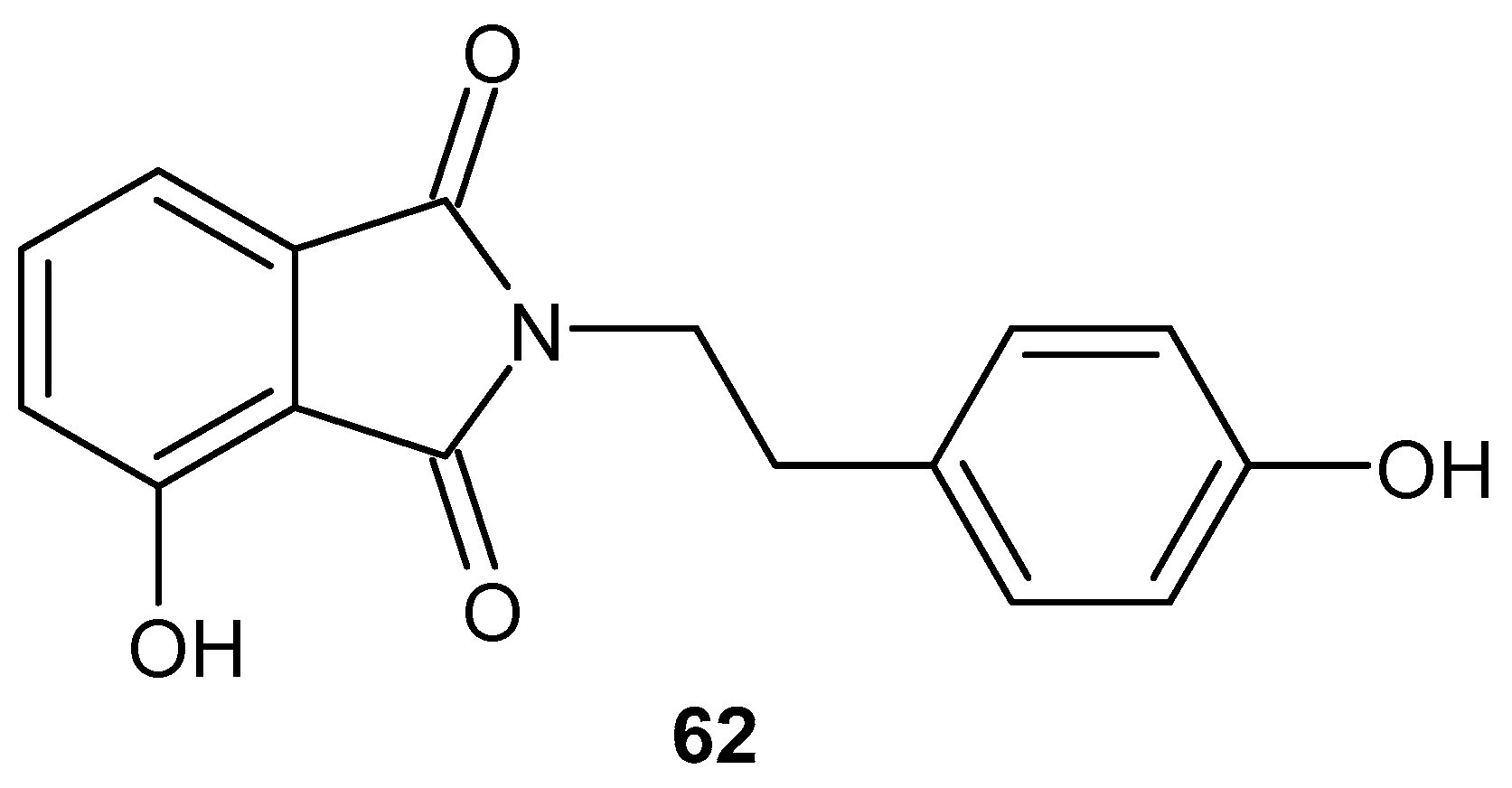
Xiao et al. [112] synthesized 4-hydroxy-2-(4-hydroxyphenethyl)isoindoline-1,3-dione 62 (Figure 61), which showed significant activation of PPAR-γ in rat liver Ac2F cells. The new derivative, 62, is also characterized by low toxicity and anti-inflammatory effects in vivo [112,113,114]. Based on previous research, Su et al. [115] decided to check the anti-inflammatory properties of compound 62. Compound 62 was first found to be non-toxic after exposure to concentrations up to 50 μM for 24 h using human embryonic kidney cells (HEK293T), rat liver Ac2F cells, and RAW264.7 mouse macrophages. Subsequent studies showed that 62 derivatives inhibited the induction of pro-inflammatory factors, including inducible nitric oxide synthase (iNOS), nitric oxide (NO), cyclooxygenase 2 (COX-2), tumor necrosis factor (TNF-α), interleukin-1 (IL-1), and interleukin-6 (IL-6), in RAW 264.7 mouse macrophages stimulated with lipopolysaccharide (LPS). The test of compound 62 (Figure 59) at 50 μM significantly inhibited the mRNA levels of iNOS, COX-2, TNF-α, IL-1β, and IL-6 to an extent comparable to 10 μM dexamethasone [115]. In subsequent studies, the phthalimide derivative 62 was evaluated for α-glucosidase inhibition in vitro. Compound 62 inhibited the enzyme (IC50 = 0.669 µM) better than acarbose (IC50 = 49.133 µM). In an in vivo study of antidiabetic activity, type 2 diabetes was induced by a high-fat diet (20%) and streptozotocin (30 mg/kg) in golden hamsters. The experiment showed that compound 62 exhibits α-glucosidase-inhibiting activity in vitro and antidiabetic activity in vivo [113].
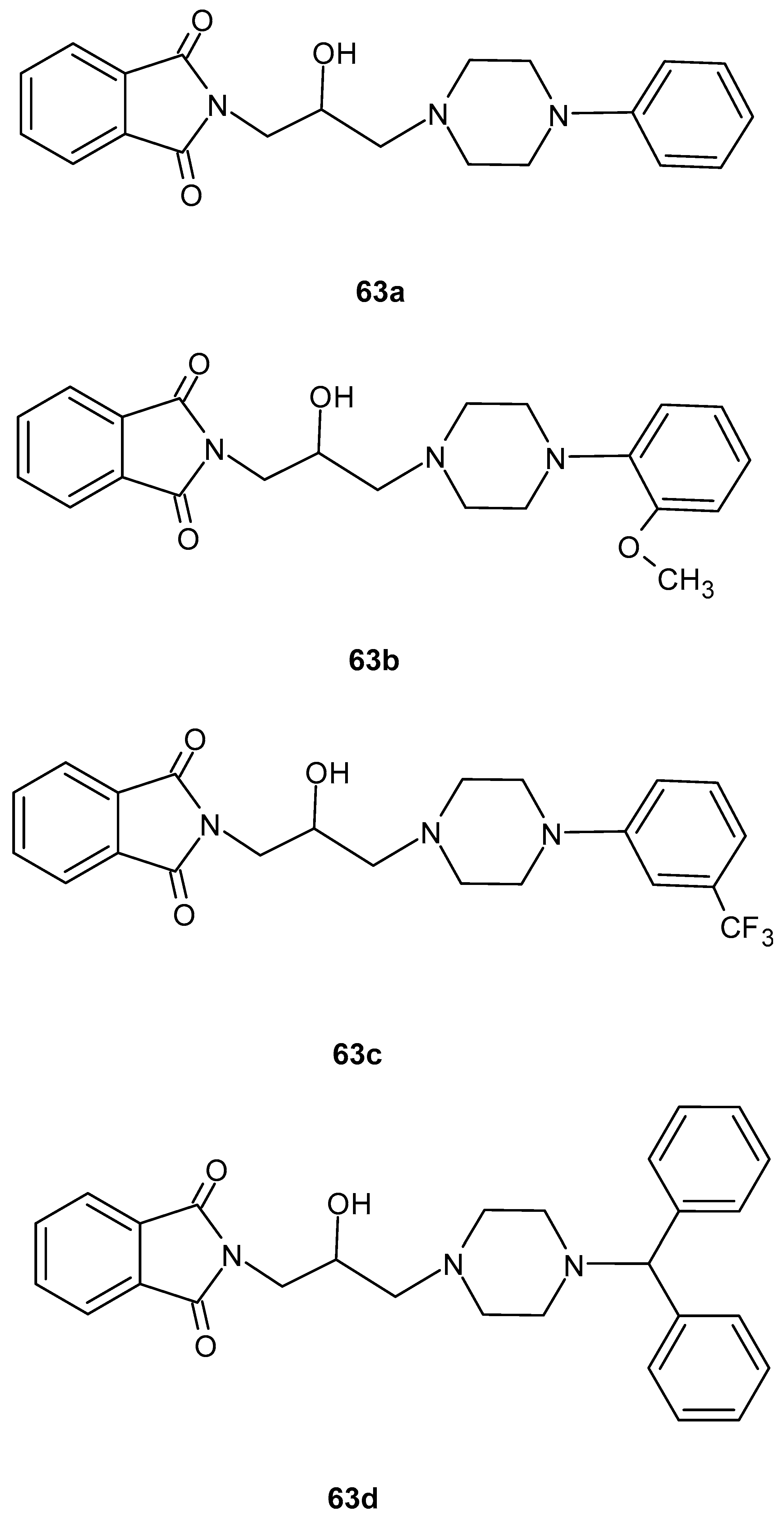
The new derivatives of 2-hydroxy-3-(4-aryl-1-piperazinyl)propylphthalimide 63ad (Figure 62) synthesized by Dziubina et al. [116] were evaluated for their bioavailability and analgesic activity. The obtained results showed that all compounds strongly suppressed peripheral pain, while derivatives 63ac suppressed central/supraspinal pain to a lesser extent. In in vitro studies, all derivatives 63 showed anti-inflammatory activity, as demonstrated by studies in which the tested compounds reduced COX-2 levels in RAW 264.7 cells activated with lipopolysaccharide.
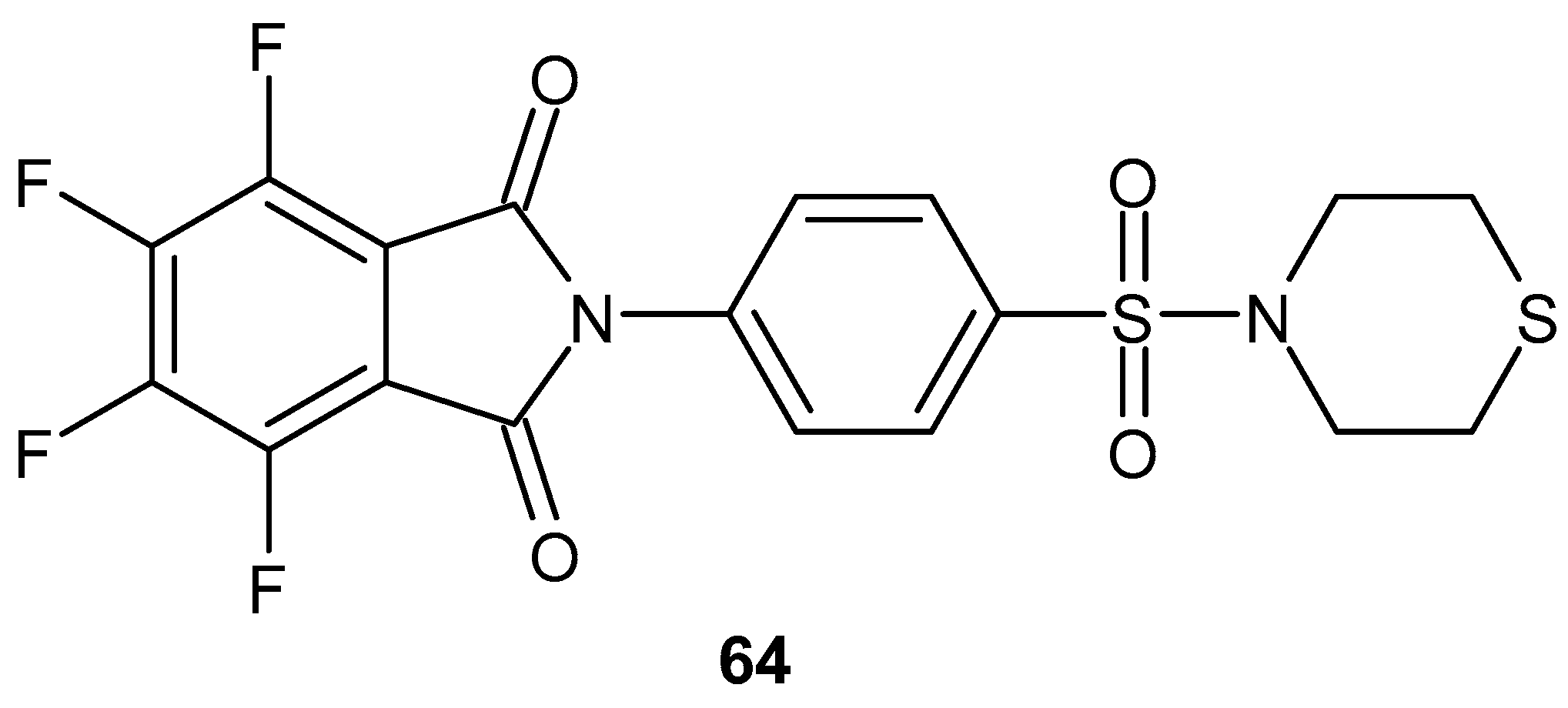
4,5,6,7-Tetrafluoro-2-(4-(thiomorpholinosulfonyl)phenyl) isoindoline-1,3-dione 64 (Figure 63), obtained by Barbosa et al. [117], demonstrated a 50% inhibition of TNF-α production in mice, whereas thalidomide caused a 33% inhibition at a screening concentration of 100 µM.
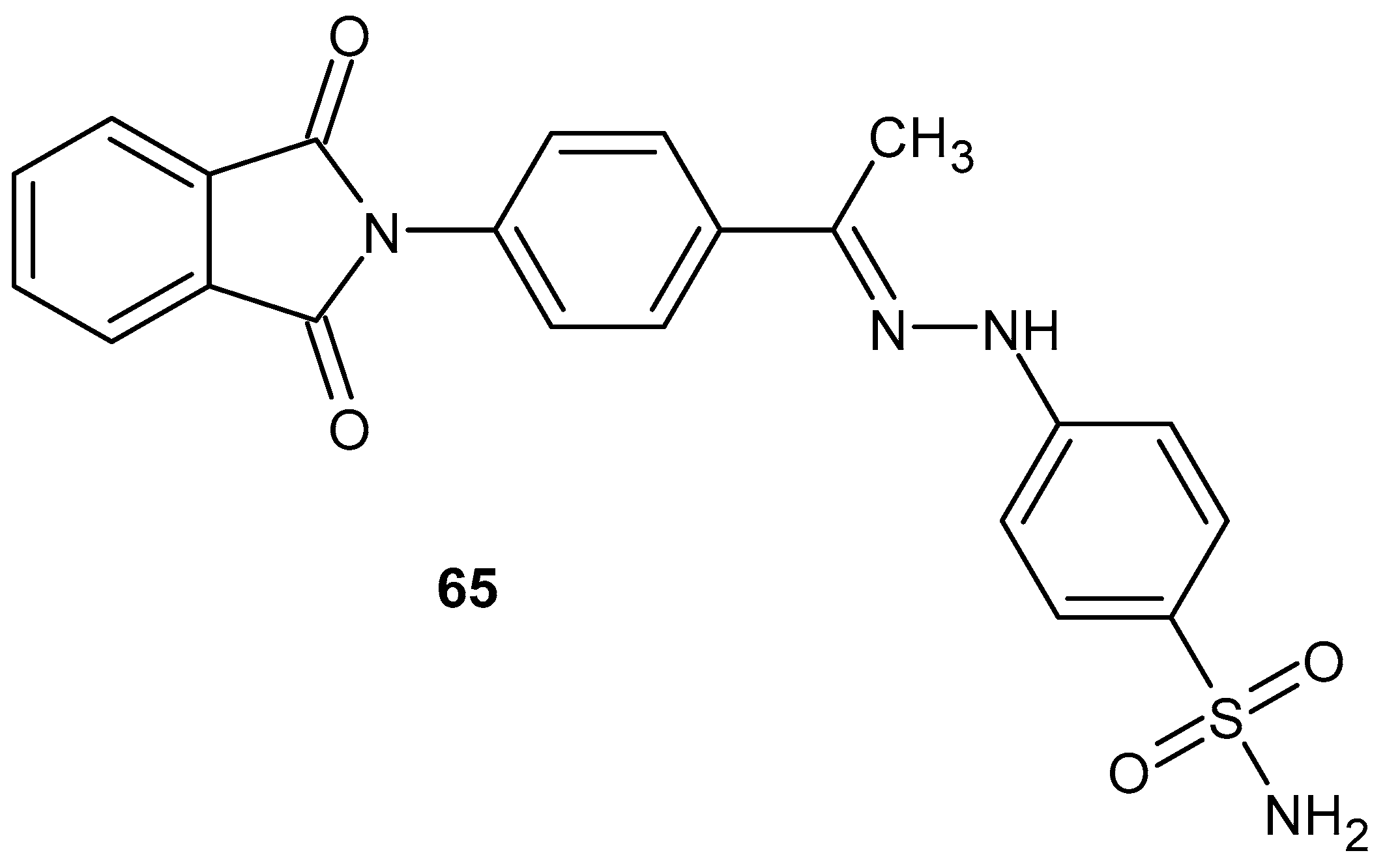
Lamie et al. [118] synthesized new phthalimide derivatives and tested them in vitro for antimicrobial, antioxidant, and anti-inflammatory activity. The cytotoxicity of these new compounds was also assessed in cancer cell lines and normal human cells. None of the obtained derivatives demonstrated cytotoxic activity. One compound, 65 (Figure 64), demonstrated the highest anti-inflammatory activity in vitro (32% reduction). This study was performed by ELISA on pretreated human umbilical vein endothelial cells (HUVECs), where these derivatives could inhibit NF-κB.
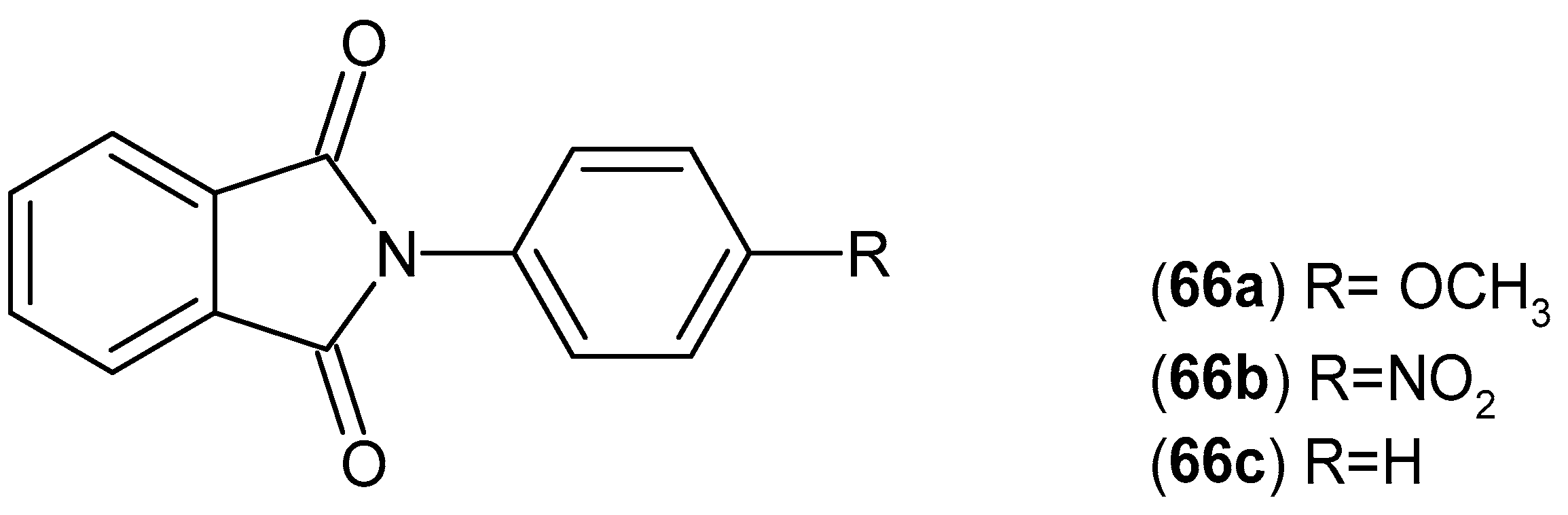
New N-phenylphthalimide derivatives 66ac (Figure 65) were synthesized and tested for their antioxidant, anti-inflammatory, and lipoxygenase enzyme inhibition activities by Perveen and Orfali [119]. Derivatives 66a and 66b showed strong antioxidant activity (66a IC50 = 27.3 μM and 66b IC50 = 25.0 μM) compared to the reference compound BHA (IC50 = 44.2 μM). All compounds showed weak hydrogen peroxide scavenging activity. At the same time, compounds 66a and 66b showed potent lipoxygenase inhibitory activity (IC50 = 21.34 μM and IC50 = 20.45 μM, respectively), where standard baicalein showed inhibitory activity with an IC50 = 22.60 μM. Only compound 66c showed interesting anti-inflammatory properties. The maximum inhibition of albumin denaturation for this derivative was 77.73 ± 0.35% at a concentration of 1 mg/mL, while aspirin showed a maximum inhibition of 95.89 ± 0.06% at a concentration of 0.20 mg/mL.
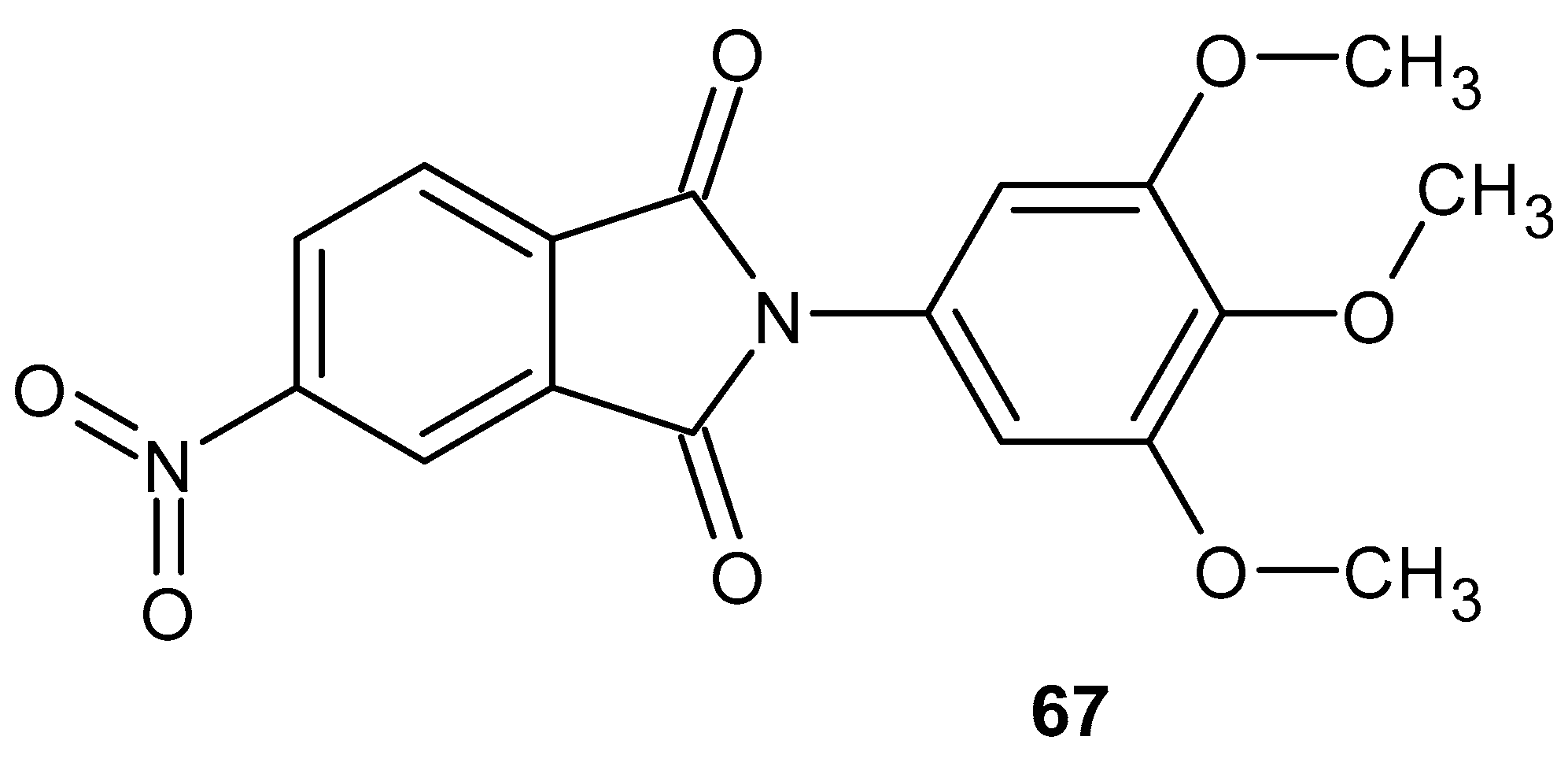
The phthalimide derivatives obtained by Abdel-Azis et al. [120] were tested in vivo for their anti-inflammatory effects in a carrageenan-induced rat paw edema model. Among the tested derivatives, 5-nitro-2-(3,4,5-trimethoxyphenyl)isoindoline-1,3-dione 67 (Figure 66) turned out to be the best, showing inhibition of COX-2 at IC50 = 0.1 µM and COX-1 at IC50 = 40 µM, and the selectivity was at the level of SI = 400, where celecoxib showed SI > 333.3. Docking of the obtained compounds at the COX-2 binding site was also performed. The most active derivative, 67, showed a similar COX-2 binding pattern to the known compound SC-558, which is a selective COX-2 inhibitor.
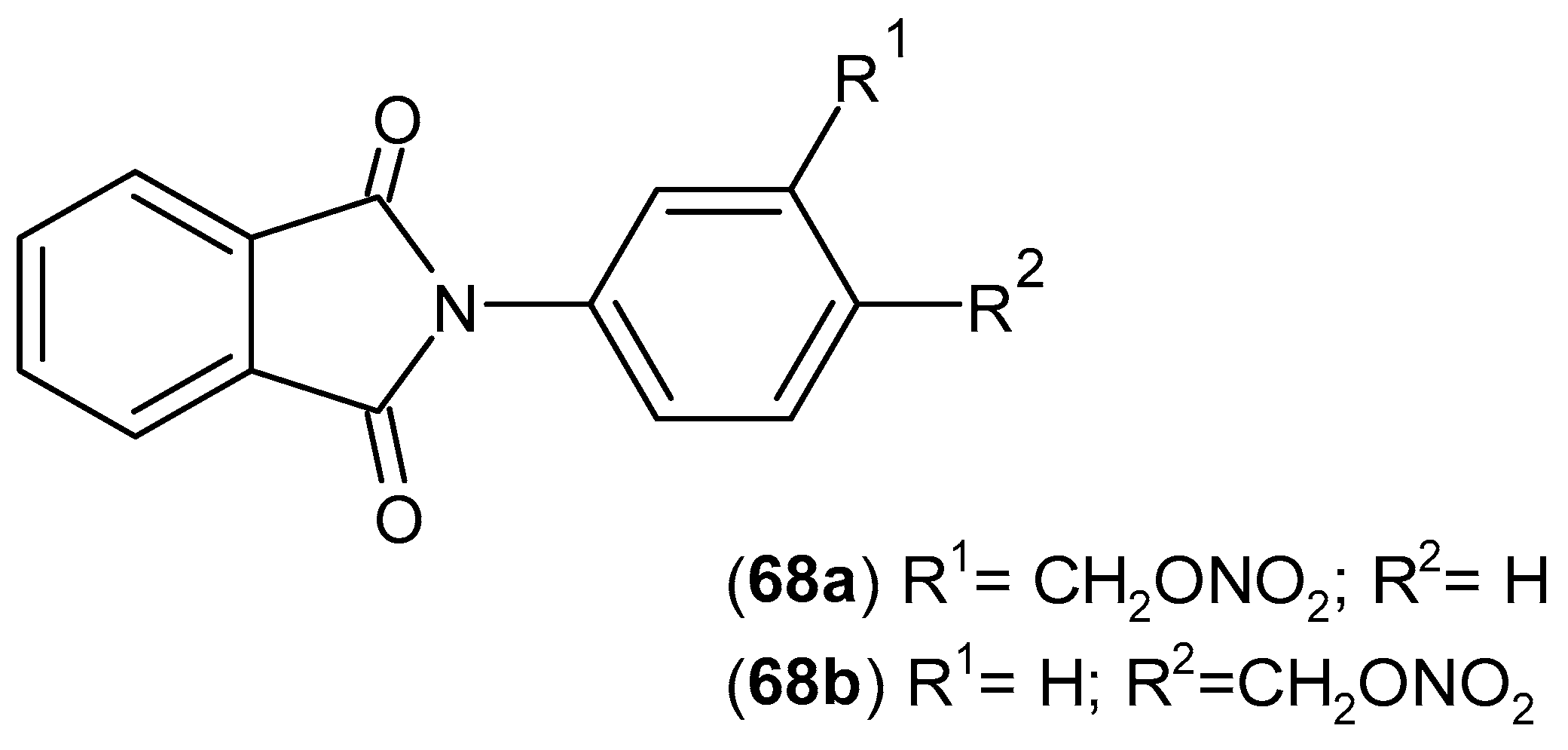
Santos et al. [121] designed and synthesized new thalidomide derivatives. Of the six compounds evaluated in vitro and in vivo for the treatment of sickle cell disease symptoms, two derivatives, 68ab (Figure 67), demonstrated the best analgesic, anti-inflammatory, and NO donor properties. Compound 68b was the most active analgesic, reducing acetic acid-induced abdominal cramps by 66%. Compounds 68ab administered at a dose of 300 μmol/kg reduced TNF-α levels, similarly to dexamethasone.
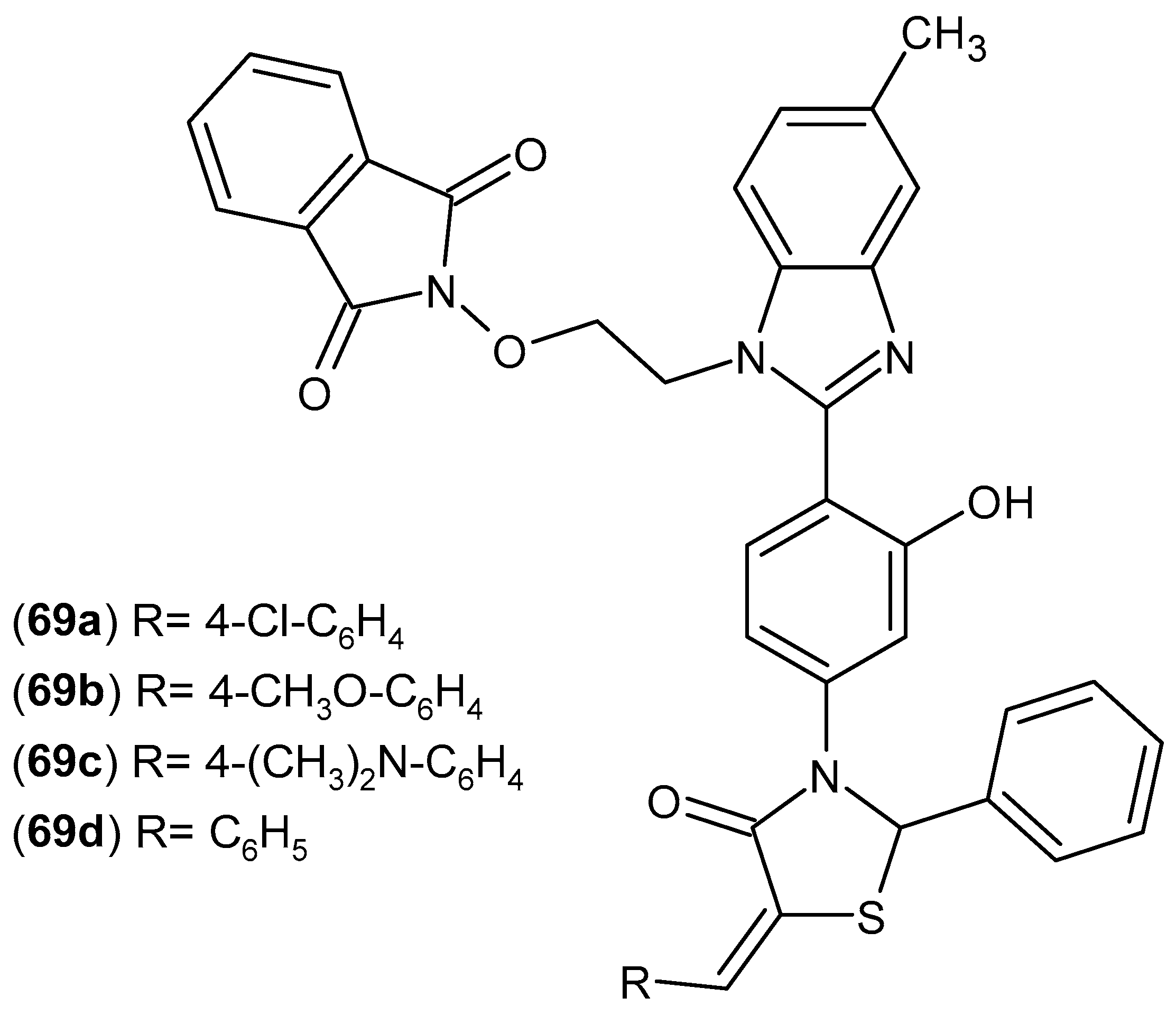
Kumar et al. [122] synthesized four new derivatives of 3-[4-(1H-4-methylbenzimidazol-2-yl)-2-hydroxyphenyl]-1-N-ethoxyphthalimido-5-(arylidene)-2-phenyl-1,3-thiazolidin-4-one 69ad (Figure 68). The resulting compounds were tested for their anti-inflammatory and antibacterial effects. The anti-inflammatory activity of all newly synthesized derivatives 69ad was determined in a carrageenan-induced rat paw edema model. Initial paw volume was measured, as well as paw volume 3 and 6 h after carrageenan administration. The percentage inhibition of paw edema was calculated and compared with that of indomethacin. Compound 69d showed similar inhibition (after 3 h: 1.62 ± 0.27%, after 6 h: 70.98%) to the reference drug, Indomethacin (after 3 h: 1.78 ± 0.340%, after 6 h: 66.44%).
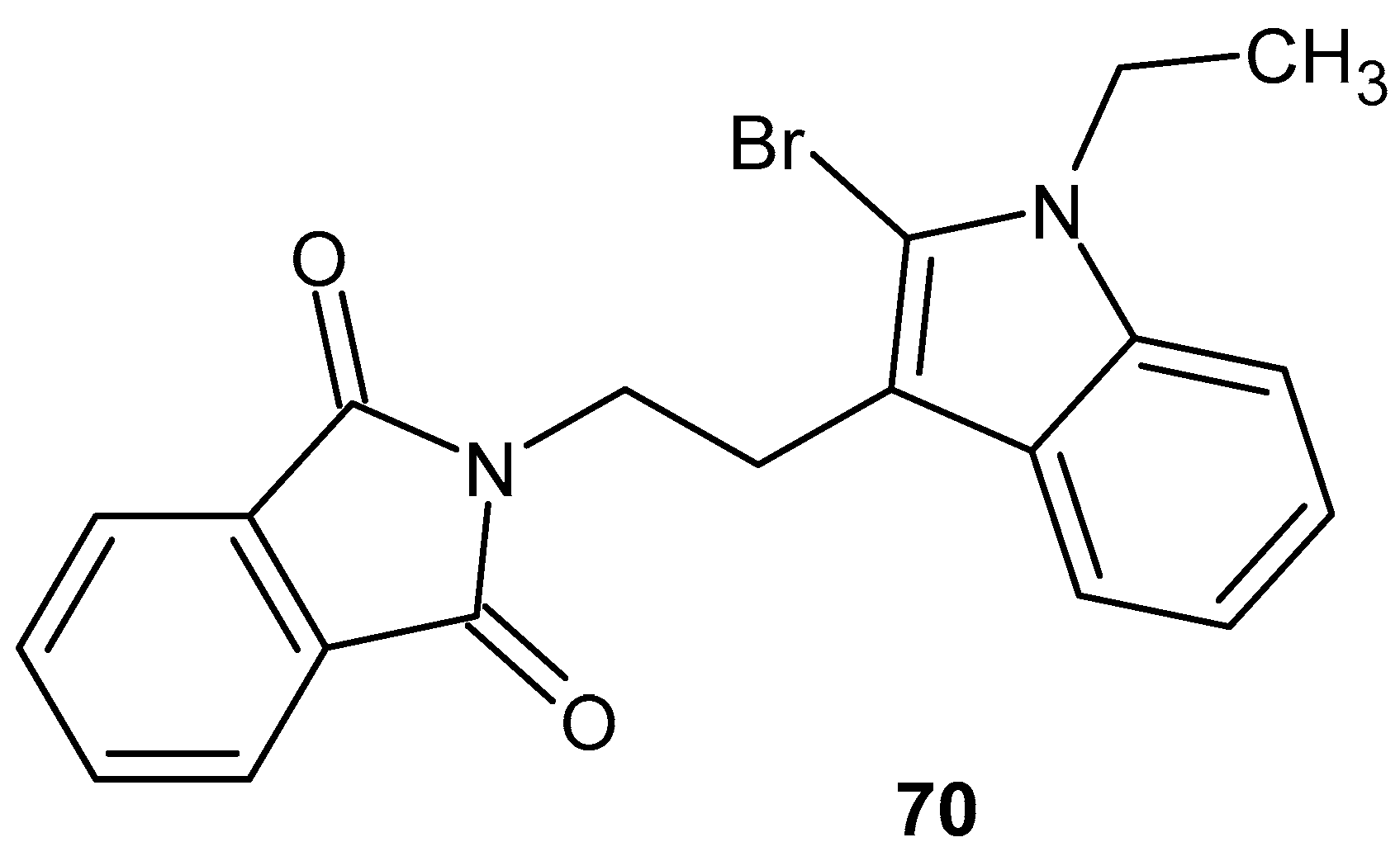
El-Aaraga et al. [123] tested the obtained 2-[2-(2-bromo-1-ethyl-1H-indol-3-yl) ethyl]-1H-isoindole-1,3(2H)-dione 70 (Figure 69) on liver damage induced by carbon tetrachloride in mice, using thalidomide as the reference drug. Histopathological examination showed that, compared to the untreated and thalidomide-treated groups, the derivative 70 reduced levels of malondialdehyde, nitric oxide (NO), vascular endothelial growth factor (VEGF), TNF-α, and NF-κB.
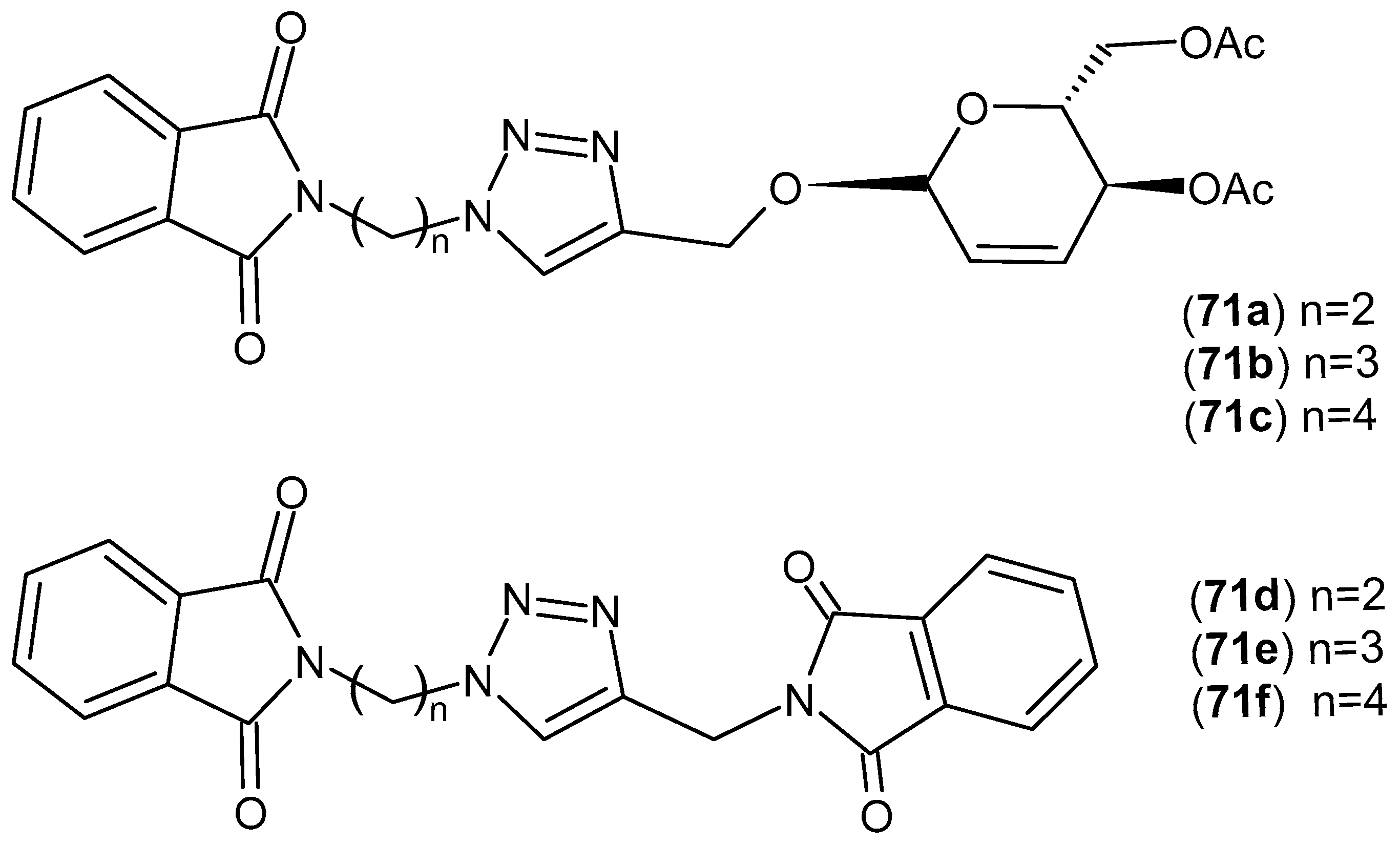
Six 1,2,3-triazolophthalimide derivatives 71af (Figure 70) were synthesized by Assis et al. [124]. Three compounds were 1,2,3-triazoles combined with unsaturated carbohydrates and phthalimides 71ac, and the other three were 1,2,3-triazoles combined with phthalimides 71de. The resulting derivatives were tested for their anti-inflammatory activity. Inflammation was induced by injecting carrageenan into the plantar tissue of the right hind paws of Swiss white mice. All six compounds, 71af, demonstrated significant anti-inflammatory activity. Derivative 71b demonstrated the best activity, reducing edema by 69%, while derivative 71f achieved 56.2%.
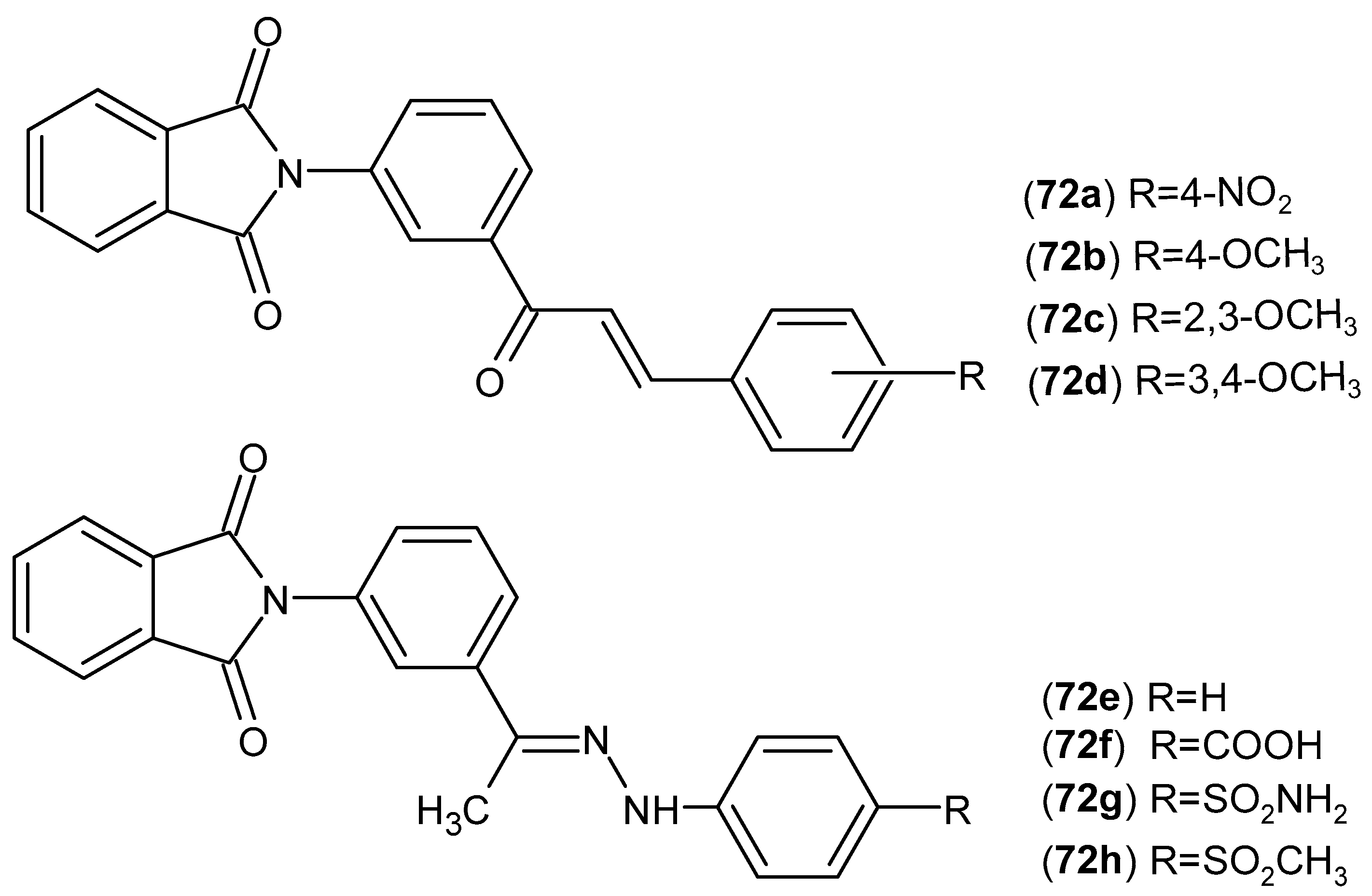
Labib et al. [125] designed and obtained new phthalimide derivatives, 72ah (Figure 71), that were tested for their anti-inflammatory and analgesic activity. The in vivo anti-inflammatory activity was assessed using the formalin-induced rat paw edema test. It turned out that the most active derivatives showed very good anti-inflammatory activity in vivo in inhibiting edema (after 1 h: 41.7–50%, after 3 h: 40.7–67.4%, after 6 h: 20–46.7%), while the reference drug, diclofenac, showed worse inhibition of edema (after 1 h: 29.2%, after 3 h: 22.2%, after 6 h: 20.6%). Compound 72d demonstrated the best anti-inflammatory activity (45.8–59.3%) and an increased thermal pain threshold (50–92.85%) comparable to piroxicam (75%), although it is a moderate selective COX-2 inhibitor (SI = 103).
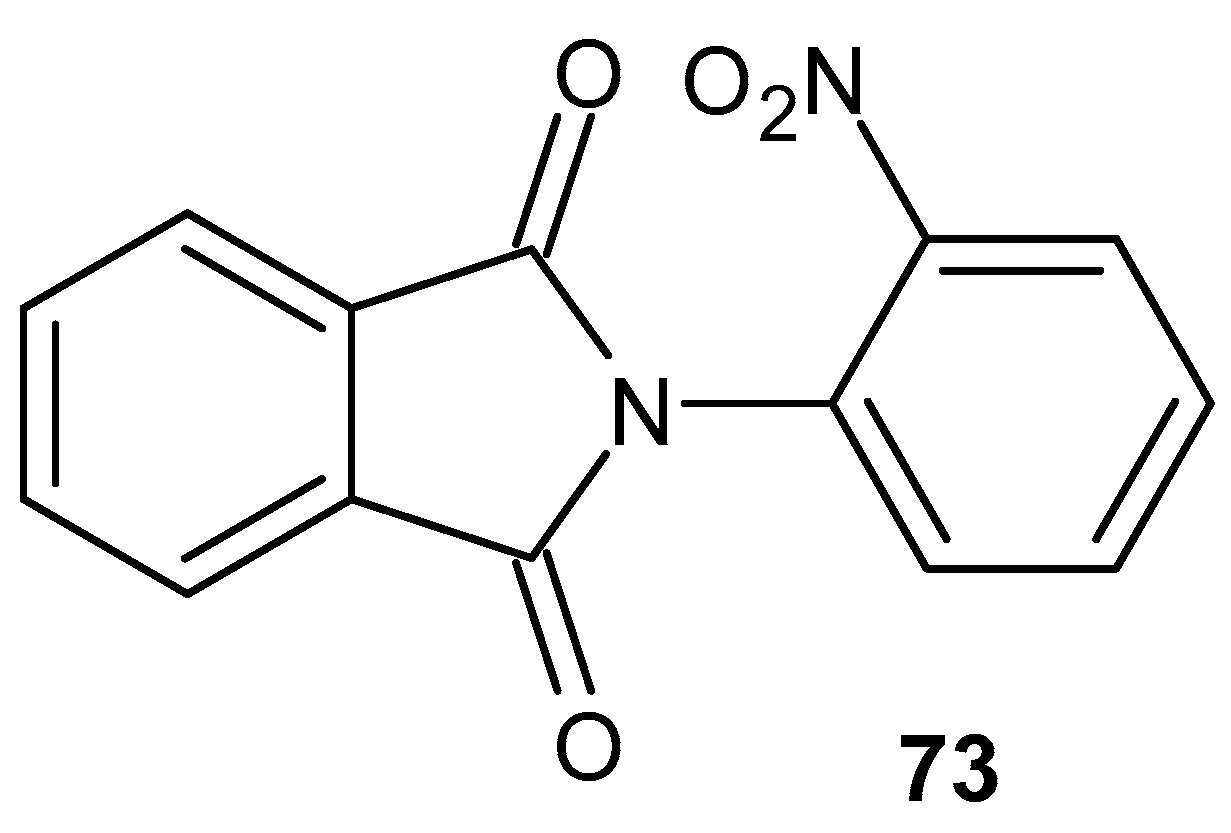
2-Nitrophenylphthalimide 73 (Figure 72) was synthesized and tested for its anti-inflammatory effects [126]. Its lipid-lowering and acute anti-inflammatory effects were compared with phthalimide in 3-month-old male Swiss mice. Compound 73 inhibits edema by 67%, comparable to the reference compound, ibuprofen, which inhibited edema by 66%, while aspirin inhibited edema by 58%.
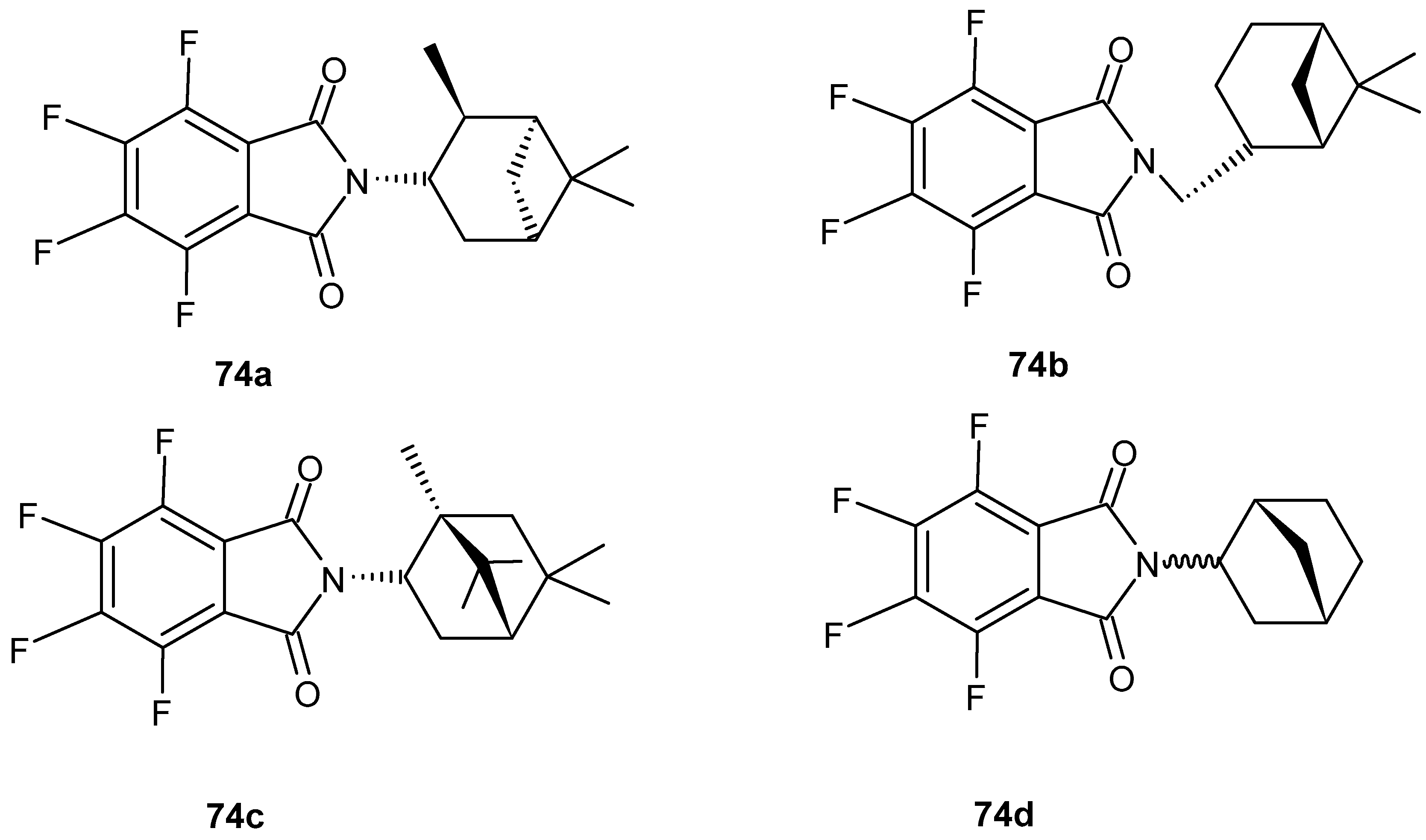
Monoterpenoid fluorophthalimides were synthesized by Luo et al. [127] in the search for new drugs for the treatment of multiple myeloma (MM); four compounds 74ad (Figure 73) were obtained. Compounds 74ad showed excellent anti-inflammatory activity in RAW 264.7 cells infected with LPS (60 ng/mL), significantly reducing nitrite and/or TNF-α levels. The new derivatives, 74ad, also demonstrated significant anti-angiogenic activity in human umbilical vein endothelial cells and antiproliferative activity against lenalidomide-sensitive (MM.1S) and -resistant (U266 R10R) MM cells.
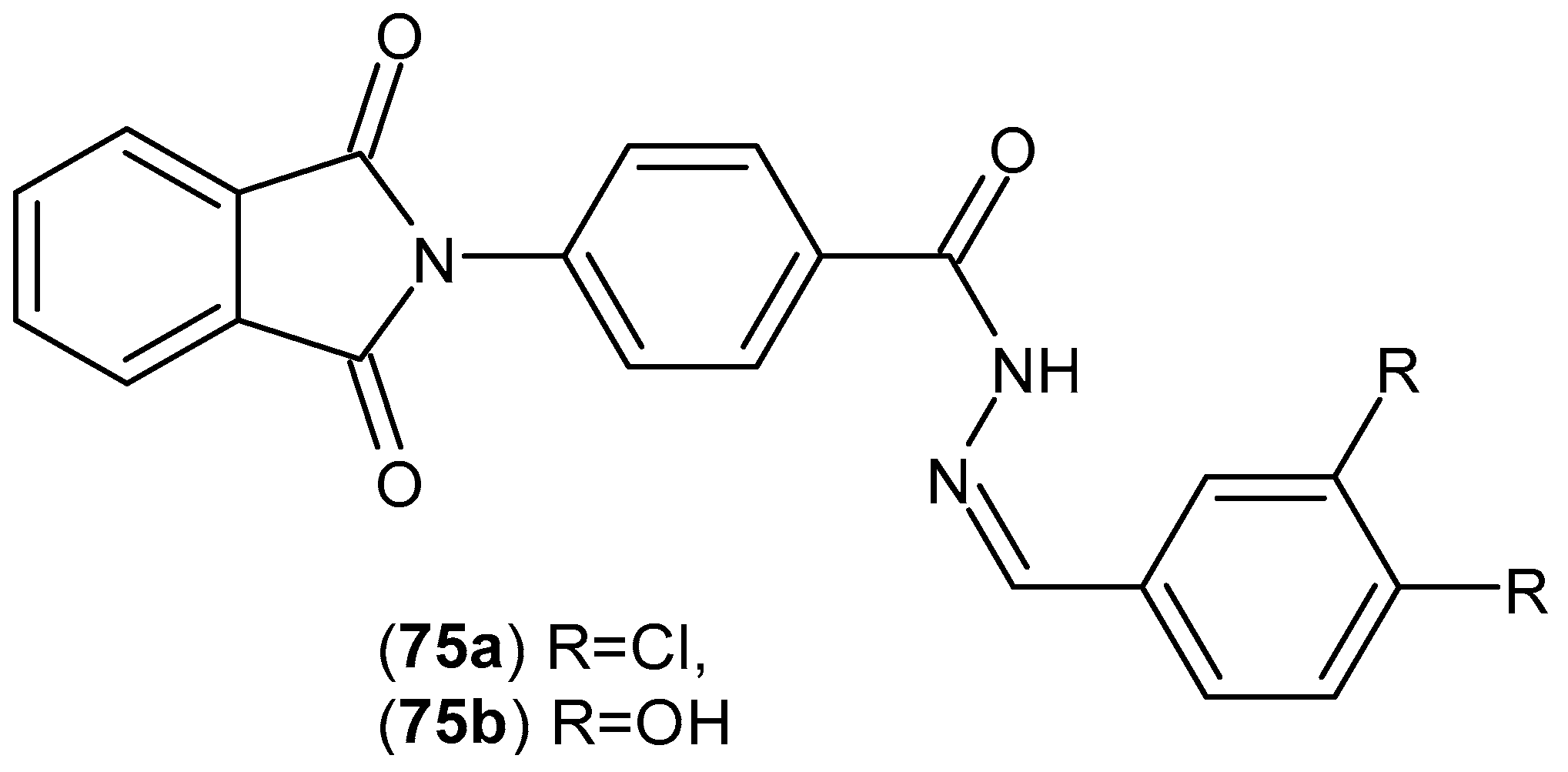
Schiff bases of phenylphthalimides designed by Bhat et al. [128] were evaluated for anti-inflammatory activity using an in vitro model of inflammation induced by bacterial lipopolysaccharide (LPS) in murine RAW 264.7 cells. The obtained compounds were evaluated for their inhibitory activity on cyclooxygenase-2 (COX-2) and inducible nitric oxide synthase (iNOS) expression. All compounds, at a 10 µM concentration, reduced COX-2 and iNOS expression from 100% to ranges of 61.9 ± 5.1–84.5 ± 4.1% and 41.1 ± 5.4–85.3 ± 1.9%. Compound 75a (Figure 74) demonstrated the strongest inhibition of iNOS expression (41.1 ± 5.4%) compared to the reference, dexamethasone (23.0 ± 3.3%). This compound was evaluated for its neuroprotective activity. Compound 75b (Figure 74) demonstrated greater than 70% relative neuroprotection against 6-hydroxydopamine (6-OHDA)-induced cell death while maintaining the highest rate of cell viability (83.3 ± 4.5%).
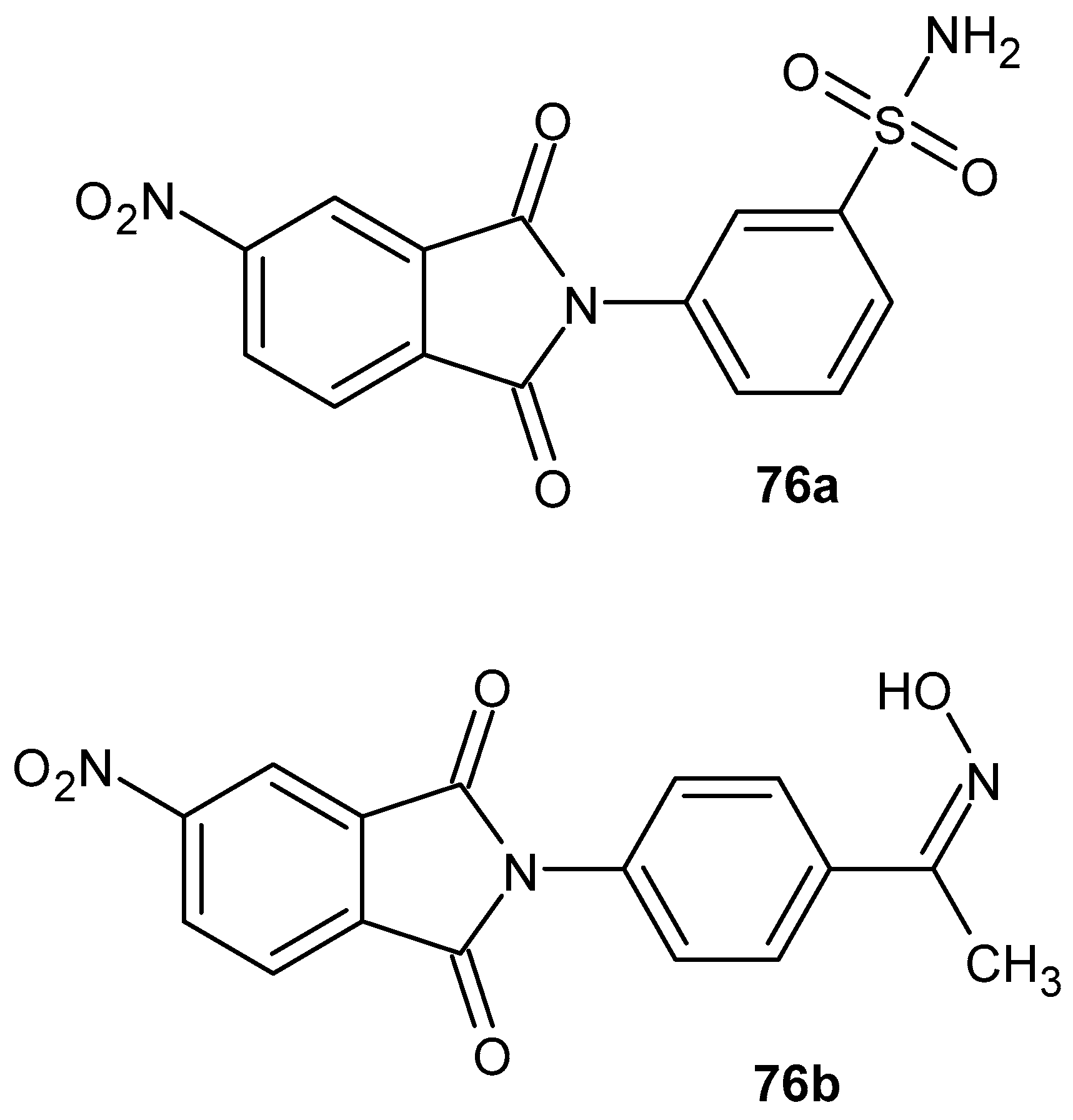
Abdel-Aziz et al. [54] synthesized a series of phenylphthalimide derivatives and assessed their anti-inflammatory and ulcerogenic activity in vivo and their cytotoxic activity. As a result of testing the anti-inflammatory activity of all compounds on carrageenan-induced paw edema in rats, two derivatives proved to be the most active. 3-(5-Nitro-1,3-dioxo-1,3-dihydro-2H-isoindol-2-yl)benzene-1-sulfonamide 76a and 2-(4-(1-(hydroxyimino)ethyl)phenyl)-5-nitroisoindoline-1,3-dione 76b (Figure 75) demonstrated edema inhibition of 80.9% and 82.95%, respectively, while the reference drugs, celecoxib and diclofenac, inhibited edema by 85.6% and 83.4%, respectively. The derivatives 76ab were also subjected to an in vitro cyclooxygenase (COX-1/COX-2) enzyme inhibition test. Both compounds 75a and 76b demonstrated high selectivity for COX-1 (IC50 > 50 µM), COX-2 (IC50 = 0.15 µ M), and SI > 333.3 compared to celecoxib (COX-1 IC50 > 50 µM, COX-2 IC50 = 0.129 µM, SI > 387.6). Compounds 76ab were also subjected to molecular docking studies, confirming that they possess the highest recognition at the COX-2 binding site.
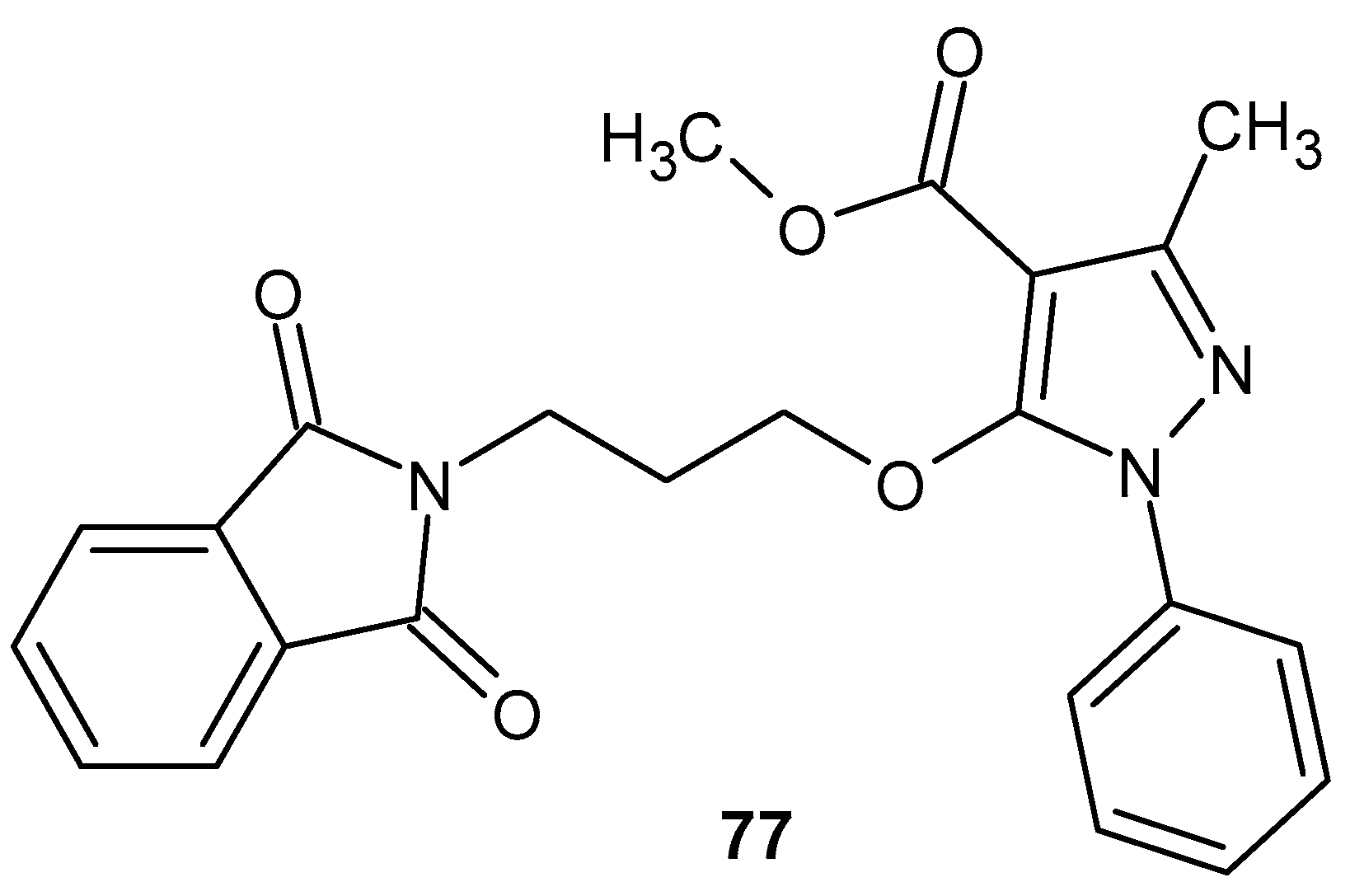
A group of pyrazole derivatives was synthesized and tested for their anti-inflammatory activity by Shrivastava [129]. 5-[3-(1,3-dioxo-1,3-dihydroisoindol-2-yl)-propoxy]-3-methyl-1-phenyl-1H-pyrazole-4-carboxylic acid methyl ester 77 (Figure 76) was found to have a potent inhibitory effect on the cyclooxygenase-2 (COX-2) enzyme. It was observed that the derivative 77 exhibited better activity than the reference drug, nimulide, but the ethyl ester of compound 77, 5-[3-(1,3-dioxo-1,3-dihydro-isoindol-2-yl)-propoxy]-3-methyl-1-phenyl-1H-pyrazole-4-carboxylic acid ethyl ester, did not exhibit anti-inflammatory activity.
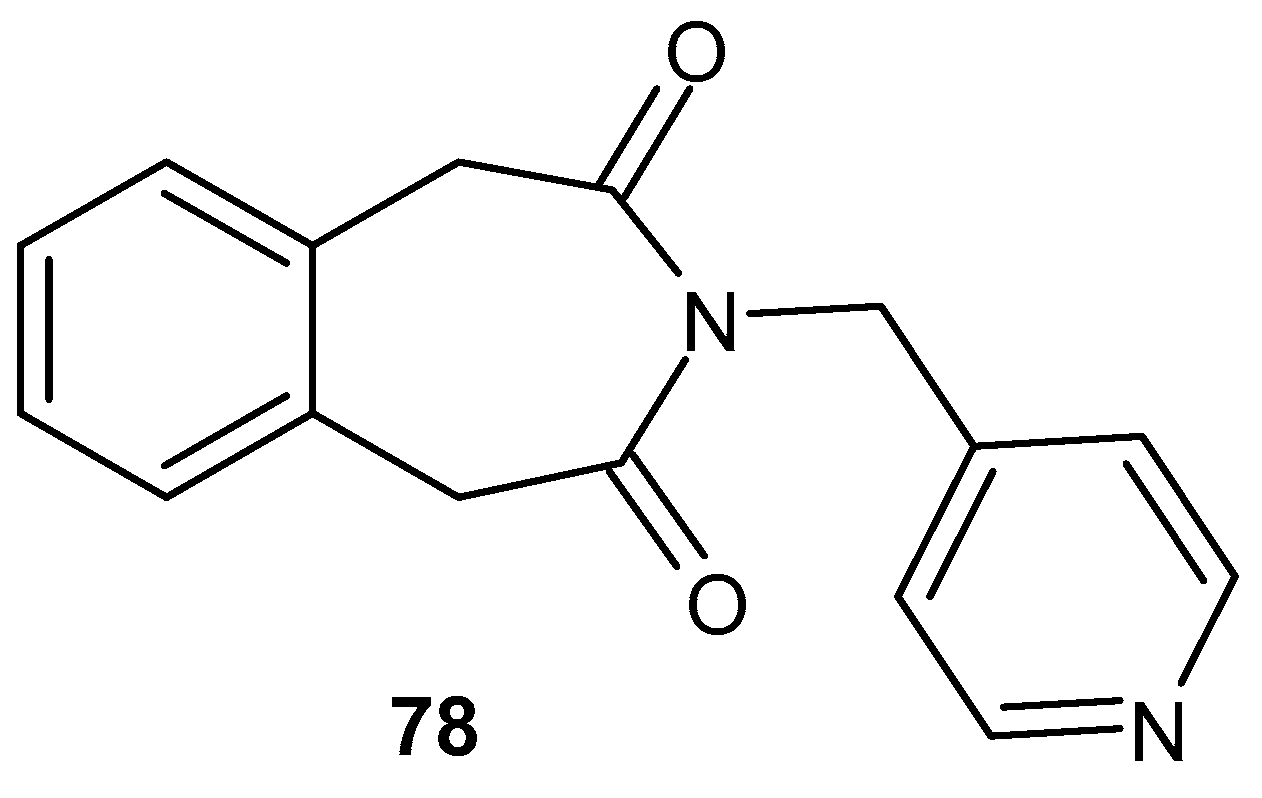
Sondhi et al. [130] synthesized 3-[(pyridin-4-yl)methyl]-1H-3-benzazepine-2,4(3H,5H)-dione 78 (Figure 77), which showed a better anti-inflammatory effect than the standard drug, phenyl butazone (19% at a dose 25 mg/kg p.o.), using the carrageenan-induced paw edema model.

2.2.2. Bicyclic Imides Fused to a Heterocyclic Ring

The search for compounds with potential anti-inflammatory activity has also been conducted among bicyclic derivatives containing an imide ring fused with a second heterocyclic ring, such as a pyrrole, pyridine, or pyrazine. Structural rigidification resulting from ring fusion may influence both target selectivity and pharmacodynamic properties, making such systems attractive scaffolds in medicinal chemistry.
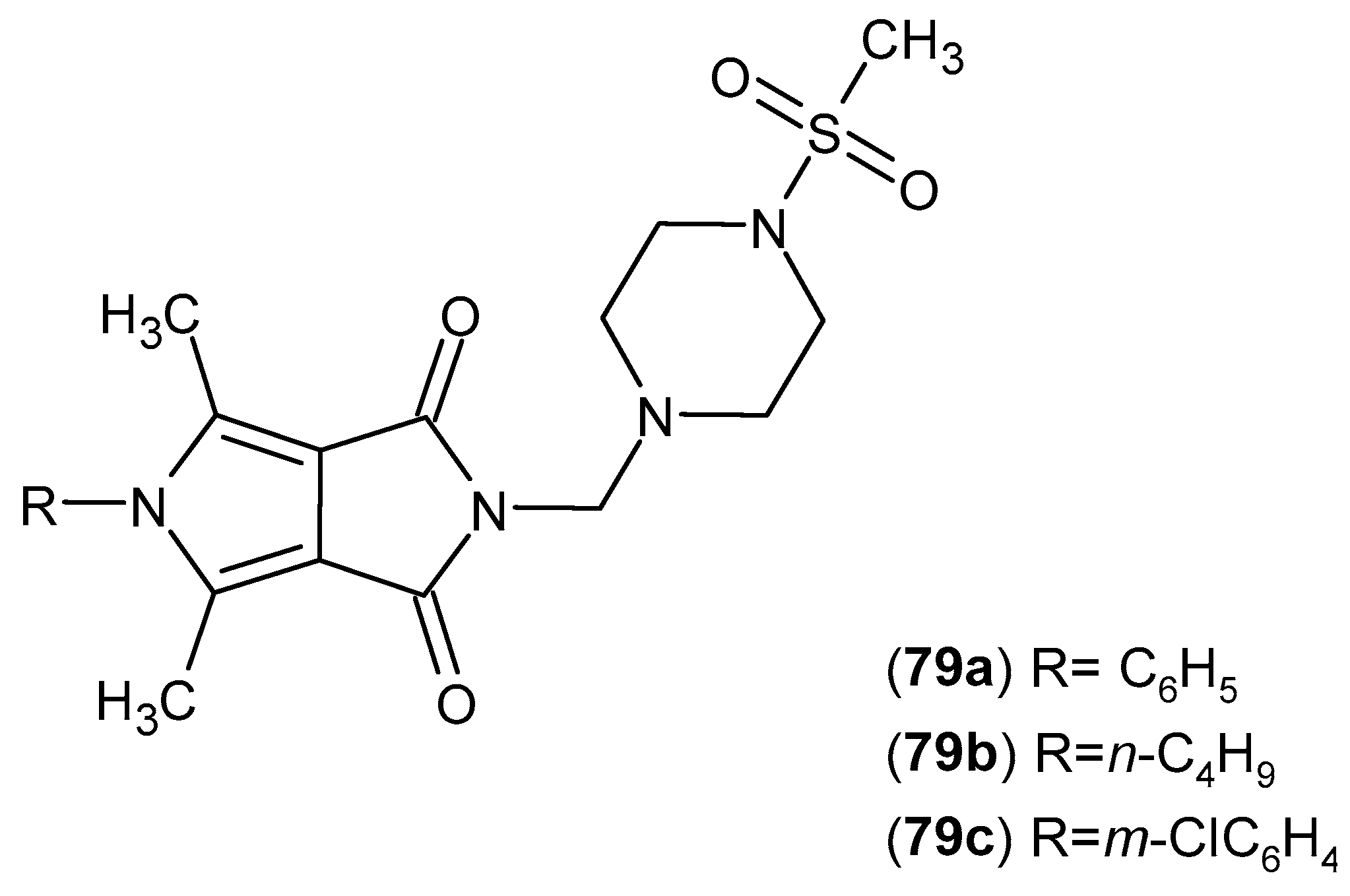
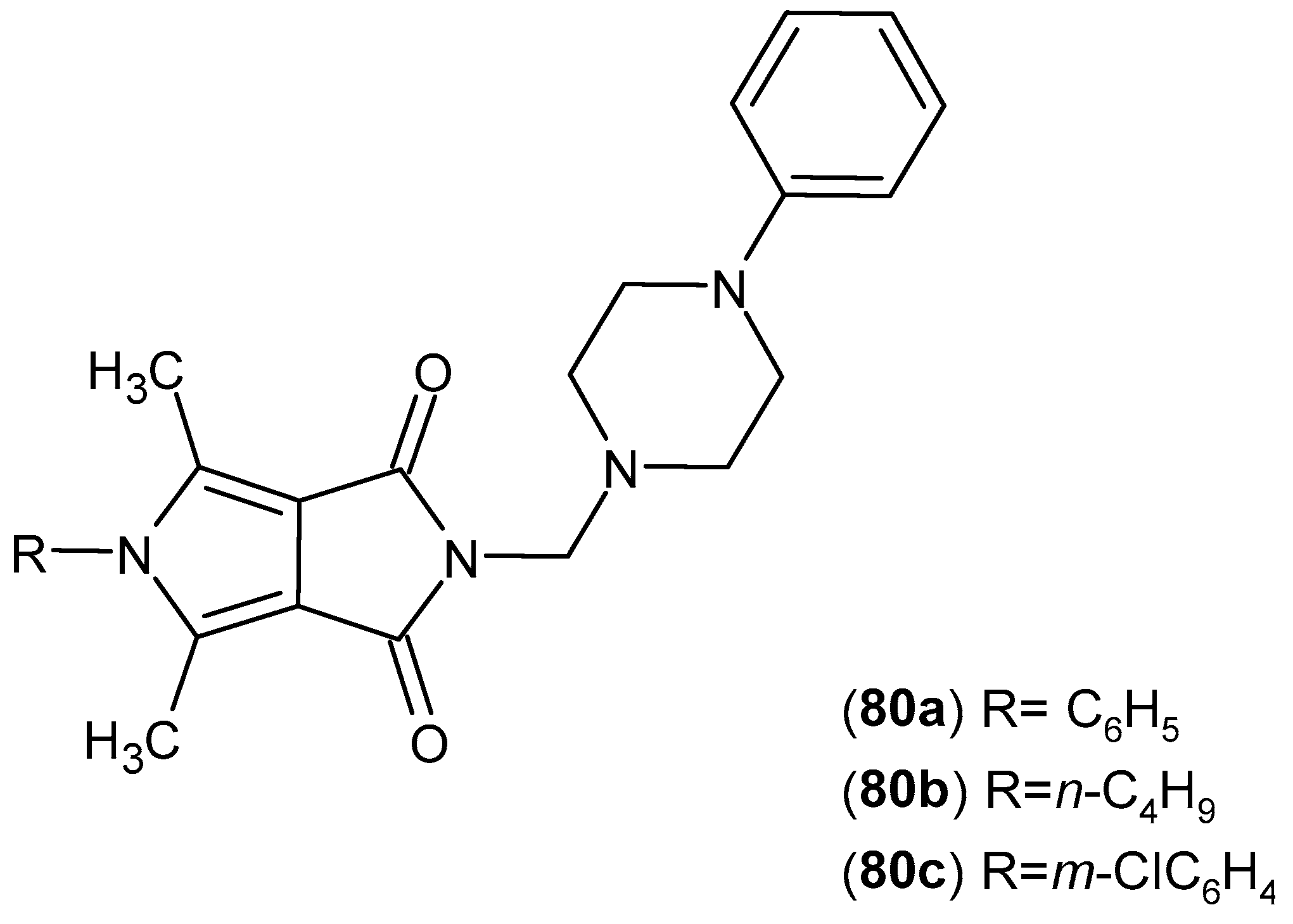
In studies on pyrrolopyrrole-2,5-dione derivatives with potential anti-inflammatory activity, a series of Mannich bases of this scaffold were designed and synthesized, followed by evaluation of their biological activity as inhibitors of cyclooxygenase isoenzymes (COX-1 and COX-2). IC50 values were determined for both isoenzymes, and selectivity indices expressed as IC50(COX-2)/IC50(COX-1) were calculated. Meloxicam was used as the reference compound. The highest selectivity toward COX-2 was observed for compounds 79ac (Figure 78), with selectivity indices of 0.24, 0.26, and 0.28, respectively, indicating approximately two-fold higher selectivity compared with meloxicam (0.55) [131].
For structures 79 and 80 (Figure 78 and Figure 79), the authors expanded the scope of the pharmacological investigations [132].
The biological activity of structures 79 and 80 was evaluated against 15-lipoxygenase (15-LOX). All six compounds exhibited enzyme inhibition comparable to that of zileuton. The IC50 values for 15-LOX were as follows: 79a—1.25 μM, 79b—1.30 μM, 79c—1.28 μM, 80a—1.45 μM, 80b—1.50 μM, and 80c—1.55 μM.
Antioxidant studies were also performed in NHDF cells. After 24 h of incubation, derivatives 79a79c and 80a80c reduced the levels of reactive oxygen species (ROS) by an average of 45–60% compared with the control, and they reduced reactive nitrogen species (RNS) levels by 35–50%. The fast halo assay demonstrated a 40–55% reduction in DNA strand breaks, while derivatives 79a and 79b additionally protected lipids against nitric oxide-induced peroxidation by approximately 30–35% [132].
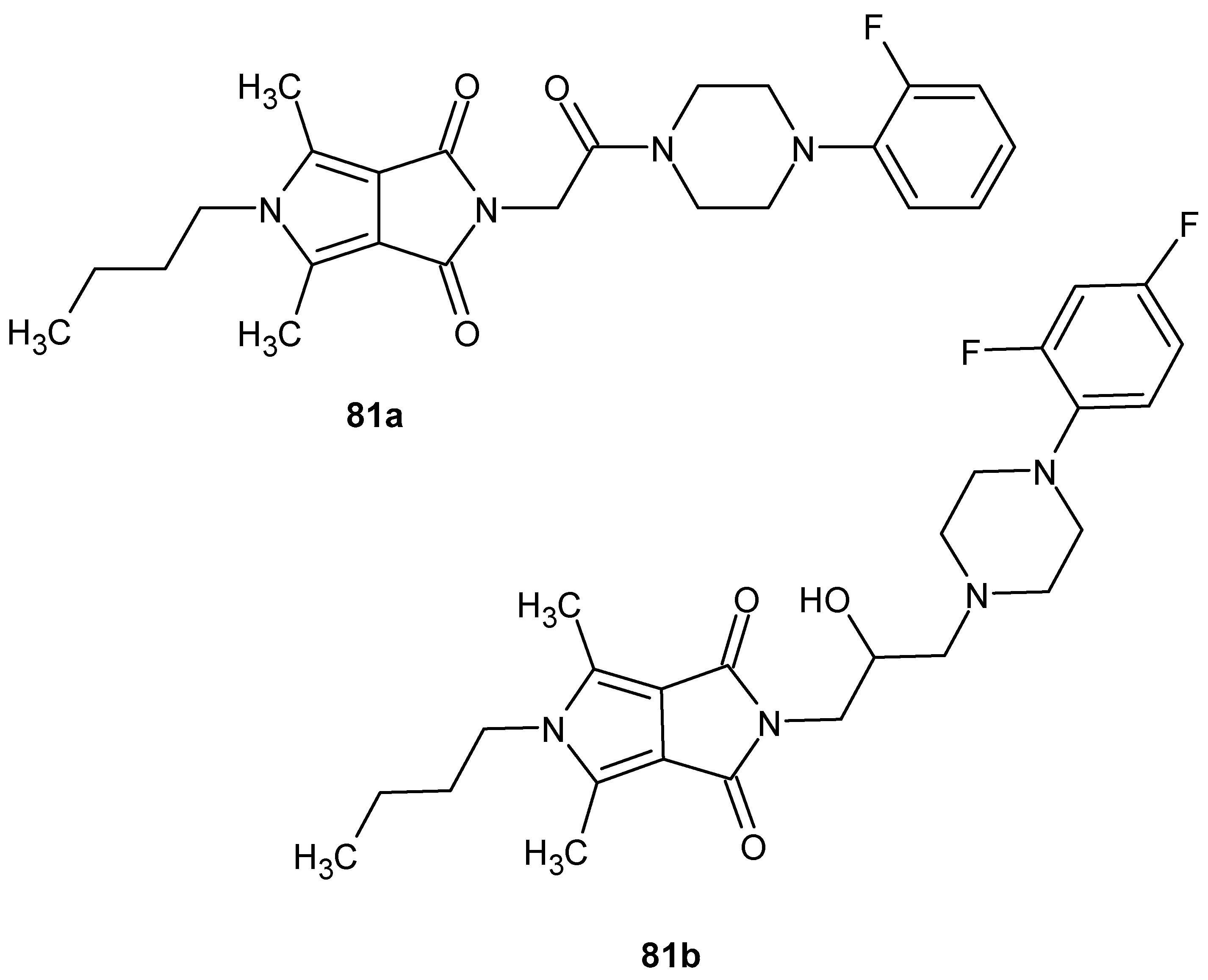
Figure 80 presents the structures of two anti-inflammatory active butyl-substituted derivatives of pyrrolo[3,4-c]pyrrole-1,3(2H,5H)-diones, 81a and 81b [133,134]. The anti-inflammatory activity of compound 81a was evaluated in vitro using a colorimetric cyclooxygenase inhibition assay [133].
Compound 81a exhibited selective inhibition of the COX-2 isoform, with an IC50 value for COX-2 lower than that of the reference drug, meloxicam, whereas inhibition of COX-1 occurred only at significantly higher concentrations. In addition, in a cellular model of rheumatoid arthritis, compound 81a demonstrated a cytoprotective effect, reducing the levels of reactive oxygen and nitrogen species and limiting DNA strand damage, particularly at a concentration of 10 µM. Cell viability studies indicated no significant cytotoxicity of compound 81a within the concentration range associated with its anti-inflammatory activity, suggesting a favorable biological profile [133].
In contrast, the butyl derivative 81b was identified as the most active compound in the series of 2-[2-hydroxy-3-(4-substituted-1-piperazinyl)propyl]pyrrolo[3,4-c]pyrrole-1,3(2H,5H)-diones, exhibiting higher selectivity toward COX-2 compared with meloxicam [133]. Moreover, compound 81b displayed inhibitory activity against the lipoxygenase (LOX) enzyme. Dual inhibition of COX-2 and LOX, particularly the 5-LOX and 15-LOX isoforms, has emerged in recent years as a major focus of anti-inflammatory drug research, as compounds possessing such properties have demonstrated enhanced efficacy, a broader spectrum of action, and a reduced risk of adverse effects compared with classical nonsteroidal anti-inflammatory drugs (NSAIDs) [134].
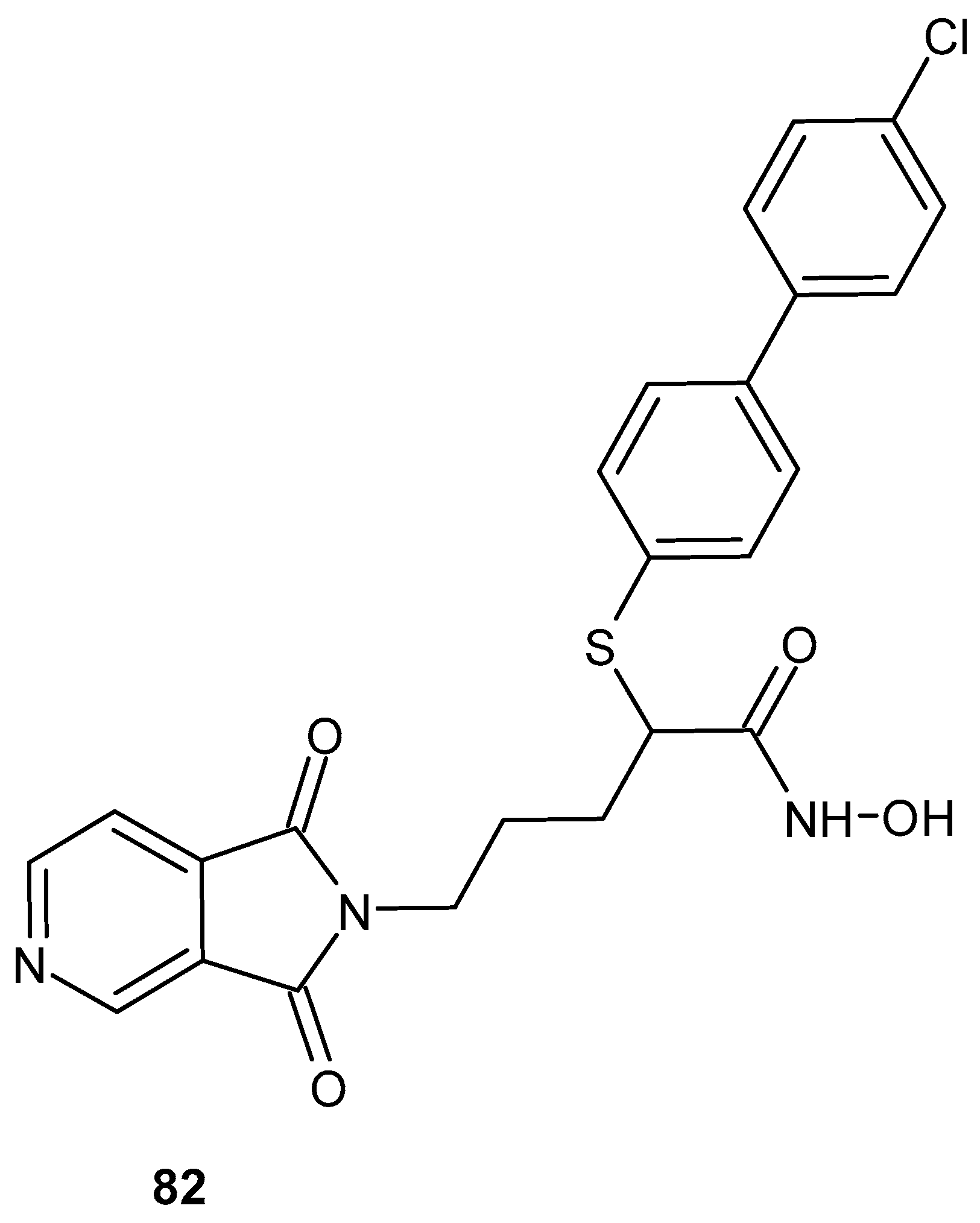
Research on bicyclic maleimide derivatives with potential anti-inflammatory activity, in which the imide ring is fused with a pyridine ring, was initiated by Chollet et al. [135]. This group synthesized 5-(1,3-dioxo-1,3-dihydro-2H-pyrrolo[3,4-c]pyridin-2-yl)-2-{[(4′-chloro[1,1′-biphenyl]-4-yl)sulfanyl]methyl}-N-hydroxypentanamide 82 (Figure 81) as an inhibitor of matrix metalloproteinases (MMPs), exhibiting IC50 values of 3nM for MMP-2, 12nM for MMP-9, and 84nM for MMP-13.
Matrix metalloproteinases (MMPs) are zinc-dependent proteolytic enzymes involved in the degradation and remodeling of the extracellular matrix. Elevated levels of MMPs can lead to various pathologies, including metastatic cancer and arthritis; therefore, inhibition of these enzymes is considered an important therapeutic strategy [135].
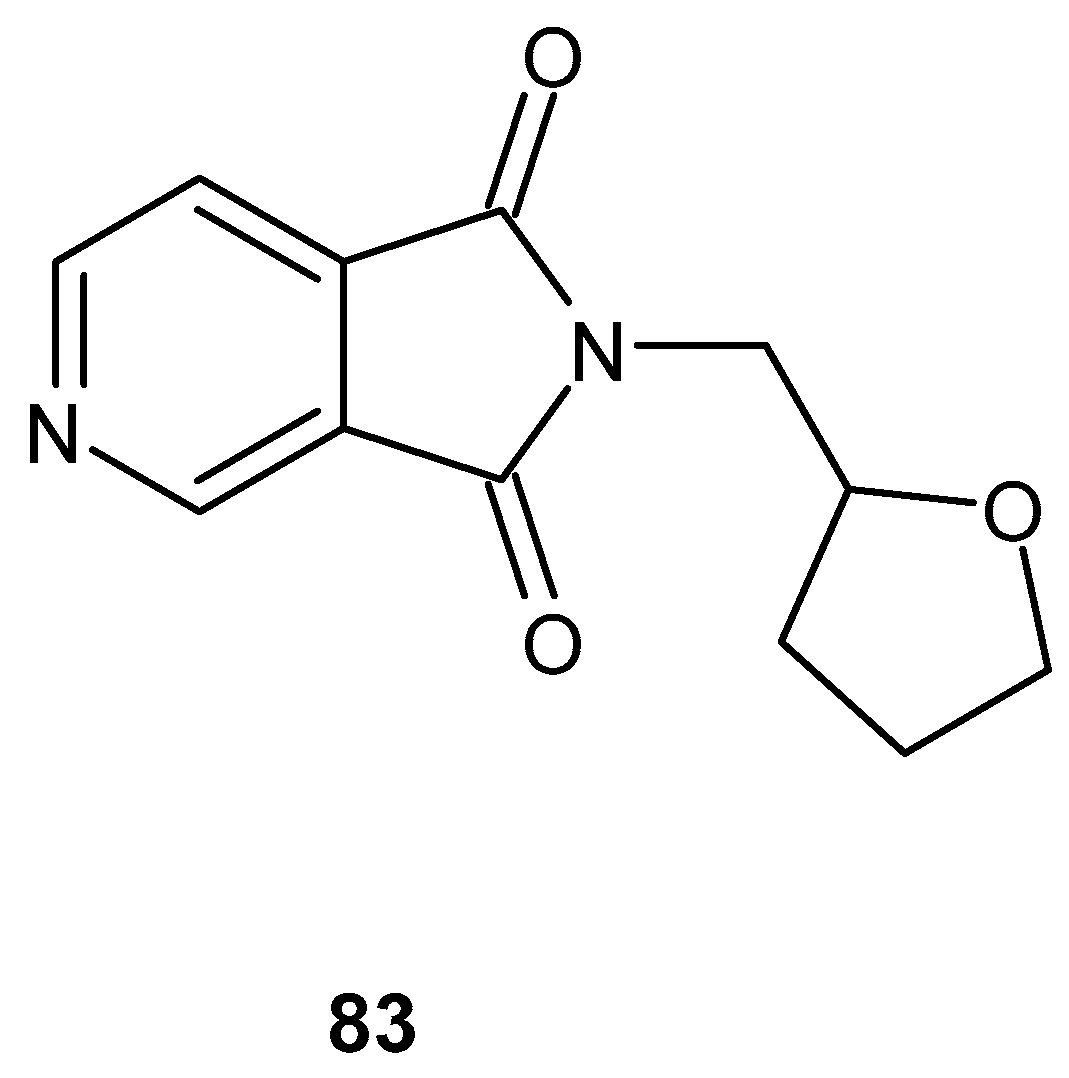
Sondhi et al. [136] synthesized 2-(tetrahydrofuran-2-yl)methyl)-2H-pyrrolo[3,4-c]pyridine-1,3-dione 83 (Figure 82) and evaluated its anti-inflammatory activity. Compound 83 exhibited 26% activity at an oral dose of 50 mg/kg.
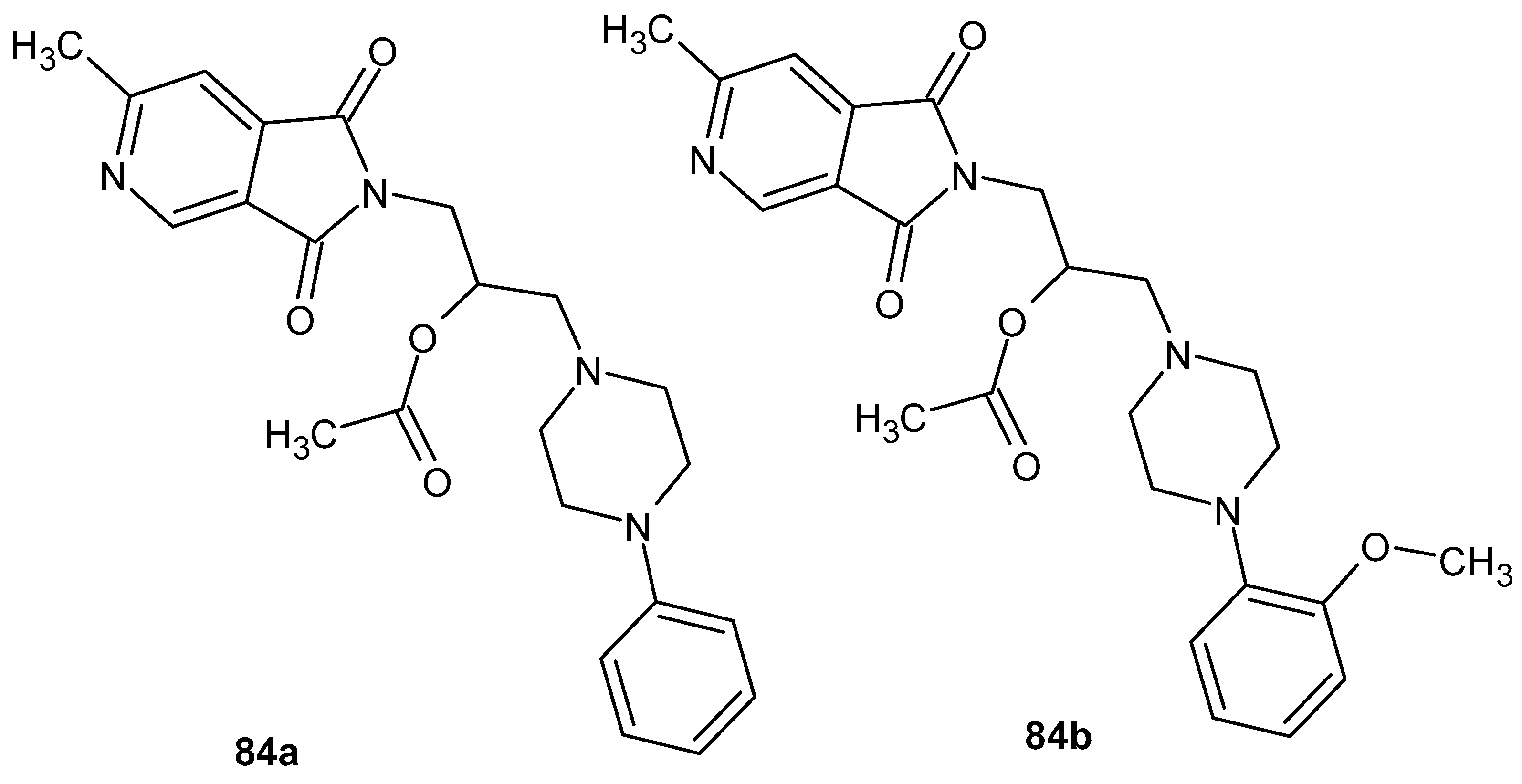
Dziubina et al. [137] published a study aimed at investigating the potential analgesic, anti-edematous (anti-inflammatory), and anti-allodynic effects of two 1H-pyrrolo[3,4-c] pyridine-1,3(2H)-dione derivatives 84a and 84b (Figure 83) in various experimental pain models.
The authors conducted a series of pharmacological tests, including the hot plate test, the capsaicin test, the oxaliplatin-induced allodynia test, and the formalin test. The formalin test is used to identify tonic inflammatory pain and involves two phases of stimulus perception. The first phase results from the transmission of nociceptive stimuli along C fibers, whereas the second phase is a consequence of the developing inflammatory response and central sensitization to peripheral stimulation. In this assay, compounds 84a and 84b (5–20 mg/kg) exhibited analgesic effects in both phases, with a more pronounced effect observed in the second phase of the test. The potential analgesic effects of compounds 84a and 84b on neurogenic pain were investigated using a mouse model of capsaicin-induced pain. Both compounds 84a and 84b reduced capsaicin-induced nociceptive behaviors in a dose-dependent manner. The authors also performed in vitro studies using the RAW 264.7 cell line.
Compounds 84a and 84b significantly reduced COX-2 levels in lipopolysaccharide (LPS)-stimulated cells. These results suggest that the tested compounds possess at least partial anti-inflammatory properties [137].
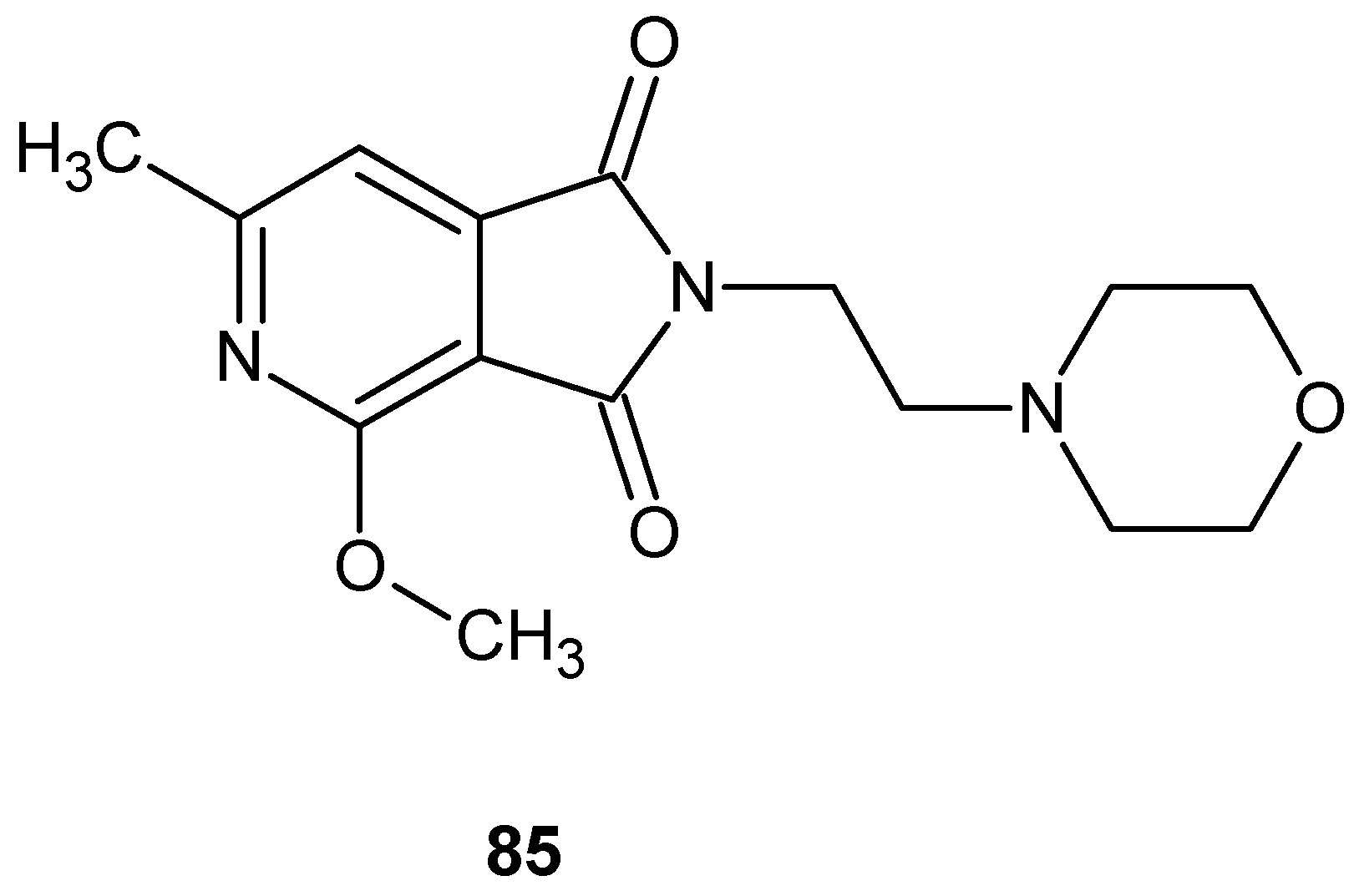
Krzyżak et al. [138] synthesized new N-substituted derivatives of 1H-pyrrolo[3,4-c]pyridine-1,3(2H)-diones. These compounds were evaluated for their anti-inflammatory activity by assessing their ability to inhibit COX-1/COX-2 interactions with bovine serum albumin (BSA). In vitro COX-1 and COX-2 inhibition assays were performed, and the pharmacological results demonstrated that all synthesized compounds exhibited the potential to inhibit both enzymes. The highest selectivity toward COX-2 was observed for compound 85 (Figure 84), for which the COX selectivity ratio (IC50(COX-2)/IC50(COX-1)) was 0.55, compared with 0.71 for meloxicam [138].
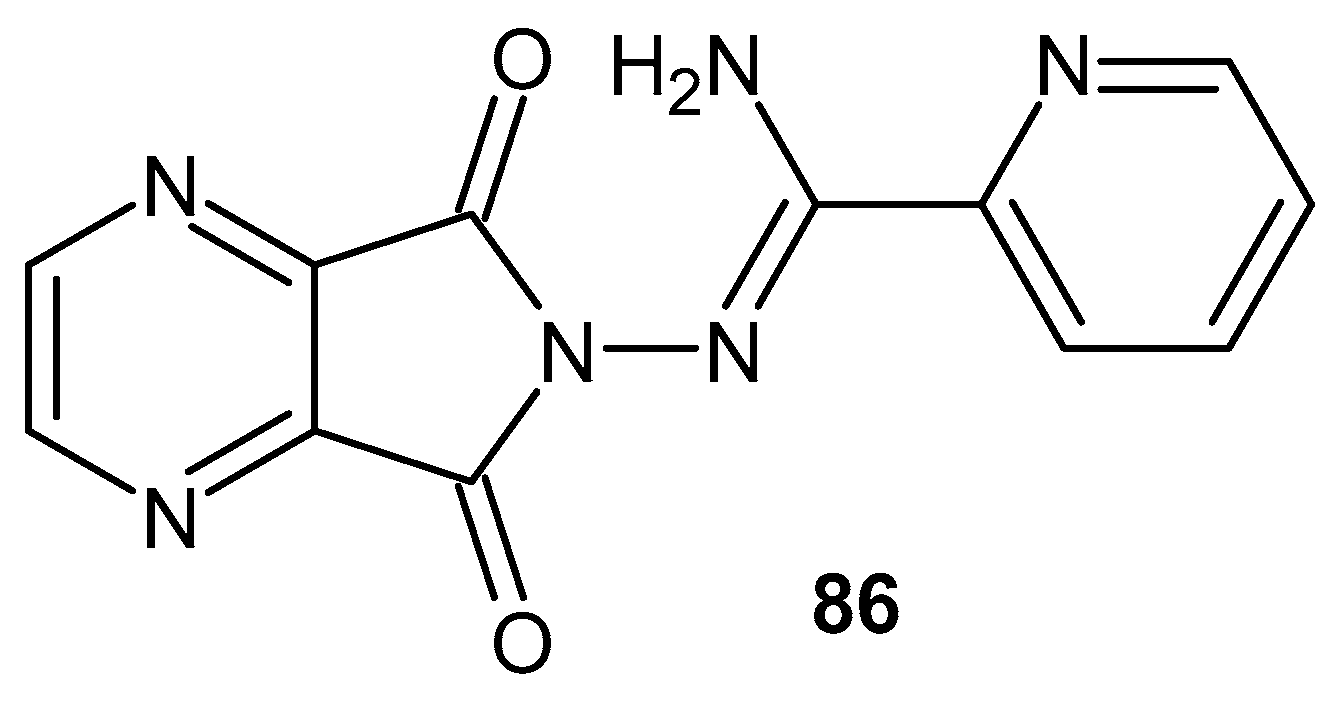
Kumar et al. [139] designed and synthesized bicyclic derivatives in which the imide ring is fused with a pyrazine ring. The compounds obtained were evaluated for their anti-inflammatory and anticancer activities. The most active compound, N′-(5,7-dioxo-5,7-dihydro-6H-pyrrolo[3,4-b]pyrazin-6-yl)pyridine-2-carboximidamide 86 (Figure 85), exhibited 35% anti-inflammatory activity at an oral dose of 50 mg/kg. In contrast, the reference drug, ibuprofen, showed 39% activity at the same dose (50 mg/kg, p.o.).
Compound 86 also demonstrated anticancer activity against tumor cell lines in vitro, including breast T47D (IC50 = 13.22 ± 1.74 µM), lung NCI-H-522 (IC50 = 15.16 ± 1.91 µM), colon HCT-15 (IC50 = 67.63 ± 3.75 µM), ovary PA-1 (IC50 = 16.88 ± 4.13 µM), and liver HepG-2 (IC50 = 38.39 ± 2.78 µM) [139].

2.2.3. Bicyclic Imides Fused to an Unsaturated Ring

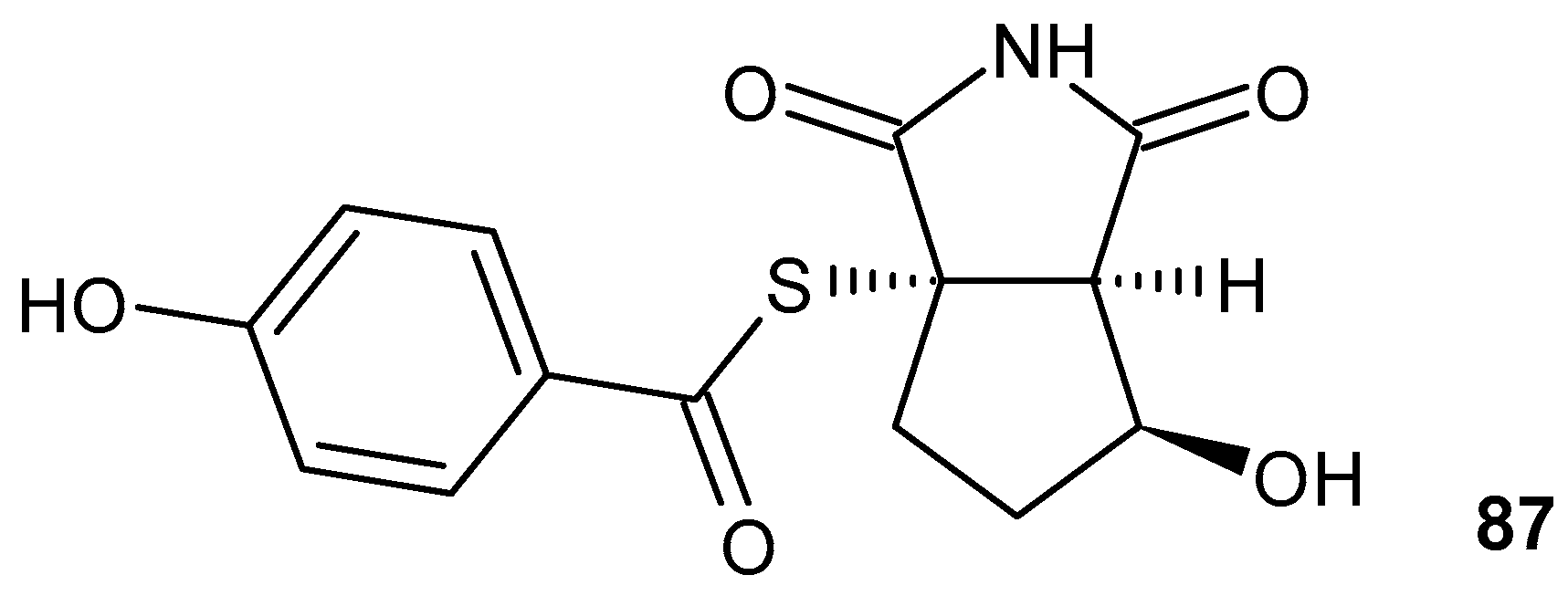
Nitrosporeusines A 87 (Figure 86) was isolated from an arctic actinomycete, Streptomyces nitrosporeus, a compound that has a cyclopenta[c]pyrrolidinodione skeleton [140] and which shows potential in treating a wide range of diseases. The review [141] indicates a strong link between inflammation and the development of acute nephritis in patients with sepsis. Studies [142] have shown that Nitrosporeusine A 87 attenuates sepsis-related acute kidney injury by reducing the expression of renal PGC-1a, which is dependent on activation of the IL-6/sIL-6R axis.
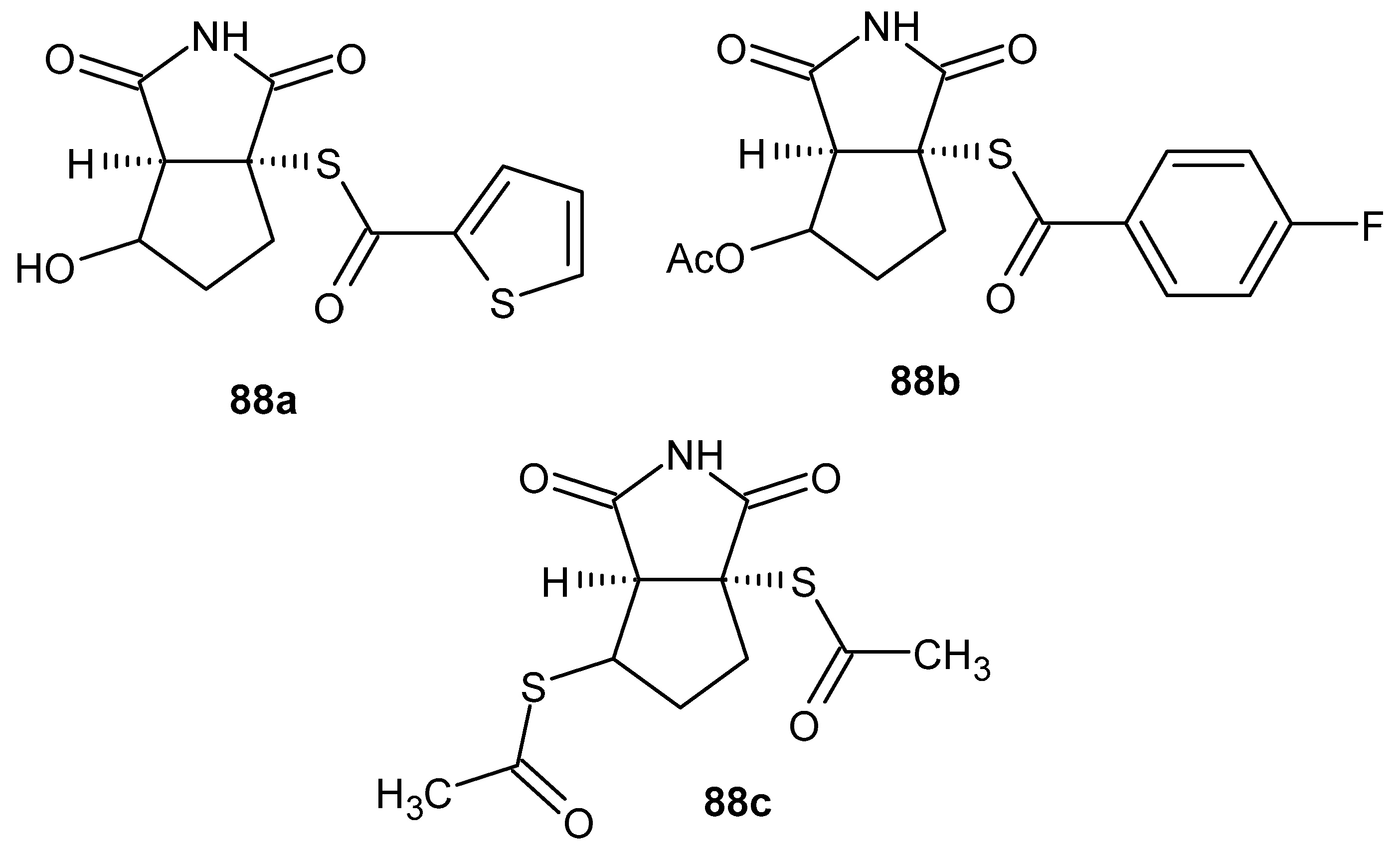
Cyclopenta[c]pyrrolidinodione derivatives (Nitrosporeusines A and B analogues) were evaluated for their anti-inflammatory activity [143]. The most potent compounds 88ac (Figure 87) significantly reduce the level of nitric oxide, reactive oxygen species, and pro-inflammatory cytokines, and they also inhibit the action of pro-inflammatory mediators (inducible nitric oxide synthase, cyclooxygenase-2, and nuclear factor-κB).

2.3. Polycyclic Imides

2.3.1. Naphthalimide Derivatives

Naphthalimides are a significant class of aromatic heterocycles composed of a cyclic diimide and a naphthalene skeleton. The benzisoquinoline-1,3-(2H)-dione moiety is found in compounds with anti-inflammatory properties.
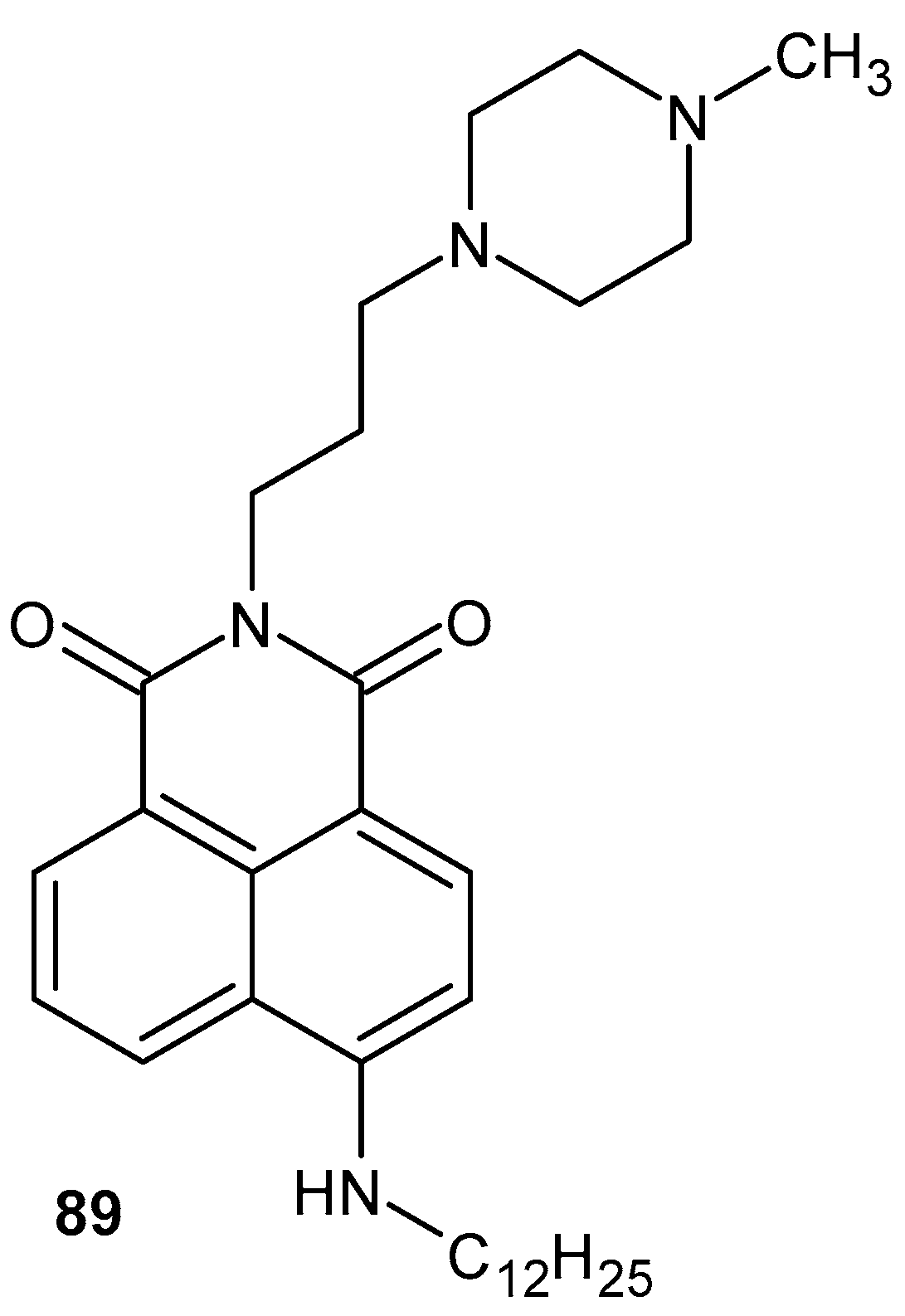
6-(Dodecylamino)-2-(3(4-methylpiperazin-1-yl)propyl)-1H-benzo[de]isoquinoline-1,3(2H)-dione 89 (Figure 88) inhibits inflammatory responses induced by phorbol 12-myristate 13-acetate/phytohemagglutinin (PMA/PHA) by the inhibition of NF-κB DNA-binding and expression of pro-inflammatory cytokines such as IL-2, IL-1β, IL-6, TNF-α, and IFN-γ in T lymphoma cells [144]. Compound 89 also inhibits LPS-induced production of inflammatory mediators (COX-2 and iNOS).
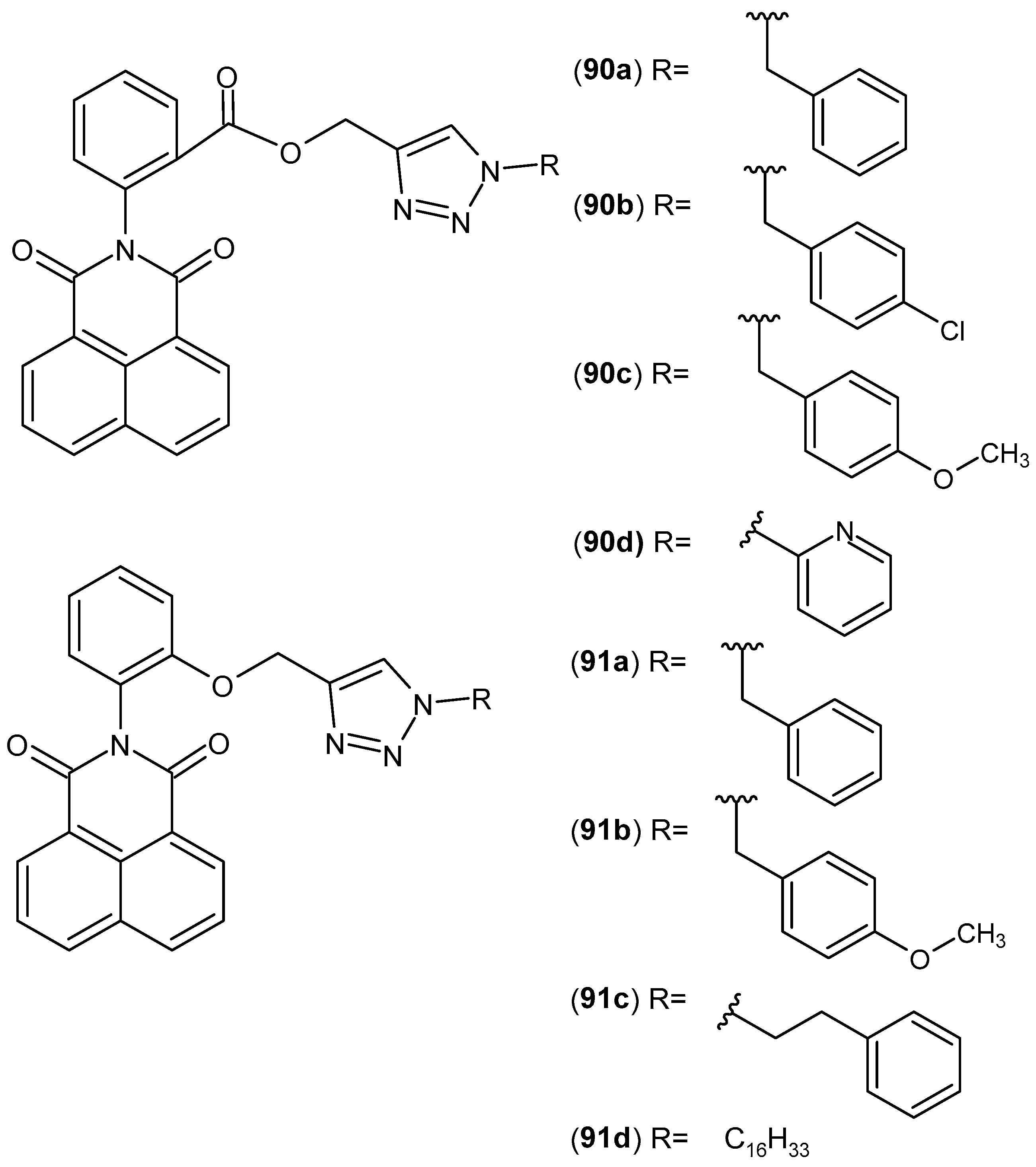
Naphthalimide derivatives with a triazole moiety have been synthesized and evaluated for their anti-inflammatory activity. Esters 90ad were more potent than ethers 91ad (Figure 89) [145]. Molecular docking studies against COX-1 and COX-2 show that (1-benzyl-1H-1,2,3-triazol-4-yl)methyl-2-(1,3-dioxo-1H-benzo[de]isoquinolin-2(3H)-yl)benzoate 90a exhibits the best inhibitory effect. The anti-inflammatory activity of compounds 90ad and 91ad was also evaluated in vitro. Derivative 90a inhibits the denaturation of bovine serum albumin and egg albumin at 200 µM, comparable to the standard drug, diclofenac sodium [145].
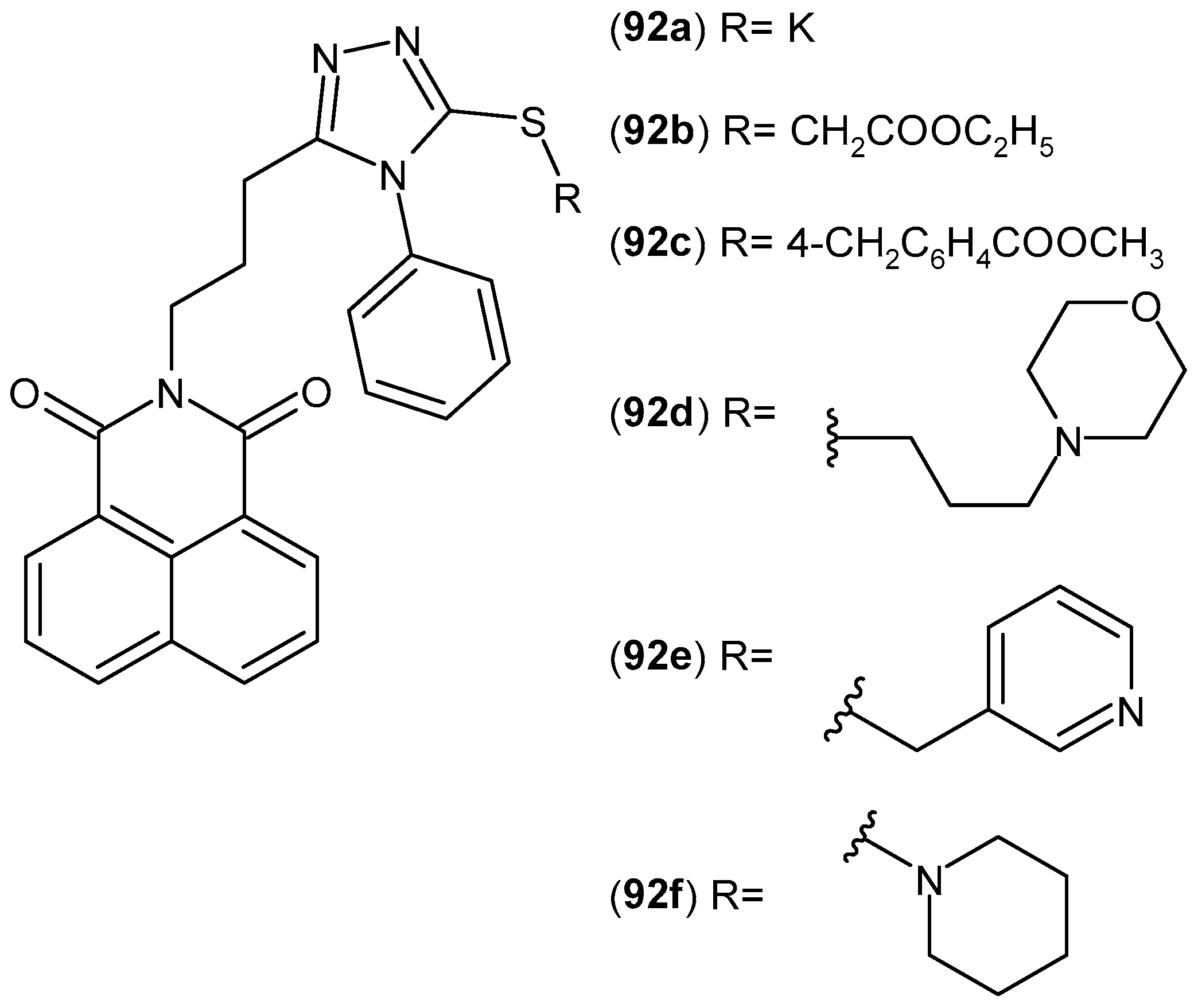
The anti-inflammatory potential of 1,2,4-triazole–1,8-naphthalimide derivatives 92af (Figure 90) was assessed by IL-6 inhibition [146]. A significant reduction in IL-6 levels was observed. The most active compounds, 92a and 92d, reduced IL-6 levels to 7 pg/mL.
Using the fluorescent properties of naphthalimide, fluorophore conjugates with various anti-inflammatory drugs have been developed to monitor targeted therapy, thereby optimizing treatment efficacy and minimizing side effects.
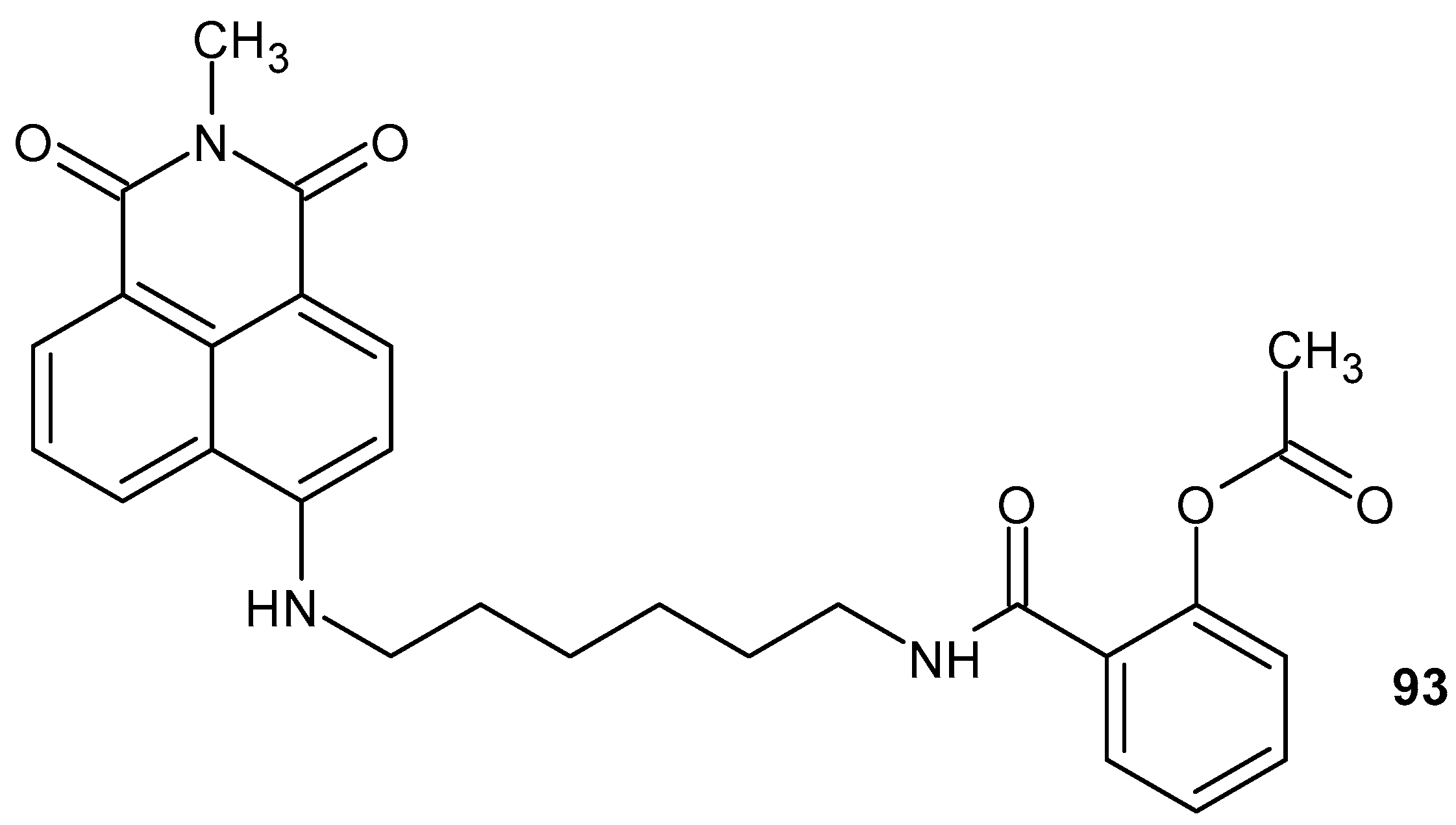
Compound 93 (Figure 91) containing a naphthalimide scaffold linked to the COX-2 inhibitor aspirin has been developed [147]. Due to its fluorescent properties and low biotoxicity, compound 93 can specifically target cancer cells, inhibiting COX-2 expression with greater efficacy than aspirin.
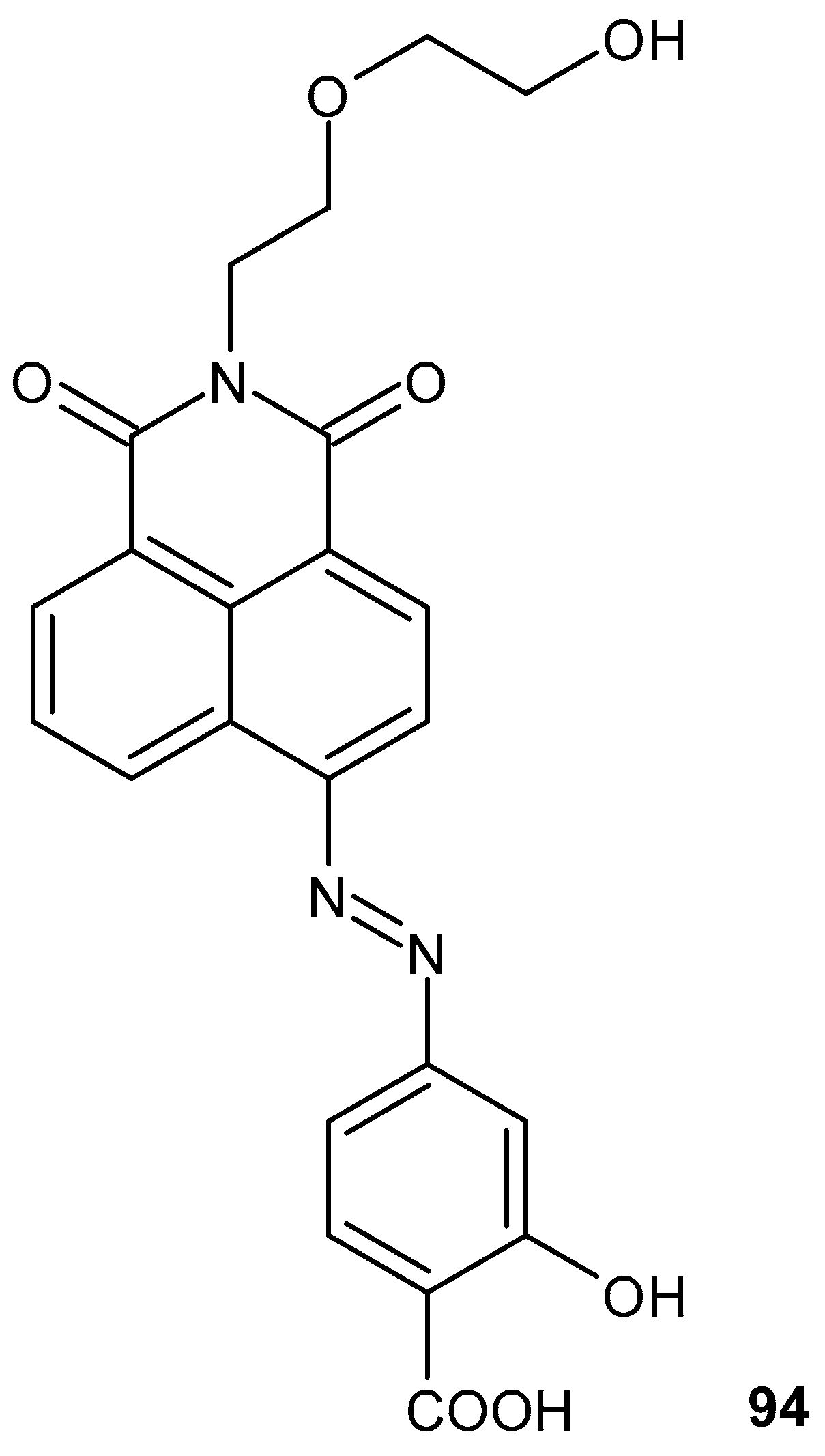
Another fluorescent prodrug, 94 (Figure 92), was synthesized by conjugating 5-aminosalicylic acid with the naphthalimide fluorophore [148]. Compound 94 allows for real-time monitoring of drug activation while maintaining therapeutic efficacy.

2.3.2. Other Polycyclic Imides

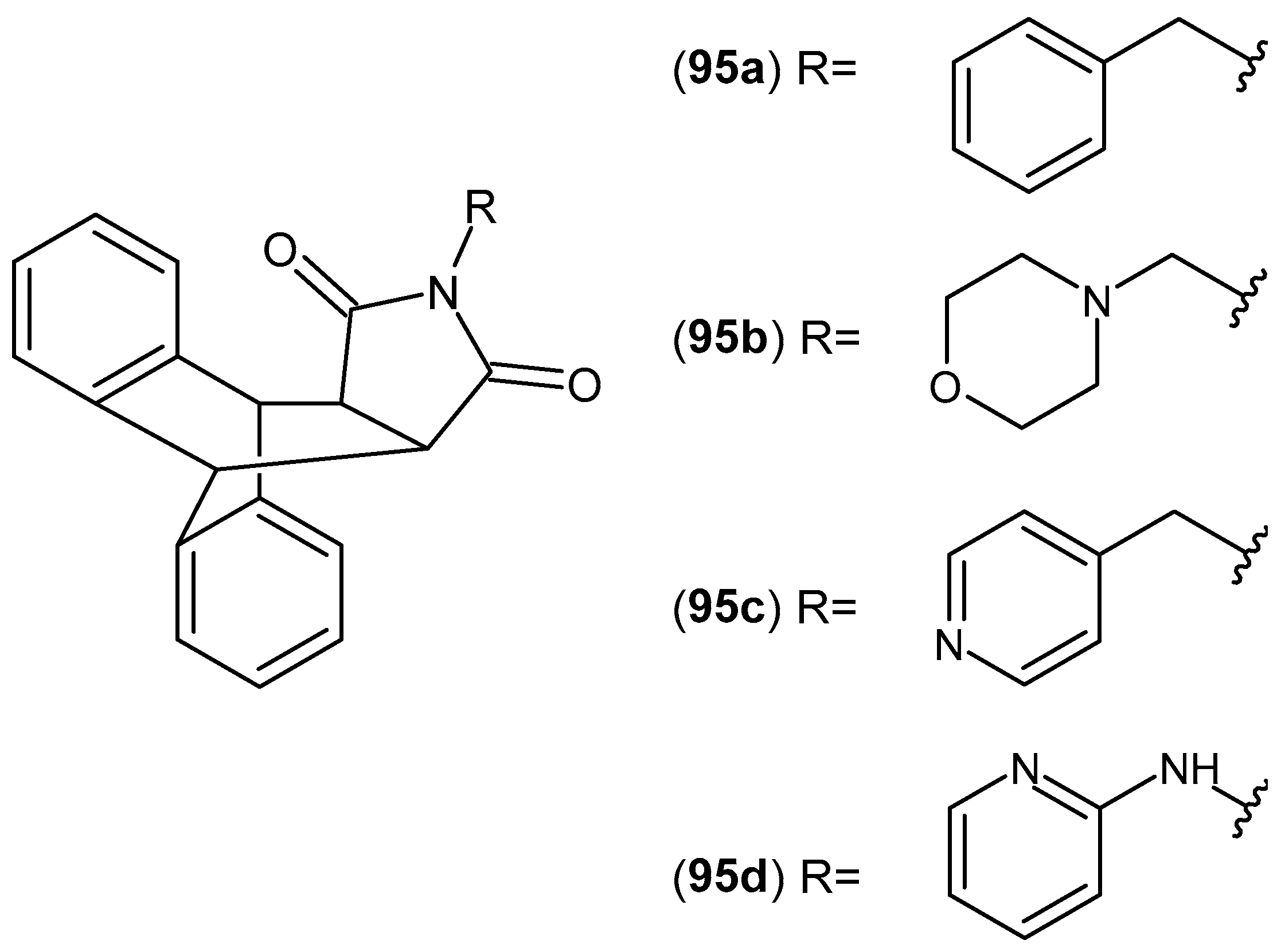
Some of the obtained 9,10-dihydroanthracene-9,10-α,β-succinimide derivatives 95ad (Figure 93) exhibited anti-inflammatory activity similar to the standard drug, ibuprofen, at 50 mg/kg p.o. [149].
Among a series of PAT compounds developed by the Cayman Chemical Company and PharmAkea as autotaxin (ATX) inhibitors, (R)-6-(4-fluorobenzyl)-5,6,11,11a-tetrahydro-1H-imidazo[1′,5′:1,6]pyrido[3,4-b]indole-1,3(2H)-dione (PAT-494) 96a (IC50 = 20 nM, LPC) and (S)-3-(6-(4-fluorobenzyl)-1,3-dioxo-5,6,11,11a-tetrahydro-1H-imidazo[1′,5′:1,6] pyrido[3,4-b]indol-2(3H)-yl)propanoic acid (PAT-352) 96b (IC50 = 26 nM, LPC) were the most active (Figure 94) [150].
Policyclic bisimides 97 and 98 (Figure 95) were synthesized and evaluated for their anti-inflammatory activity in the carrageenan-induced rat paw edema protection test [151]. Both compounds 97 and 98 were found to be more potent than diclofenac potassium.
The anti-inflammatory activity of the synthesized benzeno-1H-benzo[f]isoindole-1,3(2H)-dione derivatives was evaluated by carrageenan-induced paw edema test in rats [151]. Compounds 99ad (Figure 96) were similarly potent to diclofenac sodium.
2-(6-Methyl-4-phenyl-1,4-dihydro-pyrimidin-2-ylamino)-benzo[de]isoquinoline-1,3-dione 100 (Figure 97) was found to be more potent than prednisolone as an anti-inflammatory agent in the carrageenan-induced rat paw edema protection test (87.80% protection at a dose of 25 mg/kg) [152].
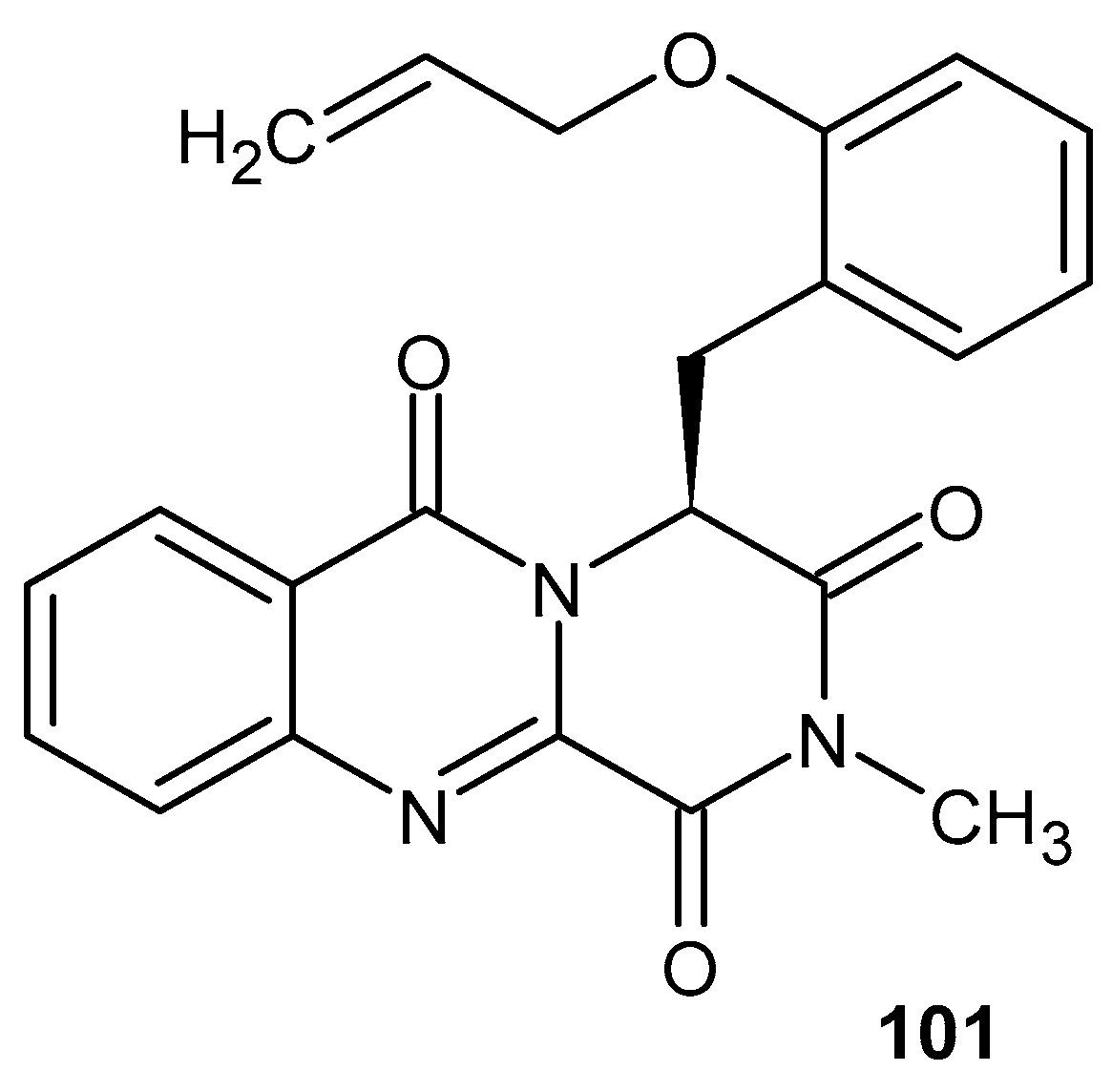
17-Hydroxybrevianamide N derivative 101 was obtained by Zhou et al. [153] as a potent anti-inflammatory agent.(4S)-Enantiomer of 101 (Figure 98) is three times more effective than its (4R)-enantiomer in inhibiting NO concentrations, with an IC50 value of 0.5 μM. Compound (4S)- 101 demonstrated simultaneous inhibition of the levels of inflammatory factors (TNF-α, IL-1β, and IL-6) and reduced inflammation-induced increases in MAPK and NF-κB signaling proteins.
To improve the organization and provide a clearer overview of the reported compounds, the cyclic imide derivatives discussed in this review have been systematically classified according to their principal molecular mechanisms of action. A comprehensive summary of the corresponding molecular targets and representative compounds is provided in Table 1.

3. Conclusions

Cyclic imides constitute an important class of heterocyclic compounds with established clinical relevance and diverse pharmacological activity, largely determined by the nature and position of substituents at the imide nitrogen atom and within the imide scaffold. Representative examples include ethosuximide and methsuximide used in the treatment of epilepsy; antipsychotic agents such as lurasidone, perospirone, tandospirone, gepirone, and zalospirone; the antiviral drug tecovirimat; the anticancer agent tivantinib; immunomodulatory drugs (e.g., lenalidomide and pomalidomide); as well as compounds with pronounced anti-inflammatory activity, including thalidomide and apremilast.
This review summarizes literature reports on synthetic and natural compounds containing a cyclic imide ring that exhibit anti-inflammatory activity. The majority of studies focus on derivatives of the pyrrole-2,5-dione scaffold, frequently incorporated into bicyclic or polycyclic systems. However, other structurally diverse imide-containing classes, including succinimides, glutarimides, hydantoins, and naphthalimides, also demonstrate significant anti-inflammatory potential. The biological activity of these derivatives is primarily associated with suppression of pro-inflammatory mediators, including cytokines (e.g., TNF-α, IL-1β, and IL-6), inhibition of COX and LOX isoenzymes, reduction of LPS-induced nitric oxide production, modulation of chemokine secretion, and regulation of key signaling pathways such as NF-κB. A structured classification of the discussed compounds according to their principal molecular mechanisms of action is presented in Table 1.
Given the ongoing need for novel, effective, and well-tolerated anti-inflammatory agents, cyclic imides represent privileged scaffolds for further structural optimization and comprehensive pharmacological investigation. Continued research in this field is expected to facilitate the development of new therapeutically relevant compounds within this versatile chemical family.

Author Contributions

Conceptualization, A.R., B.T. and A.W.; methodology, A.R., B.T. and A.W.; formal analysis, A.R., B.T. and A.W.; investigation, A.R., B.T. and A.W.; resources, A.R., B.T. and A.W.; writing—original draft preparation, A.R., B.T. and A.W.; writing—review and editing, A.R., B.T. and A.W.; visualization, A.R., B.T. and A.W.; supervision, A.R., B.T. and A.W.; funding acquisition, A.R., B.T. and A.W. All authors have read and agreed to the published version of the manuscript.

Funding

This research was funded by Wroclaw Medical University, grant numbers SUBZ.D090.26.009, and SUBZ.D070.26.006.

Institutional Review Board Statement

Not applicable.

Informed Consent Statement

Not applicable.

Data Availability Statement

No new data were created or analyzed in this study. Data sharing is not applicable to this article.

Conflicts of Interest

The authors declare no conflicts of interest.

Abbreviations

The following abbreviations are used in this manuscript:
AIAAdjuvant-induced arthritis
ALIAcute lung injury
AMES IIThis assay is a 384-well microplate format modification of the classic bacterial reverse mutation test
AMPAα-Amino-3-hydroxy-5-methyl-4-isoxazolepropionic
AP-1Activator protein 1
BHAButylhydroxyanisole
Caco-2Cell line of human colorectal adenocarcinoma cells
CAIsCholesterol absorption inhibitors
cAMPCyclic adenosine monophosphate
CCL2, CXCL1Chemokines
CIACollagen-induced arthritis
COX-1, COX-2Cyclooxygenases
CRPC-reactive protein
CXCR3Chemokine receptor
fMLPN-formylmethionyl-leucyl-phenylalanine
GPCRsG protein-coupled receptors
GPsGlutarimide-containing polyketides
GTIGastrointestinal tissue index
hERGHuman ether-à-go-go-Related Gene
IDOIndoleamine-pyrrole 2,3-dioxygenase
IL-6Interleukin 6
IMiDsImmunomodulatory drugs
IFN-γCytokine interferon gamma
iNOSInducible nitric oxide synthase
LDHLactate dehydrogenase
LOXLipoxygenase
LPSLipopolysaccharide
MAPKMitogen-activated protein kinase
MDAMalondialdehyde
Me-NFM4-Methyl-N-phenylmaleimide
MMMultiple myeloma
MMPMatrix metalloproteinase
MNTMammalian cell micronucleus test
MPOMyeloperoxidase
NF-κBNuclear factor kappa B
NS-398Non-steroidal anti-inflammatory agent with analgesic and antipyretic effects
PAFPlatelet-activating factor
PBMCsStimulated peripheral blood mononuclear cells
PDE4Inhibitor-phosphodiesterase 4
PGE2Prostaglandin E2
PLCPhospholipase C
PLSNPartial ligation of the sciatic nerve
PMNLsPolymorphonuclear leukocytes
ROSReactive oxygen species
SODSuperoxide dismutase
STAT1, STAT2Signal transducer and activator of transcription (1 or 2)
SykSpleen tyrosine kinase
TACETNFα-converting enzyme
TLR4Toll-like receptor 4
TNFTumor necrosis factor
VEGFVascular endothelial growth factor

References

  1. Neha, K.; Wakode, S. Contemporary Advances of Cyclic Molecules Proposed for Inflammation. Eur. J. Med. Chem. 2021, 221, 113493. [Google Scholar] [CrossRef]
  2. Prado, S.R.T.; Cechinel-Filho, V.; Campos-Buzzi, F.; Corrêa, R.; Cadena, S.M.C.S.; De Oliveira, M.B.M. Biological Evaluation of Some Selected Cyclic Imides: Mitochondrial Effects and in Vitro Cytotoxicity. Z. Fur Naturforsch.-C J. Biosci. 2004, 59, 663–672. [Google Scholar] [CrossRef] [PubMed][Green Version]
  3. Sultana, K.; Khan, H.; Shahid, K. Synthesis, Characterization and In Vitro Antibacterial Evaluation of Sn, Sb, and Zn Coordination Complexes of 2-(2-Methoxyphenyl)-1H-Isoindole-1, 3(2h)-Dione. Int. J. Pharm. Sci. Rev. Res. 2014, 28, 1–5. [Google Scholar]
  4. Marulasiddaiah, R.; Kalkhambkar, R.G.; Kulkarni, M.V. Synthesis and Biological Evaluation of Cyclic Imides with Coumarins and Azacoumarins. Open J. Med. Chem. 2012, 02, 89–97. [Google Scholar] [CrossRef][Green Version]
  5. Hargreaves, M.K.; Pritchard, J.G.; Dave, H.R. Cyclic Carboxylic Monoimides. Chem. Rev. 1970, 70, 439–469. [Google Scholar] [CrossRef]
  6. Kankanala, K.; Koduru, S.S.P.; Edupuganti, V.V.S.R.; Nandula, Y.S.M.; Sarbani, P. Chemistry of Cyclic Imides: An Overview on the Past, Present and Future. Curr. Org. Chem. 2016, 20, 1955–2001. [Google Scholar] [CrossRef][Green Version]
  7. Lopchuk, J.M. Imide Natural Products. In Imides; Elsevier: Amsterdam, The Netherlands, 2019; pp. 255–334. [Google Scholar] [CrossRef]
  8. Tempesta, M.S.; Corley, D.G.; Beutler, J.A.; Metral, C.J.; Yunes, R.A.; Giacomozzi, C.A.; Calixto, J.B. Phyllanthimide, a New Alkaloid from Phyllanthus Sellowianus. J. Nat. Prod. 1988, 51, 617–618. [Google Scholar] [CrossRef]
  9. Hassanzadeh, F.; Jafari, E. Cyclic Imide Derivatives: As Promising Scaffold for the Synthesis of Antimicrobial Agents. J. Res. Med. Sci. 2018, 23, 53. [Google Scholar] [CrossRef]
  10. Nasser Binjawhar, D.; Abu Ali, O.A.; Alqahtani, A.S.; Fayad, E.; Abo-Bakr, A.M.; Mekhael, A.M.; Sadek, F.M. Powerful Approach for New Drugs as Antibacterial Agents via Molecular Docking and In Vitro Studies of Some New Cyclic Imides and Quinazoline-2,5-Diones. ACS Omega 2024, 9, 18566–18575. [Google Scholar] [CrossRef]
  11. Mou, L.L.; Wu, X.M.; Bibi, A.; Wang, J.X.; Zhou, C.H. A Comprehensive Insight into Naphthalimides as Novel Structural Skeleton of Multitargeting Promising Antibiotics. Future Med. Chem. 2025, 17, 575–590. [Google Scholar] [CrossRef]
  12. Ma, Z.; Qiu, S.; Chen, H.C.; Zhang, D.; Lu, Y.L.; Chen, X.L. Maleimide Structure: A Promising Scaffold for the Development of Antimicrobial Agents. J. Asian Nat. Prod. Res. 2022, 24, 1–14. [Google Scholar] [CrossRef]
  13. Stiz, D.; Campos, A.; Ruiz, A.L.T.G.; de Carvalho, J.E.; Corrêa, R.; Cechinel-Filho, V. Antiproliferative Effect of Synthetic Cyclic Imides (Methylphtalimides, Carboxylic Acid Phtalimides and Itaconimides) against Human Cancer Cell Lines. Z. Für Naturforschung C 2016, 71, 423–427. [Google Scholar] [CrossRef]
  14. Tandon, R.; Luxami, V.; Tandon, N.; Paul, K. Recent Developments on 1,8-Naphthalimide Moiety as Potential Target for Anticancer Agents. Bioorg. Chem. 2022, 121, 105677. [Google Scholar] [CrossRef]
  15. Tang, J.; Zhang, Y.; Zhou, L.; Song, X.; Wei, Y.; Qi, J.; Wu, J.; Song, Z.; Zhan, L. Design, Synthesis and Biological Evaluation of Indoline-Maleimide Conjugates as Potential Antitumor Agents for the Treatment of Colorectal Cancer. Bioorg. Med. Chem. 2024, 108, 117786. [Google Scholar] [CrossRef] [PubMed]
  16. Eyilcim, Ö.; Günay, F.; Ng, Y.Y.; Ulucan Açan, Ö.; Turgut, Z.; Günkara, Ö.T. Design, Synthesis, Biological Evaluation and Molecular Docking Studies of a New Series of Maleimide Derivatives. ChemistryOpen 2024, 13, e202400058. [Google Scholar] [CrossRef]
  17. Abdel-Aziz, A.A.M.; El-Azab, A.S.; Ghiaty, A.H.; Gratteri, P.; Supuran, C.T.; Nocentini, A. 4-Substituted Benzenesulfonamides Featuring Cyclic Imides Moieties Exhibit Potent and Isoform-Selective Carbonic Anhydrase II/IX Inhibition. Bioorg. Chem. 2019, 83, 198–204. [Google Scholar] [CrossRef] [PubMed]
  18. Reddy, D.S.; Kongot, M.; Singh, V.; Maurya, N.; Patel, R.; Kumar Singhal, N.; Avecilla, F.; Kumar, A. Coumarin Tethered Cyclic Imides as Efficacious Glucose Uptake Agents and Investigation of Hit Candidate to Probe Its Binding Mechanism with Human Serum Albumin. Bioorg. Chem. 2019, 92, 103212. [Google Scholar] [CrossRef]
  19. da Silva Júnior, J.G.; de Araújo, H.D.A.; da Rocha, I.G.; da Silva Neto, J.C.; Oliveira, R.N.; de Oliveira Assis, S.P.; de Menezes Lima, V.L. Antihyperlipidemic Activity of Glycoconjugated Phthalimides in Mice Submitted to a Model of Dyslipidemia and Insulin Resistance. Chem. Biodivers. 2022, 19, e202200119. [Google Scholar] [CrossRef]
  20. Abdel-Aziz, A.A.M.; El-Azab, A.S.; Attia, S.M.; Al-Obaid, A.M.; Al-Omar, M.A.; El-Subbagh, H.I. Synthesis and Biological Evaluation of Some Novel Cyclic-Imides as Hypoglycaemic, Anti-Hyperlipidemic Agents. Eur. J. Med. Chem. 2011, 46, 4324–4329. [Google Scholar] [CrossRef]
  21. Xu, M.; Wang, Y.; Yang, F.; Wu, C.; Wang, Z.; Ye, B.; Jiang, X.; Zhao, Q.; Li, J.; Liu, Y.; et al. Synthesis and Biological Evaluation of a Series of Multi-Target N-Substituted Cyclic Imide Derivatives with Potential Antipsychotic Effect. Eur. J. Med. Chem. 2018, 145, 74–85. [Google Scholar] [CrossRef]
  22. Abram, M.; Jakubiec, M.; Reeb, K.; Cheng, M.H.; Gedschold, R.; Rapacz, A.; Mogilski, S.; Socała, K.; Nieoczym, D.; Szafarz, M.; et al. Discovery of (R)-N-Benzyl-2-(2,5-Dioxopyrrolidin-1-Yl)Propanamide [(R)-AS-1], a Novel Orally Bioavailable EAAT2 Modulator with Drug-like Properties and Potent Antiseizure Activity in Vivo. J. Med. Chem. 2022, 65, 11703–11725. [Google Scholar] [CrossRef] [PubMed]
  23. Panek, D.; Wiȩckowska, A.; Pasieka, A.; Godyń, J.; Jończyk, J.; Bajda, M.; Knez, D.; Gobec, S.; Malawska, B. Design, Synthesis, and Biological Evaluation of 2-(Benzylamino-2-Hydroxyalkyl)Isoindoline-1,3-Diones Derivatives as Potential Disease-Modifying Multifunctional Anti-Alzheimer Agents. Molecules 2018, 23, 347. [Google Scholar] [CrossRef] [PubMed]
  24. Heras Martinez, H.M.; Barragan, E.; Marichev, K.O.; Chávez-Flores, D.; Bugarin, A. Phthalimides as Anti-Inflammatory Agents. Futur. Med. Chem. 2025, 17, 125–142. [Google Scholar] [CrossRef]
  25. Yap, T.A.; Olmos, D.; Brunetto, A.T.; Tunariu, N.; Barriuso, J.; Riisnaes, R.; Pope, L.; Clark, J.; Futreal, A.; Germuska, M.; et al. Phase I Trial of a Selective C-MET Inhibitor ARQ 197 Incorporating Proof of Mechanism Pharmacodynamic Studies. J. Clin. Oncol. 2011, 29, 1271–1279. [Google Scholar] [CrossRef]
  26. Michalska, D.; Morzyk, B.; Bienko, D.C.; Wojciechowski, W. Glutarimide: A Carrier Transport Drug through Cell Membranes. Med. Hypotheses 2000, 54, 472–474. [Google Scholar] [CrossRef]
  27. Russo, A.T.; Grosenbach, D.W.; Chinsangaram, J.; Honeychurch, K.M.; Long, P.G.; Lovejoy, C.; Maiti, B.; Meara, I.; Hruby, D.E. An Overview of Tecovirimat for Smallpox Treatment and Expanded Anti-Orthopoxvirus Applications. Expert Rev. Anti. Infect. Ther. 2021, 19, 331–344. [Google Scholar] [CrossRef] [PubMed]
  28. Moreira, A.L.; Sampaio, E.P.; Zmuidzinas, A.; Frindt, P.; Smith, K.A.; Kaplan, G. Thalidomide Exerts Its Inhibitory Action on Tumor Necrosis Factor α by Enhancing MRNA Degradation. J. Exp. Med. 1993, 177, 1675–1680. [Google Scholar] [CrossRef]
  29. Schafer, P.H.; Parton, A.; Capone, L.; Cedzik, D.; Brady, H.; Evans, J.F.; Man, H.W.; Muller, G.W.; Stirling, D.I.; Chopra, R. Apremilast Is a Selective PDE4 Inhibitor with Regulatory Effects on Innate Immunity. Cell. Signal. 2014, 26, 2016–2029. [Google Scholar] [CrossRef]
  30. Medzhitov, R. Origin and Physiological Roles of Inflammation. Nature 2008, 454, 428–435. [Google Scholar] [CrossRef]
  31. Liu, T.; Zhang, L.; Joo, D.; Sun, S.C. NF-ΚB Signaling in Inflammation. Signal Transduct. Target. Ther. 2017, 2, 17023. [Google Scholar] [CrossRef] [PubMed]
  32. Ricciotti, E.; Fitzgerald, G.A. Prostaglandins and Inflammation. Arterioscler. Thromb. Vasc. Biol. 2011, 31, 986–1000. [Google Scholar] [CrossRef] [PubMed][Green Version]
  33. Furman, D.; Campisi, J.; Verdin, E.; Carrera-Bastos, P.; Targ, S.; Franceschi, C.; Ferrucci, L.; Gilroy, D.W.; Fasano, A.; Miller, G.W.; et al. Chronic Inflammation in the Etiology of Disease across the Life Span. Nat. Med. 2019, 25, 1822–1832. [Google Scholar] [CrossRef]
  34. Cechinel Filho, V.; de Campos, F.; Corrêa, R.; Yunes, R.A.; Nunes, R.J. Aspectos Químicos e Potencial Terapêutico de Imidas Cíclicas: Uma Revisão Da Literatura. Quim. Nova 2003, 26, 230–241. [Google Scholar] [CrossRef]
  35. Zhao, Z.; Yue, J.; Ji, X.; Nian, M.; Kang, K.; Qiao, H.; Zheng, X. Research Progress in Biological Activities of Succinimide Derivatives. Bioorg. Chem. 2021, 108, 104557. [Google Scholar] [CrossRef]
  36. Zhang, L.; Liu, W.; Mao, F.; Zhu, J.; Dong, G.; Jiang, H.; Sheng, C.; Miao, L.; Huang, L.; Li, J. Discovery of Benzylidene Derivatives as Potent Syk Inhibitors: Synthesis, SAR Analysis, and Biological Evaluation. Arch. Pharm. 2015, 348, 463–474. [Google Scholar] [CrossRef]
  37. Bata, I.; Tömösközi, Z.; Buzder-Lantos, P.; Vasas, A.; Szeleczky, G.; Balázs, L.; Barta-Bodor, V.; Ferenczy, G.G., II. Discovery of a Novel Series of CXCR3 Antagonists with a Beta Amino Acid Core. Bioorg. Med. Chem. Lett. 2016, 26, 5429–5437. [Google Scholar] [CrossRef]
  38. Crosignani, S.; Bingham, P.; Bottemanne, P.; Cannelle, H.; Cauwenberghs, S.; Cordonnier, M.; Dalvie, D.; Deroose, F.; Feng, J.L.; Gomes, B.; et al. Discovery of a Novel and Selective Indoleamine 2,3-Dioxygenase (IDO-1) Inhibitor 3-(5-Fluoro-1H-Indol-3-Yl)Pyrrolidine-2,5-Dione (EOS200271/PF-06840003) and Its Characterization as a Potential Clinical Candidate. J. Med. Chem. 2017, 60, 9617–9629. [Google Scholar] [CrossRef]
  39. Jan, M.S.; Ahmad, S.; Hussain, F.; Ahmad, A.; Mahmood, F.; Rashid, U.; Abid, O.U.R.; Ullah, F.; Ayaz, M.; Sadiq, A. Design, Synthesis, in-Vitro, in-Vivo and in-Silico Studies of Pyrrolidine-2,5-Dione Derivatives as Multitarget Anti-Inflammatory Agents. Eur. J. Med. Chem. 2020, 186, 111863. [Google Scholar] [CrossRef] [PubMed]
  40. Sivakumar, P.; Ganesh, P.S.K.P.; Muthuraja, P.; Bharanidharan, S.; Rajamohan, R.; Kamatchi, S. Synthetic Approach of Hydroxy-Acetophenone-Directed Rh(III) Catalyzed C-H o-Alkylation via 1,4 Addition: Insights from DFT and Docking Methodology. J. Mol. Struct. 2025, 1327, 141248. [Google Scholar] [CrossRef]
  41. Abdallah, A.E.; Eissa, I.H.; Mehany, A.B.M.; Sakr, H.; Atwa, A.; El-Adl, K.; El-Zahabi, M.A. Immunomodulatory Quinazoline-Based Thalidomide Analogs: Design, Synthesis, Apoptosis and Anticancer Evaluations. J. Mol. Struct. 2023, 1281, 135164. [Google Scholar] [CrossRef]
  42. Abdallah, A.E.; Eissa, I.H.; Mehany, A.B.M.; Sakr, H.; Sakr, T.M.; Metwaly, K.H.; Celik, I.; El-Adl, K.; El-Zahabi, M.A. Immunomodulation and Anticancer Evaluation of Quinazoline-Based Thalidomide Analogs: Design, Synthesis, Docking, and Dynamic Simulation. J. Mol. Struct. 2024, 1317, 139082. [Google Scholar] [CrossRef]
  43. Shi, Y.; Lu, C.; Shen, Y. Research Progress of Glutarimide-Containing Polyketides: Structures, Bioactivities and Their Biosynthesis. Pharm. Sci. Adv. 2025, 3, 100071. [Google Scholar] [CrossRef]
  44. Ishikawa, Y.; Tachibana, M.; Matsui, C.; Obata, R.; Umezawa, K.; Nishiyama, S. Synthesis and Biological Evaluation on Novel Analogs of 9-Methylstreptimidone, an Inhibitor of NF-ΚB. Bioorg. Med. Chem. Lett. 2009, 19, 1726–1728. [Google Scholar] [CrossRef]
  45. Deng, H.; Zhang, N.; Wang, Y.; Chen, J.; Shen, J.; Wang, Z.; Xu, R.; Zhang, J.; Song, D.; Li, D. S632A3, a New Glutarimide Antibiotic, Suppresses Lipopolysaccharide-Induced pro-Inflammatory Responses via Inhibiting the Activation of Glycogen Synthase Kinase 3Β. Exp. Cell Res. 2012, 318, 2592–2603. [Google Scholar] [CrossRef]
  46. Chen, H.; Bai, X.; Sun, T.; Wang, X.; Zhang, Y.; Bian, X.; Zhou, H. The Genomic-Driven Discovery of Glutarimide-Containing Derivatives from Burkholderia gladioli. Molecules 2023, 28, 6937. [Google Scholar] [CrossRef]
  47. Takayasu, Y.; Tsuchiya, K.; Aoyama, T.; Sukenaga, Y. NK30424A and B, Novel Inhibitors of ALipopolysaccharide-Induced Tumour Necrosis Factor Alpha Production, Produced by Streptomyces sp. NA30424. J. Antibiot. 2001, 54, 1111–1115. [Google Scholar] [CrossRef] [PubMed]
  48. Takayasu, Y.; Tsuchiya, K. Oxidative Modification of NK30424A and B Enhance Inhibitory Effect on Lipopolysaccharide-Induced Tumour Necrosis Factor-α Promoter Activity. J. Antibiot. 2002, 55, 337–340. [Google Scholar] [CrossRef]
  49. Takeiri, M.; Tachibana, M.; Kaneda, A.; Ito, A.; Ishikawa, Y.; Nishiyama, S.; Goto, R.; Yamashita, K.; Shibasaki, S.; Hirokata, G.; et al. Inhibition of Macrophage Activation and Suppression of Graft Rejection by DTCM-Glutarimide, a Novel Piperidine Derived from the Antibiotic 9-Methylstreptimidone. Inflamm. Res. 2011, 60, 879–888. [Google Scholar] [CrossRef]
  50. El-Salhy, M.; Umezawa, K. Anti-Inflammatory Effects of Novel AP-1 and NF-B Inhibitors in Dextran-Sulfate-Sodium-Induced Colitis in Rats. Int. J. Mol. Med. 2016, 37, 1457–1464. [Google Scholar] [CrossRef][Green Version]
  51. Xu, Y.; Wang, F.; Guo, H.; Wang, S.; Ni, S.; Zhou, Y.; Wang, Z.; Bao, H.; Wang, Y. Antitussive and Anti-Inflammatory Dual-Active Agents Developed from Natural Product Lead Compound 1-Methylhydantoin. Molecules 2019, 24, 2355. [Google Scholar] [CrossRef] [PubMed]
  52. Wang, S.; Ji, L.; Zhang, D.; Guo, H.; Wang, Y.; Li, W. Synthesis and Anti-Inflammatory Activity of 1-Methylhydantoin Cinnamoyl Imides. Molecules 2022, 27, 8481. [Google Scholar] [CrossRef]
  53. Fujioka, H.; Tan, T.; Kishi, M.; Miyazaki, H.; Masuda, Y.; Yokoyama, Y. Biopharmaceutical Studies on Hydantoin Derivatives. V. Pharmacokinetics and Pharmacodynamics of 5,5-Diphenylhydantoin and 1-Benzenesulfonyl-5,5-Diphenylhydantoin. J. Pharmacobiodyn. 1986, 9, 303–314. [Google Scholar] [CrossRef]
  54. Abdel-Aziz, A.A.M.; El-Azab, A.S.; AlSaif, N.A.; Alanazi, M.M.; El-Gendy, M.A.; Obaidullah, A.J.; Alkahtani, H.M.; Almehizia, A.A.; Al-Suwaidan, I.A. Synthesis, Anti-Inflammatory, Cytotoxic, and COX-1/2 Inhibitory Activities of Cyclic Imides Bearing 3-Benzenesulfonamide, Oxime, and β-Phenylalanine Scaffolds: A Molecular Docking Study. J. Enzym. Inhib. Med. Chem. 2020, 35, 610–621. [Google Scholar] [CrossRef] [PubMed]
  55. Sondhi, S.M.; Singh, J.; Kumar, A.; Jamal, H.; Gupta, P.P. Synthesis of Amidine and Amide Derivatives and Their Evaluation for Anti-Inflammatory and Analgesic Activities. Eur. J. Med. Chem. 2009, 44, 1010–1015. [Google Scholar] [CrossRef] [PubMed]
  56. Lin, X.; Tago, K.; Okazaki, N.; So, T.; Takahashi, K.; Mashino, T.; Tamura, H.; Funakoshi-Tago, M. The Indole-Hydantoin Derivative Exhibits Anti-Inflammatory Activity by Preventing the Transactivation of NF-ΚB through the Inhibition of NF-ΚB P65 Phosphorylation at Ser276. Int. Immunopharmacol. 2021, 100, 108092. [Google Scholar] [CrossRef]
  57. Mani, S.; Bouchnak, H.; Pradeloux, S.; Kraiem, J.; Soulet, D.; Messaoudi, I. 3-Aminohydantoin Derivate as a Promising Scaffold in Dopaminergic Neuroprotection and Neurorescue in the in Vivo and in Vitro 6-Hydroxydopamine Models of Parkinson’s Disease. Clin. Exp. Pharmacol. Physiol. 2023, 50, 728–737. [Google Scholar] [CrossRef]
  58. De Queiroz, R.B.; De Carvalho, F.L.; Da Fonsêca, D.V.; Barbosa-Filho, J.M.; Salgado, P.R.R.; Paulo, L.L.; De Queiroz, A.B.M.; De Morais Pordeus, L.C.; De Souza, S.A.; Da Silva Souza, H.D.; et al. Antinociceptive Effect of Hydantoin 3-Phenyl-5-(4-Ethylphenyl)-Imidazolidine-2,4-Dione in Mice. Molecules 2015, 20, 974–986. [Google Scholar] [CrossRef]
  59. Toumi, A.; Abdella, F.I.A.; Boudriga, S.; Alanazi, T.Y.A.; Alshamari, A.K.; Alrashdi, A.A.; Dbeibia, A.; Hamden, K.; Daoud, I.; Knorr, M.; et al. Synthesis of Tetracyclic Spirooxindolepyrrolidine-Engrafted Hydantoin Scaffolds: Crystallographic Analysis, Molecular Docking Studies and Evaluation of Their Antimicrobial, Anti-Inflammatory and Analgesic Activities. Molecules 2023, 28, 7443. [Google Scholar] [CrossRef]
  60. Broadhurst, M.J.; Brown, P.A.; Lawton, G.; Ballantyne, N.; Borkakoti, N.; Bottomley, K.M.K.; Cooper, M.I.; Eatherton, A.J.; Kilford, I.R.; Malsher, P.J.; et al. Design and Synthesis of the Cartilage Protective Agent (CPA, Ro32-3555). Bioorg. Med. Chem. Lett. 1997, 7, 2299–2302. [Google Scholar] [CrossRef]
  61. Hemmings, F.J.; Farhan, M.; Rowland, J.; Banken, L.; Jain, R. Tolerability and Pharmacokinetics of the Collagenase-Selective Inhibitor TrocadeTM in Patients with Rheumatoid Arthritis. Rheumatology 2001, 40, 537–543. [Google Scholar] [CrossRef]
  62. Hilpert, H. Practical Approaches to the Matrix Metalloproteinase Inhibitor Trocade® (Ro 32-3555) and to the TNF-α Converting Enzyme Inhibitor Ro 32-7315. Tetrahedron 2001, 57, 7675–7683. [Google Scholar] [CrossRef]
  63. Lewis, E.J.; Bishop, J.; Bottomley, K.M.K.; Bradshaw, D.; Brewster, M.; Broadhurst, M.J.; Brown, P.A.; Budd, J.M.; Elliott, L.; Greenham, A.K.; et al. Ro 32-3555, an Orally Active Collagenase Inhibitor, Prevents Cartilage Breakdown in Vitro and in Vivo. Br. J. Pharmacol. 1997, 121, 540–546. [Google Scholar] [CrossRef]
  64. Yu, W.; Guo, Z.; Orth, P.; Madison, V.; Chen, L.; Dai, C.; Feltz, R.J.; Girijavallabhan, V.M.; Kim, S.H.; Kozlowski, J.A.; et al. Discovery and SAR of Hydantoin TACE Inhibitors. Bioorg. Med. Chem. Lett. 2010, 20, 1877–1880. [Google Scholar] [CrossRef]
  65. Yu, W.; Tong, L.; Kim, S.H.; Wong, M.K.C.; Chen, L.; Yang, D.Y.; Shankar, B.B.; Lavey, B.J.; Zhou, G.; Kosinski, A.; et al. Biaryl Substituted Hydantoin Compounds as TACE Inhibitors. Bioorg. Med. Chem. Lett. 2010, 20, 5286–5289. [Google Scholar] [CrossRef] [PubMed]
  66. Tong, L.; Kim, S.H.; Chen, L.; Kosinski, A.; Shankar, B.B.; Girijavallabhan, V.; Yang, D.Y.; Yu, W.; Zhou, G.; Shih, N.Y.; et al. Development of a Prodrug of Hydantoin Based TACE Inhibitor. Bioorg. Med. Chem. Lett. 2017, 27, 3704–3708. [Google Scholar] [CrossRef]
  67. Taheri, E.; Jafarpour, F. Developing a Straightforward Route toward the Synthesis of Arylaminomaleimides by Palladium-Catalyzed Arylation of One-Pot Synthesized Aminomaleimides. Org. Biomol. Chem. 2023, 22, 169–174. [Google Scholar] [CrossRef] [PubMed]
  68. Moon, J.T.; Jeon, J.Y.; Park, H.A.; Noh, Y.S.; Lee, K.T.; Kim, J.; Choo, D.J.; Lee, J.Y. Synthesis and PGE2 Production Inhibition of 1H-Furan-2,5-Dione and 1H-Pyrrole-2,5-Dione Derivatives. Bioorg. Med. Chem. Lett. 2010, 20, 734–737. [Google Scholar] [CrossRef]
  69. Pham, V.C.; Shin, J.S.; Choi, M.J.; Kim, T.W.; Lee, K.; Kim, K.J.; Huh, G.; Kim, J.; Choo, D.J.; Lee, K.T.; et al. Biological Evaluation and Molecular Docking Study of 3-(4-Sulfamoylphenyl)- 4-Phenyl-1H-Pyrrole-2,5-Dione as COX-2 Inhibitor. Bull. Korean Chem. Soc. 2012, 33, 721–724. [Google Scholar] [CrossRef]
  70. Kim, K.J.; Choi, M.J.; Shin, J.S.; Kim, M.; Choi, H.E.; Kang, S.M.; Jin, J.H.; Lee, K.T.; Lee, J.Y. Synthesis, Biological Evaluation, and Docking Analysis of a Novel Family of 1-Methyl-1H-Pyrrole-2,5-Diones as Highly Potent and Selective Cyclooxygenase-2 (COX-2) Inhibitors. Bioorg. Med. Chem. Lett. 2014, 24, 1958–1962. [Google Scholar] [CrossRef]
  71. Firke, S.D.; Bari, S.B. Synthesis, Biological Evaluation and Docking Study of Maleimide Derivatives Bearing Benzenesulfonamide as Selective COX-2 Inhibitors and Anti-Inflammatory Agents. Bioorg. Med. Chem. 2015, 23, 5273–5281. [Google Scholar] [CrossRef]
  72. Shin, J.S.; Noh, Y.S.; Yoo, M.S.; Lee, J.Y.; Cho, Y.W.; Lee, K.T. Anti-Inflammatory and Anti-Arthritic Effects of New Synthetic 3-(4-Hydroxyphenyl)-4-(4-Thiomethoxyphenyl)-1H-Pyrrole-2,5-Dione. Bioorg. Med. Chem. Lett. 2012, 22, 2221–2225. [Google Scholar] [CrossRef]
  73. Noldin, V.F.; Vigil, S.V.G.; De Liz, R.; Cechinel-Filho, V.; Fröde, T.S.; Creczynski-Pasa, T.B. N-Phenylmaleimide Derivatives as Mimetic Agents of the pro-Inflammatory Process: Myeloperoxidase Activation. Pharmacol. Rep. 2011, 63, 772–780. [Google Scholar] [CrossRef]
  74. Kalgutkar, A.S.; Crews, B.C.; Marnett, L.J. Design, Synthesis, and Biochemical Evaluation of N-Substituted Maleimides as Inhibitors of Prostaglandin Endoperoxide Synthases. J. Med. Chem. 1996, 39, 1692–1703. [Google Scholar] [CrossRef]
  75. Hou, C.; Kirchner, T.; Singer, M.; Matheis, M.; Argentieri, D.; Cavender, D. In Vivo Activity of a Phospholipase C Inhibitor, 1-(6-((17β-3-Methoxyestra-1,3,5(10)-Trien-17-Yl)Amino)Hexyl)-1 H-Pyrrole-2,5-Dione (U73122), in Acute and Chronic Inflammatory Reactions. J. Pharmacol. Exp. Ther. 2004, 309, 697–704. [Google Scholar] [CrossRef] [PubMed]
  76. Feißt, C.; Albert, D.; Steinhilber, D.; Werz, O. The Aminosteroid Phospholipase C Antagonist U-73122 (1-[6-[[17-β-3-Methoxyestra-1,3,5(10)-Trien-17-Yl]Amino]Hexyl]-1H-Pyrrole-2,5-Dione) Potently Inhibits Human 5-Lipoxygenase in Vivo and in Vitro. Mol. Pharmacol. 2005, 67, 1751–1757. [Google Scholar] [CrossRef]
  77. Zhang, Y.; Xu, Z.; Zhan, L.; Gao, Y.; Zheng, B.; Zhou, Y.; Sheng, Y.; Liang, G.; Song, Z. Design, Synthesis and Biological Evaluation of Novel Chromone-Maleimide Hybrids as Potent Anti-Inflammatory Agents against LPS-Induced Acute Lung Injury. Bioorg. Chem. 2022, 128, 106049. [Google Scholar] [CrossRef]
  78. Paprocka, R.; Pazderski, L.; Mazur, L.; Wiese-Szadkowska, M.; Kutkowska, J.; Nowak, M.; Helmin-Basa, A. Synthesis and Structural Study of Amidrazone Derived Pyr-Role-2,5-Dione Derivatives: Potential Anti-Inflammatory Agents. Molecules 2022, 27, 2891. [Google Scholar] [CrossRef]
  79. De Campos, F.; Corrêa, R.; De Souza, M.M.; Yunes, R.A.; Nunes, R.J.; Cechinel-Filho, V. Studies on New Cyclic Imides Obtained from Aminophenazone with Analgesic Properties/Potent Effects of a 3,4-Dichloromaleimide Derivative. Arzneim.-Forsch./Drug Res. 2002, 52, 455–461. [Google Scholar] [CrossRef]
  80. Quintão, N.L.M.; Da Silva, G.F.; Antonialli, C.S.; De Campos-Buzzi, F.; Corrêa, R.; Filho, V.C. N-Antipyrine-3, 4-Dichloromaleimide, an Effective Cyclic Imide for the Treatment of Chronic Pain: The Role of the Glutamatergic System. Anesth. Analg. 2010, 110, 942–950. [Google Scholar] [CrossRef] [PubMed]
  81. Mahle, F.; Da Rosa Guimarães, T.; Vergilina Meira, A.; Corrêa, R.; Bella Cruz, R.C.; Bella Cruz, A.; Nunes, R.J.; Cechinel-Filho, V.; De Campos-Buzzi, F. Synthesis and Biological Evaluation of N-Antipyrine-4-Substituted Amino-3-Chloromaleimide Derivatives. Eur. J. Med. Chem. 2010, 45, 4761–4768. [Google Scholar] [CrossRef] [PubMed]
  82. Fratoni, E.; Theindl, L.C.; da Rosa, J.S.; Nascimento, M.V.P.d.S.; Maciel, T.d.R.G.; de Campos-Buzzi, F.; Dalmarco, E.M. The in Vitro Anti-Inflammatory Activity of N-Antipyrine-3,4-Dichloromaleimide Derivatives Is Due to an Immunomodulatory Effect on Cytokines Environment. Immunopharmacol. Immunotoxicol. 2023, 45, 224–233. [Google Scholar] [CrossRef]
  83. Jung, H.J.; Cho, D.Y.; Han, J.H.; Park, K.D.; Choi, D.K.; Kim, E.; Yoon, S.H.; Park, J.Y. Synthesis of 1-(4-(Dimethylamino)Phenyl)-3,4-Diphenyl-1H-Pyrrole-2,5-Dione Analogues and Their Anti-Inflammatory Activities in Lipopolysaccharide-Induced BV2 Cells. Bioorg. Med. Chem. Lett. 2023, 92, 129408. [Google Scholar] [CrossRef]
  84. Yuan, X.; Xia, Y.; Lu, P.; Zhu, L.; Zhong, Y.; Wang, Y. Synthesis and Evaluation of 1H-Pyrrole-2,5-Dione Derivatives as Cholesterol Absorption Inhibitors for Suppressing the Formation of Foam Cells and Inflammatory Response. Bioorg. Med. Chem. 2018, 26, 1435–1447. [Google Scholar] [CrossRef]
  85. Yuan, X.; Lu, P.; Xue, X.; Qin, H.; Fan, C.; Wang, Y.; Zhang, Q. Discovery of 2-Azetidinone and 1H-Pyrrole-2,5-Dione Derivatives Containing Sulfonamide Group at the Side Chain as Potential Cholesterol Absorption Inhibitors. Bioorg. Med. Chem. Lett. 2016, 26, 849–853. [Google Scholar] [CrossRef]
  86. Xia, Y.; Zhu, L.; Yuan, X.; Wang, Y. Synthesis and Evaluation of 2-Azetidinone and 1H-Pyrrole-2,5-Dione Derivatives as Cholesterol Absorption Inhibitors for Reducing Inflammation Response and Oxidative Stress. Chem. Biodivers. 2019, 16, e1800189. [Google Scholar] [CrossRef]
  87. Saleh, J.S.; Abouzid, K.A. Potent GSK-3β Inhibition: Exploring Emerging Chemical Scaffolds and Biological Activities. ERU Res. J. 2025, 4, 1977–1989. [Google Scholar] [CrossRef]
  88. Liao, G.; Wu, P.; Xue, J.; Liu, L.; Li, H.; Wei, X. Asperimides A–D, Anti-Inflammatory Aromatic Butenolides from a Tropical Endophytic Fungus Aspergillus terreus. Fitoterapia 2018, 131, 50–54. [Google Scholar] [CrossRef]
  89. Wu, M.D.; Cheng, M.J.; Wang, B.-C.; Yech, Y.J.; Lai, J.T.; Kuo, Y.H.; Yuan, G.F.; Chen, I.S. Maleimide and Maleic Anhydride Derivatives from the Mycelia of Antrodia cinnamomea and Their Nitric Oxide Inhibitory Activities in Macrophages. J. Nat. Prod. 2008, 71, 1258–1261. [Google Scholar] [CrossRef]
  90. Der Wu, M.; Cheng, M.J.; Yech, Y.J.; Yuan, G.F.; Chen, J.J. Inhibitory Effects of Maleimide Derivatives from the Mycelia of the Fungus Antrodia cinnamomea BCRC 36799 on Nitric Oxide Production in Lipopolysaccharide (LPS)-Activated RAW264.7 Macrophages. Chem. Biodivers. 2013, 10, 434–441. [Google Scholar] [CrossRef]
  91. Kuznietsova, H.; Byelinska, I.; Dziubenko, N.; Lynchak, O.; Milokhov, D.; Khilya, O.; Finiuk, N.; Klyuchivska, O.; Stoika, R.; Rybalchenko, V. Suppression of Systemic Inflammation and Signs of Acute and Chronic Cholangitis by Multi-Kinase Inhibitor 1-(4-Cl-Benzyl)-3-Chloro-4-(CF3-Phenylamino)-1H-Pyrrole-2,5-Dione. Mol. Cell. Biochem. 2021, 476, 3021–3035. [Google Scholar] [CrossRef] [PubMed]
  92. Kuznietsova, H.M.; Yena, M.S.; Kotlyar, I.P.; Ogloblya, O.V.; Rybalchenko, V.K. Anti-Inflammatory Effects of Protein Kinase Inhibitor Pyrrol Derivate. Sci. World J. 2016, 2016, 2145753. [Google Scholar] [CrossRef] [PubMed]
  93. Kotlyar, I.P.; Kuznietsova, H.M.; Rybalchenko, V.K. Effect of pyrrole derivatives on manifestation of inflammation in rats with chronic ulcerative colitis under prednisolone treatment. Stud. Biol. 2021, 15, 17–28. [Google Scholar] [CrossRef]
  94. Finiuk, N.; Klyuchivska, O.; Mitina, N.; Kuznietsova, H.; Volianiuk, K.; Zaichenko, A.; Rybalchenko, V.; Stoika, R. Antineoplastic Activity of Water-Soluble Form of Novel Kinase Inhibitor 1-(4-Chlorobenzyl)-3-Chloro-4-(3-Trifluoromethylphenylamino)-1H-Pyrrole-2,5-Dione Immobilized on Polymeric Poly (PEGMA-Co-DMM) Carrier. Sci. Pharm. 2022, 90, 7. [Google Scholar] [CrossRef]
  95. Hamelin-Morrissette, J.; Cloutier, S.; Girouard, J.; Belgorosky, D.; Eiján, A.M.; Legault, J.; Reyes-Moreno, C.; Bérubé, G. Identification of an Anti-Inflammatory Derivative with Anti-Cancer Potential: The Impact of Each of Its Structural Components on Inflammatory Responses in Macrophages and Bladder Cancer Cells. Eur. J. Med. Chem. 2015, 96, 259–268. [Google Scholar] [CrossRef] [PubMed]
  96. Oufqir, Y.; Fortin, L.; Girouard, J.; Cloutier, F.; Cloutier, M.; Leclerc, M.F.; Belgorosky, D.; Eiján, A.M.; Bérubé, G.; Reyes-Moreno, C. Synthesis of New Para-Aminobenzoic Acid Derivatives, in Vitro Biological Evaluation and Preclinical Validation of DAB-2-28 as a Therapeutic Option for the Treatment of Bladder Cancer. Eur. J. Med. Chem. Rep. 2022, 6, 100069. [Google Scholar] [CrossRef]
  97. Fortin, L.; Girouard, J.; Oufqir, Y.; Paquin, A.; Cloutier, F.; Plante, I.; Bérubé, G.; Reyes-Moreno, C. Inhibitory Impact of the Amino Benzoic Derivative DAB-2-28 on the Process of Epithelial–Mesenchymal Transition in Human Breast Cancer Cells. Molecules 2025, 30, 3284. [Google Scholar] [CrossRef]
  98. Cloutier, F.; Oufqir, Y.; Fortin, L.; Leclerc, M.F.; Girouard, J.; Tajmir-Riahi, H.A.; Reyes-Moreno, C.; Bérubé, G. Design of Novel 4-Maleimidylphenyl-Hydrazide Molecules Displaying Anti-Inflammatory Properties: Refining the Chemical Structure. Eur. J. Med. Chem. Rep. 2022, 5, 100064. [Google Scholar] [CrossRef]
  99. Cloutier, F.; Paquin, A.; Cloutier, M.; Oufqir, Y.; Fortin, L.; Girouard, J.; Tajmir-Riahi, H.A.; Reyes-Moreno, C.; Bérubé, G. Exploring the Synthesis, Anti-Inflammatory and Anti-Tumor Potential of 4-Maleimidylphenyl-Hydrazide Derivatives. Molecules 2025, 30, 4035. [Google Scholar] [CrossRef]
  100. Jaye, M.C.; Krawiec, J.A.; Campobasso, N.; Smallwood, A.; Qiu, C.; Lu, Q.; Kerrigan, J.J.; De Los Frailes Alvaro, M.; Laffitte, B.; Liu, W.S.; et al. Discovery of Substituted Maleimides as Liver X Receptor Agonists and Determination of a Ligand-Bound Crystal Structure. J. Med. Chem. 2005, 48, 5419–5422. [Google Scholar] [CrossRef]
  101. Collin, X.; Robert, J. New Anti-Inflammatory N-Pyridinyl (Alkyl) Phthalimides Acting as Tumour Necrosis Factor-a Production Inhibitors. Eur. J. Med. Chem. 2001, 36, 639–649. [Google Scholar] [CrossRef]
  102. Lima, L.M.; Castro, P.; Machado, A.L.; Fraga, C.A.M.; Lugnier, C.; De Moraes, V.L.G.; Barreiro, E.J. Synthesis and Anti-Inflammatory Activity of Phthalimide Derivatives, Designed as New Thalidomide Analogues. Bioorg. Med. Chem. 2002, 10, 3067–3073. [Google Scholar] [CrossRef]
  103. Batista, C.R.A.; Godin, A.M.; Melo, I.S.F.; Coura, G.M.E.; Matsui, T.C.; Dutra, M.M.G.B.; Brito, A.M.S.; Canhestro, W.G.; Alves, R.J.; Araújo, D.P.; et al. The Phthalimide Analogues N-3-Hydroxypropylphthalimide and N-Carboxymethyl-3-Nitrophthalimide Exhibit Activity in Experimental Models of Inflammatory and Neuropathic Pain. Pharmacol. Rep. 2019, 71, 1177–1183. [Google Scholar] [CrossRef] [PubMed]
  104. Abdel-Aziz, A.A.M.; Angeli, A.; El-Azab, A.S.; Hammouda, M.E.A.; El-Sherbeny, M.A.; Supuran, C.T. Synthesis and Anti-Inflammatory Activity of Sulfonamides and Carboxylates Incorporating Trimellitimides: Dual Cyclooxygenase/Carbonic Anhydrase Inhibitory Actions. Bioorg. Chem. 2019, 84, 260–268. [Google Scholar] [CrossRef] [PubMed]
  105. Assis, S.P.O.; Silva, M.T.D.; Silva, F.T.D.; Sant’Anna, M.P.; Tenório, C.M.B.A.; Santos, C.F.B.D.; Fonseca, C.S.M.D.; Seabra, G.; Lima, V.L.M.; Oliveira, R.N. Design and Synthesis of Triazole-Phthalimide Hybrids with Anti-inflammatory Activity. Chem Pharm Bull 2019, 67, 96–105. [Google Scholar] [CrossRef]
  106. Szkatuła, D.; Krzyżak, E.; Stanowska, P.; Duda, M.; Wiatrak, B. A New N-Substituted 1h-Isoindole-1,3(2h)-Dione Derivative— Synthesis, Structure and Affinity for Cyclooxygenase Based on in Vitro Studies and Molecular Docking. Int. J. Mol. Sci. 2021, 22, 7678. [Google Scholar] [CrossRef]
  107. Singh, V.P.; Dowarah, J.; Marak, B.N.; Sran, B.S.; Tewari, A.K. Study of the Structure-Bioactivity of Fleximers: Synthesis, Crystal Structure, Hirshfeld Surface Analysis, and Anti-Inflammatory Assays. J. Mol. Struct. 2021, 1239, 130513. [Google Scholar] [CrossRef]
  108. Machado, M.G.M.; Scarim, C.B.; de Andrade, C.R.; dos Santos, J.L.; Chin, C.M. Synthesis and Anti-Inflammatory Intestinal Activity of New Glucocorticoid Derivatives. Med. Chem. Res. 2020, 29, 206–216. [Google Scholar] [CrossRef]
  109. Kaur, G.; Silakari, O. Benzimidazole Scaffold Based Hybrid Molecules for Various Inflammatory Targets: Synthesis and Evaluation. Bioorg. Chem. 2018, 80, 24–35. [Google Scholar] [CrossRef]
  110. Tang, K.W.; Lin, Z.C.; Chen, Y.L.; Tzeng, C.C.; Fang, J.Y.; Tseng, C.H. Synthesis and Biological Evaluation of Thalidomide Derivatives as Potential Anti-Psoriasis Agents. Int. J. Mol. Sci. 2018, 19, 3061. [Google Scholar] [CrossRef] [PubMed]
  111. Bach, D.H.; Liu, J.Y.; Kim, W.K.; Hong, J.Y.; Park, S.H.; Kim, D.; Qin, S.N.; Luu, T.T.T.; Park, H.J.; Xu, Y.N.; et al. Synthesis and Biological Activity of New Phthalimides as Potential Anti-Inflammatory Agents. Bioorg. Med. Chem. 2017, 25, 3396–3405. [Google Scholar] [CrossRef]
  112. Xiao, B.; Yin, J.; Park, M.; Liu, J.; Li, J.L.; La Kim, E.; Hong, J.; Chung, H.Y.; Jung, J.H. Design and Synthesis of Marine Fungal Phthalide Derivatives as PPAR-γ Agonists. Bioorg. Med. Chem. 2012, 20, 4954–4961. [Google Scholar] [CrossRef] [PubMed]
  113. Xiao, B.; Xiao, Y.; Ning, H.; Han, X.; Li, W.; Ma, Y.; Zhao, N.; Du, G.; Dong, Y.; Jung, J.H.; et al. In Vitro Dual-Target Activities and in Vivo Antidiabetic Effect of 3-Hydroxy-N-(p-Hydroxy-Phenethyl) Phthalimide in High-Fat Diet and Streptozotocin-Induced Diabetic Golden Hamsters. Med. Chem. Res. 2020, 29, 2077–2088. [Google Scholar] [CrossRef]
  114. Xiao, B.; Su, M.; La Kim, E.; Hong, J.; Chung, H.Y.; Kim, H.S.; Yin, J.; Jung, J.H. Synthesis of PPAR-γ Activators Inspired by the Marine Natural Product, Paecilocin A. Mar. Drugs 2014, 12, 926–939. [Google Scholar] [CrossRef]
  115. Su, M.; Cao, J.; Huang, J.; Liu, S.; Im, D.S.; Yoo, J.W.; Jung, J.H. The in Vitro and in Vivo Anti-Inflammatory Effects of a Phthalimide PPAR-γ Agonist. Mar. Drugs 2017, 15, 7. [Google Scholar] [CrossRef] [PubMed]
  116. Dziubina, A.; Szkatuła, D.; Gdula-Argasińska, J.; Sapa, J. Synthesis and Antinociceptive Activity of Four 1H-Isoindolo-1,3(2H)-Diones. Arch. Pharm. 2022, 355, 2100423. [Google Scholar] [CrossRef]
  117. De Castro Barbosa, M.L.; Ramos, T.J.F.; De Arantes, A.C.S.; Martins, M.A.; Silva, P.M.R.; Barreiro, E.J.; Lima, L.M. Synthesis and Pharmacological Evaluation of Novel Phenyl Sulfonamide Derivatives Designed as Modulators of Pulmonary Inflammatory Response. Molecules 2012, 17, 14651–14672. [Google Scholar] [CrossRef]
  118. Lamie, P.F.; Philoppes, J.N.; El-Gendy, A.O.; Rarova, L.; Gruz, J. Design, Synthesis and Evaluation of Novel Phthalimide Derivatives as in Vitro Anti-Microbial, Anti-Oxidant and Anti-Inflammatory Agents. Molecules 2015, 20, 16620–16642. [Google Scholar] [CrossRef]
  119. Perveen, S.; Orfali, R. L-Proline-Catalyzed Synthesis of Phthalimide Derivatives and Evaluation of Their Antioxidant, Anti-Inflammatory, and Lipoxygenase Inhibition Activities. J. Chem. 2018, 2018, 5198325. [Google Scholar] [CrossRef]
  120. Abdel-Aziz, A.A.M.; Eltahir, K.E.H.; Asiri, Y.A. Synthesis, Anti-Inflammatory Activity and COX-1/COX-2 Inhibition of Novel Substituted Cyclic Imides. Part 1: Molecular Docking Study. Eur. J. Med. Chem. 2011, 46, 1648–1655. [Google Scholar] [CrossRef]
  121. Dos Santos, J.L.; Lanaro, C.; Lima, L.M.; Gambero, S.; Franco-Penteado, C.F.; Alexandre-Moreira, M.S.; Wade, M.; Yerigenahally, S.; Kutlar, A.; Meiler, S.E.; et al. Design, Synthesis, and Pharmacological Evaluation of Novel Hybrid Compounds to Treat Sickle Cell Disease Symptoms. J. Med. Chem. 2011, 54, 5811–5819. [Google Scholar] [CrossRef] [PubMed]
  122. Kumar, A. Synthesis, Characterization, and Pharmacological Evaluation of Some Newly Synthesized Alkoxy Derivatives of 4-Methyl Benzimidozolyl Thiazolidinones. Indian J. Adv. Chem. Sci. 2022, 10, 145–150. [Google Scholar] [CrossRef]
  123. El-Aarag, B.; Attia, A.; Zahran, M.; Younes, A.; Tousson, E. New Phthalimide Analog Ameliorates CCl4 Induced Hepatic Injury in Mice via Reducing ROS Formation, Inflammation, and Apoptosis. Saudi J. Biol. Sci. 2021, 28, 6384–6395. [Google Scholar] [CrossRef] [PubMed]
  124. Assis, S.P.D.O.; Silva, M.T.D.; De Oliveira, R.N.; Lima, V.L.D.M. Synthesis and Anti-Inflammatory Activity of New Alkyl-Substituted Phthalimide 1 H-1,2,3-Triazole Derivatives. Sci. World J. 2012, 2012, 925925. [Google Scholar] [CrossRef] [PubMed]
  125. Labib, M.B.; Sharkawi, S.M.Z.; El-Daly, M. Design, Synthesis of Novel Isoindoline Hybrids as COX-2 Inhibitors: Anti-Inflammatory, Analgesic Activities and Docking Study. Bioorg. Chem. 2018, 80, 70–80. [Google Scholar] [CrossRef] [PubMed]
  126. Assis, S.P.O.; Araújo, T.G.; Sena, V.L.M.; Catanho, M.T.J.A.; Ramos, M.N.; Srivastava, R.M.; Lima, V.L.M. Synthesis, Hypolipidemic, and Anti-Inflammatory Activities of Arylphthalimides. Med. Chem. Res. 2014, 23, 708–716. [Google Scholar] [CrossRef]
  127. Luo, W.; Garchitorena, K.M.; Tweedie, D.; Chau, C.H.; Patel, C.N.; Siegler, M.A.; Vargesson, N.; Hwang, I.; Kim, S.; Kim, D.S.; et al. Monoterpenoid Fluorophthalimide IMiDs That Lack Human Cereblon Binding: Synthesis and Anti-Proliferative, Anti-Angiogenic and Anti-Inflammatory Activities. Biochem. Biophys. Res. Commun. 2025, 779, 152428. [Google Scholar] [CrossRef]
  128. Bhat, M.A.; Ahmed, A.F.; Wen, Z.H.; El-Seedi, H.R.; Naglah, A.M.; Al-Omar, M.A. Synthesis, Anti-Inflammatory, and Neuroprotective Activity of N-Substituted Phthalimide Derivatives. Russ. J. Gen. Chem. 2023, 93, 2935–2940. [Google Scholar] [CrossRef]
  129. Shrivastava, P.; Singh, P.; Tewari, A.K. Synthesis of Pyrazole-Based 1,5-Diaryl Compounds as Potent Anti-Inflammatory Agents. Med. Chem. Res. 2012, 21, 2465–2475. [Google Scholar] [CrossRef]
  130. Sondhi, S.M.; Rani, R.; Roy, P.; Agrawal, S.K.; Saxena, A.K. Microwave-Assisted Synthesis of N-Substituted Cyclic Imides and Their Evaluation for Anticancer and Anti-Inflammatory Activities. Bioorg. Med. Chem. Lett. 2009, 19, 1534–1538. [Google Scholar] [CrossRef]
  131. Redzicka, A.; Czyżnikowska, Ż.; Wiatrak, B.; Gębczak, K.; Kochel, A. Design and Synthesis of N-Substituted 3,4-Pyrroledicarboximides as Potential Anti-Inflammatory Agents. Int. J. Mol. Sci. 2021, 22, 1410. [Google Scholar] [CrossRef]
  132. Szczukowski, Ł.; Maniewska, J.; Wiatrak, B.; Jawień, P.; Krzyżak, E.; Kotynia, A.; Marciniak, A.; Janeczek, M.; Redzicka, A. Interactions of N-Mannich Bases of Pyrrolo[3,4-c]Pyrrole with Artificial Models of Cell Membranes and Plasma Proteins, Evaluation of Anti-Inflammatory and Antioxidant Activity. Membranes 2023, 13, 349. [Google Scholar] [CrossRef]
  133. Redzicka, A.; Wojtkowiak, K.; Kochel, A.; Wiatrak, B.; Jęśkowiak-Kossakowska, I.; Jezierska, A. Structure-Activity Relationship of 5-butyl-4,6-Dimethyl-2-{[4-(o-Fluorophenyl)-1-Piperazinyl]-2-Oxoethyl}-Pyrrolo[3,4-c]Pyrrole-1,3(2H,5H)-dione: An Experimental and Theoretical Study. J. Mol. Struct. 2025, 1322, 140027. [Google Scholar] [CrossRef]
  134. Redzicka, A.; Wiatrak, B.; Jęśkowiak-Kossakowska, I.; Kochel, A.; Płaczek, R.; Czyżnikowska, Ż. Design, Synthesis, Biological Evaluation, and Molecular Docking Study of 4,6-Dimethyl-5-Aryl/Alkyl-2-[2-Hydroxy-3-(4-Substituted-1-Piperazinyl)Propyl]Pyrrolo[3,4-c]Pyrrole-1,3(2H,5H)-Diones as Anti-Inflammatory Agents with Dual Inhibition of COX and LOX. Pharmaceuticals 2023, 16, 804. [Google Scholar] [CrossRef]
  135. Chollet, A.M.; Le Diguarher, T.; Kucharczyk, N.; Loynel, A.; Bertrand, M.; Tucker, G.; Guilbaud, N.; Burbridge, M.; Pastoureau, P.; Fradin, A.; et al. Solid-Phase Synthesis of α-Substituted 3-Bisarylthio N-Hydroxy Propionamides as Specific MMP Inhibitors. Bioorg. Med. Chem. 2002, 10, 531–544. [Google Scholar] [CrossRef]
  136. Sondhi, S.M.; Rani, R.; Diwvedi, A.D.; Roy, P. Synthesis of Some Heterocyclic Imides and Azomethine Derivatives under Solvent Free Condition and Their Anti-Inflammatory Activity Evaluation. J. Heterocycl. Chem. 2009, 46, 1369–1374. [Google Scholar] [CrossRef]
  137. Dziubina, A.; Szkatuła, D.; Gdula-Argasińska, J.; Kotańska, M.; Filipek, B. Antinociceptive, Antiedematous, and Antiallodynic Activity of 1H-Pyrrolo[3,4-c]Pyridine-1,3(2H)-Dione Derivatives in Experimental Models of Pain. Naunyn. Schmiedebergs. Arch. Pharmacol. 2020, 393, 813–827. [Google Scholar] [CrossRef]
  138. Krzyżak, E.; Szkatuła, D.; Wiatrak, B.; Gębarowski, T.; Marciniak, A. Synthesis, Cyclooxygenases Inhibition Activities and Interactions with BSA of N-Substituted 1H-Pyrrolo[3,4-c]Pyridine-1,3(2H)-Diones Derivatives. Molecules 2020, 25, 2934. [Google Scholar] [CrossRef] [PubMed]
  139. Kumar, S.; Kumar, A.; Kumar, N.; Roy, P.; Sondhi, S.M. Grinding and Microwave-Assisted Synthesis of Heterocyclic Molecules in High Yields and Their Biological Evaluation. J. Heterocycl. Chem. 2016, 53, 1761–1770. [Google Scholar] [CrossRef]
  140. Yang, A.; Si, L.; Shi, Z.; Tian, L.; Liu, D.; Zhou, D.; Proksch, P.; Lin, W. Nitrosporeusines A and B, Unprecedented Thioester-Bearing Alkaloids from the Arctic Streptomyces nitrosporeus. Org. Lett. 2013, 15, 5366–5369. [Google Scholar] [CrossRef] [PubMed]
  141. Le Dorze, M.; Legrand, M.; Payen, D.I.C. The Role of the Microcirculation in Acute Kidney Injury. Curr. Opin. Crit. Care 2009, 15, 503–508. [Google Scholar] [CrossRef] [PubMed]
  142. Zhao, Y.; Nie, M.; Xu, P.; Li, H.; Xu, L.; Cheng, X.Q.; Lei, Y.Q. Nitrosporeusine A Attenuates Sepsis-Associated Acute Kidney Injury through the Downregulation of IL-6/SIL-6R Axis Activation-Mediated PGC-1α Suppression. Biochem. Biophys. Res. Commun. 2019, 515, 474–480. [Google Scholar] [CrossRef]
  143. Philkhana, S.C.; Verma, A.K.; Jachak, G.R.; Hazra, B.; Basu, A.; Reddy, D.S. Identification of New Anti-Inflammatory Agents Based on Nitrosporeusine Natural Products of Marine Origin. Eur. J. Med. Chem. 2017, 135, 89–109. [Google Scholar] [CrossRef]
  144. Shao, J.; Li, Y.; Wang, Z.; Xiao, M.; Yin, P.; Lu, Y.; Qian, X.; Xu, Y.; Liu, J. 7b, a Novel Naphthalimide Derivative Exhibited Anti-Inflammatory Effects via Targeted-Inhibiting TAK1 Following down-Regulation of ERK1/2- and P38 MAPK-Mediated Activation of NF-ΚB in LPS-Stimulated RAW264.7 Macrophages. Int. Immunopharmacol. 2013, 17, 216–228. [Google Scholar] [CrossRef]
  145. Begam, R.; Shajahan, A.; Shefin, B.; Murugan, V. Synthesis of Novel Naphthalimide Tethered 1,2,3-Triazoles: In Vitro Biological Evaluation and Docking Study of Anti-Inflammatory Inhibitors. J. Mol. Struct. 2022, 1254, 132364. [Google Scholar] [CrossRef]
  146. Korol, N.; Slyvka, M.; Rusyn, I.; Pallah, O.; Burmei, S.; Bestritska, V. Design and Enzyme-Targeted Assessment of 1,2,4-Triazole–1,8-Naphthalimide Hybrids in Drug Discovery. Biomed. Res. Int. 2025, 10, 6115993. [Google Scholar] [CrossRef]
  147. Xia, W.; Zhang, S.; Fan, J.; Li, Y.; Peng, X. Imaging and Inhibiting Cyclooxygenase-2 Using Aspirin-Based Fluorescent Reporter for the Treatment of Breast Cancer. Sens. Actuators B Chem. 2021, 329, 129217. [Google Scholar] [CrossRef]
  148. Wang, Y.; Chen, Y.; Wang, W.; Yang, R.; Gao, Y.; Liu, Y.; Tang, S. A Reduction-Responsive Self-Reporting Fluorescent Prodrug for Real-Time Monitoring of 5-ASA Release. New J. Chem. 2025, 49, 3010–3014. [Google Scholar] [CrossRef]
  149. Arya, S.; Kumar, S.; Rani, R.; Kumar, N.; Roy, P.; Sondhi, S.M. Synthesis, Anti-Inflammatory, and Cytotoxicity Evaluation of 9,10-Dihydroanthracene-9,10-α,β-Succinimide and Bis-Succinimide Derivatives. Med. Chem. Res. 2013, 22, 4278–4285. [Google Scholar] [CrossRef]
  150. Stein, A.J.; Bain, G.; Prodanovich, P.; Santini, A.M.; Darlington, J.; Stelzer, N.M.P.; Sidhu, R.S.; Schaub, J.; Goulet, L.; Lonergan, D.; et al. Structural Basis for Inhibition of Human Autotaxin by Four Potent Compounds with Distinct Modes of Binding. Mol. Pharmacol. 2015, 88, 982–992. [Google Scholar] [CrossRef]
  151. Al-Omar, M.A.; Amr, A.E.G.E.; Al-Salahi, R.A. Anti-Inflammatory, Analgesic, Anticonvulsant and Antiparkinsonian Activities of Some Pyridine Derivatives Using 2,6-Disubstituted Isonicotinic Acid Hydrazides. Arch. Pharm. 2010, 343, 648–656. [Google Scholar] [CrossRef]
  152. Said, S.A.; Amr, A.E.G.E.; Sabry, N.M.; Abdalla, M.M. Analgesic, Anticonvulsant and Anti-Inflammatory Activities of Some Synthesized Benzodiazipine, Triazolopyrimidine and Bis-Imide Derivatives. Eur. J. Med. Chem. 2009, 44, 4787–4792. [Google Scholar] [CrossRef] [PubMed]
  153. Zhou, T.Y.; Guo, Y.Y.; Jing, Q.Q.; Wei, M.Y.; Xu, W.F.; Gu, Y.C.; Shao, C.L. Semisynthesis and Biological Evaluation of 17-Hydroxybrevianamide N Derivatives as Anti-Inflammatory Agents by Mediating NF-ΚB and MAPK Signaling Pathways. Eur. J. Med. Chem. 2025, 290, 117541. [Google Scholar] [CrossRef] [PubMed]
Figure 1. Cyclic imide derivatives used in medicine as drugs.
Pharmaceuticals 19 00457 g001
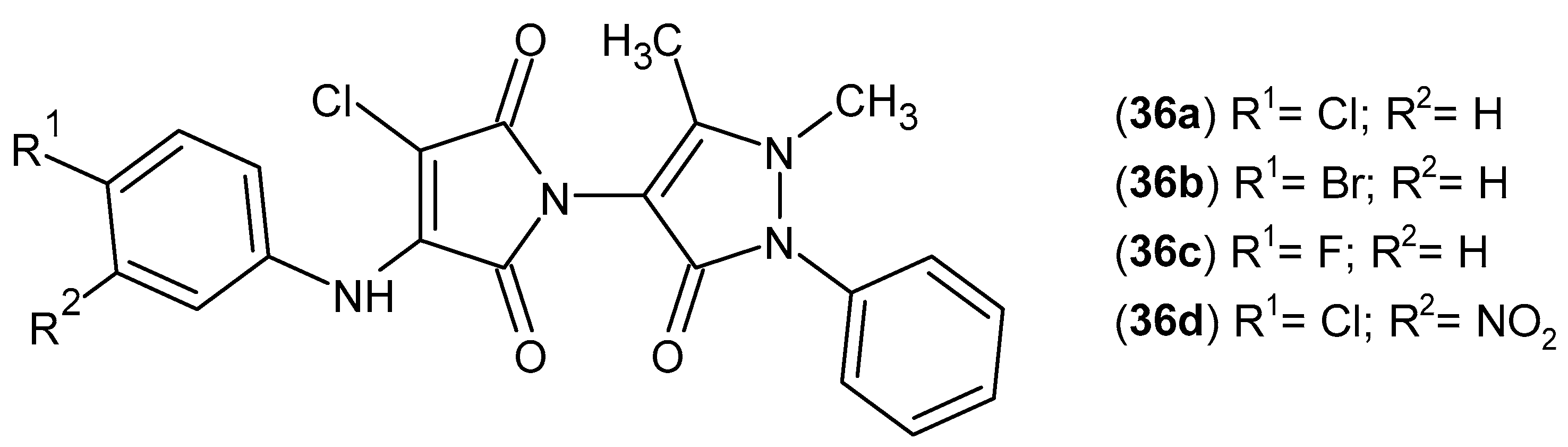
Figure 2. Cyclic imides are used as anti-inflammatory agents.
Pharmaceuticals 19 00457 g002
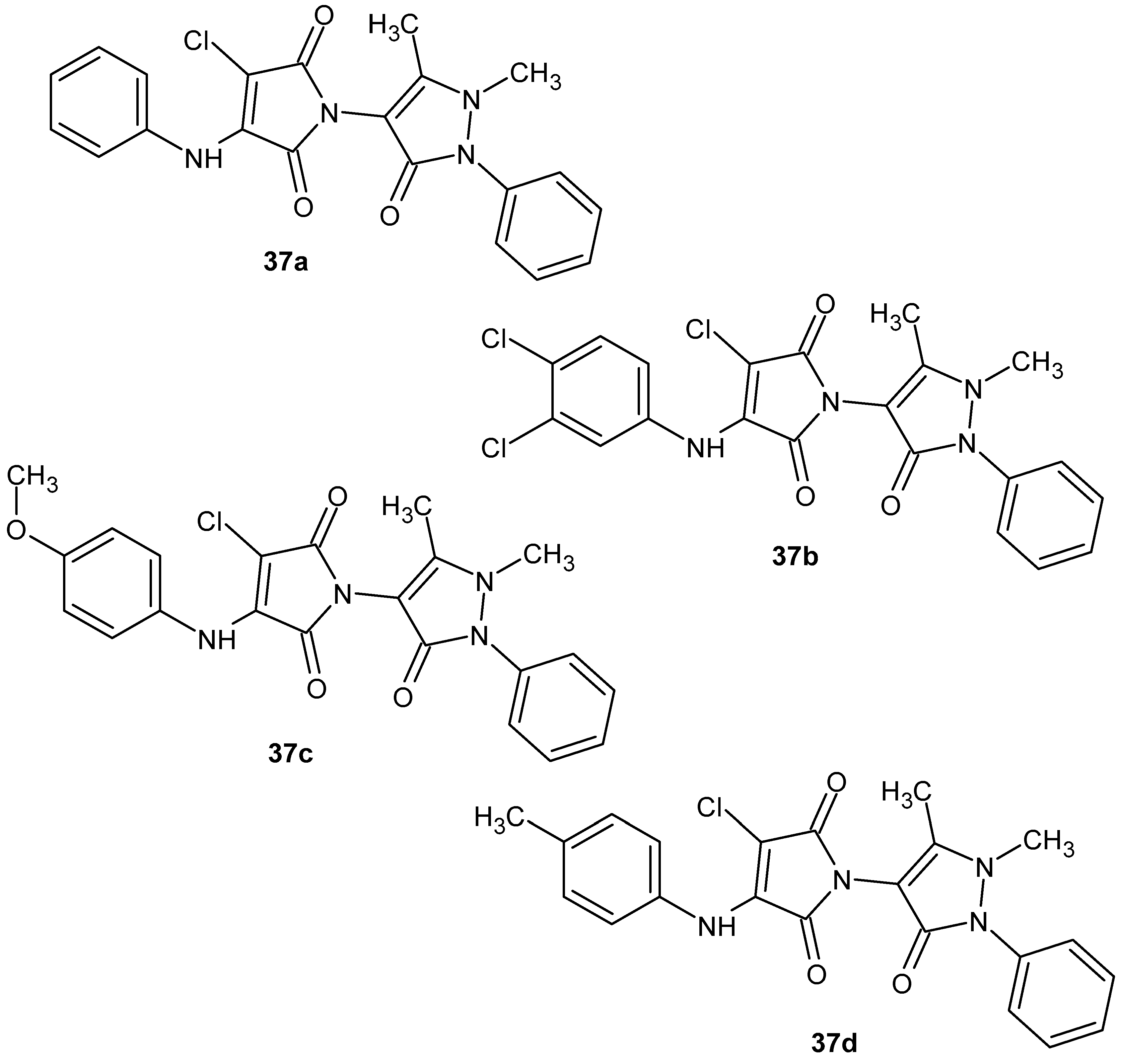
Figure 3. (E)-3-(3-bromo-4-ethoxy-5-((2,3,5-trichlorobenzyl)oxy)-benzylidene)pyrrolidine-2,5-dione 1 reported by Zhang et al. [36].
Pharmaceuticals 19 00457 g003
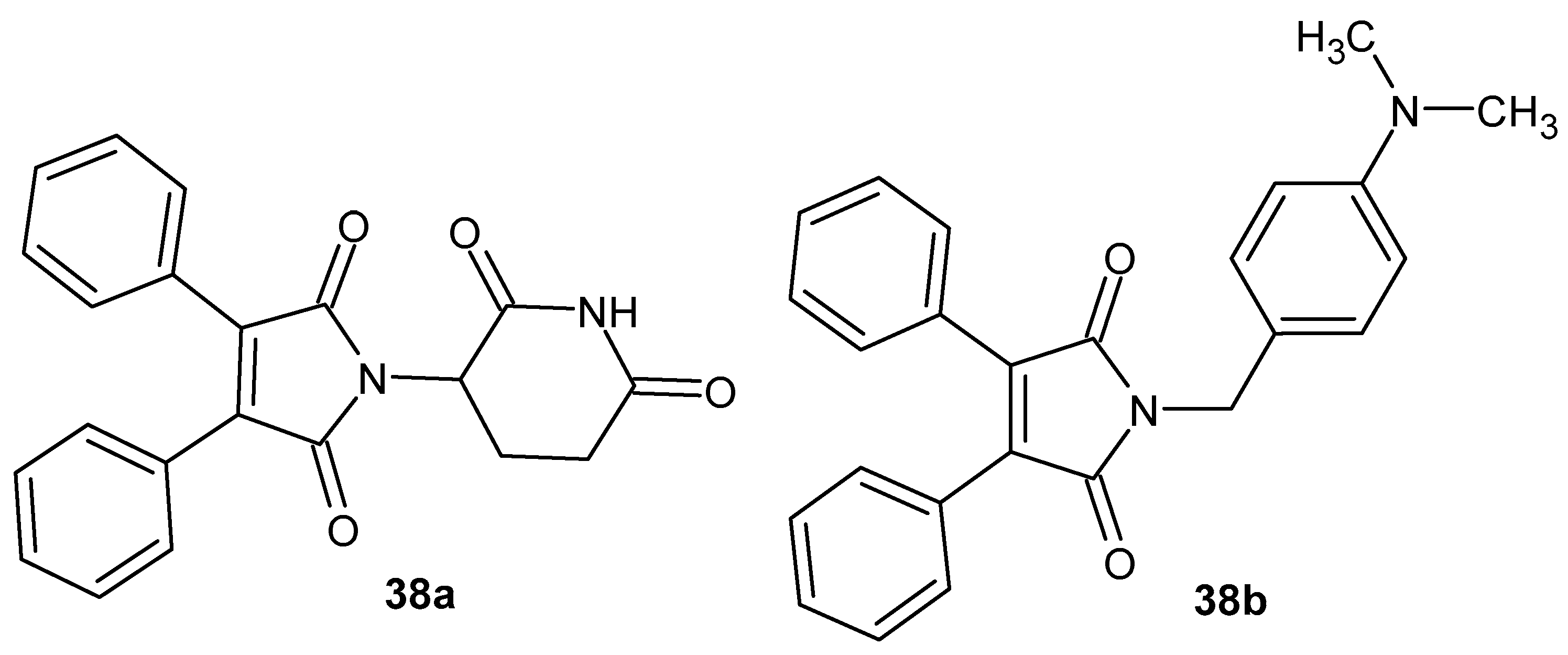
Figure 4. CXCR3 antagonists 2ad reported by Bata et al. [37].
Pharmaceuticals 19 00457 g004
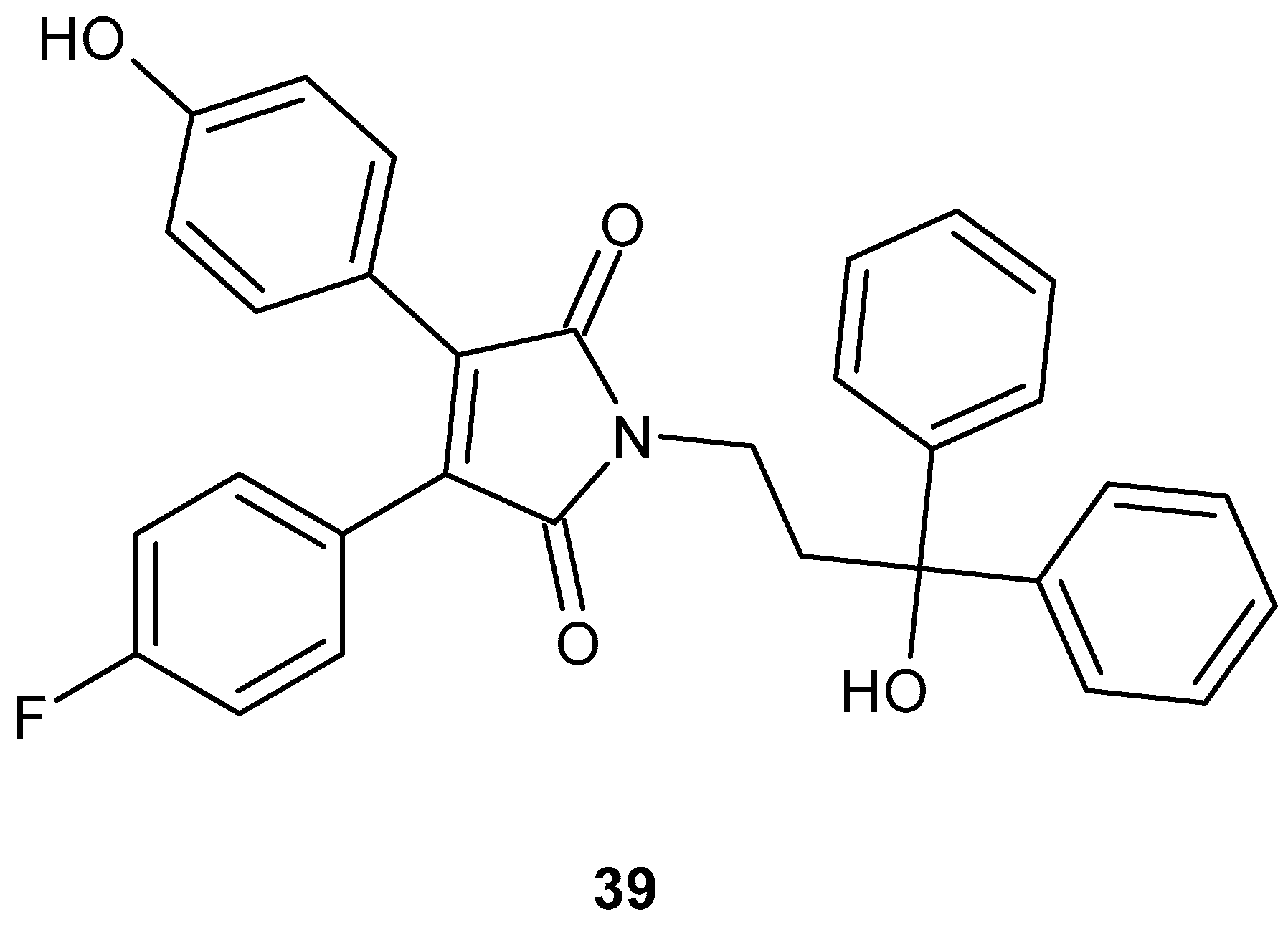
Figure 5. 3-(5-Fluoro-1H-indol-3-yl)pyrrolidine-2,5-dione 3 as hIDO-1 inhibitor reported by Crosignani et al. [38].
Pharmaceuticals 19 00457 g005
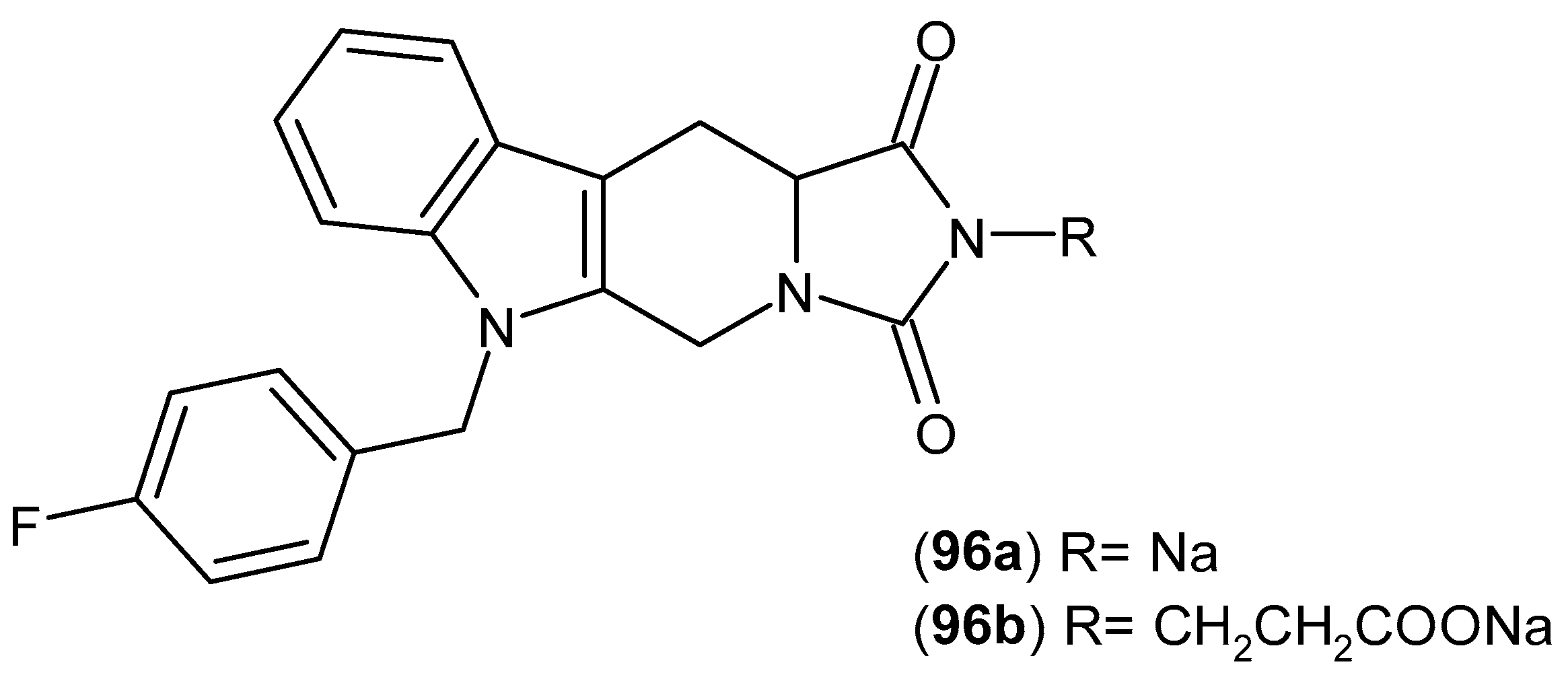
Figure 6. N-substituted pyrrolidine-2,5-dione derivatives 4ab reported by Jan et al. [39].
Pharmaceuticals 19 00457 g006
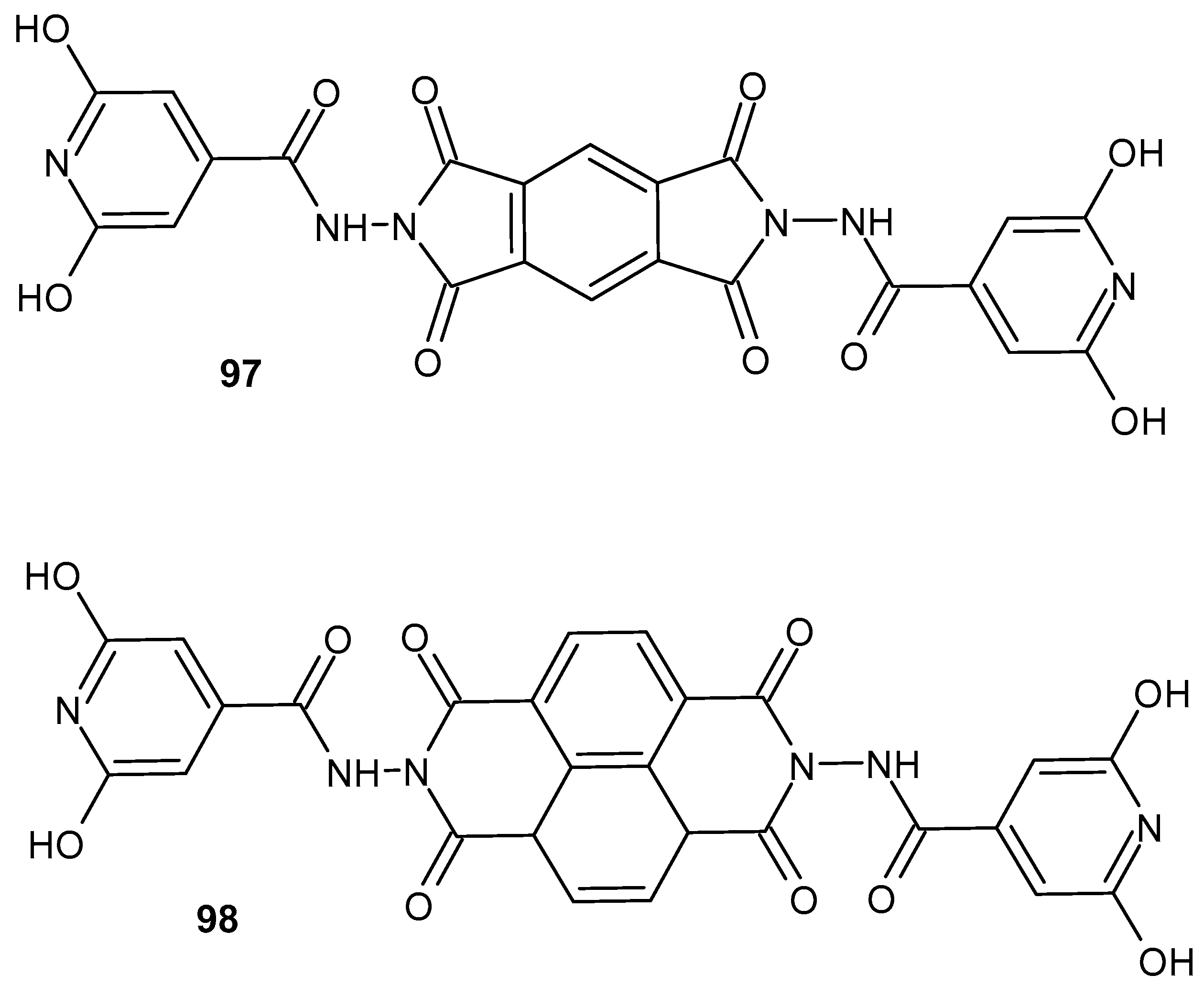
Figure 7. N-alkil-3-phenylpyrrolidine-2,5-dione derivatives 5ac reported by Sivakumar et al. [40].
Pharmaceuticals 19 00457 g007
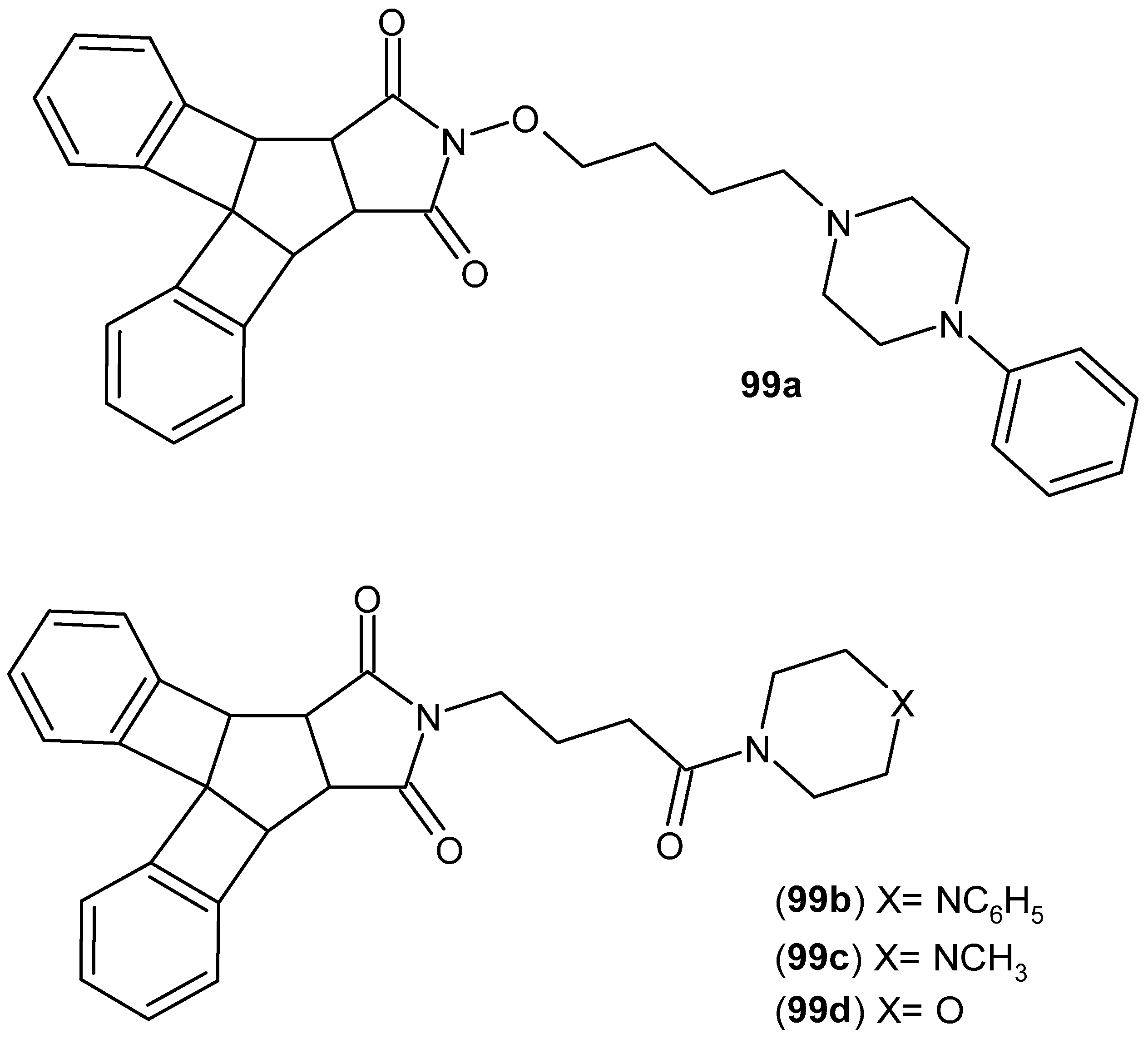
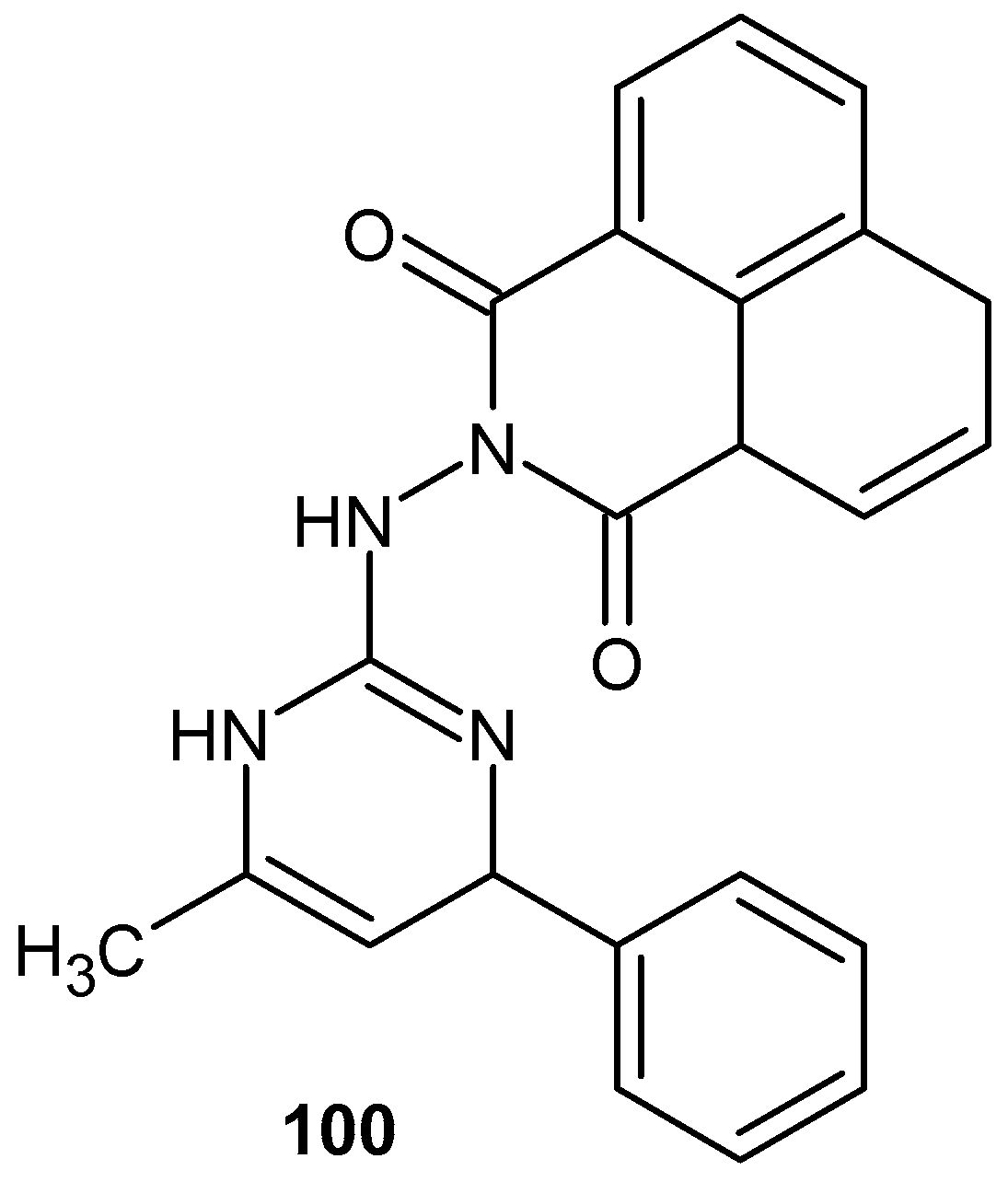
Figure 8. Quinazolinone derivatives with a glutarimide moiety 6ac reported by Abdallah et al. [41].
Pharmaceuticals 19 00457 g008
Figure 9. 3-((2,6-Dichloroquinazolin-4-yl)amino)piperidine-2,6-dione 7 reported by Abdallah et al. [42].
Pharmaceuticals 19 00457 g009
Figure 10. 9-Methylstreptimidone 8a and S632A3 8b reported by Ishikawa et al. [44].
Pharmaceuticals 19 00457 g010
Figure 11. Gladiofungins C 9a and E 9b reported by Chen et al. [46].
Pharmaceuticals 19 00457 g011
Figure 12. NK30424A/B 10ab and their sulfoxide derivatives, 11ab, reported by Takayasuet al. [47].
Pharmaceuticals 19 00457 g012
Figure 13. Structure of DTCM-G 12 reported by Ishikawa et al. [44].
Pharmaceuticals 19 00457 g013
Figure 14. 1-Methylhydantoin 13 and its derivatives, 14ad, reported by Xu et al. [51].
Pharmaceuticals 19 00457 g014
Figure 15. 1-Methylhydantoin cinnamic imides 15ae reported by Wang et al. [52].
Pharmaceuticals 19 00457 g015
Figure 16. 5,5-Diphenylimidazolidine-2,4-dione derivatives 16ae reported by Abdel-Aziz et al. [54].
Pharmaceuticals 19 00457 g016
Figure 17. 2-(2,5-Dioxoimidazolidin-4-yl)-N-(3-(4-nitrophenyl)-4-phenylthiazol-2(3H)-ylidene)acetamide 17 reported by Sondhi et al. [55].
Pharmaceuticals 19 00457 g017
Figure 18. (Z)-5-(1H-indole-3-ylmethylene) imidazolidine-2,4-dione 18 reported by Lin et al. [56].
Pharmaceuticals 19 00457 g018
Figure 19. 3-Amino-5-benzylimidazolidine-2,4-dione 19 reported by Mani et al. [57].
Pharmaceuticals 19 00457 g019
Figure 20. 3-Phenyl-5-(4-ethylphenyl)imidazolidine-2,4-dione 20 reported by De Queirozet al. [58].
Pharmaceuticals 19 00457 g020
Figure 21. Spirooxindolopyrrolidine-hydantoins 21ab reported by Toumi et al. [59].
Pharmaceuticals 19 00457 g021
Figure 22. Ro-32-3555 22 reported by Lewis et al. [63].
Pharmaceuticals 19 00457 g022
Figure 23. TACE inhibitors 2324 reported by Yu et al. [65].
Pharmaceuticals 19 00457 g023
Figure 24. 1H-3-(4-sulfamoylphenyl)-4-phenyl-pyrrole-2,5-dione 25 reported by Moon et al. [68].
Pharmaceuticals 19 00457 g024
Figure 25. Structure of 1-methyl-1H-pyrrole-2,5-dione derivative MPO-0029 26 reported by Kim et al. [70].
Pharmaceuticals 19 00457 g025
Figure 26. Maleimide derivatives containing a benzenesulfonamide moiety 27 were reported by Firke and Bari [71].
Pharmaceuticals 19 00457 g026
Figure 27. 3-(4-Hydroxyphenyl)-4-(4-thiomethoxyphenyl)-1H-pyrrole-2,5-dione 28 reported by Shin et al. [72].
Pharmaceuticals 19 00457 g027
Figure 28. N-phenylmaleimides 29 and 30 reported by Noldin et al. [73].
Pharmaceuticals 19 00457 g028
Figure 29. Structure of N-(carboxyheptyl)maleimide 31 reported by Kalgutkar et al. [74].
Pharmaceuticals 19 00457 g029
Figure 30. Chemical structure of U-73122 32 reported by Hou et al. [75].
Pharmaceuticals 19 00457 g030
Figure 31. Maleimide derivatives 33a and 33b reported by Zhang et al. [77].
Pharmaceuticals 19 00457 g031
Figure 32. 3,4-dimethyl-1H-pyrrole-2,5-dione derivatives 34 reported by Paprocka et al. [78].
Pharmaceuticals 19 00457 g032
Figure 33. NA-3,4-DCM 35 reported by De Campos et al. [79].
Pharmaceuticals 19 00457 g033
Figure 34. N-antipyrine-3,4-dichloromaleimides 36ad reported by Mahle et al. [81].
Pharmaceuticals 19 00457 g034
Figure 35. N-antipyrine–3,4-dichloromaleimide derivatives 37ad reported by Fratoni et al. [82].
Pharmaceuticals 19 00457 g035
Figure 36. Structure of maleimide derivatives 38a and 38b reported by Jung et al. [83].
Pharmaceuticals 19 00457 g036
Figure 37. Structure of compound 39 reported by Yuan et al. [84].
Pharmaceuticals 19 00457 g037
Figure 38. Structure and pharmacological activity of compound 40 and ezetimibe reported by Yuan et al. [85].
Pharmaceuticals 19 00457 g038
Figure 39. 3-(4-Fluorophenyl)-1-[(3S)-3-hydroxy-3-(4-hydroxyphenyl)propyl]-4-(4-hydroxyphenyl)-1H-pyrrole-2,5-dione 41 reported by Xia et al. [86].
Pharmaceuticals 19 00457 g039
Figure 40. Maleimide derivative SB216763 42 reported by Saleh et al. [87].
Pharmaceuticals 19 00457 g040
Figure 41. Structures of asperimides A-D 43ad reported by Liao et al. [88].
Pharmaceuticals 19 00457 g041
Figure 42. Maleimide derivatives 44a and 44b were isolated from the mycelium of the fungus Antrodia cinnamomea [90].
Pharmaceuticals 19 00457 g042
Figure 43. 1-(4-chlorobenzyl)-3-chloro-4-(trifluoromethylphenylamino)-1H-pyrrol-2,5-dione (MI-1) 45 reported by Kuznietsova et al. [91].
Pharmaceuticals 19 00457 g043
Figure 44. Structure of complex 45/M5 reported by Kotlyar et al. [93].
Pharmaceuticals 19 00457 g044
Figure 45. Structure of maleimide derivative 46 (DAB-1) reported by Hamelin-Morrissette et al. [95].
Pharmaceuticals 19 00457 g045
Figure 46. Structure of DAB-1 46 and its derivatives 47af reported by Oufqir et al. [96].
Pharmaceuticals 19 00457 g046
Figure 47. Derivatives maleimide with varied acylation patterns on the hydrazide core 48ac reported by Cloutier et al. [98].
Pharmaceuticals 19 00457 g047
Figure 48. DAB-1 hydrazide derivatives 49a and 49b reported by Cloutier et al. [99].
Pharmaceuticals 19 00457 g048
Figure 49. Structure of maleimide derivatives 50aj reported by Jaye et al. [100].
Pharmaceuticals 19 00457 g049
Figure 50. Tetrafluorophthalimide derivatives 51ab reported by Colina et al. [101].
Pharmaceuticals 19 00457 g050
Figure 51. 2-[4-(1,4-Thiazinan-4-ylsulfonyl)phenyl]-1,3-isoindoline dione 52 reported by Lima et al. [102].
Pharmaceuticals 19 00457 g051
Figure 52. N-alkilophthalimide derivatives 53ab reported by Batista et al. [103].
Pharmaceuticals 19 00457 g052
Figure 53. 1,3-Dioxo-2-(4-sulfamoylphenethyl)isoindole-5-carboxylic acid 54 reported by Abdel-Azis et al. [104].
Pharmaceuticals 19 00457 g053
Figure 54. 4-Phenyl-1-[4-(phthalimido-4-yl)butyl]-1H-1,2,3-triazole 55 reported by Assis et al. [105].
Pharmaceuticals 19 00457 g054
Figure 55. Isoindoline-1,3-dione derivatives 56ac reported by Szkatuła et al. [106].
Pharmaceuticals 19 00457 g055
Figure 56. 1-(3-(1,3-Dioxoisoindolin-2-yl)propyl)-4,6-dimethyl-2-oxo-1,2-dihydropyridine-3-carbonitrile 57 reported by Singh et al. [107].
Pharmaceuticals 19 00457 g056
Figure 57. Glucocorticoid derivatives 58ab reported by Machado et al. [108].
Pharmaceuticals 19 00457 g057
Figure 58. 2-(1-([1,1′-Biphenyl]-3-ylmethyl)-5-nitro-1H-benzo[d]imidazol-2-yl)isoindoline-1,3-dione 59 reported by Kaur et al. [109].
Pharmaceuticals 19 00457 g058
Figure 59. 2-[1-(3-Chlorobenzyl)-2,6-dioxopiperidin-3-yl]isoindoline-1,3-dione 60 reported by Tang et al. [110].
Pharmaceuticals 19 00457 g059
Figure 60. N-heptyl-3,5-dihydroxyphthalimide 61 reported by Bach et al. [111].
Pharmaceuticals 19 00457 g060
Figure 61. 4-Hydroxy-2-(4-hydroxyphenethyl)isoindoline-1,3-dione 62 reported by Xiao et al. [112].
Pharmaceuticals 19 00457 g061
Figure 62. 2-Hydroxy-3-(4-aryl-1-piperazinyl)propylphthalimide derivatives 63a–d reported by Dziubina et al. [116].
Pharmaceuticals 19 00457 g062
Figure 63. 4,5,6,7-Tetrafluoro-2-(4-(thiomorpholinosulfonyl)phenyl) isoindoline-1,3-dione 64 reported by Barbosa et al. [117].
Pharmaceuticals 19 00457 g063
Figure 64. 4-(Nʹ-{1-[4-(1,3-Dioxo-1,3-dihydro-isoindol-2-yl)-phenyl]-ethylidene}-hydrazino)-benzenesulfonamide 65 reported by Lamie et al. [118].
Pharmaceuticals 19 00457 g064
Figure 65. N-phenyl-phthalimide derivatives 66ac reported by Perveen and Orfali [119].
Pharmaceuticals 19 00457 g065
Figure 66. 5-Nitro-2-(3,4,5-trimethoxyphenyl)isoindoline-1,3-dione 67 reported by Abdel-Azis et al. [120].
Pharmaceuticals 19 00457 g066
Figure 67. 3/4-(1,3-Dioxo-1,3-dihydro-2H-isoindol-2-yl)benzyl nitrates 68ab reported by Santos et al. [121].
Pharmaceuticals 19 00457 g067
Figure 68. 3-[4-(1H-4-methylbenzimidazol-2-yl)-2-hydroxyphenyl]-1-N-ethoxyphthalimido-5-(arylidene)-2-phenyl-1,3-thiazolidin-4-one derivatives 69ad reported by Kumar et al. [122].
Pharmaceuticals 19 00457 g068
Figure 69. 2-[2-(2-Bromo-1-ethyl-1H-indol-3-yl) ethyl]-1H-isoindole-1,3(2H)-dione 70 reported by El-Aaraga et al. [123].
Pharmaceuticals 19 00457 g069
Figure 70. 1,2,3-Triazolophthalimide derivatives 71af reported by Assis et al. [124].
Pharmaceuticals 19 00457 g070
Figure 71. Phthalimide derivatives 72ah reported by Labib et al. [125].
Pharmaceuticals 19 00457 g071
Figure 72. 2-Nitrophenylphthalimide 73 reported by Assis et al. [126].
Pharmaceuticals 19 00457 g072
Figure 73. Monoterpenoid fluorophthalimides 74ad reported by Luo et al. [127].
Pharmaceuticals 19 00457 g073
Figure 74. Schiff bases of phenylphthalimides 75ab reported by Bhat et al. [128].
Pharmaceuticals 19 00457 g074
Figure 75. 5-Nitroisoindoline-1,3-dione derivatives 76ab reported by Abdel-Aziz et al. [54].
Pharmaceuticals 19 00457 g075
Figure 76. 5-[3-(1,3-dioxo-1,3-dihydro-isoindol-2-yl)-propoxy]-3-methyl-1-phenyl-1H-pyrazole 4-carboxylic acid methyl ester 77 reported by Shrivastava et al. [129].
Pharmaceuticals 19 00457 g076
Figure 77. 3-[(Pyridin-4-yl)methyl]-1H-3-benzazepine-2,4(3H,5H)-dione 78 reported by Sondhi et al. [130].
Pharmaceuticals 19 00457 g077
Figure 78. Pyrrolopyrrole-2,5-dione derivatives 79ac reported by Redzicka et al. [131].
Pharmaceuticals 19 00457 g078
Figure 79. Pyrrolopyrrole-2,5-dione derivatives 80ac reported by Szczukowski et al. [132].
Pharmaceuticals 19 00457 g079
Figure 80. Butyl derivatives of pyrrolo[3,4-c]pyrrole-1,3(2H,5H)-diones 81a and 81b reported by Redzicka et al. [133].
Pharmaceuticals 19 00457 g080
Figure 81. 5-(1,3-Diokso-1,3-dihydro-2H-pirolo[3,4-c]pirydyn-2-ylo)-2-{[(4′-chloro[1,1′-bifenyl]-4-ylo)sulfanylo]metylo}-N-hydroksypentanamid 82 reported by Chollet et al. [135].
Pharmaceuticals 19 00457 g081
Figure 82. 2-(tetrahydrofuran-2-ylmethyl)-2H-pyrrolo[3,4-c]pyridine-1,3-dione 83 reported by Sondhi et al. [136].
Pharmaceuticals 19 00457 g082
Figure 83. Derivatives of 1H-pyrrolo[3,4-c]pyridine-1,3(2H)-diones 84a and 84b reported by Dziubina et al. [137].
Pharmaceuticals 19 00457 g083
Figure 84. 44-Methoxy–N-[2-(N-morpholine)-ethyl]-6-methyl-1H-[pyrrolo[3.4-c]pyridine-1,3(2H)-dione 85 reported by Krzyżak et al. [138].
Pharmaceuticals 19 00457 g084
Figure 85. N’-(5,7-dioxo-5,7-dihydro-6H-pyrrolo[3,4-b]pyrazin-6-yl)pyridine-2-carboximidamide 86 reported by Kumar et al. [139].
Pharmaceuticals 19 00457 g085
Figure 86. NitrosporeusineA87 isolated by Yang et al. [140].
Pharmaceuticals 19 00457 g086
Figure 87. Cyclopenta[c]pyrrolidinodione derivative compounds 88ac reported by Philkhana et al. [143].
Pharmaceuticals 19 00457 g087
Figure 88. 6-(Dodecylamino)-2-(3(4-methylpiperazin-1-yl)propyl)-1H-benzo-[de]isoquinoline-1,3(2H)-dione 89 reported by Shao et al. [144].
Pharmaceuticals 19 00457 g088
Figure 89. Naphthalimide derivatives 9091 reported by Begam et al. [145].
Pharmaceuticals 19 00457 g089
Figure 90. 1,2,4-Triazole–1,8-naphthalimide derivatives 92af reported by Korol et al. [146].
Pharmaceuticals 19 00457 g090
Figure 91. Naphthalimide and aspirin derivative 93 reported by Xia et al. [147].
Pharmaceuticals 19 00457 g091
Figure 92. Prodrug 94 reported by Wang et al. [148].
Pharmaceuticals 19 00457 g092
Figure 93. 9,10-α,β-succinimide derivatives 95ad reported by Arya et al. [149].
Pharmaceuticals 19 00457 g093
Figure 94. PAT compounds 96ab as ATX inhibitors reported by Stein et al. [150].
Pharmaceuticals 19 00457 g094
Figure 95. Policyclicbisimides 97 and 98 reported by Al-Omar et al. [151].
Pharmaceuticals 19 00457 g095
Figure 96. Benzeno-1H-benzo[f]isoindole-1,3(2H)-dione derivatives 99ad reported by Al-Omar et al. [151].
Pharmaceuticals 19 00457 g096
Figure 97. 2-(6-Methyl-4-phenyl-1,4-dihydro-pyrimidin-2-ylamino)-benzo[de]isoquinoline-1,3-dione 100 reported by Said et al. [152].
Pharmaceuticals 19 00457 g097
Figure 98. (4S)-17-Hydroxybrevianamide N derivative 101 reported by Zhou et al. [153].
Pharmaceuticals 19 00457 g098
Table 1. Classification of cyclic imide derivatives according to their principal molecular mechanisms of anti-inflammatory action.
Principal Molecular Target/PathwayRepresentative CompoundsBiological EffectExperimental Model
Kinase-mediated signaling (Syk, GSK-3, MAPK)1, 42, 101Inhibition of pro-inflammatory kinase signaling; IL-6, MMP-3, MAPK activationIn vitro; cellular models
Chemokine receptor modulation (CXCR3)/ (CXCL)2ad, 18CXCR3/CXCL
antagonism
Receptor assay
IDO pathway (hIDO-1)3Immunomodulatory activity via IDO inhibitionEnzymatic
Cyclooxygenase pathway (COX-1/COX-2)4ab, 6ac, 7, 16ae, 27ae, 53, 56ac, 57, 59, 63ac, 67, 72d,
75ab, 76ab, 77,
79ac, 81ab, 84ab, 85, 88ac, 89, 90ad, 93
Selective or dual COX inhibition; reduction of PGE2 levelEnzymatic; cellular; in vivo edema models
Lipoxygenase pathway (5-LOX/15-LOX)21ab, 59, 79ac,
80ac, 81b
LOX inhibition; attenuation of eicosanoid signalingEnzymatic; cellular
NF-κB signaling axis8ab, 18, 35, 36a, 38b, 47a, 65, 70, 88ac, 101Suppression of NF-κB activation; inflammatory gene transcriptionLPS-stimulated cellular models
NO/iNOS pathway9ab, 12, 18, 35, 36a, 37ad, 38ab, 44ab, 49ab, 61, 62, 68ab,
70, 101
Inhibition of NO production; reduction
of iNOS expression
Macrophage models; in vivo
Cytokine modulation (TNF-α, IL-6, IL-1β)6ad, 7, 8, 11ab, 15b, 15d, 20, 33ab, 34, 39, 41, 47a, 50aj, 52, 60, 62, 64, 70, 74a-d, 92a, 92d, 101Suppression of pro-inflammatory cytokinesCellular; in vivo inflammation models
Matrix metalloproteinases (MMPs)22, 47a, 82MMP inhibition; reduced tissue degradationEnzymatic assays
TACE inhibition23ab, 24aeModulation of TNF-α maturationEnzymatic assays
Autotaxin (ATX)96abATX inhibitionEnzymatic assay
Nuclear receptor modulation (LXRα/β, PPAR-γ)50aj, 62Transcriptional anti-inflammatory regulationCellular; in vivo
Multikinase/STAT signaling46, 47aDownregulation of cytokine signaling and oxidative stressCellular; in vivo
In vivo anti-inflammatory activity (target not specified)17, 51ab, 55, 69ad, 71af, 78, 100Reduction of edema and/or inflammatory activityCarrageenan-induced paw edema;
pain models
Disclaimer/Publisher’s Note: The statements, opinions and data contained in all publications are solely those of the individual author(s) and contributor(s) and not of MDPI and/or the editor(s). MDPI and/or the editor(s) disclaim responsibility for any injury to people or property resulting from any ideas, methods, instructions or products referred to in the content.