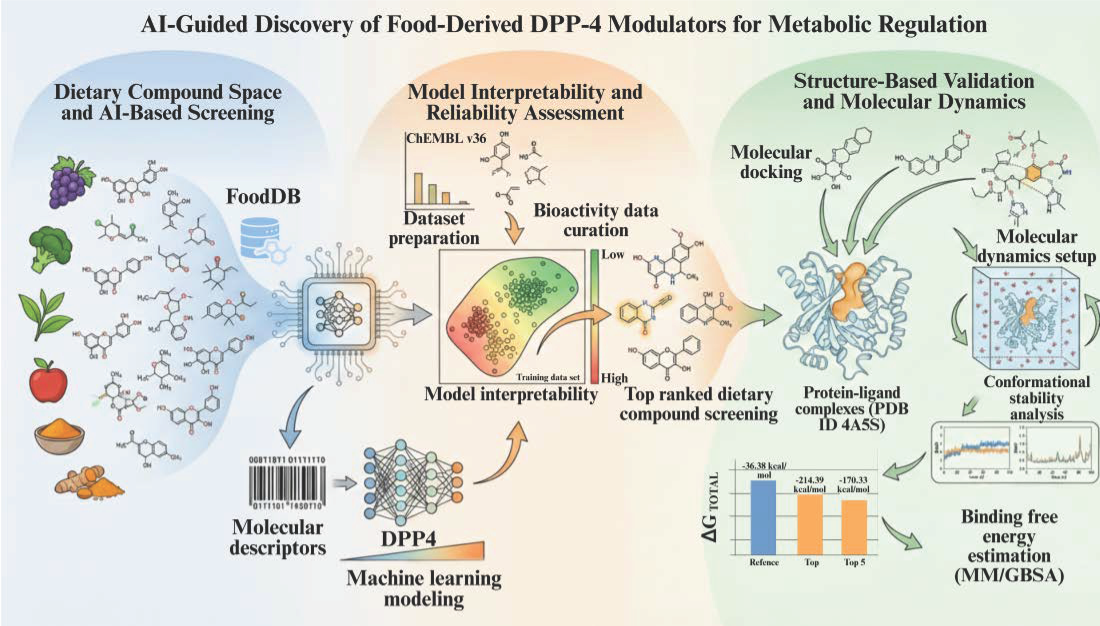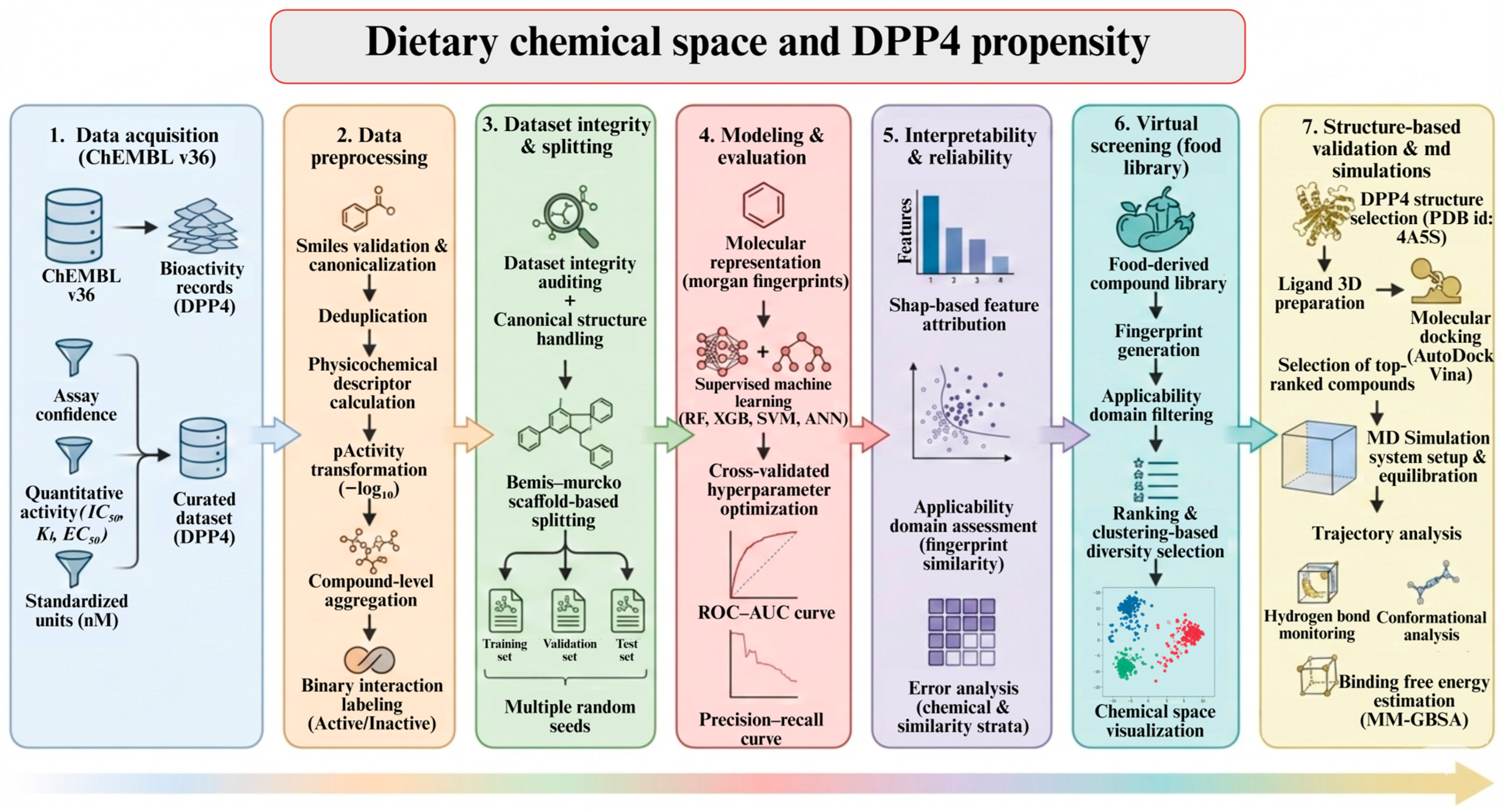
Machine Learning Exploration of Food-Derived Chemical Space for Potential Nutritional Metabolic Regulators Targeting Dipeptidyl Peptidase-4

Abstract
1. Introduction
2. Results
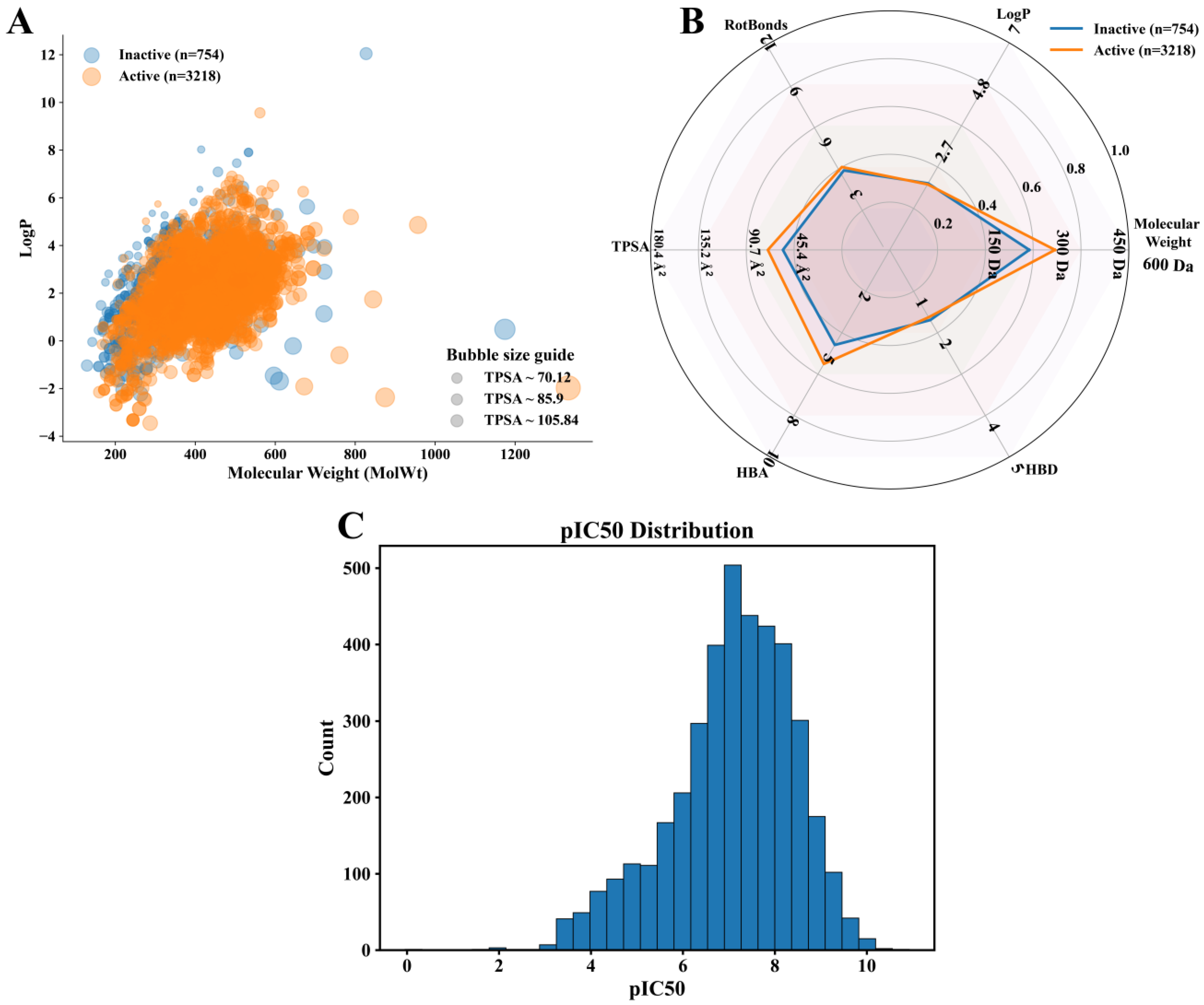
2.1. Assembly and Physicochemical Characterization of the DPP4 Bioactivity Dataset
2.2. Scaffold-Based Partitioning and Dataset Composition Across Independent Split Seeds
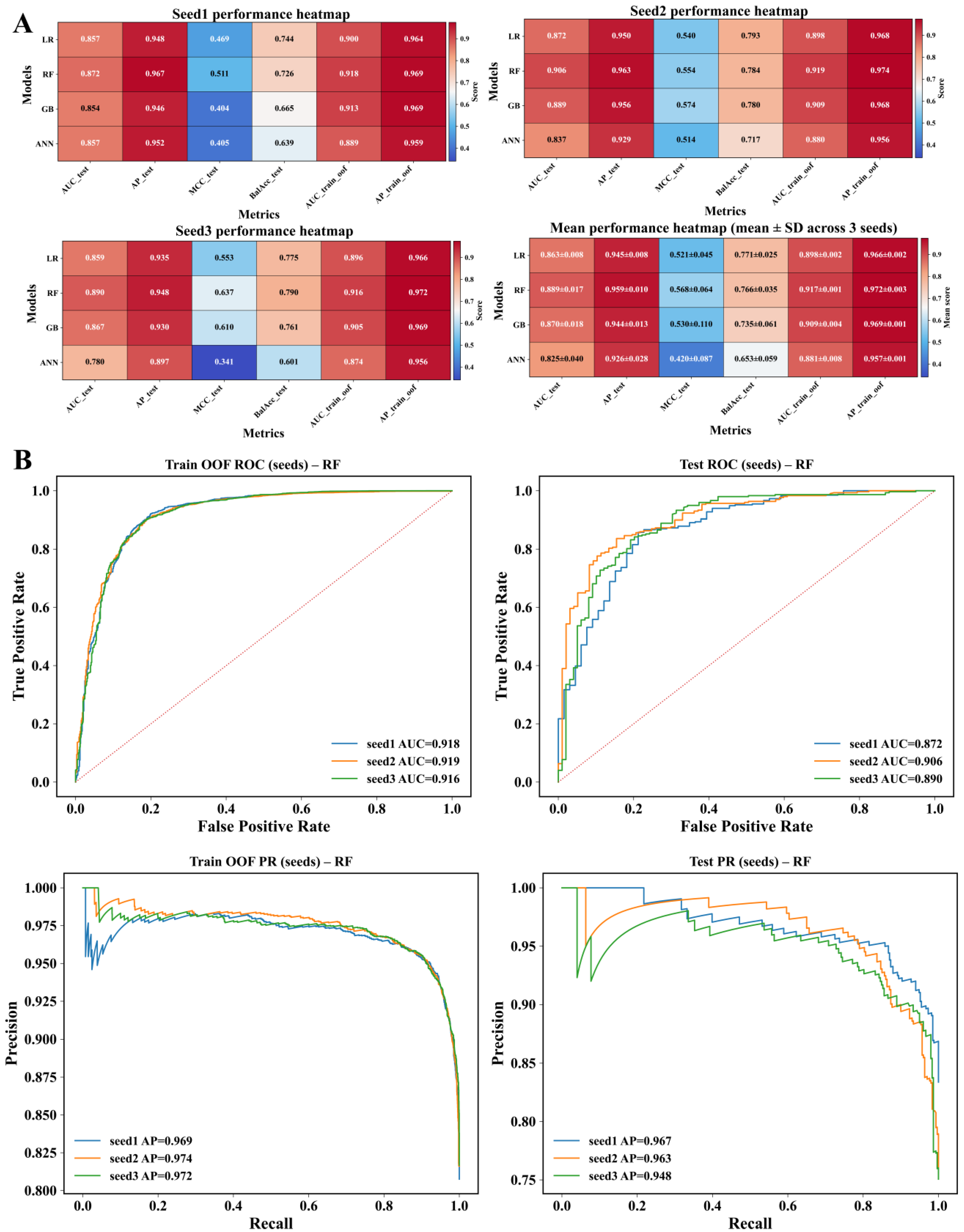
2.3. Supervised Classification Performance Under Scaffold-Based Evaluation
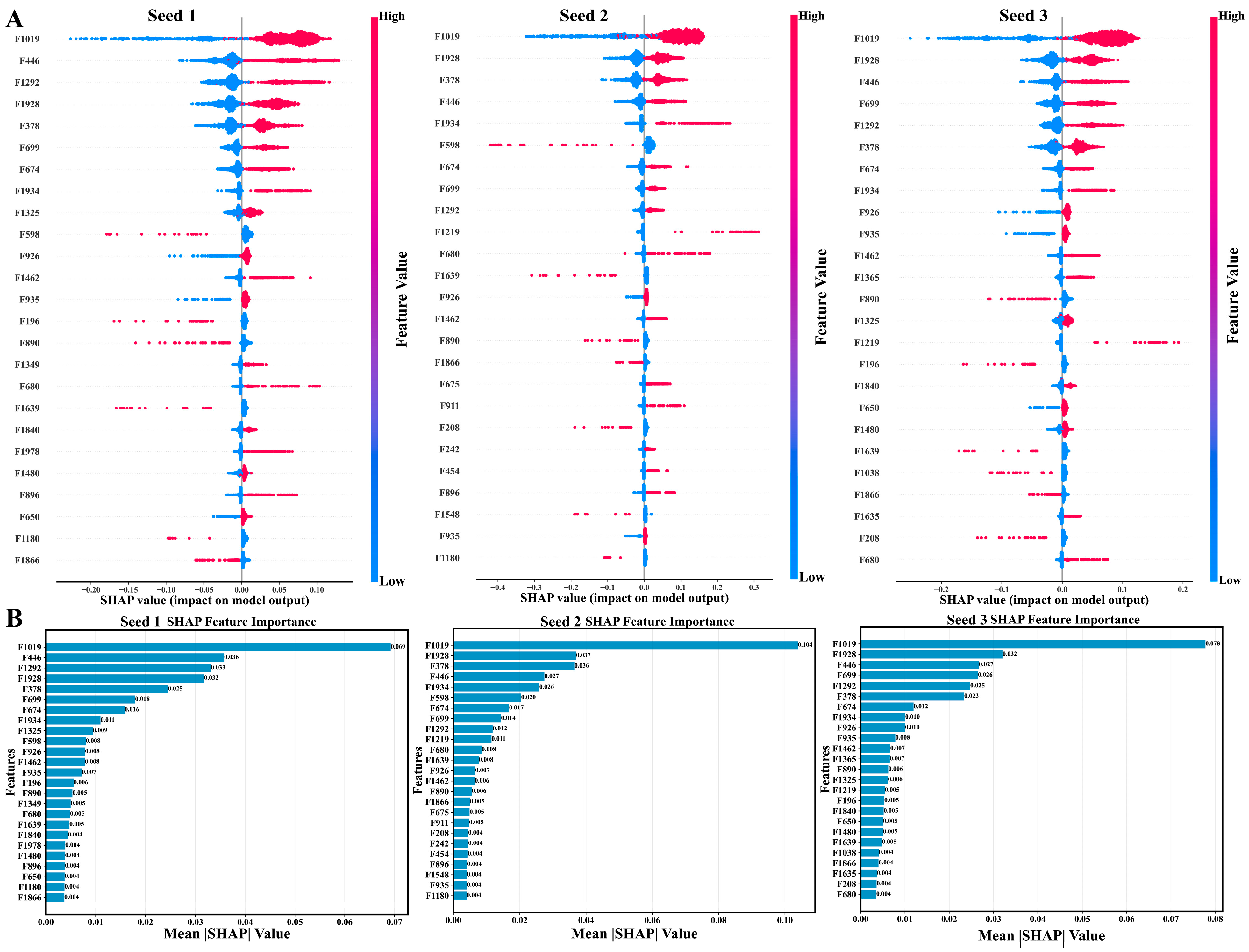
2.4. Structural Interpretation of the Top-Performing Model Through Substructure and Shape Analysis
2.5. Performance Stratification by Scaffold Frequency and Calibration Analysis
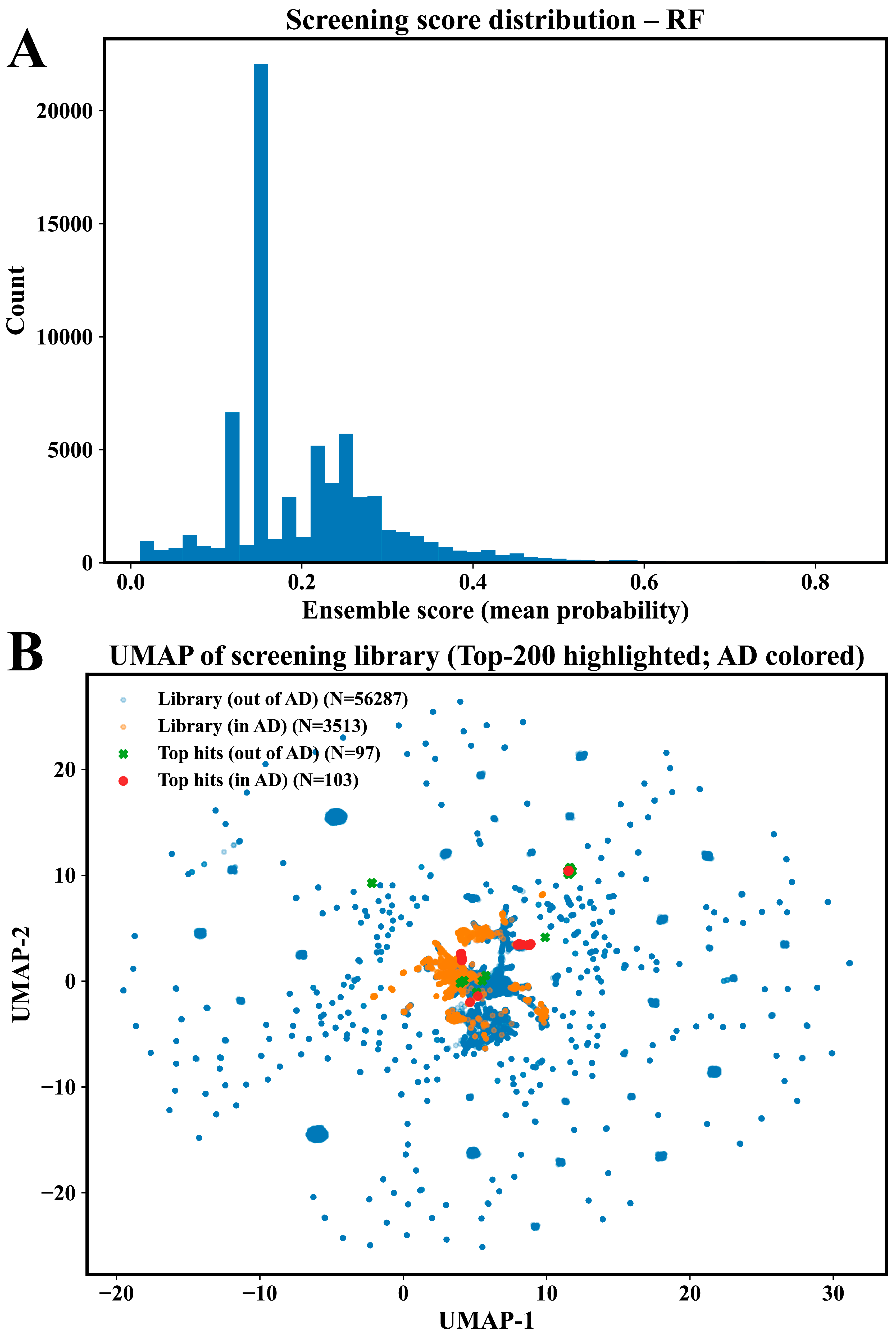
2.6. Screening and Prioritization of Food-Derived Compounds
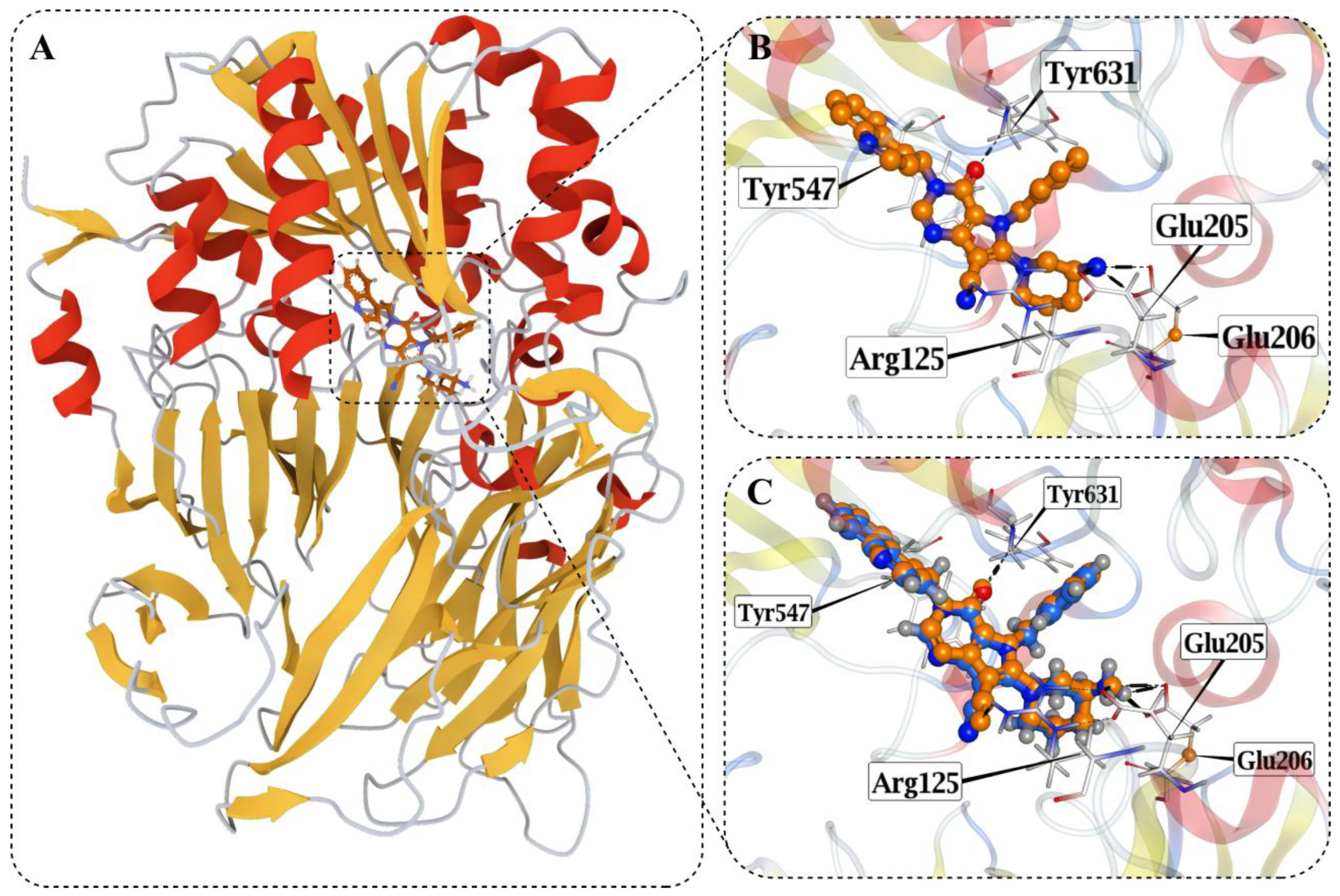
2.7. Selection of the Reference Crystal Structure and Validation of the Docking Protocol
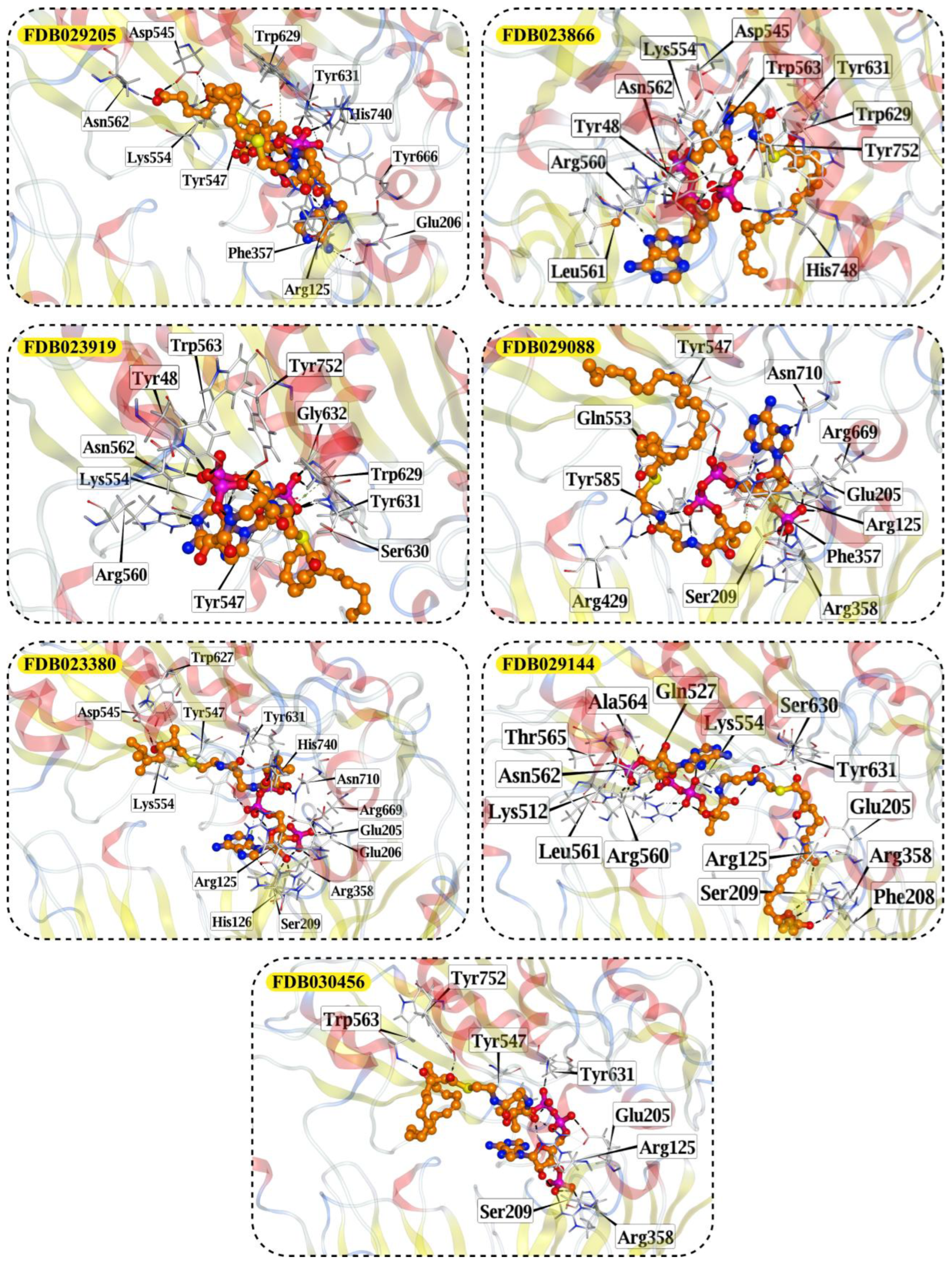
2.8. Prioritization of Food-Derived Compounds Based on Predicted Interaction Propensity
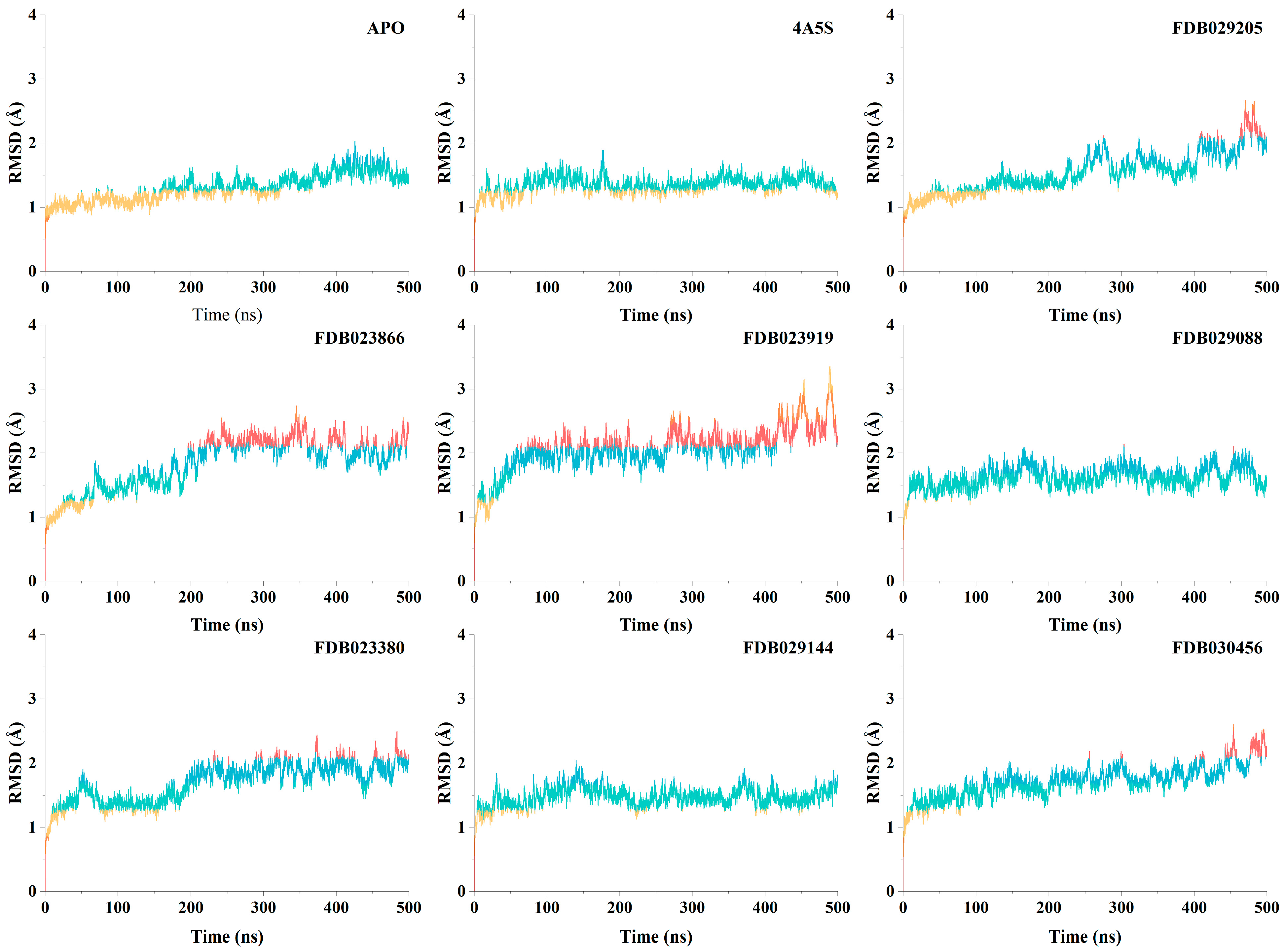
2.9. Conformational Stability of DPP4 Systems Assessed by Molecular Dynamics Simulations
2.10. Residue-Level Flexibility Analysis During Molecular Dynamics Simulations
2.11. Protein Compactness During Molecular Dynamics Simulations
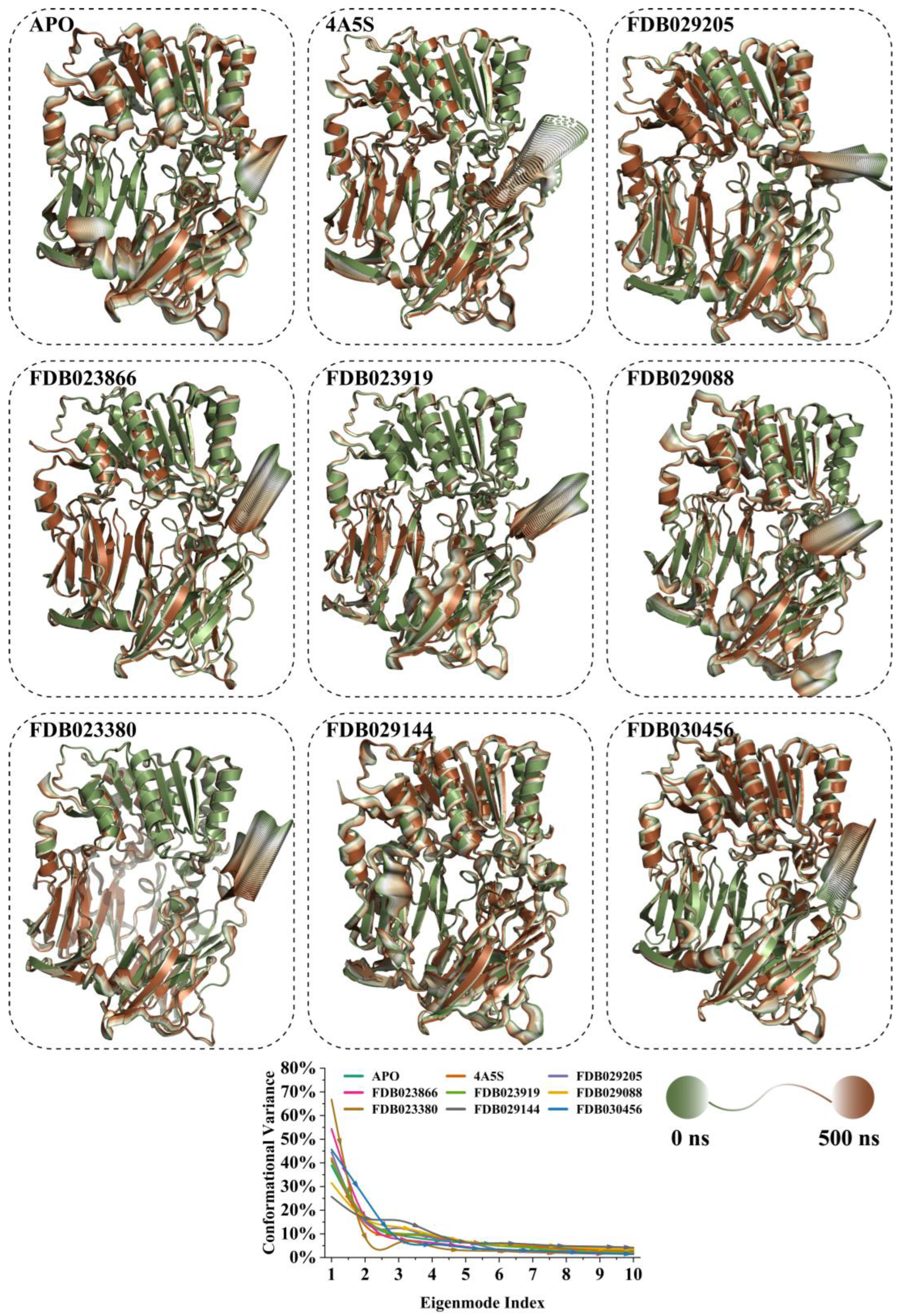
2.12. Collective Motions and Dominant Conformational Variability Revealed by Principal Component Analysis
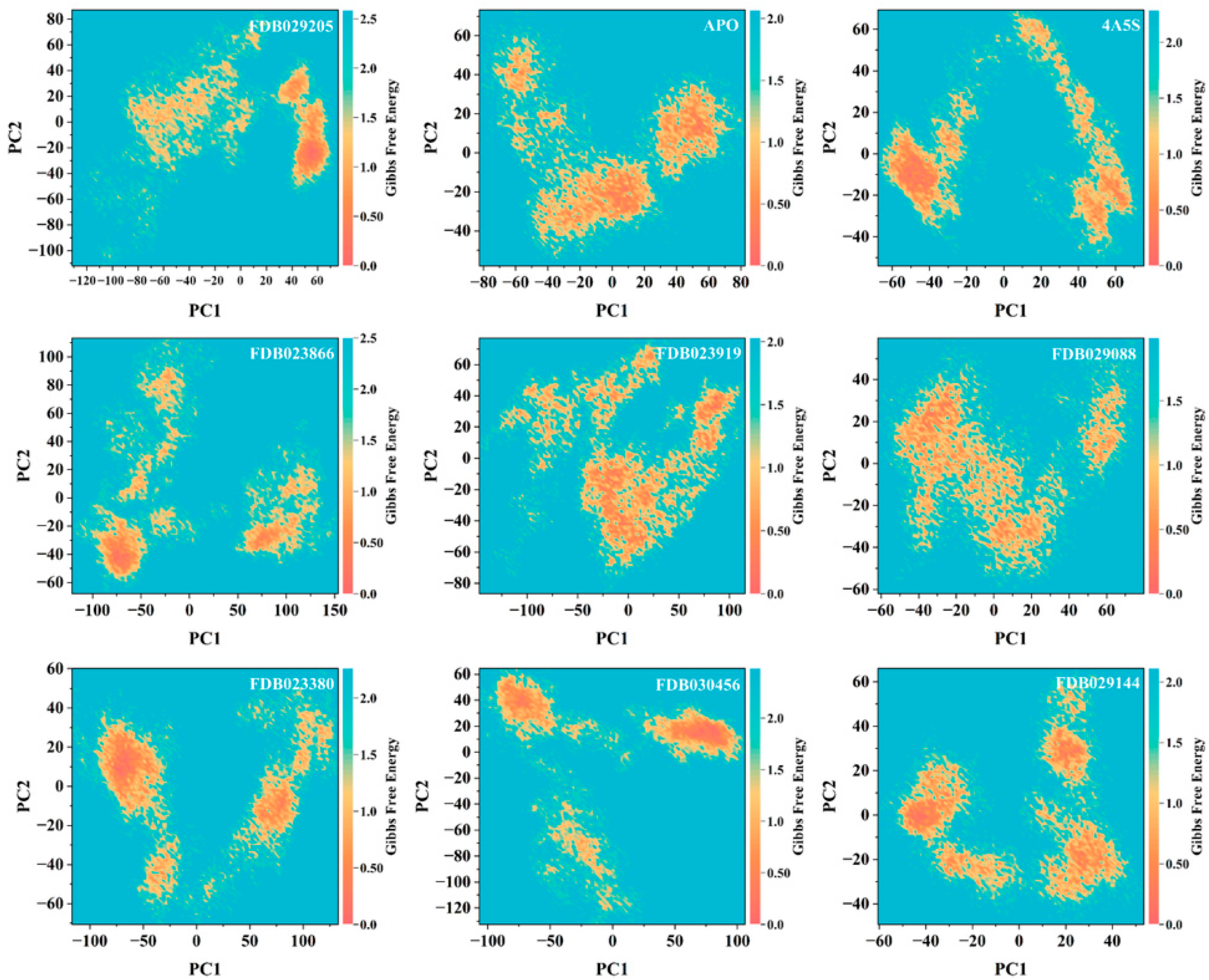
2.13. Free Energy Landscape of Dominant Conformational States
2.14. Hydrogen Bond Persistence Analysis
2.15. MM-GBSA Binding Free Energy Analysis
3. Discussion
4. Materials and Methods
4.1. ChEMBL Bioactivity Curation for DPP4 Interaction Potential Modeling
4.2. Post-Processing of DPP4 Interaction Annotations and Physicochemical Characterization
4.3. Dataset Integrity Auditing and Canonicalization
4.4. Scaffold-Based Data Splitting
4.5. Molecular Representation and Model Training
4.6. Models and Hyperparameter Search Spaces
4.7. Model Selection, Prediction, and Performance Assessment
4.8. Aggregation Across Scaffold Split Seeds
4.9. Applicability Domain Analysis by Fingerprint Similarity
4.10. Error Analysis by Similarity, Physicochemical Strata, and Scaffold Frequency
4.11. Model Interpretability Using SHAP
4.12. Structural Interpretation and Substituent Analysis
4.13. Calibration Analysis and Decision Threshold Selection
4.14. Preparation of the Food-Derived Screening Library
4.15. Fingerprint Generation for Food-Derived Screening Compounds
4.16. Virtual Screening, Applicability Domain Filtering, and Post-Screening Analysis
4.17. Protein Structure Selection and Preparation
4.18. Ligand 3D Preparation for Docking
4.19. Molecular Docking
4.20. Molecular Dynamics Simulations
4.21. Trajectory Processing and Alignment
4.21.1. Structural Stability and Conformational Flexibility
4.21.2. Essential Dynamics and Conformational Sampling
4.21.3. Free Energy Landscape Analysis
4.21.4. Protein–Ligand Hydrogen Bond Analysis
4.21.5. Binding Free Energy Estimation
4.21.6. Data Analysis and Modeling
5. Conclusions
6. Limitations and Outlook
Supplementary Materials
Funding
Institutional Review Board Statement
Informed Consent Statement
Data Availability Statement
Acknowledgments
Conflicts of Interest
Abbreviations
| AD | Applicability Domain |
| AUC | Area Under the Receiver Operating Characteristic Curve |
| ANN | Artificial Neural Network |
| AP | Average Precision |
| BalAcc | Balanced Accuracy |
| CoA | Coenzyme A |
| CPPTRAJ | Coordinate Processing and Trajectory Analysis |
| DPP4 | Dipeptidyl Peptidase-4 |
| ECFP | Extended-Connectivity Fingerprints |
| EC50 | Half Maximal Effective Concentration |
| GB | Gradient Boosting |
| GBSA | Generalized Born Surface Area |
| HBD | Hydrogen Bond Donor |
| HBA | Hydrogen Bond Acceptor |
| IC50 | Half Maximal Inhibitory Concentration |
| Ki | Inhibition Constant |
| Kd | Dissociation Constant |
| LogP | Octanol–Water Partition Coefficient |
| LR | Logistic Regression |
References
- Boutari, C.; Bouzoni, E.; Joshi, A.; Stefanakis, K.; Farr, O.M.; Mantzoros, C.S. Metabolism updates: New directions, techniques, and exciting research that is broadening the horizons. Metab.-Clin. Exp. 2020, 102, 154009. [Google Scholar] [CrossRef]
- Theodorakis, N.; Kreouzi, M.; Pappas, A.; Nikolaou, M. Beyond calories: Individual metabolic and hormonal adaptations driving variability in weight management—A state-of-the-art narrative review. Int. J. Mol. Sci. 2024, 25, 13438. [Google Scholar] [CrossRef]
- Alamgir, A. Phytoconstituents—Active and inert constituents, metabolic pathways, chemistry and application of phytoconstituents, primary metabolic products, and bioactive compounds of primary metabolic origin. In Therapeutic Use of Medicinal Plants and Their Extracts: Volume 2: Phytochemistry and Bioactive Compounds; Springer: Berlin/Heidelberg, Germany, 2018; pp. 25–164. [Google Scholar]
- Machado, M.; Bautista-Hérnandez, I.; Gómez-García, R.; Silva, S.; Costa, E.M. Bioactive food proteins: Bridging nutritional and functional benefits with sustainable protein sources. Foods 2025, 14, 3035. [Google Scholar] [CrossRef] [PubMed]
- Sweetlove, L.J.; Fernie, A.R. Regulation of metabolic networks: Understanding metabolic complexity in the systems biology era. New Phytol. 2005, 168, 9–24. [Google Scholar] [CrossRef]
- Zhang, M.; Zhu, L.; Wu, G.; Zhang, H.; Wang, X.; Qi, X. The impacts and mechanisms of dietary proteins on glucose homeostasis and food intake: A pivotal role of gut hormones. Crit. Rev. Food Sci. Nutr. 2024, 64, 12744–12758. [Google Scholar] [CrossRef]
- Wu, Q.; Gao, Z.-J.; Yu, X.; Wang, P. Dietary regulation in health and disease. Signal Transduct. Target. Ther. 2022, 7, 252. [Google Scholar] [CrossRef]
- Shiuan, D.; Tai, D.-F.; Huang, K.-J.; Yu, Z.; Ni, F.; Li, J. Target-based discovery of therapeutic agents from food ingredients. Trends Food Sci. Technol. 2020, 105, 378–384. [Google Scholar] [CrossRef]
- Zhang, Z.; Kumar Sharma, A.; Chen, L.; Zheng, B. Enhancing optimal molecular interactions during food processing to design starch key structures for regulating quality and nutrition of starch-based foods: An overview from a synergistic regulatory perspective. Crit. Rev. Food Sci. Nutr. 2025, 65, 4805–4821. [Google Scholar] [CrossRef]
- Suárez, R.; Bautista-Valarezo, E.; Matos, A.; Calderón, P.; Fascì-Spurio, F.; Castano-Jimenez, J.; Zambrano-Villacres, R.; Sarno, G.; Frias-Toral, E. Obesity and nutritional strategies: Advancing prevention and management through evidence-based approaches. Food Agric. Immunol. 2025, 36, 2491597. [Google Scholar] [CrossRef]
- Pechmann, L.; Pinheiro, F.; Andrade, V.; Moreira, C. The multiple actions of dipeptidyl peptidase 4 (DPP-4) and its pharmacological inhibition on bone metabolism: A review. Diabetol. Metab. Syndr. 2024, 16, 175. [Google Scholar] [CrossRef]
- Barchetta, I.; Cimini, F.A.; Dule, S.; Cavallo, M.G. Dipeptidyl peptidase 4 (DPP4) as a novel adipokine: Role in metabolism and fat homeostasis. Biomedicines 2022, 10, 2306. [Google Scholar] [CrossRef]
- Capuron, L. Role of inflammatory processes in depression. Basic Clin. Pharmacol. Toxicol. 2017, 121, 3–90. [Google Scholar] [CrossRef]
- Grimble, G. The significance of peptides in clinical nutrition. Annu. Rev. Nutr. 1994, 14, 419–447. [Google Scholar] [CrossRef]
- Deacon, C.F. Physiology and pharmacology of DPP-4 in glucose homeostasis and the treatment of type 2 diabetes. Front. Endocrinol. 2019, 10, 80. [Google Scholar] [PubMed]
- Afolabi, O.B.; Okafor, M.E.; Adewale, O.B.; Obafemi, T.O.; Ekundayo, B.E.; Adegboro, A.G. An overview of possible Inhibitors of DPP-4 protein and their essential roles in the management of diabetes mellitus. In Proceedings of the 2024 IEEE 5th International Conference on Electro-Computing Technologies for Humanity (NIGERCON), Ado Ekiti, Nigeria, 26–28 November 2024; IEEE: Piscataway, NJ, USA, 2024; pp. 1–5. [Google Scholar]
- Johns, T. The Origins of Human Diet and Medicine: Chemical Ecology; University of Arizona Press: Tucson, AZ, USA, 1996. [Google Scholar]
- Shahidi, F.; Pan, Y. Influence of food matrix and food processing on the chemical interaction and bioaccessibility of dietary phytochemicals: A review. Crit. Rev. Food Sci. Nutr. 2022, 62, 6421–6445. [Google Scholar] [CrossRef] [PubMed]
- Cassotta, M.; Cianciosi, D.; Elexpuru-Zabaleta, M.; Pascual, I.E.; Cano, S.S.; Giampieri, F.; Battino, M. Human-based new approach methodologies to accelerate advances in nutrition research. Food Front. 2024, 5, 1031–1062. [Google Scholar] [CrossRef]
- Shinde, R.M.; Gupta, S.; Kuma, D.; Ansar, M.J. Enzyme Annotation and Pathway Reconstruction with Machine Learning. In Genomic Intelligence; CRC Press: Boca Raton, FL, USA, 2024; pp. 119–136. [Google Scholar]
- Bhattacharjee, A.; Kumar, A.; Ojha, P.K.; Kar, S. Artificial intelligence to predict inhibitors of drug-metabolizing enzymes and transporters for safer drug design. Expert Opin. Drug Discov. 2025, 20, 621–641. [Google Scholar] [CrossRef]
- Reyed, R. Focusing on individualized nutrition within the algorithmic diet: An in-depth look at recent advances in nutritional science, microbial diversity studies, and human health. Food Health 2023, 5, 5. [Google Scholar] [CrossRef]
- Xiao, X.; Fu, L.; Zhang, Z.; Tu, Z.; Shen, N.; Fan, S. Recent Advances in Integrating Machine Learning with Omics Approaches in Food Science and Nutrition Research. J. Agric. Food Chem. 2025, 73, 29998–30025. [Google Scholar] [CrossRef]
- Mulvihill, E.E. Dipeptidyl peptidase inhibitor therapy in type 2 diabetes: Control of the incretin axis and regulation of postprandial glucose and lipid metabolism. Peptides 2018, 100, 158–164. [Google Scholar] [CrossRef]
- Simm, J.; Humbeck, L.; Zalewski, A.; Sturm, N.; Heyndrickx, W.; Moreau, Y.; Beck, B.; Schuffenhauer, A. Splitting chemical structure data sets for federated privacy-preserving machine learning. J. Cheminform. 2021, 13, 96. [Google Scholar] [CrossRef]
- Bhowmick, A.; Bandyopadhyay, A.; Sarkar, K. Unlocking the bioactive prowess and in-silico prediction of pharmacokinetics and toxicity profiling of endophyte A. fumigatus. J. Sci. Res. 2025, 69, 17–30. [Google Scholar] [CrossRef]
- Azevedo, L.; Granato, D.; Maltarollo, V.G.; Gonçalves, J.E. A mosaic-structured framework applied in the healthy food design: Insights from integrated in silico and in vitro approaches. Curr. Opin. Food Sci. 2023, 52, 101047. [Google Scholar] [CrossRef]
- Arulmozhiraja, S.; Matsuo, N.; Ishitsubo, E.; Okazaki, S.; Shimano, H.; Tokiwa, H. Comparative binding analysis of dipeptidyl peptidase IV (DPP-4) with antidiabetic drugs–an ab initio fragment molecular orbital study. PLoS ONE 2016, 11, e0166275. [Google Scholar] [CrossRef] [PubMed]
- Fernández-Loría, C.; Provost, F.; Han, X. Explaining data-driven decisions made by AI systems: The counterfactual approach. MIS Q. 2022, 46, 1635–1660. [Google Scholar] [CrossRef]
- Rodríguez-Pérez, R.; Bajorath, J. Interpretation of compound activity predictions from complex machine learning models using local approximations and Shapley values. J. Med. Chem. 2020, 63, 8761–8777. [Google Scholar] [CrossRef]
- Tasnim, S. Quantitative Structure-Activity Relationship (QSAR) Modeling of Bioactive Compounds From Mangifera Indica For Anti-Diabetic Drug Development. Am. J. Adv. Technol. Eng. Solut. 2022, 2, 01–32. [Google Scholar] [CrossRef]
- Ahmed, S.S.; Rahman, M.O. From Flora to Pharmaceuticals: 100 new additions to angiosperms of Gafargaon subdistrict in Bangladesh and unraveling antidiabetic drug candidates targeting DPP4 through in silico approach. PLoS ONE 2024, 19, e0301348. [Google Scholar] [CrossRef]
- Mathur, V.; Alam, O.; Siddiqui, N.; Jha, M.; Manaithiya, A.; Bawa, S.; Sharma, N.; Alshehri, S.; Alam, P.; Shakeel, F. Insight into structure activity relationship of DPP-4 inhibitors for development of antidiabetic agents. Molecules 2023, 28, 5860. [Google Scholar] [CrossRef]
- Meduru, H.; Wang, Y.-T.; Tsai, J.J.; Chen, Y.-C. Finding a potential dipeptidyl peptidase-4 (DPP-4) inhibitor for type-2 diabetes treatment based on molecular docking, pharmacophore generation, and molecular dynamics simulation. Int. J. Mol. Sci. 2016, 17, 920. [Google Scholar] [CrossRef]
- Gaulton, A.; Bellis, L.J.; Bento, A.P.; Chambers, J.; Davies, M.; Hersey, A.; Light, Y.; McGlinchey, S.; Michalovich, D.; Al-Lazikani, B. ChEMBL: A large-scale bioactivity database for drug discovery. Nucleic Acids Res. 2012, 40, D1100–D1107. [Google Scholar] [CrossRef]
- Bento, A.P.; Hersey, A.; Félix, E.; Landrum, G.; Gaulton, A.; Atkinson, F.; Bellis, L.J.; De Veij, M.; Leach, A.R. An open source chemical structure curation pipeline using RDKit. J. Cheminform. 2020, 12, 51. [Google Scholar] [CrossRef]
- Lipinski, C.A. Lead-and drug-like compounds: The rule-of-five revolution. Drug Discov. Today Technol. 2004, 1, 337–341. [Google Scholar] [CrossRef]
- Langdon, S.R.; Brown, N.; Blagg, J. Scaffold diversity of exemplified medicinal chemistry space. J. Chem. Inf. Model. 2011, 51, 2174–2185. [Google Scholar] [CrossRef]
- Pattanaik, L.; Coley, C.W. Molecular representation: Going long on fingerprints. Chem 2020, 6, 1204–1207. [Google Scholar] [CrossRef]
- Pal, M. Random forest classifier for remote sensing classification. Int. J. Remote Sens. 2005, 26, 217–222. [Google Scholar] [CrossRef]
- Sultana, J.; Jilani, A.K. Predicting breast cancer using logistic regression and multi-class classifiers. Int. J. Eng. Technol. 2018, 7, 22–26. [Google Scholar] [CrossRef]
- Bhatikar, S.R.; DeGroff, C.; Mahajan, R.L. A classifier based on the artificial neural network approach for cardiologic auscultation in pediatrics. Artif. Intell. Med. 2005, 33, 251–260. [Google Scholar] [CrossRef]
- Peter, S.; Diego, F.; Hamprecht, F.A.; Nadler, B. Cost efficient gradient boosting. Adv. Neural Inf. Process. Syst. 2017, 30, 1–11. [Google Scholar]
- Dhieb, N.; Ghazzai, H.; Besbes, H.; Massoud, Y. Extreme gradient boosting machine learning algorithm for safe auto insurance operations. In Proceedings of the 2019 IEEE International Conference on Vehicular Electronics and Safety (ICVES), Cairo, Egypt, 4–6 September 2019; IEEE: Piscataway, NJ, USA, 2019; pp. 1–5. [Google Scholar]
- Chicco, D.; Jurman, G. The advantages of the Matthews correlation coefficient (MCC) over F1 score and accuracy in binary classification evaluation. BMC Genom. 2020, 21, 6. [Google Scholar] [CrossRef]
- Rácz, A.; Bajusz, D.; Héberger, K. Life beyond the Tanimoto coefficient: Similarity measures for interaction fingerprints. J. Cheminform. 2018, 10, 48. [Google Scholar] [CrossRef]
- Bemis, G.W.; Murcko, M.A. The properties of known drugs. 1. Molecular frameworks. J. Med. Chem. 1996, 39, 2887–2893. [Google Scholar] [CrossRef]
- Mosca, E.; Szigeti, F.; Tragianni, S.; Gallagher, D.; Groh, G. SHAP-based explanation methods: A review for NLP interpretability. In Proceedings of the 29th International Conference on Computational Linguistics, Gyeongju, Republic of Korea, 12–17 October 2022; International Committee on Computational Linguistics: New York, NY, USA, 2022; pp. 4593–4603. [Google Scholar]
- Atiya Ali, M.; Poortvliet, E.; Strömberg, R.; Yngve, A. Polyamines in foods: Development of a food database. Food Nutr. Res. 2011, 55, 5572. [Google Scholar] [CrossRef]
- Sutton, J.M.; Clark, D.E.; Dunsdon, S.J.; Fenton, G.; Fillmore, A.; Harris, N.V.; Higgs, C.; Hurley, C.A.; Krintel, S.L.; MacKenzie, R.E. Novel heterocyclic DPP-4 inhibitors for the treatment of type 2 diabetes. Bioorg. Med. Chem. Lett. 2012, 22, 1464–1468. [Google Scholar] [CrossRef]
- Cohen, N.C.; Blaney, J.M.; Humblet, C.; Gund, P.; Barry, D.C. Molecular modeling software and methods for medicinal chemistry. J. Med. Chem. 1990, 33, 883–894. [Google Scholar] [CrossRef]
- Eswar, N.; Eramian, D.; Webb, B.; Shen, M.-Y.; Sali, A. Protein structure modeling with MODELLER. In Structural Proteomics: High-Throughput Methods; Springer: Berlin/Heidelberg, Germany, 2008; pp. 145–159. [Google Scholar]
- Case, D.A.; Aktulga, H.M.; Belfon, K.; Ben-Shalom, I.Y.; Berryman, J.T.; Brozell, S.R.; Cerutti, D.S.; Cheatham, T.E., III; Cisneros, G.A.; Cruzeiro, V.W.D. Amber 2023; University of California, San Francisco: San Francisco, CA, USA, 2023. [Google Scholar]
- Wang, S.; Witek, J.; Landrum, G.A.; Riniker, S. Improving conformer generation for small rings and macrocycles based on distance geometry and experimental torsional-angle preferences. J. Chem. Inf. Model. 2020, 60, 2044–2058. [Google Scholar] [CrossRef]
- O’Boyle, N.M.; Banck, M.; James, C.A.; Morley, C.; Vandermeersch, T.; Hutchison, G.R. Open Babel: An open chemical toolbox. J. Cheminform. 2011, 3, 33. [Google Scholar] [CrossRef]
- Trott, O.; Olson, A.J. AutoDock Vina: Improving the speed and accuracy of docking with a new scoring function, efficient optimization, and multithreading. J. Comput. Chem. 2010, 31, 455–461. [Google Scholar] [CrossRef]
- Vassetti, D.; Pagliai, M.; Procacci, P. Assessment of GAFF2 and OPLS-AA general force fields in combination with the water models TIP3P, SPCE, and OPC3 for the solvation free energy of druglike organic molecules. J. Chem. Theory Comput. 2019, 15, 1983–1995. [Google Scholar] [CrossRef]
- Jakalian, A.; Jack, D.B.; Bayly, C.I. Fast, efficient generation of high-quality atomic charges. AM1-BCC model: II. Parameterization and validation. J. Comput. Chem. 2002, 23, 1623–1641. [Google Scholar] [CrossRef]
- Roe, D.R.; Cheatham, T.E., III. PTRAJ and CPPTRAJ: Software for processing and analysis of molecular dynamics trajectory data. J. Chem. Theory Comput. 2013, 9, 3084–3095. [Google Scholar] [CrossRef]
- Miller, B.R., III; McGee, T.D., Jr.; Swails, J.M.; Homeyer, N.; Gohlke, H.; Roitberg, A.E. MMPBSA. py: An efficient program for end-state free energy calculations. J. Chem. Theory Comput. 2012, 8, 3314–3321. [Google Scholar] [CrossRef]
- Hunt, J. Advanced Guide to Python 3 Programming; Springer: Berlin/Heidelberg, Germany, 2019. [Google Scholar]
- Snider, L.; Swedo, S. PANDAS: Current status and directions for research. Mol. Psychiatry 2004, 9, 900–907. [Google Scholar] [CrossRef]
- Harris, C.R.; Millman, K.J.; Van Der Walt, S.J.; Gommers, R.; Virtanen, P.; Cournapeau, D.; Wieser, E.; Taylor, J.; Berg, S.; Smith, N.J. Array programming with NumPy. Nature 2020, 585, 357–362. [Google Scholar] [CrossRef]
- Kramer, O. Scikit-learn. In Machine Learning for Evolution Strategies; Springer: Berlin/Heidelberg, Germany, 2016; pp. 45–53. [Google Scholar]
- Chen, T. XGBoost: A Scalable Tree Boosting System; Cornell University: Ithaca, NY, USA, 2016. [Google Scholar]
- Sainburg, T.; McInnes, L.; Gentner, T.Q. Parametric UMAP embeddings for representation and semisupervised learning. Neural Comput. 2021, 33, 2881–2907. [Google Scholar] [CrossRef]
- Bisong, E. Matplotlib and seaborn. In Building Machine Learning and Deep Learning Models on Google Cloud Platform: A Comprehensive Guide for Beginners; Springer: Berlin/Heidelberg, Germany, 2019; pp. 151–165. [Google Scholar]



| FoodDB ID | Common Name | 2D Structure | Docking Score (kcal/mol) | RMSD (Å) |
|---|---|---|---|---|
| FDB029205 | CoA-omega-COOH-dinor-LTE4 |  | −13.12 | 3.13 |
| FDB023866 | Clupanodonyl CoA |  | −12.63 | 2.24 |
| FDB023919 | Hexacosanoyl-CoA |  | −12.42 | 2.30 |
| FDB029088 | (3S)-Hydroxy-tetracosa-6,9,12,15,18,21-all-cis-hexaenoyl-CoA |  | −12.40 | 4.78 |
| FDB023380 | 3-Hydroxy-2,6-dimethyl-5-methylene-heptanoyl-CoA |  | −12.21 | 2.36 |
| FDB029144 | 18,20-Dioxo-20-CoA-leukotriene B4 |  | −12.18 | 2.25 |
| FDB030456 | 3-Oxo-eicosatrienoyl-CoA |  | −12.06 | 2.92 |
| Complex | MM-GBSA Binding Free Energy Analysis (Units: kcal/mol) | ||||||
|---|---|---|---|---|---|---|---|
| ΔEVDW | ΔEEL | ΔEGB | ΔESASA | ΔGGAS | ΔGSOLV | ΔGTOTAL | |
| 4A5S | −47.94 ± 0.12 | −216.86 ± 0.70 | 234.30 ± 0.58 | −5.88 ± 0.07 | −264.80 ± 0.68 | 228.42 ± 0.58 | −36.38 ± 0.16 |
| FDB029205 | −64.48 ± 0.57 | −40.15 ± 0.61 | 51.24 ± 0.81 | −9.42 ± 0.024 | −111.33 ± 0.75 | 48.81 ± 0.69 | −62.82 ± 0.43 |
| FDB023866 | −55.00 ± 0.19 | −164.18 ± 1.73 | 57.54 ± 2.07 | −8.67 ± 0.018 | −219.19 ± 1.07 | 48.86 ± 2.06 | −170.33 ± 1.34 |
| FDB023919 | −71.26 ± 0.19 | −112.97 ± 0.48 | 135.26 ± 0.74 | −9.81 ± 0.021 | −184.24 ± 0.52 | 125.45 ± 0.73 | −58.78 ± 0.46 |
| FDB029088 | −85.13 ± 0.24 | −101.63 ± 0.36 | 41.22 ± 0.69 | −11.67 ± 0.022 | −186.76 ± 0.36 | 29.54 ± 0.70 | −157.22 ± 0.68 |
| FDB023380 | −48.27 ± 0.19 | −103.48 ± 0.55 | −54.55 ± 0.76 | −8.07 ± 0.014 | −151.75 ± 0.52 | −62.63 ± 0.75 | −214.39 ± 0.61 |
| FDB029144 | −57.39 ± 0.13 | −66.90 ± 0.51 | 46.60 ± 0.80 | −7.18 ± 0.021 | −124.30 ± 0.56 | 39.42 ± 0.79 | −84.88 ± 0.60 |
| FDB030456 | −51.46 ± 0.14 | −30.03 ± 0.36 | −10.78 ± 0.59 | −6.89 ± 0.017 | −81.49 ± 0.34 | −17.68 ± 0.59 | −99.17 ± 0.57 |
Disclaimer/Publisher’s Note: The statements, opinions and data contained in all publications are solely those of the individual author(s) and contributor(s) and not of MDPI and/or the editor(s). MDPI and/or the editor(s) disclaim responsibility for any injury to people or property resulting from any ideas, methods, instructions or products referred to in the content. |
© 2026 by the author. Licensee MDPI, Basel, Switzerland. This article is an open access article distributed under the terms and conditions of the Creative Commons Attribution (CC BY) license.
Share and Cite
Alzunaidy, N.A. Machine Learning Exploration of Food-Derived Chemical Space for Potential Nutritional Metabolic Regulators Targeting Dipeptidyl Peptidase-4. Pharmaceuticals 2026, 19, 349. https://doi.org/10.3390/ph19030349
Alzunaidy NA. Machine Learning Exploration of Food-Derived Chemical Space for Potential Nutritional Metabolic Regulators Targeting Dipeptidyl Peptidase-4. Pharmaceuticals. 2026; 19(3):349. https://doi.org/10.3390/ph19030349
Chicago/Turabian StyleAlzunaidy, Nada A. 2026. "Machine Learning Exploration of Food-Derived Chemical Space for Potential Nutritional Metabolic Regulators Targeting Dipeptidyl Peptidase-4" Pharmaceuticals 19, no. 3: 349. https://doi.org/10.3390/ph19030349
APA StyleAlzunaidy, N. A. (2026). Machine Learning Exploration of Food-Derived Chemical Space for Potential Nutritional Metabolic Regulators Targeting Dipeptidyl Peptidase-4. Pharmaceuticals, 19(3), 349. https://doi.org/10.3390/ph19030349