Preclinical Studies on Plant Based-Antacid Formulations as New Therapies for Gastro-Oesophageal Reflux Disease
 ,
,  , ,
, ,  ,
,  ,
, 

Abstract
1. Introduction
2. Results
2.1. Data from Literature
- Opuntia ficus-indica cladodes
- Olea europaea L.
- Glycyrrhiza glabra L.
- Mentha x piperita L.
- Actinidia chinensis Planch
2.2. Plant Extracts Characterisation
- Actinidia chinensis (Kiwi) extract
- Glycyrrhiza glabra (Liquorice) extract
- Opuntia ficus-indica extract
- Mentha x piperita (Peppermint) Extract
- Olea europaea (Olive Leaf) extract
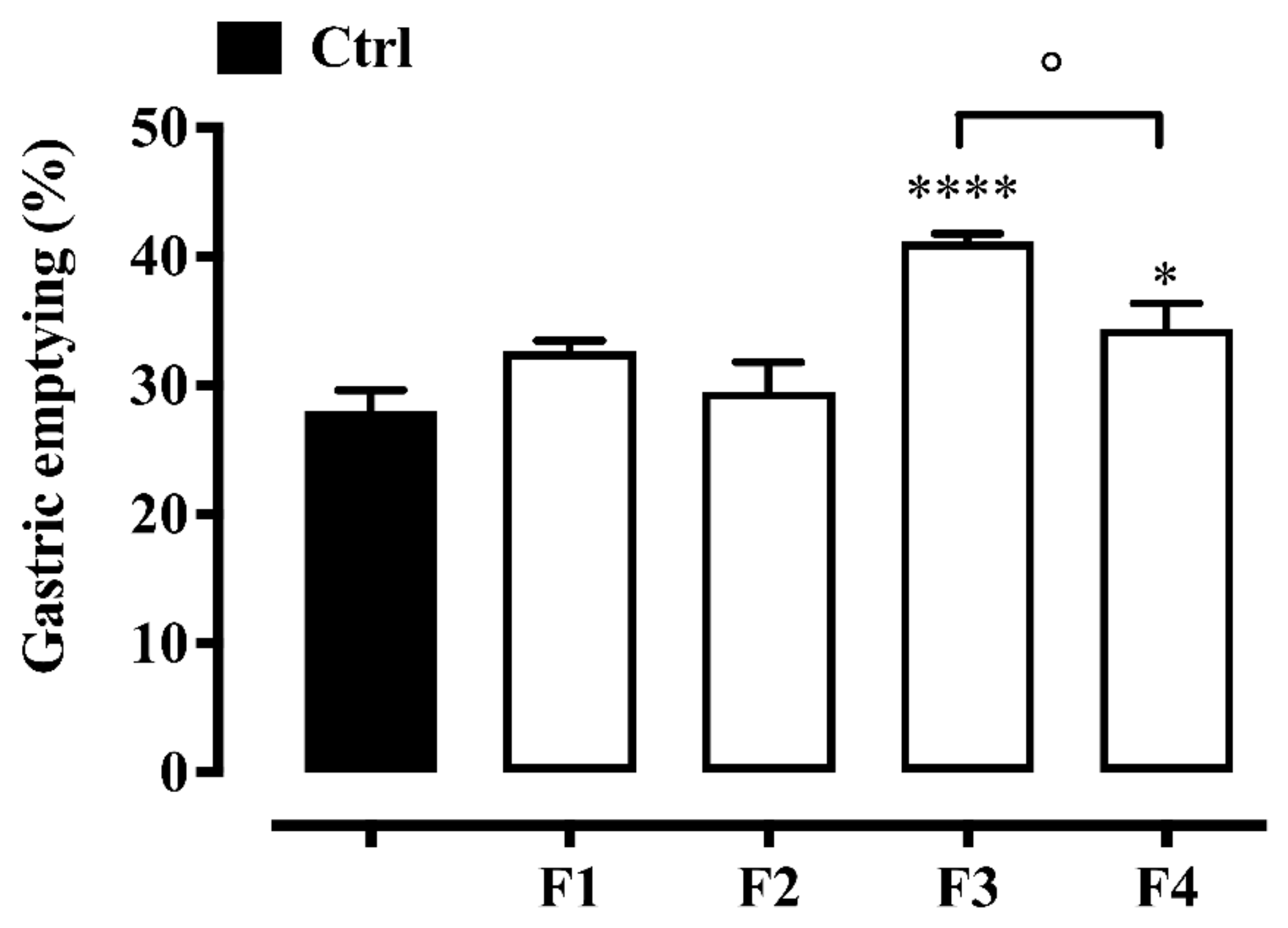
2.3. Gastric Emptying Evaluation
2.4. GERD and Gastric Ulcers Induced by Pyloric Ligation
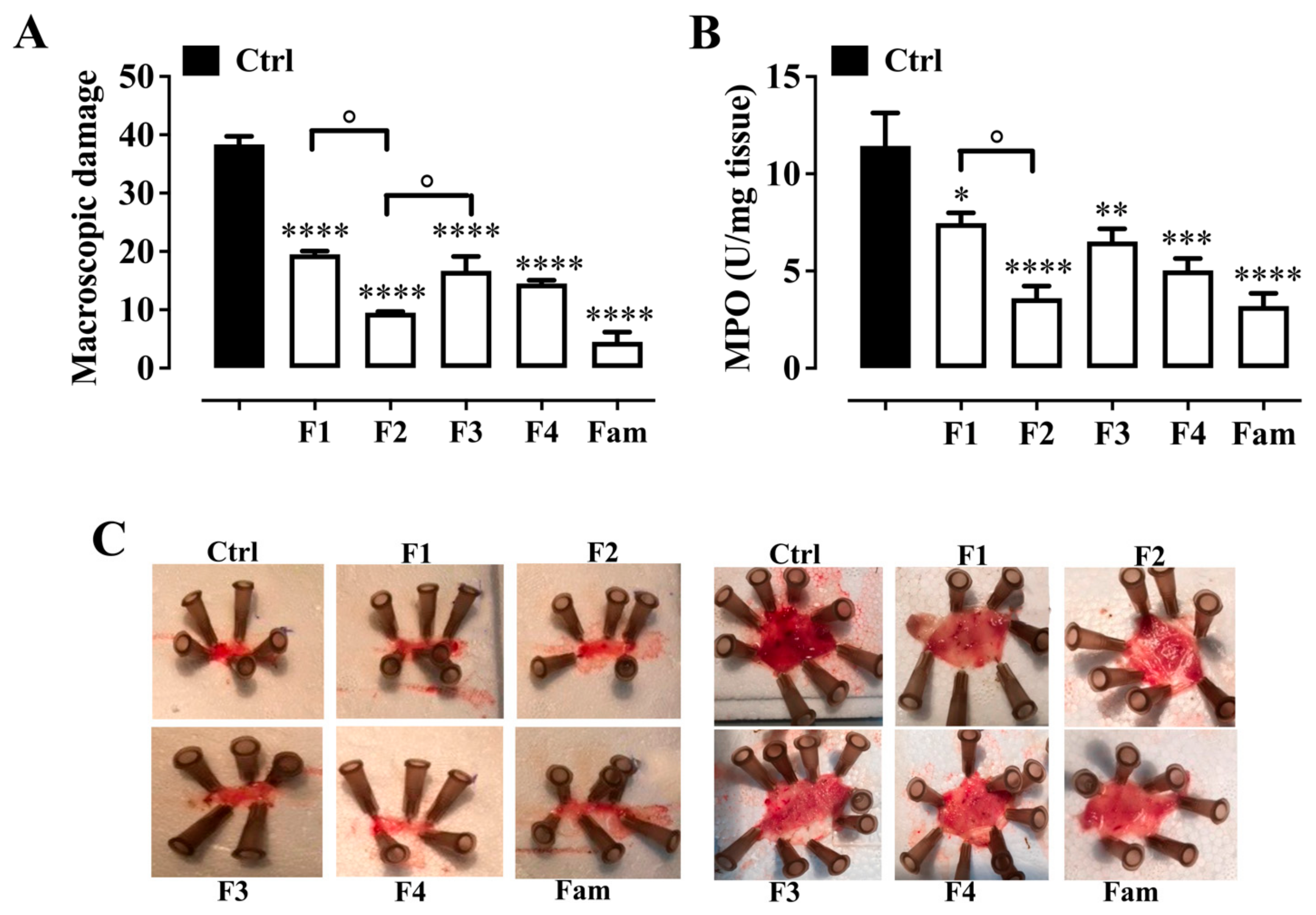
2.4.1. Macroscopic Evaluation
2.4.2. Myeloperoxidase (MPO) Activity
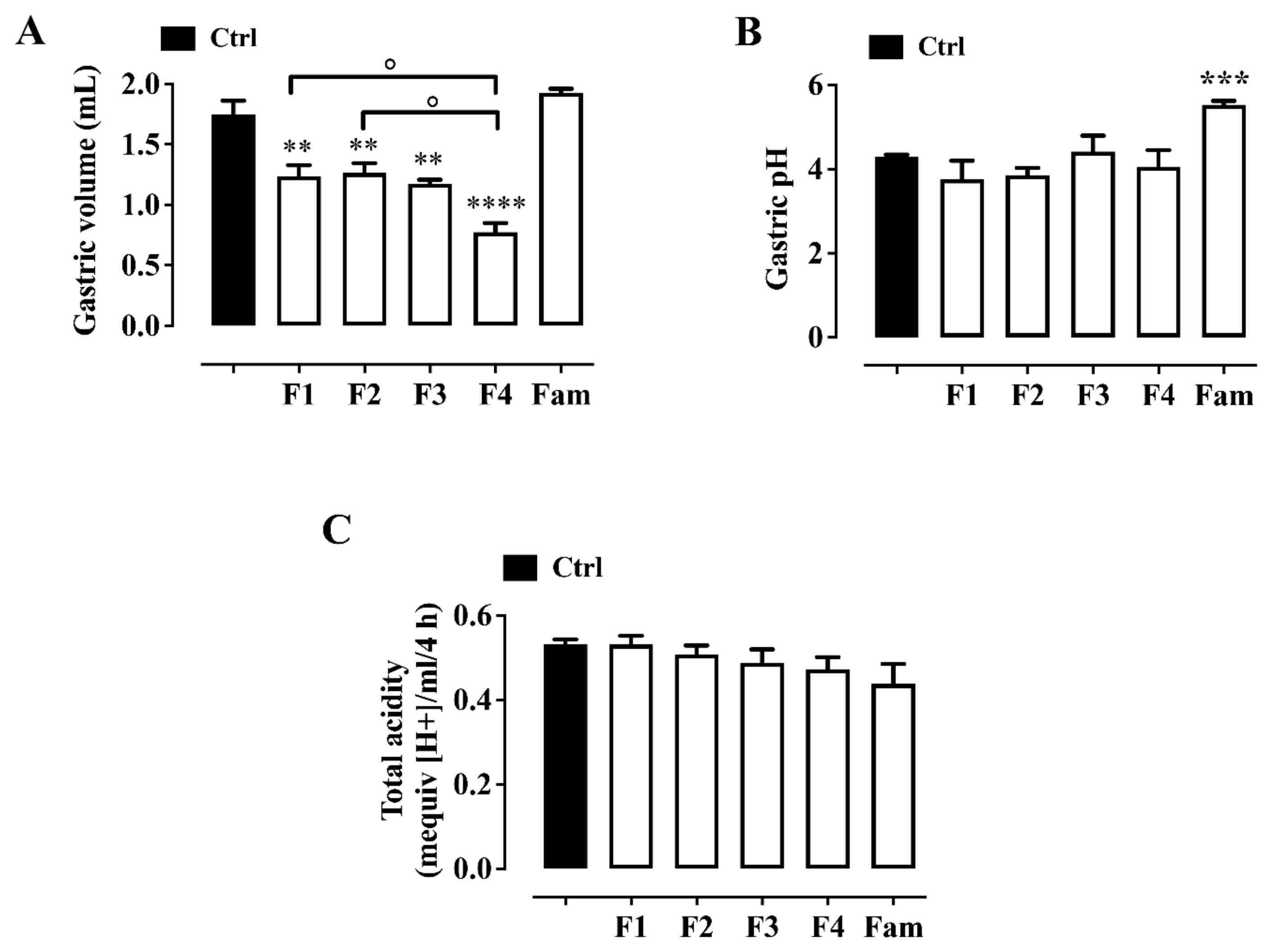
2.5. Gastric Volume Assessment
- Evaluation of gastric pH
- Evaluation of total gastric acidity (H+ concentration)
3. Discussion
4. Materials and Methods
4.1. Literature Search
4.2. Drugs and Reagents
4.3. Plant Material and Extract Characterisation
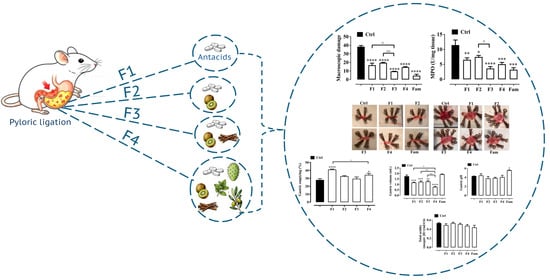
4.4. Formulation Composition and Preparation
4.5. Animals
4.6. Gastric Emptying
4.7. Gastro-Oesophageal Reflux and Peptic Ulceration
4.7.1. Microscopic Mucosal Damage
4.7.2. Mucosal Inflammation (MPO Activity)
4.8. Gastro-Oesophageal Reflux Parameters
4.9. Pharmacological Treatment
4.10. Statistical Analysis
5. Conclusions
Supplementary Materials
Author Contributions
Funding
Institutional Review Board Statement
Informed Consent Statement
Data Availability Statement
Conflicts of Interest
References
- Cheng, Y.; Kou, F.; Liu, J.; Dai, Y.; Li, X.; Li, J. Systematic assessment of environmental factors for gastroesophageal reflux disease: An umbrella review of systematic reviews and meta-analyses. Dig. Liver Dis. 2021, 53, 566–573. [Google Scholar] [CrossRef] [Scilit]
- Zhang, M.; Hou, Z.K.; Huang, Z.B.; Chen, X.L.; Liu, F.B. Dietary and Lifestyle Factors Related to Gastroesophageal Reflux Disease: A Systematic Review. Ther. Clin. Risk Manag. 2021, 17, 305–323. [Google Scholar] [CrossRef] [Scilit]
- Maret-Ouda, J.; Markar, S.R.; Lagergren, J. Gastroesophageal Reflux Disease: A Review. JAMA 2020, 324, 2536–2547. [Google Scholar] [CrossRef] [Scilit] [PubMed]
- Lee, S.W.; Chang, C.S. Impact of Overlapping Functional Gastrointestinal Disorders on the Quality of Life in Patients with Gastroesophageal Reflux Disease. J. Neurogastroenterol. Motil. 2021, 27, 176–184. [Google Scholar] [CrossRef] [Scilit] [PubMed]
- Eusebi, L.H.; Ratnakumaran, R.; Yuan, Y.; Solaymani-Dodaran, M.; Bazzoli, F.; Ford, A.C. Global prevalence of, and risk factors for, gastro-oesophageal reflux symptoms: A meta-analysis. Gut 2018, 67, 430–440. [Google Scholar] [CrossRef] [Scilit] [PubMed]
- Nirwan, J.S.; Hasan, S.S.; Babar, Z.U.; Conway, B.R.; Ghori, M.U. Global Prevalence and Risk Factors of Gastro-oesophageal Reflux Disease (GORD): Systematic Review with Meta-analysis. Sci. Rep. 2020, 10, 5814. [Google Scholar] [CrossRef] [Scilit]
- Fass, R. Gastroesophageal Reflux Disease. N. Engl. J. Med. 2022, 387, 1207–1216. [Google Scholar] [CrossRef] [Scilit]
- Dossett, M.L.; Cohen, E.M.; Cohen, J. Integrative Medicine for Gastrointestinal Disease. Prim. Care 2017, 44, 265–280. [Google Scholar] [CrossRef] [Scilit]
- Hong, S.J.; Park, S.H.; Moon, J.S.; Shin, W.G.; Kim, J.G.; Lee, Y.C.; Lee, D.H.; Jang, J.Y.; Kim, J.J.; Lee, H.L.; et al. The Benefits of Combination Therapy with Esomeprazole and Rebamipide in Symptom Improvement in Reflux Esophagitis: An International Multicenter Study. Gut Liver 2016, 10, 910–916. [Google Scholar] [CrossRef] [Scilit]
- Caesar, L.K.; Cech, N.B. Synergy and antagonism in natural product extracts: When 1 + 1 does not equal 2. Nat. Prod. Rep. 2019, 36, 869–888. [Google Scholar] [CrossRef] [Scilit]
- Parveen, A.; Zahiruddin, S.; Agarwal, N.; Akhtar Siddiqui, M.; Husain Ansari, S.; Ahmad, S. Modulating effects of the synergistic combination of extracts of herbal drugs on cyclophosphamide-induced immunosuppressed mice. Saudi J. Biol. Sci. 2021, 28, 6178–6190. [Google Scholar] [CrossRef] [Scilit] [PubMed]
- Abdel-Hamed, A.R.; Abo-Elmatty, D.M.; Essawy, S.S.; Taha, M.A.; Huwait, E.A.; Alghamdi, L.; Al-Ghamdi, M.A. Antisecretory and antioxidative effects of the antidepressants fluvoxamine and mirtazapine on water immersion stress and pyloric ligation-induced gastric ulcer in rats. Int. J. Health. Sci. 2022, 16, 25–34. [Google Scholar]
- Abbas, E.Y.; Ezzat, M.I.; El Hefnawy, H.M.; Abdel-Sattar, E. An overview and update on the chemical composition and potential health benefits of Opuntia ficus-indica (L.) Miller. J. Food Biochem. 2022, 46, e14310. [Google Scholar] [CrossRef] [Scilit] [PubMed]
- Lehner, M.D.; Scheyhing, U.; Elsasser, J. A combination of carbonates and Opuntia ficus-indica extract protects esophageal cells against simulated acidic and non-acidic reflux in vitro. Sci. Rep. 2024, 14, 22355. [Google Scholar] [CrossRef] [Scilit]
- Alecci, U.; Bonina, F.; Bonina, A.; Rizza, L.; Inferrera, S.; Mannucci, C.; Calapai, G. Effica.cy and Safety of a Natural Remedy for the Treatment of Gastroesophageal Reflux: A Double-Blinded Randomized-Controlled Study. Evid. Based Complement. Altern. Med. 2016, 2016, 2581461. [Google Scholar] [CrossRef] [Scilit]
- Malfa, G.A.; Di Giacomo, C.; Cardia, L.; Sorbara, E.E.; Mannucci, C.; Calapai, G. A standardized extract of Opuntia ficus-indica (L.) Mill and Olea europaea L. improves gastrointestinal discomfort: A double-blinded randomized-controlled study. Phytother. Res. 2021, 35, 3756–3768. [Google Scholar] [CrossRef] [Scilit]
- Musa, A.; Shady, N.H.; Ahmed, S.R.; Alnusaire, T.S.; Sayed, A.M.; Alowaiesh, B.F.; Sabouni, I.; Al-Sanea, M.M.; Mostafa, E.M.; Youssif, K.A.; et al. Antiulcer Potential of Olea europea L. cv. Arbequina Leaf Extract Supported by Metabolic Profiling and Molecular Docking. Antioxidants 2021, 10, 644. [Google Scholar] [CrossRef] [Scilit]
- Unissa, R.; Moni, S.S.; Humera, B.; Alrahef, S.S.; Alenezi, T.K.; Abdallah, M.H.; Abu Lila, A.S.; El-Horany, H.; Abouzied, A.S.; Abdelwahab, S.I.; et al. Anti-ulcer properties, cytokines, and apoptosis regulatory effects of Olea europaea leaves from Hail Province, Saudi Arabia. Notulae Botanicae Horti Agrobotanici Cluj-Napoca 2022, 50, 12891. [Google Scholar] [CrossRef] [Scilit]
- Jan, M. Effects of ’Olea europea’ extract on volume and acidity of carbachol induced gastric secretion, liver and kidney function in rabbits. J. Ayub. Med. Coll. Abbottabad 2010, 22, 113–115. [Google Scholar]
- Tuli, H.S.; Garg, V.K.; Mehta, J.K.; Kaur, G.; Mohapatra, R.K.; Dhama, K.; Sak, K.; Kumar, A.; Varol, M.; Aggarwal, D.; et al. Licorice (Glycyrrhiza glabra L.)-Derived Phytochemicals Target Multiple Signaling Pathways to Confer Oncopreventive and Oncotherapeutic Effects. Onco Targets Ther. 2022, 15, 1419–1448. [Google Scholar] [CrossRef] [Scilit]
- Hasan, M.K.; Ara, I.; Mondal, M.S.A.; Kabir, Y. Phytochemistry, pharmacological activity, and potential health benefits of Gly cyrrhiza glabra. Heliyon 2021, 7, e07240. [Google Scholar] [CrossRef] [Scilit]
- Murray, M.T. Glycyrrhiza glabra (licorice). Textb. Nat. Med. 2020, 2020, 641–647. [Google Scholar]
- Rozza, A.L.; Hiruma-Lima, C.A.; Takahira, R.K.; Padovani, C.R.; Pellizzon, C.H. Effect of menthol in experimentally induced ulcers: Pathways of gastroprotection. Chem. Biol. Interact. 2013, 206, 272–278. [Google Scholar] [CrossRef] [Scilit]
- Rozza, A.L.; Meira de Faria, F.; Souza Brito, A.R.; Pellizzon, C.H. The gastroprotective effect of menthol: Involvement of anti-apoptotic, antioxidant and anti-inflammatory activities. PLoS ONE 2014, 9, e86686. [Google Scholar] [CrossRef] [Scilit]
- Aleid, I.S.; Alfheeaid, H.A.; Aljutaily, T.; Alhomaid, R.M.; Alharbi, H.F.; Althwab, S.A.; Abdel-Rahman, H.A.; AlGeffari, M.A.; Barakat, H. Gastroprotective Effects of Spirulina platensis, Golden Kiwifruit Flesh, and Golden Kiwifruit Peel Extracts Individually or in Combination against Indomethacin-Induced Gastric Ulcer in Rats. Nutrients 2021, 13, 3499. [Google Scholar] [CrossRef] [Scilit]
- Jeon, E.-J.; Choi, J.-H.; Lee, N.-Y.; Oh, H.-J.; Kwon, H.-S.; Kwon, J. Gastroprotective effects of fermented gold kiwi (Actinidia chinenesis L.) extracts on HCl/EtOH-induced gastric injury in rats. Appl. Sci. 2022, 12, 5271. [Google Scholar] [CrossRef] [Scilit]
- Wallace, A.; Eady, S.; Drummond, L.; Hedderley, D.; Ansell, J.; Gearry, R. A Pilot Randomized Cross-Over Trial to Examine the Effect of Kiwifruit on Satiety and Measures of Gastric Comfort in Healthy Adult Males. Nutrients 2017, 9, 639. [Google Scholar] [CrossRef] [Scilit] [PubMed]
- Al-Quraishy, S.; Othman, M.S.; Dkhil, M.A.; Abdel Moneim, A.E. Olive (Olea europaea) leaf methanolic extract prevents HCl/ethanol-induced gastritis in rats by attenuating inflammation and augmenting antioxidant enzyme activities. Biomed. Pharmacother. 2017, 91, 338–349. [Google Scholar] [CrossRef] [Scilit] [PubMed]
- Chumpitazi, B.P.; Kearns, G.L.; Shulman, R.J. Review article: The physiological effects and safety of peppermint oil and its efficacy in irritable bowel syndrome and other functional disorders. Aliment. Pharmacol. Ther. 2018, 47, 738–752. [Google Scholar] [CrossRef] [Scilit]
- Raj, J.P.; Saxena, U.; Belhekar, M.N.; Mamde, A.; Darak, H.; Pawar, S. Efficacy and Safety of GutGard(R) in Managing Gastroesophageal Reflux-Related Symptoms: A Phase III, Single-Centre, Double-Blind, Randomized Placebo-Controlled Trial. Complement. Med. Res. 2025, 32, 26–36. [Google Scholar] [CrossRef] [Scilit]
- Drazigost, P.C.; Ribic, H.; Cerar, A. Gastric Content of the Liquid Test Meals in Rats with Gastrointestinal Neoplasias Induced by N-methyl-N-nitrosoguanidineand 1,2-dimethylhydrazine. Int. J. Cancer Res. 2006, 2, 19–30. [Google Scholar]
- Izbeki, F.; Wittmann, T.; Csati, S.; Jeszenszky, E.; Lonovics, J. Opposite effects of acute and chronic administration of alcohol on gastric emptying and small bowel transit in rat. Alcohol. Alcohol. 2001, 36, 304–308. [Google Scholar] [CrossRef] [Scilit] [PubMed]
- Souza, M.A.; Souza, M.H.; Palheta, R.C., Jr.; Cruz, P.R.; Medeiros, B.A.; Rola, F.H.; Magalhaes, P.J.; Troncon, L.E.; Santos, A.A. Evaluation of gastrointestinal motility in awake rats: A learning exercise for undergraduate biomedical students. Adv. Physiol. Educ. 2009, 33, 343–348. [Google Scholar] [CrossRef] [Scilit]
- Tamhane, M.D.; Thorat, S.P.; Rege, N.N.; Dahanukar, S.A. Effect of oral administration of Terminalia chebula on gastric emptying: An experimental study. J. Postgrad. Med. 1997, 43, 12–13. [Google Scholar] [PubMed]
- Chen, G.; Zhu, L.; Liu, Y.; Zhou, Q.; Chen, H.; Yang, J. Isoliquiritigenin, a flavonoid from licorice, plays a dual role in regulating gastrointestinal motility in vitro and in vivo. Phytother. Res. 2009, 23, 498–506. [Google Scholar] [CrossRef] [Scilit] [PubMed]
- Papathanasopoulos, A.; Rotondo, A.; Janssen, P.; Boesmans, W.; Farre, R.; Vanden Berghe, P.; Tack, J. Effect of acute peppermint oil administration on gastric sensorimotor function and nutrient tolerance in health. Neurogastroenterol. Motil. 2013, 25, e263–e271. [Google Scholar] [CrossRef] [Scilit]
- Rtibi, K.; Selmi, S.; Saidani, K.; Grami, D.; Amri, M.; Sebai, H.; Marzouki, L. Reverse Effect of Opuntia ficus-indica L. Juice and Seeds Aqueous Extract on Gastric Emptying and Small-Bowel Motility in Rat. J. Food Sci. 2018, 83, 205–211. [Google Scholar] [CrossRef] [Scilit]
- Zaouani, M.; Fatima, Y.; Bey, N.N.; Ben-Mahdi, M.H. Antidiarrhoeal activity of aqueous leaf extract of Olea europaea var. sylvestris in albino Wistar rats. J. Biol. Res.-Boll. Soc. Ital. Biol. Sper. 2018, 91, 90–94. [Google Scholar]
- Berte, P.E.; da Silva Lopes, J.; Comandulli, N.G.; Rangel, D.W.; Monache, F.D.; Filho, V.C.; Niero, R.; de Andrade, S.F. Evaluation of the gastroprotective activity of the extracts, fractions, and pure compounds obtained from aerial parts of Rubus imperialis in different experimental models. Naunyn Schmiedebergs Arch. Pharmacol. 2014, 387, 313–319. [Google Scholar] [CrossRef] [Scilit]
- Sahoo, S.K.; Sahoo, H.B.; Priyadarshini, D.; Soundarya, G.; Kumar, C.K.; Rani, K.U. Antiulcer Activity of Ethanolic Extract of Salvadora indica (W.) Leaves on Albino Rats. J. Clin. Diagn. Res. 2016, 10, FF07–FF10. [Google Scholar] [CrossRef] [Scilit]
- Camele, I.; Grulova, D.; Elshafie, H.S. Chemical Composition and Antimicrobial Properties of Mentha x piperita cv. ‘Kristinka’ Essential Oil. Plants 2021, 10, 1567. [Google Scholar] [CrossRef] [Scilit] [PubMed]
- Dhifi, W.; Bellili, S.; Jazi, S.; Bahloul, N.; Mnif, W. Essential Oils’ Chemical Characterization and Investigation of Some Biological Activities: A Critical Review. Medicines 2016, 3, 25. [Google Scholar] [CrossRef] [Scilit] [PubMed]
- Katary, M.A.; Salahuddin, A. Gastroprotective effect of vanillin on indomethacin-induced gastric ulcer in rats: Protective pathways and anti-Secretory mechanism. Clin. Exp. Pharmacol. 2017, 7, 232. [Google Scholar]
- Blair, D.W.; Williams, M.J.; Carr, A.J.; Kilpatrick, S.J. Effect of L-thyroxine on gastric secretion in the pylorus-ligated rat. Gut 1965, 6, 343–348. [Google Scholar] [CrossRef] [Scilit]
- Garg, V.; Narang, P.; Taneja, R. Antacids revisited: Review on contemporary facts and relevance for self-management. J. Int. Med. Res. 2022, 50, 3000605221086457. [Google Scholar] [CrossRef] [Scilit]
- Smits, G.J.; Lefebvre, R.A. Influence of aging on gastric emptying of liquids, small intestine transit, and fecal output in rats. Exp. Gerontol. 1996, 31, 589–596. [Google Scholar] [CrossRef] [Scilit]
- Biano, L.S.; Oliveira, A.S.; Palmeira, D.N.; Silva, L.A.; de Albuquerque-Junior, R.L.C.; Duarte, M.C.; Correa, C.B.; Grespan, R.; Batista, J.S.; Camargo, E.A. Gastroprotective action of the ethanol extract of Leonurus sibiricus L. (Lamiaceae) in mice. J. Ethnopharmacol. 2022, 284, 114792. [Google Scholar] [CrossRef] [Scilit]
- Maheshwari, R.; Balaraman, R.; Sailor, G.; Parmar, G.; Patel, A.; Seth, A.K. Antiulcer and antioxidant effects of Normacid syrup (a polyherbal formulation) on experimentally-induced gastric ulcers. Orient. Pharm. Exp. Med. 2014, 14, 145–155. [Google Scholar] [CrossRef] [Scilit]
- Borrelli, F.; Fasolino, I.; Romano, B.; Capasso, R.; Maiello, F.; Coppola, D.; Orlando, P.; Battista, G.; Pagano, E.; Di Marzo, V.; et al. Beneficial effect of the non-psychotropic plant cannabinoid cannabigerol on experimental inflammatory bowel disease. Biochem. Pharmacol. 2013, 85, 1306–1316. [Google Scholar] [CrossRef] [Scilit]



| Medicinal Plant | Mechanisms Relevant to GERD | References |
|---|---|---|
| Opuntia ficus-indica L. | Mucoadhesive effect; barrier formation; reduction in ulcerative lesions; oesophageal cell protection | [13,14,15,16] |
| Olea europaea L. | Antioxidant (by enhancing antioxidant defences) and anti-inflammatory (by inhibiting the NF-κB and COX-2 pathways) activities; acid secretion inhibition; mucosal protection | [15,16,17,18,19] |
| Glycyrrhiza glabra L. | Anti-inflammatory (due to inhibition of NF-κB) effect. Increased prostaglandins; mucus secretion; anti-pepsin and anti-gastrin effects; mucosal healing | [20,21,22] |
| Mentha x piperita L. | Increased mucus and PGE2; stimulation of K+ATP channels; acid secretion reduction; anti-inflammatory and antioxidant activity | [23,24] |
| Actinidia chinensis Planch | Antioxidant and anti-inflammatory activity reduce pro-inflammatory markers such as TNF-α, IL-1β, and IL-6, and also activates antioxidant pathways via Nrf2; gastric protection in ulcer models; reduction in acid and pepsin secretion | [25,26,27] |
| Component | Formulation 1 | Formulation 2 | Formulation 3 | Formulation 4 |
|---|---|---|---|---|
| Sodium alginate (500 mg) | ||||
| Calcium carbonate (266.66 mg) | ✓ | ✓ | ✓ | ✓ |
| Sodium bicarbonate (150 mg) | ||||
| Mint flavour (5 mg) | ||||
| Potassium sorbate + Sodium benzoate (20 mg) | ✓ | ✓ | ✓ | ✓ |
| Actinidia chinensis planch (kiwi) fruit dry extract (20 mg) | ✓ | ✓ | ✓ | |
| Glycyrrhiza glabra L. roots dry extract (30 mg) | ✓ | ✓ | ||
| Opuntia ficus-indica Mill. (prickly pear) cladodes dry extract (52 mg) | ✓ | |||
| Olea europaea L. (olive) leaves dry extract (38 mg) | ✓ | |||
| Mentha x piperita L. (Mint) leaves dry extract (30 mg) | ✓ | |||
| Polyphenols from Olive trees and Prickly Pears (6 mg) | ✓ | |||
| Vegetable glycerin (up to 10 mL) | ✓ | ✓ | ✓ | ✓ |
Disclaimer/Publisher’s Note: The statements, opinions and data contained in all publications are solely those of the individual author(s) and contributor(s) and not of MDPI and/or the editor(s). MDPI and/or the editor(s) disclaim responsibility for any injury to people or property resulting from any ideas, methods, instructions or products referred to in the content. |
© 2026 by the authors. Licensee MDPI, Basel, Switzerland. This article is an open access article distributed under the terms and conditions of the Creative Commons Attribution (CC BY) license.
Share and Cite
De Cicco, P.; Cacciola, N.A.; Amico, R.; Romano, B.; Di Maio, U.; Milic, N.; Bagnulo, A.; Nanì, M.F.; Viscovo, L.; Scivicco, M.; et al. Preclinical Studies on Plant Based-Antacid Formulations as New Therapies for Gastro-Oesophageal Reflux Disease. Pharmaceuticals 2026, 19, 173. https://doi.org/10.3390/ph19010173
De Cicco P, Cacciola NA, Amico R, Romano B, Di Maio U, Milic N, Bagnulo A, Nanì MF, Viscovo L, Scivicco M, et al. Preclinical Studies on Plant Based-Antacid Formulations as New Therapies for Gastro-Oesophageal Reflux Disease. Pharmaceuticals. 2026; 19(1):173. https://doi.org/10.3390/ph19010173
Chicago/Turabian StyleDe Cicco, Paola, Nunzio Antonio Cacciola, Rebecca Amico, Barbara Romano, Umberto Di Maio, Natasa Milic, Antonino Bagnulo, Maria Francesca Nanì, Laura Viscovo, Marcello Scivicco, and et al. 2026. "Preclinical Studies on Plant Based-Antacid Formulations as New Therapies for Gastro-Oesophageal Reflux Disease" Pharmaceuticals 19, no. 1: 173. https://doi.org/10.3390/ph19010173
APA StyleDe Cicco, P., Cacciola, N. A., Amico, R., Romano, B., Di Maio, U., Milic, N., Bagnulo, A., Nanì, M. F., Viscovo, L., Scivicco, M., Capasso, R., Pagano, E., & Borrelli, F. (2026). Preclinical Studies on Plant Based-Antacid Formulations as New Therapies for Gastro-Oesophageal Reflux Disease. Pharmaceuticals, 19(1), 173. https://doi.org/10.3390/ph19010173