Synergistic Effects of Plant Polysaccharides and Probiotics: A Novel Dietary Approach for Parkinson’s Disease Intervention

 , and
, and
Abstract
1. Introduction
2. The Relationship Between MGBA and PD
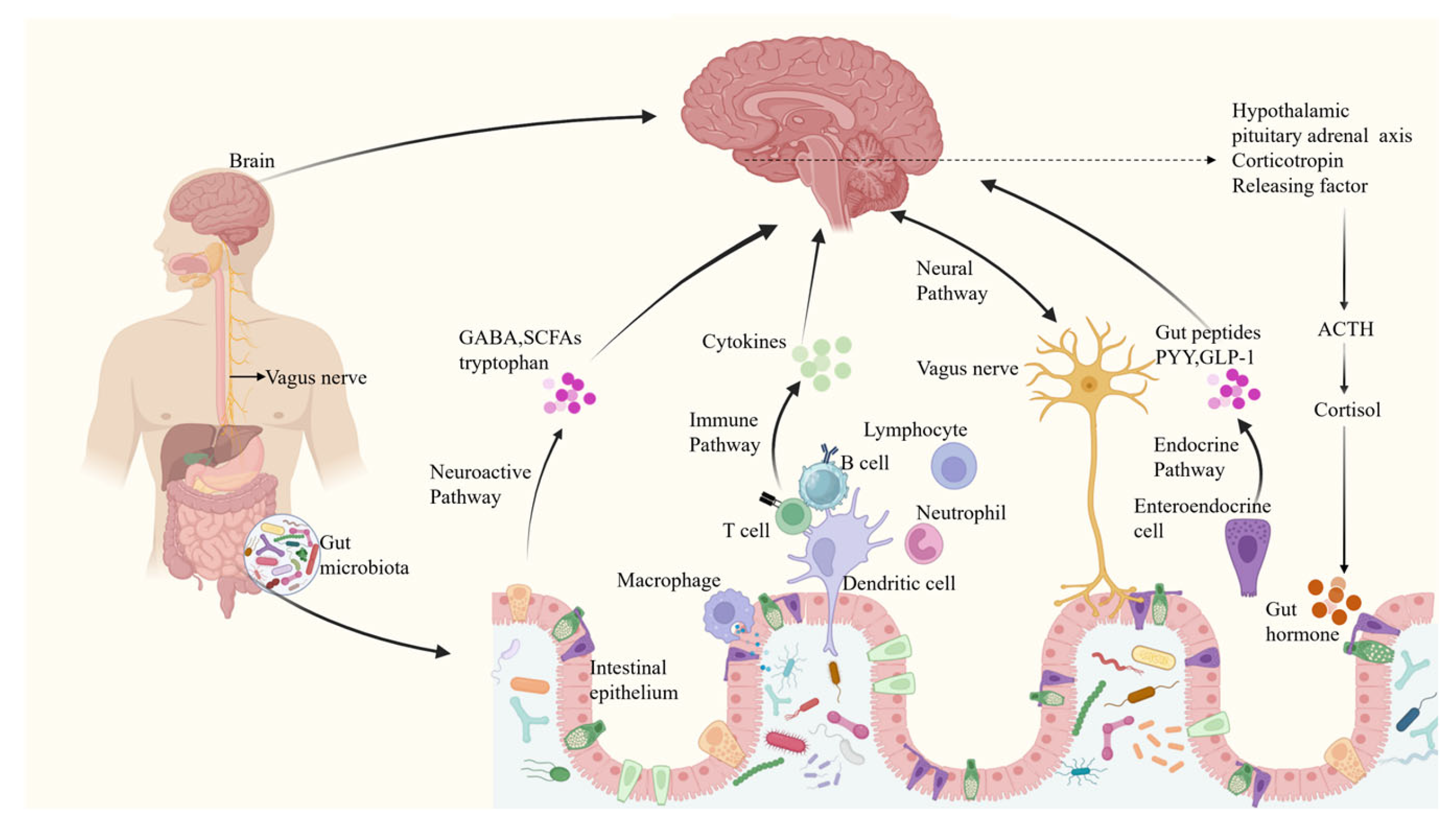
2.1. Operational Mechanism of MGBA
2.1.1. Neural Pathway
2.1.2. Neuroactive Molecular Pathway
2.1.3. Immune Pathways
2.1.4. Endocrine Pathways
2.2. Dysregulation of the MGBA in PD
2.2.1. Characteristic Gut Microbiota Dysbiosis in PD: Initiating Factors of MGBA Dysbiosis
Changes in Gut Microbiota Community Structure in PD
Changes in Metabolic Products of Gut Microorganisms in PD
2.2.2. Intestinal Barrier Dysfunction in PD: A Core Driver of MGBA Dysregulation
2.2.3. Pathological Signal Transmission: The Causal Bridge of MGBA Dysregulation
2.2.4. Reception and Amplification of Central Signals: The Final Manifestation of Parkinson’s Disease
2.3. Parkinson’s Disease Subtypes and Their Impact on MGBA Dysregulation
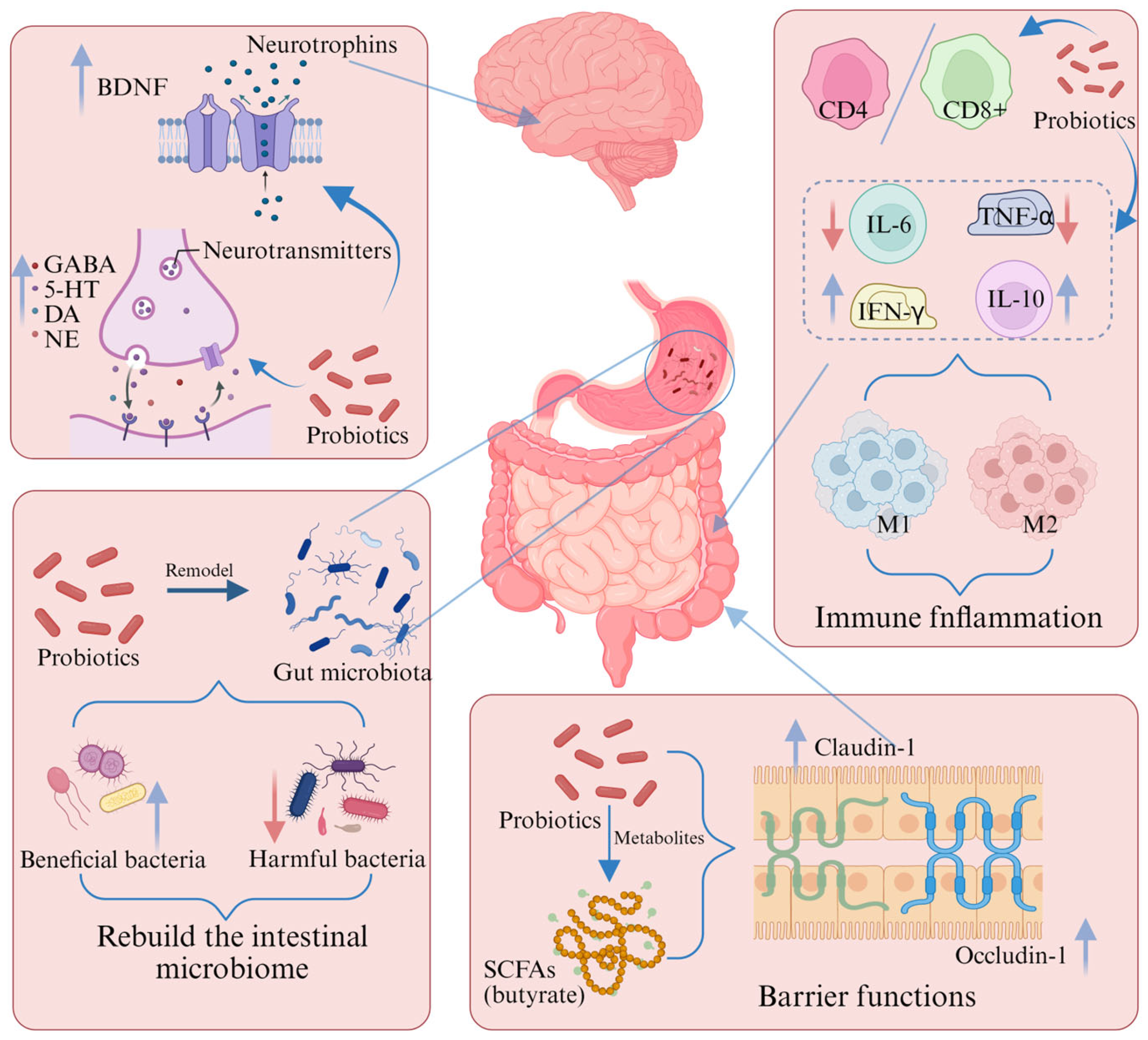
3. The Effects of Probiotics on Parkinson’s Disease
3.1. Microbial Ecological Remodeling
3.2. The Driving Role of Probiotic Metabolites
3.3. Reinforcing Physical Barriers
3.4. Regulation of Neurotrophic Factors and Neurotransmitters
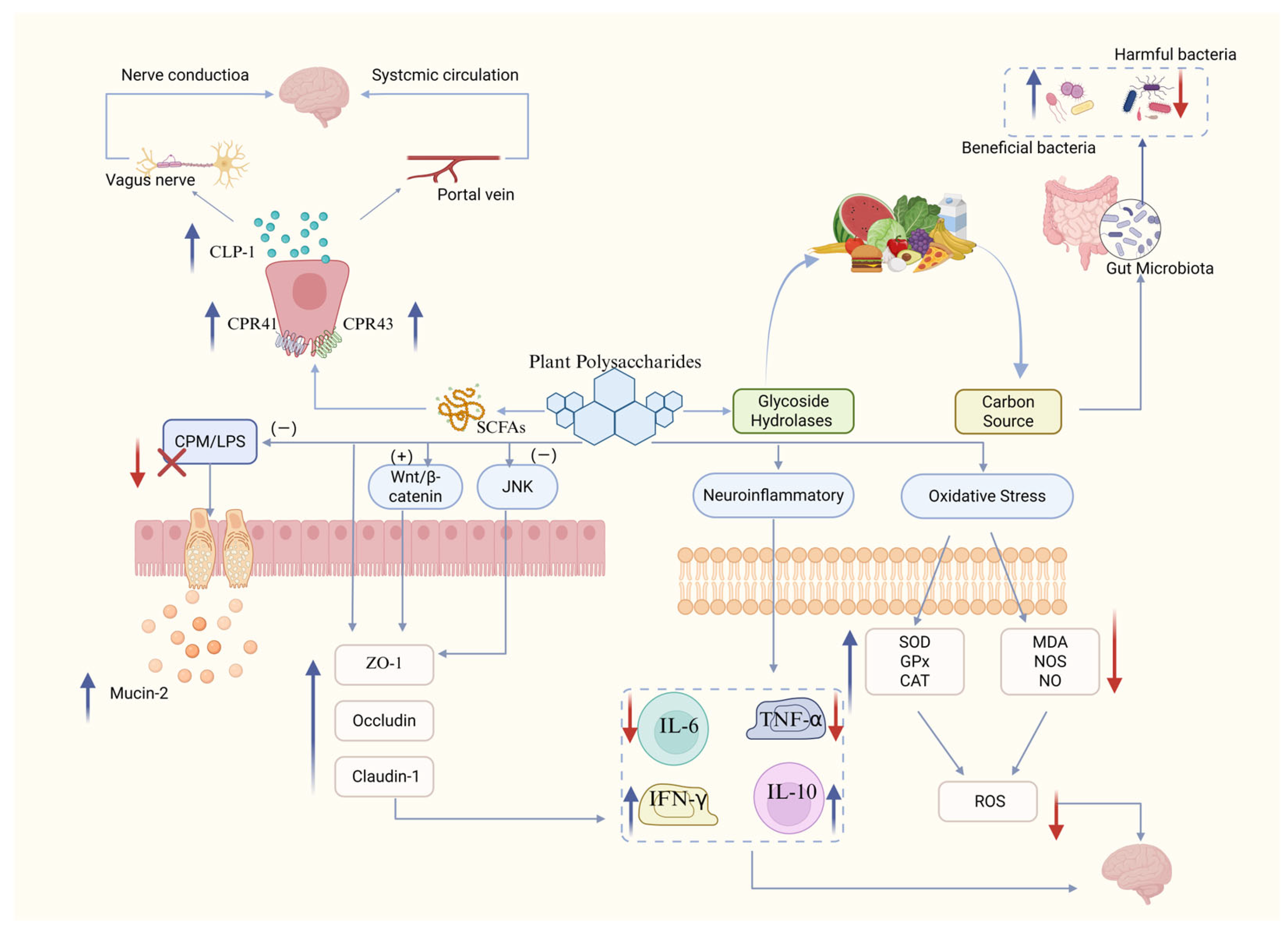
4. Effects of Medicinal Plant Polysaccharides on Parkinson’s Disease
4.1. Enhancing Microbial Community Diversity
4.2. Optimizing Microbial Community Composition
4.3. Enhancing the Physical Barrier Function of the Intestinal Tract
4.4. System Regulation of Host Immunity and Metabolism
5. Synergistic Effects of Plant Polysaccharides and Probiotics
5.1. Synbiotics Enhance the Colonization and Vitality of Intestinal Probiotics
5.2. Synbiotics Optimize Microbial Metabolic Output
5.3. Synbiotics Protect the Intestinal Barrier
5.4. Synbiotics Restores Immune Homeostasis
6. Potential and Challenges of Synbiotics in Parkinson’s Disease Treatment
6.1. Heterogeneity of Gut Microbiota
6.2. The Complexity of Medicinal Plant Polysaccharides and the Specificity of Probiotics
7. Conclusions
Author Contributions
Funding
Institutional Review Board Statement
Informed Consent Statement
Data Availability Statement
Acknowledgments
Conflicts of Interest
Abbreviations
| 5-HT | 5-hydroxytryptamine (serotonin) |
| ADE | adenine-induced chronic kidney disease |
| APOE ε4 | apolipoprotein E ε4 |
| ASK1 | apoptosis signal-regulating kinase 1 |
| BDNF | brain-derived neurotrophic factor |
| CAT | catalase |
| CCK | cholecystokinin |
| CFU | colony-forming unit |
| CSF | cerebrospinal fluid |
| CXCR6 | C-X-C chemokine receptor type 6 |
| DA | dopamine |
| DAO | diamine oxidase |
| DSS | dextran sodium sulfate |
| EECs | enteroendocrine cells |
| FXR | farnesoid X receptor |
| GABA | gamma-aminobutyric acid |
| Galp | Galactopyranose |
| GDNF | glial cell line-derived neurotrophic factor |
| Glcp | Glucopyranose |
| GLP-1 | glucagon-like peptide-1 |
| GM-CSF | granulocyte-macrophage colony-stimulating factor |
| GPNE-I | ginseng polysaccharide NE-I |
| GPR41/43 | G protein-coupled receptor 41/43 |
| GSH | glutathione |
| GSH-Px | glutathione peroxidase |
| HDAC6 | histone deacetylase 6 |
| HPA axis | hypothalamic-pituitary-adrenal axis |
| IFNγ | interferon-gamma |
| IgA | immunoglobulin A |
| IL-1β, IL-6, IL-10 | interleukin-1β, -6, -10 |
| IL-2, IL-17 | interleukin-2, -17 |
| ISAPP | International Scientific Association for Probiotics and Prebiotics |
| JNK | c-Jun N-terminal kinase |
| Keap1 | Kelch-like ECH-associated protein 1 |
| LPS | lipopolysaccharide |
| Lrp5 | low-density lipoprotein receptor-related protein 5 |
| MDA | malondialdehyde |
| MGBA | microbiota-gut-brain axis |
| MIBG | meta-iodobenzylguanidine |
| MPTP | 1-methyl-4-phenyl-1,2,3,6-tetrahydropyridine |
| MRI | magnetic resonance imaging |
| NE | norepinephrine |
| NF-κB | nuclear factor kappa B |
| NK cells | natural killer cells |
| NLRP3 | NLR family pyrin domain containing 3 |
| NMDA | N-methyl-D-aspartate |
| Nrf2 | nuclear factor erythroid 2–related factor 2 |
| NTS | nucleus tractus solitarius |
| p38 MAPK | p38 mitogen-activated protein kinase |
| PD | Parkinson’s disease |
| PET | positron emission tomography |
| PIGD | postural instability/gait difficulty |
| PYY | Peptide YY |
| RBD | rapid eye movement sleep behavior disorder |
| ROS | reactive oxygen species |
| SCFAs | short-chain fatty acids |
| SIgA | secretory immunoglobulin A |
| SLAMF6 | signaling lymphocytic activation molecule family member 6 |
| SOD | superoxide dismutase |
| STAT1/6 | signal transducer and activator of transcription 1/6 |
| TD | tremor-dominant |
| TGF-β | transforming growth factor-beta |
| Th17 | T helper 17 cells |
| TLR4 | Toll-like receptor 4 |
| TNF-α | tumor necrosis factor-alpha |
| TRAIL-DR5 | TNF-related apoptosis-inducing ligand—Death receptor 5 |
| Tregs | regulatory T cells |
| TXN | thioredoxin |
| UPDRS | Unified Parkinson’s Disease Rating Scale |
| VH/CD | villus height/crypt depth |
| ZO-1 | zonula occludens-1 |
| α-syn | alpha-synuclein |
References
- Gong, Z.; Guo, D.; Lin, Y.; Liu, Z.; Lv, M.; Liu, X.; Sun, M.; Wang, L.; Zhao, T.; Wang, Z.; et al. Deciphering ferroptosis-related astrocyte subpopulations and diagnostic biomarkers in Parkinson’s Disease through RNA transcriptomics. Mol. Neurobiol. 2025, 63, 221. [Google Scholar] [CrossRef]
- Hattori, N.; Kamei, T.; Ishida, T.; Suzuki, I.; Nomoto, M.; Tsuboi, Y. Long-term effects of safinamide adjunct therapy on levodopa-induced dyskinesia in Parkinson’s Disease: Post-hoc analysis of a Japanese phase III study. J. Neural Transm. 2022, 129, 1277–1287. [Google Scholar] [CrossRef]
- Standaert, D.G.; Aldred, J.; Anca-Herschkovitsch, M.; Davis, T.L.; Iansek, R.; Kovacs, N.; Siddiqui, M.; Pontieri, F.E.; Simu, M.; Bergmann, L.; et al. Levodopa-carbidopa intestinal gel treatment of motor fluctuations and dyskinesia in advanced Parkinson’s Disease patients in a ‘real world’ setting: Interim results from the duoglobe study. J. Neurol. Sci. 2019, 405, 194–195. [Google Scholar] [CrossRef]
- Braak, H.; Tredici, K.D.; Rüb, U.; de Vos, R.A.I.; Jansen Steur, E.N.H.; Braak, E. Staging of brain pathology related to sporadic Parkinson’s Disease. Neurobiol. Aging 2003, 24, 197–211. [Google Scholar] [CrossRef]
- Camacho, M.; Greenland, J.C.; Peattie, A.R.D.; Spindler, L.R.B.; Holbrook, J.; Kahanawita, L.; Fryer, T.D.; Hong, Y.T.; Williams-Gray, C.H. Constipation is linked to neuroinflammation in early Parkinson’s Disease. Mov. Disord. 2025, ahead of print. [CrossRef] [PubMed]
- Feng, J.; Cen, Q.; Cui, Y.; Hu, X.; Li, M.; Wang, L.; Wei, J.; Sun, N.; Wang, J.; Zhang, A. Lactobacillus rhamnosus: An emerging probiotic with therapeutic potential for depression. Pharmacol. Res. 2025, 211, 107541. [Google Scholar] [CrossRef]
- Lukiw, W.J.; Arceneaux, L.; Li, W.; Bond, T.; Zhao, Y. Gastrointestinal (GI)-tract microbiome derived neurotoxins and their potential contribution to inflammatory neurodegeneration in alzheimer’s disease (AD). J. Alzheimers Dis. Park. 2021, 11, 525. [Google Scholar]
- Jung, W.; Son, Y.M. Nanoparticle-driven modulation of mucosal immunity and interplay with the microbiome. J. Microbiol. Biotechnol. 2025, 35, e2404033. [Google Scholar] [CrossRef]
- Gibson, G.R.; Hutkins, R.; Sanders, M.E.; Prescott, S.L.; Reimer, R.A.; Salminen, S.J.; Scott, K.; Stanton, C.; Swanson, K.S.; Cani, P.D.; et al. Expert consensus document: The international scientific association for probiotics and prebiotics (ISAPP) consensus statement on the definition and scope of prebiotics. Nat. Rev. Gastroenterol. Hepatol. 2017, 14, 491–502. [Google Scholar] [CrossRef]
- PehlİVan KarakaŞ, F.; CoŞKun, H.; SoytÜRk, H.; Bozat, B.G. Anxiolytic, antioxidant, and neuroprotective effects of goji berry polysaccharides in ovariectomized rats: Experimental evidence from behavioral, biochemical, and immunohistochemical analyses. Turk. J. Biol. 2020, 44, 238–251. [Google Scholar] [CrossRef]
- Deng, J.; Zhang, F.; Fan, H.; Zheng, Y.; Zhao, C.; Ren, M.; Jin, E.; Gu, Y. Effects of plant polysaccharides combined with boric acid on digestive function, immune function, harmful gas and heavy metal contents in faeces of fatteners. Animals 2024, 14, 1515. [Google Scholar] [CrossRef] [PubMed]
- Savulescu-Fiedler, I.; Benea, S.-N.; Căruntu, C.; Nancoff, A.-S.; Homentcovschi, C.; Bucurica, S. Rewiring the brain through the gut: Insights into microbiota–nervous system interactions. Curr. Issues Mol. Biol. 2025, 47, 489. [Google Scholar] [CrossRef] [PubMed]
- Guo, X.; Zhang, Y.; Huang, H.; Xi, R. A hierarchical transcription factor cascade regulates enteroendocrine cell diversity and plasticity in drosophila. Nat. Commun. 2022, 13, 6525. [Google Scholar] [CrossRef] [PubMed]
- Liu, Y.; Forsythe, P. Vagotomy and insights into the microbiota-gut-brain axis. Neurosci. Res. 2021, 168, 20–27. [Google Scholar] [CrossRef]
- Kemper, L.; Hensel, A. Campylobacter jejuni: Targeting host cells, adhesion, invasion, and survival. Appl. Microbiol. Biotechnol. 2023, 107, 2725–2754. [Google Scholar] [CrossRef]
- Kaelberer, M.M.; Buchanan, K.L.; Klein, M.E.; Barth, B.B.; Montoya, M.M.; Shen, X.; Bohórquez, D.V. A gut-brain neural circuit for nutrient sensory transduction. Science 2018, 361, eaat5236. [Google Scholar] [CrossRef]
- Bonaz, B.; Bazin, T.; Pellissier, S. The vagus nerve at the interface of the microbiota-gut-brain axis. Front. Neurosci. 2018, 12, 49. [Google Scholar] [CrossRef]
- Sherwin, E.; Bordenstein, S.R.; Quinn, J.L.; Dinan, T.G.; Cryan, J.F. Microbiota and the social brain. Science 2019, 366, eaar2016. [Google Scholar] [CrossRef]
- Hopkins, M.J.; Macfarlane, G.T. Changes in predominant bacterial populations in human faeces with age and with clostridium difficile infection. J. Med. Microbiol. 2002, 51, 448–454. [Google Scholar] [CrossRef]
- Erturk-Hasdemir, D.; Ochoa-Repáraz, J.; Kasper, D.L.; Kasper, L.H. Exploring the gut-brain axis for the control of cns inflammatory demyelination: Immunomodulation by Bacteroides fragilis’ polysaccharide a. Front. Immunol. 2021, 12, 662807. [Google Scholar] [CrossRef]
- Mathias, K.; Machado, R.S.; Stork, S.; Martins, C.D.; dos Santos, D.; Lippert, F.W.; Prophiro, J.S.; Petronilho, F. Short-chain fatty acid on blood-brain barrier and glial function in ischemic stroke. Life Sci. 2024, 354, 122979. [Google Scholar] [CrossRef] [PubMed]
- Shen, H.; Aggarwal, N.; Cui, B.; Foo, G.W.; He, Y.; Srivastava, S.K.; Li, S.; Seah, M.Z.X.; Wun, K.S.; Ling, H.; et al. Engineered commensals for targeted nose-to-brain drug delivery. Cell 2025, 188, 1545–1562.e1516. [Google Scholar] [CrossRef] [PubMed]
- Chen, S.; Li, M.; Tong, C.; Wang, Y.; He, J.; Shao, Q.; Liu, Y.; Wu, Y.; Song, Y. Regulation of mirna expression in the prefrontal cortex by fecal microbiota transplantation in anxiety-like mice. Front. Psychiatry 2024, 15, 1323801. [Google Scholar] [CrossRef] [PubMed]
- Di Giovanni, S.; Schmidt, E.K.A.; Torres-Espin, A.; Raposo, P.J.F.; Madsen, K.L.; Kigerl, K.A.; Popovich, P.G.; Fenrich, K.K.; Fouad, K. Fecal transplant prevents gut dysbiosis and anxiety-like behaviour after spinal cord injury in rats. PLoS ONE 2020, 15, e0226128. [Google Scholar]
- Han, M.; Dong, Y.; Wang, S.; Huang, X.; Bai, C.; Gai, Z. Regulation of gut microbiota and serum neurotransmitters in mice by Streptococcus thermophilus GA8- and Lacticaseibacillus rhamnosus hao9-fermented milk containing high levels of gamma-aminobutyric acid. J. Sci. Food Agric. 2024, 104, 8050–8058. [Google Scholar] [CrossRef]
- Casertano, M.; Dekker, M.; Valentino, V.; De Filippis, F.; Fogliano, V.; Ercolini, D. Gaba-producing lactobacilli boost cognitive reactivity to negative mood without improving cognitive performance: A human double-blind placebo-controlled cross-over study. Brain Behav. Immun. 2024, 122, 256–265. [Google Scholar] [CrossRef]
- Zaydi, A.I.; Lew, L.C.; Hor, Y.Y.; Jaafar, M.H.; Chuah, L.O.; Yap, K.P.; Azlan, A.; Azzam, G.; Liong, M.T. Lactobacillus plantarum DR7 improved brain health in aging rats via the serotonin, inflammatory and apoptosis pathways. Benef. Microbes 2020, 11, 753–766. [Google Scholar] [CrossRef]
- Liu, G.; Chong, H.-X.; Chung, F.Y.-L.; Li, Y.; Liong, M.-T. Lactobacillus plantarum DR7 modulated bowel movement and gut microbiota associated with dopamine and serotonin pathways in stressed adults. Int. J. Mol. Sci. 2020, 21, 4608. [Google Scholar] [CrossRef]
- Zareian, M.; Ebrahimpour, A.; Bakar, F.A.; Mohamed, A.K.S.; Forghani, B.; Ab-Kadir, M.S.B.; Saari, N. A glutamic acid-producing lactic acid bacteria isolated from malaysian fermented foods. Int. J. Mol. Sci. 2012, 13, 5482–5497. [Google Scholar] [CrossRef]
- Gao, K.; Chen, C.L.; Ke, X.Q.; Yu, Y.X.; Chen, S.; Liu, G.C.; Wang, H.F.; Li, Y.J. Ingestion of lactobacillus helveticus WHH1889 improves depressive and anxiety symptoms induced by chronic unpredictable mild stress in mice. Benef. Microbes 2022, 13, 473–488. [Google Scholar] [CrossRef]
- Liang, S.; Wang, T.; Hu, X.; Luo, J.; Li, W.; Wu, X.; Duan, Y.; Jin, F. Administration of Lactobacillus helveticus NS8 improves behavioral, cognitive, and biochemical aberrations caused by chronic restraint stress. Neuroscience 2015, 310, 561–577. [Google Scholar] [CrossRef]
- Julio-Pieper, M.; O’Connor, R.M.; Dinan, T.G.; Cryan, J.F. Regulation of the brain–gut axis by group III metabotropic glutamate receptors. Eur. J. Pharmacol. 2013, 698, 19–30. [Google Scholar] [CrossRef]
- Zhou, H.; Wang, R.; Zhang, S.; Zhang, X.; Zhou, H.; Wen, T.; Wang, J. Depression-like symptoms due to dcf1 deficiency are alleviated by intestinal transplantation of Lactobacillus murine and Lactobacillus reuteri. Biochem. Biophys. Res. Commun. 2022, 593, 137–143. [Google Scholar] [CrossRef]
- Tyagi, A.; Chen, X.; Shan, L.; Yan, P.; Chelliah, R.; Oh, D.-H. Whole-genome analysis of gamma-aminobutyric acid producing psychobiotic Limosilactobacillus reuteri with its untargeted metabolomics using UHPLC-Q-Tof MS/MS. Gene 2023, 858, 147195. [Google Scholar] [CrossRef]
- Hemarajata, P.; Gao, C.; Pflughoeft, K.J.; Thomas, C.M.; Saulnier, D.M.; Spinler, J.K.; Versalovic, J. Lactobacillus reuteri-specific immunoregulatory gene rsir modulates histamine production and immunomodulation by Lactobacillus reuteri. J. Bacteriol. 2013, 195, 5567–5576. [Google Scholar] [CrossRef] [PubMed]
- Heimesaat, M.M.; Thomas, C.M.; Hong, T.; van Pijkeren, J.P.; Hemarajata, P.; Trinh, D.V.; Hu, W.; Britton, R.A.; Kalkum, M.; Versalovic, J. Histamine derived from probiotic Lactobacillus reuteri suppresses tnf via modulation of PKA and ERK signaling. PLoS ONE 2012, 7, e31951. [Google Scholar]
- Marques, T.M.; Patterson, E.; Wall, R.; O’Sullivan, O.; Fitzgerald, G.F.; Cotter, P.D.; Dinan, T.G.; Cryan, J.F.; Ross, R.P.; Stanton, C. Influence of gaba and gaba-producing Lactobacillus brevis DPC 6108 on the development of diabetes in a streptozotocin rat model. Benef. Microbes 2016, 7, 409–420. [Google Scholar] [CrossRef] [PubMed]
- Kim, Y.-W.; Jeong, Y.-J.; Kim, A.-Y.; Son, H.-H.; Lee, J.-A.; Jung, C.-H.; Kim, C.-H.; Kim, J. Lactobacillus brevis strains from fermented aloe vera survive gastroduodenal environment and suppress common food borne enteropathogens. PLoS ONE 2014, 9, e90866. [Google Scholar] [CrossRef][Green Version]
- Zhou, L.; Gong, L.; Liu, Z.; Xiang, J.; Ren, C.; Xu, Y. Probiotic interventions with highly acid-tolerant levilactobacillus brevis strains improve lipid metabolism and gut microbial balance in obese mice. Food Funct. 2025, 16, 112–132. [Google Scholar] [CrossRef]
- Mousavi, R.; Mottawea, W.; Hassan, H.; Gomaa, A.; Audet, M.-C.; Hammami, R. Screening, characterization and growth of γ-aminobutyric acid-producing probiotic candidates from food origin under simulated colonic conditions. J. Appl. Microbiol. 2022, 132, 4452–4465. [Google Scholar] [CrossRef]
- Kong, Q.; Wang, B.; Tian, P.; Li, X.; Zhao, J.; Zhang, H.; Chen, W.; Wang, G. Daily intake of Lactobacillus alleviates autistic-like behaviors by ameliorating the 5-hydroxytryptamine metabolic disorder in VPA-treated rats during weaning and sexual maturation. Food Funct. 2021, 12, 2591–2604. [Google Scholar] [CrossRef]
- Sheikh, K.; Arasteh, J.; Tajabadi Ebrahimi, M.; Hesampour, A. Membrane vesicles from Lactobacillus acidophilus reduce intestinal inflammation and increase 5-HT in the substantia nigra of rats with Parkinson’s Disease. Arch. Med. Res. 2025, 56, 103143. [Google Scholar] [CrossRef]
- Li, J.; Zhao, J.; Ze, X.; Li, L.; Li, Y.; Zhou, Z.; Wu, S.; Jia, W.; Liu, M.; Li, Y.; et al. Lacticaseibacillus paracasei 207-27 alters the microbiota–gut–brain axis to improve wearable device-measured sleep duration in healthy adults: A randomized, double-blind, placebo-controlled trial. Food Funct. 2024, 15, 10732–10745. [Google Scholar] [CrossRef]
- Wang, Q.; Deng, Z.; Lan, J.; Li, D.; Fan, K.; Chang, J.; Ma, Y. Inhibition of gabaar or application of Lactobacillus casei zhang alleviates ulcerative colitis in mice: Gabaar as a potential target for intestinal epithelial renewal and repair. Int. J. Mol. Sci. 2022, 23, 11210. [Google Scholar] [CrossRef] [PubMed]
- Khaledi, M.; Sameni, F.; Gholipour, A.; Shahrjerdi, S.; Golmohammadi, R.; Gouvarchin Ghaleh, H.E.; Poureslamfar, B.; Hemmati, J.; Mobarezpour, N.; Milasi, Y.E.; et al. Potential role of gut microbiota in major depressive disorder: A review. Heliyon 2024, 10, e33157. [Google Scholar] [CrossRef] [PubMed]
- Wang, J.; Qiu, F.; Zhang, Z.; Liu, Y.; Zhou, Q.; Dai, S.; Xiang, S.; Wei, C. Clostridium butyricum alleviates DEHP plasticizer-induced learning and memory impairment in mice via gut–brain axis. J. Agric. Food Chem. 2023, 71, 18524–18537. [Google Scholar] [CrossRef]
- Chen, Z.; Feng, J.; Hu, S.; Hua, Y.; Ma, S.; Fu, W.; Yang, Q.; Zhang, X. Bacillus subtilis promotes the release of 5-HT to regulate intestinal peristalsis in stc mice via bile acid and its receptor TGR5 pathway. Dig. Dis. Sci. 2021, 67, 4410–4421. [Google Scholar] [CrossRef] [PubMed]
- Wang, H.; Huang, J.; Sun, L.; Xu, F.; Zhang, W.; Zhan, J. An efficient process for co-production of γ-aminobutyric acid and probiotic Bacillus subtilis cells. Food Sci. Biotechnol. 2018, 28, 155–163. [Google Scholar] [CrossRef]
- Hanna, B.S.; Wang, G.; Galván-Peña, S.; Mann, A.O.; Ramirez, R.N.; Muñoz-Rojas, A.R.; Smith, K.; Wan, M.; Benoist, C.; Mathis, D. The gut microbiota promotes distal tissue regeneration via RORγ+ regulatory T cell emissaries. Immunity 2023, 56, 829–846.e828. [Google Scholar] [CrossRef]
- Zhu, Z.; Zhu, L.; Jiang, L. Dynamic regulation of gut clostridium-derived short-chain fatty acids. Trends Biotechnol. 2022, 40, 266–270. [Google Scholar] [CrossRef]
- Barcutean, L.; Maier, S.; Burai-Patrascu, M.; Farczadi, L.; Balasa, R. The immunomodulatory potential of short-chain fatty acids in multiple sclerosis. Int. J. Mol. Sci. 2024, 25, 3198. [Google Scholar] [CrossRef]
- Sanmarco, L.M.; Wheeler, M.A.; Gutiérrez-Vázquez, C.; Polonio, C.M.; Linnerbauer, M.; Pinho-Ribeiro, F.A.; Li, Z.; Giovannoni, F.; Batterman, K.V.; Scalisi, G.; et al. Gut-licensed IFNγ+ NK cells drive LAMP1+TRAIL+ anti-inflammatory astrocytes. Nature 2021, 590, 473–479. [Google Scholar] [CrossRef]
- Dang, S.; Zhang, X.; Zhang, Y.; Zhang, H. New thoughts on the intestinal microbiome-B cell-IgA axis and therapies in IgA nephropathy. Autoimmun. Rev. 2025, 24, 103835. [Google Scholar] [CrossRef]
- Wang, Y.; Yin, Y.; Chen, X.; Zhao, Y.; Wu, Y.; Li, Y.; Wang, X.; Chen, H.; Xiang, C. Induction of intestinal Th17 cells by flagellins from segmented filamentous bacteria. Front. Immunol. 2019, 10, 2750. [Google Scholar] [CrossRef] [PubMed]
- Lima, C.; Maleski, A.L.A.; Bernardo, J.T.G.; Zelli, V.C.; Komegae, E.N.; Lopes-Ferreira, M. Tnp peptide suppresses experimental autoimmune encephalomyelitis (eae) in a preclinical mouse model. Front. Immunol. 2022, 13, 857692. [Google Scholar] [CrossRef] [PubMed]
- Kwon, Y.H.; Wang, H.; Denou, E.; Ghia, J.-E.; Rossi, L.; Fontes, M.E.; Bernier, S.P.; Shajib, M.S.; Banskota, S.; Collins, S.M.; et al. Modulation of gut microbiota composition by serotonin signaling influences intestinal immune response and susceptibility to colitis. Cell. Mol. Gastroenterol. Hepatol. 2019, 7, 709–728. [Google Scholar] [CrossRef] [PubMed]
- Gao, K.; Farzi, A.; Ke, X.; Yu, Y.; Chen, C.; Chen, S.; Yu, T.; Wang, H.; Li, Y. Oral administration Oflactococcus lactis WHH2078 alleviates depressive and anxiety symptoms in mice with induced chronic stress. Food Funct. 2022, 13, 957–969. [Google Scholar] [CrossRef]
- Barton, J.R.; Londregan, A.K.; Alexander, T.D.; Entezari, A.A.; Covarrubias, M.; Waldman, S.A. Enteroendocrine cell regulation of the gut-brain axis. Front. Neurosci. 2023, 17, 1272955. [Google Scholar] [CrossRef]
- Siegler Lathrop, T.; Martínez Sanchez, I.; Chronakis, I.S.; Diaz Heijtz, R. Sex-specific long-term effects of perinatal Limosilactobacillus reuteri on social cognition, gene expression, and gut microbiota. J. Neurochem. 2025, 169, e70199. [Google Scholar] [CrossRef]
- Sonali, S.; Ray, B.; Ahmed Tousif, H.; Rathipriya, A.G.; Sunanda, T.; Mahalakshmi, A.M.; Rungratanawanich, W.; Essa, M.M.; Qoronfleh, M.W.; Chidambaram, S.B.; et al. Mechanistic insights into the link between gut dysbiosis and major depression: An extensive review. Cells 2022, 11, 1362. [Google Scholar] [CrossRef]
- Wang, X.D.; Bai, H.M.; Li, X.L.; Zhang, L.F.; Li, F.; Bai, Y.; Wu, Z.Y.; Liu, S.Q.; Li, H. Corticotropin-releasing factor is involved in acute stress-induced analgesia and antipruritus. Brain Behav. 2022, 12, e2783. [Google Scholar] [CrossRef]
- Chen, C.; Wang, G.-q.; Li, D.-d.; Zhang, F. Microbiota–gut–brain axis in neurodegenerative diseases: Molecular mechanisms and therapeutic targets. Mol. Biomed. 2025, 6, 64. [Google Scholar] [CrossRef]
- Mao, L.; Zhang, Y.; Tian, J.; Sang, M.; Zhang, G.; Zhou, Y.; Wang, P. Cross-sectional study on the gut microbiome of Parkinson’s Disease patients in central china. Front. Microbiol. 2021, 12, 728479. [Google Scholar] [CrossRef] [PubMed]
- Scheperjans, F.; Aho, V.; Pereira, P.A.B.; Koskinen, K.; Paulin, L.; Pekkonen, E.; Haapaniemi, E.; Kaakkola, S.; Eerola-Rautio, J.; Pohja, M.; et al. Gut microbiota are related to Parkinson’s Disease and clinical phenotype. Mov. Disord. 2014, 30, 350–358. [Google Scholar] [CrossRef] [PubMed]
- Du, Y.; Li, Y.; Xu, X.; Li, R.; Zhang, M.; Cui, Y.; Zhang, L.; Wei, Z.; Wang, S.; Tuo, H. Probiotics for constipation and gut microbiota in Parkinson’s Disease. Parkinsonism Relat. Disord. 2022, 103, 92–97. [Google Scholar] [CrossRef] [PubMed]
- Zhu, M.; Liu, X.; Ye, Y.; Yan, X.; Cheng, Y.; Zhao, L.; Chen, F.; Ling, Z. Gut microbiota: A novel therapeutic target for Parkinson’s Disease. Front. Immunol. 2022, 13, 937555. [Google Scholar] [CrossRef]
- Erny, D.; Prinz, M. Gut microbes augment neurodegeneration. Nature 2017, 544, 304–305. [Google Scholar] [CrossRef]
- Chen, S.-J.; Chen, C.-C.; Liao, H.-Y.; Lin, Y.-T.; Wu, Y.-W.; Liou, J.-M.; Wu, M.-S.; Kuo, C.-H.; Lin, C.-H. Association of fecal and plasma levels of short-chain fatty acids with gut microbiota and clinical severity in patients with parkinson disease. Neurology 2022, 98, e848–e858. [Google Scholar] [CrossRef]
- Shin, C.; Lim, Y.; Lim, H.; Ahn, T.B. Plasma short-chain fatty acids in patients with Parkinson’s Disease. Mov. Disord. 2020, 35, 1021–1027. [Google Scholar] [CrossRef]
- Mulak, A. A controversy on the role of short-chain fatty acids in the pathogenesis of Parkinson’s Disease. Mov. Disord. 2018, 33, 398–401. [Google Scholar] [CrossRef]
- van der Hee, B.; Wells, J.M. Microbial regulation of host physiology by short-chain fatty acids. Trends Microbiol. 2021, 29, 700–712. [Google Scholar] [CrossRef]
- Liu, J.; Tan, Y.; Cheng, H.; Zhang, D.; Feng, W.; Peng, C. Functions of gut microbiota metabolites, current status and future perspectives. Aging Dis. 2022, 13, 1106–1126. [Google Scholar] [CrossRef]
- Mishra, S.; Jain, S.; Agadzi, B.; Yadav, H. A cascade of microbiota-leaky gut-inflammation—Is it a key player in metabolic disorders? Curr. Obes. Rep. 2025, 14, 32. [Google Scholar] [CrossRef]
- Dumitrescu, L.; Marta, D.; Dănău, A.; Lefter, A.; Tulbă, D.; Cozma, L.; Manole, E.; Gherghiceanu, M.; Ceafalan, L.C.; Popescu, B.O. Serum and fecal markers of intestinal inflammation and intestinal barrier permeability are elevated in Parkinson’s Disease. Front. Neurosci. 2021, 15, 689723. [Google Scholar] [CrossRef]
- Schwiertz, A.; Spiegel, J.; Dillmann, U.; Grundmann, D.; Bürmann, J.; Faßbender, K.; Schäfer, K.-H.; Unger, M.M. Fecal markers of intestinal inflammation and intestinal permeability are elevated in Parkinson’s Disease. Park. Relat. Disord. 2018, 50, 104–107. [Google Scholar] [CrossRef]
- De la Cuesta-Zuluaga, J.; Mueller, N.; Álvarez-Quintero, R.; Velásquez-Mejía, E.; Sierra, J.; Corrales-Agudelo, V.; Carmona, J.; Abad, J.; Escobar, J. Higher fecal short-chain fatty acid levels are associated with gut microbiome dysbiosis, obesity, hypertension and cardiometabolic disease risk factors. Nutrients 2018, 11, 51. [Google Scholar] [CrossRef]
- Devos, D.; Lebouvier, T.; Lardeux, B.; Biraud, M.; Rouaud, T.; Pouclet, H.; Coron, E.; Bruley des Varannes, S.; Naveilhan, P.; Nguyen, J.-M.; et al. Colonic inflammation in Parkinson’s Disease. Neurobiol. Dis. 2013, 50, 42–48. [Google Scholar] [CrossRef]
- Drouin-Ouellet, J.; St-Amour, I.; Saint-Pierre, M.; Lamontagne-Proulx, J.; Kriz, J.; Barker, R.A.; Cicchetti, F. Toll-like receptor expression in the blood and brain of patients and a mouse model of Parkinson’s Disease. Int. J. Neuropsychopharmacol. 2014, 18, pyu103. [Google Scholar] [CrossRef] [PubMed]
- Qu, Y.; Li, J.; Qin, Q.; Wang, D.; Zhao, J.; An, K.; Mao, Z.; Min, Z.; Xiong, Y.; Li, J.; et al. A systematic review and meta-analysis of inflammatory biomarkers in Parkinson’s Disease. NPJ Park. Dis. 2023, 9, 18. [Google Scholar] [CrossRef] [PubMed]
- Kim, S.; Kwon, S.-H.; Kam, T.-I.; Panicker, N.; Karuppagounder, S.S.; Lee, S.; Lee, J.H.; Kim, W.R.; Kook, M.; Foss, C.A.; et al. Transneuronal propagation of pathologic α-synuclein from the gut to the brain models Parkinson’s Disease. Neuron 2019, 103, 627–641.e627. [Google Scholar] [CrossRef] [PubMed]
- Borghammer, P.; Hamani, C. Preventing parkinson disease by vagotomy. Neurology 2017, 88, 1982–1983. [Google Scholar] [CrossRef]
- Mavroeidi, P.; Xilouri, M. Neurons and glia interplay in α-synucleinopathies. Int. J. Mol. Sci. 2021, 22, 4994. [Google Scholar] [CrossRef]
- Pott Godoy, M.C.; Tarelli, R.; Ferrari, C.C.; Sarchi, M.I.; Pitossi, F.J. Central and systemic IL-1 exacerbates neurodegeneration and motor symptoms in a model of Parkinson’s Disease. Brain 2008, 131, 1880–1894. [Google Scholar] [CrossRef] [PubMed]
- Croisier, E.; Moran, L.B.; Dexter, D.T.; Pearce, R.K.B.; Graeber, M.B. Microglial inflammation in the parkinsonian substantia nigra: Relationship to alpha-synuclein deposition. J. Neuroinflamm. 2005, 2, 14. [Google Scholar] [CrossRef] [PubMed]
- Leal, M.C.; Casabona, J.C.; Puntel, M.; Pitossi, F.J. Interleukin-1β and tumor necrosis factor-α: Reliable targets for protective therapies in Parkinson’s Disease? Front. Cell. Neurosci. 2013, 7, 53. [Google Scholar] [CrossRef] [PubMed]
- Block, M.L.; Zecca, L.; Hong, J.S. Microglia-mediated neurotoxicity: Uncovering the molecular mechanisms. Nat. Rev. Neurosci. 2007, 8, 57–69. [Google Scholar] [CrossRef]
- Flores-Ponce, X.; Velasco, I. Dopaminergic neuron metabolism: Relevance for understanding Parkinson’s Disease. Metabolomics 2024, 20, 116. [Google Scholar] [CrossRef]
- Oduola-Akande, M.D.; Ishola, I.O.; Olubodun-Obadun, T.G.; Akande, A.J.; Adeyemi, O.O. Glimepiride prevents 1-methyl-4-phenyl-1,2,3,6-tetrahydropyridine induced dopamine neurons degeneration through attenuation of glia activation and oxidative stress in mice. Neurotox. Res. 2023, 41, 212–223. [Google Scholar] [CrossRef]
- Mazat, J.P.; Devin, A.; Ransac, S. Modelling mitochondrial ros production by the respiratory chain. Cell. Mol. Life Sci. 2020, 77, 455–465. [Google Scholar] [CrossRef]
- Mark, J.R.; Tansey, M.G. Immune cell metabolic dysfunction in Parkinson’s Disease. Mol. Neurodegener. 2025, 20, 36. [Google Scholar] [CrossRef]
- Vasquez, V.; Kodavati, M.; Mitra, J.; Vedula, I.; Hamilton, D.J.; Garruto, R.M.; Rao, K.S.; Hegde, M.L. Mitochondria-targeted oligomeric α-synuclein induces TOM40 degradation and mitochondrial dysfunction in Parkinson’s Disease and parkinsonism-dementia of guam. Cell Death Dis. 2024, 15, 914. [Google Scholar] [CrossRef]
- Román-Vendrell, C.; Wallace, J.N.; Watson, A.H.; Celikag, M.; Bartels, T.; Morgan, J.R. Acute introduction of monomeric or multimeric α-synuclein induces distinct impacts on synaptic vesicle trafficking at lamprey giant synapses. J. Physiol. 2025, 603, 6207–6227. [Google Scholar] [CrossRef]
- Xu, J.; Gu, X.; Xie, Y.; He, R.; Xu, J.; Xiong, L.; Peng, X.; Yang, G. A novel cysteine protease inhibitor in Baylisascaris schroederi migratory larvae regulates inflammasome activation through the TLR4-ROS-NLRP3 pathway. Parasite Vectors 2022, 15, 334. [Google Scholar] [CrossRef] [PubMed]
- Kim, C.; Ho, D.-H.; Suk, J.-E.; You, S.; Michael, S.; Kang, J.; Joong Lee, S.; Masliah, E.; Hwang, D.; Lee, H.-J.; et al. Neuron-released oligomeric α-synuclein is an endogenous agonist of TLR2 for paracrine activation of microglia. Nat. Commun. 2013, 4, 1562. [Google Scholar] [CrossRef] [PubMed]
- Iranzo, A. Dissecting premotor Parkinson’s Disease with multimodality neuroimaging. Lancet Neurol. 2018, 17, 574–576. [Google Scholar] [CrossRef] [PubMed]
- Fernández-Fernández, R.; Trompeta, C.; Fernández-Rodríguez, B.; Guida, P.; Lahera, G.; Gasca-Salas, C. Differential changes of social cognition according to cognitive state and evolution in Parkinson’s Disease. J. Geriatr. Psychiatry Neurol. 2025, ahead of print. [CrossRef]
- Zhang, W.; Ling, Y.; Chen, Z.; Ren, K.; Chen, S.; Huang, P.; Tan, Y. Wearable sensor-based quantitative gait analysis in Parkinson’s Disease patients with different motor subtypes. NPJ Digit. Med. 2024, 7, 169. [Google Scholar] [CrossRef]
- Sauerbier, A.; Jenner, P.; Todorova, A.; Chaudhuri, K.R. Non motor subtypes and Parkinson’s Disease. Parkinsonism Relat. Disord. 2016, 22, S41–S46. [Google Scholar] [CrossRef]
- Magistrelli, L.; Contaldi, E.; Visciglia, A.; Deusebio, G.; Pane, M.; Amoruso, A. The impact of probiotics on clinical symptoms and peripheral cytokines levels in Parkinson’s Disease: Preliminary in vivo data. Brain Sci. 2024, 14, 1147. [Google Scholar] [CrossRef]
- Zhao, N.; Li, Y.; Qu, Q.; Shao, J.; Pei, D.; Liu, J. Effects of different processing (Paozhi) methods on the structural characteristics and bidirectional immunomodulatory activities of Astragalus polysaccharides. Food Res. Int. 2025, 221, 117511. [Google Scholar] [CrossRef]
- Wang, L.; Zhao, Z.; Zhao, L.; Zhao, Y.; Yang, G.; Wang, C.; Gao, L.; Niu, C.; Li, S. Lactobacillus plantarum DP189 reduces α-syn aggravation in mptp-induced Parkinson’s Disease mice via regulating oxidative damage, inflammation, and gut microbiota disorder. J. Agric. Food Chem. 2022, 70, 1163–1173. [Google Scholar] [CrossRef]
- Dong, Y.; Wang, F.; Jin, M. Morinda officinalis polysaccharide exerts anti-parkinson’s disease effect via inhibiting NLRP3 inflammasome and improving pyroptosis of dopaminergic neurons. Mol. Cell. Toxicol. 2025, 21, 1307–1322. [Google Scholar] [CrossRef]
- Changchien, C.-H.; Wang, C.-H.; Chen, H.-l. Konjac glucomannan polysaccharide and inulin oligosaccharide ameliorate dextran sodium sulfate-induced colitis and alterations in fecal microbiota and short-chain fatty acids in C57BL/6J mice. Biomedicine 2021, 11, 23–30. [Google Scholar] [CrossRef] [PubMed]
- Ji, S.; Zheng, D.; Wang, Y.; Bai, Y.; Tan, J.; Qin, X.; Yao, J.; Shen, J. Polysaccharides of Cistanche tubulosa (schenk) r. Wight alleviate ulcerative colitis by modulating short-chain fatty acid production and the mapk/nf-κb pathway through regulation of the gut microbiota. Int. Immunopharmacol. 2026, 169, 116015. [Google Scholar] [CrossRef] [PubMed]
- Kim, J.; Yoon, B.-E.; Jeon, Y.K. Effect of treadmill exercise and probiotic ingestion on motor coordination and brain activity in adolescent mice. Healthcare 2020, 9, 7. [Google Scholar] [CrossRef] [PubMed]
- Rezvanian, S.; Lockhart, T.; Frames, C.; Soangra, R. Toward an objective method to classify tremor dominant and postural instability and gait difficulty subtypes of Parkinson’s Disease: A pilot study. Biomed. Sci. Instrum. 2017, 53, 138. [Google Scholar]
- van Dijk, K.D.; Bidinosti, M.; Weiss, A.; Raijmakers, P.; Berendse, H.W.; van de Berg, W.D.J. Reduced α-synuclein levels in cerebrospinal fluid in Parkinson’s Disease are unrelated to clinical and imaging measures of disease severity. Eur. J. Neurol. 2013, 21, 388–394. [Google Scholar] [CrossRef]
- Manchinu, M.F.; Pala, M.; Palmas, M.F.; Diana, M.A.; Maschio, A.; Etzi, M.; Pisanu, A.; Diana, F.I.; Marongiu, J.; Mansueto, S.; et al. Region-specific changes in gene expression are associated with cognitive deficits in the alpha-synuclein-induced model of Parkinson’s Disease: A transcriptomic profiling study. Exp. Neurol. 2024, 372, 114651. [Google Scholar] [CrossRef]
- Che, N.; Ou, R.; Li, C.; Zhang, L.; Wei, Q.; Wang, S.; Jiang, Q.; Yang, T.; Xiao, Y.; Lin, J.; et al. Plasma GFAP as a prognostic biomarker of motor subtype in early Parkinson’s Disease. NPJ Parkinsons Dis. 2024, 10, 48. [Google Scholar] [CrossRef]
- Nielsen, B.E.; Ford, C.P. Reduced striatal M4-cholinergic signaling following dopamine loss contributes to parkinsonian and l-DOPA–induced dyskinetic behaviors. Sci. Adv. 2024, 10, eadp6301. [Google Scholar] [CrossRef]
- Chu, Y.; Hirst, W.D.; Federoff, H.J.; Harms, A.S.; Stoessl, A.J.; Kordower, J.H. Nigrostriatal tau pathology in parkinsonism and Parkinson’s Disease. Brain 2024, 147, 444–457. [Google Scholar] [CrossRef]
- Gattellaro, G.; Minati, L.; Grisoli, M.; Mariani, C.; Carella, F.; Osio, M.; Ciceri, E.; Albanese, A.; Bruzzone, M.G. White matter involvement in idiopathic parkinson disease: A diffusion tensor imaging study. AJNR. Am. J. Neuroradiol. 2009, 30, 1222–1226. [Google Scholar] [CrossRef]
- Myers, P.S.; O’Donnell, J.L.; Jackson, J.J.; Lessov-Schlaggar, C.N.; Miller, R.L.; Foster, E.R.; Cruchaga, C.; Benitez, B.A.; Kotzbauer, P.T.; Perlmutter, J.S.; et al. Proteinopathy and longitudinal cognitive decline in parkinson disease. Neurology 2022, 99, e66–e76. [Google Scholar] [CrossRef] [PubMed]
- Pfeiffer, R.F. Autonomic dysfunction in Parkinson’s Disease. Neurotherapeutics 2020, 17, 1464–1479. [Google Scholar] [CrossRef] [PubMed]
- Wang, J.-Y.; Wang, M.-Y.; Liu, R.-P.; Li, Y.; Zhang, W.-Y.; Ovlyakulov, B.; Zhang, X.; Zhu, J.-H. Association analyses of autonomic dysfunction and sympathetic skin response in motor subtypes of Parkinson’s Disease. Front. Neurol. 2020, 11, 577128. [Google Scholar] [CrossRef] [PubMed]
- Sabino-Carvalho, J.L.; Fisher, J.P.; Vianna, L.C. Autonomic function in patients with Parkinson’s Disease: From rest to exercise. Front. Physiol. 2021, 12, 626640. [Google Scholar] [CrossRef]
- Kashiwagi, M.; Beck, G.; Kanuka, M.; Arai, Y.; Tanaka, K.; Tatsuzawa, C.; Koga, Y.; Saito, Y.C.; Takagi, M.; Oishi, Y.; et al. A pontine-medullary loop crucial for rem sleep and its deficit in Parkinson’s Disease. Cell 2024, 187, 6272–6289.e6221. [Google Scholar] [CrossRef]
- Barichella, M.; Pacchetti, C.; Bolliri, C.; Cassani, E.; Iorio, L.; Pusani, C.; Pinelli, G.; Privitera, G.; Cesari, I.; Faierman, S.A.; et al. Probiotics and prebiotic fiber for constipation associated with parkinson disease. Neurology 2016, 87, 1274–1280. [Google Scholar] [CrossRef]
- Borzabadi, S.; Oryan, S.; Eidi, A.; Aghadavod, E.; Daneshvar Kakhaki, R.; Tamtaji, O.R.; Taghizadeh, M.; Asemi, Z. The effects of probiotic supplementation on gene expression related to inflammation, insulin and lipid in patients with Parkinson’s Disease: A randomized, double-blind, placebocontrolled trial. Arch. Iran. Med. 2018, 21, 289–295. [Google Scholar]
- Tan, A.H.; Lim, S.-Y.; Chong, K.K.; Manap, M.A.A.A.; Hor, J.W.; Lim, J.L.; Low, S.C.; Chong, C.W.; Mahadeva, S.; Lang, A.E. Probiotics for constipation in parkinson disease. Neurology 2021, 96, e772–e782. [Google Scholar] [CrossRef]
- Lu, C.-S.; Chang, H.-C.; Weng, Y.-H.; Chen, C.-C.; Kuo, Y.-S.; Tsai, Y.-C. The add-on effect of Lactobacillus plantarum PS128 in patients with Parkinson’s Disease: A pilot study. Front. Nutr. 2021, 8, 650053. [Google Scholar] [CrossRef]
- Sun, H.; Zhao, F.; Liu, Y.; Ma, T.; Jin, H.; Quan, K.; Leng, B.; Zhao, J.; Yuan, X.; Li, Z.; et al. Probiotics synergized with conventional regimen in managing Parkinson’s Disease. NPJ Park. Dis. 2022, 8, 62. [Google Scholar] [CrossRef]
- Singh, S.B.; Carroll-Portillo, A.; Lin, H.C. Desulfovibrio in the gut: The enemy within? Microorganisms 2023, 11, 1772. [Google Scholar] [CrossRef] [PubMed]
- Liu, Y.; Liu, Q.; Zhang, C.; Zhao, J.; Zhang, H.; Chen, W.; Zhai, Q. Strain-specific effects of Akkermansia muciniphila on the regulation of intestinal barrier. Food. Sci. Hum. Wellness 2023, 12, 1526–1537. [Google Scholar] [CrossRef]
- Fusco, W.; Lorenzo, M.B.; Cintoni, M.; Porcari, S.; Rinninella, E.; Kaitsas, F.; Lener, E.; Mele, M.C.; Gasbarrini, A.; Collado, M.C.; et al. Short-chain fatty-acid-producing bacteria: Key components of the human gut microbiota. Nutrients 2023, 15, 2211. [Google Scholar] [CrossRef] [PubMed]
- Silva, Y.P.; Bernardi, A.; Frozza, R.L. The role of short-chain fatty acids from gut microbiota in gut-brain communication. Front. Endocrinol. 2020, 11, 508738. [Google Scholar] [CrossRef]
- Tsao, S.-P.; Nurrahma, B.A.; Kumar, R.; Wu, C.-H.; Yeh, T.-H.; Chiu, C.-C.; Lee, Y.-P.; Liao, Y.-C.; Huang, C.-H.; Yeh, Y.-T.; et al. Probiotic enhancement of antioxidant capacity and alterations of gut microbiota composition in 6-hydroxydopamin-induced Parkinson’s Disease rats. Antioxidants 2021, 10, 1823. [Google Scholar] [CrossRef]
- Zhu, H.; Wang, W.; Li, Y. The interplay between microbiota and brain-gut axis in epilepsy treatment. Front. Pharmacol. 2024, 15, 1276551. [Google Scholar] [CrossRef]
- Sampson, T.R.; Debelius, J.W.; Thron, T.; Janssen, S.; Shastri, G.G.; Ilhan, Z.E.; Challis, C.; Schretter, C.E.; Rocha, S.; Gradinaru, V.; et al. Gut microbiota regulate motor deficits and neuroinflammation in a model of Parkinson’s Disease. Cell 2016, 167, 1469–1480.e1412. [Google Scholar] [CrossRef]
- Kaur, H.; Gupta, T.; Kapila, S.; Kapila, R. Protective effects of potential probiotic Lactobacillus rhamnosus (mtcc-5897) fermented whey on reinforcement of intestinal epithelial barrier function in a colitis-induced murine model. Food Funct. 2021, 12, 6102–6116. [Google Scholar] [CrossRef]
- Bauset, C.; Carda-Diéguez, M.; Cejudo-Garcés, A.; Buetas, E.; Seco-Cervera, M.; Macias-Ceja, D.C.; Navarro-Vicente, F.; Esplugues, J.V.; Calatayud, S.; Mira, Á.; et al. A disturbed metabolite-GPCR axis is associated with microbial dysbiosis in IBD patients: Potential role of GPR109A in macrophages. Biochim. Biophys. Acta Mol. Basis Dis. 2024, 1870, 167489. [Google Scholar] [CrossRef] [PubMed]
- Lee, Y.Z.; Cheng, S.-H.; Chang, M.-Y.; Lin, Y.-F.; Wu, C.-C.; Tsai, Y.-C. Neuroprotective effects of Lactobacillus plantarum ps128 in a mouse model of Parkinson’s Disease: The role of gut microbiota and micrornas. Int. J. Mol. Sci. 2023, 24, 6794. [Google Scholar] [CrossRef] [PubMed]
- Honig, G.; Mader, S.; Chen, H.; Porat, A.; Ochani, M.; Wang, P.; Volpe, B.T.; Diamond, B. Blood-brain barrier deterioration and hippocampal gene expression in polymicrobial sepsis: An evaluation of endothelial myd88 and the vagus nerve. PloS ONE 2016, 11, e0144215. [Google Scholar] [CrossRef] [PubMed]
- Yang, X.; Yu, D.; Xue, L.; Li, H.; Du, J. Probiotics modulate the microbiota–gut–brain axis and improve memory deficits in aged SAMP8 mice. Acta Pharm. Sin. B 2019, 10, 475–487. [Google Scholar] [CrossRef]
- Mudaliar, S.B.; Poojary, S.S.; Bharath Prasad, A.S.; Mazumder, N. Probiotics and paraprobiotics: Effects on microbiota-gut-brain axis and their consequent potential in neuropsychiatric therapy. Probiotics Antimicrob. Proteins 2024, 16, 1440–1464. [Google Scholar] [CrossRef]
- Albini, M.; Krawczun-Rygmaczewska, A.; Cesca, F. Astrocytes and brain-derived neurotrophic factor (BDNF). Neurosci. Res. 2023, 197, 42–51. [Google Scholar] [CrossRef]
- Li, T.; Chu, C.; Yu, L.; Zhai, Q.; Wang, S.; Zhao, J.; Zhang, H.; Chen, W.; Tian, F. Neuroprotective effects of bifidobacterium breve CCFM1067 in mptp-induced mouse models of Parkinson’s Disease. Nutrients 2022, 14, 4678. [Google Scholar] [CrossRef]
- Shi, C.W.; Cheng, M.Y.; Yang, X.; Lu, Y.Y.; Yin, H.D.; Zeng, Y.; Wang, R.Y.; Jiang, Y.L.; Yang, W.T.; Wang, J.Z.; et al. Probiotic Lactobacillus rhamnosus GG promotes mouse gut microbiota diversity and t cell differentiation. Front. Microbiol. 2020, 11, 607735. [Google Scholar] [CrossRef]
- Zhu, P.-F.; Zhao, Y.-L.; Dai, Z.; Qin, X.-J.; Yuan, H.-L.; Jin, Q.; Wang, Y.-F.; Liu, Y.-P.; Luo, X.-D. Phenolic amides with immunomodulatory activity from the nonpolysaccharide fraction of Lycium barbarum fruits. J. Agric. Food Chem. 2020, 68, 3079–3087. [Google Scholar] [CrossRef]
- Skenderidis, P.; Lampakis, D.; Giavasis, I.; Leontopoulos, S.; Petrotos, K.; Hadjichristodoulou, C.; Tsakalof, A. Chemical properties, fatty-acid composition, and antioxidant activity of goji berry (Lycium barbarum L. and Lycium chinense mill.) fruits. Antioxidants 2019, 8, 60. [Google Scholar] [CrossRef]
- Zhou, F.; Jiang, X.; Wang, T.; Zhang, B.; Zhao, H. Lyciumbarbarum polysaccharide (IBP): A novel prebiotics candidate for bifidobacterium and lactobacillus. Front. Microbiol. 2018, 9, 1034. [Google Scholar] [CrossRef] [PubMed]
- Liu, H.; Wu, J.; Cai, Z.; Deng, B.; Liu, H.; Zhao, X. Extraction of red pigment from chinese jujube peel and the antioxidant activity of the pigment extracts. Open Chem. 2022, 20, 849–862. [Google Scholar] [CrossRef]
- He, P.; Chen, L.; Qin, X.; Du, G.; Li, Z. Astragali radix–Codonopsis radix–jujubae fructus water extracts ameliorate exercise-induced fatigue in mice via modulating gut microbiota and its metabolites. J. Sci. Food Agric. 2022, 102, 5141–5152. [Google Scholar] [CrossRef] [PubMed]
- Yu, J.; Cong, L.; Wang, C.; Li, H.; Zhang, C.; Guan, X.; Liu, P.; Xie, Y.; Chen, J.; Sun, J. Immunomodulatory effect of Schisandra polysaccharides in cyclophosphamide-induced immunocompromised mice. Exp. Ther. Med. 2018, 15, 4755–4762. [Google Scholar] [CrossRef]
- Chen, X.; Tang, R.; Liu, T.; Dai, W.; Liu, Q.; Gong, G.; Song, S.; Hu, M.; Huang, L.; Wang, Z. Physicochemical properties, antioxidant activity and immunological effects in vitro of polysaccharides from Schisandra sphenanthera and Schisandra chinensis. Int. J. Biol. Macromol. 2019, 131, 744–751. [Google Scholar] [CrossRef]
- Su, L.; Mao, C.; Wang, X.; Li, L.; Tong, H.; Mao, J.; Ji, D.; Lu, T.; Hao, M.; Huang, Z.; et al. The anti-colitis effect of Schisandra chinensis polysaccharide is associated with the regulation of the composition and metabolism of gut microbiota. Front. Cell Infect. Microbiol. 2020, 10, 519479. [Google Scholar] [CrossRef]
- Zhang, S.; Zhang, Q.; Zhang, D.; Wang, C.; Yan, C. Anti-osteoporosis activity of a novel Achyranthes bidentata polysaccharide via stimulating bone formation. Carbohydr. Polym. 2018, 184, 288–298. [Google Scholar] [CrossRef]
- Wang, D.; Li, Q.; Qu, Y.; Wang, M.; Li, L.; Liu, Y.; Li, Y. The investigation of immunomodulatory activities of Gloeostereum incaratum polysaccharides in cyclophosphamide-induced immunosuppression mice. Exp. Ther. Med. 2018, 15, 3633–3638. [Google Scholar] [CrossRef]
- Kim, J.H.; Jia, Y.; Lee, J.G.; Nam, B.; Lee, J.H.; Shin, K.S.; Hurh, B.S.; Choi, Y.H.; Lee, S.J. Hypolipidemic and antiinflammation activities of fermented soybean fibers from meju in C57BL/6 J mice. Phytother. Res. 2014, 28, 1335–1341. [Google Scholar] [CrossRef]
- Ogita, T.; Namai, F.; Mikami, A.; Ishiguro, T.; Umezawa, K.; Uyeno, Y.; Shimosato, T. A soybean resistant protein-containing diet increased the production of Reg3γ through the regulation of the gut microbiota and enhanced the intestinal barrier function in mice. Front. Nutr. 2021, 8, 701466. [Google Scholar] [CrossRef]
- Li, B.; Zhang, N.; Feng, Q.; Li, H.; Wang, D.; Ma, L.; Liu, S.; Chen, C.; Wu, W.; Jiao, L. The core structure characterization and of ginseng neutral polysaccharide with the immune-enhancing activity. Int. J. Biol. Macromol. 2019, 123, 713–722. [Google Scholar] [CrossRef] [PubMed]
- Bao, L.; Cai, X.; Wang, J.; Zhang, Y.; Sun, B.; Li, Y. Anti-fatigue effects of small molecule oligopeptides isolated from Panax ginseng c. A. Meyer in mice. Nutrients 2016, 8, 807. [Google Scholar] [CrossRef] [PubMed]
- Zhao, L.; Sui, M.; Zhang, T.; Zhang, K. The interaction between ginseng and gut microbiota. Front. Nutr. 2023, 10, 1301468. [Google Scholar] [CrossRef] [PubMed]
- Feng, X.; Zhang, Q.; Li, J.; Bie, N.; Li, C.; Lian, R.; Qin, L.; Feng, Y.; Wang, C. The impact of a novel chinese yam-derived polysaccharide on blood glucose control in hfd and stz-induced diabetic C57BL/6 mice. Food Funct. 2022, 13, 2681–2692. [Google Scholar] [CrossRef]
- Huang, R.; Shen, M.; Yu, Y.; Liu, X.; Xie, J. Physicochemical characterization and immunomodulatory activity of sulfated chinese yam polysaccharide. Int. J. Biol. Macromol. 2020, 165, 635–644. [Google Scholar] [CrossRef]
- Wikiera, A.; Grabacka, M.; Byczyński, Ł.; Stodolak, B.; Mika, M. Enzymatically extracted apple pectin possesses antioxidant and antitumor activity. Molecules 2021, 26, 1434. [Google Scholar] [CrossRef]
- Asma, U.; Morozova, K.; Ferrentino, G.; Scampicchio, M. Apples and apple by-products: Antioxidant properties and food applications. Antioxidants 2023, 12, 1456. [Google Scholar] [CrossRef]
- Heo, G.; Kim, Y.; Kim, E.-L.; Park, S.; Rhee, S.H.; Jung, J.H.; Im, E. Atractylodin ameliorates colitis via pparα agonism. Int. J. Mol. Sci. 2023, 24, 802. [Google Scholar] [CrossRef]
- Li, L.; Du, Y.; Wang, Y.; He, N.; Wang, B.; Zhang, T. Atractylone alleviates ethanol-induced gastric ulcer in rat with altered gut microbiota and metabolites. J. Inflamm. Res. 2022, 15, 4709–4723. [Google Scholar] [CrossRef]
- Wang, D.; Dong, Y.; Xie, Y.; Xiao, Y.; Ke, C.; Shi, K.; Zhou, Z.; Tu, J.; Qu, L.; Liu, Y. Atractylodes lancea rhizome polysaccharide alleviates immunosuppression and intestinal mucosal injury in mice treated with cyclophosphamide. J. Agric. Food Chem. 2023, 71, 17112–17129. [Google Scholar] [CrossRef]
- Li, C.X.; Liu, Y.; Zhang, Y.Z.; Li, J.C.; Lai, J. Astragalus polysaccharide: A review of its immunomodulatory effect. Arch. Pharm. Res. 2022, 45, 367–389. [Google Scholar] [CrossRef] [PubMed]
- Ren, J.; Ding, Y.; Li, S.; Lei, M. Predicting the anti-inflammatory mechanism of radix astragali using network pharmacology and molecular docking. Medicine 2023, 102, e34945. [Google Scholar] [CrossRef] [PubMed]
- Liu, T.; Zhao, M.; Zhang, Y.; Xu, R.; Fu, Z.; Jin, T.; Song, J.; Huang, Y.; Wang, M.; Zhao, C. Polysaccharides from Phellinus linteus attenuate type 2 diabetes mellitus in rats via modulation of gut microbiota and bile acid metabolism. Int. J. Biol. Macromol. 2024, 262, 130062. [Google Scholar] [CrossRef] [PubMed]
- Ji, X.; Hou, C.; Gao, Y.; Xue, Y.; Yan, Y.; Guo, X. Metagenomic analysis of gut microbiota modulatory effects of jujube (Ziziphus jujuba mill.) polysaccharides in a colorectal cancer mouse model. Food Funct. 2020, 11, 163–173. [Google Scholar] [CrossRef]
- Rong, X.; Zhu, L.; Shu, Q.; Claesen, J. Synergistic gut microbiome-mediated degradation of Astragalus membranaceus polysaccharides and Codonopsis pilosula polysaccharides into butyric acid: A metatranscriptomic analysis. Microbiol. Spectr. 2025, 13, e03039-24. [Google Scholar] [CrossRef]
- Tang, X.; Yang, L.; Miao, Y.; Ha, W.; Li, Z.; Mi, D. Angelica polysaccharides relieve blood glucose levels in diabetic kkay mice possibly by modulating gut microbiota: An integrated gut microbiota and metabolism analysis. BMC Microbiol. 2023, 23, 281. [Google Scholar] [CrossRef]
- Hu, Q.; Wu, C.; Yu, J.; Luo, J.; Peng, X. Angelica sinensis polysaccharide improves rheumatoid arthritis by modifying the expression of intestinal cldn5, slit3 and rgs18 through gut microbiota. Int. J. Biol. Macromol. 2022, 209, 153–161. [Google Scholar] [CrossRef]
- Ou, J.; Wang, Z.; Liu, X.; Song, B.; Chen, J.; Li, R.; Jia, X.; Huang, R.; Xiang, W.; Zhong, S. Regulatory effects of marine polysaccharides on gut microbiota dysbiosis: A review. Food Chem. X 2022, 15, 100444. [Google Scholar] [CrossRef]
- Liang, X.; Zhou, J.; Wang, M.; Wang, J.; Song, H.; Xu, Y.; Li, Y. Progress and prospect of polysaccharides as adjuvants in vaccine development. Virulence 2024, 15, 2435373. [Google Scholar] [CrossRef]
- Habtemariam, S. The chemistry, pharmacology and therapeutic potential of the edible mushroom Dictyophora indusiata (Vent ex. Pers.) fischer (Synn. Phallus indusiatus). Biomedicines 2019, 7, 98. [Google Scholar] [CrossRef]
- Yang, L.; Kang, X.; Dong, W.; Wang, L.; Liu, S.; Zhong, X.; Liu, D. Prebiotic properties of ganoderma lucidum polysaccharides with special enrichment of bacteroides ovatus and B. Uniformis in vitro. J. Funct. Foods 2022, 92, 105069. [Google Scholar] [CrossRef]
- Li, Q.; Li, L.; Li, Q.; Wang, J.; Nie, S.; Xie, M. Influence of natural polysaccharides on intestinal microbiota in inflammatory bowel diseases: An overview. Foods 2022, 11, 1084. [Google Scholar] [CrossRef] [PubMed]
- Jiang, W.; Hu, Y.; Zhu, Z. Structural characteristics of polysaccharide from Zingiber striolatum and its effects on gut microbiota composition in obese mice. Front. Nutr. 2022, 9, 1012030. [Google Scholar] [CrossRef] [PubMed]
- Liu, M.; Shi, W.; Huang, Y.; Wu, Y.; Wu, K. Intestinal flora: A new target for traditional chinese medicine to improve lipid metabolism disorders. Front. Pharmacol. 2023, 14, 1134430. [Google Scholar] [CrossRef] [PubMed]
- Liu, W.; Zhang, Y.; Hu, D.; Huang, L.; Liu, X.; Lu, Z. Oral astragalus polysaccharide alleviates adenine-induced kidney injury by regulating gut microbiota–short-chain fatty acids–kidney g protein-coupled receptors axis. Ren. Fail. 2024, 46, 2429693. [Google Scholar] [CrossRef]
- Liu, W.; Yu, L.; Chen, Q.; Zhang, C.; Wang, L.; Yu, N.; Peng, D.; Ou, J.; Chen, W.; Zhang, Y.; et al. Poria cocos polysaccharides alleviate obesity-related adipose tissue insulin resistance via gut microbiota-derived short-chain fatty acids activation of FGF21/PI3K/AKT signaling. Food Res. Int. 2025, 215, 116671. [Google Scholar] [CrossRef]
- Wang, L.; Wang, J.; Yang, Z.; Wang, Y.; Zhao, T.; Luo, W.; Liang, T.; Yang, Z. Traditional herbs: Mechanisms to combat cellular senescence. Aging 2023, 15, 14473–14505. [Google Scholar] [CrossRef]
- Chen, Y.; Zhang, W.-W.; Mao, Y.-Y.; Hu, G.-A.; Chen, X.-X.; Zhou, Y.-L.; Chen, X.-L.; Wang, H.; Wei, B.; Tu, J.-F. Rhubarb polysaccharides alleviate hypertriglyceridemia-induced acute pancreatitis and regulate gut microbiota-mediated tryptophan metabolism. J. Funct. Foods 2025, 135, 107104. [Google Scholar] [CrossRef]
- Rong, X.; Shu, Q. Enhancing immunomodulation in cyclophosphamide-induced immunosuppressed mice through targeted modulation of butyrate-producing gut microbiota via oral administration of astragalus polysaccharides. Food Sci. Nutr. 2024, 12, 7683–7695. [Google Scholar] [CrossRef]
- Yan, M.; Liu, G.; Liu, S.; Liu, J.; Li, H.; Wang, H.; Zou, Y.; Pan, C.; Zhou, F.; Zeng, X.; et al. Ultrasonic-assisted enzymatic extraction, physicochemical properties and prebiotic activities of polysaccharides from Saccharomyces cerevisiae spore wall. Ultrason. Sonochem. 2025, 114, 107258. [Google Scholar] [CrossRef]
- Zhao, T.; Zhang, Y.; Nan, L.; Zhu, Q.; Wang, S.; Xie, Y.; Dong, X.; Cao, C.; Lin, X.; Lu, Y.; et al. Impact of structurally diverse polysaccharides on colonic mucin o-glycosylation and gut microbiota. npj Biofilms Microbiomes 2023, 9, 97. [Google Scholar] [CrossRef]
- Saxami, G.; Kerezoudi, E.N.; Mitsou, E.K.; Koutrotsios, G.; Zervakis, G.I.; Pletsa, V.; Kyriacou, A. Fermentation supernatants of Pleurotus eryngii mushroom ameliorate intestinal epithelial barrier dysfunction in lipopolysaccharide-induced caco-2 cells via upregulation of tight junctions. Microorganisms 2021, 9, 2071. [Google Scholar] [CrossRef] [PubMed]
- Bai, Y.; Huang, F.; Zhang, R.; Dong, L.; Jia, X.; Liu, L.; Yi, Y.; Zhang, M. Longan pulp polysaccharides relieve intestinal injury in vivo and in vitro by promoting tight junction expression. Carbohydr. Polym. 2020, 229, 115475. [Google Scholar] [CrossRef] [PubMed]
- Huang, L.; Wang, J.; Wang, L.; Liu, S.; Niu, X.; Wu, Z.; Guo, K.; Gong, S.; Wei, B.; Wang, Z.; et al. Phosphorylated Scrophularia ningpoensis polysaccharides mitigate oxidative stress and modulate immunity by regulating the gut microbiota in cyclophosphamide-treated mice. Food Biosci. 2025, 72, 107463. [Google Scholar] [CrossRef]
- Duan, Y.; Huang, J.; Sun, M.; Jiang, Y.; Wang, S.; Wang, L.; Yu, N.; Peng, D.; Wang, Y.; Chen, W.; et al. Poria cocos polysaccharide improves intestinal barrier function and maintains intestinal homeostasis in mice. Int. J. Biol. Macromol. 2023, 249, 125953. [Google Scholar] [CrossRef] [PubMed]
- Tian, D.; Liu, W.; Cai, L. Effects of Lycium barbarum polysaccharide on digestive function and intestinal barrier dysfunction in septic mice by regulating jnk pathway. Mol. Biotechnol. 2024, 67, 4624–4631. [Google Scholar] [CrossRef]
- Sha, Z.; Shang, H.; Miao, Y.; Huang, J.; Niu, X.; Chen, R.; Peng, D.; Wei, K.; Zhu, R. Polysaccharides from Pinus massoniana pollen improve intestinal mucosal immunity in chickens. Poult. Sci. 2021, 100, 507–516. [Google Scholar] [CrossRef]
- Guo, S.; Shi, B.; Xing, Y.; Xu, Y.; Jin, X.; Hong, L.; Zhang, S.; Qiao, M.; Yan, S. Artemisia annua L. Polysaccharide improves the growth performance and intestinal barrier function of broilers challenged with Escherichia coli. Front. Microbiol. 2024, 15, 1390815. [Google Scholar] [CrossRef]
- Wu, M.; Lyu, Y.; Xu, H.; Luo, H.; Yin, X.; Zheng, H. Raspberry polysaccharides attenuate hepatic inflammation and oxidative stress in diet-induced obese mice by enhancing butyrate-mediated intestinal barrier function. Int. J. Biol. Macromol. 2024, 262, 130007. [Google Scholar] [CrossRef]
- Liu, W.; Liu, Z.; Fan, X.; Li, D.; Zhao, T.; Niu, Y.; Baima, Y.; Wen, D.; Li, B.; Huang, X. Brassica rapa l. Polysaccharide mitigates hypobaric hypoxia-induced oxidation and intestinal damage via microbiome modulation. NPJ Sci. Food 2024, 8, 112. [Google Scholar] [CrossRef]
- Liu, W.-C.; Guo, Y.; Zhao, Z.-H.; Jha, R.; Balasubramanian, B. Algae-derived polysaccharides promote growth performance by improving antioxidant capacity and intestinal barrier function in broiler chickens. Front. Vet. Sci. 2020, 7, 601336. [Google Scholar] [CrossRef] [PubMed]
- Yang, J.; Sun, Y.; Wang, Q.; Yu, S.; Li, Y.; Yao, B.; Yang, X. Astragalus polysaccharides-induced gut microbiota play a predominant role in enhancing of intestinal barrier function of broiler chickens. J. Anim. Sci. Biotechnol. 2024, 15, 106. [Google Scholar] [CrossRef] [PubMed]
- Lin, P.; Yue, W.; Xiang, H.; Liu, J.; Chen, X. Investigating the effects of gardenia polysaccharides on lps-induced immune injury in mice and exploring the molecular mechanisms underlying its regulatory effect on the immune function of macrophages. Foods 2025, 14, 3455. [Google Scholar] [CrossRef] [PubMed]
- Tian, Z.; Liu, Y.; Yang, B.; Zhang, J.; He, H.; Ge, H.; Wu, Y.; Shen, Z. Astagalus polysaccharide attenuates murine colitis through inhibiton of the NLRP3 inflammasome. Planta Med. 2016, 83, 70–77. [Google Scholar] [CrossRef]
- Xu, J.; Yu, Y.; Chen, K.; Wang, Y.; Zhu, Y.; Zou, X.; Xu, X.; Jiang, Y. Astragalus polysaccharides ameliorate osteoarthritis via inhibiting apoptosis by regulating ros-mediated ASK1/p38 mapk signaling pathway targeting on TXN. Int. J. Biol. Macromol. 2024, 258, 129004. [Google Scholar] [CrossRef]
- Song, J.; Liu, L.; Li, Z.; Mao, T.; Zhang, J.; Zhou, L.; Chen, X.; Shang, Y.; Sun, T.; Luo, Y.; et al. Lycium barbarum polysaccharide improves dopamine metabolism and symptoms in an mptp-induced model of Parkinson’s Disease. BMC Med. 2022, 20, 412. [Google Scholar] [CrossRef]
- Meng, X.; Lin, S.; Zhu, M.; Wang, S.; Kuang, H.; Wang, Q.; Xie, T. Ultrasound-assisted enzyme extraction of citri exocarpium rubrum (juhong) polysaccharides and its structural characteristics and evaluation of improving Parkinson’s Disease through hdac6/nlrp3 pathway. Ultrason. Sonochem. 2025, 122, 107636. [Google Scholar] [CrossRef]
- Li, Q.-M.; Xu, H.; Zha, X.-Q.; Zhang, F.-Y.; Luo, J.-P. Polygonatum cyrtonema polysaccharide alleviates dopaminergic neuron apoptosis in Parkinson’s Disease mouse model via inhibiting oxidative stress and endoplasmic reticulum stress. Int. J. Biol. Macromol. 2025, 311, 143986. [Google Scholar] [CrossRef]
- Wang, H.; Zhu, W.; Hong, Y.; Wei, W.; Zheng, N.; He, X.; Bao, Y.; Gao, X.; Huang, W.; Sheng, L.; et al. Astragalus polysaccharides attenuate chemotherapy-induced immune injury by modulating gut microbiota and polyunsaturated fatty acid metabolism. Phytomedicine 2024, 128, 155492. [Google Scholar] [CrossRef]
- Xie, J.; Lin, D.; Li, J.; Zhou, T.; Lin, S.; Lin, Z. Effects of ganoderma lucidum polysaccharide peptide ameliorating cyclophosphamide-induced immune dysfunctions based on metabolomics analysis. Front. Nutr. 2023, 10, 1179749. [Google Scholar] [CrossRef]
- Wang, J.; Gao, H.; Xie, Y.; Wang, P.; Li, Y.; Zhao, J.; Wang, C.; Ma, X.; Wang, Y.; Mao, Q.; et al. Lycium barbarum polysaccharide alleviates dextran sodium sulfate-induced inflammatory bowel disease by regulating M1/M2 macrophage polarization via the stat1 and stat6 pathways. Front. Pharmacol. 2023, 14, 1044576. [Google Scholar] [CrossRef]
- Ye, C.; Gao, Z.-H.; Chen, K.-Q.; Lu, F.-G.; Wei, K. Research on pachymaran to ameliorate csa-induced immunosuppressive lung injury by regulating microflora metabolism. Microorganisms 2023, 11, 2249. [Google Scholar] [CrossRef]
- Zhang, G.; Pan, J.; Xu, X.; Nie, S.; Lu, L.; Jing, Y.; Yang, F.; Ji, G.; Xu, H. Chinese yam polysaccharide enhances anti-pd-1 immunotherapy in colorectal cancer through alterations in the gut microbiota and metabolites. Int. J. Biol. Macromol. 2025, 310, 143323. [Google Scholar] [CrossRef]
- Dai, H.; Shan, Z.; Shi, L.; Duan, Y.; An, Y.; He, C.; Lyu, Y.; Zhao, Y.; Wang, M.; Du, Y.; et al. Mulberry leaf polysaccharides ameliorate glucose and lipid metabolism disorders via the gut microbiota-bile acids metabolic pathway. Int. J. Biol. Macromol. 2024, 282, 136876. [Google Scholar] [CrossRef]
- Zhao, R.; Ji, Y.; Chen, X.; Ma, G.; Yao, H.; Li, J.; Hu, Q.; Zhao, L. Flammulina velutipes polysaccharides regulate lipid metabolism disorders in HFD-FED mice via bile acids metabolism. Int. J. Biol. Macromol. 2023, 253, 127308. [Google Scholar] [CrossRef]
- Zhong, B.; Liang, W.; Zhao, Y.; Li, F.; Zhao, Z.; Gao, Y.; Yang, G.; Li, S. Combination of Lactiplantibacillus Plantarum ELF051 and Astragalus polysaccharides improves intestinal barrier function and gut microbiota profiles in mice with antibiotic-associated diarrhea. Probiotics Antimicrob. Proteins 2024, 17, 4267–4280. [Google Scholar] [CrossRef]
- Chen, Q.; Fan, J.; Lin, L.; Zhao, M. Combination of Lycium barbarum L. and Laminaria japonica polysaccharides as a highly efficient prebiotic: Optimal screening and complementary regulation of gut probiotics and their metabolites. Int. J. Biol. Macromol. 2023, 246, 125534. [Google Scholar] [CrossRef]
- Yang, F.; Xiao, D.; Kim, Y.-S.; Nagahawatta, D.P.; Lee, H.-G.; Kim, D.; Jeon, Y.-J. Synergistic effects of Sargassum horneri polysaccharides and lactic acid bacteria in alleviating dss-induced colitis and restoring gut homeostasis. Int. J. Biol. Macromol. 2025, 321, 146492. [Google Scholar] [CrossRef]
- Li, S.P.; Zhao, X.J.; Wang, J.Y. Synergy of astragalus polysaccharides and probiotics (lactobacillus and Bacillus cereus) on immunity and intestinal microbiota in chicks. Poult. Sci. 2009, 88, 519–525. [Google Scholar] [CrossRef]
- Zeng, Z.; Chen, S.; Wang, L.; Lin, Y.; Zheng, B.; Zhang, Y.; Pan, L. Dictyophora indusiata polysaccharide enhances flavor and viability of probiotic bifidobacterium longum f2 in milk beverage. Int. J. Food Microbiol. 2025, 436, 111190. [Google Scholar] [CrossRef]
- Nadaroglu, H.; Adiguzel, A.; Adiguzel, G. Purification and characterisation of β-mannanase from Lactobacillus plantarum (m24) and its applications in some fruit juices. Int. J. Food Sci. Technol. 2015, 50, 1158–1165. [Google Scholar] [CrossRef]
- Zúñiga, M.; Yebra, M.J.; Monedero, V. Complex oligosaccharide utilization pathways in lactobacillus. Curr. Issues Mol. Biol. 2021, 40, 49–80. [Google Scholar] [CrossRef]
- Ferreira-Halder, C.V.; Faria, A.V.d.S.; Andrade, S.S. Action and function of Faecalibacterium prausnitzii in health and disease. Best Pract. Res. Clin. Gastroenterol. 2017, 31, 643–648. [Google Scholar] [CrossRef]
- Zhu, J.; Wang, T.; Zeng, X.; Zhou, J.; Li, X.; Liu, D. Synergistic regulation of crude Sphallerocarpus gracilis polysaccharides and probiotics on intestinal flora and its immune-related metabolites in rats. J. Sci. Food Agric. 2025, 106, 1552–1566. [Google Scholar] [CrossRef]
- Yin, C.; Li, Y.; Li, J.; Fan, X.; Yao, F.; Shi, D.; Cheng, Y.; Liu, M.; Lu, Q.; Gao, H. Gastrointestinal digestion, probiotic fermentation behaviors and immunomodulatory effects of polysaccharides from Sanghuangporus vaninii. Int. J. Biol. Macromol. 2022, 223, 606–617. [Google Scholar] [CrossRef]
- Li, J.H.; Gu, F.T.; Yang, Y.; Zhao, Z.C.; Huang, L.X.; Zhu, Y.Y.; Chen, S.; Wu, J.Y. Simulated human digestion and fermentation of a high-molecular weight polysaccharide from Lentinula edodes mushroom and protective effects on intestinal barrier. Carbohydr. Polym. 2024, 343, 122478. [Google Scholar] [CrossRef]
- Yuan, L.; Liu, Q.; Liang, Y.; Qiu, J.; Lei, H.; Cai, H.; Wei, X. Physicochemical characterization and enteroprotective activity of triple-helix gleditsia seed polysaccharides prepared by the probiotic fermentation method. Food Chem. 2025, 495, 146597. [Google Scholar] [CrossRef]
- Li, Y.-L.; Liu, L.; Huang, X.-C.; Huang, H.; Jiang, B.-Y.; Guo, R.-X.; Zhang, K.; Du, B.; Li, P. Probiotic fermentation of polygonatum plant polysaccharides converting fructans to glucans with enhanced anti-obesity activity. Int. J. Biol. Macromol. 2025, 320, 145871. [Google Scholar] [CrossRef]
- Snega Priya, P.; Ashwitha, A.; Thamizharasan, K.; Harishkumar, M.; Dinesh, S.; Nithya, T.G.; Kamaraj, M. Synergistic effect of durian fruit rind polysaccharide gel encapsulated prebiotic and probiotic dietary supplements on growth performance, immune-related gene expression, and disease resistance in zebrafish (Danio rerio). Heliyon 2021, 7, e06669. [Google Scholar] [CrossRef]
- Liang, W.; Li, H.; Zhou, H.; Wang, M.; Zhao, X.; Sun, X.; Li, C.; Zhang, X. Effects of taraxacum and astragalus extracts combined with probiotic Bacillus subtilis and lactobacillus on Escherichia coli–infected broiler chickens. Poult. Sci. 2021, 100, 101007. [Google Scholar] [CrossRef]
- Jiang, Y.-H.; Zhao, J.-X.; Li, Y.-Y.; Xin, W.-G.; Song, J.-J.; Chen, X.-Y.; Wang, C.; Suo, H.-Y. Synergistic protective effects of probiotics Lactiplantibacillus plantarum s58 and prebiotics qingke β-glucan on dextran sulfate sodium-induced cognitive deficits in colitis mice: A study of microbial-gut-brain axis modulation. Food Biosci 2025, 66, 106266. [Google Scholar] [CrossRef]
- Hou, G.; Peng, W.; Wei, L.; Li, R.; Huang, X.; Yin, Y. Probiotics and Achyranthes bidentata polysaccharides improve growth performance via promoting intestinal nutrient utilization and enhancing immune function of weaned pigs. Animals 2021, 11, 2617. [Google Scholar] [CrossRef] [PubMed]
- Ghosh, T.S.; Shanahan, F.; O’Toole, P.W. The gut microbiome as a modulator of healthy ageing. Nat. Rev. Gastroenterol. Hepatol. 2022, 19, 565–584. [Google Scholar] [CrossRef] [PubMed]
- Aho, V.T.E.; Pereira, P.A.B.; Voutilainen, S.; Paulin, L.; Pekkonen, E.; Auvinen, P.; Scheperjans, F. Gut microbiota in Parkinson’s Disease: Temporal stability and relations to disease progression. eBioMedicine 2019, 44, 691–707. [Google Scholar] [CrossRef]
- Romano, S.; Savva, G.M.; Bedarf, J.R.; Charles, I.G.; Hildebrand, F.; Narbad, A. Meta-analysis of the Parkinson’s Disease gut microbiome suggests alterations linked to intestinal inflammation. NPJ Park. Dis. 2021, 7, 27. [Google Scholar] [CrossRef]
- Zmora, N.; Zilberman-Schapira, G.; Suez, J.; Mor, U.; Dori-Bachash, M.; Bashiardes, S.; Kotler, E.; Zur, M.; Regev-Lehavi, D.; Brik, R.B.-Z.; et al. Personalized gut mucosal colonization resistance to empiric probiotics is associated with unique host and microbiome features. Cell 2018, 174, 1388–1405.e21. [Google Scholar] [CrossRef]
- Sun, J.; Wu, Y.-X.; Li, X.-L.; Xie, W.-J.; Xiong, Q.-P.; Jiang, C.-X.; Tang, S.-W.; Peng, G.-P.; Zheng, Y.-F. Structural characteristics of a neutral glycyrrhiza uralensis polysaccharide and its fermentation properties on the gut microbiota of immunocompromised rats in vivo and vitro. Front. Nutr. 2025, 12, 1651015. [Google Scholar] [CrossRef]
- Xue, H.; Tang, Y.; Zha, M.; Xie, K.; Tan, J. The structure-function relationships and interaction between polysaccharides and intestinal microbiota: A review. Int. J. Biol. Macromol. 2025, 291, 139063. [Google Scholar] [CrossRef]
- Jayachandran, M.; Chen, J.; Chung, S.S.M.; Xu, B. A critical review on the impacts of β-glucans on gut microbiota and human health. J. Nutr. Biochem. 2018, 61, 101–110. [Google Scholar] [CrossRef]
- Rao, S.S.C.; Rehman, A.; Yu, S.; de Andino, N.M. Brain fogginess, gas and bloating: A link between SIBO, probiotics and metabolic acidosis. Clin. Transl. Gastroenterol. 2018, 9, e162. [Google Scholar] [CrossRef]
- Yu, X.; Åvall-Jääskeläinen, S.; Koort, J.; Lindholm, A.; Rintahaka, J.; von Ossowski, I.; Palva, A.; Hynönen, U. A comparative characterization of different host-sourced Lactobacillus ruminis strains and their adhesive, inhibitory, and immunomodulating functions. Front. Microbiol. 2017, 8, 657. [Google Scholar] [CrossRef]
- Chen, W.-L.; Deng, F.-S.; Tsai, Y.-C. Lactiplantibacillus plantarum as a psychobiotic strategy targeting Parkinson’s Disease: A review and mechanistic insights. Nutrients 2025, 17, 3047. [Google Scholar] [CrossRef]
- Lyte, M. Probiotics function mechanistically as delivery vehicles for neuroactive compounds: Microbial endocrinology in the design and use of probiotics. Bioessays 2011, 33, 574–581. [Google Scholar] [CrossRef]
- Maini Rekdal, V.; Bess, E.N.; Bisanz, J.E.; Turnbaugh, P.J.; Balskus, E.P. Discovery and inhibition of an interspecies gut bacterial pathway for levodopa metabolism. Science 2019, 364, eaau6323. [Google Scholar] [CrossRef]



| Probiotics | Neurotransmitters Produced | Primary Functions Associated with This Neurotransmitter | References |
|---|---|---|---|
| L. rhamnosus |
|
| [25] |
| L. plantarum |
|
| [26,27,28,29] |
| L. helveticus |
|
| [30,31,32] |
| L. reuteri |
|
| [33,34,35,36] |
| B. breve |
|
| [37,38,39] |
| L. acidophilus |
|
| [40,41,42] |
| L. paracasei |
|
| [42,43] |
| L. casei |
|
| [44] |
| C. butyricum |
|
| [45,46] |
| B. subtilis |
|
| [47,48] |
| Parkinson’s Subtype Classification | Subtype Name | Clinical Characteristics | Pathogenesis | Biomarkers | References |
|---|---|---|---|---|---|
| Sport subtype | Tremor-dominant (TD) | Significant resting tremor with milder motor retardation and slower disease progression | Selective preservation of nigrostriatal dopaminergic neurons; overactive cerebello-thalamo-cortical loop | Preserved striatal dopamine transporters; low cerebrospinal fluid alpha-syn levels | [105,106] |
| Postural Instability/Gait Impairment Type (PIGD) | Postural instability, frozen gait, high risk of falls, more rapid cognitive decline | Degeneration of cholinergic and non-dopaminergic systems, cortical atrophy | Low cholinergic activity; MRI shows cortical atrophy | [107,108,109] | |
| Non-motorized subtype | Cognitive impairment dominant | Early executive function decline, visuospatial impairment, dementia | Lewy bodies co-deposited with tau protein; abnormal frontal-parietal network connectivity; α-syn Widespread distribution | Elevated CSF tau protein; APOE ε4 allele positive; amyloid PET positive | [110,111,112] |
| Autonomic dysfunction type | Upright hypotension, constipation, urinary incontinence | Peripheral autonomic nervous system alpha-syn deposits; cardiac sympathetic denervation | Abnormal cardiac MIBG scintigraphy; decreased CSF norepinephrine levels | [113,114,115] | |
| Rapid Eye Movement Sleep Behavior Disorder (RBD) | Dreaming enactment behaviors predictive of high risk of alpha-syn disease conversion | Loss of neurons in the pontine pallidum/inferior pontine pallidum; early deposition of α-syn in the brainstem | Elevated cerebrospinal fluid α-syn oligomers; reduced brainstem MRI volume | [116,117] |
| Time | Strains | Intervention Time and Experimental Distribution | Types of Experiments and Detection Indicators | Experimental Effect | References |
|---|---|---|---|---|---|
| 2016 | Fermented milk with probiotics and prebiotics | 4 weeks; 120 PD patients; Fermented milk group with multiple probiotic strains and prebiotic fiber (n = 80), placebo group (n = 40) | Tertiary, randomized, double-blind, placebo-controlled trial; Effect of probiotic group on constipation in patients with PD | containing probiotics and prebiotics resulted in more complete defecation per week than placebo | [118] |
| 2018 | L.acidophilus, L. reuteri, B. bifidum, L. lactis (M-SPC) | 12 weeks; 50 PD patients; Probiotic Supplement Group 8 × 10⁹ CFU/day (n = 25); Placebo group (n = 25) (one capsule per day) | Randomized, double-blind, placebo-controlled trials; gene expression of IL-1, IL-8, TNF-α, TGF-β and PPAR-γ | The probiotic group improved the gene expression of IL-1, IL-8, TNF-α, TGF-β, and PPAR-γ, as well as lipid metabolism disorders. | [119] |
| 2021 | Multi-Strain Probiotic Capsules | 4 weeks; 72 PD patients; probiotic capsule group (n = 34) placebo (n = 38) | Double-blind, randomized, placebo-controlled, single-center trial; Are Probiotics Effective for Constipation | Probiotic treatment increased the number of weekly bowel movements in the patients | [120] |
| 2021 | L.plantarum PS128 | 12 weeks; 25 patients with PD; 6 × 10¹¹ CFU/day | Open-label, single-arm, baseline-controlled trial; UPDRS | Improving UPDRS Exercise Scores and Quality of Life in Patients with PD | [121] |
| 2022 | Bifidobacterium animalis lactis subspecies Probio-M8 | 3 months; 82 PD patients; Probiotic group (n = 48), placebo group (n = 34) | Randomized, double-blind, placebo-controlled clinical trials; UPDRS, did non-motor symptoms improve | Probiotics group improves sleep quality, gastrointestinal symptoms, and relieves anxiety; some improvement in motor symptoms | [122] |
| 2024 | B. animalis subsp. lactis BS01 LMG P- 21384, B. longum BL03 DSM 16603, B. adolescentis BA02 DSM 18351, oligofructose, maltodextrin groups(A) | 12 weeks; Forty patients with PD were randomly assigned in a blinded fashion to one of two groups; >1 × 10⁹ CFU/AFU | Clinical trial method; UPDRS and assessment of the effect of probiotic groups on peripheral cell levels in patients with PD | Compared with the placebo group, group A showed significant improvement in motor and non-motor symptoms, decreased levels of IFN-γ, IL-6, and increased TGF-β. | [99] |
| Source | Main Glycosidic Linkage/Structural Unit (“→”Indicates the Direction of Glycosidic Bond Linkage) | Main Bioactivity/Mechanism (“↑” Represents Increase, and “↓” Represents Decrease) | References |
|---|---|---|---|
| Lycium barbarum | α-1,6-glucan; arabinogalactan; rhamnogalacturonan | Immunomodulation; antioxidant; hepatoprotective; blood glucose regulation; promotes Lactobacillus and Bifidobacterium ↑ | [139,140,141] |
| Ziziphus jujuba | 1,3-β-D-glucan; 1,6-β-D-glucan; pectic polysaccharides | Hematopoietic; anti-fatigue; gut microbiota modulation; antioxidant; promotes short-chain fatty acid production | [141,142,143] |
| Schisandra chinensis | →1)-D-Galp-(4→; →1)-D-Glcp-(4→; →1)-D-Marp-(6→ | Immunostimulatory; hepatoprotective; antioxidant; modulates gut microbiota (e.g., Bacteroidetes ↑) | [144,145,146] |
| Achyranthes bidentata | 1,3-linked Galp; 1,4-linked GalpA; 1,3,5-linked Araf | Anti-inflammatory; osteogenic; immunomodulatory; restructures gut microbiota | [147,148] |
| Glycine max | α-D-Galp-(1→; β-D-Glcp-(1→4)-α-L-Rha-(1→; →4)-α-Galp-(1→2)-α- Rhap-(1→ | Hypolipidemic; modulates gut microbiota (Bifidobacterium ↑; Escherichia ↓); enhances gut barrier | [149,150] |
| Panax ginseng | 1,6-α-D-glucan; 1,4-β-D-glucan; arabinogalactan | Immunostimulatory; anti-fatigue; hypoglycemic; antioxidant; modulates gut microbiota (Lactobacillus ↑; pathogens ↓) | [151,152,153] |
| Dioscorea opposita | 1,3-β-D-glucan; 1,6-α-D-glucan; pectic polysaccharides | Blood glucose regulation; improves digestion; immunomodulatory; promotes probiotic growth (e.g., Lactobacillus) | [154,155] |
| Malus domestica | (1→3), (1→6)-α/β-glucan; contains Glc, Man, Xyl, Gal units | Antitumor; antioxidant; modulates gut microbiota (butyrate-producing bacteria ↑; inflammation-related genera ↓) | [156,157] |
| Atractylodes macrocephala | 1,6-β-D-glucan; 1,3-β-D-glucan; pectic polysaccharides | Strengthens spleen and stomach; diuretic; immunomodulatory; modulates gut microbiota (beneficial bacteria ↑; conditional pathogens ↓) | [158,159,160] |
| Astragalus membranaceus | 1,4-α-D-Glcp; 1,6-α-D-Glcp; 1,3,6-α-D-Glcp; with minor amounts of arabinose, galactose * | Immunomodulatory; antioxidant; anti-inflammatory; modulates gut microbiota (e.g., Lactobacillus, Bifidobacterium; ↓) | [161,162] |
Disclaimer/Publisher’s Note: The statements, opinions and data contained in all publications are solely those of the individual author(s) and contributor(s) and not of MDPI and/or the editor(s). MDPI and/or the editor(s) disclaim responsibility for any injury to people or property resulting from any ideas, methods, instructions or products referred to in the content. |
© 2026 by the authors. Licensee MDPI, Basel, Switzerland. This article is an open access article distributed under the terms and conditions of the Creative Commons Attribution (CC BY) license.
Share and Cite
Jin, Y.; Wang, L.; Lin, R.; He, J.; Liu, D.; Liu, Y.; Deng, Y. Synergistic Effects of Plant Polysaccharides and Probiotics: A Novel Dietary Approach for Parkinson’s Disease Intervention. Pharmaceuticals 2026, 19, 157. https://doi.org/10.3390/ph19010157
Jin Y, Wang L, Lin R, He J, Liu D, Liu Y, Deng Y. Synergistic Effects of Plant Polysaccharides and Probiotics: A Novel Dietary Approach for Parkinson’s Disease Intervention. Pharmaceuticals. 2026; 19(1):157. https://doi.org/10.3390/ph19010157
Chicago/Turabian StyleJin, Ye, Lu Wang, Ruiting Lin, Jing He, Da Liu, Yang Liu, and Yongzhi Deng. 2026. "Synergistic Effects of Plant Polysaccharides and Probiotics: A Novel Dietary Approach for Parkinson’s Disease Intervention" Pharmaceuticals 19, no. 1: 157. https://doi.org/10.3390/ph19010157
APA StyleJin, Y., Wang, L., Lin, R., He, J., Liu, D., Liu, Y., & Deng, Y. (2026). Synergistic Effects of Plant Polysaccharides and Probiotics: A Novel Dietary Approach for Parkinson’s Disease Intervention. Pharmaceuticals, 19(1), 157. https://doi.org/10.3390/ph19010157