Article

Pharmacokinetics, Dose-Proportionality, and Tolerability of Intravenous Tanespimycin (17-AAG) in Single and Multiple Doses in Dogs: A Potential Novel Treatment for Canine Visceral Leishmaniasis

by
Marcos Ferrante
1,2,†,
Bruna Martins Macedo Leite
2,†,
Lívia Brito Coelho Fontes
2,
Alice Santos Moreira
2,
Élder Muller Nascimento de Almeida
2,
Claudia Ida Brodskyn
2,
Isadora dos Santos Lima
3,
Washington Luís Conrado dos Santos
3,4,
Luciano Vasconcellos Pacheco
5,
Vagner Cardoso da Silva
5,
Jeancarlo Pereira dos Anjos
6,
Lílian Lefol Nani Guarieiro
6,
Fabiana Landoni
7,
Juliana P. B. de Menezes
2,
Deborah Bittencourt Mothé Fraga
2,8,9,
Aníbal de Freitas Santos Júnior
5 and
Patrícia Sampaio Tavares Veras
2,9,*
1
Laboratory of Physiology and Pharmacology, Department of Veterinary Medicine, Federal University of Lavras, Lavras 37200-000, Minas Gerais, Brazil
2
Laboratory of Host-Parasite Interaction and Epidemiology, Gonçalo Moniz Institute, Fiocruz-Bahia, Salvador 40296-710, Bahia, Brazil
3
Laboratory of Structural and Molecular Pathology, Gonçalo Moniz Institute, Fiocruz-Bahia, Salvador 40296-710, Bahia, Brazil
4
Department of Pathology and Forensic Medicine, Bahia Medical School, Federal University of Bahia, Salvador 40110-906, Bahia, Brazil
5
Department of Life Sciences, State University of Bahia, Salvador 41150-000, Bahia, Brazil
6
Integrated Campus of Manufacturing and Technology, SENAI CIMATEC University Center, Salvador 41650-010, Bahia, Brazil
7
Department of Pharmacology, Faculty of Veterinary Science, National University of La Plata, Buenos Aires 1900, Argentina
8
Department of Preventive Veterinary Medicine and Animal Production, School of Veterinary Medicine and Animal Science, Federal University of Bahia, Salvador 40170-110, Bahia, Brazil
9
National Institute of Science and Technology of Tropical Diseases (INCT-DT), National Council for Scientific Research and Development (CNPq)
*
Author to whom correspondence should be addressed.
These authors contributed equally to this work.
Pharmaceuticals 2024, 17(6), 767; https://doi.org/10.3390/ph17060767
Submission received: 19 March 2024 / Revised: 2 May 2024 / Accepted: 14 May 2024 / Published: 11 June 2024
(This article belongs to the Special Issue Recent Advancements in the Development of Antiprotozoal Agents)

Abstract

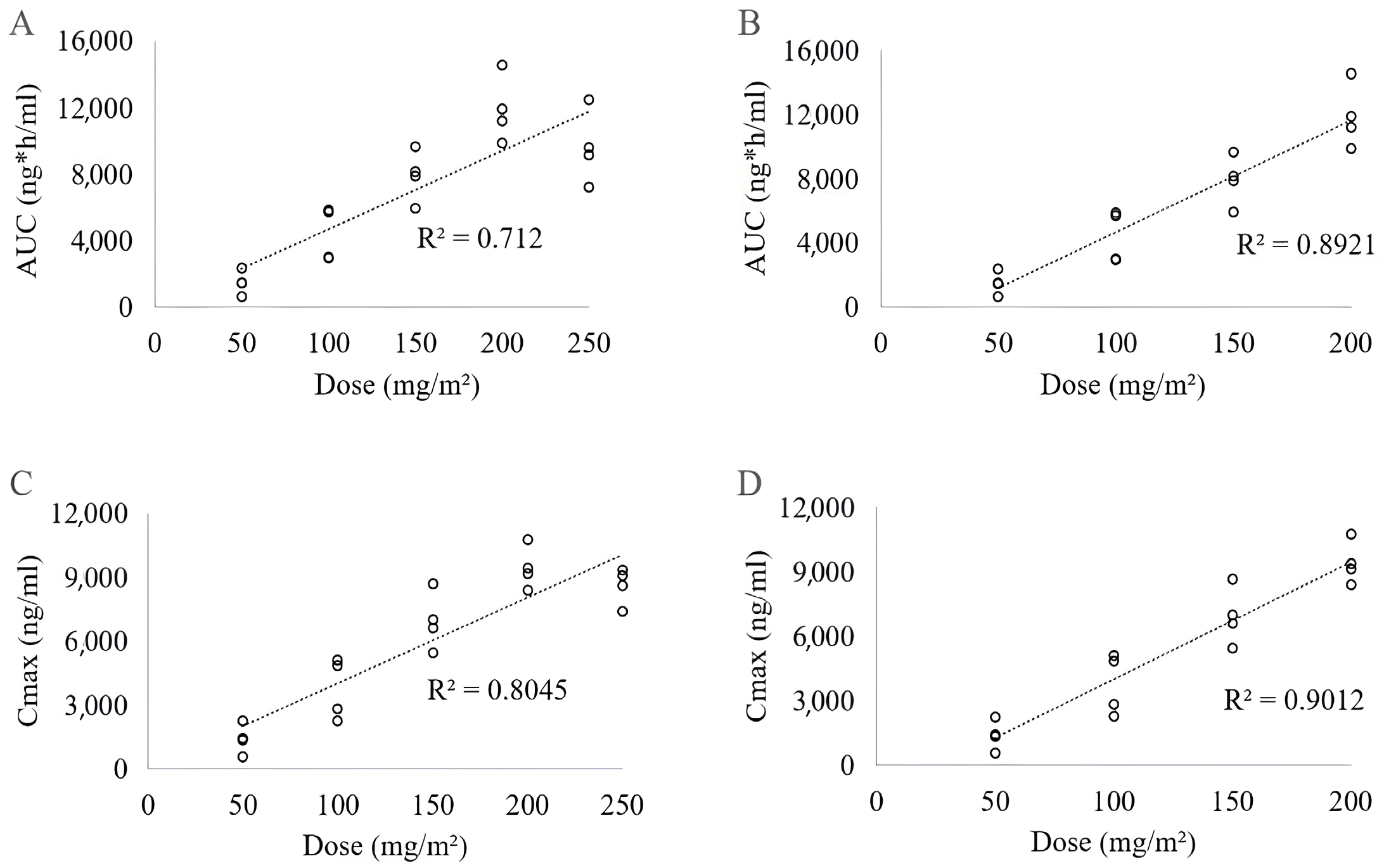
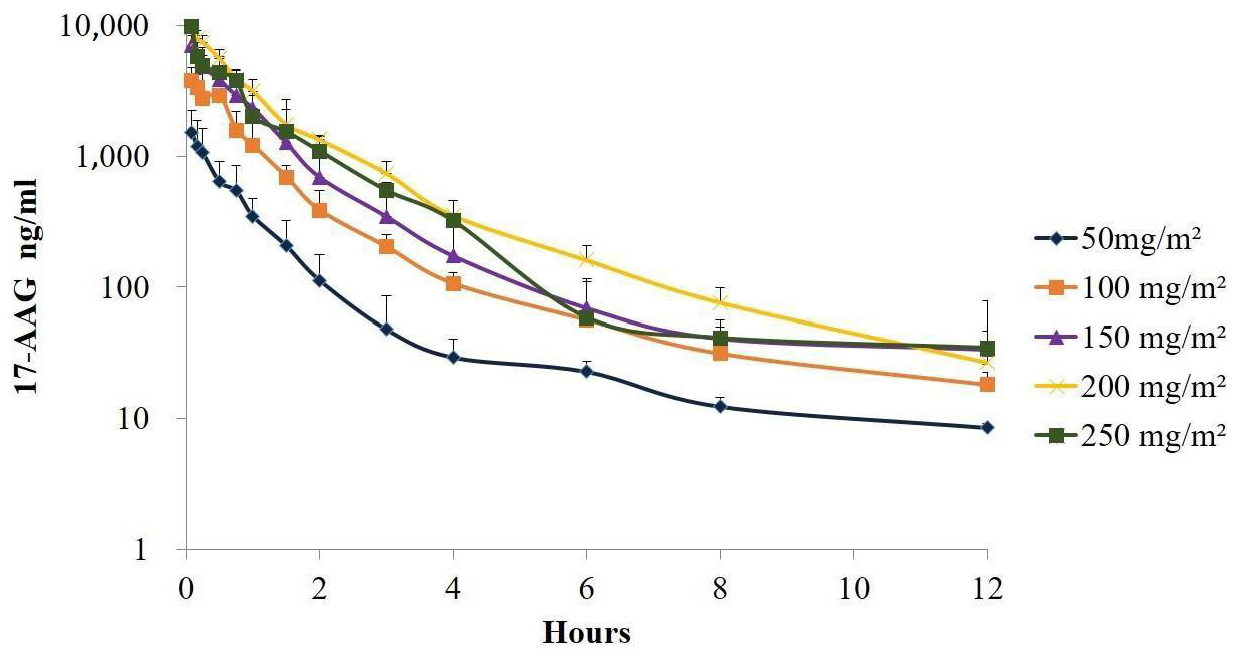
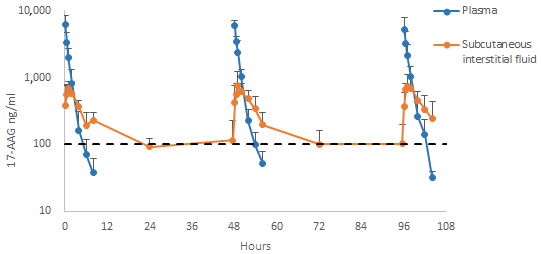
In the New World, dogs are considered the main reservoir of visceral leishmaniasis (VL). Due to inefficacies in existing treatments and the lack of an efficient vaccine, dog culling is one of the main strategies used to control disease, making the development of new therapeutic interventions mandatory. We previously showed that Tanespimycin (17-AAG), a Hsp90 inhibitor, demonstrated potential for use in leishmaniasis treatment. The present study aimed to test the safety of 17-AAG in dogs by evaluating plasma pharmacokinetics, dose-proportionality, and the tolerability of 17-AAG in response to a dose-escalation protocol and multiple administrations at a single dose in healthy dogs. Two protocols were used: Study A: four dogs received variable intravenous (IV) doses (50, 100, 150, 200, or 250 mg/m2) of 17-AAG or a placebo (n = 4/dose level), using a cross-over design with a 7-day “wash-out” period; Study B: nine dogs received three IV doses of 150 mg/m2 of 17-AAG administered at 48 h intervals. 17-AAG concentrations were determined by a validated high-performance liquid chromatographic (HPLC) method: linearity (R2 = 0.9964), intra-day precision with a coefficient of variation (CV) ≤ 8%, inter-day precision (CV ≤ 20%), and detection and quantification limits of 12.5 and 25 ng/mL, respectively. In Study A, 17-AAG was generally well tolerated. However, increased levels of liver enzymes–alanine aminotransferase (ALT), aspartate aminotransferase (AST), and gamma-glutamyl transferase (GGT)–and bloody diarrhea were observed in all four dogs receiving the highest dosage of 250 mg/m2. After single doses of 17-AAG (50–250 mg/m2), maximum plasma concentrations (Cmax) ranged between 1405 ± 686 and 9439 ± 991 ng/mL, and the area under the curve (AUC) plotting plasma concentration against time ranged between 1483 ± 694 and 11,902 ± 1962 AUC 0–8 h μg/mL × h, respectively. Cmax and AUC parameters were dose-proportionate between the 50 and 200 mg/m2 doses. Regarding Study B, 17-AAG was found to be well tolerated at multiple doses of 150 mg/m2. Increased levels of liver enzymes–ALT (28.57 ± 4.29 to 173.33 ± 49.56 U/L), AST (27.85 ± 3.80 to 248.20 ± 85.80 U/L), and GGT (1.60 ± 0.06 to 12.70 ± 0.50 U/L)–and bloody diarrhea were observed in only 3/9 of these dogs. After the administration of multiple doses, Cmax and AUC 0–48 h were 5254 ± 2784 μg/mL and 6850 ± 469 μg/mL × h in plasma and 736 ± 294 μg/mL and 7382 ± 1357 μg/mL × h in tissue transudate, respectively. In conclusion, our results demonstrate the potential of 17-AAG in the treatment of CVL, using a regimen of three doses at 150 mg/m2, since it presents the maintenance of high concentrations in subcutaneous interstitial fluid, low toxicity, and reversible hepatotoxicity.
Keywords: toxicity; pharmacokinetics; dogs; canine visceral leishmaniasis; Tanespimycin (17-AAG); dose-escalation protocol toxicity; pharmacokinetics; dogs; canine visceral leishmaniasis; Tanespimycin (17-AAG); dose-escalation protocol