Review

Microbiome and Prostate Cancer: Emerging Diagnostic and Therapeutic Opportunities

by
Sung Jin Kim
1,†,
Myungchan Park
2,†,
Ahnryul Choi
3,* and
Sangjun Yoo
4,*
1
Department of Urology, Gangneung Asan Hospital, University of Ulsan College of Medicine, Gangneung 25440, Republic of Korea
2
Department of Urology, Haeundae Paik Hospital, Inje University College of Medicine, Busan 47392, Republic of Korea
3
Department of Biomedical Engineering, College of Medical Convergence, Catholic Kwandong University, Gangneung 25601, Republic of Korea
4
Department of Urology, SNU-SMG Boramae Medical Center, Seoul 07061, Republic of Korea
*
Authors to whom correspondence should be addressed.
These authors contributed equally to this work.
Pharmaceuticals 2024, 17(1), 112; https://doi.org/10.3390/ph17010112
Submission received: 11 December 2023 / Revised: 6 January 2024 / Accepted: 7 January 2024 / Published: 13 January 2024
(This article belongs to the Section Pharmaceutical Technology)

Abstract

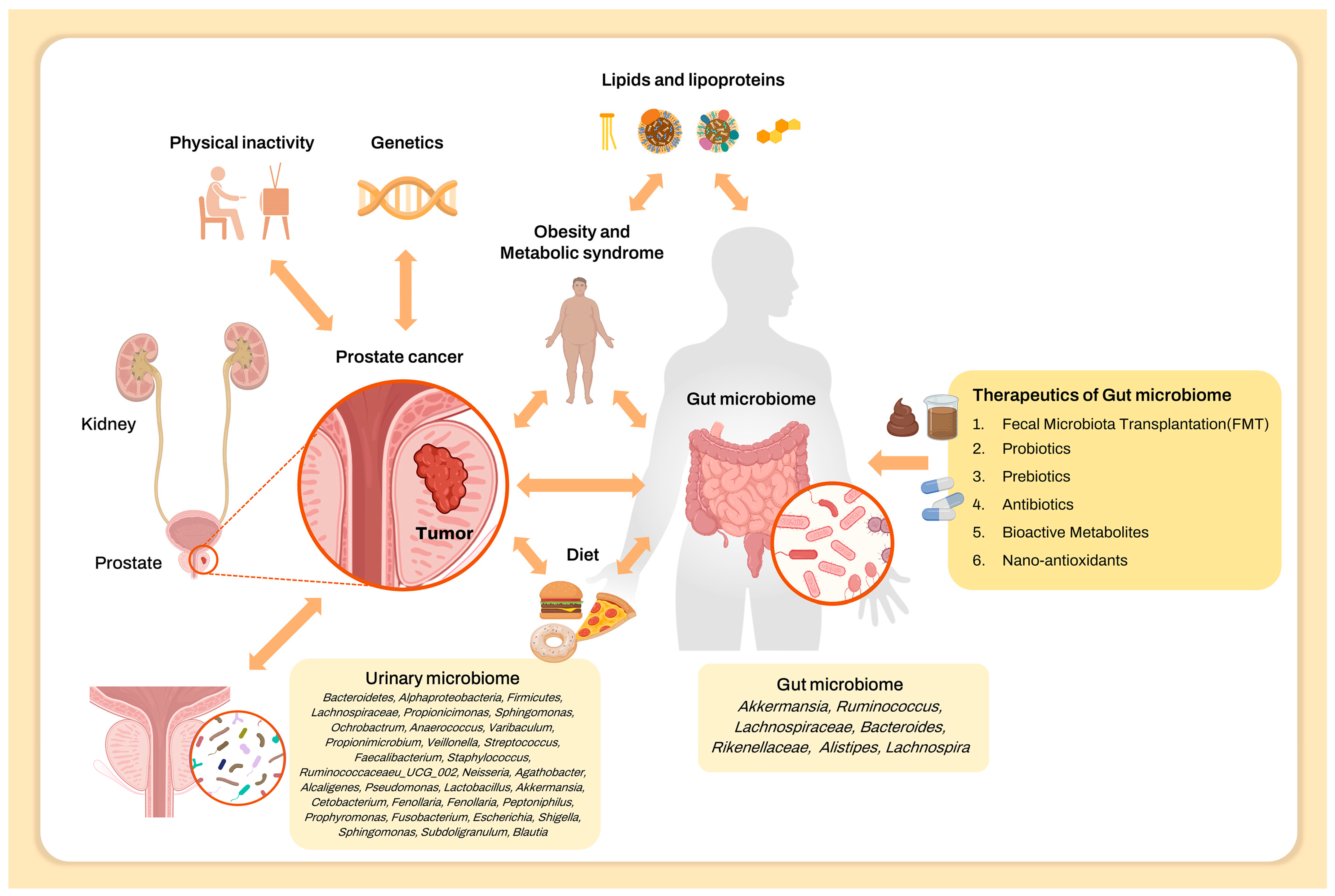
This review systematically addresses the correlation between the microbiome and prostate cancer and explores its diagnostic and therapeutic implications. Recent research has indicated an association between the urinary and gut microbiome composition and prostate cancer incidence and progression. Specifically, the urinary microbiome is a potential non-invasive biomarker for early detection and risk evaluation, with altered microbial profiles in prostate cancer patients. This represents an advancement in non-invasive diagnostic approaches to prostate cancer. The role of the gut microbiome in the efficacy of various cancer therapies has recently gained attention. Gut microbiota variations can affect the metabolism and effectiveness of standard treatment modalities, including chemotherapy, immunotherapy, and hormone therapy. This review explores the potential of gut microbiome modification through dietary interventions, prebiotics, probiotics, and fecal microbiota transplantation for improving the treatment response and mitigating adverse effects. Moreover, this review discusses the potential of microbiome profiling for patient stratification and personalized treatment strategies. While the current research identifies the pivotal role of the microbiome in prostate cancer, it also highlights the necessity for further investigations to fully understand these complex interactions and their practical applications in improving patient outcomes in prostate cancer management.
Keywords: prostate cancer; urine microbiome; gut microbiome prostate cancer; urine microbiome; gut microbiome