Review

Baicalin—Current Trends in Detection Methods and Health-Promoting Properties

by
Agata Bajek-Bil
1,
Marcelina Chmiel
2,
Aleksandra Włoch
3 and
Monika Stompor-Gorący
2,*
1
Faculty of Chemistry, Rzeszow University of Technology, 35-959 Rzeszów, Poland
2
Institute of Medical Sciences, University of Rzeszów, 35-959 Rzeszów, Poland
3
Department of Physics and Biophysics, Wrocław University of Environmental and Life Sciences, 50-375 Wrocław, Poland
*
Author to whom correspondence should be addressed.
Pharmaceuticals 2023, 16(4), 570; https://doi.org/10.3390/ph16040570
Submission received: 2 March 2023 / Revised: 22 March 2023 / Accepted: 3 April 2023 / Published: 10 April 2023

Abstract

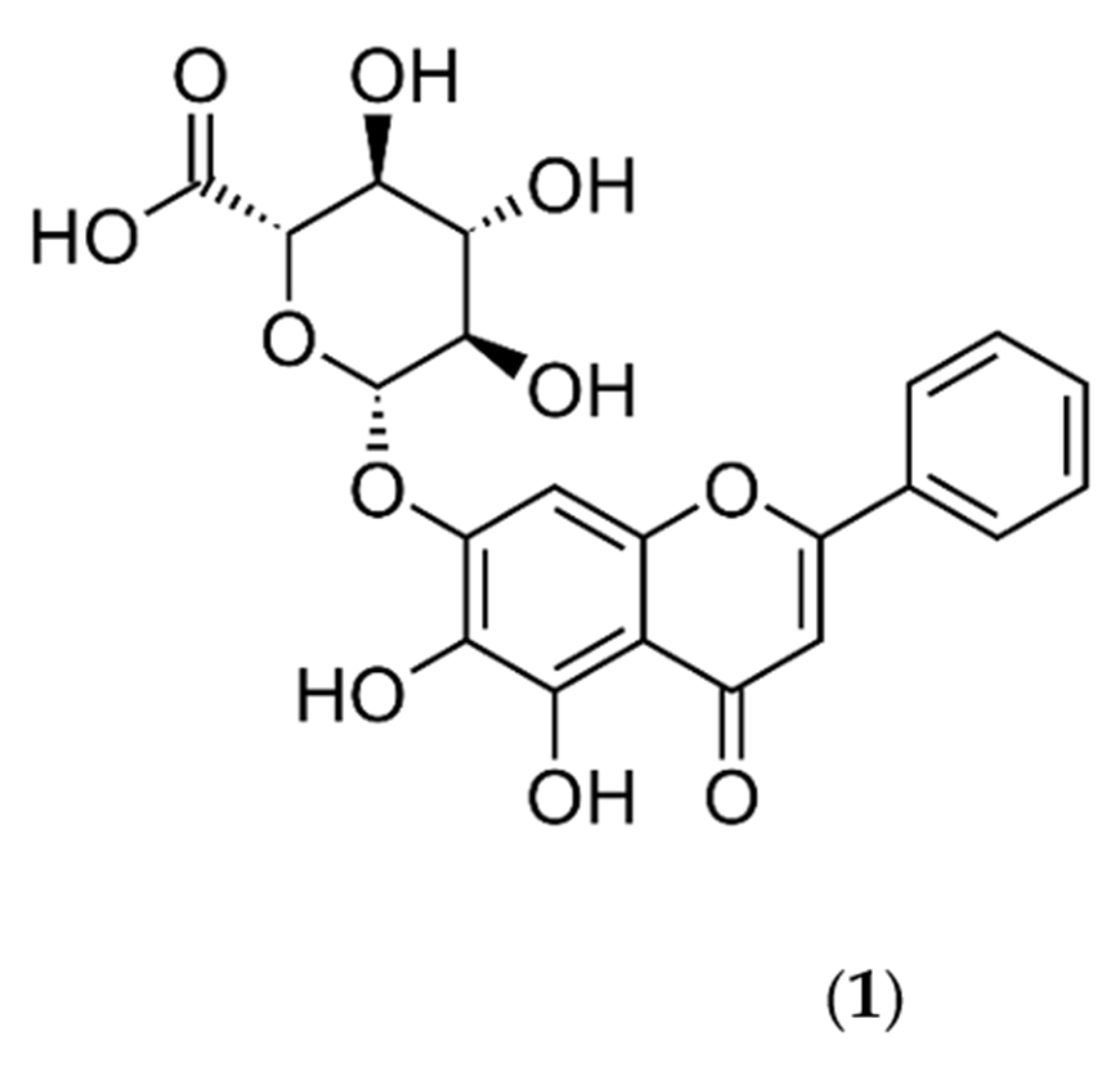
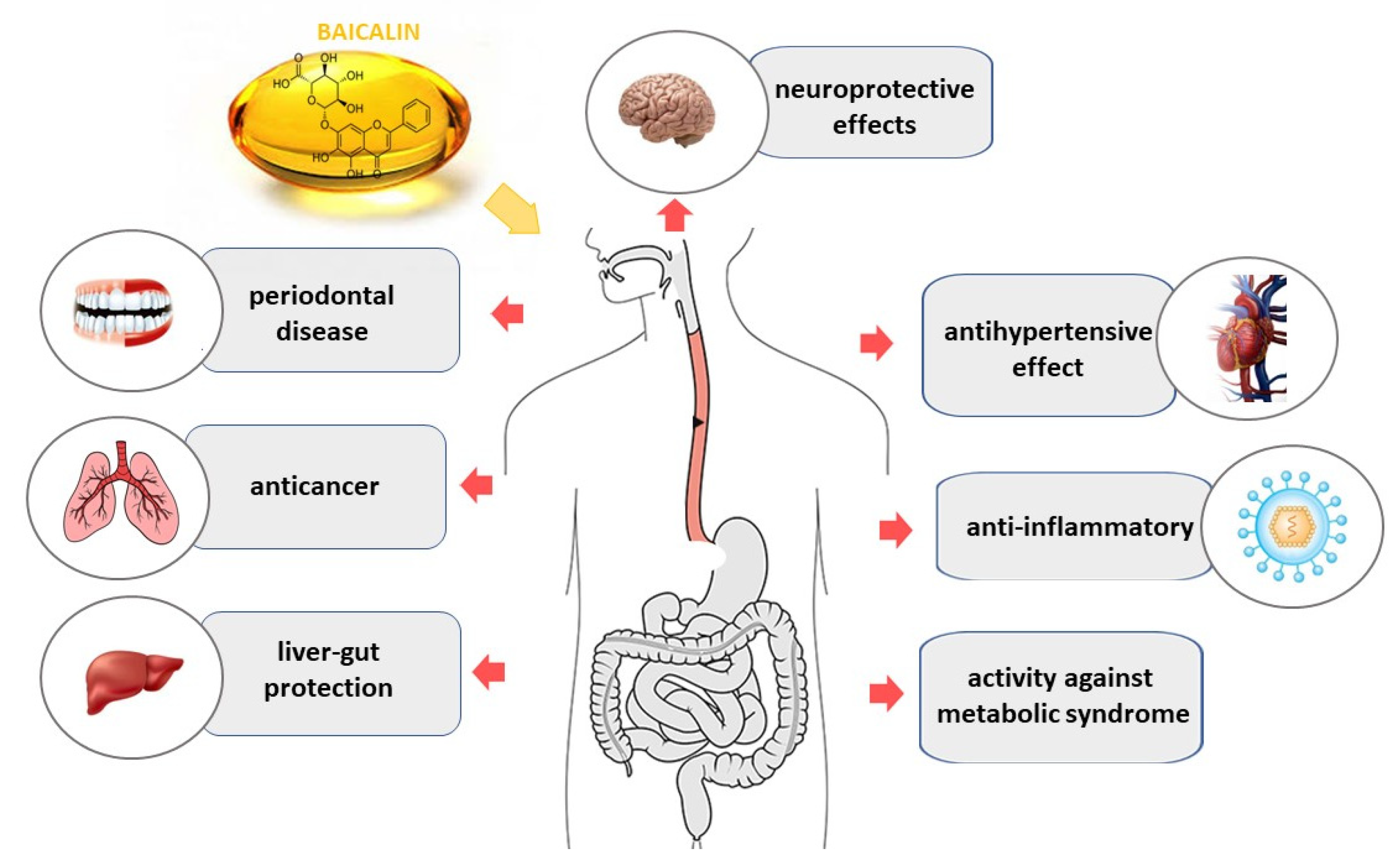
Baicalin (7-D-glucuronic acid-5,6-dihydroxyflavone) belongs to natural flavonoids extracted from the roots of Scutellaria baicalensis, the plant used in traditional Chinese medicine. It has been proven that baicalin has various pharmacological activities, such as antioxidant, anti-inflammatory, anticancer, antibacterial, and anti-apoptotic ones. However, it is essential not only to determine the medical usefulness of baicalin, but also to find and develop the most effective methods for its extraction and detection. Therefore, the aim of this review was to summarize the current methods of detection and identification of baicalin and to present the medical applications of baicalin and the underlying mechanisms of its action. Based on the review of the latest literature, it can be concluded that liquid chromatography alone or together with mass spectrometry is the most commonly used method for the determination of baicalin. Recently, also new electrochemical methods have been established, e.g., biosensors with fluorescence, which have better detection limits, sensitivity, and selectivity.
Keywords: baicalin; detection methods; liquid chromatography; biosensors; pharmacological effects; Scutellaria baicalensis baicalin; detection methods; liquid chromatography; biosensors; pharmacological effects; Scutellaria baicalensis