Adaptive Control of the Redundant Axis of a Surgical Robot for Operating Room Workspace Optimization Using Reinforcement Learning
 ,
,  , and
, and
Abstract
1. Introduction
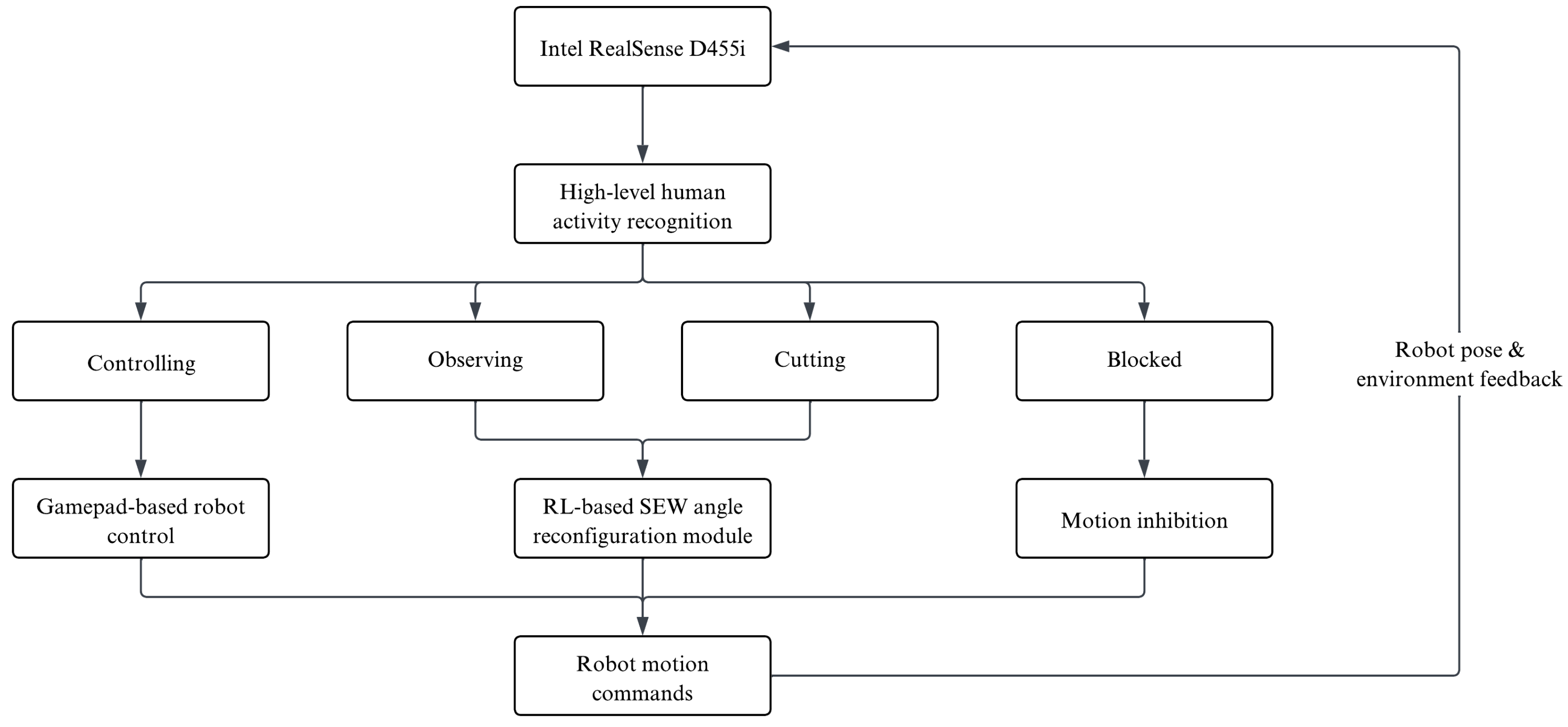
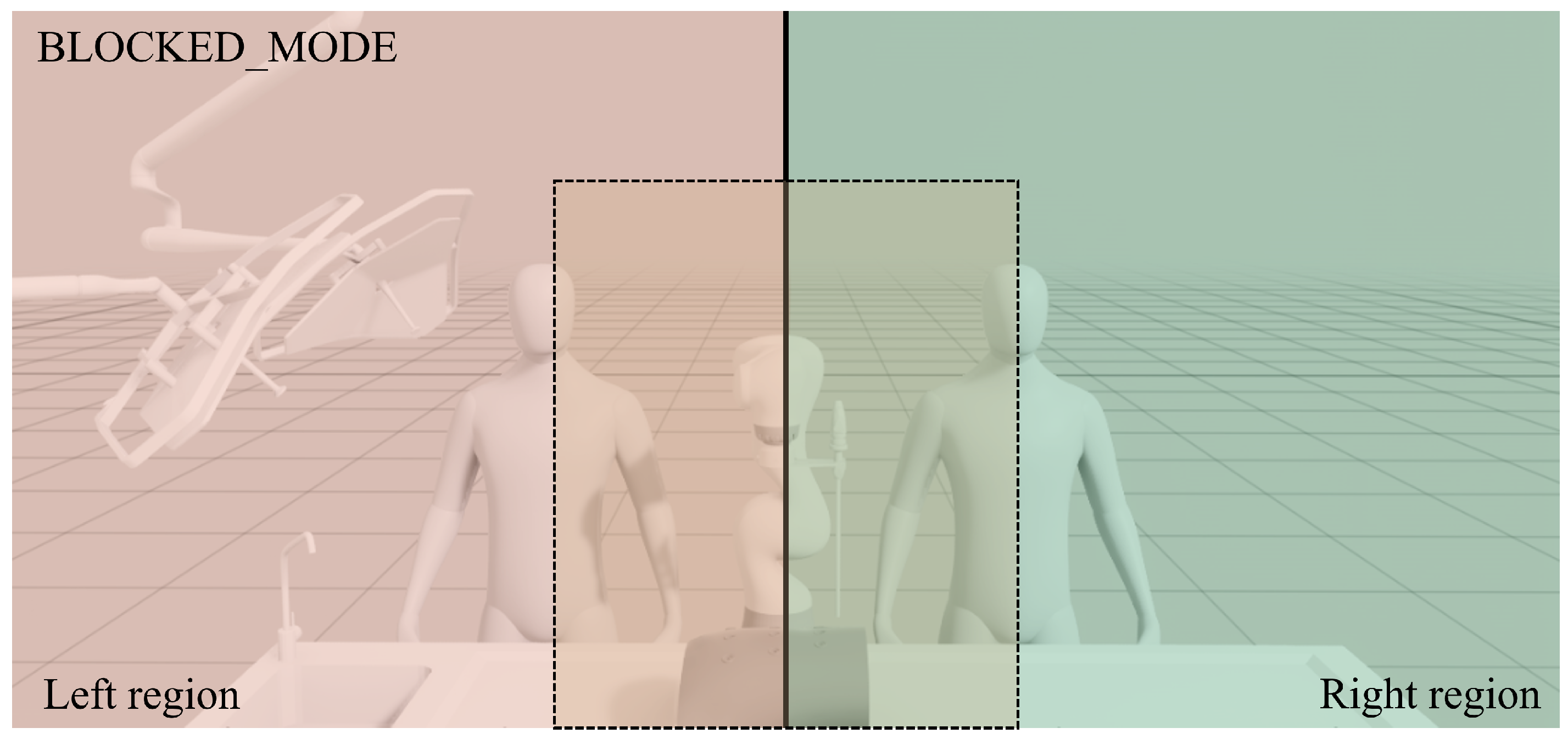
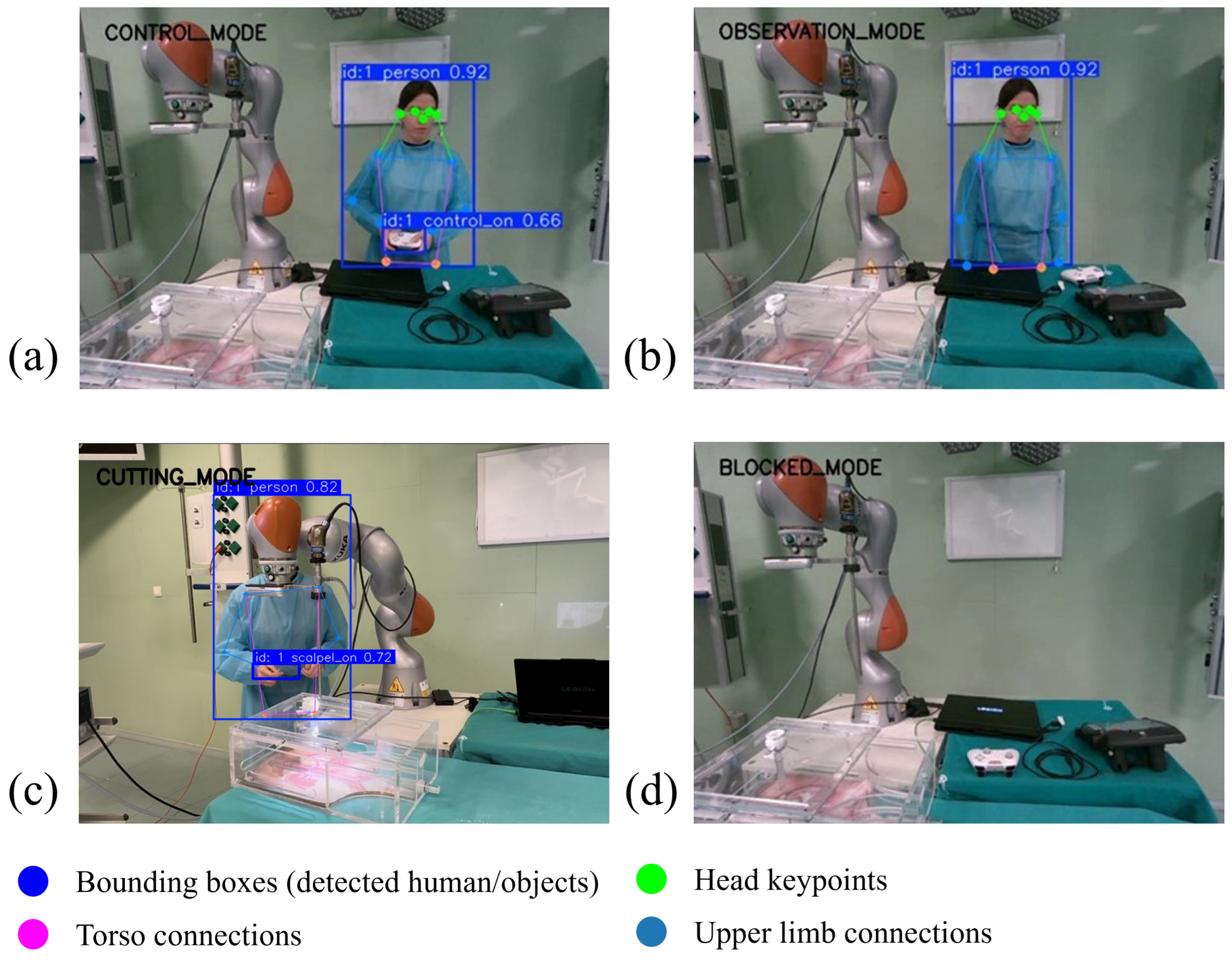
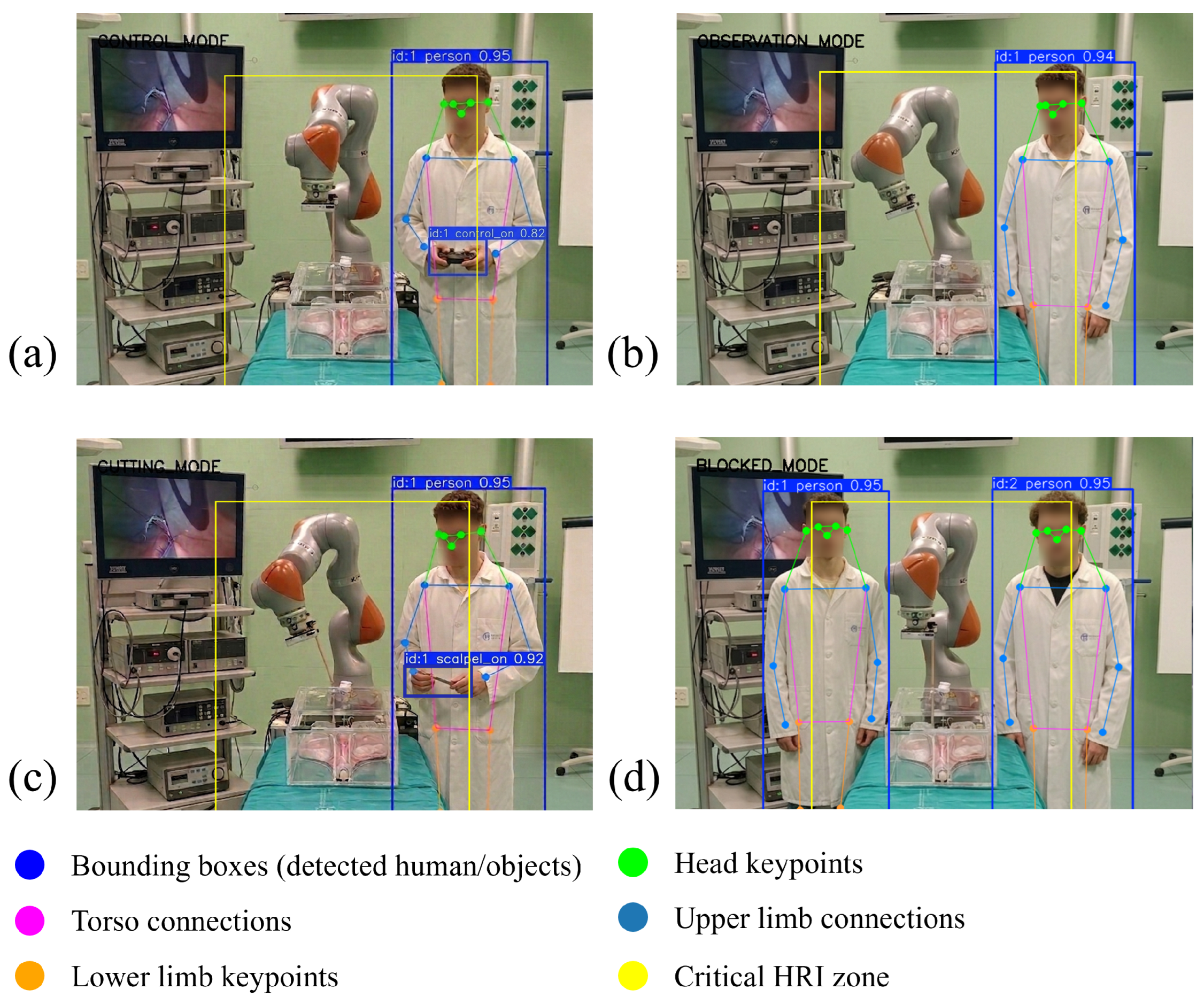
- A vision-based human activity recognition framework is introduced to infer surgeon or nurse activity and proximity in real time, enabling perception-driven and context-conditioned robot behavior without requiring additional explicit user commands.
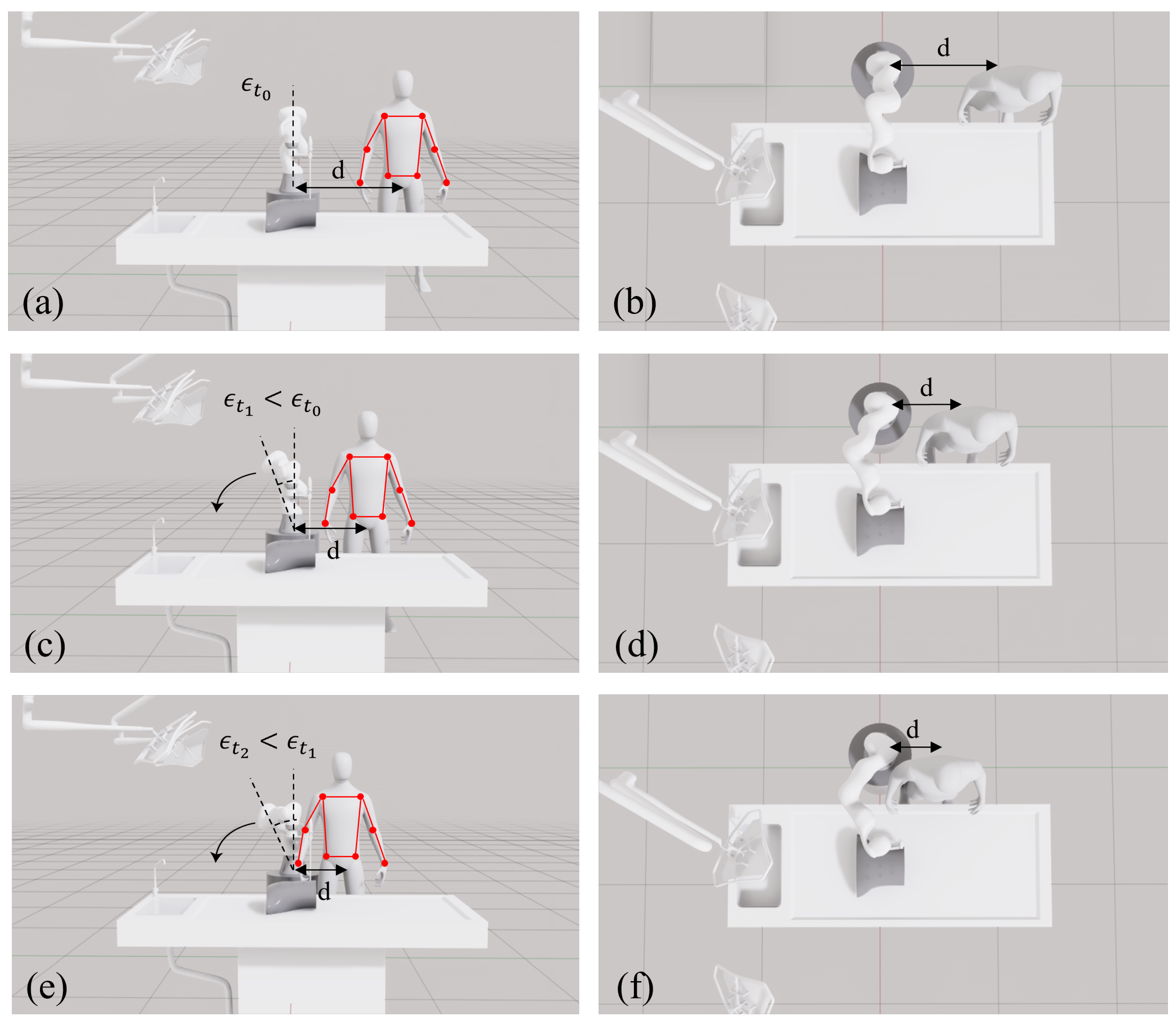
- A perception-conditioned RL controller is proposed to regulate the SEW redundant degree of freedom of a collaborative laparoscope-holding manipulator, allowing proactive and context-aware posture reconfiguration to increase workspace clearance while preserving the laparoscope pose.
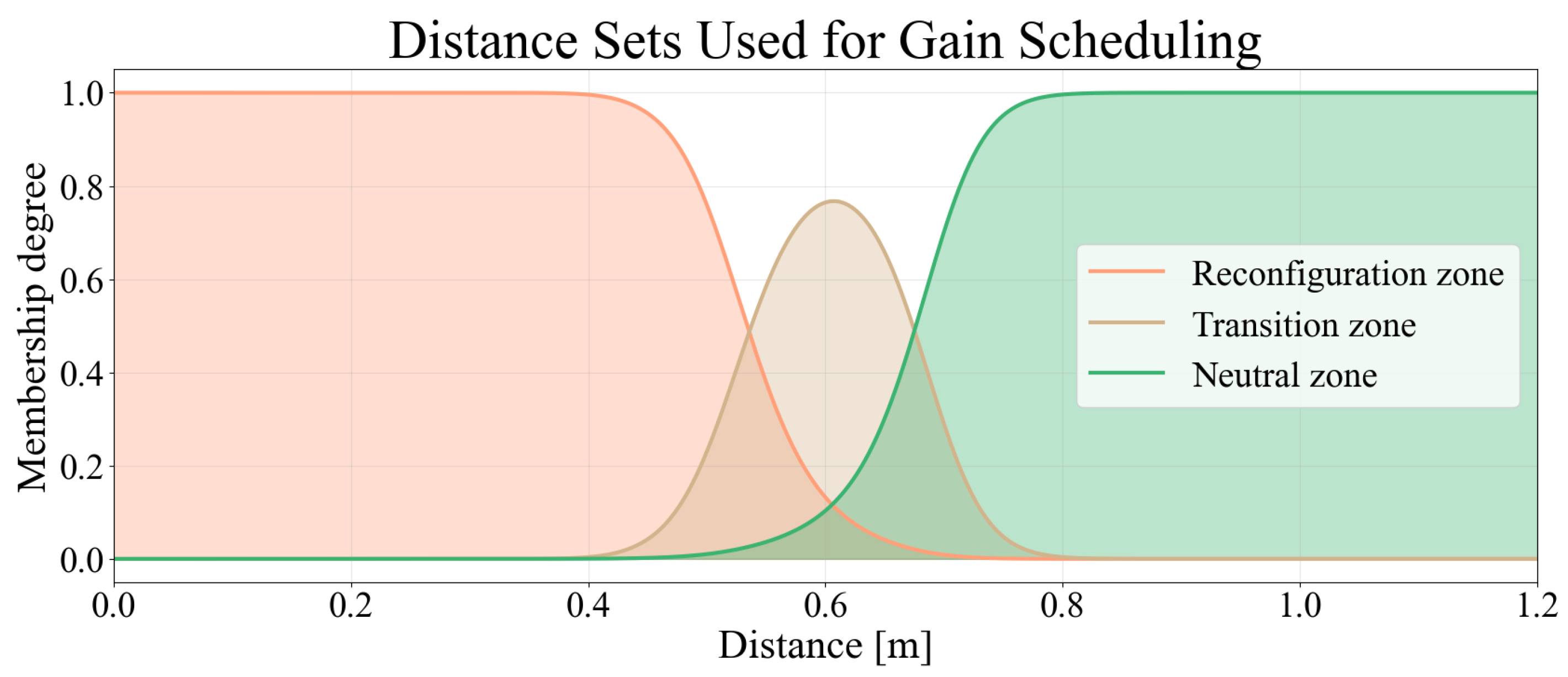
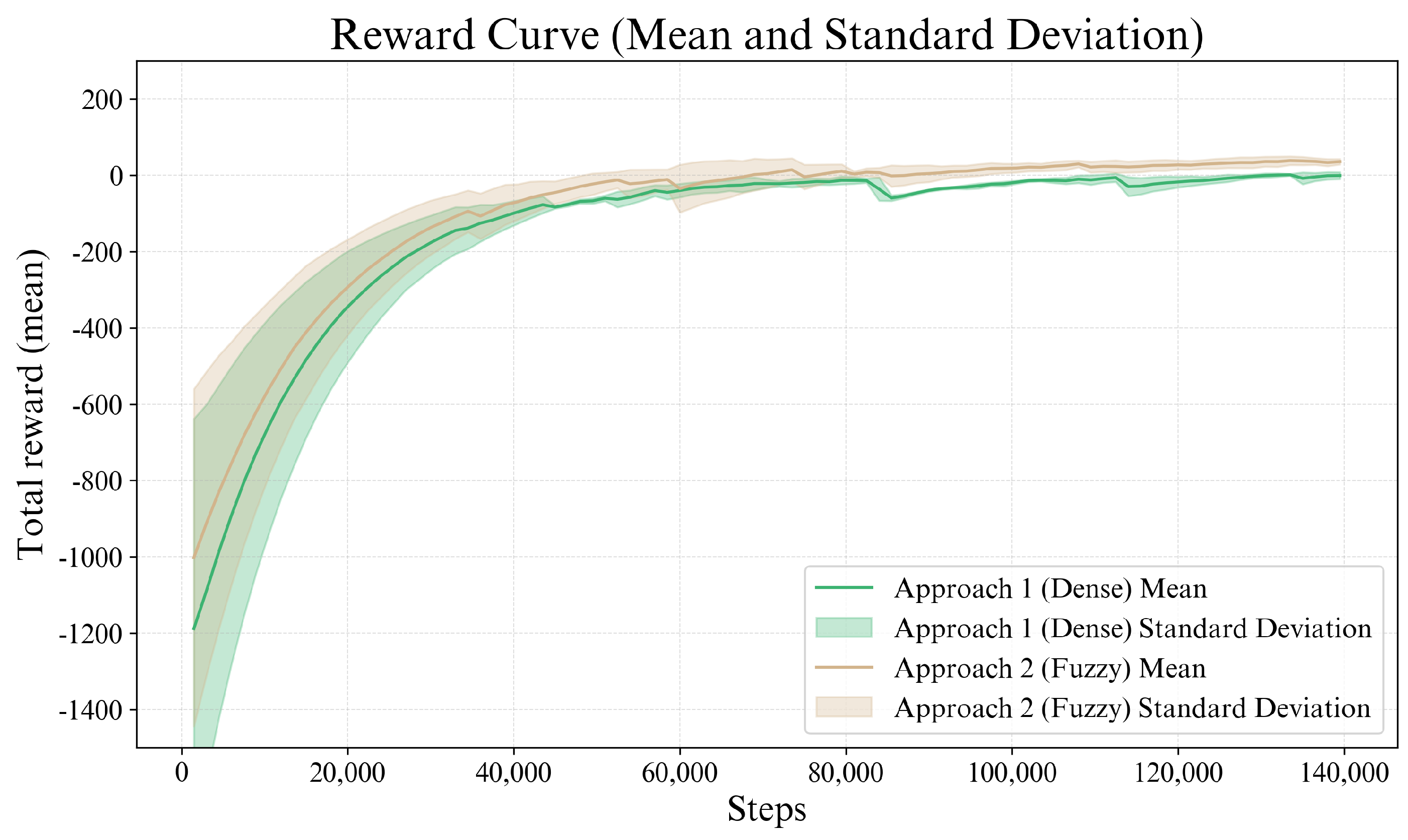
- Two reward formulations, traditional dense and fuzzy, are investigated, where the fuzzy formulation introduces a context-dependent reward shaping strategy that enables smooth and continuous adaptation of the tracking penalty as a function of HRI, providing a comparative analysis of training stability and robustness for redundancy adaptation under uncertain human motion.
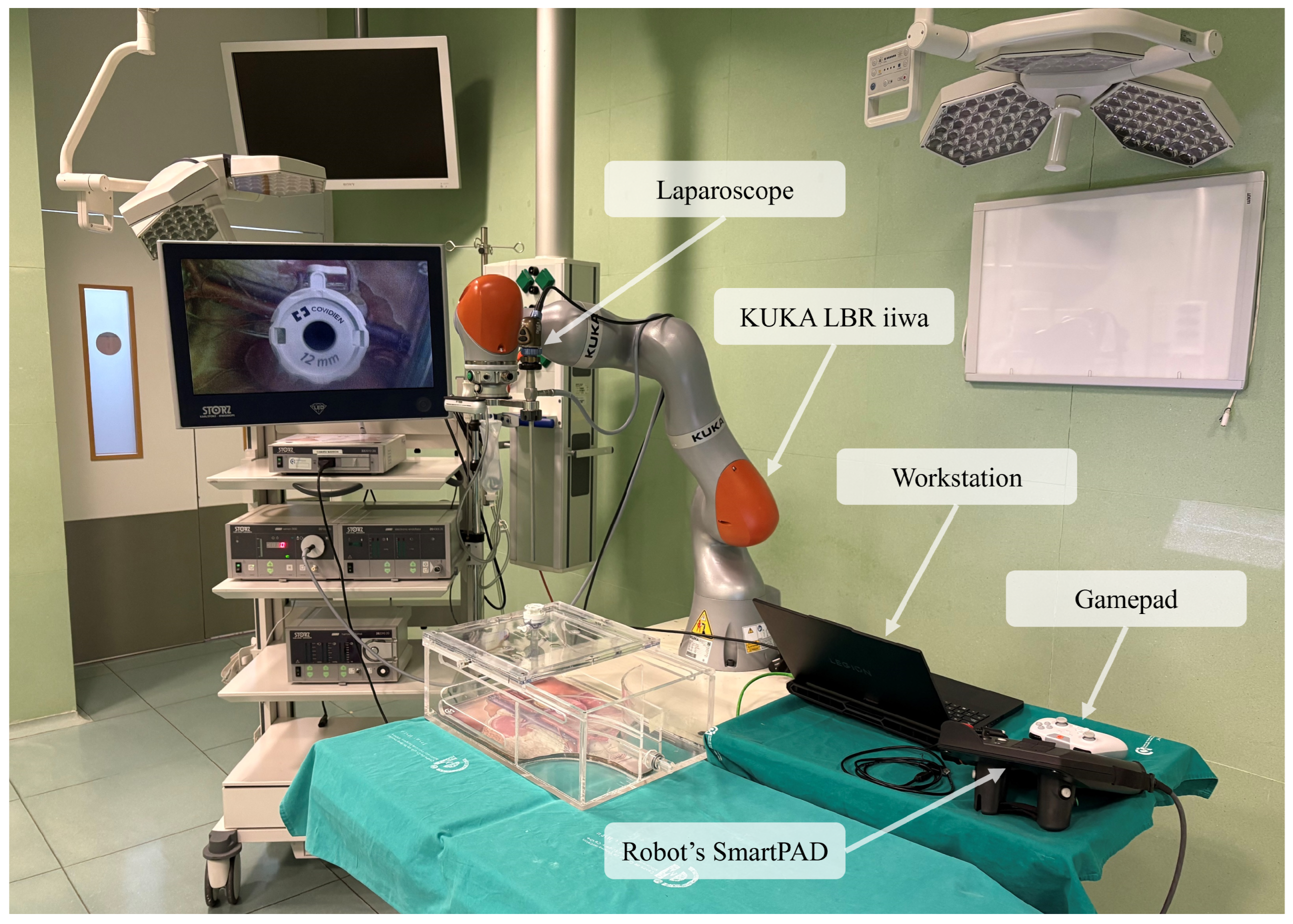
- The complete hierarchical perception–decision–control architecture is implemented and validated as a proof-of-concept on a real KUKA LBR iiwa platform in a realistic laboratory setup, demonstrating the feasibility of integrating high-level semantic perception with learning-based redundancy adaption for HRI-oriented workspace-aware posture adaptation.
2. Related Works
2.1. Reinforcement Learning in Surgical Robotics
2.2. Human–Robot Interaction in Operating Rooms
2.3. Research Gap
3. Method
3.1. Control Overview
| Algorithm 1 Hierarchical control loop for context-aware RL-based SEW reconfiguration |
|
3.2. Human Activity Recognition
3.3. Reinforcement Learning Control
3.3.1. Markov Decision Process
3.3.2. State Space
3.3.3. Action Space
3.3.4. Reward
4. Results
4.1. Training
4.2. Evaluations
4.2.1. Directional Response Accuracy
4.2.2. Task Compliance Rate
5. Discussion
6. Conclusions
Author Contributions
Funding
Data Availability Statement
Acknowledgments
Conflicts of Interest
Abbreviations
| APF | Artificial Potential Field |
| DDPG | Deep Deterministic Policy Gradient |
| DQN | Deep Q-Network |
| HRI | Human–Robot Interaction |
| MDP | Markov Decision Process |
| PER | Prioritized Experience Replay |
| PPO | Proximal Policy Optimization |
| RCM | Remote Center of Motion |
| RL | Reinforcement Learning |
| RULA | Rapid Upper Limb Assessment |
| SAC | Soft Actor–Critic |
| SEW | Shoulder–Elbow–Wrist |
References
- Buia, A.; Stockhausen, F.; Hanisch, E. Laparoscopic surgery: A qualified systematic review. World J. Methodol. 2015, 5, 238. [Google Scholar] [CrossRef] [PubMed]
- Zhai, L.; Chen, Y.; Zhang, S. The effect of laparoscopic and abdominal surgery on the treatment of ectopic pregnancy: A systematic review and meta-analysis. Front. Med. 2024, 11, 1400970. [Google Scholar] [CrossRef] [PubMed]
- Sánchez-Margallo, F.M.; Caballero, D.; Sánchez-Margallo, J.A. Artificial intelligence, predictive modelling and robotics in minimally invasive surgery: Towards precision surgery. Cirugía Española (Engl. Ed.) 2026, 104, 800295. [Google Scholar] [CrossRef]
- Allendes, P.C.; Díaz, E.C.; Rodríguez–Herrera, C.; Rey, P.N.; Miranda–Mendoza, I. Ergonomía en cirugía laparoscópica ginecológica Ergonomics and gynecologic laparoscopic surgery. Comentario Sobre la Asociación Entre la vía de Parto y el Daño Perineal e Incontinencia Urinaria y Fecal 2020, 85, 222–235. [Google Scholar]
- Bessone, V.; Roppenecker, D.B.; Adamsen, S. Work-related musculoskeletal injury rates, risk factors, and ergonomics in different endoscopic specialties: A review. Healthcare 2024, 12, 885. [Google Scholar] [CrossRef]
- Reyes, D.A.G.; Tang, B.; Cuschieri, A. Minimal access surgery (MAS)-related surgeon morbidity syndromes. Surg. Endosc. Other Interv. Tech. 2006, 20, 1–13. [Google Scholar] [CrossRef]
- Shah, S.Z.; Rehman, S.T.; Khan, A.; Hussain, M.M.; Ali, M.; Sarwar, S.; Abid, S. Ergonomics of gastrointestinal endoscopies: Musculoskeletal injury among endoscopy physicians, nurses, and technicians. World J. Gastrointest. Endosc. 2022, 14, 142. [Google Scholar] [CrossRef]
- Pawa, S.; Martindale, S.L.; Gaidos, J.K.; Banerjee, P.; Kothari, S.; D’Souza, S.L.; Oxentenko, A.S.; Burke, C.A. Endoscopy-related injury among gastroenterology trainees. Endosc. Int. Open 2022, 10, E1095–E1104. [Google Scholar] [CrossRef]
- Pérez-Salazar, M.J.; Caballero, D.; Sánchez-Margallo, J.A.; Sánchez-Margallo, F.M. Comparative study of ergonomics in conventional and robotic-assisted laparoscopic surgery. Sensors 2024, 24, 3840. [Google Scholar] [CrossRef]
- Kumar, A. Reinforcement Learning for Robotic-Assisted Surgeries: Optimizing Procedural Outcomes and Minimizing Post-Operative Complication. Int. J. Res. Publ. Rev. 2025, 6, 5669–5684. [Google Scholar] [CrossRef]
- Basha, S.; Anbatawi, M.; Abdurahiman, N.; Padhan, J.; Baez, V.M.; Al-Ansari, A.; Tsiamyrtzis, P.; Becker, A.T.; Navkar, N.V. Evaluating Human-Robot Interfaces for Maneuvering Surgical Laparoscopes using Robotic Scope Assistant Systems. ACM Trans. Hum.-Robot Interact. 2025, 14, 52. [Google Scholar] [CrossRef]
- Hubens, G.; Ruppert, M.; Balliu, L.; Vaneerdeweg, W. What have we learnt after two years working with the da Vinci robot system in digestive surgery? Acta Chir. Belg. 2004, 104, 609–614. [Google Scholar] [CrossRef]
- Elias, A.J.; Wen, J.T. Redundancy parameterization and inverse kinematics of 7-DOF revolute manipulators. Mech. Mach. Theory 2024, 204, 105824. [Google Scholar] [CrossRef]
- Elguea-Aguinaco, Í.; Serrano-Muñoz, A.; Chrysostomou, D.; Inziarte-Hidalgo, I.; Bøgh, S.; Arana-Arexolaleiba, N. Goal-conditioned reinforcement learning within a human–robot disassembly environment. Appl. Sci. 2022, 12, 11610. [Google Scholar] [CrossRef]
- Elguea-Aguinaco, Í.; Inziarte-Hidalgo, I.; Bøgh, S.; Arana-Arexolaleiba, N. A Review on Reinforcement Learning for Motion Planning of Robotic Manipulators. Int. J. Intell. Syst. 2024, 2024, 1636497. [Google Scholar] [CrossRef]
- Sutton, R.S.; Barto, A.G. Reinforcement Learning: An Introduction; MIT Press: Cambridge, UK, 1998; Volume 1, pp. 9–11. [Google Scholar]
- Scheikl, P.M.; Gyenes, B.; Younis, R.; Haas, C.; Neumann, G.; Wagner, M.; Mathis-Ullrich, F. Lapgym-an open source framework for reinforcement learning in robot-assisted laparoscopic surgery. J. Mach. Learn. Res. 2023, 24, 17665–17706. [Google Scholar]
- Lu, J.; Ma, G.; Zhang, G. Fuzzy machine learning: A comprehensive framework and systematic review. IEEE Trans. Fuzzy Syst. 2024, 32, 3861–3878. [Google Scholar] [CrossRef]
- Jayaraman, P.; Desman, J.; Sabounchi, M.; Nadkarni, G.N.; Sakhuja, A. A primer on reinforcement learning in medicine for clinicians. NPJ Digit. Med. 2024, 7, 337. [Google Scholar] [CrossRef]
- Lowery, C.; Faisal, A.A. Towards efficient, personalized anesthesia using continuous reinforcement learning for propofol infusion control. In Proceedings of the 2013 6th International IEEE/EMBS Conference on Neural Engineering (NER); IEEE: New York, NY, USA, 2013; pp. 1414–1417. [Google Scholar]
- Qian, C.; Ren, H. Deep reinforcement learning in surgical robotics: Enhancing the automation level. In Handbook of Robotic Surgery; Elsevier: Amsterdam, The Netherlands, 2025; pp. 89–102. [Google Scholar]
- Murali, A.; Sen, S.; Kehoe, B.; Garg, A.; McFarland, S.; Patil, S.; Boyd, W.D.; Lim, S.; Abbeel, P.; Goldberg, K. Learning by observation for surgical subtasks: Multilateral cutting of 3d viscoelastic and 2d orthotropic tissue phantoms. In Proceedings of the 2015 IEEE International Conference on Robotics and Automation (ICRA); IEEE: New York, NY, USA, 2015; pp. 1202–1209. [Google Scholar]
- Thananjeyan, B.; Garg, A.; Krishnan, S.; Chen, C.; Miller, L.; Goldberg, K. Multilateral surgical pattern cutting in 2D orthotropic gauze with deep reinforcement learning policies for tensioning. In Proceedings of the 2017 IEEE International Conference on Robotics and Automation (ICRA); IEEE: New York, NY, USA, 2017; pp. 2371–2378. [Google Scholar]
- Ou, Y.; Tavakoli, M. Sim-to-real surgical robot learning and autonomous planning for internal tissue points manipulation using reinforcement learning. IEEE Robot. Autom. Lett. 2023, 8, 2502–2509. [Google Scholar] [CrossRef]
- Nguyen, T.; Nguyen, N.D.; Bello, F.; Nahavandi, S. A new tensioning method using deep reinforcement learning for surgical pattern cutting. In Proceedings of the 2019 IEEE International Conference on Industrial Technology (ICIT); IEEE: New York, NY, USA, 2019; pp. 1339–1344. [Google Scholar]
- Nguyen, N.D.; Nguyen, T.; Nahavandi, S.; Bhatti, A.; Guest, G. Manipulating soft tissues by deep reinforcement learning for autonomous robotic surgery. In Proceedings of the 2019 IEEE International Systems Conference (SysCon); IEEE: New York, NY, USA, 2019; pp. 1–7. [Google Scholar]
- He, X.; Zhang, S.; Chu, J.; Jia, T.; Yu, L.; Ouyang, B. Intuition-guided reinforcement learning for soft tissue manipulation with unknown constraints. Cyborg Bionic Syst. 2025, 6, 0114. [Google Scholar] [CrossRef]
- Shin, C.; Ferguson, P.W.; Pedram, S.A.; Ma, J.; Dutson, E.P.; Rosen, J. Autonomous tissue manipulation via surgical robot using learning based model predictive control. In Proceedings of the 2019 International Conference on Robotics and Automation (ICRA); IEEE: New York, NY, USA, 2019; pp. 3875–3881. [Google Scholar]
- Krishnan, S.; Garg, A.; Liaw, R.; Thananjeyan, B.; Miller, L.; Pokorny, F.T.; Goldberg, K. SWIRL: A sequential windowed inverse reinforcement learning algorithm for robot tasks with delayed rewards. Int. J. Robot. Res. 2019, 38, 126–145. [Google Scholar] [CrossRef]
- Pedram, S.A.; Ferguson, P.W.; Shin, C.; Mehta, A.; Dutson, E.P.; Alambeigi, F.; Rosen, J. Toward synergic learning for autonomous manipulation of deformable tissues via surgical robots: An approximate q-learning approach. In Proceedings of the 2020 8th IEEE RAS/EMBS International Conference for Biomedical Robotics and Biomechatronics (BioRob); IEEE: New York, NY, USA, 2020; pp. 878–884. [Google Scholar]
- Huang, T.; Chen, K.; Li, B.; Liu, Y.H.; Dou, Q. Guided reinforcement learning with efficient exploration for task automation of surgical robot. arXiv 2023, arXiv:2302.09772. [Google Scholar] [CrossRef]
- Fan, K.; Chen, Z.; Ferrigno, G.; De Momi, E. Learn from safe experience: Safe reinforcement learning for task automation of surgical robot. IEEE Trans. Artif. Intell. 2024, 5, 3374–3383. [Google Scholar] [CrossRef]
- Leng, J.; Zhu, T.; Huang, Z.; Li, R.; Zhou, X.; Lin, J.; Zhang, D. Deep reinforcement learning-based dynamic path planning of flexible needle in robotic puncturing. Biomim. Intell. Robot. 2026, 6, 100290. [Google Scholar] [CrossRef]
- Ho, Y.J.; Chiu, Z.Y.; Zhi, Y.; Yip, M.C. SurgIRL: Toward Life-Long Learning for Surgical Automation by Incremental Reinforcement Learning. IEEE Robot. Autom. Lett. 2025, 10, 13145–13152. [Google Scholar] [CrossRef]
- Coronato, A.; Naeem, M.; De Pietro, G.; Paragliola, G. Reinforcement learning for intelligent healthcare applications: A survey. Artif. Intell. Med. 2020, 109, 101964. [Google Scholar] [CrossRef]
- Kaur, P.; Mahajan, R. Human Robot Collaboration in Surgery: Communication Interface and Interaction Design. In Proceedings of the 2024 MIT Art, Design and Technology School of Computing International Conference (MITADTSoCiCon); IEEE: New York, NY, USA, 2024; pp. 1–5. [Google Scholar]
- Colan, J.; Davila, A.; Yamada, Y.; Hasegawa, Y. Human-Robot collaboration in surgery: Advances and challenges towards autonomous surgical assistants. In Proceedings of the 2025 34th IEEE International Conference on Robot and Human Interactive Communication (RO-MAN); IEEE: New York, NY, USA, 2025; pp. 1566–1572. [Google Scholar]
- Wan, Q.; Shi, Y.; Xiao, X.; Li, X.; Mo, H. Review of human–robot collaboration in robotic surgery. Adv. Intell. Syst. 2025, 7, 2400319. [Google Scholar] [CrossRef]
- Zhou, T.; Wachs, J.P. Early prediction for physical human robot collaboration in the operating room. Auton. Robot. 2018, 42, 977–995. [Google Scholar] [CrossRef]
- Su, H.; Sandoval, J.; Makhdoomi, M.; Ferrigno, G.; De Momi, E. Safety-enhanced human–robot interaction control of redundant robot for teleoperated minimally invasive surgery. In Proceedings of the 2018 IEEE International Conference on Robotics and Automation (ICRA); IEEE: New York, NY, USA, 2018; pp. 6611–6616. [Google Scholar]
- Su, H.; Yang, C.; Ferrigno, G.; De Momi, E. Improved human–robot collaborative control of redundant robot for teleoperated minimally invasive surgery. IEEE Robot. Autom. Lett. 2019, 4, 1447–1453. [Google Scholar] [CrossRef]
- Ait Ameur, M.A.; Yang, E.; Zhang, Y.P. Human–robot collaboration in healthcare: A comprehensive review of key components, applications, and future research. IEEE Trans. Med. Robot. Bionics 2026, 8, 127–139. [Google Scholar] [CrossRef]
- Mehta, S.A.; Losey, D.P. Unified learning from demonstrations, corrections, and preferences during physical human–robot interaction. ACM Trans. Hum.-Robot Interact. 2024, 13, 39. [Google Scholar] [CrossRef]
- Elguea-Aguinaco, Í.; Aguirre-Ortuzar, A.; Izagirre-Aizpitarte, U.; Inziarte-Hidalgo, I.; Bøgh, S.; Arana-Arexolaleiba, N. Novel automated interactive reinforcement learning framework with a constraint-based supervisor for procedural tasks. Knowl.-Based Syst. 2025, 309, 112870. [Google Scholar] [CrossRef]
- Ghadirzadeh, A.; Chen, X.; Yin, W.; Yi, Z.; Björkman, M.; Kragic, D. Human-centered collaborative robots with deep reinforcement learning. IEEE Robot. Autom. Lett. 2020, 6, 566–571. [Google Scholar] [CrossRef]
- Munguia-Galeano, F.; Veeramani, S.; Hernández, J.D.; Wen, Q.; Ji, Z. Affordance-based human–robot interaction with reinforcement learning. IEEE Access 2023, 11, 31282–31292. [Google Scholar] [CrossRef]
- Redmon, J.; Divvala, S.; Girshick, R.; Farhadi, A. You only look once: Unified, real-time object detection. In Proceedings of the IEEE Conference on Computer Vision and Pattern Recognition; IEEE: New York, NY, USA, 2016; pp. 779–788. [Google Scholar]
- Zadeh, L.A. Fuzzy logic. Computer 1988, 21, 83–93. [Google Scholar] [CrossRef]
- Zhao, W.; Queralta, J.P.; Westerlund, T. Sim-to-real transfer in deep reinforcement learning for robotics: A survey. In Proceedings of the 2020 IEEE Symposium Series on Computational Intelligence (SSCI); IEEE: New York, NY, USA, 2020; pp. 737–744. [Google Scholar]
- Mnih, V.; Kavukcuoglu, K.; Silver, D.; Rusu, A.A.; Veness, J.; Bellemare, M.G.; Graves, A.; Riedmiller, M.; Fidjeland, A.K.; Ostrovski, G.; et al. Human-level control through deep reinforcement learning. Nature 2015, 518, 529–533. [Google Scholar] [CrossRef]
- Serrano-Muñoz, A.; Chrysostomou, D.; Bøgh, S.; Arana-Arexolaleiba, N. skrl: Modular and flexible library for reinforcement learning. J. Mach. Learn. Res. 2023, 24, 12005–12013. [Google Scholar]
- Serrano-Muñoz, A.; Elguea-Aguinaco, Í.; Chrysostomou, D.; Bøgh, S.; Arana-Arexolaleiba, N. A scalable and unified multi-control framework for KUKA LBR iiwa collaborative robots. In Proceedings of the 2023 IEEE/SICE International Symposium on System Integration (SII); IEEE: New York, NY, USA, 2023; pp. 1–5. [Google Scholar]
- Tobin, J.; Fong, R.; Ray, A.; Schneider, J.; Zaremba, W.; Abbeel, P. Domain randomization for transferring deep neural networks from simulation to the real world. In Proceedings of the 2017 IEEE/RSJ International Conference on Intelligent Robots and Systems (IROS); IEEE: New York, NY, USA, 2017; pp. 23–30. [Google Scholar]
- Jin, L.; Li, S.; La, H.M.; Luo, X. Manipulability optimization of redundant manipulators using dynamic neural networks. IEEE Trans. Ind. Electron. 2017, 64, 4710–4720. [Google Scholar] [CrossRef]
- Shi, X.; Guo, Y.; Chen, X.; Chen, Z.; Yang, Z. Kinematics and singularity analysis of a 7-DOF redundant manipulator. Sensors 2021, 21, 7257. [Google Scholar] [CrossRef] [PubMed]
- Li, Z.; Li, C.; Li, S.; Cao, X. A fault-tolerant method for motion planning of industrial redundant manipulator. IEEE Trans. Ind. Inform. 2019, 16, 7469–7478. [Google Scholar] [CrossRef]
- Zhang, Y.; Wang, H. Redundancy-based motion planning with task constraints for robot manipulators. Sensors 2025, 25, 1900. [Google Scholar] [CrossRef]
- Ficuciello, F.; Villani, L.; Siciliano, B. Variable impedance control of redundant manipulators for intuitive human–robot physical interaction. IEEE Trans. Robot. 2015, 31, 850–863. [Google Scholar] [CrossRef]
- Dietrich, A.; Ott, C. Hierarchical impedance-based tracking control of kinematically redundant robots. IEEE Trans. Robot. 2019, 36, 204–221. [Google Scholar] [CrossRef]
- Salvi, M.; Dogan, S.; Inamdar, M.A.; Raghavendra, U.; Gudigar, A.; Nitti, F.; Ferraris, A.; Tuncer, T.; Barua, P.D.; Molinari, F.; et al. Evolution of fuzzy logic in medical applications: Methods, trends and clinical applications. Expert Syst. Appl. 2026, 321, 132344. [Google Scholar] [CrossRef]
- Autsou, S.; Dunajeva, O.; Pentel, A.; Shvets, O.; Roosileht, M. Application of fuzzy logic for collaborative robot control. Electronics 2025, 14, 4029. [Google Scholar] [CrossRef]
- Odriozola-Olalde, H.; Zamalloa, M.; Arana-Arexolaleiba, N. Shielded reinforcement learning: A review of reactive methods for safe learning. In Proceedings of the 2023 IEEE/SICE International Symposium on System Integration (SII); IEEE: New York, NY, USA, 2023; pp. 1–8. [Google Scholar]
- McAtamney, L.; Corlett, N. Rapid upper limb assessment (RULA). In Handbook of Human Factors and Ergonomics Methods; CRC Press: Boca Raton, FL, USA, 2004; pp. 86–96. [Google Scholar]
- Lillicrap, T.P.; Hunt, J.J.; Pritzel, A.; Heess, N.; Erez, T.; Tassa, Y.; Silver, D.; Wierstra, D. Continuous control with deep reinforcement learning. arXiv 2015, arXiv:1509.02971. [Google Scholar]
- Schulman, J.; Wolski, F.; Dhariwal, P.; Radford, A.; Klimov, O. Proximal policy optimization algorithms. arXiv 2017, arXiv:1707.06347. [Google Scholar] [CrossRef]
- Haarnoja, T.; Zhou, A.; Abbeel, P.; Levine, S. Soft actor-critic: Off-policy maximum entropy deep reinforcement learning with a stochastic actor. In Proceedings of the International Conference on Machine Learning; Pmlr: New York, NY, USA, 2018; pp. 1861–1870. [Google Scholar]





| Parameters | Value |
|---|---|
| Memory size | 15,625 |
| Batch size | 64 |
| Discount factor | 0.99 |
| Soft update | 0.005 |
| Learning rate |
| Approach | Tail Standard Deviation | Normalized AUC | Tail Variation Coefficient | Stability Ratio | Steps-to-80 | Steps-to-90 | Success Rate |
|---|---|---|---|---|---|---|---|
| Approach 1 (dense) | 14.03 | 1.10 | 31,000 | 50,500 | 1.00 | ||
| Approach 2 (fuzzy) | 10.62 | 0.53 | 33,500 | 45,000 | 1.00 |
| Side | Approach 1 (Dense) | Approach 2 (Fuzzy) |
|---|---|---|
| R | (421/467)—90.15% | (407/458)—88.86% |
| R | (419/457)—91.68% | (393/437)—89.93% |
| R | (371/420)—88.33% | (386/428)—90.19% |
| R | (388/433)—89.61% | (404/441)—91.61% |
| R | (393/434)—90.55% | (400/439)—91.11% |
| L | (435/472)—92.16% | (455/477)—95.39% |
| L | (340/412)—82.52% | (431/469)—91.90% |
| L | (377/417)—90.41% | (350/398)—87.94% |
| L | (388/408)—95.10% | (371/402)—92.29% |
| L | (406/442)—91.86% | (380/420)—90.48% |
| Side | Approach 1 (Dense) | Approach 2 (Fuzzy) |
|---|---|---|
| R | (370/490)—75.51% | (396/490)—80.82% |
| R | (380/490)—77.55% | (405/490)—82.65% |
| R | (394/490)—80.41% | (411/490)—83.87% |
| R | (414/490)—84.49% | (420/490)—85.71% |
| R | (408/490)—83.27% | (409/490)—83.47% |
| L | (263/490)—53.67% | (369/490)—75.31% |
| L | (295/490)—60.20% | (361/490)—73.67% |
| L | (316/490)—64.49% | (321/490)—65.51% |
| L | (381/490)—77.76% | (367/490)—74.90% |
| L | (360/490)—73.47% | (352/490)—71.84% |
Disclaimer/Publisher’s Note: The statements, opinions and data contained in all publications are solely those of the individual author(s) and contributor(s) and not of MDPI and/or the editor(s). MDPI and/or the editor(s) disclaim responsibility for any injury to people or property resulting from any ideas, methods, instructions or products referred to in the content. |
© 2026 by the authors. Licensee MDPI, Basel, Switzerland. This article is an open access article distributed under the terms and conditions of the Creative Commons Attribution (CC BY) license.
Share and Cite
Renedo-Alonso, I.; Sánchez-Margallo, J.A.; Arana-Arexolaleiba, N.; Elguea-Aguinaco, Í. Adaptive Control of the Redundant Axis of a Surgical Robot for Operating Room Workspace Optimization Using Reinforcement Learning. Sensors 2026, 26, 2881. https://doi.org/10.3390/s26092881
Renedo-Alonso I, Sánchez-Margallo JA, Arana-Arexolaleiba N, Elguea-Aguinaco Í. Adaptive Control of the Redundant Axis of a Surgical Robot for Operating Room Workspace Optimization Using Reinforcement Learning. Sensors. 2026; 26(9):2881. https://doi.org/10.3390/s26092881
Chicago/Turabian StyleRenedo-Alonso, Irati, Juan A. Sánchez-Margallo, Nestor Arana-Arexolaleiba, and Íñigo Elguea-Aguinaco. 2026. "Adaptive Control of the Redundant Axis of a Surgical Robot for Operating Room Workspace Optimization Using Reinforcement Learning" Sensors 26, no. 9: 2881. https://doi.org/10.3390/s26092881
APA StyleRenedo-Alonso, I., Sánchez-Margallo, J. A., Arana-Arexolaleiba, N., & Elguea-Aguinaco, Í. (2026). Adaptive Control of the Redundant Axis of a Surgical Robot for Operating Room Workspace Optimization Using Reinforcement Learning. Sensors, 26(9), 2881. https://doi.org/10.3390/s26092881