Effects of Sleepwear Incorporating a DPV576 Functional Polyester Fabric on Wearable ECG-Derived Sleep Consolidation: A Randomized Two-Period Crossover Study Under Free-Living Conditions
 ,
,
Highlights
- DPV576 sleepwear improved sleep consolidation vs. control (sleep efficiency ↑; awakenings and WASO ↓).
- The condition effects were detectable using wearable ECG-derived sleep metrics with manual verification.
- Functional textile sleepwear may offer a low-burden, nonpharmacological strategy to enhance sleep efficiency in free-living settings.
- Wearable ECG endpoints combined with manual checks provide a practical evaluation framework for future registered trials of textile interventions.
Abstract
1. Introduction
2. Materials and Methods
2.1. Participants
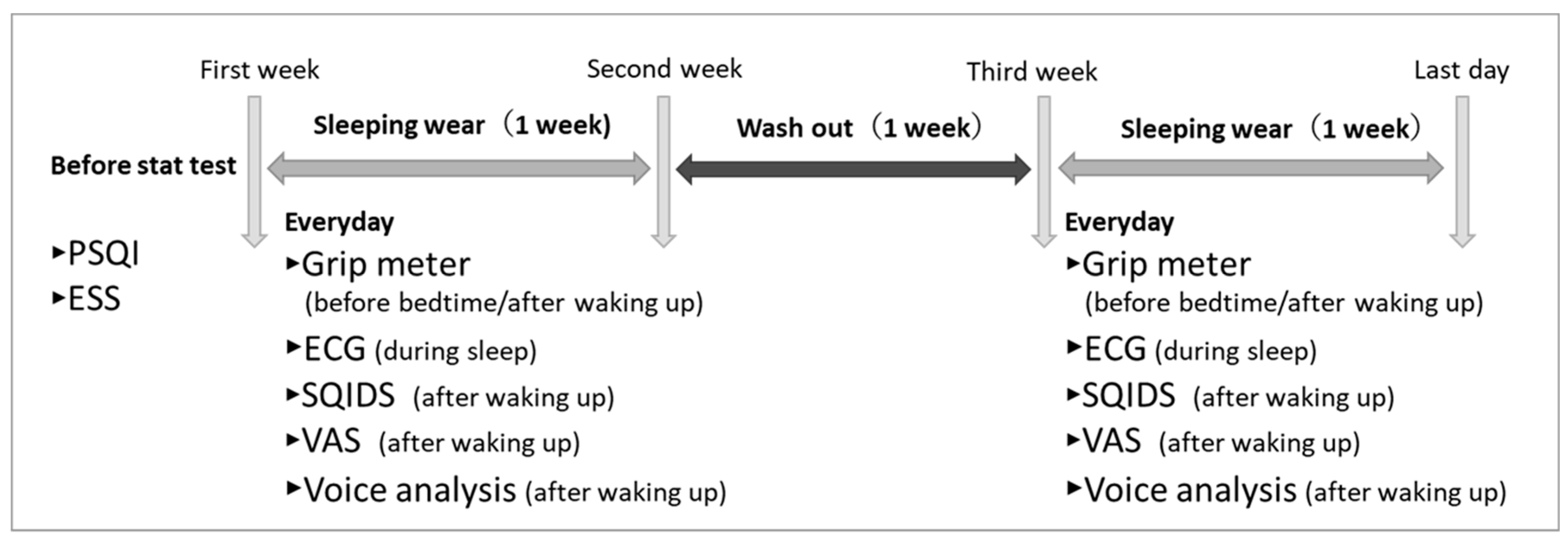
2.2. Study Design
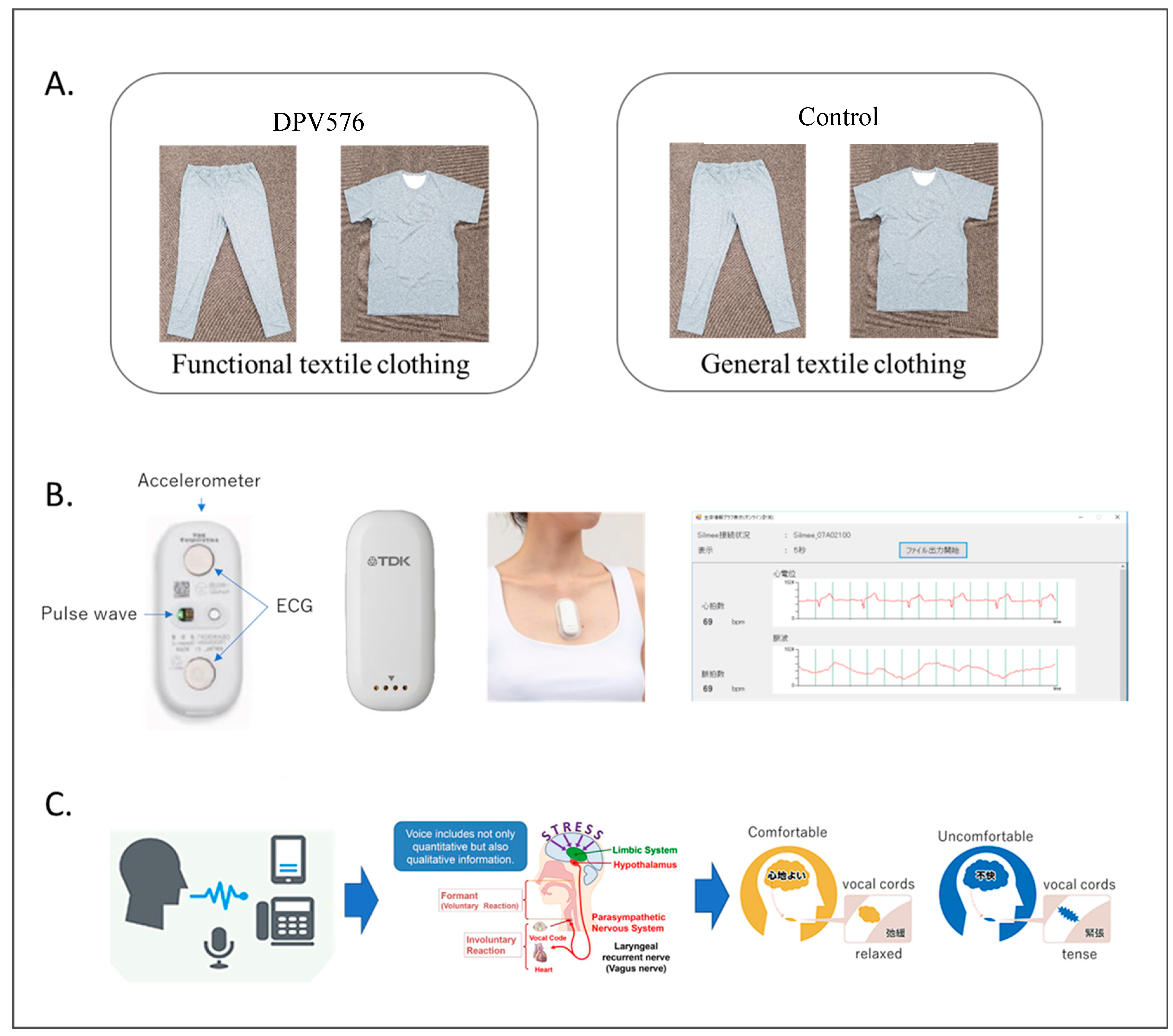
2.3. Interventions (Figure 1A)

2.4. Outcomes
2.4.1. Pittsburgh Sleep Quality Index (PSQI)
2.4.2. Epworth Sleepiness Scale (ESS)
2.4.3. Post-Randomization Daily Questionnaires
Sleep Quality Index for Daily Sleep (SQIDS)
Visual Analog Scale (Sleep VAS)
2.4.4. Measurements
2.4.5. Manual Scoring
2.4.6. Ancillary Voice-Based Measure
2.4.7. Grip Strength
2.5. Statistical Analysis
3. Results
3.1. Baseline Questionnaire Responses
3.1.1. Pittsburgh Sleep Questionnaire (PSQI)
3.1.2. Epworth Sleepiness Scale (ESS)
3.2. Questionnaire Survey Results
3.2.1. Sleep Questionnaire (SQIDS)
3.2.2. Visual Analog Scale (VAS)
3.3. Objective Sleep Measures: Automated Scoring (Silmee)
3.4. Objective Sleep Measures: Manual Scoring
3.5. Comparing Automated and Manual Scoring
Autonomic Indices (HRV)
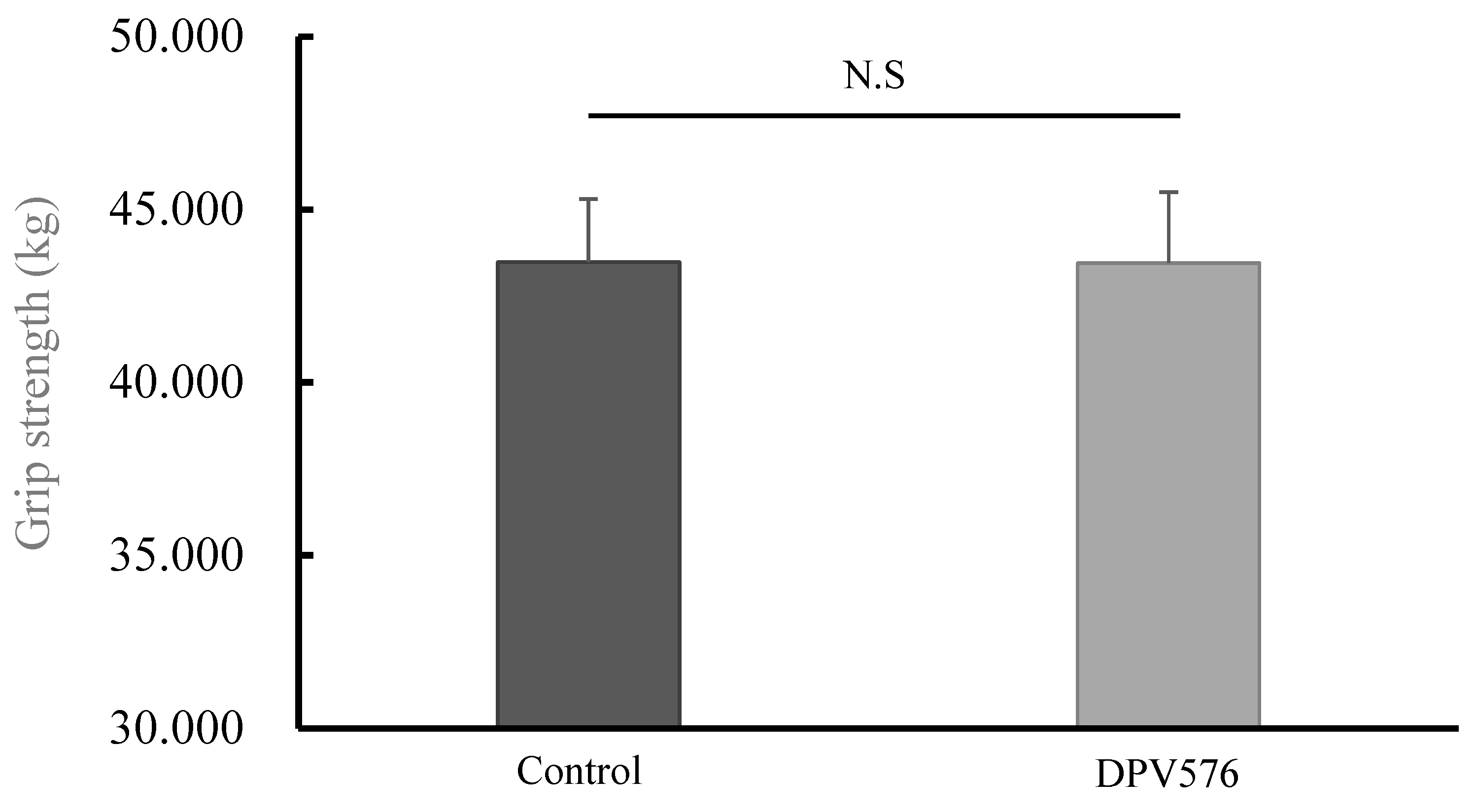
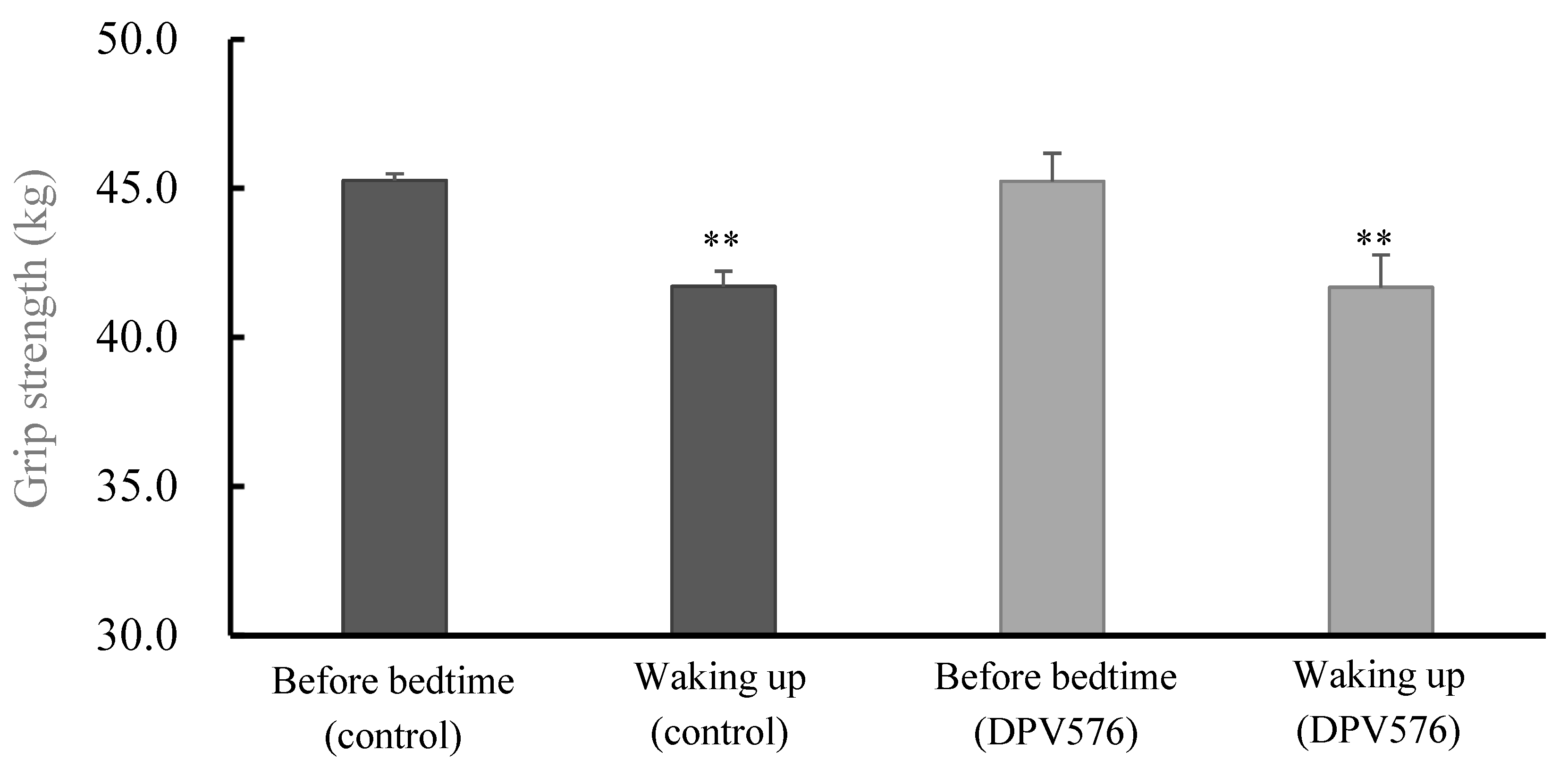
3.6. Grip Strength
4. Discussion
Limitations
5. Conclusions
Author Contributions
Funding
Institutional Review Board Statement
Informed Consent Statement
Data Availability Statement
Acknowledgments
Conflicts of Interest
References
- Cappuccio, F.P.; Cooper, D.; D’Elia, L.; Strazzullo, P.; Miller, M.A. Sleep Duration Predicts Cardiovascular Outcomes: A Systematic Review and Meta-Analysis of Prospective Studies. Eur. Heart J. 2011, 32, 1484–1492. [Google Scholar] [CrossRef]
- Garg, H. Role of Optimum Diagnosis and Treatment of Insomnia in Patients with Hypertension and Diabetes: A Review. J. Fam. Med. Prim. Care 2018, 7, 876. [Google Scholar] [CrossRef] [PubMed]
- Savard, J.; Laroche, L.; Simard, S.; Ivers, H.; Morin, C.M. Chronic Insomnia and Immune Functioning. Biopsychosoc. Sci. Med. 2003, 65, 211–221. [Google Scholar] [CrossRef]
- Kim, K.; Uchiyama, M.; Okawa, M.; Liu, X.; Ogihara, R. An Epidemiological Study of Insomnia Among the Japanese General Population. Sleep 2000, 23, 1–7. [Google Scholar] [CrossRef]
- Kaneita, Y.; Ohida, T.; Osaki, Y.; Tanihata, T.; Minowa, M.; Suzuki, K.; Wada, K.; Kanda, H.; Hayashi, K. Insomnia Among Japanese Adolescents: A Nationwide Representative Survey. Sleep 2006, 29, 1543–1550. [Google Scholar] [CrossRef]
- Kim, M.; Chun, C.; Han, J. A Study on Bedroom Environment and Sleep Quality in Korea. Indoor Built Environ. 2010, 19, 123–128. [Google Scholar] [CrossRef]
- Troynikov, O.; Watson, C.G.; Nawaz, N. Sleep Environments and Sleep Physiology: A Review. J. Therm. Biol. 2018, 78, 192–203. [Google Scholar] [CrossRef] [PubMed]
- Okamoto-Mizuno, K.; Mizuno, K. Effects of Thermal Environment on Sleep and Circadian Rhythm. J. Physiol. Anthr. 2012, 31, 14. [Google Scholar] [CrossRef]
- Mah, C.D.; Mah, K.E.; Kezirian, E.J.; Dement, W.C. The Effects of Sleep Extension on the Athletic Performance of Collegiate Basketball Players. Sleep 2011, 34, 943–950. [Google Scholar] [CrossRef]
- Choi, Y.; Makita, M.; Nakamura, Y.; Yamamoto, K.; Nara, T.; Kawamura, T.; Fukuda, H.; Katano, H.; Miyakawa, S.; Maeda, S. Effect of Novel Recovery Garments Utilising Nanodiamond- and Nanoplatinum-coated Materials (DPV576-C) on Physical and Psychological Stress in Baseball Players: A Randomised, Placebo-controlled Trial. Eur. J. Sport Sci. 2019, 19, 869–875. [Google Scholar] [CrossRef]
- Ghoneum, M.; Pan, D.; Katano, H. Enhancement of Human T Lymphocyte Proliferation by Nanodiamond and Nanoplatinum in Liquid, DPV576. JSM 2014, 2, 1031–1036. [Google Scholar]
- Ghoneum, M.; Ghoneum, A.; Tolentino, L.; Gimzewski, J. Modulation of Aged Murine T Lymphocytes in Vivo by DPV576-C, a Nanodiamond- and Nanoplatinum-Coated Material. In Vivo 2010, 24, 141–146. [Google Scholar] [PubMed]
- Ghoneum, M.H.; Katano, H.; Agrawal, S.; Ganguly, S.; Agrawal, A. Effect of Nanodiamond and Nanoplatinum Liquid, DPV576, on Human Primary Keratinocytes. J. Biomed. Nanotechnol. 2017, 13, 110–116. [Google Scholar] [CrossRef] [PubMed]
- Ghoneum, M.H.; Gimzewski, J.K.; Ghoneum, A.; Katano, H.; Paw U, C.N.; Agrawal, A. Inhibition of TRPV1 Channel Activity in Human CD4+ T Cells by Nanodiamond and Nanoplatinum Liquid, DPV576. Nanomaterials 2018, 8, 770. [Google Scholar] [CrossRef] [PubMed]
- Buysse, D.J.; Reynolds, C.F.; Monk, T.H.; Berman, S.R.; Kupfer, D.J. The Pittsburgh Sleep Quality Index: A New Instrument for Psychiatric Practice and Research. Psychiatry Res. 1989, 28, 193–213. [Google Scholar] [CrossRef]
- Doi, Y.; Minowa, M.; Uchiyama, M.; Okawa, M.; Kim, K.; Shibui, K.; Kamei, Y. Psychometric Assessment of Subjective Sleep Quality Using the Japanese Version of the Pittsburgh Sleep Quality Index (PSQI-J) in Psychiatric Disordered and Control Subjects. Psychiatry Res. 2000, 97, 165–172. [Google Scholar] [CrossRef]
- Doi, Y.; Minowa, M.; Uchiyama, M.; Okawa, M. Development of the Pittsburgh sleep quality index Japanese version. Jpn. J. Psychiatr. Treat. 1998, 13, 755–763. [Google Scholar]
- Noda, A. Self-report assessment: Questionnaires and sleep logs/diaries. Jpn. J. Cilni. Med. 2009, 67, 1553–1562. [Google Scholar]
- Okano, Y.; Ihara, T.; Genchi, Y. Evaluation of environmental impacts on disturbed sleep by nighttime urban heat island phenomena using surveys via the Internet. Heat Isl. Inst. Int. Annu. Issue 2009, 4, 22–33. [Google Scholar]
- Monk, T.H. A Visual Analogue Scale Technique to Measure Global Vigor and Affect. Psychiatry Res. 1989, 27, 89–99. [Google Scholar] [CrossRef]
- Kameyama, K. Evaluation of Sleep Quality and Sleep Monitoring System for Better Sleep. Toshiba Rev. 2006, 61, 41–44. [Google Scholar]
- Miyamoto, K.; Hashimoto, K.; Kasaoka, M.; Kakumu, M. Wearable sensors corresponding to various applications healthcare field. Toshiba Rev. 2014, 69, 13–16. [Google Scholar]
- Suzuki, T.; Ouchi, K.; Kameyama, K.; Takahashi, M. Development of a Sleep Monitoring System with Wearable Vital Sensor for Home Use. In Proceedings of the International Conference on Biomedical Electronics and Devices; SciTePress—Science and and Technology Publications: Porto, Portugal, 2009; pp. 326–331. [Google Scholar]
- Hagiwara, N.; Omiya, Y.; Shinohara, S.; Nakamura, M.; Higuchi, M.; Mitsuyoshi, S.; Yasunaga, H.; Tokuno, S. Validity of Mind Monitoring System as a Mental Health Indicator Using Voice. Adv. Sci. Technol. Eng. Syst. J. 2017, 2, 338–344. [Google Scholar] [CrossRef]
- Mitsuyoshi, S. Development of Verbal Analysis Pathophysiology. Econophysics Sociophysics Other Multidiscip. Sci. J. 2015, 5, 11–16. [Google Scholar]
- Tokuno, S. Pathophysiological Voice Analysis for Diagnosis and Monitoring of Depression. In Understanding Depression; Kim, Y.-K., Ed.; Springer: Singapore, 2018; pp. 83–95. ISBN 978-981-10-6576-7. [Google Scholar]
- Raymann, R.J.E.M.; Swaab, D.F.; Van Someren, E.J.W. Skin Temperature and Sleep-Onset Latency: Changes with Age and Insomnia. Physiol. Behav. 2007, 90, 257–266. [Google Scholar] [CrossRef]
- Raymann, R.J.E.M.; Swaab, D.F.; Van Someren, E.J.W. Skin Deep: Enhanced Sleep Depth by Cutaneous Temperature Manipulation. Brain 2008, 131, 500–513. [Google Scholar] [CrossRef]
- Ko, Y.; Lee, J.-Y. Effects of Feet Warming Using Bed Socks on Sleep Quality and Thermoregulatory Responses in a Cool Environment. J. Physiol. Anthr. 2018, 37, 13. [Google Scholar] [CrossRef]
- Chow, C.M.; Shin, M.; Mahar, T.J.; Halaki, M.; Ireland, A. The Impact of Sleepwear Fiber Type on Sleep Quality under Warm Ambient Conditions. Nat. Sci. Sleep 2019, 11, 167–178. [Google Scholar] [CrossRef]
- Li, X.; Halaki, M.; Chow, C.M. How Do Sleepwear and Bedding Fibre Types Affect Sleep Quality: A Systematic Review. J. Sleep Res. 2024, 33, e14217. [Google Scholar] [CrossRef] [PubMed]
- Matsuda, H.; Ogawa, T.; Tukada, R.; Kotama, T.; Yamazaki, A.; Kosako, Y.; Miyamoto, A.; Morimoto, M. Factors that Affect Quality of Sleep in Female University Student. Jpn. J. Nurs. Res. 2012, 35, 47–55. [Google Scholar] [CrossRef]
- Tanaka, H.; Fujita, Y.; Takenaka, Y.; Kajiwara, S.; Masutani, S.; Ishizaki, Y.; Matsushima, R.; Shiokawa, H.; Shiota, M.; Ishitani, N.; et al. Japanese Clinical Guidelines for Juvenile Orthostatic Dysregulation Version 1. Pediatr. Int. 2009, 51, 169–179. [Google Scholar] [CrossRef]
- Yang, C.-M.; Wu, C.-H.; Hsieh, M.-H.; Liu, M.-H.; Lu, F.-H. Coping with Sleep Disturbances Among Young Adults: A Survey of First-Year College Students in Taiwan. Behav. Med. 2003, 29, 133–138. [Google Scholar] [CrossRef] [PubMed]
- Zhang, D. Gender-Based Sleep Disturbance Prediction in the 2050s of Jakarta. Master’s Thesis, Tokyo University, Tokyo, Japan, 2019. [Google Scholar]
- Zisapel, N.; Tarrasch, R.; Laudon, M. A Comparison of Visual Analog Scale and Categorical Ratings in Assessing the Patient’s Estimate of Sleep Quality. In Sleep and Sleep Disorders; Springer: Boston, MA, USA, 2006; pp. 220–224. ISBN 978-0-387-27681-6. [Google Scholar]
- Hughes, J.M.; Song, Y.; Fung, C.H.; Dzierzewski, J.M.; Mitchell, M.N.; Jouldjian, S.; Josephson, K.R.; Alessi, C.A.; Martin, J.L. Measuring Sleep in Vulnerable Older Adults: A Comparison of Subjective and Objective Sleep Measures. Clin. Gerontol. 2018, 41, 145–157. [Google Scholar] [CrossRef]
- Zavecz, Z.; Nagy, T.; Galkó, A.; Nemeth, D.; Janacsek, K. The Relationship between Subjective Sleep Quality and Cognitive Performance in Healthy Young Adults: Evidence from Three Empirical Studies. Sci. Rep. 2020, 10, 4855. [Google Scholar] [CrossRef]
- Knaier, R.; Qian, J.; Roth, R.; Infanger, D.; Notter, T.; Wang, W.; Cajochen, C.; Scheer, F.A.J.L. Diurnal Variation in Maximum Endurance and Maximum Strength Performance: A Systematic Review and Meta-Analysis. Med. Sci. Sports Exerc. 2022, 54, 169–180. [Google Scholar] [CrossRef] [PubMed]
- Douglas, C.M.; Hesketh, S.J.; Esser, K.A. Time of Day and Muscle Strength: A Circadian Output? Physiology 2021, 36, 44–51. [Google Scholar] [CrossRef]
- Krystal, A.D.; Edinger, J.D. Measuring Sleep Quality. Sleep Med. 2008, 9, S10–S17. [Google Scholar] [CrossRef]
- Lemola, S.; Räikkönen, K.; Scheier, M.F.; Matthews, K.A.; Pesonen, A.; Heinonen, K.; Lahti, J.; Komsi, N.; Paavonen, J.E.; Kajantie, E. Sleep Quantity, Quality and Optimism in Children. J. Sleep Res. 2011, 20, 12–20. [Google Scholar] [CrossRef]
- Arnal, P.J.; Sauvet, F.; Leger, D.; Van Beers, P.; Bayon, V.; Bougard, C.; Rabat, A.; Millet, G.Y.; Chennaoui, M. Benefits of Sleep Extension on Sustained Attention and Sleep Pressure Before and During Total Sleep Deprivation and Recovery. Sleep 2015, 38, 1935–1943. [Google Scholar] [CrossRef] [PubMed]
- Minors, D.S.; Waterhouse, J.M. Circadian Rhythms in General—PubMed. Occup. Med. 1990, 5, 165–182. [Google Scholar]
- Szymusiak, R. Body Temperature and Sleep. In Handbook of Clinical Neurology; Elsevier: Amsterdam, The Netherlands, 2018; Volume 156, pp. 341–351. ISBN 978-0-444-63912-7. [Google Scholar]
- Krauchi, K.; Wirz-Justice, A. Circadian Rhythm of Heat Production, Heart Rate, and Skin and Core Temperature under Unmasking Conditions in Men. Am. J. Physiol.-Regul. Integr. Comp. Physiol. 1994, 267, R819–R829. [Google Scholar] [CrossRef] [PubMed]
- Van Someren, E.J.W. Mechanisms and Functions of Coupling between Sleep and Temperature Rhythms. In Progress in Brain Research; Elsevier: Amsterdam, The Netherlands, 2006; Volume 153, pp. 309–324. ISBN 978-0-444-52261-0. [Google Scholar]
- Gradisar, M.; Lack, L. Relationships between the Circadian Rhythms of Finger Temperature, Core Temperature, Sleep Latency, and Subjective Sleepiness. J. Biol. Rhythm. 2004, 19, 157–163. [Google Scholar] [CrossRef] [PubMed]
- Ichiba, T.; Kawamura, A.; Nagao, K.; Kurumai, Y.; Fujii, A.; Yoshimura, A.; Yoshiike, T.; Kuriyama, K. Periocular Skin Warming Promotes Sleep Onset Through Heat Dissipation from Distal Skin in Patients with Insomnia Disorder. Front. Psychiatry 2022, 13, 844958. [Google Scholar] [CrossRef]
- Harding, E.C.; Franks, N.P.; Wisden, W. Sleep and Thermoregulation. Curr. Opin. Physiol. 2020, 15, 7–13. [Google Scholar] [CrossRef]
- Vatansever, F.; Hamblin, M.R. Far Infrared Radiation (FIR): Its Biological Effects and Medical Applications. Photonics Lasers Med. 2012, 4, 255. [Google Scholar] [CrossRef]
- Pejovic, S.; Basta, M.; Vgontzas, A.N.; Kritikou, I.; Shaffer, M.L.; Tsaoussoglou, M.; Stiffler, D.; Stefanakis, Z.; Bixler, E.O.; Chrousos, G.P. Effects of Recovery Sleep after One Work Week of Mild Sleep Restriction on Interleukin-6 and Cortisol Secretion and Daytime Sleepiness and Performance. Am. J. Physiol.-Endocrinol. Metab. 2013, 305, E890–E896. [Google Scholar] [CrossRef]
- Irish, L.A.; Kline, C.E.; Gunn, H.E.; Buysse, D.J.; Hall, M.H. The Role of Sleep Hygiene in Promoting Public Health: A Review of Empirical Evidence. Sleep Med. Rev. 2015, 22, 23–36. [Google Scholar] [CrossRef] [PubMed]
- Johnson, D.A.; Billings, M.E.; Hale, L. Environmental Determinants of Insufficient Sleep and Sleep Disorders: Implications for Population Health. Curr. Epidemiol. Rep. 2018, 5, 61–69. [Google Scholar] [CrossRef]
- Harding, E.C.; Franks, N.P.; Wisden, W. The Temperature Dependence of Sleep. Front. Neurosci. 2019, 13, 336. [Google Scholar] [CrossRef]



| (A) Baseline Questionnaires | |||
|---|---|---|---|
| PSQI category | n | % | |
| ≥6 (potential disturbance) | 8 | 57.1 | |
| <6 (no disturbance) | 5 | 35.8 | |
| ≥10 (more severe) | 1 | 7.1 | |
| ESS category | |||
| 0–5 (no EDS) | 9 | 64.3 | |
| 6–10 (mild EDS) | 5 | 35.7 | |
| ≥11 (severe EDS) | 0 | 0.0 | |
| (B) Condition-Level Questionnaires During the Trial | |||
| Scale | DPV576 | Control | Condition p-Value |
| SQIDS (total) | 4.0 ± 0.4 | 4.0 ± 0.4 | 0.536 |
| VAS—sleep quality (mm) | 37.2 ± 1.2 | 40.1 ± 1.4 | 0.186 |
| VAS—drowsiness (mm) | 39.5 ± 1.4 | 38.0 ± 0.8 | 0.776 |
| VAS—mood (mm) | 32.5 ± 0.8 | 33.9 ± 0.6 | 0.314 |
| VAS—activity (mm) | 33.5 ± 1.2 | 34.1 ± 0.5 | 0.768 |
| DPV576 (n = 14) | Control (n = 14) | Difference | p-Value | ||||||||
|---|---|---|---|---|---|---|---|---|---|---|---|
| Mean | SE | Mean | SE | Mean | SE | ||||||
| Sleep Time (min) | 392 | ± | 14 | 419 | ± | 17 | −26 | ± | 12 | 0.053 | |
| Sleep Efficiency (%) 1 | 92.9 | ± | 1.0 | 90.2 | ± | 1.2 | 3.0 | ± | 0.7 | 0.002 | ** |
| Sleep Onset Latency (min) | 20.4 | ± | 4.6 | 21.9 | ± | 3.8 | −1.4 | ± | 5.9 | 0.814 | |
| Deep Sleep Time (min) | 68.5 | ± | 6.3 | 68.0 | ± | 7.0 | 0.5 | ± | 6.0 | 0.938 | |
| Number of Awakenings | 8.2 | ± | 1.2 | 10.6 | ± | 1.4 | −2.4 | ± | 0.6 | 0.002 | ** |
| Time Awake (min) | 29.5 | ± | 4.5 | 41.2 | ± | 6.0 | −11.7 | ± | 3.2 | 0.003 | ** |
| Body Movement Frequency 2 | 0.1 | ± | 0.0 | 0.1 | ± | 0.0 | 0.0 | ± | 0.0 | 0.283 | |
| DPV576 | Control | Difference | p-Value | ||||||||
|---|---|---|---|---|---|---|---|---|---|---|---|
| Mean | SE | Mean | SE | Mean | SE | ||||||
| Sleep Time (min) | 399 | ± | 16 | 0.42 | ± | 17 | −23 | ± | 12 | 0.096 | |
| Sleep Efficiency (%) 1 | 93.0 | ± | 0.9 | 89.5 | ± | 1.5 | 3.5 | ± | 1.2 | 0.015 | * |
| Sleep Onset Latency (min) | 14.3 | ± | 2.3 | 20.5 | ± | 4.1 | −6.2 | ± | 4.6 | 0.202 | |
| Deep Sleep Time (min) | 69.0 | ± | 6.3 | 68.7 | ± | 6.9 | 0.4 | ± | 6.3 | 0.954 | |
| Number of Awakenings | 8.4 | ± | 1.3 | 10.7 | ± | 1.4 | −2.3 | ± | 0.6 | 0.001 | ** |
| Time Awake (min) | 30.4 | ± | 4.7 | 41.6 | ± | 6.0 | −11.2 | ± | 3.4 | 0.006 | ** |
| Body Movement Frequency 2 | 0.1 | ± | 0.0 | 0.1 | ± | 0.0 | 0.0 | ± | 0.0 | 0.072 | |
| 1/4 | 2/4 | 3/4 | 4/4 | Type | Time | Type * Time | ||||||||||
|---|---|---|---|---|---|---|---|---|---|---|---|---|---|---|---|---|
| Control (dimensionless) | 1.79 | ± | 0.18 | 1.64 | ± | 0.18 | 1.77 | ± | 0.18 | 1.81 | ± | 0.18 | F-value | 0.41 | 0.91 | 0.50 |
| DPV576 (dimensionless) | 1.84 | ± | 0.18 | 1.71 | ± | 0.18 | 1.81 | ± | 0.18 | 2.09 | ± | 0.18 | p-value | 0.3049 | 0.0164 * | 0.3049 |
Disclaimer/Publisher’s Note: The statements, opinions and data contained in all publications are solely those of the individual author(s) and contributor(s) and not of MDPI and/or the editor(s). MDPI and/or the editor(s) disclaim responsibility for any injury to people or property resulting from any ideas, methods, instructions or products referred to in the content. |
© 2026 by the authors. Licensee MDPI, Basel, Switzerland. This article is an open access article distributed under the terms and conditions of the Creative Commons Attribution (CC BY) license.
Share and Cite
Katano, H.; Sugita, M.; Tokuno, S.; Nomura, Y.; Nishino, N.; Higuchi, M.; Iwai, Y.; Matsuki, Y.; Deng, P.; Nishino, S. Effects of Sleepwear Incorporating a DPV576 Functional Polyester Fabric on Wearable ECG-Derived Sleep Consolidation: A Randomized Two-Period Crossover Study Under Free-Living Conditions. Sensors 2026, 26, 2247. https://doi.org/10.3390/s26072247
Katano H, Sugita M, Tokuno S, Nomura Y, Nishino N, Higuchi M, Iwai Y, Matsuki Y, Deng P, Nishino S. Effects of Sleepwear Incorporating a DPV576 Functional Polyester Fabric on Wearable ECG-Derived Sleep Consolidation: A Randomized Two-Period Crossover Study Under Free-Living Conditions. Sensors. 2026; 26(7):2247. https://doi.org/10.3390/s26072247
Chicago/Turabian StyleKatano, Hideki, Masaaki Sugita, Shinichi Tokuno, Yumi Nomura, Naoya Nishino, Masakazu Higuchi, Yusuke Iwai, Yuki Matsuki, Pengyu Deng, and Seiji Nishino. 2026. "Effects of Sleepwear Incorporating a DPV576 Functional Polyester Fabric on Wearable ECG-Derived Sleep Consolidation: A Randomized Two-Period Crossover Study Under Free-Living Conditions" Sensors 26, no. 7: 2247. https://doi.org/10.3390/s26072247
APA StyleKatano, H., Sugita, M., Tokuno, S., Nomura, Y., Nishino, N., Higuchi, M., Iwai, Y., Matsuki, Y., Deng, P., & Nishino, S. (2026). Effects of Sleepwear Incorporating a DPV576 Functional Polyester Fabric on Wearable ECG-Derived Sleep Consolidation: A Randomized Two-Period Crossover Study Under Free-Living Conditions. Sensors, 26(7), 2247. https://doi.org/10.3390/s26072247