1. Introduction
Chipless radio frequency identification (RFID) technology has attracted increasing attention due to its low fabrication cost, elimination of silicon chips, and suitability for large-scale deployment. Compared with conventional chipped RFID systems, chipless RFID tags generally offer longer operational lifetimes and better adaptability to flexible substrates and harsh environments [
1,
2]. However, because information encoding relies on passive resonant structures, the coding capacity, physical size, and spectral occupation of chipless RFID tags are often mutually constrained, posing challenges for high-density encoding under limited spectral resources [
3,
4,
5]. With the rapid development of wireless communication technologies and the increasing scarcity of available frequency bands, achieving compact tag size while maintaining high coding capacity has become a key issue in chipless RFID tag design.
To address these challenges, extensive research has been conducted on encoding methods for chipless RFID tags. In chipless tag design, tags with special graphic features are usually encoded based on frequency. The structural parameter value of the tag corresponds to a unique resonant frequency to achieve specific coding. A tag designed with Latin alphabet characters proposed in paper [
6] can achieve unique identification with high accuracy. In paper [
7], multiple QR code resonators were printed on FR4 substrate on a single side, and coded information was retrieved and identified using a frequency-domain reflection method. Paper [
8] realizes frequency shift keying coding through small metal units, proposes chipless tags based on genetic algorithm optimization technology, producing a series of RFID tags with QR code appearance. In paper [
9], the open-loop resonator with fragment-loading structure was applied to the design of chipless tags for the first time, which was coded by the distribution of fragment patches in the open-loop resonator. Paper [
10] proposed a design scheme for embedding chipless tags in QR codes, where the resonant frequency can be adjusted to encode by removing or loading the square modules.
Mixed coding is one of the most effective methods to improve coding capacity at present. In paper [
11], a mixed-coding tag is designed by using a microstrip spiral multi-resonator and a cross-polarized microstrip ultra-wideband disk monopole antenna. In paper [
12], a U-shaped resonance structure was applied to achieve 22.9-bit coding capacity on a 2 × 4 cm
2 FR4 substrate. In paper [
13], the tag with an 8-bit coding capacity was designed by using the open-circuit stub connected to the microstrip transmission line. Tags have a compact structure and are encoded in a mixture of amplitude and delay. In paper [
14], several concentric nested square rings were used to design and realize the tag with 10-bit encoding capacity. Paper [
15] designed a tag printed on a 48 × 48 mm
2 PET substrate with five improved complementary open-loop resonators, achieving a 19-bit coding capacity.
To overcome the limitations of conventional regular geometric structures in chipless RFID tag design, bio-inspired design concepts have attracted increasing attention in recent years [
16,
17]. Previous studies have shown that bio-inspired structural modeling approaches have been widely applied in antenna design, achieving favorable results in terms of size reduction, bandwidth enhancement, and electromagnetic performance optimization [
18,
19]. Therefore, by abstracting and reconstructing natural biological structures, extending bio-inspired structural modeling to chipless RFID tag design can help expand design flexibility and provide new insights into improving encoding performance under limited spectral resources.
Based on this research background, biological structures with multifunctional and hierarchical characteristics offer a feasible reference for the design of high-capacity chipless RFID tags. In this paper, a flexible chipless RFID coding tag inspired by the human eyeball is proposed. By combining graphic coding and frequency-shift coding, the presence or absence of branches is utilized to control resonant frequency variations and pattern changes. As a result, the proposed design reduces spectral occupation while increasing encoding capacity, achieving 45 bits within 4–12 GHz.
2. Resonance Structure Design and Analysis
In this paper, a chipless RFID tag based on an eyeball structure is proposed based on bionic thought. As shown in
Figure 1, the eye anatomy is pictorially abstracted and simplified [
19] to form three resonant sub-structures. Structures I and II are cornea–pupil-inspired ring resonators that encode information by adding or removing radial branches to generate distinct frequency shifts and patterns. Structure III is an eyelid-orbit-inspired orbital resonator that provides an additional tunable resonance to enlarge the coding space. These three parts constitute a hierarchical hybrid coding architecture for tag identification.
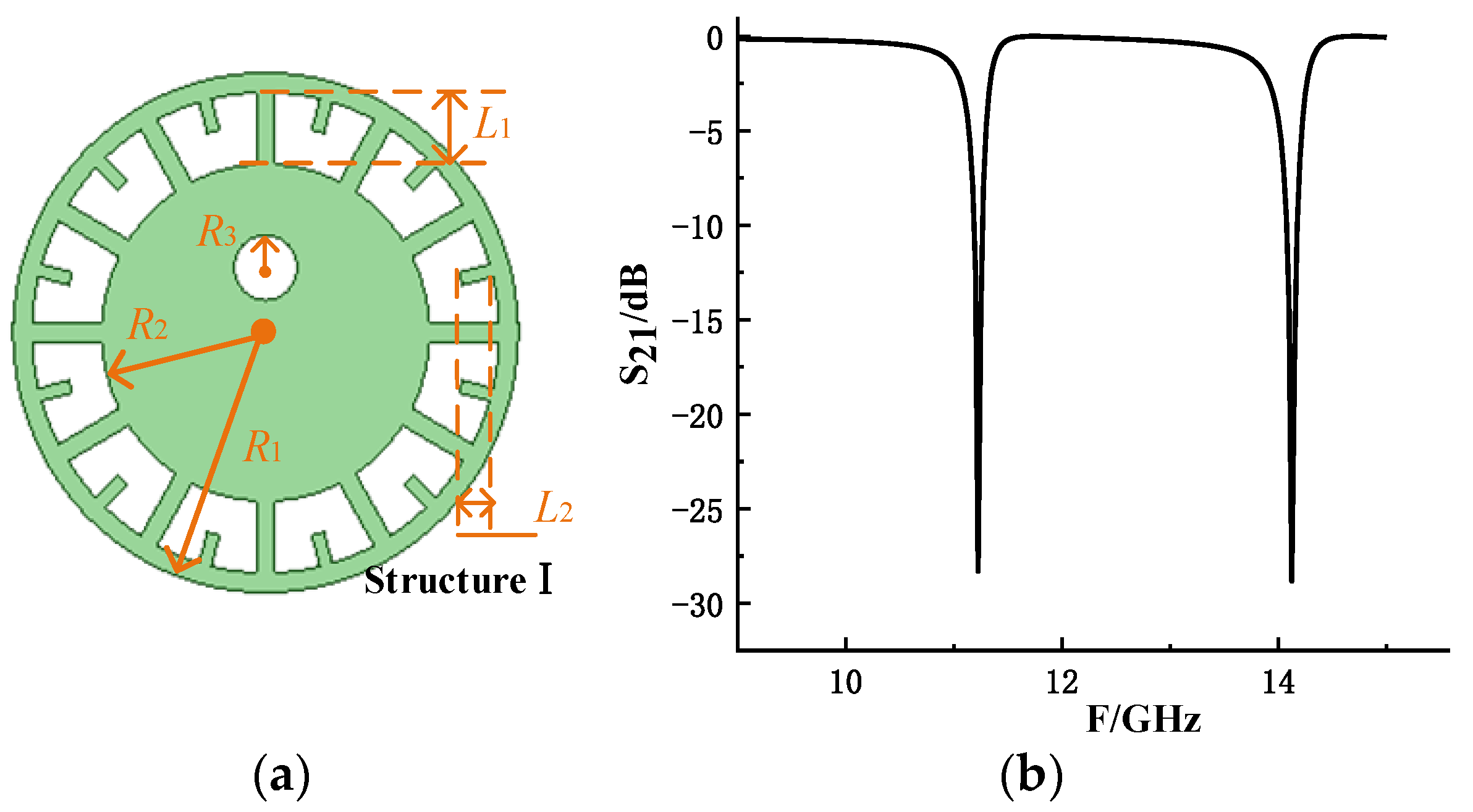
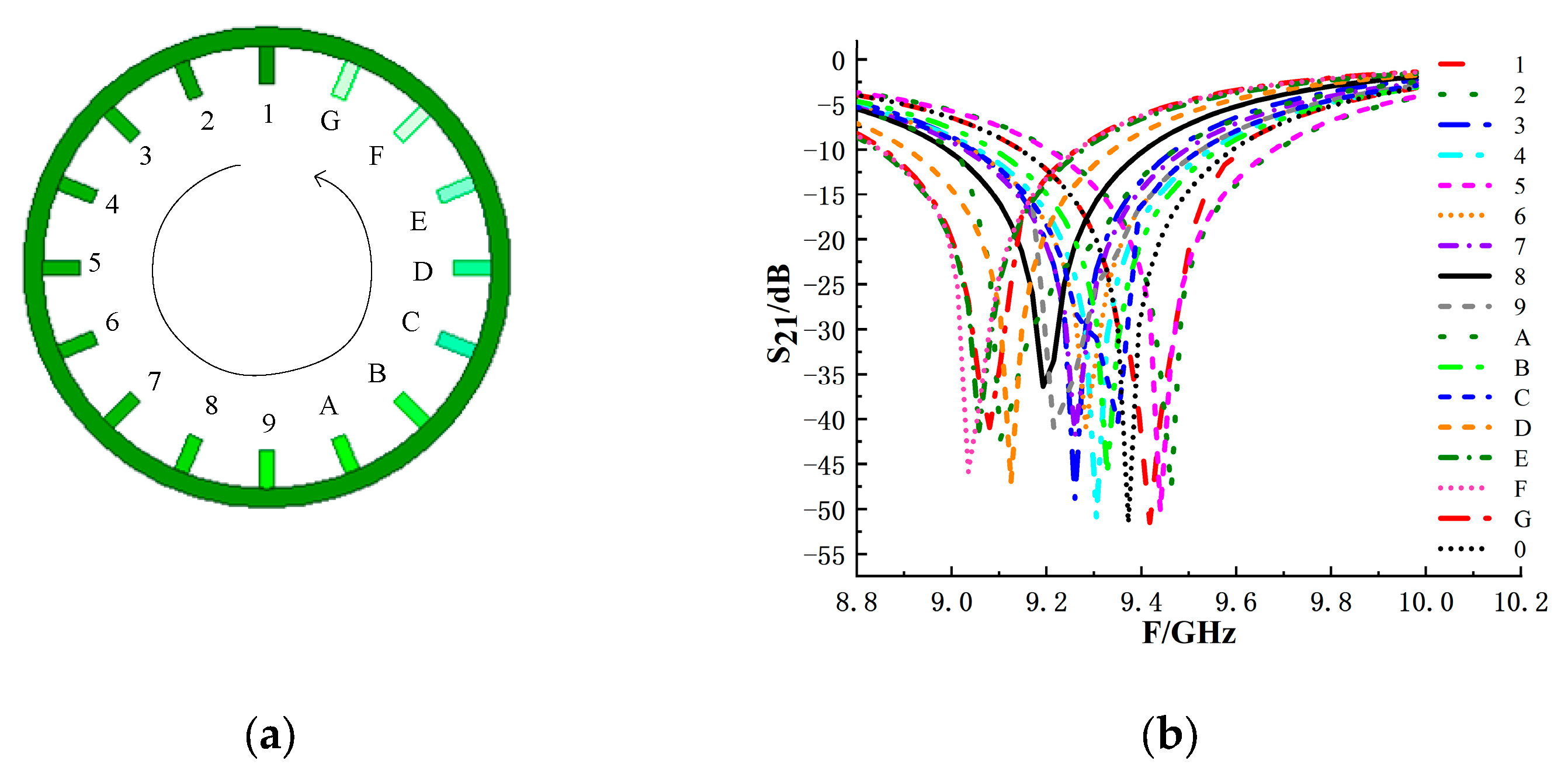
First, Resonant Structure I is designed by mimicking the cornea–pupil region and its surrounding area, as shown in
Figure 1. The white circular slot in the middle is used to simulate the pupil, and it has little effect on the resonant frequency of the resonant structure. Its main function is to mark the direction of the resonant structure.
Figure 2 shows S
21 of the resonant structure. The resonant frequency is affected by the branch length
L2 and the ring radius
R1. The structure is a double resonant structure, but only one resonant frequency point is in the frequency band range required by the design, and the two resonant frequency points have similar changes with the structure, so only the first resonant frequency point is used for coding.
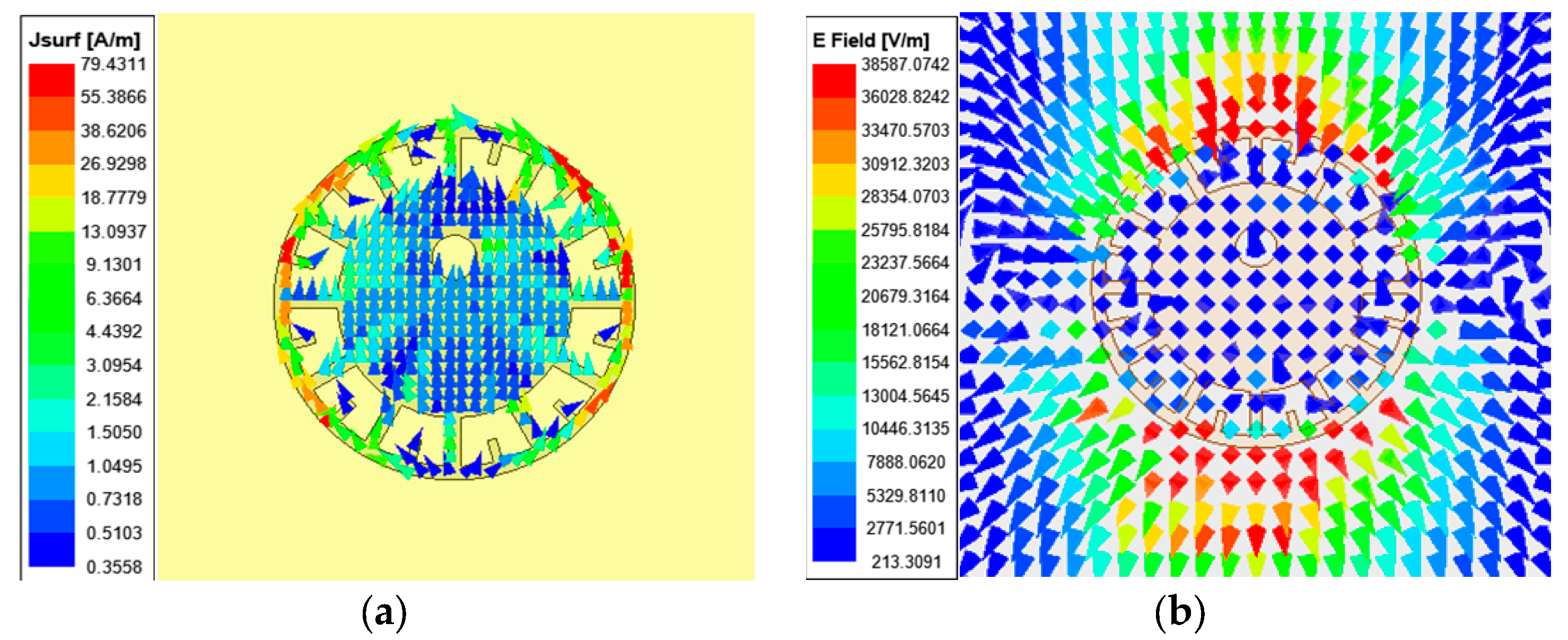
Figure 3 shows the current distribution and electric field distribution of the resonant structure at 11 GHz. The current distribution in the outer ring of the resonant structure is the same as that in the traditional ring resonant structure. And the current converges from the outer ring to the inner ring, and the intensity of the inner current is obviously lower than that of the outer ring. According to the electric field distribution diagram, the outer ring electric field of the eyeball resonance structure I is strong, and the intensity is strongest at the upper and lower vertices of the ring.
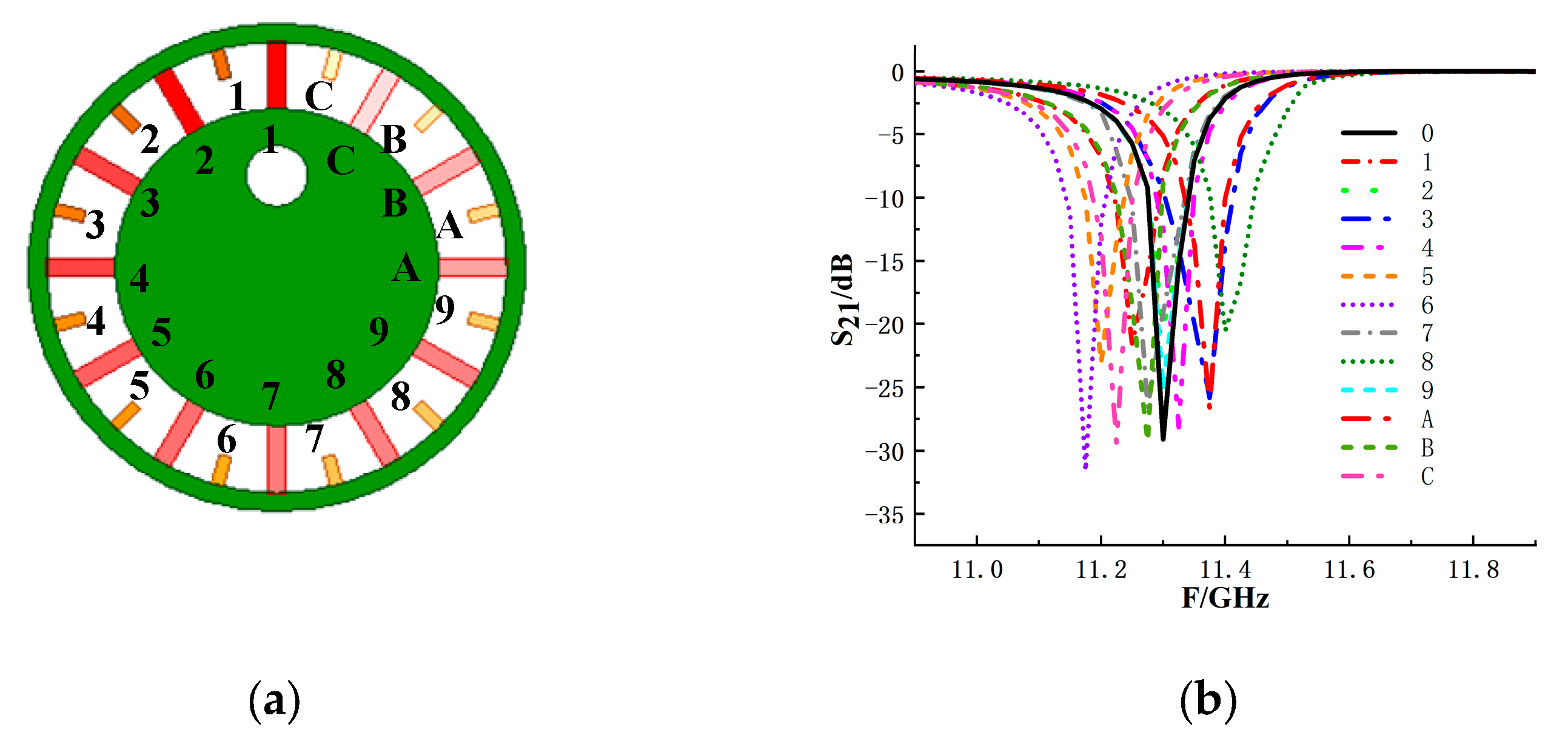
The eyeball resonance structure I contains multiple radial-shaped branches. When excited, each branch generates a different induced current and electric field, so different resonant frequencies are obtained when different branches are removed or added. Each branch is unique and clearly identifiable. Therefore, tag encoding can be realized by both a frequency domain and a graph. The combination of the two methods can effectively improve the reliability of tag reading.
Figure 4 shows the resonant frequencies corresponding to removing branches 1~12. In fact, the eyeball resonance structure I has 24 branches. According to the simulation results, it can be seen that some branches, such as “1” and “3”, have the same resonant frequency, so it is necessary to remove these repeated branches in coding.
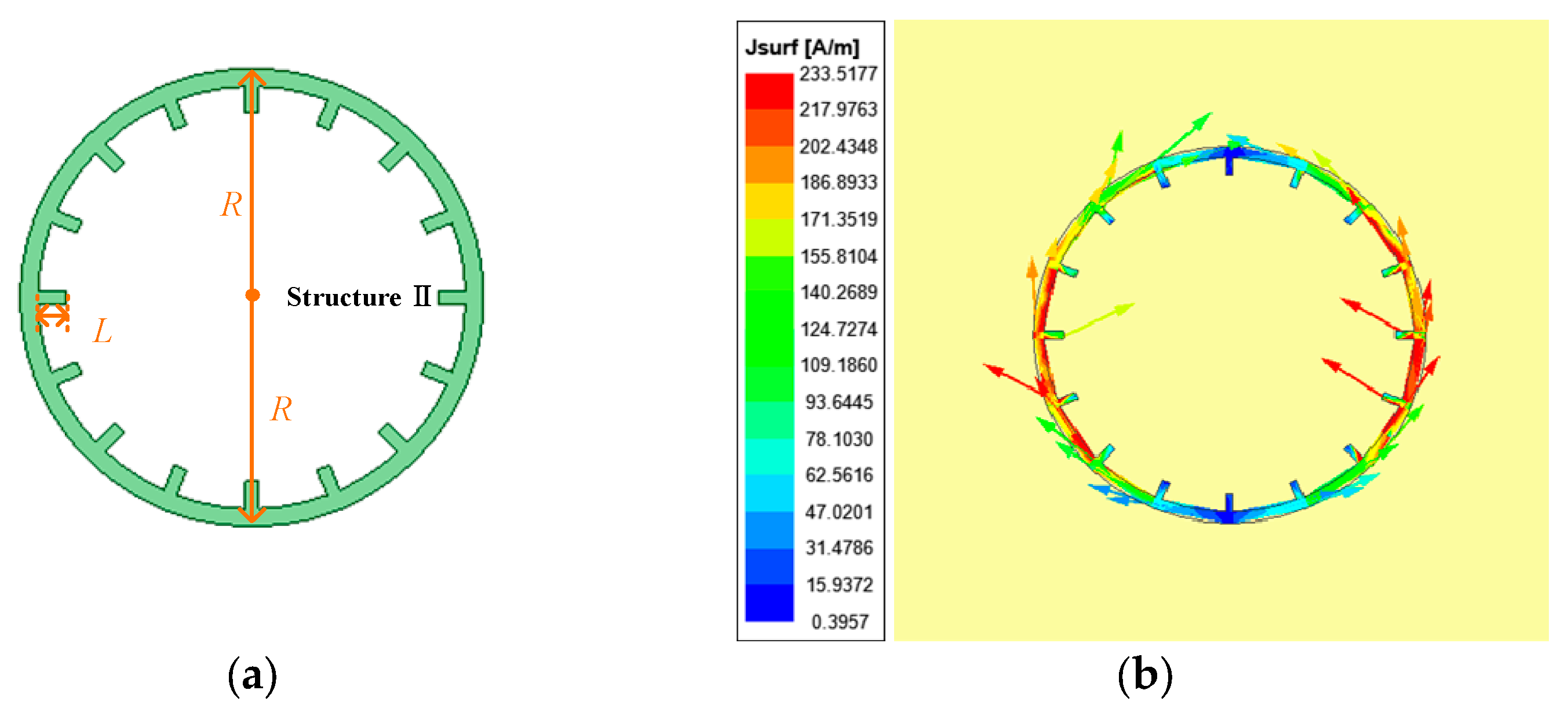
To further extend the encoding capability, resonant structure II is designed, as shown in
Figure 5a. Similar to the coding method of eyeball resonance structure I, the coding method of eyeball resonance structure II also adopts the addition and removal of branches. According to the current distribution shown in
Figure 5b, it can be seen that resonant structure II and resonant structure I have similar current characteristics. The current distribution is significantly affected by the position of the feeding point and the ratio of the ring circumference to the wavelength. The current reaches its maximum value at the feeding point, while at 90°/270°, the current is at its minimum. This distribution indicates that the current intensity is a function of angle, reaching its maximum near the feeding point and monotonically decreasing to its minimum as the angle changes. Therefore, adding branches within 360° of the inner circle of the circular structure can adjust the resonance situation. The resonance frequencies corresponding to the tags after removing different branches are analyzed by simulation, as shown in
Figure 6. Starting from the branches at the highest point of the ring, the code is successively coded in the counterclockwise direction 1~16. It can be seen from the simulation results that each branch corresponds to a different resonant frequency, that is, corresponding to a different frequency shift size.
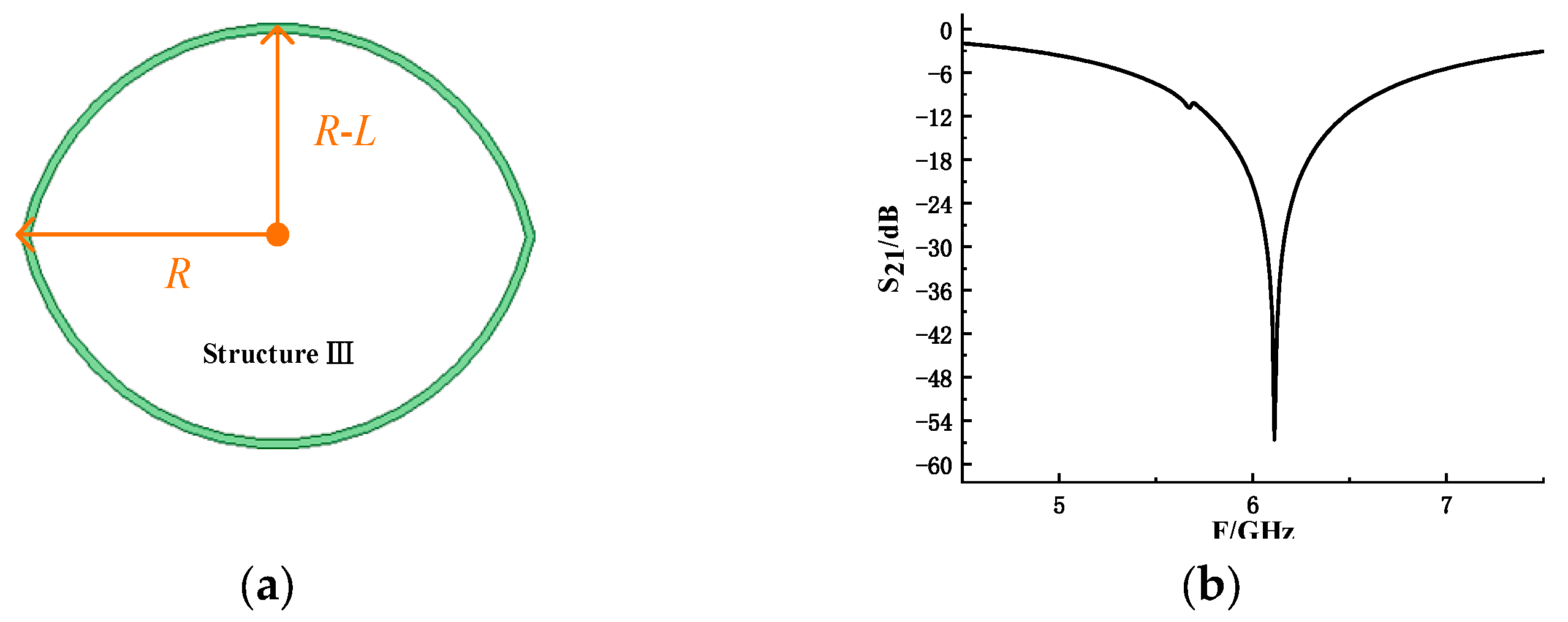
In addition to the ring-based resonant structures, an orbital-shaped resonant structure is introduced to emulate the eyelid region of the eye, as shown in
Figure 7a. The structure is the most external of the whole design, and the available physical area is larger, so the coding by changing the radius to change the resonant frequency is less limited.
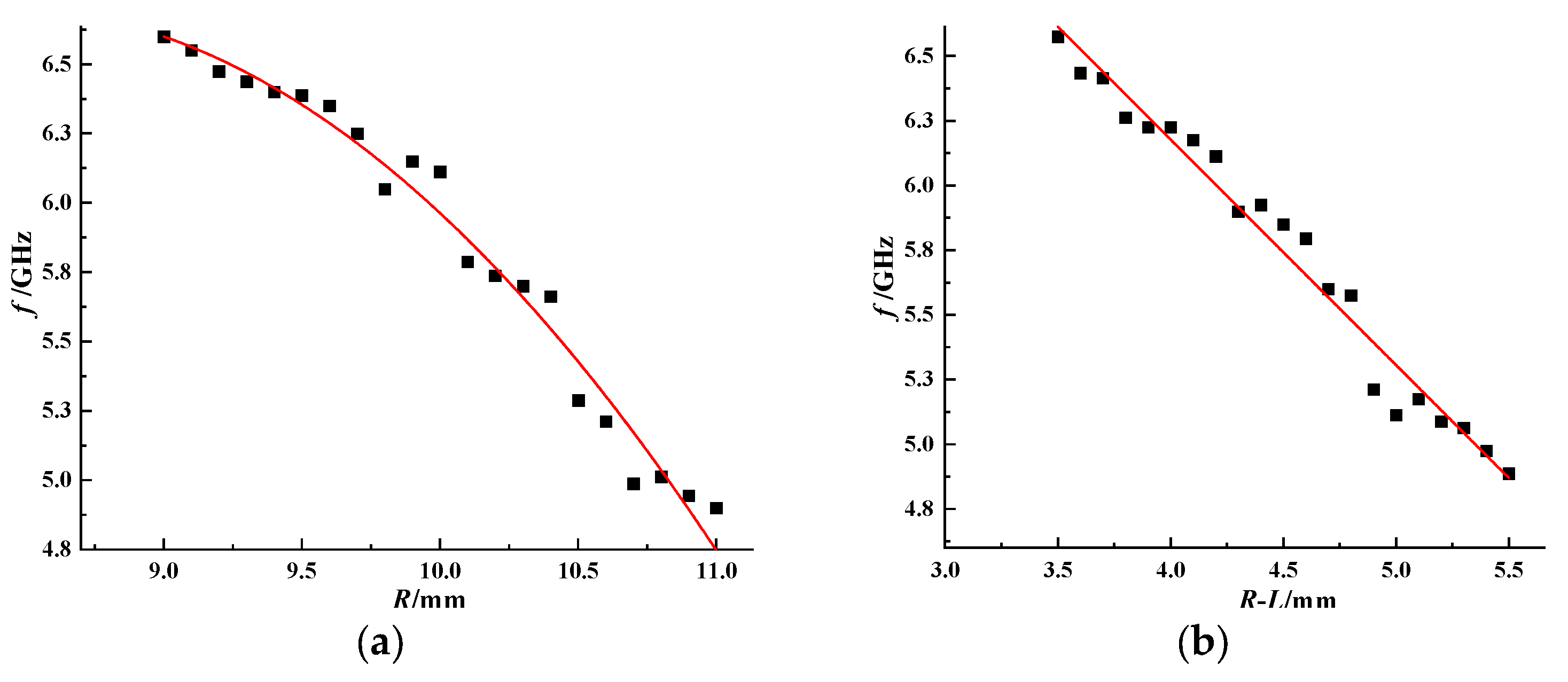
The simulation model is established in electromagnetic simulation software, and the values of radius and resonance structure are changed to obtain the result shown in
Figure 8. The resonant frequency of the resonant structure changes regularly with
R and
R-
L. The relationship between them can be described by Equations (1) and (2):
where
A1 = 0.29,
A2 = 4.865,
A3 = 13.73,
R2 = 0.97443 (Unit: mm).
where
B1 = 0.872,
B2 = 9.664,
R2 = 0.971 (Unit: mm).
Specifically, as R increases from 9 mm to 11 mm, the resonant frequency decreases following a quadratic trend described by Equation (1). Similarly, as the opening R-L increases from 3.5 mm to 5.5 mm, the resonant frequency also decreases according to Equation (2). These results indicate that both the overall size and the effective gap of the resonant unit can be used to precisely tune the resonant frequency. Therefore, adjusting R and R-L provides a reliable method to design coding tags with desired frequency characteristics.
3. Code Tag Design
3.1. Encoding Tag Structure
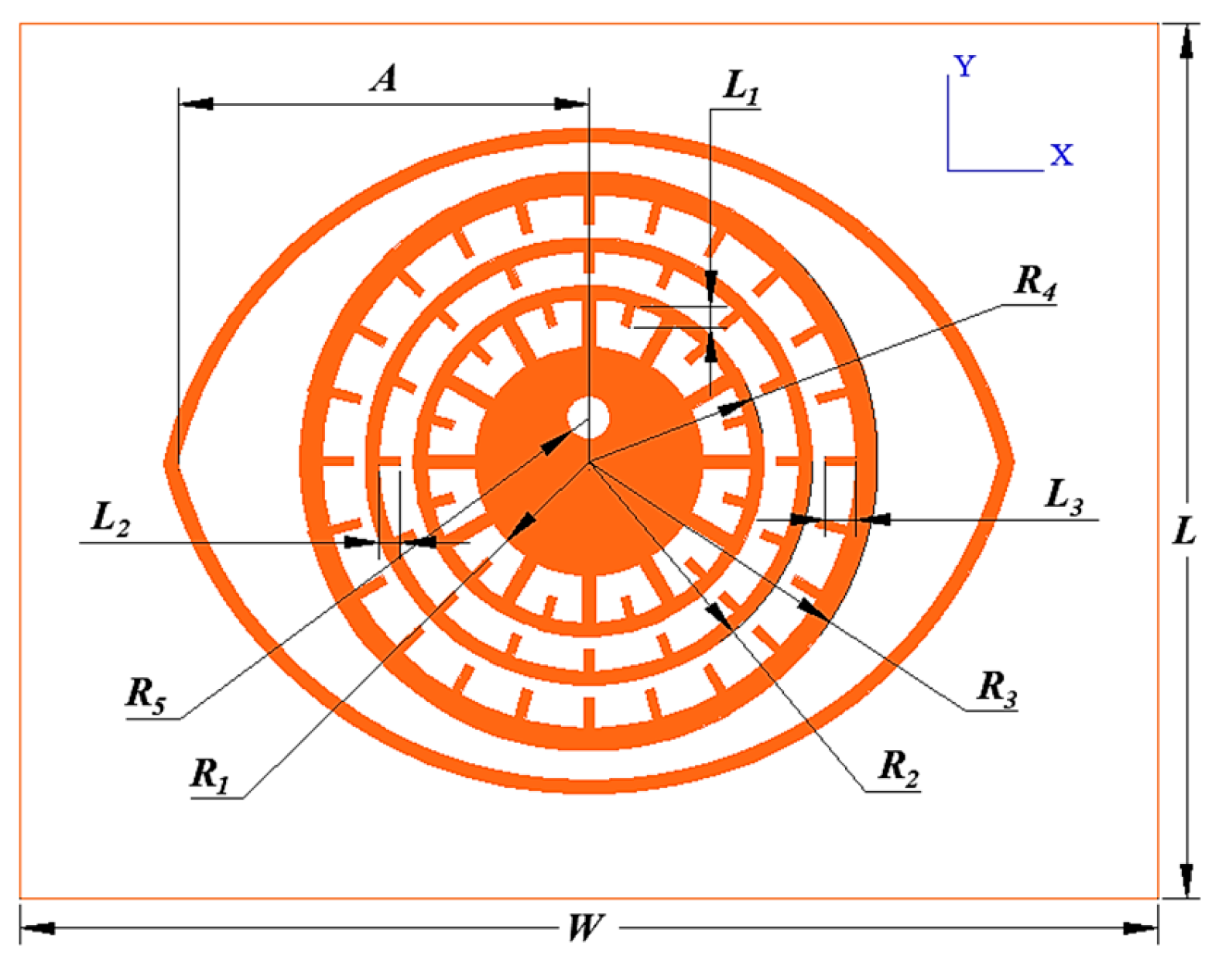
By integrating the previously proposed bio-inspired resonant structures, the circular patch is changed into rings with different radii nested together to construct coding tags. The structure of the tag is shown in
Figure 9, and the main structural parameters and dimensions of the tag are shown in
Table 1. It is composed of four layers of resonant units in concentric nesting mode. The tag uses 0.2 mm-thick polyimide material with a relative permittivity of 3.1 and a loss tangent of 0.002 as the substrate, and its overall size is 20 × 26 mm
2.
3.2. Analysis of Coding Performance of the Tag in the Bending State
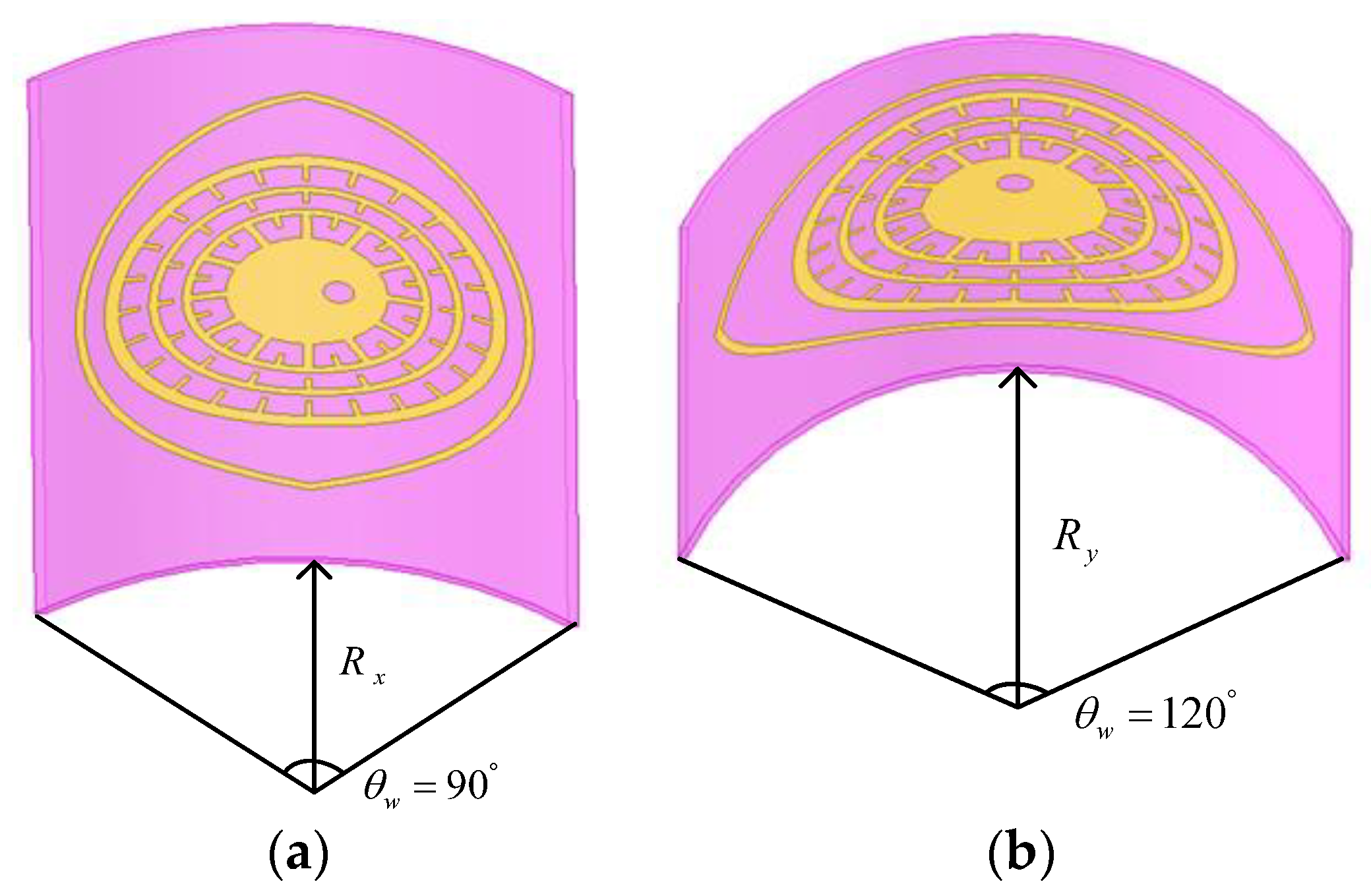
In order to study the reliability of the flexible chipless coded tag designed in this paper after bending by force, the influence of different bending degrees on the performance of the tag is simulated and analyzed. As shown in
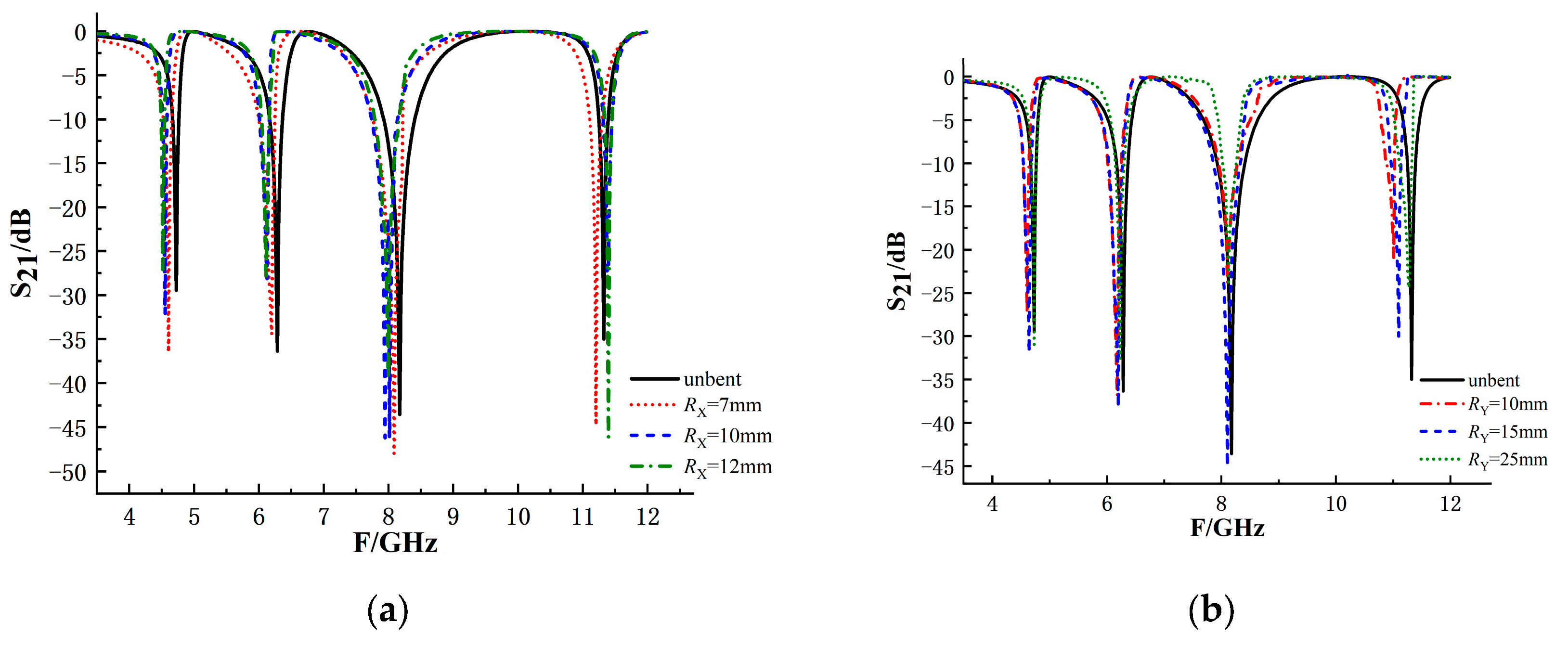
Figure 10, bend the tag along the X and Y axes to different degrees. Where Rx and Ry are the distances between the center of the tag side and the origin of the coordinate when the tag is bent along the X and Y axes. Bend the tag in different degrees to obtain S
21, as shown in
Figure 11.
According to the simulation results, when the tag is bent along the X-axis, the offset degree of the four resonant frequency points increases with the increase in the bending angle. Comparing the four resonant troughs, the frequency offset of the first resonant frequency points after bending is the largest, and the fourth one is the smallest. This is because during the bending process, the outer ring resonant structure is subjected to the maximum bending degree, while the inner ring structure is subjected to the minimum bending degree. When the tag is bent along the Y-axis, the offset degree of the resonant frequency points of the inner ring resonance structure is larger than that of the tag bent along the X-axis. The offset degree of the resonant trough of the outer ring resonant structure is smaller than that of the X-axis bending. Although different bending directions affect the resonant structures at different layers, the resonant frequency points remain distinguishable.
3.3. Analysis of Coding Performance in Different Polarization Directions
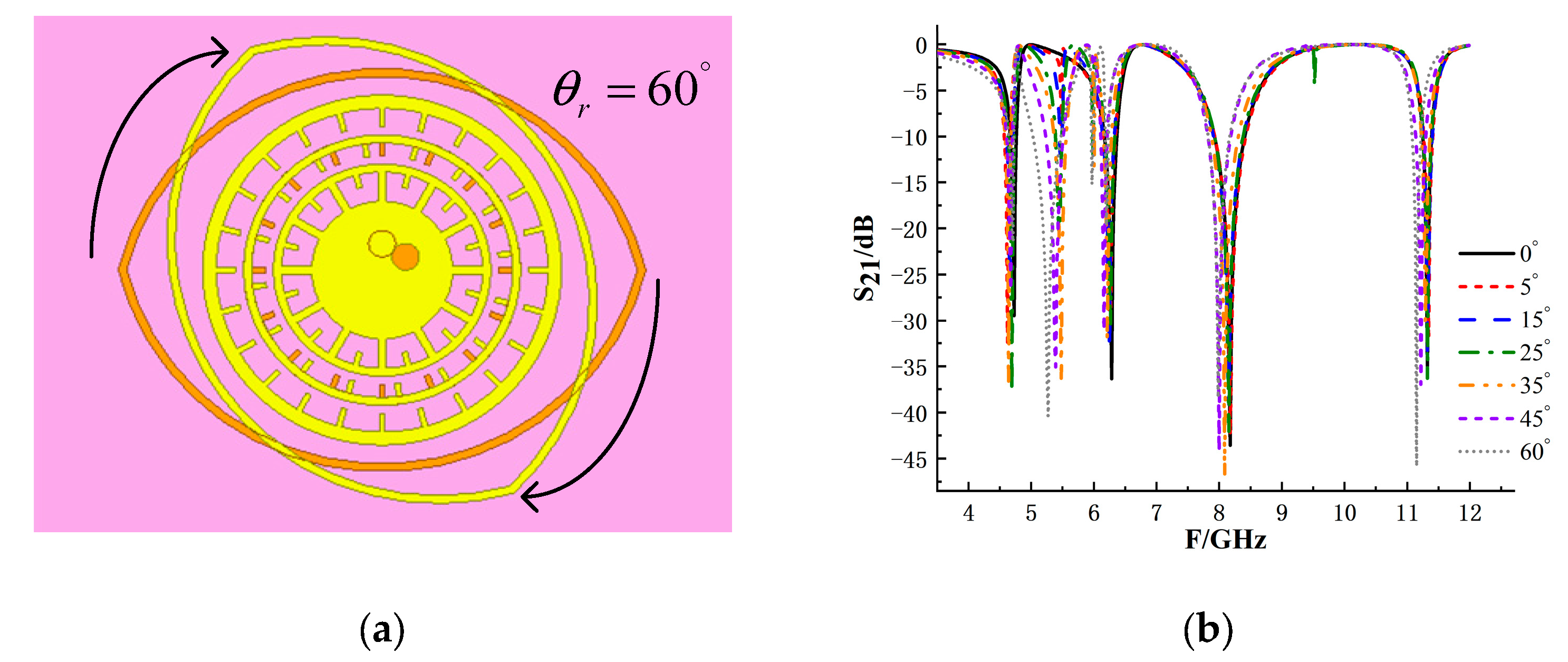
In order to verify the influence of different polarization directions on tag encoding performance, the S
21 of tags at different rotation angles were simulated and compared. Rotate the tag 60° clockwise as shown in
Figure 12.
According to the simulation results, when the tag rotates in the clockwise direction of 0°~35°, the four resonant points almost have no deviation. When the rotation continues to 60°, the tag generates more interference frequency points, and the offset of each frequency point increases to more than 100 MHz, resulting in the reading error of the encoded tag. In the case of counterclockwise rotation, the overall variation in S21 with rotation angle is similar to that in the case of clockwise rotation, but the interference resonance trough will occur earlier. These results indicate that, within a moderate rotation range, the resonant frequency points remain distinguishable, which is sufficient for identifying the encoded information.
4. Encoding Principle of the Tag
The tag realizes both frequency shift and image change through the presence or absence of each branch. In this way, the accuracy of tag reading in the line-of-sight range is double guaranteed. It can not only read the frequency of the tag by way of backscattering, but also judge the coding information by image recognition.
To maintain a consistent interrogation band, the operating range used for coding is set to 4–12 GHz. In decoding, each code state is identified by extracting the notch frequencies from the S
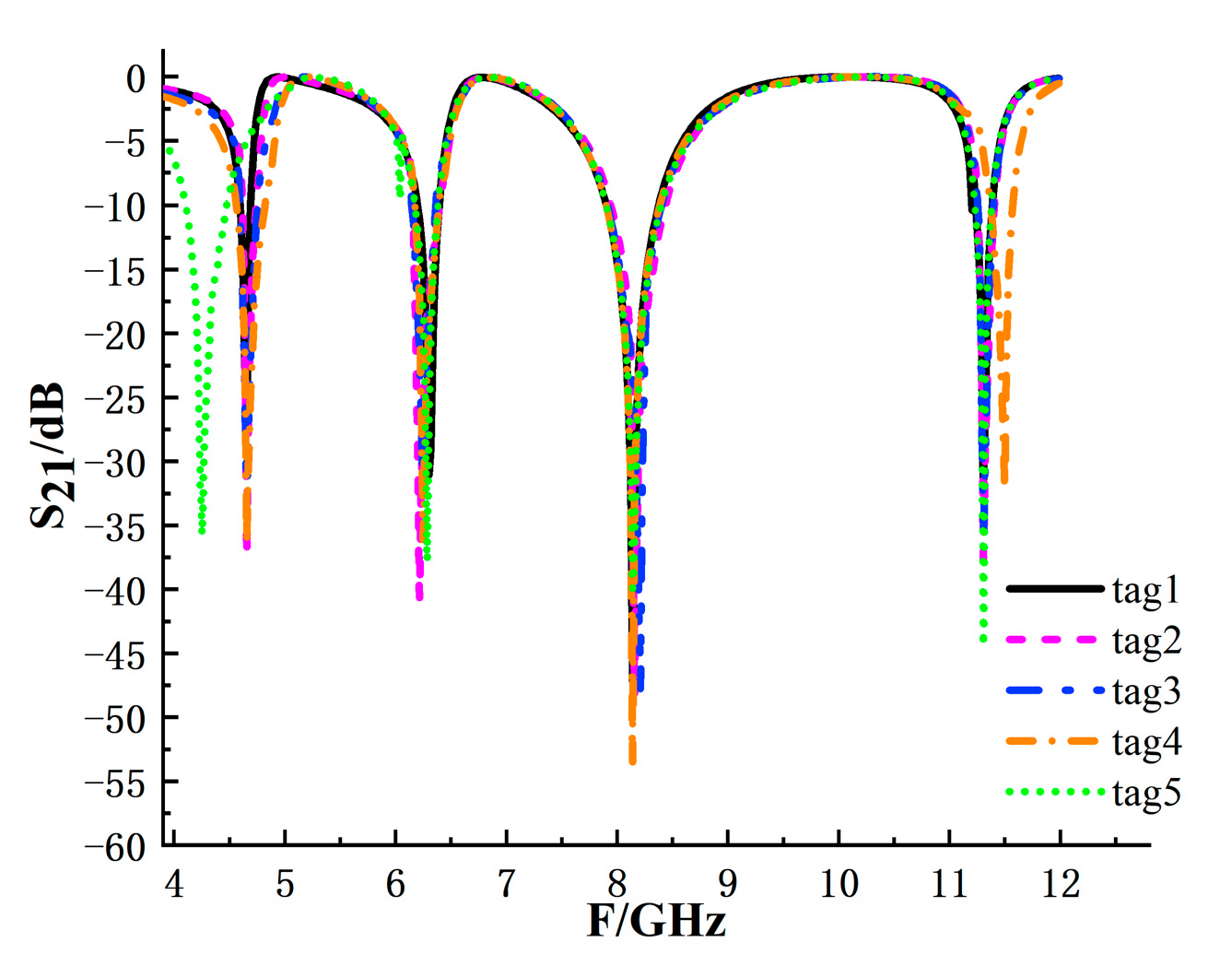
21 response. Two code states are regarded as distinguishable when their resonance frequencies are separated by at least 100 MHz, and the notch depth satisfies a predefined detection criterion under noise. For the overall coding capacity, Structures I and II adopt branch-based binary encoding; after excluding duplicated branches that yield indistinguishable responses, Structure I retains 12 effective branches and Structure II provides 16 branch positions, resulting in 44 bits from Structures I and II. Structure III provides two resolvable geometric states within 4.0–5.5 GHz, contributing 1 bit. Therefore, the overall coding capacity reaches 45 bits, which is theoretical and simulation-based in this work.
Figure 13 shows the simulated responses of five representative tags, and the corresponding resonance frequencies used for decoding are summarized in
Table 2.
5. Measurement
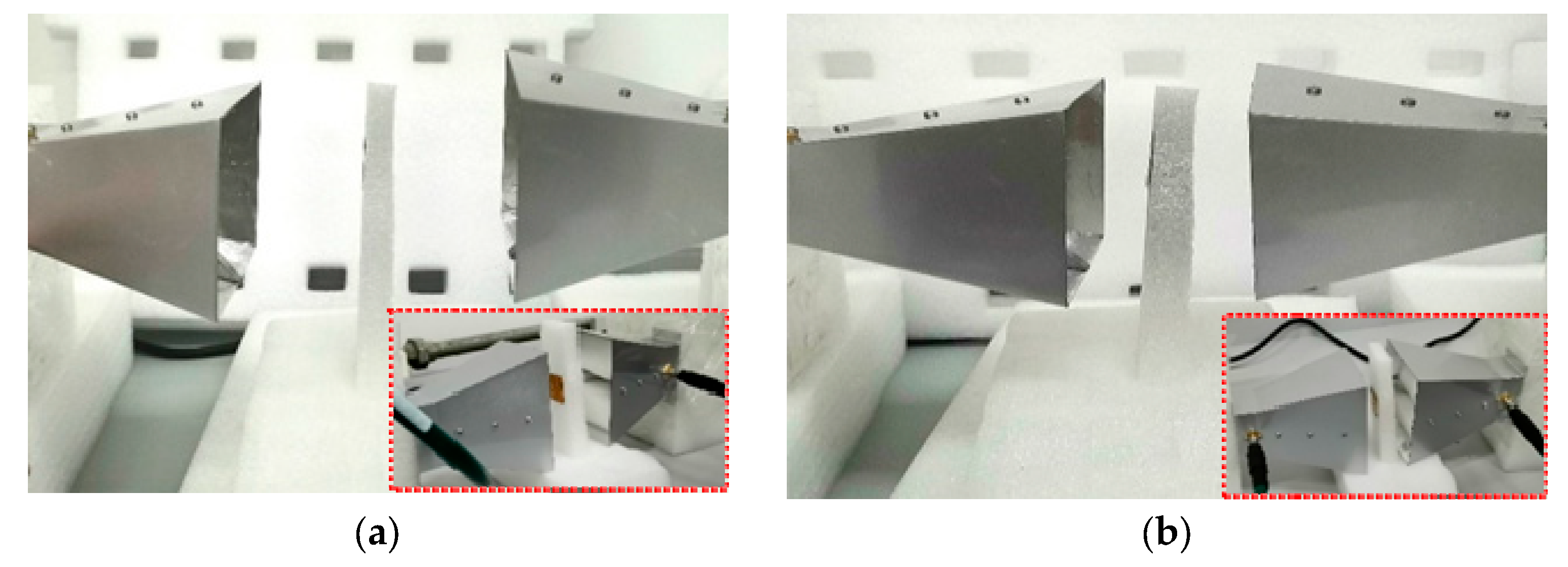
As shown in
Figure 14, the network analyzer is used as the reader of the tag, and the horn antenna with a bandwidth of 2~12 GHz is used as the transmitting and receiving antenna, connected to the two ports of the vector network analyzer (Keysight E5063A) to build the S
21 parameter test platform.
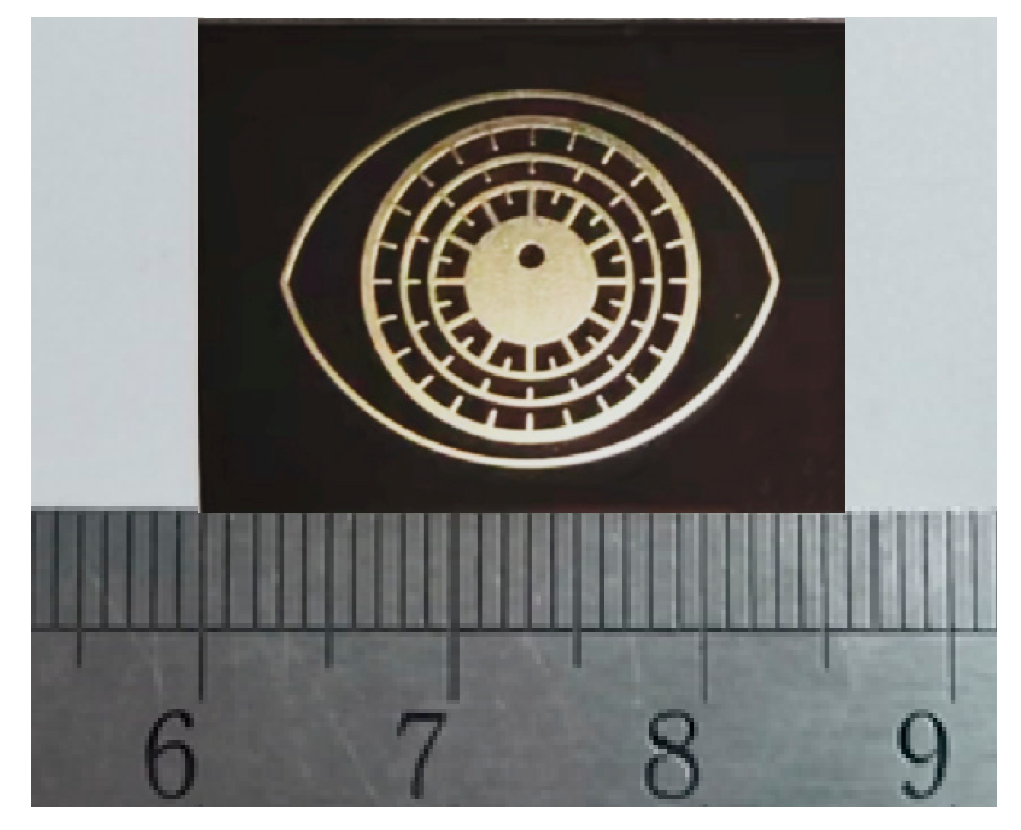
Figure 15 is a physical view of the tag.
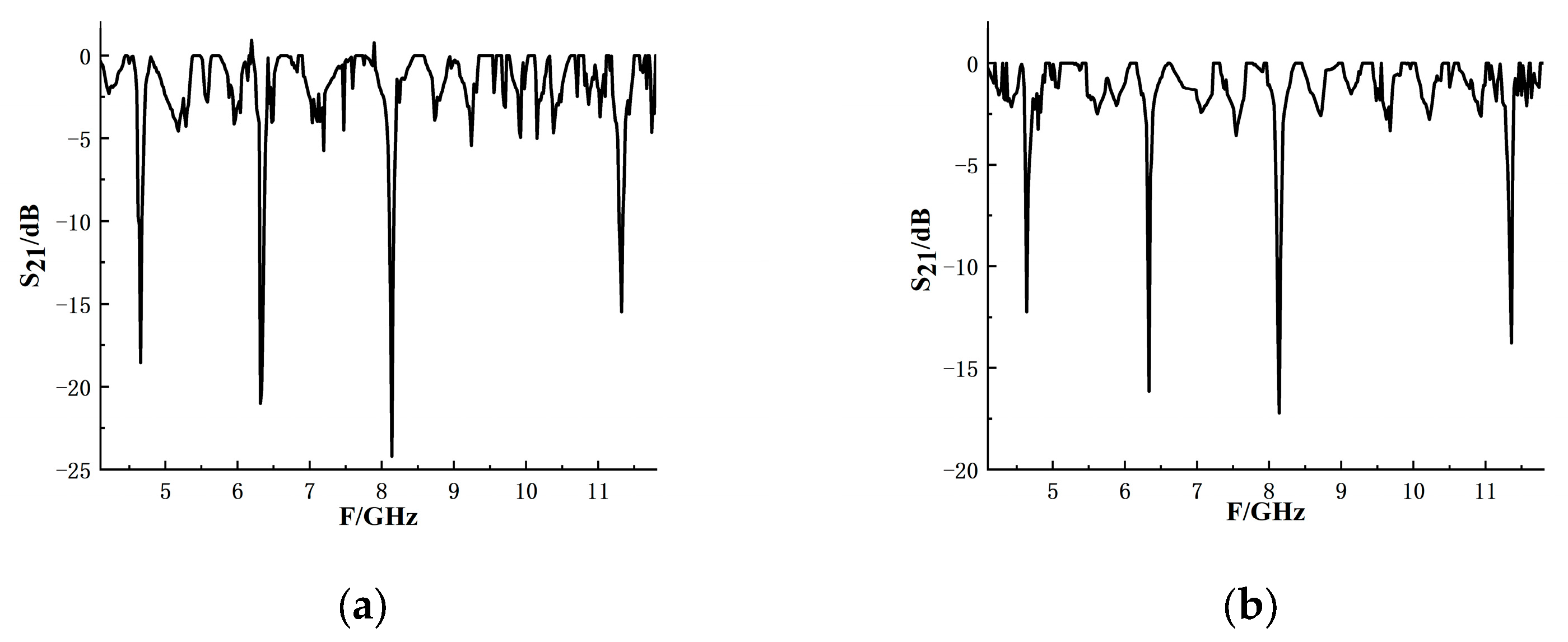
Figure 16 shows the measured results after eliminating the test background. The results show that when the test distance is close, the resonant frequency amplitude of S
21 is higher, but the amplitude of the interference background is also higher. When the reading distance becomes longer, the amplitude of the S
21 interference background obtained is small, but the amplitude of the resonant frequency also becomes smaller, and the frequency shift becomes larger.
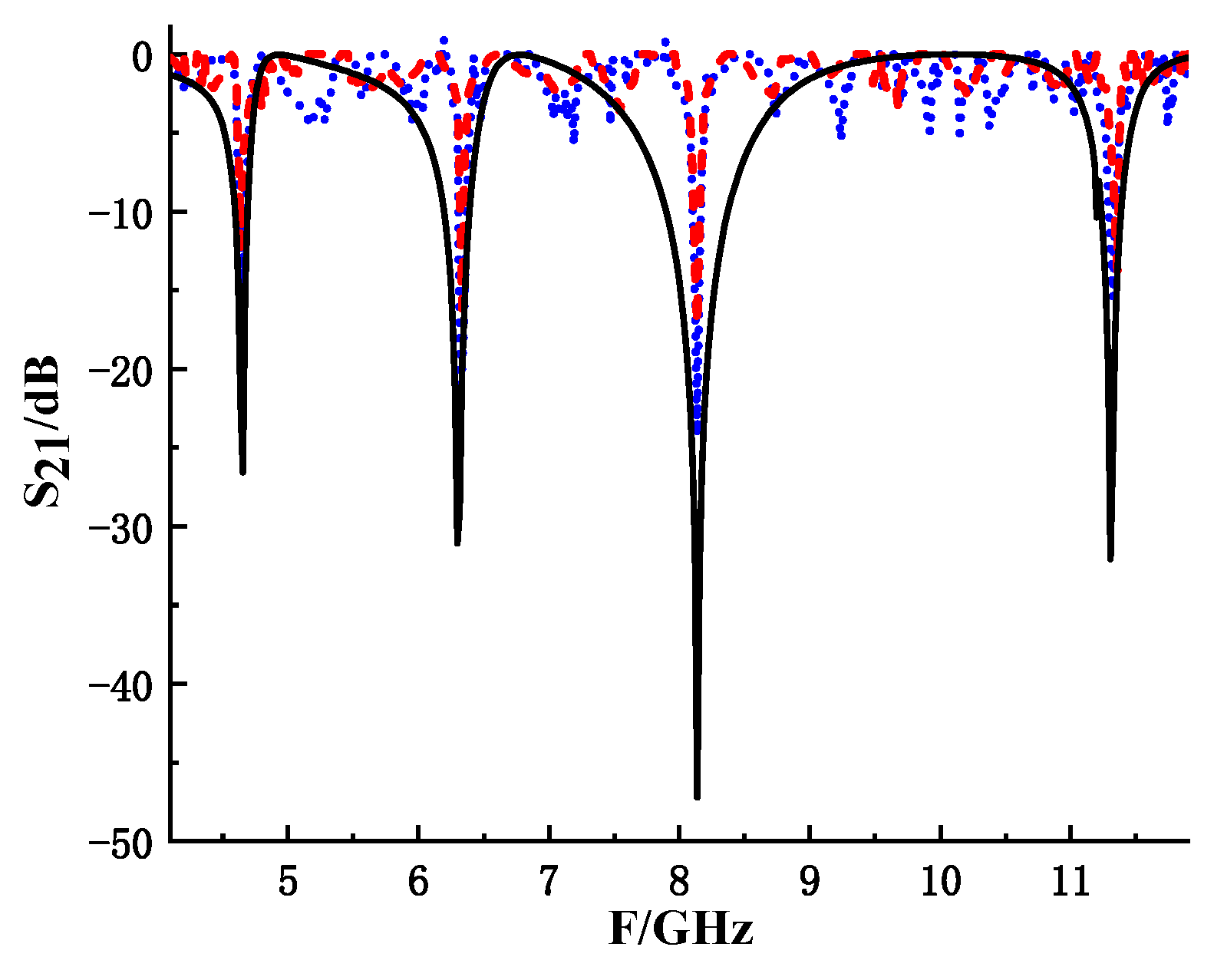
The simulation results of the labels were compared with the measurement results, as shown in
Figure 16 and
Figure 17. It can be seen that the measurement and simulation are basically consistent. When the testing distance is 16 cm, the offset of the high-frequency resonance point (10–12 GHz) reaches 45 MHz. The frequency stability of the 12 GHz reading antenna is relatively poor, resulting in differences between the measured results and simulation results. Therefore, in the test, the distance between the antenna and the tag will be controlled within 16 cm, which is sufficient for most application scenarios. Meanwhile, due to the fact that the actual testing environment is not an ideal space, the signal experiences greater attenuation during the radiation process, resulting in a decrease in amplitude. So, compared with the simulation results, the S
21 amplitude obtained from the test is smaller than the simulation data. In addition, due to limited technological capabilities, there may be a difference of ±10% in the accuracy of label production, which can also lead to insufficient resonance amplitude loss and frequency deviation.
A comparison with previously reported chipless RFID tags is summarized in
Table 3. Compared with the designs in [
21,
22,
23,
24], the proposed tag achieves a higher encoding capacity while maintaining a compact physical size. In paper [
21], three circular structures are combined to design a clover-shaped resonant structure, and the designed tag can achieve 10-bit coding capacity on RT/Duroid5880 substrate. The tag frequency range proposed in paper [
22] is the smallest, but the deficiency is that the tag size is large. In contrast, the proposed tag adopts a circular ring resonant structure with a compact size of 2.0 × 2.6 cm
2, while providing an encoding capacity exceeding 45 bits.