1. Introduction
The Global Burden of Disease Study 2021 reports that, in 2021, stroke-related deaths worldwide totaled 7.3 million, accounting for 10.7% of all deaths. This makes stroke the third leading cause of death and the fourth leading cause of both death and disability combined. Low- and middle-income countries account for 87.2% of stroke-related deaths and 89.4% of disability cases [
1]. Stroke is frequently associated with hemiplegia, with approximately 30% of patients experiencing permanent disability and 20% requiring intensive rehabilitation [
2]. Rehabilitation typically requires professional therapists to assist with repetitive exercises. However, challenges such as therapist shortages, long treatment durations, and the time-consuming nature of one-on-one interactions have become significant barriers to patient recovery [
3].
Rehabilitation robots, as an innovative fusion of robotics technology and rehabilitation engineering, can support rehabilitation training by supplementing the work of therapists [
4]. These robots offer intensive, accurate, quantitative, and safe training, ensuring treatment consistency while enabling objective assessment [
5]. Additionally, they enhance the rehabilitation experience by incorporating virtual reality [
6]. Recent studies highlight the practical value of rehabilitation robots in assisting both patients and therapists during treatment, showing that robotic devices can significantly improve the recovery of limb function in stroke patients [
7,
8].
Rehabilitation robots currently fall into two categories: end-effector-based and exoskeleton-based systems. End-effector systems generate movement from the distal end of the limb, without the need for joint alignment between the patient and the robot [
9]. Notable examples include PCUR [
10], iTbot [
11], EBULRR [
12], MOTORE [
13], and iReMo [
14].
In exoskeleton systems, the robot’s joints correspond directly to the patient’s joints, allowing for several movements of the arm such as reaching, grasping, and lifting, with the general intention of enhancing motor function through repetitive practice and training in functionally relevant ranges of motion [
15]. Prominent examples of exoskeleton-based rehabilitation robots include ULIX [
16], DARR [
17], ASPIRE [
18], CURER [
19], and GDULE [
20].
The effectiveness of robot-assisted rehabilitation largely depends on the control strategy. During rehabilitation, the occurrence of isolated movements indicates that the patient has regained partial autonomous movement ability. At this stage, the control objective of rehabilitation robot-assisted training should shift to aligning with the patient’s movement intentions, and the control method should adopt a more compliant interactive approach. To achieve this, researchers have proposed various compliant control strategies, with impedance control being one of the most prominent. The on-demand assistance (AAN) control strategy is widely applied [
21]. Han et al. proposed an AAN control method based on patient movement intent and task performance for upper limb rehabilitation robots. In robot-level control, iterative learning algorithms are used to update impedance parameters in real-time. Patient engagement is assessed using the tangential and normal components of the interaction force, thereby enhancing the adaptability and stability of rehabilitation training [
22]. Li et al. designed a bilateral mirrored upper limb rehabilitation robot using the AAN control strategy. Using a Gaussian mixture model and an impedance controller, the rehabilitation robot provides varying levels of assistance to patients at different task stages, guiding them to complete rehabilitation training independently [
23]. Asl et al. developed an AAN impedance controller that adjusts impedance parameters online using the velocity tracking error, thereby enabling on-demand assistance functionality [
24]. Jyotindra Narayan et al. proposed a neural-fuzzy-based variable admittance control [
25]. Rana Soltani Zarrin et al. proposed a dual-port task-space variable admittance demand-based assistive controller for upper limb rehabilitation exoskeletons with low mechanical feedback [
26]. In addition to the AAN control strategy, Liu et al. proposed a collaborative control framework for lower limb rehabilitation robots based on variable stiffness actuators. This framework allows the impedance control loop to work in tandem with the variable stiffness actuator control loop, improving the efficiency of rehabilitation training [
27]. Maqsood et al. combined adaptive impedance control with iterative learning, enabling the control system to update the robot’s reference trajectory based on human movement and adjust the interaction force between the robot and the human lower limb, achieving compliant human–robot interaction [
28].
Common approaches in admittance control include adaptive admittance control. For instance, Wu et al. developed an adaptive admittance control strategy (AACNDO) that integrates a neural network-based disturbance observer. Using a radial basis function network, they constructed a disturbance observer that adjusts human–machine interaction forces across different regions, achieving passive and collaborative training, thereby improving interaction smoothness and precision [
29]. Yang et al. designed a lower limb rehabilitation robot and proposed an adaptive admittance control method based on linear quadratic regulation optimization to minimize tracking error and human-related factors [
30]. M. Mashayekhi et al. introduced an adaptive admittance control method based on electromyography (EMG) fatigue detection, which enhances the sustainability, safety, and effectiveness of rehabilitation training by incorporating fatigue-adaptive regulation [
31]. Wu et al. focused on developing a new barrier Lyapunov function (BLF)-based fuzzy adaptive admittance control strategy with neural compensation for an exoskeleton to carry out tasks with compliant and rigid operations [
32]. A.M. Abdullahi et al. proposed a hybrid adaptive impedance and position admittance control strategy, which significantly reduced the average required driving torque for shoulder and elbow joints [
33]. In fuzzy variable impedance control, Zhu et al. developed a rope-driven upper limb robot and proposed a fuzzy variable impedance model optimized using a genetic algorithm. This approach dynamically adjusts impedance characteristics based on the patient’s movement state, enabling precise control of force and motion [
34]. Additionally, Zou et al. fused EMG and electroencephalography signals in real-time for admittance control, where attention concentration served as a parameter to adjust rehabilitation training [
35]. Furthermore, Wu et al. developed a new variable admittance time-delay control strategy based on human stiffness estimation. This control strategy was developed and implemented on a planar upper limb rehabilitation robot [
36].
However, current research in admittance control reveals that most studies rely on fixed damping parameters or single-parameter adjustment strategies. This rigid approach fails to capture the dynamic variations in patients’ movement intentions. In the case of impedance control, while it facilitates interactive compliance, it requires precise dynamic modeling of both the robotic and human limb systems and depends on an open-loop current control design. Sliding mode control, known for its excellent disturbance rejection capabilities, effectively addresses parameter perturbations and external disturbances in rehabilitation exoskeleton systems. However, its inherent control input jitter remains a significant obstacle for clinical application, as jitter transmission to the patient’s affected limb can lead to adverse effects such as muscle spasms and pain [
37]. Adaptive impedance control, based on human stiffness estimation, calculates arm stiffness by processing electromyography signals, then adjusts impedance model parameters to maintain system stability. However, this method relies solely on human stiffness as a single variable, overlooking joint angular velocity—a dynamic feature that reflects the patient’s movement intent—limiting its effectiveness in complex, active rehabilitation training scenarios [
38]. In contrast, the method proposed in this study offers a more comprehensive understanding of the system’s state, enhanced adaptability, and a faster dynamic response. It eliminates the vibration risks associated with sliding mode control and addresses the limitations of single-state perception.
This study tackles key challenges in upper limb rehabilitation exoskeleton control by designing a bilaterally adaptive, three-degree-of-freedom exoskeleton capable of reconfiguring rapidly (within 5 min). It accommodates dual-upper limb training and adapts to individuals of varying heights. The core innovations include three components: First, a neural-fuzzy adaptive admittance control architecture was developed, utilizing dual inputs—human–machine interaction force and joint angular velocity. By integrating radial basis function (RBF)-based adaptive PID with fuzzy variable-parameter admittance control, the system achieves a maximum trajectory tracking error of less than 1.2° and a root mean square error of ≤0.13°. Second, a specialized fuzzy rule library based on the Brunnstrom stages [
39] was constructed, directly linking clinical rehabilitation requirements to adaptive control parameters. This alignment enhances the specificity of rehabilitation training. Finally, a bilateral adaptive mechanical structure was developed to support dual-upper limb training, significantly expanding the application scenarios compared to traditional single-limb exoskeleton devices.
The remainder of this paper is structured as follows.
Section 2 details the mechanical design and control system of the rehabilitation robot.
Section 3 discusses the development of an adaptive PID position control algorithm based on neural networks, along with an interactive control algorithm utilizing fuzzy variable admittance control.
Section 4 presents experimental validation. Finally,
Section 5 summarizes this research and outlines prospects for future work.
3. Rehabilitation Exercise Training Control Strategies
According to the rehabilitation theory proposed by Brunnstrom et al., the recovery process for patients with hemiplegia can be divided into six stages: the flaccid stage, the spastic stage, the synergistic stage, the partial dissociation stage, the complete dissociation stage, and the normal stage [
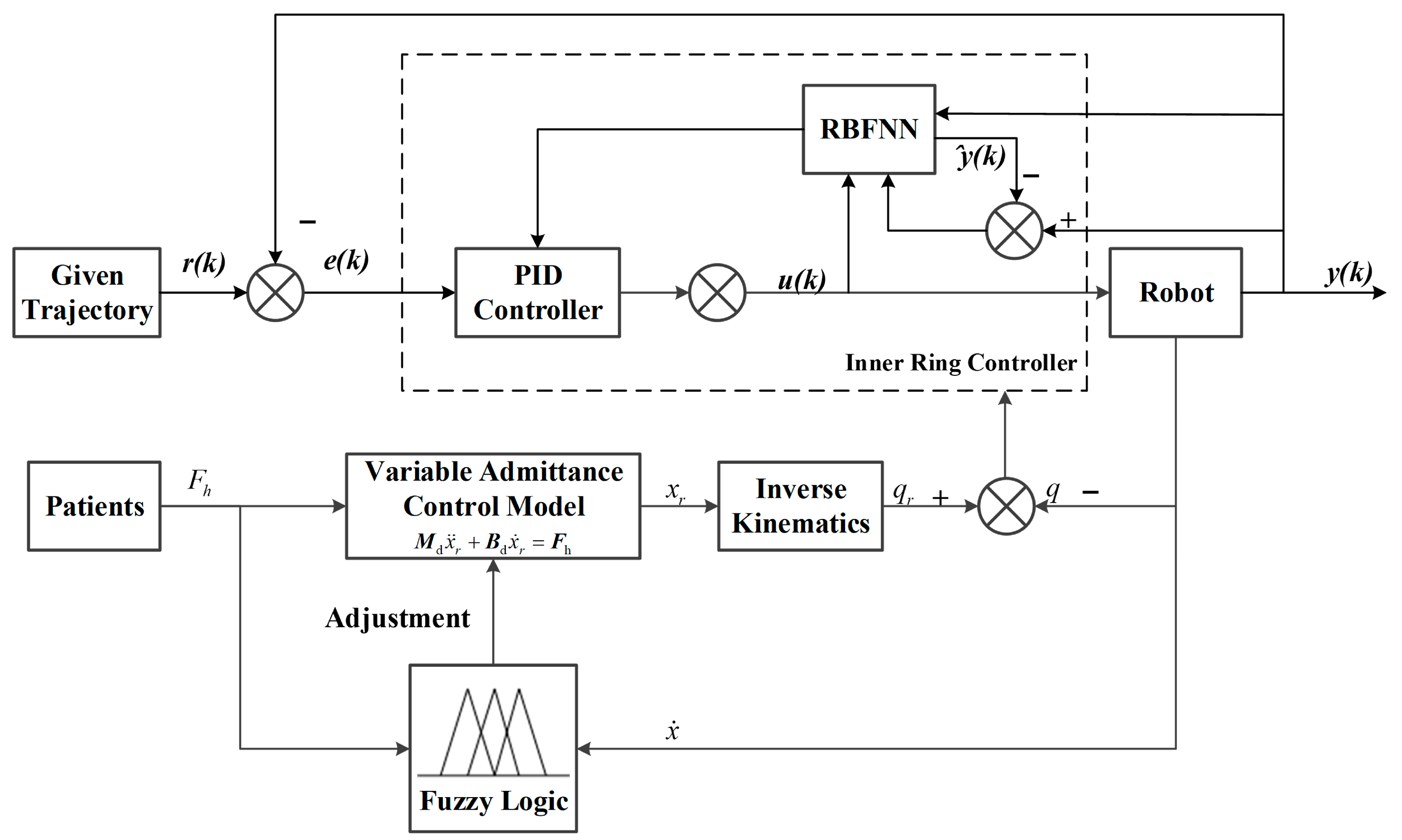
39]. This study focuses on the spastic stage, synergistic stage, and partial dissociation stage—periods when patients face high muscle tone, fixed synergistic movement patterns, and limited voluntary motor control. The core training goals here are to alleviate spasticity, break abnormal movement modes, and guide the emergence of isolated movements. To match these stage-specific needs, the control strategy must dynamically adjust interaction damping based on real-time patient status while ensuring trajectory tracking accuracy. The overall fuzzy variable admittance control strategy designed for this purpose is illustrated in
Figure 3.
Fuzzy neural network control integrates the unique advantages of fuzzy control in handling system uncertainties and nonlinear problems with the self-learning and adaptive characteristics inherent in neural networks. Extensive and in-depth research has been conducted in numerous complex domains, including multi-agent systems, multi-microgrids, and photovoltaic systems, providing an efficient and reliable technical approach for resolving control challenges in diverse complex systems.
Within this domain, Chang et al. proposed a fuzzy sliding mode tracking method based on the interval-type-2 Takagi–Sugeno fuzzy model, effectively enhancing the system’s resilience against uncertainties and external disturbances [
40]. Jeevitha Kandasamy et al. designed a distributed consistent control strategy based on adaptive tuning of Fractional Order PID using Fuzzy Recurrent Neural Networks, demonstrating outstanding robustness and adaptive performance under multiple disturbances and nonlinear constraints [
41]. Xie et al. developed an integrated control strategy combining fuzzy control with neural network control, applying it to photovoltaic system control [
42]. By establishing an accurate mathematical model of the photovoltaic system and utilizing fuzzy control to effectively handle the ambiguity and uncertainty introduced by environmental factors, they provided robust technical support for the commercialization of photovoltaic systems. Given the significant advantages of fuzzy neural network control and its successful application in complex systems, this paper introduces this advanced control technique into the control research of rehabilitation exoskeleton robots.
Based on the aforementioned research findings and considering the control requirements of rehabilitation exoskeleton robots, this paper adopts the admittance control method as the core control framework. The following control algorithms are designed, with specific details as follows:
3.1. Adaptive PID Position Control Algorithm Based on RBF Neural Networks
To account for individual variations among subjects, this paper designs an adaptive PID position controller based on neural networks. By using RBF neural networks for adaptive optimization and adjustment of PID parameters, precise exoskeleton position control is achieved.
The PID controller is the most classic joint trajectory tracking controller for robots. Defining the desired value of the controlled variable as r(k) and the actual output as u(k), the error can be expressed as
During actual control, after discretizing the system equations, assuming a sampling period of T, the discretized equation for the continuous PID control system at the kth sampling point can be expressed as [
43]
where
denotes the proportional coefficient,
represents the integral time constant, and
signifies the derivative time constant.
Radial basis functions are scalar functions whose values depend solely on the distance from a central point. Common types include Gaussian, anomalous S-shaped, and quasi-quadratic functions.
The SFDRC control strategy is a robust disturbance rejection method applicable to general nonlinear systems, capable of handling smooth/non-smooth matched/unmatched disturbances. However, it lacks human–machine interaction compliance design and real-time parameter adaptation capability [
44]. Multilayer neural adaptive reinforcement learning based on the Actor–Critic mechanism is an intelligent control approach for high-dimensional uncertain nonlinear systems, offering strong disturbance rejection capability. However, it involves complex network learning and high computational demands, making it challenging to balance accuracy and flexibility [
45]. This study adopts a dual-layer control architecture, synergistically optimizing tracking accuracy and interaction compliance through RBF adaptive PID and fuzzy variable admittance. It features a simple structure, fast convergence, and resistance to local minima. With sufficient neural nodes, it can approximate any continuous function with arbitrary precision, enhancing system accuracy, robustness, and adaptability.
The RBF neural network features a simple architecture and rapid convergence, comprising an input layer, a hidden layer, and an output layer. The hidden layer performs nonlinear mapping of the input layer through an activation function, which in this case is the radial basis function. The final output of the neural network is a linearly weighted sum of the hidden layer’s output values, where the weights serve as the network’s adjustable parameters.
This study uses the Gaussian function as the activation function, and the relevant expressions for the neural network can be written as
For the proposed control strategy, denotes the output of the RBF neural network, where represents the input vector to the network and denotes the weight vector of the network’s output layer. Additionally, denotes the activation function vector, with all employing Gaussian kernel functions. For each Gaussian kernel function , denotes the center point vector, identified through the K-means clustering algorithm and denotes the width parameter vector, obtained through the empirical formula , where is the maximum distance between cluster centers and is the number of hidden layer nodes.
The characteristic function of the RBF neural network is
Adjust the weights, node centers, and node widths of the RBF neural network using the gradient descent method. The specific iterative procedure is as follows:
Here, σ denotes the learning rate of the neural network and β denotes the momentum factor of the neural network. The Jacobian matrix approximated by the RBF neural network can be expressed as
where
represents the input to the neural network.
The control error of the controller is defined as
; the objective of the PID controller design is to minimize control error, defining the performance objective function as
The controller’s control rate is designed as follows:
The controller output increment
is designed as follows:
Among these,
,
, and
represent the proportional, integral, and derivative coefficients of the PID controller respectively, which can be obtained via the gradient descent method. The specific procedure is as follows:
Among these,
,
, and
denote the learning rates;
may be estimated by the RBF neural network in Equation (10), while
,
, and
represent the controller’s deviation input, integral input, and derivative input respectively, expressed as
3.2. Interactive Control Algorithm Based on Admittance Control
Admittance control represents a classical approach within compliant control methodologies. Its fundamental principle involves simulating a second-order spring–damper system to translate force error quantities into positional adjustment values, thereby achieving compliant interactive control. The impedance model may be expressed as
Here, , , and denote the virtual inertia, damping, and stiffness coefficient matrices within the target impedance model. Adjusting these three parameters alters the compliance of human–robot interaction. , , and denote the desired trajectory, desired trajectory velocity, and desired trajectory acceleration of the rehabilitation robot’s end-effector, respectively. , , and represent the designed trajectory, designed trajectory velocity, and designed trajectory acceleration of the end-effector under this impedance model. signifies the human–robot interaction force at the end-effector.
In active rehabilitation training mode, the exoskeleton’s trajectory is typically determined by the patient, meaning the exoskeleton is expected to follow the patient’s movements. Therefore, the desired trajectory is set as
=
=
= 0, and the virtual stiffness is set as
. Equation (21) can be expressed as
Therefore, the design trajectory of the end-effector for rehabilitation robots can be calculated based on the human–robot interaction forces at the end-effector. Subsequently, the design trajectory in Cartesian space for the end-effector is mapped to the joints via inverse kinematics, thereby obtaining the design angle information for each joint. Finally, an adaptive PID position controller based on an RBF neural network is employed to achieve inner-loop position tracking.
It is noteworthy that in Equation (21), the greater the virtual damping parameter, the greater the interaction force required for the patient to drag the rehabilitation robot at the system speed. Therefore, the damping parameter can be designed according to the patient’s rehabilitation level: the stronger the patient’s mobility, the larger the damping parameter and vice versa.
3.3. Interactive Control Algorithm Based on Fuzzy Variable Admittance
This paper integrates RBF neural network logic with fuzzy control theory to design the neural-fuzzy-based variable admittance control’s damping parameter adaptive law, utilizing the Mamdani inference method to establish a fuzzy rule base [
46]. This paper employs the Mamdani inference method to establish the reliability of the fuzzy rule base. Its core stems from Salahuddin et al.’s comprehensive validation of the engineering performance, design methodology, and robustness of Mamdani fuzzy logic controllers (MFLCs). Salahuddin et al. applied the MFLC to vector control of nonlinear, time-varying induction motors in electric vehicles, demonstrating its superior performance with zero overshoot, short steady-state time, and disturbance rejection capability. We adopted their rule design logic based on real-world measurement data, a “trapezoidal + triangular” membership function combination, and physics-driven principles. Integrating clinical experience in upper limb rehabilitation training with human–machine interaction characteristics, we designed hierarchical fuzzy subsets and rules aligned with physical principles. This approach inherits the MFLC’s robustness against uncertainty, ensuring reliable adaptation of the rule base to rehabilitation robotic systems. The fuzzy rules take the interaction force
applied by the patient to the robot and the actual angular velocity
of the robot joints as system inputs, with the virtual damping parameter
as the system output.
The variable sets are defined as follows:
Among these, and denote negative large, negative medium, negative small, and negative very small respectively; denotes zero; and denote positive very small, positive small, positive medium, positive large, and positive very large respectively; and denote positive and negative values respectively. Following practical testing, the input and output value ranges are set as follows:
Based on accumulated experience in rehabilitation training, fuzzy rules are designed according to the following principles: (1) When the intended movement direction aligns with the robot’s actual movement (
),
should have a smaller value, with
increasing as
grows, thereby intensifying the training load on the affected limb; (2) When the movement intention and the robot’s actual movement is in opposite directions (
), B_d should be set to a larger value, and the larger
is, the larger
becomes, enabling the robot to stop more quickly; (3) When both the interaction force
and the actual movement velocity
are nearly zero,
should be set to a larger value to maintain the system’s current state. The above fuzzy logic is formulated into a fuzzy rule base, as shown in
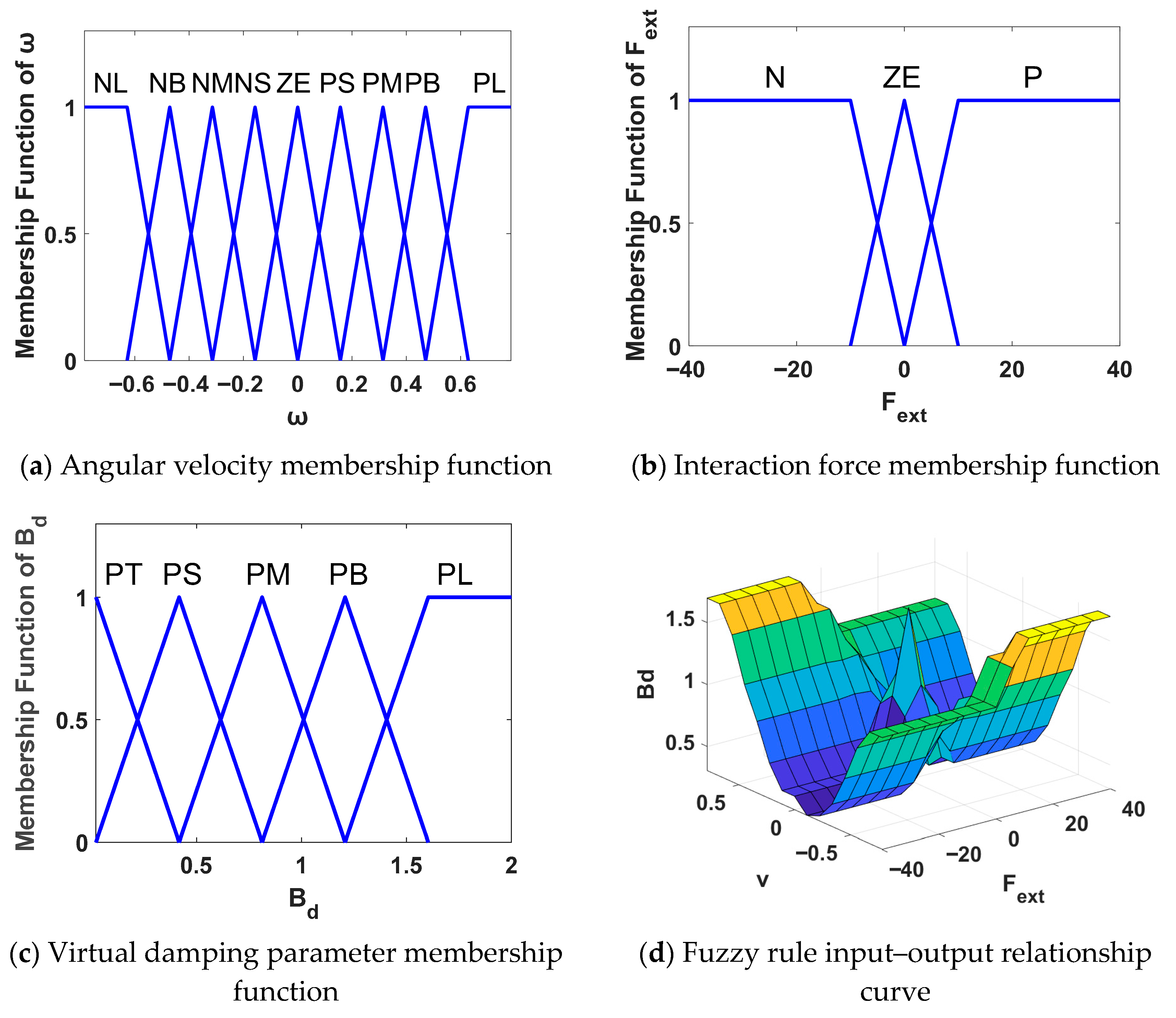
Table 1. The membership functions for each variable are depicted in
Figure 4a–c, while the input–output relationship curve is illustrated in
Figure 4d.
3.4. Summary of Control Strategies
We use the direct Lyapunov method to rigorously prove the consistent finite-boundedness of the inner-loop RBF-PID controller and the asymptotic stability of the outer-loop fuzzy admittance controller. The overall stability of the system is confirmed through the total Lyapunov function.
Current research on rehabilitation exoskeleton control strategies for stroke patients often employs fixed-admittance approaches with static damping parameters. These approaches cannot dynamically adjust based on real-time patient movement intent (such as interactive force or joint angular velocity). As a result, they are unable to adapt to the movement characteristics of stroke patients across different Brunnstrom rehabilitation stages or respond to real-time state changes during training. In contrast, our approach dynamically adjusts virtual damping through a customized fuzzy rule library, precisely matching clinical training needs during spastic, synergistic, and partially dissociated phases. Experimental validation demonstrates superior human–machine interaction compliance and trajectory tracking accuracy across various movement tasks.
Adaptive admittance control strategies that do not incorporate fuzzy logic typically rely on single-parameter adjustment or simple linear adaptation rules, which struggle to capture dynamic shifts in patient movement intent. This study combines the self-learning capability of RBF neural networks with the strengths of fuzzy control in managing system uncertainty and nonlinearity. The resulting neuro-fuzzy architecture enables nonlinear adaptive adjustment of damping parameters. Furthermore, strict stability proof is achieved through the Lyapunov method, demonstrating excellent dynamic response and control robustness during active interactive training.
Traditional impedance/admittance controllers based on AAN involve high engineering complexity and development costs. They also suffer from weak parameter tuning specificity, making it difficult to balance trajectory tracking accuracy and human–machine interaction compliance in multi-degree-of-freedom exoskeleton systems.
In contrast, this study deeply integrates RBF adaptive PID with fuzzy variable-parameter admittance control, achieving coordinated control of high-precision inner-loop trajectory tracking and flexible outer-loop human–machine interaction. Experimental validation demonstrates a maximum trajectory tracking error of <1.2° and a root mean square error of ≤0.13°. Additionally, the exoskeleton’s mechanical structure supports rapid 5-min reconfiguration, better aligning with clinical application requirements.
However, the neural fuzzy variable admittance control strategy proposed in this study also has shortcomings in method design. For instance, the control input only selects human–robot interaction force and joint angular velocity, without integrating physiological signals such as electromyography and electroencephalography, which can more accurately reflect the patient’s movement intention. In the future, we will continue to research and address these shortcomings to enhance the performance of the control strategy.
4. Experiments
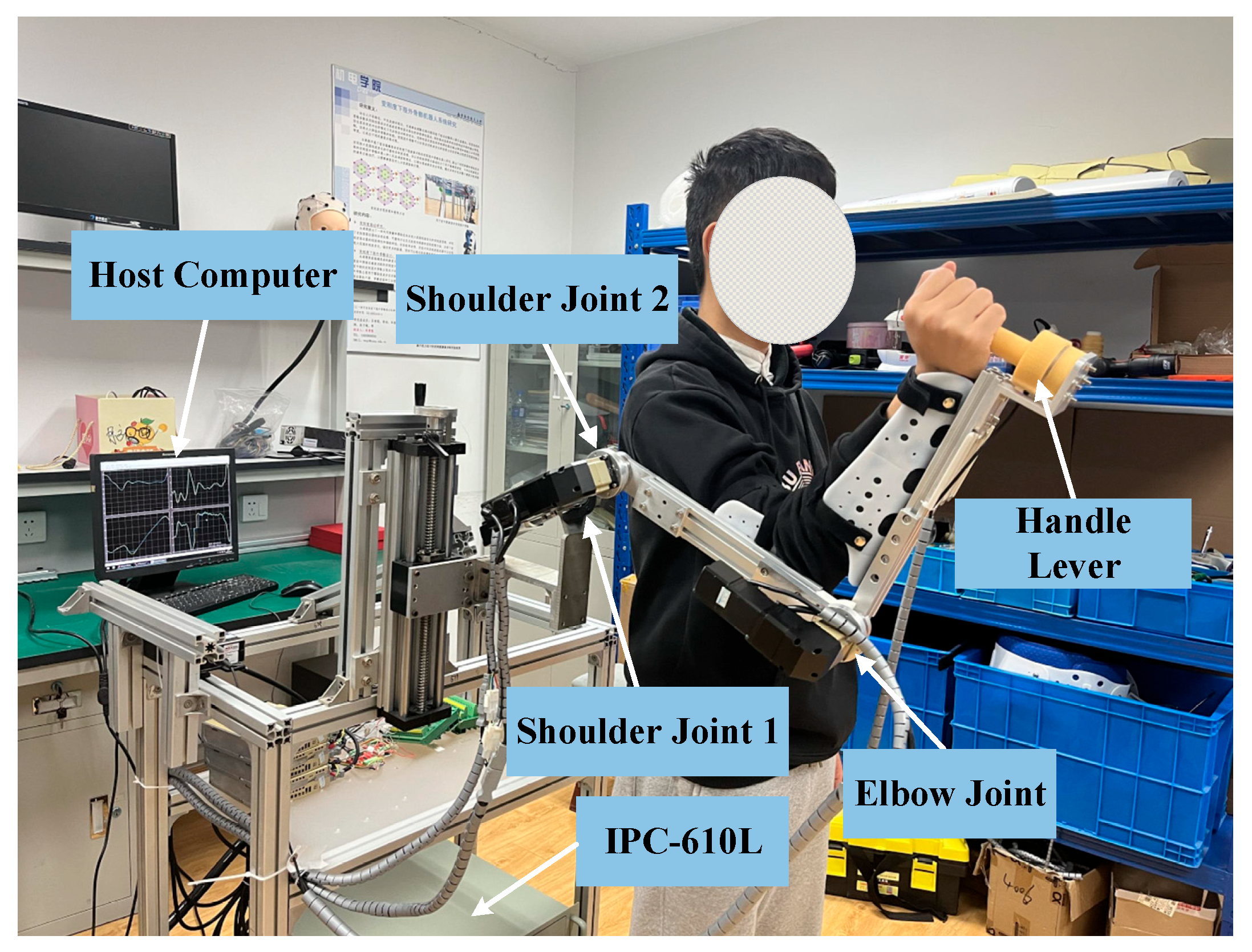
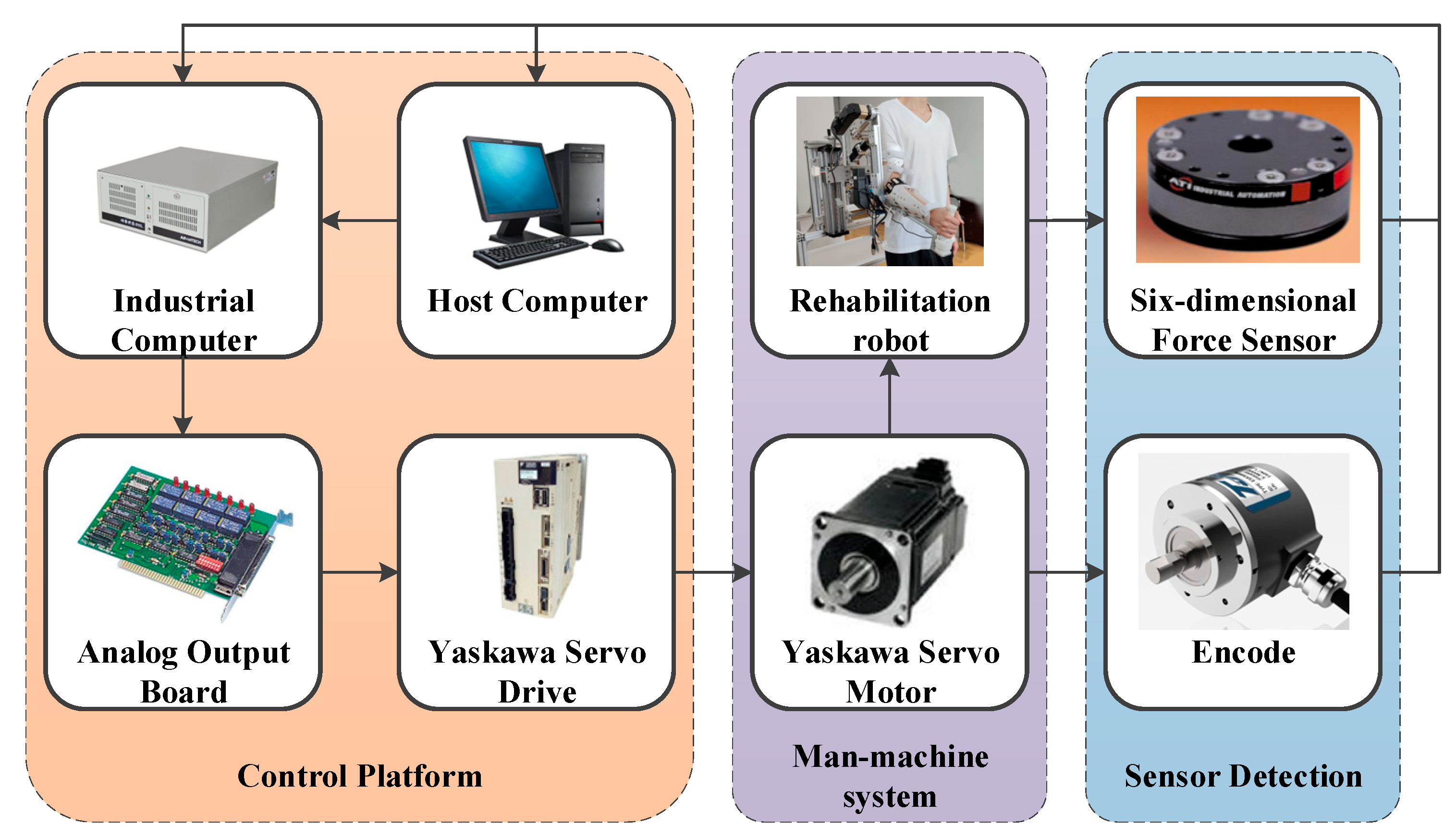
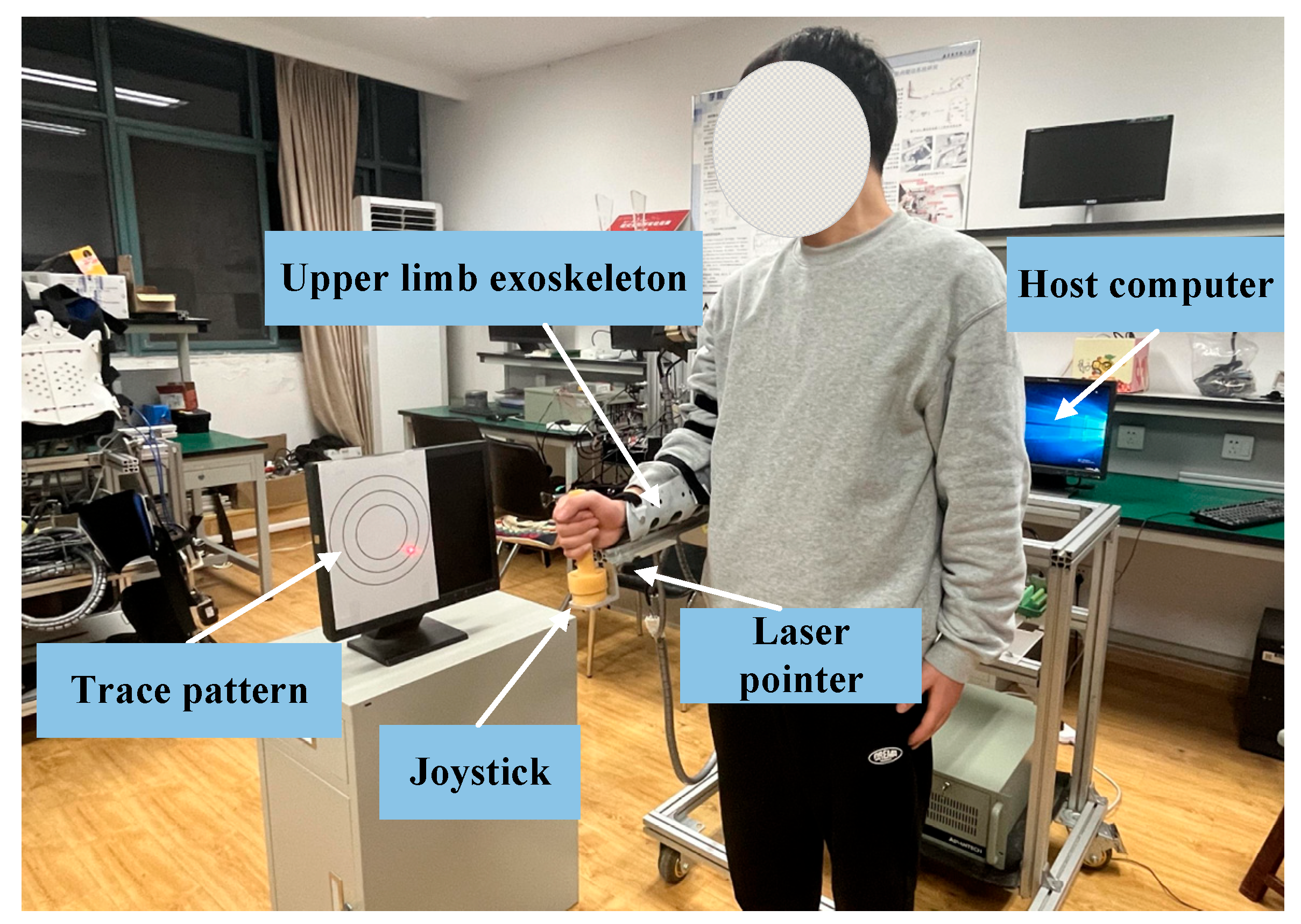
To validate the proposed control strategy, we conducted three sets of experiments using the described upper limb rehabilitation robot and the MATLAB RTW control system: positional trajectory tracking, admittance interaction control, and trajectory tracing experiments. The ethical approval of the experimental study was obtained from the Institutional Review Board of Nanjing University of Aeronautics and Astronautics under the protocol IRB [2023]-216, and all experimental procedures satisfy the Declaration of Helsinki. The experimental platform is illustrated in
Figure 5. Three volunteers with varying anthropometric parameters and ages were recruited (Volunteer 1: Male, Height 1.75 m, Weight 68 kg, and Age 23 years; Volunteer 2: Male, Height 1.80 m, Weight 75 kg, and Age 25 years; Volunteer 3: Female, Height 1.60 m, Weight 45 kg, and Age 24 years) to participate in three representative experiments testing the developed rehabilitation robot.
4.1. Position Control Trajectory Tracking Experiment
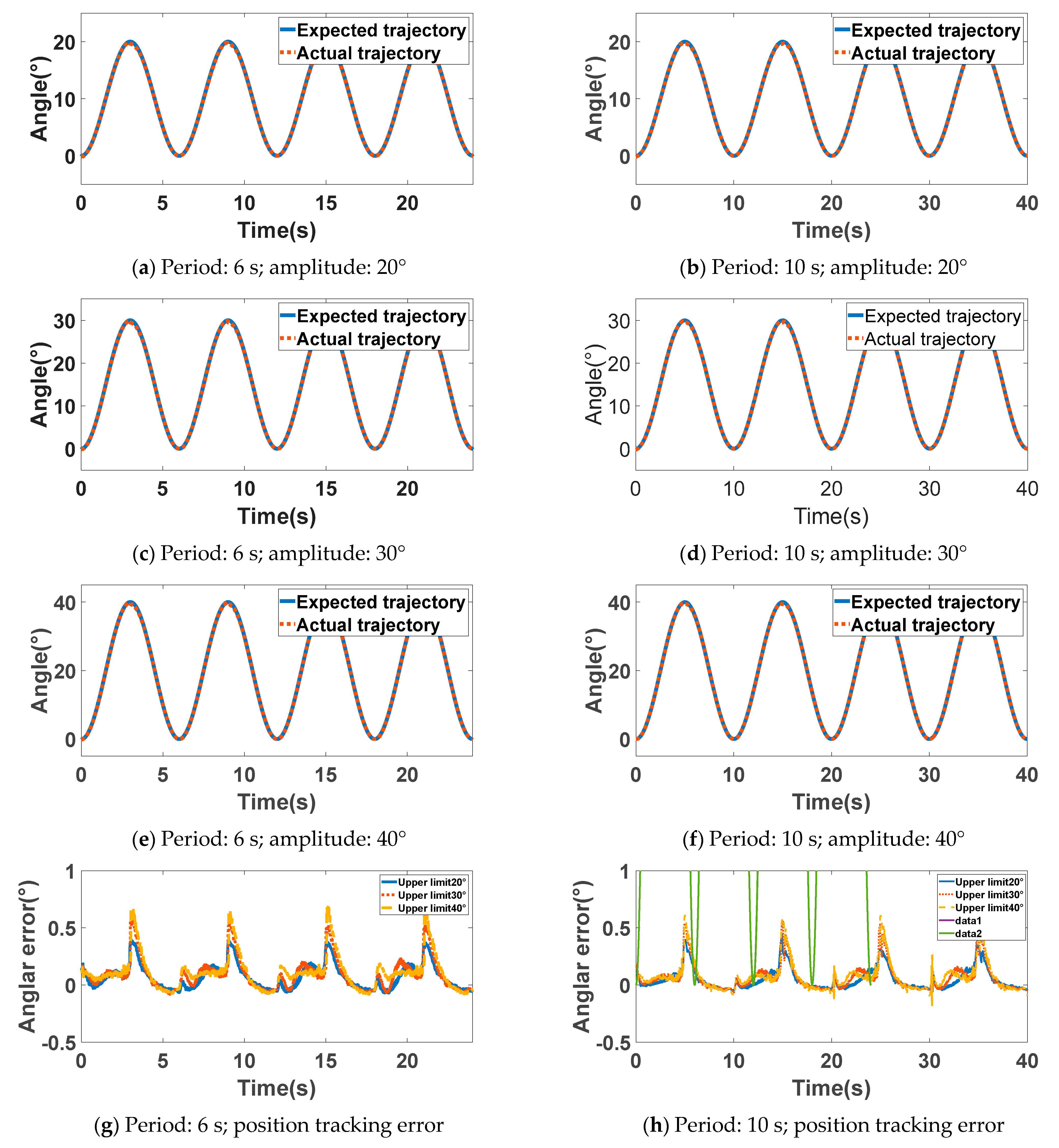
The experiment assessed the proposed strategy by having the robotic elbow track sinusoidal trajectories with varying frequencies and amplitudes. Six experimental conditions were tested, combining cycle periods of 6 s or 10 s with movement amplitudes of 20°, 30°, and 40°. The elbow joint of the rehabilitation robot served as the actuated joint. During the experiment, the participant donned the upper limb exoskeleton without additional load. The exoskeleton actuated the participant’s upper limb to follow the prescribed sinusoidal trajectory.
4.2. Variable Admittance Control Experiment
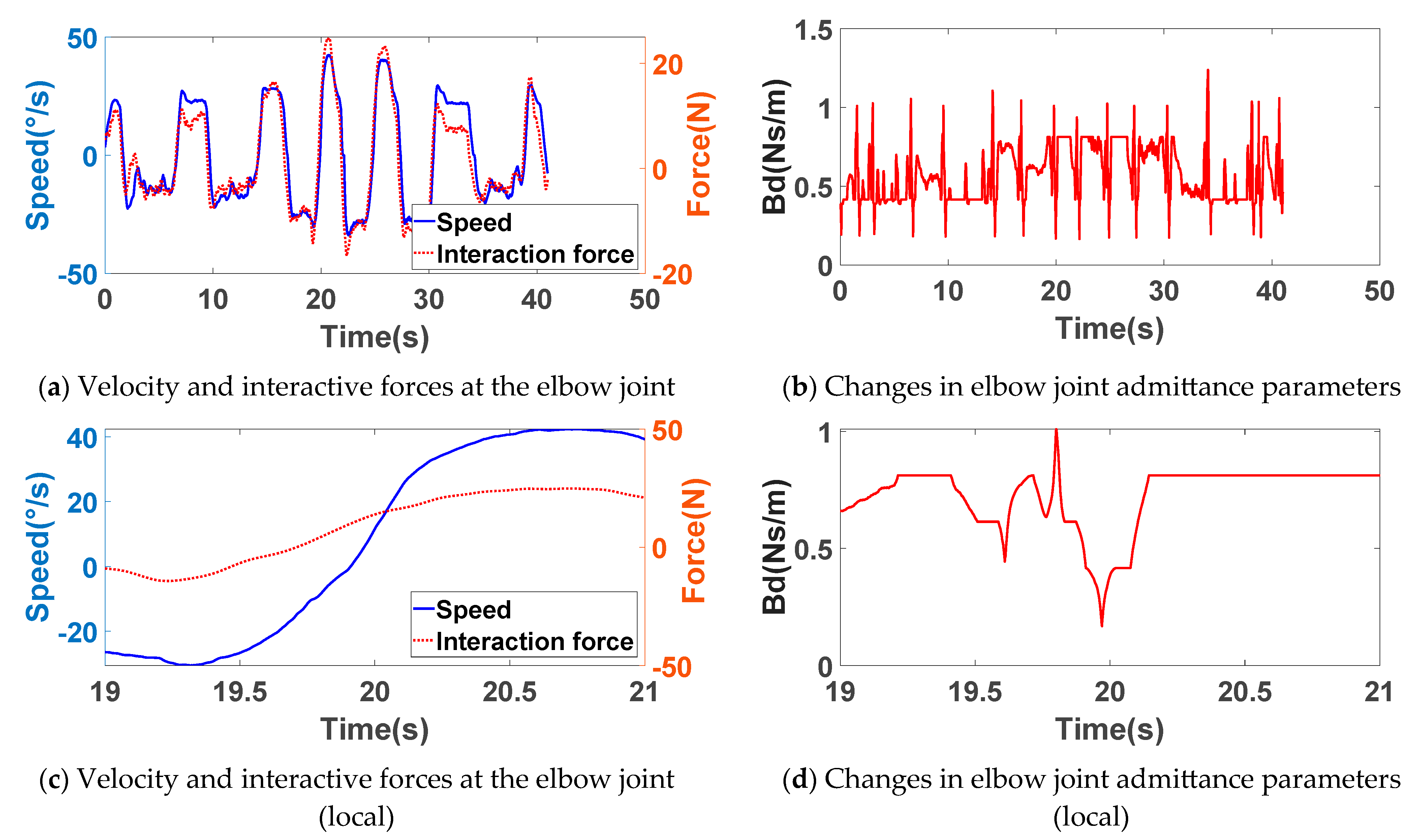
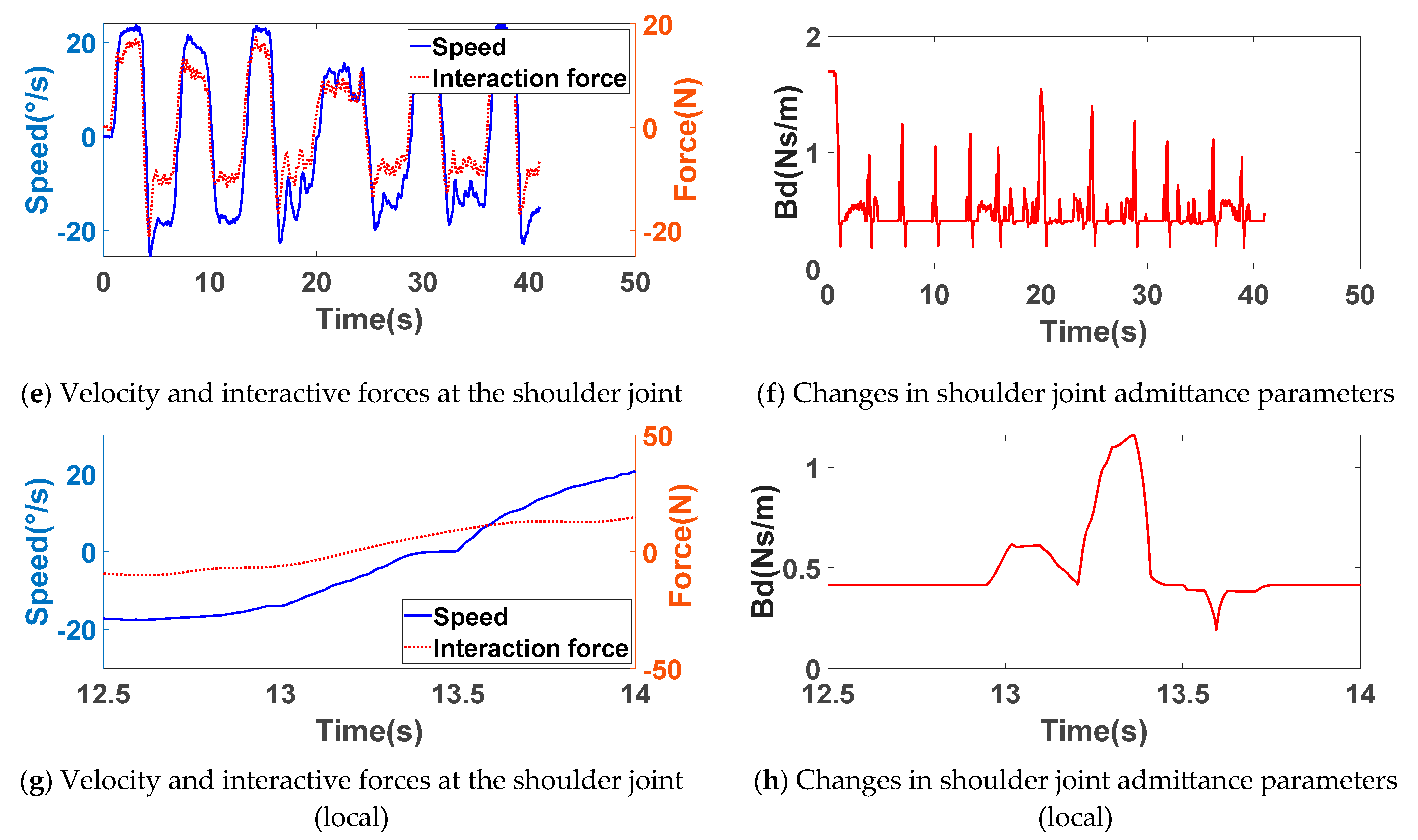
Since conventional admittance control strategies cannot ensure consistent efficacy across different subjects or training movements, this study investigated active pattern training using variable admittance control. During the experiment, subjects performed active-mode rehabilitation training with patients simulating upper limb dysfunction. No explicit movement requirements were imposed on the patients; instead, subjects guided the robotic shoulder and elbow joints within their acceptable range of motion based on their own physical capabilities to complete the experiment. Throughout the training, the robotic control algorithm dynamically adjusted damping parameters in real time via a fuzzy controller, based on joint angular velocity and the magnitude of interactive forces.
4.3. Trajectory Tracing Experiment
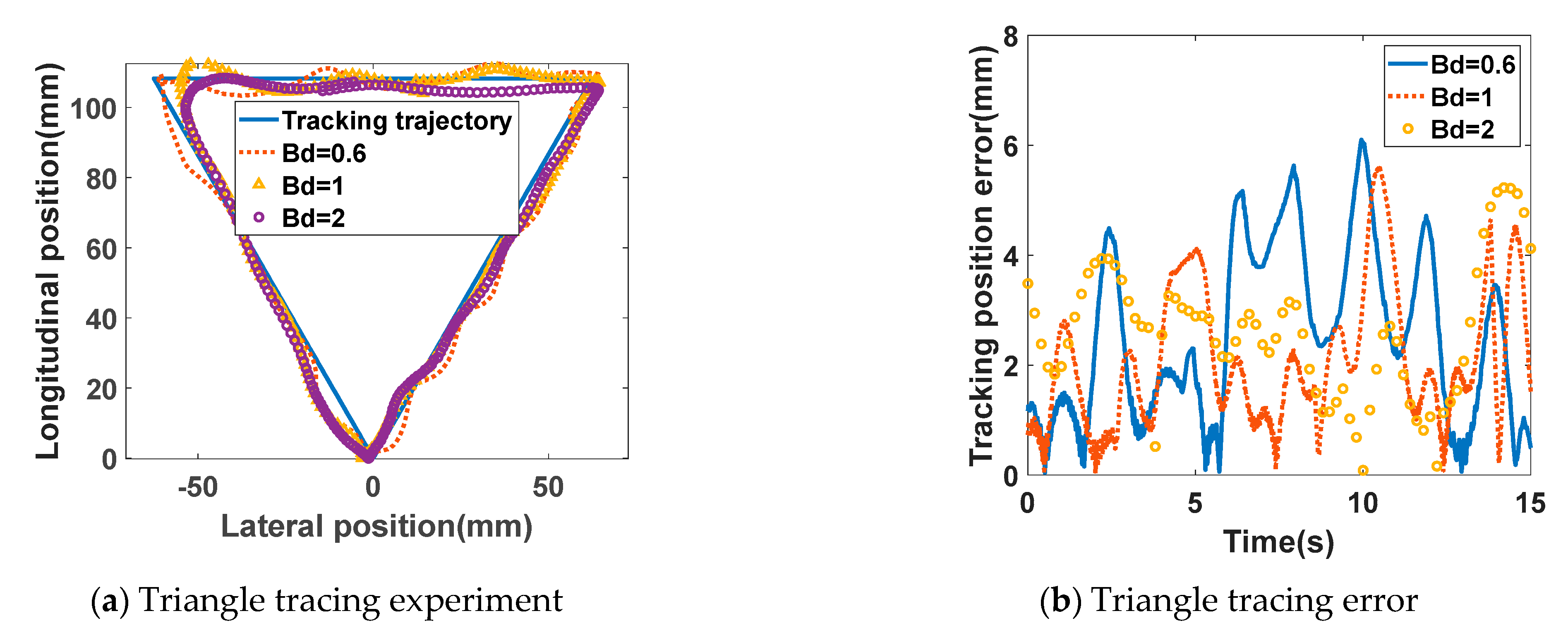
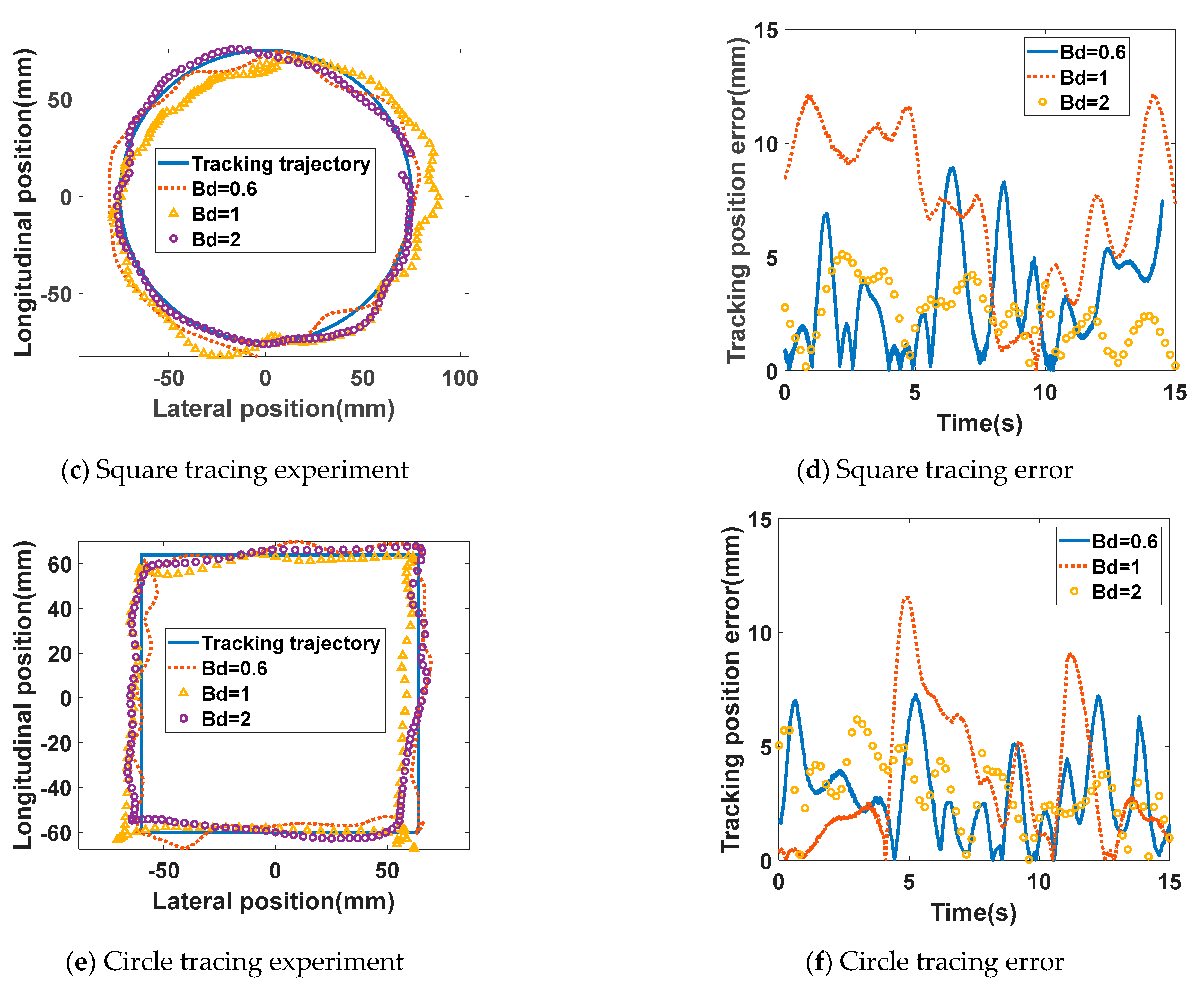
During the experiment, a sheet of paper with a pre-printed diagram was suspended vertically to the right of the upper limb exoskeleton. Throughout the experiment, the paper remained perpendicular to the ground and parallel to the side of the exoskeleton. A laser pointer, mounted at the end-effector handle of the exoskeleton, was directed vertically toward the paper and kept continuously activated. Before the experiment, the paper’s position was adjusted to ensure that the laser pointer could target any point on the printed pattern. Both the elbow and shoulder joints of the exoskeleton robot were freely movable during the experiment. The subject wore the exoskeleton on their right arm, grasped the handle, and operated the robot to perform a tracing task, guiding the laser spot along a predetermined path on the paper. The robot achieved movement within a vertical plane using its shoulder and elbow joints, thus driving the laser pointer to move within the same plane.
The experiment comprised three main groups, based on the differing tracing patterns: equilateral triangles with 125 mm sides, circles with 75 mm radii, and squares with 125 mm sides. Each pattern was centrally positioned on the white paper. The trajectory tracing tasks involved linear movements in horizontal, vertical, and inclined directions, as well as directional transitions involving acute, right, and obtuse angles and circular arcs. These movements covered scenarios that are typical when operating an upper limb exoskeleton robot, allowing for precise evaluation of parameters such as tracing accuracy and speed.