Multimodal Evaluation of Mental Workload and Engagement in Upper-Limb Robot-Assisted Motor Tasks

 , , ,
, , ,  , ,
, ,  and
and 
Abstract
1. Introduction
2. Materials and Methods
2.1. Participants
2.2. Set-Up
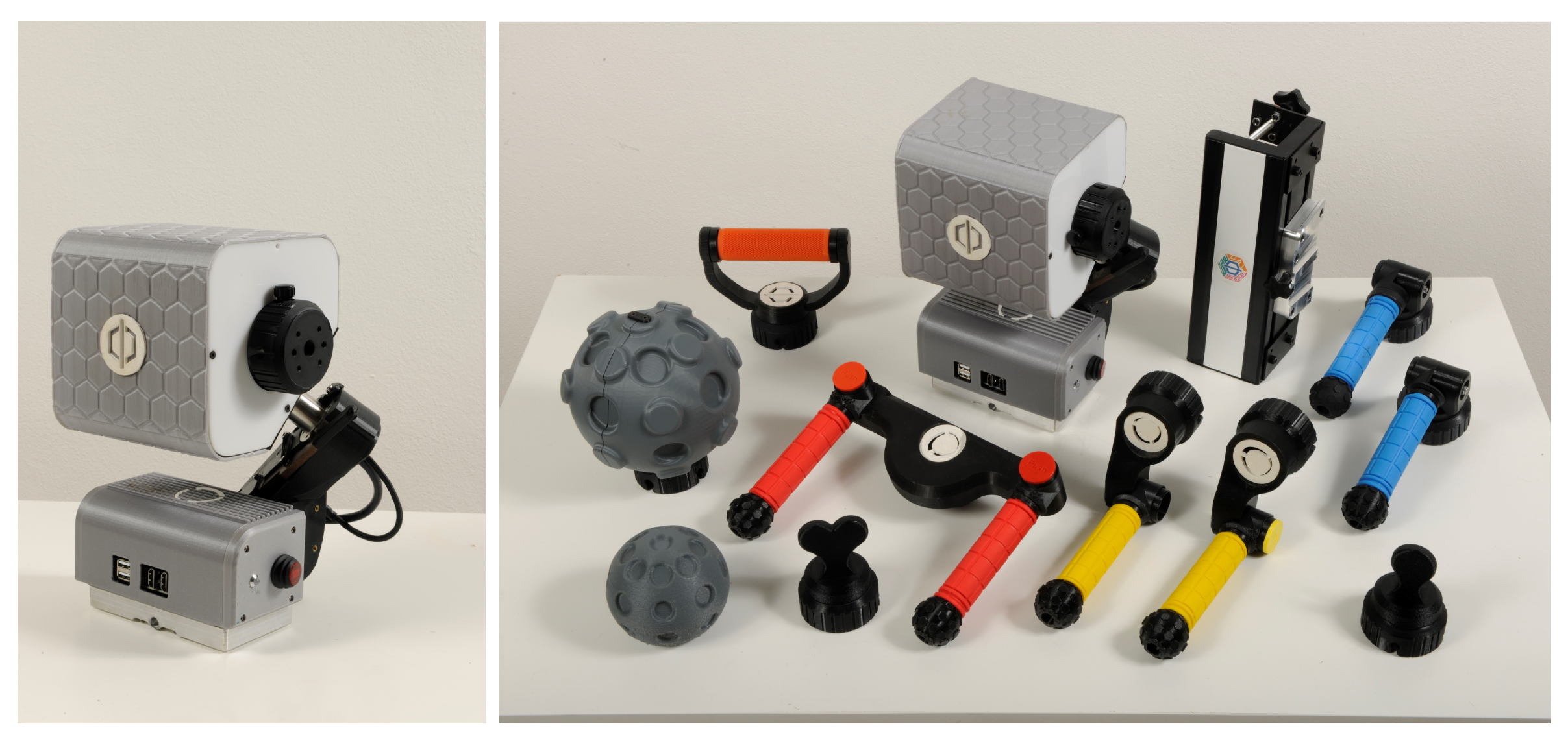
2.2.1. Robotic Device
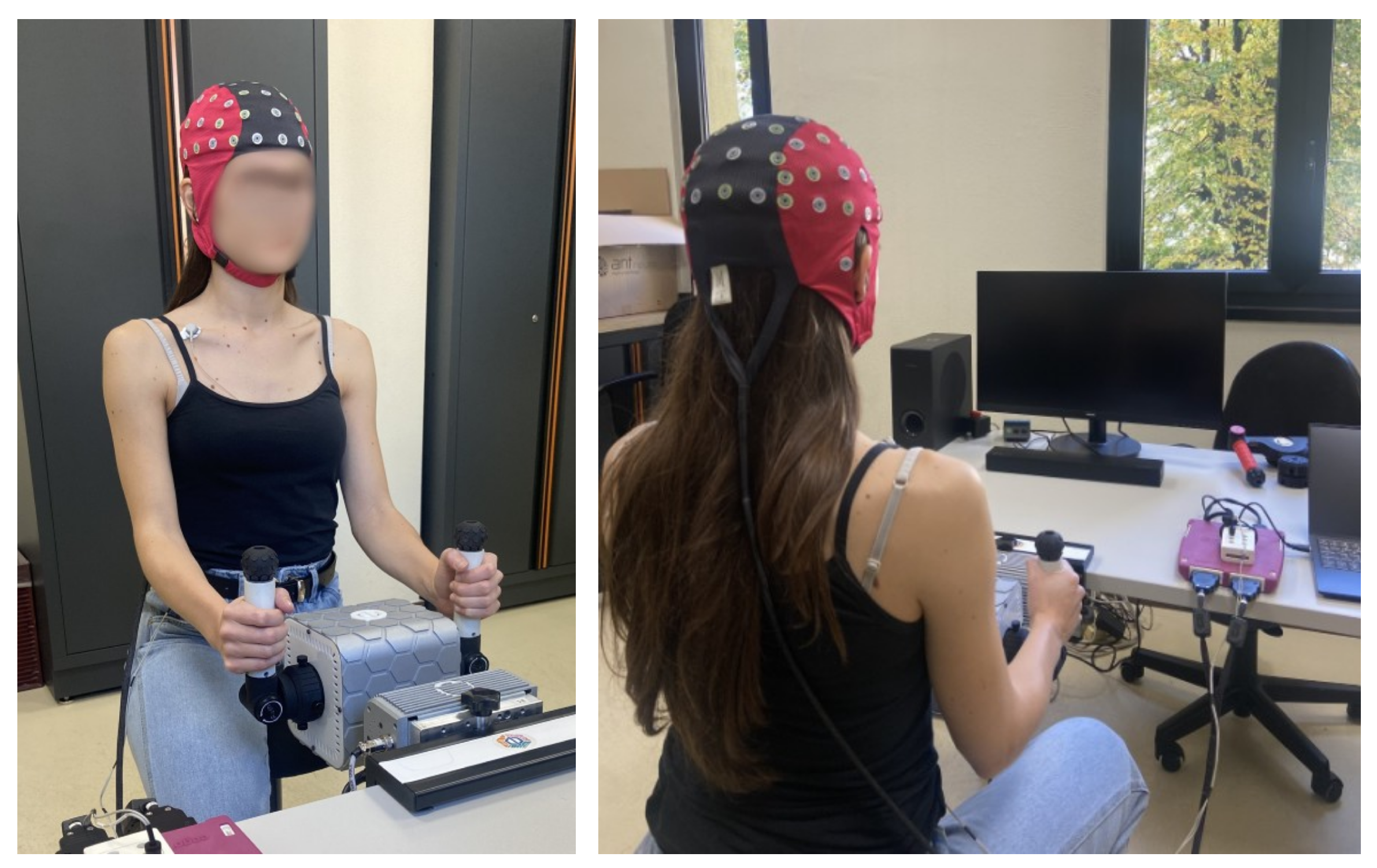
2.2.2. Electrophysiological Signal Acquisitions
2.3. Protocol
2.4. Objective Assessment of Mental Workload and Engagement
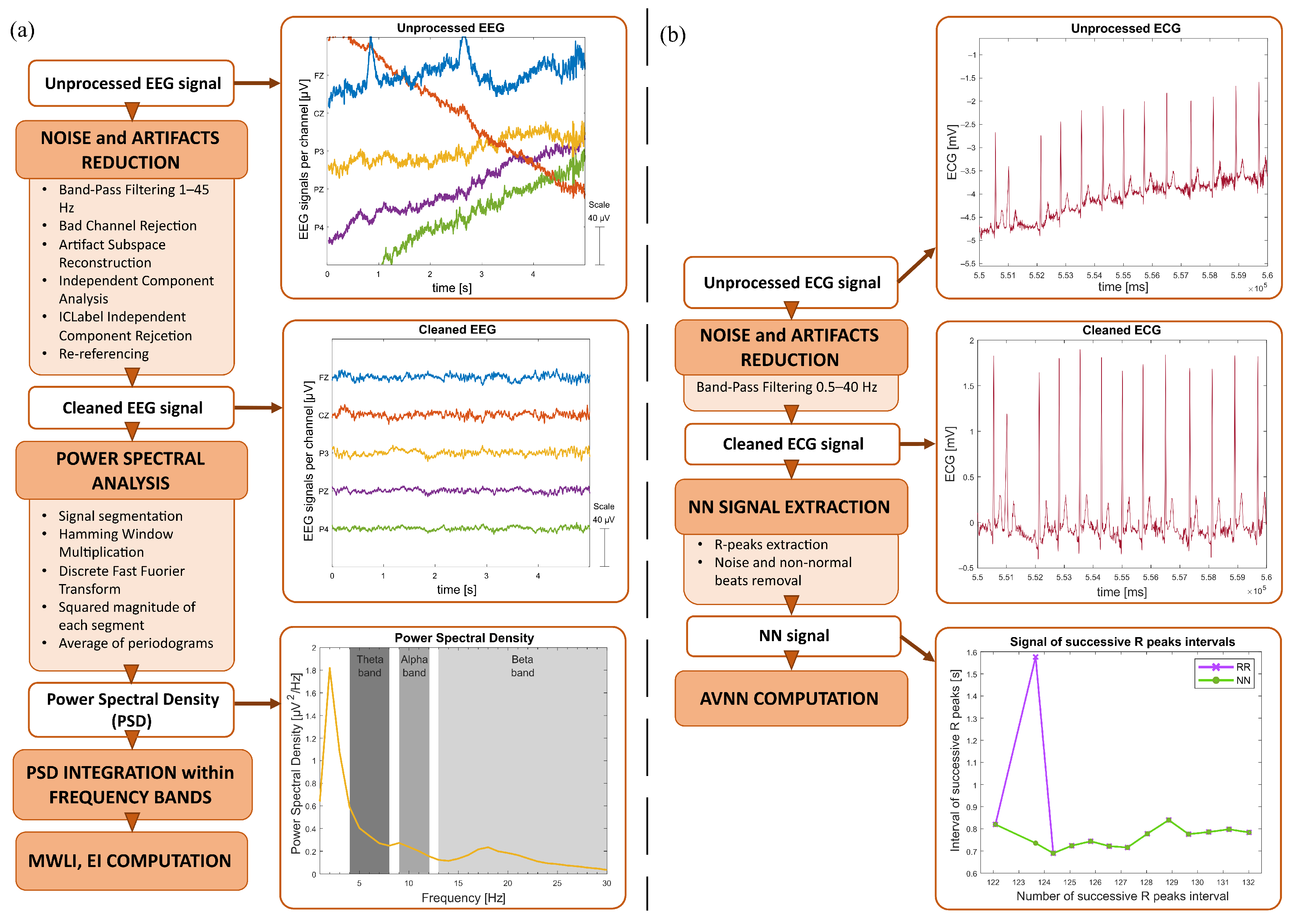
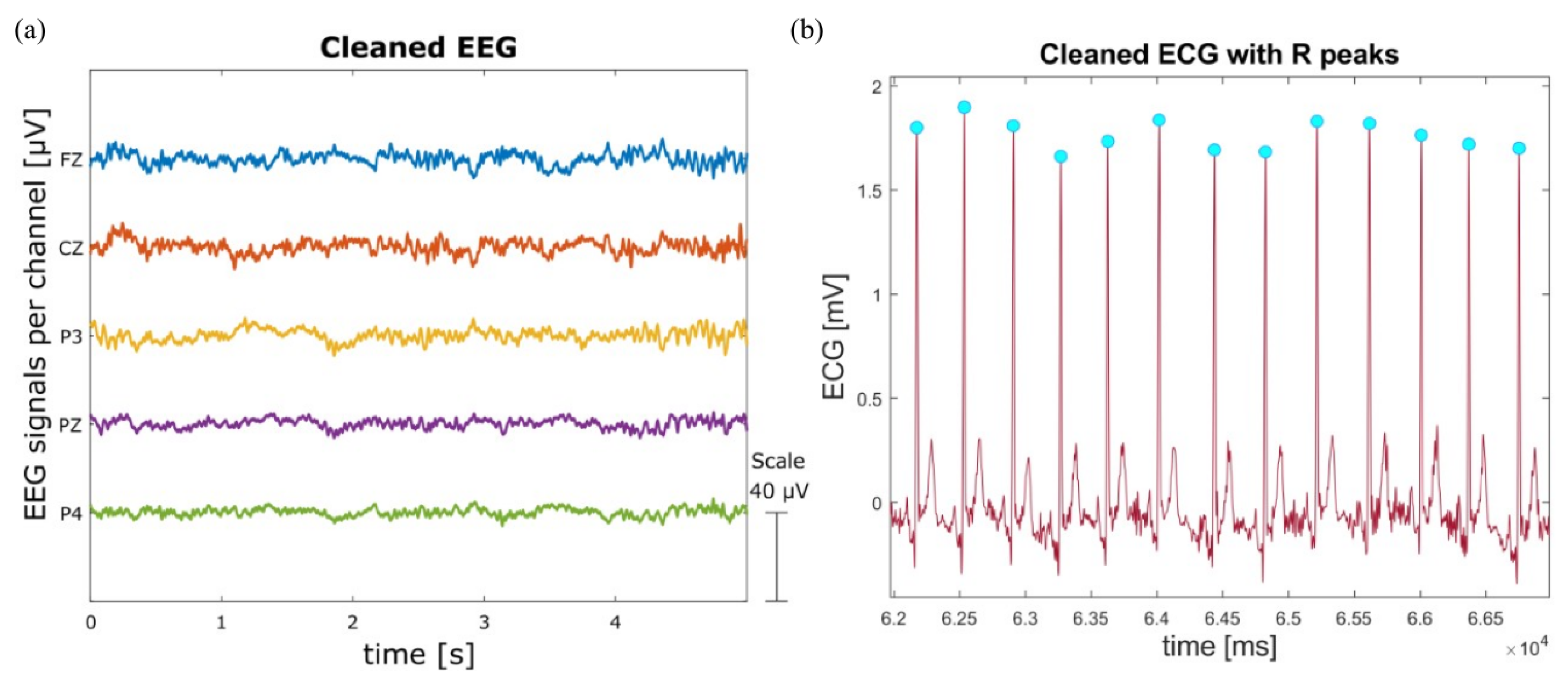
2.4.1. EEG
2.4.2. ECG
2.5. Subjective Assessment of Mental Workload and Engagement
2.5.1. NASA-Task Load Index Scale
2.5.2. Short Stress State Questionnaire
2.6. Data Analysis
3. Results
3.1. Objective Measures
3.2. Subjective Measures
3.3. Objective and Subjective Measures Correlations
4. Discussion
5. Limitations and Future Work
6. Conclusions
Author Contributions
Funding
Institutional Review Board Statement
Data Availability Statement
Acknowledgments
Conflicts of Interest
Abbreviations
| MWL | Mental Workload |
| EEG | Electroencephalography |
| ECG | Electrocardiogram |
| NASA-TLX | NASA Task Load Index |
| SSSQ | Short Stress State Questionnaire |
| HRV | Heart Rate Variability |
| MWLI | Mental Workload Index |
| GUI | Graphical User Interface |
| AME | Active with Metronome |
| AMU | Active with Music |
| PME | Passive with Metronome |
| SME | Semi-assisted with Metronome |
| EI | Engagement Index |
| AVNN | Average Value of Normal-to-Normal Intervals |
| ANS | Autonomic Nervous System |
| LF/HF | Low Frequency/High Frequency |
| RMSSD | Root Mean Square of Successive Differences |
| SDNN | Standard Deviation of Normal-to-Normal Intervals |
References
- Kwakkel, G.; van Peppen, R.; Wagenaar, R.C.; Wood Dauphinee, S.; Richards, C.; Ashburn, A.; Miller, K.; Lincoln, N.; Partridge, C.; Wellwood, I.; et al. Effects of augmented exercise therapy time after stroke: A meta-analysis. Stroke 2004, 35, 2529–2539. [Google Scholar] [CrossRef]
- Flynn, N.; Froude, E.; Cooke, D.; Kuys, S. Repetitions, duration and intensity of upper limb practice following the implementation of robot assisted therapy with sub-acute stroke survivors: An observational study. Disabil. Rehabil. Assist. Technol. 2022, 17, 675–680. [Google Scholar] [CrossRef]
- Perez-Marcos, D.; Chevalley, O.; Schmidlin, T.; Garipelli, G.; Serino, A.; Vuadens, P.; Tadi, T.; Blanke, O.; Millán, J.d.R. Increasing upper limb training intensity in chronic stroke using embodied virtual reality: A pilot study. J. Neuroeng. Rehabil. 2017, 14, 119. [Google Scholar] [CrossRef] [PubMed]
- Takebayashi, T.; Takahashi, K.; Okita, Y.; Kubo, H.; Hachisuka, K.; Domen, K. Impact of the robotic-assistance level on upper extremity function in stroke patients receiving adjunct robotic rehabilitation: Sub-analysis of a randomized clinical trial. J. NeuroEng. Rehabil. 2022, 19, 25. [Google Scholar] [CrossRef] [PubMed]
- Krebs, H.I.; Palazzolo, J.J.; Dipietro, L.; Ferraro, M.; Krol, J.; Rannekleiv, K.; Volpe, B.T.; Hogan, N. Rehabilitation robotics: Performance-based progressive robot-assisted therapy. Auton. Robot. 2003, 15, 7–20. [Google Scholar] [CrossRef]
- Neva, J.L.; Legon, W.; Staines, W.R. Primary motor cortex excitability is modulated with bimanual training. Neurosci. Lett. 2012, 514, 147–151. [Google Scholar] [CrossRef]
- Waller, S.M.; Whitall, J. Bilateral arm training: Why and who benefits? NeuroRehabilitation 2008, 23, 29–41. [Google Scholar] [CrossRef]
- Mehrabi, S.; Fleet, J.L.; Safaei-Qomi, M.R.; Dukelow, S.P.; Murie-Fernandez, M.; Harnett, A.; Teasell, R. Systematic Review of Upper Extremity Outcome Measures Assessed in Randomized Controlled Trials of Poststroke Upper Extremity Rehabilitation in Low-to-Middle-Income and High-Income Countries. Arch. Phys. Med. Rehabil. 2025, 106, 618–631. [Google Scholar] [CrossRef] [PubMed]
- Teasell, R.; Mehrabi, S.; Saikaley, M.; George, C.; Dukelow, S.P.; Harnett, A.; Fleet, J.L. A systematic review of upper extremity outcome measures assessed in randomized controlled trials of post stroke upper extremity rehabilitation over time. Top. Stroke Rehabil. 2025, 32, 307–322. [Google Scholar] [CrossRef]
- Maura, R.M.; Rueda Parra, S.; Stevens, R.E.; Weeks, D.L.; Wolbrecht, E.T.; Perry, J.C. Literature review of stroke assessment for upper-extremity physical function via EEG, EMG, kinematic, and kinetic measurements and their reliability. J. NeuroEng. Rehabil. 2023, 20, 21. [Google Scholar] [CrossRef]
- Milani, G.; Antonioni, A.; Baroni, A.; Malerba, P.; Straudi, S. Relation between EEG measures and upper limb motor recovery in stroke patients: A scoping review. Brain Topogr. 2022, 35, 651–666. [Google Scholar] [CrossRef]
- Trujillo, P.; Mastropietro, A.; Scano, A.; Chiavenna, A.; Mrakic-Sposta, S.; Caimmi, M.; Molteni, F.; Rizzo, G. Quantitative EEG for predicting upper limb motor recovery in chronic stroke robot-assisted rehabilitation. IEEE Trans. Neural Syst. Rehabil. Eng. 2017, 25, 1058–1067. [Google Scholar] [CrossRef]
- Danzl, M.M.; Etter, N.M.; Andreatta, R.D.; Kitzman, P.H. Facilitating neurorehabilitation through principles of engagement. J. Allied Health 2012, 41, 35–41. [Google Scholar]
- Teo, J.L.; Zheng, Z.; Bird, S.R. Identifying the factors affecting ‘patient engagement’in exercise rehabilitation. BMC Sport. Sci. Med. Rehabil. 2022, 14, 18. [Google Scholar] [CrossRef]
- Longo, L.; Wickens, C.D.; Hancock, G.; Hancock, P.A. Human mental workload: A survey and a novel inclusive definition. Front. Psychol. 2022, 13, 883321. [Google Scholar] [CrossRef]
- Marchand, C.; De Graaf, J.B.; Jarrassé, N. Measuring mental workload in assistive wearable devices: A review. J. NeuroEng. Rehabil. 2021, 18, 160. [Google Scholar] [CrossRef]
- Pan, L.; Song, A.; Wang, S.; Duan, S. Experimental Study on Upper-Limb Rehabilitation Training of Stroke Patients Based on Adaptive Task Level: A Preliminary Study. BioMed Res. Int. 2019, 2019, 2742595. [Google Scholar] [CrossRef]
- Gomes, E.; Alder, G.; Bright, F.A.; Signal, N. Understanding task “challenge” in stroke rehabilitation: An interdisciplinary concept analysis. Disabil. Rehabil. 2025, 47, 560–570. [Google Scholar] [CrossRef]
- Jaquess, K.J.; Lo, L.C.; Oh, H.; Lu, C.; Ginsberg, A.; Tan, Y.Y.; Lohse, K.R.; Miller, M.W.; Hatfield, B.D.; Gentili, R.J. Changes in mental workload and motor performance throughout multiple practice sessions under various levels of task difficulty. Neuroscience 2018, 393, 305–318. [Google Scholar] [CrossRef]
- Csikszentmihalyi, M.; Csikzentmihaly, M. Flow: The Psychology of Optimal Experience; Harper & Row: New York, NY, USA, 1990; Volume 1990. [Google Scholar]
- Maclean, N.; Pound, P. A critical review of the concept of patient motivation in the literature on physical rehabilitation. Soc. Sci. Med. 2000, 50, 495–506. [Google Scholar]
- Vaida, C.; Rus, G.; Tucan, P.; Machado, J.; Pisla, A.; Zima, I.; Birlescu, I.; Pisla, D. Enhancing Robotic-Assisted Lower Limb Rehabilitation Using Augmented Reality and Serious Gaming. Appl. Sci. 2024, 14, 12029. [Google Scholar] [CrossRef]
- Hadjipanayi, C.; Banakou, D.; Michael-Grigoriou, D. Virtual reality exergames for enhancing engagement in stroke rehabilitation: A narrative review. Heliyon 2024, 10, e37581. [Google Scholar] [CrossRef]
- Braun Janzen, T.; Koshimori, Y.; Richard, N.M.; Thaut, M.H. Rhythm and music-based interventions in motor rehabilitation: Current evidence and future perspectives. Front. Hum. Neurosci. 2022, 15, 789467. [Google Scholar] [CrossRef]
- Zhao, Y.; Xu, H.; Fu, J. Integrating rhythmic auditory stimulation in intelligent rehabilitation technologies for enhanced post-stroke recovery. Front. Bioeng. Biotechnol. 2025, 13, 1649011. [Google Scholar] [CrossRef]
- Baur, K.; Speth, F.; Nagle, A.; Riener, R.; Klamroth-Marganska, V. Music meets robotics: A prospective randomized study on motivation during robot aided therapy. J. Neuroeng. Rehabil. 2018, 15, 79. [Google Scholar] [CrossRef]
- Liu, Q.; Liu, L.; Liu, Z.; Xu, Y.; Wang, F.; Cheng, H.; Hu, X. Reminiscent music therapy combined with robot-assisted rehabilitation for elderly stroke patients: A pilot study. J. NeuroEng. Rehabil. 2024, 21, 16. [Google Scholar] [CrossRef]
- Novak, D.; Ziherl, J.; Olenšek, A.; Milavec, M.; Podobnik, J.; Mihelj, M.; Munih, M. Psychophysiological responses to robotic rehabilitation tasks in stroke. IEEE Trans. Neural Syst. Rehabil. Eng. 2010, 18, 351–361. [Google Scholar] [CrossRef]
- Charles, R.L.; Nixon, J. Measuring mental workload using physiological measures: A systematic review. Appl. Ergon. 2019, 74, 221–232. [Google Scholar] [CrossRef]
- Mandrick, K.; Peysakhovich, V.; Rémy, F.; Lepron, E.; Causse, M. Neural and psychophysiological correlates of human performance under stress and high mental workload. Biol. Psychol. 2016, 121, 62–73. [Google Scholar] [CrossRef]
- Veltman, J.; Gaillard, A. Physiological workload reactions to increasing levels of task difficulty. Ergonomics 1998, 41, 656–669. [Google Scholar] [CrossRef]
- Collet, C.; Averty, P.; Dittmar, A. Autonomic nervous system and subjective ratings of strain in air-traffic control. Appl. Ergon. 2009, 40, 23–32. [Google Scholar] [CrossRef]
- Nikula, R. Psychological correlates of nonspecific skin conductance responses. Psychophysiology 1991, 28, 86–90. [Google Scholar] [CrossRef]
- Haarmann, A.; Boucsein, W.; Schaefer, F. Combining electrodermal responses and cardiovascular measures for probing adaptive automation during simulated flight. Appl. Ergon. 2009, 40, 1026–1040. [Google Scholar] [CrossRef] [PubMed]
- Mondellini, M.; Pirovano, I.; Colombo, V.; Arlati, S.; Sacco, M.; Rizzo, G.; Mastropietro, A. A multimodal approach exploiting EEG to investigate the effects of VR environment on mental workload. Int. J. Hum.-Interact. 2024, 40, 6566–6578. [Google Scholar] [CrossRef]
- Caiazzo, C.; Savkovic, M.; Pusica, M.; Milojevic, D.; Leva, M.C.; Djapan, M. Development of a neuroergonomic assessment for the evaluation of mental workload in an industrial human–robot interaction assembly task: A comparative case study. Machines 2023, 11, 995. [Google Scholar] [CrossRef]
- Ruo, A.; Villani, V.; Sabattini, L. Use of EEG signals for mental workload assessment in human-robot collaboration. In International Workshop on Human-Friendly Robotics; Springer: Cham, Switzerland, 2022; pp. 233–247. [Google Scholar]
- Boiten, F. Component analysis of task-related respiratory patterns. Int. J. Psychophysiol. 1993, 15, 91–104. [Google Scholar] [CrossRef]
- Min, B.C.; Chung, S.C.; Park, S.J.; Kim, C.J.; Sim, M.K.; Sakamoto, K. Autonomic responses of young passengers contingent to the speed and driving mode of a vehicle. Int. J. Ind. Ergon. 2002, 29, 187–198. [Google Scholar] [CrossRef]
- Ohsuga, M.; Shimono, F.; Genno, H. Assessment of phasic work stress using autonomic indices. Int. J. Psychophysiol. 2001, 40, 211–220. [Google Scholar] [CrossRef]
- McMahan, T.; Parberry, I.; Parsons, T.D. Evaluating player task engagement and arousal using electroencephalography. Procedia Manuf. 2015, 3, 2303–2310. [Google Scholar] [CrossRef]
- Stuldreher, I.V.; van Erp, J.B.; Brouwer, A.M. Robustness of physiological synchrony in wearable electrodermal activity and heart rate as a measure of attentional engagement to movie clips. Sensors 2023, 23, 3006. [Google Scholar] [CrossRef]
- Zhang, Y.; Wang, H.; Shi, B.E. User Engagement Correlates Better with Behavioral than Physiological Measures in a Virtual Reality Robotic Rehabilitation System. In Proceedings of the 2024 IEEE International Conference on Systems, Man, and Cybernetics (SMC), Kuching, Malaysia, 6–10 October 2024; IEEE: Piscataway, NJ, USA, 2024; pp. 5189–5194. [Google Scholar]
- Blank, A.A.; French, J.A.; Pehlivan, A.U.; O’Malley, M.K. Current trends in robot-assisted upper-limb stroke rehabilitation: Promoting patient engagement in therapy. Curr. Phys. Med. Rehabil. Rep. 2014, 2, 184–195. [Google Scholar] [CrossRef] [PubMed]
- Hart, S.G.; Staveland, L.E. Development of NASA-TLX (Task Load Index): Results of empirical and theoretical research. In Advances in Psychology; Elsevier: Amsterdam, The Netherlands, 1988; Volume 52, pp. 139–183. [Google Scholar]
- Helton, W.S. Validation of a short stress state questionnaire. In Proceedings of the Human Factors and Ergonomics Society Annual Meeting, New Orleans, LA, USA, 20–24 September 2004; Sage Publications: Los Angeles, CA, USA, 2004; Volume 48, pp. 1238–1242. [Google Scholar]
- La Bara, L.M.A.; Meloni, L.; Giusino, D.; Pietrantoni, L. Assessment methods of usability and cognitive workload of rehabilitative exoskeletons: A systematic review. Appl. Sci. 2021, 11, 7146. [Google Scholar] [CrossRef]
- Paskett, M.D.; Garcia, J.K.; Jones, S.T.; Brinton, M.R.; Davis, T.S.; Duncan, C.C.; Cooper, J.M.; Strayer, D.L.; Clark, G.A. Improving upper-limb prosthesis usability: Cognitive workload measures quantify task difficulty. medRxiv 2022. [Google Scholar] [CrossRef]
- Badesa, F.J.; Diez, J.A.; Catalan, J.M.; Trigili, E.; Cordella, F.; Nann, M.; Crea, S.; Soekadar, S.R.; Zollo, L.; Vitiello, N.; et al. Physiological responses during hybrid BNCI control of an upper-limb exoskeleton. Sensors 2019, 19, 4931. [Google Scholar] [CrossRef]
- Novak, D.; Mihelj, M.; Ziherl, J.; Olensek, A.; Munih, M. Psychophysiological measurements in a biocooperative feedback loop for upper extremity rehabilitation. IEEE Trans. Neural Syst. Rehabil. Eng. 2011, 19, 400–410. [Google Scholar] [CrossRef]
- Pila, O.; Koeppel, T.; Grosmaire, A.G.; Duret, C. Comparison of active-assisted and active-unassisted robot-mediated upper limb therapy in subacute stroke. Restor. Neurol. Neurosci. 2021, 39, 1–7. [Google Scholar] [CrossRef]
- Park, J.H.; Park, G.; Kim, H.Y.; Lee, J.Y.; Ham, Y.; Hwang, D.; Kwon, S.; Shin, J.H. A comparison of the effects and usability of two exoskeletal robots with and without robotic actuation for upper extremity rehabilitation among patients with stroke: A single-blinded randomised controlled pilot study. J. Neuroeng. Rehabil. 2020, 17, 137. [Google Scholar] [CrossRef] [PubMed]
- Gonçalves, A.; Silva, M.F.; Mendonça, H.; Rocha, C.D. A Review of Robotic Interfaces for Post-Stroke Upper-Limb Rehabilitation: Assistance Types, Actuation Methods, and Control Mechanisms. Robotics 2025, 14, 141. [Google Scholar] [CrossRef]
- Oliver, S.; Kitago, T.; Buchwald, A.; Atashzar, S.F. EEG-Based Analysis of Brain Responses in Multi-Modal Human-Robot Interaction: Modulating Engagement. arXiv 2024, arXiv:2411.18587. [Google Scholar]
- Tang, C.; Zhou, T.; Zhang, Y.; Yuan, R.; Zhao, X.; Yin, R.; Song, P.; Liu, B.; Song, R.; Chen, W.; et al. Bilateral upper limb robot-assisted rehabilitation improves upper limb motor function in stroke patients: A study based on quantitative EEG. Eur. J. Med. Res. 2023, 28, 603. [Google Scholar] [CrossRef]
- Malosio, M.; Lavit Nicora, M.; Redaelli, D.; Tauro, G. Device for Bilateral Rehabilitation. EP4518825B1, 14 January 2026; filed 4 May 2023.
- Consales, A.; Biffi, E.; Nossa, R.; Pittaccio, S.; Lazzari, F.; Malosio, M.; Lavit Nicora, M.; Tauro, G.; Redaelli, D.F.; Chaudhary, A.; et al. Inclusivity is child’s play: Pilot study on usability, acceptability and user experience of a sensory-motor PC game for children with cerebral palsy (GiocAbile). Ital. J. Pediatr. 2024, 50, 263. [Google Scholar] [CrossRef] [PubMed]
- Delorme, A.; Makeig, S. EEGLAB: An open source toolbox for analysis of single-trial EEG dynamics including independent component analysis. J. Neurosci. Methods 2004, 134, 9–21. [Google Scholar] [CrossRef]
- Vest, A.N.; Da Poian, G.; Li, Q.; Liu, C.; Nemati, S.; Shah, A.J.; Clifford, G.D. An open source benchmarked toolbox for cardiovascular waveform and interval analysis. Physiol. Meas. 2018, 39, 105004. [Google Scholar] [CrossRef]
- Goldberger, A.L.; Amaral, L.A.; Glass, L.; Hausdorff, J.M.; Ivanov, P.C.; Mark, R.G.; Mietus, J.E.; Moody, G.B.; Peng, C.K.; Stanley, H.E. PhysioBank, PhysioToolkit, and PhysioNet: Components of a new research resource for complex physiologic signals. Circulation 2000, 101, e215–e220. [Google Scholar] [CrossRef]
- Mastropietro, A.; Pirovano, I.; Marciano, A.; Porcelli, S.; Rizzo, G. Reliability of mental workload index assessed by eeg with different electrode configurations and signal pre-processing pipelines. Sensors 2023, 23, 1367. [Google Scholar] [CrossRef]
- Gabard-Durnam, L.J.; Mendez Leal, A.S.; Wilkinson, C.L.; Levin, A.R. The Harvard Automated Processing Pipeline for Electroencephalography (HAPPE): Standardized processing software for developmental and high-artifact data. Front. Neurosci. 2018, 12, 97. [Google Scholar] [CrossRef]
- Mullen, T.; Kothe, C.; Chi, Y.M.; Ojeda, A.; Kerth, T.; Makeig, S.; Cauwenberghs, G.; Jung, T.P. Real-time modeling and 3D visualization of source dynamics and connectivity using wearable EEG. In Proceedings of the 2013 35th Annual International Conference of the IEEE Engineering in Medicine and Biology Society (EMBC), Osaka, Japan, 3–7 July 2013; IEEE: Piscataway, NJ, USA, 2013; pp. 2184–2187. [Google Scholar]
- Bell, A.J.; Sejnowski, T.J. An information-maximization approach to blind separation and blind deconvolution. Neural Comput. 1995, 7, 1129–1159. [Google Scholar] [CrossRef] [PubMed]
- Pion-Tonachini, L.; Kreutz-Delgado, K.; Makeig, S. ICLabel: An automated electroencephalographic independent component classifier, dataset, and website. NeuroImage 2019, 198, 181–197. [Google Scholar] [CrossRef]
- Welch, P. The use of fast Fourier transform for the estimation of power spectra: A method based on time averaging over short, modified periodograms. IEEE Trans. Audio Electroacoust. 2003, 15, 70–73. [Google Scholar] [CrossRef]
- Holm, A.; Lukander, K.; Korpela, J.; Sallinen, M.; Müller, K.M. Estimating brain load from the EEG. Sci. World J. 2009, 9, 639–651. [Google Scholar] [CrossRef]
- Pope, A.T.; Bogart, E.H.; Bartolome, D.S. Biocybernetic system evaluates indices of operator engagement in automated task. Biol. Psychol. 1995, 40, 187–195. [Google Scholar] [CrossRef]
- Freeman, F.G.; Mikulka, P.J.; Prinzel, L.J.; Scerbo, M.W. Evaluation of an adaptive automation system using three EEG indices with a visual tracking task. Biol. Psychol. 1999, 50, 61–76. [Google Scholar] [CrossRef]
- Bakdash, J.Z.; Marusich, L.R. Repeated measures correlation. Front. Psychol. 2017, 8, 456, Correction in Front. Psychol. 2019, 10, 1201. [Google Scholar] [CrossRef]
- Malik, M.; Bigger, J.T.; Camm, A.J.; Kleiger, R.E.; Malliani, A.; Moss, A.J.; Schwartz, P.J. Heart rate variability: Standards of measurement, physiological interpretation, and clinical use. Eur. Heart J. 1996, 17, 354–381. [Google Scholar] [CrossRef]
- Washabaugh, E.P.; Treadway, E.; Gillespie, R.B.; Remy, C.D.; Krishnan, C. Self-powered robots to reduce motor slacking during upper-extremity rehabilitation: A proof of concept study. Restor. Neurol. Neurosci. 2018, 36, 693–708. [Google Scholar] [CrossRef] [PubMed]
- Bernardes, A.; Couceiro, R.; Medeiros, J.; Henriques, J.; Teixeira, C.; Simões, M.; Durães, J.; Barbosa, R.; Madeira, H.; Carvalho, P. How reliable are ultra-short-term HRV measurements during cognitively demanding tasks? Sensors 2022, 22, 6528. [Google Scholar] [CrossRef]
- Cheng, S.; Li, W.; Hui, D.; Ma, J.; Zhang, T.; Teng, C.; Dang, W.; Xiong, K.; Hu, W.; Cong, L. Acute combined effects of concurrent physical activities on autonomic nervous activation during cognitive tasks. Front. Physiol. 2024, 15, 1340061. [Google Scholar] [CrossRef]
- Wang, P.; Houghton, R.; Majumdar, A. Detecting and predicting pilot mental workload using heart rate variability: A systematic review. Sensors 2024, 24, 3723. [Google Scholar] [CrossRef]
- Li, C.; Jin, C.; Zhang, Z.; Shi, P. Music recharges people: Synchronized music during aerobic exercise leads to better self-regulation performance. PLoS ONE 2022, 17, e0278062. [Google Scholar] [CrossRef]
- Ballmann, C.G.; Rogers, R.R.; Porrill, S.L.; Washmuth, N.B. Implications for the Ergogenic Benefits of Self-Selected Music in Neurological Conditions: A Theoretical Review. Neurol. Int. 2025, 17, 106. [Google Scholar] [CrossRef] [PubMed]
- North, A.C.; Hargreaves, D.J. Subjective complexity, familiarity, and liking for popular music. Psychomusicol. J. Res. Music Cogn. 1995, 14, 77. [Google Scholar] [CrossRef]



| Number of Subjects | Age (Years) | Mean Age | SD |
|---|---|---|---|
| 17 | 18–30 | 25.4 | 2.3 |
| 8 | 31–50 | 40.9 | 5.6 |
| 5 | 51–65 | 55.2 | 5.4 |
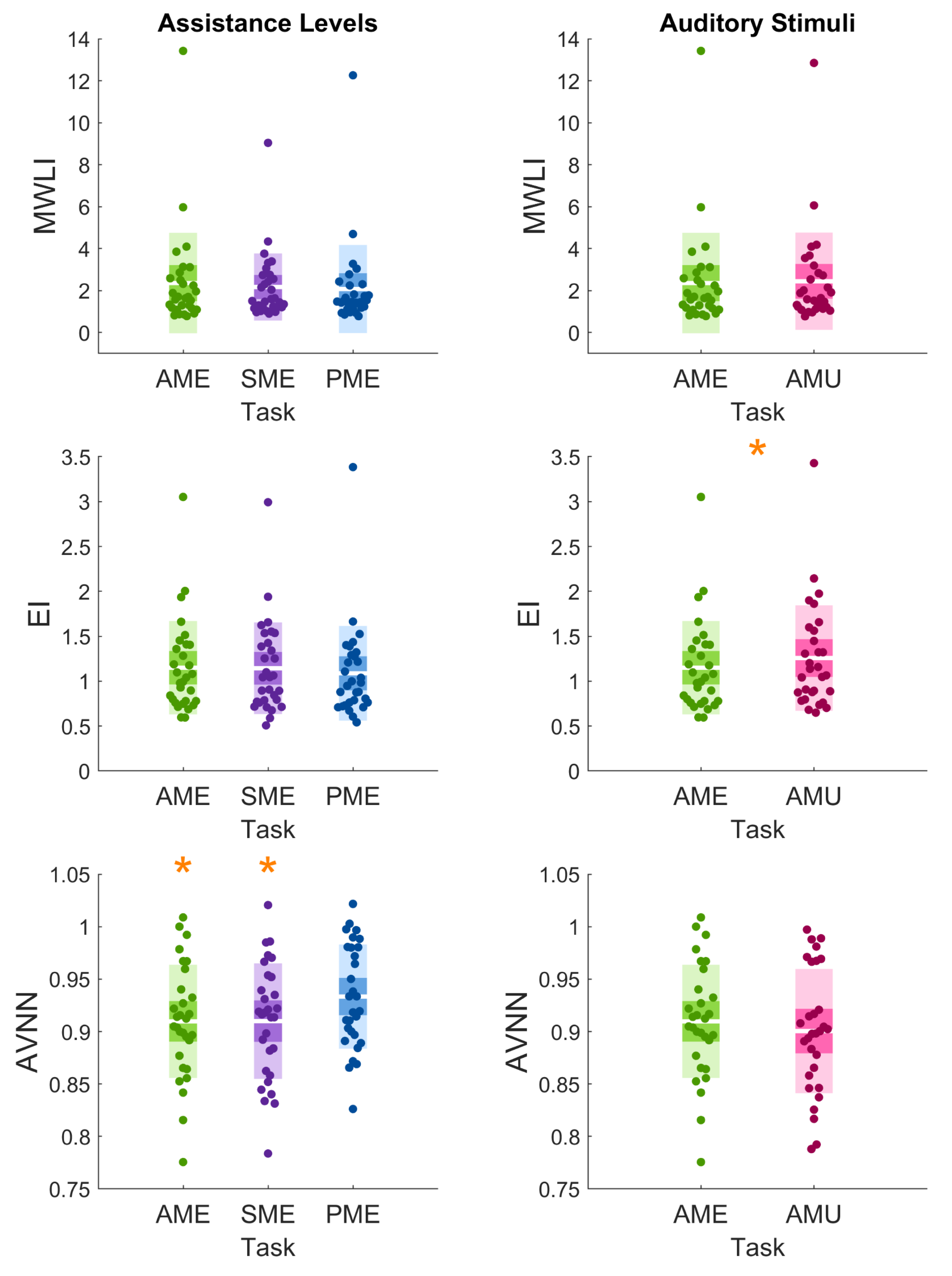
| OBJECTIVE INDEX | Assistance Levels | Auditory Stimuli | ||
|---|---|---|---|---|
| AME-SME | SME-PME | AME-PME | AME-AMU | |
| MWLI | − | − | − | p = 0.746 |
| EI | − | − | − | p < 0.001 * |
| AVNN | 0.863 | 0.004 * | p < 0.001 * | p = 0.158 |
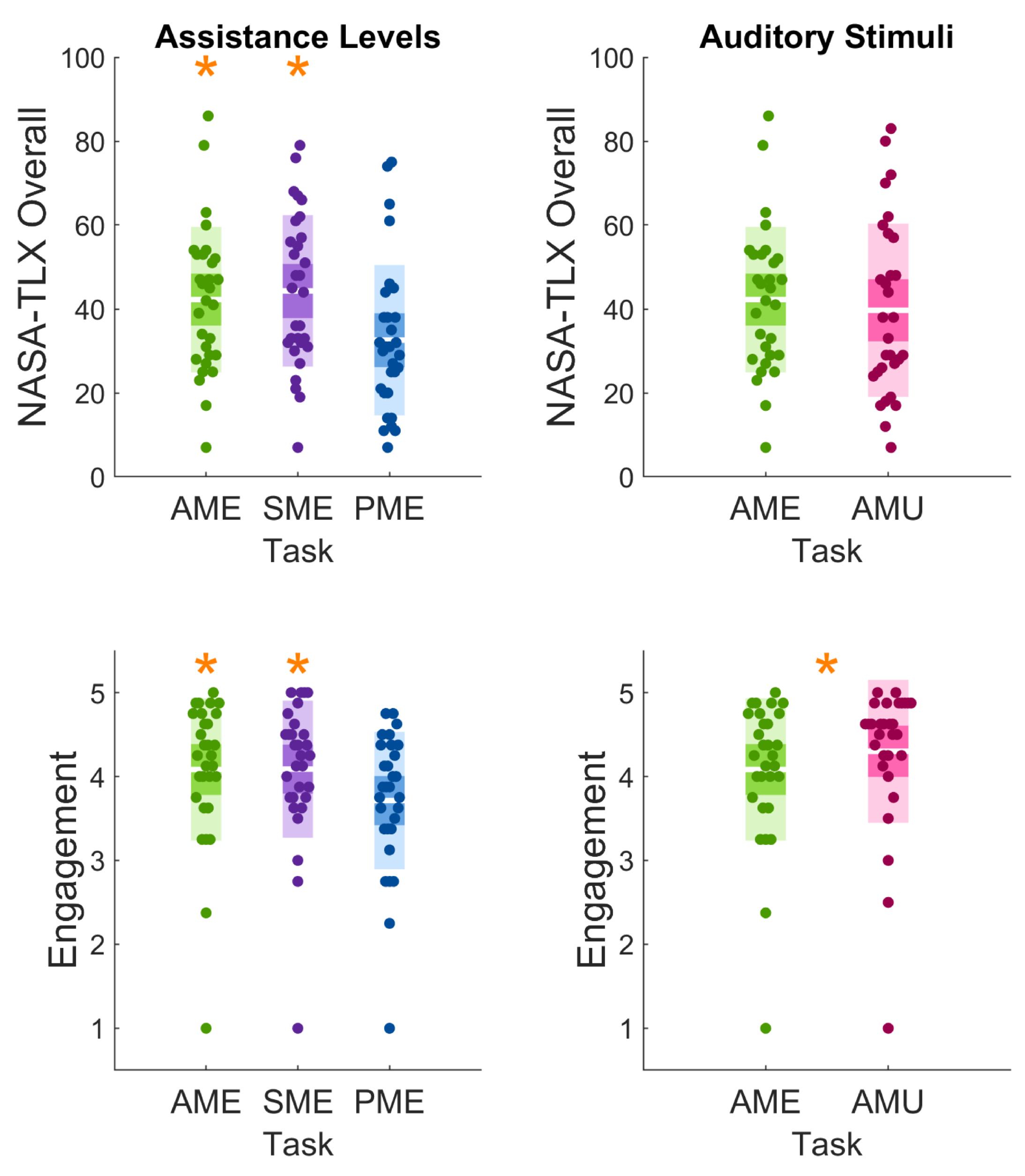
| SUBJECTIVE INDEX | Assistance Levels | Auditory Stimuli | ||
|---|---|---|---|---|
| AME-SME | SME-PME | AME-PME | AME-AMU | |
| NASA-TLX Overall | p = 0.991 | p = 0.015 * | p = 0.022 * | p = 0.203 |
| Engagement | p = 0.638 | p = 0.012 * | p < 0.001 * | p = 0.023 * |
| NASA-TLX Overall | Engagement | |
|---|---|---|
| MWLI | p = 0.573, r = 0.11 | − |
| EI | − | p = 0.571, r = 0.11 |
| AVNN | p = 0.010 *, r = −0.46 | − |
| NASA-TLX Overall | Engagement | |
|---|---|---|
| MWLI | p = 0.694, r = 0.05 | − |
| EI | − | p = 0.438, r = 0.1 |
| AVNN | p = 0.062, r = −0.24 | − |
Disclaimer/Publisher’s Note: The statements, opinions and data contained in all publications are solely those of the individual author(s) and contributor(s) and not of MDPI and/or the editor(s). MDPI and/or the editor(s) disclaim responsibility for any injury to people or property resulting from any ideas, methods, instructions or products referred to in the content. |
© 2026 by the authors. Licensee MDPI, Basel, Switzerland. This article is an open access article distributed under the terms and conditions of the Creative Commons Attribution (CC BY) license.
Share and Cite
Zanco, C.; Mondellini, M.; Nicora, M.L.; Malosio, M.; Tauro, G.; Rizzo, G.; Mastropietro, A. Multimodal Evaluation of Mental Workload and Engagement in Upper-Limb Robot-Assisted Motor Tasks. Sensors 2026, 26, 922. https://doi.org/10.3390/s26030922
Zanco C, Mondellini M, Nicora ML, Malosio M, Tauro G, Rizzo G, Mastropietro A. Multimodal Evaluation of Mental Workload and Engagement in Upper-Limb Robot-Assisted Motor Tasks. Sensors. 2026; 26(3):922. https://doi.org/10.3390/s26030922
Chicago/Turabian StyleZanco, Camilla, Marta Mondellini, Matteo Lavit Nicora, Matteo Malosio, Giovanni Tauro, Giovanna Rizzo, and Alfonso Mastropietro. 2026. "Multimodal Evaluation of Mental Workload and Engagement in Upper-Limb Robot-Assisted Motor Tasks" Sensors 26, no. 3: 922. https://doi.org/10.3390/s26030922
APA StyleZanco, C., Mondellini, M., Nicora, M. L., Malosio, M., Tauro, G., Rizzo, G., & Mastropietro, A. (2026). Multimodal Evaluation of Mental Workload and Engagement in Upper-Limb Robot-Assisted Motor Tasks. Sensors, 26(3), 922. https://doi.org/10.3390/s26030922