Review

Survey on Reconnaissance Autonomous Robotic Systems for Disaster Management
1
AI and Big Data, Endicott College, Woosong University, Daejeon 34606, Republic of Korea
2
Department of Computer and Software Major, School of IT Convergence, Woosong University, Daejeon 34606, Republic of Korea
*
Author to whom correspondence should be addressed.
Sensors 2026, 26(5), 1659; https://doi.org/10.3390/s26051659
Submission received: 14 January 2026 / Revised: 22 February 2026 / Accepted: 28 February 2026 / Published: 5 March 2026
(This article belongs to the Special Issue Advanced Sensors and AI Integration for Human–Robot Teaming)

Abstract

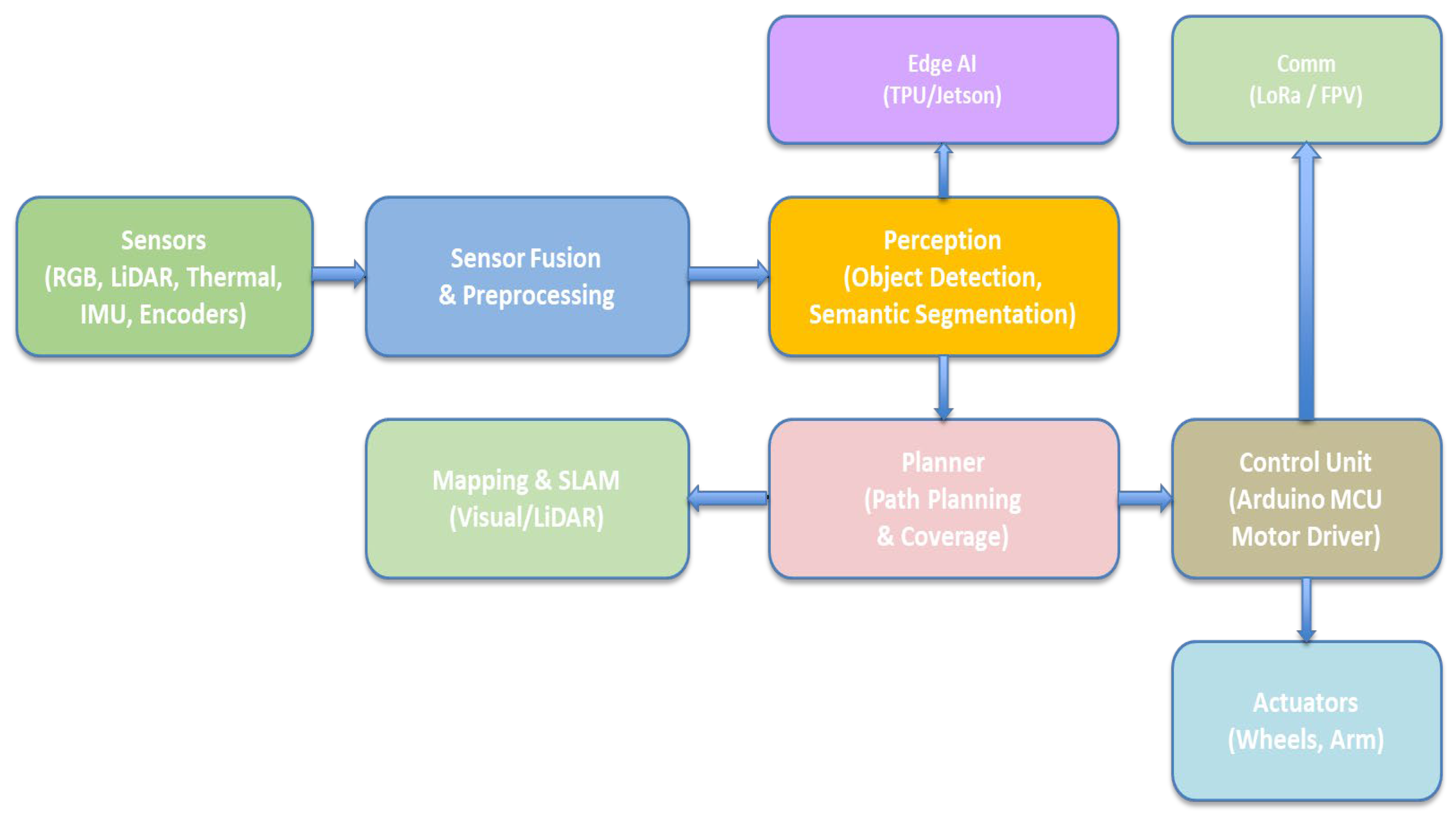
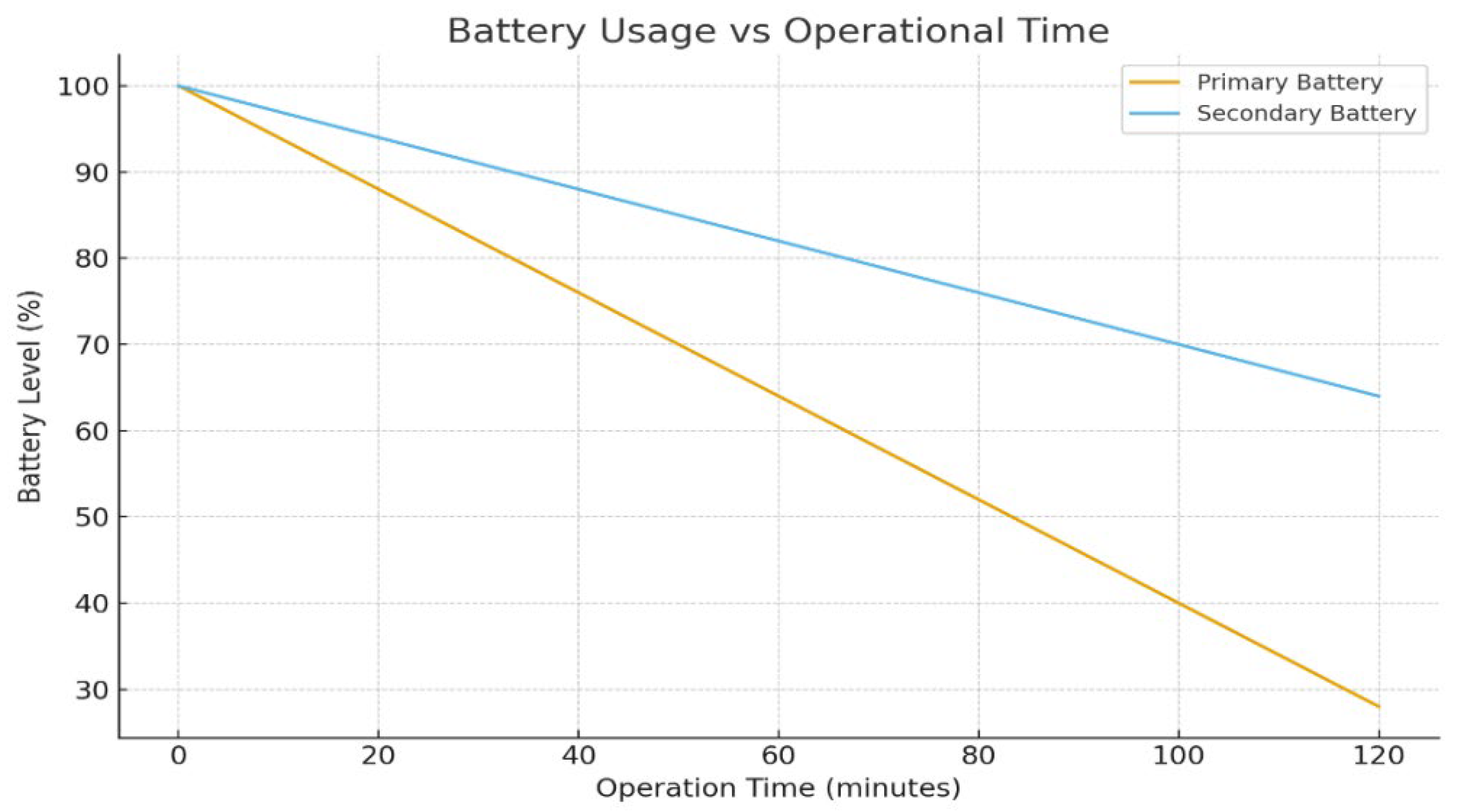
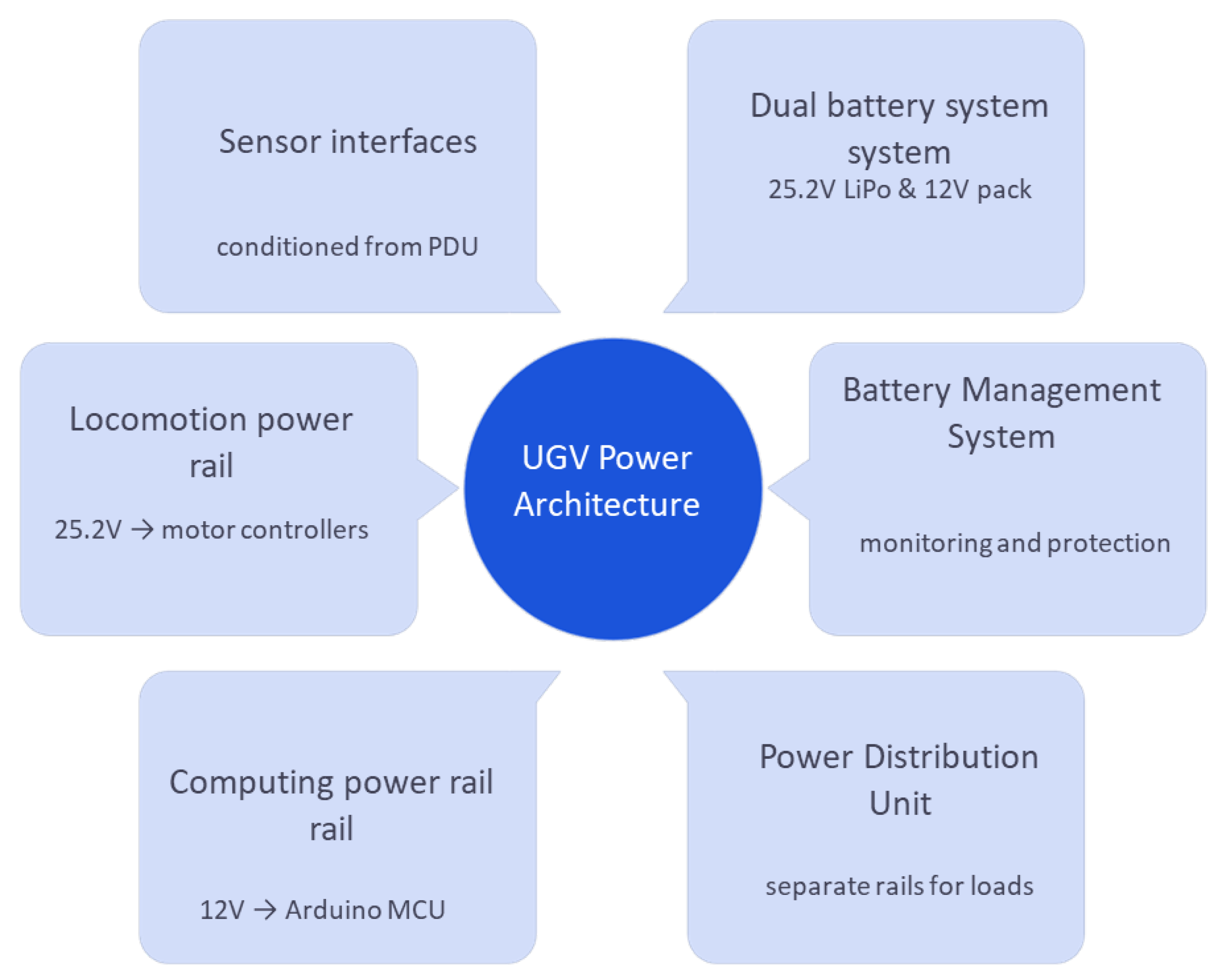
Systems that operate in dangerous environments are becoming essential in case of emergencies. This survey reviews the latest ground reconnaissance robots using computer vision (CV), machine learning (ML), MCU-based control, LoRa communication, DC motors, and dual-power systems. The analysis includes hardware and algorithms, and their performance in the field and lab. There has been clear progress in navigation, sensor fusion, and situational awareness. The main challenges which remain include the use of energy and standardization of benchmarks. This survey focuses exclusively on Unmanned Ground Vehicles (UGVs) for disaster reconnaissance, examining recent advances in hardware, software, and autonomy. The survey highlights the improvements in navigation, sensor fusion, and intelligence, and identifies remaining challenges such as energy limitations, robustness in harsh conditions, and the lack of standardized benchmarks. The analysis synthesizes findings from over 190 recent studies (2020–2025) in ground-based disaster robotics, providing a comprehensive overview of current capabilities and research gaps. It encapsulates all issues with their remedy for future disaster-response systems.
Keywords: autonomous robotics; disaster management; computer vision; machine learning; UGV; ground reconnaissance systems; Arduino control; LoRa communication autonomous robotics; disaster management; computer vision; machine learning; UGV; ground reconnaissance systems; Arduino control; LoRa communication