Beyond Euglycemia: Case Studies Using Continuous Glucose Monitoring in Elite Athletes Without Diabetes During Record Athletic Events


 , ,
, ,
Highlights
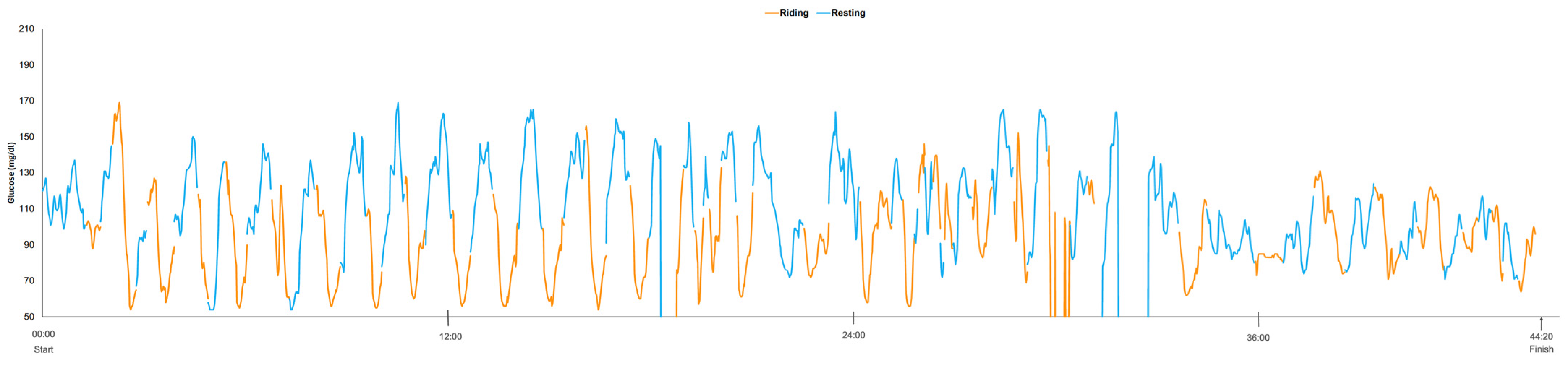
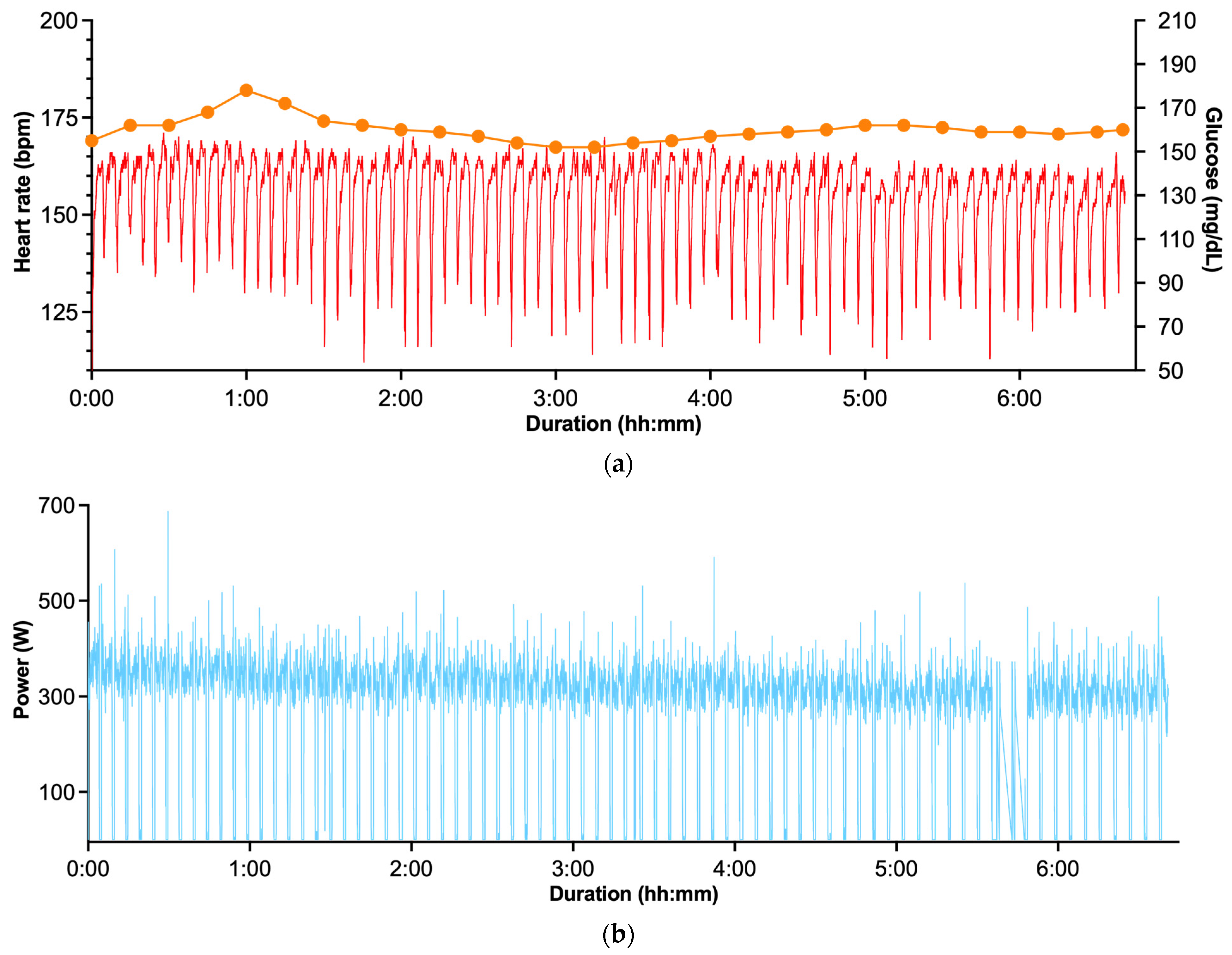
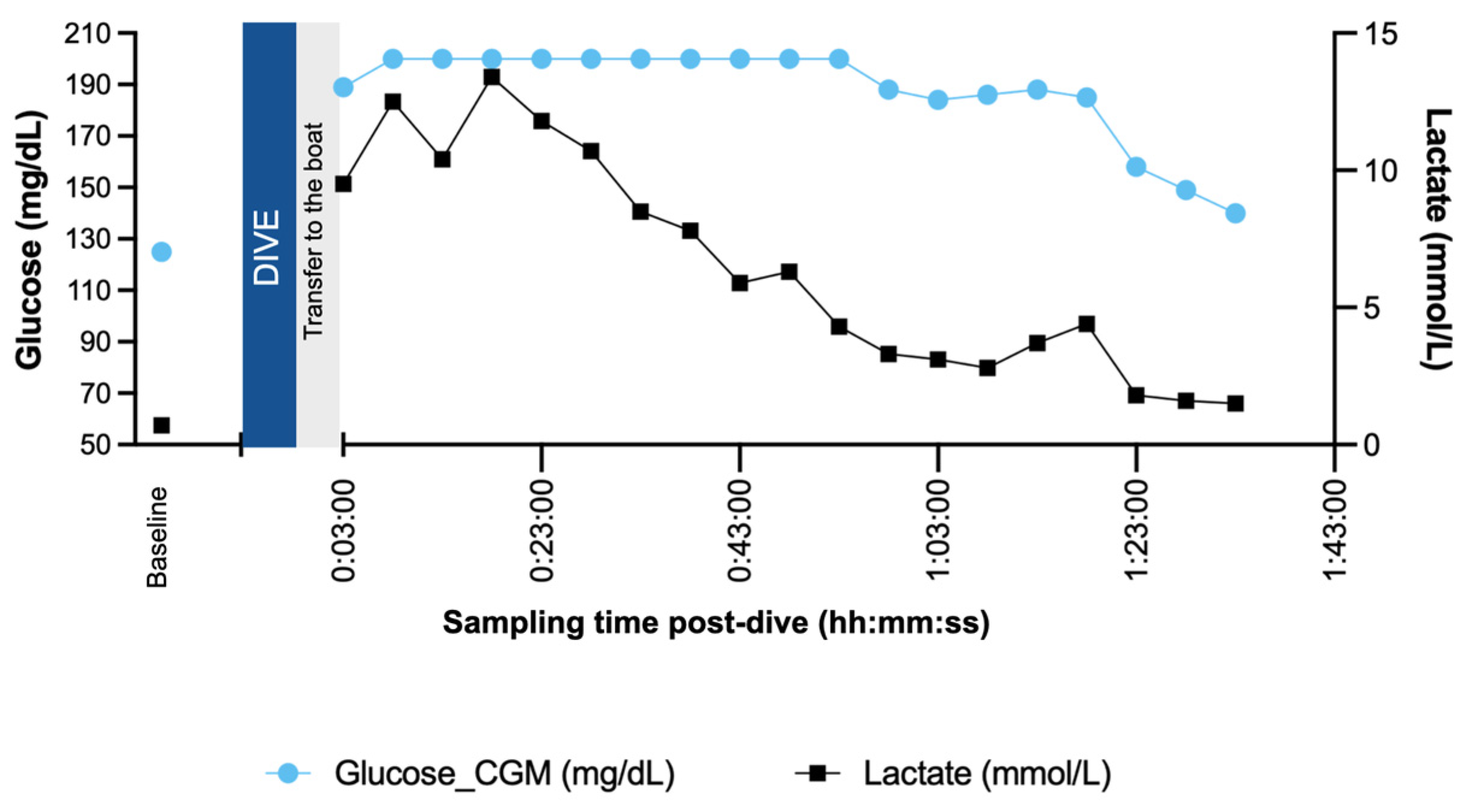
- CGM revealed markedly different glucose responses in elite athletes without diabetes depending on exercise modality, intensity, and fueling strategy, with both hypoglycemic and hyperglycemic excursions occurring well outside conventional euglycemic ranges.
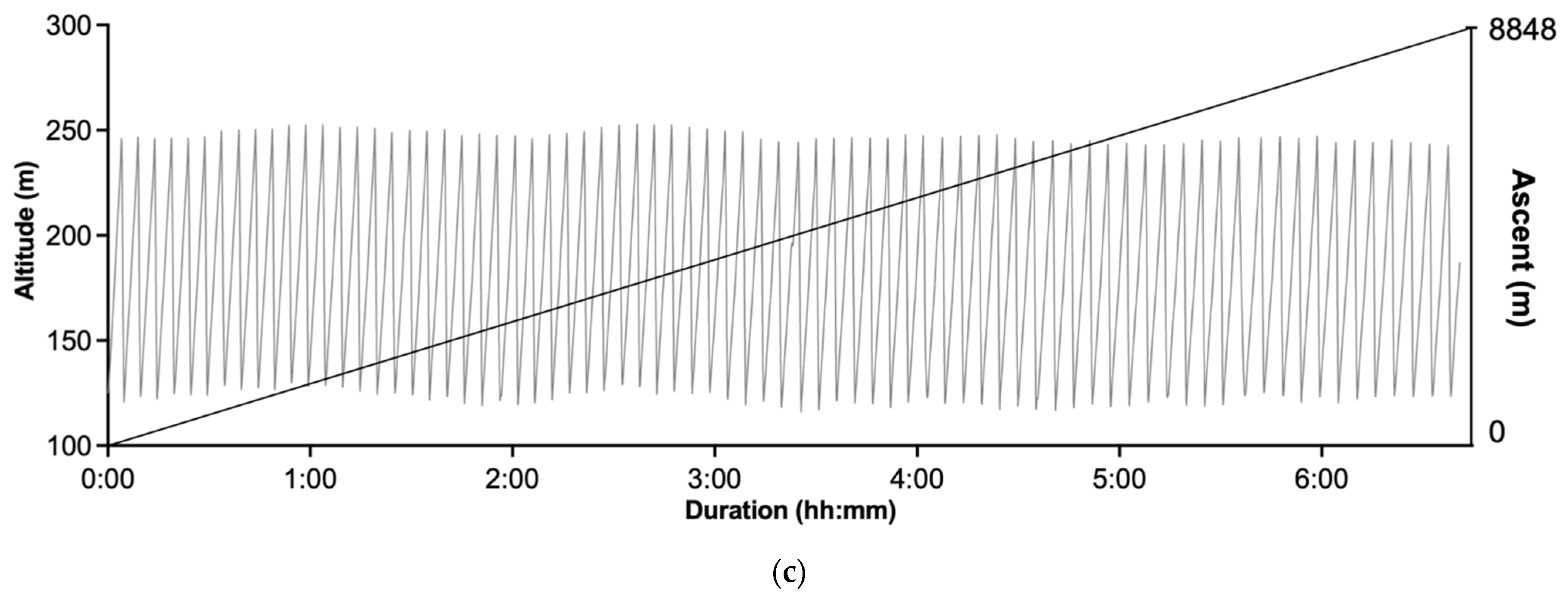
- Extreme and discipline-specific physiological stressors, including intermittent ultra-endurance cycling, uninterrupted prolonged climbing, and hypoxic breath-hold diving, produced distinct and reproducible CGM patterns despite preserving metabolic health.
- CGM metrics and clinical glycemic thresholds require context-specific interpretation in elite sport, as transient deviations from euglycemia may reflect adaptive physiological responses rather than metabolic dysfunction.
- These findings support the development of sport- and task-specific CGM benchmarks and highlight the need to integrate CGM data with exercise context, fueling practices, and performance demands when applied in high-performance settings.
Abstract
1. Introduction
2. Materials and Methods
2.1. CGM Device Information and Use
2.2. Data Handling
3. Results
3.1. Case Study 1: Professional Cyclist: Race Across the West: World Record
3.1.1. Participant
3.1.2. Sport Event Details
3.1.3. CGM and Performance Data
3.1.4. Carbohydrate Intake and Nutritional Strategy
3.2. Case Study 2: Professional Cyclist: Everesting Challenge
3.2.1. Participant
3.2.2. Sport Event Details
3.2.3. CGM and Performance Data
3.2.4. Carbohydrate Intake and Nutritional Strategy
3.3. Case Study 3: Breath Hold Deep Dive
3.3.1. Participant
3.3.2. Sport Event Details
3.3.3. CGM and Other Physiologic and Performance-Related Data
3.3.4. Carbohydrate Intake and Nutritional Strategy
4. Discussion
5. Conclusions
Author Contributions
Funding
Institutional Review Board Statement
Informed Consent Statement
Data Availability Statement
Acknowledgments
Conflicts of Interest
Abbreviations
| CGM | Continuous glucose monitoring |
| TBR | Time below range (<70 mg/dL; <3.9 mmol/L) |
| TITR | Time in tight range (70–140 mg/dL; 3.9–7.8 mmol/L) |
| TAR140 | Time above range (>140 mg/dL; >7.8 mmol/L) |
| RAW | Race Across the West |
| RAAM | Race Across America |
| HR | Heart rate |
| iG | Interstitial glucose |
| CHO | Carbohydrate |
| UCI | Union Cycliste Internationale |
| CNF | Constant weight without fins |
| AIDA | International Association for the Development of Apnea |
| CMAS | Confédération Mondiale des Activités Subaquatiques |
References
- Holzer, R.; Bloch, W.; Brinkmann, C. Continuous Glucose Monitoring in Healthy Adults-Possible Applications in Health Care, Wellness, and Sports. Sensors 2022, 22, 2030. [Google Scholar] [CrossRef] [PubMed]
- Bowler, A.-L.M.; Whitfield, J.; Marshall, L.; Coffey, V.G.; Burke, L.M.; Cox, G.R. The Use of Continuous Glucose Monitors in Sport: Possible Applications and Considerations. Int. J. Sport. Nutr. Exerc. Metab. 2023, 33, 121–132. [Google Scholar] [CrossRef] [PubMed]
- Zignoli, A.; Fontana, F.Y.; Lipman, D.J.; Skroce, K.; Maturana, F.M.; Zisser, H.C. Association between Pre-Exercise Food Ingestion Timing and Reactive Hypoglycemia: Insights from a Large Database of Continuous Glucose Monitoring Data. Eur. J. Sport. Sci. 2023, 23, 2340–2348. [Google Scholar] [CrossRef] [PubMed]
- Kulawiec, D.G.; Zhou, T.; Knopp, J.L.; Chase, J.G. Continuous Glucose Monitoring to Measure Metabolic Impact and Recovery in Sub-Elite Endurance Athletes. Biomed. Signal Process. Control 2021, 70, 103059. [Google Scholar] [CrossRef]
- Coyle, E.F. Carbohydrate Supplementation during Exercise. J. Nutr. 1992, 122, 788–795. [Google Scholar] [CrossRef]
- Elghobashy, M.E.; Richards, A.J.; Malekzadeh, R.; Patel, D.; Turner, L.V.; Burr, J.F.; Power, G.A.; Laham, R.; Riddell, M.C.; Cheng, A.J. Carbohydrate Ingestion Increases Interstitial Glucose and Mitigates Neuromuscular Fatigue during Single-Leg Knee Extensions. Med. Sci. Sports Exerc. 2024, 56, 1495–1504. [Google Scholar] [CrossRef]
- Levitan, E.B.; Song, Y.; Ford, E.S.; Liu, S. Is Nondiabetic Hyperglycemia a Risk Factor for Cardiovascular Disease? A Meta-Analysis of Prospective Studies. Arch. Intern. Med. 2004, 164, 2147–2155. [Google Scholar] [CrossRef]
- MacDonald, T.L.; Pattamaprapanont, P.; Pathak, P.; Fernandez, N.; Freitas, E.C.; Hafida, S.; Mitri, J.; Britton, S.L.; Koch, L.G.; Lessard, S.J. Hyperglycaemia Is Associated with Impaired Muscle Signalling and Aerobic Adaptation to Exercise. Nat. Metab. 2020, 2, 902–917. [Google Scholar] [CrossRef]
- Shah, V.N.; DuBose, S.N.; Li, Z.; Beck, R.W.; Peters, A.L.; Weinstock, R.S.; Kruger, D.; Tansey, M.; Sparling, D.; Woerner, S.; et al. Continuous Glucose Monitoring Profiles in Healthy Nondiabetic Participants: A Multicenter Prospective Study. J. Clin. Endocrinol. Metab. 2019, 104, 4356–4364. [Google Scholar] [CrossRef]
- Weijer, V.; van der Werf, R.; van der Haijden, M.; Jeukendrup, A.; van Loon, L.J.C.; Dijk, J.-W. van Continuous Glucose Monitoring in Para Cyclists: An Observational Study. Eur. J. Sport. Sci. 2024, 24, 1809–1819. [Google Scholar] [CrossRef]
- Hamilton, R.; McCarthy, O.M.; Bain, S.C.; Bracken, R.M. Continuous Measurement of Interstitial Glycaemia in Professional Female UCI World Tour Cyclists Undertaking a 9-Day Cycle Training Camp. Eur. J. Sport. Sci. 2024, 24, 1573–1582. [Google Scholar] [CrossRef]
- Flockhart, M.; Nilsson, L.C.; Tais, S.; Ekblom, B.; Apró, W.; Larsen, F.J. Excessive Exercise Training Causes Mitochondrial Functional Impairment and Decreases Glucose Tolerance in Healthy Volunteers. Cell Metab. 2021, 33, 957–970.e6. [Google Scholar] [CrossRef]
- Alva, S.; Bhargava, A.; Bode, B.; Brazg, R.; Castorino, K.; Kipnes, M.; Liljenquist, D.R.; Tran, H.; Liu, H.; Nada, M. Accuracy of a 15-Day Factory-Calibrated Continuous Glucose Monitoring System With Improved Sensor Design. J. Diabetes Sci. Technol. 2025, 19322968251329364. [Google Scholar] [CrossRef]
- Tsoukas, M.; Rutkowski, J.; El-Fathi, A.; Yale, J.-F.; Bernier-Twardy, S.; Bossy, A.; Pytka, E.; Legault, L.; Haidar, A. Accuracy of FreeStyle Libre in Adults with Type 1 Diabetes: The Effect of Sensor Age. Diabetes Technol. Ther. 2020, 22, 203–207. [Google Scholar] [CrossRef]
- Skroce, K.; Turner, L.V.; Fontana, F.Y.; Bettega, S.; Nardelli, S.; Jeukendrup, A.; Zisser, H.C.; Schena, F.; Tarperi, C.; Riddell, M.C. Assessing the Accuracy of a Continuous Glucose Monitoring System Across Varying Exercise Intensities and Blood Lactate Concentrations in Healthy Male Athletes. J. Diabetes Sci. Technol. 2025, 19, 274–276. [Google Scholar] [CrossRef]
- Ahlborg, G.; Björkman, O. Carbohydrate Utilization by Exercising Muscle Following Pre-Exercise Glucose Ingestion. Clin. Physiol. 1987, 7, 181–195. [Google Scholar] [CrossRef] [PubMed]
- Jeukendrup, A.E.; Raben, A.; Gijsen, A.; Stegen, J.H.; Brouns, F.; Saris, W.H.; Wagenmakers, A.J. Glucose Kinetics during Prolonged Exercise in Highly Trained Human Subjects: Effect of Glucose Ingestion. J. Physiol. 1999, 515, 579–589. [Google Scholar] [CrossRef] [PubMed]
- McConell, G.; Fabris, S.; Proietto, J.; Hargreaves, M. Effect of Carbohydrate Ingestion on Glucose Kinetics during Exercise. J. Appl. Physiol. 1994, 77, 1537–1541. [Google Scholar] [CrossRef] [PubMed]
- Jeukendrup, A.E.; Killer, S.C. The Myths Surrounding Pre-Exercise Carbohydrate Feeding. Ann. Nutr. Metab. 2010, 57, 18–25. [Google Scholar] [CrossRef]
- Kang, J.; Robertson, R.J.; Goss, F.L.; DaSilva, S.G.; Visich, P.; Suminski, R.R.; Utter, A.C.; Denys, B.C. Effect of Carbohydrate Substrate Availability on Ratings of Perceived Exertion during Prolonged Exercise of Moderate Intensity. Percept. Mot. Ski. 1996, 82, 495–506. [Google Scholar] [CrossRef]
- Marliss, E.B.; Simantirakis, E.; Miles, P.D.; Hunt, R.; Gougeon, R.; Purdon, C.; Halter, J.B.; Vranic, M. Glucose Turnover and Its Regulation during Intense Exercise and Recovery in Normal Male Subjects. Clin. Investig. Med. 1992, 15, 406–419. [Google Scholar]
- Marliss, E.B.; Vranic, M. Intense Exercise Has Unique Effects on Both Insulin Release and Its Roles in Glucoregulation: Implications for Diabetes. Diabetes 2002, 51, S271–S283. [Google Scholar] [CrossRef]
- Skroce, K.; Zignoli, A.; Mihic, N.; Lipman, D.J.; Turner, L.V.; Riddell, M.C.; Zisser, H.C. Continuous Glucose Monitoring Profiles in Elite-Level Professional European Football Players. J. Diabetes Sci. Technol. 2025, 19322968251388668. [Google Scholar] [CrossRef] [PubMed]
- Thomas, D.T.; Erdman, K.A.; Burke, L.M. American College of Sports Medicine Joint Position Statement. Nutrition and Athletic Performance. Med. Sci. Sports Exerc. 2016, 48, 543–568. [Google Scholar] [CrossRef] [PubMed]
- Podlogar, T.; Bokal, Š.; Cirnski, S.; Wallis, G.A. Increased Exogenous but Unaltered Endogenous Carbohydrate Oxidation with Combined Fructose-Maltodextrin Ingested at 120 g h-1 versus 90 g h-1 at Different Ratios. Eur. J. Appl. Physiol. 2022, 122, 2393–2401. [Google Scholar] [CrossRef] [PubMed]
- Urdampilleta, A.; Arribalzaga, S.; Viribay, A.; Castañeda-Babarro, A.; Seco-Calvo, J.; Mielgo-Ayuso, J. Effects of 120 vs. 60 and 90 g/h Carbohydrate Intake during a Trail Marathon on Neuromuscular Function and High Intensity Run Capacity Recovery. Nutrients 2020, 12, 2094. [Google Scholar] [CrossRef]
- Patrician, A.; Dujić, Ž.; Spajić, B.; Drviš, I.; Ainslie, P.N. Breath-Hold Diving—The Physiology of Diving Deep and Returning. Front. Physiol. 2021, 12, 639377. [Google Scholar] [CrossRef]
- Schagatay, E. Predicting Performance in Competitive Apnea Diving. Part III: Deep Diving. Diving Hyperb. Med. 2011, 41, 216–228. [Google Scholar]
- Sponsiello, N.; Cialoni, D.; Pieri, M.; Marroni, A. Cellular Glucose Uptake During Breath-Hold Diving in Experienced Male Breath-Hold Divers. Sports Med. Open 2018, 4, 14. [Google Scholar] [CrossRef]
- Trefts, E.; Williams, A.S.; Wasserman, D.H. Exercise and the Regulation of Hepatic Metabolism. Prog. Mol. Biol. Transl. Sci. 2015, 135, 203–225. [Google Scholar] [CrossRef]
- Brooks, G.A.; Osmond, A.D.; Arevalo, J.A.; Duong, J.J.; Curl, C.C.; Moreno-Santillan, D.D.; Leija, R.G. Lactate as a Myokine and Exerkine: Drivers and Signals of Physiology and Metabolism. J. Appl. Physiol. 2023, 134, 529–548. [Google Scholar] [CrossRef]



| Outcome | Everesting | Race Across the West: Exercise | Race Across the West: Recovery | Breath Hold Deep Dive: Recovery |
|---|---|---|---|---|
| iG mean ± SD (mg/dL) | 160 ± 5.7 | 91 ± 23.2 | 115 ± 24.7 | 187 ± 18.5 |
| iG min (mg/dL) | 151 | 54 | 54 | 125 |
| iG max (mg/dL) | 178 | 169 | 169 | 200 |
| %TBR (<70 mg/dL) | 0.0 | 9.15 | 1.23 | 0 |
| %TITR (70–140 mg/dL) | 0.0 | 35.58 | 43.16 | 0 |
| %TAR140 (>140 mg/dL) | 100.0 | 1.77 | 9.11 | 100 |
| iG min (mg/dL) | 160 ± 5.7 | 91 ± 23.2 | 115 ± 24.7 | 187 ± 18.5 |
| Nutritional Product Type | Nutritional Product Information | Servings | CHO/ Serving (gr) | Calories/ Serving (kcal) | Total CHO (gr) | Total Calories (kcal) |
|---|---|---|---|---|---|---|
| Carbohydrate drink A | maltodextrin and fructose | 24 | 30 | 120 | 720 | 2880 |
| Energy gel A | 0.8:1 fructose-to-glucose ratio | 2 | 25 | 100 | 50 | 200 |
| Sports shake A | fruit and vegetable mix | 6 | 22 | 220 | 132 | 1320 |
| Energy bar A | oats and rice bar | 8 | 45 | 225 | 360 | 1800 |
| Energy bar A | rice bar | 8 | 50 | 249 | 400 | 1992 |
| Ketones A | (R-1,3-butanediol) | 8 | 0 | 70 | 0 | 560 |
| Energy gel A | 2:1 maltodextrin-to-fructose ratio | 3 | 90 | 360 | 270 | 1080 |
| Hydration sport drink A | contains 370 mg sodium | 9 | 22 | 80 | 198 | 720 |
| Electrolyte drink A | 100 mg of caffeine/serving | 6 | 11 | 45 | 66 | 270 |
| Electrolyte drink, recovery A | / | 2 | 31 | 180 | 62 | 360 |
| Turkey Sandwich | / | 2 | 45 | 250 | 90 | 500 |
| Banana Milk | / | 7 | 14 | 80 | 98 | 560 |
| Peanut Butter | / | 3 | 6 | 210 | 18 | 630 |
| Oats | / | 2.5 | 51 | 303 | 127 | 757.5 |
| Total | 2591 | 13,629 |
| Nutritional Product Type | Nutritional Product Information | Servings | CHO/ Serving (gr) | Calories/Serving (kcal) | Total CHO (gr) | Total Calories (kcal) |
|---|---|---|---|---|---|---|
| Carbohydrate drink A | 1:0.8 maltodextrine-to-fructose ratio | 7 | 80 | 315 | 560 | 2205 |
| Energy gel A | isotonic maltodextrine (33%) gel | 6 | 22 | 87 | 132 | 522 |
| Energy gel with caffeine A | 150 mg of caffeine/serving | 6 | 22 | 87 | 132 | 522 |
| Energy bar A | / | 84 | 43 | 172 | 172 | 688 |
| Total | 996 | 3937 |
Disclaimer/Publisher’s Note: The statements, opinions and data contained in all publications are solely those of the individual author(s) and contributor(s) and not of MDPI and/or the editor(s). MDPI and/or the editor(s) disclaim responsibility for any injury to people or property resulting from any ideas, methods, instructions or products referred to in the content. |
© 2026 by the authors. Licensee MDPI, Basel, Switzerland. This article is an open access article distributed under the terms and conditions of the Creative Commons Attribution (CC BY) license.
Share and Cite
Skroce, K.; Turner, L.V.; Zignoli, A.; Lipman, D.J.; Zisser, H.C.; Riddell, M.C. Beyond Euglycemia: Case Studies Using Continuous Glucose Monitoring in Elite Athletes Without Diabetes During Record Athletic Events. Sensors 2026, 26, 1624. https://doi.org/10.3390/s26051624
Skroce K, Turner LV, Zignoli A, Lipman DJ, Zisser HC, Riddell MC. Beyond Euglycemia: Case Studies Using Continuous Glucose Monitoring in Elite Athletes Without Diabetes During Record Athletic Events. Sensors. 2026; 26(5):1624. https://doi.org/10.3390/s26051624
Chicago/Turabian StyleSkroce, Kristina, Lauren V. Turner, Andrea Zignoli, David J. Lipman, Howard C. Zisser, and Michael C. Riddell. 2026. "Beyond Euglycemia: Case Studies Using Continuous Glucose Monitoring in Elite Athletes Without Diabetes During Record Athletic Events" Sensors 26, no. 5: 1624. https://doi.org/10.3390/s26051624
APA StyleSkroce, K., Turner, L. V., Zignoli, A., Lipman, D. J., Zisser, H. C., & Riddell, M. C. (2026). Beyond Euglycemia: Case Studies Using Continuous Glucose Monitoring in Elite Athletes Without Diabetes During Record Athletic Events. Sensors, 26(5), 1624. https://doi.org/10.3390/s26051624