Connected Embedded System for Drowsiness Detection Based on a Reconfigurable Set of Features


Abstract
1. Introduction
2. Related Work
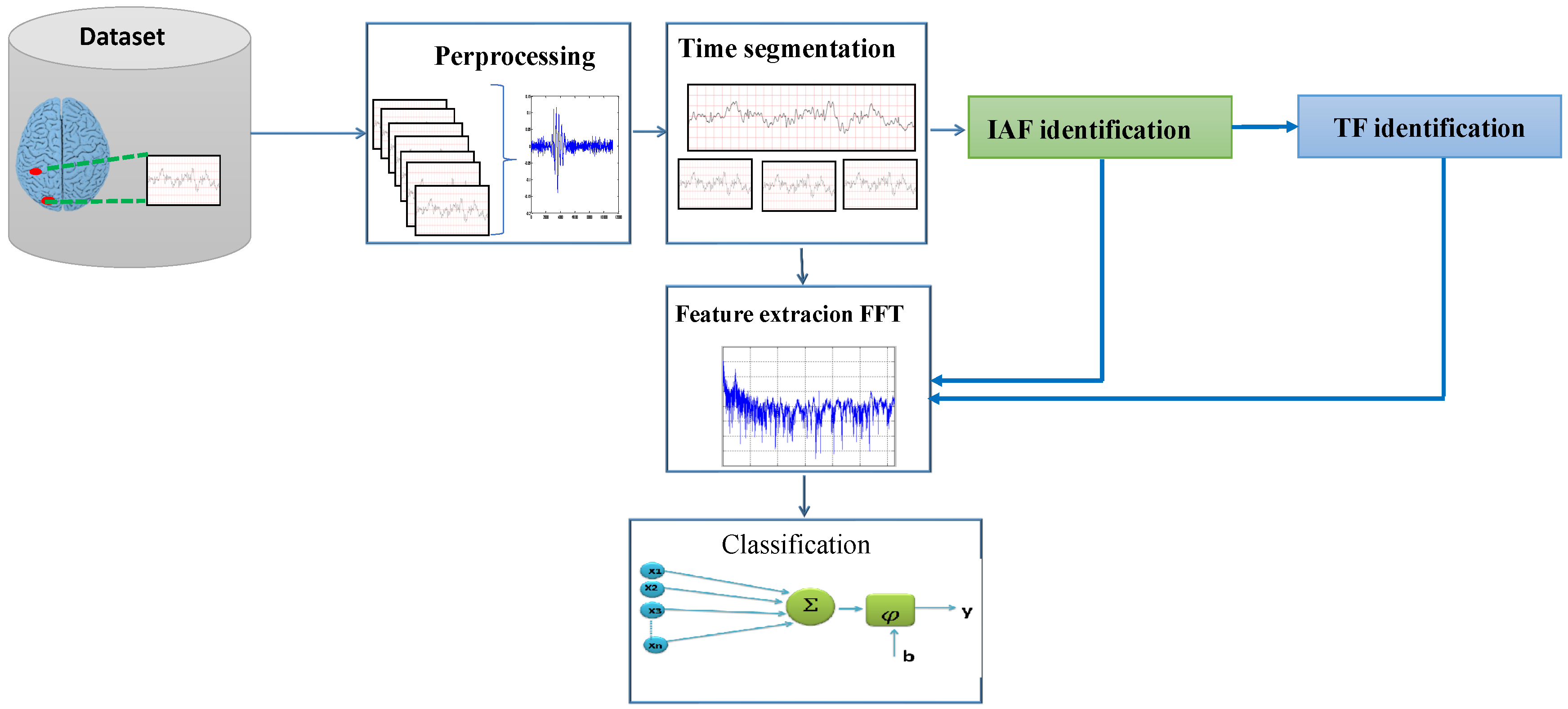
3. Proposed Architecture for Drowsiness-Detection System
3.1. Proposed Method
3.1.1. Feature Extraction
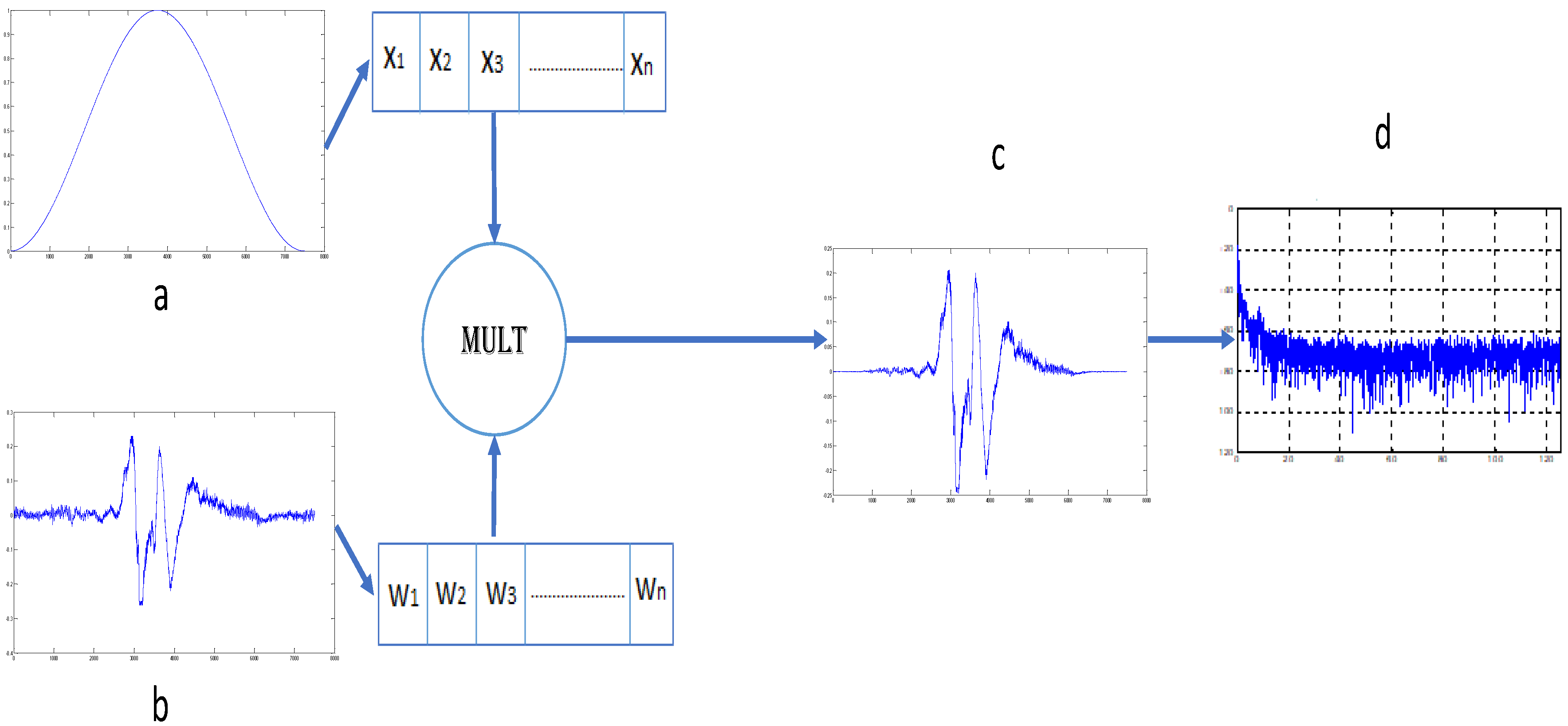
3.1.2. Characteristic Vector Calculation Procedure
3.1.3. Classification
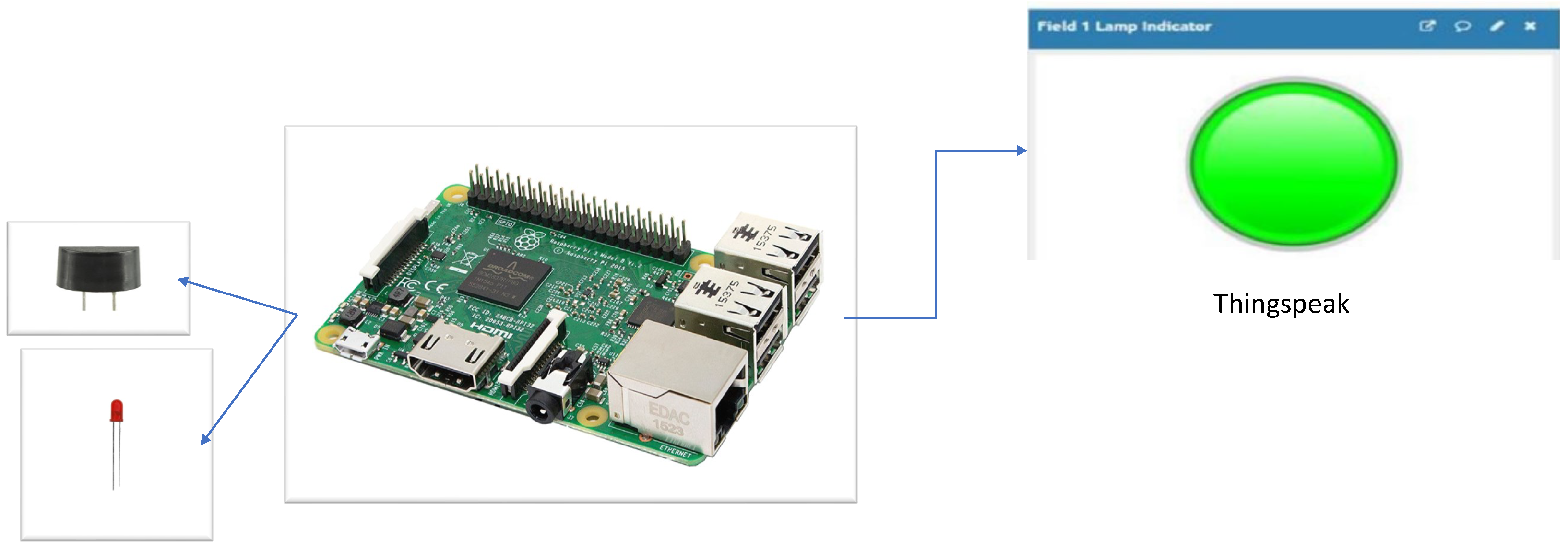
3.2. The Proposed Embedded Implementation of a Connected Drowsiness Monitoring System for Vehicles
4. Experimentation and Results
4.1. Dataset
4.2. Evaluation Metrics
4.3. Implementation Procedure and Results
5. Discussion
6. Conclusions
Funding
Data Availability Statement
Conflicts of Interest
References
- Kim, M.; Koo, J. Embedded System Performance Analysis for Implementing a Portable Drowsiness Detection System for Drivers. Technologies 2023, 11, 8. [Google Scholar] [CrossRef]
- Essel, E.; Lacy, F.; Albalooshi, F.; Elmedany, W.; Ismail, Y. Drowsiness Detection in Drivers Using Facial Feature Analysis. Appl. Sci. 2024, 15, 20. [Google Scholar] [CrossRef]
- Safie, S.I.; Ramli, R.; Azri, M.A.; Aliff, M.; Mohammad, Z. Raspberry Pi Based Driver Drowsiness Detection System Using Convolutional Neural Network (CNN). In IEEE 18th International Colloquium on Signal Processing & Applications (CSPA); IEEE: Piscataway, NJ, USA, 2022; pp. 30–34. [Google Scholar]
- Jiao, Y.; Deng, Y.; Luo, Y.; Lu, B.-L. Driver Sleepiness Detection from EEG and EOG Signals Using GAN and LSTM Networks. Neurocomputing 2020, 408, 100–111. [Google Scholar] [CrossRef]
- Belakhdar, I.; Kaaniche, W.; Djmel, R.; Ouni, B. Detecting Driver Drowsiness Based on Single Electroencephalography Channel. In 13th International Multi-Conference on Systems, Signals & Devices (SSD); IEEE: Piscataway, NJ, USA, 2016; pp. 16–21. [Google Scholar]
- Yu, S.; Li, P.; Lin, H.; Rohani, E.; Choi, G.; Shao, B.; Wang, Q. Support Vector Machine Based Detection of Drowsiness Using Minimum EEG Features. In International Conference on Social Computing; IEEE: Piscataway, NJ, USA, 2013; pp. 827–835. [Google Scholar]
- Belakhdar, I.; Kaaniche, W.; Djemal, R.; Ouni, B. Single-Channel-Based Automatic Drowsiness Detection Architecture with a Reduced Number of EEG Features. Microprocess. Microsyst. 2018, 58, 13–23. [Google Scholar] [CrossRef]
- Venkat, V.P.B.; Chinara, S. Automatic Classification Methods for Detecting Drowsiness Using Wavelet Packet Transform Extracted Time-Domain Features from Single-Channel EEG Signal. J. Neurosci. Methods 2021, 347, 108927. [Google Scholar]
- Bajaj, V.; Taran, S.; Khare, S.K.; Sengur, A. Feature Extraction Method for Classification of Alertness and Drowsiness States EEG Signals. Appl. Acoust. 2020, 163, 107224. [Google Scholar] [CrossRef]
- Wang, H.; Zhang, L.; Yao, L. Application of Genetic Algorithm Based Support Vector Machine in Selection of New EEG Rhythms for Drowsiness Detection. Expert Syst. Appl. 2021, 171, 114634. [Google Scholar] [CrossRef]
- Budak, U.; Bajaj, V.; Akbulut, Y.; Atila, O.; Sengur, A. An Effective Hybrid Model for EEG-Based Drowsiness Detection. IEEE Sens. J. 2019, 19, 7624–7631. [Google Scholar] [CrossRef]
- Tripathy, A.K.; Chinara, S.; Sarkar, M. An Application of Wireless Brain–Computer Interface for Drowsiness Detection. Biocybern. Biomed. Eng. 2016, 36, 276–284. [Google Scholar] [CrossRef]
- Lin, C.-T.; Chen, Y.-C.; Huang, T.-Y.; Chiu, T.-T.; Ko, L.-W.; Liang, S.-F. Development of Wireless Brain Computer Interface with Embedded Multitask Scheduling and Its Application on Real-Time Driver’s Drowsiness Detection and Warning. IEEE Trans. Biomed. Eng. 2008, 55, 1582–1591. [Google Scholar] [CrossRef] [PubMed]
- Jiang, Y.; Zhang, Y.; Lin, C.; Wu, D.; Lin, C.-T. EEG-Based Driver Drowsiness Estimation Using an Online Multi-View and Transfer TSK Fuzzy System. IEEE Trans. Intell. Transp. Syst. 2020, 22, 1752–1764. [Google Scholar] [CrossRef]
- Correa, A.G.; Laciar Leber, E. An automatic detector of drowsiness based on spectral analysis and wavelet decomposition of EEG records. In 2010 Annual International Conference of the IEEE Engineering in Medicine and Biology; IEEE: Piscataway, NJ, USA, 2010; pp. 1405–1408. [Google Scholar]
- Correa, A.G.; Orosco, L.; Laciar, E. Automatic detection of drowsiness in EEG records based on multimodal analysis. Med Eng. Phys. 2014, 36, 244–249. [Google Scholar] [CrossRef] [PubMed]
- Klimesch, W. EEG Alpha and Theta Oscillations Reflect Cognitive and Memory Performance: A Review and Analysis. Brain Res. Rev. 1999, 29, 169–195. [Google Scholar] [CrossRef]
- Goldberger, A.L.; Amaral, L.A.N.; Glass, L.; Hausdorff, J.M.; Ivanov, P.C.; Mark, R.G.; Mietus, J.E.; Moody, G.B.; Peng, C.-K.; Stanley, H.E. PhysioBank, PhysioToolkit, and PhysioNet: Components of a New Research Resource for Complex Physiologic Signals. Circulation 2000, 101, e215–e220. [Google Scholar] [CrossRef]
- De Gennaro, L.; Ferrara, M.; Bertini, M. The Boundary Between Wakefulness and Sleep: Quantitative Electroencephalographic Changes During the Sleep Onset Period. Neuroscience 2001, 107, 1–11. [Google Scholar] [CrossRef] [PubMed]
- Tawfik, N.S.; Youssef, S.M.; Kholief, M. A Hybrid Automated Detection of Epileptic Seizures in EEG Records. Comput. Electr. Eng. 2016, 53, 177–190. [Google Scholar] [CrossRef]
- Belakhdar, I.; Kaaniche, W.; Djmel, R.; Ouni, B. A Comparison between ANN and SVM Classifier for Drowsiness Detection Based on Single EEG Channel. In 2nd International Conference on Advanced Technologies for Signal and Image Processing (ATSIP); IEEE: Piscataway, NJ, USA, 2016; pp. 443–446. [Google Scholar]
- Fouad, I.A. A Robust and Efficient EEG-Based Drowsiness Detection System Using Different Machine Learning Algorithms. Ain Shams Eng. J. 2023, 14, 101895. [Google Scholar] [CrossRef]
- Othmani, A.; Sabri, A.Q.M.; Aslan, S.; Chaieb, F.; Rameh, H.; Alfred, R.; Cohen, D. EEG-Based Neural Networks Approaches for Fatigue and Drowsiness Detection: A Survey. Neurocomputing 2023, 557, 126709. [Google Scholar] [CrossRef]
- Terzano, M.G.; Parrino, L.; Smerieri, A.; Chervin, R.; Chokroverty, S.; Guilleminault, C.; Hirshkowitz, M.; Mahowald, M.; Moldofsky, H.; Rosa, A.; et al. Atlas, Rules, and Recording Techniques for the Scoring of Cyclic Alternating Pattern (CAP) in Human Sleep. Sleep Med. 2002, 3, 187–199. [Google Scholar] [CrossRef] [PubMed]
- Kemp, B.; Zwinderman, A.H.; Tuk, B.; Kamphuisen, H.A.; Oberye, J.J. Analysis of a Sleep-Dependent Neuronal Feedback Loop: The Slow-Wave Microcontinuity of the EEG. IEEE Trans. Biomed. Eng. 2000, 47, 1185–1194. [Google Scholar] [CrossRef] [PubMed]
- Rechtschaffen, A.; Kales, A. A Manual of Standardized Terminology, Techniques and Scoring System for Sleep Stages of Human Subjects; Public Health Service, US Government Printing Office: Washington, DC, USA, 1968.
- Hwang, S.; Lee, P.; Park, S.; Byun, H. Learning Subject-Independent Representation for EEG-Based Drowsy Driving Detection. In 9th International Winter Conference on Brain-Computer Interface (BCI); IEEE: Piscataway, NJ, USA, 2021; pp. 1–3. [Google Scholar]



| Age | TPN | TNR | Accuracy | |
|---|---|---|---|---|
| p03 | 51 | 80 | 100 | 90 |
| p04 | 35 | 100 | 100 | 100 |
| p14 | 40 | 100 | 95 | 97.5 |
| p16 | 35 | 88.9 | 85.7 | 87.3 |
| p48 | 56 | 100 | 100 | 100 |
| p59 | 41 | 100 | 100 | 100 |
| p60 | 49 | 83 | 88 | 85.5 |
| p61 | 32 | 100 | 100 | 100 |
| p66 | 33 | 90.9 | 90 | 90.45 |
| p67 | – | 100 | 100 | 100 |
| Average | 35 | 94.29 | 95.87 | 95.07 |
| [11] | [10] | [8] | [9] | [27] | [7] | Proposed System | |
|---|---|---|---|---|---|---|---|
| Dataset | MIT-BIH Polysomnography | Sleep_EDF [expanded] | MIT-BIH Polysomnography | MIT-BIH Polysomnography | |||
| Number of electrodes | 1 | 1 | 1 | ||||
| Preprocessing | Butter worth | Butter worth | |||||
| Feature extraction | TQWT/Alexnet/VGGN | Wavelet packet transform | WPT | TQWT | FFT | FFT | FFT |
| Number of features | 4 | 2 | 66 | 5 | 4 | ||
| Classification | LSTM | SVM | Extra Trees | ELM | LSTM | MLP | MLP |
| Accuracy of drowsiness detection | 94.31% | 89.52 % | 94.45% | 91.84% | 88.80% | 84.4% | 95.07 |
Disclaimer/Publisher’s Note: The statements, opinions and data contained in all publications are solely those of the individual author(s) and contributor(s) and not of MDPI and/or the editor(s). MDPI and/or the editor(s) disclaim responsibility for any injury to people or property resulting from any ideas, methods, instructions or products referred to in the content. |
© 2026 by the author. Licensee MDPI, Basel, Switzerland. This article is an open access article distributed under the terms and conditions of the Creative Commons Attribution (CC BY) license.
Share and Cite
Belakhdhar, I. Connected Embedded System for Drowsiness Detection Based on a Reconfigurable Set of Features. Sensors 2026, 26, 1195. https://doi.org/10.3390/s26041195
Belakhdhar I. Connected Embedded System for Drowsiness Detection Based on a Reconfigurable Set of Features. Sensors. 2026; 26(4):1195. https://doi.org/10.3390/s26041195
Chicago/Turabian StyleBelakhdhar, Ibtissam. 2026. "Connected Embedded System for Drowsiness Detection Based on a Reconfigurable Set of Features" Sensors 26, no. 4: 1195. https://doi.org/10.3390/s26041195
APA StyleBelakhdhar, I. (2026). Connected Embedded System for Drowsiness Detection Based on a Reconfigurable Set of Features. Sensors, 26(4), 1195. https://doi.org/10.3390/s26041195