Using Heart Rate to Measure Stress in Healthcare Workers Wearing PAPRs and N95 Masks: Insights from a Randomized Trial

 , , , , , ,
Abstract
1. Introduction
1.1. Literature: HR as Stress Indicator
1.2. PPE Pandemic Increase
2. Methodology
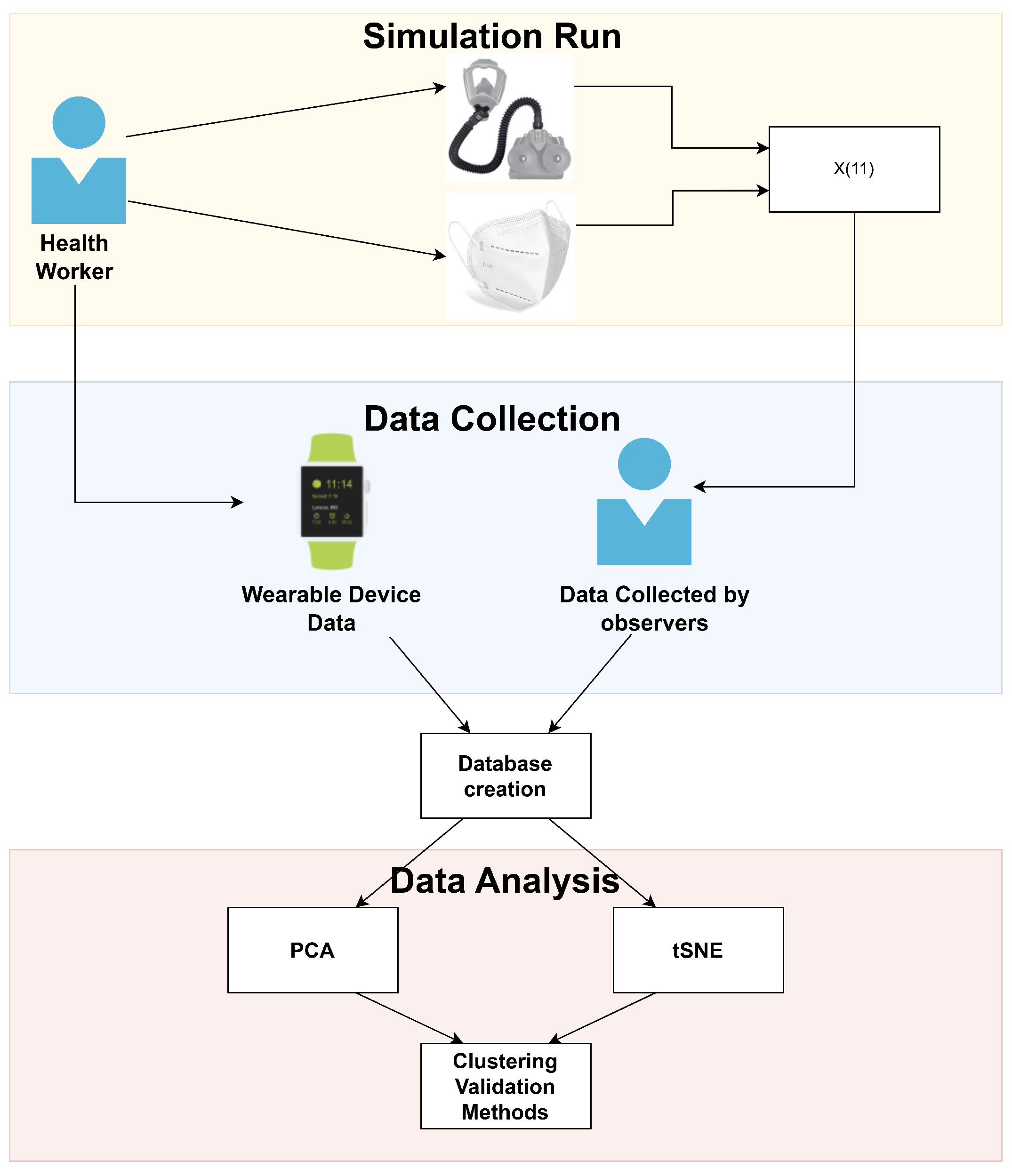
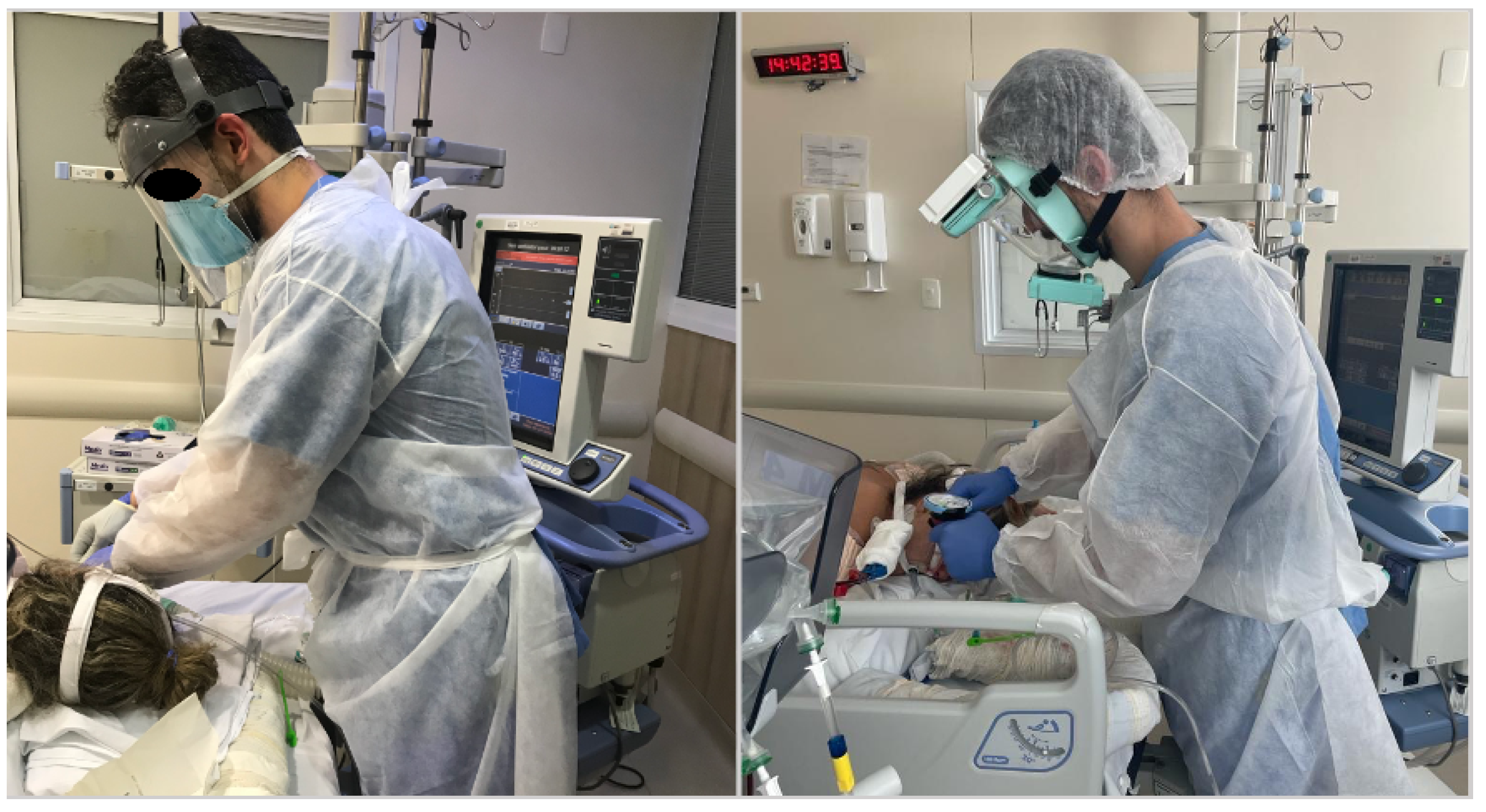
2.1. Simulation Information
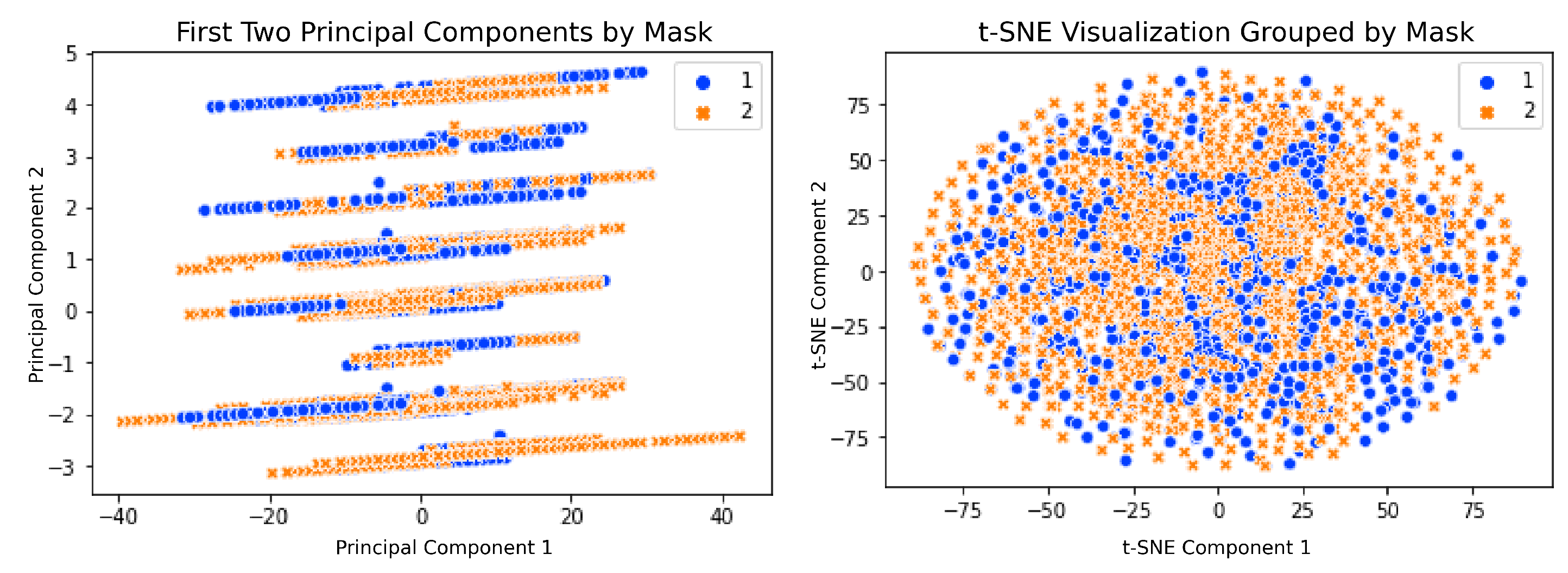
2.2. Data Analysis
3. Results
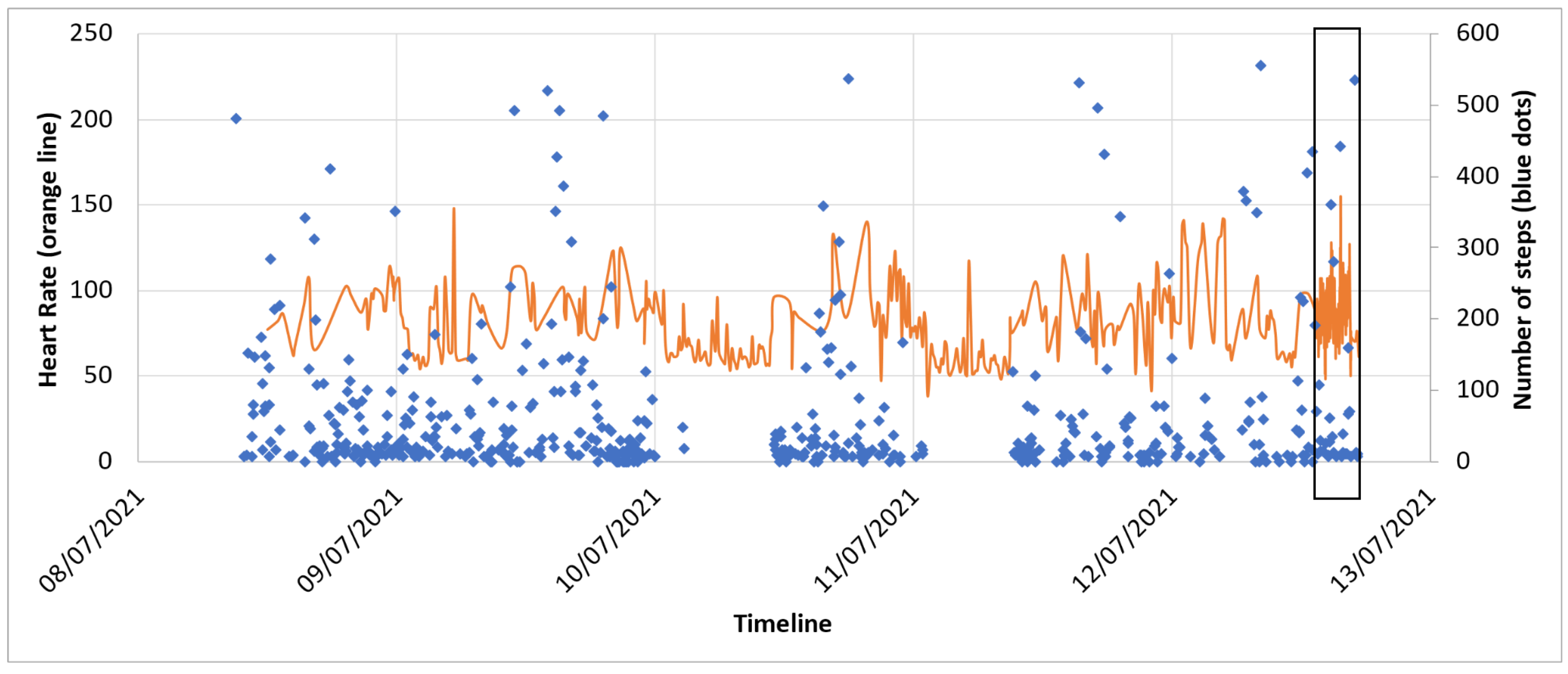
3.1. Data Information and Data Preprocessing
- Datastamp: The timestamp indicating when the data point was recorded.
- Smartwatch ID: A unique identifier for the smartwatch used to collect the data.
- Heart Rate: The participant’s heart rate at the time of data collection, measured in beats per minute (BPM).
- Movement (Step): The number of steps recorded by the smartwatch.
- User: The individual participant (either a nurse or physician).
- Role: The professional role of the participant, specified as either nurse or physician.
- Simulation Run: Whether the data point was collected during the first or second run of the simulation.
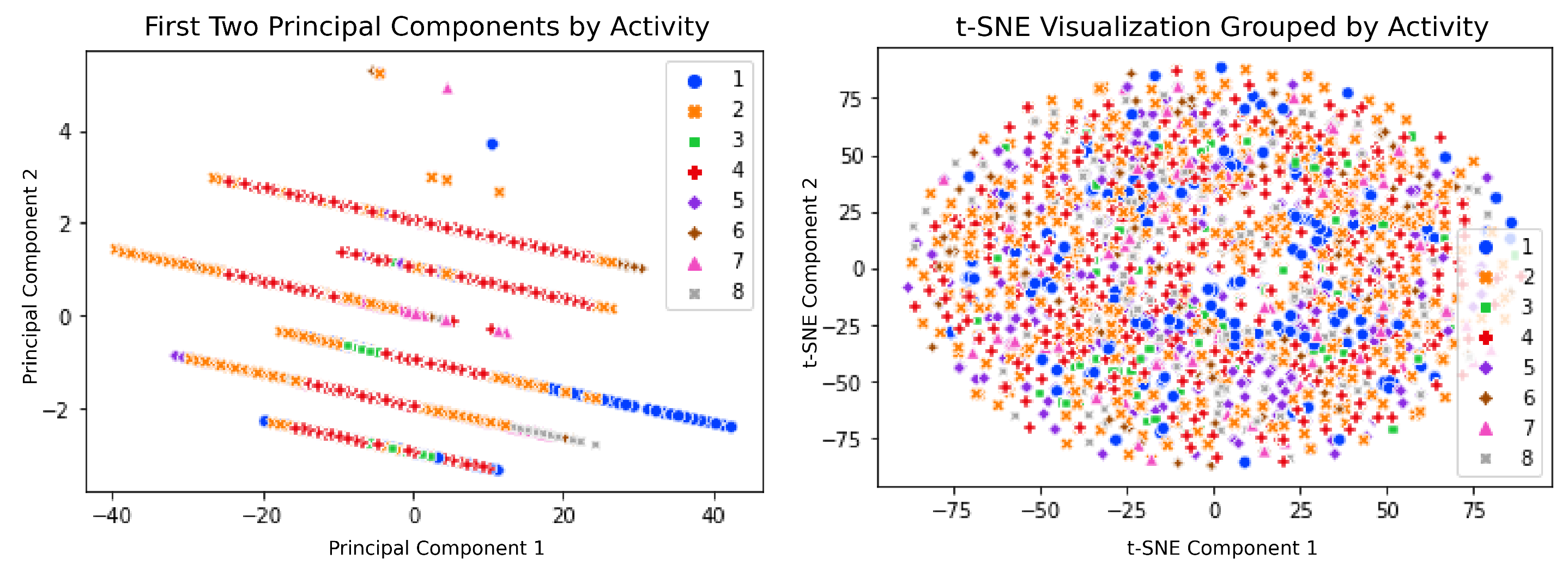
- Activity ID: An identifier indicating the specific activity being performed at the time of data collection, as follows:
- -
- 0: No activity;
- -
- 1: Donning (the process of putting on PPE);
- -
- 2: Listening to the lungs and heart of the patient;
- -
- 3: Procedure accomplishment (e.g., starting an IV);
- -
- 4: Reading urine volume from a collection bag;
- -
- 5: Proning the patient (turning them face down);
- -
- 6: Doffing (the process of removing PPE);
- -
- 7: Checking patient status and vital signs at the bedside;
- -
- 8: Modifying ventilator settings.
- 1.
- Data Cleaning: All entries with missing or corrupted values were identified and excluded. Any inconsistencies in timestamp or smartwatch ID were corrected.
- 2.
- Time Alignment: Given that data were collected from multiple participants simultaneously, synchronization of the timestamps across devices was performed to ensure that heart rate and movement data corresponded accurately to specific activities and time periods within the simulation.
3.2. Analysis Results
4. Discussion
4.1. Practical Implications for PPE Policy
4.2. Limitations and Future Directions
- Environmental Generalizability: These findings may not universally apply across all clinical settings. Variations in environmental factors (e.g., temperature, humidity) and operational demands (e.g., shift lengths, department types) can significantly alter the physiological burden of PPE, requiring caution when extrapolating these results.
- Biomarker Sensitivity and Psychological Validation: The primary limitation is the reliability on heart rate (HR) rather than heart rate variability (HRV), which is a definitively more sensitive indicator of cognitive load. Furthermore, the absence of validated psychological ground truth, such as cortisol measurements or standardized Perceived Stress Scale surveys, restricts the ability to isolate psychological stress from general physical effort.
- Device Accuracy and Noise: Data was collected using consumer-grade Withings Steel HR smartwatches. While useful for continuous field monitoring, these devices lack the clinical-grade accuracy of reference devices (e.g., standard ECG chest straps), introducing potential measurement noise and artifact interference into the dataset.
- Sample Size and Statistical Power: The study was conducted with a relatively small group (10 participants in simulation, 30 in the field) without an a priori power analysis. This limited sample size introduces a risk of Type II error (false negatives), meaning the study may simply have lacked the statistical power required to detect subtle, yet real, differences in physiological responses between the PPE types.
- Analytical Constraints and Confounding Factors: The analysis relied heavily on unsupervised machine learning methods (PCA and t-SNE) without labeled stress data. Additionally, the study lacked a baseline normalization strategy to account for confounding factors, including individual baseline fitness levels, the specific metabolic demands of different tasks, and circadian variations throughout the shift.
5. Conclusions
Author Contributions
Funding
Institutional Review Board Statement
Informed Consent Statement
Data Availability Statement
Acknowledgments
Conflicts of Interest
Abbreviations
| BPM | Beats Per Minute |
| EDA | Electrodermal Activity |
| HCWs | Healthcare Workers |
| HR | Heart Rate |
| HRV | Heart Rate Variability |
| L-PAPR | Light-Powered Air-Purifying Respirator |
| LSTM | Long Short-Term Memory |
| PAPR | Powered Air-Purifying Respirator |
| PCA | Principal Component Analysis |
| PPE | Personal Protective Equipment |
| SVM | Support Vector Machine |
| t-SNE | t-Distributed Stochastic Neighbor Embedding |
| WHO | World Health Organization |
References
- Payne, R.; Rick, J. Heart rate as an indicator of stress in suegeons and anaesthetists. J. Psychosom. Res. 1986, 30, 411–420. [Google Scholar] [CrossRef] [PubMed]
- Salahuddin, L.; Cho, J.; Jeong, M.G.; Kim, D. Ultra short term analysis of heart rate variability for monitoring mental stress in mobile settings. In Proceedings of the 2007 29th Annual International Conference of the IEEE Engineering in Medicine and Biology Society; IEEE: Piscataway, NJ, USA, 2007; pp. 4656–4659. [Google Scholar]
- Kim, D.; Seo, Y.; Cho, J.; Cho, C.H. Detection of subjects with higher self-reporting stress scores using heart rate variability patterns during the day. In Proceedings of the 2008 30th Annual International Conference of the IEEE Engineering in Medicine and Biology Society; IEEE: Piscataway, NJ, USA, 2008; pp. 682–685. [Google Scholar]
- Thayer, J.F.; Åhs, F.; Fredrikson, M.; Sollers, J.J., III; Wager, T.D. A meta-analysis of heart rate variability and neuroimaging studies: Implications for heart rate variability as a marker of stress and health. Neurosci. Biobehav. Rev. 2012, 36, 747–756. [Google Scholar] [CrossRef] [PubMed]
- Rony, R.J.; Ahmed, N. Monitoring driving stress using HRV. In Proceedings of the 2019 11th International Conference on Communication Systems & Networks (COMSNETS); IEEE: Piscataway, NJ, USA, 2019; pp. 417–419. [Google Scholar]
- Ramirez-Hernandez, S.; Montejo-Lambarén, V.H.; Gaytan-Gonzalez, A.; López-Taylor, J.R. Heart rate variability as psychophysiological stress indicator in Mexican college volleyball players. In Proceedings of the Medicine and Science in Sports and Exercise; Two Commerce SQ, 2001 Market ST; Lippincott Williams & Wilkins: Philadelphia, PA, USA, 2020; Volume 52, p. 464. [Google Scholar]
- Kang, Y.; Yun, M.H.; Kim, S. Verbal reports influence on pilot flight performance and mental stress under spatial disorientation. Aerosp. Med. Hum. Perform. 2020, 91, 948–955. [Google Scholar] [CrossRef]
- Thomas, E.; Sasi, S.; Madhavikutty, G.D. Prevalence of stress among first year medical students and its effect on heart rate variability. Natl. J. Physiol. Pharm. Pharmacol. 2021, 11, 178. [Google Scholar] [CrossRef]
- Martino, P.F.; Miller, D.P.; Miller, J.R.; Allen, M.T.; Cook-Snyder, D.R.; Handy, J.D.; Servatius, R.J. Cardiorespiratory response to moderate hypercapnia in female college students expressing behaviorally inhibited temperament. Front. Neurosci. 2020, 14, 588813. [Google Scholar] [CrossRef] [PubMed]
- Vos, G.; Trinh, K.; Sarnyai, Z.; Azghadi, M.R. Generalizable machine learning for stress monitoring from wearable devices: A systematic literature review. Int. J. Med. Inform. 2023, 173, 105026. [Google Scholar] [CrossRef]
- Han, L.; Zhang, Q.; Chen, X.; Zhan, Q.; Yang, T.; Zhao, Z. Detecting work-related stress with a wearable device. Comput. Ind. 2017, 90, 42–49. [Google Scholar] [CrossRef]
- Nath, R.K.; Thapliyal, H.; Caban-Holt, A. Machine learning based stress monitoring in older adults using wearable sensors and cortisol as stress biomarker. J. Signal Process. Syst. 2022, 94, 513–525. [Google Scholar] [CrossRef]
- Zhu, L.; Ng, P.C.; Yu, Y.; Wang, Y.; Spachos, P.; Hatzinakos, D.; Plataniotis, K.N. Feasibility study of stress detection with machine learning through eda from wearable devices. In Proceedings of the ICC 2022-IEEE International Conference on Communications; IEEE: Piscataway, NJ, USA, 2022; pp. 4800–4805. [Google Scholar]
- Iqbal, T.; Elahi, A.; Wijns, W.; Shahzad, A. Exploring unsupervised machine learning classification methods for physiological stress detection. Front. Med. Technol. 2022, 4, 782756. [Google Scholar] [CrossRef]
- Xiang, J.Z.; Wang, Q.Y.; Fang, Z.B.; Esquivel, J.A.; Su, Z.X. A multi-modal deep learning approach for stress detection using physiological signals: Integrating time and frequency domain features. Front. Physiol. 2025, 16, 1584299. [Google Scholar] [CrossRef]
- Abd Al-Alim, M.; Mubarak, R.; M. Salem, N.; Sadek, I. A machine-learning approach for stress detection using wearable sensors in free-living environments. Comput. Biol. Med. 2024, 179, 108918. [Google Scholar] [CrossRef] [PubMed]
- Hegarty-Craver, M.; Womack, D.; Thornburg, J.; Boe, T.; Archer, M.J.; Calfee, W. Predicting Risk of Heat-Related Injuries for Individuals Wearing Personal Protective Equipment Using Smartwatches: Feasibility Observational Study. JMIR Form. Res. 2025, 9, e72324. [Google Scholar] [CrossRef] [PubMed]
- World Health Organization. Personal Protective Equipment. 2026. Available online: https://www.who.int/teams/health-product-policy-and-standards/assistive-and-medical-technology/medical-devices/ppe (accessed on 25 February 2026).
- Cordeiro, L.; Gnatta, J.R.; Ciofi-Silva, C.L.; Price, A.; de Oliveira, N.A.; Almeida, R.M.; Mainardi, G.M.; Srinivas, S.; Chan, W.; Levin, A.S.S.; et al. Personal protective equipment implementation in healthcare: A scoping review. Am. J. Infect. Control 2022, 50, 898–905. [Google Scholar] [CrossRef]
- Galanis, P.; Vraka, I.; Fragkou, D.; Bilali, A.; Kaitelidou, D. Impact of personal protective equipment use on health care workers’ physical health during the COVID-19 pandemic: A systematic review and meta-analysis. Am. J. Infect. Control 2021, 49, 1305–1315. [Google Scholar] [CrossRef]
- Shwe, S.; Sharma, A.A.; Lee, P.K.; Lee, P. Personal protective equipment: Attitudes and behaviors among nurses at a single university medical center. Cureus 2021, 13, e20265. [Google Scholar] [CrossRef]
- Cramer, C.; Hansen, K.K.; Kinnerup, M.B.; Flachs, E.M.; Vestergaard, J.M.; Biering, K.; Nielsen, K.; Würtz, A.M.; Dalbøge, A.; Würtz, E.T.; et al. Use of personal protective equipment among healthcare workers during the first and the second wave of the COVID-19 pandemic. Ann. Work Expo. Health 2023, 67, 59–75. [Google Scholar] [CrossRef]
- Unoki, T.; Sakuramoto, H.; Sato, R.; Ouchi, A.; Kuribara, T.; Furumaya, T.; Tatsuno, J.; Wakabayashi, Y.; Tado, A.; Hashimoto, N.; et al. Adverse effects of personal protective equipment among intensive care unit healthcare professionals during the COVID-19 pandemic: A scoping review. SAGE Open Nurs. 2021, 7, 23779608211026164. [Google Scholar] [CrossRef]
- Sahebi, A.; Hasheminejad, N.; Shohani, M.; Yousefi, A.; Tahernejad, S.; Tahernejad, A. Personal protective equipment-associated headaches in health care workers during COVID-19: A systematic review and meta-analysis. Front. Public Health 2022, 10, 942046. [Google Scholar] [CrossRef]
- Alreshidi, N.M.; Alghamdi, S.; Shibily, F.; Mahsoon, A.; Alasmee, N.; Sharif, L.; Tajuddin, A.; Siddiq, N. The association between using personal protective equipment and headache among healthcare workers in Saudi Arabia hospitals during the COVID-19 pandemic. Nurs. Rep. 2021, 11, 568–583. [Google Scholar] [CrossRef] [PubMed]
- Ong, J.J.; Chan, A.C.; Bharatendu, C.; Teoh, H.L.; Chan, Y.C.; Sharma, V.K. Headache related to PPE use during the COVID-19 pandemic. Curr. Pain Headache Rep. 2021, 25, 53. [Google Scholar] [CrossRef]
- Smith, T.W.; Deits-Lebehn, C.; Caska-Wallace, C.M.; Renshaw, K.D.; Uchino, B.N. Resting high frequency heart rate variability and PTSD symptomatology in Veterans: Effects of respiration, role in elevated heart rate, and extension to spouses. Biol. Psychol. 2020, 154, 107928. [Google Scholar] [CrossRef]
- D’Antoni, F.; Matiz, A.; Crescentini, C. Mindfulness-Oriented Professional Resilience (MOPR) Training to Reduce Compassion Fatigue in Healthcare Workers: A Pilot Study. Healthcare 2025, 13, 92. [Google Scholar] [CrossRef]
- Withings. Steel HR. 2026. Available online: https://www.withings.com/br/en/steel-hr (accessed on 25 February 2026).
- Price, A.; Lin, Y.L.; Levin, A.S.; Tumietto, F.; Almeida, R.; Almeida, A.; Ciofi-Silva, C.L.; Fontana, L.; Oliveira, N.; Parisi, N.F.; et al. Perceived workload using separate (filtering facepiece respirator and face shield) and powered air-purifying respirator and integrated lightweight protective air-purifying respirator: Protocol for an international multisite human factors randomized crossover feasibility study. JMIR Res. Protoc. 2022, 11, e36549. [Google Scholar]
- Abdi, H.; Williams, L.J. Principal component analysis. Wiley Interdiscip. Rev. Comput. Stat. 2010, 2, 433–459. [Google Scholar] [CrossRef]
- Van der Maaten, L.; Hinton, G. Visualizing data using t-SNE. J. Mach. Learn. Res. 2008, 9, 2579–2605. [Google Scholar]
- Liu, Y.; Li, Z.; Xiong, H.; Gao, X.; Wu, J. Understanding of internal clustering validation measures. In Proceedings of the 2010 IEEE International Conference on Data Mining; IEEE: Piscataway, NJ, USA, 2010; pp. 911–916. [Google Scholar]
- Caliński, T.; Harabasz, J. A dendrite method for cluster analysis. Commun. Stat.-Theory Methods 1974, 3, 1–27. [Google Scholar] [CrossRef]
- Shahapure, K.R.; Nicholas, C. Cluster quality analysis using silhouette score. In Proceedings of the 2020 IEEE 7th International Conference on Data Science and Advanced Analytics (DSAA); IEEE: Piscataway, NJ, USA, 2020; pp. 747–748. [Google Scholar]



| Entry ID | Time Stamp | Watch ID | HR | Steps/s | Part. # | Role | Mask | Sim Run | Activity |
|---|---|---|---|---|---|---|---|---|---|
| 1210 | 19 July 2021 09:32:15 | 1 | 96.0 | 0.00 | 9 | 0 | 1 | 9 | 1 |
| 1211 | 19 July 2021 09:32:17 | 1 | 94.0 | 0.00 | 9 | 0 | 1 | 9 | 1 |
| 1212 | 19 July 2021 09:32:20 | 1 | 94.0 | 0.00 | 9 | 0 | 1 | 9 | 1 |
| 1213 | 19 July 2021 09:32:21 | 1 | 94.0 | 0.00 | 9 | 0 | 1 | 9 | 1 |
| 1214 | 19 July 2021 09:32:22 | 1 | 94.0 | 0.00 | 9 | 0 | 1 | 9 | 1 |
| ⋮ | ⋮ | ⋮ | ⋮ | ⋮ | ⋮ | ⋮ | ⋮ | ⋮ | ⋮ |
| 1418004 | 12 July 2021 16:21:56 | 10 | 110.0 | 0.15 | 6 | 1 | 1 | 8 | 4 |
| 1418005 | 12 July 2021 16:21:57 | 10 | 109.0 | 0.15 | 6 | 1 | 1 | 8 | 4 |
| 1418006 | 12 July 2021 16:21:57 | 10 | 109.0 | 0.15 | 6 | 1 | 1 | 8 | 4 |
| 1418007 | 12 July 2021 16:21:58 | 10 | 109.0 | 0.15 | 6 | 1 | 1 | 8 | 4 |
| 1418008 | 12 July 2021 16:21:58 | 10 | 109.0 | 0.15 | 6 | 1 | 1 | 8 | 4 |
| Calinski–Harabasz | Davies–Bouldin | Silhouette Score | ||||
|---|---|---|---|---|---|---|
| (Higher Is Better) | (Lower Is Better) | (0 Is Worse) | ||||
| Variable | PCA | TSNE | PCA | TSNE | PCA | TSNE |
| Mask | 439.70 | 147.78 | 9.06 | 17.08 | 0.014 | 0.004 |
| Act | 509.72 | 42.09 | 52.35 | 60.91 | −0.206 | −0.078 |
| User | 7098.45 | 40.39 | 4.58 | 35.05 | −0.335 | −0.330 |
Disclaimer/Publisher’s Note: The statements, opinions and data contained in all publications are solely those of the individual author(s) and contributor(s) and not of MDPI and/or the editor(s). MDPI and/or the editor(s) disclaim responsibility for any injury to people or property resulting from any ideas, methods, instructions or products referred to in the content. |
© 2026 by the authors. Licensee MDPI, Basel, Switzerland. This article is an open access article distributed under the terms and conditions of the Creative Commons Attribution (CC BY) license.
Share and Cite
Almeida, R.M.A.; Maciel, R.R.; Moraes, C.H.V.; Ciofi-Silva, C.L.; Oliveira, N.A.; Mainardi, G.M.; Cordeiro, L.; Levin, A.S.S.; Price, A.I.; Lin, Y.L.; et al. Using Heart Rate to Measure Stress in Healthcare Workers Wearing PAPRs and N95 Masks: Insights from a Randomized Trial. Sensors 2026, 26, 3531. https://doi.org/10.3390/s26113531
Almeida RMA, Maciel RR, Moraes CHV, Ciofi-Silva CL, Oliveira NA, Mainardi GM, Cordeiro L, Levin ASS, Price AI, Lin YL, et al. Using Heart Rate to Measure Stress in Healthcare Workers Wearing PAPRs and N95 Masks: Insights from a Randomized Trial. Sensors. 2026; 26(11):3531. https://doi.org/10.3390/s26113531
Chicago/Turabian StyleAlmeida, Rodrigo M. A., Rafael Rocha Maciel, Carlos Henrique Valério Moraes, Caroline Lopes Ciofi-Silva, Naila A. Oliveira, Giulia M. Mainardi, Luciana Cordeiro, Anna Sara Shafferman Levin, Amy I. Price, Ying Ling Lin, and et al. 2026. "Using Heart Rate to Measure Stress in Healthcare Workers Wearing PAPRs and N95 Masks: Insights from a Randomized Trial" Sensors 26, no. 11: 3531. https://doi.org/10.3390/s26113531
APA StyleAlmeida, R. M. A., Maciel, R. R., Moraes, C. H. V., Ciofi-Silva, C. L., Oliveira, N. A., Mainardi, G. M., Cordeiro, L., Levin, A. S. S., Price, A. I., Lin, Y. L., & Padoveze, M. C. (2026). Using Heart Rate to Measure Stress in Healthcare Workers Wearing PAPRs and N95 Masks: Insights from a Randomized Trial. Sensors, 26(11), 3531. https://doi.org/10.3390/s26113531