A Fault Diagnosis Method for Rolling Bearings Based on Enhanced Sparrow Search Algorithm-Optimized VMD and CNN-BiLSTM

Abstract
1. Introduction
2. Related Theoretical Foundation
2.1. VMD Algorithm
- For each mode function , the Hilbert transform is applied to obtain its analytic signal, thereby facilitating the derivation of its unilateral frequency spectrum.
- Frequency Shifting: The analytic signal is frequency-shifted by mixing it with an exponential term , which translates its spectrum to a baseband centered around zero frequency.
- Bandwidth Calculation: The bandwidth of each mode is quantified by computing the squared L2-norm of the time gradient of the demodulated analytic signal, representing the mode’s frequency-domain compactness.
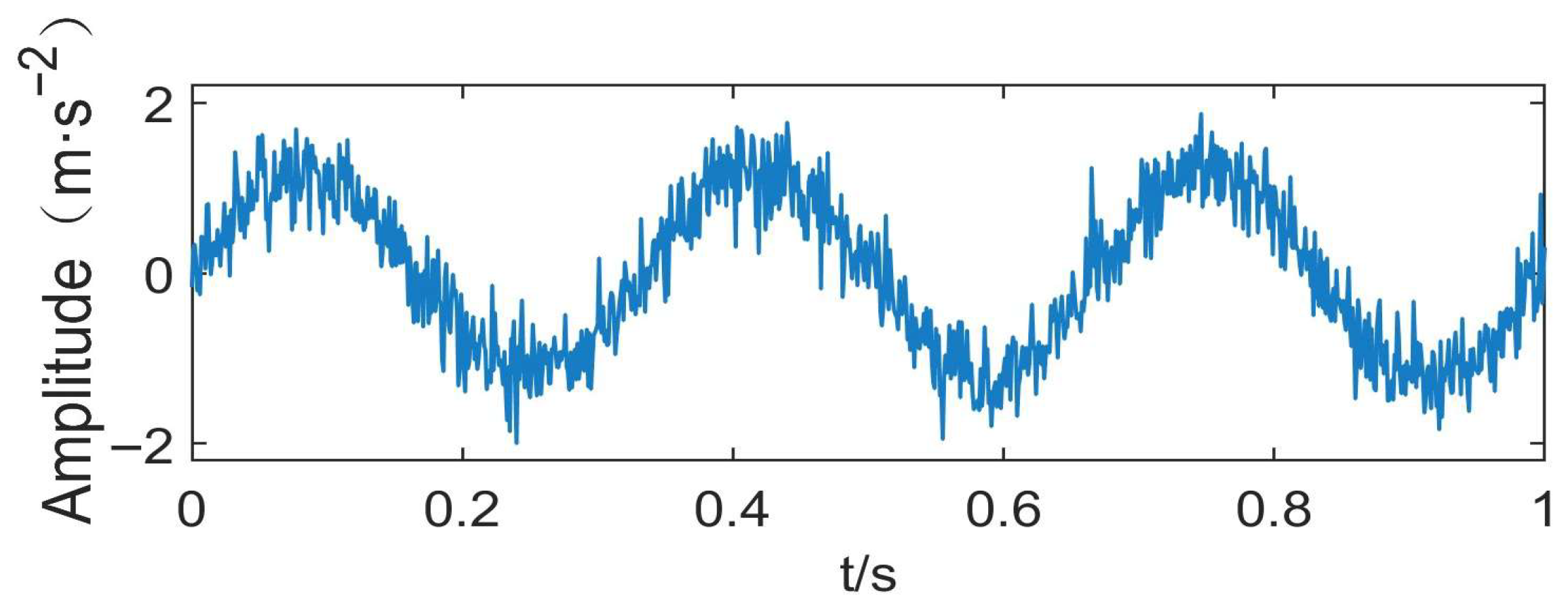
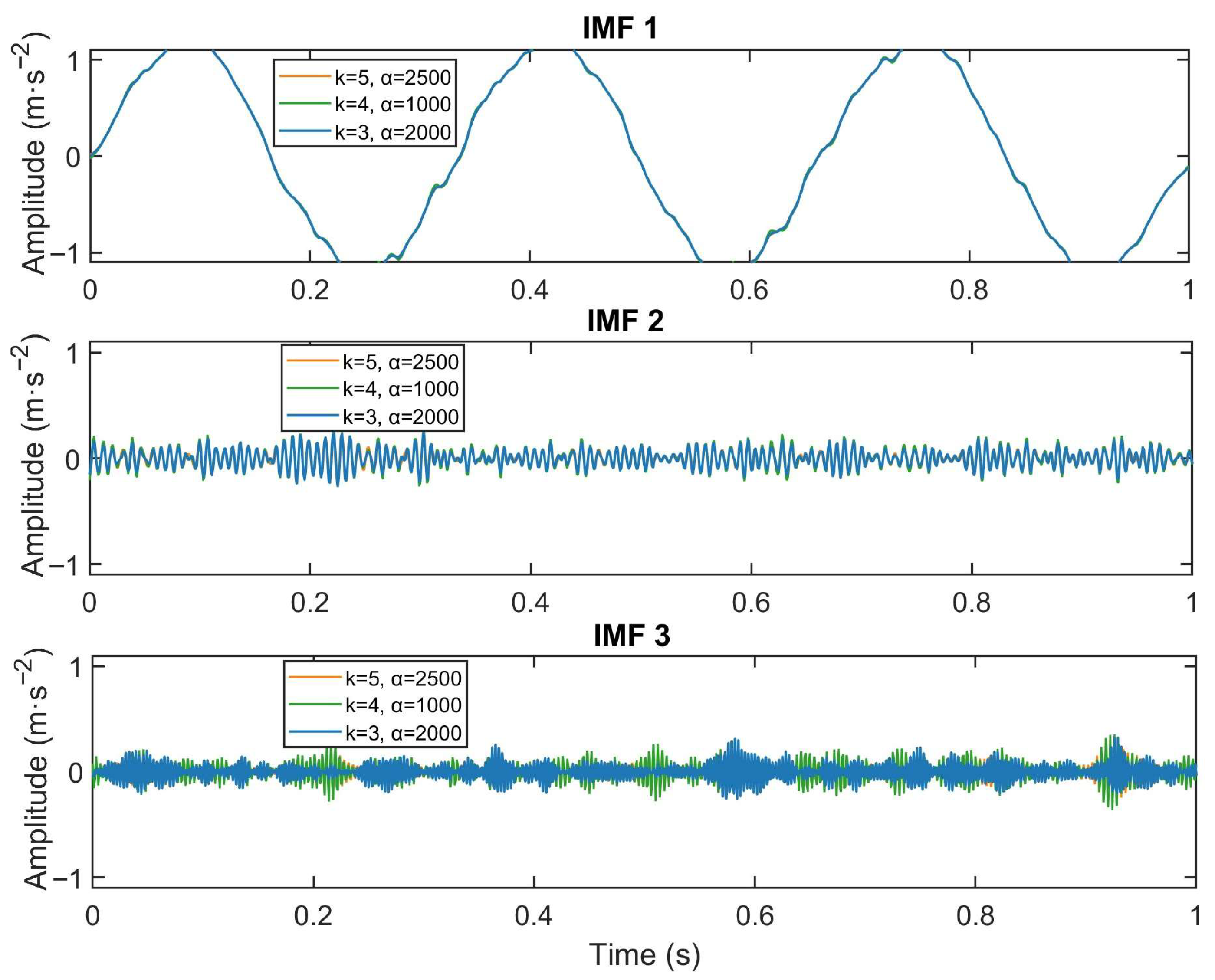
Parameter Sensitivity Analysis
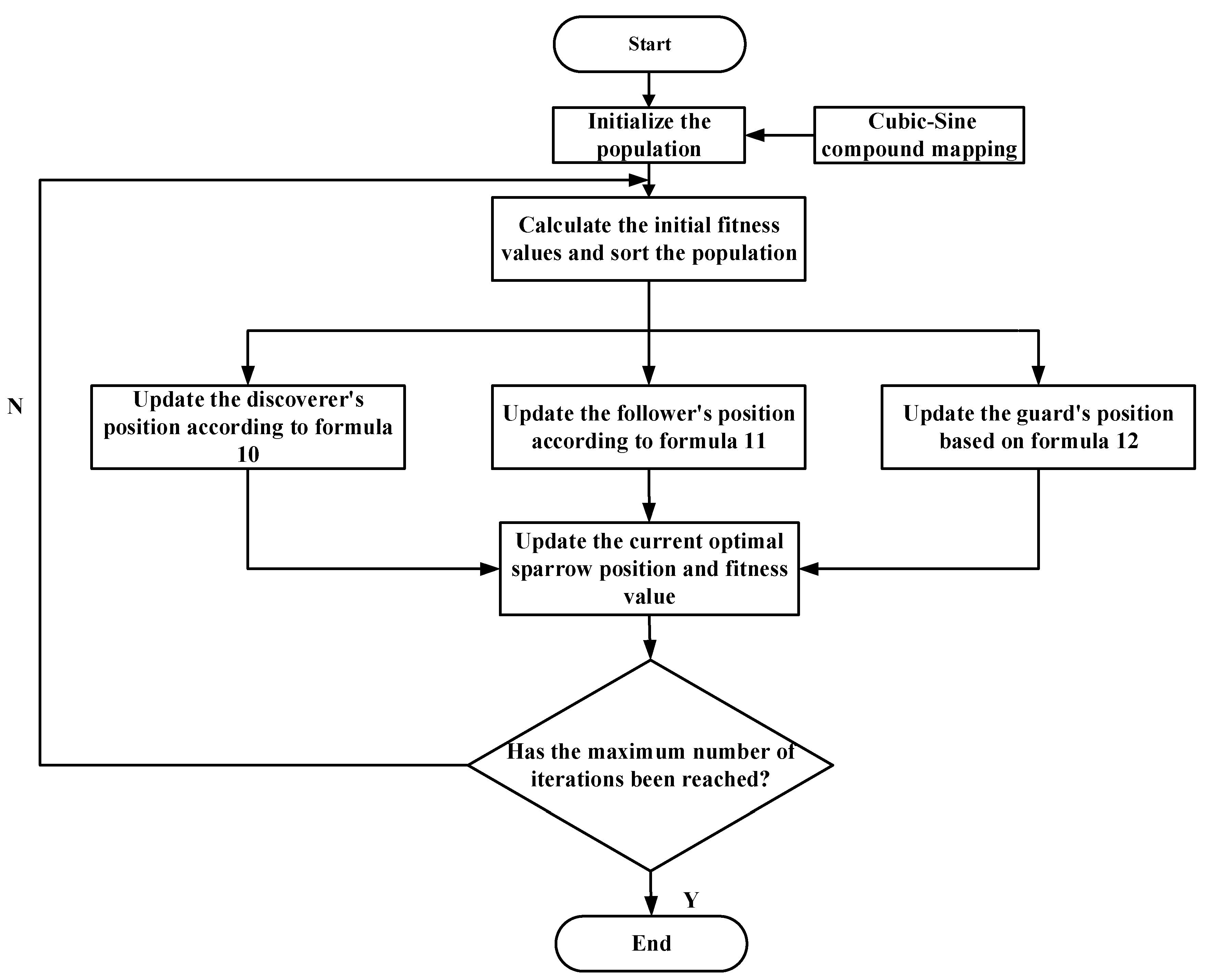
2.2. LOCSSA
- Cubic–Sine Chaotic Initialization
- 2.
- Osprey-inspired Global Exploration
- 3.
- Hybrid Mutation for Local Refinement
- 4.
- Levy-flight-assisted Local Refinement
2.3. Parameter Optimization of VMD Using LOCSSA
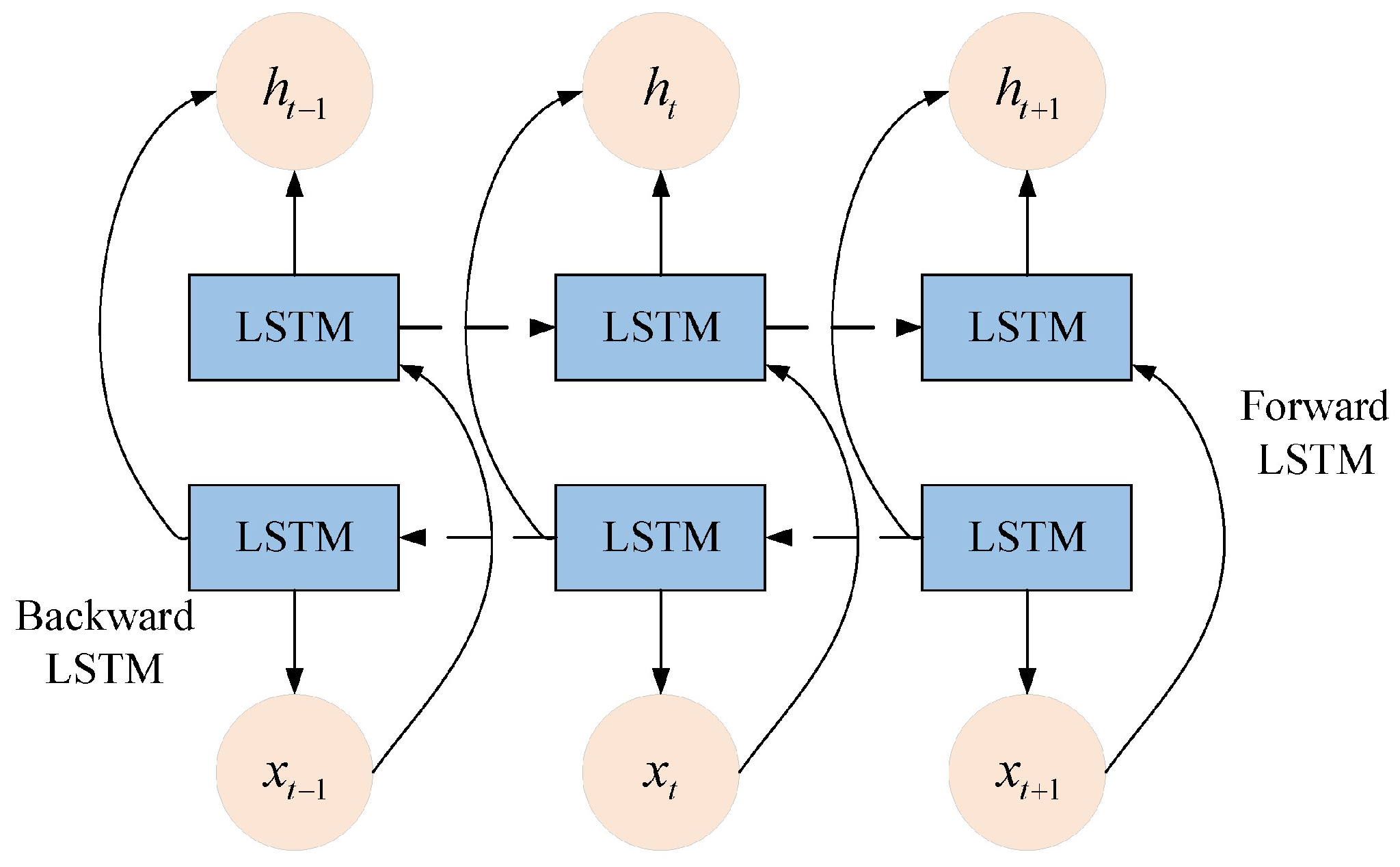
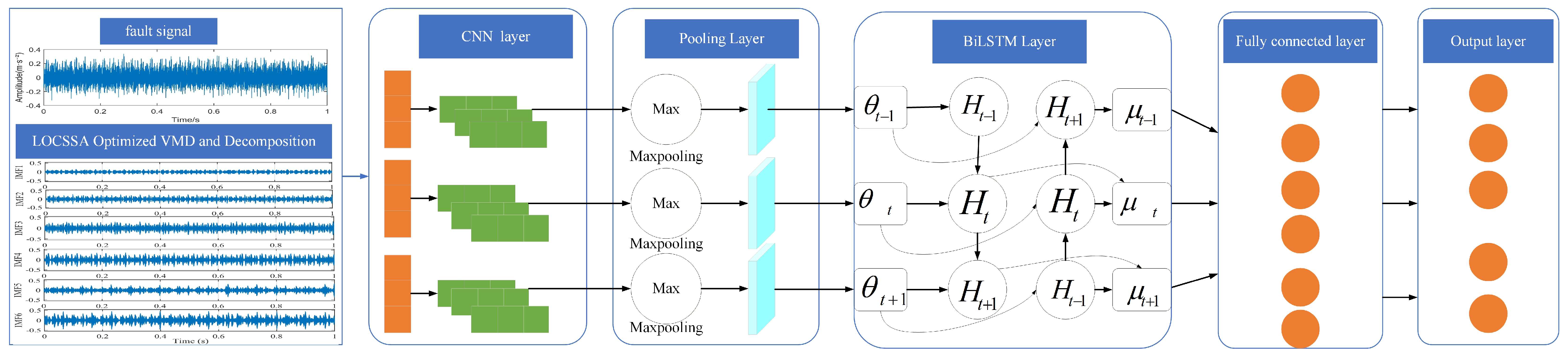
2.4. Fault Diagnosis Model Based on CNN-BiLSTM
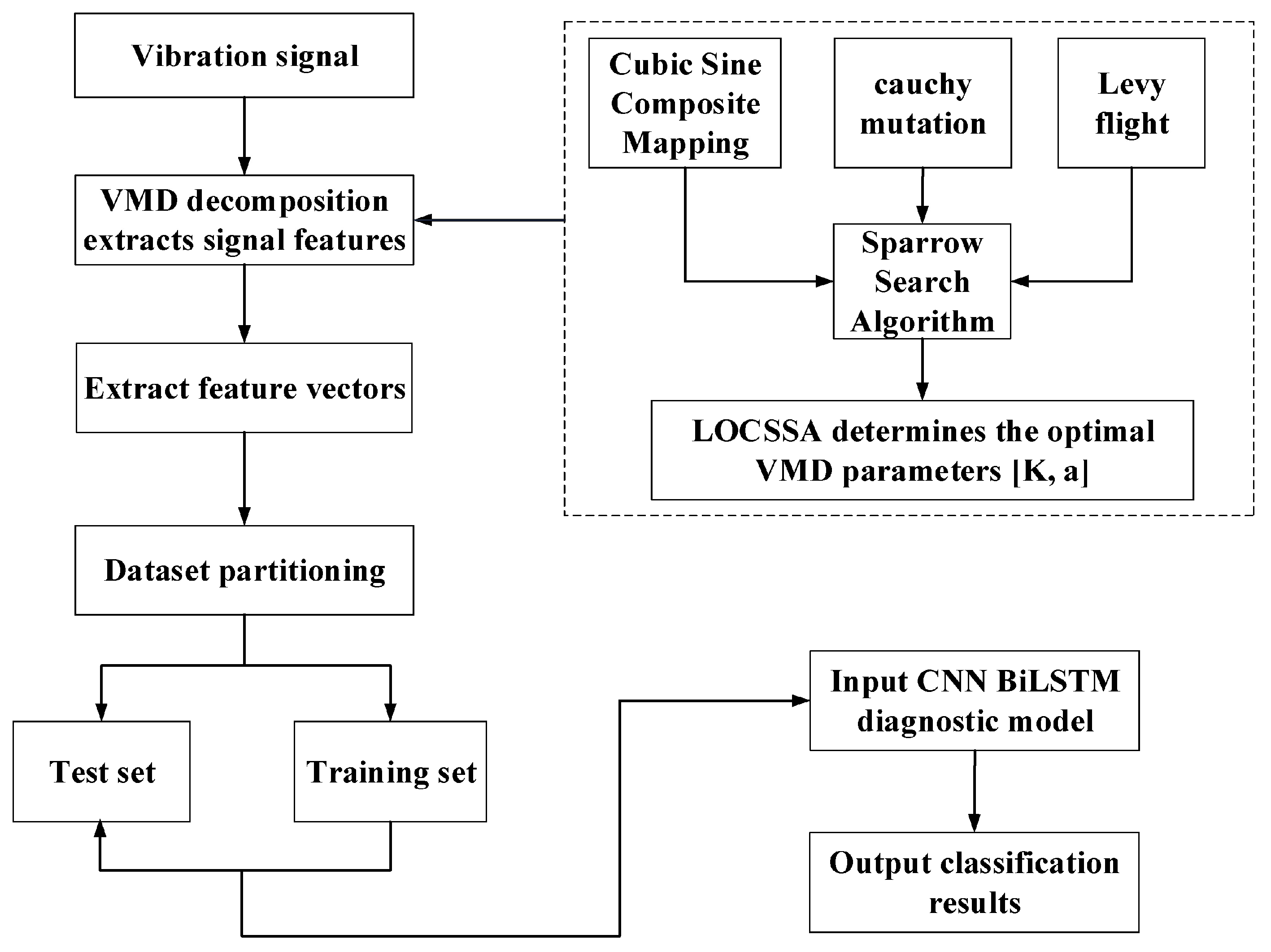
3. A Comprehensive Framework: LOCSSA-VMD-CNN-BiLSTM for Fault Diagnosis
- (1)
- Signal Acquisition
- (2)
- LOCSSA-based VMD Parameter Optimization
- (3)
- Signal Decomposition and Feature Extraction
- (4)
- CNN-BiLSTM Feature Learning
- (5)
- Fault Classification and Identification
4. Experimental Validation and Analysis
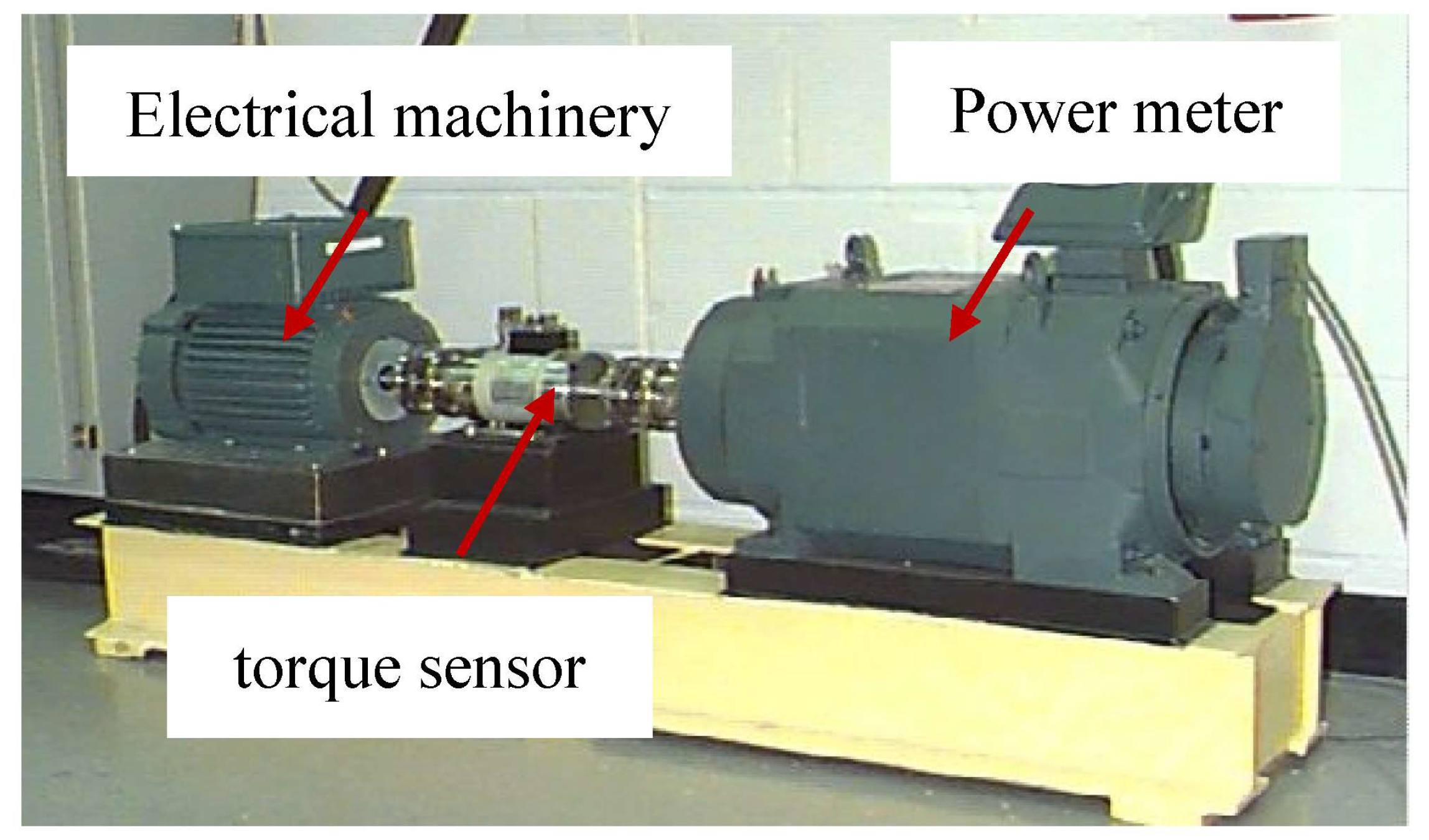
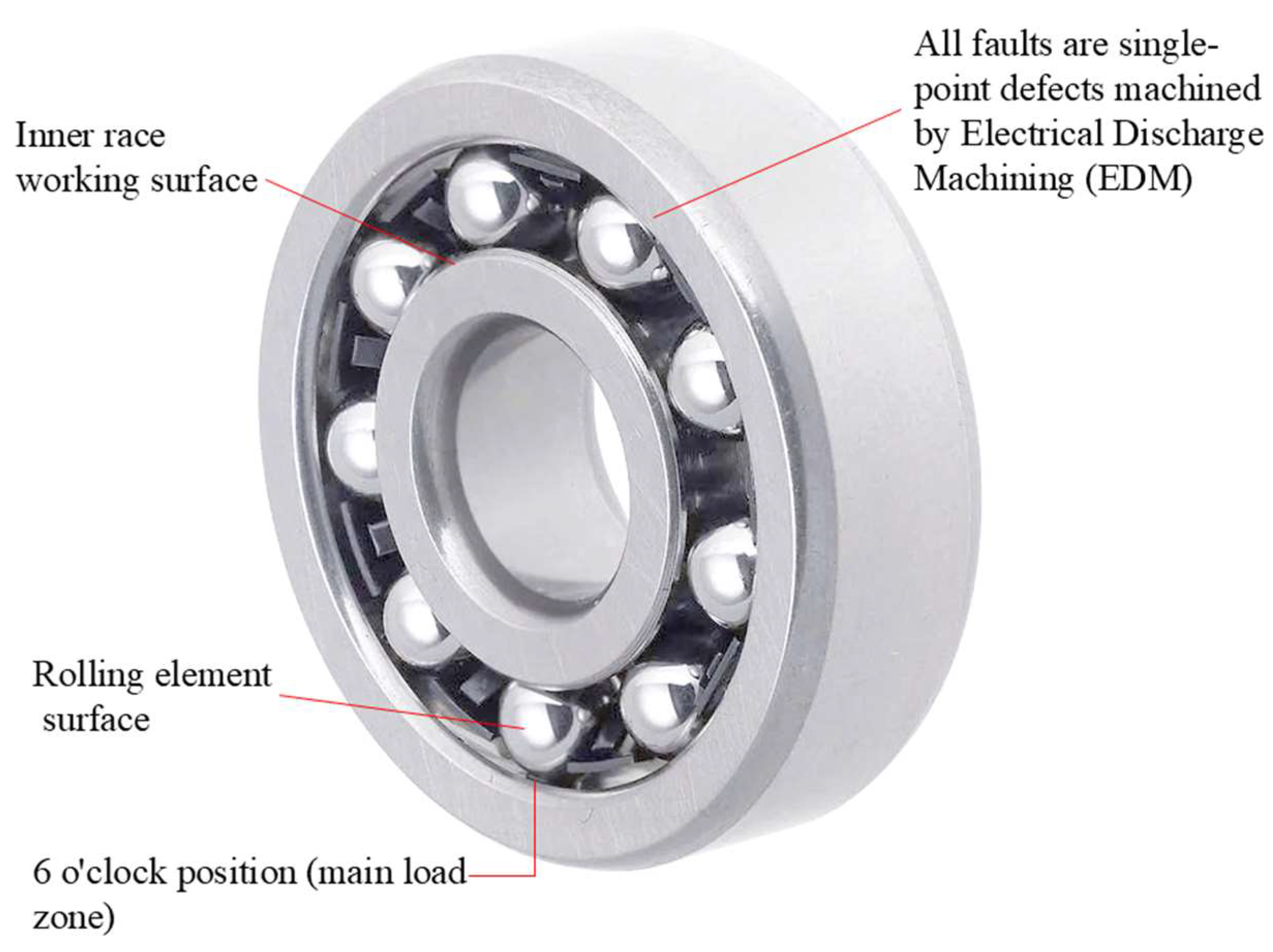
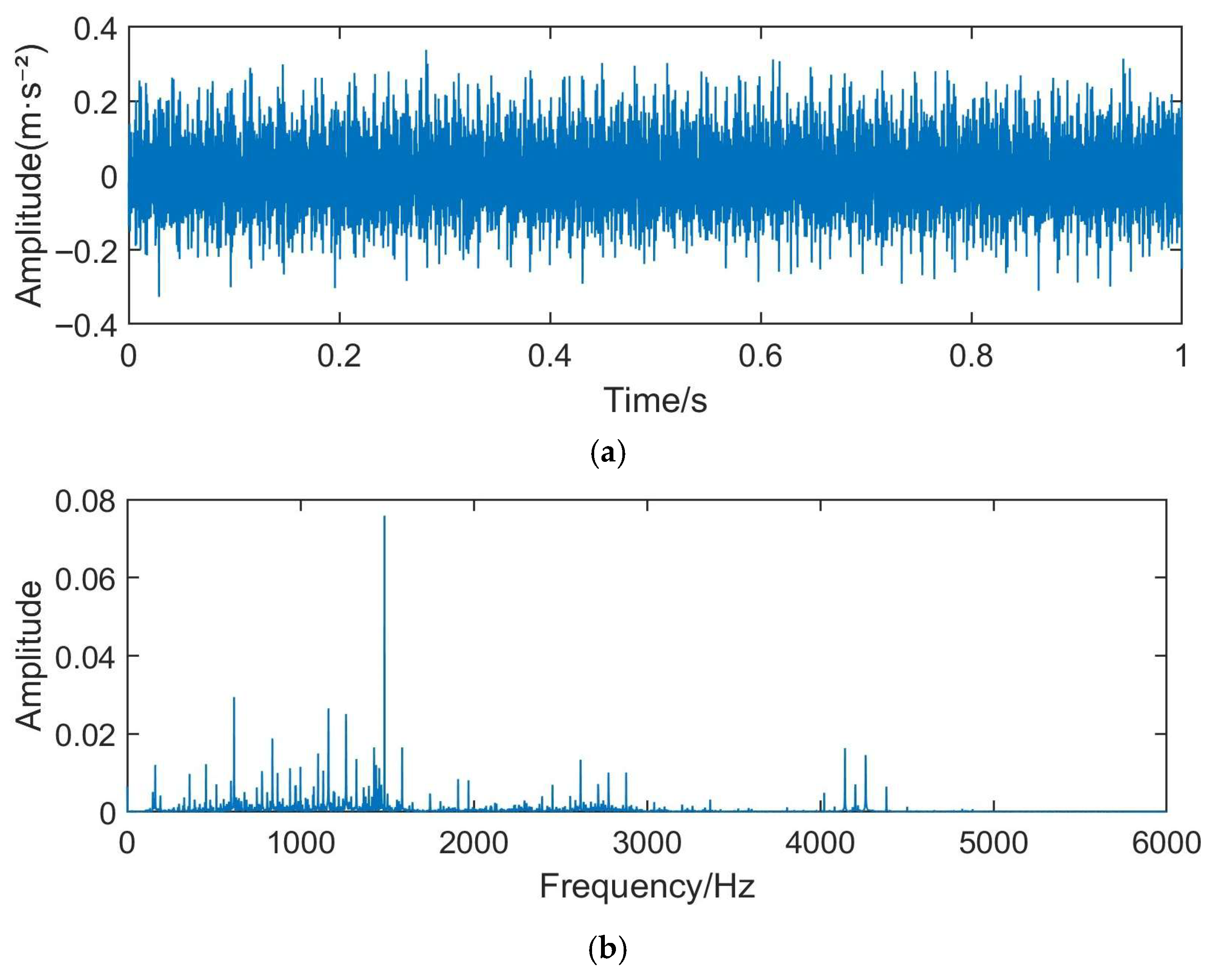
4.1. Dataset Construction and Description
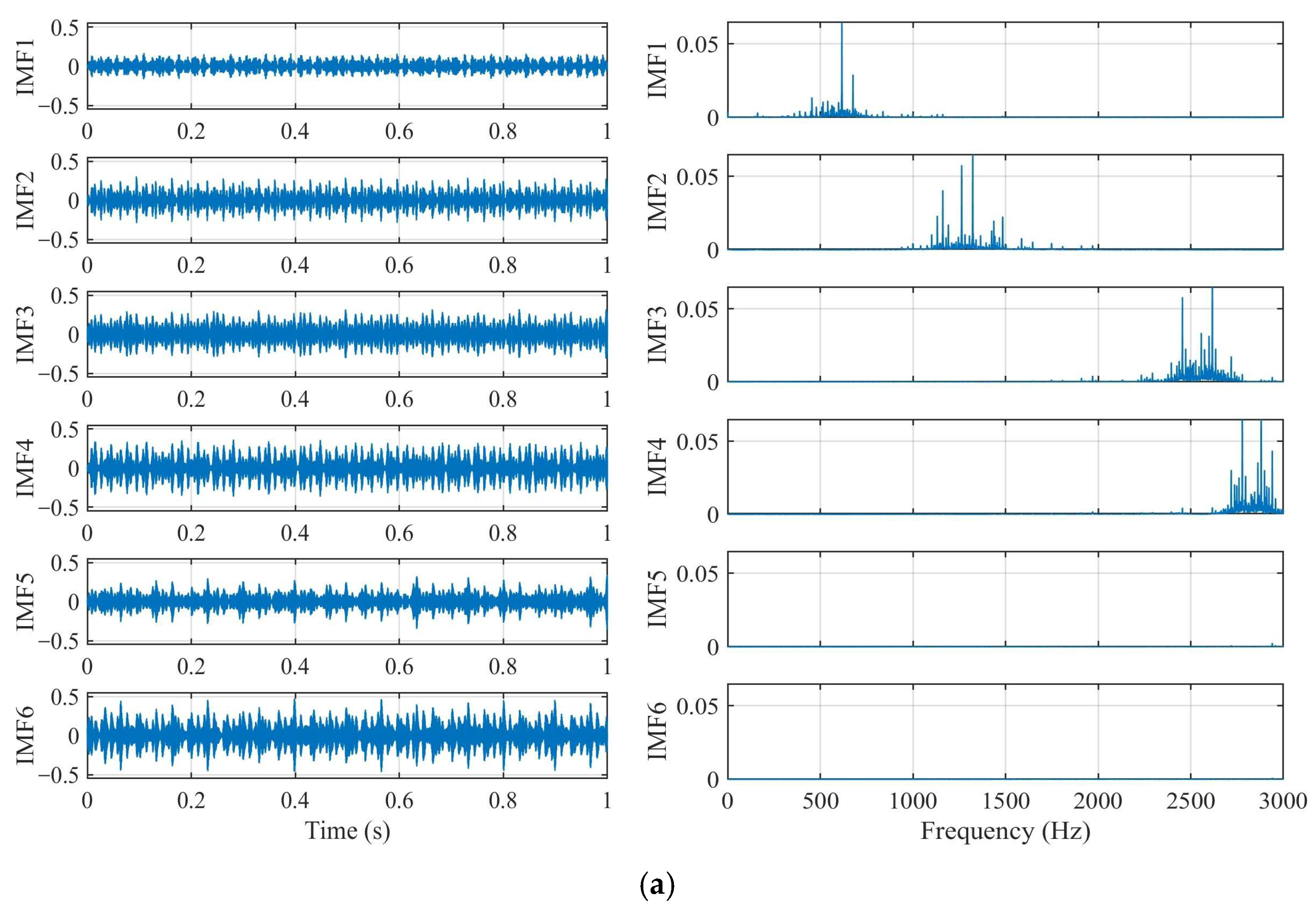
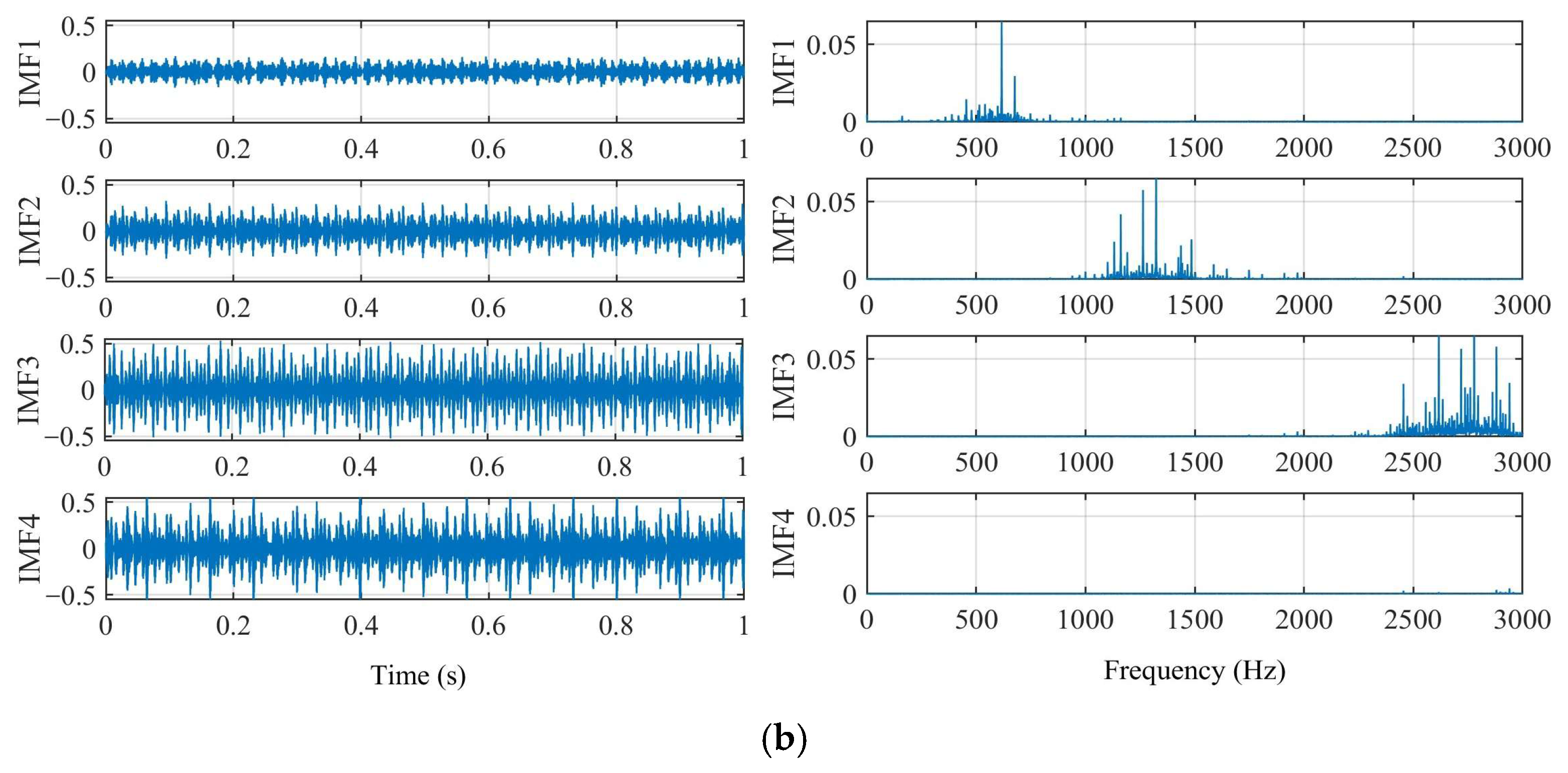
4.2. LOCSSA-VMD Parameter Optimization and Feature Extraction
- Parameter Optimization: The composite measure of Permutation Entropy and mutual information is used as the fitness function to optimize the VMD parameters, yielding the optimal decomposition level () and penalty factor ().
- Optimal Mode Extraction: The optimized parameters are then applied to perform VMD, from which the IMFs corresponding to the extremum of the composite entropy objective are selected as the most informative fault-related components.
4.3. Fault Classification Using LOCSSA-VMD-CNN-BiLSTM
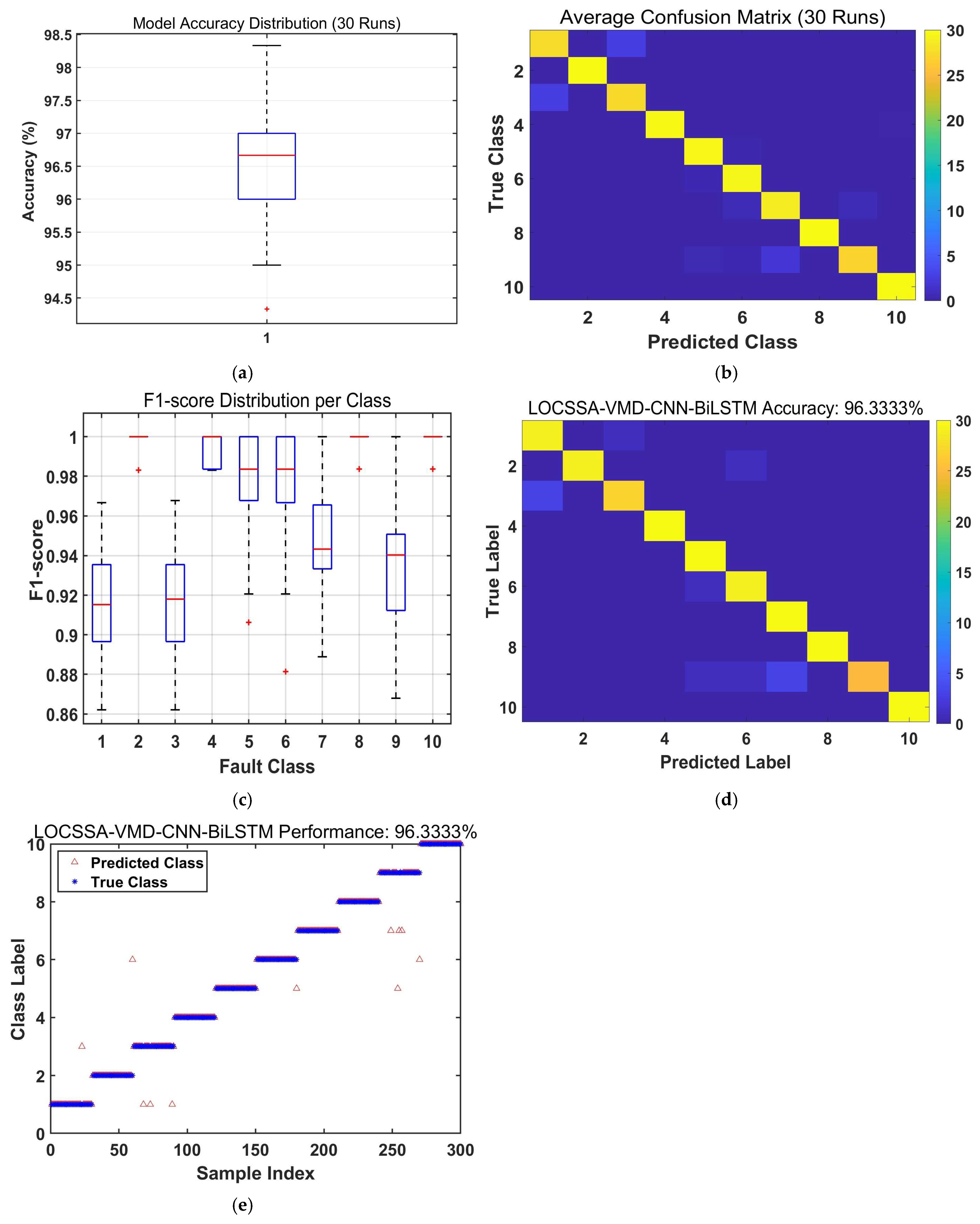
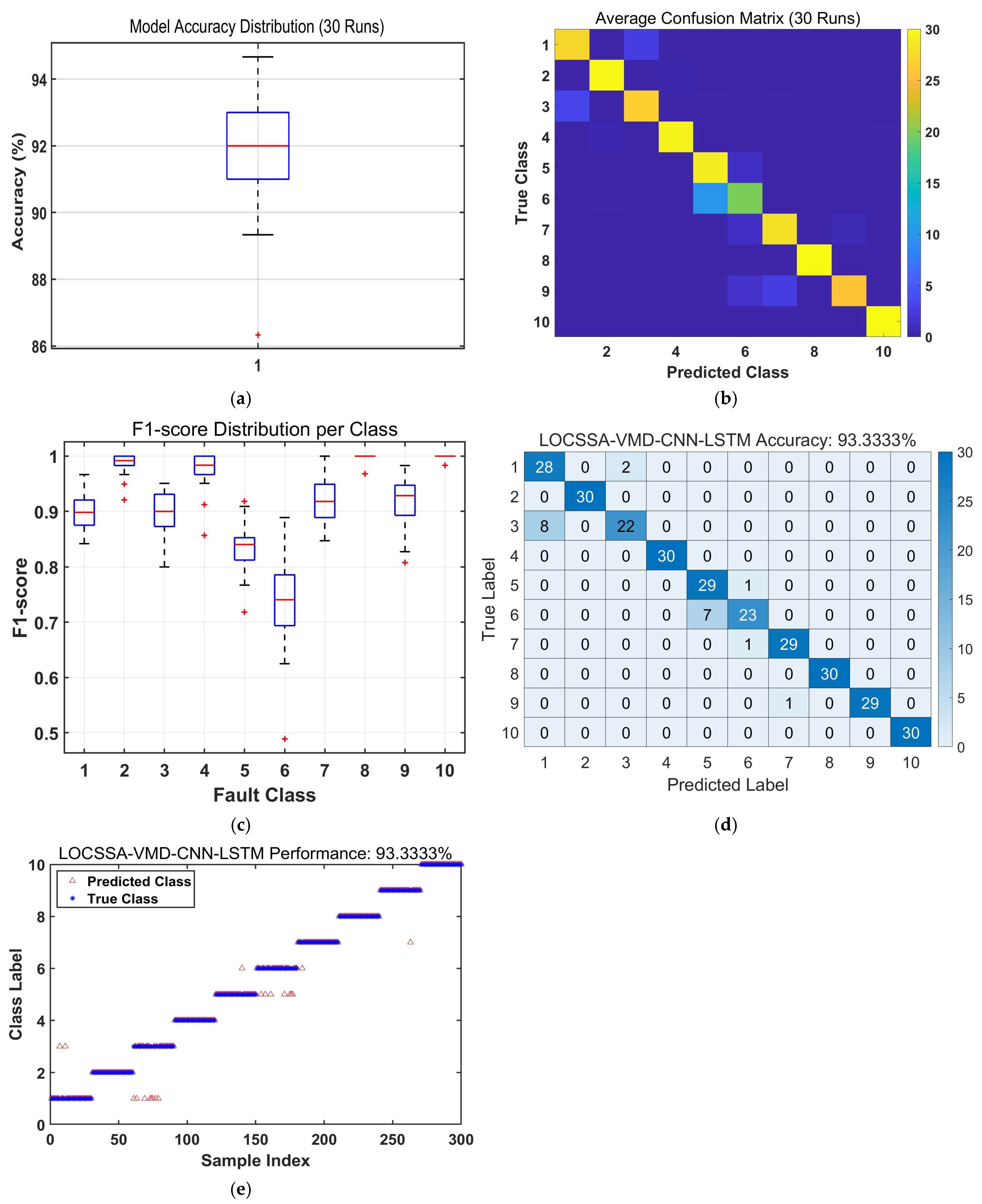
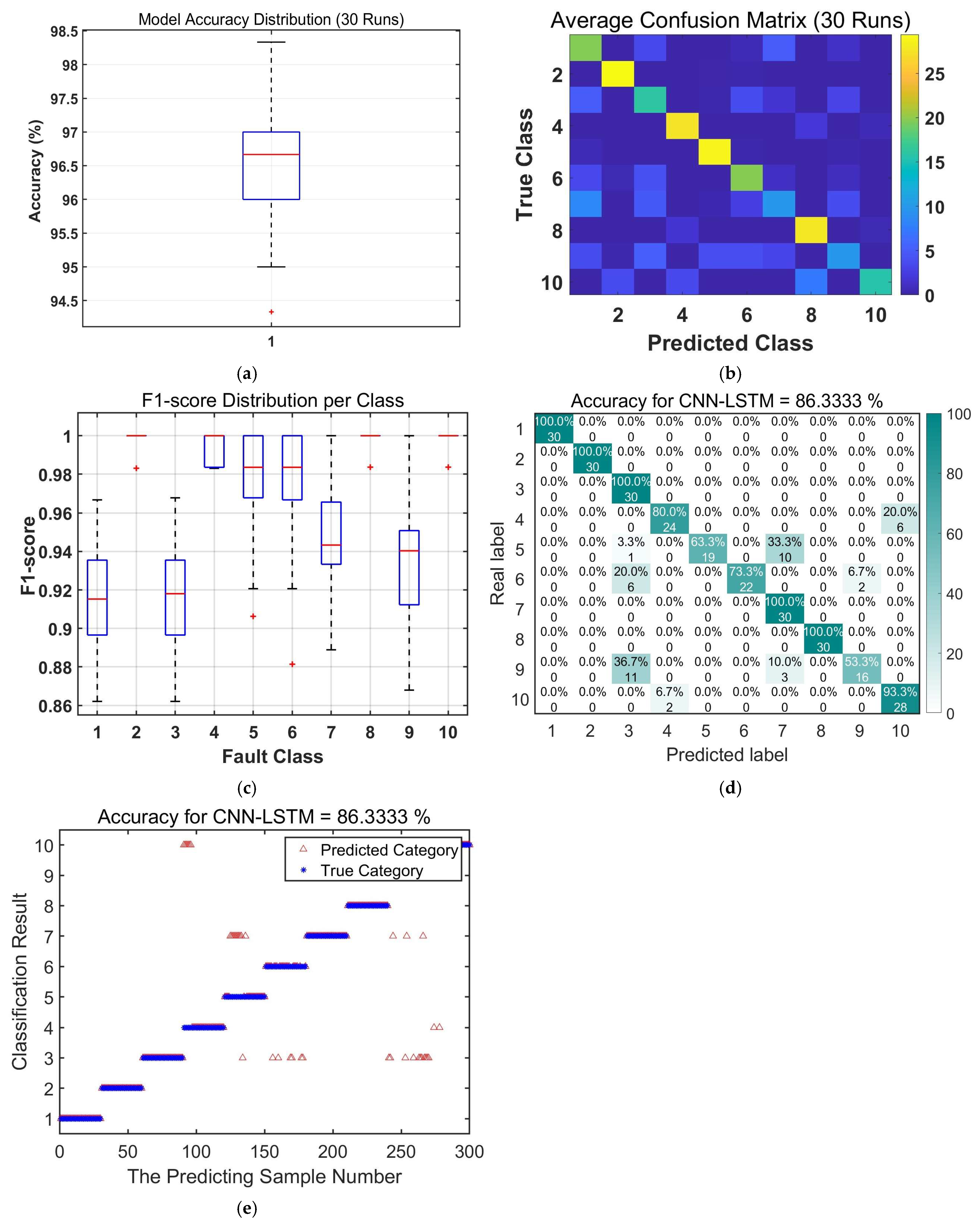
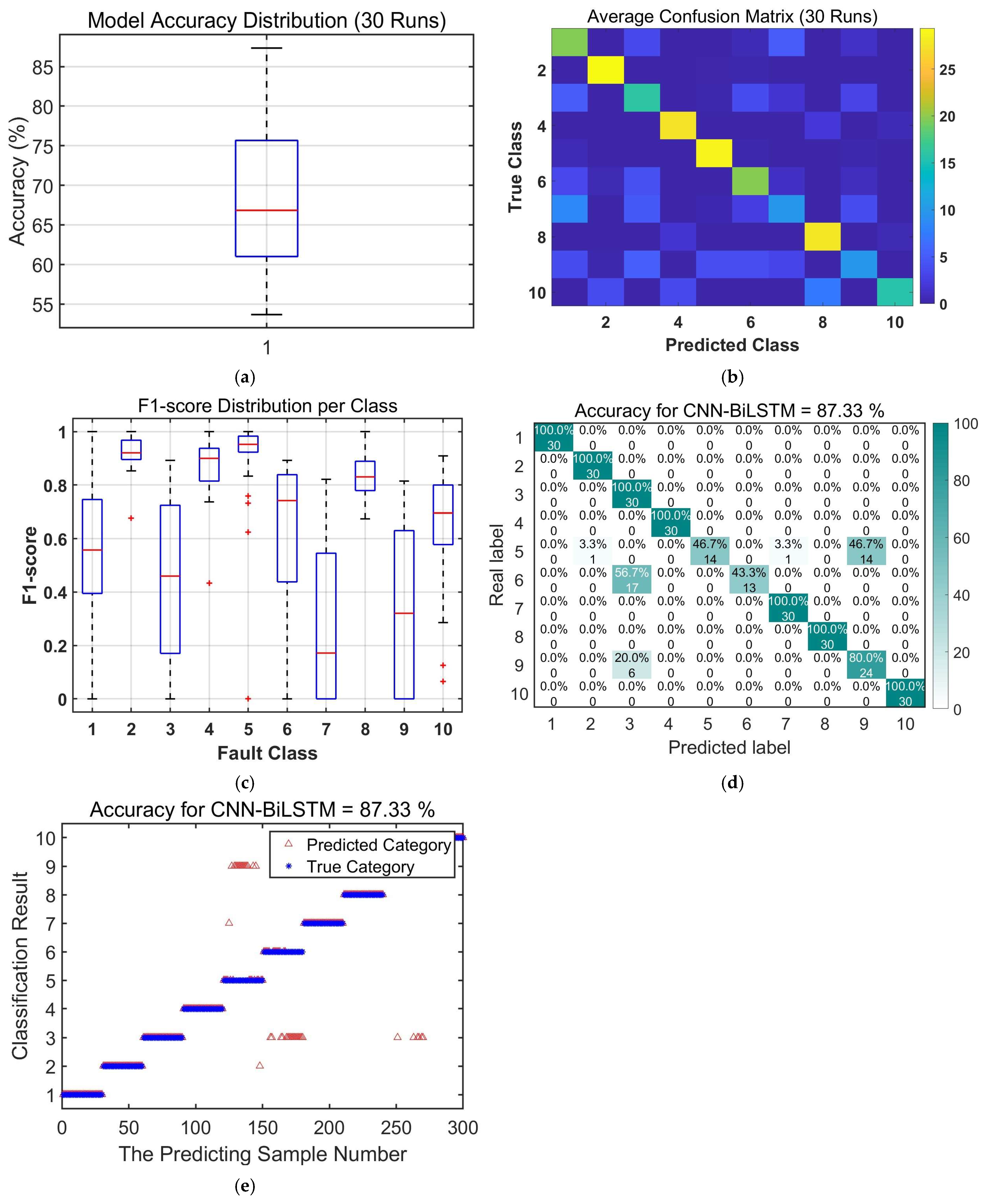
4.4. Experimental Results and Analysis
4.4.1. Overall Diagnostic Performance
4.4.2. Computational Complexity Analysis
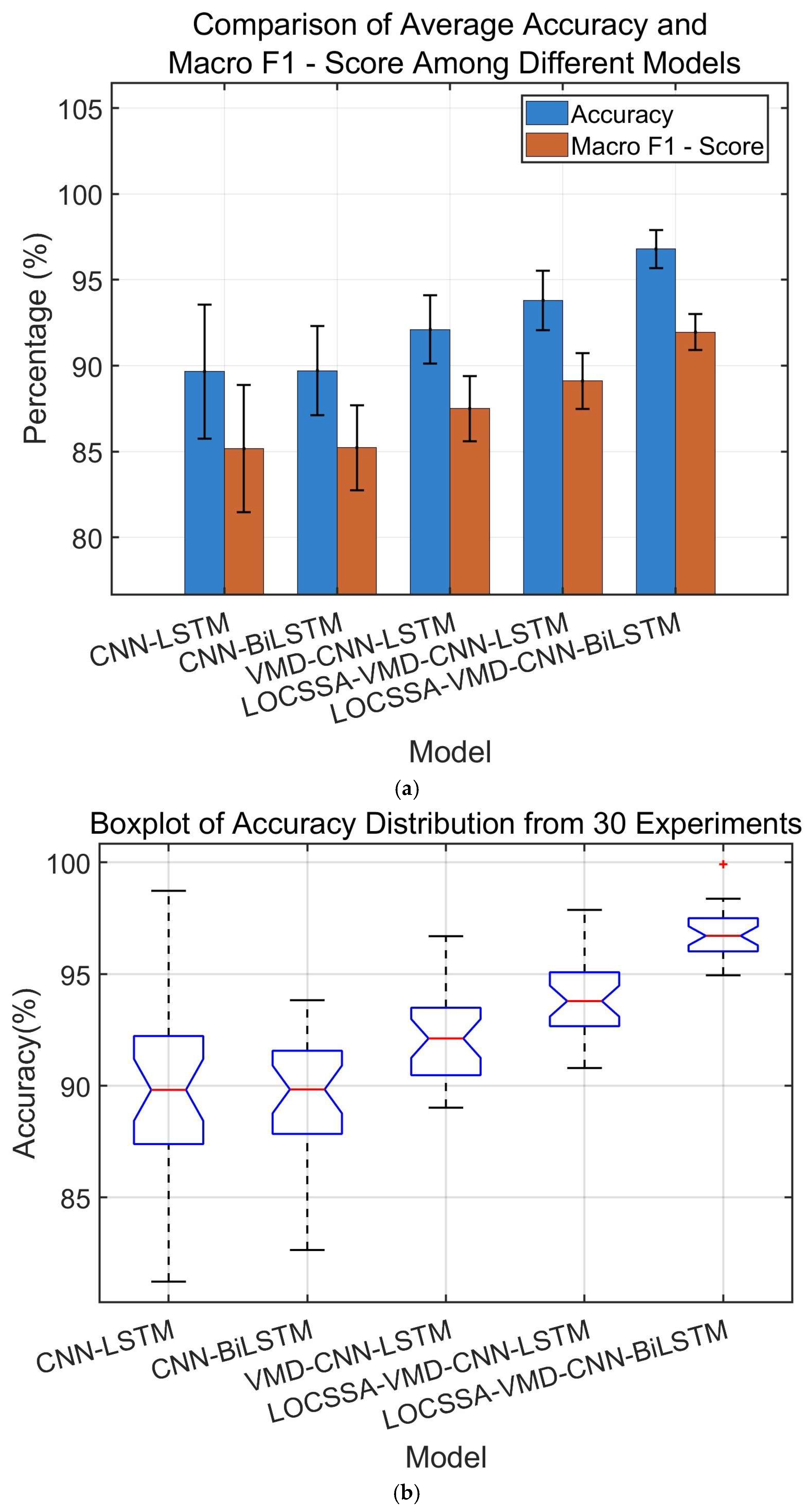
4.4.3. Module Contribution and Ablation Study
- (1)
- Average Performance Comparison
- (2)
- Stability Analysis
- (3)
- Statistical Significance Analysis
5. Conclusions
- (1)
- To address the premature convergence problem of standard SSA, this paper proposes LOCSSA with four synergistic enhancements: Cubic–Sine chaotic initialization, OOA-inspired producer update, Cauchy mutation-based follower perturbation, and Lévy flight-guided scout movement. These strategies balance global exploration and local exploitation capabilities. By adaptively optimizing VMD’s decomposition level and penalty factor , LOCSSA effectively eliminates the manual parameter tuning burden and improves decomposition quality.
- (2)
- The hybrid CNN-BiLSTM architecture combines CNN’s strength in local spatial feature extraction and BiLSTM’s advantage in long-range temporal dependency modeling, enabling comprehensive representation of fault characteristics in vibration signals.
- (3)
- The experimental results on the CWRU dataset show that the proposed method achieves state-of-the-art performance with 99.01% accuracy (7.35 pp higher than VMD-CNN-BiLSTM) and 99.6% F1-score. It also exhibits remarkable computational efficiency: a single training cycle takes only 11.43 s, which is 90.8% faster than CNN-LSTM and 93.3% faster than CNN-BiLSTM, with a 37% improvement in convergence speed. These results confirm the superior diagnostic accuracy, robustness and practicality of the proposed framework.
Author Contributions
Funding
Data Availability Statement
Conflicts of Interest
References
- Gao, S.; Zhao, N.; Chen, X.; Pei, Z.; Zhang, Y. A new approach to adaptive VMD based on SSA for rolling bearing fault feature extraction. Meas. Sci. Technol. 2024, 35, 035101. [Google Scholar] [CrossRef]
- Qi, J.; Karimi, H.R.; Uhlmann, Y.; Chen, Z.; Li, W.; Schullerus, G. Uncertainty-Aware Sensorless Anomaly Detection Using a Reliable Indicator From Position-Guided Multi-Step Deep Decomposition Network. Reliab. Eng. Syst. Saf. 2026, 271, 112258. [Google Scholar] [CrossRef]
- Farhan Ogaili, A.A.; Mohammed, K.A.; Jaber, A.A.; Al-Ameen, E.S. Automated Wind Turbines Gearbox Condition Monitoring: A Comparative Study of Machine Learning Techniques Based on Vibration Analysis. FME Trans. 2024, 52, 471–485. [Google Scholar] [CrossRef]
- Li, X.; Ma, Z.; Kang, D.; Li, X. Fault diagnosis for rolling bearing based on VMD-FRFT. Measurement 2020, 155, 107554. [Google Scholar] [CrossRef]
- Chen, Z.; Liu, B.; Yan, X.; Yang, H. An improved signal processing approach based on analysis mode decomposition and empirical mode decomposition. Energies 2019, 12, 3077. [Google Scholar] [CrossRef]
- Zhong, C.; Wang, J.S.; Sun, W.Z. Fault diagnosis method of rotating bearing based on improved ensemble empirical mode decomposition and deep belief network. Meas. Sci. Technol. 2022, 33, 085109. [Google Scholar] [CrossRef]
- Gao, S.; Li, T.; Zhang, Y.; Pei, Z. Fault diagnosis method of rolling bearings based on adaptive modified CEEMD and 1DCNN model. ISA Trans. 2023, 140, 309–330. [Google Scholar] [CrossRef]
- Li, Q.; Li, Y.; He, Q. Mine-microseismic-signal recognition based on LMD–PNN method. Appl. Sci. 2022, 12, 5509. [Google Scholar] [CrossRef]
- Lin, L.; Hongbing, J. Signal feature extraction based on an improved EMD method. Measurement 2009, 42, 796–803. [Google Scholar] [CrossRef]
- Lei, Y.; Li, N.; Lin, J.; Wang, S. Fault diagnosis of rotating machinery based on an adaptive ensemble empirical mode decomposition. Sensors 2013, 13, 16950–16964. [Google Scholar] [CrossRef]
- Sahu, P.K.; Rai, R.N. Fault diagnosis of rolling bearing based on improved denoising technique using complete ensemble empirical mode decomposition and adaptive thresholding method. J. Vib. Eng. Technol. 2023, 11, 123–135. [Google Scholar] [CrossRef]
- Zhou, H.; Yang, J.; Guo, G.; Xiang, H.; Chen, J. A signal filtering and feature enhancement method based on ensemble local mean decomposition and adaptive morphological filtering. Meas. Sci. Technol. 2023, 34, 075105. [Google Scholar] [CrossRef]
- Dragomiretskiy, K.; Zosso, D. Variational mode decomposition. IEEE Trans. Signal Process. 2014, 62, 531–544. [Google Scholar] [CrossRef]
- Zhang, S.; Liu, G.; Sun, S.; Cai, J. Deep Learning Method Based on Multivariate Variational Mode Decomposition for Classification of Epileptic Signals. Brain Sci. 2025, 15, 933. [Google Scholar] [CrossRef]
- Li, Y.; Xu, Y.; Zhang, B. An adaptive variational mode decomposition method for noise reduction in non-stationary signals. Signal Process. 2022, 194, 108486. [Google Scholar]
- Zhang, J.; Liu, Y.; Wang, H.; Li, X. Variational mode decomposition-based approach for monitoring the degradation of lithium-ion battery electrodes. J. Electrochem. Soc. 2023, 169, 160549. [Google Scholar]
- He, F.; Zhou, J.; Feng, Z.; Liu, G.; Yang, Y. A hybrid short-term load forecasting model based on variational mode decomposition and long short-term memory networks considering relevant factors with Bayesian optimization algorithm. Appl. Energy 2019, 237, 103–116. [Google Scholar] [CrossRef]
- Wang, Y.; Chen, Q.; Li, X. A novel parameter optimization method for variational mode decomposition based on swarm intelligence. J. Signal Process. Syst. 2021, 93, 107–120. [Google Scholar]
- Liu, B.; Wang, X.; Liu, F. An improved variational mode decomposition method with adaptive parameters for fault diagnosis of rotating machinery. Mech. Syst. Signal Process. 2021, 152, 107404. [Google Scholar]
- Lei, F.; Ma, Z.; Zhang, Y.; Wang, S.; Zhang, L. An improved bearing fault diagnosis method based on variational mode decomposition and adaptive iterative filtering (VMD-AIF). J. Mech. Sci. Technol. 2023, 37, 2407–2418. [Google Scholar] [CrossRef]
- Li, C.; Liu, Y.Q.; Liao, Y.; Wang, J. A VME method based on the convergent tendency of VMD and its application in multi-fault diagnosis of rolling bearings. Measurement 2022, 200, 111360. [Google Scholar] [CrossRef]
- Li, H.; Liu, T.; Wu, X.; Chen, Q. An optimized VMD method and its applications in bearing fault diagnosis. Measurement 2020, 166, 108185. [Google Scholar] [CrossRef]
- Jiang, W.; Shan, Y.; Xue, X.; Ma, J.; Chen, Z.; Zhang, N. Fault Diagnosis for Rolling Bearing of Combine Harvester Based on Composite-Scale-Variable Dispersion Entropy and Self-Optimization Variational Mode Decomposition Algorithm. Entropy 2023, 25, 1111. [Google Scholar] [CrossRef]
- Guo, Y.; Ho, Y.K.; Zhao, X.; Zhang, C.; Long, S. An IGSA-VMD method for fault frequency identification of cylindrical roller bearing. Proc. Inst. Mech. Eng. Part C J. Mech. Eng. Sci. 2023, 237, 1234–1245. [Google Scholar] [CrossRef]
- Li, X.; Jiang, H.; Niu, M.; Wang, R. An enhanced selective ensemble deep learning method for rolling bearing fault diagnosis with beetle antennae search algorithm. Mech. Syst. Signal Process. 2020, 142, 106752. [Google Scholar] [CrossRef]
- Zhou, J.; Wu, S.S.; Liu, T.; Wu, X. Application of IPSO-MCKD-IVMD-CAF in the compound fault diagnosis of rolling bearing. Meas. Sci. Technol. 2022, 34, 035113. [Google Scholar] [CrossRef]
- Zhou, J.; Xiao, M.; Niu, Y.; Ji, G. Rolling bearing fault diagnosis based on WGWOA-VMD-SVM. Sensors 2022, 22, 6281. [Google Scholar] [CrossRef] [PubMed]
- Poli, R.; Kennedy, J.; Blackwell, T. Particle swarm optimization: An overview. Swarm Intell. 2007, 1, 33–57. [Google Scholar] [CrossRef]
- Zhang, M.; Li, C.; Wang, Y. A novel parameter optimization approach for variational mode decomposition based on grey wolf optimizer. Signal Process. 2020, 166, 107277. [Google Scholar]
- Wu, Z.; Chen, J. A genetic algorithm-based approach for parameter optimization in variational mode decomposition. Digit. Signal Process. 2021, 104, 103035. [Google Scholar]
- Hang, X.; Lu, Z.; Yao, Q.; Jiang, D. A novel unbalanced signal extraction method based on quadratic SSA-VMD for micro-motor rotor. J. Mech. Sci. Technol. 2024, 38, 3327–3338. [Google Scholar] [CrossRef]
- Li, Y.; Tang, B.; Jiang, X.; Yi, Y. Bearing fault feature extraction method based on GA-VMD and center frequency. Math. Probl. Eng. 2022, 2022, 2058258. [Google Scholar] [CrossRef]
- Shen, J.; Wang, Y.; Zhu, H.; Zhang, L.; Tang, Y. AGWO-PSO-VMD-TEFCG-AlexNet bearing fault diagnosis method under strong noise. Measurement 2025, 242, 116259. [Google Scholar] [CrossRef]
- Shen, W.; Wang, C.; Huang, M.M.; Li, B.; Chen, Z. Multiple complex construction noise signal decomposition and prediction methods: Based on WOA-VMD and stacked LSTM. Measurement 2025, 256, 118201. [Google Scholar] [CrossRef]
- Xue, J.; Shen, B. A survey on sparrow search algorithms and their applications. Int. J. Syst. Sci. 2024, 55, 814–832. [Google Scholar] [CrossRef]
- Janssens, O.; Slavkovikj, V.; Vervisch, B.; Stockman, K.; Loccufier, M.; Verstockt, S.; Van de Walle, R.; Van Hoecke, S. Convolutional neural network based fault detection for rotating machinery. J. Sound Vib. 2016, 377, 331–345. [Google Scholar] [CrossRef]
- Zhang, L.Z.Q. Fault diagnosis of rotating machinery based on recurrent neural networks. Measurement 2021, 171, 108832. [Google Scholar] [CrossRef]
- Wang, Y.; Li, J.; Zhang, L. Fault diagnosis of rolling bearings based on variational mode decomposition and deep learning. IEEE Trans. Ind. Electron. 2023, 70, 10056–10065. [Google Scholar]
- Li, Y.; Li, H.; Liu, H. Fault diagnosis of rotating machinery based on variational mode decomposition and transfer learning. Mech. Syst. Signal Process. 2022, 168, 108618. [Google Scholar]
- Lu, C.; Wang, Z.; Zhou, B. Intelligent fault diagnosis of rolling bearing using hierarchical convolutional network based health state classification. Adv. Eng. Inform. 2017, 32, 139–151. [Google Scholar] [CrossRef]
- Appana, D.K.; Prosvirin, A.; Kim, J.M. Reliable fault diagnosis of bearings with varying rotational speeds using envelope spectrum and convolution neural networks. Soft Comput. 2018, 22, 6719–6729. [Google Scholar] [CrossRef]
- Dehghani, M.; Trojovský, P. Osprey optimization algorithm: A new bio-inspired metaheuristic algorithm for solving engineering optimization problems. Front. Mech. Eng. 2023, 8, 112–125. [Google Scholar] [CrossRef]
- Bandt, C.; Pompe, B. Permutation Entropy: A Natural Complexity Measure for Time Series. Phys. Rev. Lett. 2002, 88, 174102. [Google Scholar] [CrossRef] [PubMed]
- Tan, S.; Wang, A.; Shi, H.; Guo, L. Rolling bearing incipient fault detection via optimized VMD using mode mutual information. Int. J. Control Autom. Syst. 2022, 20, 1305–1315. [Google Scholar] [CrossRef]
- Liu, G.; Ma, Y.; Wang, N. Rolling Bearing Fault Diagnosis Based on SABO–VMD and WMH–KNN. Sensors 2024, 24, 5003. [Google Scholar] [CrossRef]
- Smith, W.A.; Randall, R.B. Rolling element bearing diagnostics using the Case Western Reserve University data: A benchmark study. Mech. Syst. Signal Process. 2015, 64, 100–131. [Google Scholar] [CrossRef]
- Zhou, Y.; Wang, H.; Wang, G.; Kumar, A.; Sun, W.; Xiang, J. Semi-Supervised Multiscale Permutation Entropy-Enhanced Contrastive Learning for Fault Diagnosis of Rotating Machinery. IEEE Trans. Instrum. Meas. 2023, 72, 3525610. [Google Scholar] [CrossRef]
- Wang, H.; Liu, R.; Zhang, Q. Enhanced Transient Feature Extraction for Bearing Fault Diagnosis Using Adaptive Spectral Kurtosis and CNN. Mech. Syst. Signal Process. 2022, 178, 109276. [Google Scholar]



| Kurtosis Value | Correlation Coefficient | |
|---|---|---|
| 3.2000 | 1.5571 | 0.9835 |
| 3.2000 | 4.5270 | 0.0883 |
| 3.2000 | 2.0842 | 0.0908 |
| 4.1000 | 1.5650 | 0.9874 |
| 4.1000 | 4.3809 | 0.0989 |
| 4.1000 | 2.2982 | 0.0962 |
| 4.1000 | 3.8816 | 0.0696 |
| 5.2500 | 1.5093 | 0.9617 |
| 5.2500 | 1.5363 | 0.2412 |
| 5.2500 | 2.7458 | 0.0600 |
| 5.2500 | 2.1215 | 0.0796 |
| 5.2500 | 3.8369 | 0.0565 |
| Bearing Bore Diameter | Bearing Outer Diameter | Width | Rolling Element (Steel Ball) Diameter | Pitch Diameter |
|---|---|---|---|---|
| 25 mm | 52 mm | 15 mm | 7.94 mm | 39.04 mm |
| Serial Number | Approximate Motor Speed (rpm) | Fault Location | Diameter (Inches/mm) | Depth (mm) |
|---|---|---|---|---|
| 1 | 1797 | Nothing | 0 | 0 |
| 2 | 1797 | Inner ring | 0.007/0.178 | 0.2794 |
| 3 | 1797 | Rolling element | 0.007/0.178 | 0.2794 |
| 4 | 1797 | Outer ring | 0.007/0.178 | 0.2794 |
| 5 | 1797 | Inner ring | 0.014/0.356 | 0.2794 |
| 6 | 1797 | Rolling element | 0.014/0.356 | 0.2794 |
| 7 | 1797 | Outer ring | 0.014/0.356 | 0.2794 |
| 8 | 1797 | Inner ring | 0.021/0.533 | 0.2794 |
| 9 | 1797 | Rolling element | 0.021/0.533 | 0.2794 |
| 10 | 1797 | Outer ring | 0.021/0.533 | 0.2794 |
| Method | Modal Aliasing Index (MAI) | Orthogonality Index (OI) |
|---|---|---|
| Classic VMD | 0.045 | 0.942 |
| LOCSSA-optimized VMD | 0.017 | 0.978 |
| Bearing Condition | Fault Diameter (Inches) | Average Value | Variance | Peak Value | Kurtosis | Valid Value | Peak Coefficient | Pulse Coefficient | Wave Coefficient | Clearance Coefficient |
|---|---|---|---|---|---|---|---|---|---|---|
| normal | None | 0.009923 | 0.000927 | 0.169214 | 2.979884 | 0.031924 | 5.283258 | 6.63355 | 1.25446 | 7.84412 |
| Inner ring | 0.007 | 0.004734 | 0.003799 | 0.364609 | 2.717178 | 0.061808 | 5.893275 | 7.304894 | 1.238797 | 8.572633 |
| 0.014 | 0.000005 | 0.000896 | 0.197762 | 3.342564 | 0.029797 | 6.633163 | 8.502502 | 1.280617 | 4.682755 | |
| 0.021 | 0.003095 | 0.007515 | 0.479384 | 2.567941 | 0.086727 | 5.52823 | 6.832818 | 1.235881 | 8.055463 | |
| Outer ring | 0.007 | 0.014225 | 0.002346 | 0.380429 | 4.423597 | 0.050642 | 7.49902 | 9.433869 | 1.250719 | 11.104407 |
| 0.014 | 0.013788 | 0.000131 | 0.062414 | 2.641709 | 0.018341 | 3.464431 | 9.108231 | 1.177352 | 10.169624 | |
| 0.021 | 0.021432 | 0.000088 | 0.926146 | 4.513655 | 0.118877 | 7.806272 | 10.467445 | 1.33885 | 12.784308 | |
| Rolling element | 0.007 | 0.006539 | 0.000799 | 0.175845 | 2.958229 | 0.028927 | 6.069184 | 7.613573 | 1.253223 | 8.998645 |
| 0.014 | 0.001227 | 0.000978 | 0.20031 | 3.423103 | 0.029845 | 6.443261 | 8.308892 | 1.276529 | 9.970708 | |
| 0.021 | 0.000754 | 0.01417 | 0.049823 | 2.708958 | 0.024872 | 2.18217 | 2.419123 | 1.081506 | 2.609861 |
| Algorithm | Accuracy | Recall | F1 Value | 30 Training Runs’ Time |
|---|---|---|---|---|
| CNN-LSTM | 0.8633 | 0.8692 | 0.8653 | 2200.82 s |
| CNN-BiLSTM | 0.8733 | 0.8633 | 0.8733 | 2239.18 s |
| LOCSSA-VMD-CNN-LSTM | 0.9333 | 0.9171 | 0.9163 | 116.05 s |
| LOCSSA-VMD-CNN-BiLSTM | 0.9633 | 0.9667 | 0.9653 | 134.04 s |
| Algorithm | Average Accuracy | Standard Deviation of Accuracy | Average Macro F1 | Standard Deviation of F1-Score | Comparison with the Previous Group |
|---|---|---|---|---|---|
| CNN-LSTM | 0.89656 | 3.9001 | 0.85173 | 3.7051 | - |
| CNN-BiLSTM | 0.89713 | 2.6029 | 0.85227 | 2.4727 | - |
| VMD-CNN-LSTM | 0.92111 | 2.0011 | 0.87505 | 1.9011 | {‘↑ (p < 0.05)’} |
| LOCSSA-VMD-CNN-LSTM | 0.93798 | 1.7225 | 0.89108 | 1.6364 | {‘↑ (p < 0.05)’} |
| LOCSSA-VMD-CNN-BiLSTM | 0.96796 | 1.1065 | 0.91056 | 1.0512 | {‘↑ (p < 0.05)’} |
Disclaimer/Publisher’s Note: The statements, opinions and data contained in all publications are solely those of the individual author(s) and contributor(s) and not of MDPI and/or the editor(s). MDPI and/or the editor(s) disclaim responsibility for any injury to people or property resulting from any ideas, methods, instructions or products referred to in the content. |
© 2026 by the authors. Licensee MDPI, Basel, Switzerland. This article is an open access article distributed under the terms and conditions of the Creative Commons Attribution (CC BY) license.
Share and Cite
Liu, F.; Yue, X. A Fault Diagnosis Method for Rolling Bearings Based on Enhanced Sparrow Search Algorithm-Optimized VMD and CNN-BiLSTM. Sensors 2026, 26, 3239. https://doi.org/10.3390/s26103239
Liu F, Yue X. A Fault Diagnosis Method for Rolling Bearings Based on Enhanced Sparrow Search Algorithm-Optimized VMD and CNN-BiLSTM. Sensors. 2026; 26(10):3239. https://doi.org/10.3390/s26103239
Chicago/Turabian StyleLiu, Fuqiuxuan, and Xiaofeng Yue. 2026. "A Fault Diagnosis Method for Rolling Bearings Based on Enhanced Sparrow Search Algorithm-Optimized VMD and CNN-BiLSTM" Sensors 26, no. 10: 3239. https://doi.org/10.3390/s26103239
APA StyleLiu, F., & Yue, X. (2026). A Fault Diagnosis Method for Rolling Bearings Based on Enhanced Sparrow Search Algorithm-Optimized VMD and CNN-BiLSTM. Sensors, 26(10), 3239. https://doi.org/10.3390/s26103239