Depth for Underwater Acoustic Detection in Deep-Sea (>5000 m) Complex Marine Environments Based on the Bellhop Model

Highlights
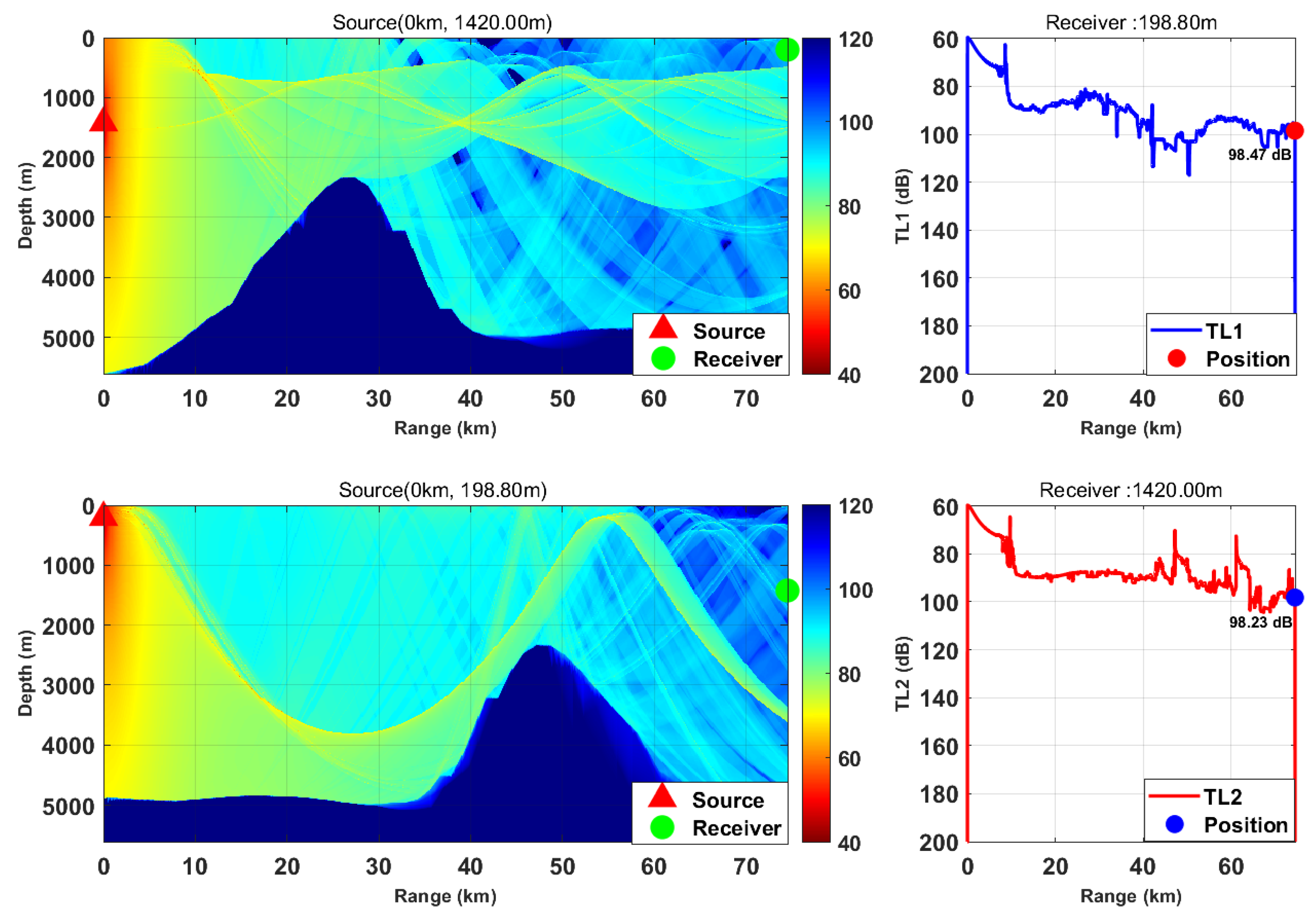
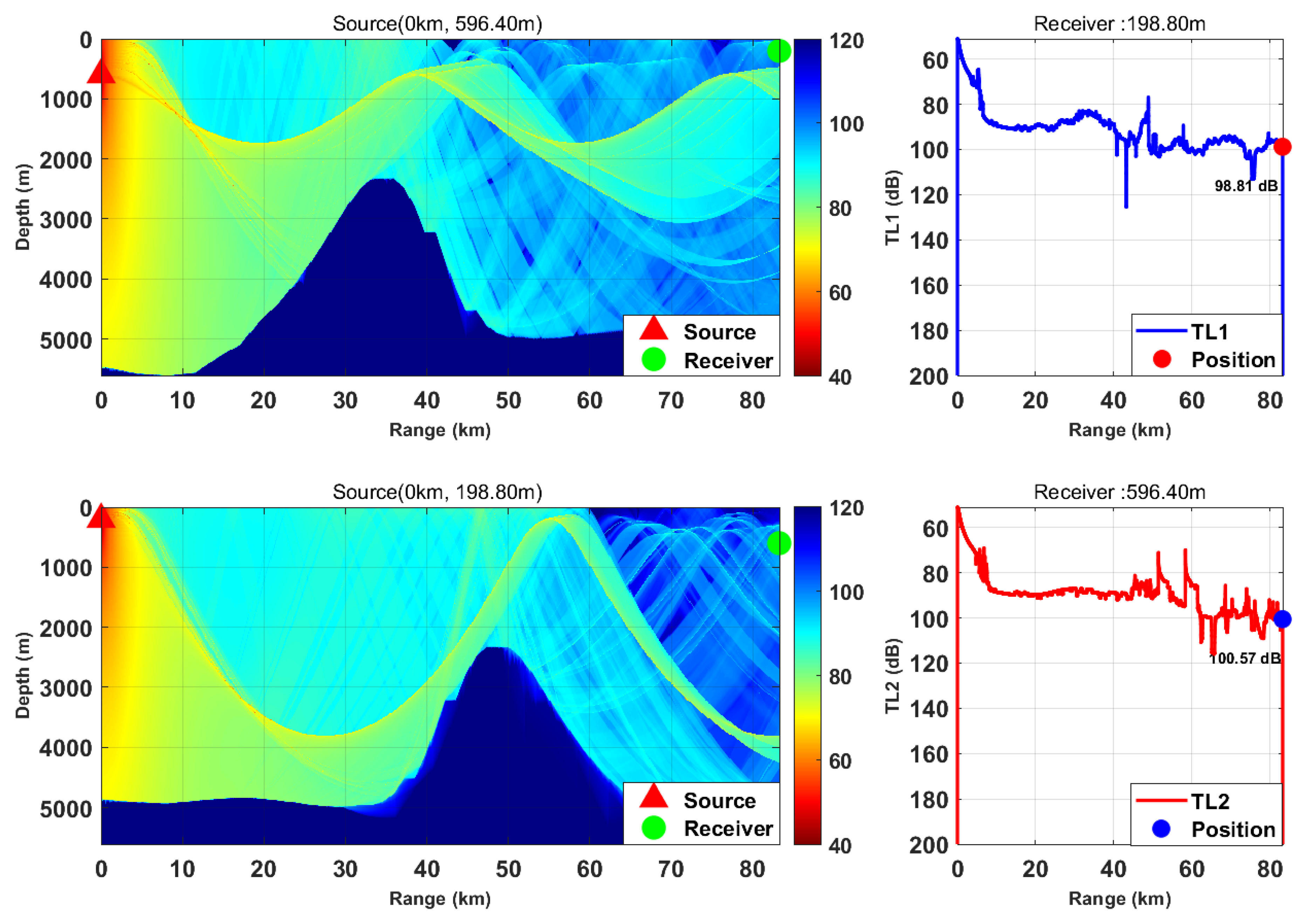
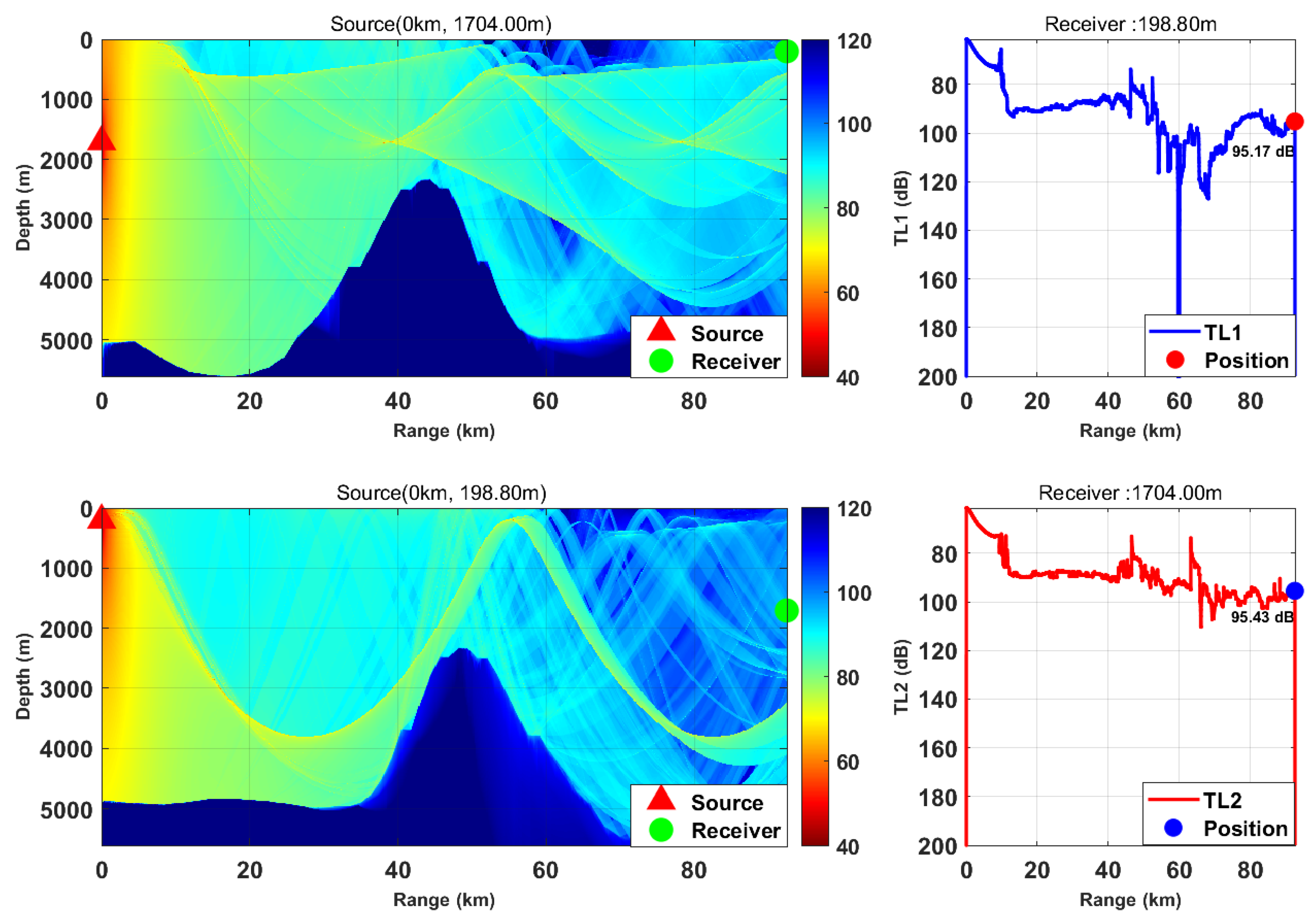
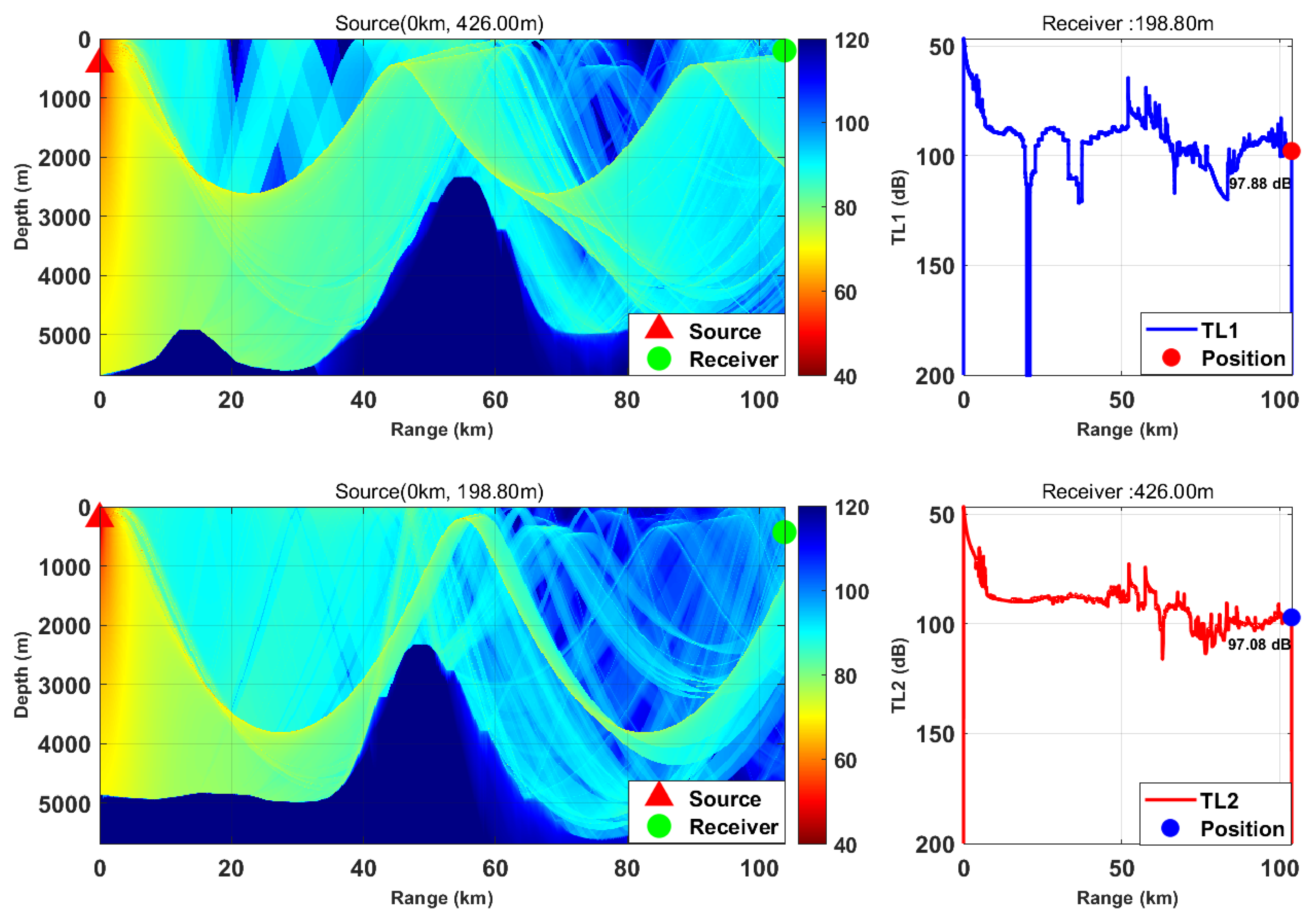
- Acoustic reciprocity is validated in deep-sea (>5000 m) complex seamount terrains with a maximum relative error of <1.2%, enabling simplified bidirectional transmission loss calculations for large-scale network planning, which expands its applicable boundary from simple waveguides to complex deep-sea environments; this enables the development of a novel, equivalent, superposition modeling framework for bidirectional transmission loss (TL), simplifying large-scale network planning calculations and filling the gap of quantitative verification in deep-sea complex environments.
- A critical non-linear sensitivity mechanism was identified for mid-layer sources (160–350 m), in which the detection range drops by ~50% and near-field coverage fragments when the transceiver depth difference exceeds a static threshold of ~185 m.
- The equivalent bidirectional TL modeling framework converts hard-to-calculate target-to-receiver TL into receiver-to-target TL, simplifying two-way TL calculation for transceivers at different positions to the superposition of TL from two sources at the same grid point.
- A robust engineering threshold of 150 m for transceiver depth difference is established by incorporating a safety margin against dynamic environmental fluctuations (e.g., internal waves), preventing catastrophic performance collapse in operational scenarios and filling the industry gap in quantitative deployment design for deep-sea acoustic detection.
- A layered deployment protocol is proposed, defining a 160–350 m “Optimal Detection Window” for long-range tasks while mandating strict depth constraints (<150 m) to ensure continuous near-field coverage and reliable 3D observation network design; the protocol provides flexible depth tolerance for shallow/deep sources, supporting reliable 3D observation network design.
Abstract
1. Introduction
2. Methodology
2.1. Theoretical Framework
2.1.1. Acoustic Reciprocity Theorem
2.1.2. Sonar Equation and Detection Criterion
2.2. Verification of Acoustic Reciprocity in Complex Environments
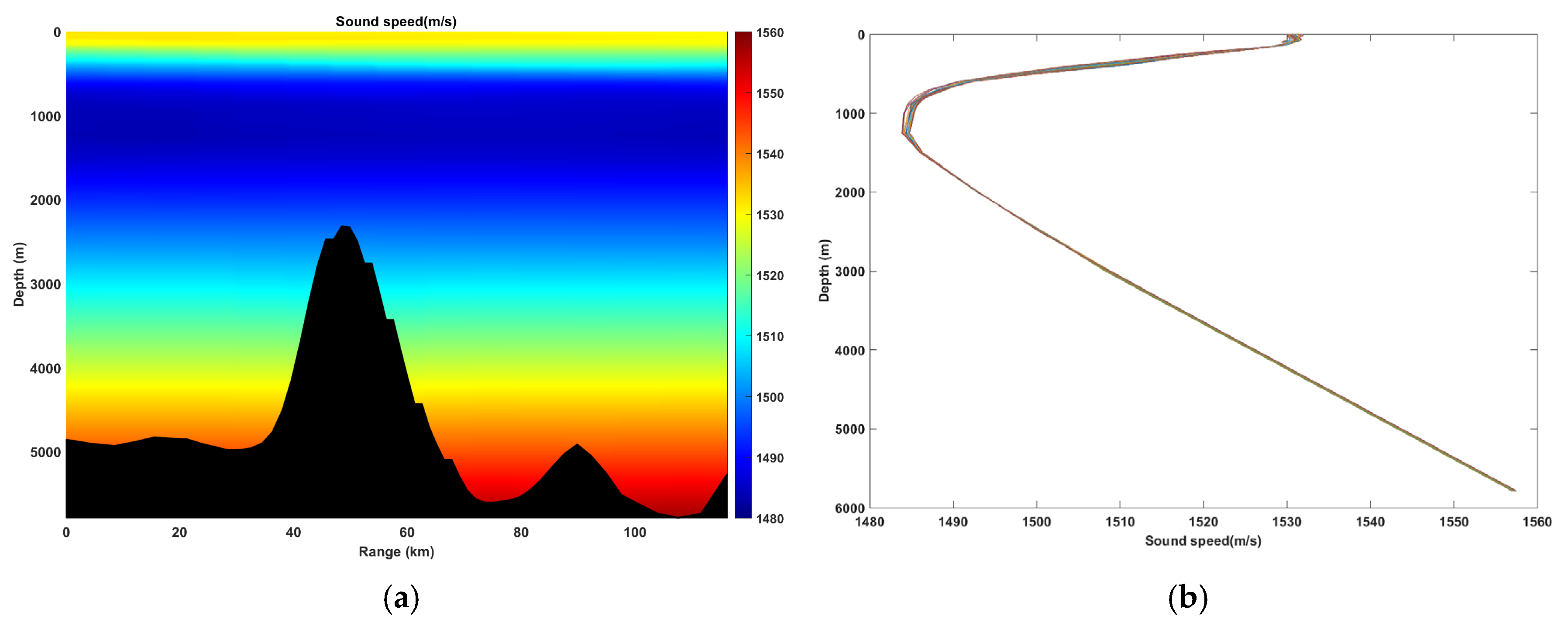
2.2.1. Environmental Model Construction
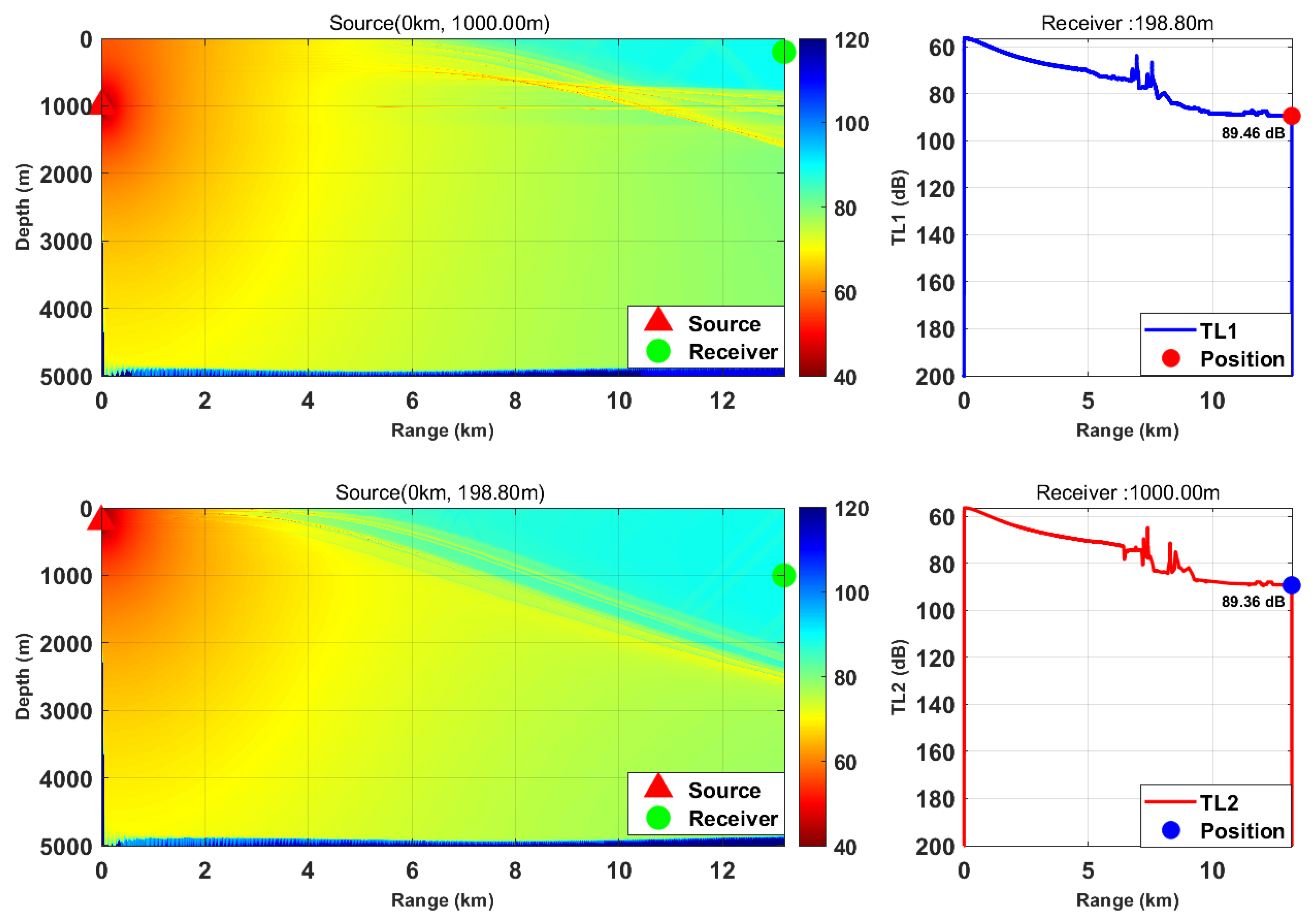
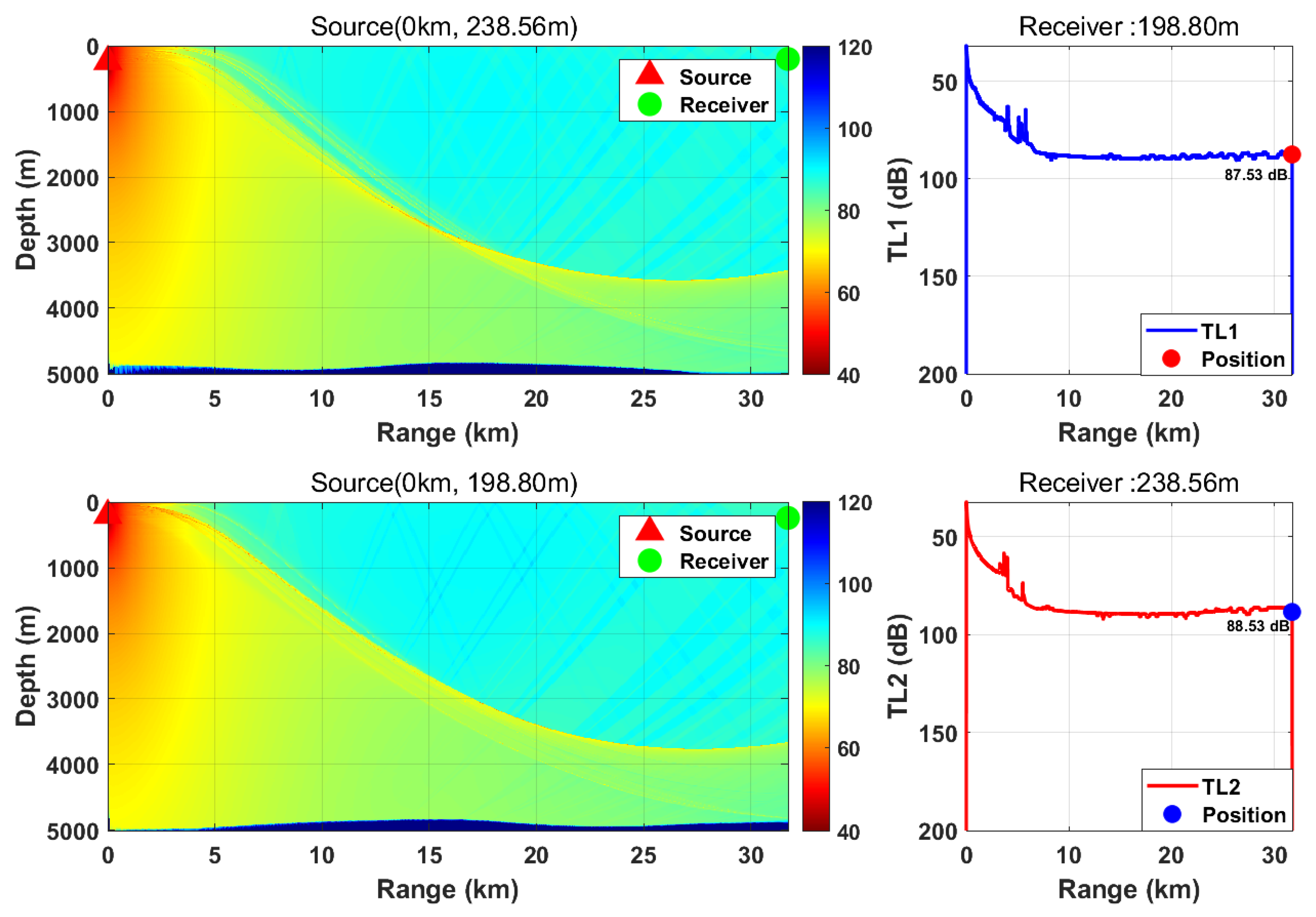
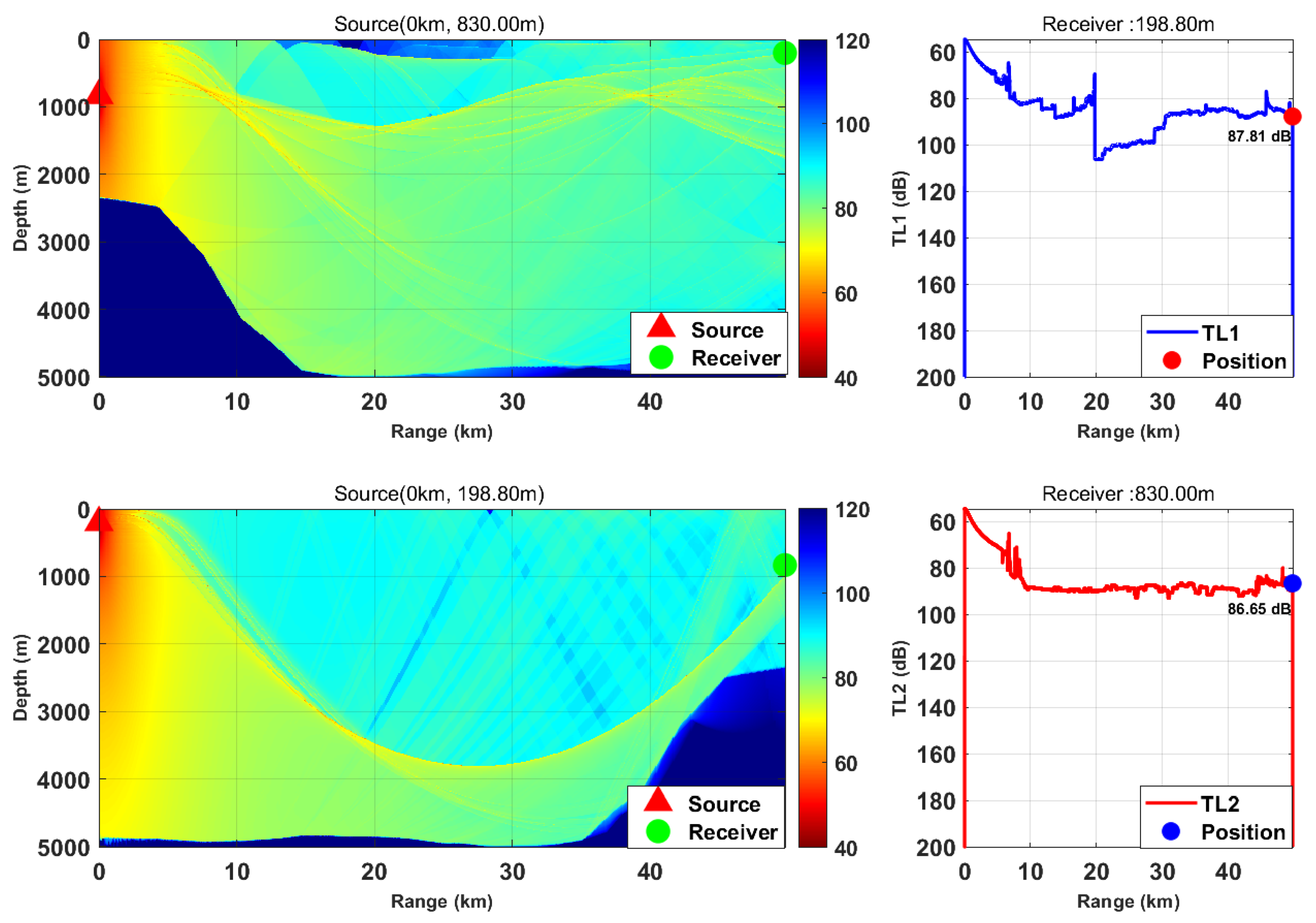
2.2.2. Verification of the Acoustic Reciprocity Theorem
2.3. Simulation Calculation of Effective Buoy Detection Range
- Co-depth deployments: Both source and receiver at identical depths (23.14 m, 69.42 m, 161.98 m, 231.40 m, 347.10 m, and 578.50 m).
- Bistatic depth configurations: The source (target) was fixed at specific depths (23.14 m, 69.42 m, 161.98 m, 231.40 m, or 347.10 m), while the receiver was placed at varying depths.
3. Results and Analysis
3.1. Analysis of Acoustic Reciprocity Theorem Verification
3.2. Buoy Remote Sensing Performance Under Co-Depth Deployment
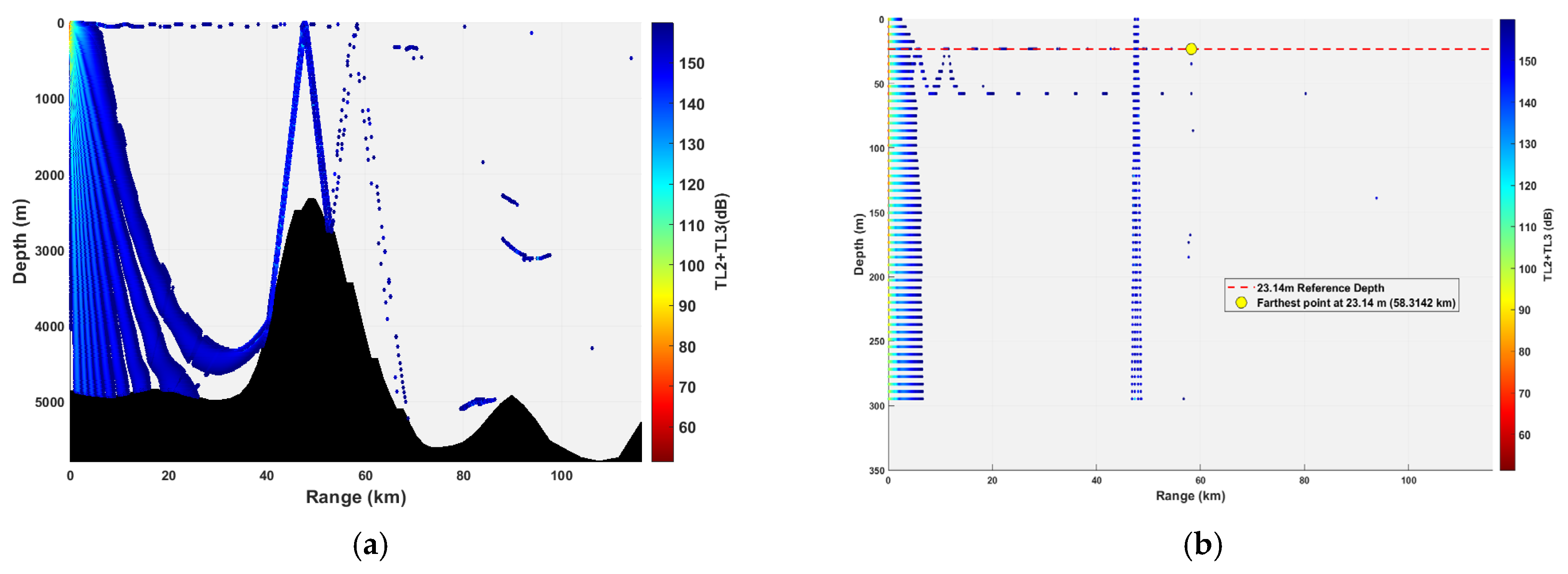
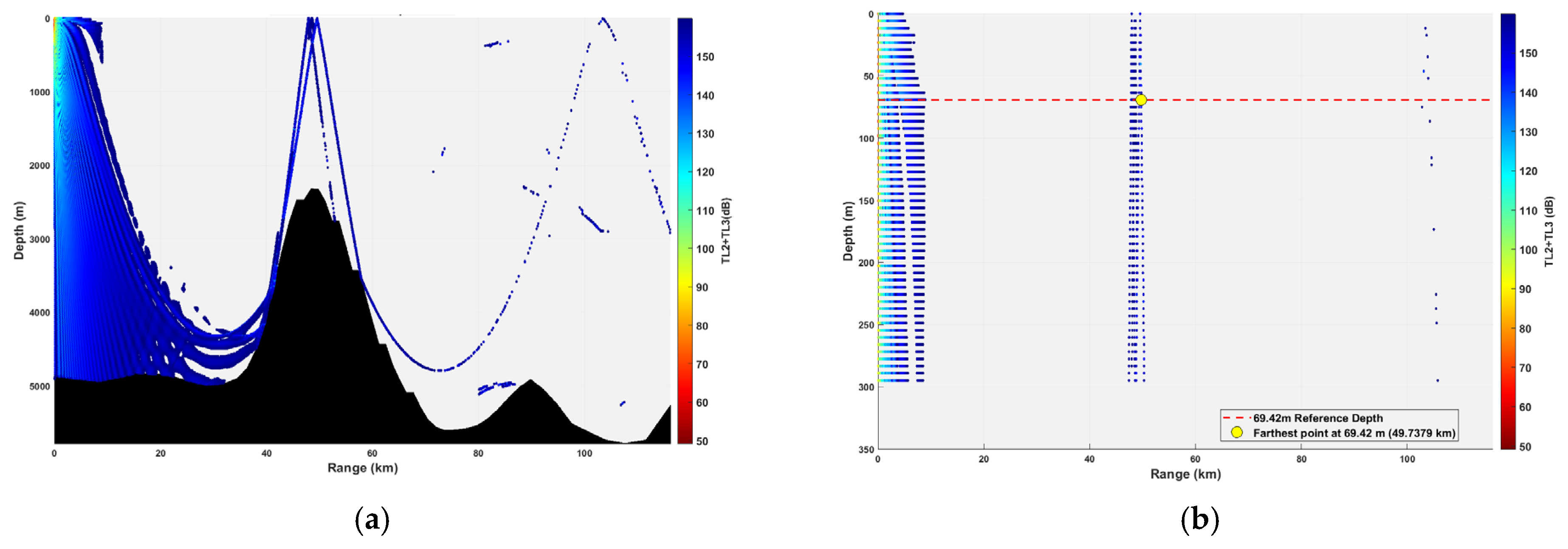
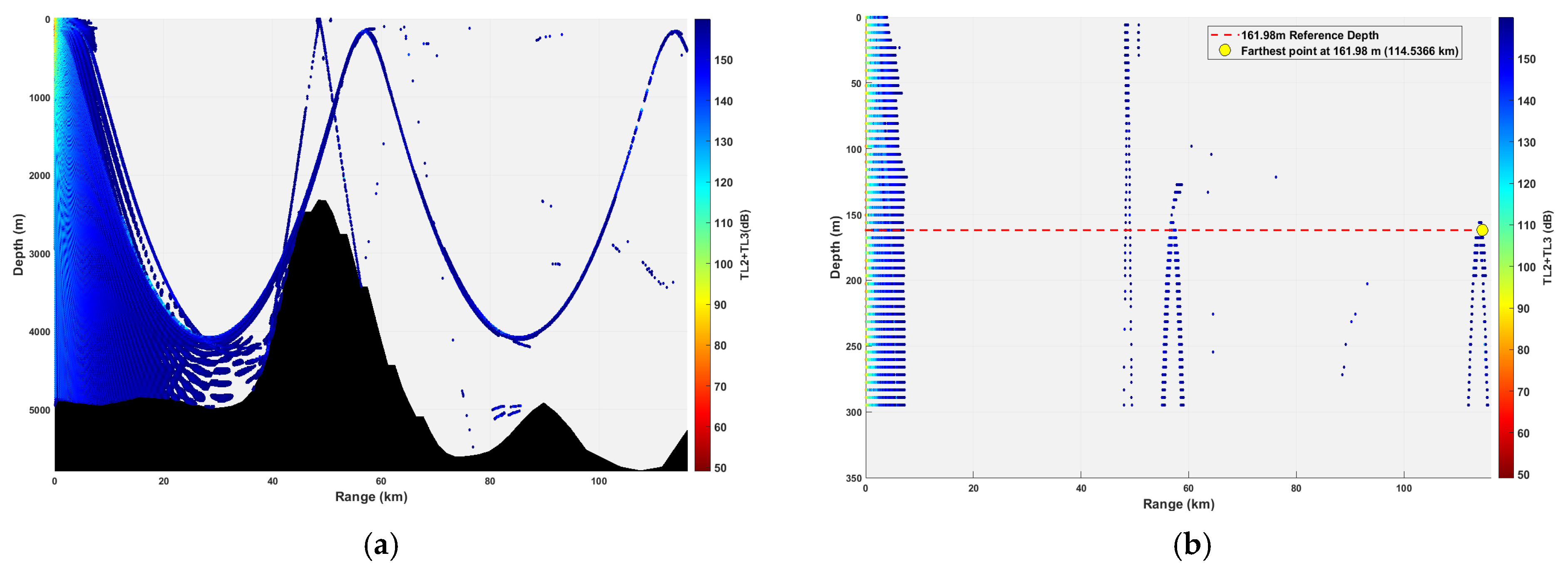
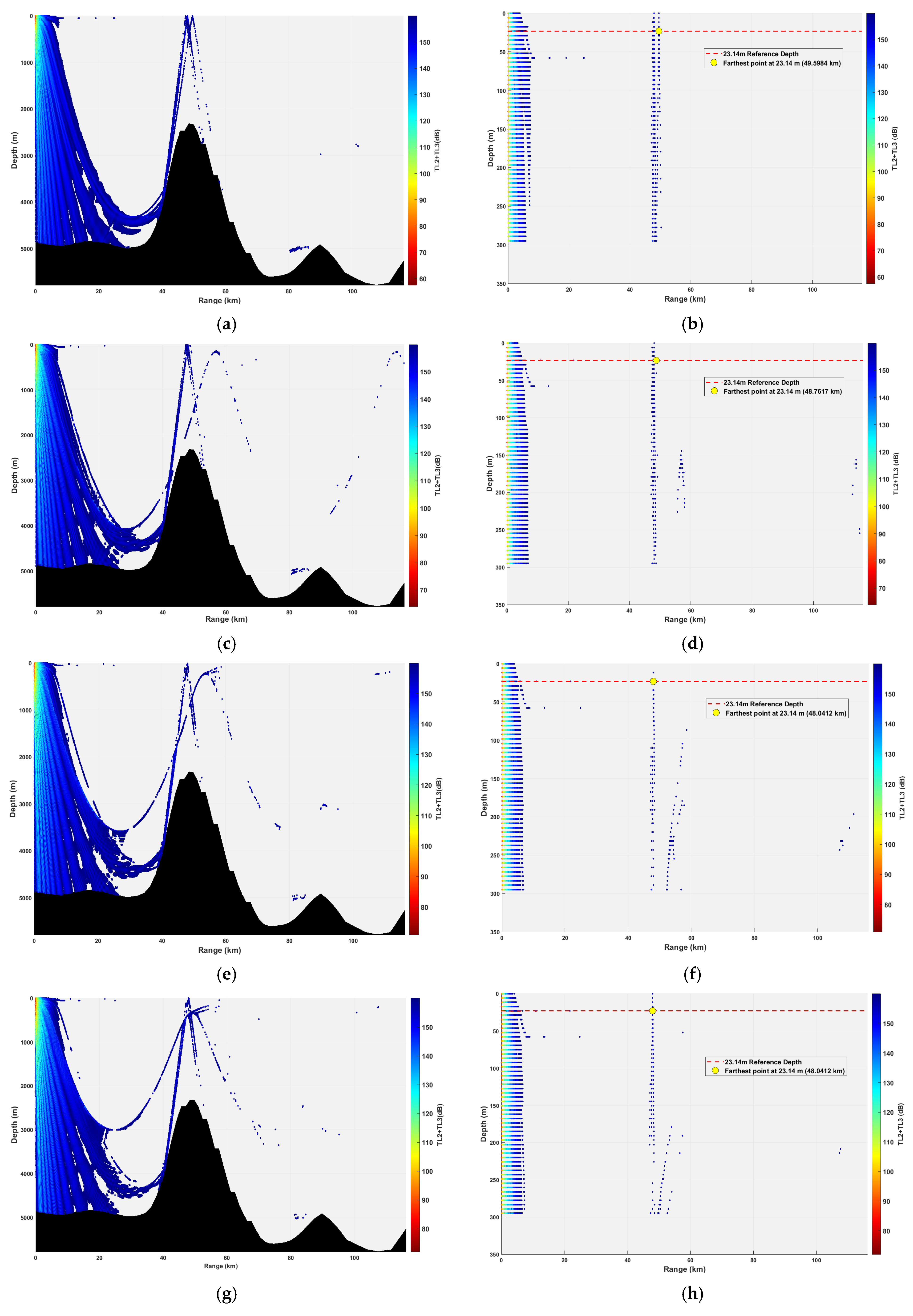
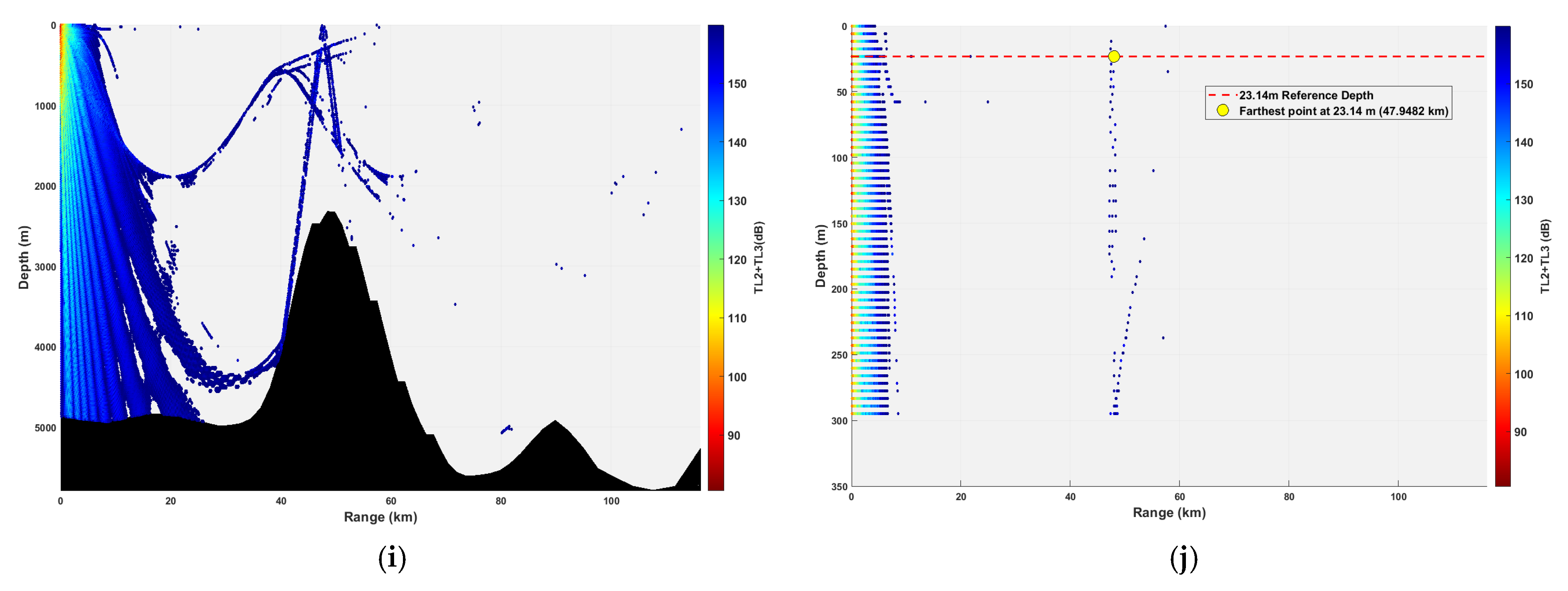
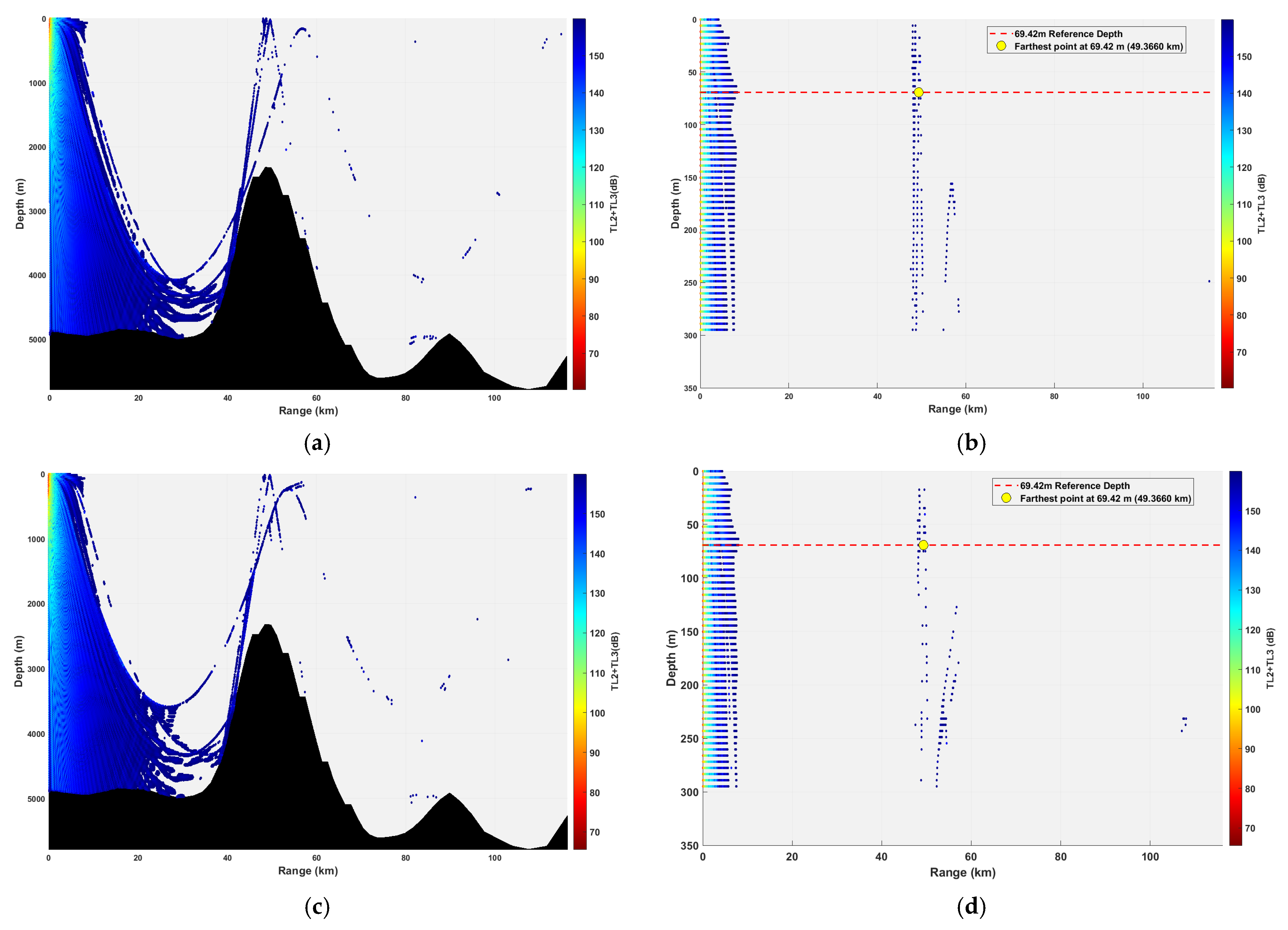
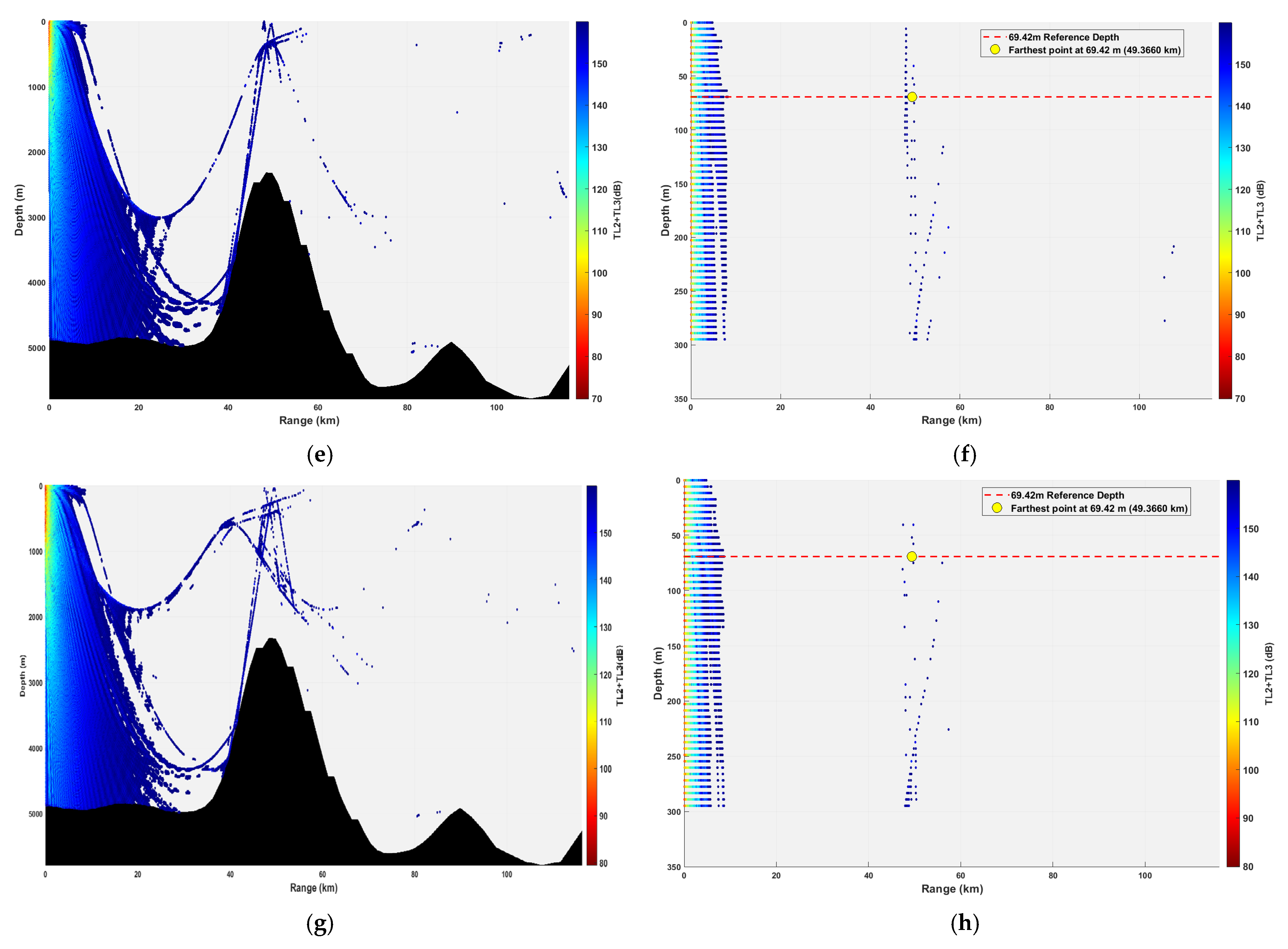
- Shallow Sources (23.14~69.42 m): The sound speed profile exhibits a positive gradient, causing acoustic rays to refract sharply towards the sea surface. This leads to rapid acoustic energy attenuation. Consequently, the maximum remote sensing detection range is limited to approximately 50 km, and the number of effective points within the 0~300 m layer is low (14,659 points at 23.14 m; 16,801 points at 69.42 m). Long-range underwater acoustic detection capabilities are thus constrained.
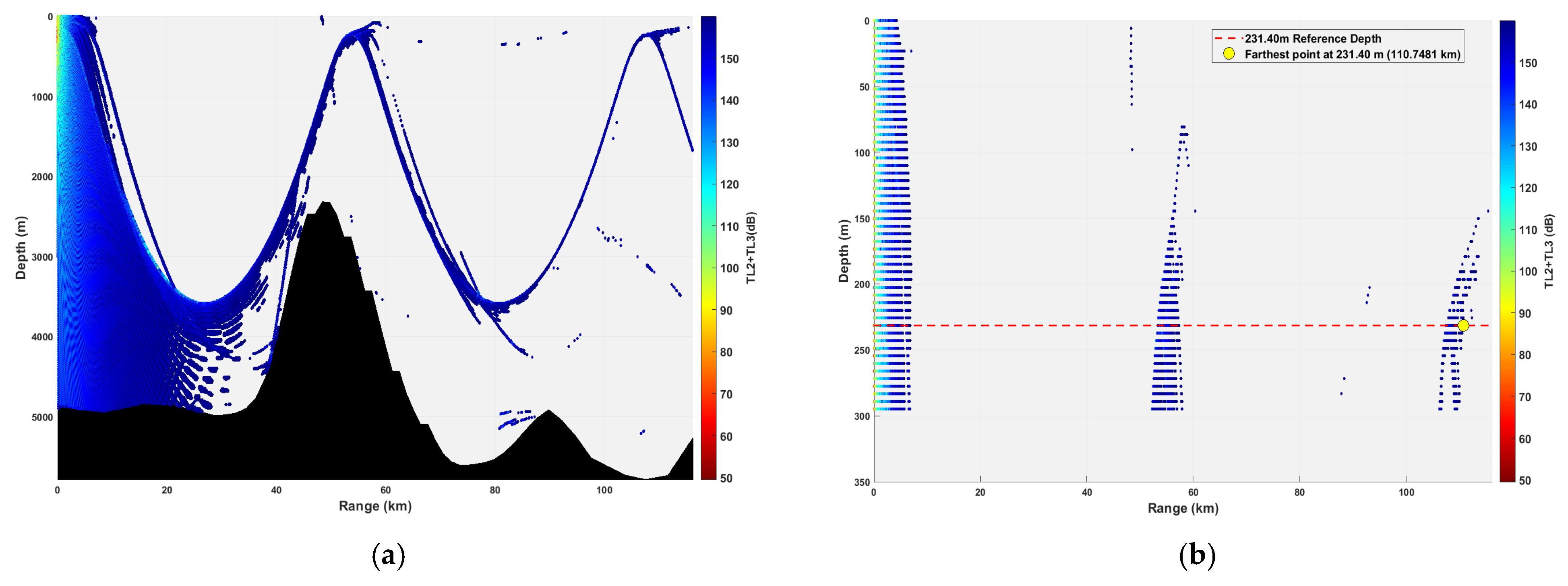
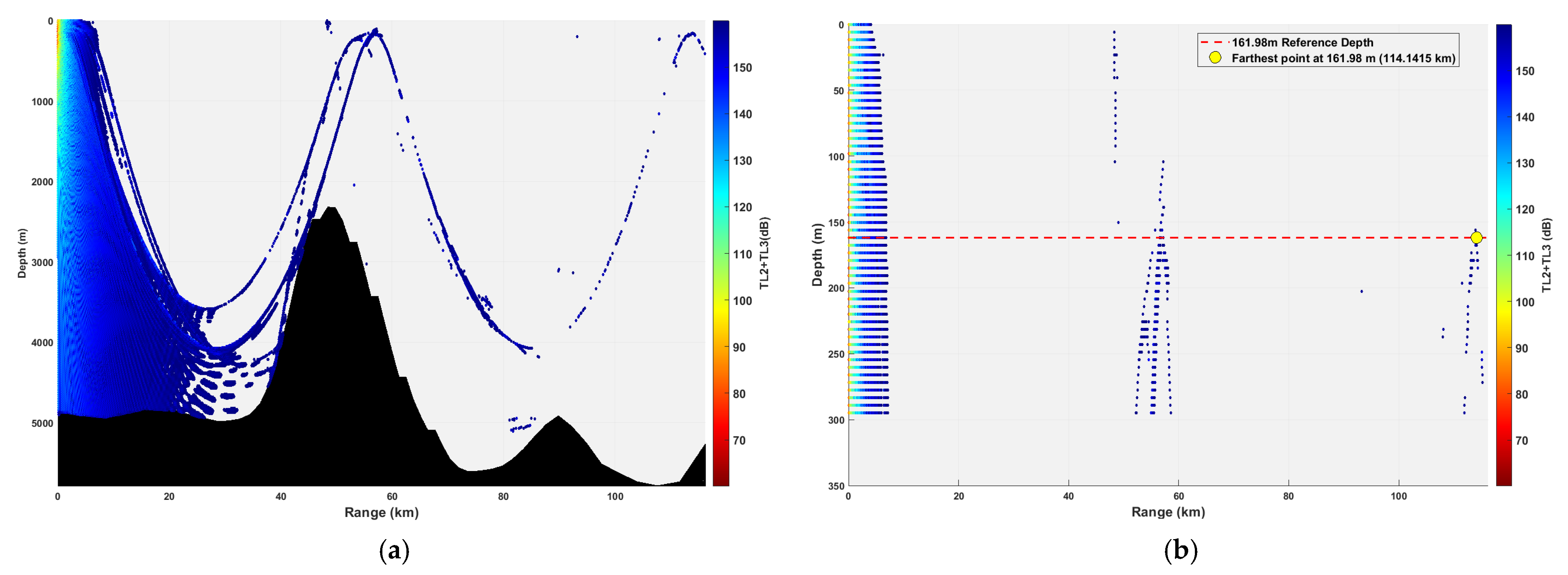
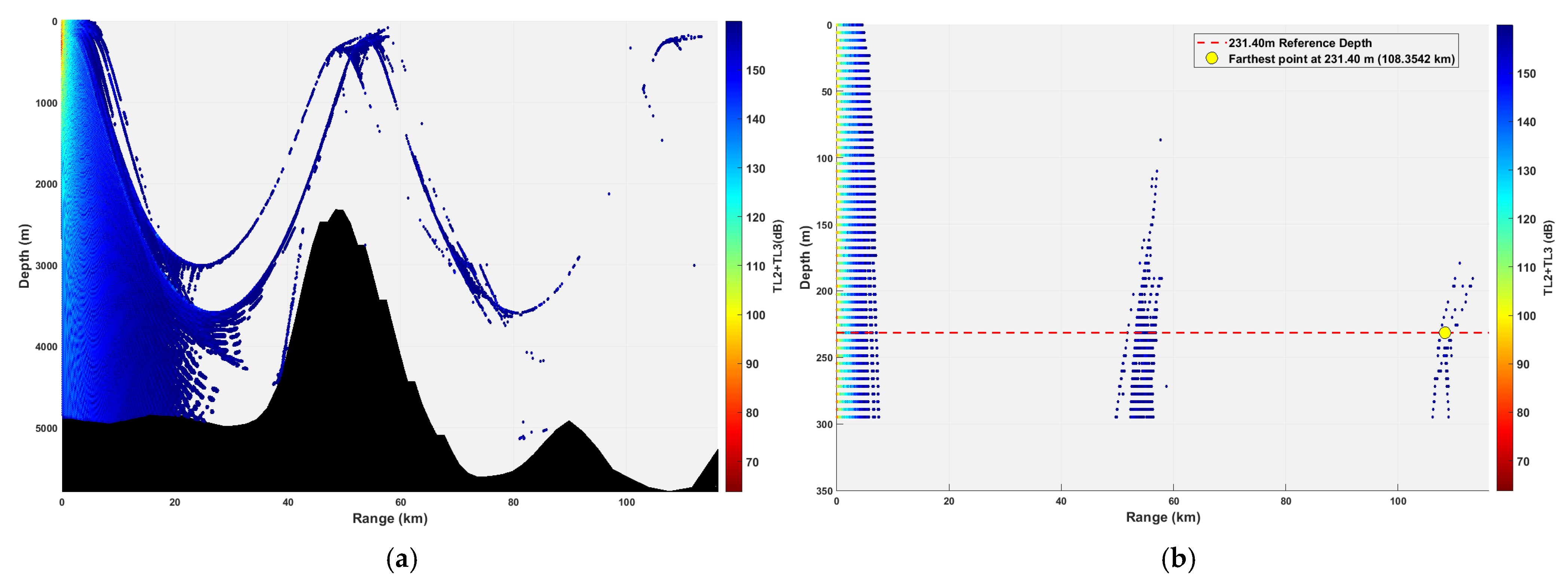
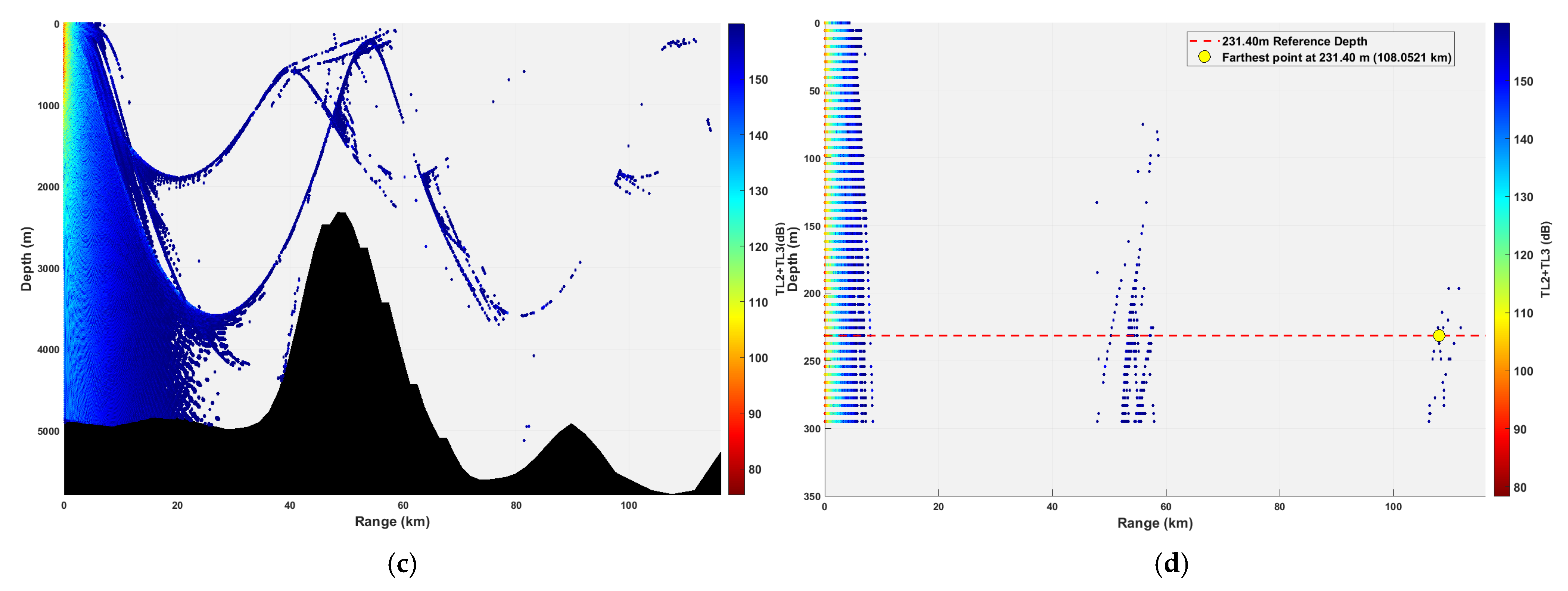
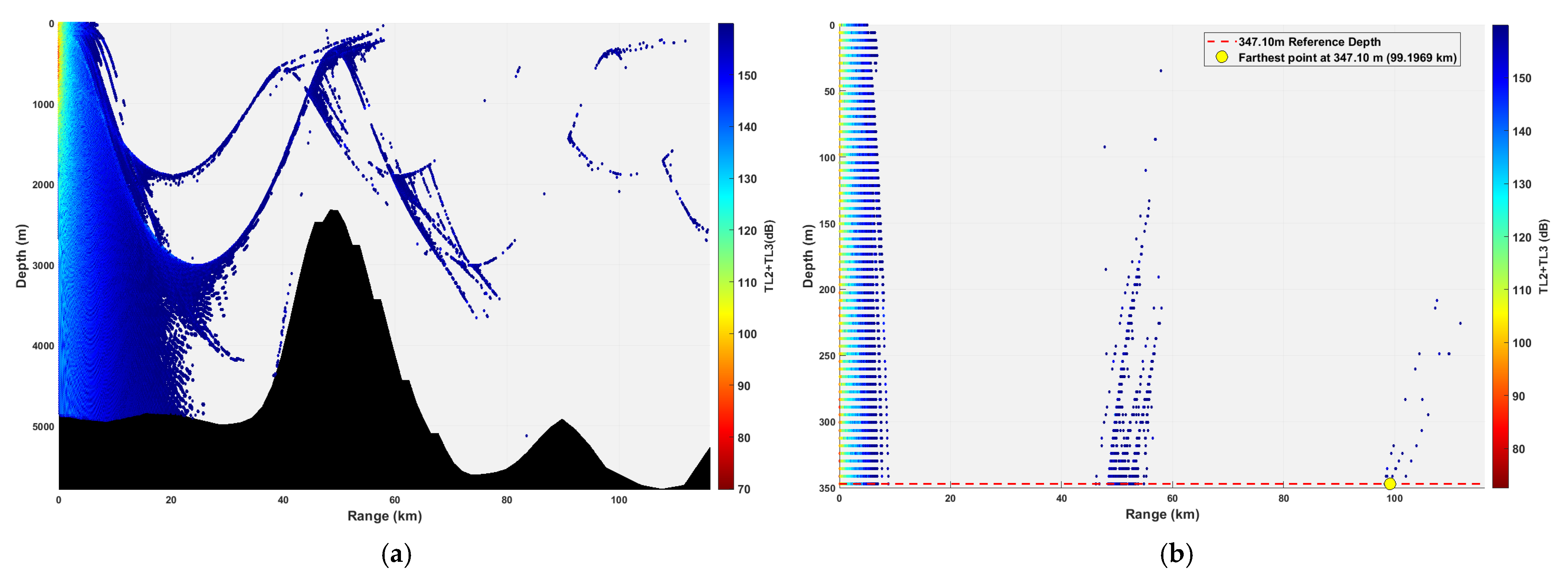
- Mid-Layer Sources (161.98~231.40 m): This represents the optimal detection depth interval for buoy remote sensing. The sound speed profile shows a negative gradient with gentle variations, resulting in stable ray propagation paths with minimal energy loss from sea surface or seabed boundaries. Leveraging the ducting effect (waveguide mechanism), these configurations achieve long-range propagation, with maximum detection ranges exceeding 100 km (114.54 km at 161.98 m; 110.75 km at 231.40 m). The total number of effective spatial points exceeds 500,000, and the distribution within the 0~300 m layer is continuous, demonstrating superior short-range coverage performance.
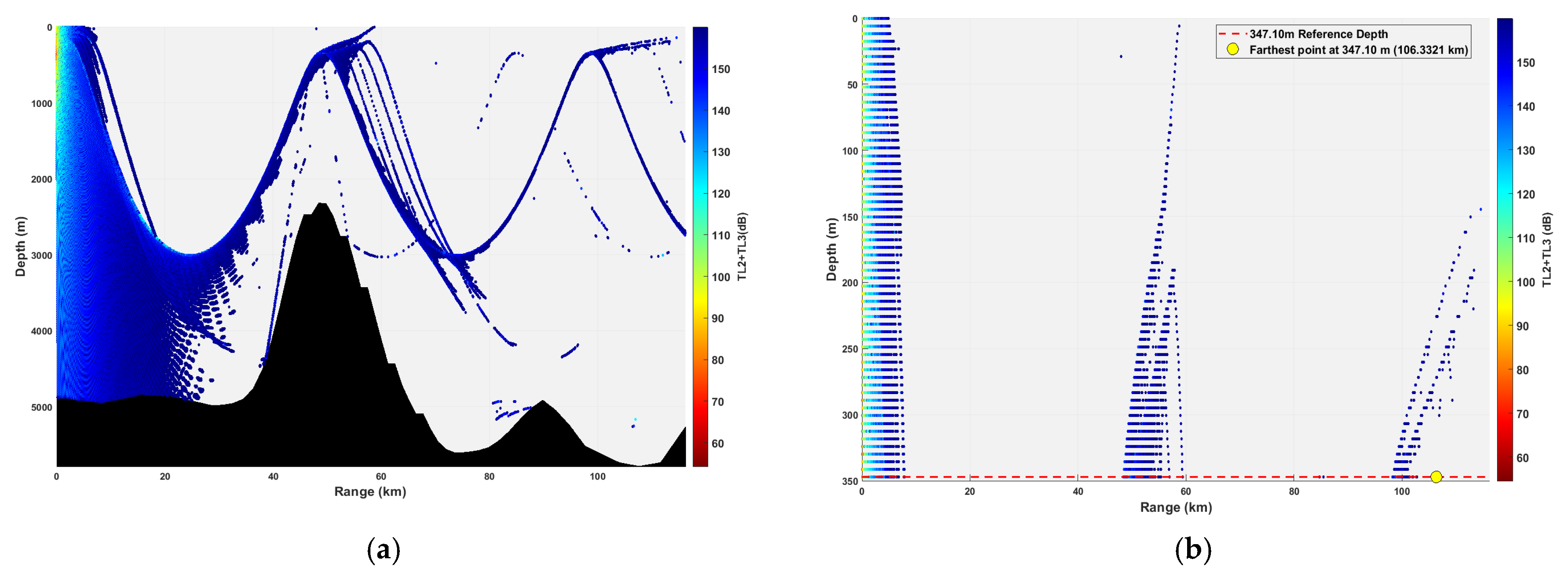
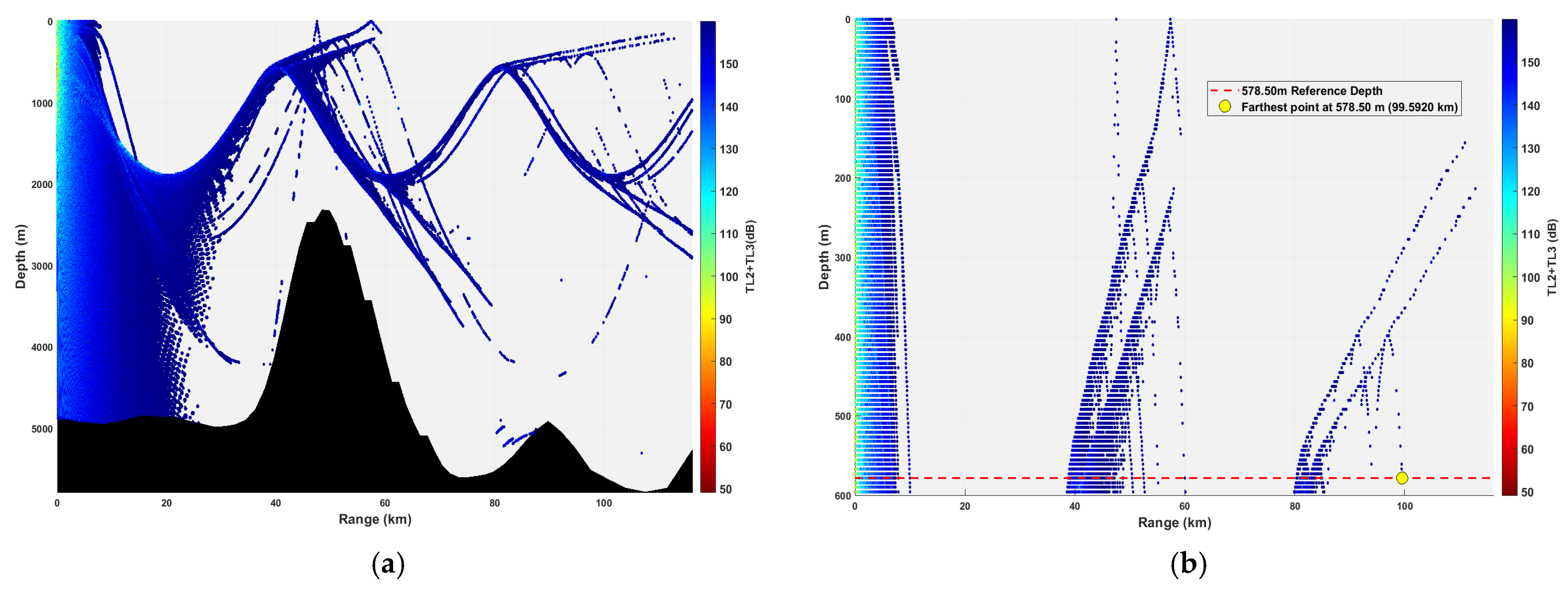
- Deep Sources (≥347.10 m): As depth increases, the influence of seamount topography intensifies, leading to increased reflection losses. The maximum detection range decreases slightly (106.33 km at 347.10 m; 99.59 km at 578.50 m). However, the total number of effective points remains high (616,947 points at 578.50 m), indicating that overall remote sensing performance remains stable.
3.3. Buoy Remote Sensing Performance Under Bistatic Depth Configurations
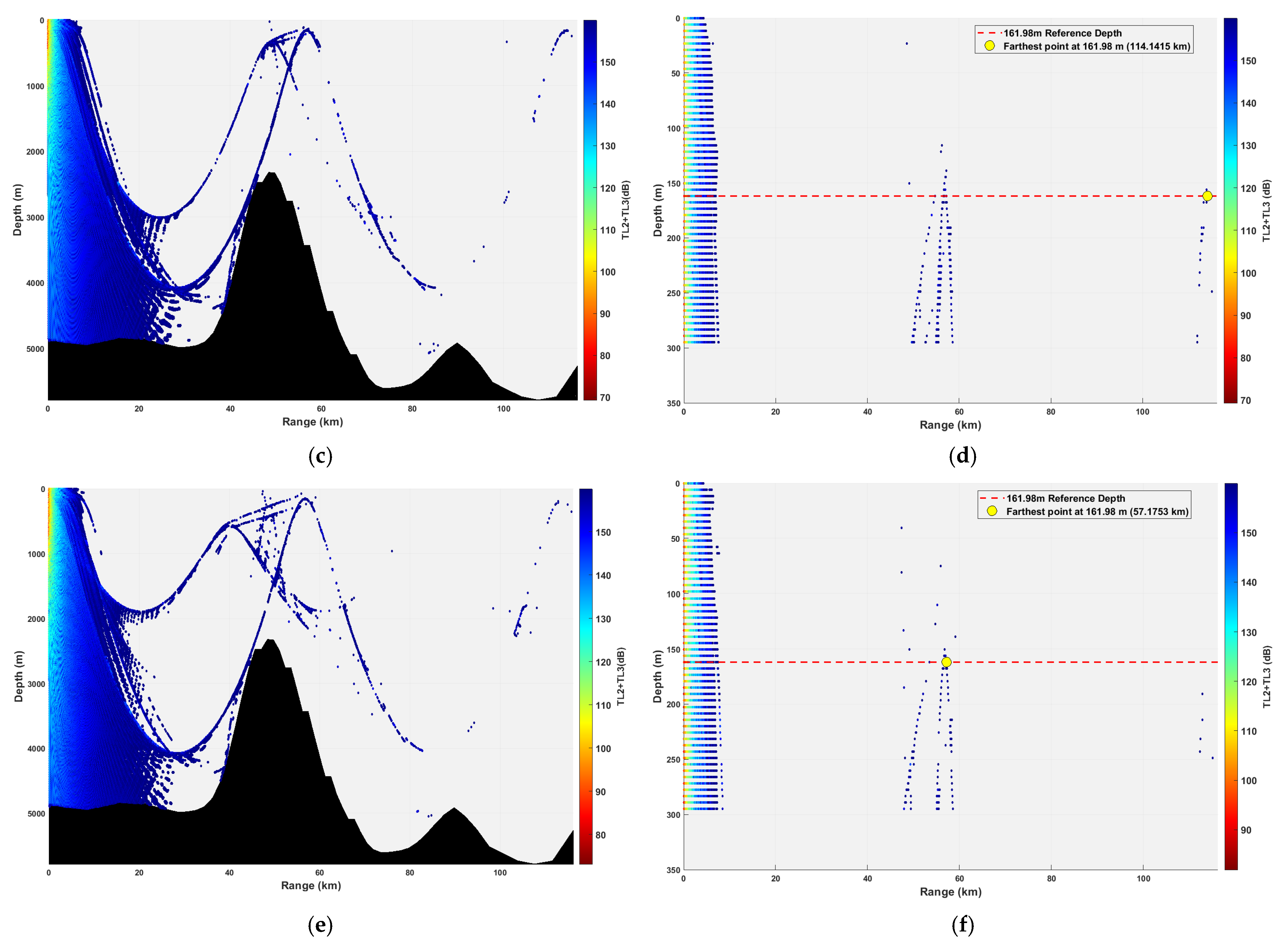
- Negative Correlation: There is a strong negative correlation between transceiver depth separation () and remote sensing performance. As increases, the number of effective points decreases, and the distribution within the 0~300 m layer transitions from continuous to discrete patchy patterns. The effectively covered water column becomes thinner, directly compromising the integrity and continuity of underwater acoustic detection data.
- Low Sensitivity of Shallow Sources: Shallow sources exhibit low sensitivity to depth separation. As increases from 46.28 m to 555.36 m, the maximum detection range remains stable at 47~50 km, with no significant performance degradation.
- High Sensitivity of Mid-Layer Sources: Mid-layer sources are highly sensitive to depth separation. When exceeds 400 m, the maximum detection range plummets by approximately 50% (dropping from 114.54 km to 57.18 km for the 161.98 m source), resulting in a complete loss of long-range remote sensing capability.
- Reduced Sensitivity of Deep Sources: Deep sources show reduced sensitivity. When paired with deeper receivers (e.g., 578.50 m), the maximum detection range remains above 99 km, demonstrating stability comparable with that in mid-layer co-depth scenarios.
3.4. Threshold Effect of Transceiver Depth Separation
- When the depth difference is ≤150 m: The superimposed distribution of and shows no significant variation. The attenuation rates for both the number of effective points and the maximum detection range remain below 5%, indicating that the buoy underwater remote sensing performance remains fundamentally stable and robust.
- When the depth difference exceeds 150 m: The overlapping region of effective points narrows rapidly, and the attenuation rate of remote sensing performance surges drastically (exceeding 50%). Effective points within the 300 m range become discretized, leading to a severe degradation in short-range, high-precision underwater remote sensing capabilities.
4. Discussion
4.1. Validity and Physical Mechanism of Reciprocity Under Seamount Topography
4.2. Mechanisms Influencing Buoy Remote Sensing Performance
- Gradient Effect of Sound Speed Profile:
- (1)
- Shallow Layer: The positive gradient refracts rays toward the surface, causing rapid energy decay and limiting the remote sensing range.
- (2)
- Mid-Layer: The negative gradient bends rays inward, stabilizing propagation paths and minimizing attenuation. This forms the optimal detection interval, creating favorable conditions for efficient remote sensing.
- (3)
- Deep Layer: Influenced by topography, reflection losses increase with depth, causing slight range attenuation.
- Superposition Effect of Transceiver Depths:
- (1)
- Co-Depth: The Source-to-Target and Receiver-to-Target ray paths highly overlap, maximizing the superposition of low-loss zones and ensuring broad, continuous effective coverage.
- (2)
- Bistatic: Depth separation causes path divergence, narrowing the superposition range, reducing effective points, and degrading performance.
- Coupling Effect of Topography:
4.3. Engineering Applicability of Deployment Schemes
- High-Frequency Buoys (>1 kHz): Due to faster attenuation and shorter ranges, shallow deployment is recommended based on simulation results. This balances ease of deployment with the need for short-range, high-resolution remote sensing.
- Medium-Frequency Buoys (500 Hz~1 kHz): With slower attenuation and strong long-range capabilities, deep deployment is advisable to further extend detection ranges, suitable for medium-to-long-range tasks.
5. Conclusions
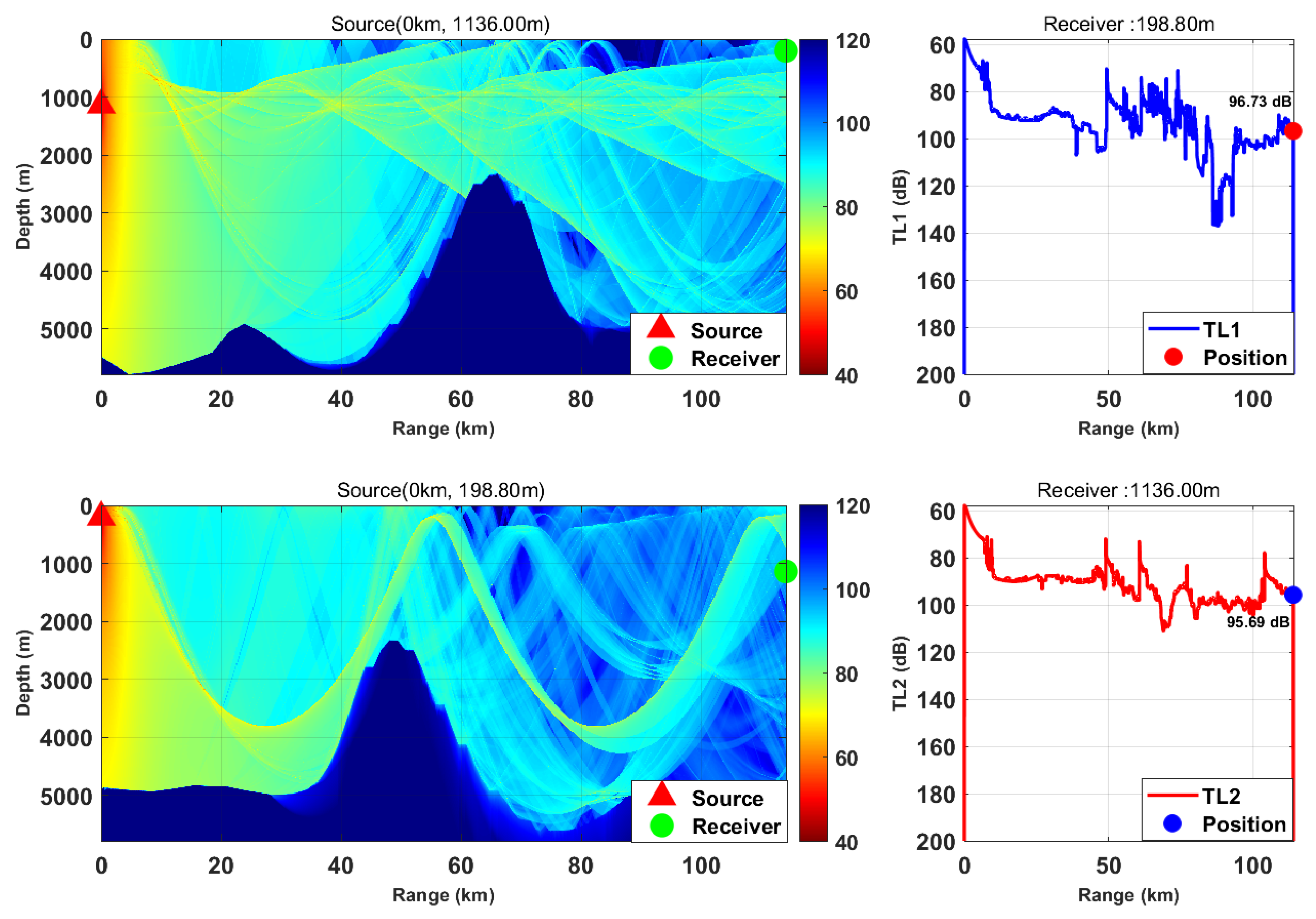
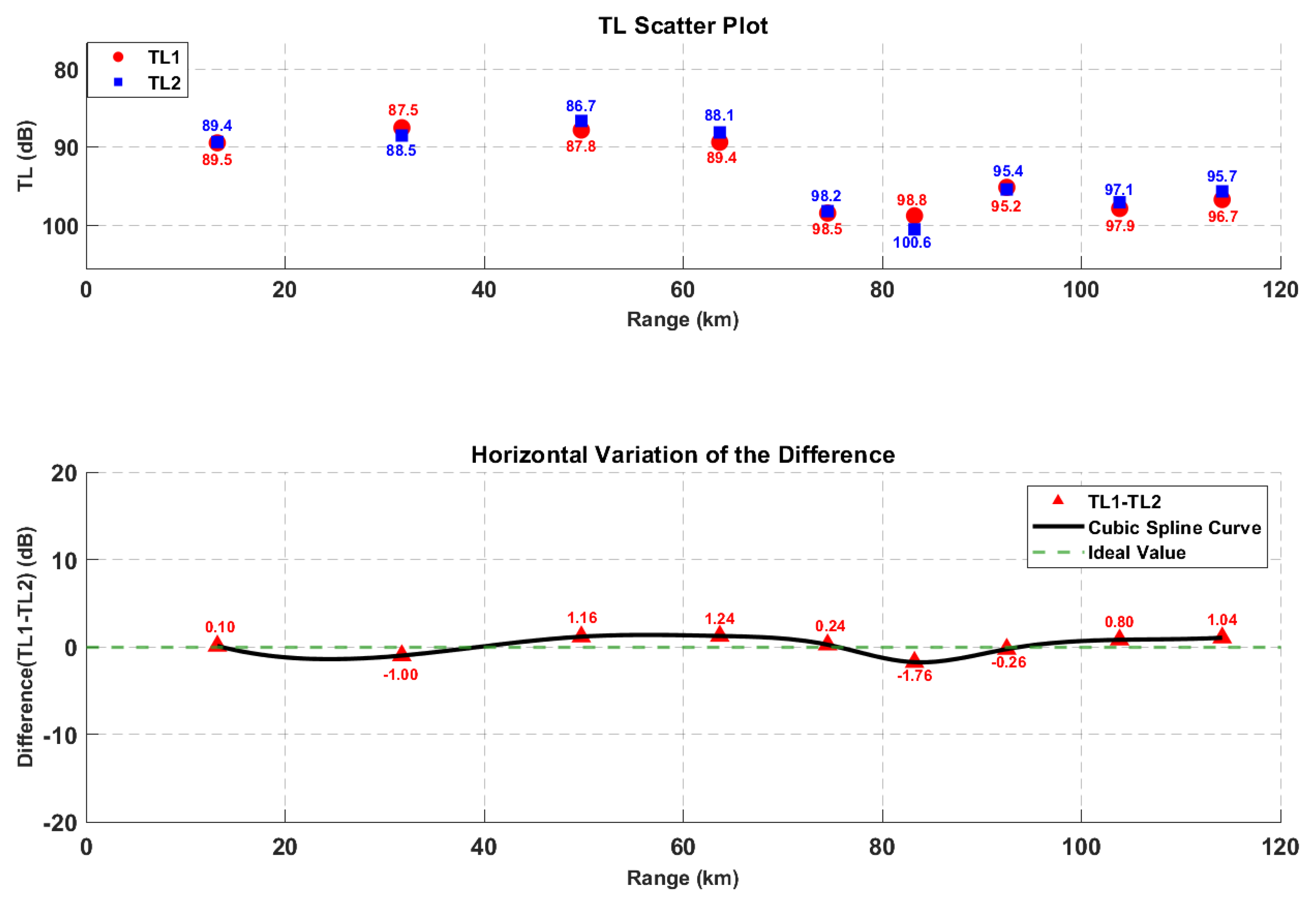
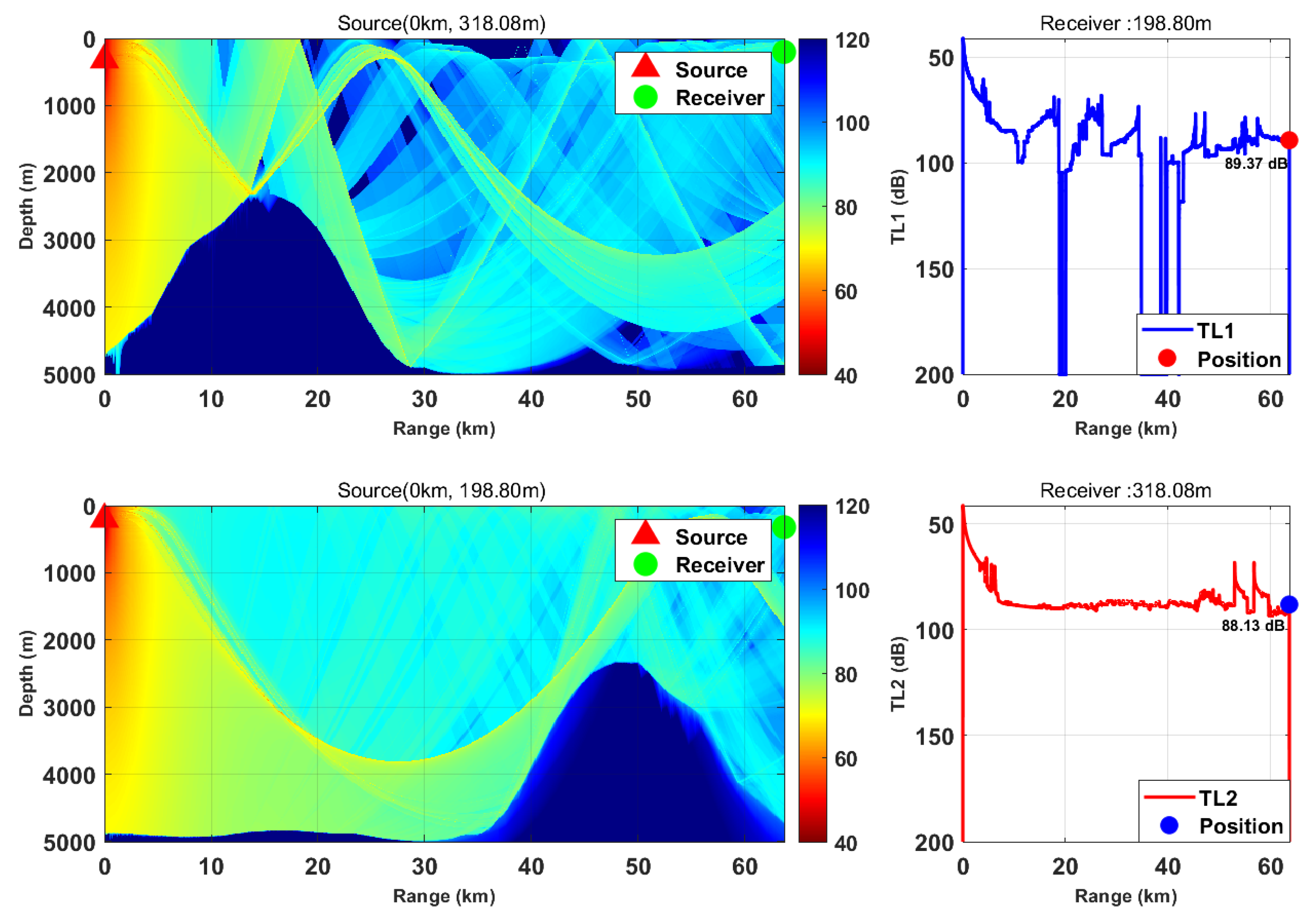
- Validity of Reciprocity: The acoustic reciprocity theorem holds fundamentally in complex environments with horizontal sound speed inhomogeneity and undulating topography. The maximum difference between Target-to-Receiver and Receiver-to-Target transmission losses is only 1.76 dB, which is negligible relative to the total loss. This enables simplified calculation of transmission losses, significantly enhancing data processing efficiency.
- Optimal Co-Depth Interval: Under co-depth deployment, performance varies non-linearly with depth. The 160~350 m interval is optimal, offering stable ray paths, minimal boundary losses, maximum detection ranges over 100 km, and more than 500,000 effective points. This is the preferred depth for long-range remote sensing.
- Critical Threshold in Bistatic Configurations: Performance is strongly negatively correlated with transceiver depth separation. A critical threshold of 150 m was identified. Exceeding this value causes effective points to transition from continuous to discrete patches. For mid-layer sources (161.98~231.40 m), the detection range drops by over 50%, severely degrading short-range coverage.
- Layer-Dependent Suitability: (Note: corrected based on context) Shallow sources are suitable for short-range tasks with loose depth constraints; mid-layer sources require precise co-depth deployment for high-quality data; deep sources are robust for medium-to-long-range bistatic operations.
- Priority Strategy: For long-range, large-scale tasks, adopt co-depth deployment in the 160~350 m range to leverage optimal performance.
- Alternative Strategy: If co-depth deployment is unfeasible, strictly limit transceiver depth separation to <150 m, ensuring both source and receiver remain within the 160~350 m optimal window to maintain performance.
- Special Strategy: For short-range, low-precision tasks, shallow deployment is permissible with larger depth separations (<500 m), balancing operational convenience with mission requirements.
- (1)
- Pre-deployment monitoring of local sound speed profiles and bathymetry is essential to define the specific optimal depth window.
- (2)
- During deployment, the depths of all nodes should be kept consistent, or the depth difference must be maintained at ≤150 m. This threshold incorporates a safety margin to account for dynamic environmental conditions, thereby preventing blind spots in the remote sensing coverage between nodes.
- (3)
- For mid-layer sources, strict control of positioning accuracy is required to prevent depth deviations from exceeding the threshold.
Author Contributions
Funding
Data Availability Statement
Acknowledgments
Conflicts of Interest
References
- Urick, R.J. Principles of Underwater Sound, 3rd ed.; McGraw-Hill: New York, NY, USA, 1983; pp. 74–76. [Google Scholar]
- Jensen, F.B.; Kuperman, W.A.; Porter, M.B.; Schmidt, H. Computational Ocean Acoustics, 2nd ed.; Springer: New York, NY, USA, 2011; pp. 108–109. [Google Scholar]
- Zou, D.; Zhao, F. Convert path planning for underwater vehicle based on sonar detection probability. J. Phys. Conf. Ser. 2023, 2506, 012011. [Google Scholar] [CrossRef]
- Bojarski, N.N. Generalized reaction principles and reciprocity theorems for the wave equations, and the relationship between the time-advanced and time-retarded fields. J. Acoust. Am. 1987, 74, 281–285. [Google Scholar] [CrossRef]
- Liu, G.; Liu, J.; Li, Y.Y. The differential forms of Rumsey reaction and the corresponding reciprocal equations in the unified space and time form. Eur. Phys. J. Plus 2023, 138, 203. [Google Scholar] [CrossRef]
- Luo, G.; Zhao, D.; Zhou, H.; Guo, X.; Wang, H.; Fang, H.; Fang, C.; Xia, K. Deep-Sea Convergence Zone Parameter Prediction with Non-Uniform Mixed-Layer Sound Speed Profiles. J. Mar. Sci. Eng. 2025, 13, 1649. [Google Scholar] [CrossRef]
- Zhang, L.; Zhang, H.G.; Meng, C.X. Study on the reciprocity of low-frequency scalar and vector sound fields of directional sound sources in shallow water. J. Harbin Eng. Univ. 2025, 8, 1516–1521. [Google Scholar]
- Wu, Y.; Zhang, Y.; Chen, W.; Hong, M.; Wang, Y.; Gao, W.; Liu, Z.; Shi, Y. The Impact of Mesoscale Eddi Subsurface Sound Channels in the Kuroshio Extension. Remote Sens. 2025, 17, 1360. [Google Scholar]
- Sun, X.; Zhang, S.; Chen, F.; Wang, P. Coupling Effect of the Bottom Type-Depth Configuration on the Sonar Detection Range in Seamount Environments. J. Mar. Sci. Eng. 2026, 14, 89. [Google Scholar] [CrossRef]
- Wang, Z.; Liang, M.; Shi, J.; Chen, Y.; Sun, D. Source depth estimation based on Higher-order pressure vectors of sound field by deep Learning. Appl. Acoust. 2026, 241, 111003. [Google Scholar] [CrossRef]
- Yang, L.; Cai, Z.M. Analysis of detection range of bistatic sonar under reverberation background. J. Harbin Eng. Univ. 2006, 27, 1–6. [Google Scholar]
- Shan, Z.C.; Cui, S.Y.; Dong, C.P. Analysis of detection capability of multi-static sonar buoys. J. Nav. Univ. Eng. 2025, 37, 79–85. [Google Scholar]





| Source Depth (m) | Receiver Depth (m) | Depth Separation (m) | Total Points | Tactical Points (0~300 m) | Number of Sound Source Depth Points | Max Range (km) | Sum of Transmission Loss (dB) |
|---|---|---|---|---|---|---|---|
| 23.14 | 23.14 | 0 | 498,362 | 14,659 | 393 | 58.31 | 159.86 |
| 69.42 | 46.28 | 534,620 | 14,431 | 270 | 49.60 | 158.62 | |
| 161.98 | 138.84 | 522,905 | 14,285 | 251 | 48.76 | 159.32 | |
| 231.40 | 208.26 | 516,862 | 13,443 | 233 | 48.04 | 158.11 | |
| 347.10 | 323.96 | 514,473 | 13,942 | 256 | 48.04 | 155.75 | |
| 578.50 | 555.36 | 501,020 | 13,913 | 253 | 47.95 | 158.67 | |
| 69.42 | 69.42 | 0 | 555,955 | 16,801 | 415 | 49.74 | 151.72 |
| 161.98 | 92.56 | 536,570 | 15,041 | 368 | 49.37 | 154.37 | |
| 231.40 | 161.98 | 536,505 | 14,211 | 351 | 49.37 | 154.24 | |
| 347.10 | 277.68 | 535,663 | 14,491 | 325 | 49.37 | 155.54 | |
| 578.50 | 509.08 | 520,246 | 15,025 | 365 | 49.37 | 158.46 | |
| 161.98 | 161.98 | 0 | 539,375 | 15,771 | 362 | 114.54 | 153.78 |
| 231.40 | 69.52 | 528,310 | 14,739 | 310 | 114.14 | 157.80 | |
| 347.10 | 185.12 | 521,184 | 14,681 | 309 | 114.14 | 157.07 | |
| 578.50 | 416.52 | 500,282 | 14,598 | 294 | 57.18 | 157.36 | |
| 231.40 | 231.40 | 0 | 561,586 | 16,959 | 513 | 110.75 | 159.84 |
| 347.10 | 115.70 | 530,057 | 15,612 | 386 | 108.35 | 159.84 | |
| 578.50 | 347.40 | 508,686 | 14,653 | 328 | 108.05 | 153.71 | |
| 347.10 | 347.10 | 0 | 577,637 | 16,199 | 624 | 106.33 | 159.29 |
| 578.50 | 231.40 | 528,872 | 14,831 | 450 | 99.20 | 159.22 | |
| 578.50 | 578.50 | 0 | 616,947 | 15,712 | 670 | 99.59 | 159.06 |
Disclaimer/Publisher’s Note: The statements, opinions and data contained in all publications are solely those of the individual author(s) and contributor(s) and not of MDPI and/or the editor(s). MDPI and/or the editor(s) disclaim responsibility for any injury to people or property resulting from any ideas, methods, instructions or products referred to in the content. |
© 2026 by the authors. Licensee MDPI, Basel, Switzerland. This article is an open access article distributed under the terms and conditions of the Creative Commons Attribution (CC BY) license.
Share and Cite
Sun, X.; Zhang, S.; Wang, P. Depth for Underwater Acoustic Detection in Deep-Sea (>5000 m) Complex Marine Environments Based on the Bellhop Model. Sensors 2026, 26, 3149. https://doi.org/10.3390/s26103149
Sun X, Zhang S, Wang P. Depth for Underwater Acoustic Detection in Deep-Sea (>5000 m) Complex Marine Environments Based on the Bellhop Model. Sensors. 2026; 26(10):3149. https://doi.org/10.3390/s26103149
Chicago/Turabian StyleSun, Xiaofang, Shisong Zhang, and Pingbo Wang. 2026. "Depth for Underwater Acoustic Detection in Deep-Sea (>5000 m) Complex Marine Environments Based on the Bellhop Model" Sensors 26, no. 10: 3149. https://doi.org/10.3390/s26103149
APA StyleSun, X., Zhang, S., & Wang, P. (2026). Depth for Underwater Acoustic Detection in Deep-Sea (>5000 m) Complex Marine Environments Based on the Bellhop Model. Sensors, 26(10), 3149. https://doi.org/10.3390/s26103149