Comparative Materials-Level Evaluation of 3′- and 5′-Thiol DNA Aptamer Conjugation on Gold Nanospheres and Nanoflowers: Apparent DNA Loading Output, Morphology Retention, and Qualitative Salt-Challenge Response

 ,
, 
Highlights
- Under matched preparation conditions, AuNP samples showed higher apparent aptamer conjugation output than AuNF samples, with modest differences between 3′- and 5′-thiol constructs.
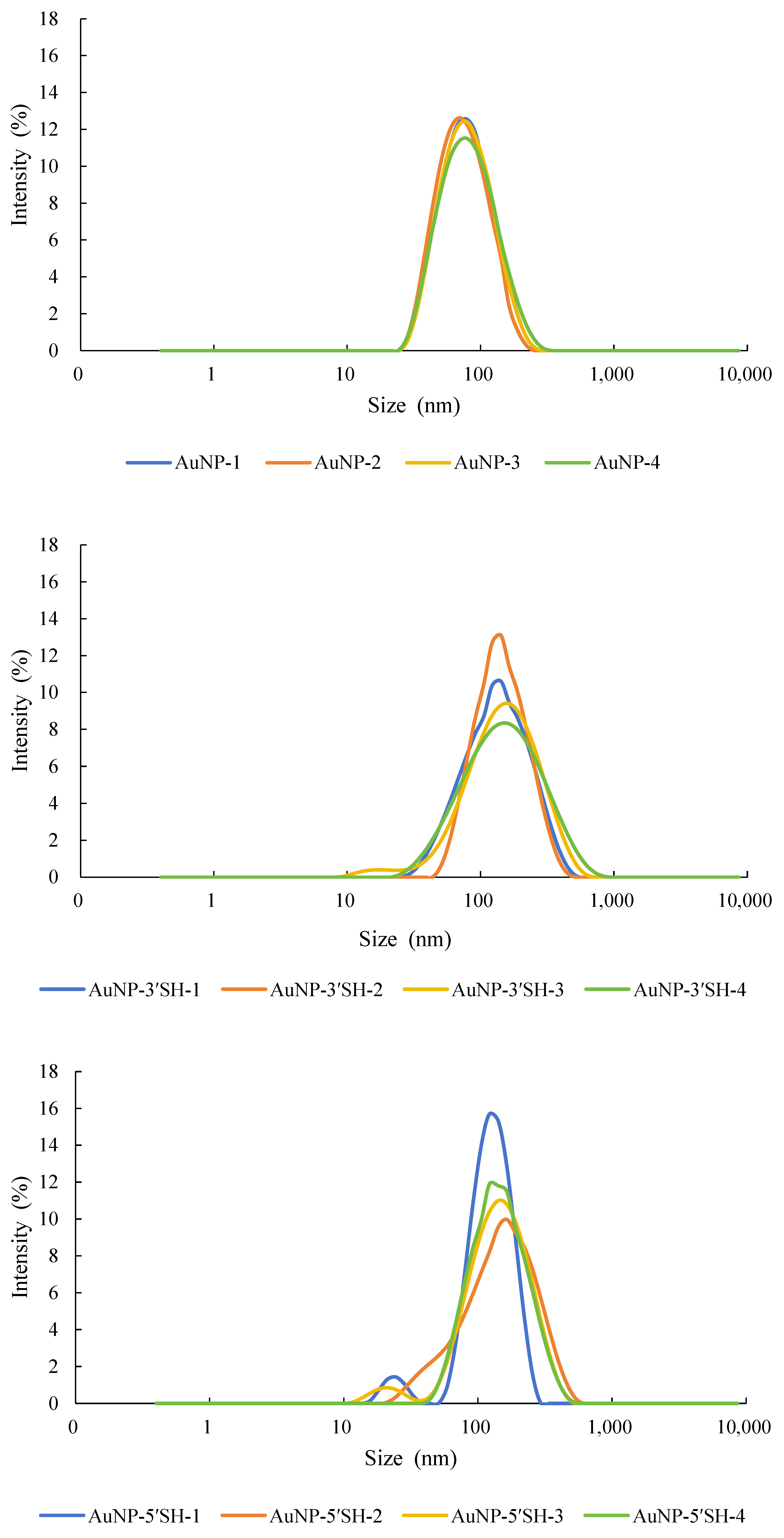
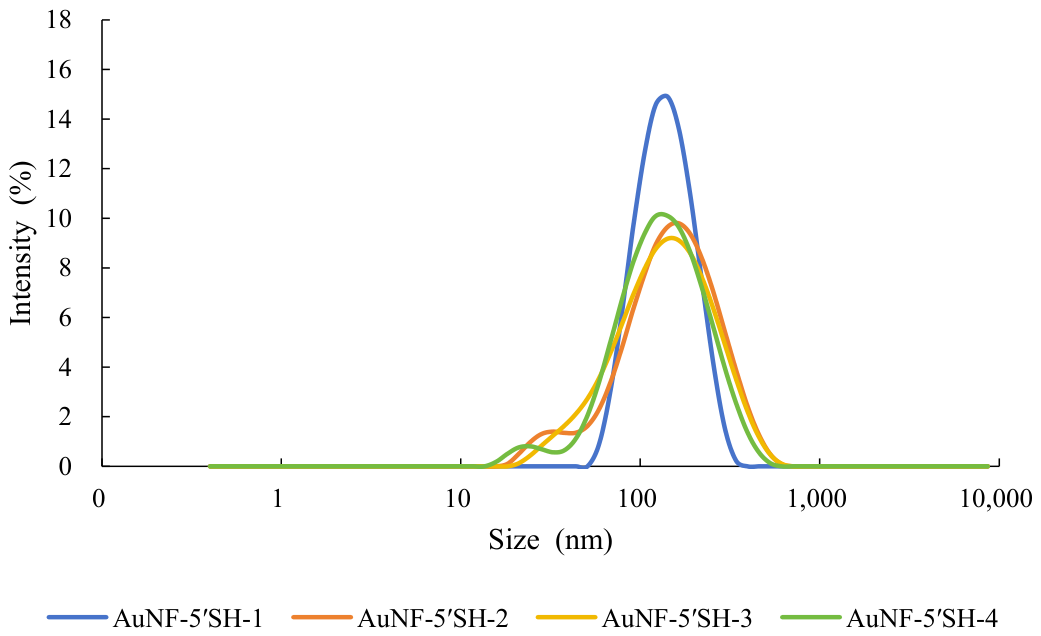
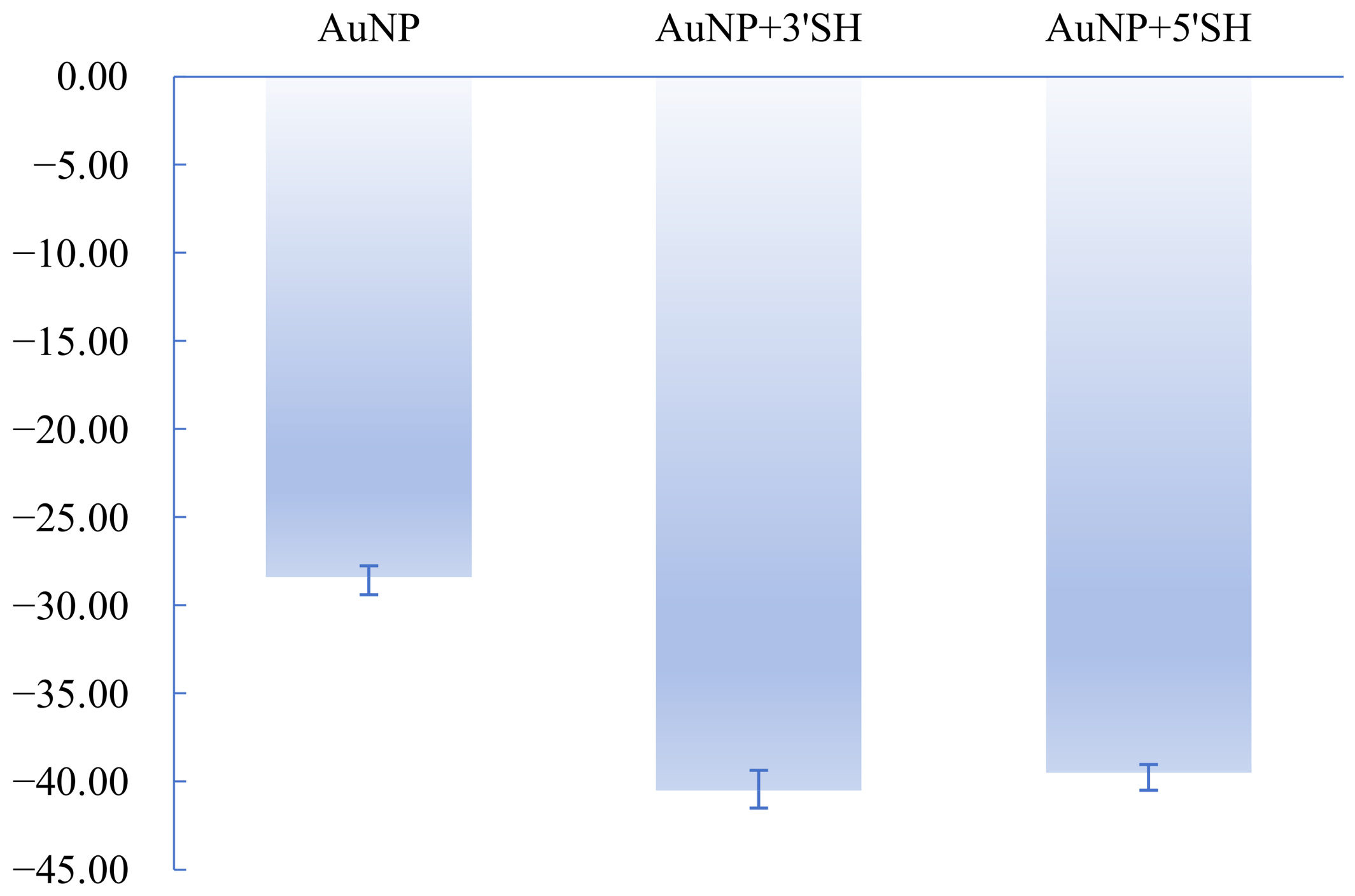
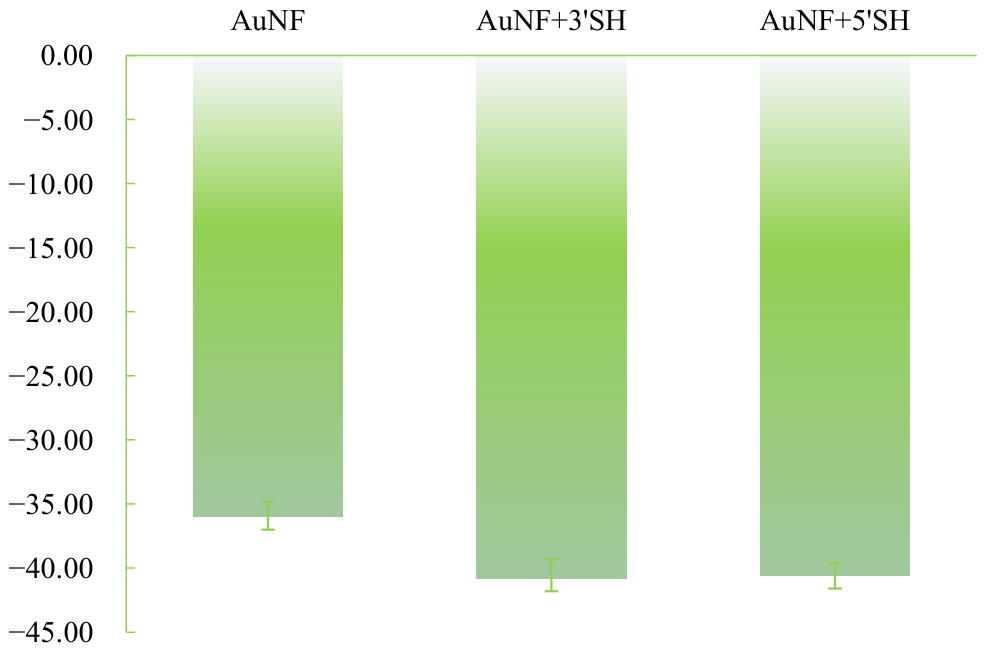
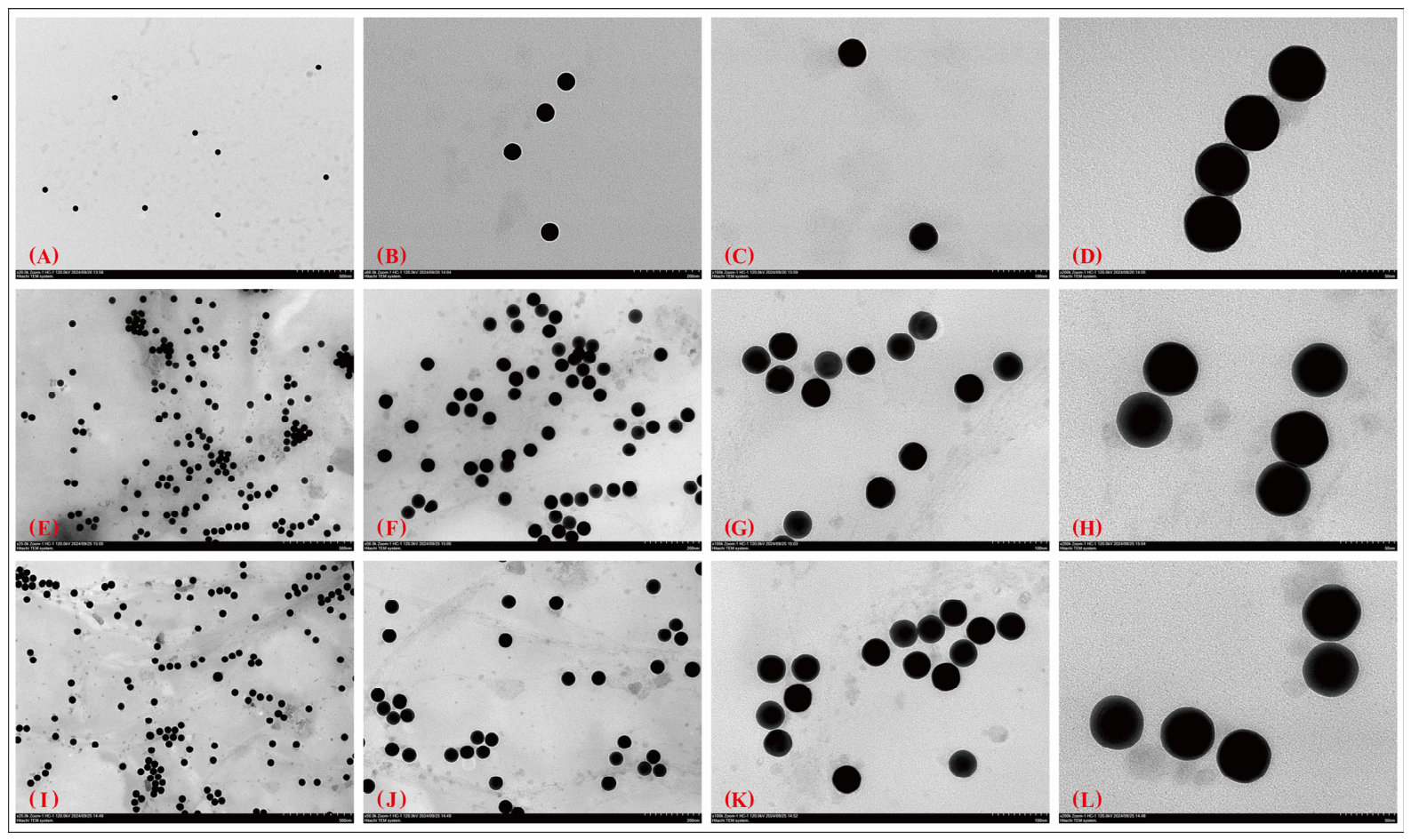
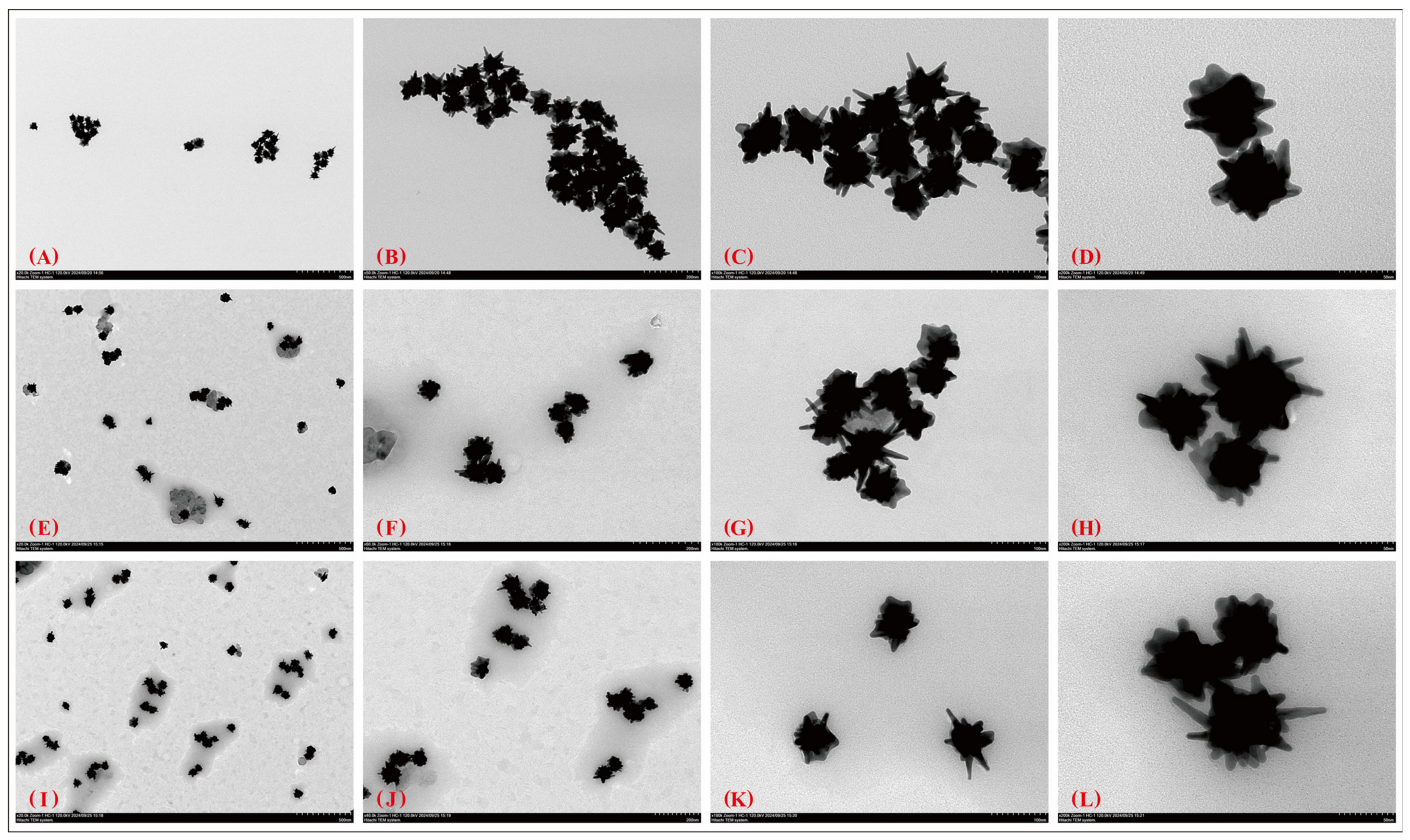
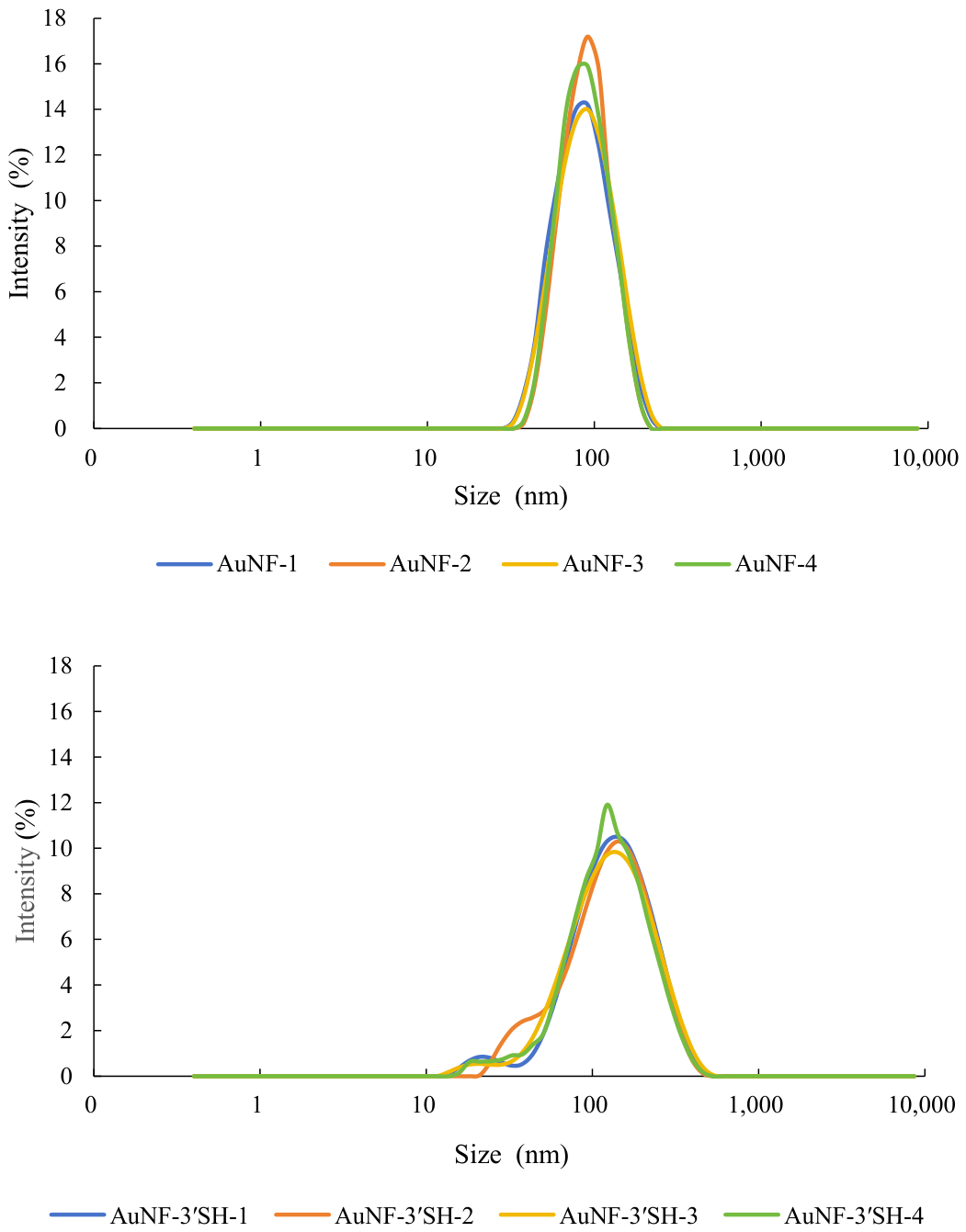
- Aptamer modification increased hydrodynamic diameter, shifted zeta potential toward more negative values, and preserved particle morphology after conjugation.
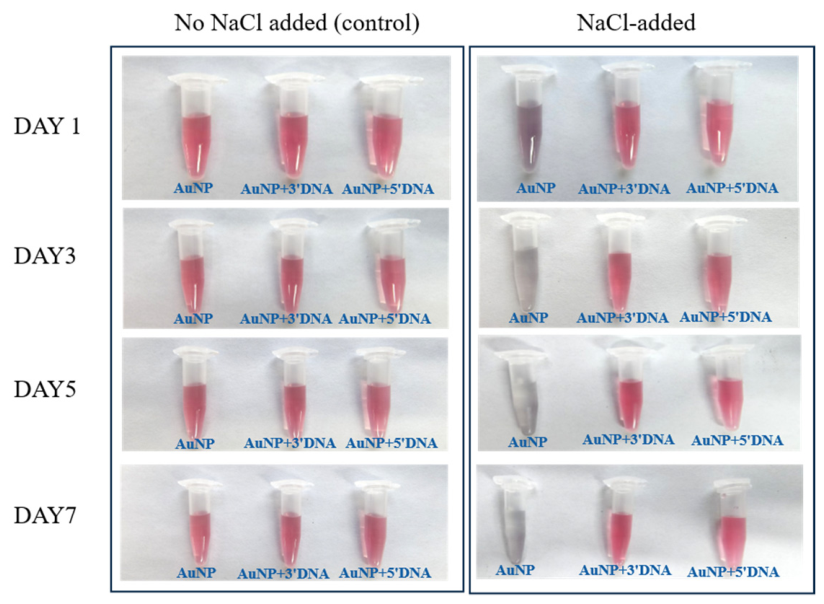
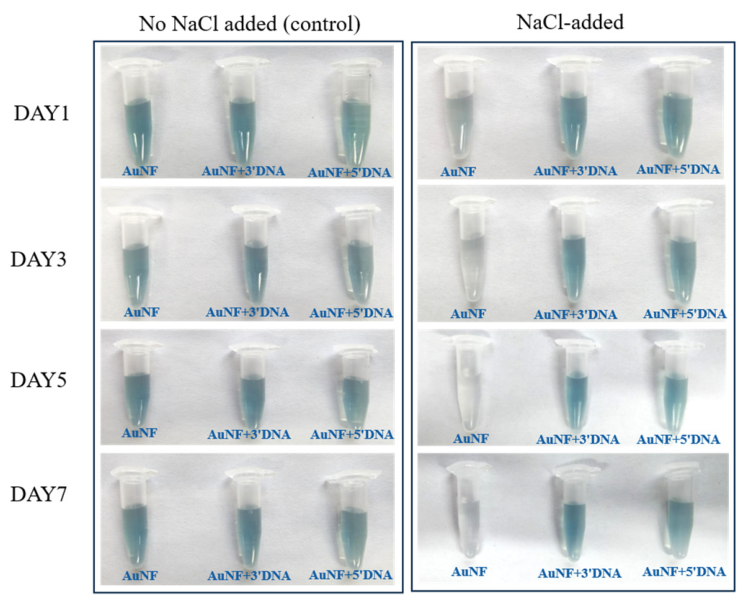
- Aptamer-functionalized AuNPs and AuNFs showed improved qualitative visual tolerance to salt-induced aggregation relative to bare particles under the tested conditions.
- The study provides preliminary materials-level information for evaluating thiolated aptamer conjugation behavior and may support future glyphosate aptasensor optimization.
Abstract
1. Introduction
2. Materials and Methods
2.1. Materials and Reagents
2.2. Instruments
2.3. Stepwise Salt-Aging Conjugation of Thiolated Aptamers
2.4. Qubit-Based Estimation of Apparent Conjugation Output
2.5. Particle Characterization
2.5.1. Dynamic Light Scattering (DLS) and Zeta Potential
2.5.2. Transmission Electron Microscopy (TEM)
2.5.3. Qualitative Visual Salt-Challenge Assessment
2.6. Statistical Analysis
3. Results
3.1. Qubit-Based Apparent DNA Association Output Under Matched Preparation Conditions
3.2. Hydrodynamic Size and Zeta Potential Changes After Conjugation
3.3. TEM Imaging and Morphology Retention
3.4. Qualitative Visual Salt-Challenge Response
4. Discussion
4.1. Influence of Morphology and Anchoring Orientation on Apparent Conjugation Output
4.2. Hydrodynamic Size and Zeta Potential as Comparative Interfacial Indicators
4.3. Apparent Qubit-Based DNA Association Output Across Particle Types
4.4. Qualitative Visual Response Under Electrolyte Challenge
5. Conclusions
Author Contributions
Funding
Data Availability Statement
Acknowledgments
Conflicts of Interest
References
- Duman, H.; Akdaşçi, E.; Eker, F.; Bechelany, M.; Karav, S. Gold Nanoparticles: Multifunctional Properties, Synthesis, and Future Prospects. Nanomaterials 2024, 14, 1805. [Google Scholar] [CrossRef]
- Georgeous, J.; AlSawaftah, N.; Abuwatfa, W.H.; Husseini, G.A. Review of Gold Nanoparticles: Synthesis, Properties, Shapes, Cellular Uptake, Targeting, Release Mechanisms and Applications in Drug Delivery and Therapy. Pharmaceutics 2024, 16, 1332. [Google Scholar] [CrossRef]
- Love, J.C.; Estroff, L.A.; Kriebel, J.K.; Nuzzo, R.G.; Whitesides, G.M. Self-Assembled Monolayers of Thiolates on Metals as a Form of Nanotechnology. Chem. Rev. 2005, 105, 1103–1170. [Google Scholar] [CrossRef]
- Song, Z.; Wang, X.; Chen, P.; Wang, Z.; Ma, X. A gold nanoflower based dual mode aptasensor for aflatoxin B1 detection using SERS and fluorescence effect simultaneously. Spectrochim. Acta A Mol. Biomol. Spectrosc. 2023, 301, 122963. [Google Scholar] [CrossRef]
- Liu, R.; He, B.; Jin, H.; Suo, Z. A Fluorescent Aptasensor for Pb2+ Detection Based on Gold Nanoflowers and RecJf Exonuclease-Induced Signal Amplification. Anal. Chim. Acta 2022, 1192, 339329. [Google Scholar] [CrossRef]
- Qiao, M.; Liu, Y.; Wei, M. Dual-signal output fluorescent aptasensor based on DNA programmability and gold nanoflowers for multiple mycotoxins detection. Anal. Bioanal. Chem. 2023, 415, 277–288. [Google Scholar] [CrossRef]
- Xie, M.; Zhang, Y.; Li, P.; Wang, L. DNA-Based Gold Nanoparticle Assemblies: From Structure Constructions to Sensing Applications. Sensors 2023, 23, 9229. [Google Scholar] [CrossRef]
- Fasogbon, I.; Olaleye, T.; Adeoye, O.; Ige, O. Advances and future directions of aptamer-Functionalized Nanoparticles for Point-of-Care Diagnostics. Biol. Methods Protoc. 2025, 10, bpaf046. [Google Scholar] [CrossRef]
- Liu, B.; Liu, J. Interface-Driven Hybrid Materials Based on DNA-Functionalized Gold Nanoparticles. Matter 2019, 1, 825–847. [Google Scholar] [CrossRef]
- Mirkin, C.A.; Letsinger, R.L.; Mucic, R.C.; Storhoff, J.J. A DNA-Based Method for Rationally Assembling Nanoparticles into Macroscopic Materials. Nature 1996, 382, 607–609. [Google Scholar] [CrossRef]
- Ma, X.; Li, X.; Luo, G.; Jiao, J. DNA-Functionalized Gold Nanoparticles: Modification, Characterization, and Biomedical Applications. Front. Chem. 2022, 10, 1095488. [Google Scholar] [CrossRef]
- Graczyk, A.; Pawlowska, R.; Jedrzejczyk, D.; Chworos, A. Gold Nanoparticles in Conjunction with Nucleic Acids as a Modern Molecular System for Cellular Delivery. Molecules 2020, 25, 204. [Google Scholar] [CrossRef]
- Zhou, M.; Li, J.; Yuan, S.; Yang, X.; Lu, J.; Jiang, B. A centrifugal microfluidic system for automated detection of multiple heavy metal ions by aptamer-based colorimetric assay. Sens. Actuators B Chem. 2024, 403, 135210. [Google Scholar] [CrossRef]
- Lerga, T.M.; Poulsen, J.N.; Nielsen, J.L.; Sørensen, M.R. Gold Nanoparticle Aptamer Assay for the Determination of Histamine in Foodstuffs. Microchim. Acta 2020, 187, 452. [Google Scholar] [CrossRef]
- Khongwichit, S.; Swangphon, P.; Nanakorn, N.; Nualla-Ong, A.; Choowongkomon, K.; Lieberzeit, P.A.; Chunta, S. A simple aptamer/gold nanoparticle aggregation-based colorimetric assay for oxidized low-density lipoprotein determination. Talanta 2023, 254, 124199. [Google Scholar] [CrossRef]
- Abnous, K.; Danesh, N.; Ramezani, M. DNA-Protected Gold Nanoparticles against Salt-Induced Aggregation. Biosens. Bioelectron. 2018, 111, 43–49. [Google Scholar] [PubMed]
- Behzad, F.; Samadi, A.; Rahimpour, E.; Adabi, M.; Jouyban, A. Recent advances in gold nanoparticle-based colorimetric aptasensors for chemical and biological analyses. Bioanalysis 2022, 14, 1509–1524. [Google Scholar] [CrossRef]
- Li, Y.; Wu, Y.; Wang, Z.; Yang, J. Multi-branched gold nanoflower-enhanced aptamer-based lateral flow assay for the detection of aflatoxin M1 in milk. Spectrochim. Acta A Mol. Biomol. Spectrosc. 2026, 349, 127288. [Google Scholar] [CrossRef]
- Hurst, S.J.; Lytton-Jean, A.K.R.; Mirkin, C.A. Maximizing DNA Loading on a Range of Gold Nanoparticle Sizes. Anal. Chem. 2006, 78, 8313–8318. [Google Scholar] [CrossRef]
- Zhang, X.; Gouriye, T.; Göeken, K.; Servos, M.R.; Gill, R.; Liu, J. Toward Fast and Quantitative Modification of Large Gold Nanoparticles by Thiolated DNA: Scaling of Nanoscale Forces, Kinetics, and the Need for Thiol Reduction. J. Phys. Chem. C 2013, 117, 15677–15684. [Google Scholar] [CrossRef]
- Xu, S.; Yuan, H.; Xu, A.; Wang, J.; Wu, L. Rapid synthesis of stable and functional conjugates of DNA/gold nanoparticles mediated by Tween 80. Langmuir 2011, 27, 13629–13634. [Google Scholar] [CrossRef]
- San Juan, A.; Samaroo, D.; Koenig, B.W.; Hayes, D.; Eaton, S.S.; Wiley, B.J. Freeze-Driven Synthesis of DNA Hairpin-Conjugated Gold Nanoparticle Biosensors. ACS Appl. Bio Mater. 2024, 7, 3005–3013. [Google Scholar] [CrossRef]
- Wang, W.; Ding, X.; Xu, Q.; Wang, J.; Wang, L.; Lou, X. Zeta-Potential Data Reliability of Gold Nanoparticle Biomolecular Conjugates and Its Application in Sensitive Quantification of Surface Adsorbed Protein. Colloids Surf. B Biointerfaces 2016, 148, 541–548. [Google Scholar] [CrossRef]
- Bhattacharjee, S. DLS and Zeta Potential—What They Are and What They Are Not? J. Control. Release 2016, 235, 337–351. [Google Scholar] [CrossRef]
- Zhao, W.; Chiuman, W.; Lam, J.C.F.; McManus, S.A.; Chen, W.; Cui, Y.; Pelton, R.; Brook, M.A.; Li, Y. DNA Aptamer Folding on Gold Nanoparticles: From Colloid Chemistry to Biosensors. J. Am. Chem. Soc. 2008, 130, 3610–3618. [Google Scholar] [CrossRef]
- Li, Z.; Jin, R.; Mirkin, C.A.; Letsinger, R.L. Multiple Thiol-Anchor Capped DNA–Gold Nanoparticle Conjugates. Nucleic Acids Res. 2002, 30, 1558–1562. [Google Scholar] [CrossRef]
- Esmaelpourfarkhani, M.; Rahimi, R.; Hashemi, M. Signal-Off Nanozyme-Based Colorimetric Aptasensor for Sensitive Detection of Ampicillin Using MnO2 Nanoflowers and Gold Nanoparticles. Anal. Biochem. 2024, 687, 115459. [Google Scholar] [CrossRef]
- Qin, M.W.; Zhang, X.M.; Jing, L.; Song, Y.Z.; Zhang, J.Y.; Xia, X.S.; Han, Q.Q. Screening and application of nucleic acid aptamers specifically binding glyphosate. J. Anal. Sci. 2020, 36, 57–62. (In Chinese) [Google Scholar] [CrossRef]
- Hwu, S.; Garzuel, M.; Forró, C.; Ihle, S.J.; Reichmuth, A.M.; Kurdzesau, F.; Vörös, J. An analytical method to control the surface density and stability of DNA-gold nanoparticles for an optimized biosensor. Colloids Surf. B Biointerfaces 2020, 188, 110650. [Google Scholar] [CrossRef]
- Zhang, X.; Servos, M.R.; Liu, J. Instantaneous and Quantitative Functionalization of Gold Nanoparticles with Thiolated DNA Using a pH-Assisted and Surfactant-Free Route. J. Am. Chem. Soc. 2012, 134, 7266–7269. [Google Scholar] [CrossRef]
- Liu, J.; Liu, B. Methods for preparing DNA-functionalized gold nanoparticles, a key reagent of bioanalytical chemistry. Anal. Methods 2017, 9, 2633–2643. [Google Scholar] [CrossRef]
- Xu, Q.; Lou, X.; Wang, L.; Ding, X.; Yu, H.; Xiao, Y. Rapid, Surfactant-Free, and Quantitative Functionalization of Gold Nanoparticles with Thiolated DNA under Physiological pH and Its Application in Molecular Beacon-Based Biosensor. ACS Appl. Mater. Interfaces 2016, 8, 27298–27304. [Google Scholar] [CrossRef] [PubMed]
- Pourali, P.; Dzmitruk, V.; Benada, O.; Svoboda, M.; Benson, V. Conjugation of microbial-derived gold nanoparticles to different types of nucleic acids: Evaluation of transfection efficiency. Sci. Rep. 2023, 13, 14669. [Google Scholar] [CrossRef]
- Villarreal, E.; Li, G.G.; Zhang, Q.; Fu, X.; Wang, H. Nanoscale Surface Curvature Effects on Ligand–Nanoparticle Interactions: Plasmon-Enhanced Spectroscopic Study of Thiolated Ligand Adsorption, Desorption, and Exchange on Gold Nanoparticles. Nano Lett. 2017, 17, 4443–4452. [Google Scholar] [CrossRef] [PubMed]
- Mei, B.C.; Oh, E.; Susumu, K.; Farrell, D.; Mountziaris, T.J.; Mattoussi, H. Effects of Ligand Coordination Number and Surface Curvature on the Stability of Gold Nanoparticles in Aqueous Solutions. Langmuir 2009, 25, 10604–10611. [Google Scholar] [CrossRef] [PubMed]




| Instrument | Model | Manufacturer |
|---|---|---|
| Analytical balance | OHAUS-CP114 | OHAUS Instruments (Shanghai) Co., Ltd., Shanghai, China |
| Transmission electron microscope (TEM) | JEM-2100 | JEOL Ltd., Akishima, Tokyo, Japan |
| Dynamic light scattering/Zeta potential | Nano ZS | Malvern Panalytical Ltd., Malvern, Worcestershire, UK |
| Fluorometer | Qubit 4.0 | Thermo Fisher Scientific Inc., Waltham, MA, USA |
| Refrigerated centrifuge | 5430R | Hunan Xiangyi Laboratory Instrument Development Co., Ltd., Changsha, Hunan, China |
| Sample | DNA Input Concentration, (ng/µL) | DNA Input Volume, (µL) | Total DNA Input (ng) | Supernatant ssDNA Concentration, (ng/µL) | Supernatant Volume, (µL) | Supernatant ssDNA (ng) | Conjugated DNA (ng) | Conjugation Yield (%) |
|---|---|---|---|---|---|---|---|---|
| AuNP–3′SH | 288.9 | 10 | 2889.0 | 0.47 ± 0.04 | 1190 | 559.3 ± 47.4 | 2329.7 ± 47.4 | 80.65 ± 1.64 |
| AuNP–5′SH | 288.9 | 10 | 2889.0 | 0.37 ± 0.05 | 1190 | 440.3 ± 57.1 | 2448.7 ± 57.1 | 84.76 ± 1.98 |
| AuNF–3′SH | 288.9 | 10 | 2889.0 | 0.81 ± 0.08 | 1190 | 963.9 ± 97.0 | 1925.1 ± 97.0 | 66.64 ± 3.36 |
| AuNF–5′SH | 288.9 | 10 | 2889.0 | 0.64 ± 0.03 | 1190 | 761.6 ± 39.3 | 2127.4 ± 39.3 | 73.65 ± 1.36 |
| Type | Hydrodynamic Diameter (nm) | Zeta Potential (mV) |
|---|---|---|
| AuNPs | 70.41 ± 1.10 | −28.40 ± 0.64 |
| AuNPs-3′SH | 118.30 ± 2.04 | −40.80 ± 0.59 |
| AuNPs-5′SH | 119.10 ± 1.06 | −41.50 ± 0.66 |
| AuNFs | 70.35 ± 1.27 | −36.00 ± 0.45 |
| AuNFs-3′SH | 108.80 ± 2.67 | −40.55 ± 0.66 |
| AuNFs-5′SH | 115.30 ± 3.18 | −39.98 ± 0.89 |
Disclaimer/Publisher’s Note: The statements, opinions and data contained in all publications are solely those of the individual author(s) and contributor(s) and not of MDPI and/or the editor(s). MDPI and/or the editor(s) disclaim responsibility for any injury to people or property resulting from any ideas, methods, instructions or products referred to in the content. |
© 2026 by the authors. Licensee MDPI, Basel, Switzerland. This article is an open access article distributed under the terms and conditions of the Creative Commons Attribution (CC BY) license.
Share and Cite
Sun, J.; Zhang, L.; Gonçalves, D.; Kuang, S.; Yang, H. Comparative Materials-Level Evaluation of 3′- and 5′-Thiol DNA Aptamer Conjugation on Gold Nanospheres and Nanoflowers: Apparent DNA Loading Output, Morphology Retention, and Qualitative Salt-Challenge Response. Sensors 2026, 26, 3076. https://doi.org/10.3390/s26103076
Sun J, Zhang L, Gonçalves D, Kuang S, Yang H. Comparative Materials-Level Evaluation of 3′- and 5′-Thiol DNA Aptamer Conjugation on Gold Nanospheres and Nanoflowers: Apparent DNA Loading Output, Morphology Retention, and Qualitative Salt-Challenge Response. Sensors. 2026; 26(10):3076. https://doi.org/10.3390/s26103076
Chicago/Turabian StyleSun, Jingchun, Linbing Zhang, David Gonçalves, Shaoping Kuang, and Hongsheng Yang. 2026. "Comparative Materials-Level Evaluation of 3′- and 5′-Thiol DNA Aptamer Conjugation on Gold Nanospheres and Nanoflowers: Apparent DNA Loading Output, Morphology Retention, and Qualitative Salt-Challenge Response" Sensors 26, no. 10: 3076. https://doi.org/10.3390/s26103076
APA StyleSun, J., Zhang, L., Gonçalves, D., Kuang, S., & Yang, H. (2026). Comparative Materials-Level Evaluation of 3′- and 5′-Thiol DNA Aptamer Conjugation on Gold Nanospheres and Nanoflowers: Apparent DNA Loading Output, Morphology Retention, and Qualitative Salt-Challenge Response. Sensors, 26(10), 3076. https://doi.org/10.3390/s26103076