Article

Infrared Ship Detection in Complex Nearshore Scenes Based on Improved YOLOv5s

Key Laboratory of Marine Simulation and Control, Navigation College, Dalian Maritime University, Dalian 116026, China
*
Author to whom correspondence should be addressed.
Sensors 2025, 25(13), 3979; https://doi.org/10.3390/s25133979
Submission received: 16 April 2025 / Revised: 13 June 2025 / Accepted: 24 June 2025 / Published: 26 June 2025
(This article belongs to the Section Optical Sensors)

Abstract

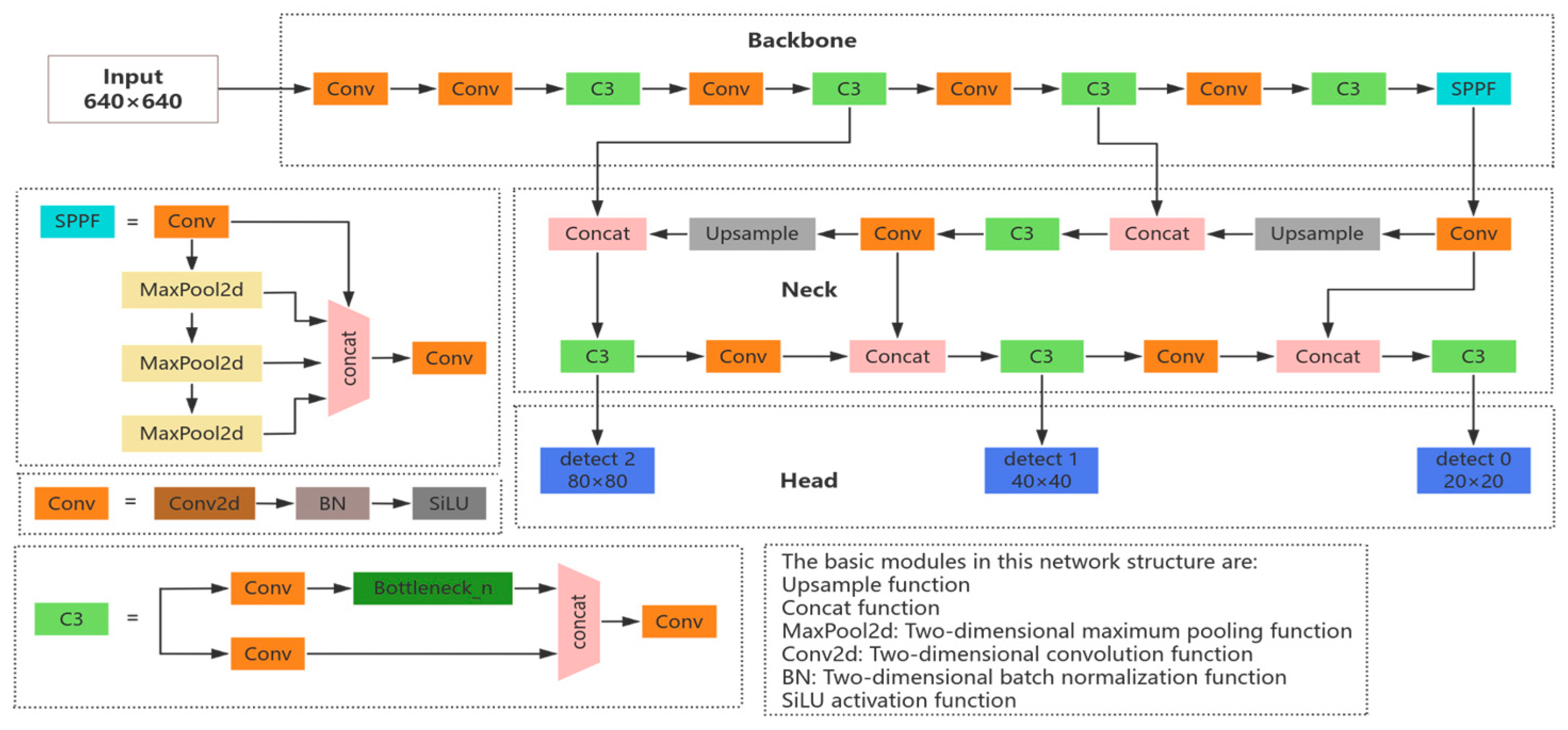
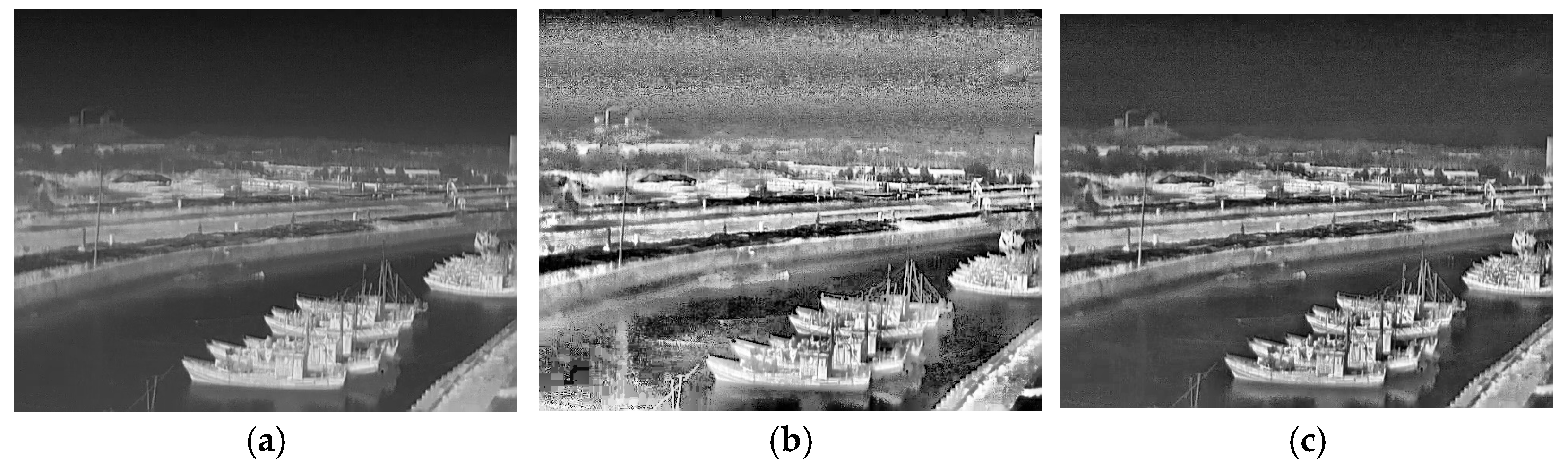
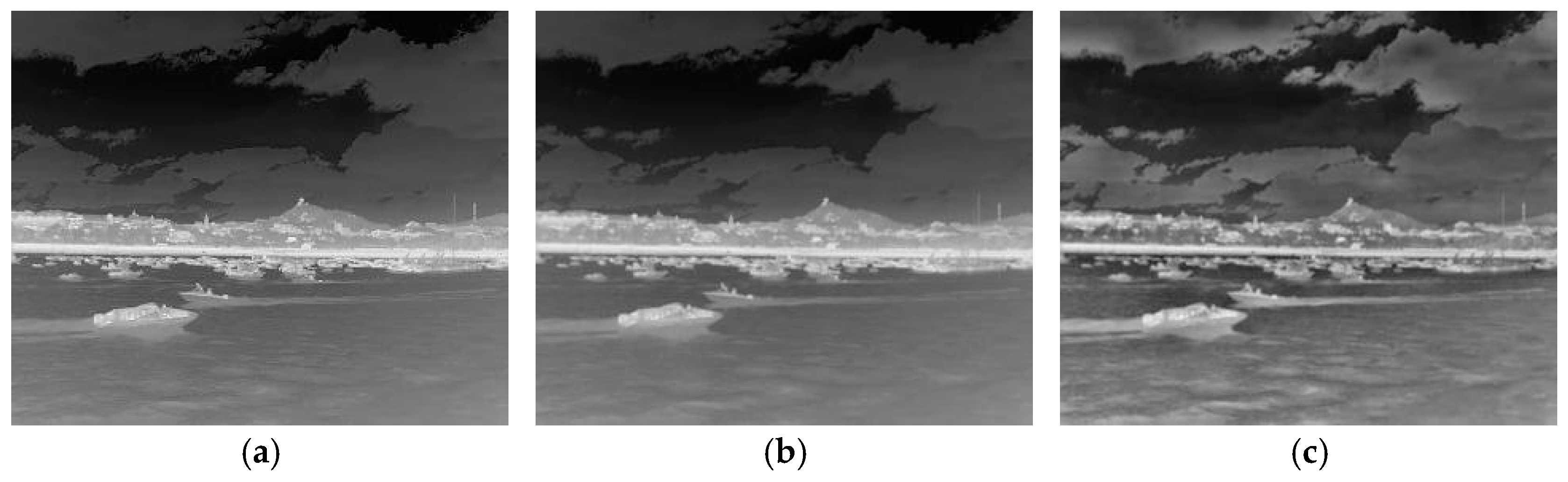
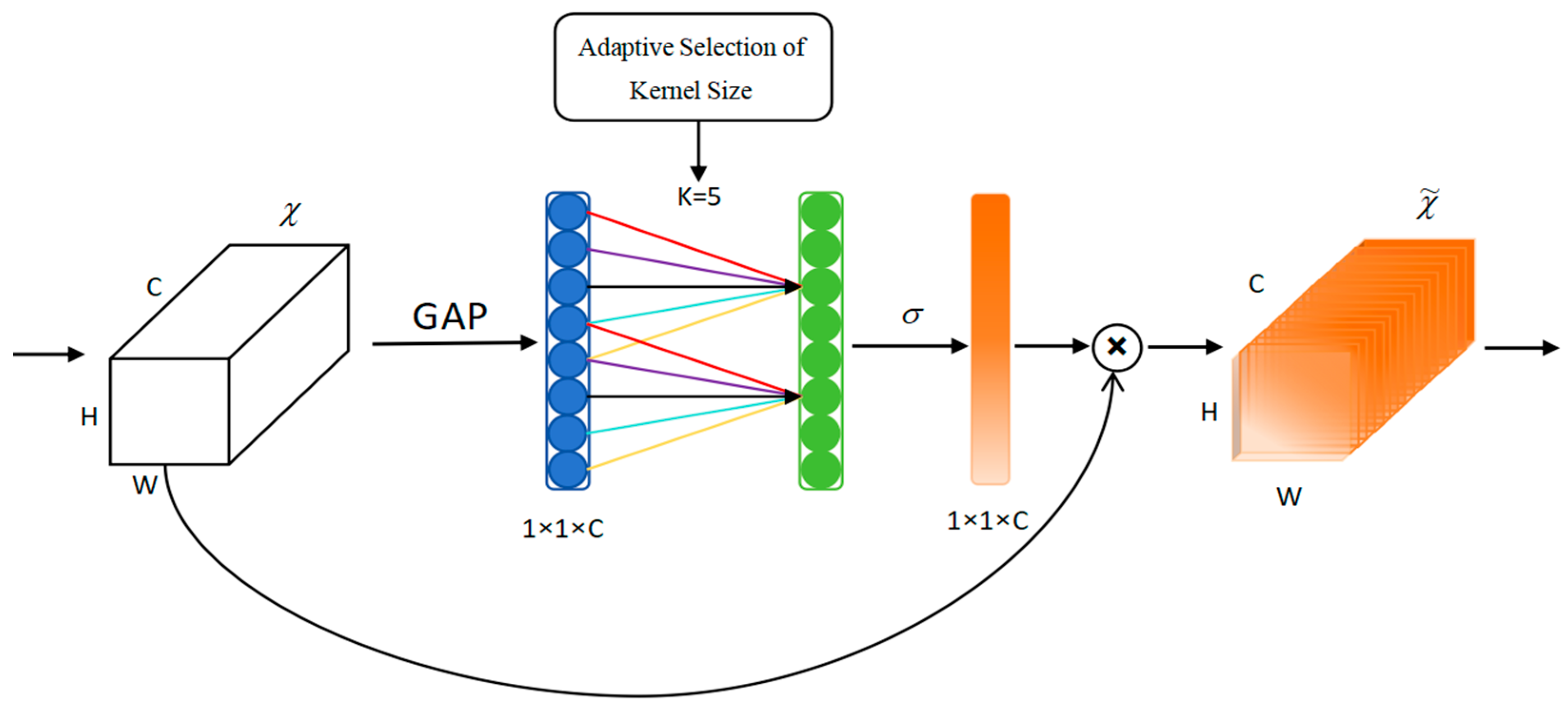
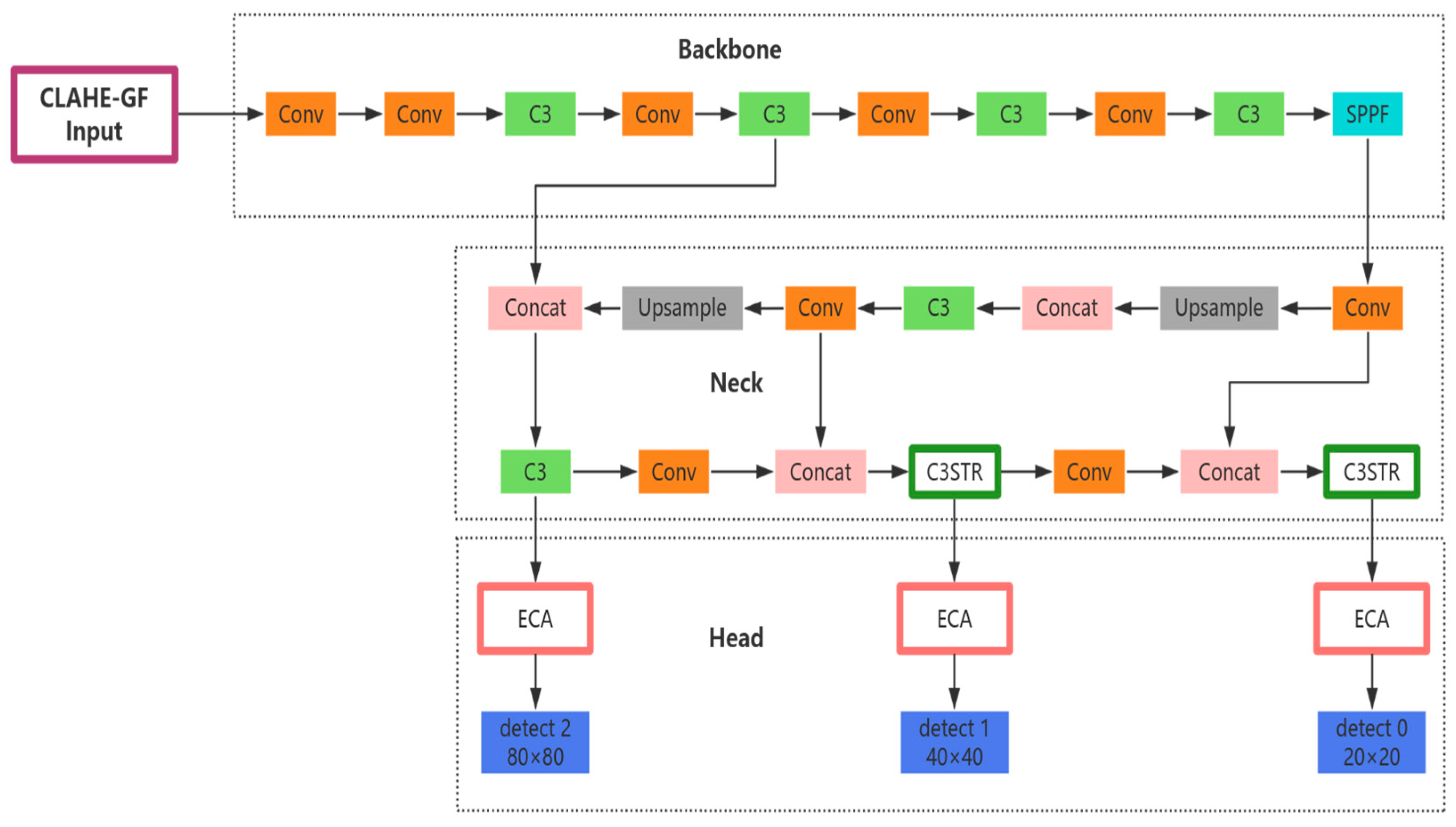
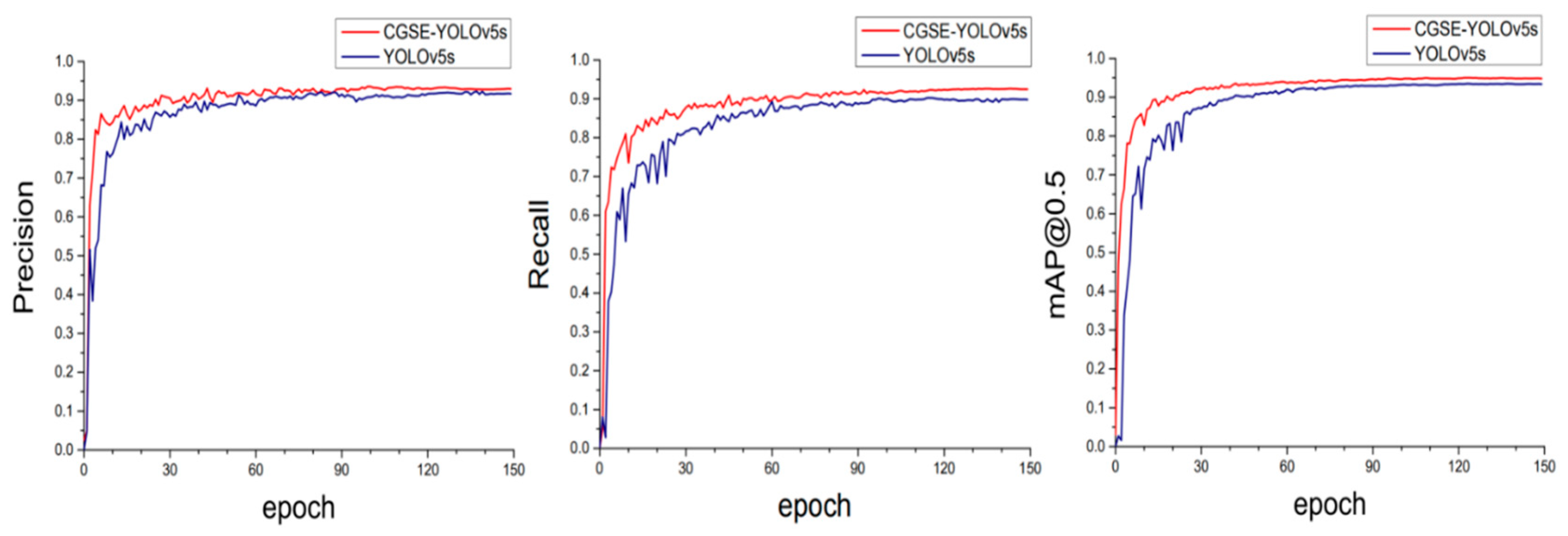
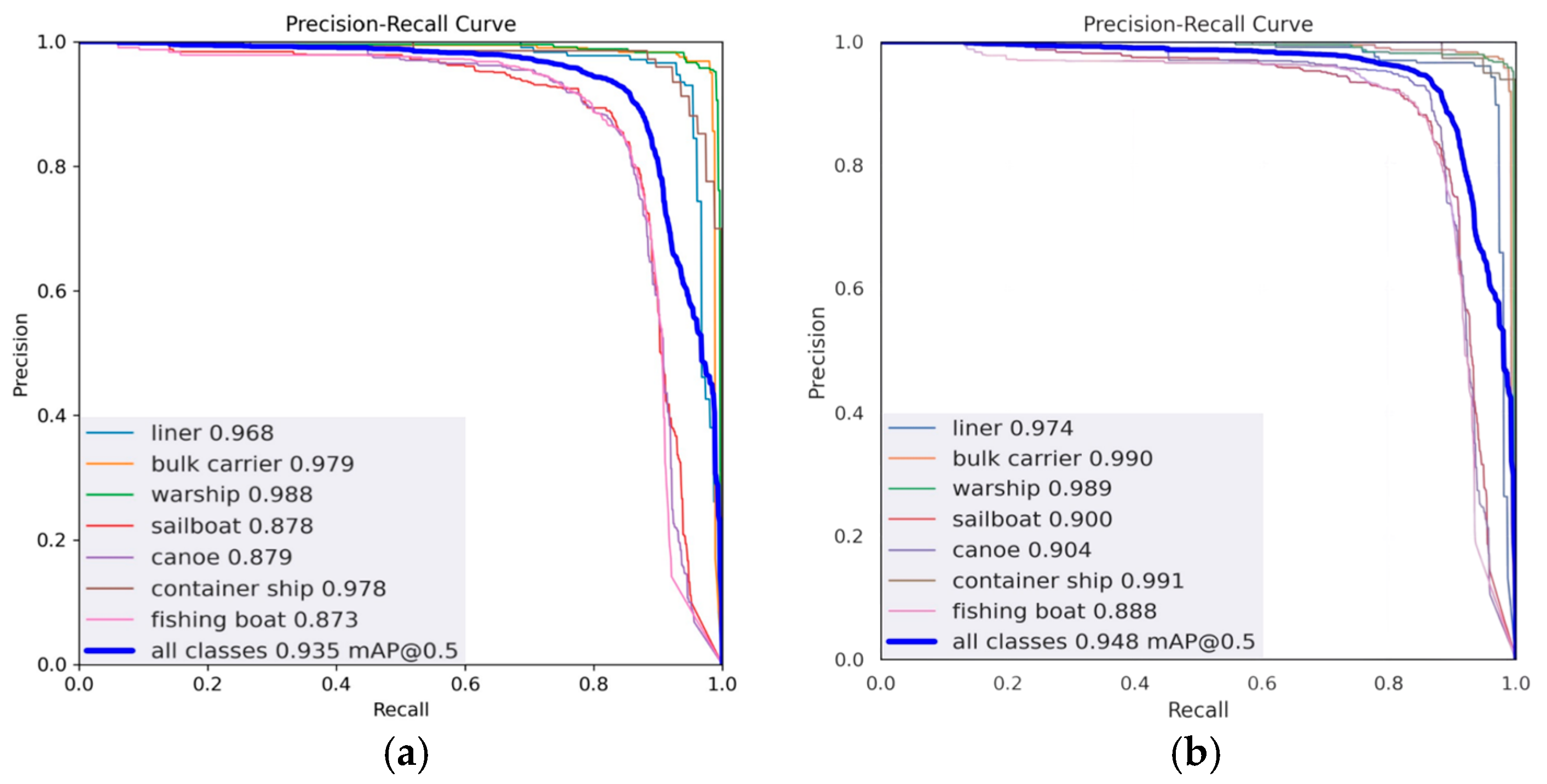
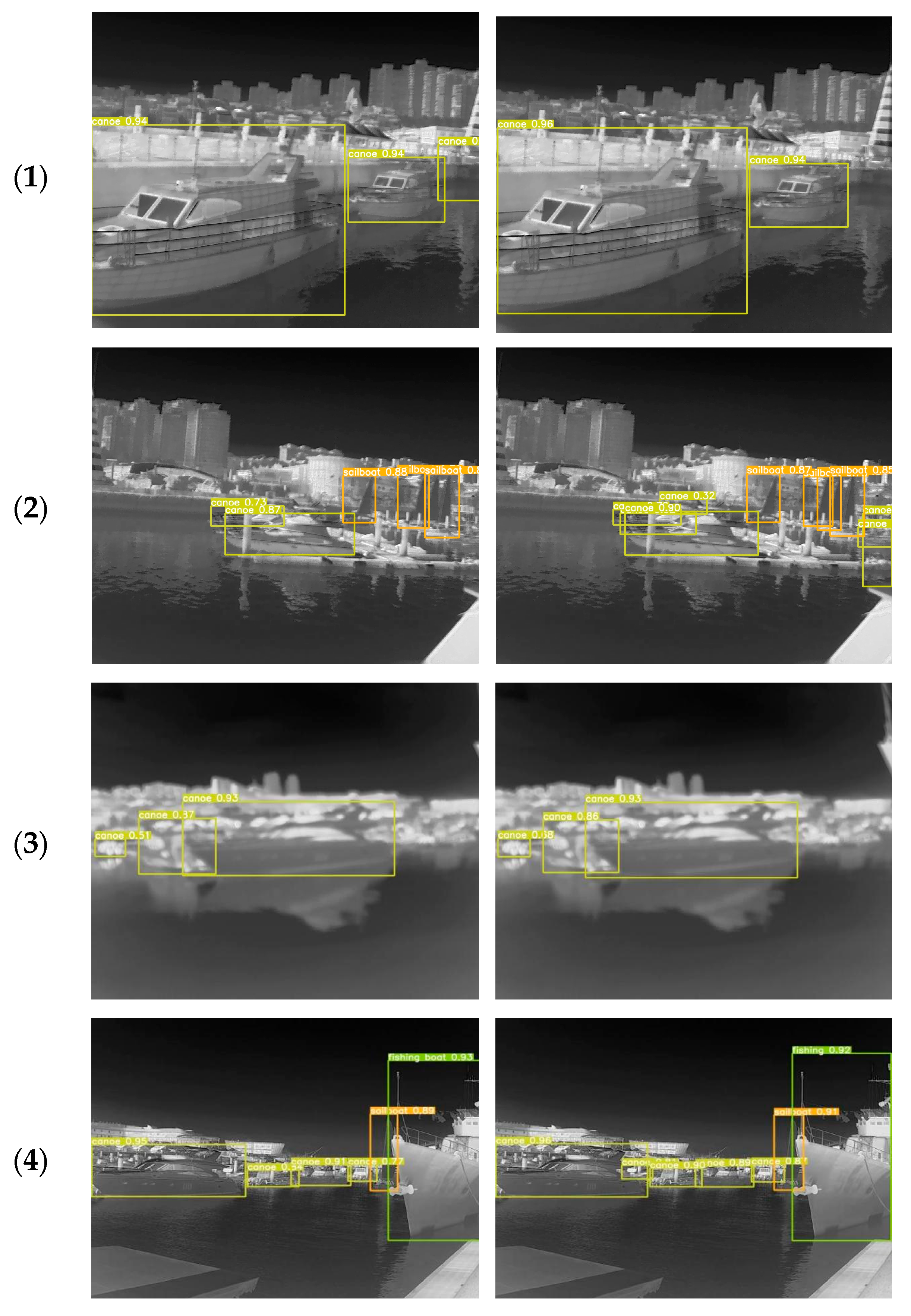
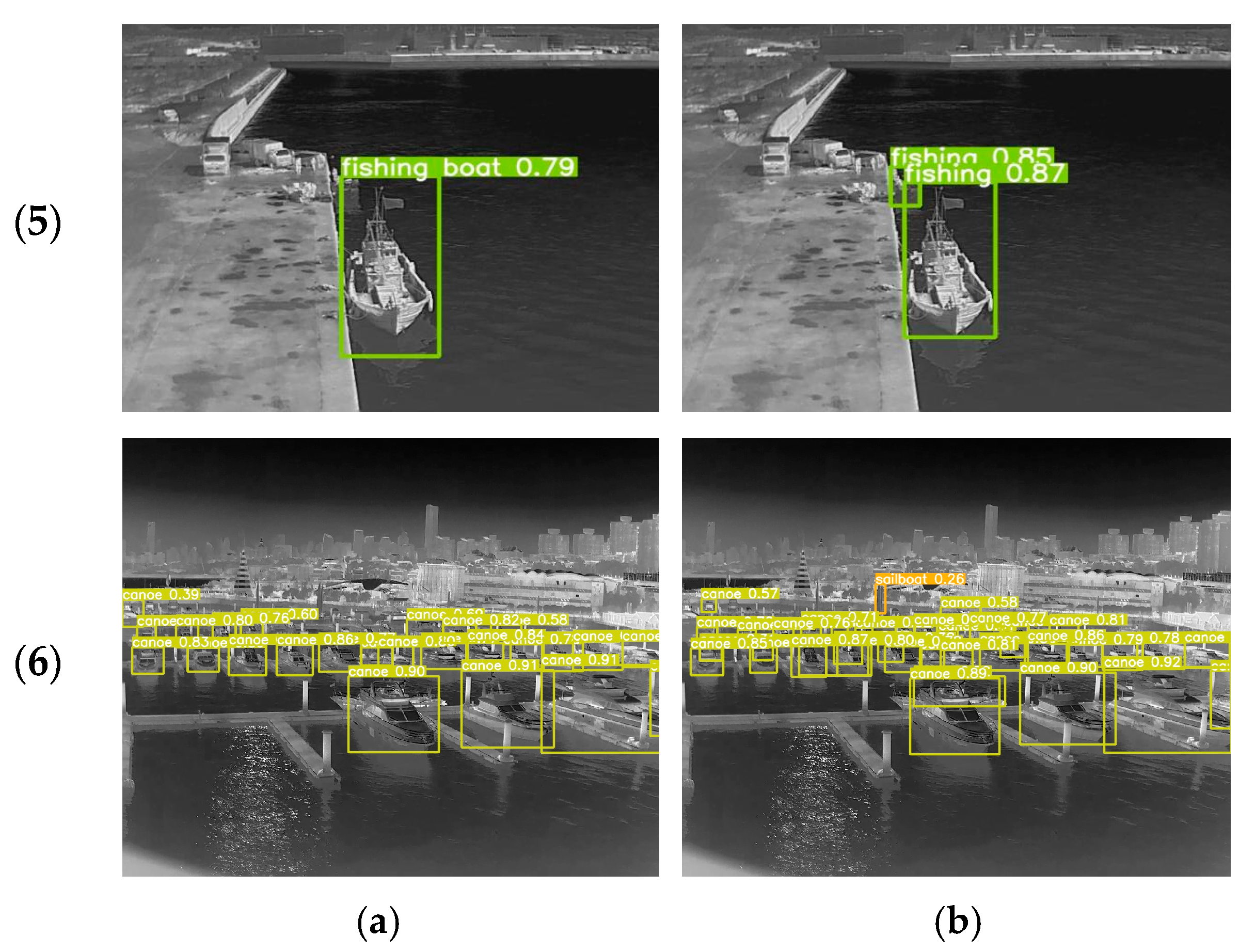
Ensuring navigational safety in nearshore waters is essential for the sustainable development of the shipping economy. Accurate ship identification and classification are central to this objective, underscoring the critical importance of ship detection technology. However, compared to open-sea surface, dense vessel distributions and complex backgrounds in nearshore areas substantially limit detection efficacy. Infrared vision sensors offer distinct advantages over visible light by enabling reliable target detection in all weather conditions. This study therefore proposes CGSE-YOLOv5s, an enhanced YOLOv5s-based algorithm specifically designed for complex infrared nearshore scenarios. Three key improvements are introduced: (1) Contrast Limited Adaptive Histogram Equalization integrated with Gaussian Filtering enhances target edge sharpness; (2) Replacement of the feature pyramid network’s C3 module with a Swin Transformer-based C3STR module reduces multi-scale false detections; and (3) Implementation of an Efficient Channel Attention mechanism amplifies critical target features. Experimental results demonstrate that CGSE-YOLOv5s achieves a mean average precision (mAP@0.5) of 94.8%, outperforming YOLOv5s by 1.3% and surpassing other detection algorithms.
Keywords: nearshore waters; ship detection; infrared vision; YOLOv5s nearshore waters; ship detection; infrared vision; YOLOv5s