Article

Leveraging LiDAR-Based Simulations to Quantify the Complexity of the Static Environment for Autonomous Vehicles in Rural Settings

by
Mohamed Abohassan
* and
Karim El-Basyouny
Department of Civil and Environmental Engineering, Faculty of Engineering, University of Alberta, Edmonton, AB T6G 1H9, Canada
*
Author to whom correspondence should be addressed.
Sensors 2024, 24(2), 452; https://doi.org/10.3390/s24020452
Submission received: 25 November 2023 / Revised: 5 January 2024 / Accepted: 9 January 2024 / Published: 11 January 2024
(This article belongs to the Special Issue Multi-modal Sensor Fusion and 3D LiDARs for Vehicle Applications)

Abstract

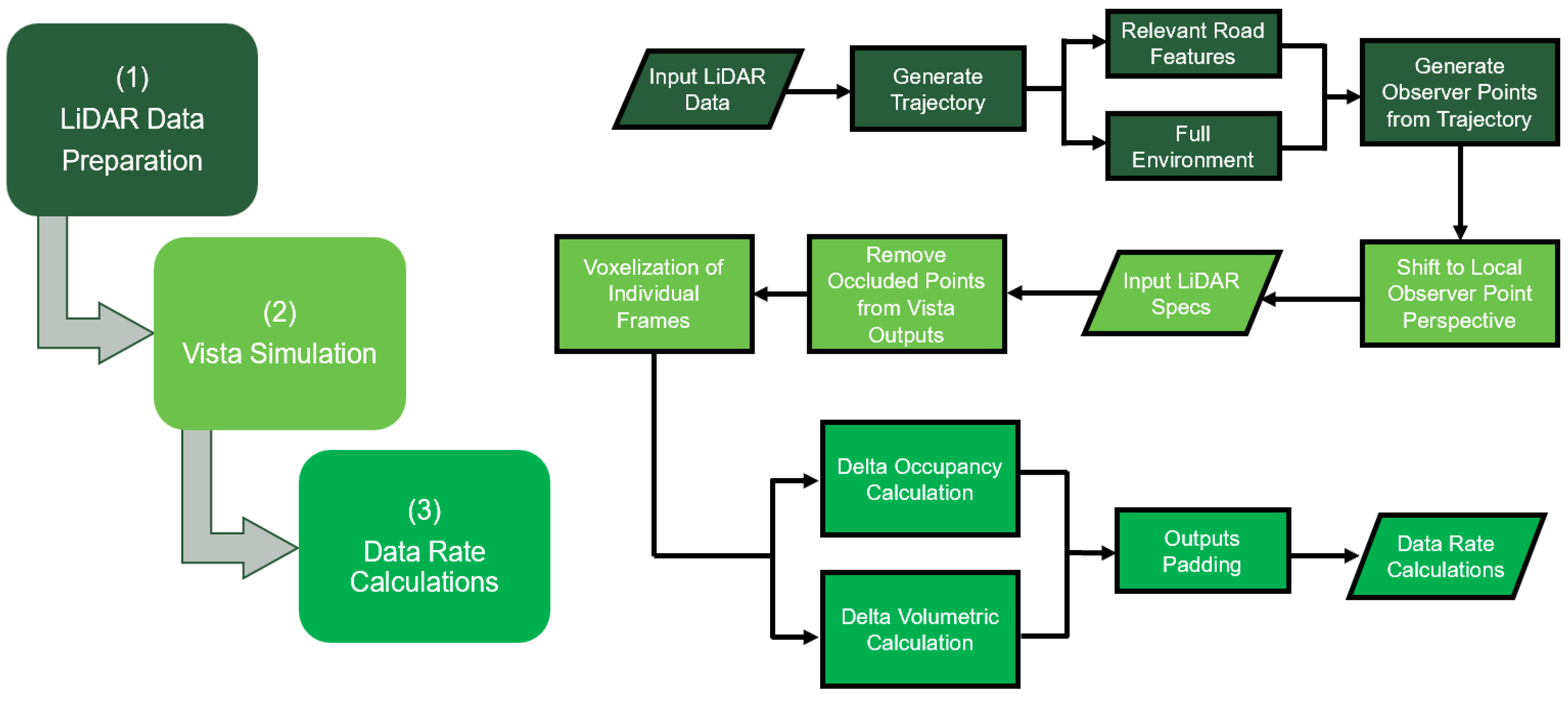
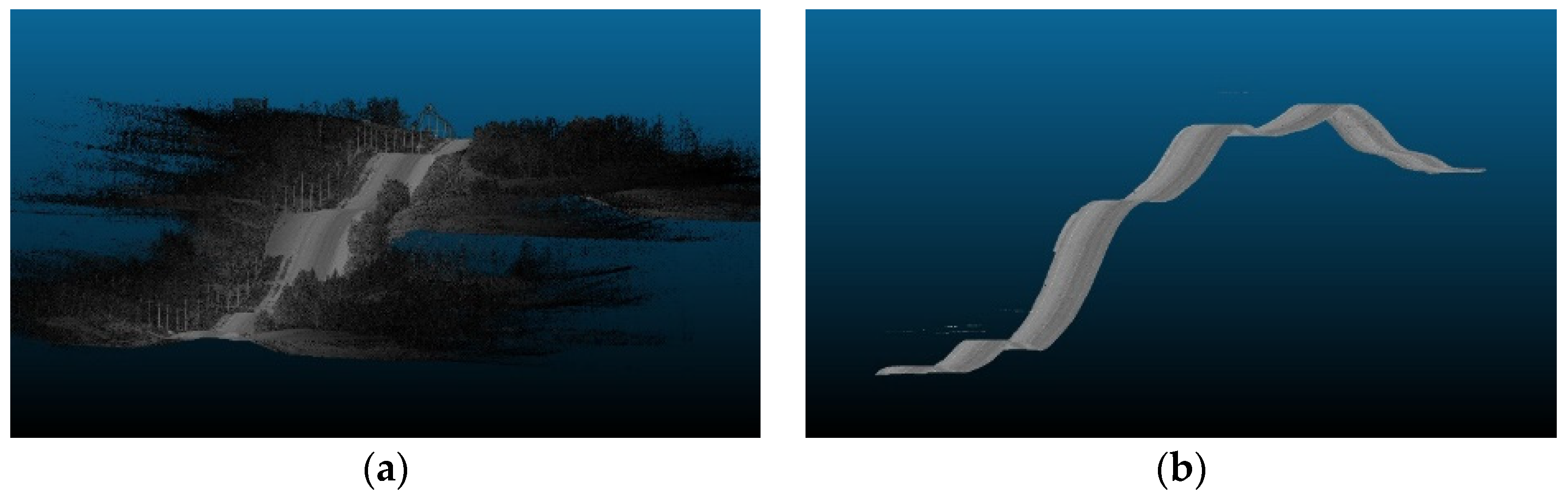
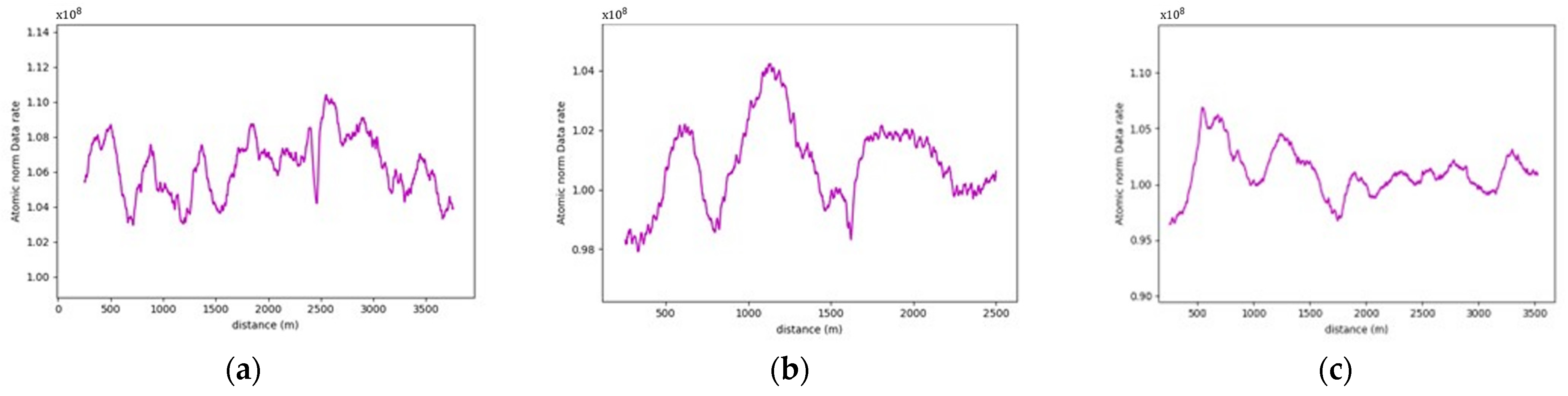
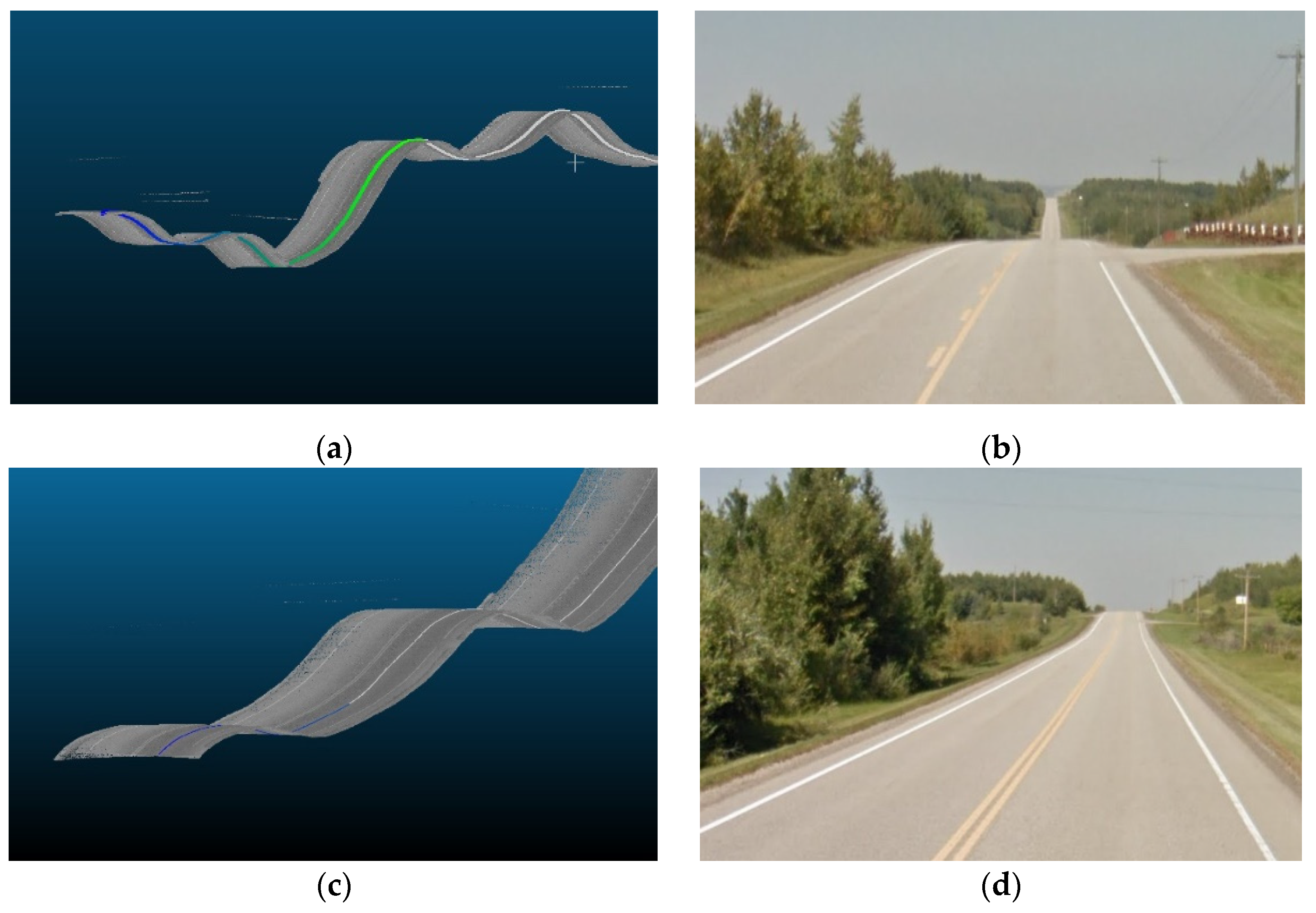
This paper uses virtual simulations to examine the interaction between autonomous vehicles (AVs) and their surrounding environment. A framework was developed to estimate the environment’s complexity by calculating the real-time data processing requirements for AVs to navigate effectively. The VISTA simulator was used to synthesize viewpoints to replicate the captured environment accurately. With an emphasis on static physical features, roadways were dissected into relevant road features (RRFs) and full environment (FE) to study the impact of roadside features on the scene complexity and demonstrate the gravity of wildlife–vehicle collisions (WVCs) on AVs. The results indicate that roadside features substantially increase environmental complexity by up to 400%. Increasing a single lane to the road was observed to increase the processing requirements by 12.3–16.5%. Crest vertical curves decrease data rates due to occlusion challenges, with a reported average of 4.2% data loss, while sag curves can increase the complexity by 7%. In horizontal curves, roadside occlusion contributed to severe loss in road information, leading to a decrease in data rate requirements by as much as 19%. As for weather conditions, heavy rain increased the AV’s processing demands by a staggering 240% when compared to normal weather conditions. AV developers and government agencies can exploit the findings of this study to better tailor AV designs and meet the necessary infrastructure requirements.
Keywords: autonomous vehicles; virtual simulations; LiDAR data; digital twins; data processing; wildlife–vehicle collisions autonomous vehicles; virtual simulations; LiDAR data; digital twins; data processing; wildlife–vehicle collisions