Article

An Improved Longitudinal Driving Car-Following System Considering the Safe Time Domain Strategy

by
Xing Xu
,
Zekun Wu
and
Yun Zhao
*
School of Information and Electronic Engineering, Zhejiang University of Science and Technology, Hangzhou 310023, China
*
Author to whom correspondence should be addressed.
Sensors 2024, 24(16), 5202; https://doi.org/10.3390/s24165202
Submission received: 1 July 2024 / Revised: 19 July 2024 / Accepted: 30 July 2024 / Published: 11 August 2024
(This article belongs to the Section Vehicular Sensing)

Abstract

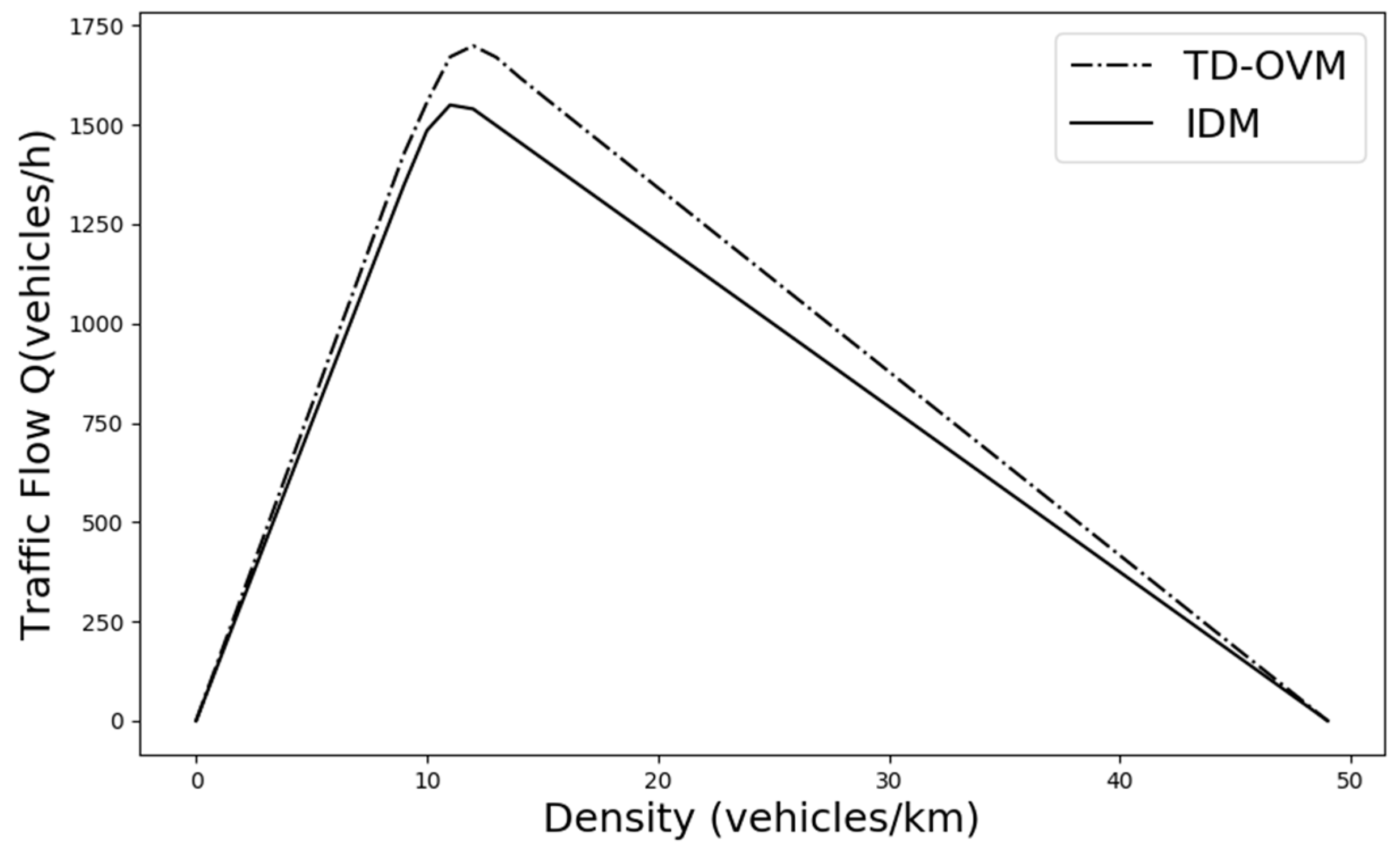
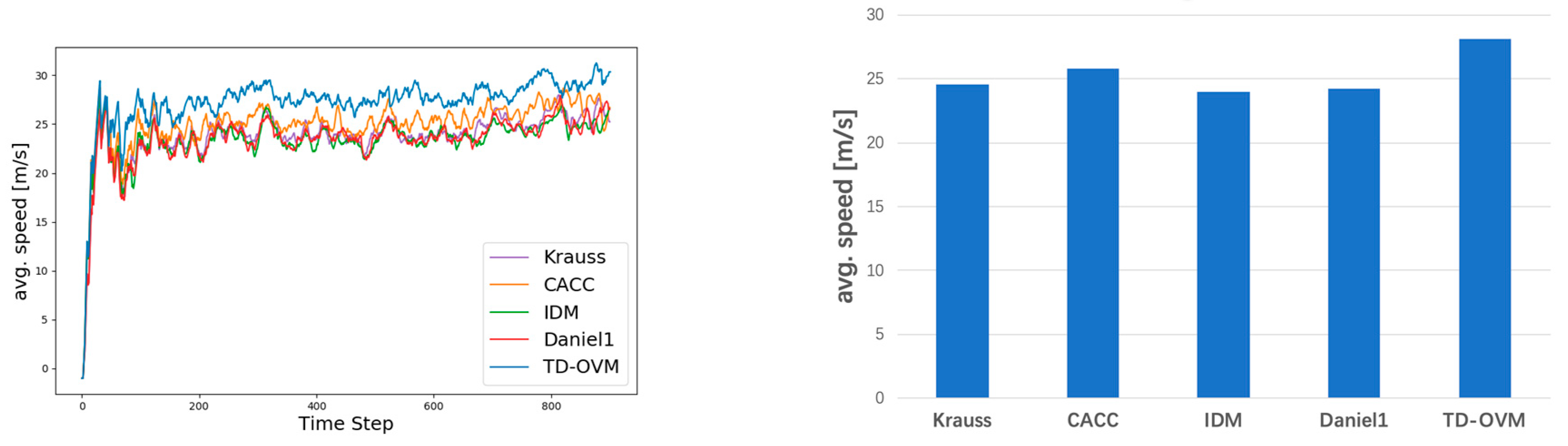
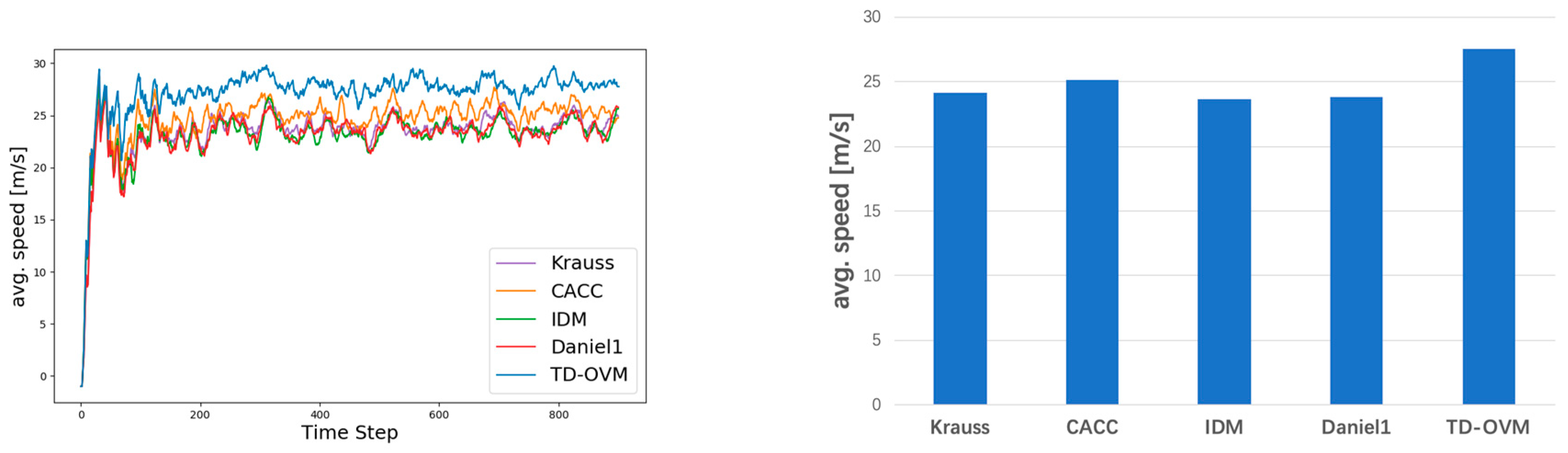
Car-following models are crucial in adaptive cruise control systems, making them essential for developing intelligent transportation systems. This study investigates the characteristics of high-speed traffic flow by analyzing the relationship between headway distance and dynamic desired distance. Building upon the optimal velocity model theory, this paper proposes a novel traffic car-following computing system in the time domain by incorporating an absolutely safe time headway strategy and a relatively safe time headway strategy to adapt to the dynamic changes in high-speed traffic flow. The interpretable physical law of motion is used to compute and analyze the car-following behavior of the vehicle. Three different types of car-following behaviors are modeled, and the calculation relationship is optimized to reduce the number of parameters required in the model’s adjustment. Furthermore, we improved the calculation of dynamic expected distance in the Intelligent Driver Model (IDM) to better suit actual road traffic conditions. The improved model was then calibrated through simulations that replicated changes in traffic flow. The calibration results demonstrate significant advantages of our new model in improving average traffic flow speed and vehicle speed stability. Compared to the classic car-following model IDM, our proposed model increases road capacity by 8.9%. These findings highlight its potential for widespread application within future intelligent transportation systems. This study optimizes the theoretical framework of car-following models and provides robust technical support for enhancing efficiency within high-speed transportation systems.
Keywords: intelligent transportation; car-following model; safe time headway; connected vehicle intelligent transportation; car-following model; safe time headway; connected vehicle