Article

Bright Molecular Strain Probe Templates for Reporting Protein–Protein Interactions

1
Environmental Management Research Institute (EMRI), National Institute of Advanced Industrial Science and Technology (AIST), Tsukuba 305-8569, Japan
2
School of Life Science and Technology, Tokyo Institute of Technology, Yokohama 226-8501, Japan
3
Department of Engineering Science, Graduate School of Informatics and Engineering, The University of Electro-Communications, Chofu 182-8585, Japan
4
Molecular Imaging Program at Stanford, Bio-X Program, Stanford University School of Medicine, Palo Alto, CA 94304, USA
*
Author to whom correspondence should be addressed.
Sensors 2023, 23(7), 3498; https://doi.org/10.3390/s23073498
Submission received: 28 February 2023 / Revised: 20 March 2023 / Accepted: 22 March 2023 / Published: 27 March 2023

Abstract

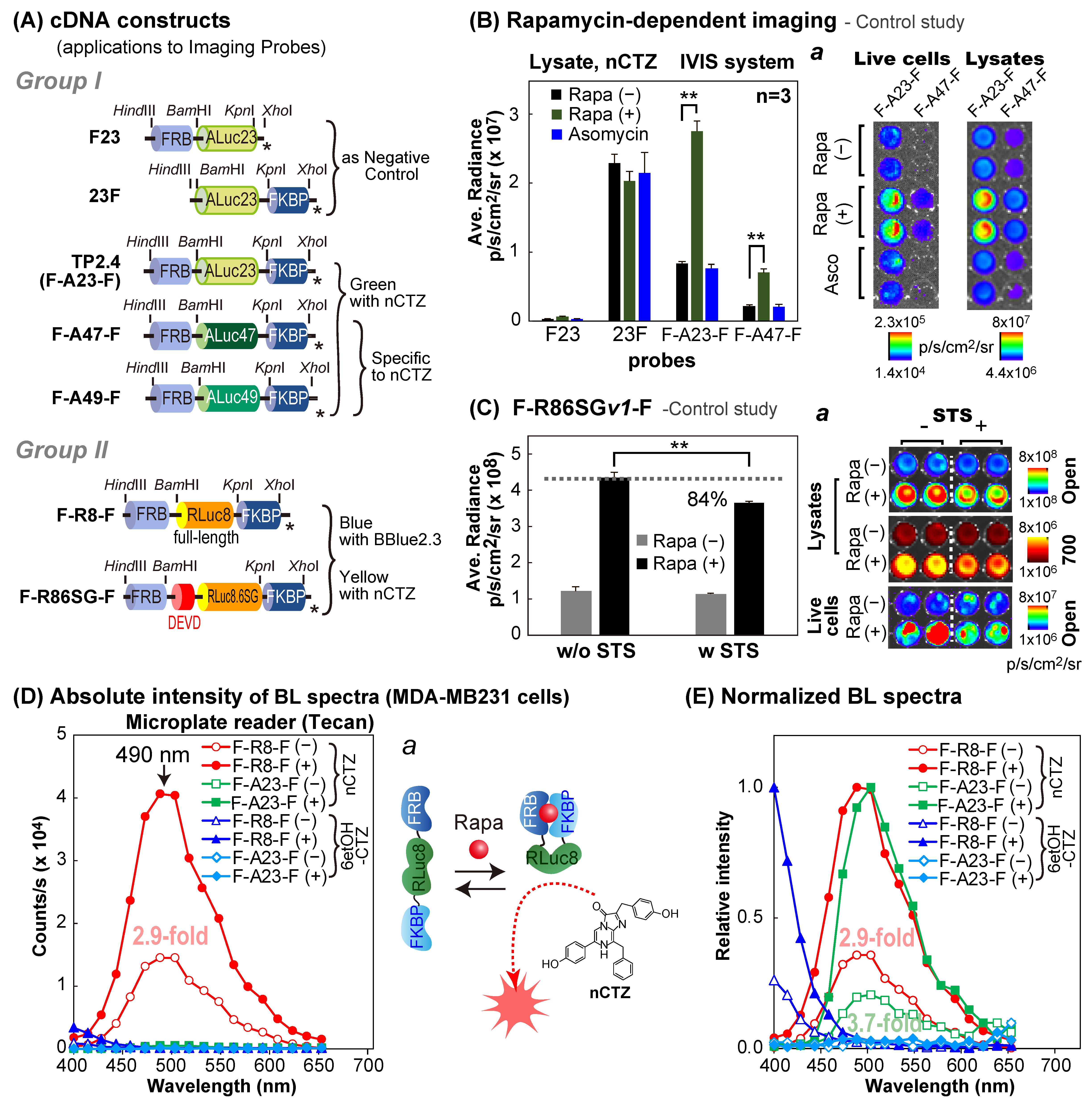
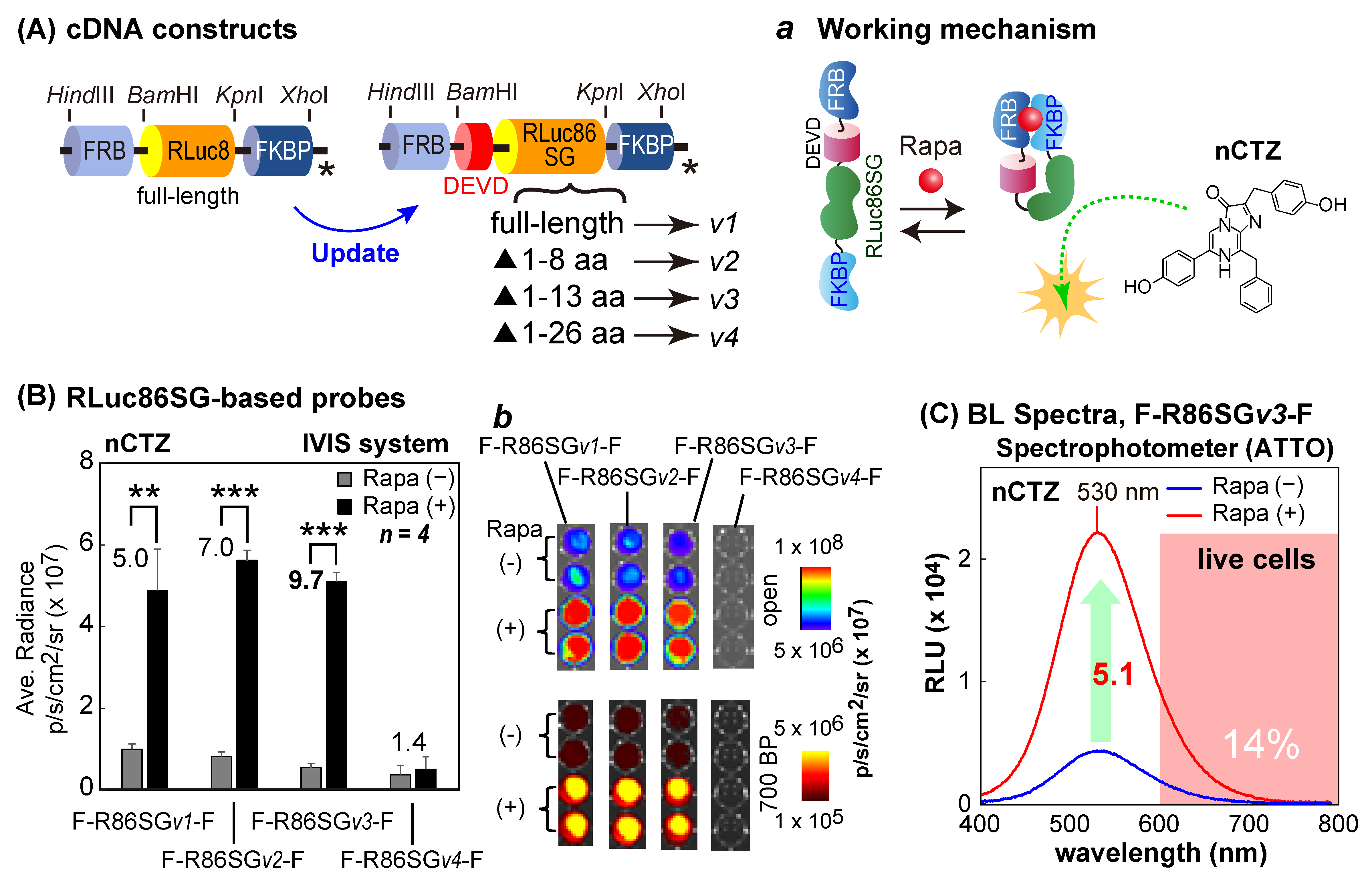
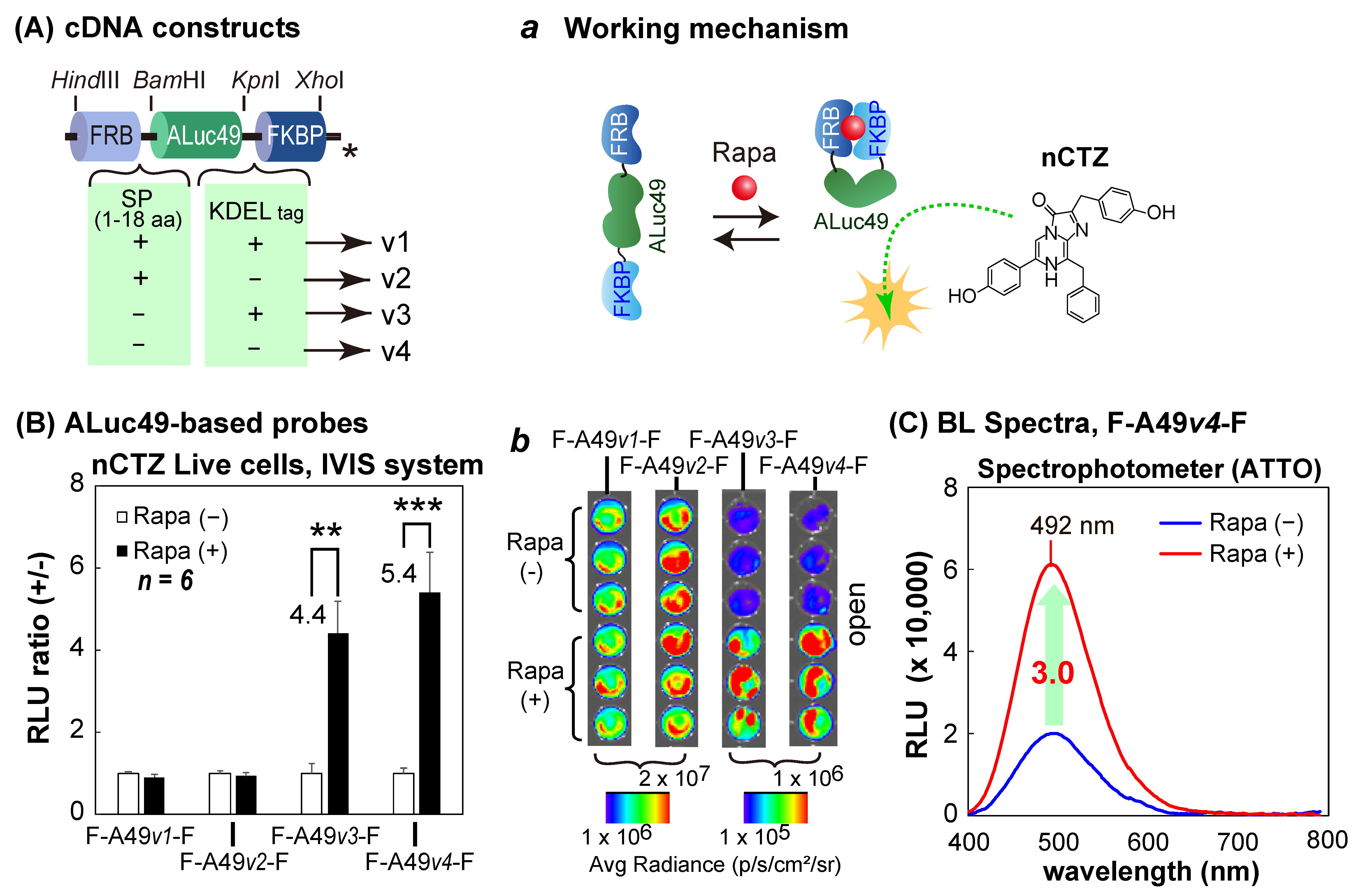
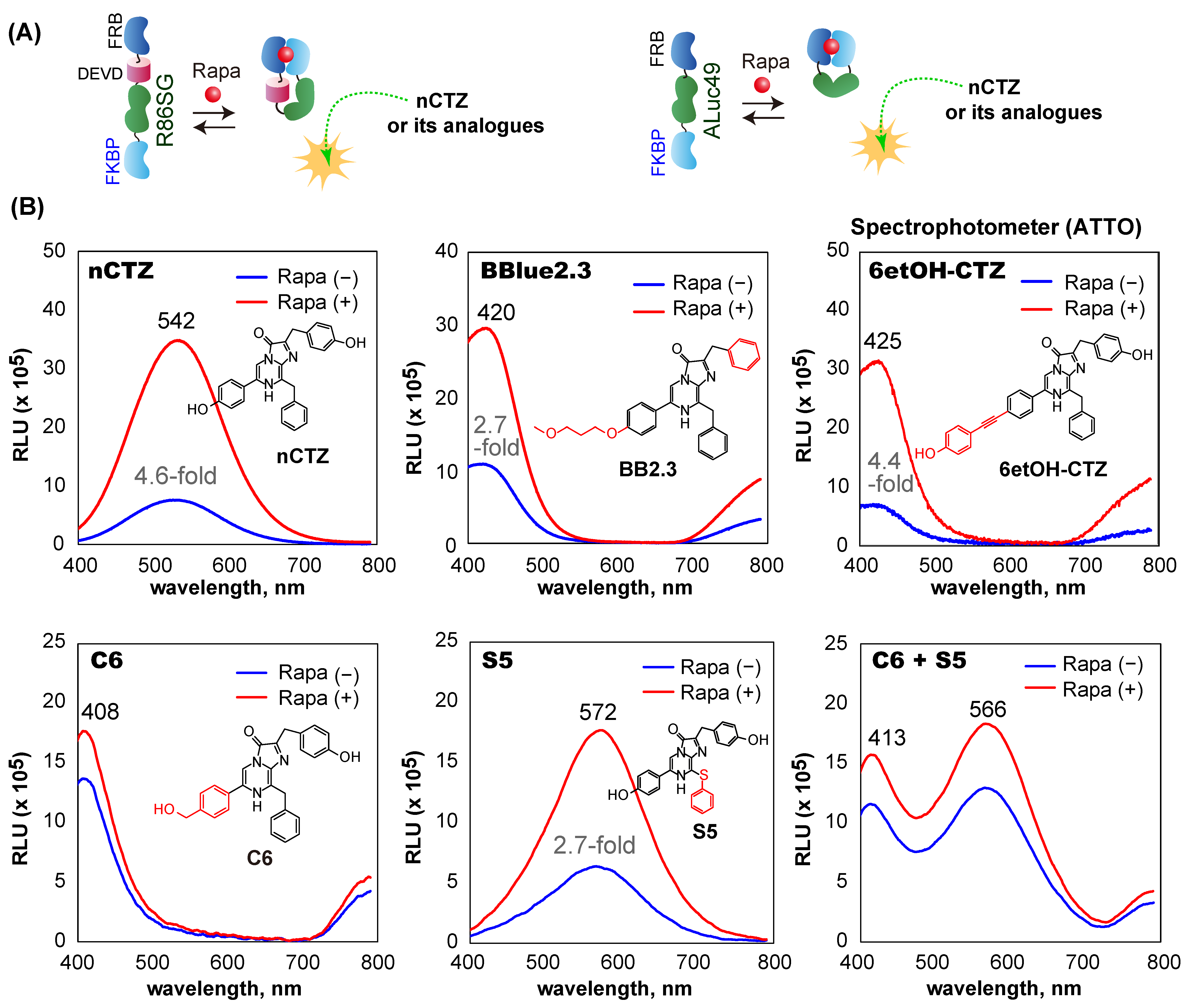
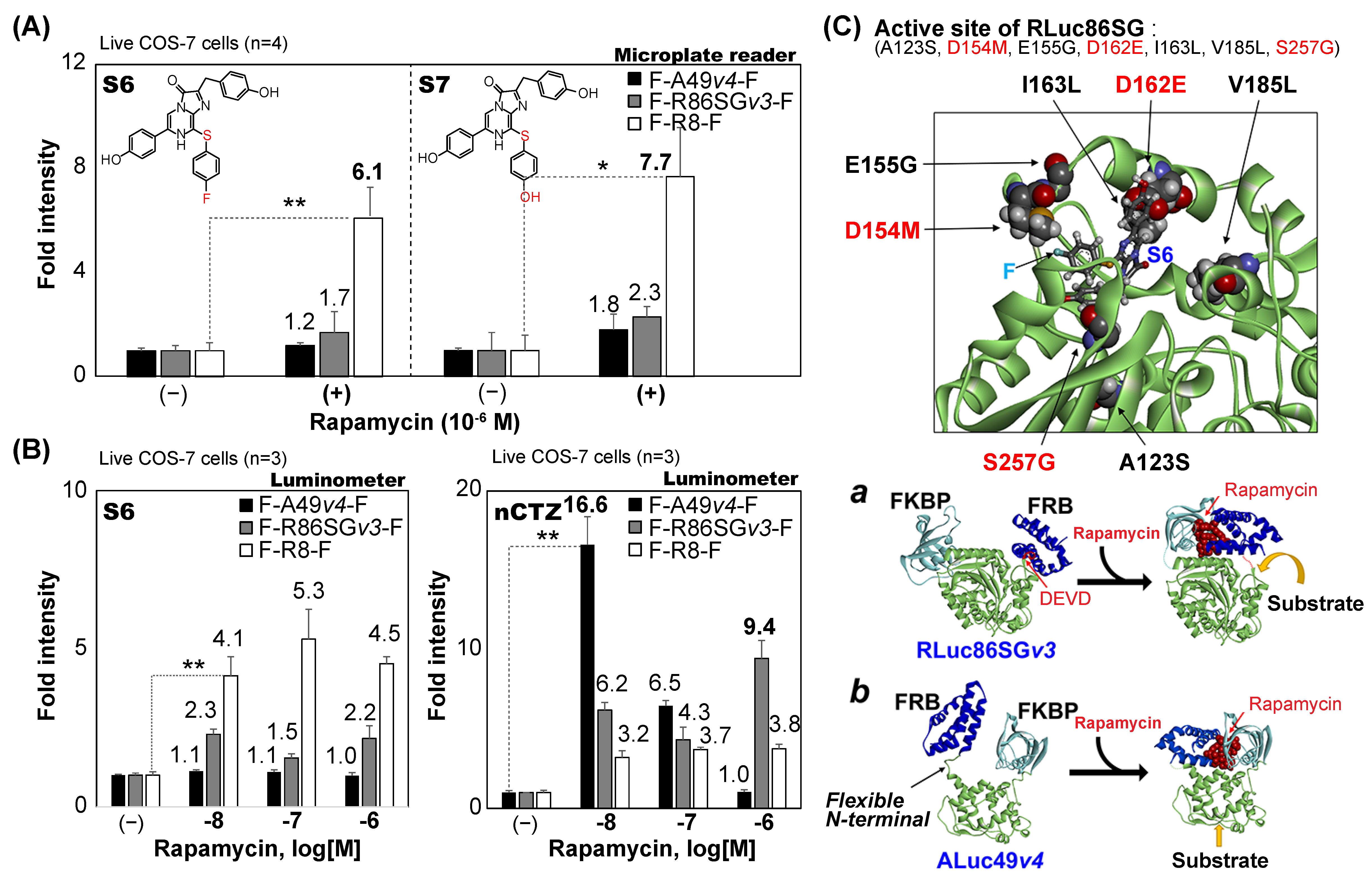
Imaging protein–protein interactions (PPIs) is a hot topic in molecular medicine in the postgenomic sequencing era. In the present study, we report bright and highly sensitive single-chain molecular strain probe templates which embed full-length Renilla luciferase 8.6-535SG (RLuc86SG) or Artificial luciferase 49 (ALuc49) as reporters. These reporters were deployed between FKBP-rapamycin binding domain (FRB) and FK506-binding protein (FKBP) as a PPI model. This unique molecular design was conceptualized to exploit molecular strains of the sandwiched reporters appended by rapamycin-triggered intramolecular PPIs. The ligand-sensing properties of the templates were maximized by interface truncations and substrate modulation. The highest fold intensities, 9.4 and 16.6, of the templates were accomplished with RLuc86SG and ALuc49, respectively. The spectra of the templates, according to substrates, revealed that the colors are tunable to blue, green, and yellow. The putative substrate-binding chemistry and the working mechanisms of the probes were computationally modeled in the presence or absence of rapamycin. Considering that the molecular strain probe templates are applicable to other PPI models, the present approach would broaden the scope of the bioassay toolbox, which harnesses the privilege of luciferase reporters and the unique concept of the molecular strain probes into bioassays and molecular imaging.
Keywords: molecular strain probe; protein–protein interactions; Renilla luciferase; artificial luciferase; bioluminescence; template molecular strain probe; protein–protein interactions; Renilla luciferase; artificial luciferase; bioluminescence; template