Article

Preference-Aware User Access Control Policy in Internet of Things

1
State Grid Chongqing Electric Power Research Institute, Chongqing 401123, China
2
School of Communication and Information Engineering, Chongqing University of Posts and Telecommunications, Chongqing 400065, China
*
Author to whom correspondence should be addressed.
Sensors 2023, 23(13), 5989; https://doi.org/10.3390/s23135989
Submission received: 3 May 2023 / Revised: 5 June 2023 / Accepted: 15 June 2023 / Published: 28 June 2023
(This article belongs to the Special Issue Challenges and Future Trends of Artificial Internet of Things)

Abstract

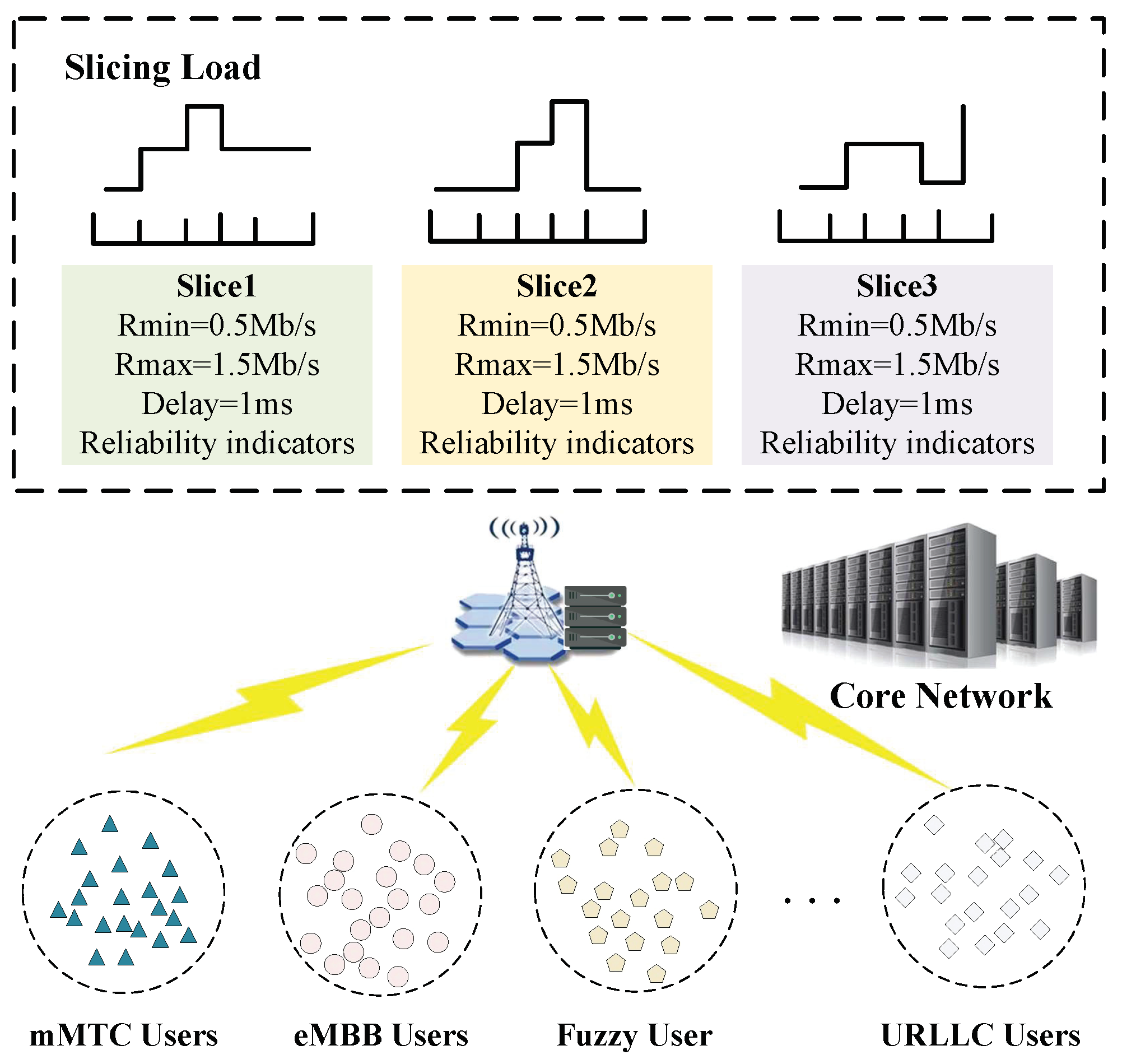
There are multiple types of services in the Internet of Things, and existing access control methods do not consider situations wherein the same types of services have multiple access options. In order to ensure the QoS quality of user access and realize the reasonable utilization of Internet of Things network resources, it is necessary to consider the characteristics of different services to design applicable access control strategies. In this paper, a preference-aware user access control strategy in slices is proposed, which can increase the number of users in the system while balancing slice resource utilization. First, we establish the user QoS model and slice QoS index range according to the delay, rate and reliability requirements, and we select users with multiple access options. Secondly, a user preference matrix is established according to the user QoS requirements and the slice QoS index range. Finally, a preference matrix of the slice is built according to the optimization objective, and access control decisions are made for users through the resource utilization state of the slice and the preference matrix. The verification results show that the proposed strategy not only balances slice resource utilization but also increases the number of users who can access the system.
Keywords: Internet of Things; user access; preference aware; load balancing; network slicing Internet of Things; user access; preference aware; load balancing; network slicing