1. Introduction
The Internet of Things (IoT) [
1] was recently made practical with the adoption of some state-of-the-art technologies, such as wireless sensor networks [
2] and intelligent sensing [
3]. The applications of IoT include health care, inventory tracking, smart grid networks, security systems, and maintainable transportation. The interconnected smart objects with embedded sensors in the IoT network cooperate and coordinate with one another to send the collected data to a gateway sink. For IoT-based applications, such as industrial control, environmental sensing, smart homes, and logistics management, the wireless sensor network (WSN) is an essential part of the infrastructure [
1]. The WSN can be represented as a graph of multiple interconnected sensor nodes, where each node senses some data from the environment and transfers them to an ultimate station. The infrastructure of IoT-based WSNs can be autonomously organized without any complicated time-consuming installation and configuration compared to typical wired networks for a variety of purposes [
2].
In WSNs, nodes operate with limited powered batteries and cannot be recharged or replaced in a short period since the sensor nodes are typically unattended. The various applications of WSNs in IoT environments suffer from this limitation. Accordingly, most of the previous research works have focused on the extension of the lifetime of the nodes while achieving peak throughput [
4]. In WSNs, data transmission is done through the nodes cooperating with one another since most of the nodes may not have a direct connection to a sink node; the nodes use other nodes as relays for transferring their sensed data, which is known as multi-hop communication. For multi-hop communication in a WSN, a node probably has multiple options to select a path towards a destination. Many researchers have proposed various routing schemes considering routing parameters such as the nodes’ energy levels, transmission rate, security, and so forth [
5].
In IoT-based WSNs, the energy consumption of sensors is a major concern. Therefore, the effects on energy consumption have been investigated in most of the legacy routing protocols. Moreover, many routing schemes are designed with particular focus on the energy preservation and elongation of the network lifetime [
6]. The goal of energy management is to ensure that the sensors perform for longer periods of time and all the sensors consume their energies equally [
7]. Different techniques have been developed to balance the load and energy consumption among the nodes [
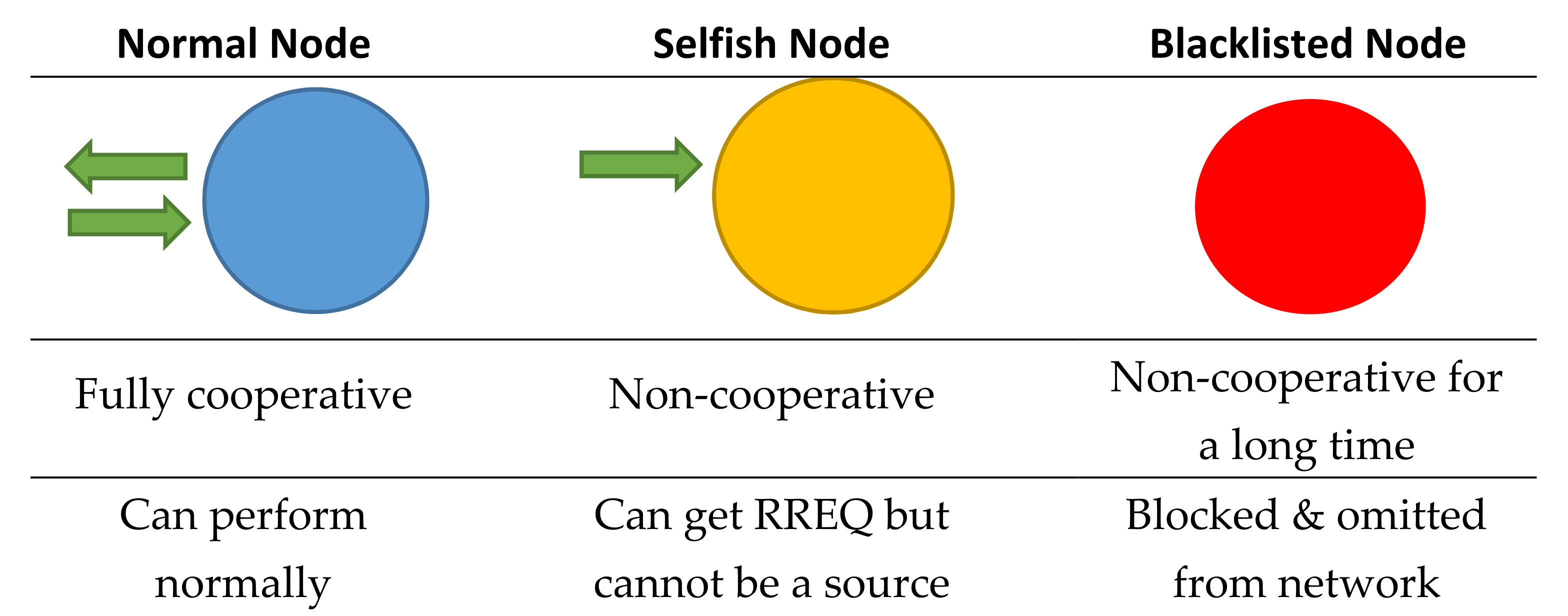
8]. However, it is unavoidable that some nodes in the network do not cooperate for the sake of saving their energies. Such non-cooperative nodes behave selfishly either temporarily or forever. These selfish nodes severely degrade the overall network performance. In most of the legacy mechanisms, therefore, the selfish nodes are either isolated or blocked [
9].
For energy-efficient routing, various mechanisms have been proposed [
10]. Sleep scheduling approaches are of recent special interest to the scientific community, as they allow for some nodes to be idle for a particular period of time [
11]. In most sleep scheduling mechanisms, the density of the nodes at various locations in a network is considered. In [
12], the authors proposed the usage of some approaches combined in a genetic algorithm to formulate a discrete particle swarm optimization algorithm. The main objective of such mechanisms is to preserve the idle nodes for future operations that are redundantly deployed in the network. Moreover, it was shown that the sleeping nodes cause no negative impact on the overall performance of the network. Thus, the sleep scheduling mechanisms are very efficient for energy optimization in WSNs. However, these mechanisms purely rely on the density of nodes and become ineffective when there are no redundant nodes in the network. Moreover, some nodes that die over time also reduce the redundancy and degrade the impact of the sleeping scheduling.
In some proposed mechanisms [
13], it is assumed that the nodes cooperate with each other while conducting a common routing protocol. However, in ad hoc and IoT networks, the smartness of nodes is very common. Therefore, this aspect must be properly addressed in such types of networks while designing an energy-efficient scheme. Many schemes focus on the individual contribution of each node towards energy efficiency by adapting a routing protocol [
13], sleep behavior [
11], coordination mechanism, data aggregation procedure [
7], hop division [
9], and cluster divisions [
14], and so forth. The nodes may intelligently coordinate with each other considering each node’s status. The nature of the deployment of the nodes also has a significant impact on the performance and lifetime of the networks. The energy efficiency techniques should adequately utilize the density or redundancy of the nodes in such types of networks [
15]. There should be sufficient space in the mechanism to consider as many parameters as possible for designing an energy-efficient routing in a WSN-based IoT network. The parameters can be the selfishness of the node, neighborhood, connectivity through hop levels, density of the nodes, redundancy of nodes, energies, distances, and surrogate values such as points, score, or credit values for nodes, and so forth.
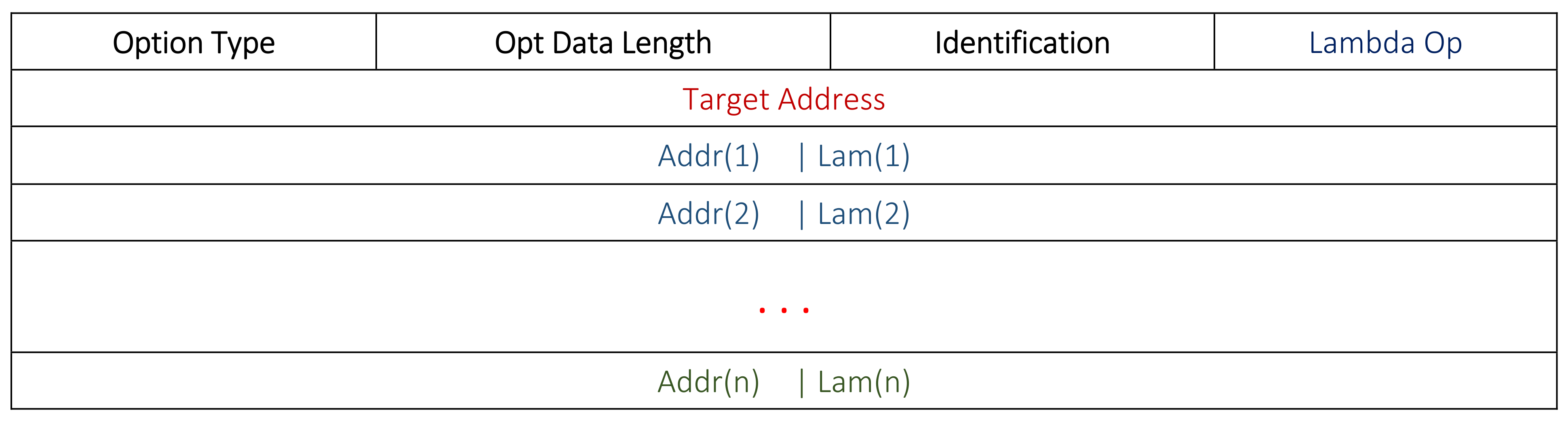
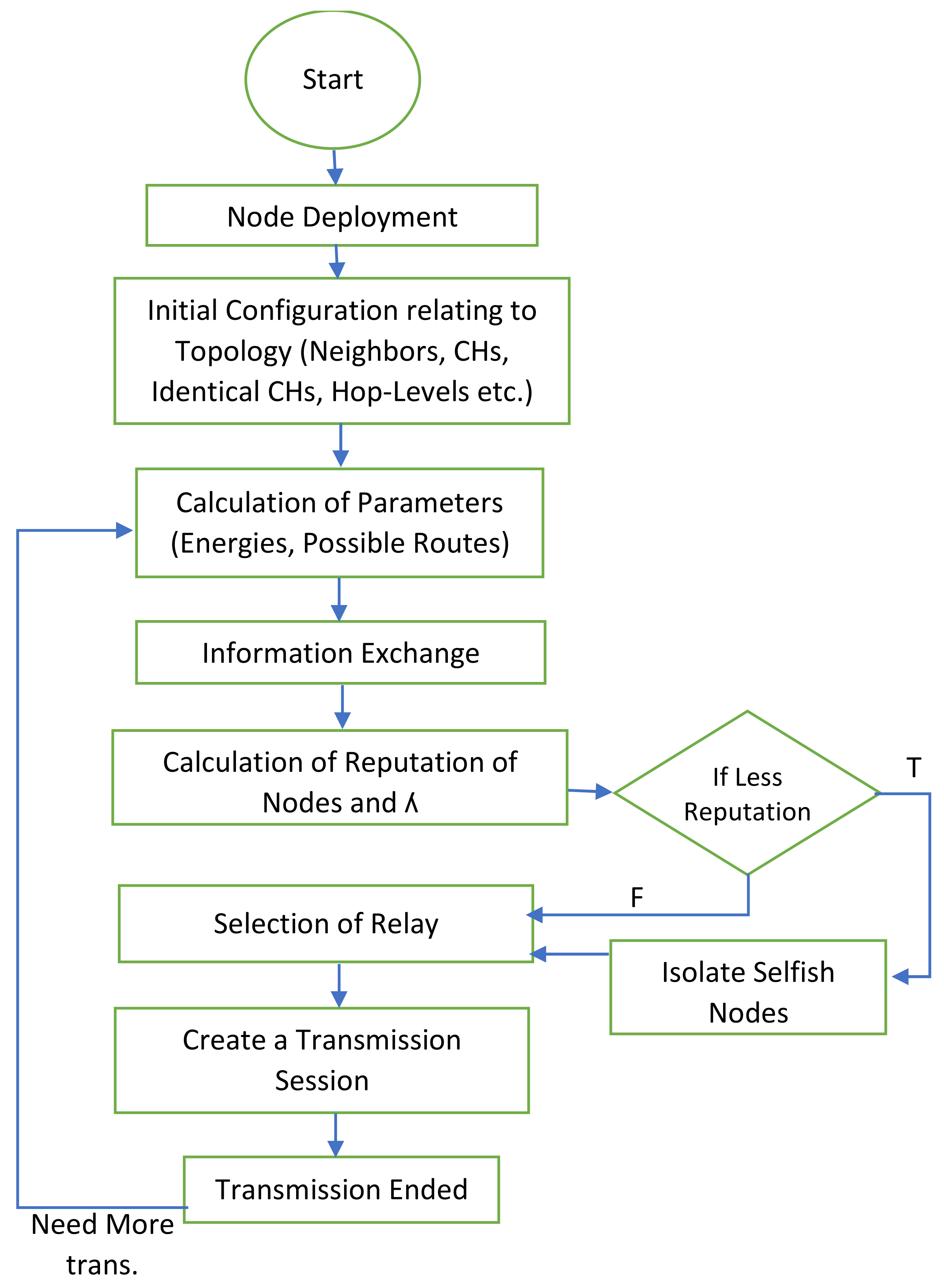
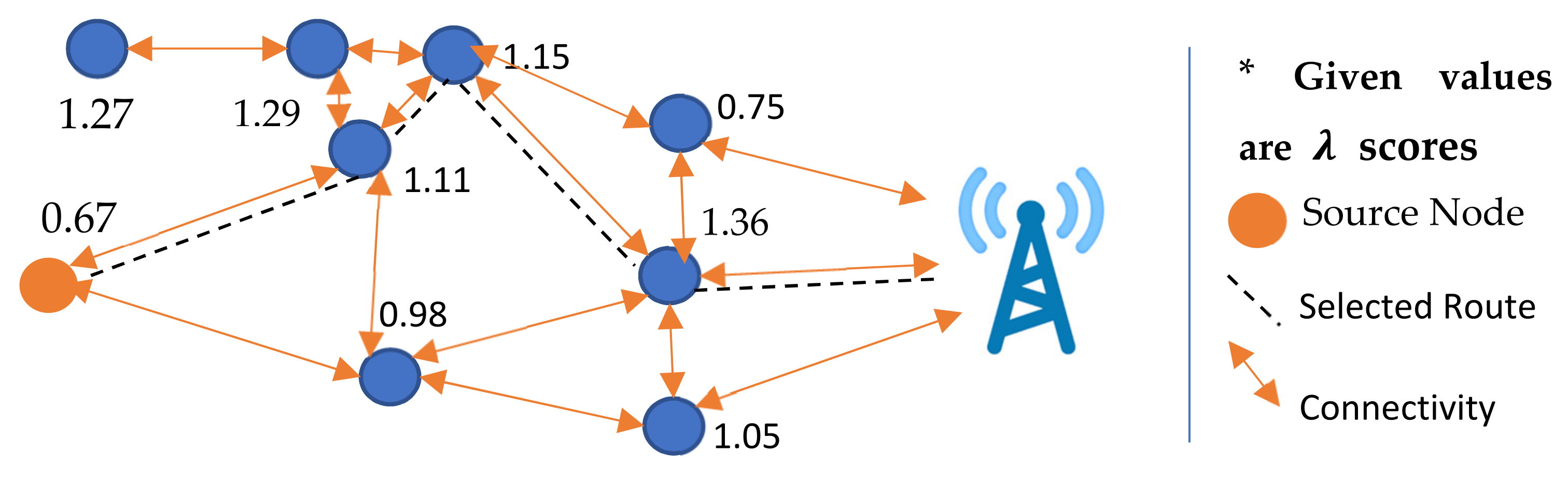
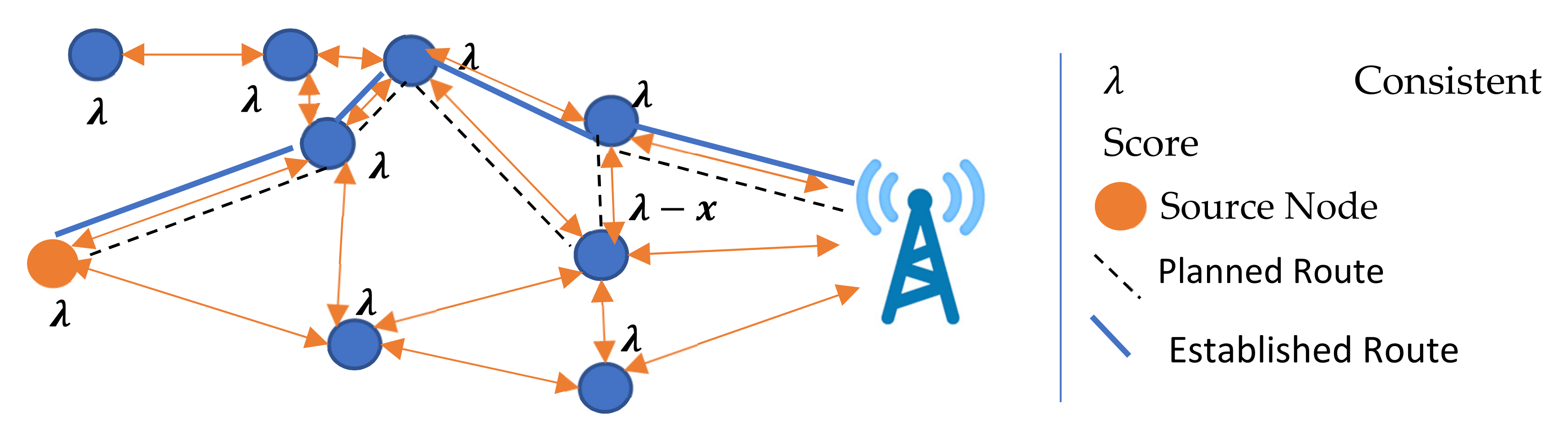
In this work, we propose the node status and score-based route optimization protocol (NSSROP), where each node keeps some additional data to balance the routing load among all the nodes. In an IoT setup, a sensor node may have the shortest available route towards a sink. However, it should wisely choose a route that balances the load and elongates the life of the entire network. Some nodes may be placed at a location where they may get a higher rate of relaying requests compared to other nodes. This situation can highly degrade the network performance by unbalancing the load among the nodes. For this purpose, each node calculates some values for itself that are referred to as scores. Unlike other typical routing protocols, the proposed mechanism addresses various parameters associated with the routing and energy optimization in the network. These parameters are used for the calculation of the scores. During the selection of a route by the source node towards the central control, each forwarding node builds the route by considering these scores of the relay nodes. Modified route request (RREQ) and route reply (RREP) packets are used to exchange the variations in these scores.
The remainder of this paper is ordered as follows: In
Section 2, related works are described. In
Section 3, the preliminary formations are described and the whole mechanism is explained. In
Section 4, the simulation results are discussed. Lastly,
Section 5 includes the conclusion and future work.
2. Related Work
The routing in IoT sensor-based networks is one of the most remarkable research areas in communication networks. There are lots of research articles related to this field. There are various parameters in the network that can be used to optimize the routing, for example, optimization with load balancing (traffic load distribution), as discussed in [
16].
A proactive tree-based routing protocol, the routing protocol for low-power and lossy networks (RPL), is defined by RoLL [
17]. RPL is a standard protocol that operates on an IPv6-based IoT network. It brought an opportunity to develop WSNs on a very large scale. Routing and message control are the RPL’s most important mechanisms for establishing and maintaining an effective and stable network. Despite its standing as the standard routing protocol for IoT networks, RPL has had various flaws since its inception, and other approaches have emerged to address them [
18]. Among these, routing loops are critical.
Most of the recent studies that have aimed at energy efficiency and load balancing in WSNs and WSN-based IoT networks preferred the cluster-based approach. In [
14], the authors proposed the integration of the bat algorithm and low-energy adaptive clustering hierarchy (LEACH) for the efficient cluster head selection to reduce energy consumption and balance load among the network nodes. The nodes are also bound to follow a schedule for the transmission of their data packets. This mechanism primarily focuses on the cluster head selection by considering the nodes’ energy levels. Each cluster head is bound to have a particular number of connected cluster members. However, unlike this mechanism, the distribution of nodes in a network can be random, which makes it difficult to specify the number of nodes for each cluster.
Turgut and Altan [
19] introduced a fully distributed energy-aware multi-level (FDEAM) routing and clustering mechanism for WSN-based IoT networks. The two-level and multi-level inter-cluster transmission methods are represented in this work. In the second level, the communication and transmission strength are determined by considering the distance between the nodes and the base station (BS). The clusters are statically distributed over the entire network. However, the option for re-clustering the network is also defined. Self-arranged nodes elect the limits for clustering, and cluster heads are selected by executing the FDEAM method. However, this method is inappropriate for non-uniform node distribution and has the shortcoming of being reliant on a dominant source.
The authors of [
20] presented an energy-efficient architecture of a self-sustaining WSN based on an energy-collecting BS and a mobile charger considering the cost of deployment. They conducted extensive simulations and demonstrated the efficacy of their proposed strategy by showing that it maximizes the expected network lifetime while minimizing deployment costs. The main idea is focused on the usage of mobile chargers and the energy-harvesting BS. However, the work did not primarily deal with energy-efficient routing.
The position responsive routing protocol (PRRP) was proposed in [
21]. The main objective of this proposed work was to minimize energy consumption by incorporating the global positioning system (GPS) into the nodes. The network is divided into equally sized grids with a static or dynamically distributed number of nodes. The nodes can adjust their transmission power by using GPSs while communicating with each other.
To balance energy consumption within each cluster, Wang et al. [
22] suggested uneven cluster generation and distributed cluster head rotation based on residual energy and relative location. The authors also designed a routing path updating system to prevent node energy depletion. The selection of the cluster head is based on the level of residual energy of the nodes. The routing paths are dynamic and also associated with the nodes’ energy levels.
An energy-efficient regional source routing protocol was proposed in [
23], which balances the network’s energy usage by dynamically picking cluster heads with the most remaining energy among the WSN nodes. Furthermore, the ant colony algorithm based on distance is employed to determine the global ideal transmission path for each node, which reduces data transmission distance and energy consumption. The experiment results show that the proposed approach outperformed the compared approaches in terms of network lifetime and throughput.
The authors of [
24] proposed open vehicle routing (OVR) based on fundamental WSNs parameters, in which a data collection protocol called EAL improves the energy efficiency by balancing the lifetime of the network nodes while considering latency.
Han et al. [
25] proposed a cross-layer routing protocol for optimizing the routing in geographic node disjoint multi-paths. The routing layer performs according to the underlying energy demand of the network nodes while the physical layer adjusts the transmission power according to the energy levels. The authors also applied sleep and awake states for energy saving. In [
26], the higher level of traffic generated by several source nodes in an IoT environment was considered. Three factors are used to determine optimal routes by taking the next hop nodes. These factors include (1) the signal to interference and noise ratio, and (2) the survivability factor and congestion level of the preferred forwarding node.
The Path Operator Calculus Centrality (POCC) routing protocol was proposed in [
27]. POCC is used to determine the nodes’ centrality scores, which are further used for path determination. The approximation of the centrality score uses the operator calculus method based on the topology of the network. The authors argue that this technique provides optimal paths towards the BS. The article [
28] proposed a directional transmission-based energy-aware routing protocol (PDORP) to find energy-efficient routes. The DSR protocol is used as a base protocol in this mechanism. Moreover, a hybrid of bacterial foraging optimization and a genetic algorithm is used to efficiently collect node information. The authors presented comparatively better results for energy consumption, bit error rate, delays, and throughput from their experiments. The objective of this work was to attain a better quality of service and extend the network life. The predicted remaining delivery (PRD) protocol, based on the path weighting technique, was proposed in [
29]. PRD considers the fundamental parameters, such as route quality, residual energy, end-to-end delays, and inter-node distance for designing the weightage system.
A well-known approach for selfish node management was introduced in the watchdog and pathrater method [
30]. In this work, the watchdog detects the non-cooperative behavior of the nodes and the pathrater blocks the selfish nodes from being part of the routes. The presence of non-malicious selfishness is potentially higher in unlicensed entities in an IoT infrastructure. Therefore, it is critical to block the unwanted nodes in such a network.
Many research works have described mechanisms for determining and utilizing nodes’ individual importance in a network. Sun et al. [
31] proposed an important assessment mechanism for a particular node with respect to the energy field. They determined key nodes based on the average length and density of nodes for the stability of a network. For this, the authors used graph theory for the properties and correlation of the nodes with the energy field. In another work [
15], an evaluation index was introduced based on the topology of the network, which eventually determines the nodes’ locations within a network. Additionally, supernodes are designated to manage multiple key nodes within the network.
In a mechanism proposed in [
32], the selection of relay nodes is made by a concept of “equivalent nodes” based on a proposed energy consumption model. The network life can be lengthened by applying a probabilistic dissemination algorithm among those relay nodes.
Some fuzzy logic-related articles have also been proposed to improve the energy efficiency in WSNs. Sheriba et al. [
33] proposed a fuzzy logic and black widow optimization clustering protocol. However, the black widow optimization’s ideal performance is modest. Later, the authors proposed a strategy for designing the optimal interval type 2 fuzzy logic by involving the evolutionary algorithms [
34]. This solution technique is suitable for WSNs with limited energy since it helps to extend the network’s lifespan. In reference [
35], a trust-aware energy-saving stable clustering algorithm based on the fuzzy type-2 algorithm was devised to solve the constraint of the shortening lives of the cluster heads in clustering algorithms.
Various studies have proposed game-theoretic approaches for the establishment of a tradeoff between the desired signal-to-noise ratio (SNR) and energy consumption [
36,
37]. These approaches focus on optimal route selection while considering communication quality. The game-theoretic approach is effective in the sense of getting a payoff for individual nodes. However, the entire network’s performance cannot be optimized by these approaches. Moreover, the nodes are self-focused in such approaches, and these do not give any length to the network life. The node selection mechanisms such as those in [
27,
38] were also proposed for choosing the best nodes among others for energy optimal efficiency in the network.
Various nodes and network scoring mechanisms have been proposed by many articles mainly focused on energy efficiency, node behavior, and security. The GoNe scheme, proposed in [
39], was designed for enforcing data security and privacy in WSNs. Nodes are given some scores based on their reputation in the network. These reputation scores are managed by CHs, which are later used to manipulate the behavior of nodes. In another score-based load management scheme [
40], the authors proposed a mechanism to compress the data through CHs to reduce the load on the nodes with low scores. The best nodes are chosen based on their remaining energy and distance from the BS. The CHs use compressive sensing to compress data and then forward information towards the sink through the best nodes. The authors claim that in this way, the load is balanced among all the nodes. The SBRR protocol [
41] considers many factors to score paths for nodes. The parameters are the hop count, the remaining energy of nodes, link quality, and the buffer sizes on the nodes. All the parameters are integrated to form the path score. The main focus of the work was to reduce the pack loss in the transmission. Still, there is space for load balancing and energy efficiency in the work.
4. Simulation Results
The proposed work was simulated using MATLAB 2018a. The list of simulation parameters is given in
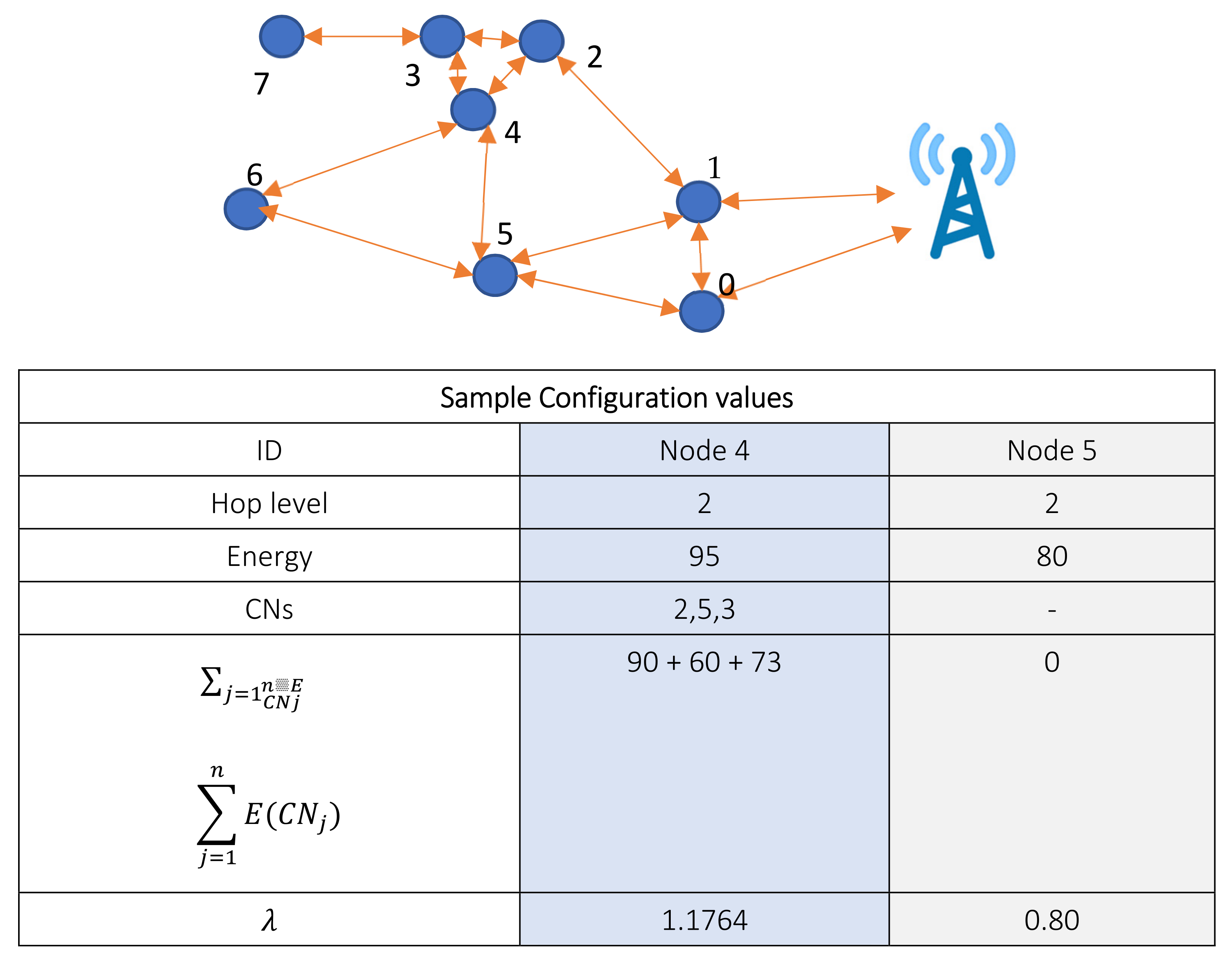
Table 1. The associations of the
λ values in the first experiment are shown with the targeted parameters.
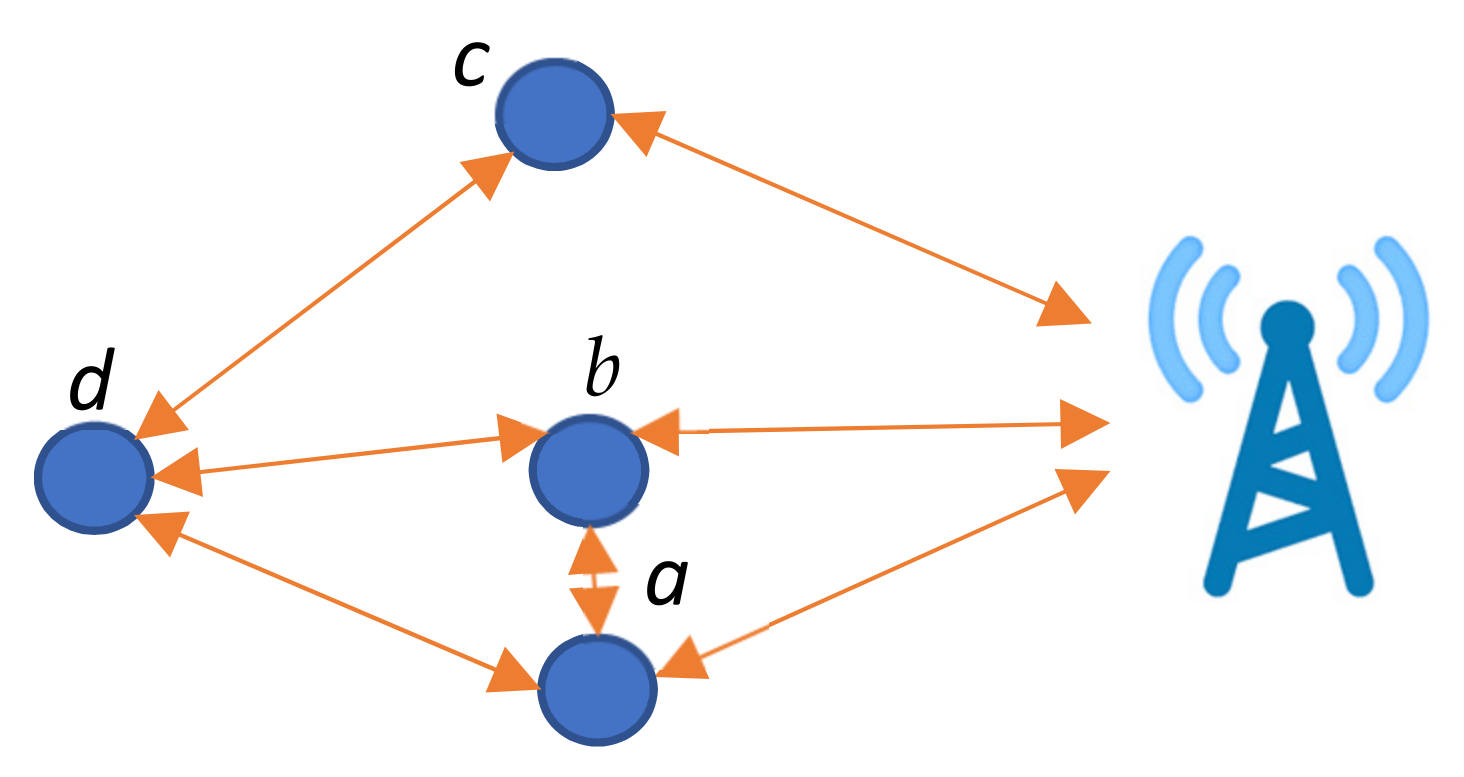
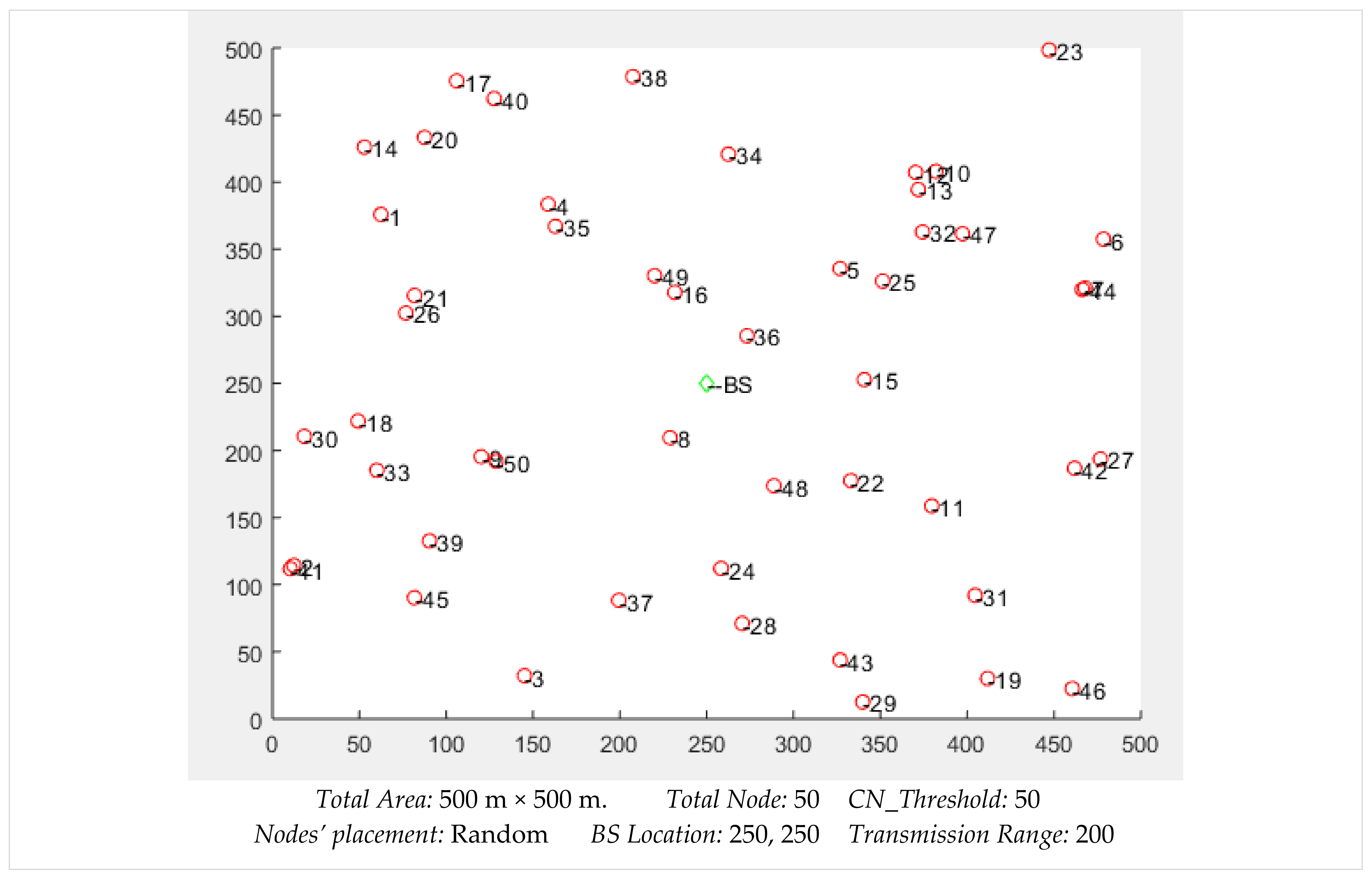
The placements of 100 nodes can be seen in
Figure 11. All the nodes were distributed evenly, while the location of the sink, labeled as BS, was kept at the center of the simulation space. We observed that the nodes were densely deployed in some places, while some nodes had low neighbor density according to their location. The nodes’ placements highly affected the network throughput, especially the availability and lifetime of the routes.
In the experiment scenario of
Figure 11, the λ values for a sample of 12 nodes were derived, as shown in
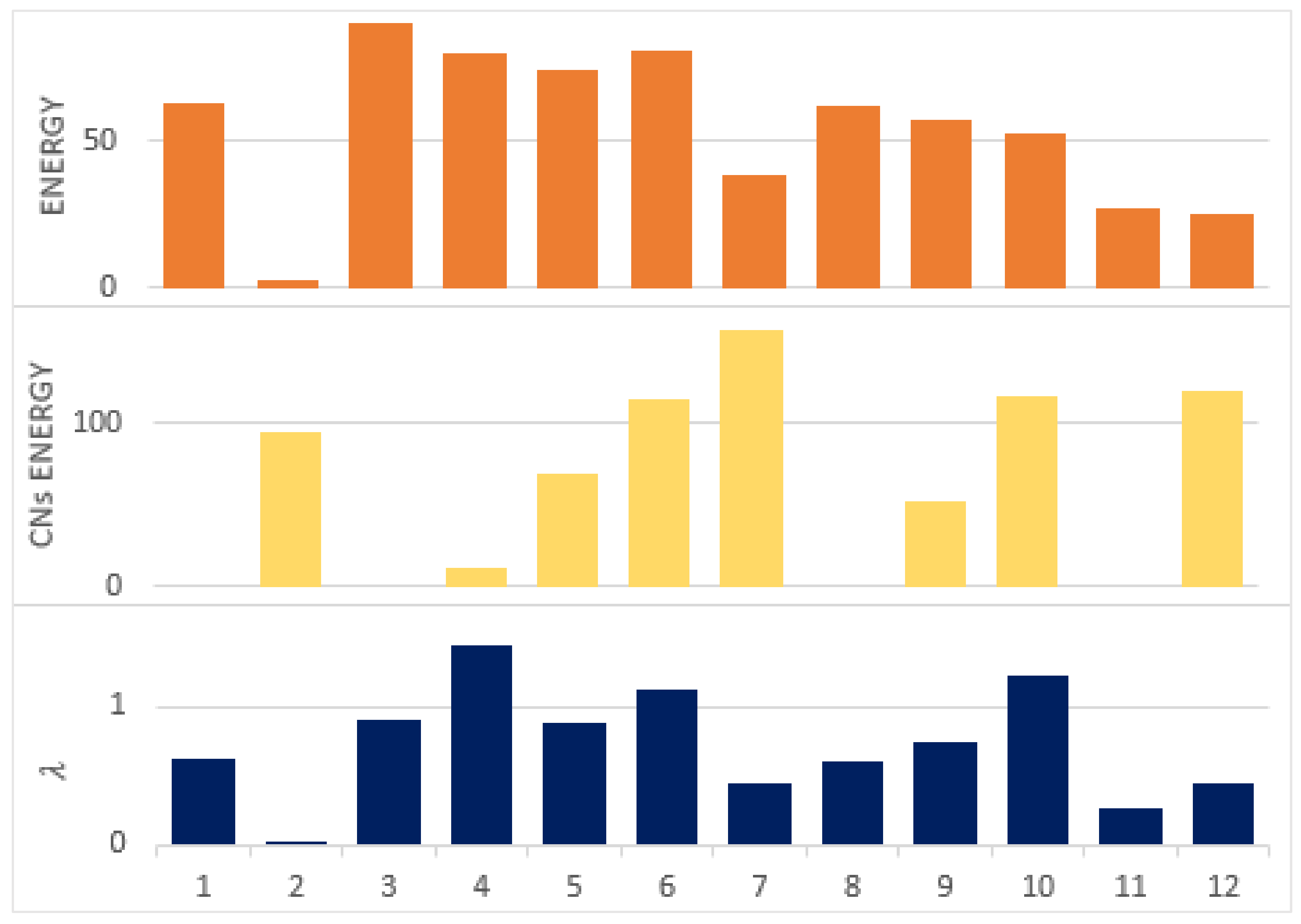
Table 2. The node that had an ID = 10 with a higher number of CNs had a comparatively higher λ value. This is because nodes with multiple CNs will get more route requests than others. Since their elimination from the network will not affect much due to the presence of multiple CNs, such nodes will be frequently utilized. Moreover, a node that had multiple CNs but less energy compared to its CNs had a lower value. For such cases, the node ID = 6 can be compared with the node ID = 7. Both had an equal number of CNs but different levels of energy. Therefore, different λ values were assigned to ID = 6 and ID = 7.
Figure 12 shows a clear relationship among the nodes’ energies, their CNs’ energies, and the computed values of λ.
This work was further compared with some other protocols such as the PDORP, PRRP, DSR, and LEACH [
44]. Experiments were performed to check the energy consumption, network life, throughput, and delays.
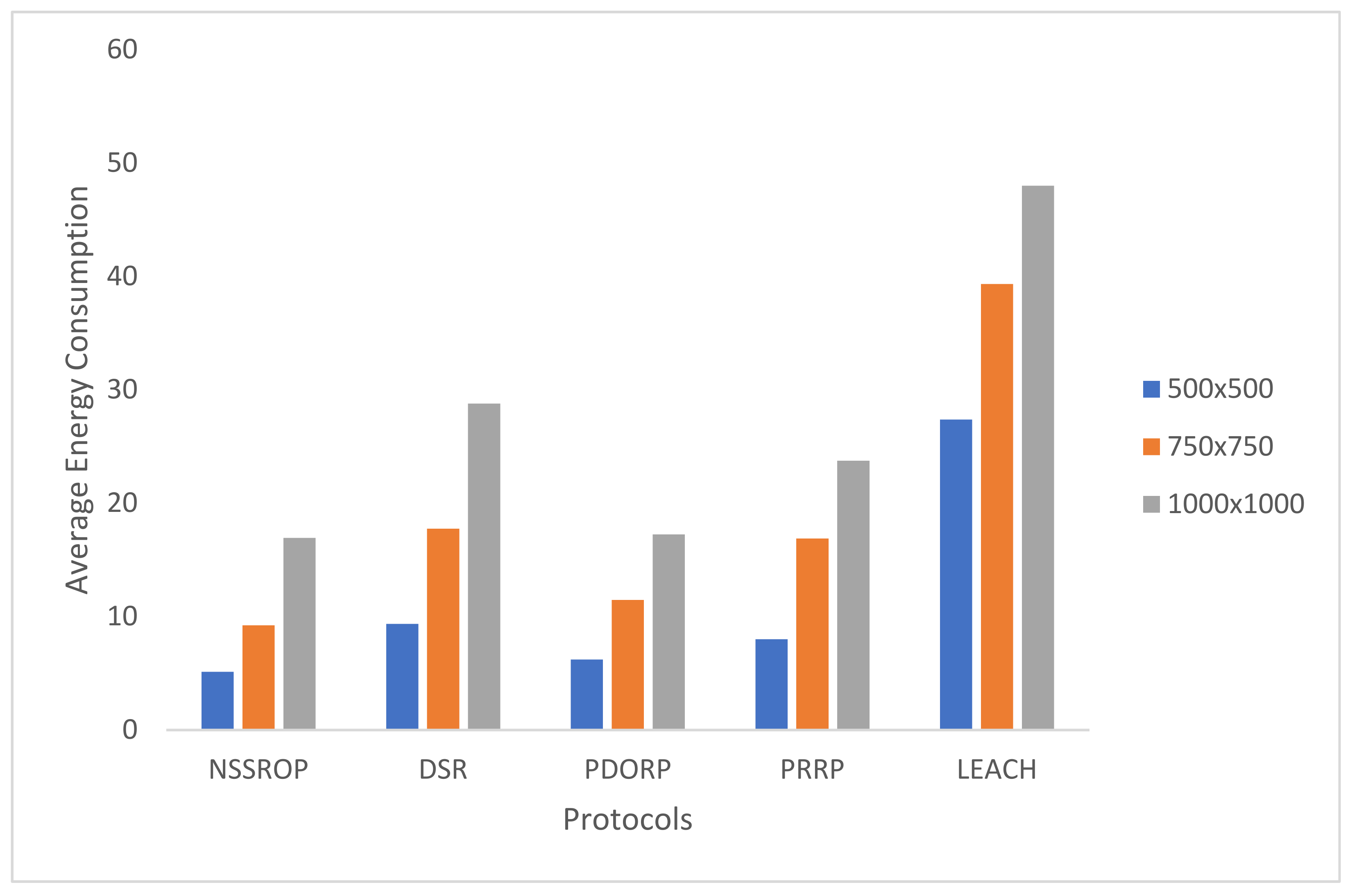
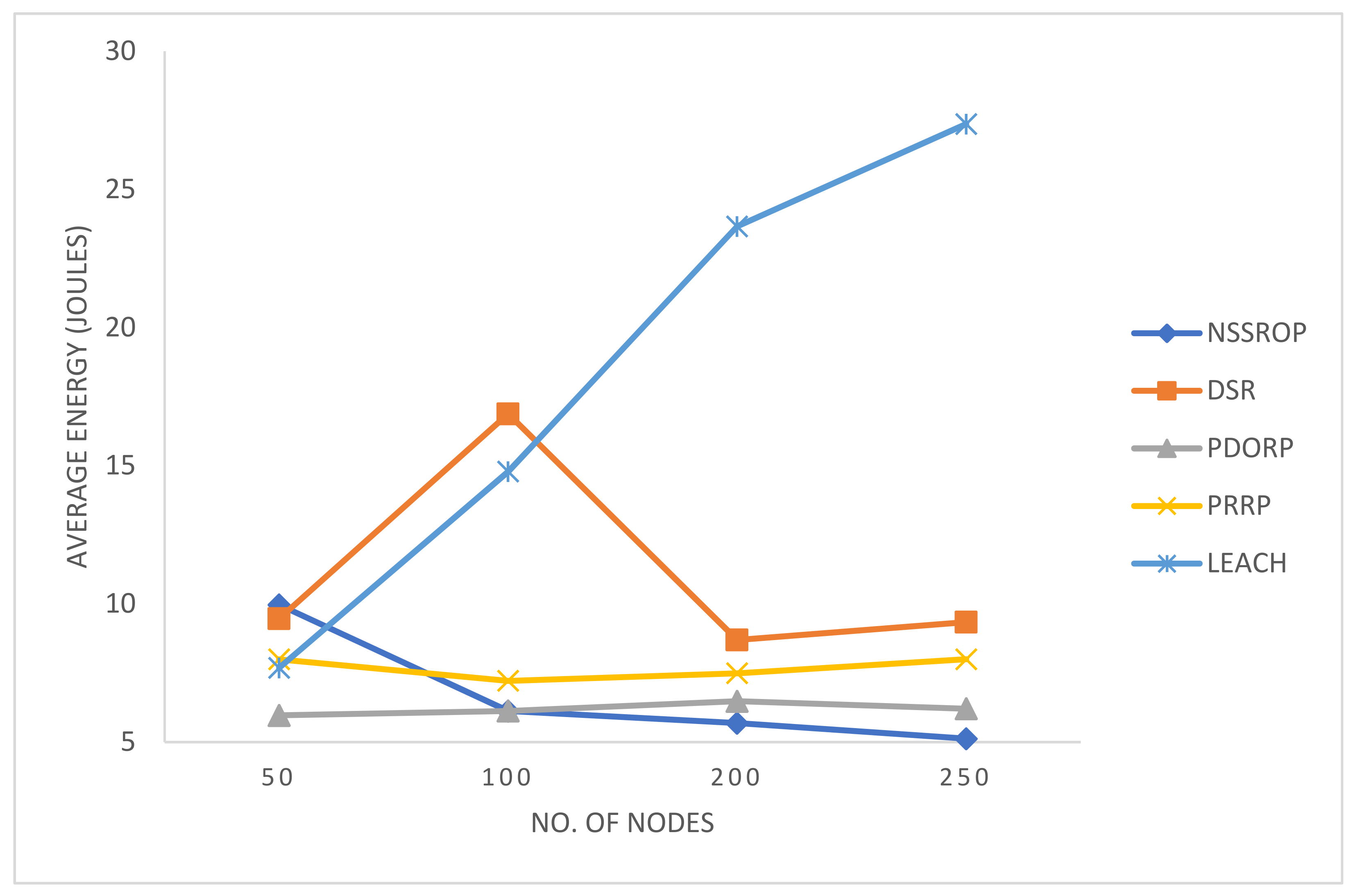
Figure 13 shows the comparative results for energy consumption in all the experimented protocols. LEACH is not very sophisticated compared to modern protocols, but it is very famous for creating a baseline for other protocols. Many studies adopt LEACH as a base protocol for designing and comparing their work. In our results, its performance decreased with the increased number of nodes. The PDORP and PRRP obtained consistent results in terms of energy efficiency. The authors who developed the PDORP claimed to obtain encouraging results by using the genetic algorithm with a modified DSR. The PRRP was better than the DSR and LEACH but could not compete with the others. The key reason for this is the incorporation of a typical GPS in the nodes. The proposed mechanism did not perform well with a lower number of nodes, such as 50, because the NSSROP operates on the scores that are based on the nodes’ neighborhoods and densities. In the case of a smaller number of nodes, there were fewer or no CNs and identical CNs. Therefore, the proposed mechanism failed to obtain distinctive features from its key parameters with a lower number of nodes. However, a WSN-based IoT network mostly consists of a large number of devices. In such a dense network, therefore, the NSSROP worked much better than the other protocols; the NSSROP outperformed the other protocols with a number of nodes greater than 100.
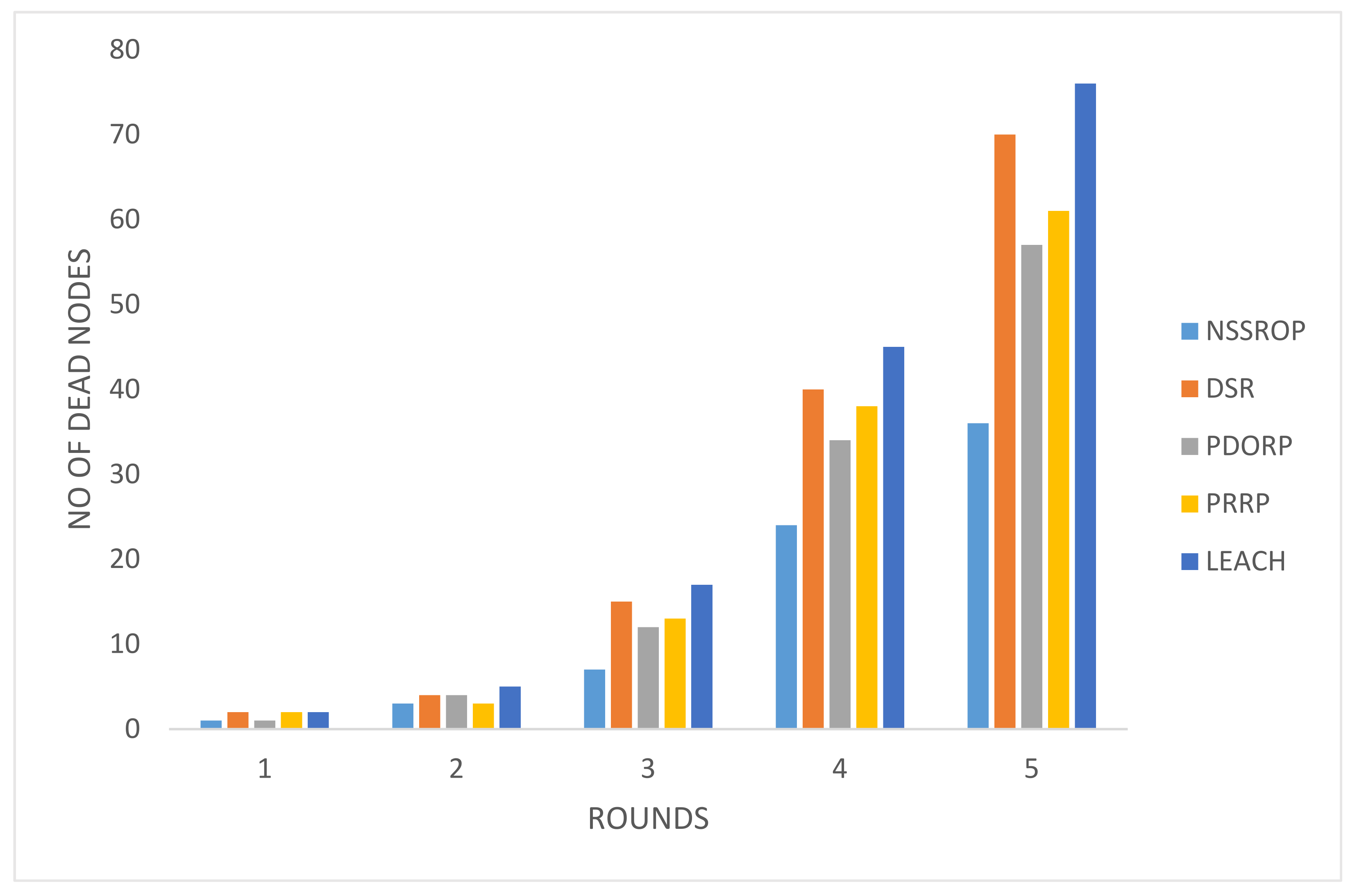
The results for the ratio of dead nodes against five pause times can be seen in
Figure 14. These results were reflected by the previous experiment on energy consumption. The NSSROP also outperformed in this test. Due to the equal load balancing, our protocol allowed all the nodes to equally participate in the network. Moreover, the blacklisting mechanism was also effective by not letting other nodes waste their energies on contacting them.
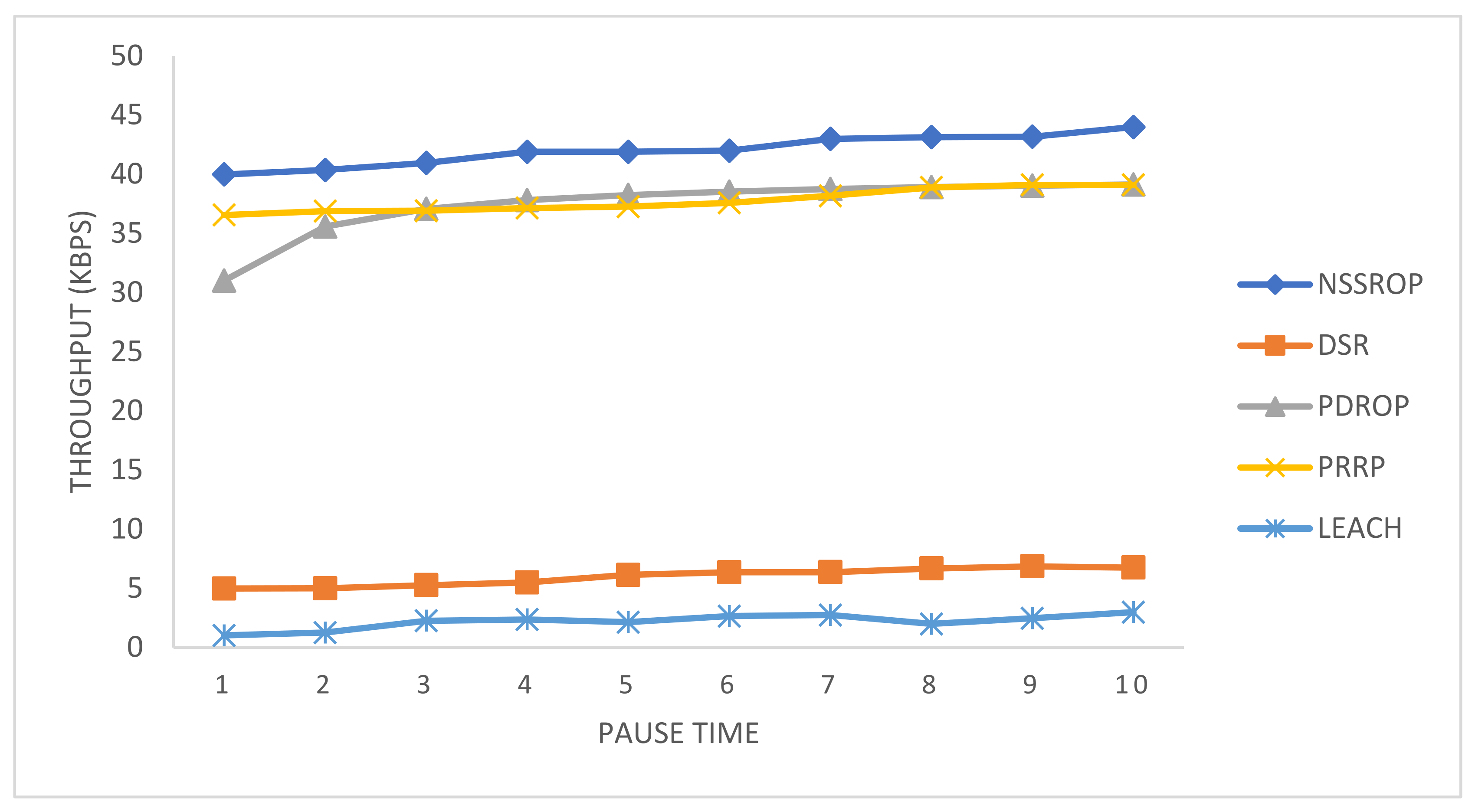
Figure 15 shows the comparative results for the throughput of the experimented protocols. The PDROP and PRRP somehow obtained similar results. The DSR and LEACH had very poor throughput in the experiment. The PRRP has a mechanism that operates on fixed-sized grids and does not rely on the time duration; therefore, it had a relatively consistent level of throughput. The PDORP initially took time to implement its hybrid mechanism of a genetic algorithm and bacterial foraging optimization. As shown in the figure, the NSSRP achieved a comparatively higher throughput than the others. The main reason for this is the implementation of modified control packets, that is, RREQ, RREP, and OLSR-based topology control messages. With these modifications and incorporation of scoring, the packet drops decreased, and the exchange of data increased, causing a higher throughput.
An experiment to check the impact of the density of nodes was carried out by varying the area up to 1000 m
2 with a set of 250 nodes. The results in
Figure 16 show that the performance of all the protocols degraded with an increased area size. This is because the scattered nodes may not have been able to gain multiple routes due to longer inter-node distances. The NSSROP obtained almost similar results to the PDORP for 1000 m
2. However, due to the utilization of the density aspect, the performance of the NSSROP was much better for 500 m
2 against the PDORP. Such a higher density increased the number of CNs and subsequently caused equal load distribution among the nodes and better selection among multiple routes.
In
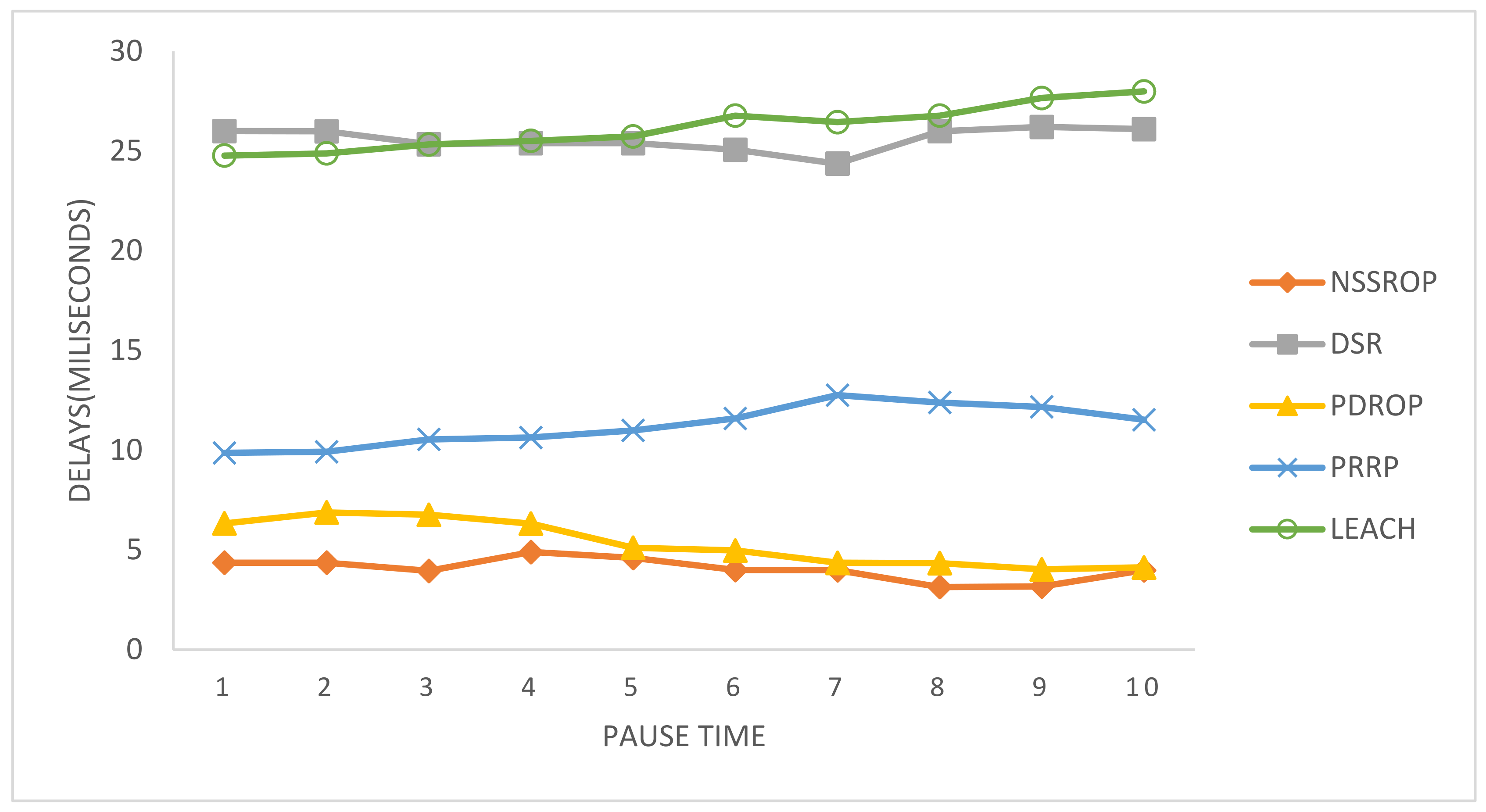
Figure 17, the end-to-end delays are shown. The DSR and LEACH had the worst results due to their outdated routing procedures. DSR uses the typical route discovery mechanism that has a drawback of higher delays. The PRRP had moderate values for this experiment. The PDORP and NSSROP had almost similar results for end-to-end delays. The main reason for this is the incorporation of modified routing tables and the exchange of periodic topology control messages along with on-demand route discoveries. Moreover, the selection of appropriate routes also had a significant impact on the end-to-end delays.
5. Conclusions and Future Work
In this work, we proposed a new routing protocol, the NSSROP, which balances the load efficiently among the nodes in a WSN-based IoT environment. We implemented the NSSROP on top of two base protocols, the DSR and OLSR, with the novel scoring mechanism for path selection. Each node is scored considering its energy and CNs to indicate the nodes’ densities. In addition, the blacklisting mechanism is defined to deal with non-cooperating nodes in the WSN. In the experiment, the NSSROP showed outstanding results in terms of average energy consumption, throughput, and end-to-end delay.
This work can be further expanded by incorporating game theory and using clusters or groups in the network. A Stackelberg or evolutionary game can be incorporated into the mechanism for cluster formation and cluster head selection processes. Moreover, the same mechanism can be modified to design a scheme for the development of trusted routes while considering selfish nodes in the network. Many trust management systems have been proposed. The existing trust management systems, focusing on trust development from node to node, can be extended to the trust development for entire routes in the network.