Article

A High-Precision Algorithm for DOA Estimation Using a Long-Baseline Array Based on the Hearing Mechanism of the Ormia Ochracea

1
School of Aerospace Engineering, Tsinghua University, Beijing 100084, China
2
Beijing National Research Center for Information Science and Technology, Tsinghua University, Beijing 100084, China
3
Space Center, Tsinghua University, Beijing 100084, China
*
Author to whom correspondence should be addressed.
Sensors 2022, 22(3), 1249; https://doi.org/10.3390/s22031249
Submission received: 13 October 2021 / Revised: 29 January 2022 / Accepted: 2 February 2022 / Published: 7 February 2022
(This article belongs to the Section Intelligent Sensors)

Abstract

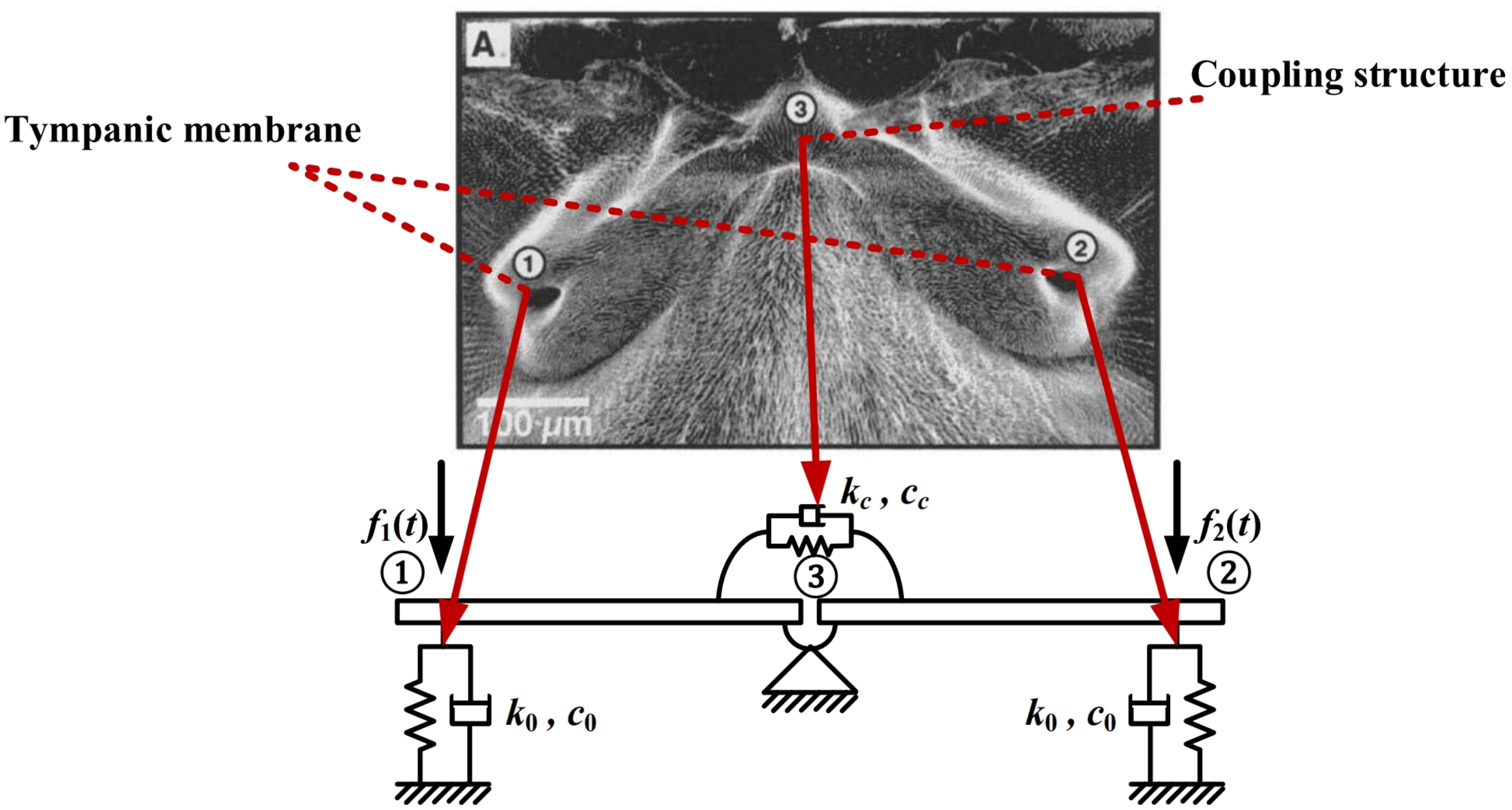
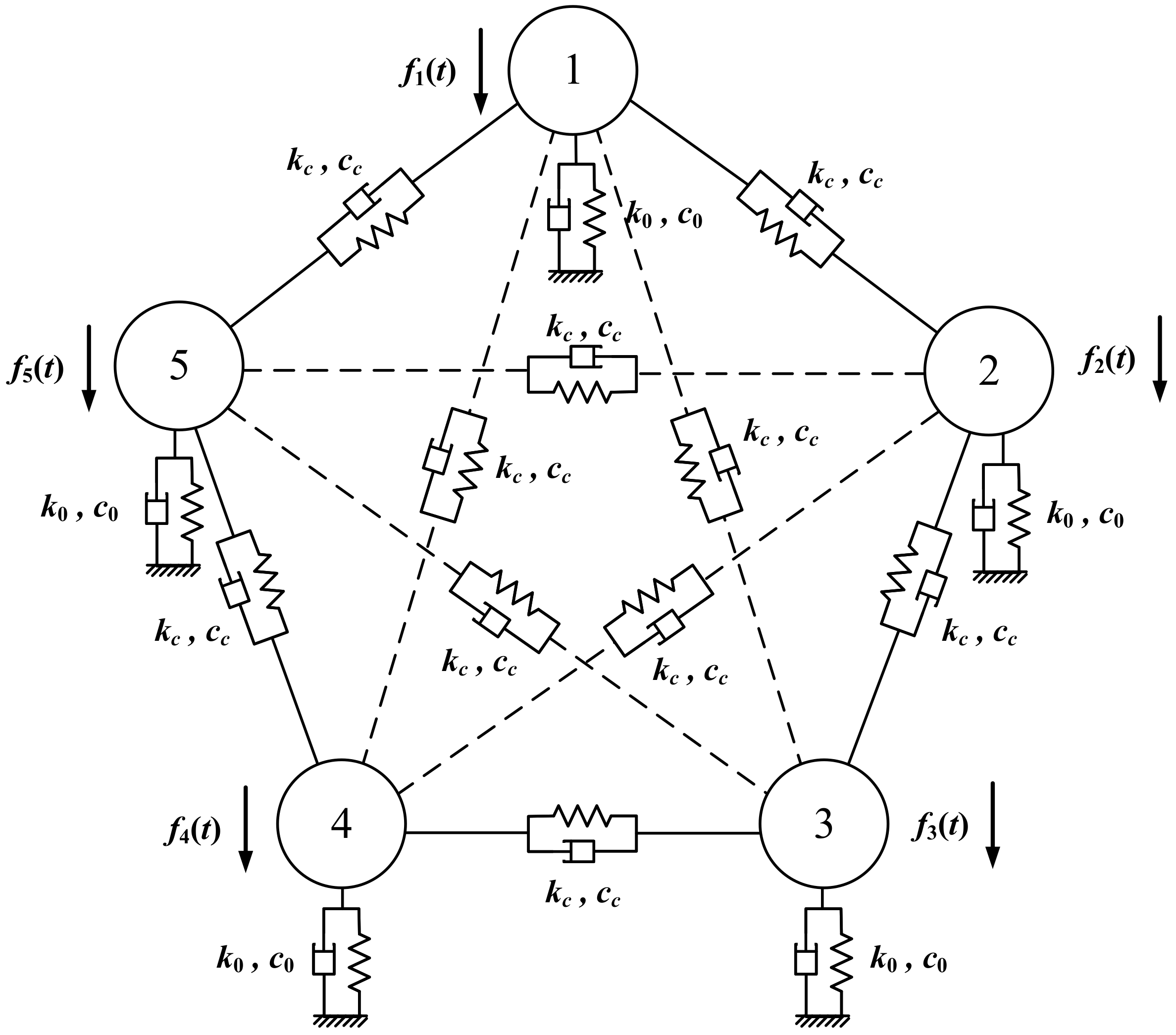
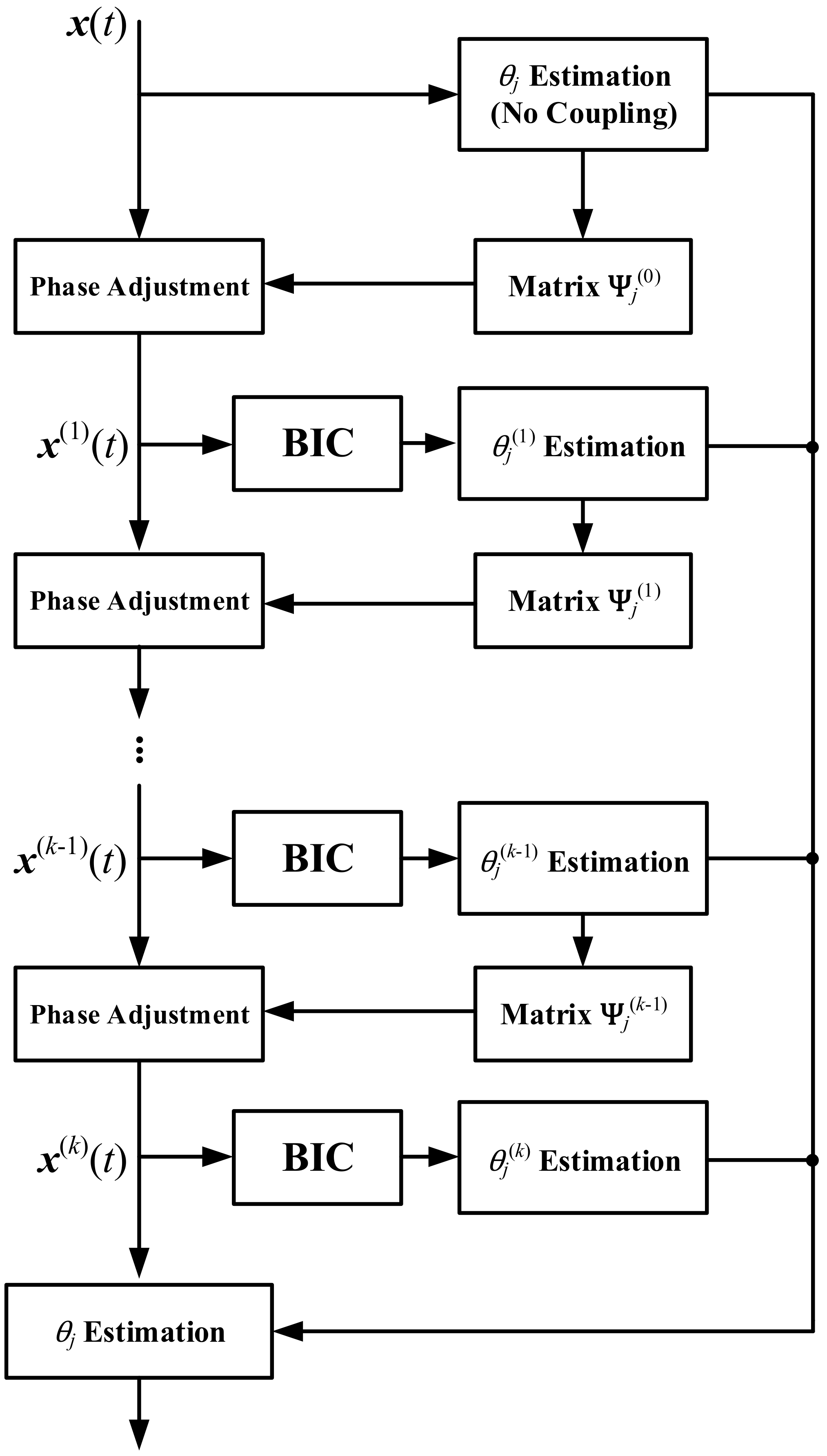
Inspired by the Ormia Ochracea hearing mechanism, a new direction of arrival estimation using multiple antenna arrays has been considered in spatially colored noise fields. This parasitoid insect can locate s cricket’s position accurately using the small distance between its ears, far beyond the standard array with the same aperture. This phenomenon can be understood as a mechanical coupled structure existing between the Ormia ears. The amplitude and phase differences between the received signals are amplified by the mechanical coupling, which is functionally equivalent to a longer baseline. In this paper, we regard this coupled structure as a multi-input multi-output filter, where coupling exists between each pair of array elements. Then, an iterative direction-finding algorithm based on fourth-order cumulants with fully coupled array is presented. In this manner, the orientation of the mainlobe can direct at the incident angle. Hence, the direction-finding accuracy can be improved in all possible incident angles. We derive the Cramér-Rao lower bound for our proposed algorithm and validate its performance based on simulations. Our proposed DOA estimation algorithm is superior to the existing biologically inspired direction-finding and fourth-order cumulants-based estimation algorithms.
Keywords: direction of arrival estimation; ormia ochracea; fourth-order cumulants; cramér-rao lower bound direction of arrival estimation; ormia ochracea; fourth-order cumulants; cramér-rao lower bound