


Abstract
This paper presents the development of a multilayer feed-forward neural network for the diagnosis of hypertension, based on a population-based study. For the development of this architecture, several physiological factors have been considered, which are vital to determining the risk of being hypertensive; a diagnostic system can offer a solution which is not easy to determine by conventional means. The results obtained demonstrate the sustainability of health conditions affecting humanity today as a consequence of the social environment in which we live, e.g., economics, stress, smoking, alcoholism, drug addiction, obesity, diabetes, physical inactivity, etc., which leads to hypertension. The results of the neural network-based diagnostic system show an effectiveness of 90%, thus generating a high expectation in diagnosing the risk of hypertension from the analyzed physiological data.
1. Introduction
In the 20th century, cardiovascular diseases underwent a very important change, from being an infrequent cause of death and disability at the beginning of the century, to being considered a major factor in death and permanent damage throughout the world at the end of the century. According to data from the World Health Organization (WHO), in 2001, the main cause of death in the adult population was cardiovascular disease in five of the six regions suggested by the WHO; that is, 30% of these deaths were related to this health factor, leading to a total of 17 million deaths. This increase in the mortality rate in a relatively short period of time is mainly due to changes in diet, sedentary lifestyles and the increase in life expectancy, which is part of the development of societies in an industrialized environment. The high prevalence of hypertension in various populations has significantly generated a wave of diseases, and therefore, it is estimated that five million deaths present cerebral vascular events, which is an indicator of the presence of hypertension [1,2,3,4].
According to the WHO and the World Bank, in their recent reports, hypertension is considered a barrier to a healthy population, mainly because of its high prevalence in the world, particularly in low-income and middle-income countries [5].
The main obstacles to blood pressure control are based on poor management strategies in primary health care. In addition, the socioeconomic situation of the population varies from country to country and, in some cases, from region to region within the country. This is coupled with the epidemiology of hypertension and related diseases, resources, and health care priorities [6].
It is a serious condition that significantly increases the risk of heart disease, encephalopathy, kidney disease and other diseases. An estimated 1130 million people worldwide have hypertension, and most of them live in low- and middle-income countries (about two-thirds). In 2015, 1 in 4 men and 1 in 5 women had high blood pressure. Only 1 in 5 people with high blood pressure have it under control. Hypertension is one of the leading causes of premature death in the world. One of the global targets for non-communicable diseases is to reduce the prevalence of hypertension to 25% by 2015 (from baseline values reported in 2010 [7]).
In Latin America and the Caribbean, between 20% and 35% of the adult population is considered to have hypertension. In a study conducted in four South American countries (Argentina, Chile, Colombia and Brazil) [6], 57.1% of the estimated adult population with hypertension knows that they are hypertensive, and, in recent years, this factor has increased and some people are unaware of this condition. This shows the low level of control of the population; only 18.8% of hypertensive adults in these four countries have their blood pressure under control. It is advisable to prevent and treat in a timely manner to maintain blood pressure levels below 140/90 mmHg, since hypertension, as such, is not curable. Adequate control can prevent premature deaths, considering the population with uncontrolled hypertension, suboptimal blood pressure and the untreated, in a period of 10 years, this could prevent 10 million deaths in the world due to cardiovascular factors. PAHO/WHO works to improve hypertension control programs, promoting policies for its prevention and projects that contribute to the training and updating of health personnel, especially at the primary care level [8]. Recent data recorded in China and Singapore showed that between 12.8% and 31.2% of patients with COVID-19 had pre-existing hypertension, representing an important comorbidity in SARS-COV-2-infected patients. These patients appeared to develop the disease more frequently and were more susceptible to death [9,10].
In Mexico, full efficiency has not been achieved at the first level of medical care, whose maximum sign of effectiveness should be to prevent the flood of patients who could have been controlled or limited in their progression of complications to hospital levels of care.
The main motivation that led to conducting this research is the need to diagnose hypertension through the application of ANN. This method is an innovative alternative and considered a sustainable development project that seeks the satisfaction of diagnosing without compromising future needs, whose result and implementation will generate a benefit, taking as initial information the health levels of the student community of the School of Science and Technology UABC (ECITEC).
Currently, several works have been reported related to the use of neural networks, including Yolanda García Montero [11], as well as Zainab Assaghir et al. [9], and the short article presented by Arpneek Kaur and Abhishek Bhardwaj [12]. In each, different methodologies of analysis are presented that differ from what is proposed in this research.
The article is structured as follows. Section 2 presents the data collection, divided into subsections such as problem statement, justification, hypothesis and theoretical framework; Section 3 defines the design methodology, which entails a brief description of neural networks, their structure and neural architecture, all as part of the steps for the research; Section 4 addresses the numerical results of the diagnostic system, the pseudo-code of the neural network, network training, network training state characterizing the system output and regression training; Section 5 presents the neural architecture classification tests, which aim to provide data related to information processing and the results obtained. Section 6 presents the discussion of the results obtained, and finally, Section 7 presents the conclusions of the work as well as future work.
2. Data Collection
2.1. Problem Statement
One in four Mexicans suffers from hypertension; in men, the prevalence is 24.9%, and in women, it’s 26.1%. The estimated prevalence is 30% according to the criteria of 140/90 mm Hg, which is equivalent to about 30 million corresponding to the diagnosis of hypertension. However, with the new criteria of the American Heart Association, the population with hypertension will be at least double [13,14].
According to the 2016 National Survey of Health and Nutrition Midway 2016 (ENSANUT 2016), conducted by the National Institute of Public Health (INSP) and the Ministry of Health of the federal government, one in four adults in Mexico suffers from high blood pressure; that is, 25.5 percent of the population, of which approximately 40 percent are unaware that they have this disease, and this impacts their health condition. Only about 60 percent know their diagnosis, and only half of those are controlled [15].
According to the National Health and Nutrition Survey 2020 on COVID-19 Organ under the National Institute of Public Health of the Federal Government of Mexico, the prevalence of hypertension by previous medical diagnosis in the adult population aged 20 years and older was determined in 2012, 2016, 2018 and 2020. The prevalence of hypertension was 13.4% in 2020, which is lower than previous surveys (16.6% in 2012, 15.3% in 2012 and 18.4% in 2018), but was not statistically different compared to 2016. In women, the prevalence of hypertension by medical diagnosis increased from 18.5% to 20.9% from 2012 to 2016, but the prevalence decreased to 15.7%, increasing from 18.5% to 20.9% from 2012 to 2016, but the prevalence decreased to 15.7% in 2020. In men, a smaller increase in prevalence was observed from 2012 to 2016 (from 14.1 to 15.3%), and in 2020, the estimated prevalence was 10.9% [16].
2.2. Justification
Neural networks are considered within Artificial Intelligence (AI), whose application has revolutionized many sectors, medicine being one of them. Currently, there have been several research papers related to measuring or diagnosing the risk of hypertension using neural networks. Therefore, and in function to the bibliographic search of these investigations, the necessity is born to approach as a new alternative the use of diverse physiological aspects, whose information and with the implementation of a neural network is able to diagnose the risk of suffering hypertension.
2.3. Hypothesis
The use of neural networks has been very evolutionary in recent years, covering various areas of knowledge, including medicine, whose use ranges from the prognosis of the evolution of different pathology’s or therapeutic interventions, classifying or recognizing anatomopathological samples, imaging tests or establishing diagnostic probabilities from symptoms or complementary tests [1].
Therefore, we dare to say that the model for the diagnosis of hypertension can be a tool for further application in medicine, whose study, design and experimentation are essential for the expected results.
2.4. Theoretical Framework
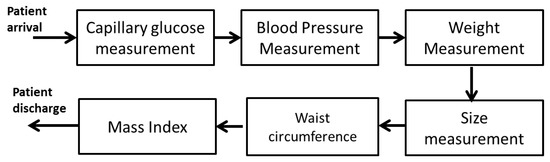
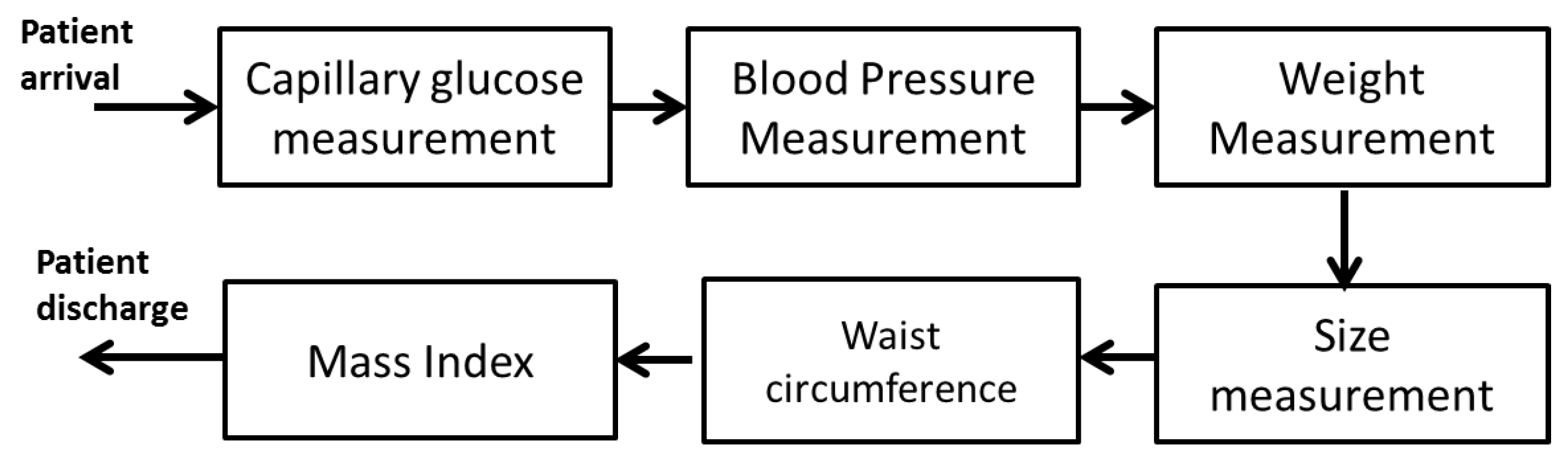
The population analyzed includes all students in ECITEC currently enrolled in their study programs, which were sampled (medical variables), represented through a block diagram (Figure 1). The procedure for taking the medical variables is indicated, and Table 1 indicates the limits considered in each measurement process from the medical point of view.
Figure 1.
Sequence of the procedure for taking the medical variables to be used.
Table 1.
Limits considered in each medically permissible measurement process.
Samples were taken from students, and were recorded in an Excel sheet containing the student’s name, sex, age, glucose level, blood pressure, weight, height, waist (cm), and body mass index. Subsequently, the information was analyzed and classified for processing.
3. Design Methodology
3.1. Neural Networks
Artificial neural networks are non-linear approximations to the way the brain works; therefore, they should not be directly compared to the brain, nor should the principles underlying the functioning of artificial neural networks and the brain be confused, nor should it be thought that neural networks are based solely on biological networks, since they only emulate the functioning of the human brain in a very simple way. Furthermore, it should be considered that biological networks are generators of neurobiological processes in which highly complex relationships are established, which cannot be achieved with monolayer or multilayer networks. ANNs can be studied as universal approximators from a mathematical point of view. The following is an overview of the biological foundations of natural neural networks, without going deeper into this exciting field, as learning about such a complex subject requires many other volumes to study. Only a basic idea is developed here that serves as a primary approach to the study of artificial neural networks.
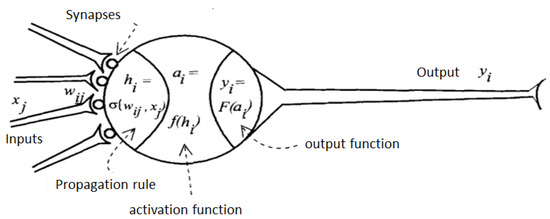
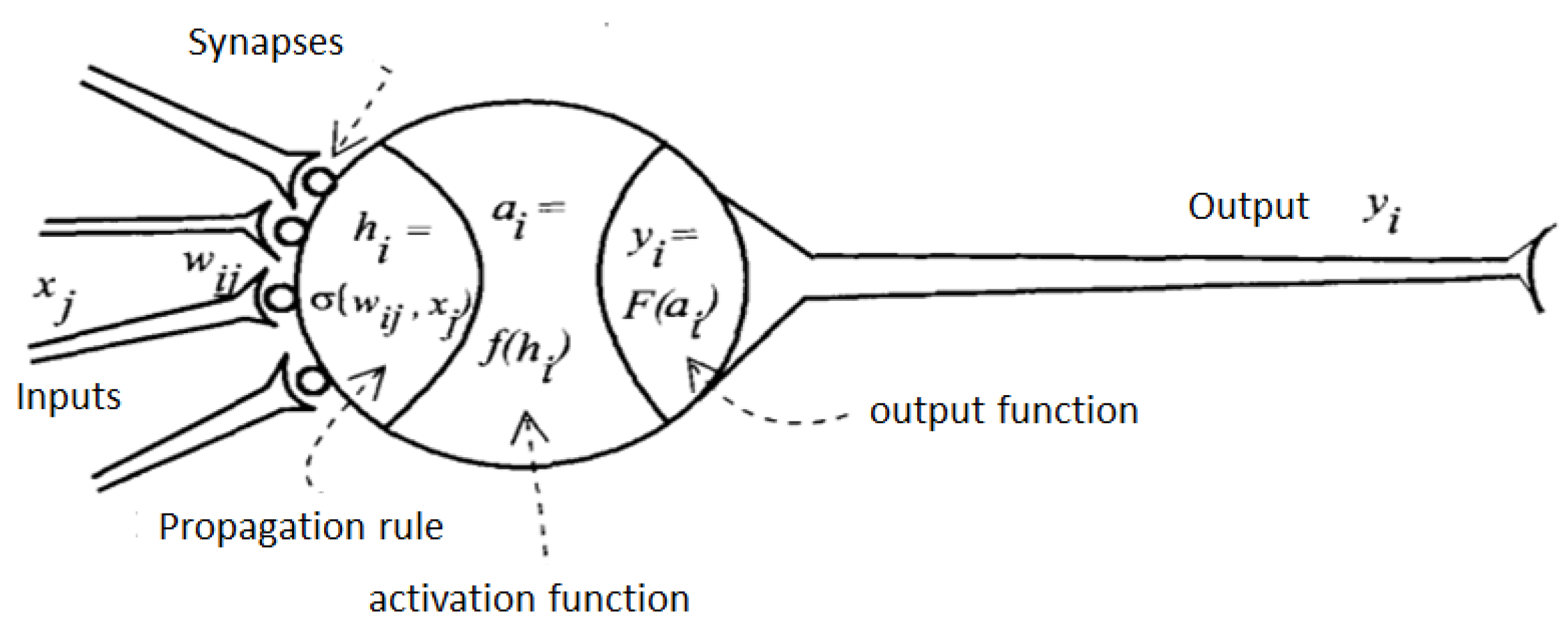
Neural networks are a simulation of the biological diversity properties of neural systems by means of mathematical models recreated through artificial mechanisms (an integrated circuit or a computer) [5,16,17]. The aim is to have machines give responses similar to those that the human brain is capable of giving. An elementary processor or neuron is a simple computational device that, from an input vector coming from the outside or from other neurons, provides a single response or output. The element that constitutes a neuron is shown in (Figure 2). A neural network is characterized by the following elements:
Figure 2.
Generic model of artificial neuron.
- A set of processing units or neurons.
- An activation state for each unit, equivalent to the output of the unit.
- Connections between the units, usually defined by a weight that determines the effect of an input signal on the unit.
- A propagation rule, which determines the effective input of a unit from external inputs.
- A trigger function that updates the new trigger level based on the effective input and the previous trigger.
- An external input corresponding to a term determined as bias for each unit.
- A method for gathering the information, corresponding to the learning rule.
- An environment in which the system will operate, with input signals and even error signals.
The mathematical model of the above-mentioned biological neuron proposed by McCulloch and Pitts [18], usually called an M-P neuron. In this model, the ith processing element computes a weighted sum of its inputs and outputs = 1 (firing) or 0 (not firing) according to whether this weighted input sum is above or below a certain threshold :
where the activation function a(f) is a unit step function:
3.2. Structure
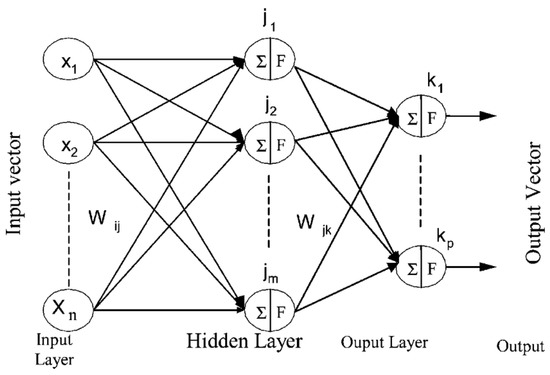
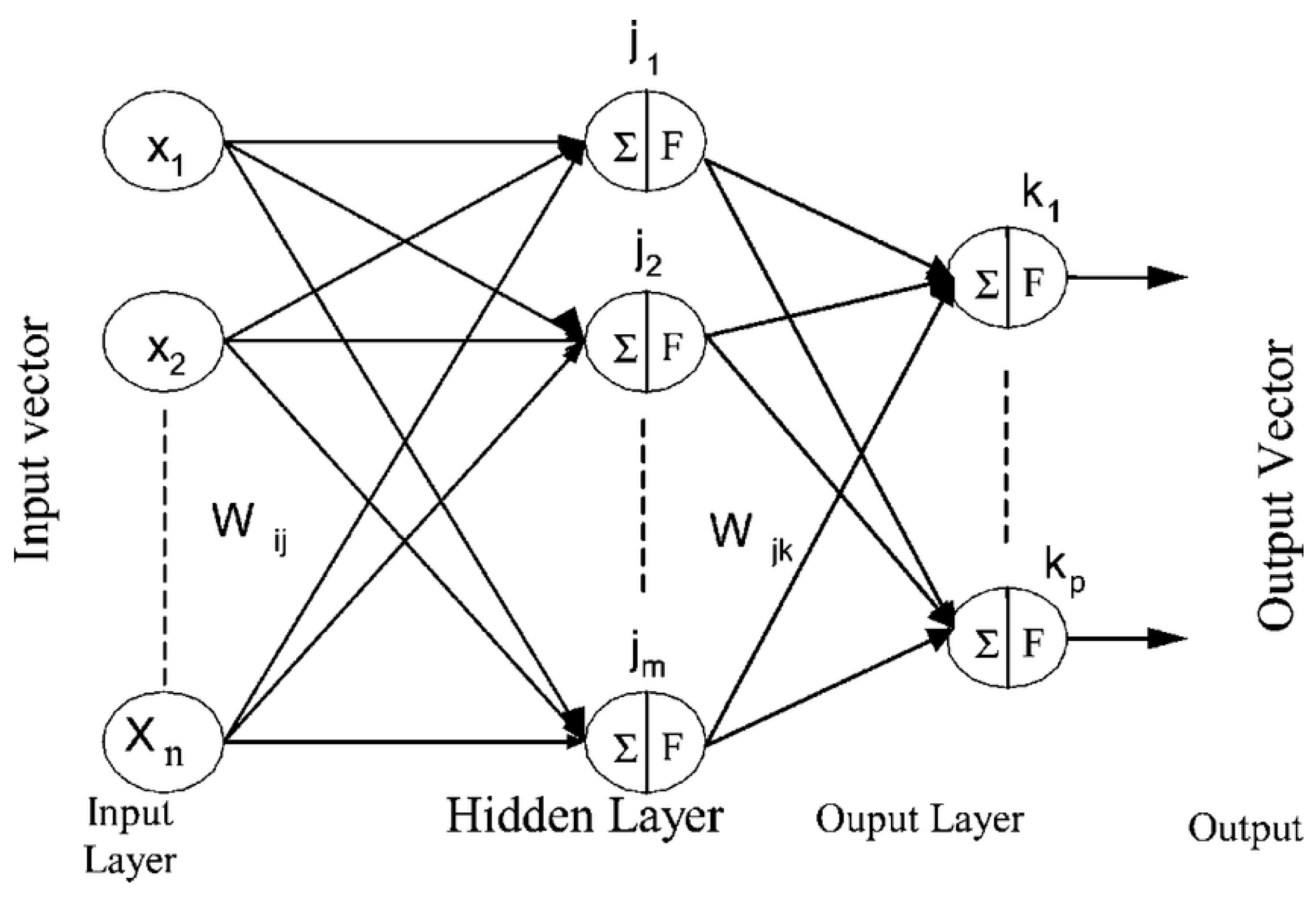
A multilayer feed-forward neural network is one of the first efforts to represent supervised learning, where elementary activation functions are used in binary form. In most cases, the MLP network consists of an input layer [19], one or more hidden layers and an output layer. When using feed-forward neural networks, it is required that there is an adjustment of the weights associated with the connections, so that there is a learning by the network. To perform this weight adjustment there are many techniques, among which is the Backpropagation Algorithm or Backpropagation error [20].
The Backpropagation algorithm is a supervised training used for multilayer networks, where the value of the weights is adjusted according to the error generated. This technique is widely used as it allows an optimization method to be found by defining the error gradient and minimizing it with respect to the neural network parameters. The structure of the backpropagation neural network algorithm [21] is shown in (Figure 3).
Figure 3.
Multilayer perceptron architecture with backpropagation algorithm.
Algorithm Back-propagation Learning Rule [22,23].
The first step is to propagate the input forward through the network:
The next step is to propagate the sensitivities backward through the network:
Finally, the weights and biases are updated using the approximate steepest descent rules:
3.3. Proposed Neural Architecture
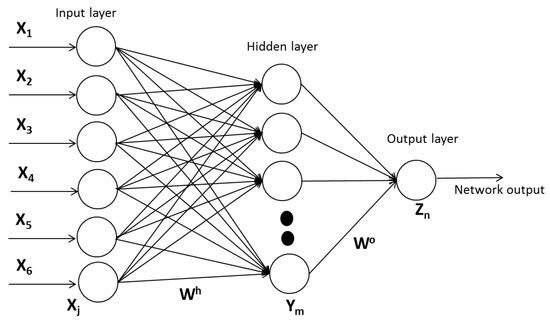
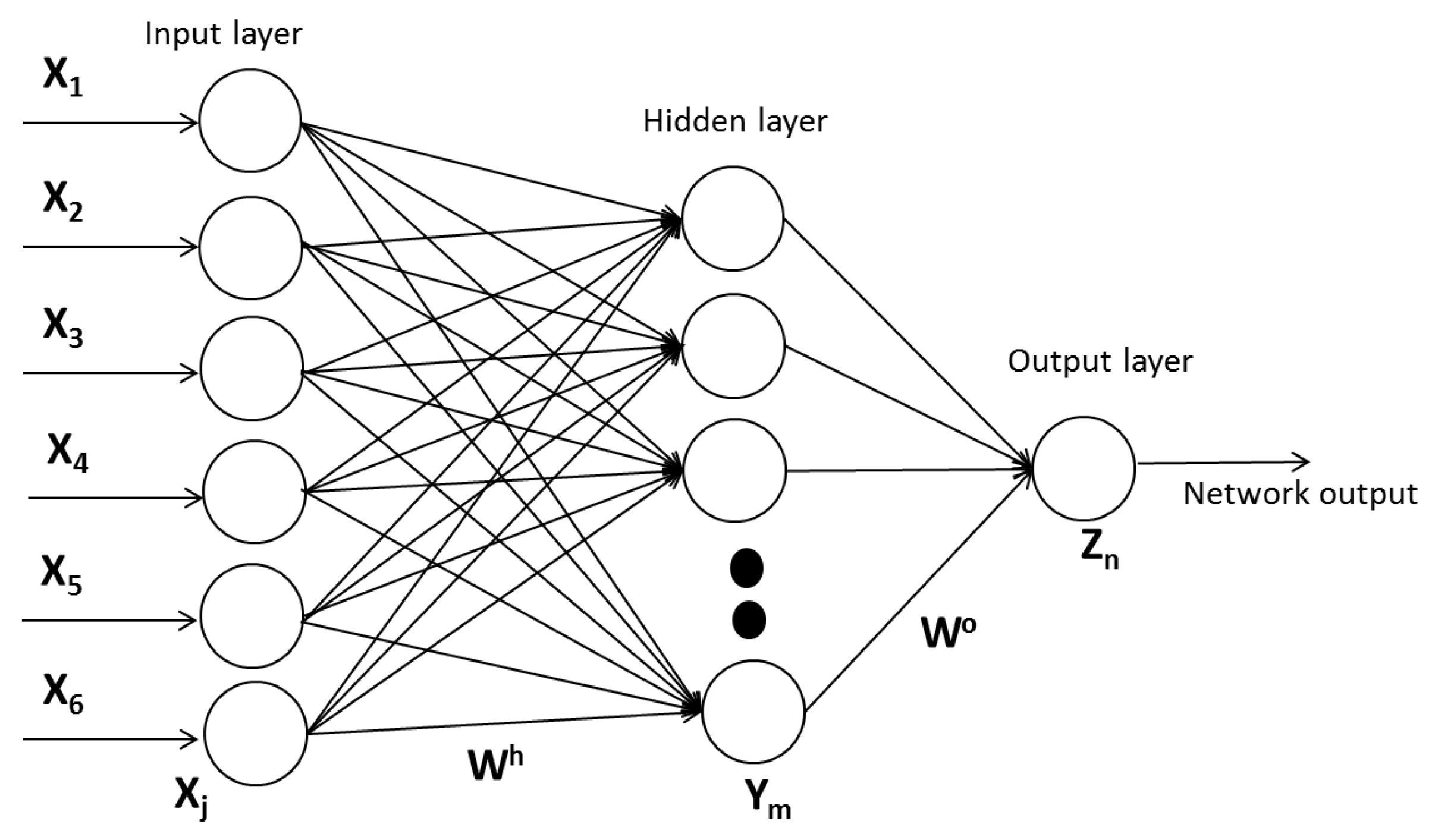
The proposed feed-forward multilayer neural network with backpropagation learning algorithms is shown in (Figure 4) [24].
Figure 4.
Multilayer feed-forward neural network.
The Backpropagation learning algorithm its characterized by Equation (10):
The characteristic equation of the development of the system for the diagnosis of hypertension is:
Diagnostic System =
4. Results
The data in Table 2, are a fragment of the original, composed of 303 records as part of the sample population of a total of 2500 peoples, which must be read punctually to arrive at the results through the proposed neural network.
Table 2.
Sample of data analyzed in the project.
Table 3 shows expected results against the simulated data through the network. There was a great similarity of the data between those expected to be obtained and those obtained by the proposed neural network, which were grouped by class in relation to them, which allows affirming that there is certainty in the results themselves.
Table 3.
Data classification.
The following Matlab expressions (a to d) show the numerical results of the diagnostic system using the data sheet.
- A1 = [21 174 84 15 24.7 94]; a1 = sim(net,A1) a1 = 0.2819 (a)
- A2 = [20 118 75 21 34.6 122]; a2 = sim(net,A2) a2 = 0.3721 (b)
- A3 = [18 103 77 18 19.4 130]; a3 = sim(net,A3) a3 = 0.7439 (c)
- A4 = [22 111 70 23 30.5 140]; a4 = sim(net,A4) a4 = 0.8682 (d)
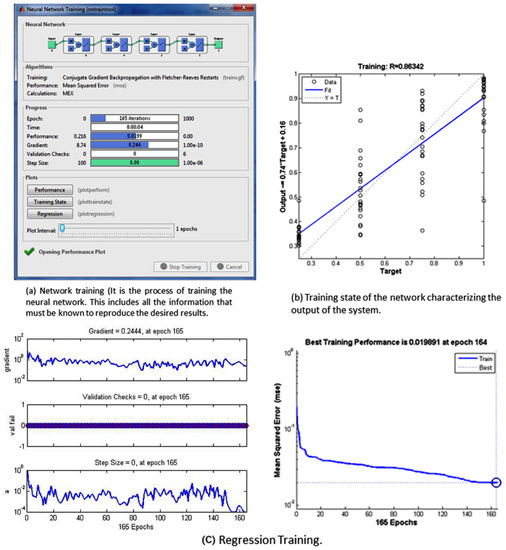
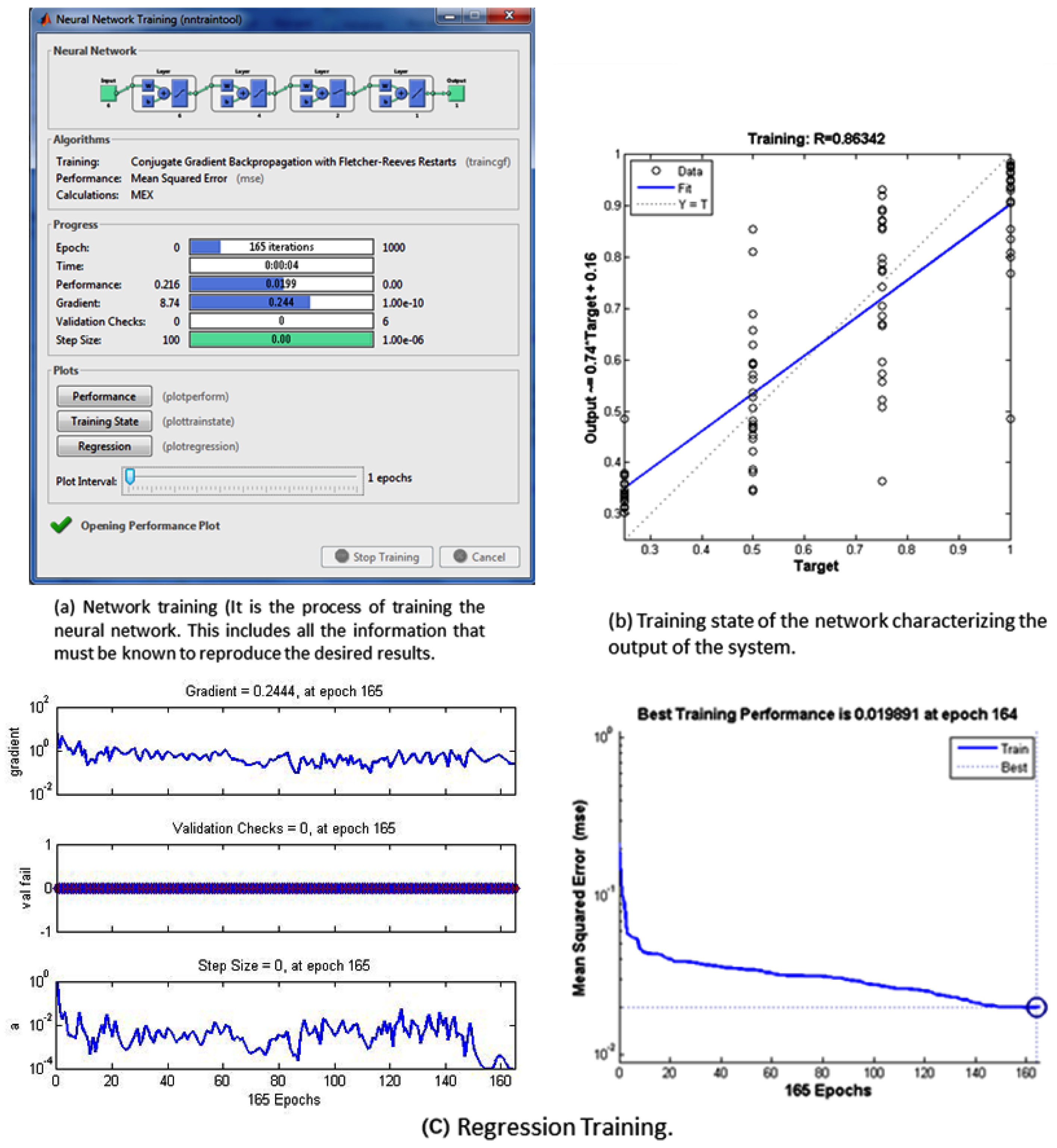
In the Figure 5a shows the training of the neural network, Figure 5b shows the state of the network training, and Figure 5c shows the behavior of the network in its training with the regression method.
Figure 5.
(a) shows the training of the neural network, (b) shows the state of the network training, and (c) shows the behavior of the network in its training with the regression method.
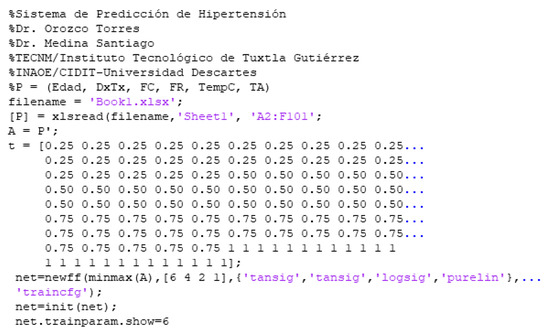
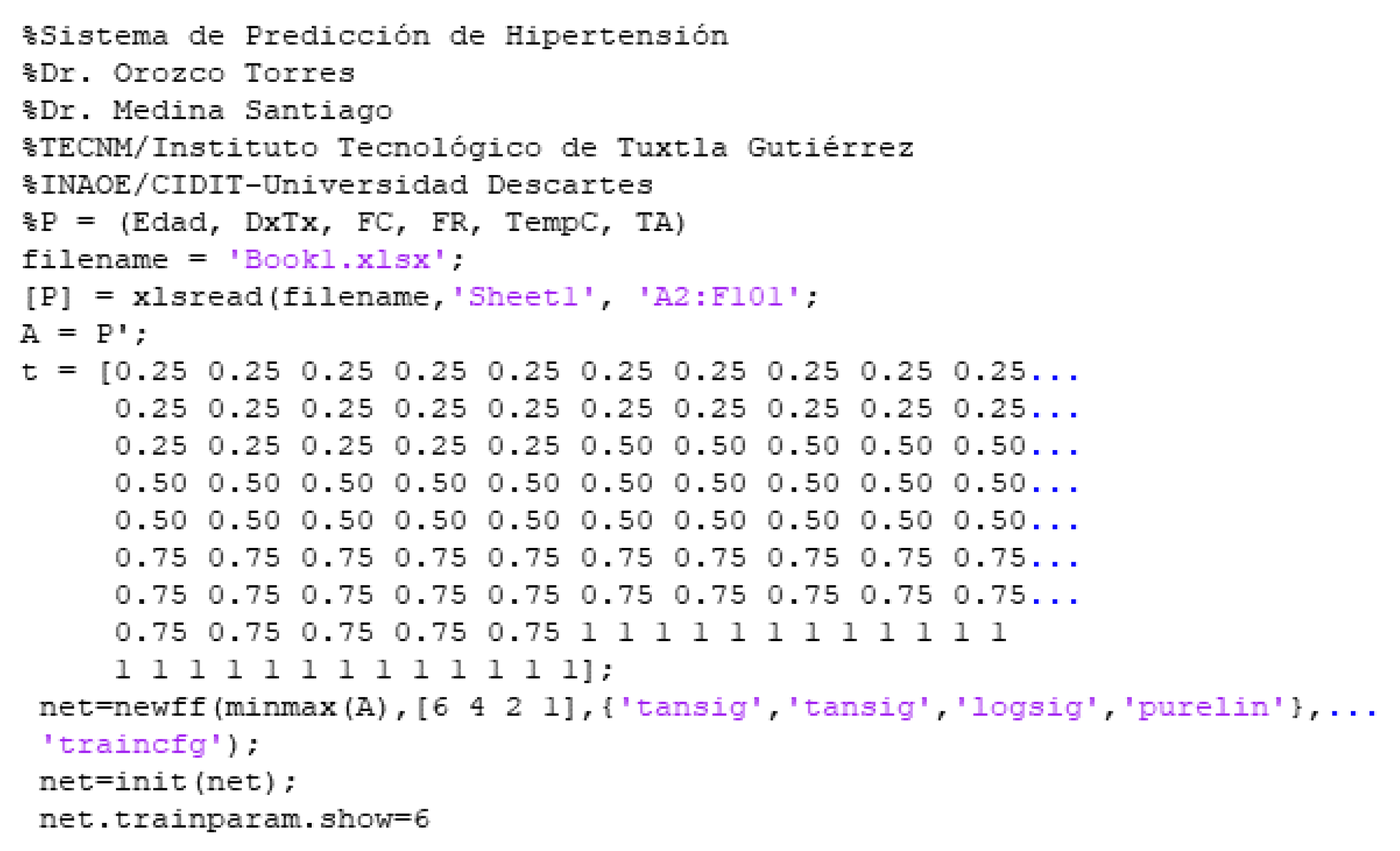
Figure 6 shows the pseudo-code for the neural network information processing with backpropagation learning. Where we can observe the lines of code that make up the simulation and processing of the data, to obtain results.
Figure 6.
Diagnostic system pseudocode.
5. Neural Architecture Classification Tests
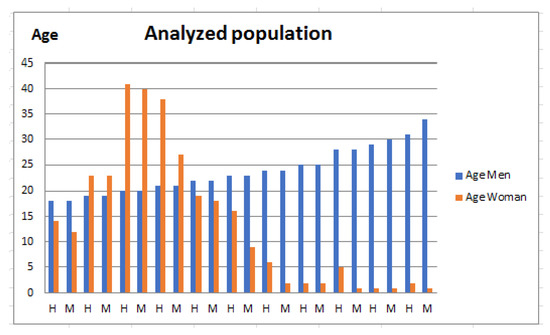
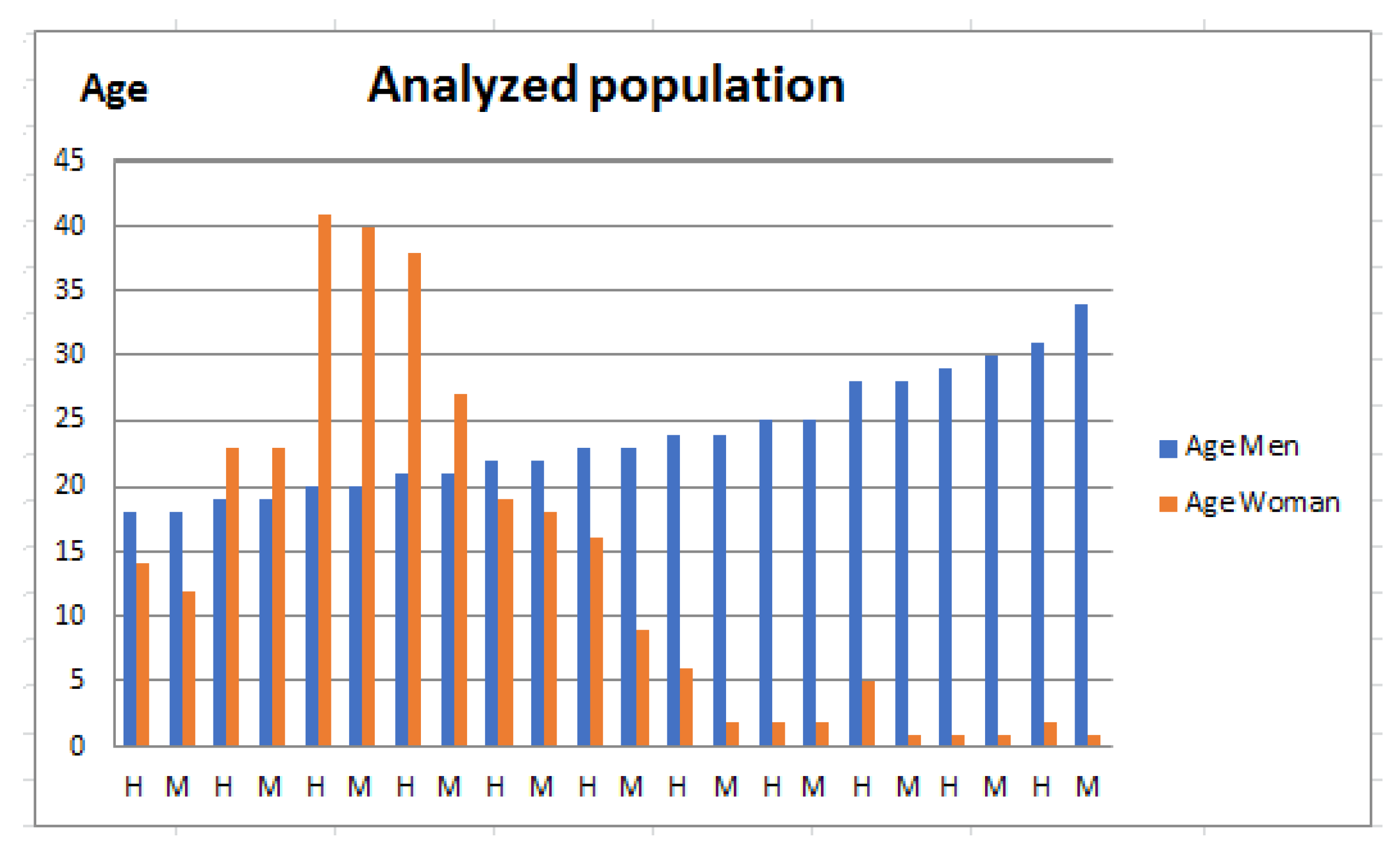
This section presents complementary information that allows us to understand the proposed method. Figure 7 presents the statistics of the population attended, which shows a homogeneity of age in the population. As can be seen, the segment of the population analyzed is relatively young, even so, it is important to mention that hypertension has been detected in both young and adult populations.
Figure 7.
Age of the population analyzed.
Our population comprises all students of the different careers offered at ECITEC (School of Science and Technology UABC) located in Baja California, Norte Mexico, which, in 2018, was more than 2500 people. Participation in this project was voluntary for the morning and afternoon shifts, which are the shifts of attention to the population.
Table 4 shows the information sheet generated from the students’ participation. This information is the basis for feeding the proposed neural network, based on the information, a classification of the level of hypertension was carried out and marked with colors according to the parameters presented in Table 5. Table 4 is only a fragment of all the information processed.
Table 4.
Record of student information.
Table 5.
Blood pressure category, defined by Binu, D.; Rajakumar, B., in [25].
Table 6 shows the information generated from the analysis of the information through the neural network proposed for this work. Due to its large size, only a fragment of it is presented.
Table 6.
Analyzed information.
Results Obtained
This section shows the effects on the neural architecture proposed for the classification of the data obtained. Table 7 shows the different classes for systolic pressure considered in the ANN data analysis.
Table 7.
Blood pressure values.
Depending on the dataset, data pre-processing can represent between 10–60% of the time and effort for the data mining process [26,27,28]. The method used was:
- 1.
- First step: division of the database according to the categories presented in Table 7, which leads to four datasets (Class_1, Class_2, Class_3 and Class_4).
- 2.
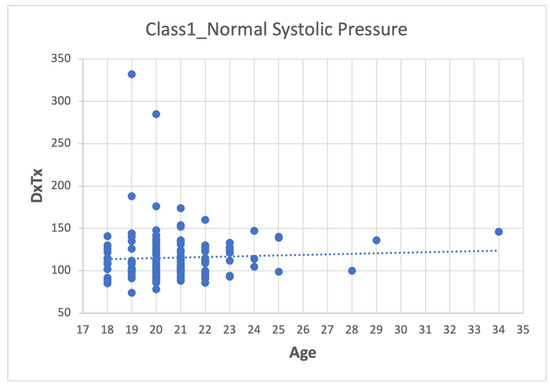
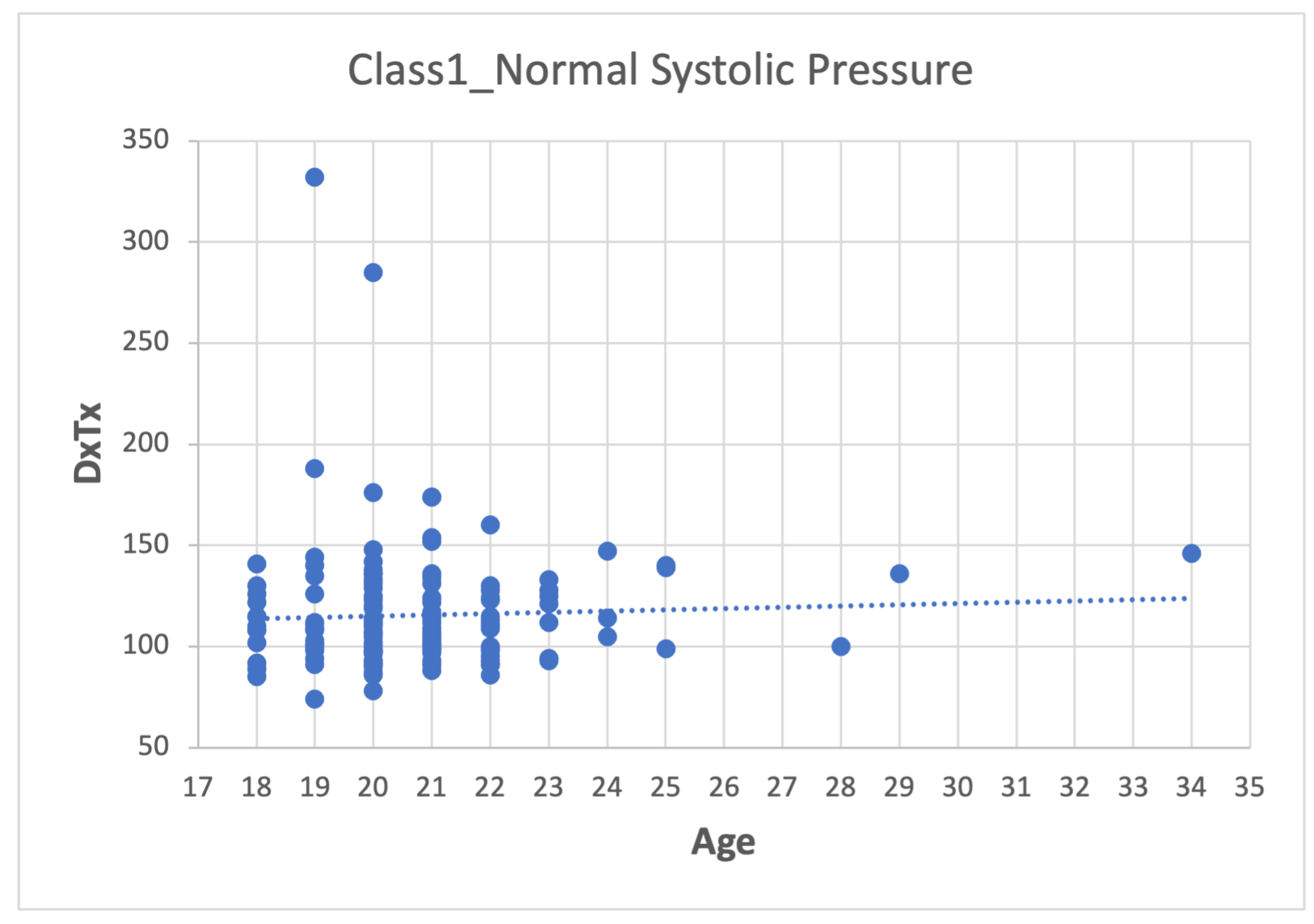
- Second step: Analyze the data for each of the variables in each class using scatter plots. For category Class1_Systolic Pressure Norm, we obtain:Figure 8, showing two outliers that were analyzed and considered as normal due to the nature of the variable. On the other hand, we observe that within the variable Age, we also had values far to the right, but these corresponded to students whose age was older than the majority.Figure 8. Age-DxTx graph.
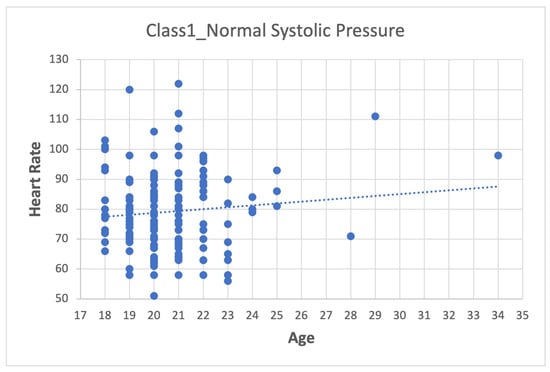
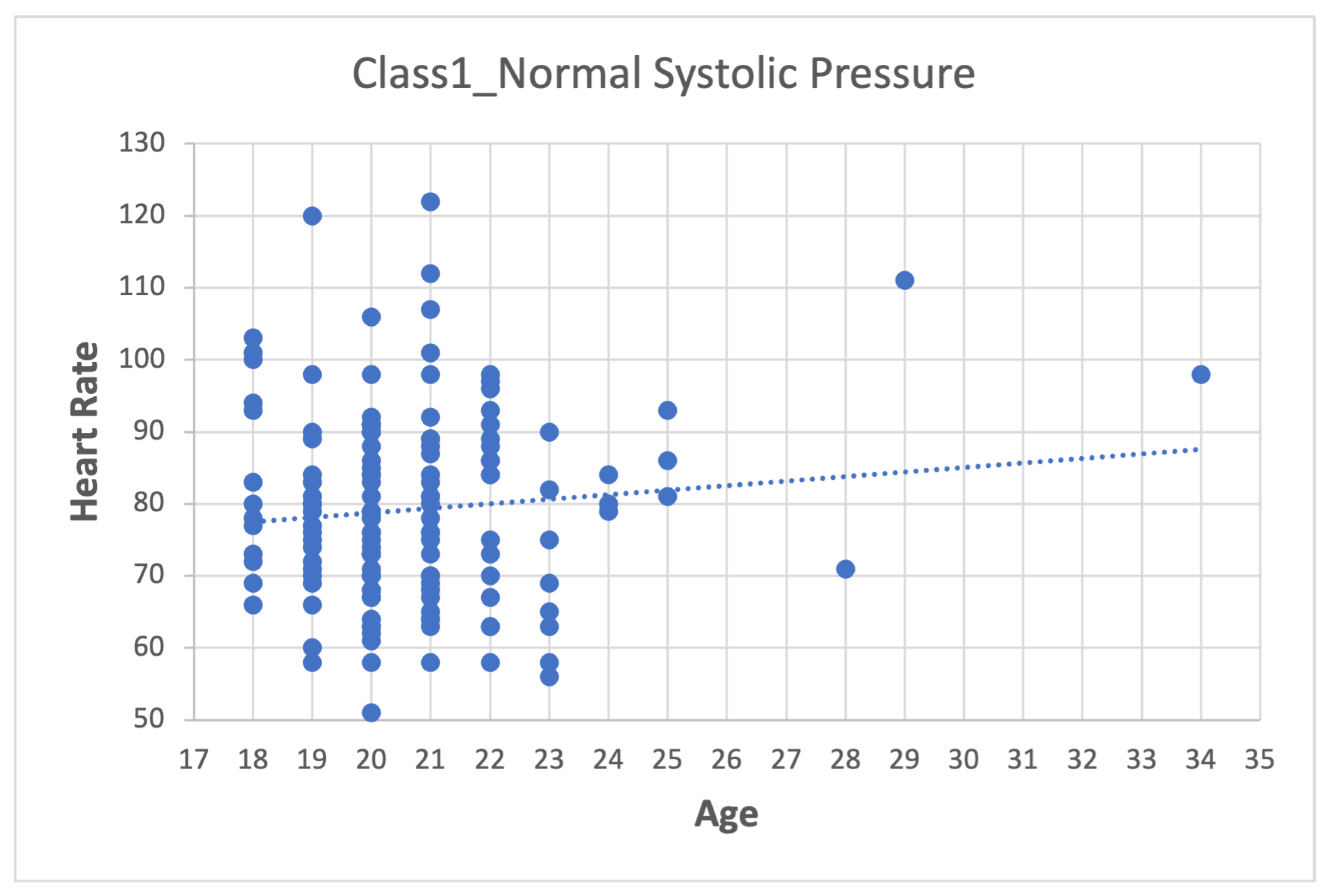
Figure 9 shows heart rate (HR) values within the normal range, with no values atypical.
Figure 9.
Age–Heart Rate graph.
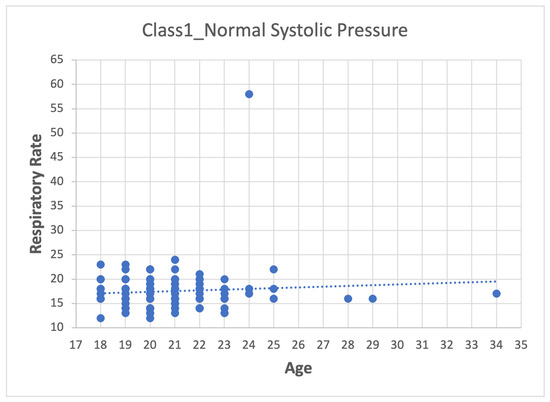
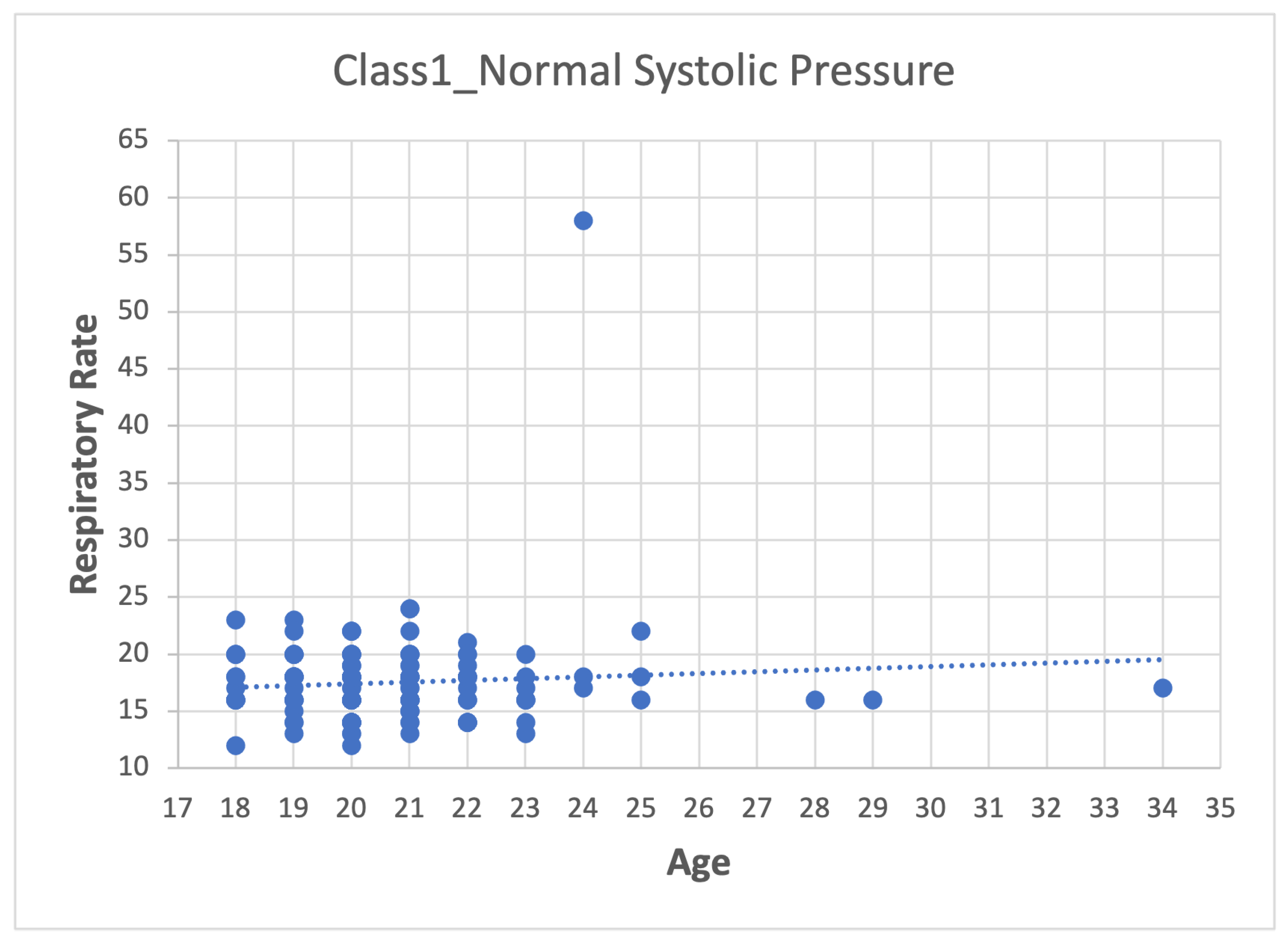
Figure 10 shows the respiratory frequency (RF) with a single values atypical.
Figure 10.
Age–Respiratory Rate graph.
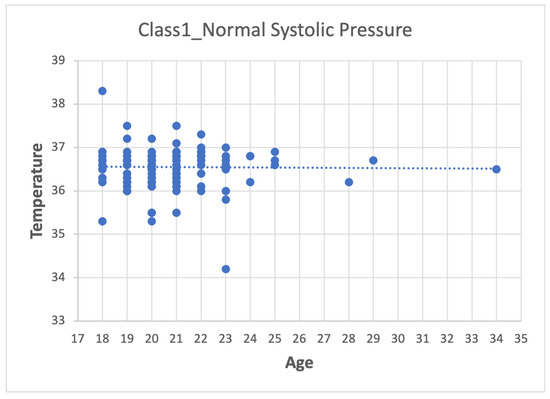
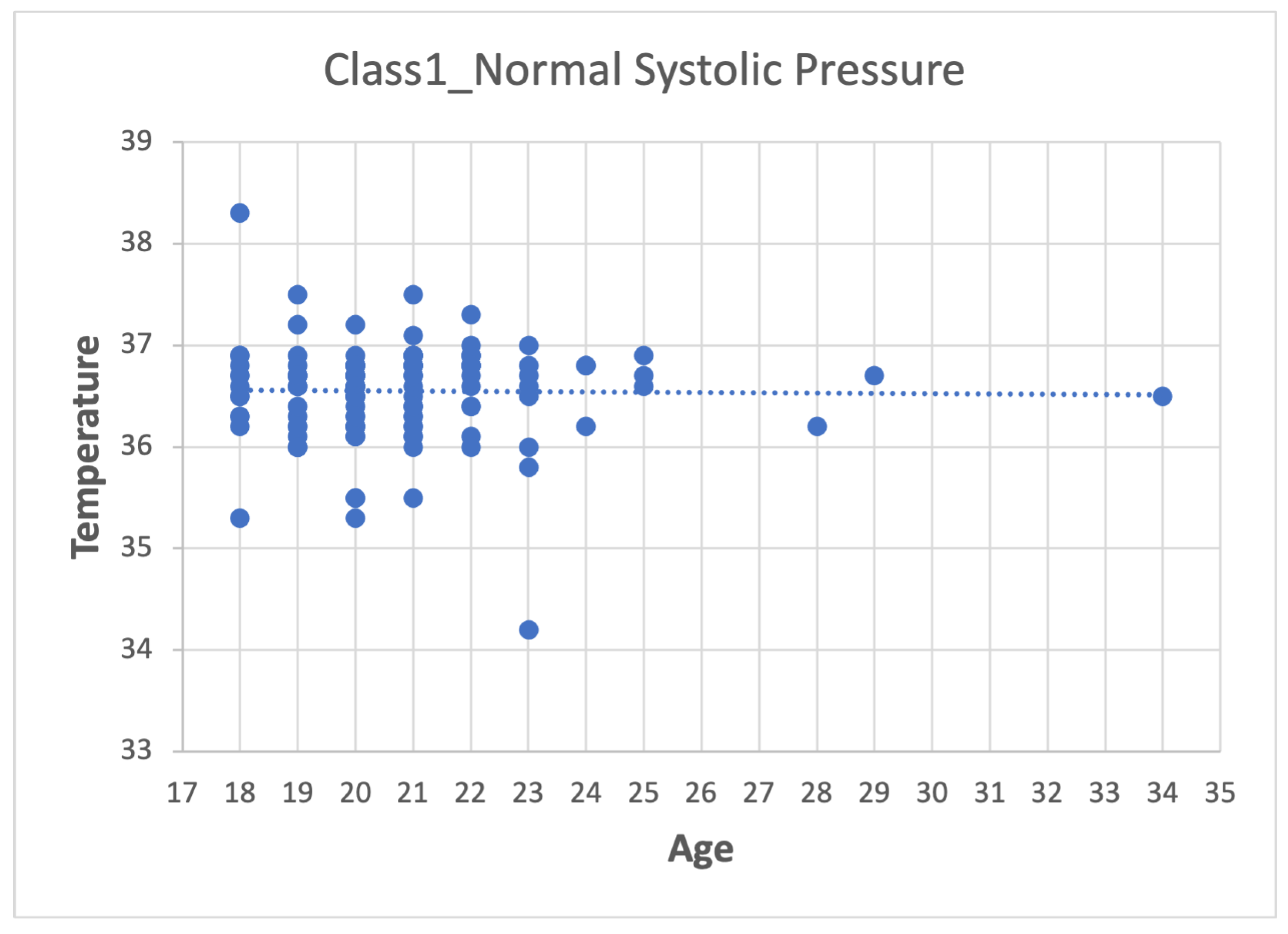
Figure 11 shows temperature values (°C) without values atypical according to the nature of the medical variable.
Figure 11.
Age–Temperature graph.
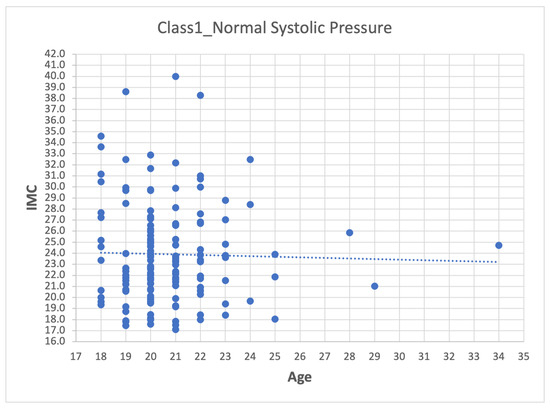
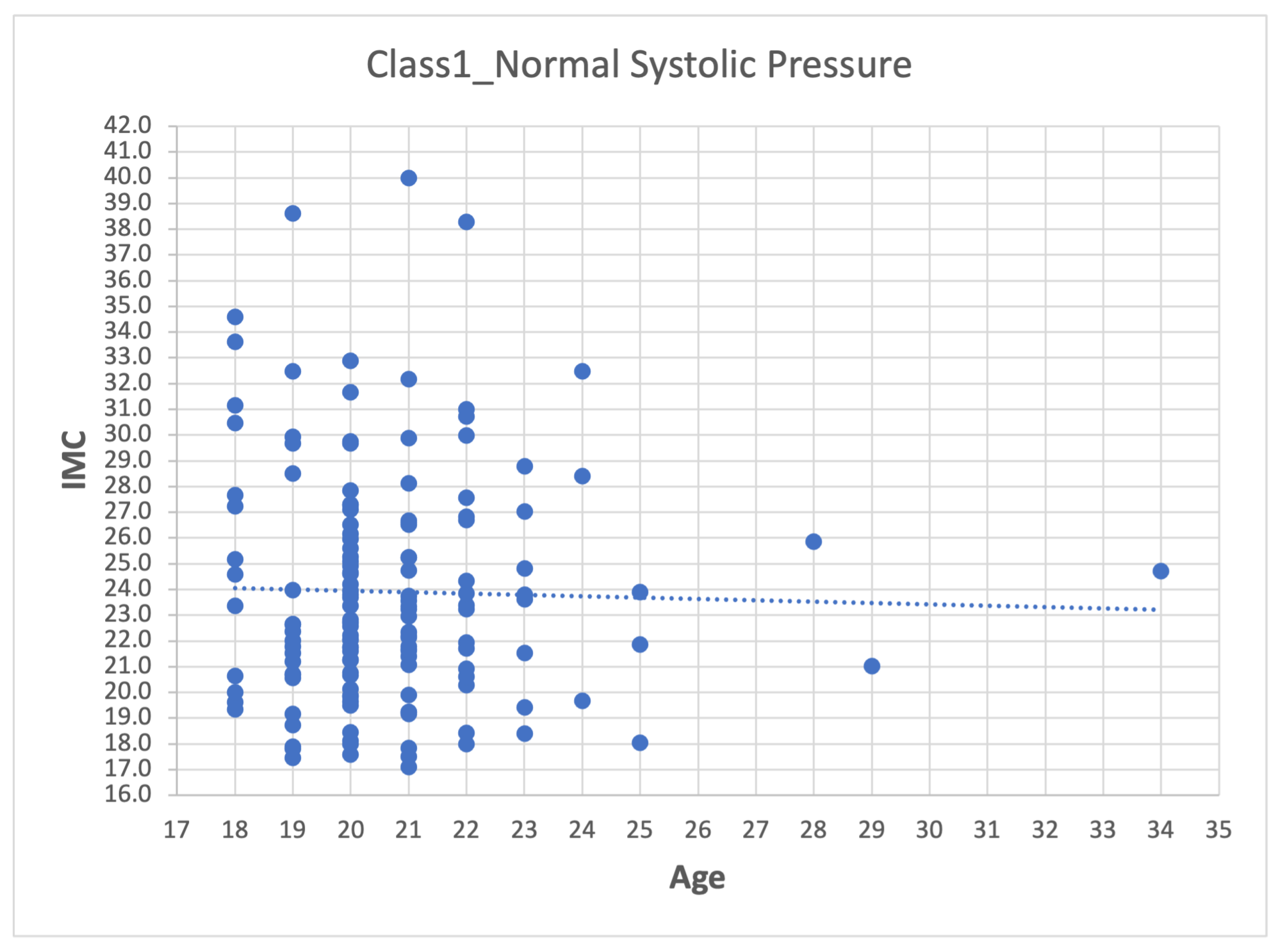
Figure 12 Represents BMI (Body Mass Index) data, which is a variable that is closely related to the weight of a person and is considered important for the processing of information with the neural network.
Figure 12.
Edad–IMC.
- 3.
- Third step, correlation analysis of Class1_Systolic Normal Pressure variables is shown in Table 8 below.Table 8. Correlation of variables Class1_Systolic pressure normal.
Table 8 highlights the highest correlation values for the Class1_Systolic Normal Pressure variables and we recall that when the correlation is positive, this indicates that its linear regression projection will tend to increase together with the counter variable. Conversely, when the correlation is negative, this indicates that the linear regression projection will tend to decrease along with the counter variable. It is important to note that during the application of the correlation in the different classes we always obtained the same values as in Table 7. It should be noted that we have followed the same steps, for each variable in each of the different categories set out in Table 7.
Table 9 and Table 10 represent obtained classification values of the neural architecture with the learning algorithms using the data obtained from the sample. With final results obtained from the neural network architecture, it is shown that the classification is acceptable for class_2 and class_3; with respect to class_1 and class_4 the classification percentages are very optimal.
Table 9.
Values obtained from the ANN with trainlm/newff.
Table 10.
Values obtained from ANN with feedforwardnet/trainlm.
6. Discussion
The discrepancy between the results of this study with respect to the work done by Assaghir, Zainab and Janbain, Ali and Makki, Sara and Kurdi, Mazen and Karam, Rita [29] (using Neural Network to predict Hypertension in 2017), may be because this is the first where the population under study belongs to several universities in the country of Lebanon, and takes into account variables such as stress, gender among others. In our case, our study is limited to the student population of ECITEC. It should be added that our aim was to classify the cases of hypertension in its different levels, as indicated at the beginning of the article. In the short term, this type of diagnosis could be applied to assign a driver’s licence to a car user, but also to generate a database for car insurers to determine the physical conditions of the driver(s) to reduce risk for other drivers in the social and urban environment where the instrumented driver is located.
The methodology used for the development of the algorithm was carried out in the following stages: data acquisition, analysis of each variable, principal component analysis of the database and development of the Backpropagation Neural Network, using Microsoft Excel and Minitap software as tools for the exploration of the data before using them in the artificial neural network. A database of medical signals was obtained; the database allows the training of the artificial neural network for learning. The classification of the backpropagation neural network showed better results using the algorithm with the “feedforwardnet” instruction than using “newff”. The classification results for Class_1, Class_2 and Class_4 were satisfactory, but the results for Class_3 need to be improved.
There are several techniques for the diagnosis of hypertension among them SVM, Navie Bayes, which we analyzed and compared, adding the following comparatives Table 11 and Table 12.
Table 11.
Comparative table of references [30,31,32,33].
Table 12.
Comparative table of references [34,35,36,37].
7. Conclusions
The results of the neural network-based diagnostic system show an effectiveness of 90%, thus generating a high expectation in diagnosing the risk of hypertension from the analyzed physiological data.
An explanation of the results contained in this article is that the problem of hypertension goes beyond the school environment that leads to various environments, such as home and community, where physiological aspects are altered. Then hypertension ceases to be a personal and family matter, becoming a public health problem that requires the coordinated support of all social sectors. The study and analysis of hypertension is now well regarded by researchers developing safety algorithms to improve the comfort and safety of driving a car by a hypertensive person.
Arterial hypertension (AHT) [38] is the most prevalent chronic disease in developed countries and its etiology is unknown in 90–95% of patients. Its progression can lead to very serious complications for the patient. Essential hypertension is a multi-causal and heterogeneous disease, which is related to hereditary or genetic factors and to sodium-rich diet, stress, smoking, sedentary lifestyle and obesity. HTN is associated with atherosclerosis and its complications such as the heart, kidney, brain; such as hypertensive cardiomyopathy, myocardial ischaemia, heart failure, ventricular arrhythmia, sudden death, renal failure, aortic aneurysm, peripheral arterial disease, cerebral infarction due to thromboembolism and cerebral hemorrhage. All these complications are serious and disable conduction for a long period of time, and, in many cases, permanently. The development and progression of AHT varies widely from patient to patient, so driving advice should be tailored to the individual driver’s characteristics.
Drivers with AHT should avoid risk factors that promote it, such as a diet rich in salt, a sedentary lifestyle, obesity, smoking, hypercholesterolemia and stress. Following these tips will also help you to drive more comfortably. Patients with established visceral damage or severe, refractory or malignant hypertension, or with evidence of hypertensive encephalopathy, should not drive. Urgent hypertensive crisis and hypertensive emergency prevent driving until the patient is perfectly controlled without involvement of visceral lesions that impair their ability to drive. In general, driving is not advisable in symptomatic hypertensive patients and/or those refractory to medical treatment, as these situations make driving more difficult and increase the risks at the wheel. If a hypertensive patient notices symptoms while driving, they should stop as soon as possible and park the vehicle in an area where there is no risk of accident, then calm down and wait for the symptoms to subside. A hypertensive patient with symptoms cannot drive; if they do not improve, they should ask for help to be transferred to the nearest health centre. The favorable evolution of the different situations with the specific treatment for adequate BP control will allow the physician to assess the patient’s ability to drive.
Author Contributions
Conceptualization, J.A.O.T., A.M.S. and M.A.G.; methodology, J.A.O.T., A.M.S., J.M.V.I., M.A.G. and A.D.H.; software, J.A.O.T., A.M.S. and A.D.H.; validation, J.A.O.T., A.M.S., M.A.G. and A.D.H.; formal analysis, J.A.O.T., A.M.S., M.A.G. and A.D.H.; investigation, J.A.O.T., A.M.S., J.M.V.I., M.A.G. and A.D.H.; resources, J.A.O.T. and A.M.S.; data curation, J.A.O.T., A.M.S. and A.D.H.; writing—original draft preparation, J.A.O.T., A.M.S., J.M.V.I. and M.A.G.; writing—review and editing, J.A.O.T. and A.M.S.; visualization, J.A.O.T., A.M.S. and J.M.V.I.; supervision, J.A.O.T. and A.M.S.; project administration, J.A.O.T. and A.M.S.; funding acquisition, J.A.O.T. and A.M.S. All authors have read and agreed to the published version of the manuscript.
Funding
The publication is funded by the authors of the article.
Institutional Review Board Statement
The studies are non-invasive so we do not require people’s approval.
Informed Consent Statement
Not applicable.
Data Availability Statement
Not applicable.
Acknowledgments
Our thanks to ECITEC (School of Science and Technology UABC) who allowed the analysis of their enrolled students, To the University of Science and Technology Descartes (CIDIT), to the Alejandro Medina Santiago, Jorge Antonio Orozco Torres, former student José Manuel Villegas Izaguirre and former Master’s student Alberto Delgado Hernandez, for allowing the use of their facilities for the design and development of the model and Conacyt for supporting some of the researchers in the professorships program in the project 882 in collaboration with researchers from different universities.
Conflicts of Interest
The authors declare no conflict of interest.
Abbreviations
The following abbreviations are used in this manuscript:
| AHT | Arterial Hypertension |
| AI | Artificial Intelligence |
| CIDIT | Centro de Investigación, Desarrollo e Innovación Tecnológica |
| ECITEC | School of Science and Technology |
| mg/gL | milligrams per decilitre of blood |
| HR | Heart Rate |
| IMC | Body Mass Index |
| INSP | National Institute of Public Health |
| MLP | The Multilayer Perceptron |
| PAHO | PanAmerican Health Organization |
| RF | Respiratory Frequency |
| UABC | Autonomous University of Baja California |
| WHO | World Health Organization |
References
- Melin, P.; Prado-Arechiga, G. New Hybrid Intelligent Systems for Diagnosis and Risk Evaluation of Arterial Hypertension; Springer: Berlin/Heidelberg, Germany, 2018. [Google Scholar]
- Martínez-Linares, J.M. Updates in Hypertension Studies According to the Main Clinical Trials: A Review of the Past 45 Years about Pharmaceutical Intervention Efects. Nurs. Rep. 2020, 10, 2–14. [Google Scholar] [CrossRef] [Scilit] [PubMed]
- Nam, H.J.; Yoon, J.Y. Linking Health Literacy to Self-Care in Hypertensive Patients with Physical Disabilities: A Path Analysis Using a Multi-Mediation Model. Int. J. Environ. Res. Public Health 2021, 18, 3363. [Google Scholar] [CrossRef] [Scilit] [PubMed]
- Roop, S.C.; Battié, M.C.; Jhangri, G.S.; Hu, R.W.; Jones, C.A. Functional Recovery after Surgery for Lumbar Spinal Stenosis in Patients with Hypertension. Healthcare 2020, 8, 503. [Google Scholar] [CrossRef] [Scilit] [PubMed]
- Singh, Y.; Chauhan, A.S. Neural Networks in Data Mining. J. Theor. Appl. Inf. Technol. 2009, 5. [Google Scholar] [CrossRef] [Scilit]
- Latin American Expert Group. Latin American guidelines on hypertension. J. Hypertens. 2009, 27, 905–922. [Google Scholar] [CrossRef] [Scilit] [PubMed]
- Página oficial Organización Mundial de la Salud (OMS) 25 de agosto de 2021. Available online: https://www.who.int/es/news-room/fact-sheets/detail/hypertension (accessed on 29 May 2022).
- Página Oficial Organización Panamericana de la Salud. Available online: https://www.paho.org/hq/index.php?option=com_content&view=article&id=13257:dia-mundial-de-la-hipertension-2017-conoce-tus-numeros&Itemid=42345&lang=es (accessed on 29 May 2022).
- Encuesta Nacional de Salud y Nutrición Continúa 2021, Informe de Resultados de la Encuesta nacional de Salud y Nutrición - Continua COVID-19. p. 66. Available online: https://ensanut.insp.mx/encuestas/ensanutcontinua2020/informes.php (accessed on 29 May 2022).
- Jang, I. Article Pre-Hypertension and Its Determinants in Healthy Young Adults: Analysis of Data from the Korean National Health and Nutrition Examination Survey VII. Int. J. Environ. Res. Public Health 2021, 18, 9144. [Google Scholar] [CrossRef] [Scilit] [PubMed]
- Kaur, A.; Bhardwaj, A. Artificial Intelligence in Hypertension Diagnosis: A Review. Int. J. Comput. Sci. Inf. Technol. 2014, 5, 2633–2635. [Google Scholar]
- Effects of ARBs And ACEIs on Virus Infection, Inflammatory Status And Clinical Outcomes In COVID-19 Patients With Hypertension: A Single Center Retrospective Study. Available online: https://web.archive.org/web/20200514072618id_/https://www.ahajournals.org/doi/pdf/10.1161/HYPERTENSIONAHA.120.15143 (accessed on 29 May 2022).
- Secretaria de Salud. Gobierno de Puebla. Día Mundial de la Hipertensión Arterial. Available online: http://ss.pue.gob.mx/dia-mundial-de-la-hipertension-arterial/ (accessed on 29 May 2022).
- Rueda, E.B.; Gómez, M.C.; Macías, I.D.; Carabaño, A.L.; Díez, C.M.; Bajo, N.S. Uso de redes neuronales en medicina: A propósito de la patología dispéptica. Atención Primaria 2002, 30, 99–102. Available online: https://www.elsevier.es/es-revista-atencion-primaria-27-articulo-uso-redes-neuronales-medicina-proposito-13033735 (accessed on 29 May 2022). [CrossRef] [Scilit]
- García Montero Yolanda. Neural Network for High Blood Pressure Diagnosis; International University of La Rioja (UNIR): Madrid, Spain, 2018. [Google Scholar]
- Hagan, M.T.; Demuth, H.B.; Beale, M. Neural Networks Design, 2nd ed.; PWS Publishing Co.: Boston, MA, USA, 2014; Oklahoma State University College of Engineering, Architecture and Technology Extension Office. Contact Nathan Cragun, Manager, Engineering Extension. [Google Scholar]
- Medina-Santiago, A.; Villegas-M, J.M.; Ramirez-Torres, J.; García-Chong, N.R.; Cisneros-Gómez, A.; Melgar-Paniagua, E.M.; Bermudez-Rodriguez, J.I. Neural Network Backpropagation with Applications into Nutrition. In International Conference on Innovation in Medicine and Healthcare; Springer: Cham, Switzerland, 2017. [Google Scholar] [CrossRef]
- Lin, C.T.; Lee, C.G. Neural Fuzzy Systems: A Neuro-Fuzzy Synergism to Intelligent System; Prentice Hall PTR: Upper Saddler River, NJ, USA, 1996; ISBN 0-13-235169-2. [Google Scholar]
- Tappert, C.C. Frank Rosenblatt, the Father of Deep Learning. In Proceedings of the Student-Faculty Research Day, CSIS, New York, NY, USA, 8 May 2020. [Google Scholar]
- Hasanraza, ANSARI. Artificial Neural Network: Learn About Electronics (Learn Electronics). 2020. Available online: libgen.li/file.php?md5=a3245497addad0753ea49636a9777acc (accessed on 29 May 2022).
- Bonifacio Martin del Brío, Alfredo Sanz Molina. Redes Neuronales y Sistemas Difusos. 3ra. Edicion. 2006. Alfaomega-RaMa Editorial. Available online: www.alfaomega.com.mx (accessed on 29 May 2022).
- Werbos, P. Beyond Regression: New Tools for Prediction and Analysis in the Behavioral Sciences. Ph.D. Thesis, Harvard University, Cambridge, MA, USA, 1974. [Google Scholar]
- Werbos, P.J. Backpropagation through time: What it does and how to do it. Proc. IEEE 1990, 78, 1550–1560. [Google Scholar] [CrossRef] [Scilit]
- Skaar, S. (Editor) A Comprehensive Guide to Neural Network Modeling, Nova Science Pub. 2020. Available online: libgen.li/file.php?md5=cdd693db741785e5dd9455f5ea25bf97 (accessed on 29 May 2022).
- Guirguis-Blake, J.M.; Evans, C.V.; Webber, E.M.; Coppola, E.L.; Perdue, L.A.; Weyrich, M.S. Screening for Hypertension in Adults: An Updated Systematic Evidence Review for the U.S. Preventive Services Task Force. 2021. Available online: https://www.ncbi.nlm.nih.gov/books/NBK570233/table/ch1.tab1/?report=objectonl (accessed on 29 May 2022).
- Binu, D.; Rajakumar, B.R. Artificial Intelligence in Data Mining: Theories and Applications. 2021. Available online: libgen.li/file.php?md5=1078c53a7932d7e41c9ef2121f39fccd (accessed on 29 May 2022).
- Jamsa, K. Introduction to Data Mining and Analytics, Jones & Bartlett Learning LLC. 2021. Available online: libgen.li/file.php?md5=3fa2e2c8a352852d616de7dd39a030b7 (accessed on 29 May 2022).
- Kantardzic, M. Data Mining: Concepts, Models, Methods, and Algorithms, 3rd ed.; John Wiley & Sons: Hoboken, NJ, USA, 2020; ISBN 9781119516040. [Google Scholar]
- Assaghir, Z.; Janbain, A.; Makki, S.; Kurdi, M.; Karam, R. Using neural network to predict the hypertension. Int. J. Sci. Eng. Dev. Res. 2017, 2, 2. [Google Scholar]
- Alrashedy, H.H.N.; Almansour, A.F.; Ibrahim, D.M.; Hammoudeh, M.A.A. BrainGAN: Brain MRI Image Generation and Classification Framework Using GAN Architectures and CNN Models. Sensors 2022, 22, 4297. [Google Scholar] [CrossRef] [Scilit] [PubMed]
- Al Mudawi, N.; Alazeb, A. Article A Model for Predicting Cervical Cancer Using Machine Learning Algorithms. Sensors 2022, 22, 4132. [Google Scholar] [CrossRef] [Scilit] [PubMed]
- Aladhadh, S.; Alsanea, M.; Aloraini, M.; Khan, T.; Habib, S.; Islam, M. An Effective Skin Cancer Classification Mechanism via Medical Vision Transformer. Sensors 2022, 22, 4008. [Google Scholar] [CrossRef] [Scilit] [PubMed]
- Corizzo, R.; Dauphin, Y.; Bellinger, C.; Zdravevski, E.; Japkowicz, N. Explainable image analysis for decision support in medical healthcare. In Proceedings of the 2021 IEEE International Conference on Big Data (Big Data), Orlando, FL, USA, 15–18 December 2021. [Google Scholar] [CrossRef] [Scilit]
- Bisgin, H.; Bera, T.; Ding, H.; Semey, H.G.; Wu, L.; Liu, Z.; Barnes, A.E.; Langley, D.A.; Pava-Ripoll, M.; Vyas, H.J.; et al. Comparing SVM and ANN based machine learning methods for species identification of food contaminating beetles. Sci. Rep. 2018, 9, 1–12. [Google Scholar] [CrossRef] [Scilit]
- Jijji, S.A.; Sandra, A.A.; Musa, M.Y. Ensemble Model for the Prediction of Hypertension using KNN and SVM Algorithms. Int. J. Comput. Appl. 2021, 975, 8887. [Google Scholar] [CrossRef] [Scilit]
- Chang, W.; Liu, Y.; Xiao, Y.; Yuan, X.; Xu, X.; Zhang, S.; Zhou, S. A Machine-Learning-Based Prediction Method for Hypertension Outcomes Based on Medical Data. Diagnostics 2019, 9, 178. [Google Scholar] [CrossRef] [Scilit] [PubMed]
- Ramalingam, V.V.; Dandapath, A.; Raja, M.K. Heart disease prediction using machine learning techniques: A survey. Int. J. Eng. Technol. 2018, 7, 684–687. [Google Scholar] [CrossRef] [Scilit]
- Rosas-Peralta, M.; Borrayo-Sánchez, G. Nuevos criterio ACC/AHA en hipertensión arterial sistémica. Gac. Médica de México Editor. 2018, 154, 633–637. [Google Scholar] [CrossRef] [Scilit]

Publisher’s Note: MDPI stays neutral with regard to jurisdictional claims in published maps and institutional affiliations. |
© 2022 by the authors. Licensee MDPI, Basel, Switzerland. This article is an open access article distributed under the terms and conditions of the Creative Commons Attribution (CC BY) license (https://creativecommons.org/licenses/by/4.0/).