Article

Automatic Modulation Recognition Based on a DCN-BiLSTM Network


School of Communication and Information Engineering, Shanghai University, Shanghai 200444, China
*
Author to whom correspondence should be addressed.
Sensors 2021, 21(5), 1577; https://doi.org/10.3390/s21051577
Submission received: 17 January 2021 / Revised: 15 February 2021 / Accepted: 19 February 2021 / Published: 24 February 2021
(This article belongs to the Section Sensor Networks)

Abstract

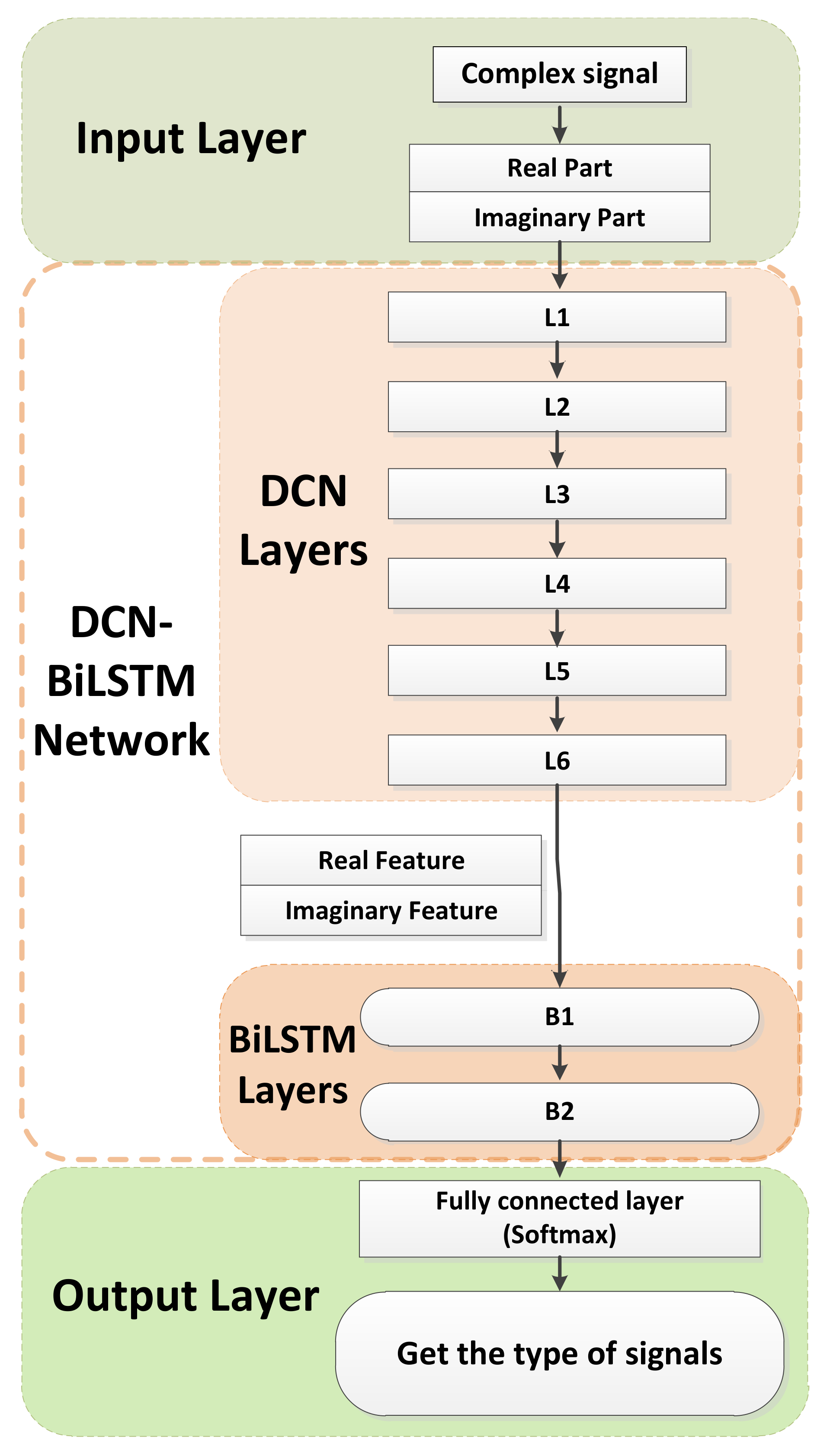
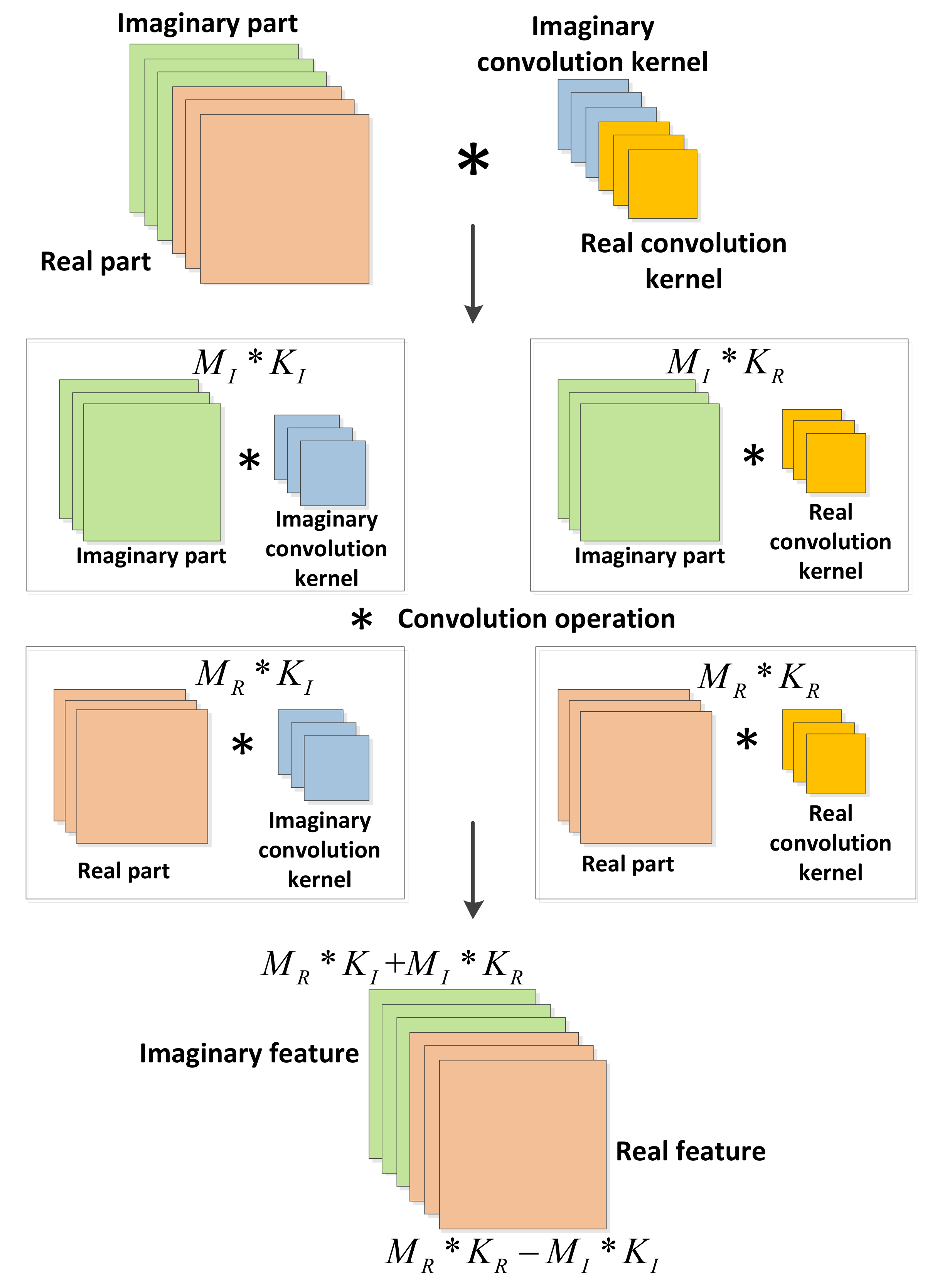
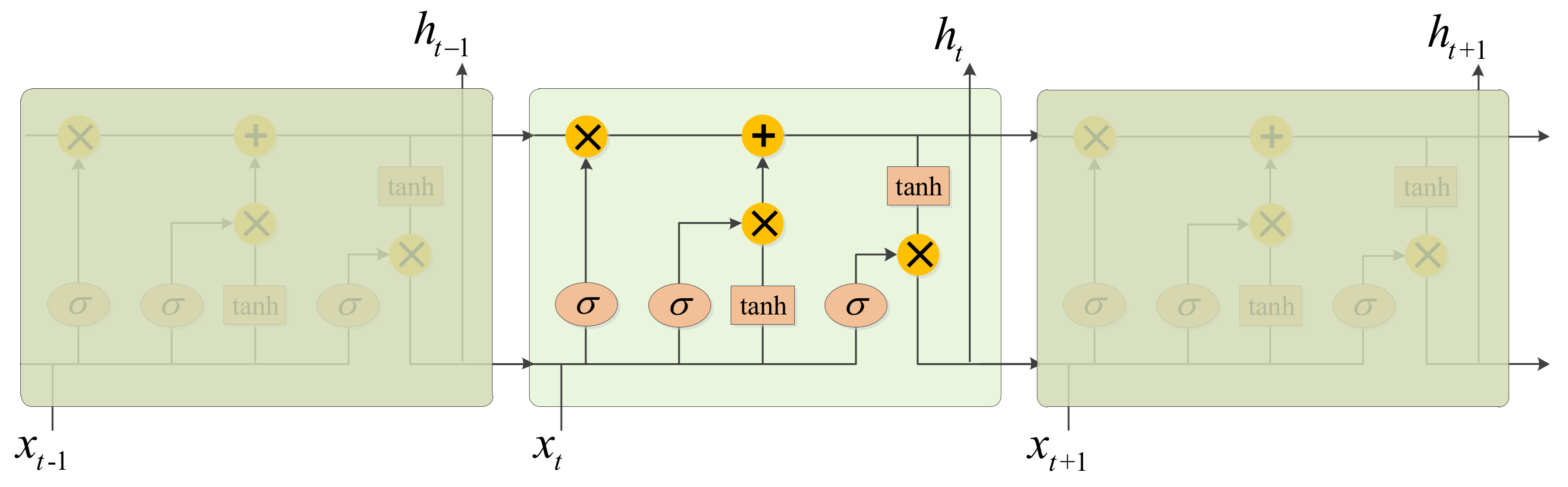
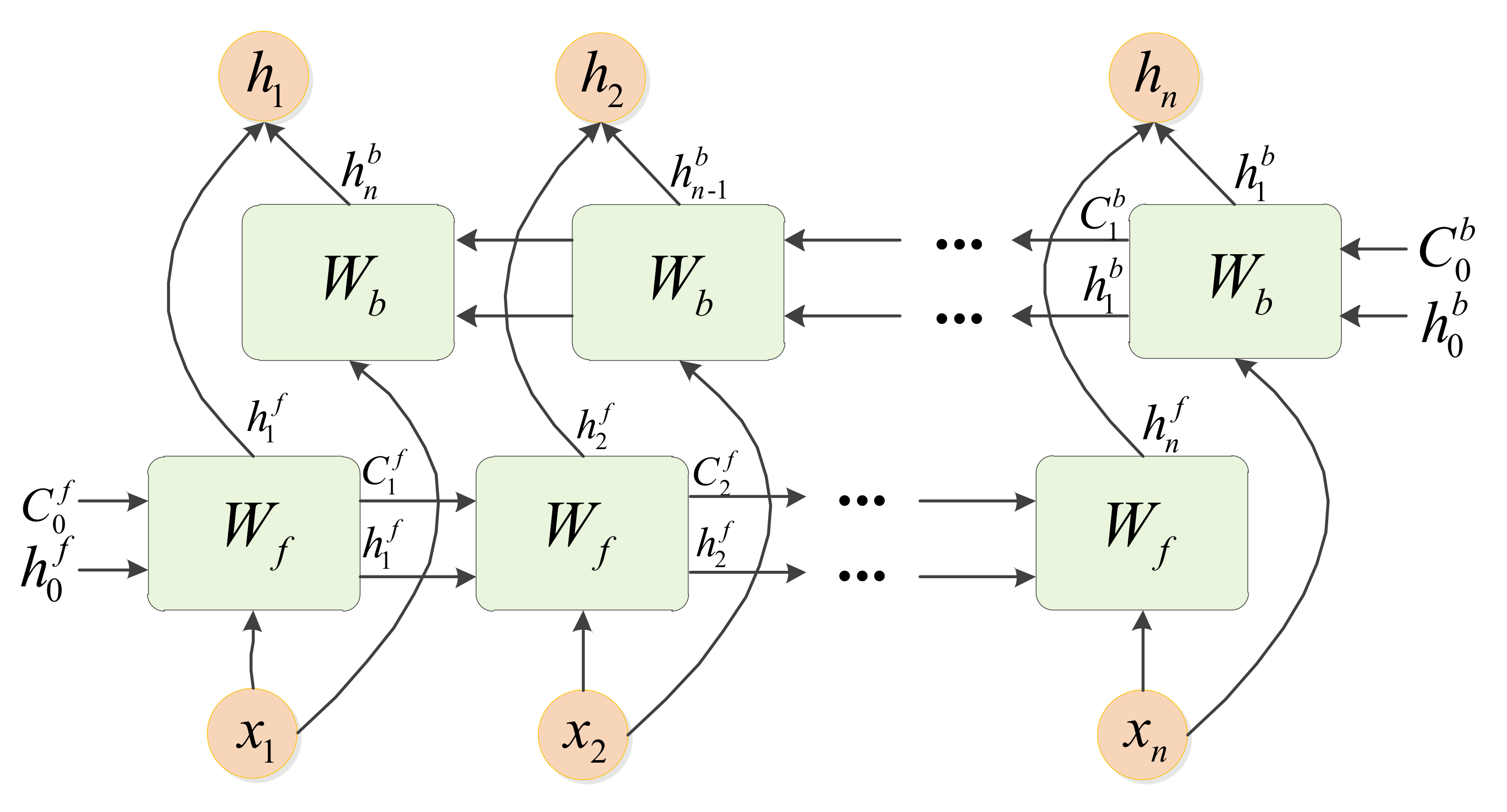
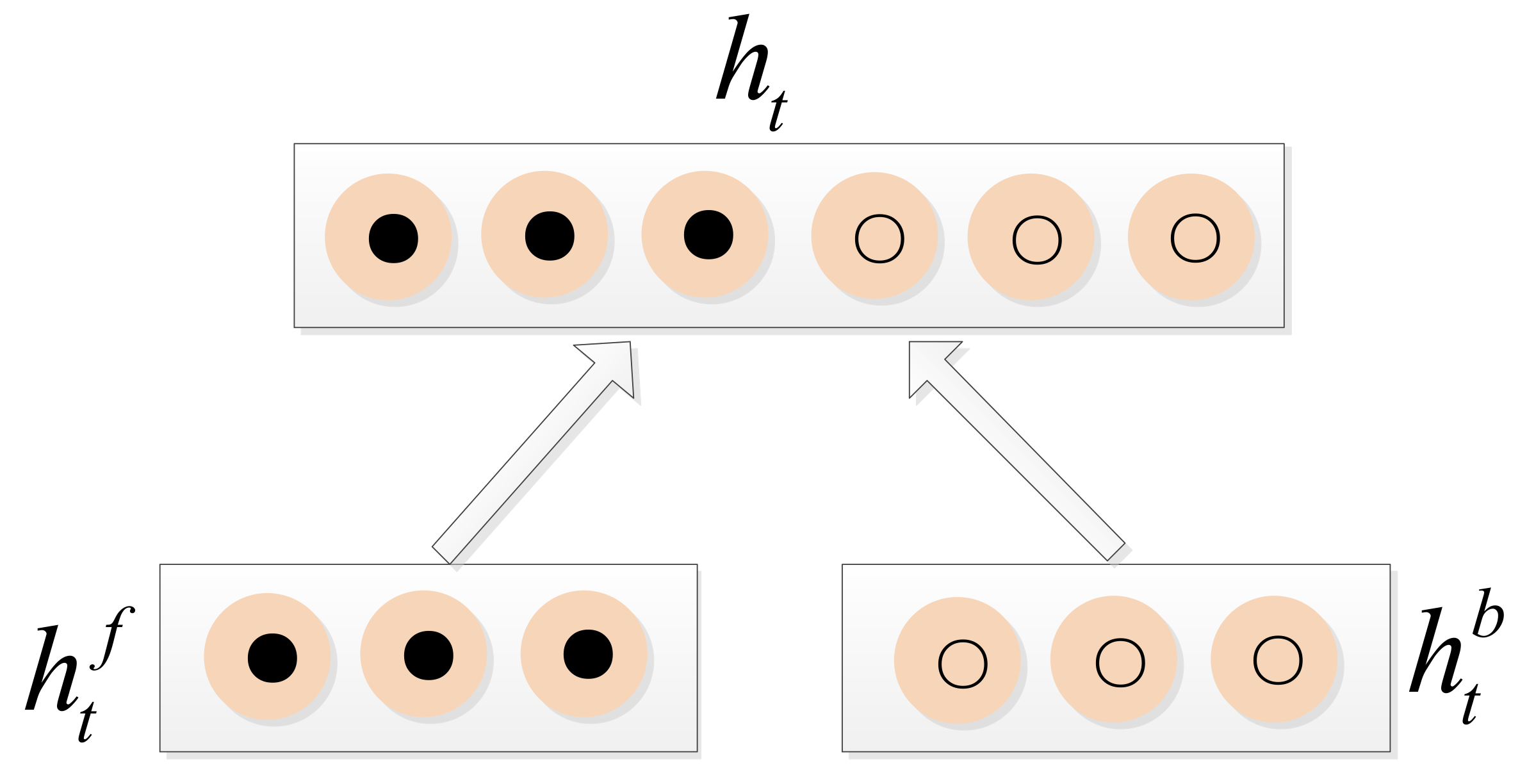
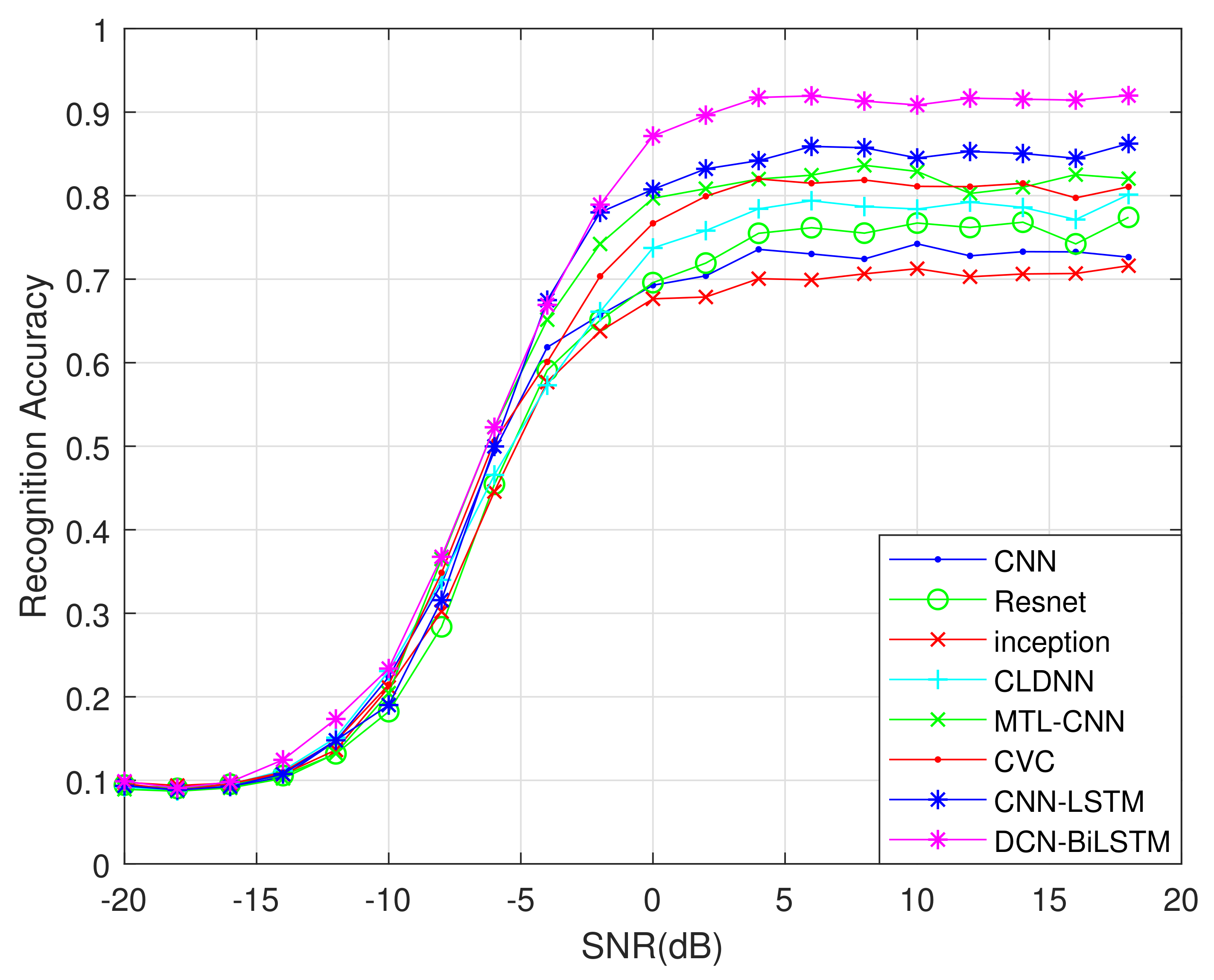
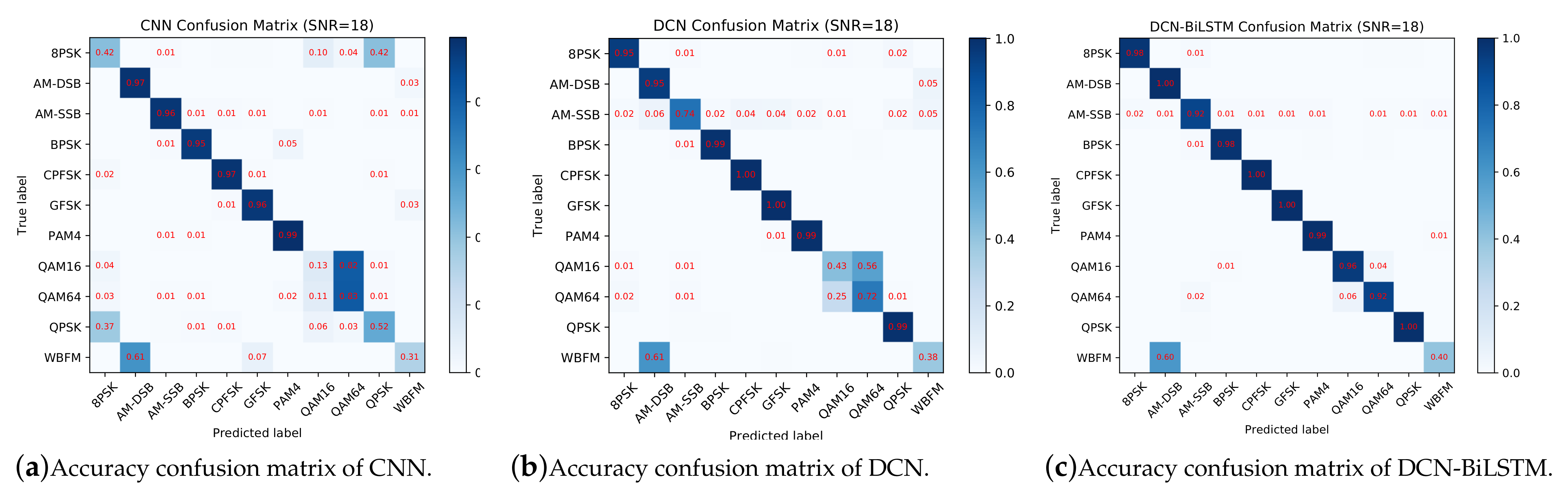
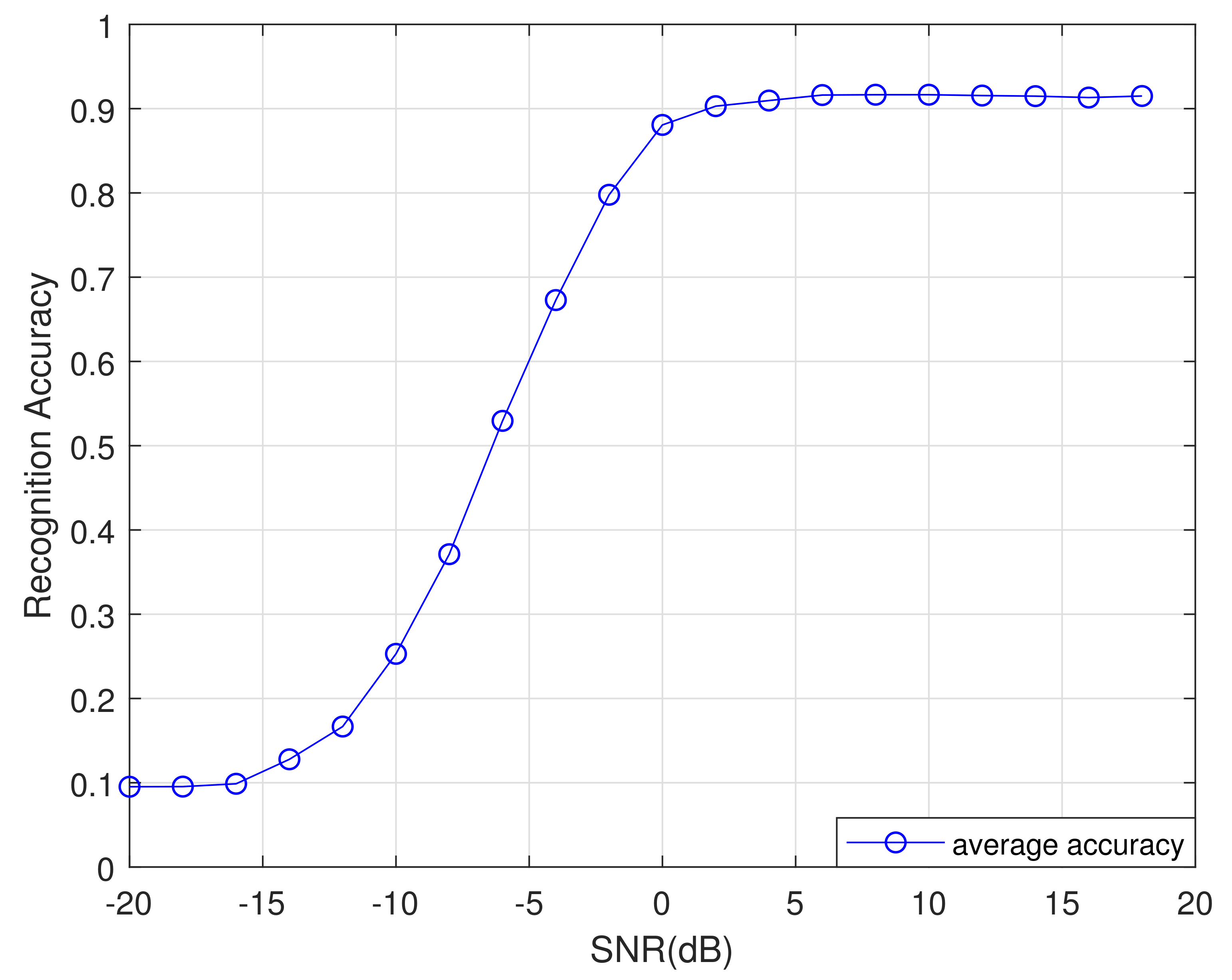
Automatic modulation recognition (AMR) is a significant technology in noncooperative wireless communication systems. This paper proposes a deep complex network that cascades the bidirectional long short-term memory network (DCN-BiLSTM) for AMR. In view of the fact that the convolution operation of the traditional convolutional neural network (CNN) loses the partial phase information of the modulated signal, resulting in low recognition accuracy, we first apply a deep complex network (DCN) to extract the features of the modulated signal containing phase and amplitude information. Then, we cascade bidirectional long short-term memory (BiLSTM) layers to build a bidirectional long short-term memory model according to the extracted features. The BiLSTM layers can extract the contextual information of signals well and address the long-term dependence problems. Next, we feed the features into a fully connected layer. Finally, a softmax classifier is used to perform classification. Simulation experiments show that the performance of our proposed algorithm is better than that of other neural network recognition algorithms. When the signal-to-noise ratio (SNR) exceeds 4 dB, our model’s recognition rate for the 11 modulation signals can reach 90%.
Keywords: automatic modulation recognition; deep complex network; convolutional neural network; bidirectional long short-term memory network automatic modulation recognition; deep complex network; convolutional neural network; bidirectional long short-term memory network