Article

Structural Health Monitoring Using Ultrasonic Guided-Waves and the Degree of Health Index
by
Sergio Cantero-Chinchilla
1,
Gerardo Aranguren
2,*,
José Manuel Royo
3,
Manuel Chiachío
4,5,
Josu Etxaniz
2 and
Andrea Calvo-Echenique
3
1
Department of Mechanical Engineering, University of Bristol, Bristol BS8 1TR, UK
2
Electronic Design Group, University of the Basque Country (UPV/EHU), 48013 Bilbao, Spain
3
Techonological Institute of Aragón (ITAINNOVA), María de Luna 8, 50018 Zaragoza, Spain
4
Department of Structural Mechanics & Hydraulics Engineering, University of Granada, 18001 Granada, Spain
5
Andalusian Research Institute of Data Science & Computational Intelligence, University of Granada, 18001 Granada, Spain
*
Author to whom correspondence should be addressed.
Sensors 2021, 21(3), 993; https://doi.org/10.3390/s21030993
Submission received: 1 January 2021 / Revised: 24 January 2021 / Accepted: 27 January 2021 / Published: 2 February 2021
(This article belongs to the Special Issue Structural Health Monitoring with Ultrasonic Guided-Waves Sensors)

Abstract

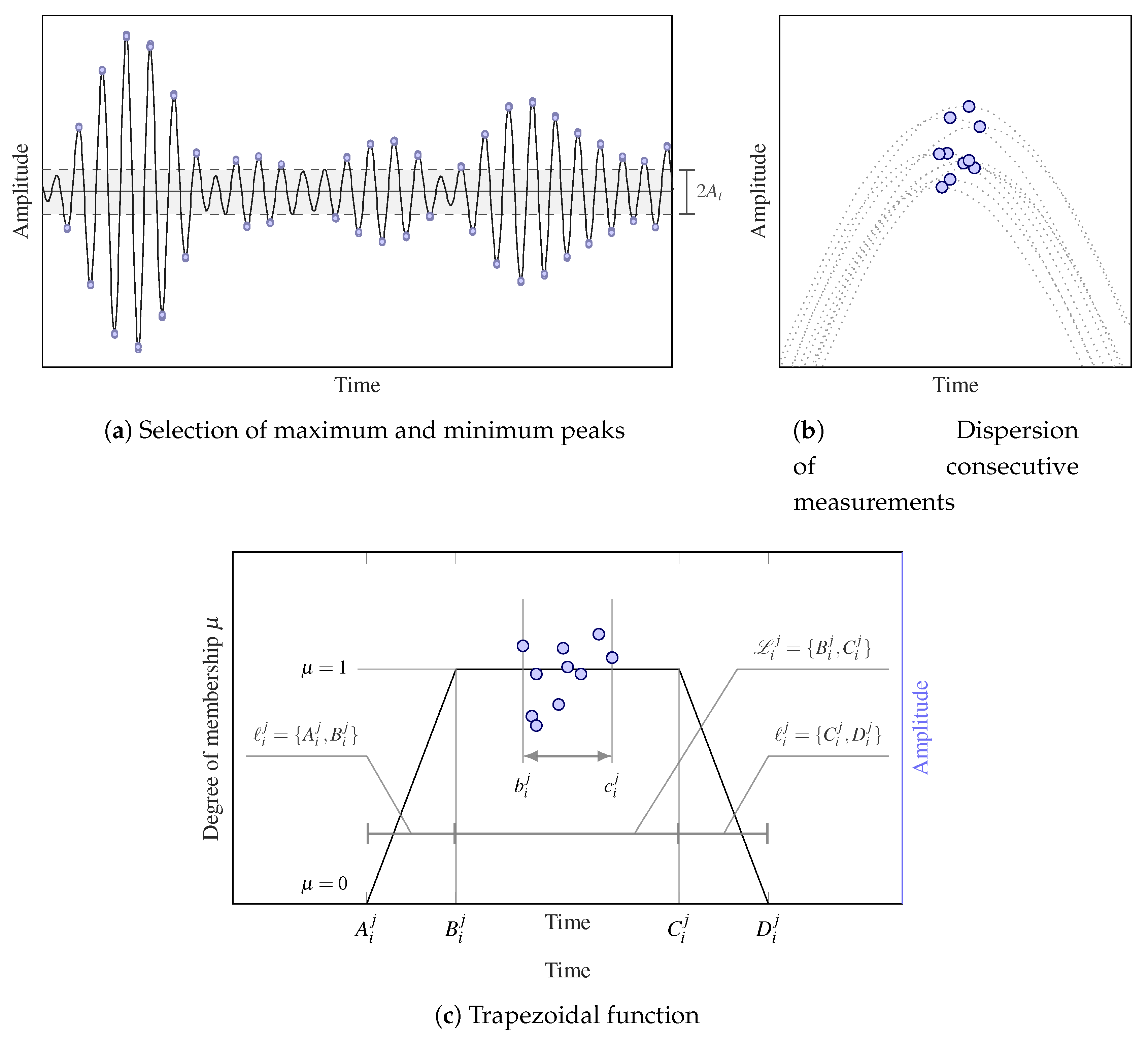
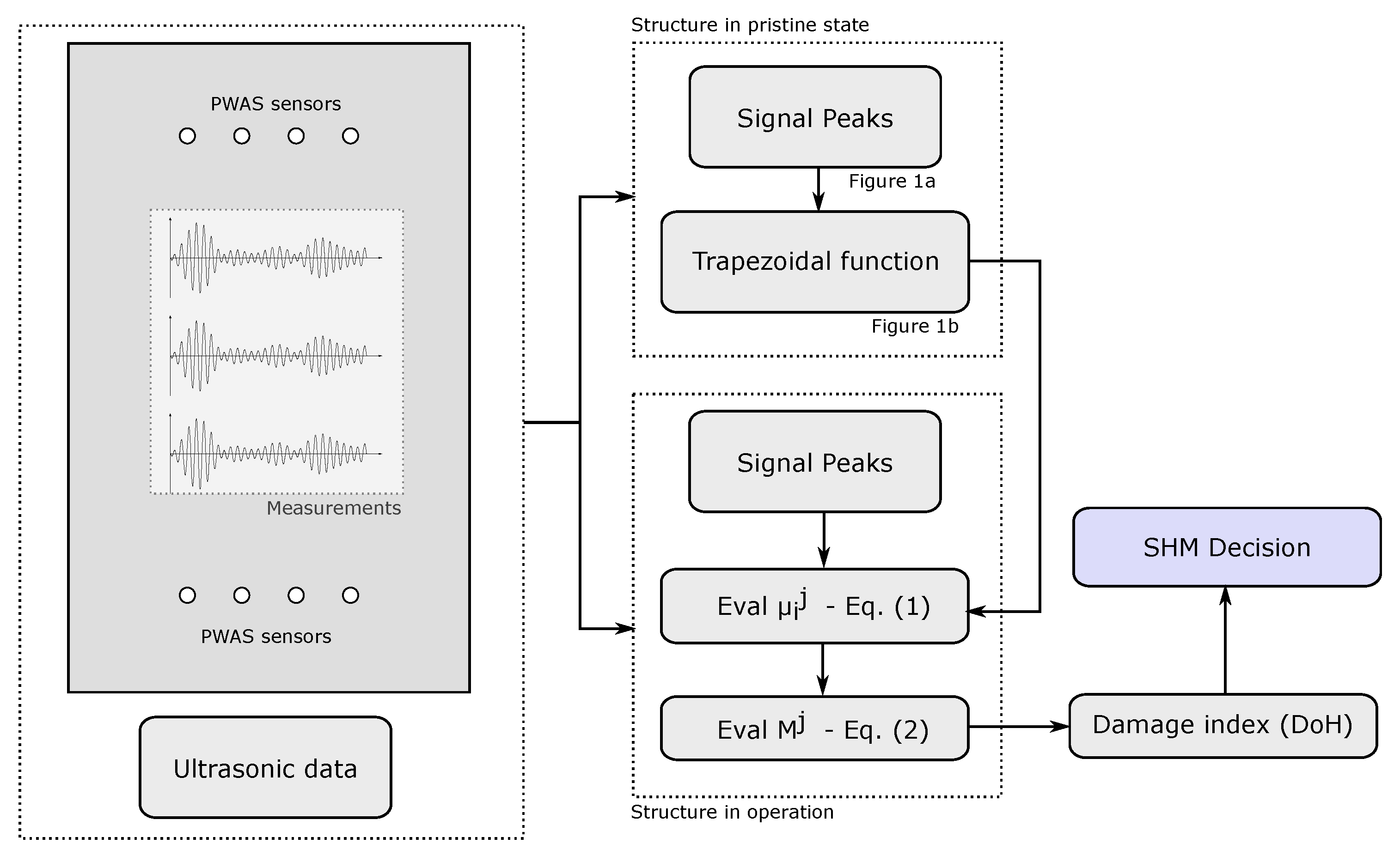
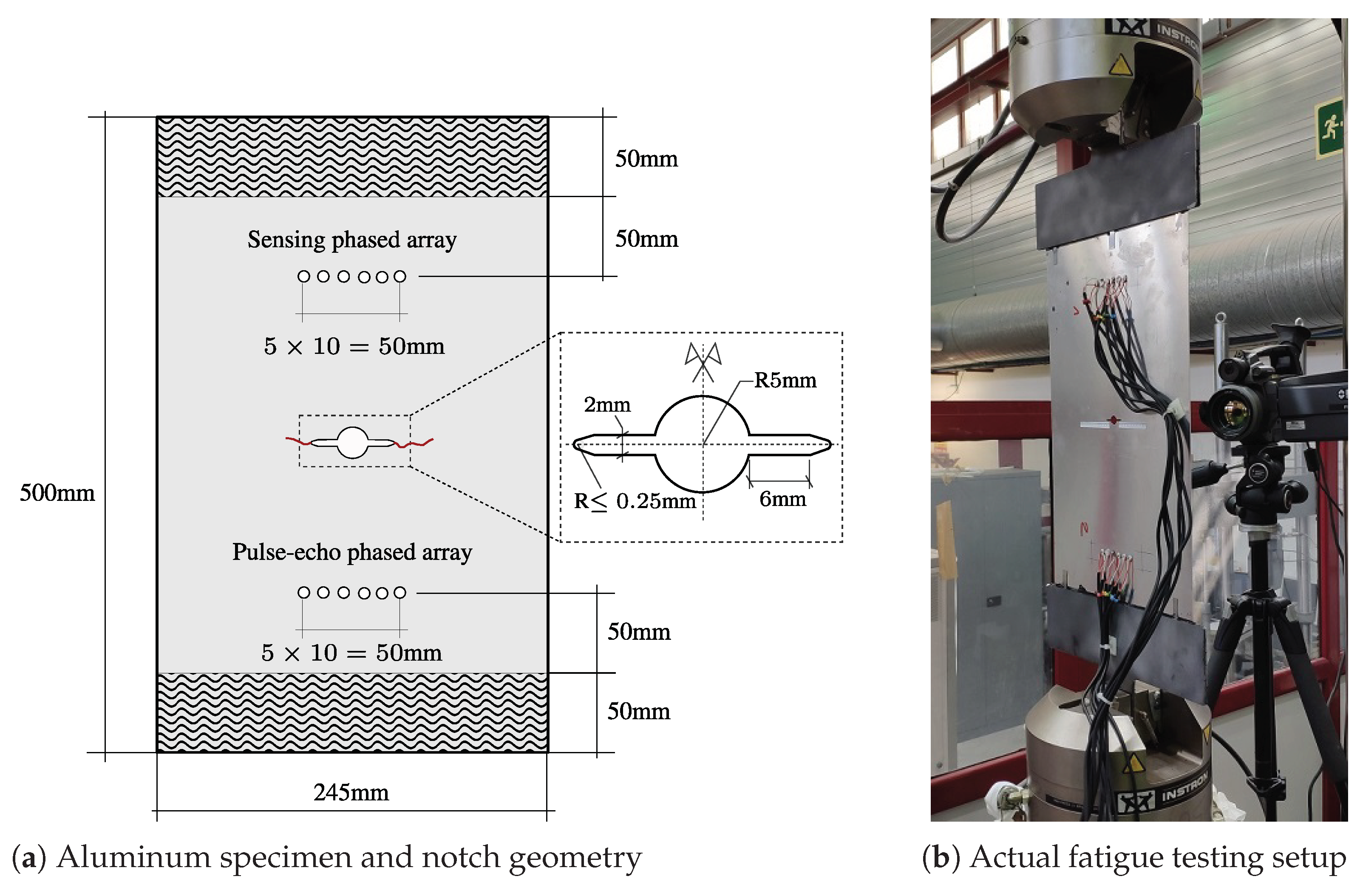
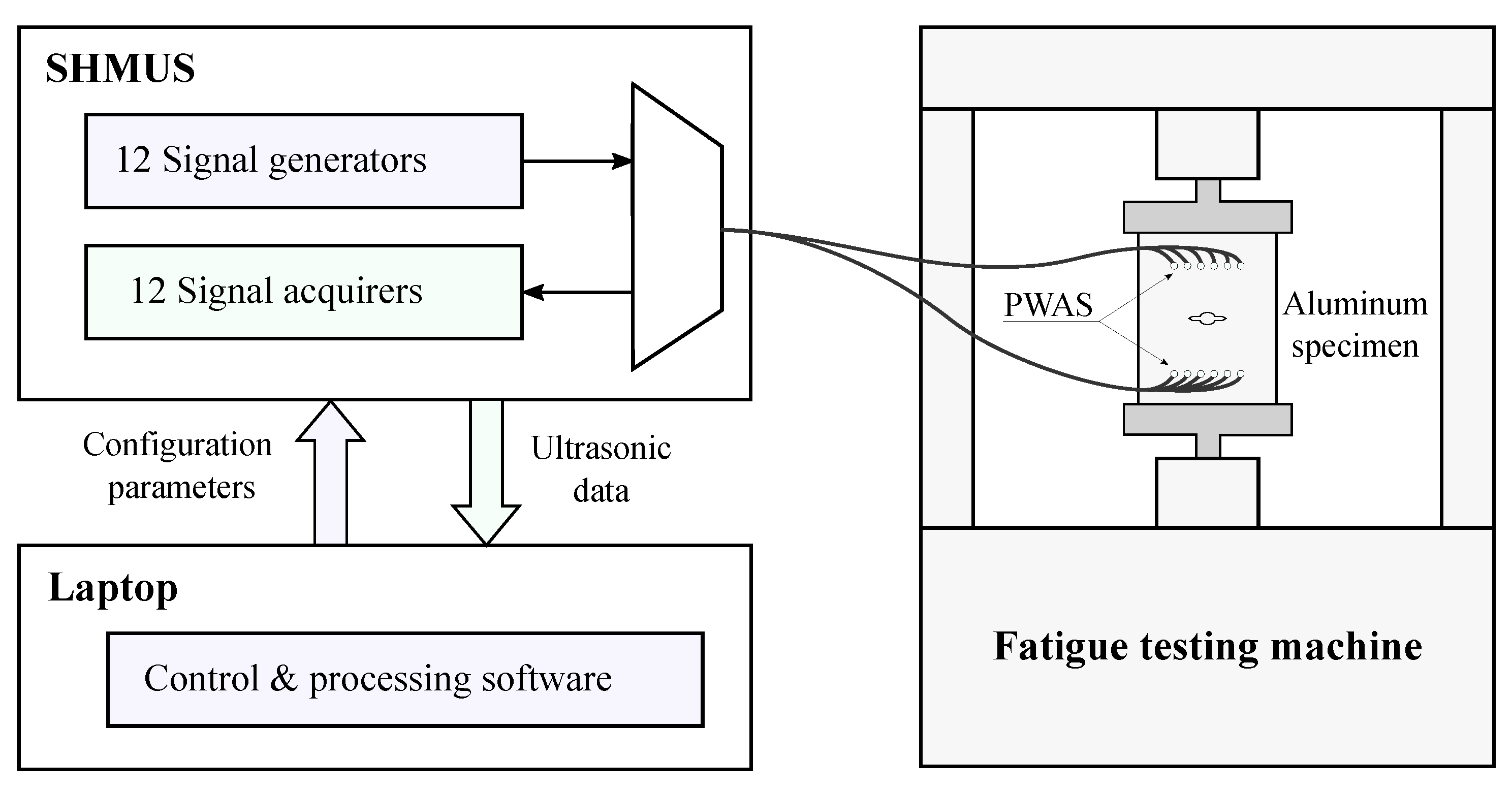
This paper proposes a new damage index named degree of health (DoH) to efficiently tackle structural damage monitoring in real-time. As a key contribution, the proposed index relies on a pattern matching methodology that measures the time-of-flight mismatch of sequential ultrasonic guided-wave measurements using fuzzy logic fundamentals. The ultrasonic signals are generated using the transmission beamforming technique with a phased-array of piezoelectric transducers. The acquisition is carried out by two phased-arrays to compare the influence of pulse-echo and pitch-catch modes in the damage assessment. The proposed monitoring approach is illustrated in a fatigue test of an aluminum sheet with an initial notch. As an additional novelty, the proposed pattern matching methodology uses the data stemming from the transmission beamforming technique for structural health monitoring. The results demonstrate the efficiency and robustness of the proposed framework in providing a qualitative and quantitative assessment for fatigue crack damage.
Keywords: structural health monitoring; ultrasonic guided-waves; fatigue damage detection; transmission beamforming; degree of health index structural health monitoring; ultrasonic guided-waves; fatigue damage detection; transmission beamforming; degree of health index