Letter

Treadmill-to-Overground Mapping of Marker Trajectory for Treadmill-Based Continuous Gait Analysis

Inertial Motion Capture Lab, School of ICT, Robotics & Mechanical Engineering, Hankyong National University, 327 Jungang-ro, Anseong 17579, Gyeonggi, Korea
*
Author to whom correspondence should be addressed.
Sensors 2021, 21(3), 786; https://doi.org/10.3390/s21030786
Submission received: 15 December 2020 / Revised: 6 January 2021 / Accepted: 20 January 2021 / Published: 25 January 2021
(This article belongs to the Collection Inertial Sensors and Applications)

Abstract

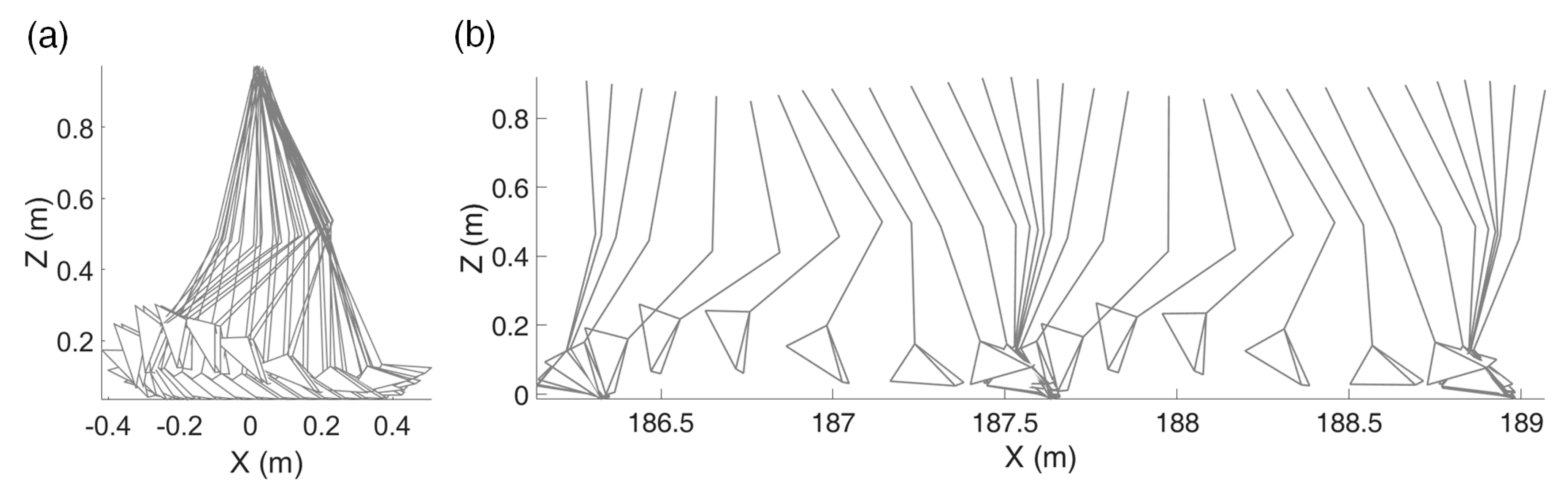
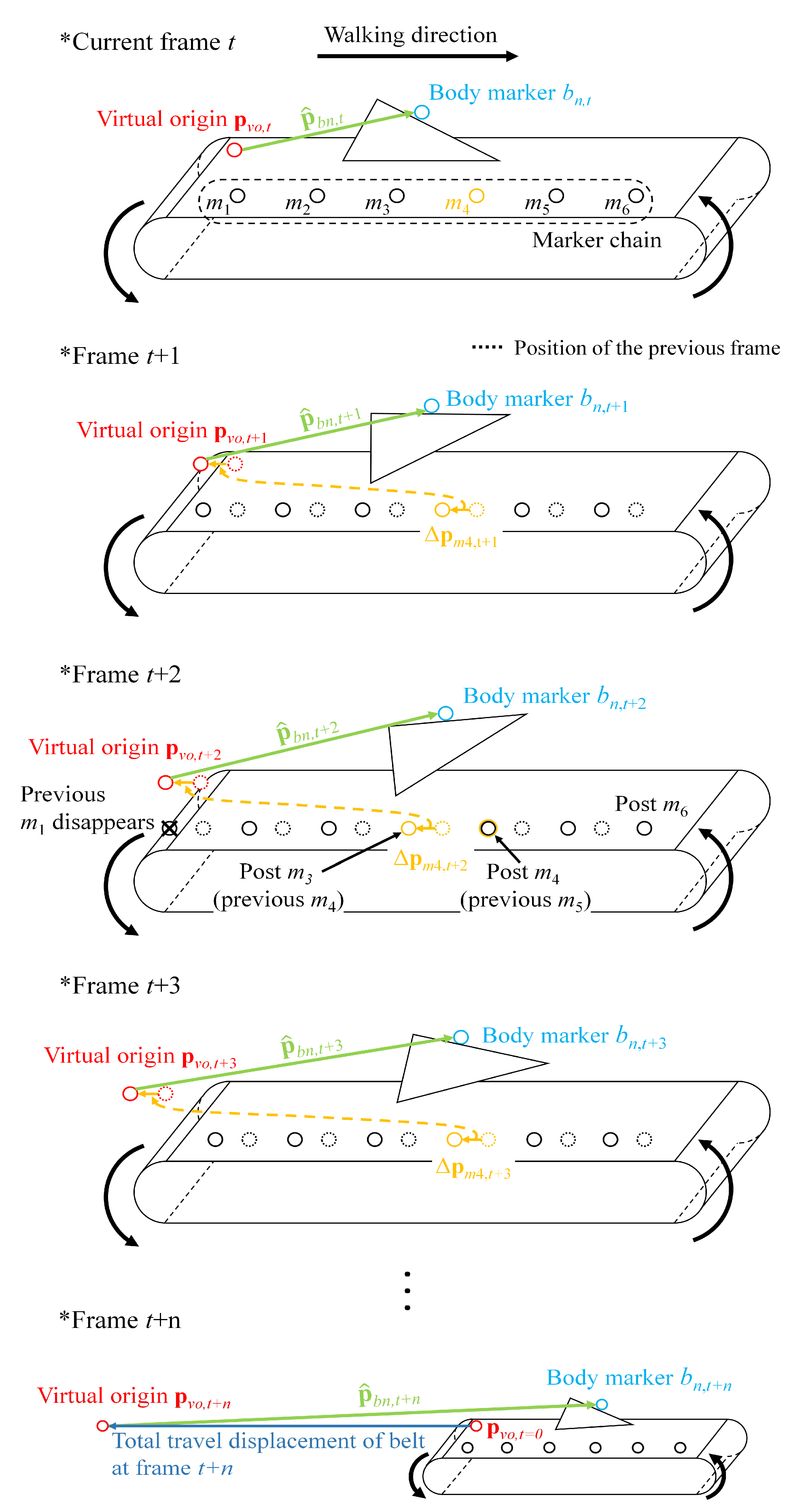
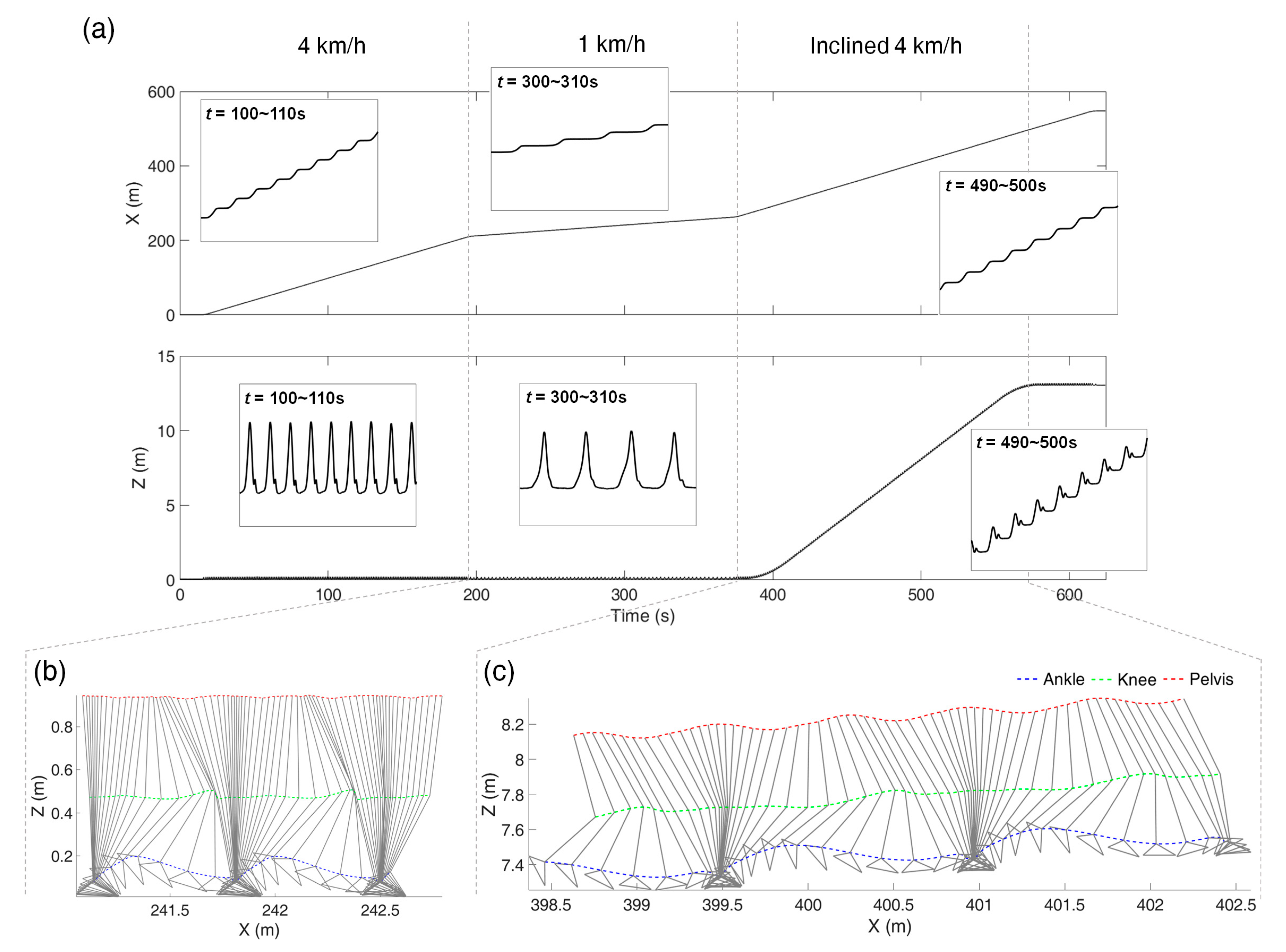
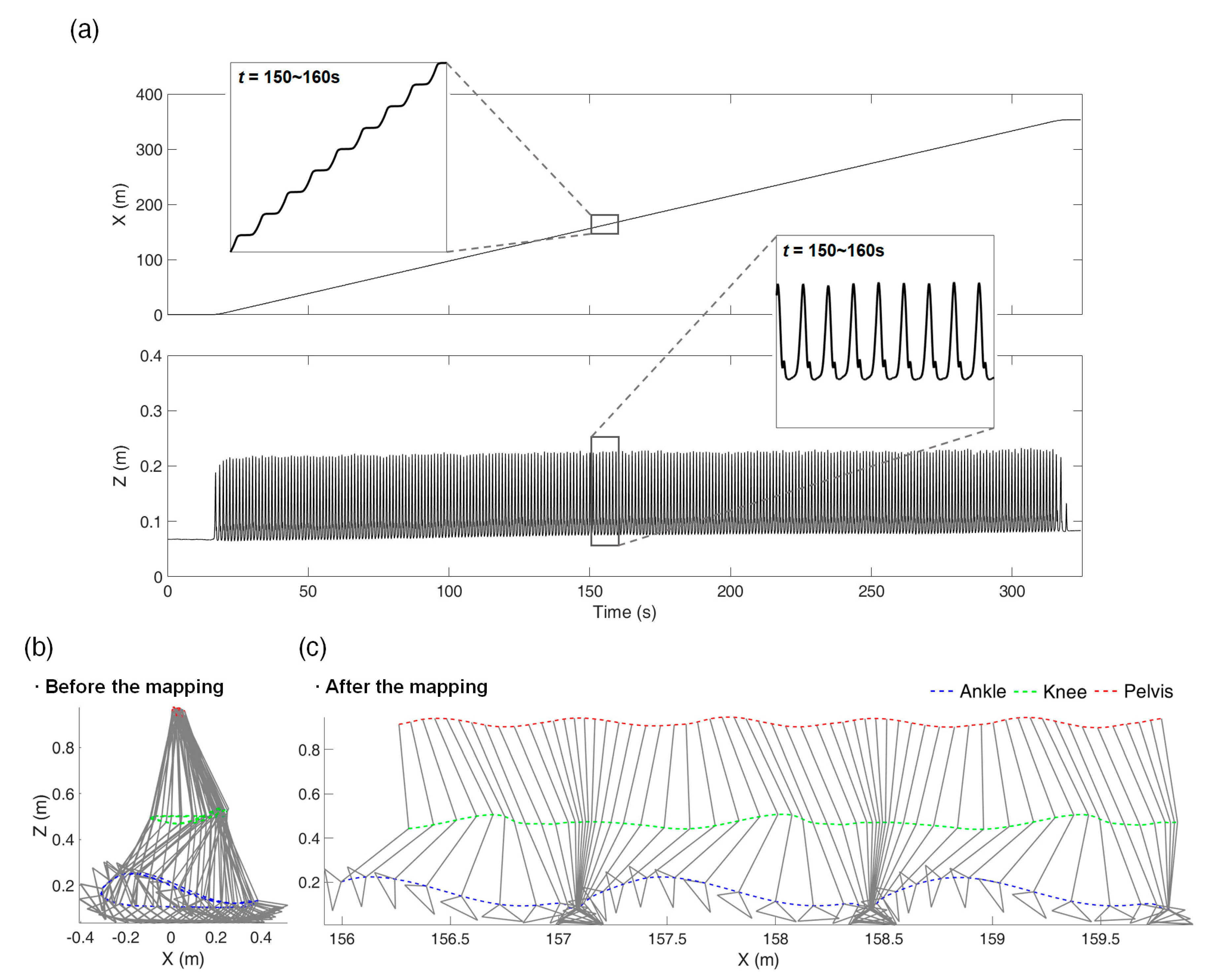
A treadmill was used to perform continuous walking tests in a limited space that can be covered by marker-based optical motion capture systems. Most treadmill-based gait data are analyzed based on gait cycle percentage. However, achieving continuous walking motion trajectories over time without time normalization is often required, even if tests are performed under treadmill walking conditions. This study presents a treadmill-to-overground mapping method of optical marker trajectories for treadmill-based continuous gait analysis, by adopting a simple concept of virtual origin. The position vector from the backward moving virtual origin to a targeted marker within a limited walking volume is the same as the position vector from the fixed origin to the forward moving marker over the ground. With the proposed method, it is possible (i) to observe the change in physical quantity visually during the treadmill walking, and (ii) to obtain overground-mapped gait data for evaluating the accuracy of the inertial-measurement-unit-based trajectory estimation. The accuracy of the proposed method was verified from various treadmill walking tests, which showed that the total travel displacement error rate was 0.32% on average.
Keywords: treadmill-to-overground mapping; optical motion capture system; gait analysis treadmill-to-overground mapping; optical motion capture system; gait analysis