Article

Toward Modeling Psychomotor Performance in Karate Combats Using Computer Vision Pose Estimation
1
Computer Science School, Universidad Nacional de Educación a Distancia (UNED), 28040 Madrid, Spain
2
aDeNu Research Group, Artificial Intelligence Department, Computer Science School, Universidad Nacional de Educación a Distancia (UNED), 28040 Madrid, Spain
*
Author to whom correspondence should be addressed.
Sensors 2021, 21(24), 8378; https://doi.org/10.3390/s21248378
Submission received: 28 October 2021 / Revised: 29 November 2021 / Accepted: 3 December 2021 / Published: 15 December 2021
(This article belongs to the Special Issue Multi-Sensor for Human Activity Recognition)

Abstract

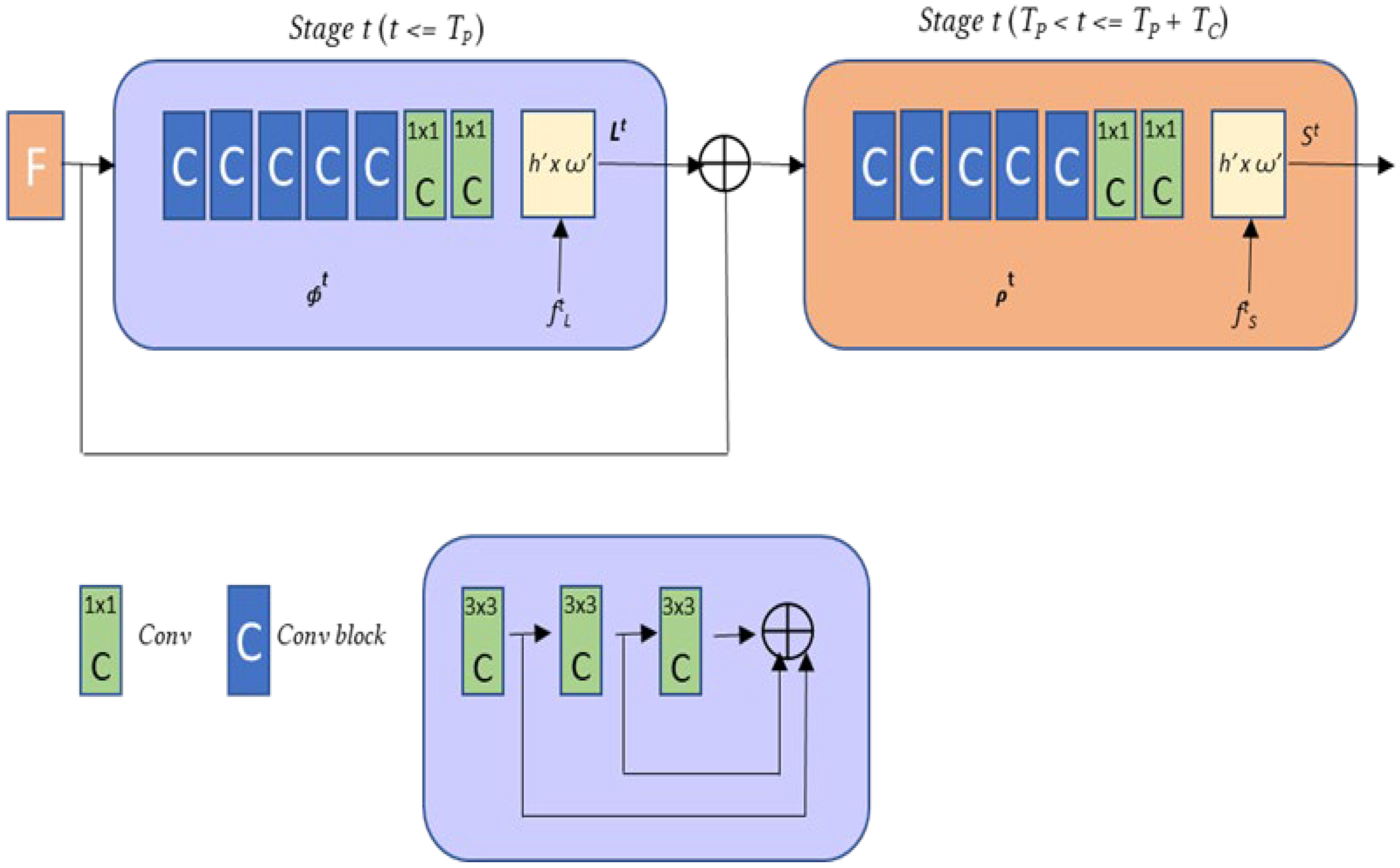
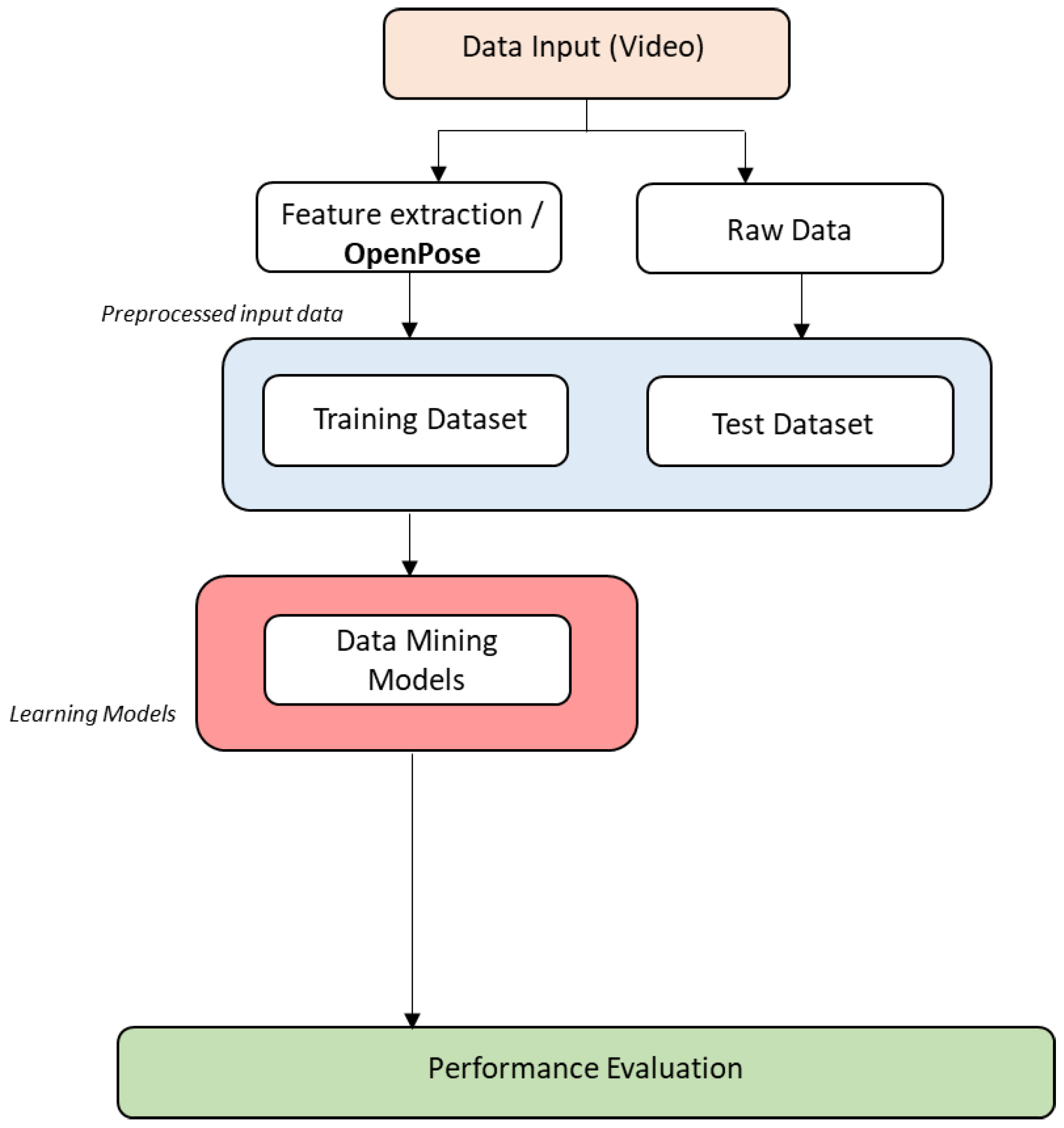
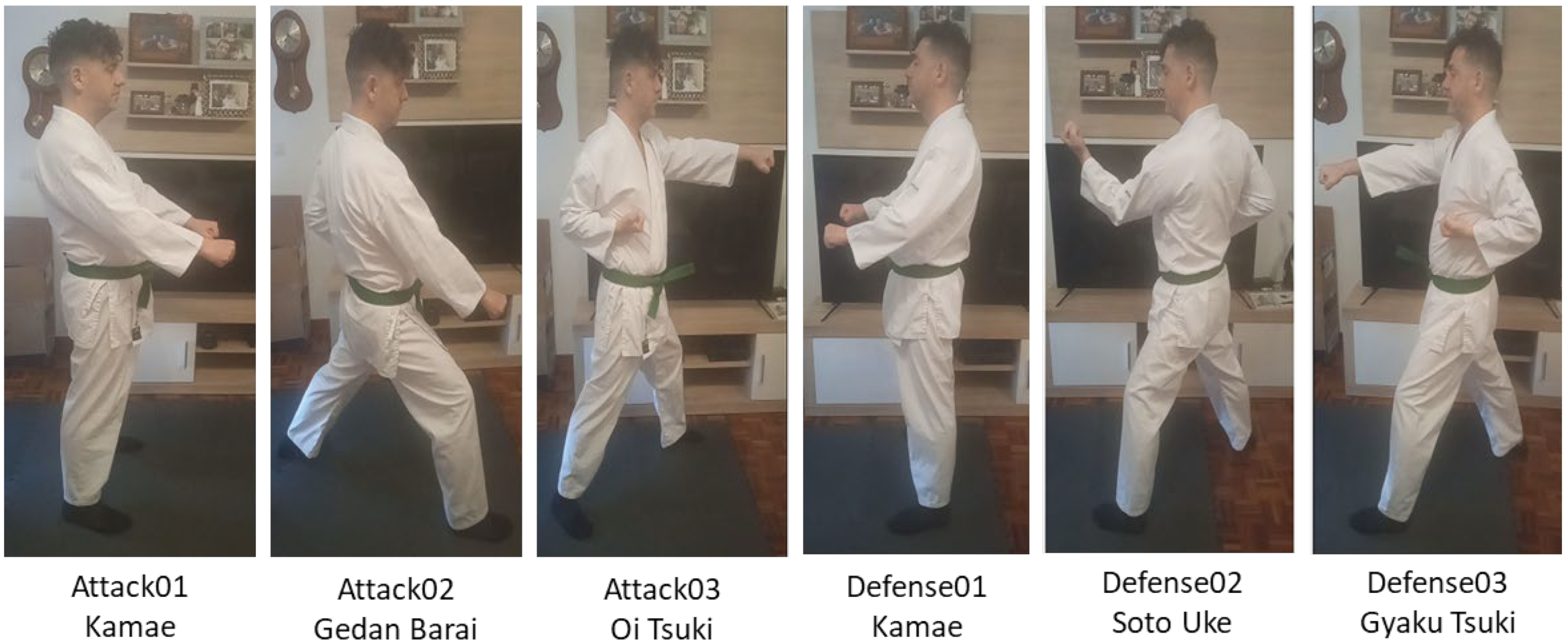
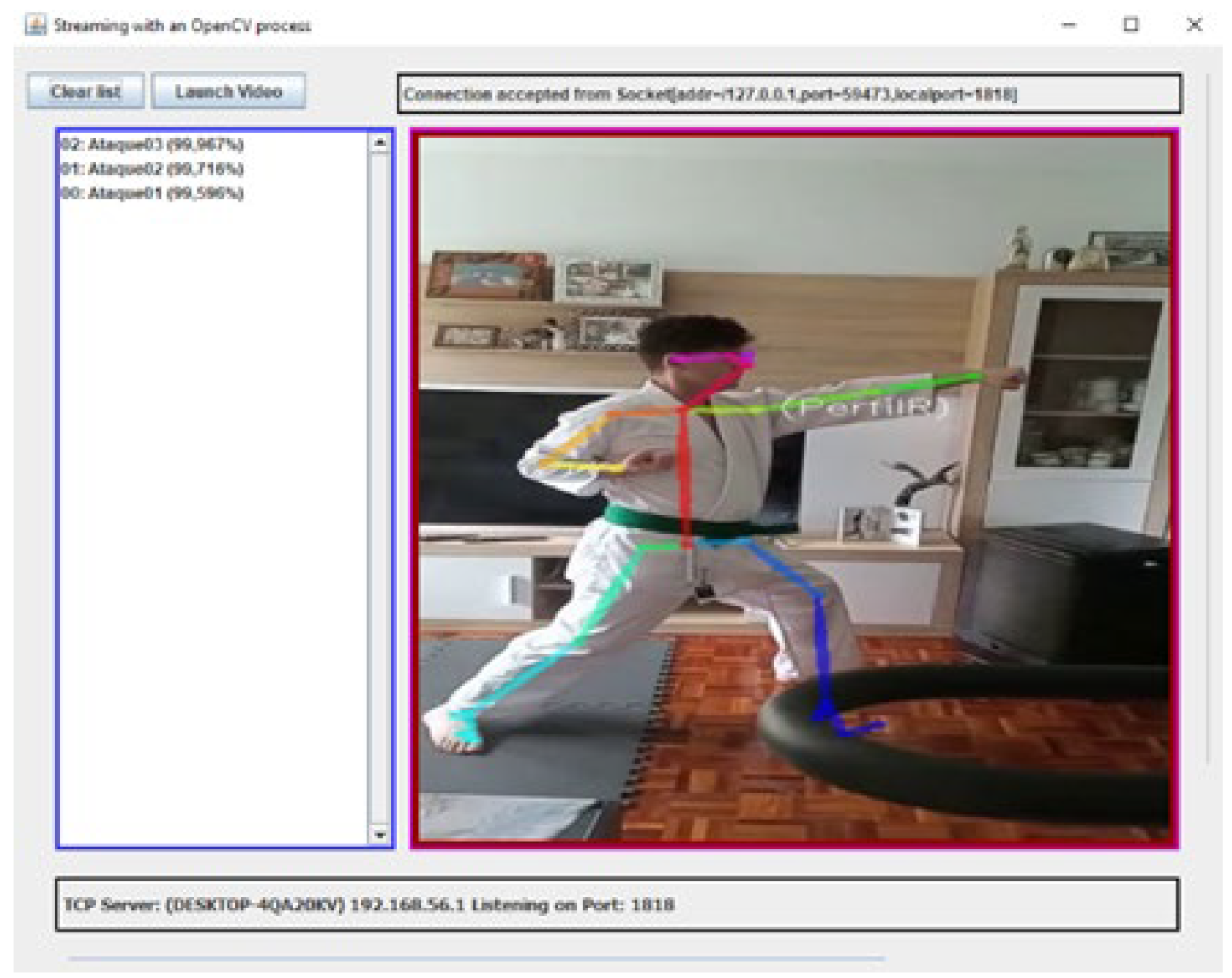
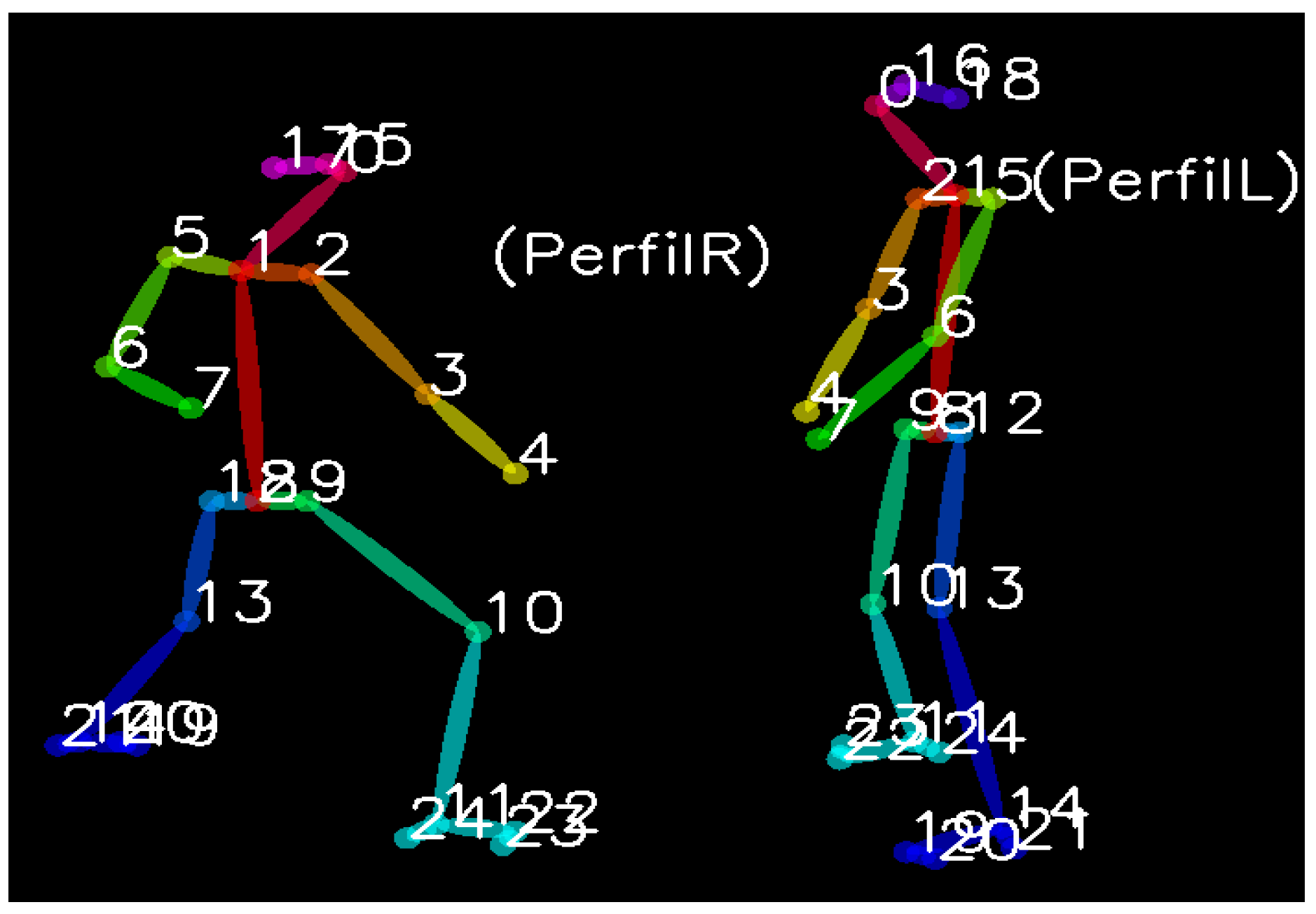
Technological advances enable the design of systems that interact more closely with humans in a multitude of previously unsuspected fields. Martial arts are not outside the application of these techniques. From the point of view of the modeling of human movement in relation to the learning of complex motor skills, martial arts are of interest because they are articulated around a system of movements that are predefined, or at least, bounded, and governed by the laws of Physics. Their execution must be learned after continuous practice over time. Literature suggests that artificial intelligence algorithms, such as those used for computer vision, can model the movements performed. Thus, they can be compared with a good execution as well as analyze their temporal evolution during learning. We are exploring the application of this approach to model psychomotor performance in Karate combats (called kumites), which are characterized by the explosiveness of their movements. In addition, modeling psychomotor performance in a kumite requires the modeling of the joint interaction of two participants, while most current research efforts in human movement computing focus on the modeling of movements performed individually. Thus, in this work, we explore how to apply a pose estimation algorithm to extract the features of some predefined movements of Ippon Kihon kumite (a one-step conventional assault) and compare classification metrics with four data mining algorithms, obtaining high values with them.
Keywords: human activity recognition (HAR); computer vision; deep learning; human pose estimation (HPE); OpenPose; martial arts; karate human activity recognition (HAR); computer vision; deep learning; human pose estimation (HPE); OpenPose; martial arts; karate