Article

Electrochemical DNA Sensor Based on Acridine Yellow Adsorbed on Glassy Carbon Electrode
1
A.M. Butlerov’ Chemistry Institute, Kazan Federal University, 18 Kremlevskaya Street, 420008 Kazan, Russia
2
Interdisciplinary Center of Analytical Microscopy, Kazan Federal University, 18 Kremlevskaya Street, 420008 Kazan, Russia
3
Analytical Chemistry Department, Chemical Technology Institute, Ural Federal University, 19 Mira Street, 620002 Ekaterinburg, Russia
*
Author to whom correspondence should be addressed.
Sensors 2021, 21(22), 7763; https://doi.org/10.3390/s21227763
Submission received: 5 November 2021 / Revised: 18 November 2021 / Accepted: 19 November 2021 / Published: 22 November 2021
(This article belongs to the Section Biosensors)

Abstract

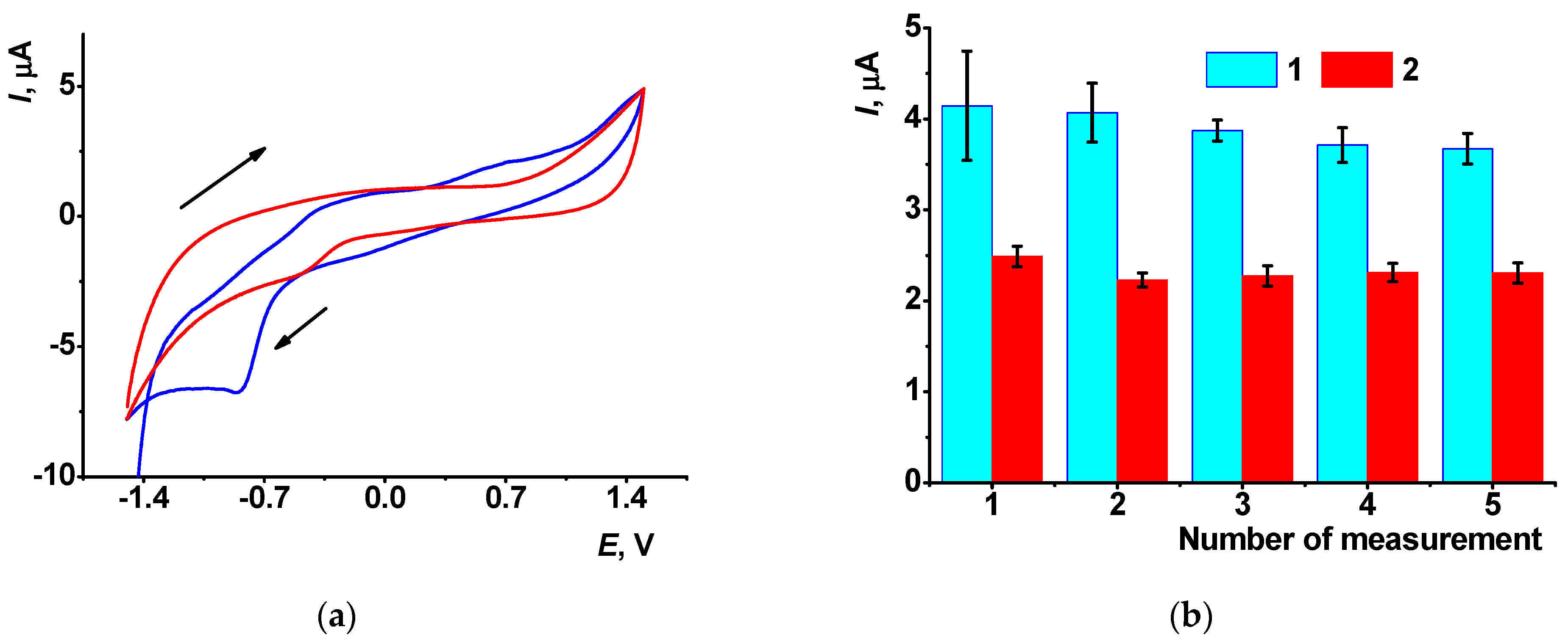
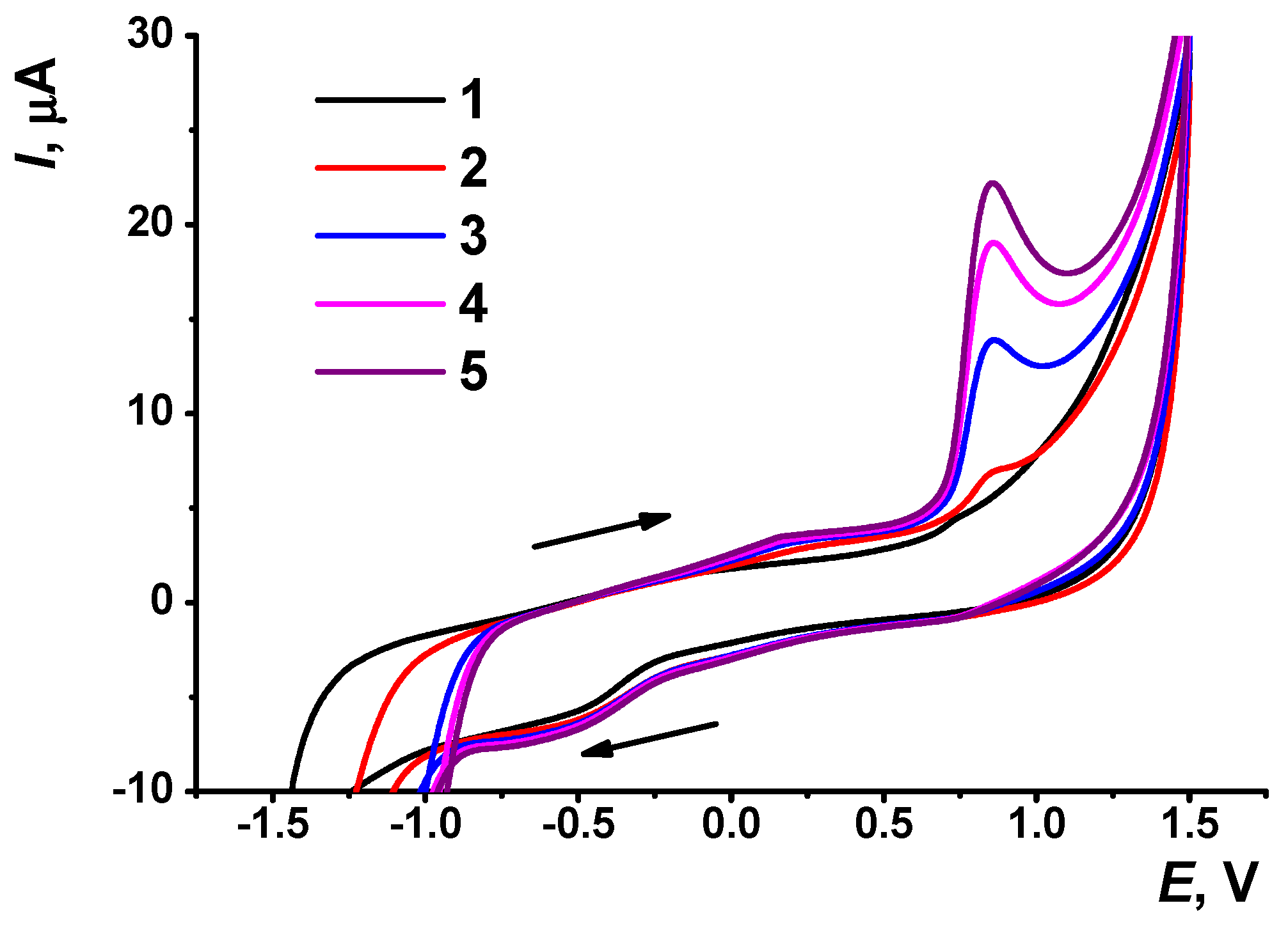
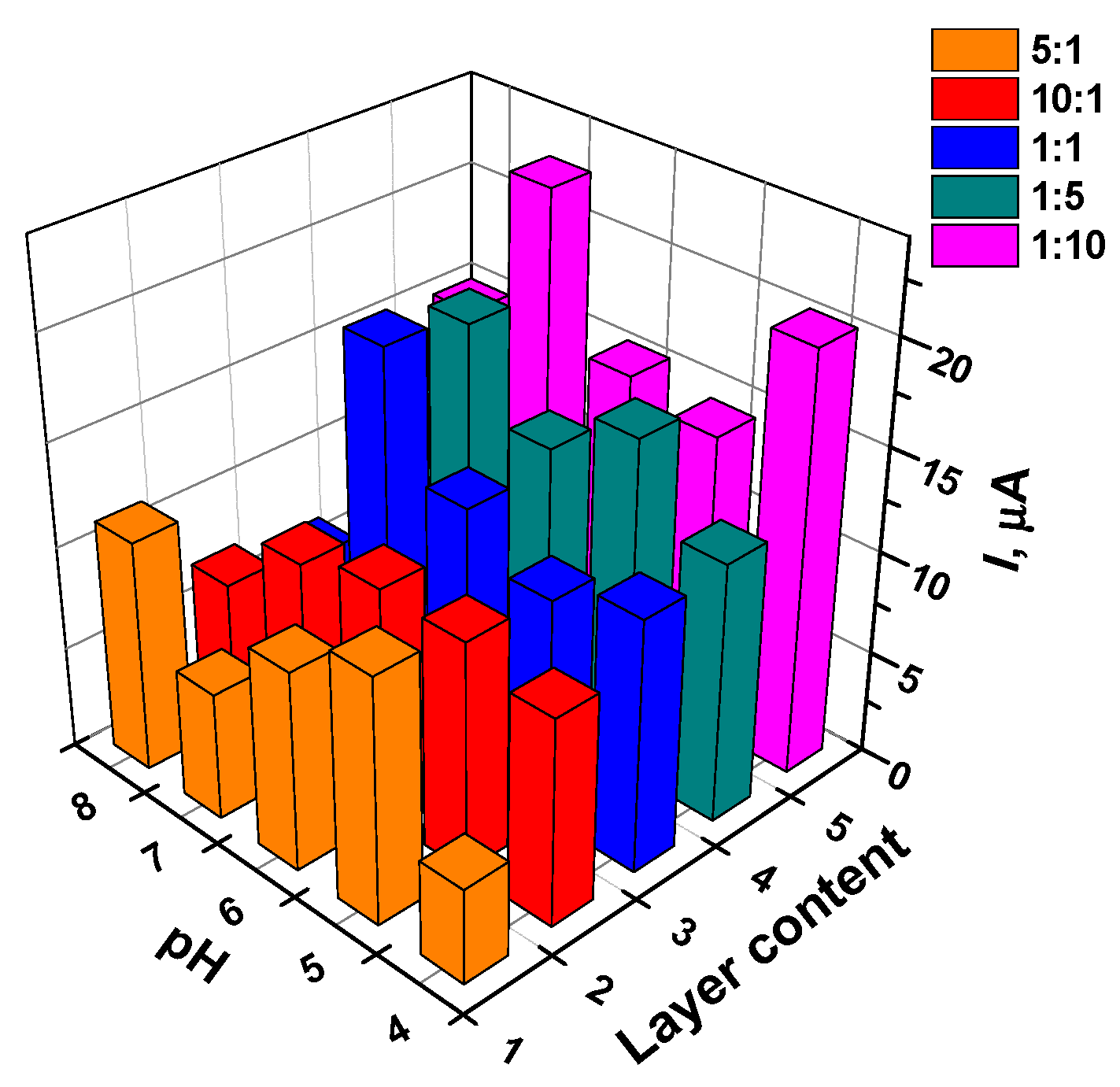
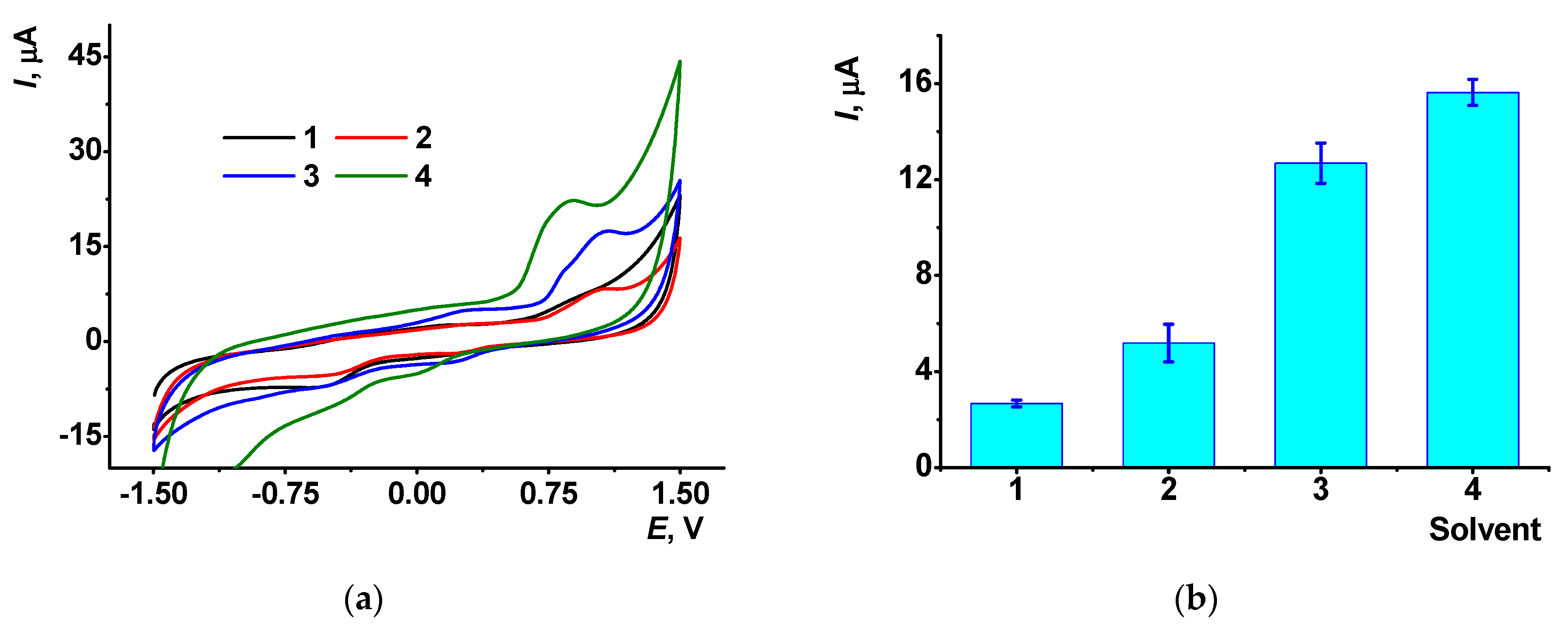
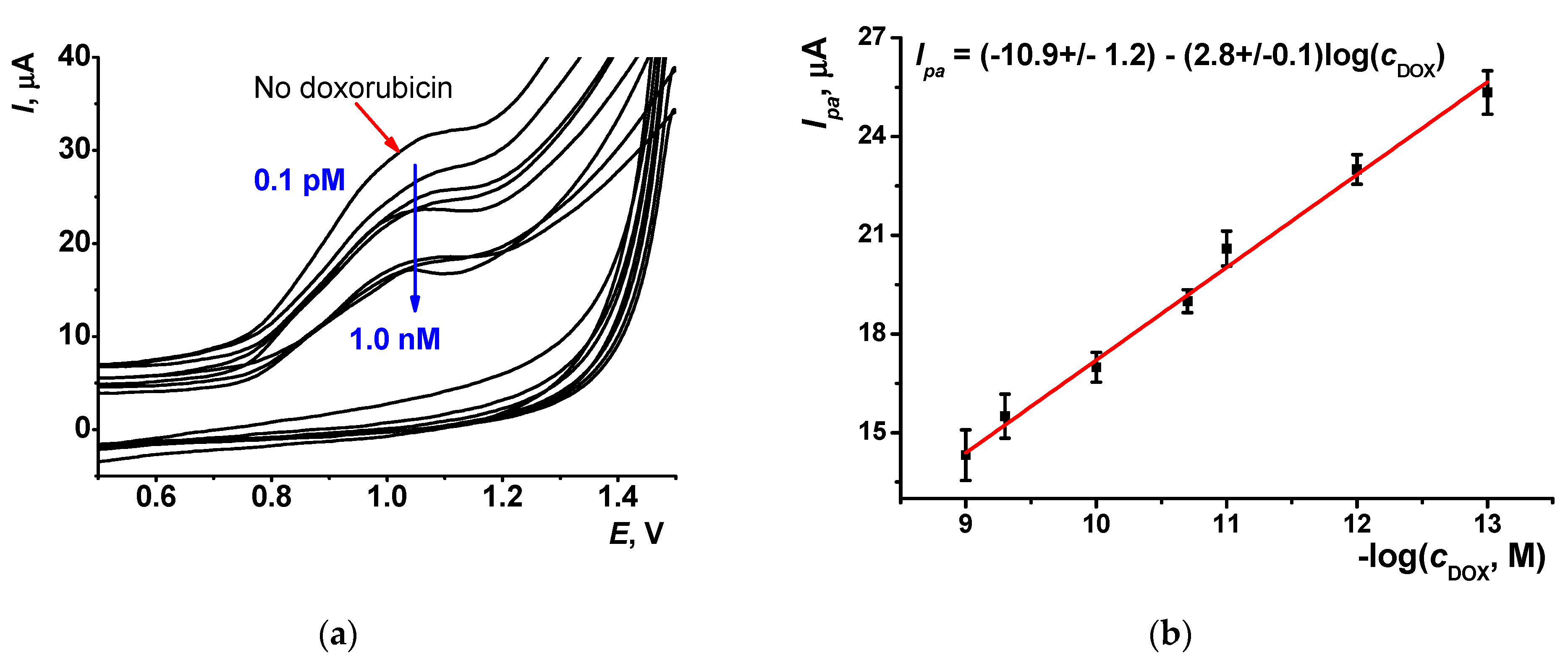
Electrochemical DNA sensors offer unique opportunities for the sensitive detection of specific DNA interactions. In this work, a voltametric DNA sensor is proposed on the base of glassy carbon electrode modified with carbon black, adsorbed acridine yellow and DNA for highly sensitive determination of doxorubicin antitumor drug. The signal recorded by cyclic voltammetry was attributed to irreversible oxidation of the dye. Its value was altered by aggregation of the hydrophobic dye molecules on the carbon black particles. DNA molecules promote disaggregation of the dye and increased the signal. This effect was partially suppressed by doxorubicin compensate for the charge of DNA in the intercalation. Sensitivity of the signal toward DNA and doxorubicin was additionally increased by treatment of the layer with dimethylformamide. In optimal conditions, the linear range of doxorubicin concentrations determined was 0.1 pM–1.0 nM, and the detection limit was 0.07 pM. No influence of sulfonamide medicines and plasma electrolytes on the doxorubicin determination was shown. The DNA sensor was tested on two medications (doxorubicin-TEVA and doxorubicin-LANS) and showed recoveries of 102–105%. The DNA sensor developed can find applications in the determination of drug residues in blood and for the pharmacokinetics studies.
Keywords: electrochemical DNA sensor; doxorubicin determination; carbon black; cyclic voltammetry; drug determination electrochemical DNA sensor; doxorubicin determination; carbon black; cyclic voltammetry; drug determination