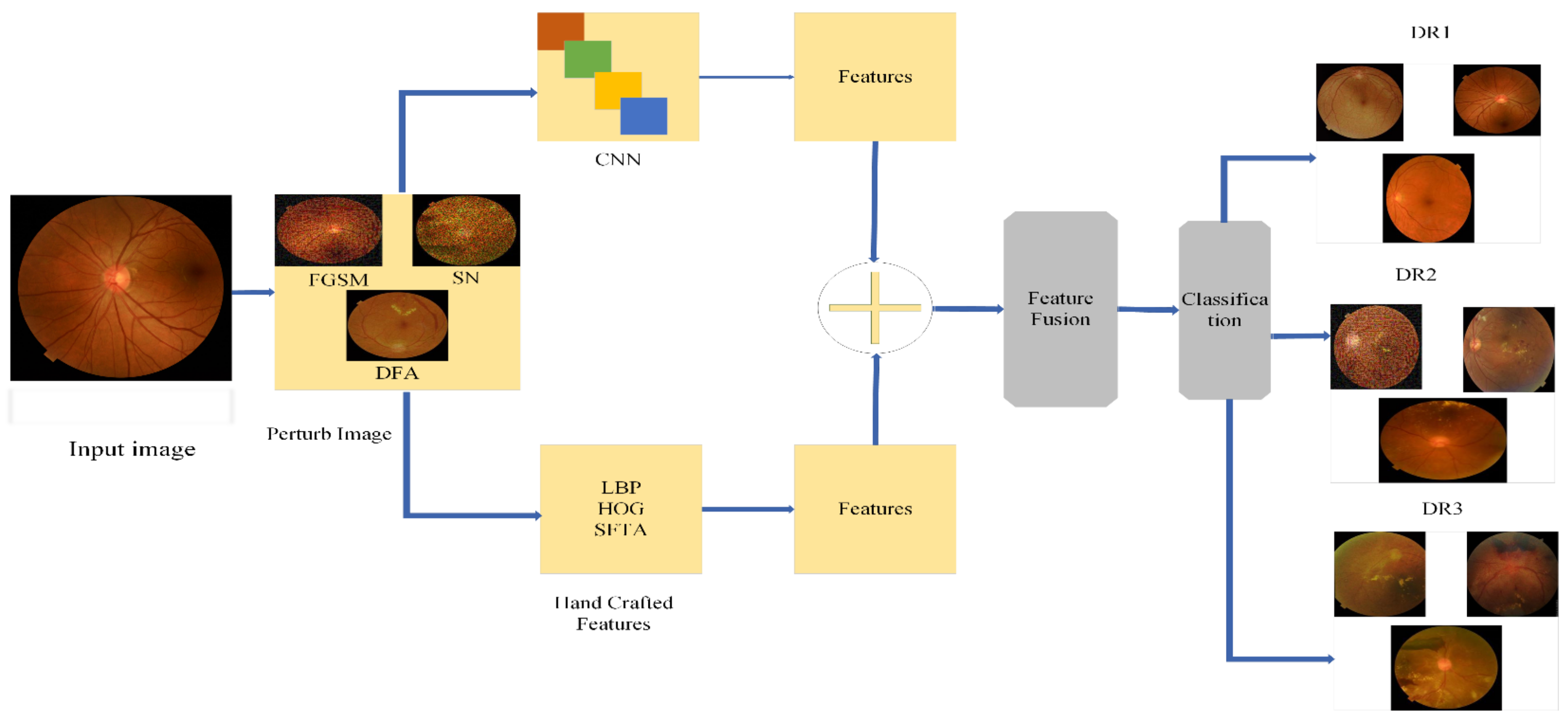
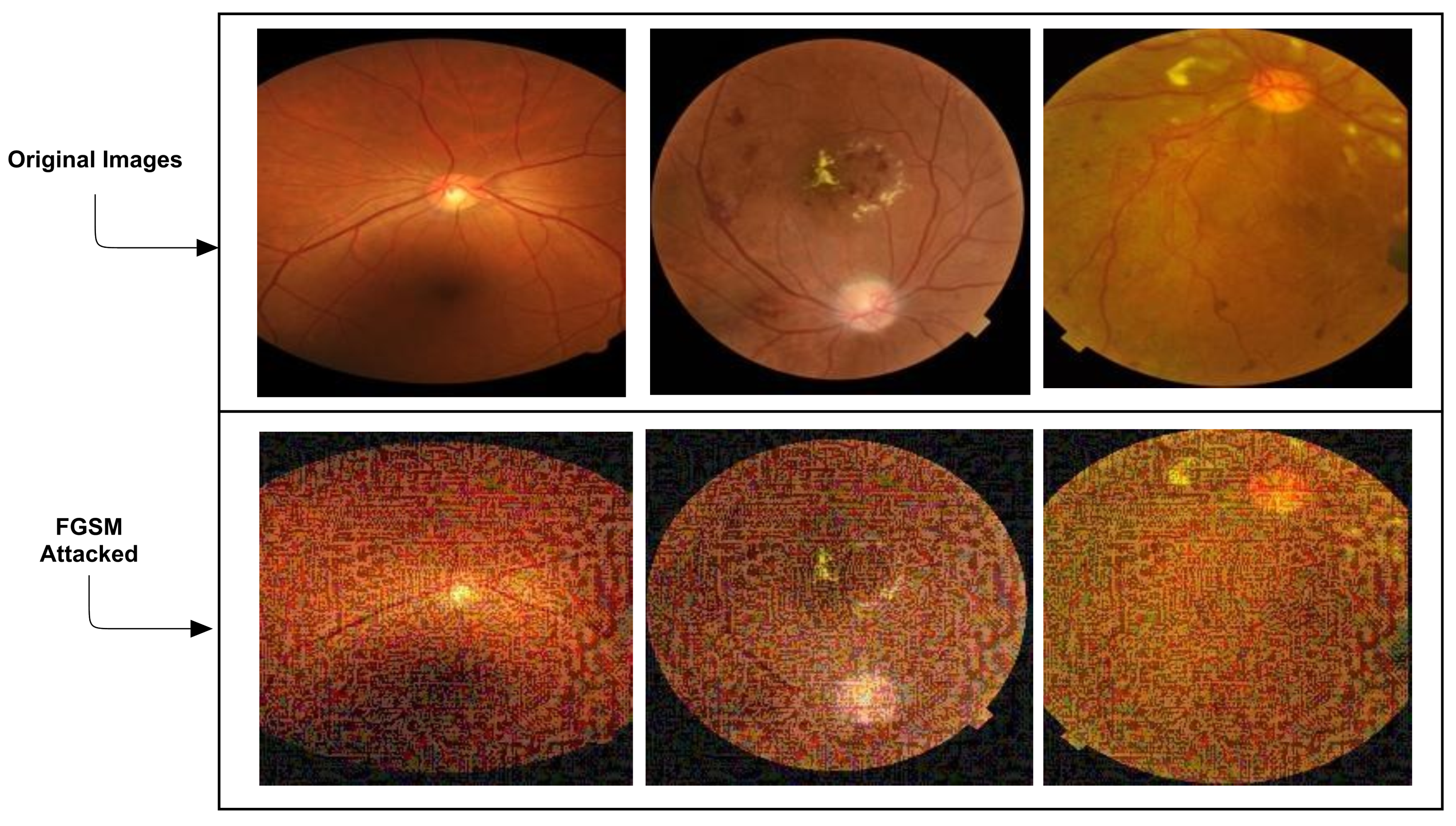
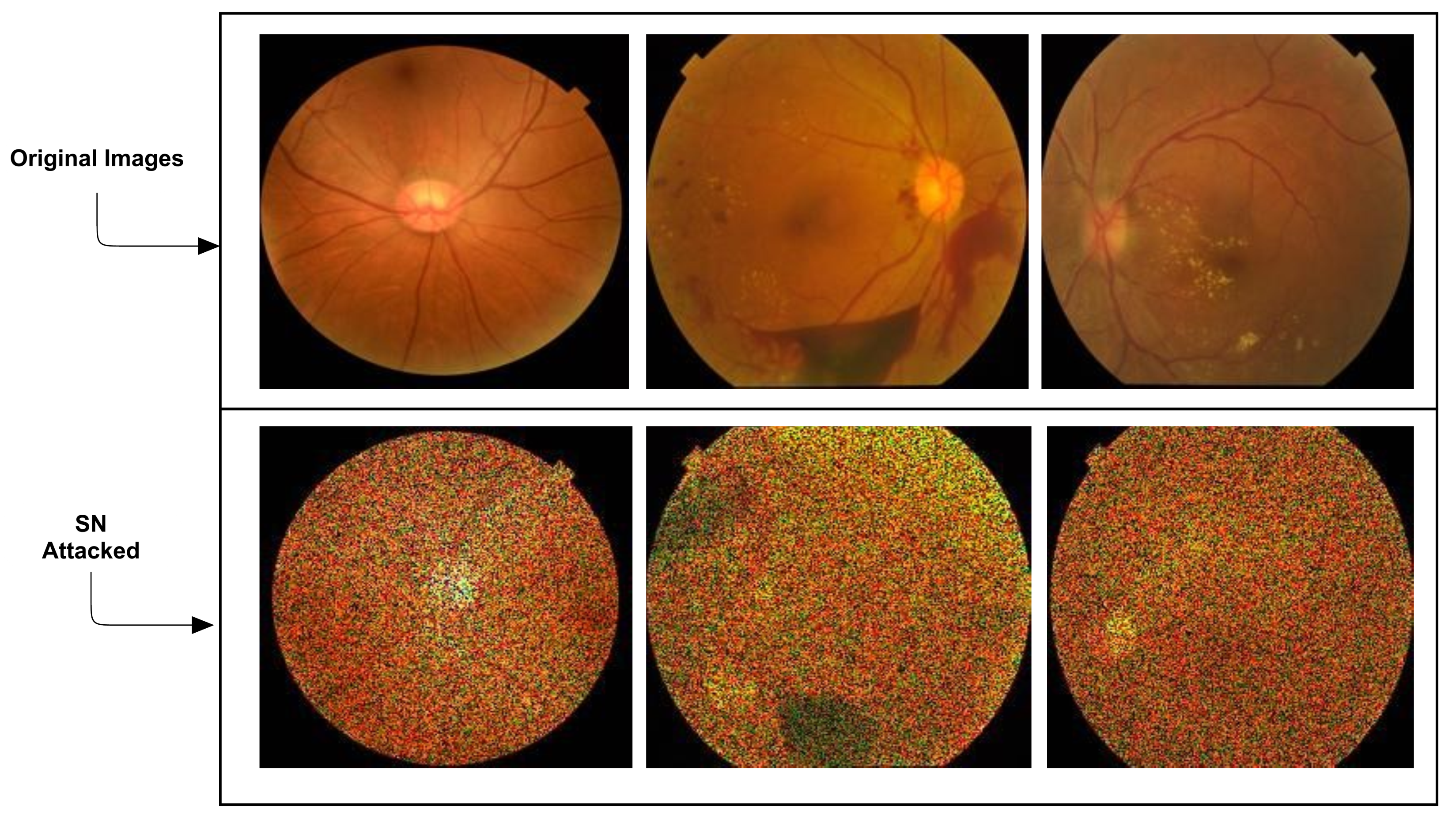
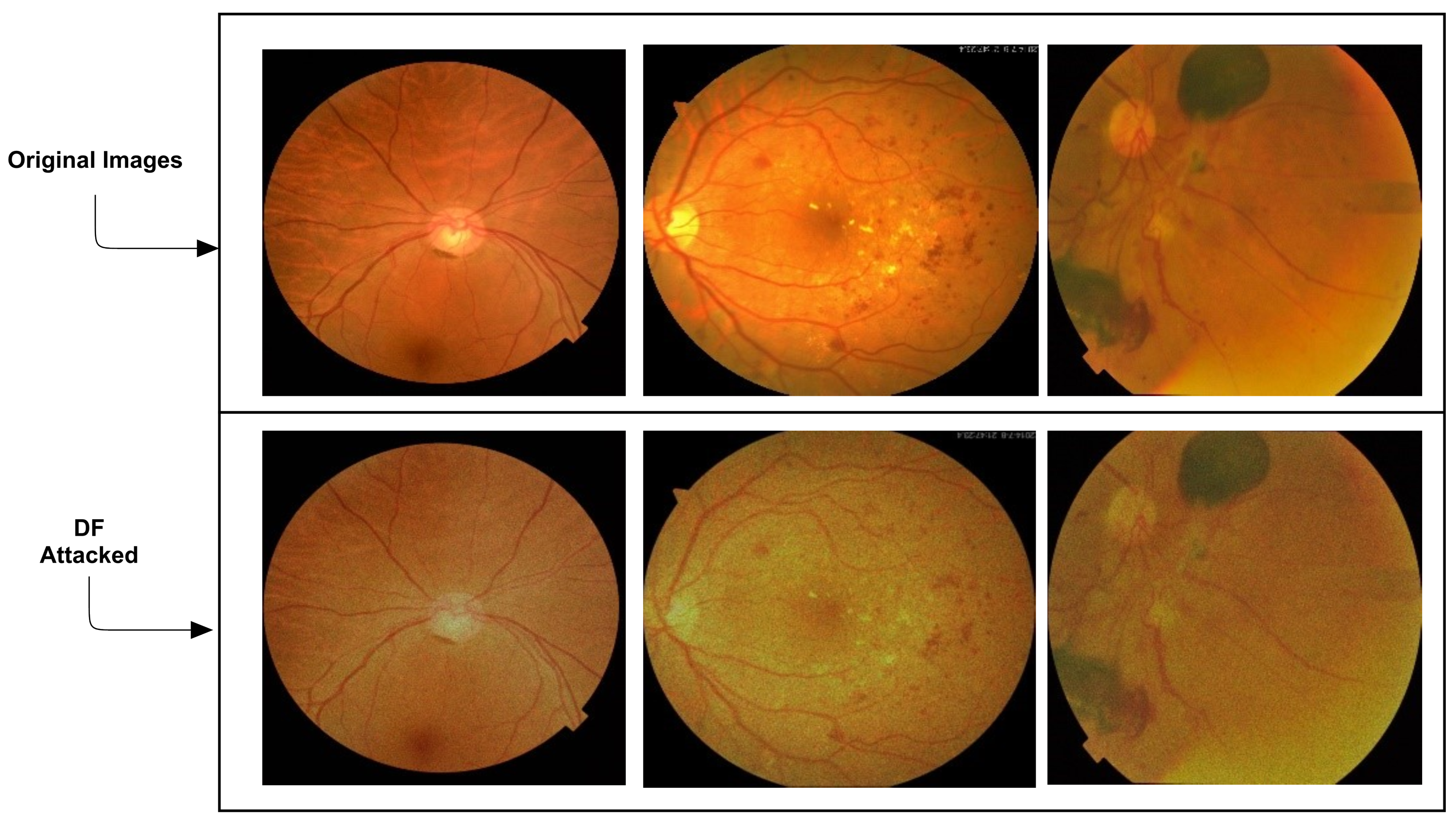
Adversarial Attack and Defence through Adversarial Training and Feature Fusion for Diabetic Retinopathy Recognition

 ,
,  , ,
, ,  and
and 
Abstract
Share and Cite
Lal, S.; Rehman, S.U.; Shah, J.H.; Meraj, T.; Rauf, H.T.; Damaševičius, R.; Mohammed, M.A.; Abdulkareem, K.H. Adversarial Attack and Defence through Adversarial Training and Feature Fusion for Diabetic Retinopathy Recognition. Sensors 2021, 21, 3922. https://doi.org/10.3390/s21113922
Lal S, Rehman SU, Shah JH, Meraj T, Rauf HT, Damaševičius R, Mohammed MA, Abdulkareem KH. Adversarial Attack and Defence through Adversarial Training and Feature Fusion for Diabetic Retinopathy Recognition. Sensors. 2021; 21(11):3922. https://doi.org/10.3390/s21113922
Chicago/Turabian StyleLal, Sheeba, Saeed Ur Rehman, Jamal Hussain Shah, Talha Meraj, Hafiz Tayyab Rauf, Robertas Damaševičius, Mazin Abed Mohammed, and Karrar Hameed Abdulkareem. 2021. "Adversarial Attack and Defence through Adversarial Training and Feature Fusion for Diabetic Retinopathy Recognition" Sensors 21, no. 11: 3922. https://doi.org/10.3390/s21113922
APA StyleLal, S., Rehman, S. U., Shah, J. H., Meraj, T., Rauf, H. T., Damaševičius, R., Mohammed, M. A., & Abdulkareem, K. H. (2021). Adversarial Attack and Defence through Adversarial Training and Feature Fusion for Diabetic Retinopathy Recognition. Sensors, 21(11), 3922. https://doi.org/10.3390/s21113922