Article

An INS and UWB Fusion-Based Gyroscope Drift Correction Approach for Indoor Pedestrian Tracking


Department of Electrical, Computer, and Software Engineering, The University of Auckland, Auckland 1010, New Zealand
*
Author to whom correspondence should be addressed.
Sensors 2020, 20(16), 4476; https://doi.org/10.3390/s20164476
Submission received: 15 June 2020 / Revised: 31 July 2020 / Accepted: 7 August 2020 / Published: 10 August 2020
(This article belongs to the Special Issue UWB Sensors)

Abstract

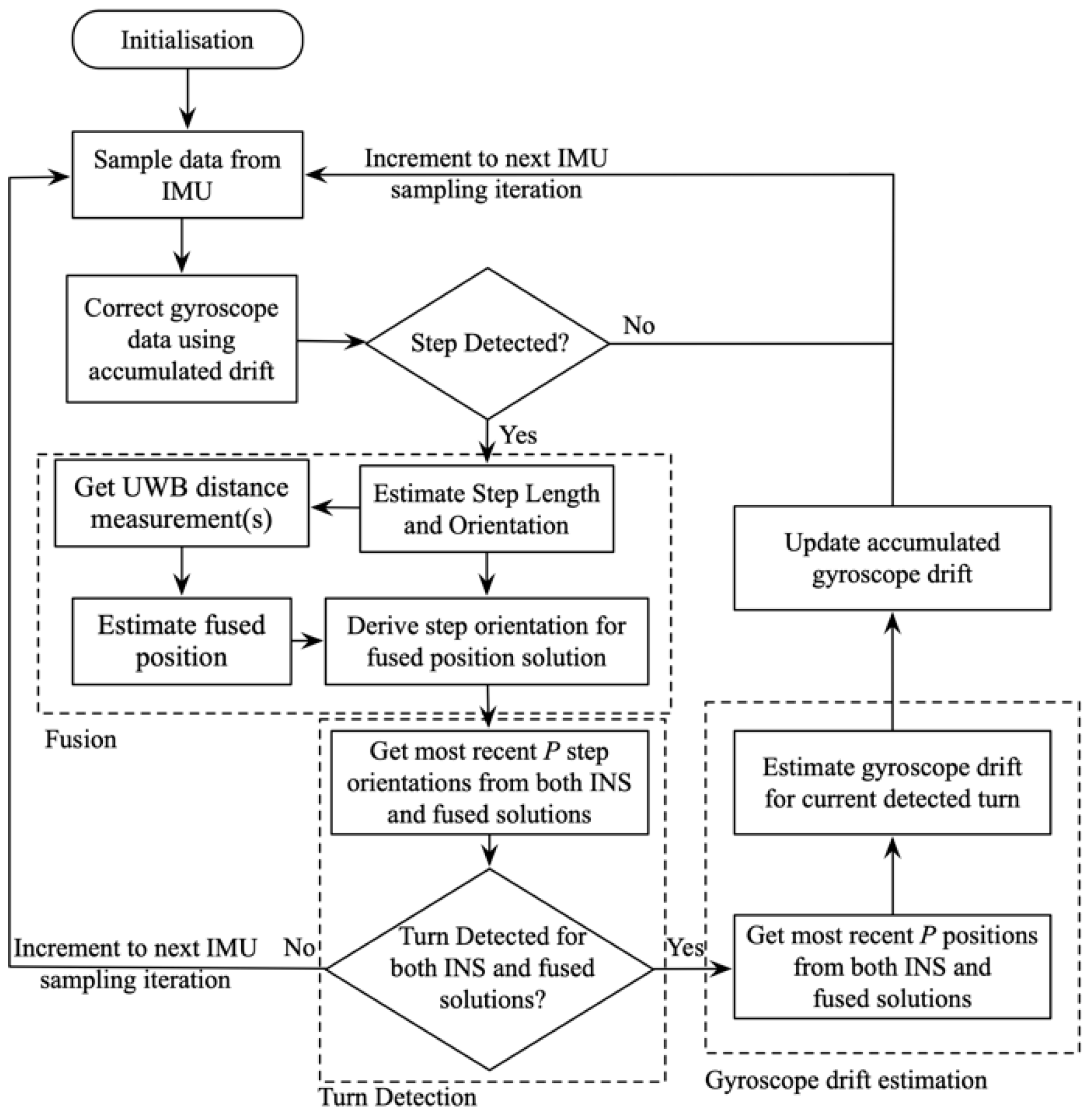
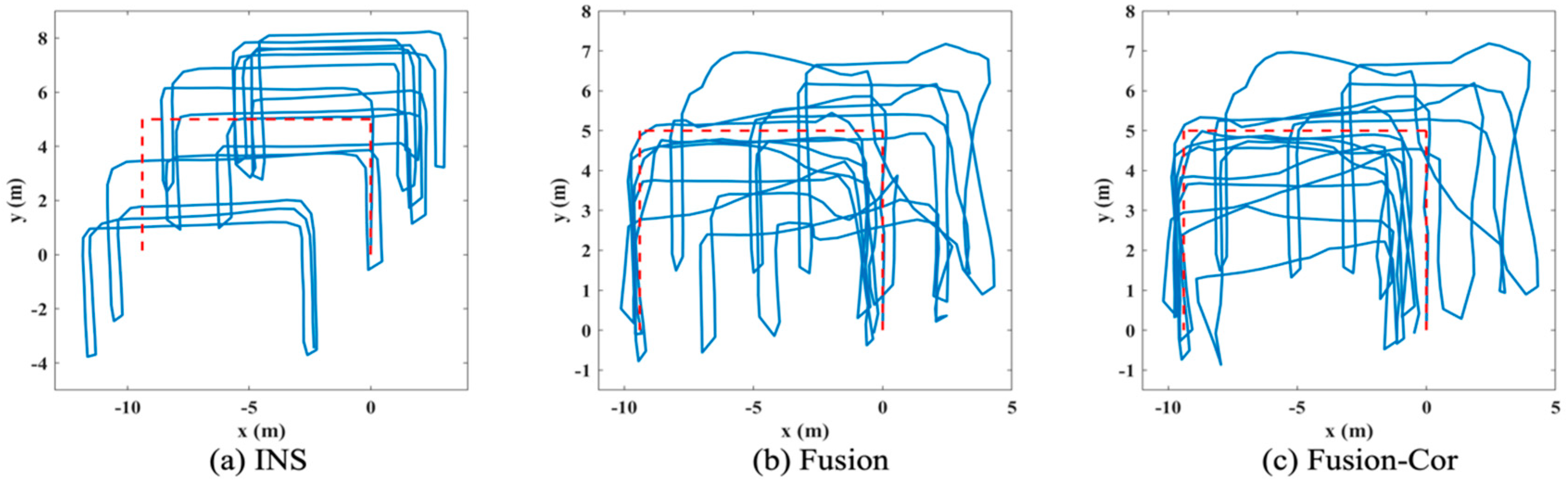
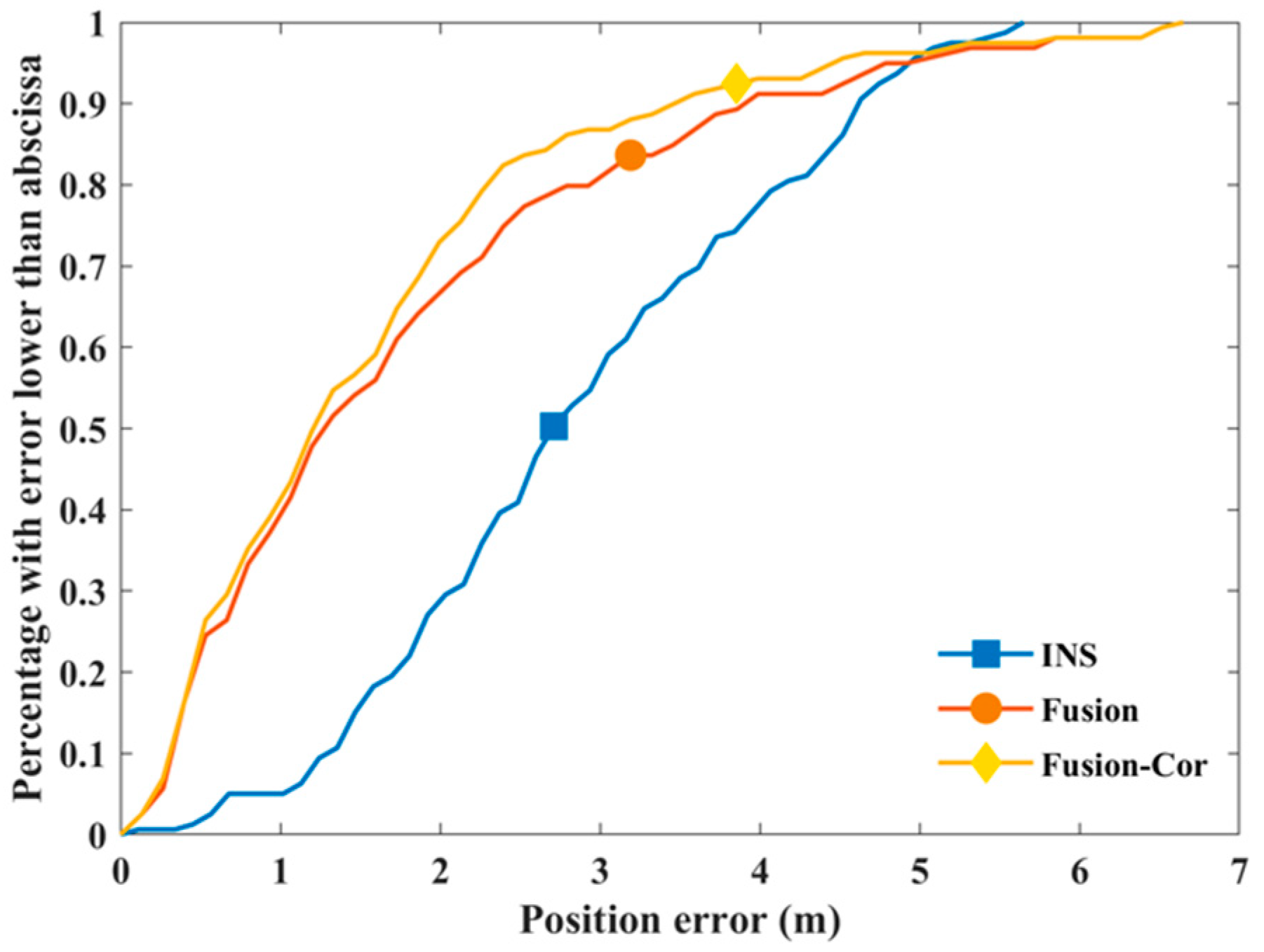
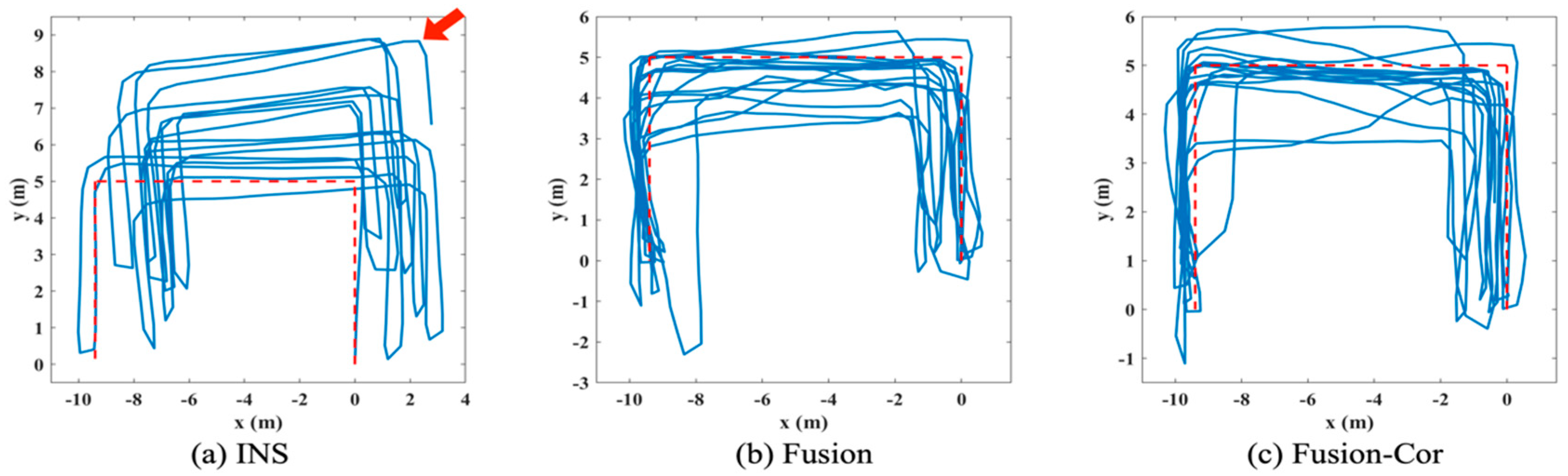
Information fusion combining inertial navigation and radio frequency (RF) technologies, is commonly applied in indoor positioning systems (IPSs) to obtain more accurate tracking results. The performance of the inertial navigation system (INS) subsystem is affected by sensor drift over time and the RF-based subsystem aims to correct the position estimate using a fusion filter. However, the inherent sensor drift is usually not corrected during fusion, which leads to increasingly erroneous estimates over a short period of time. Among the inertial sensor drifts, gyroscope drift has the most significant impact in determining the correct orientation and accurate tracking. A gyroscope drift correction approach is proposed in this study and is incorporated in an INS and ultra-wideband (UWB) fusion IPS where only distance measurements from UWB subsystem are used. The drift correction approach is based on turn detection to account for the fact that gyroscope drift is accumulated during a turn. Practical pedestrian tracking experiments are conducted to demonstrate the accuracy of the drift correction approach. With the gyroscope drift corrected, the fusion IPS is able to provide more accurate tracking performance and achieve up to 64.52% mean position error reduction when compared to the INS only tracking result.
Keywords: inertial navigation system; ultra-wideband; information fusion; drift correction; pedestrian tracking inertial navigation system; ultra-wideband; information fusion; drift correction; pedestrian tracking