Article

Recognition of EEG Signal Motor Imagery Intention Based on Deep Multi-View Feature Learning

1
School of Information Science and Engineering, Northeastern University, Shenyang 110819, China
2
School of Information Science and Engineering, Shenyang University of Technology, Shenyang 110870, China
*
Author to whom correspondence should be addressed.
Sensors 2020, 20(12), 3496; https://doi.org/10.3390/s20123496
Submission received: 10 May 2020 / Revised: 5 June 2020 / Accepted: 18 June 2020 / Published: 20 June 2020
(This article belongs to the Section Intelligent Sensors)

Abstract

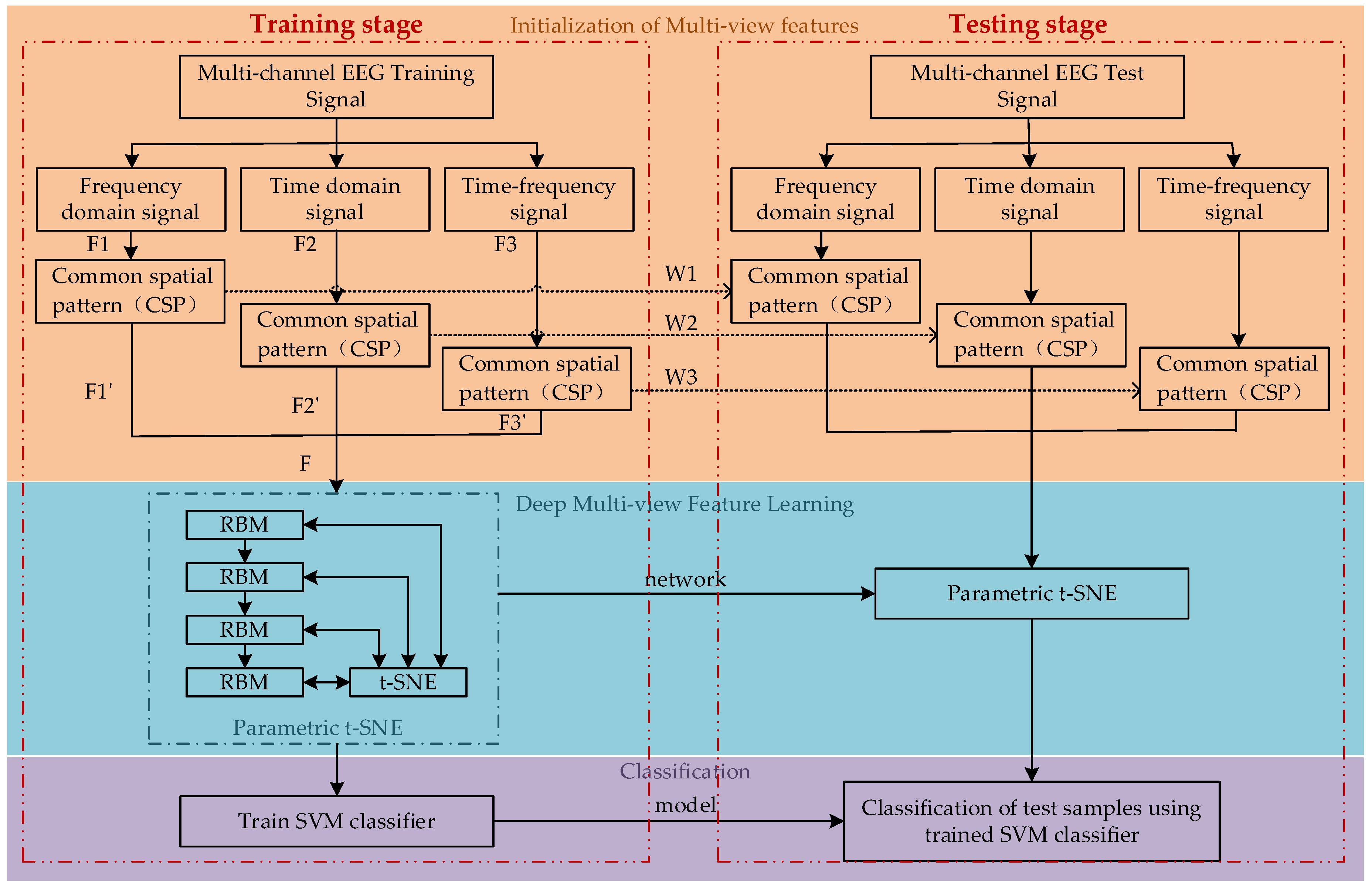
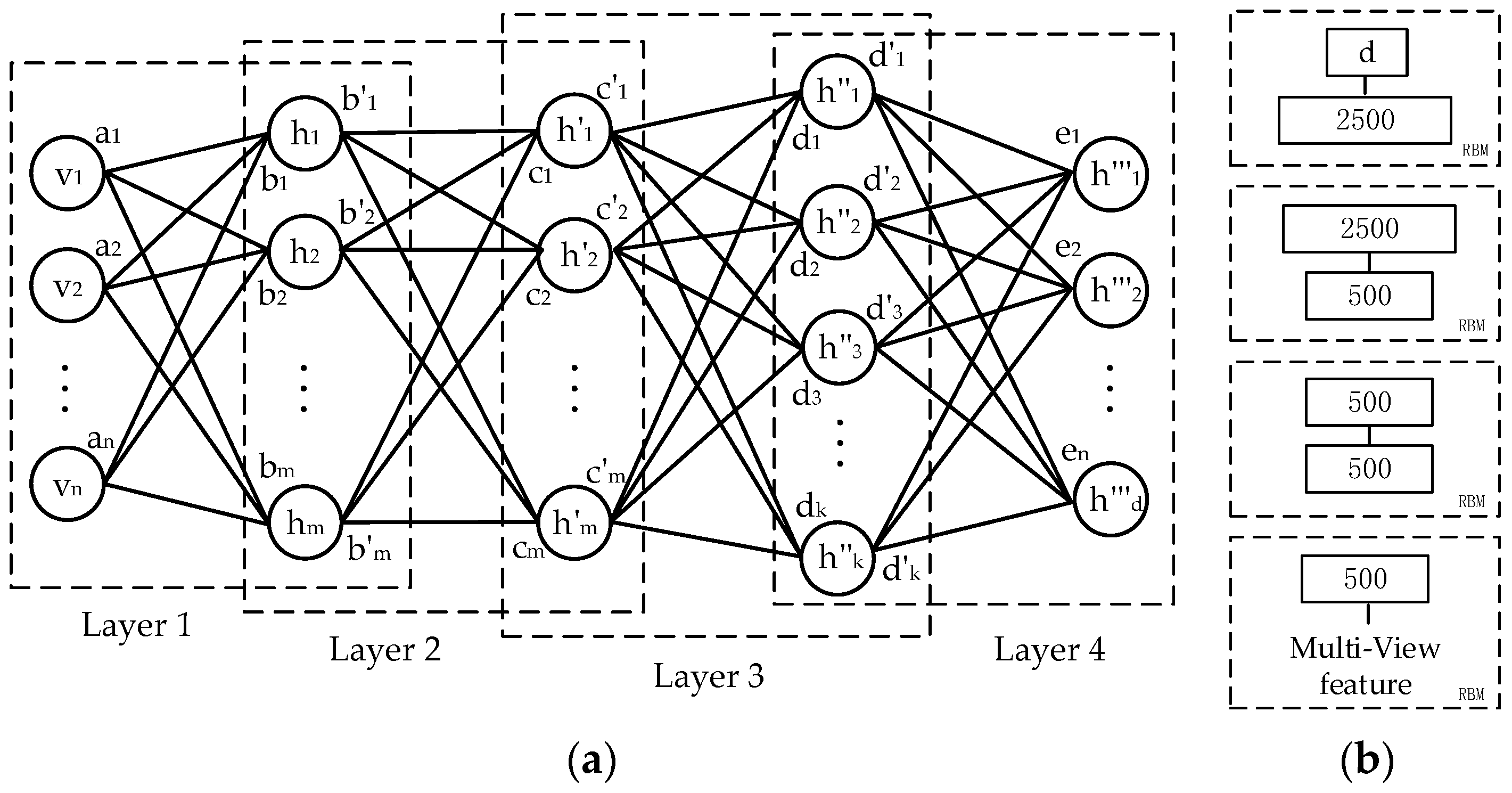
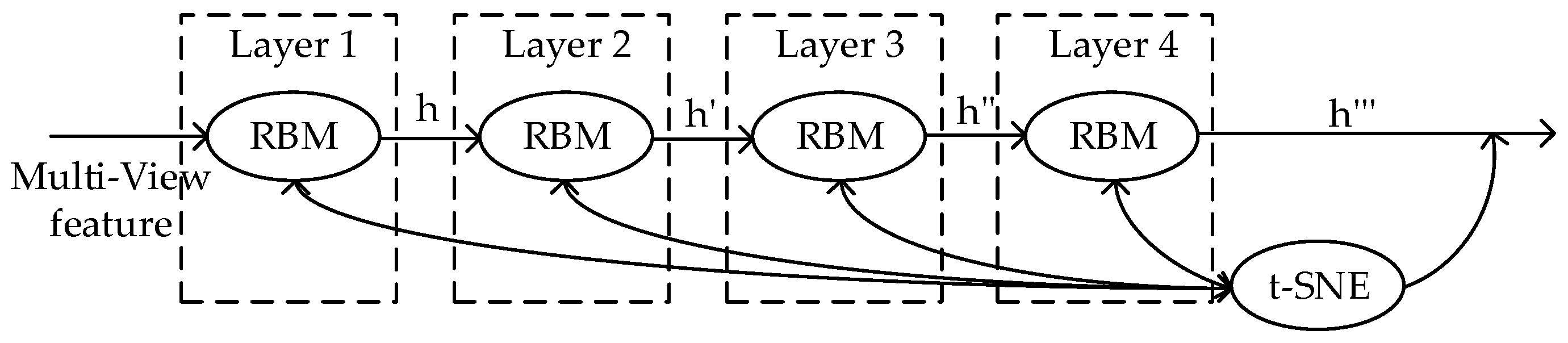
Recognition of motor imagery intention is one of the hot current research focuses of brain-computer interface (BCI) studies. It can help patients with physical dyskinesia to convey their movement intentions. In recent years, breakthroughs have been made in the research on recognition of motor imagery task using deep learning, but if the important features related to motor imagery are ignored, it may lead to a decline in the recognition performance of the algorithm. This paper proposes a new deep multi-view feature learning method for the classification task of motor imagery electroencephalogram (EEG) signals. In order to obtain more representative motor imagery features in EEG signals, we introduced a multi-view feature representation based on the characteristics of EEG signals and the differences between different features. Different feature extraction methods were used to respectively extract the time domain, frequency domain, time-frequency domain and spatial features of EEG signals, so as to made them cooperate and complement. Then, the deep restricted Boltzmann machine (RBM) network improved by t-distributed stochastic neighbor embedding(t-SNE) was adopted to learn the multi-view features of EEG signals, so that the algorithm removed the feature redundancy while took into account the global characteristics in the multi-view feature sequence, reduced the dimension of the multi-visual features and enhanced the recognizability of the features. Finally, support vector machine (SVM) was chosen to classify deep multi-view features. Applying our proposed method to the BCI competition IV 2a dataset we obtained excellent classification results. The results show that the deep multi-view feature learning method further improved the classification accuracy of motor imagery tasks.
Keywords: brain-computer interface (BCI); electroencephalography (EEG); multi-view learning; deep neural network; parametric t-distributed stochastic neighbor embedding (p.t-SNE) brain-computer interface (BCI); electroencephalography (EEG); multi-view learning; deep neural network; parametric t-distributed stochastic neighbor embedding (p.t-SNE)