Article

Odor Recognition with a Spiking Neural Network for Bioelectronic Nose


1
College of Computer Science and Technology, Zhejiang University, Hangzhou 310027, China
2
Department of Biomedical Engineering, Zhejiang University, Hangzhou 310027, China
3
State Key Lab of CAD&CG, Zhejiang University, Hangzhou 310027, China
*
Authors to whom correspondence should be addressed.
Sensors 2019, 19(5), 993; https://doi.org/10.3390/s19050993
Submission received: 5 February 2019 / Revised: 18 February 2019 / Accepted: 20 February 2019 / Published: 26 February 2019
(This article belongs to the Special Issue Neurophysiological Data Denoising and Enhancement)

Abstract

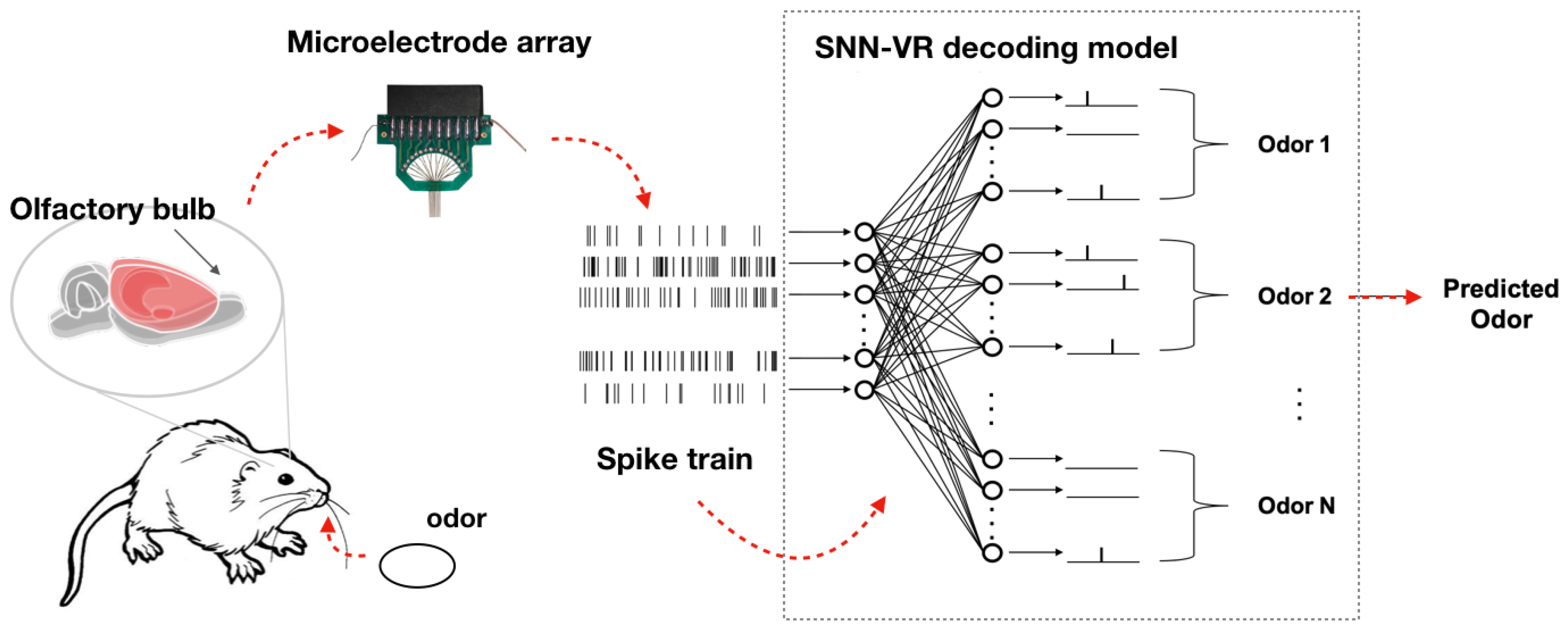
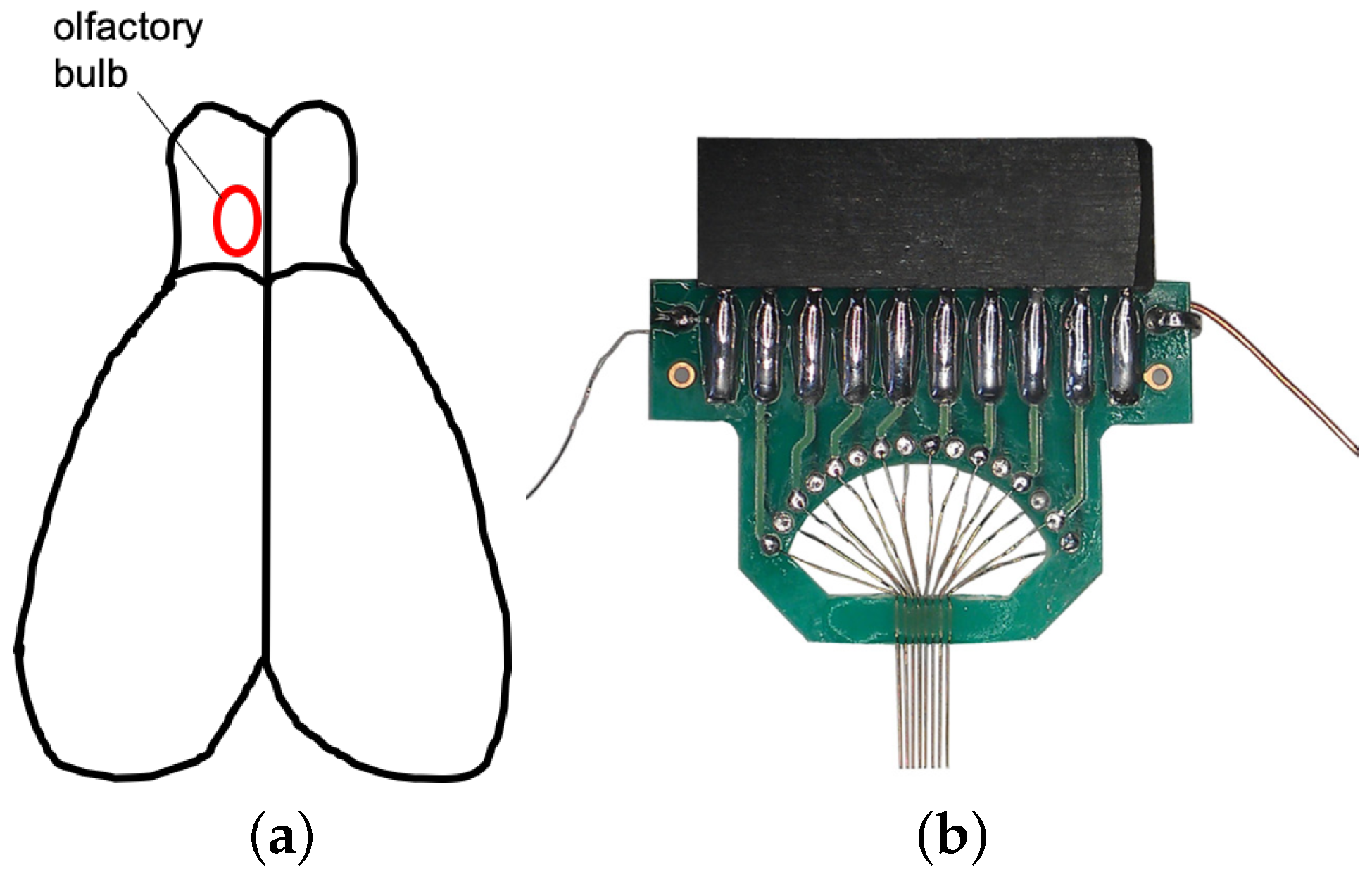
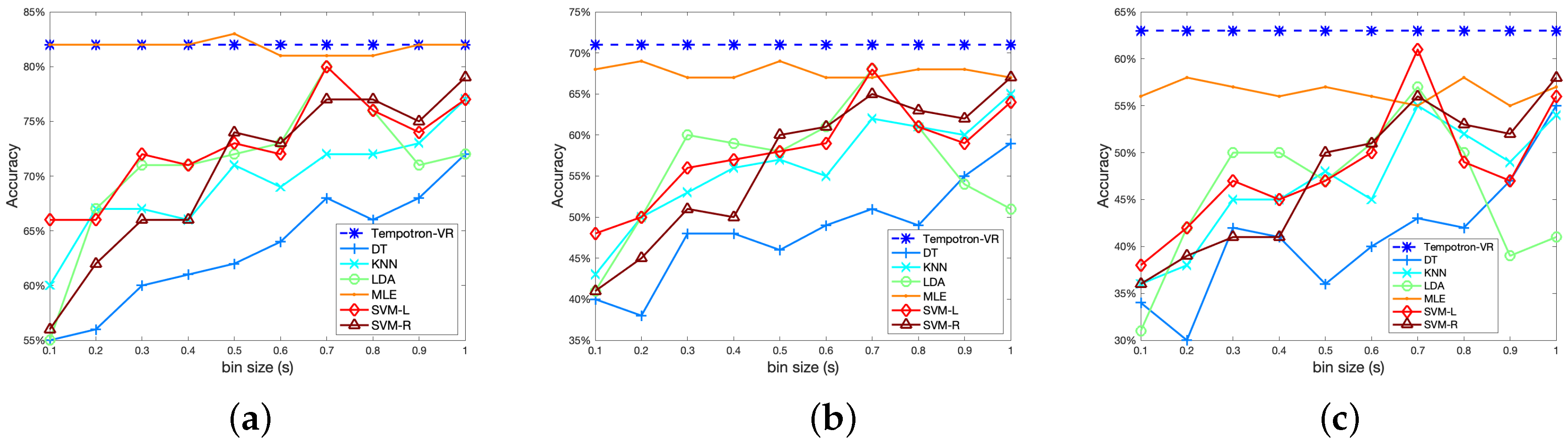
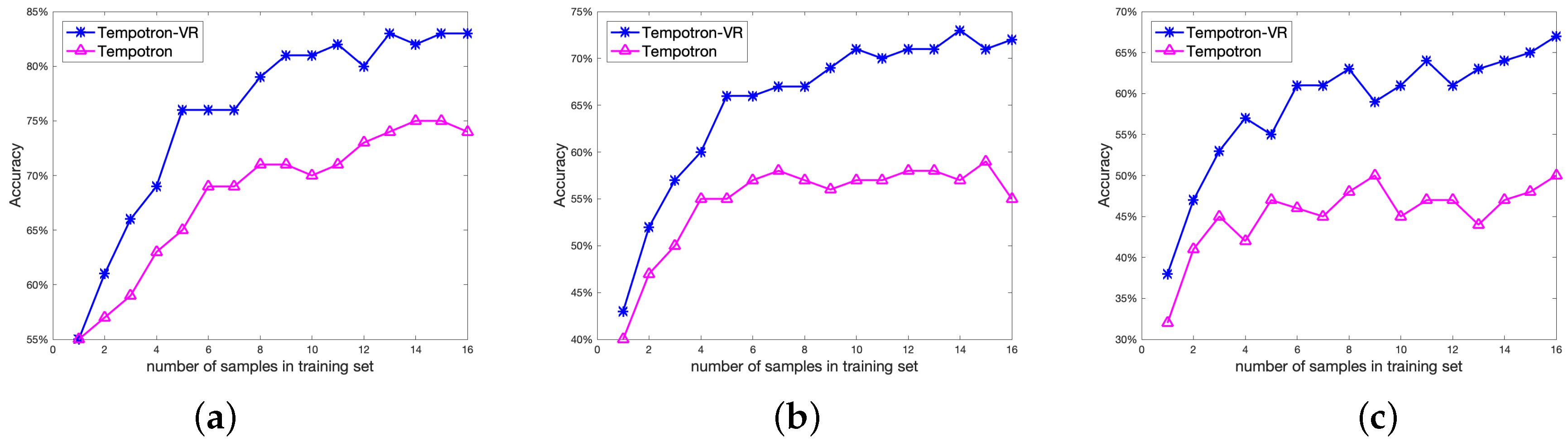
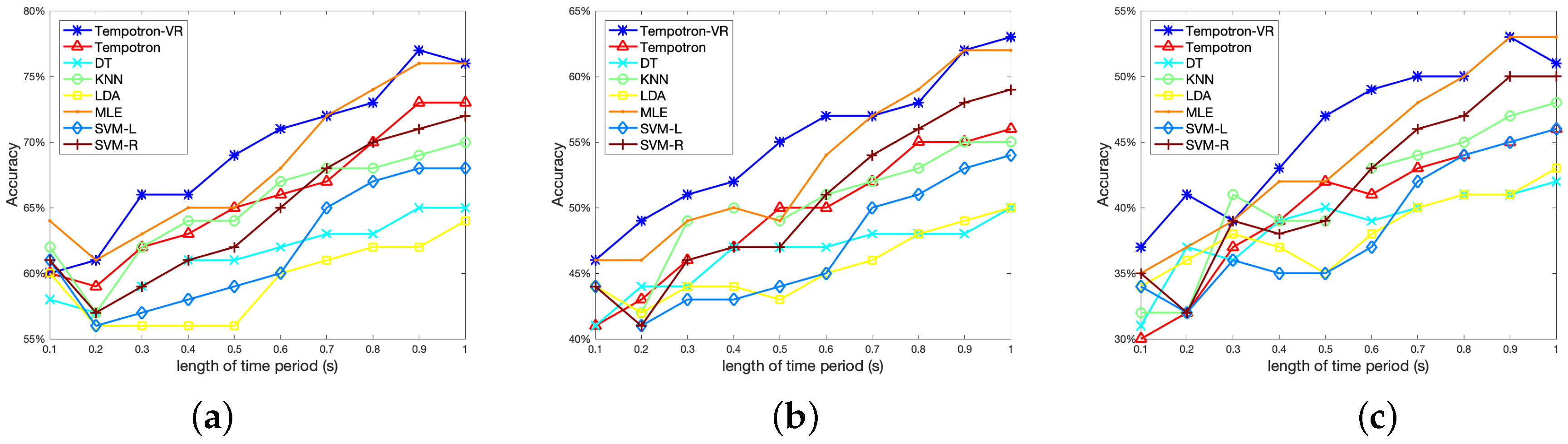
Electronic noses recognize odors using sensor arrays, and usually face difficulties for odor complicacy, while animals have their own biological sensory capabilities for various types of odors. By implanting electrodes into the olfactory bulb of mammalian animals, odors may be recognized by decoding the recorded neural signals, in order to construct a bioelectronic nose. This paper proposes a spiking neural network (SNN)-based odor recognition method from spike trains recorded by the implanted electrode array. The proposed SNN-based approach exploits rich timing information well in precise time points of spikes. To alleviate the overfitting problem, we design a new SNN learning method with a voltage-based regulation strategy. Experiments are carried out using spike train signals recorded from the main olfactory bulb in rats. Results show that our SNN-based approach achieves the state-of-the-art performance, compared with other methods. With the proposed voltage regulation strategy, it achieves about 15% improvement compared with a classical SNN model.
Keywords: odor recognition; bioelectronic nose; spiking neural network odor recognition; bioelectronic nose; spiking neural network