Article

Toward an Applied Cyber Security Solution in IoT-Based Smart Grids: An Intrusion Detection System Approach


1
Facility Horticulture Laboratory of Universities in Shandong, WeiFang University of Science & Technology, Shouguang 262700, China
2
College of Computer Science and Engineering, ShanDong University of Science and Technology, Qingdao 266590, China
3
Department of Computer and Information Security, Sejong University, Seoul 05006, Korea
4
Research and Development Center, Cyber Threat Intelligence Lab, YangJae Innovation Hub, 114 Taebong-Ro, Seocho-Gu, Seoul 06754-601, Korea
*
Author to whom correspondence should be addressed.
Sensors 2019, 19(22), 4952; https://doi.org/10.3390/s19224952
Submission received: 8 October 2019 / Revised: 5 November 2019 / Accepted: 7 November 2019 / Published: 14 November 2019

Abstract

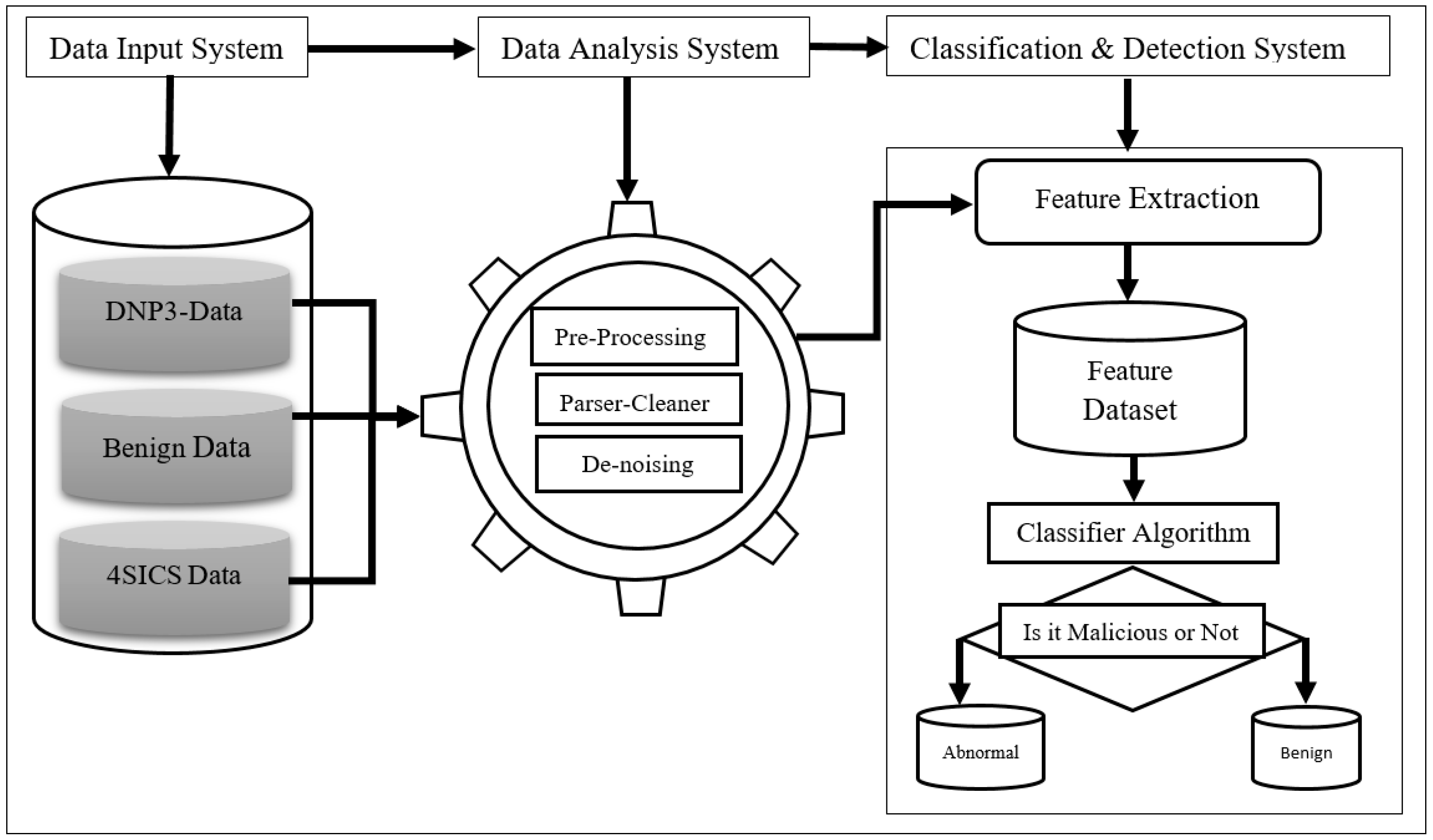
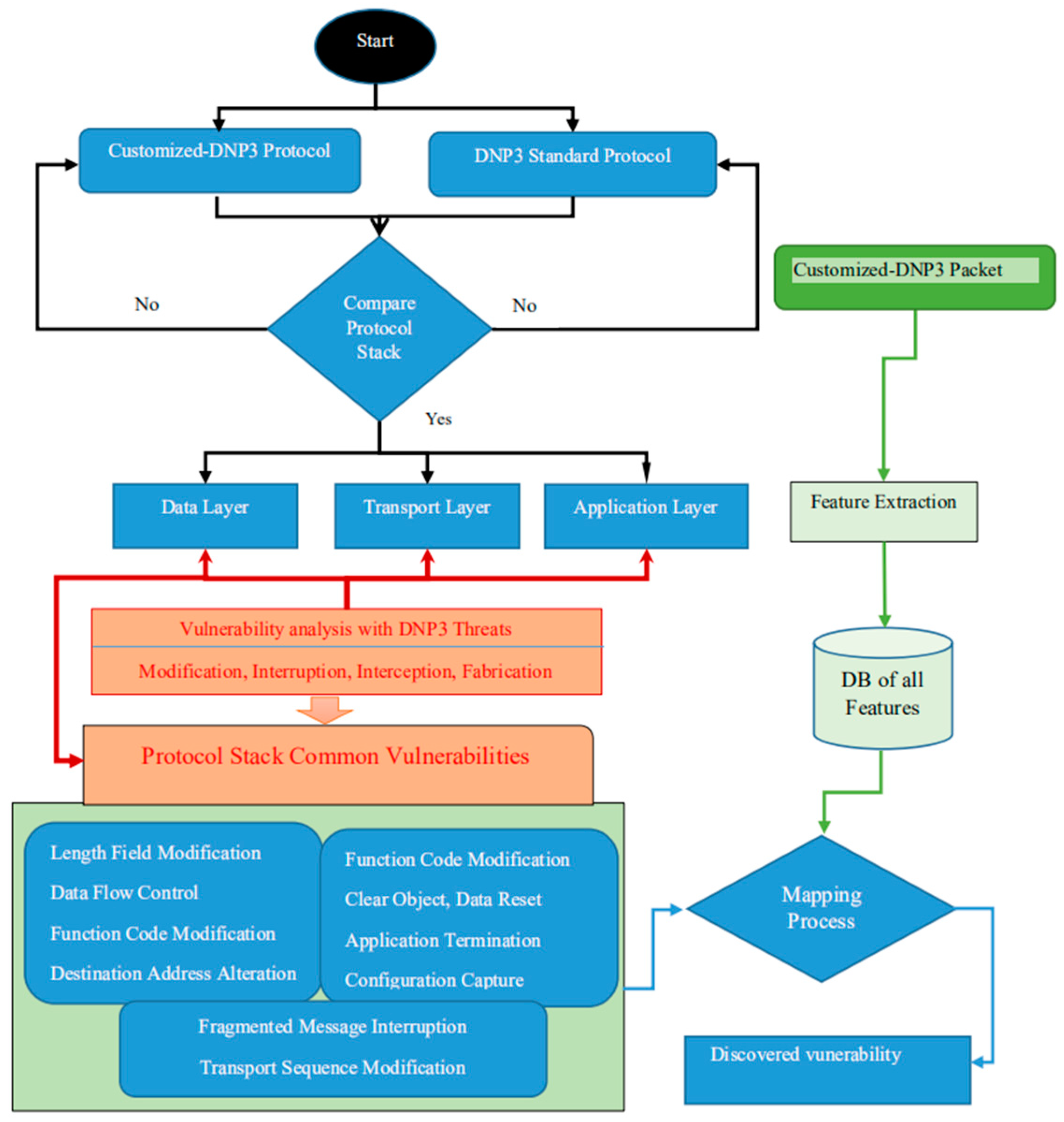
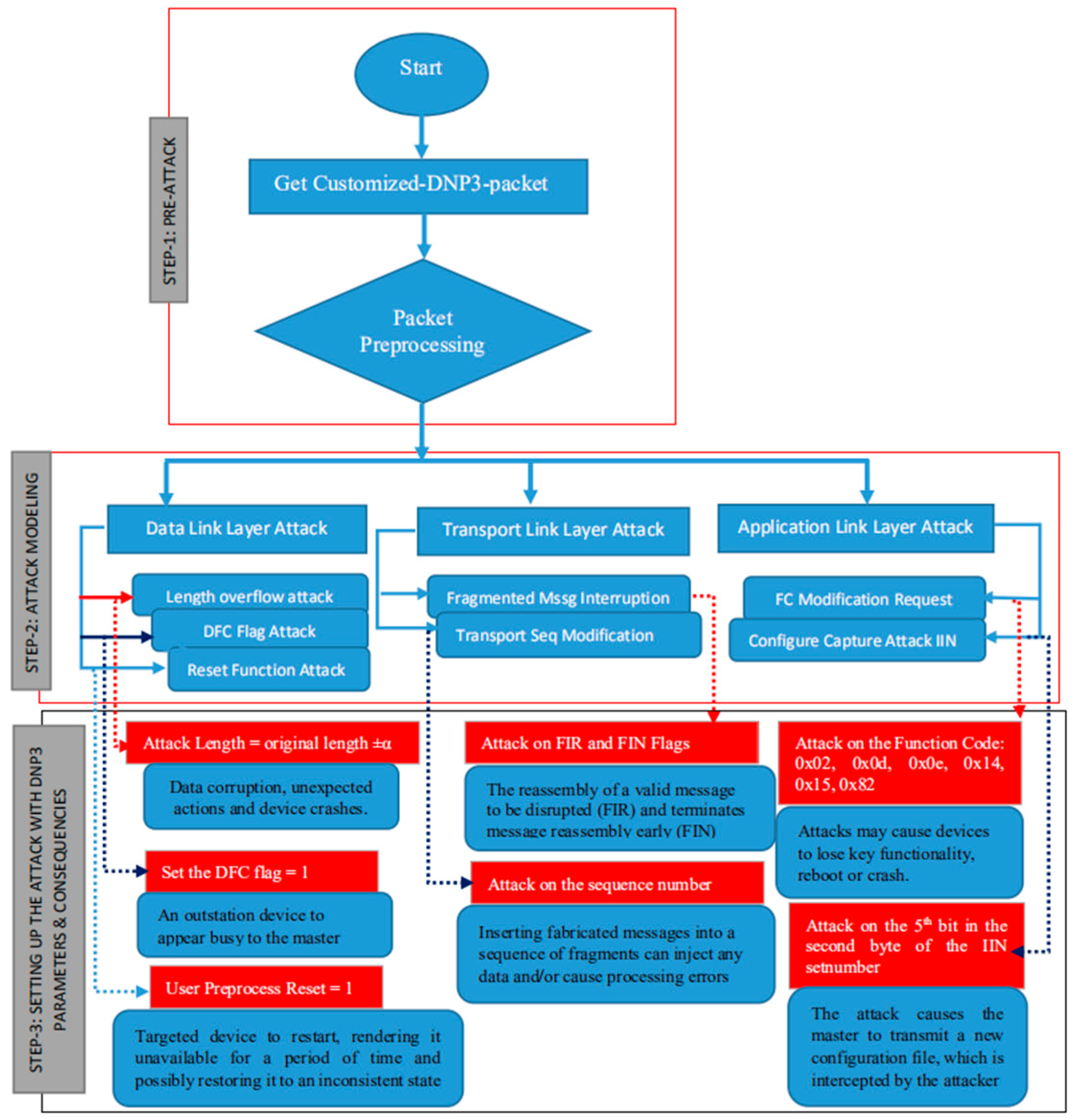
We present an innovative approach for a Cybersecurity Solution based on the Intrusion Detection System to detect malicious activity targeting the Distributed Network Protocol (DNP3) layers in the Supervisory Control and Data Acquisition (SCADA) systems. As Information and Communication Technology is connected to the grid, it is subjected to both physical and cyber-attacks because of the interaction between industrial control systems and the outside Internet environment using IoT technology. Often, cyber-attacks lead to multiple risks that affect infrastructure and business continuity; furthermore, in some cases, human beings are also affected. Because of the traditional peculiarities of process systems, such as insecure real-time protocols, end-to-end general-purpose ICT security mechanisms are not able to fully secure communication in SCADA systems. In this paper, we present a novel method based on the DNP3 vulnerability assessment and attack model in different layers, with feature selection using Machine Learning from parsed DNP3 protocol with additional data including malware samples. Moreover, we developed a cyber-attack algorithm that included a classification and visualization process. Finally, the results of the experimental implementation show that our proposed Cybersecurity Solution based on IDS was able to detect attacks in real time in an IoT-based Smart Grid communication environment.
Keywords: sensor networks; smart grid; IoT; wireless network security; DNP3 Protocol; cybersecurity sensor networks; smart grid; IoT; wireless network security; DNP3 Protocol; cybersecurity