Article

Self-Diagnosis of Localization Status for Autonomous Mobile Robots

1
School of Mechanical Engineering, Korea University, Seoul 02841, Korea
2
Department of Control and Instrumentation Engineering, Korea University, Sejong 30019, Korea
*
Author to whom correspondence should be addressed.
Sensors 2018, 18(9), 3168; https://doi.org/10.3390/s18093168
Submission received: 6 August 2018 / Revised: 14 September 2018 / Accepted: 17 September 2018 / Published: 19 September 2018

Abstract

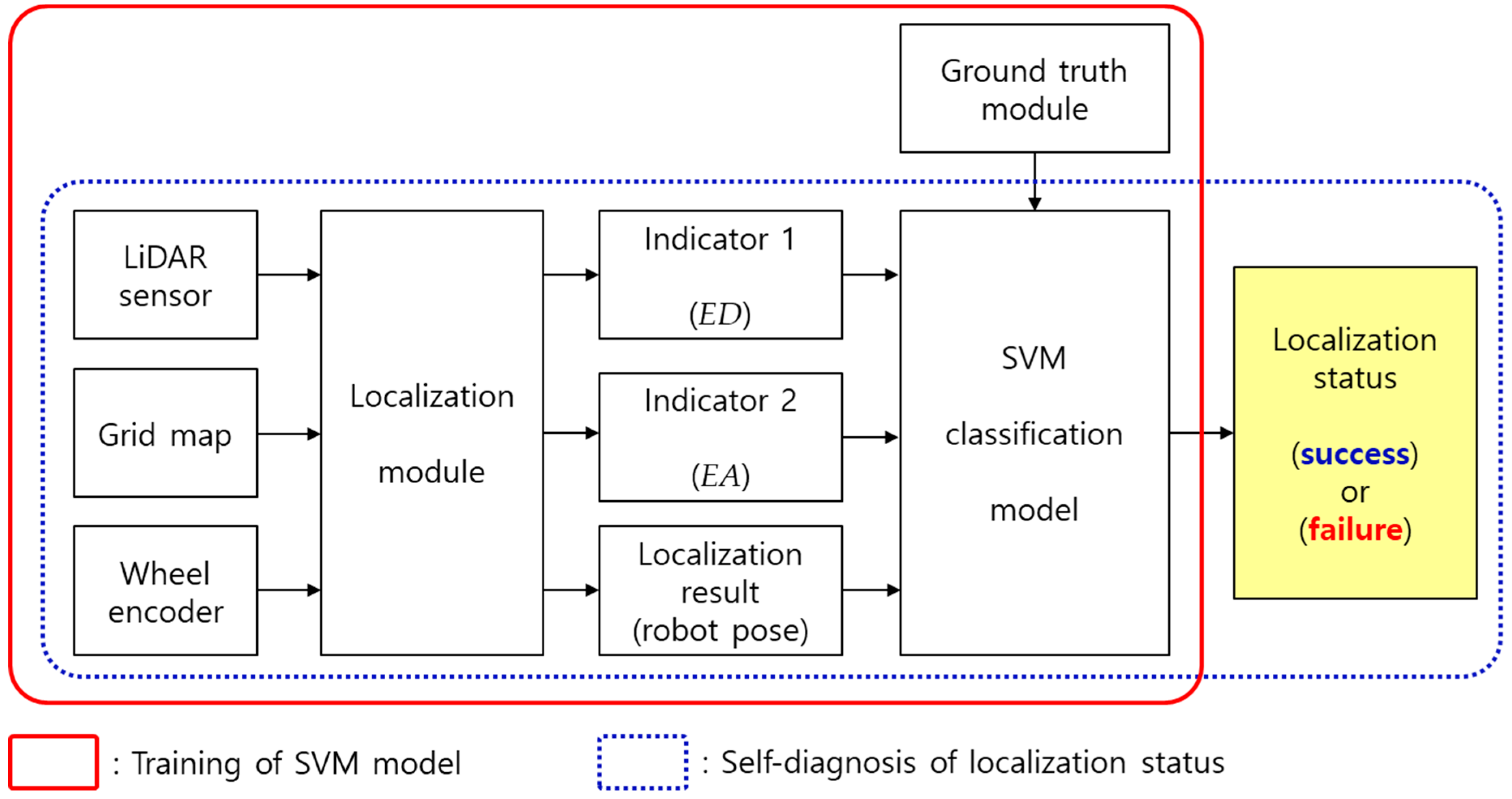
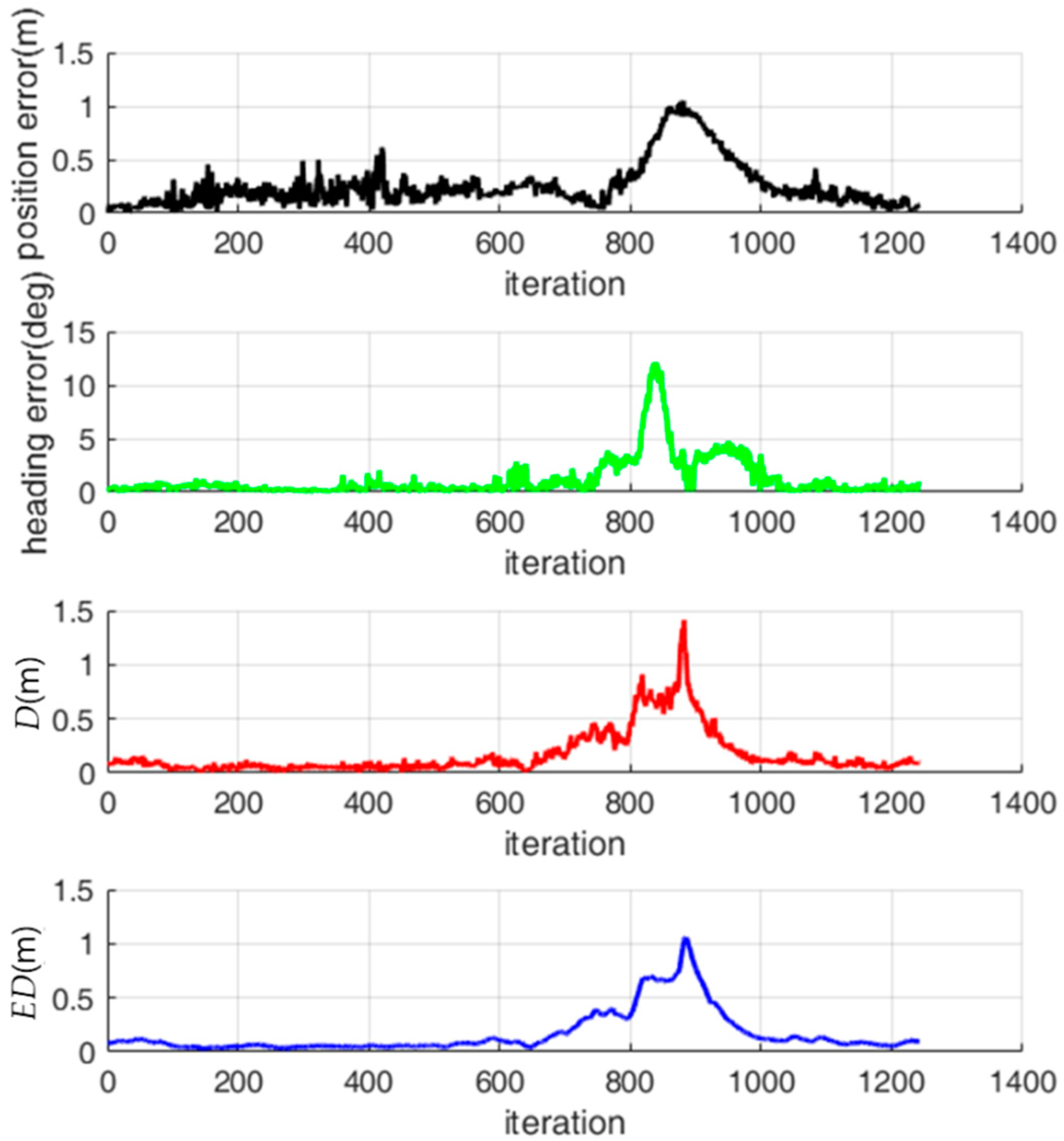
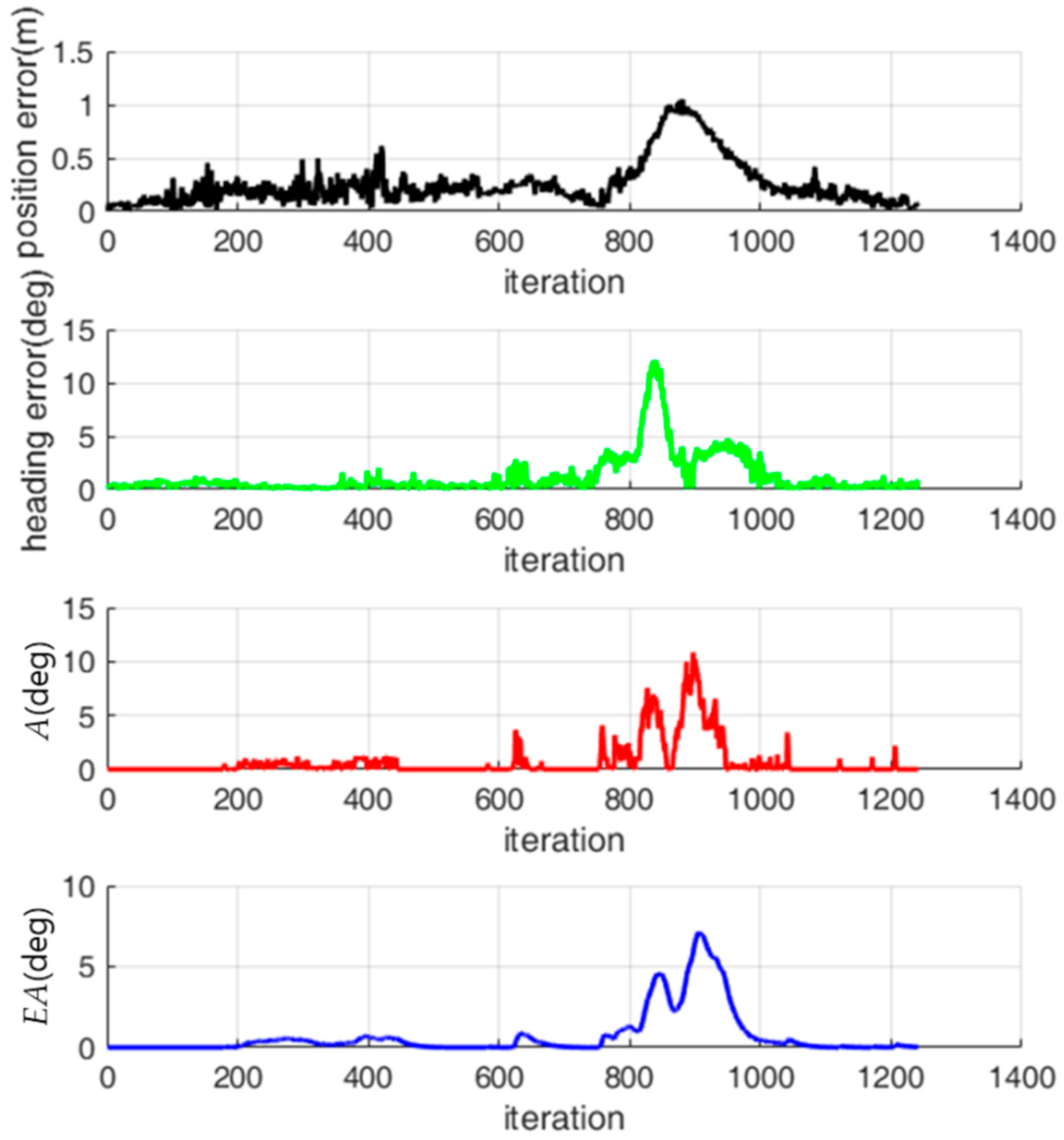
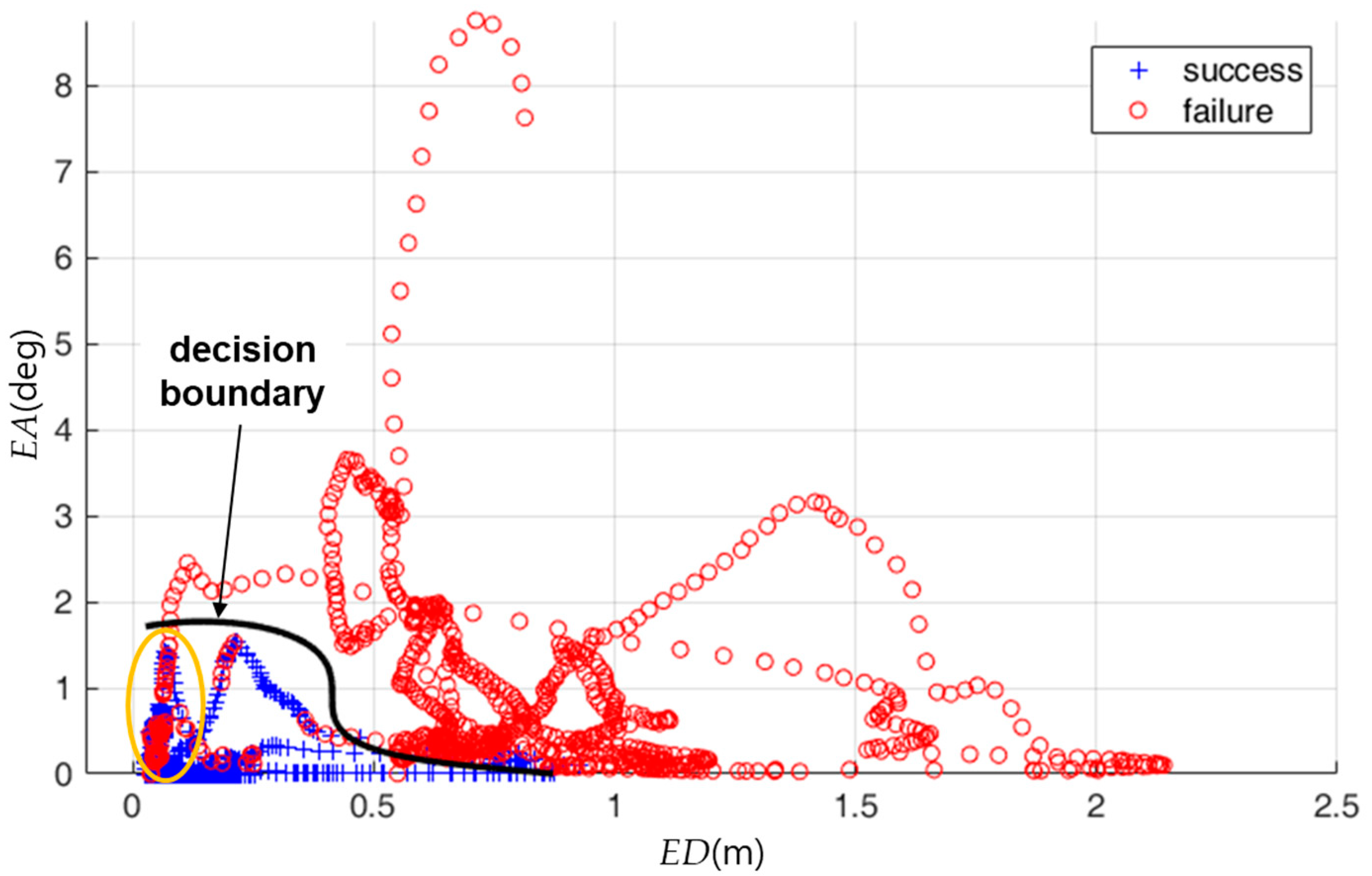
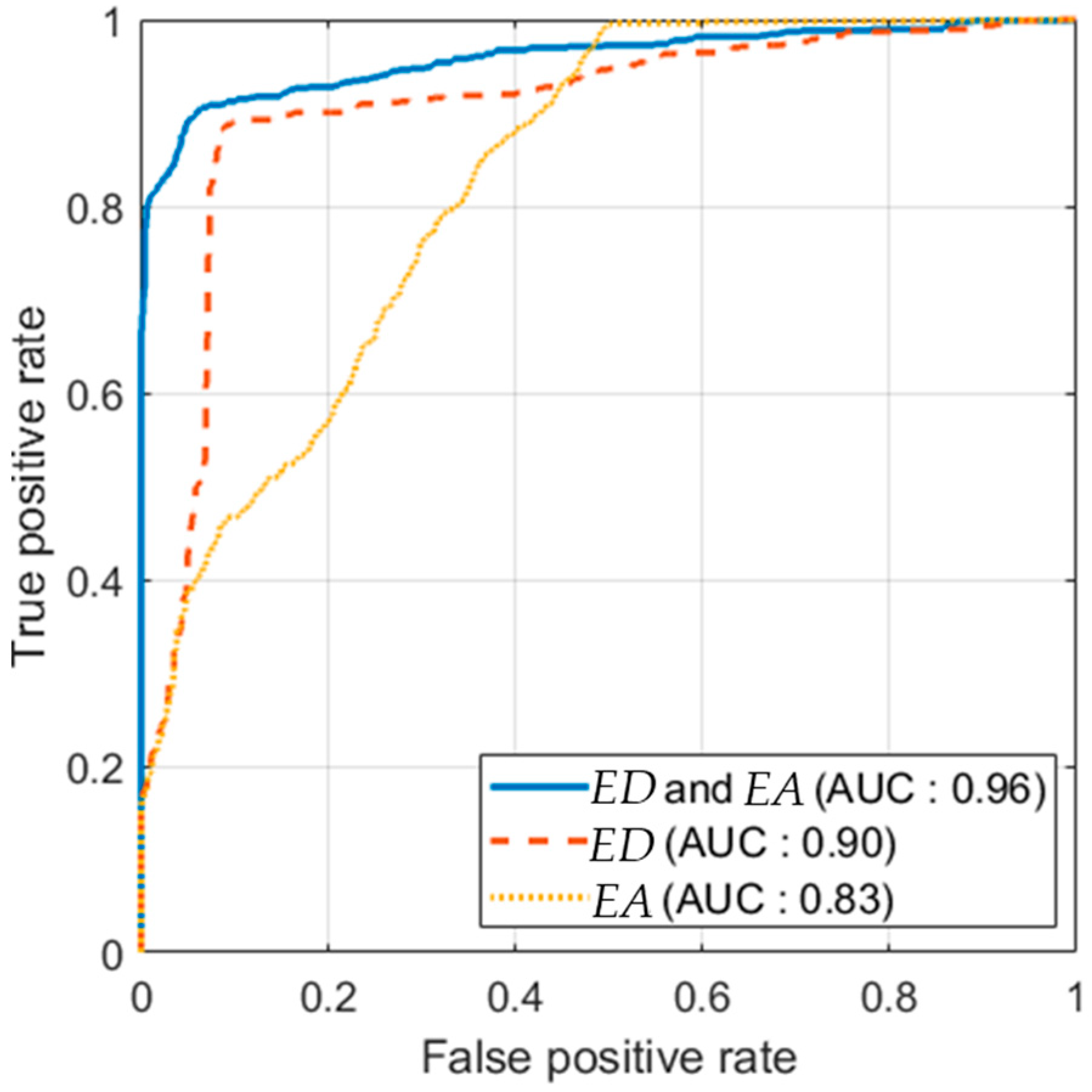
It is essential to provide reliable localization results to allow mobile robots to navigate autonomously. Even though many state-of-the-art localization schemes have so far shown satisfactory performance in various environments, localization has still been difficult under specific conditions, such as extreme environmental changes. Since many robots cannot diagnose for themselves whether the localization results are reliable, there can be serious autonomous navigation problems. To solve this problem, this study proposes a self-diagnosis scheme for the localization status. In this study, two indicators are empirically defined for the self-diagnosis of localization status. Each indicator shows significant changes when there are difficulties in light detection and ranging (LiDAR) sensor-based localization. In addition, the classification model of localization status is trained through machine learning using the two indicators. A robot can diagnose the localization status itself using the proposed classification model. To verify the usefulness of the proposed method, we carried out localization experiments in real environments. The proposed classification model successfully detected situations where the localization accuracy is significantly degraded due to extreme environmental changes.
Keywords: mobile robot; localization; light detection and ranging sensor; failure detection; support vector machine mobile robot; localization; light detection and ranging sensor; failure detection; support vector machine