You are currently viewing a new version of our website. To view the old version click .
Sensors
  • Article
  • Open Access

18 September 2018

3DoF+ 360 Video Location-Based Asymmetric Down-Sampling for View Synthesis to Immersive VR Video Streaming

,
,
and
Department of Computer Engineering, Gachon University, Seongnam 13120, Korea
*
Author to whom correspondence should be addressed.
This article belongs to the Section Physical Sensors

Abstract

Recently, with the increasing demand for virtual reality (VR), experiencing immersive contents with VR has become easier. However, a tremendous amount of calculation and bandwidth is required when processing 360 videos. Moreover, additional information such as the depth of the video is required to enjoy stereoscopic 360 contents. Therefore, this paper proposes an efficient method of streaming high-quality 360 videos. To reduce the bandwidth when streaming and synthesizing the 3DoF+ 360 videos, which supports limited movements of the user, a proper down-sampling ratio and quantization parameter are offered from the analysis of the graph between bitrate and peak signal-to-noise ratio. High-efficiency video coding (HEVC) is used to encode and decode the 360 videos, and the view synthesizer produces the video of intermediate view, providing the user with an immersive experience.

1. Introduction

As the virtual reality (VR) market is expanding rapidly, the need for efficient immersive VR technology has become more important. To play high-quality VR video through a head-mounted display (HMD), the minimum resolution of the video must be 4K. In this case, the amount of data to be processed from the HMD increases rapidly. Therefore, the Moving Picture Experts Group (MPEG) proposed a technology, which processes the viewport of the user, called motion-constrained tile set (MCTS) [1] in 2016; further, a paper describing MCTS implementation for VR streaming was submitted [2]. Moreover, to provide the user with high-quality 360 videos, region-wise packing [3] was proposed. It encodes a region of interest (ROI) with high quality and the other regions with low quality.
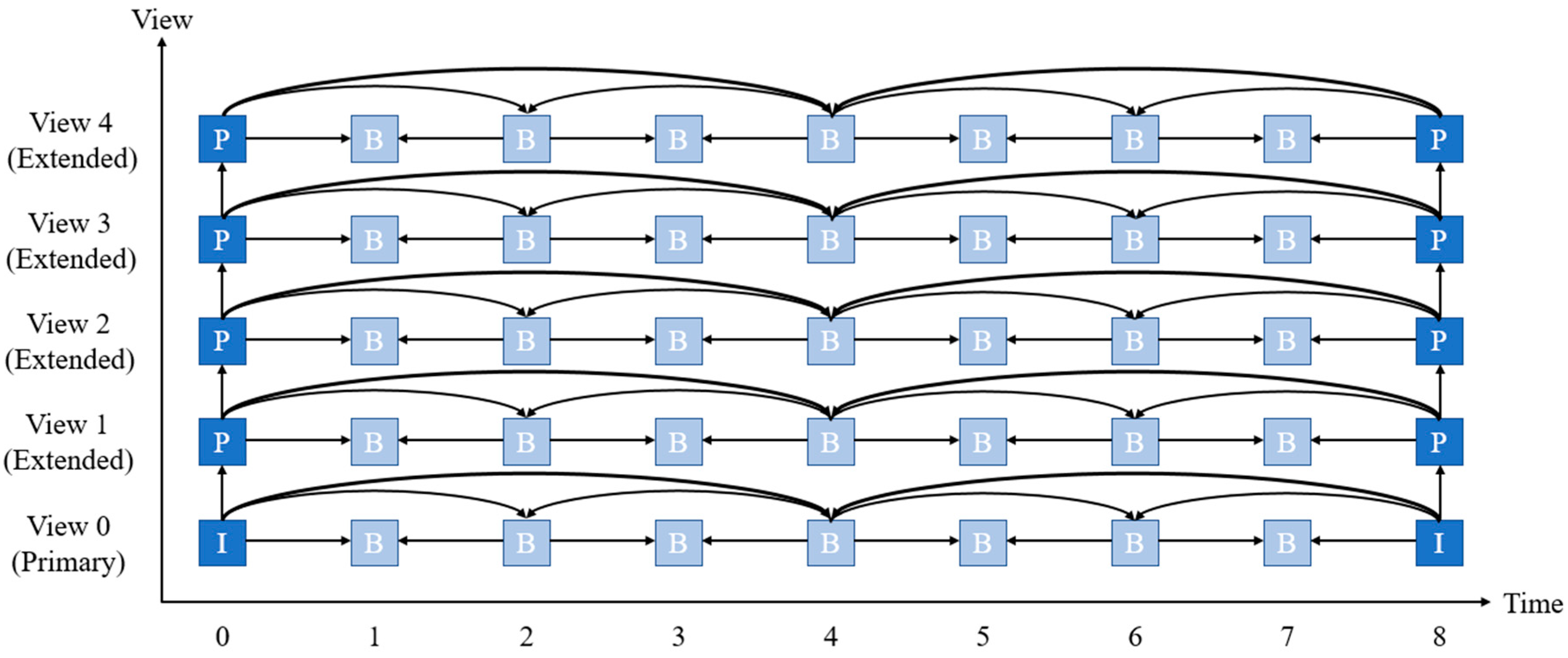
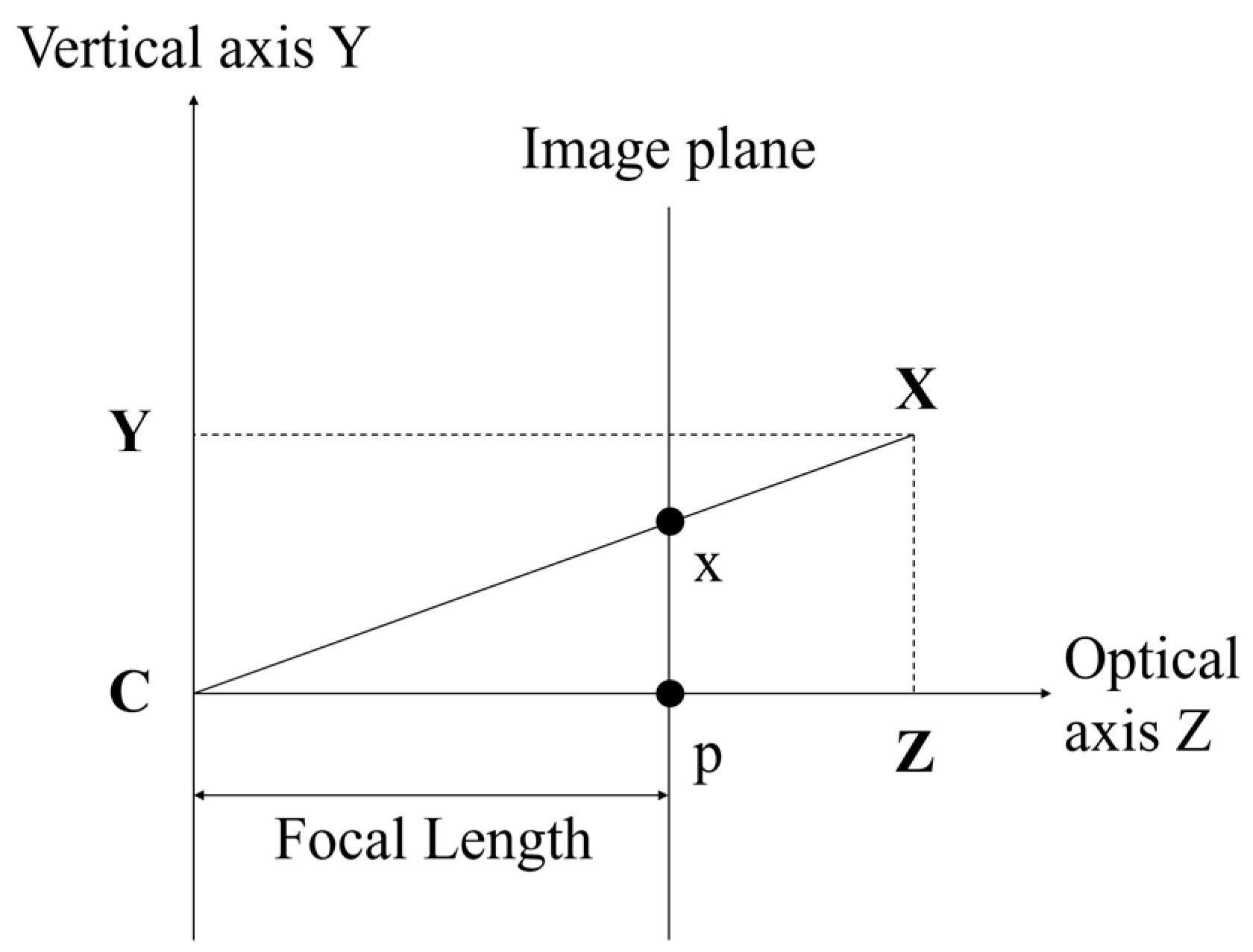
To support immersive media, the MPEG-I group, established by MPEG, divided the standardization associated with VR into three phases, namely three degrees of freedom (3DoF), three degrees of freedom plus (3DoF+), and six degrees of freedom (6DoF) [4]. In 3DoF+ and 6DoF, multi-view 360 videos are required and they comprise texture and depth images to support 3D video [5]. Because both the phases provide 360 videos in response to a user’s movement, it is inevitable to synthesize the immediate views using existing views. View Synthesis Reference Software (VSRS) for 360 videos [6], Reference View Synthesizer (RVS) [7], and weighted-to-spherically-uniform peak signal-to-noise ratio (WS-PSNR) for 360 video quality evaluation [8] were proposed to MPEG to create virtual views and evaluate them.
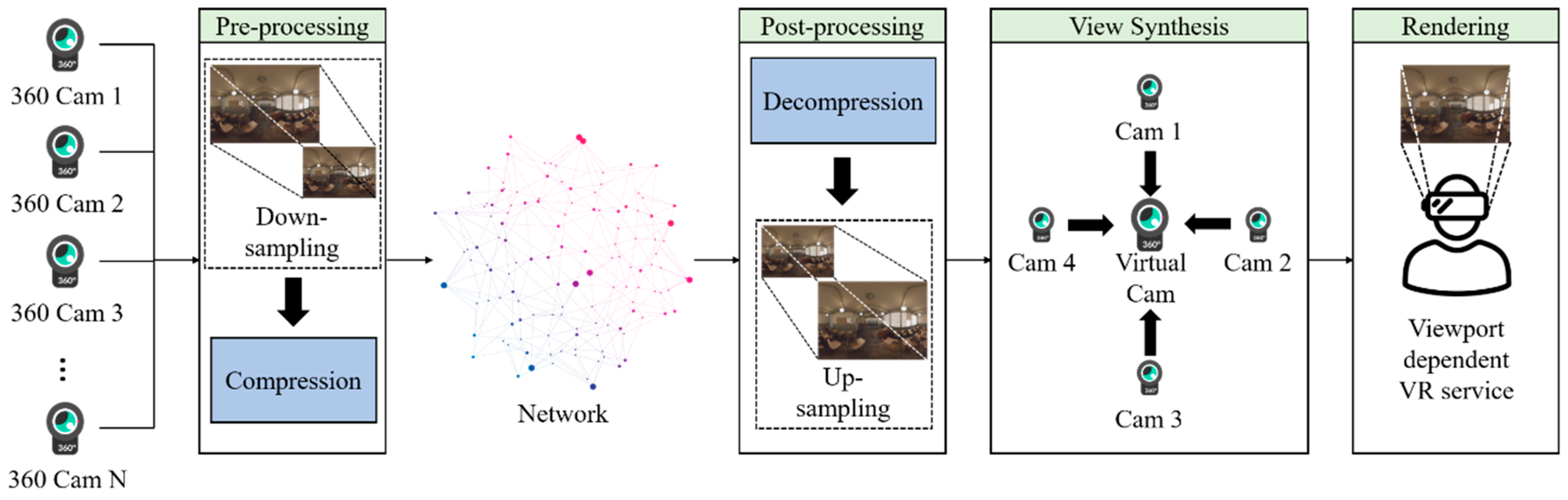
A large amount of bandwidth is required for transmitting 3DoF+ or 6DoF 360 videos because such videos need both high-resolution texture and depth. To overcome this problem, down-sampling or region-wise packing could be applied. In this paper, we propose the View Location-based Asymmetric Down-sampling for Vie Synthesis (VLADVS) concept for the bitrate decreasing system with appropriate down-sampling ratio and a quantization parameter for 3DoF+ texture and depth in view synthesis, as shown in Figure 1. It introduces a pilot test with Super Multiview Video (SMV) [9] and 3DoF+ test sequences. Finally, it provides the rate distortion (RD) curve of bitrate and WS-PSNR obtained by 3DoF+ test sequences using 360lib with HEVC.
Figure 1. Viewport-dependent immersive VR service with VLADVS.
This paper is organized as follows: Section 2 introduces about related work such as the MPEG 360 video standard, multi-view video coding, and view synthesis. Section 3 explains the overall experiment, including view synthesis with free viewpoint television (FTV) test sequences and 3DoF+ video test sequences. Section 4 summarizes the result of the experiment for proposed system. Lastly, Section 5 presents our conclusions and future work.

3. View Location-Based Asymmetric Down-Sampling for View Synthesis

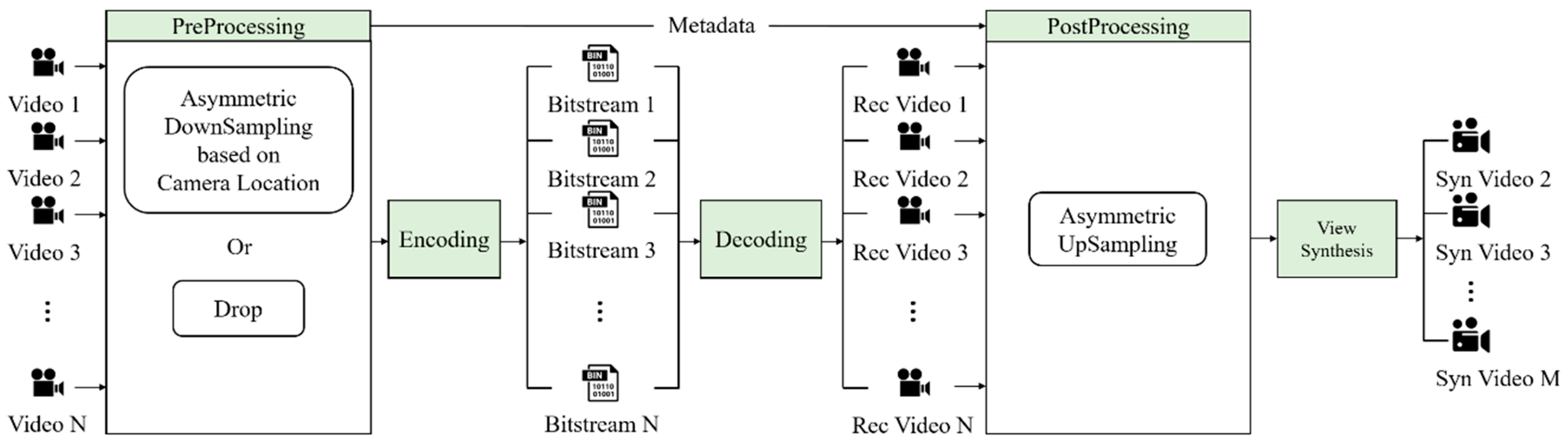
This section explains VLADVS for efficient use of bandwidth in video transmission, as described in Figure 9. It allocates the down-sampling ratio to the videos based on the distance between the input video and the video that needs to be synthesized. If the input video is close to the synthesized video, the proposed system assigns low down-sampling ratio because the video near the synthesized video has a great influence on the quality of synthesized video. Section 3.1 explains view synthesis with FTV multi-view test sequences to decide the down-sampling ratio. Section 3.2 presents the results of source view synthesis with 3DoF+ video test sequences, which implies the impact of the input view number and the relation of the correlation between the down-sampling ratio of texture and depth in view synthesis. Finally, Section 3.3 proposes the intermediate view synthesis method and conditions for 3DoF+ video.
Figure 9. View Location-based Asymmetric Down-sampling for View Synthesis. Rec stands for reconstructed, and Syn stands for synthesized.

3.1. View Synthesis with FTV Multi-View Test Sequences

To reduce the bitrate when transmitting multi-view video, this paper proposes a low-complexity multi-view video transmit system including down-sampling and up-sampling. The feasibility of this method was proved by a pilot test with FTV multi-view sequences [35].
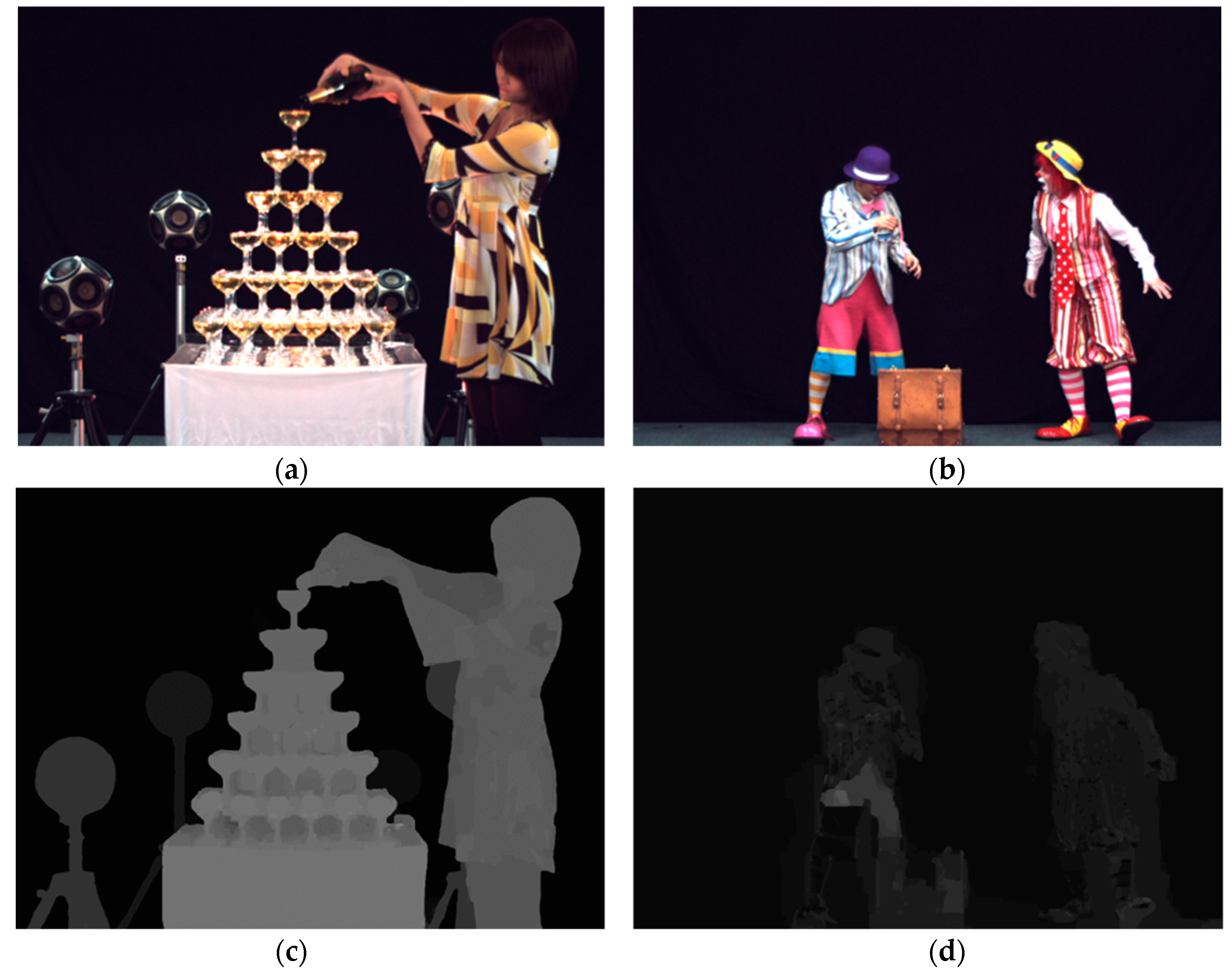
Champagne_Tower and Pantomime sequences, as shown in Figure 10, were used. The resolution and number of frames of Champagne_Tower and Pantomime sequences are 1280 × 960 (acquired from 80 cameras) and 300, respectively.
Figure 10. FTV test sequences from Nagoya University. (a) Champagne_tower (1280 × 960), obtained from 80 cameras with stereo distance, consists of 300 frames with 30 fps; (b) pantomime (1280 × 960), gained from 80 cameras with stereo distance, consists of 300 frames with 30 fps; (c) depth map of Champagne_tower; (d) depth map of Pantomime.
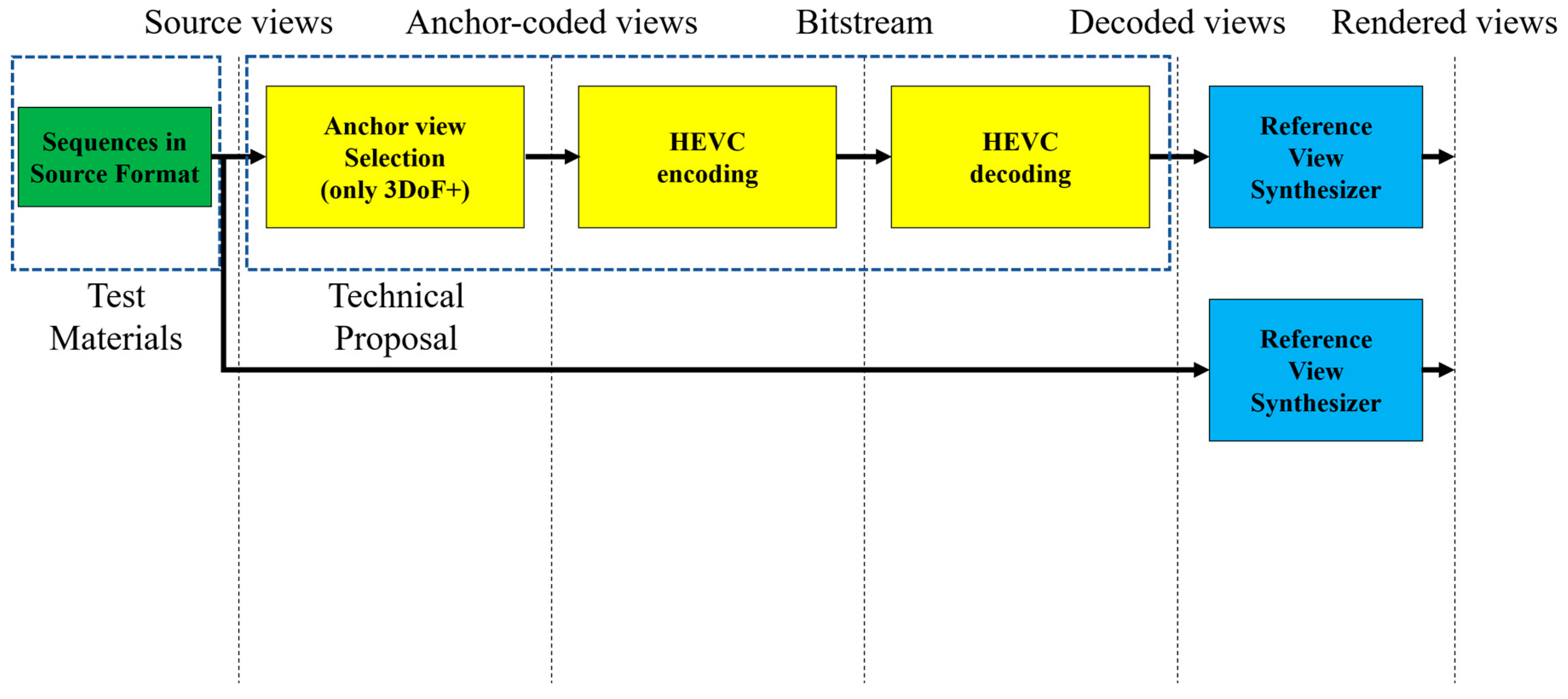
Figure 11 introduces the proposed system architecture with FTV multi-view test sequences. First, it selects the anchor view, i.e., the source view used to synthesize the intermediate view. Test sequences provide the depth map of 37, 39, and 41 views, i.e., anchor view which requires both texture and depth. The combinations of view synthesis are presented in Table 1. Second, it down-samples the selected anchor views. The down-sampling ratios are 0, 20, 40, 50, and 75(%), as shown in Table 2. For down-sampling and up-sampling, the DownConvertStatic executable in Joint Scalable Video Model (JSVM) [36] was used. Third, it encodes and decodes the down-sampled views. For encoding and decoding, HEVC reference software (HM) version 16.16 [37] was used. VSRS 4.2 [38] was used to synthesize the intermediate view. Fourth, it up-samples the decoded views. Fifth, it synthesizes the intermediate view by referencing up-sampled anchor views. Finally, it measures the PSNR between the original intermediate views and synthesized views for objective quality evaluation. For PSNR measurement, the PSNR static executable of JSVM was used.
Figure 11. Proposed system architecture with FTV test sequences.
Table 1. Combinations of view synthesis.
Table 2. Combination and resolution of down-sampling ratios.
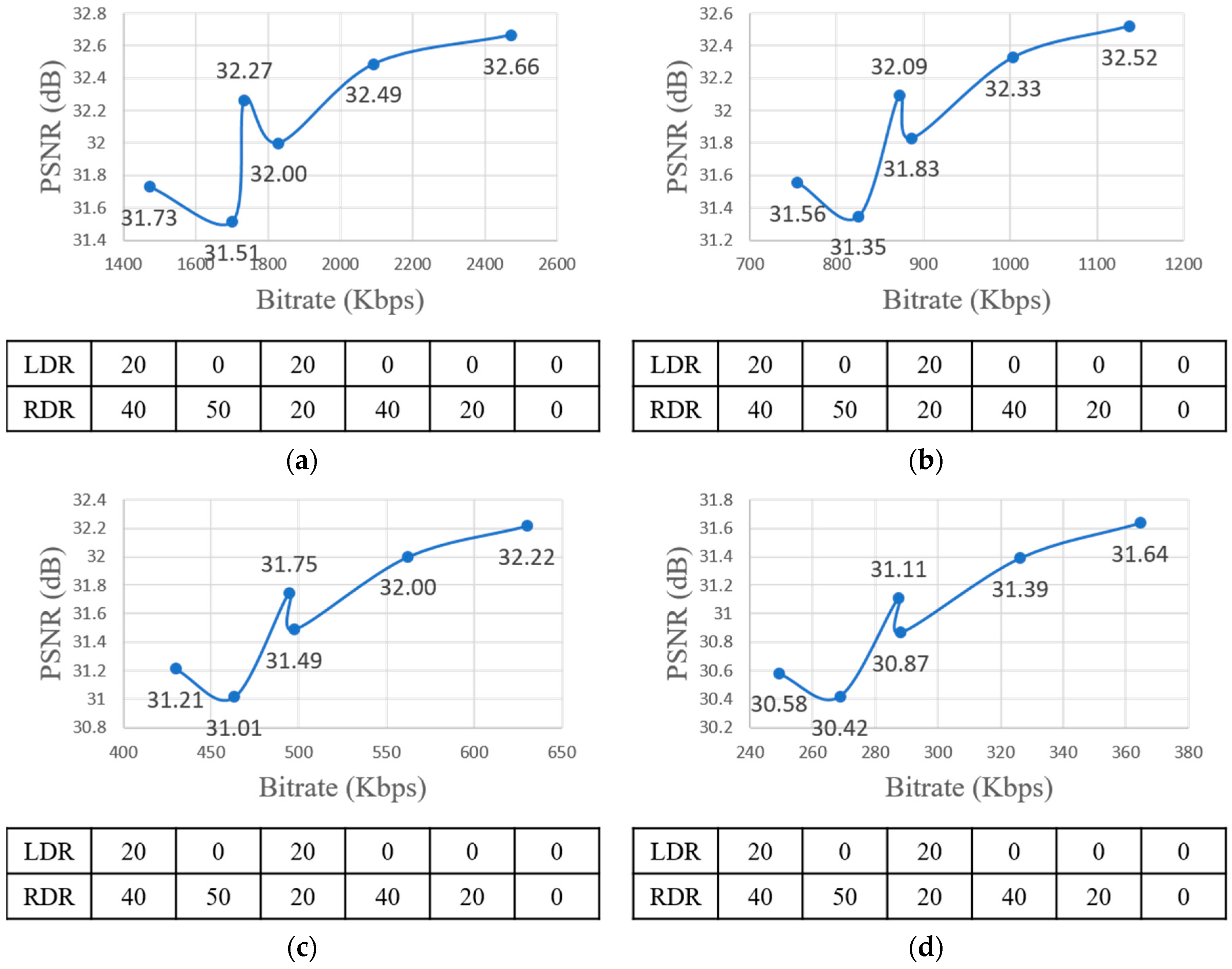
For encoding, the quantization parameter (QP) values are 22, 27, 32, and 37. In a pilot test with FTV multi-view sequences, the experiment was executed for every combination of down-sampling ratio, QP, and view synthesis. The pilot test results are shown in Figure 12 and Figure 13. The figures show the RD-curve between PSNR and average bitrate with different QPs. The reason why the graph shows the combination 0-0 to 20-40 is because it only includes the combinations whose difference values with the original view combination (0-0) are under 1. Even though the average down-sampling ratio of the combination 0-40 (left view-right view) is equal to 20-20, the PSNR value of 20-20 was higher than 0-40. Moreover, the average bitrate of 20-20 was smaller than 0-40. Figure 12 implies that PSNR of the uniform down-sampling ratio assignment of left and right view is higher than non-uniform down-sampling ratio assignment. Furthermore, the performance of 20-40 was better than 0-50 because the down-sampling ratio difference value for each left and right view of 20-40 was lower than 0-50 even though the average down-sampling ratio of 20-40 was greater than 0-50.
Figure 12. RD-curve between PSNR and average bitrate with different QPs. LDR stands for Left view Down-sampling Ratio, RDR stands for Right view Down-sampling Ratio. (a) RD-curve with QP = 22; (b) RD-curve with QP = 27; (c) RD-curve with QP = 32; (d) RD-curve with QP = 37.
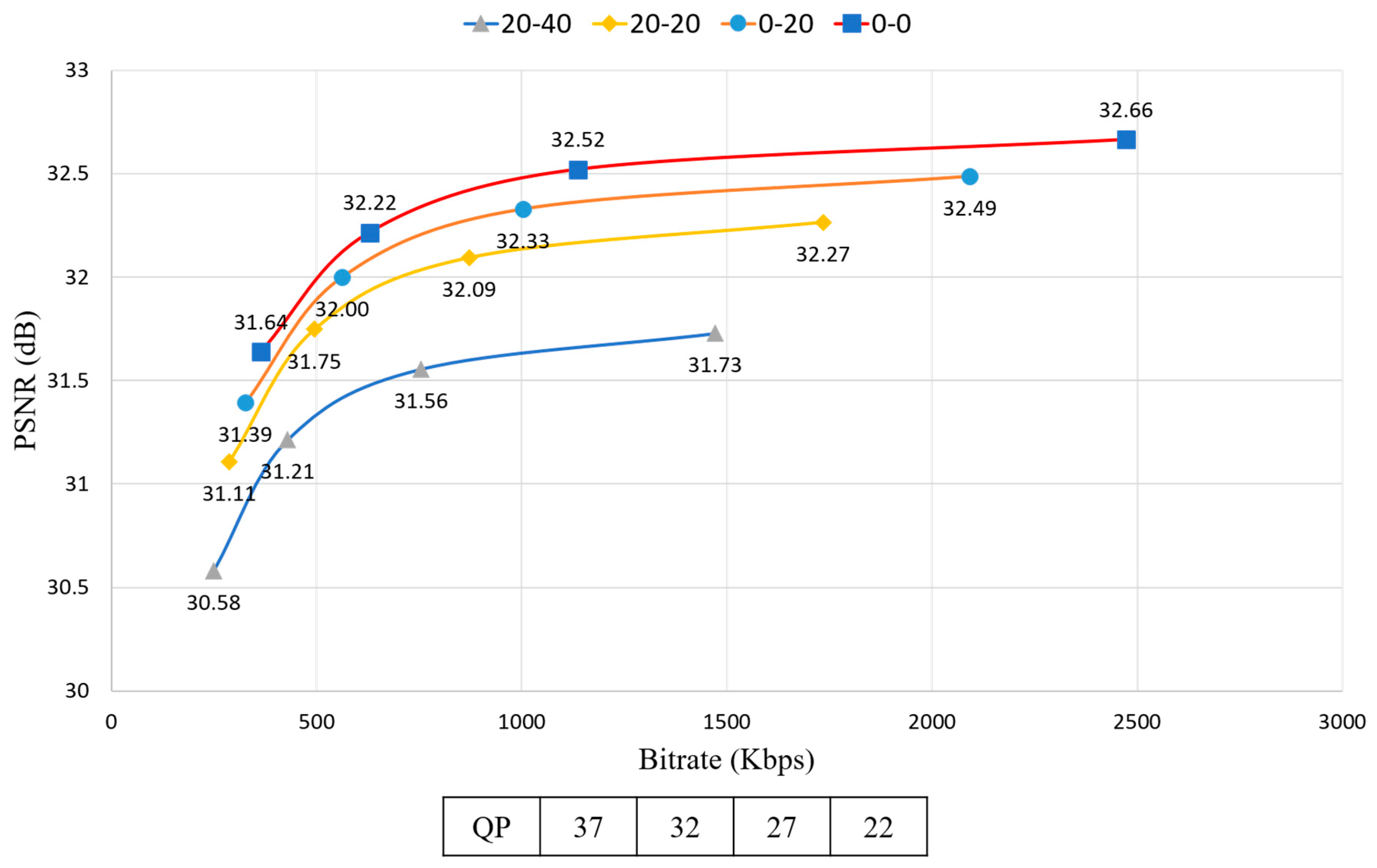
Figure 13. RD-curve between PSNR and average bitrate with different down-sampling ratio combinations.
Figure 13 shows the RD-curve between PSNR and average bitrate with different down-sampling ratio combinations. In the case of 20-20, the difference value between QP = 27 and QP = 22 is 0.17, which is very low whereas the difference value of bitrate is 862.6038, which is very high.

3.2. Source View Synthesis with 3DoF+ Test Sequences

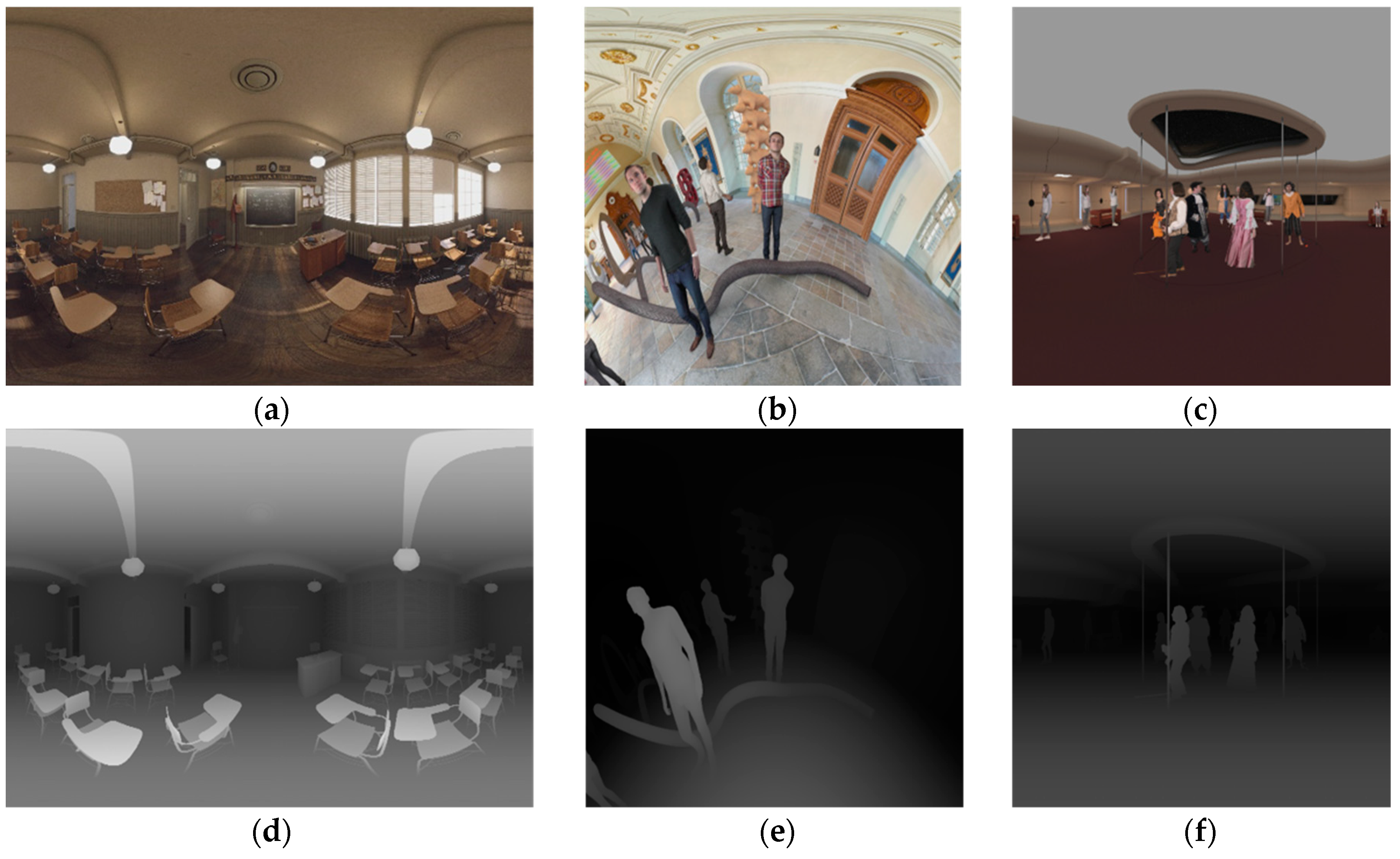
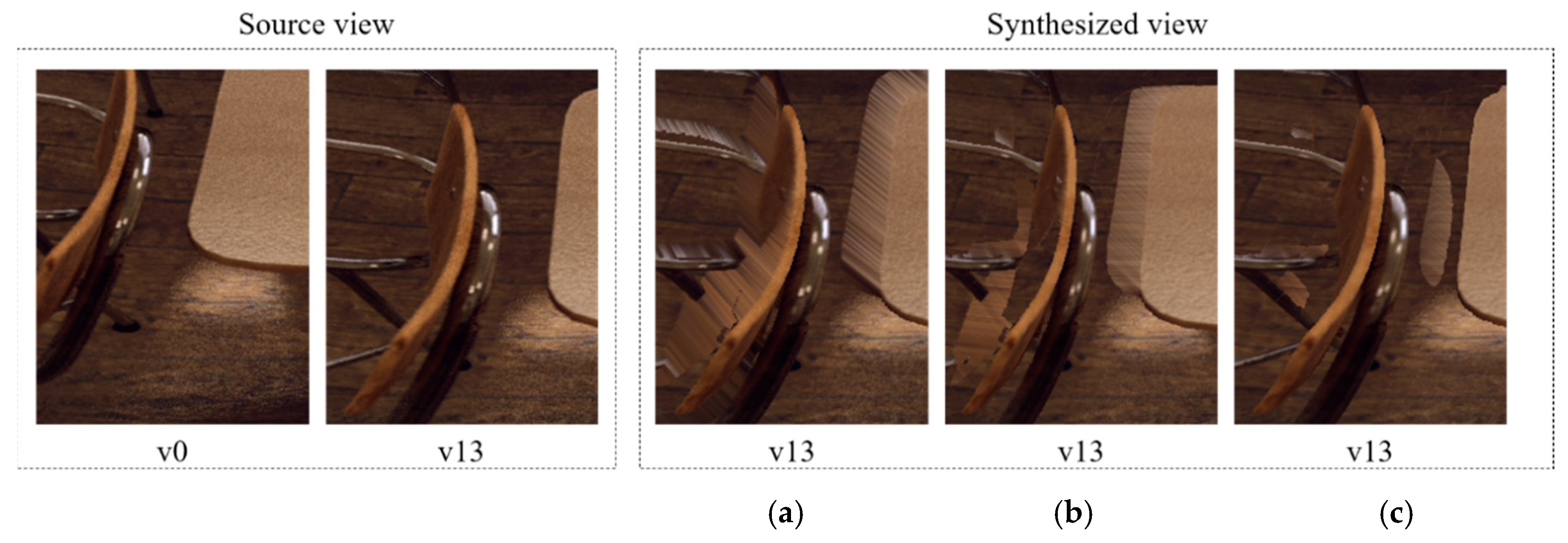
For the 3DoF+ experiment, MPEG provides Classroom-Video [39], TechnicolorMuseum, and TechnicolorHijack as test sequences, which are illustrated in Figure 14. The pilot test was conducted on ClassroomVideo. To verify if the number of input views influences the quality in view synthesis, RVS set v0, v11, and v14 as source views, which are not encoded, and v13 for the intermediate view. Figure 15 shows the pilot test of ClassroomVideo for subjective quality evaluation. As the number of input views increased, the overlapped regions of the synthesized views decreased. That is, the subjective quality increases when RVS achieves several input views. However, the texture quality of the synthesized view decreased when the number of input views increased.
Figure 14. 3DoF+ test sequences. (a) ClassroomVideo (4096 × 2048), 360° × 180° FOV ERP, consists of 15 source views, has 120 frames, 30 fps; (b) TechnicolorMuseum (2048 × 2048), 180° × 180° FOV ERP, consists of 24 source views, has 300 frames, 30 fps; (c) TechnicolorHijack (4096 × 4096), 180° × 180° FOV ERP, consists of 10 source views, has 300 frames, 30 fps; (d) depth map of ClassroomVideo; (e) depth map of TechnicolorMuseum; (f) depth map of TechnicolorHijack.
Figure 15. View synthesis of ClassroomVideo for subjective quality evaluation. (a) View v13 synthesized from view v0; (b) view v13 synthesized from view v0, v11; (c) view v13 synthesized from view v0, v11, v14.
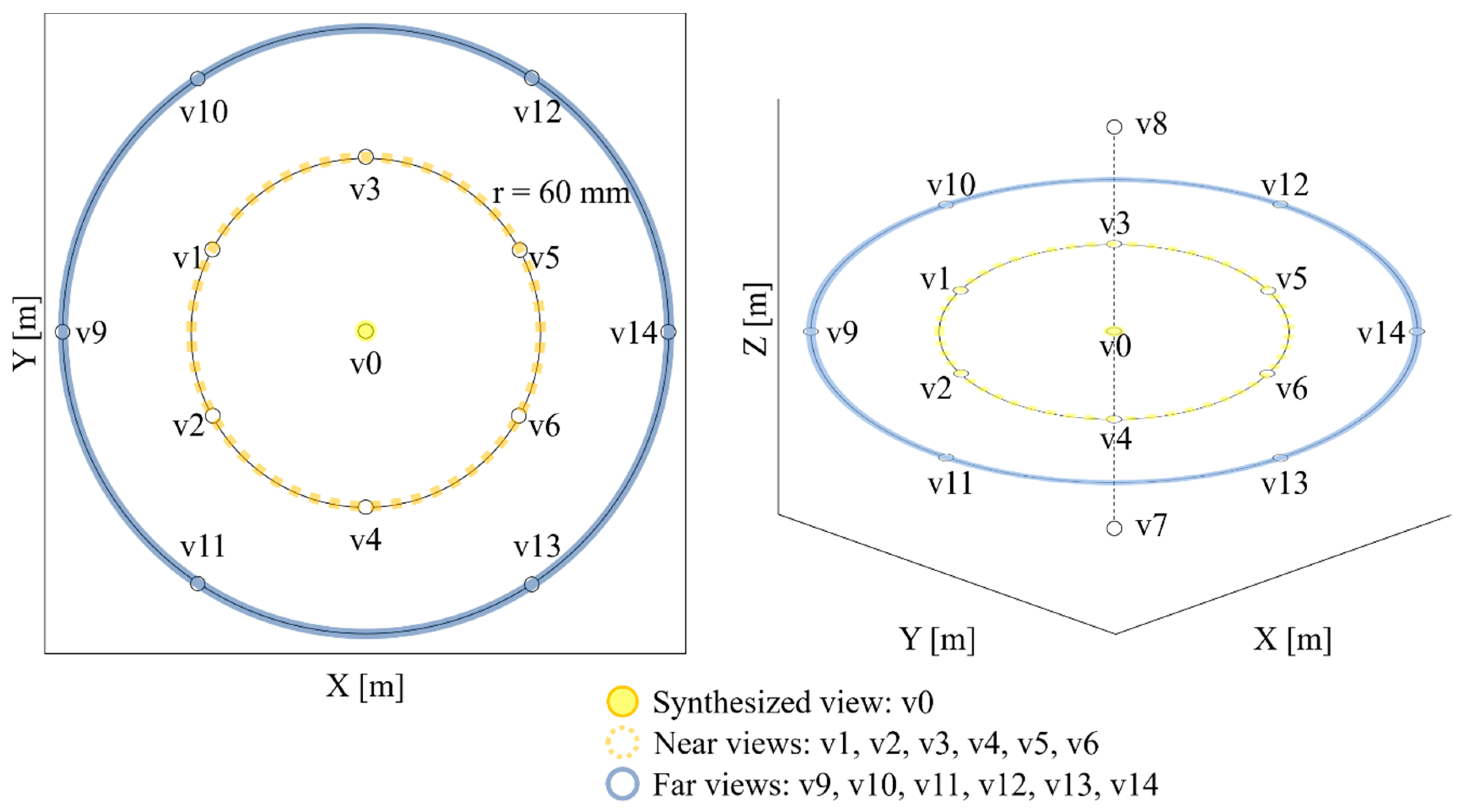
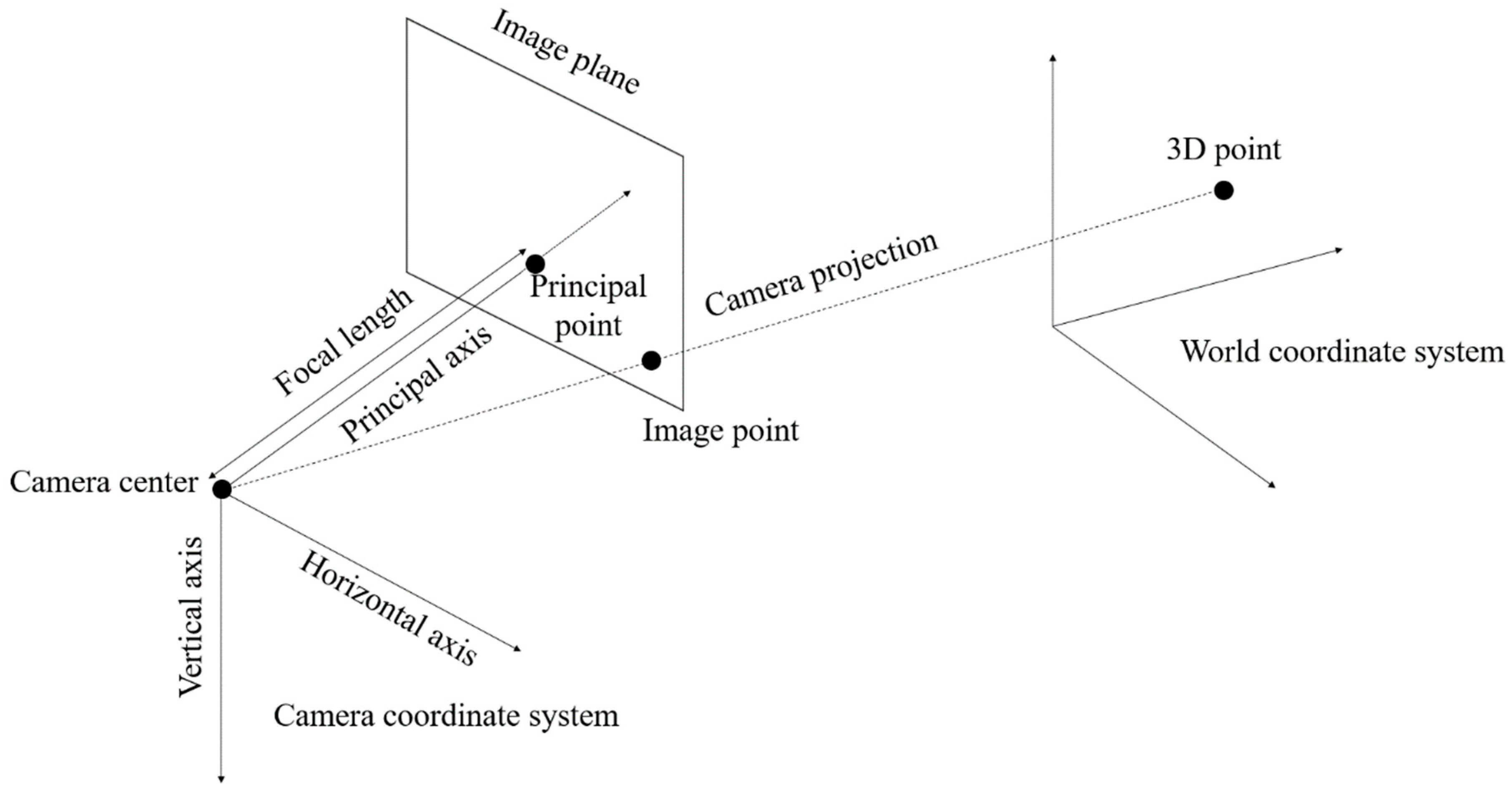
In another experiment, view v0 was defined as a synthesized view; v1, v2, v3, v4, v5, and v6 were called near views; and v9, v10, v11, v12, v13, v14 were called far views, as shown in Figure 16. The distances between the synthesized view and the near and far views are same. For objective quality evaluation, WS-PSNR tool [40] was used.
Figure 16. ClassroomVideo viewpoint definition for objective quality evaluation.
Table 3 shows the WS-PSNR for synthesized source views of ClassroomVideo. WS-PSNR value of (6) was higher than (1) although (6) has fewer views. Adding more views, which are down-sampled, is not appropriate for the quality of the synthesized view. If the input views were closer to the synthesized view, its PSNR value would be higher, as we can see by comparing (1) and (3). Interestingly, the PSNR value of (1) was higher than (2) although the depth maps of (2) were not down-sampled. It implies both the texture and the depth should be down-sampled with the same ratio.
Table 3. PSNR of synthesized views for ClassroomVideo.

3.3. Intermediate View Synthesis with 3DoF+ Test Sequences

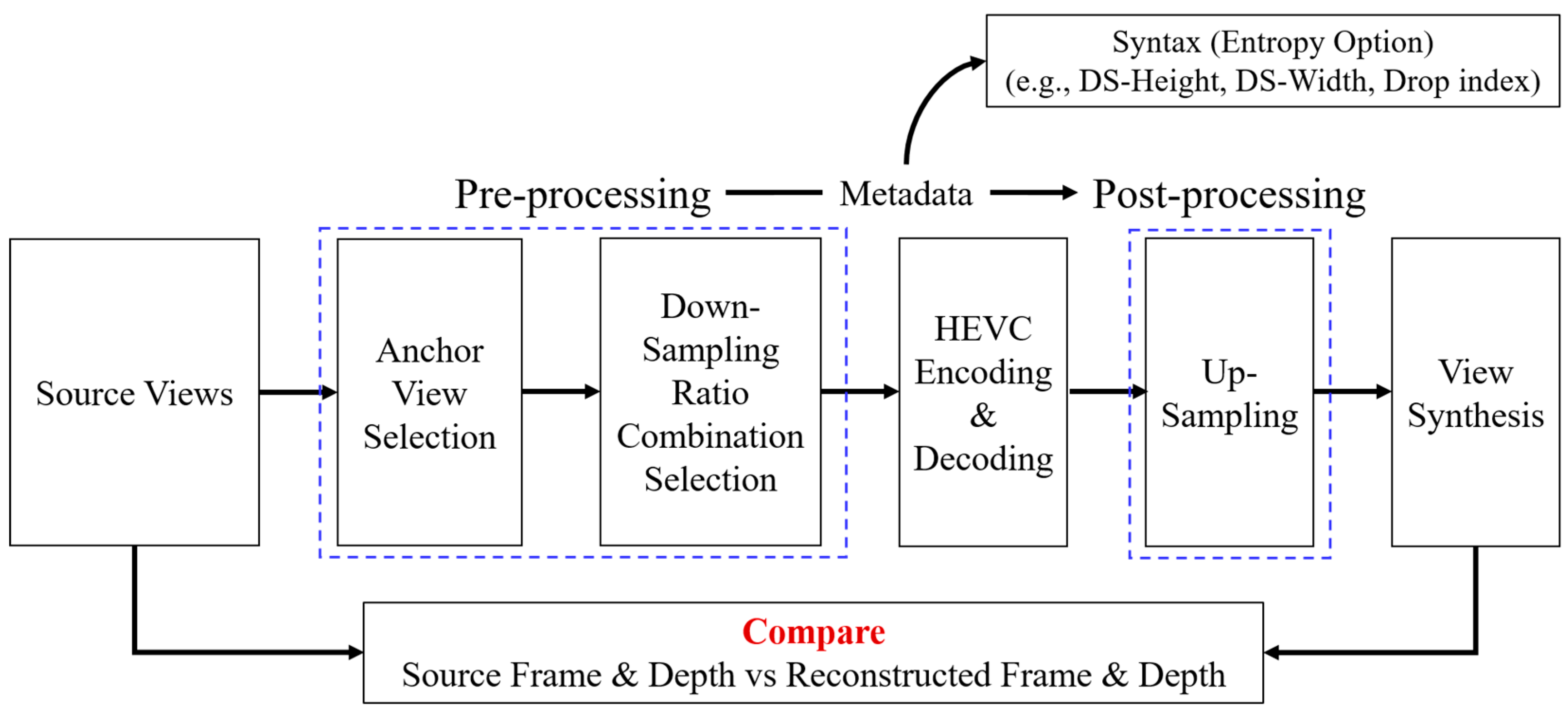
In Section 3.2, the source view synthesis with 3DoF+ test sequences was introduced. Because the 3DoF+ common test condition (CTC) of 3DoF+ requires the ability to synthesize the intermediate views, which do not exist in source views, this section introduces the view synthesis of intermediate view. The proposed system architecture, VLADVS, includes anchor view selection, down-sampling ratio combination selection, down-sampling, encoding, decoding, up-sampling, view synthesis, and measuring WS-PSNR, as described in Figure 17.
Figure 17. Proposed system architecture for intermediate view synthesis of 3DoF+ video.
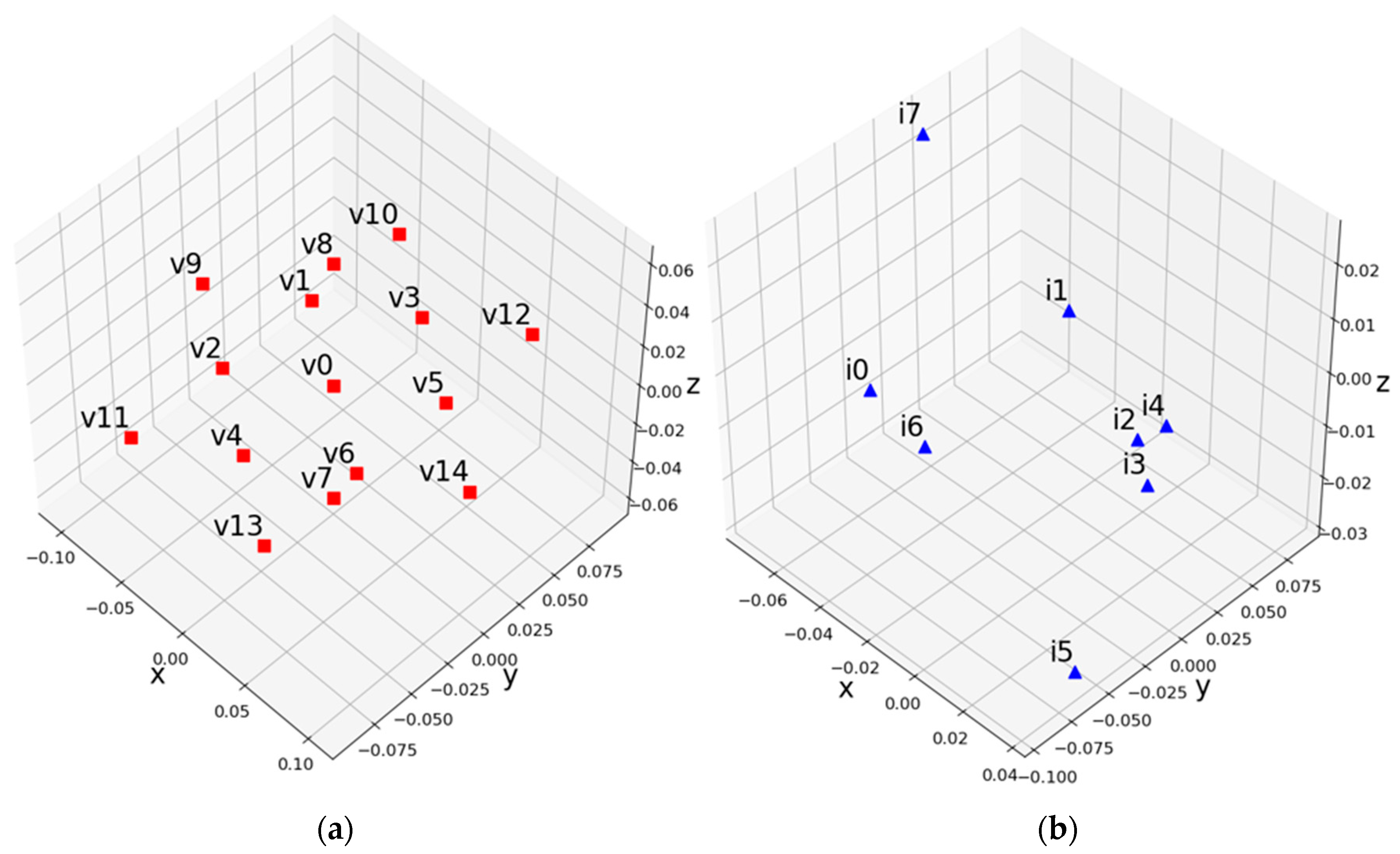
In CTC, the QPs used for texture and depth are shown in Table 4. The difference value between the texture and depth QP is 5, which was decided by an experiment [41]. Table 5 shows the resolution of the down-sampling ratio for ClassroomVideo. Down-sampling is applied to both texture and depth. 360ConvertStatic of 360lib 5.1 was used for down-sampling. Table 6 shows the anchor-coded views per class or ClassroomVideo. Class A1 uses all views for view synthesis, whereas class A2 and class A3 use the subset of views. To reduce the view synthesis runtime, frame ranges for view synthesis were set in CTC as shown in Table 7. Because the proposals for 3DoF+ are required to generate ERP video for all intermediate view positions, the experiment was designed to synthesize the intermediate views using A1, A2, and A3 class views. Figure 18 shows the positions of the source and intermediate views.
Table 4. QPs used for texture and depth.
Table 5. Resolution for down-sampling ratio.
Table 6. Anchor-coded views per class.
Table 7. 3DoF+ test sequence view synthesis frame range.
Figure 18. Source and intermediate view position. (a) Source view; (b) intermediate view.
The goal of this experiment is to reduce the bitrate while conserving the PSNR. Modifying parameters such as down-sampling ratio, QP, and the number of input views to optimize them are included in the experiment, which is explained in Section 4.

4. Experimental Results

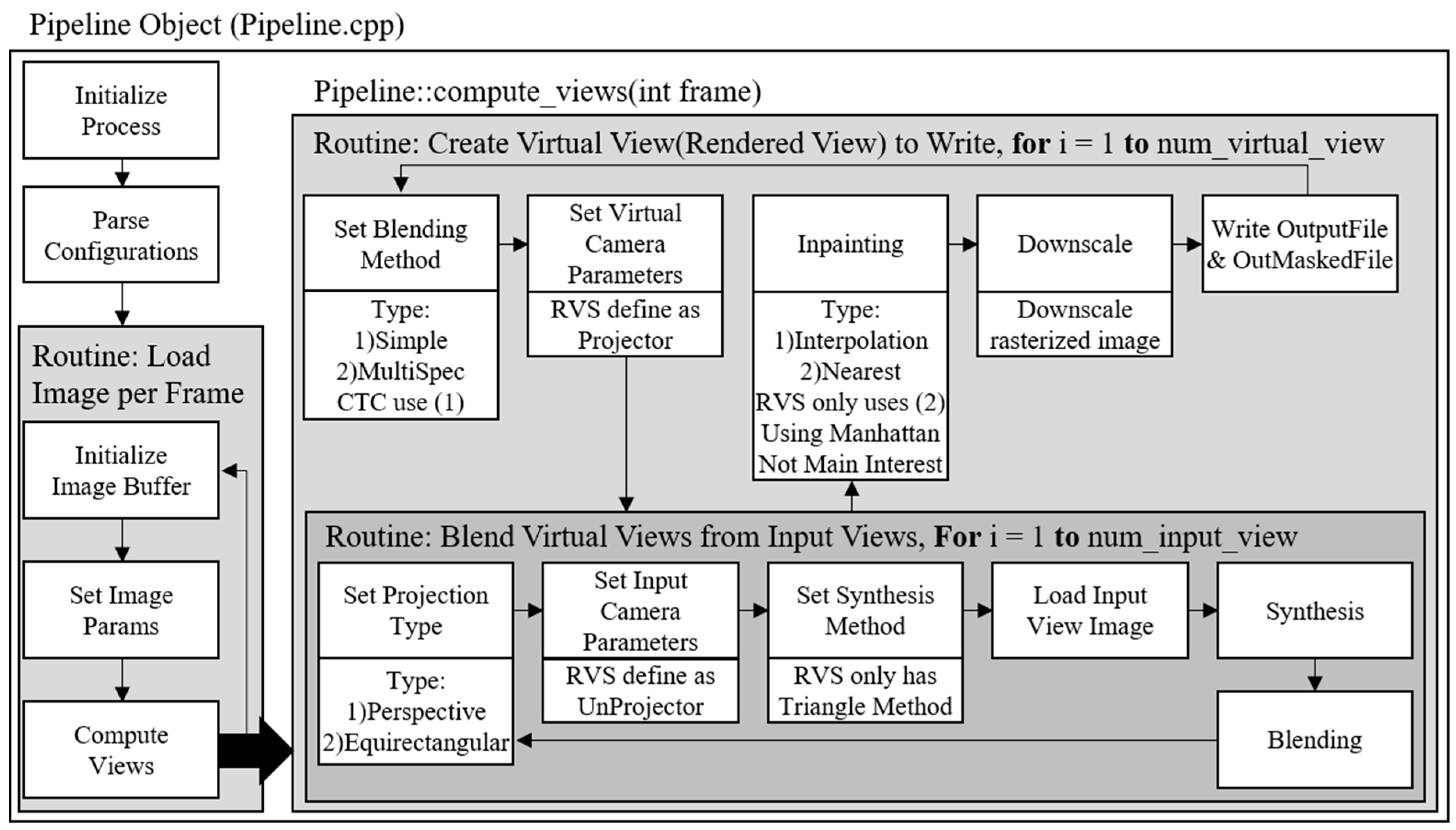
In Section 3.3, the intermediate view synthesis was introduced. As described in Section 2.3, RVS was used for view synthesis. In addition, the tool used for down-sampling and up-sampling is 360Convert in 360lib 5.1, and for HEVC encoding and decoding, the HM 16.16 encoder and decoder are used. The used version of RVS is 1.0.2 with openCV 3.4.1, and the server used for experiment has 2 Intel Xeon E5-2687w v4 CPU and 128 GB.
Table 8 shows the summary of WS-PSNR_Y with different down-sampling ratios for regular outputs and masked outputs in synthesizing the intermediate views. It contains the WS-PSNR_Y values of synthesized intermediate views. The results of the regular output were better than the masked outputs. Further, class A2 and class A3, which discarded some source views, showed low WS-PSNR. For down-sampling the anchor views, the ratio 12.5% is reasonable. Table 9 contains WS-PSNR_Y of synthesized views for different QPs with A1 class. This shows that the difference value of WS-PSNR_Y between R1 and R2 is not high.
Table 8. WS-PSNR_Y of synthesized views for different down-sampling ratios.
Table 9. WS-PSNR_Y of synthesized views for different QPs with A1 class.
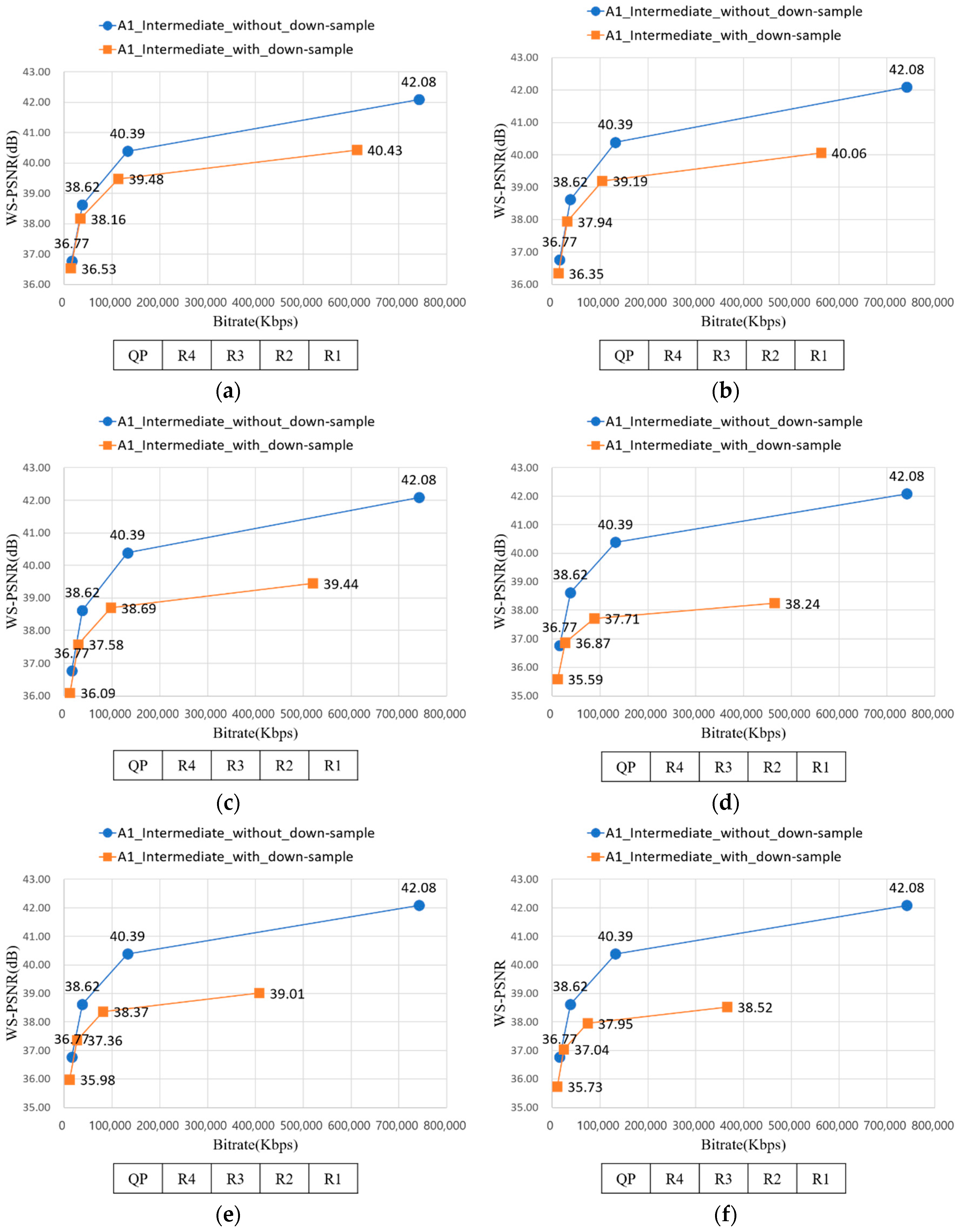
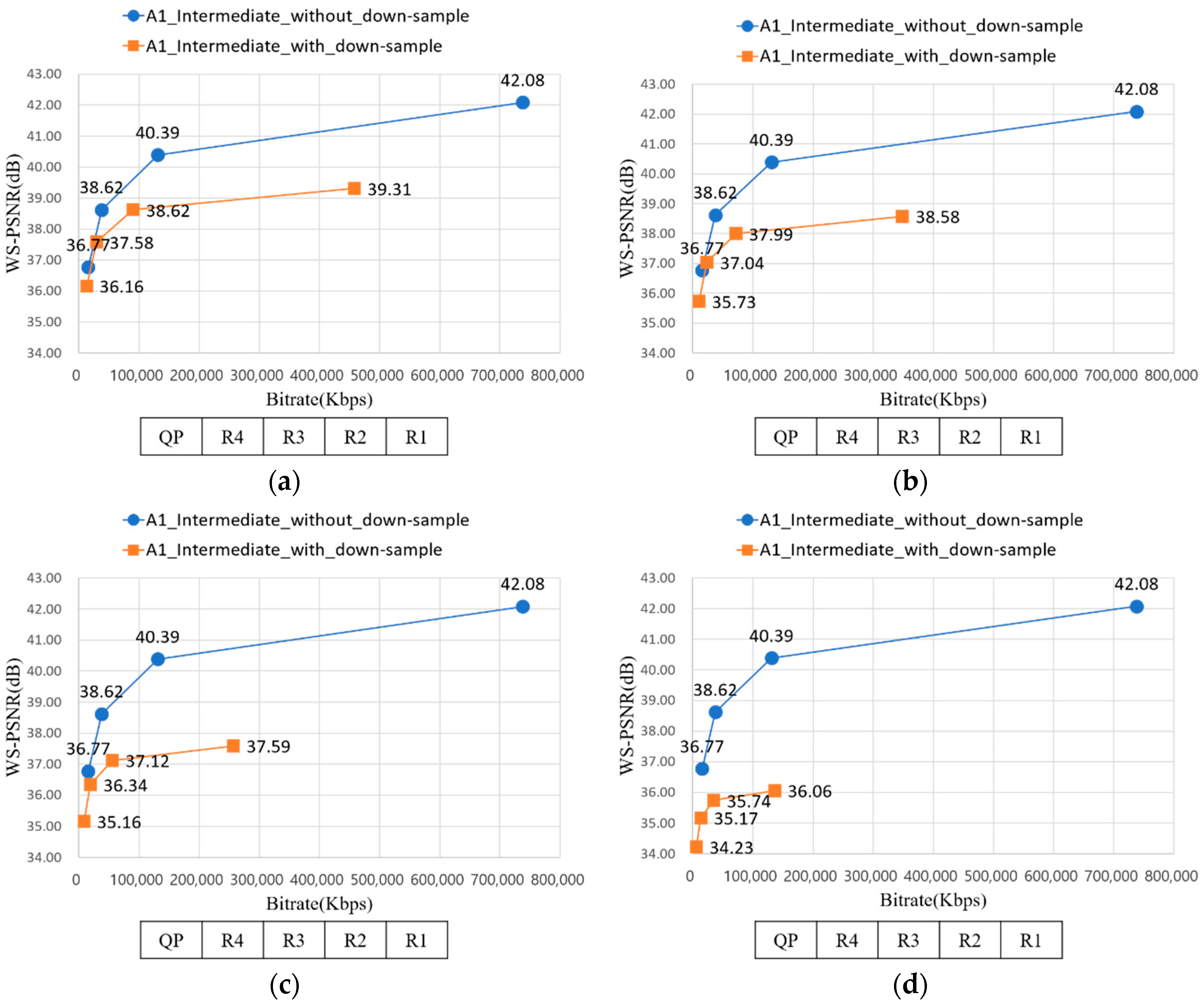
Figure 19 depicts the RD-curve between WS-PSNR_Y and bitrate of A1 with 12.5%, 25%, 37.5%, and 50% down-sampling ratios. The values of the X-axis were QP of R1–R4. R2 can be used instead of R1; the gap between R1 and R2 was not high. With QP of R2 and 12.5% down-sampling ratio, it saved approximately 87.81% bitrate while losing only 8% WS-PSNR, compared to the result of R1 and 0% down-sampling ratio.
Figure 19. RD-curve between WS-PSNR_Y and bitrate of A1. (a) RD-curve with 12.5% down-sampling; (b) RD-curve with 25% down-sampling; (c) RD-curve with 37.5% down-sampling; and (d) RD-curve with 50% down-sampling.
In addition, experiment with two down-sampling ratios was conducted. After sorting the source views by the distance between the source views and intermediate views, the experiment assigned two down-sampling ratios to the source views. If the source views are close to the intermediate view, they got low down-sampling ratios. To decide the combination of two down-sampling ratios, the following formula is used:
nCr
Here, n is the number of the entire down-sampling ratios, and r is the number of the down-sampling ratios to assign. Table 10 shows the combinations of two down-sampling ratios deducted by Equation (1).
Table 10. Combination of two down-sampling ratios (DR: down-sampling ratio).
To obtain the number of DR1 and DR2 to the source views, the following equations are used:
n ( DR 1 ) = n ( s o u r c e   v i e w s ) 2
n ( DR 2 ) = n ( s o u r c e   v i e w s ) n ( DR 1 )  
Equation (2) explains how to calculate the number of DR1. After dividing the number of source views with 2, which means the number of down-sampling ratios to assign, the formula rounds up the result. DR2 is set to the difference value between the number of source views and the number of DR1, as shown in Equation (3).
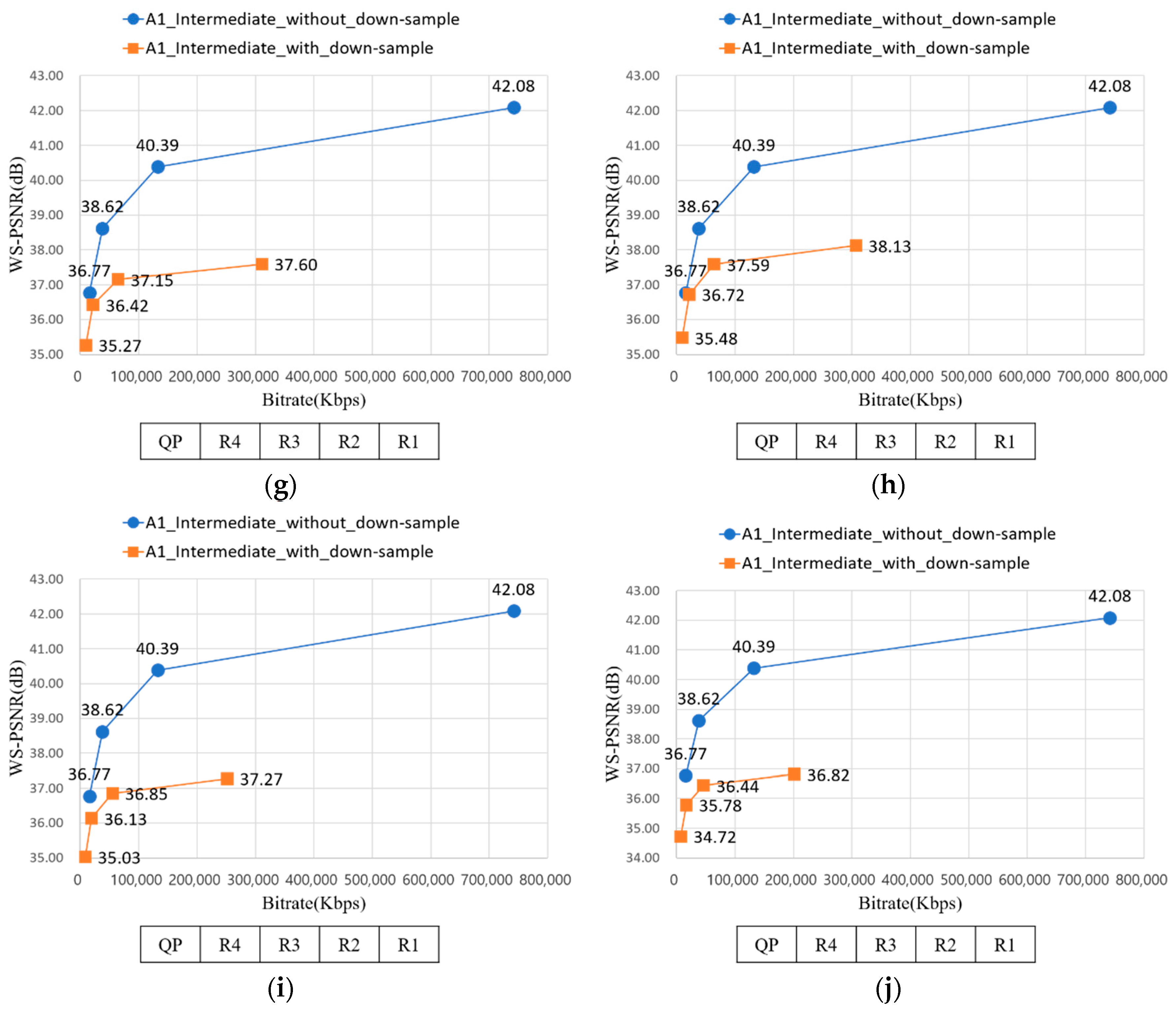
Figure 20 represents the RD-curve between WS-PSNR_Y and bitrate of A1 with D1 − D10. In Section 3.1, uniform down-sampling ratio assignment showed better PSNR value than non-uniform down-sampling ratio assignment. Likewise, although the average down-sampling ratio of Figure 20d and Figure 19b are the same, but the WS-PSNR value of the latter is better. It implies the uniform down-sampling is an advantage for view synthesis.
Figure 20. RD-curve between WS-PSNR_Y and bitrate of A1. (a) RD-curve with D1; (b) RD-curve with D2; (c) RD-curve with D3; (d) RD-curve with D4; (e) RD-curve with D5; (f) RD-curve with D6; (g) RD-curve with D7; (h) RD-curve with D8; (i) RD-curve with D9; and (j) RD-curve with D10.
In Section 3.3, down-sampling the source views far from the intermediate view is better in WS-PSNR value than down-sampling the near views from intermediate view. Equally, the WS-PSNR value of down-sampling the near views from intermediate views, as described from Figure 20a, is higher than Figure 19a. Although the former requires more bitrate than latter, the difference value is 23,371 Kbps when QP is R2, which is not greatly high. It implies down-sampling the far views from intermediate views can be a method for saving bitrate while preserving the WS-PSNR value.

5. Conclusions

This paper proposes a bitrate-reducing method for 3DoF+ video synthesis and transmission. Particularly, by down-sampling and up-sampling the texture and depth, the proposed method saves the bitrates of bitstream file while degrading the objective video quality very little in WS-PSNR. In addition, down-sampling the far views brings higher WS-PSNR value than down-sampling all the source views. However, because the number of the parameters for the experiment was not enough to deduct the optimal parameter for view synthesis, the experiment using video compression methods such as region-wise packing [42] must be conducted to reduce the bitrates for immersive 360 VR video streaming. Furthermore, intensive experiments should be carried out to derive an equation which defines the relation with the distances between the source views and intermediate views and down-sampling ratios.

Author Contributions

Conceptualization and Data curation and Writing—original draft, J.J.; Data curation and Investigation, D.J. and J.S.; Project administration and Supervision and Writing—review & editing, E.R.

Funding

This work was supported by the Institute for Information & Communications Technology Promotion (IITP) grant funded by the Korea government (MSIT) (No. 2018-0-00765, Development of Compression and Transmission Technologies for Ultra High-Quality Immersive Videos Supporting 6DoF).

Conflicts of Interest

The authors declare no conflict of interest.

References

  1. Wang, Y.K.; Hendry; Karczewicz, M. Viewport Dependent Processing in VR: Partial Video Decoding; Technical Report ISO/IEC JTC1/SC29/WG11; Moving Picture Experts Group (MPEG): Villar Dora, Italy, 2016; MPEG116/m38559. [Google Scholar]
  2. Son, J.W.; Jang, D.M.; Ryu, E.S. Implementing Motion-Constrained Tile and Viewport Extraction for VR Streaming. In Proceedings of the 28th ACM SIGMM Workshop on Network and Operating Systems Support for Digital Audio and Video (NOSSDAV2018), Amsterdam, The Netherlands, 12–15 June 2018. [Google Scholar]
  3. Oh, S.J.; Hwang, S.J. OMAF: Generalized Signaling of Region-Wise Packing for Omnidirectional Video; Technical Report ISO/IEC JTC1/SC29/WG11; Moving Picture Experts Group (MPEG): Villar Dora, Italy, 2017; MPEG2017/m40423. [Google Scholar]
  4. Jung, J.; Kroon, B.; Doré, R.; Lafruit, G.; Boyce, J. Update on N17618 v2 CTC on 3DoF+ and Windowed 6DoF; Technical Report ISO/IEC JTC1/SC29/WG11; Moving Picture Experts Group (MPEG): Villar Dora, Italy, 2018; MPEG123/m43571. [Google Scholar]
  5. Tanimoto, M.; Fujii, T. FTV—Free Viewpoint Television; Technical Report ISO/IEC JTC1/SC29/WG11; Moving Picture Experts Group (MPEG): Villar Dora, Italy, 2002; MPEG2002/m8595. [Google Scholar]
  6. Senoh, T.; Tetsutani, N.; Yasuda, H. MPEG-I Visual: View Synthesis Reference Software (VSRSx); Technical Report ISO/IEC JTC1/SC29/WG11; Moving Picture Experts Group (MPEG): Villar Dora, Italy, 2018; MPEG2018/m42911. [Google Scholar]
  7. Kroon, B.; Lafruit, G. Reference View Synthesizer (RVS) 2.0 Manual; Technical Report ISO/IEC JTC1/SC29/WG11; Moving Picture Experts Group (MPEG): Villar Dora, Italy, 2018; MPEG2018/n17759. [Google Scholar]
  8. Sun, Y.; Lu, A.; Yu, L. WS-PSNR for 360 Video Quality Evaluation; Technical Report ISO/IEC JTC1/WG11; Moving Picture Experts Group (MPEG): Villar Dora, Italy, 2016; MPEG2016/m38551. [Google Scholar]
  9. Senoh, T.; Wegner, K.; Stankiewicz, O.; Lafruit, G.; Tanimoto, M. FTV Test Material Summary; Technical Report ISO/IEC JTC1/WG11; Moving Picture Experts Group (MPEG): Villar Dora, Italy, 2016; MPEG2016/n16521. [Google Scholar]
  10. WG11 (MPEG). MPEG Strategic Standardisation Roadmap; Technical Report ISO/IEC JTC1/WG11; Moving Picture Experts Group (MPEG): Villar Dora, Italy, 2016; MPEG2016/n16316. [Google Scholar]
  11. Champel, M.L.; Koenen, R.; Lafruit, G.; Budagavi, M. Working Draft 0.4 of TR: Technical Report on Architectures for Immersive Media; Technical Report ISO/IEC JTC1/WG11; Moving Picture Experts Group (MPEG): Villar Dora, Italy, 2017; MPEG2017/n17264. [Google Scholar]
  12. Doré, R.; Fleureau, J.; Chupeau, B.; Briand, G. 3DoF Plus Intermediate View Synthesizer Proposal; Technical Report ISO/IEC JTC1/WG11; Moving Picture Experts Group (MPEG): Villar Dora, Italy, 2018; MPEG2018/m42486. [Google Scholar]
  13. Mitra, R.N.; Agrawal, D.P. 5G mobile technology: A survey. ICT Express 2016, 1, 132–137. [Google Scholar] [CrossRef]
  14. Kim, Y.; Lee, J.; Jeong, J.S.; Chong, S. Multi-flow management for mobile data offloading. ICT Express 2016, 3, 33–37. [Google Scholar] [CrossRef]
  15. Kim, H.; Ryu, E.; Jayant, N. Channel-adaptive video transmission using H.264 SVC over mobile WiMAX network. In Proceedings of the 2010 Digest of Technical Papers International Conference on Consumer Electronics (ICCE), Las Vegas, NV, USA, 9–13 January 2010; pp. 441–442. [Google Scholar]
  16. Ryu, E.S.; Yoo, C. An approach to interactive media system for mobile devices. In Proceedings of the 12th Annual ACM International Conference on Multimedia, New York, NY, USA, 10–16 October 2004; pp. 160–161. [Google Scholar]
  17. Roh, H.J.; Han, S.W.; Ryu, E.S. Prediction complexity-based HEVC parallel processing for asymmetric multicores. Multimed. Tools Appl. 2017, 76, 25271–25284. [Google Scholar] [CrossRef]
  18. Yoo, S.; Ryu, E.S. Parallel HEVC decoding with asymmetric mobile multicores. Multimed. Tools Appl. 2017, 76, 17337–17352. [Google Scholar] [CrossRef]
  19. Dong, J.; He, Y.; He, Y.; McClellan, G.; Ryu, E.S.; Xiu, X.; Ye, Y. Description of Scalable Video Coding Technology Proposal by InterDigital Communications; Technical Report ISO/IEC JTC1/WG11; Moving Picture Experts Group (MPEG): Villar Dora, Italy, 2012; MPEG2012/m26569. [Google Scholar]
  20. Ryu, E.; Jayant, N. Home gateway for three-screen TV using H.264 SVC and raptor FEC. IEEE Trans. Consum. Electron. 2011, 57, 1652–1660. [Google Scholar] [CrossRef]
  21. Ye, Y.; McClellan, G.W.; He, Y.; Xiu, X.; He, Y.; Dong, J.; Bal, C.; Ryu, E. Codec Architecture for Multiple layer Video Coding. U.S. Patent No. 9,998,764, 12 June 2018. [Google Scholar]
  22. International Organization for Standardization (ISO); International Electrotechnical Commission (IEC). Introduction to 3D Video. In Proceedings of the 84th SC 29/WG 11 Meeting, Archamps, France, 28 April–2 May 2008. ISO/IEC JTC1/SC29/WG11, MPEG2008/n9784. [Google Scholar]
  23. Merkle, P.; Smolic, A.; Müller, K.; Wiegand, T. Multi-view video plus depth representation and coding. In Proceedings of the 2007 IEEE International Conference on Image Processing, San Antonio, TX, USA, 16–19 September 2007; pp. 201–204. [Google Scholar]
  24. Müller, K.; Schwarz, H.; Marpe, D.; Bartnik, C.; Bosse, S.; Brust, H.; Hinz, T.; Lakshman, H.; Merkle, P.; Rhee, F.H.; et al. 3D High-Efficiency Video Coding for Multi-View Video and Depth Data. IEEE Trans. Image Process. 2013, 22, 3366–3378. [Google Scholar] [CrossRef] [PubMed]
  25. Vetro, A.; Pandit, P.; Kimata, H.; Smolic, A. Joint Multiview Video Model (JMVM) 7.0; Technical Report ISO/IEC JTC1/WG11; Moving Picture Experts Group (MPEG): Villar Dora, Italy, 2008; MPEG2008/n9578. [Google Scholar]
  26. Martinian, E.; Behrens, A.; Xin, J.; Vetro, A. View Synthesis for Multiview Video Compression. In Proceedings of the Picture Coding Symposium, Beijing, China, 24–26 April 2006. [Google Scholar]
  27. Yea, S.; Vetro, A. View synthesis prediction for multiview video coding. Signal Process. Image Commun. 2008, 24, 89–100. [Google Scholar] [CrossRef]
  28. Fachada, S.; Kroon, B.; Bonatto, D.; Sonneveldt, B.; Lafruit, G. Reference View Synthesizer (RVS) 1.0.2 Manual; Technical Report ISO/IEC JTC1/SC29/WG11; Moving Picture Experts Group (MPEG): Villar Dora, Italy, 2018; MPEG123/m42945. [Google Scholar]
  29. Zhang, J.; Hannuksela, M.M.; Li, H. Joint Multiview Video Plus Depth Coding. In Proceedings of the 2010 IEEE International Conference on Image Processing, Hong Kong, China, 26–29 September 2010; pp. 2865–2868. [Google Scholar]
  30. Ho, Y.S.; Oh, K.J.; Lee, C.; Lee, S.B.; Na, S.T. Depth Map Generation and Depth Map Coding for MVC; Technical Report ISO/IEC JTC1/WG11; Moving Picture Experts Group (MPEG): Villar Dora, Italy, 2007; MPEG2007/m14638. [Google Scholar]
  31. Ryu, Y.; Ryu, E.S. Haptic Telepresence System for Individuals with Visual Impairments. Sens. Mater. 2017, 29, 1061–1067. [Google Scholar]
  32. Park, C.H.; Ryu, E.; Howard, A.M. Telerobotic Haptic Exploration in Art Galleries and Museums for Individuals with Visual Impairments. IEEE Trans. Haptics 2015, 8, 327–338. [Google Scholar] [CrossRef] [PubMed]
  33. Tanimoto, M.; Fujii, T.; Suzuki, K. Depth Estimation Reference Software (DERS) with Image Segmentation and Block Matching; Technical Report ISO/IEC JTC1/WG11; Moving Picture Experts Group (MPEG): Villar Dora, Italy, 2009; MPEG2009/m16092. [Google Scholar]
  34. Tanimoto, M.; Fujii, T.; Tehrani, M.P.; Suzuki, K.; Wildeboer, M. Depth Estimation Reference Software (DERS) 3.0; Technical Report ISO/IEC JTC1/WG11; Moving Picture Experts Group (MPEG): Villar Dora, Italy, 2009; MPEG2009/m16390. [Google Scholar]
  35. International Organization for Standardization (ISO); International Electrotechnical Commission (IEC). FTV Test Material Summary. In Proceedings of the 116th SC 29/WG 11 Meeting, Chengdu, China, 17–21 October 2016. ISO/IEC JTC1/SC29/WG11, MPEG2016/n16521. [Google Scholar]
  36. Joint Video Team (JVT) of ISO/IEC MPEG and ITU-T VCEG. Joint Scalable Video Model; Joint Video Team: Geneva, Switzerland, 2007; Doc. JVT-X202.
  37. Joint Collaborative Team on Video Coding (JCT-VC). HEVC Reference Software Version HM16.16. Available online: https://hevc.hhi.fraunhofer.de/svn/svn_HEVCSoftware/tags/HM-16.16 (accessed on 16 August 2018).
  38. Senoh, T.; Yamamoto, K.; Tetsutani, N.; Yasuda, H.; Wegner, K. View Synthesis Reference Software (VSRS) 4.2 with Improved Inpainting and Hole Filling; Technical Report ISO/IEC JTC1/WG11; Moving Picture Experts Group (MPEG): Villar Dora, Italy, 2017; MPEG2017/m40657. [Google Scholar]
  39. Kroon, B. 3DoF+ Test Sequence ClassroomVideo; Technical Report ISO/IEC JTC1/WG11; Moving Picture Experts Group (MPEG): Villar Dora, Italy, 2018; MPEG2018/m42415. [Google Scholar]
  40. International Organization for Standardization (ISO); International Electrotechnical Commission (IEC). ERP WS-PSNR Software Manual. In Proceedings of the 122st SC 29/WG 11 Meeting, San Diego, CA, USA, 16–20 April 2018. ISO/IEC JTC1/SC29/WG11, w17760. [Google Scholar]
  41. Wang, B.; Sun, Y.; Yu, L. On Depth Delta QP in Common Test Condition of 3DoF+ Video; Technical Report ISO/IEC JTC1/WG11; Moving Picture Experts Group (MPEG): Villar Dora, Italy, 2018; MPEG2018/m43801. [Google Scholar]
  42. Oh, S.J.; Lee, J.W. OMAF: Signaling of Projection/Region-wise Packing Information of Omnidirectional Video in ISOBMFF; Technical Report ISO/IEC JTC1/WG11; Moving Picture Experts Group (MPEG): Villar Dora, Italy, 2017; MPEG2018/m39865. [Google Scholar]

Article Metrics

Citations

Article Access Statistics

Multiple requests from the same IP address are counted as one view.