Article

MineLoC: A Rapid Production of Lab-on-a-Chip Biosensors Using 3D Printer and the Sandbox Game, Minecraft


1
Robotics Program, Korea Advanced Institute of Science and Technology, 291 Daehak-ro, Daejeon 34141, Korea
2
Department of Mechanical Engineering, Korea Advanced Institute of Science and Technology, 291 Daehak-ro, Daejeon 34141, Korea
3
KAIST Institute for Health Science and Technology, 291 Daehak-ro, Daejeon 34141, Korea
*
Author to whom correspondence should be addressed.
These authors contributed equally to this work.
Sensors 2018, 18(6), 1896; https://doi.org/10.3390/s18061896
Submission received: 17 April 2018 / Revised: 25 May 2018 / Accepted: 7 June 2018 / Published: 10 June 2018
(This article belongs to the Section Biosensors)

Abstract

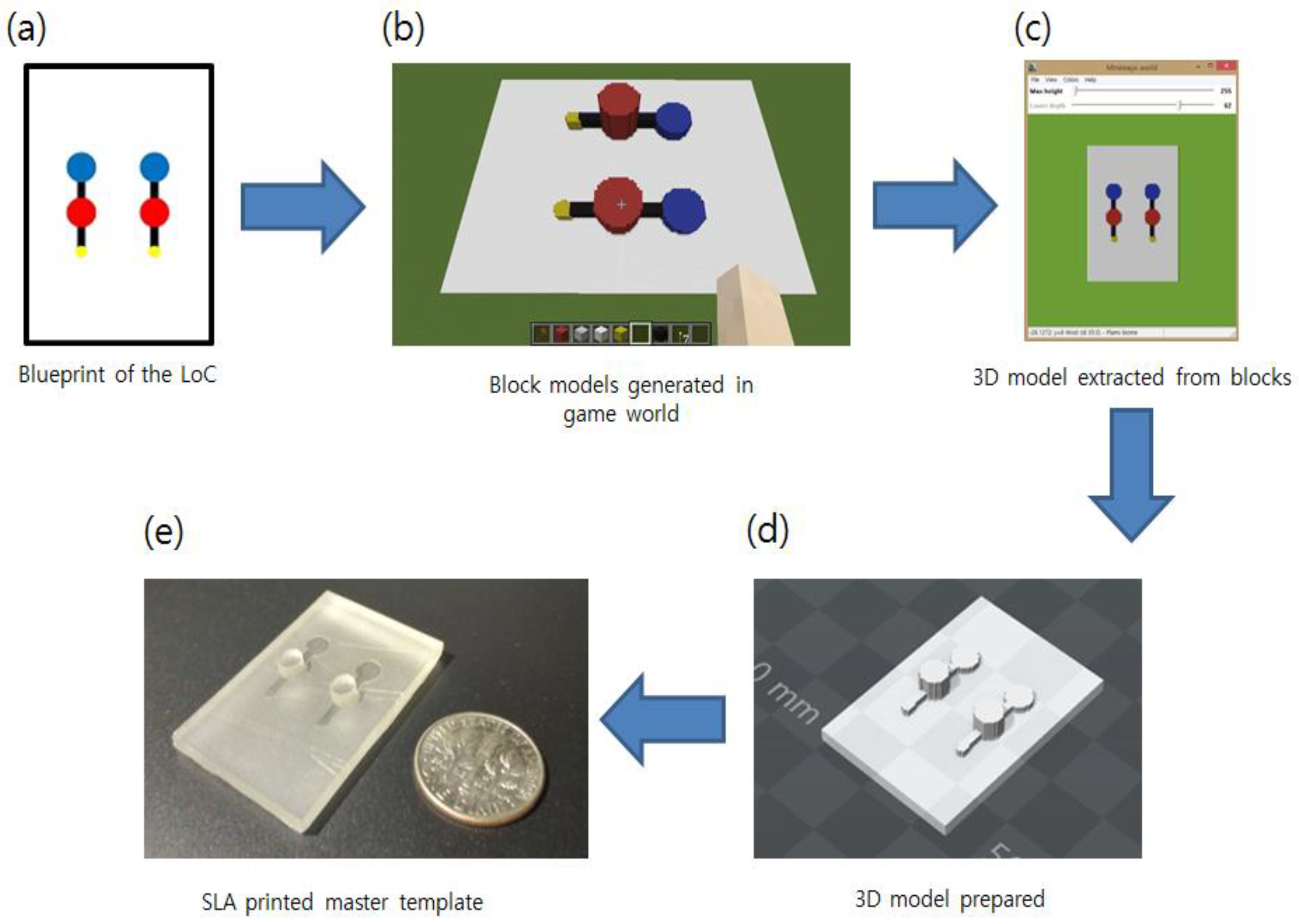
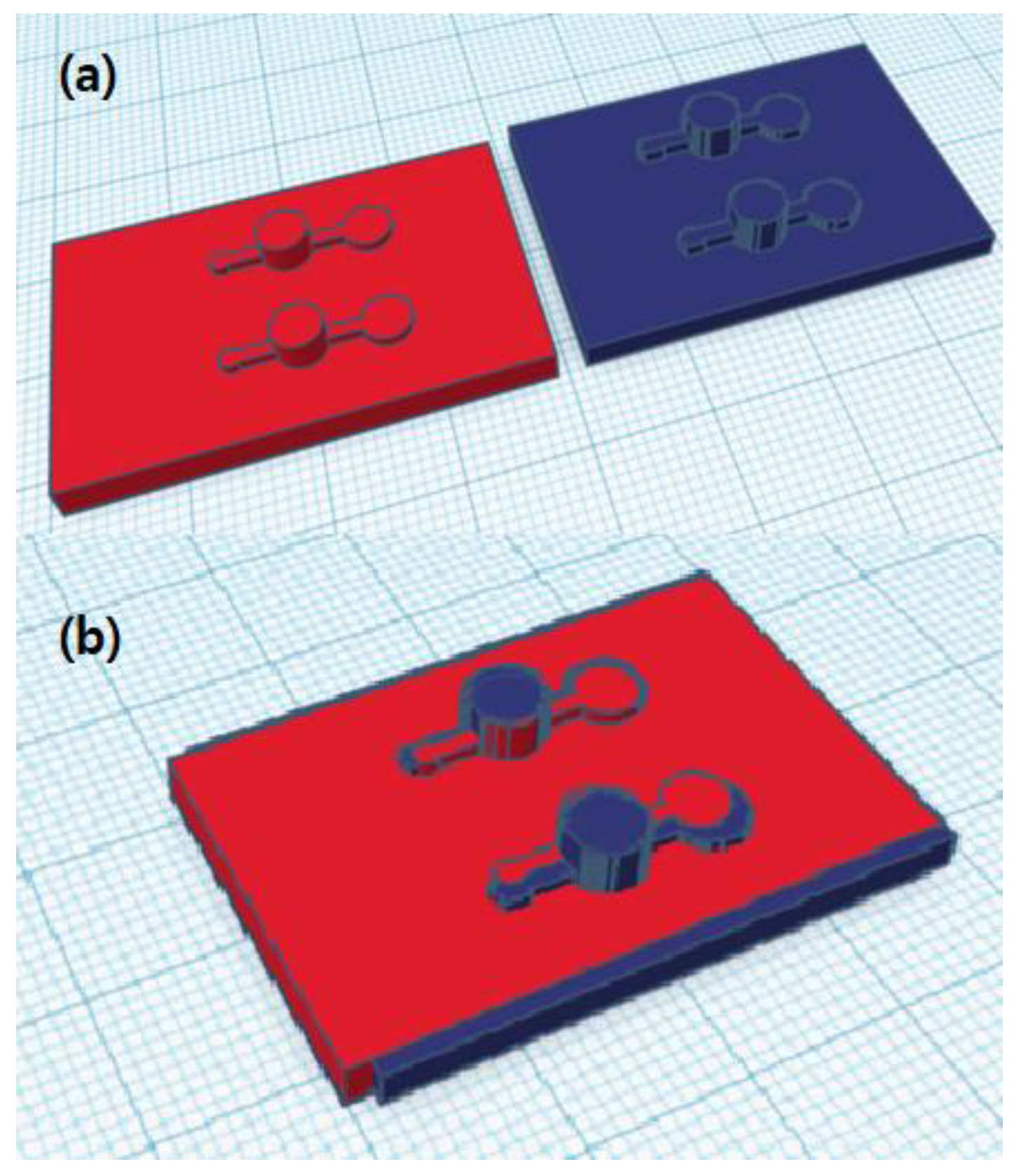
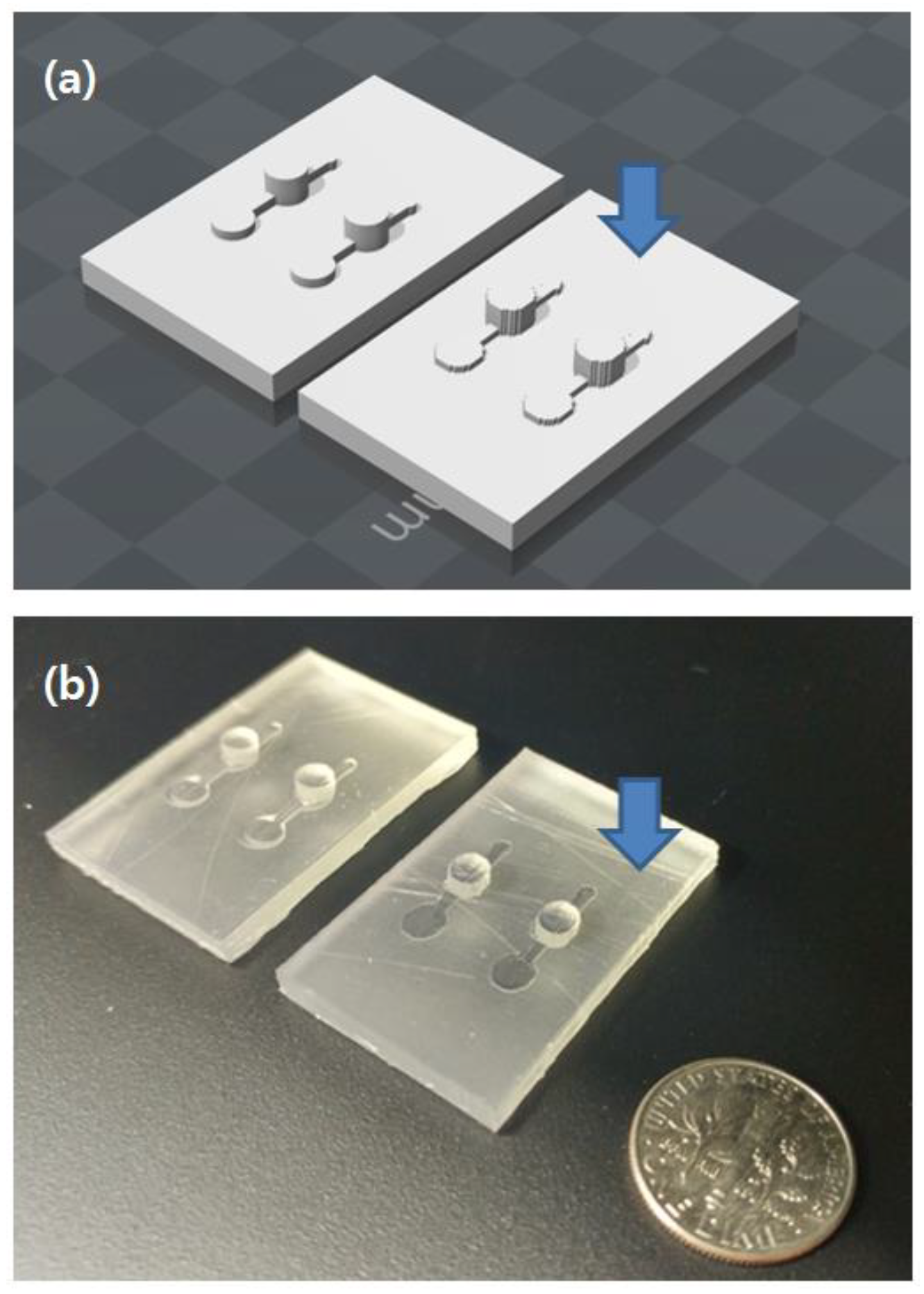
Here, MineLoC is described as a pipeline developed to generate 3D printable models of master templates for Lab-on-a-Chip (LoC) by using a popular multi-player sandbox game “Minecraft”. The user can draw a simple diagram describing the channels and chambers of the Lab-on-a-Chip devices with pre-registered color codes which indicate the height of the generated structure. MineLoC converts the diagram into large chunks of blocks (equal sized cube units composing every object in the game) in the game world. The user and co-workers can simultaneously access the game and edit, modify, or review, which is a feature not generally supported by conventional design software. Once the review is complete, the resultant structure can be exported into a stereolithography (STL) file which can be used in additive manufacturing. Then, the Lab-on-a-Chip device can be fabricated by the standard protocol to produce a Lab-on-a-Chip. The simple polydimethylsiloxane (PDMS) device for the bacterial growth measurement used in the previous research was copied by the proposed method. The error calculation by a 3D model comparison showed an accuracy of 86%. It is anticipated that this work will facilitate more use of 3D printer-based Lab-on-a-Chip fabrication, which greatly lowers the entry barrier in the field of Lab-on-a-Chip research.
Keywords: Lab-on-a-Chip; 3D printing; additive manufacturing; microfluidics; solid modeling Lab-on-a-Chip; 3D printing; additive manufacturing; microfluidics; solid modeling