1. Introduction
Structural health monitoring and safety assessments for long-span bridges have become a dominant research topic, and have received the special attention of infrastructure authorities in recent years. Around the world, for many large-scale bridges, monitoring systems are installed to evaluate the health condition of the bridge and to guarantee operational safety management [
1]. The Finite Element Method (FEM) is the standard tool for modeling structural behavior. However, due to a wide range of simplifying assumptions that rely on engineering judgment and a lot of uncertainties in structural properties (e.g., material properties, boundary conditions, etc.), the FE model is often only an approximate representation of the real structure. Therefore, the initial FE model should be corrected. If measured dynamic characteristics (such as natural frequencies, mode shapes, and modal damping ratio, etc.) are available, model updating can be applied to minimize the deviation between numerical prediction and experimental results. In recent decades, vibration-based bridge health monitoring (VBHM) has been more and more commonly used to experimentally determine the physical behavior of large-scale bridges. Wu et al. [
2] made use of the measurements with spatially-distributed optical fiber sensors during static loading tests, to update an FE model of a highway bridge. The first order modal macro-strains and static long-gauge strains were included in the objective function. Feng et al. [
3] updated a short-span steel railway bridge by applying a time-domain FE model updating approach based on in-situ dynamic displacements under ambient vibrations after train passage, instead of using modal parameters (natural frequency, mode shape, etc.). They concluded that in the case of short-span railway bridges, it was difficult to extract dynamic behavior (natural frequencies) from measurements after train passing, because the natural frequencies of such bridges were much higher than the frequencies of trainload’s excitation. Bayraktar et al. [
4] updated a balanced cantilever bridge by a manual tuning procedure, using the peak picking method in the frequency domain. In their study, frequencies of the first 10 modes were selected as objective function. El-Borgi et al. [
5] applied the enhanced frequency domain decomposition technique and the Femtools software for model updating of a reinforced concrete bridge in Tunisia. They used both frequencies and mode shapes as objective functions, and concluded that Young’s modulus of concrete decreased dramatically during its service life. Brownjohn et al. [
6] updated a small highway bridge in a refurbishment and strengthening project in Singapore. They demonstrated that the calculated natural frequencies of the first eight modes increased by approximately 50% after model updating. Minshui et al. [
7] applied a simple updating method to determine the physical behavior of a highway bridge. The objective function was to minimize the difference between the theoretical and experimental natural frequencies measured during ambient excitation. After model updating, the difference was reduced from 8.77% to 4.56% for the largest deviation. Parisa Asadollahi et al. [
8] adapted a full-scale model of a long-span cable-stayed bridge through Bayesian FE model updating using long-term monitoring data of modal characteristics collected from a wireless sensor network during a one-year period. Zhang et al. [
9], Ren et al. [
10], BTemel Türker et al. [
11], Teughels et al. [
12], Schlune et al. [
13], and many other researchers also presented examples of updating long-span bridges.
Numerous researchers have also applied optimization algorithms for model updating, and they obtained good results for different types of structures and fields, e.g., Tiachacht et al. [
14], Samir et al. [
15], Khatir et al. [
16], Yuan et al. [
17], Hou et al. [
18], and Hamdia et al. [
19,
20]. Regarding its application to bridges, Qin et al. [
21] combined the particle swarm optimization (PSO) algorithm with a surrogate model to update higher vibration modes for a continuous railway concrete bridge in Spain. They pointed out that combining the PSO algorithm and a surrogate model reduced the computational time. They achieved a good level of accuracy between the numerical and experimental results. Jung et al. [
22] applied a hybrid genetic algorithm to update a small-scale bridge. The objective function included static deflections, mode shapes, and natural frequencies. Deng et al. [
23] combined the response surface method and a genetic algorithm (GA) to update a simply supported beam. The response surface was selected as an objective function, and GA was employed to find the best solution. Qin et al. [
1] updated a complex railway bridge by using GA combined with the Kriging model. While the Kriging model acted as a surrogate to reduce the deviation between the structural parameters and responses, GA provided the opportunity for obtaining the global best solution. Liu et al. [
24], Zordan et al. [
25] and other authors also employed the mathematical power of optimization algorithms to update large-scale bridges.
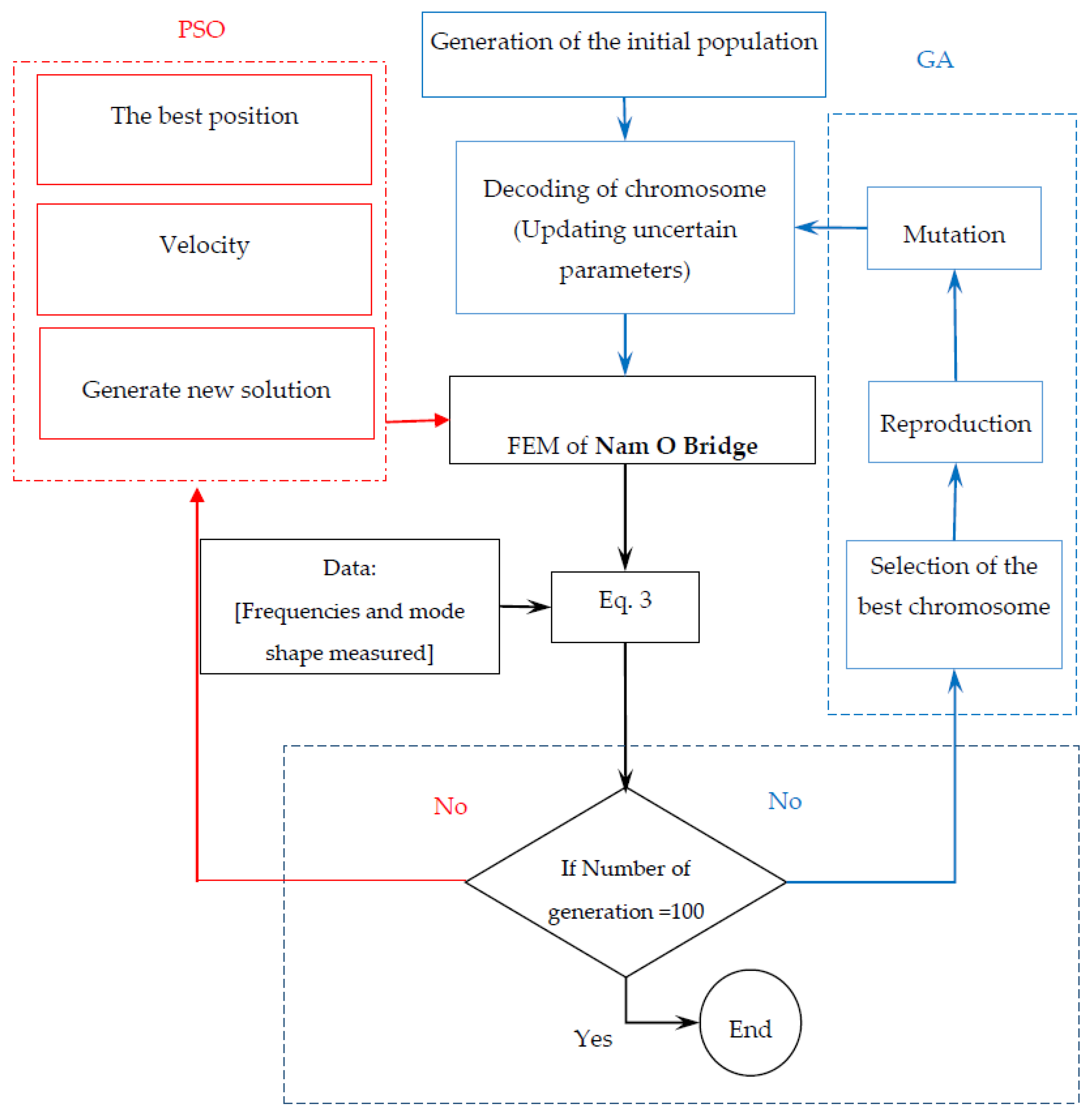
This paper presents a study for updating a large-scale truss bridge. The first step is building an initial FE model, in which three possibilities of joint conditions (pin, rigid, and semi-rigid) are considered. The second step is to simulate the effect of different joint assumptions. For steel truss structures, the joint stiffness’s are the most uncertain parameters that will influence the result of dynamic analysis. Therefore, this paper applies three scenarios of truss joints, namely pin, rigid, and semi-rigid, for the Nam O Bridge, and then analyzes and selects the scenario that properly reflects the dynamic behavior. This approach is also applied by some other authors [
26,
27,
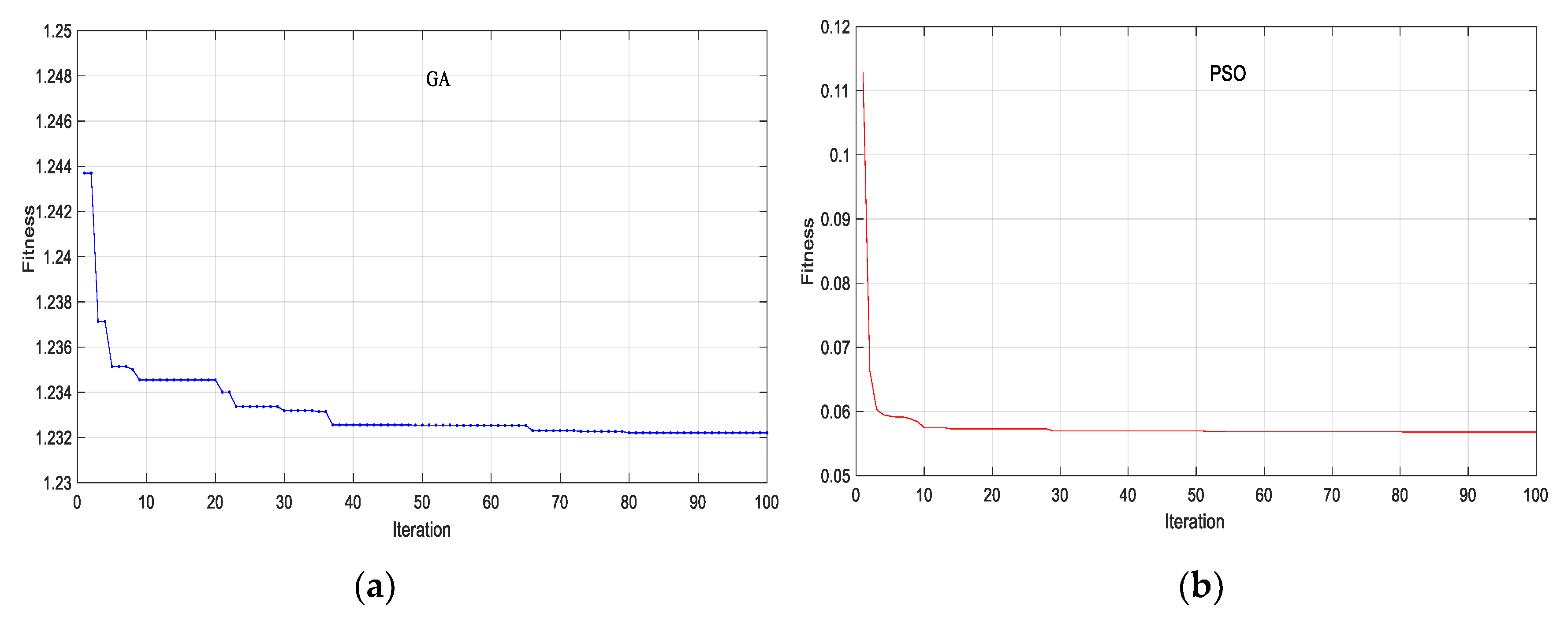
28]. However, most of aforementioned authors only evaluated different joint assumptions for static analysis, while others analyzed the joint conditions for the dynamic analysis of scale models in the laboratory. To the best of the authors’ knowledge, analyzing and evaluating the effects of different joint assumptions has never been applied to large-scale truss bridges. In this paper, we attempt to deal with this effect for the first time. The last step is employing an optimization algorithm to update some uncertain parameters such as material properties and the joint stiffness of the bridge. PSO and GA algorithms are employed to consider the efficiency of the optimization algorithm for model updating. Both PSO and GA are evolutionary algorithms based on the stochastic optimization technique, making use of a group of a random population to find the best solution through a fitness function. In GA, the information of all the particles is shared with each other after an iteration, whereas in PSO, only the best global position of particles, i.e., the best solution, is given out. In this paper, the efficiency of both optimization algorithms is compared, based on computational cost and convergence level.
This paper is organized as follows: after an introduction, a detailed description of the bridge is presented. The next section describes the experimental campaign and the extracted modal parameters. Afterwards the finite element model is presented, followed by a section presenting the results of the model update. Finally, conclusions are formulated.
2. Description of the Bridge
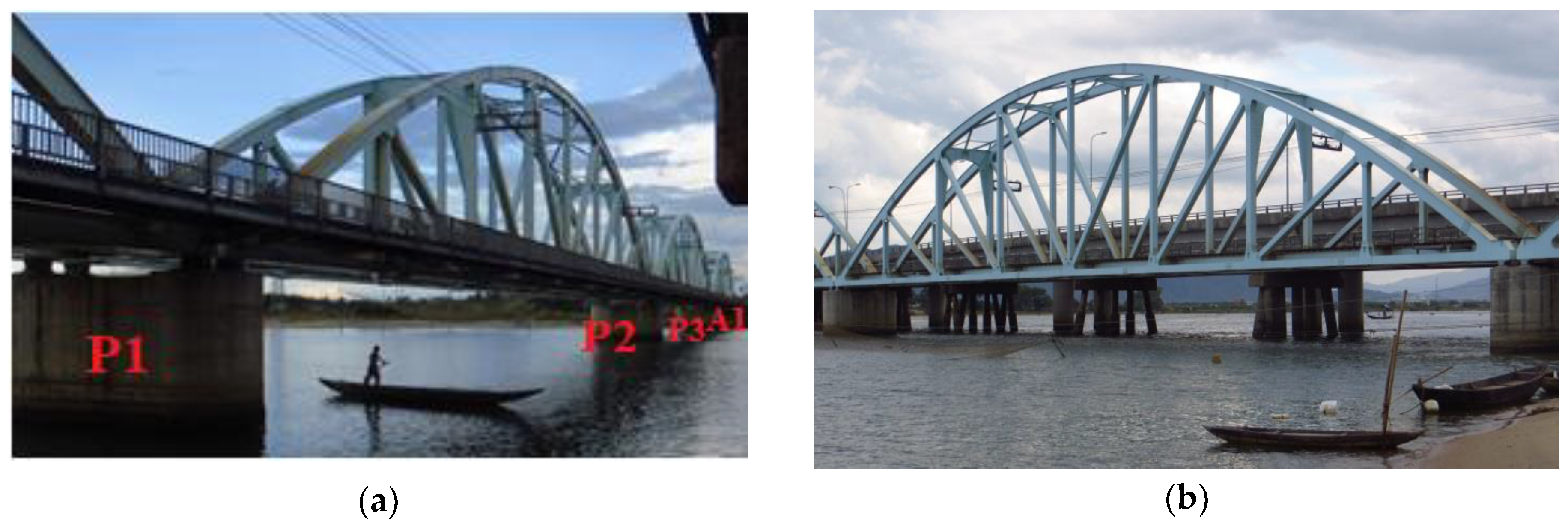
The Nam O Railway Bridge is a large-scale steel truss bridge, located in Da Nang city in the middle of Vietnam. The bridge plays a vital role in connecting train traffic from the north to the south. The Nam O Bridge is constructed in 2011, with funding from the Hanoi–Ho Chi Minh City Line Bridge Safety Improvement Project. The bridge includes four simply supported spans of equal length (75 m). The rail track is placed directly on the stringers of the bridge deck. The abutment on the Hai Van side is referred to as
A-0, whereas the three piers are numbered as
P-1,
P-2, and
P-3, starting from the
A-0 side. The last (forth) span goes from
P-3 to the abutment
A-1 on the Da Nang city side. Some views of the bridge are given in
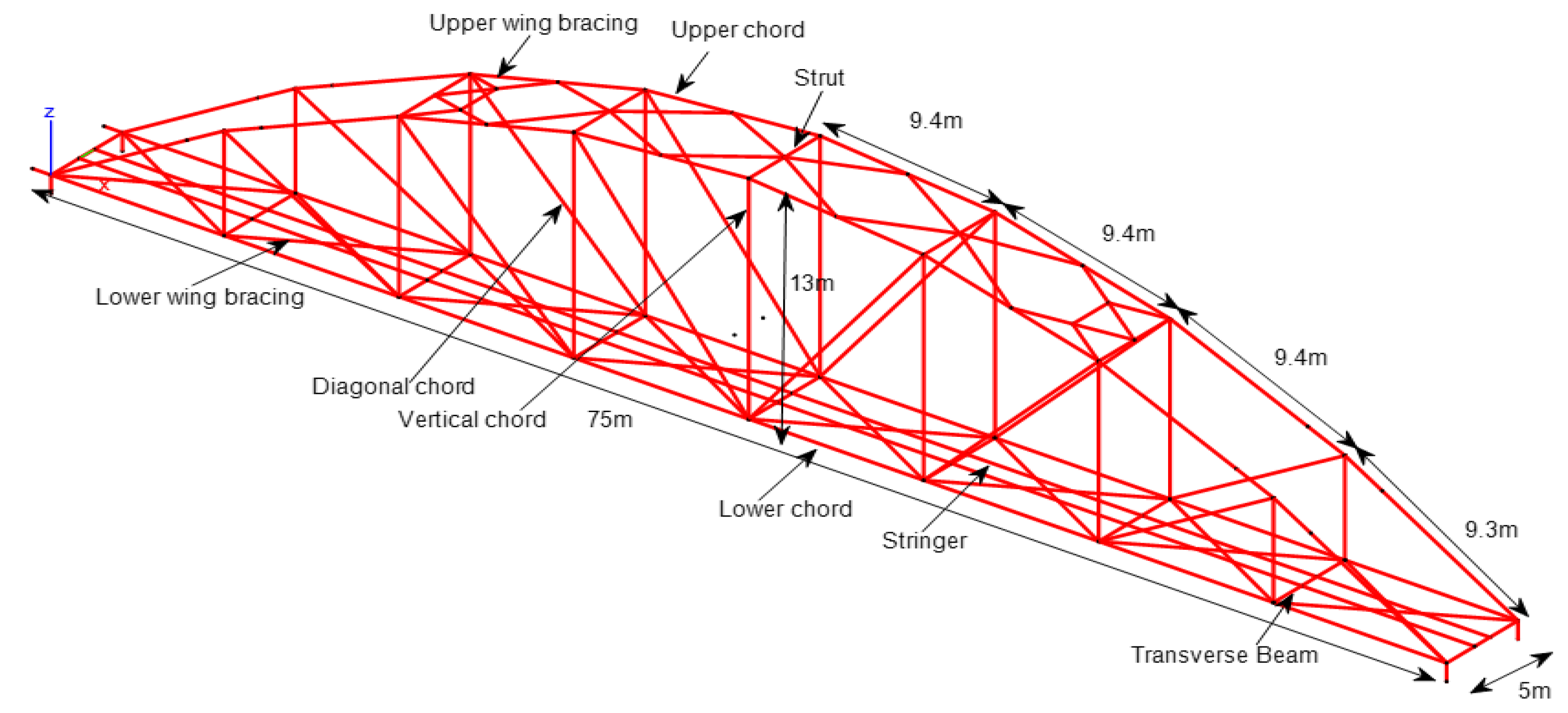
Figure 1.
The truss members are made from steel with a variety of section types such as
I,
L, and Box (
Figure 2), and connected to each other by bolts.
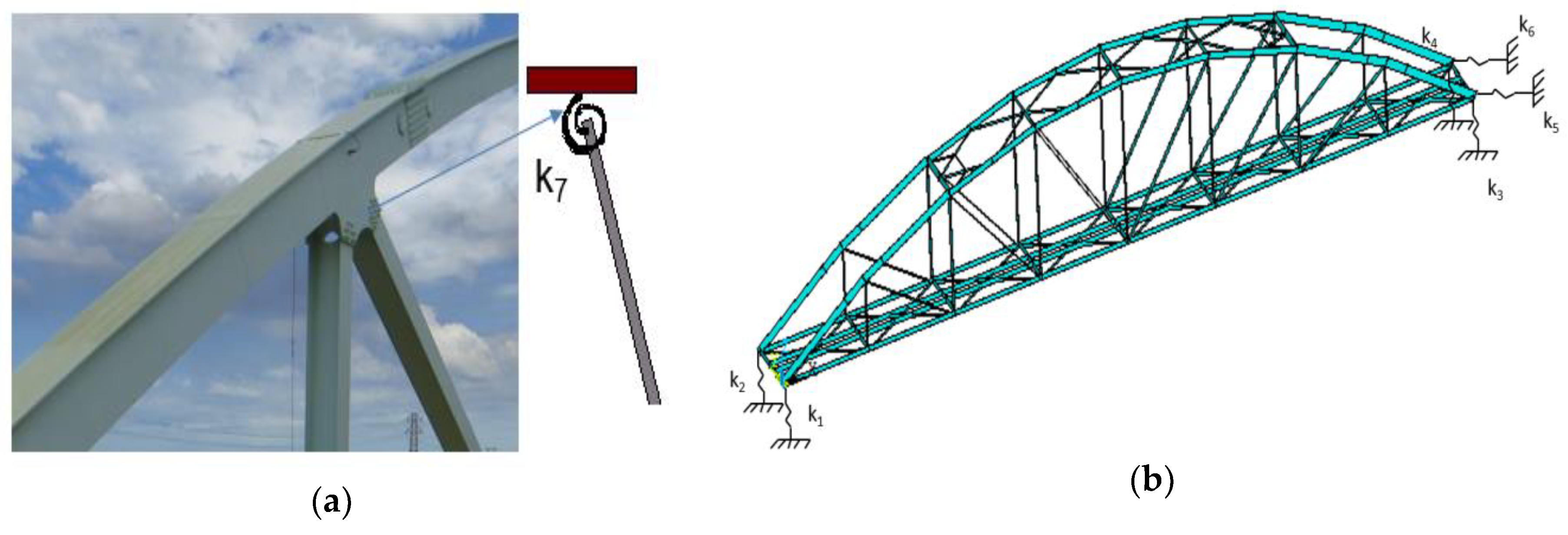
The measured span (the first span from the Hai Van side) is put on rocker and pin bearings. Rocker bearings permit translation and rotation in one direction, while pin bearings only allow rotational movement. The characteristics of rocker and pin bearings (size, stiffness) are collected from catalogues of manufacturers to calculate the parameters of the equivalent springs.
4. Finite Element Model
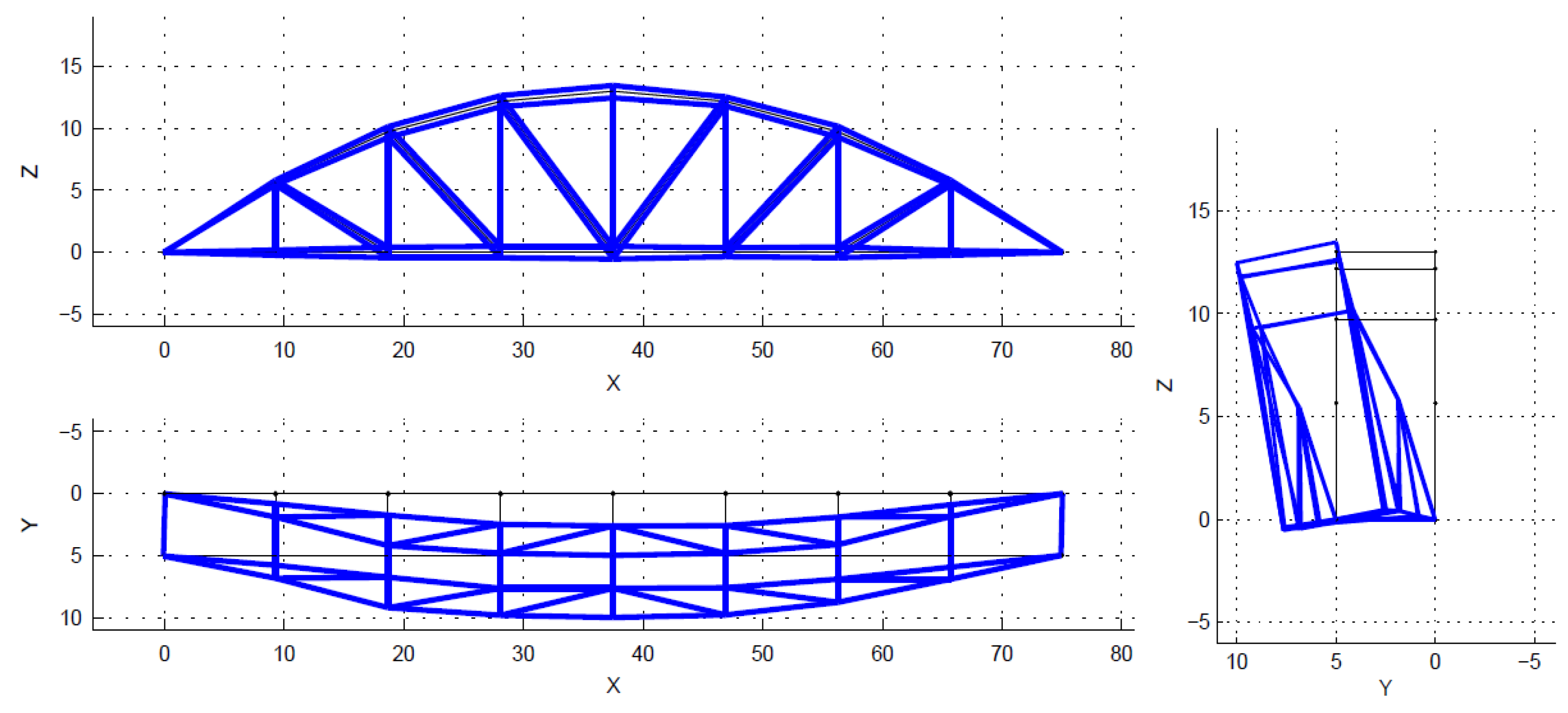
In order to predict structural dynamic behavior, and compare it with that obtained from measurement, a finite element model of Nam O bridge was built by using the MATLAB toolbox StaBil [
34] (see
Figure 12).
The following details describe the FE model:
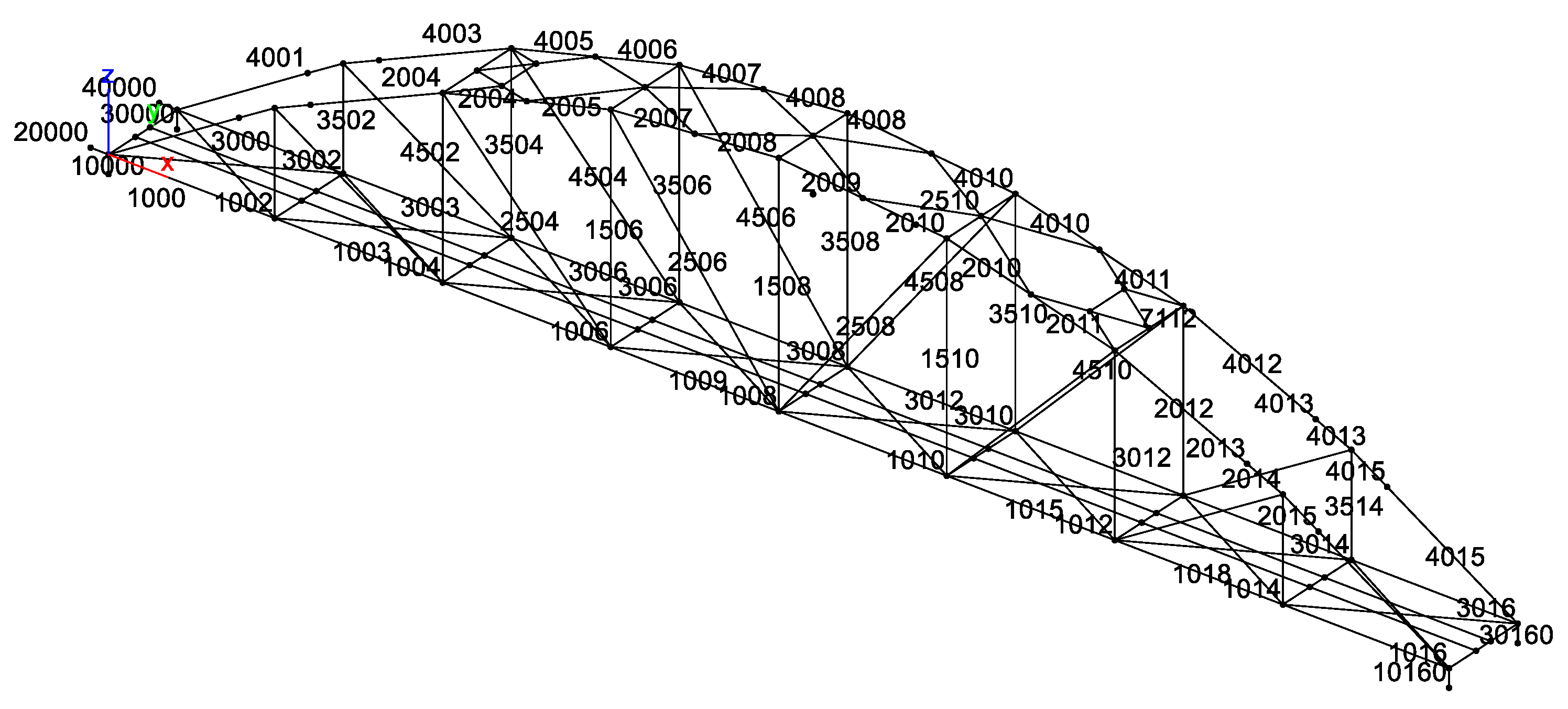
The bridge is modeled by 137 nodes, 227 elements, and nine section types of truss members are used (see
Table 2).
Main structural members are shown in
Figure 2: upper chords, lower chords, vertical chords, diagonal chords, stringers, upper wind bracings, lower wind bracings, and struts, are modeled using three dimensional (
3D) beam elements. This element has six degrees of freedom at each node, including translations in the
x,
y, and
z directions, and rotations around the
x,
y, and
z directions. It is based on Timoshenko beam theory, which includes shear-deformation effects. The element provides options for unrestrained warping and restrained warping of cross-sections. The transverse girders (of the deck system) are also modeled using beam elements.
The global
x-axis is in the longitudinal direction of the bridge; the
z-axis is in the transverse direction (to the river flow direction), and the
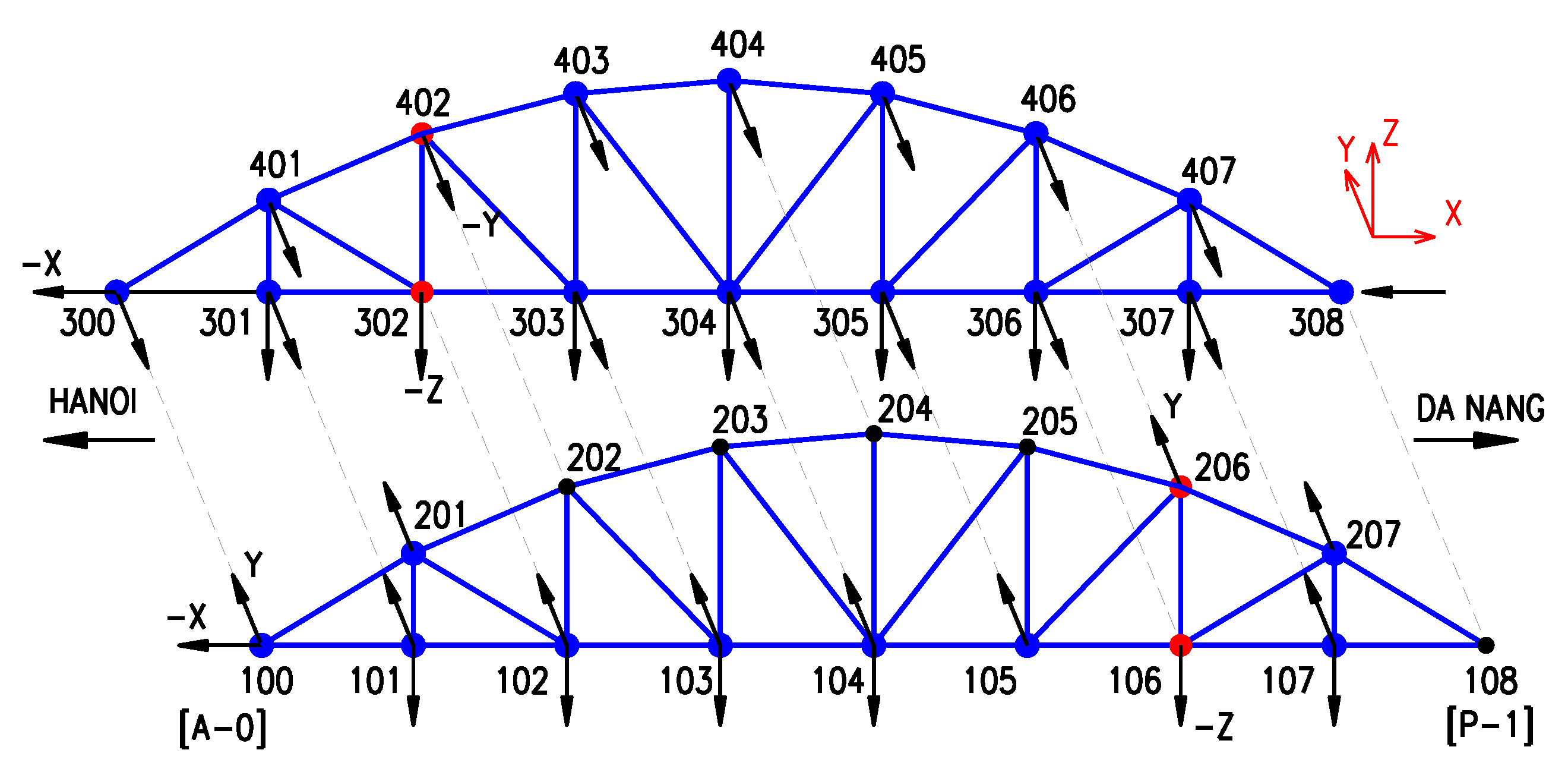
y-axis is in the vertical direction. The left main truss is on the downstream side. Likewise, the right main truss is on the upstream side. Both trusses represent the side view of the bridge (
Figure 1).
Bearings were modeled by using spring elements.
Mass is added to the lower chords: the rail track and non-structural components such as power lines, hand rails, maintenance paths, and protections were estimated at 247.2 km per meter.
Section properties and material properties of structural members are listed in
Table 2 and
Table 3.
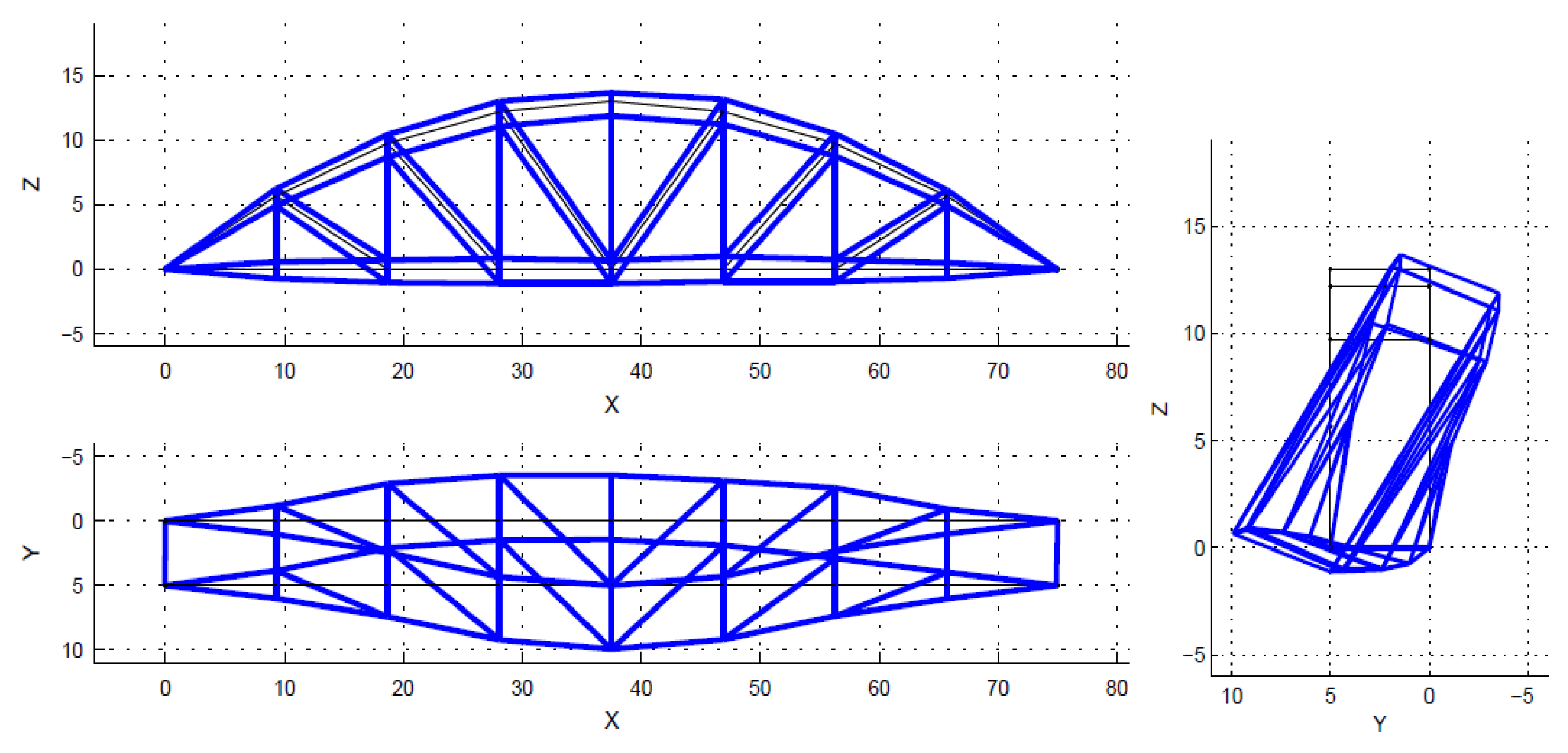
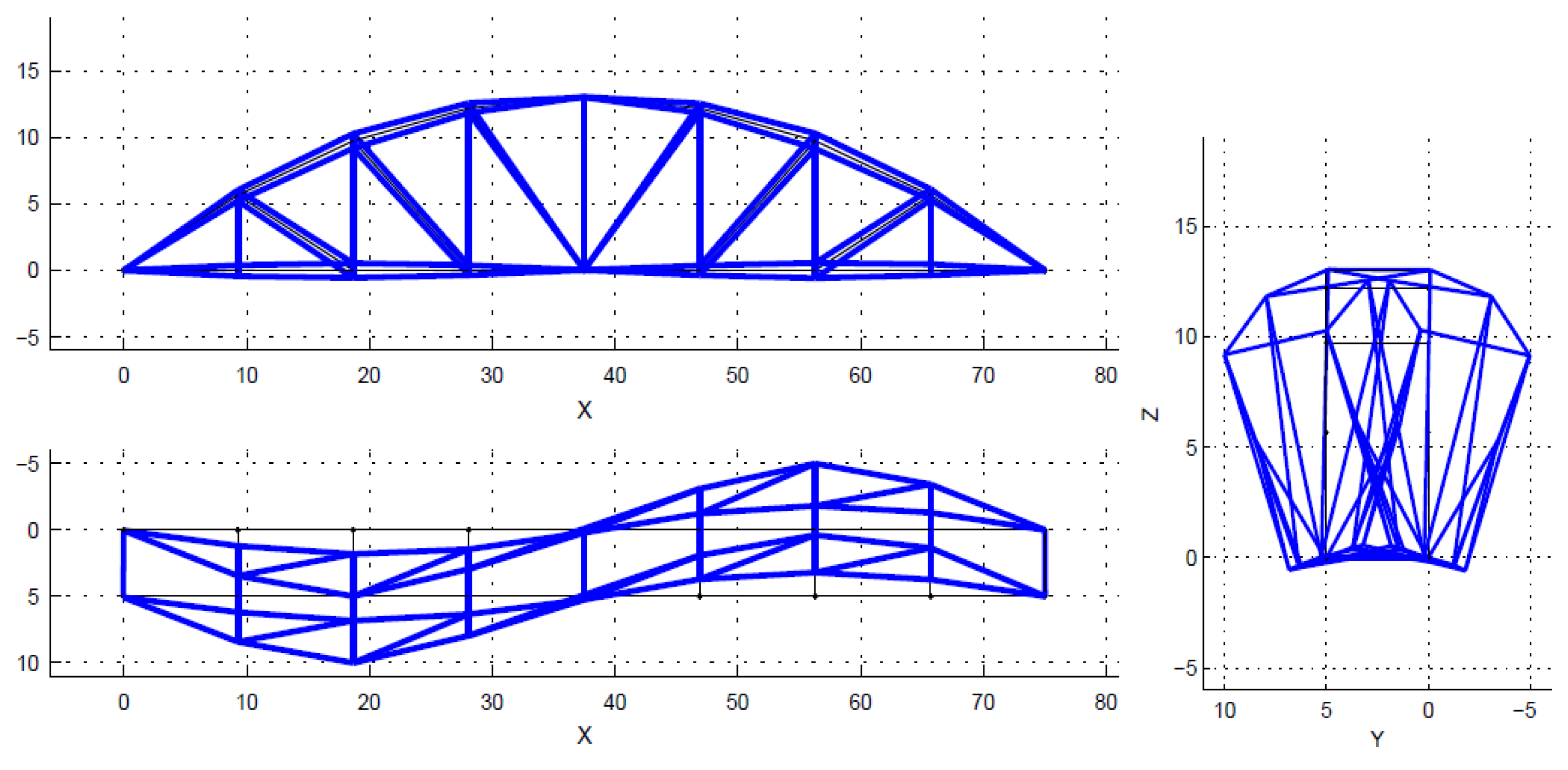
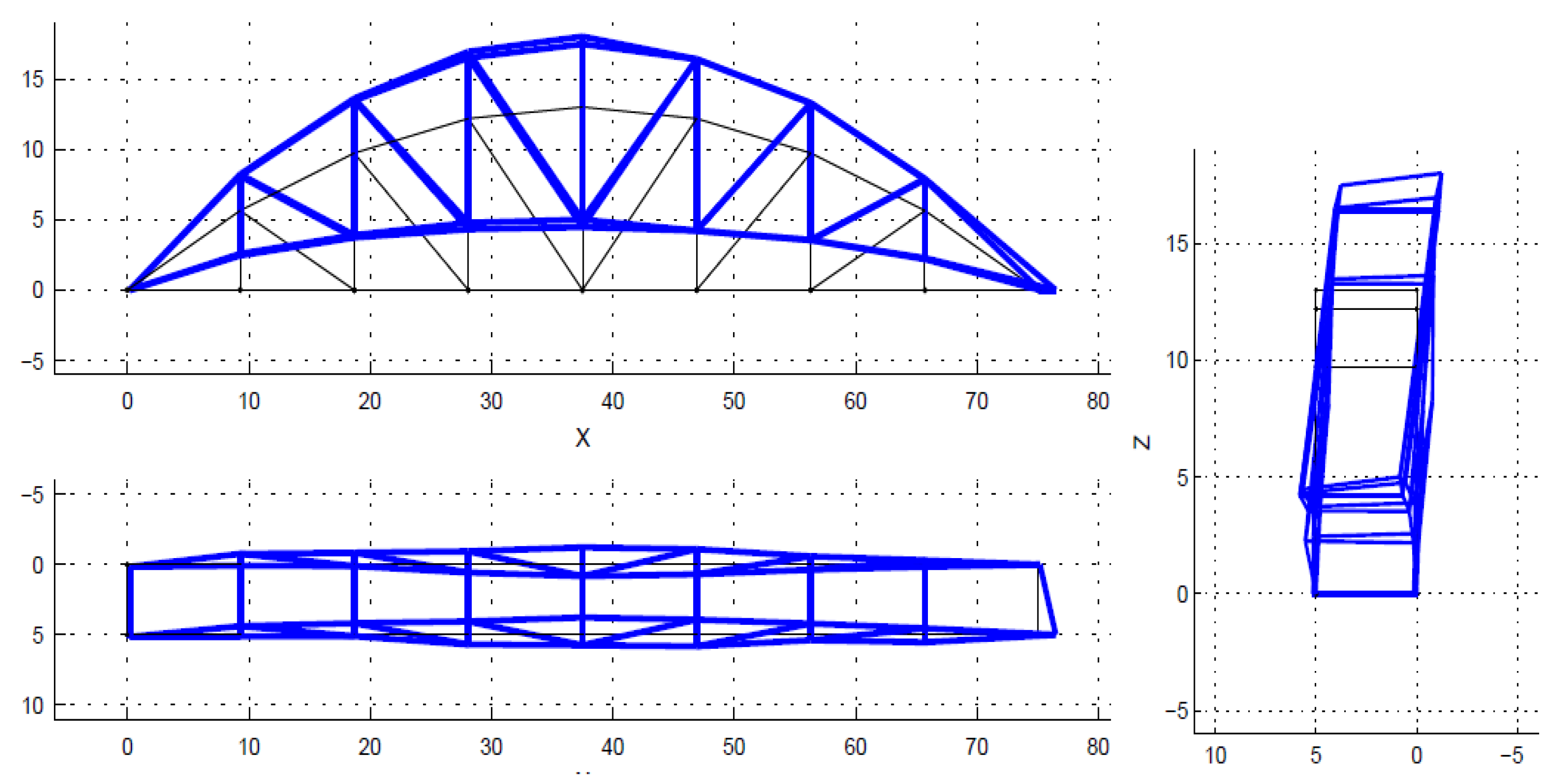
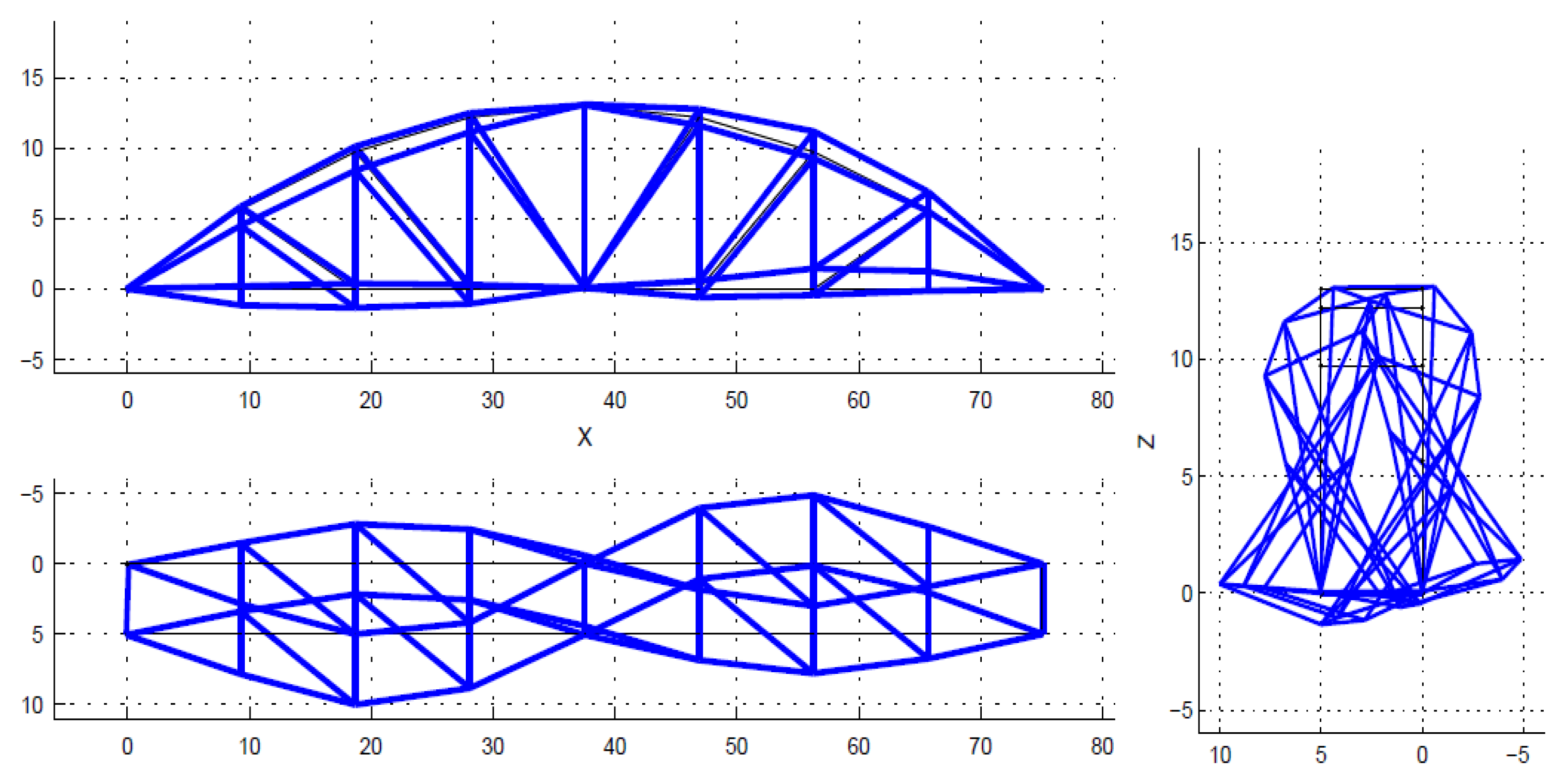
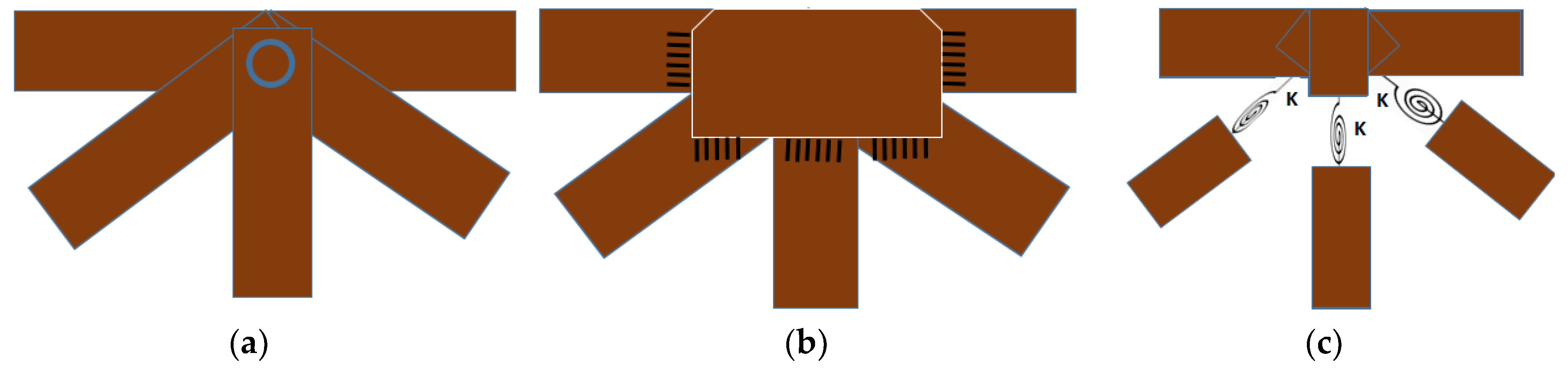
The connection between truss joints: due to the uncertainty of the actual joint stiffness, three possible models of link types are considered: (a) pin, (b) rigid, and (c) semi-rigid. This process can be considered as a trial step to analyze and determine some unknown parameters (uncertainties in material properties, section properties, or joint conditions, etc.).
Case 1: Pin connection
In order to simplify the calculation, researchers as Duerr [
35], Deng et al. [
36], and Saka [
37] assumed that truss members are linked to each other by pin connections (
Figure 13a). In this case, the influence of the rotational stiffness is neglected, and no moments are transferred between the truss members. In a static analysis of truss structures, this link is often applied for the node joints, which have little effect on the result of the force of the truss members, because the moment transfer is insignificant with the axial forces (compression and tension). This is assuming that a pin connection results in a statically determinate structure that can easily be calculated by hand.
Case 2: Rigid connection.
Duerr [
35], and other authors have also applied rigid links (
Figure 13b) for truss joints. Basically, a rigid joint can transfer axial forces (compression, tension), as well as moments between members.
Case 3: Semi-rigid connection.
This link type has recently been applied by many researchers. Luong el al. [
26] determined the stiffness of node joints, when updating a truss structure in laboratory, and found that a semi-rigid connection represent the most accurately the dynamic characteristics of the considered truss structure. Dubina et al. [
27], Csébfalvi [
28], and other researchers applied semi-rigid links (rotational springs) for truss structures. However, most of the aforementioned authors only applied this type of joint in static analysis, whereas a few others employed it to analyze the dynamic analysis of scale models in the laboratory. Rotational springs (
Figure 13c) are often used to present semi-rigid links at truss joints. This study also applied the aforementioned three scenarios of joint conditions to predict structural dynamic behavior of the Nam O Bridge. Linear elastic rotational springs with three degrees of freedom at each node: rotations around the x, y, and z directions are used for vertical chords and diagonal chords, as in
Figure 13c. The original stiffness of rotational springs is estimated according to reference [
26]. The results are given in
Table 4 and
Figure 14.
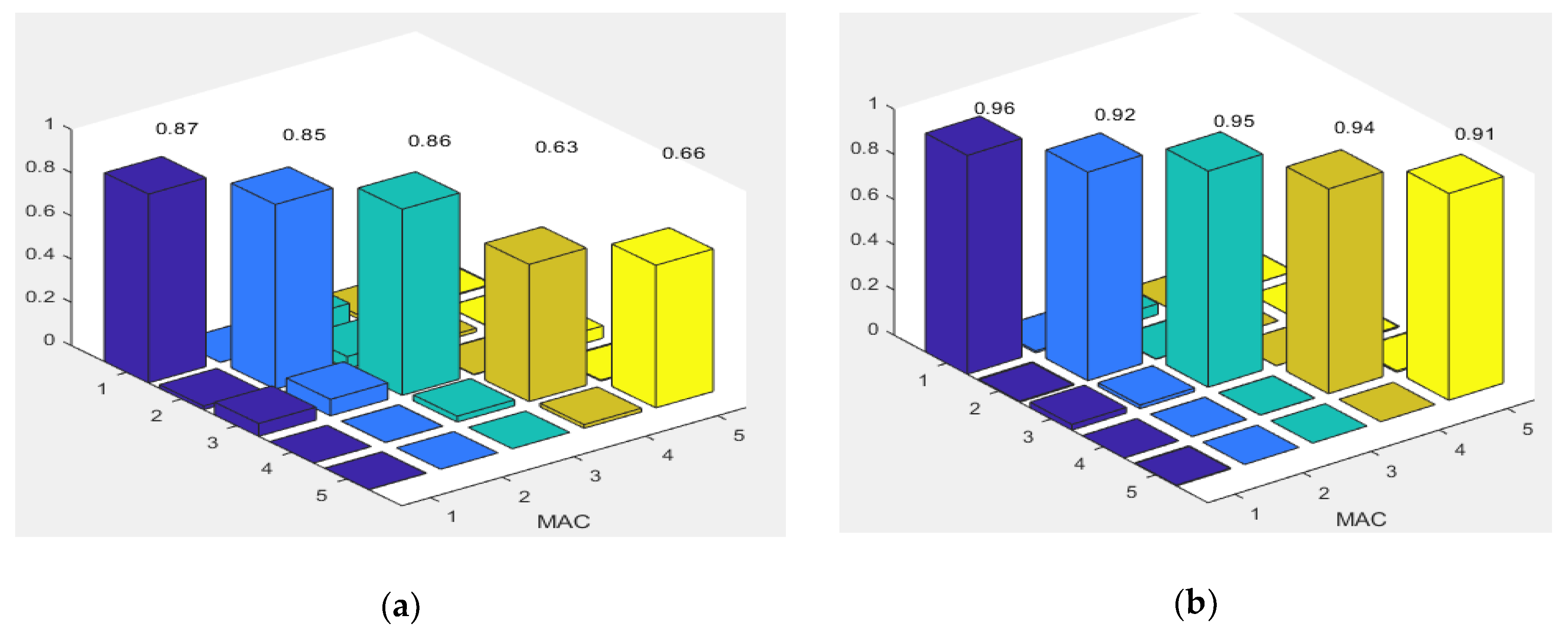
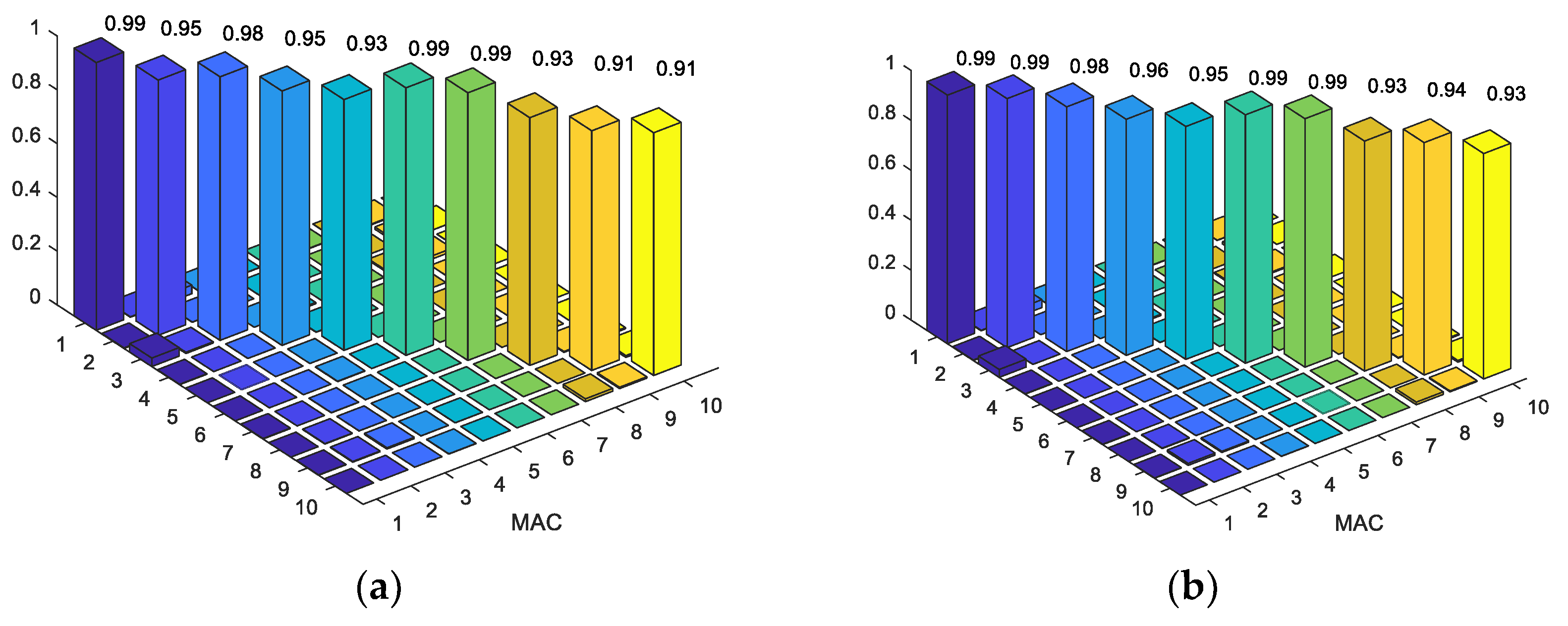
Table 4 demonstrates that the FE model of a truss bridge with a pinned connection do not predict the behavior of the Bridge properly. The frequencies of the first five modes are lower than those of the measurement. The result of the FE model with rigid connection is also not satisfactory in comparison to the experimental one. Specifically, there are deviations between the frequencies calculated from FEM, and the measurements (from 26% to 36%). All frequencies from the FE model were higher than those from the experiment. Rigid links make the structure stiffer than in reality, while the truss members in Nam O Bridge are linked with each other by bolts. Additionally, MAC values (
Figure 14a) that are lower than 0.9 indicate the difference between the mode shapes of the FE model, and the measurement. The model with a semi-rigid connection provides improved simulated modal results, in comparison to the experimental ones. There is a small deviation between the frequencies that are calculated from FEM, and the measurement (around 1%, apart from mode 5 having 13%). MAC values (
Figure 14b) higher than 0.9 indicate a consistent correspondence between the numerical model and the measurement [
38,
39]. However, it is necessary to update some uncertain parameters, such as: Young’s modulus, and the stiffness of springs at bearings and truss joints to obtain the best correspondence between the theoretical and experimental results.