Article

Accelerometric Trunk Sensors to Detect Changes of Body Positions in Immobile Patients


1
Schoen Clinic Bad Aibling, Kolbermoorer Strasse 72, 83043 Bad Aibling, Germany
2
Institute for Regenerative Medicine, University of Zurich, Wagistrasse 12, 8952 Schlieren, Switzerland
3
Institute for Stroke and Dementia Research, University of Munich Medical Center, Feodor-Lynen-Strasse 17, 81377 Munich, Germany
4
German Center for Vertigo and Balance Disorders, University of Munich Medical Center, Marchioninistrasse 15, 81377 Munich, Germany
5
Department of Neurology, University of Munich Medical Center, Marchioninistrasse 15, 81377 Munich, Germany
*
Author to whom correspondence should be addressed.
Sensors 2018, 18(10), 3272; https://doi.org/10.3390/s18103272
Submission received: 14 July 2018 / Revised: 19 September 2018 / Accepted: 24 September 2018 / Published: 28 September 2018

Abstract

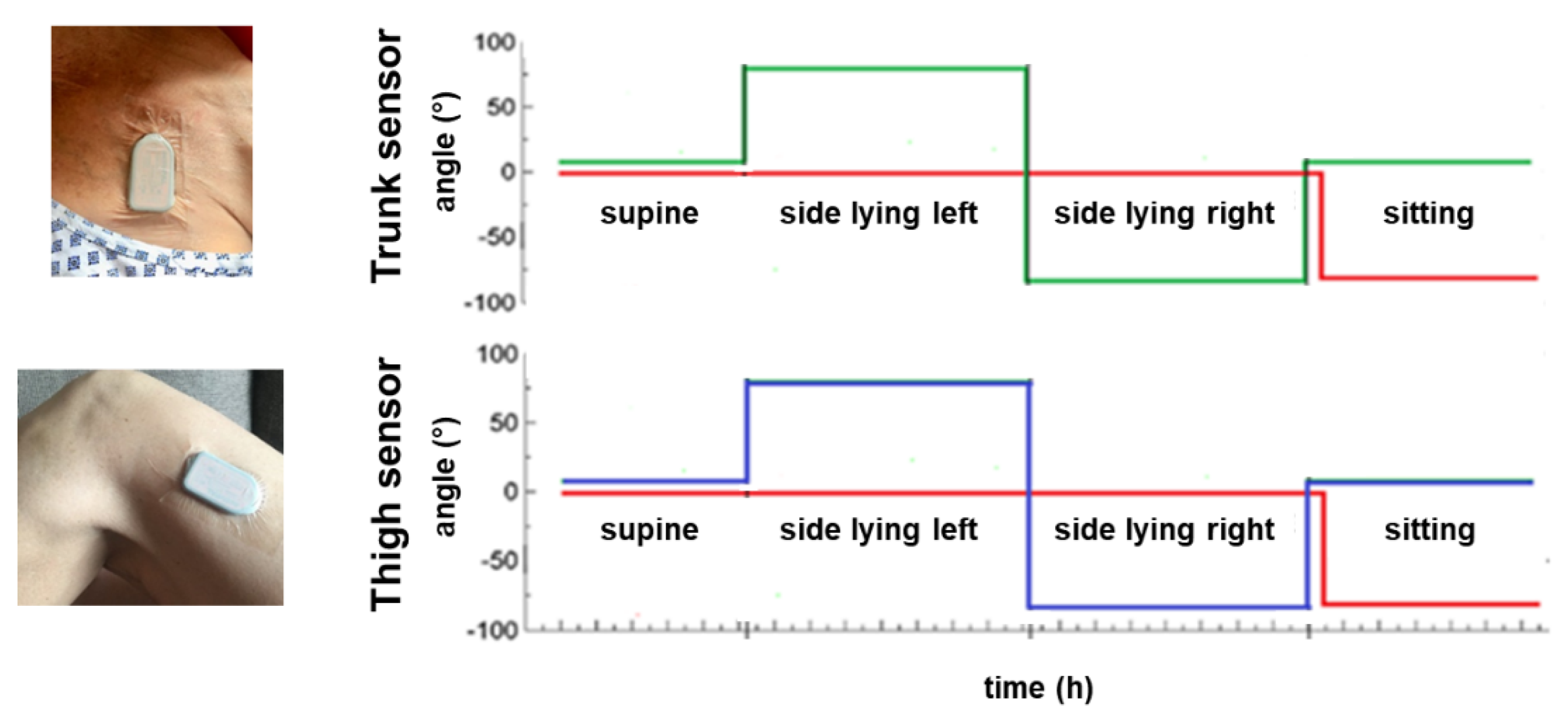
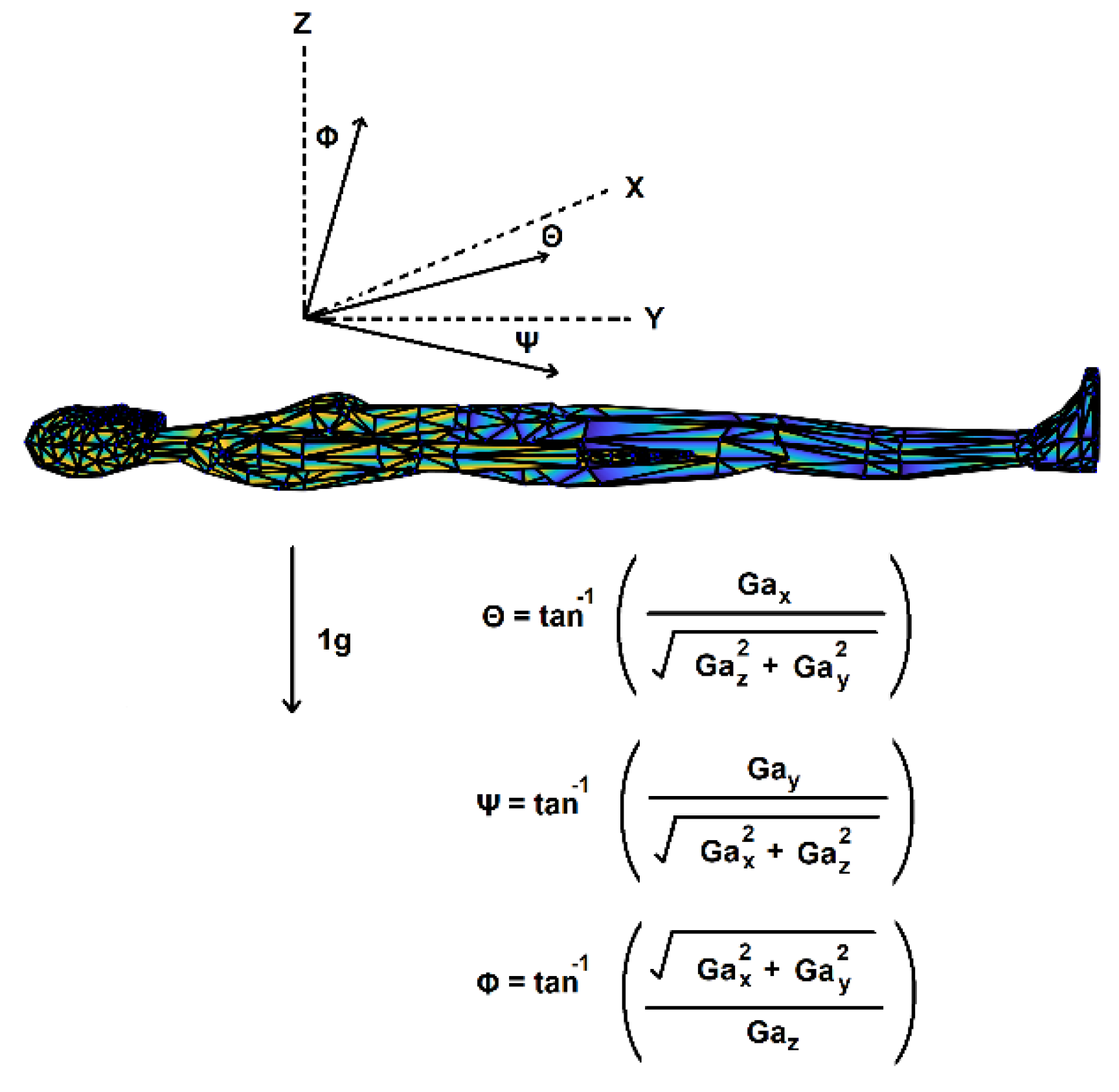
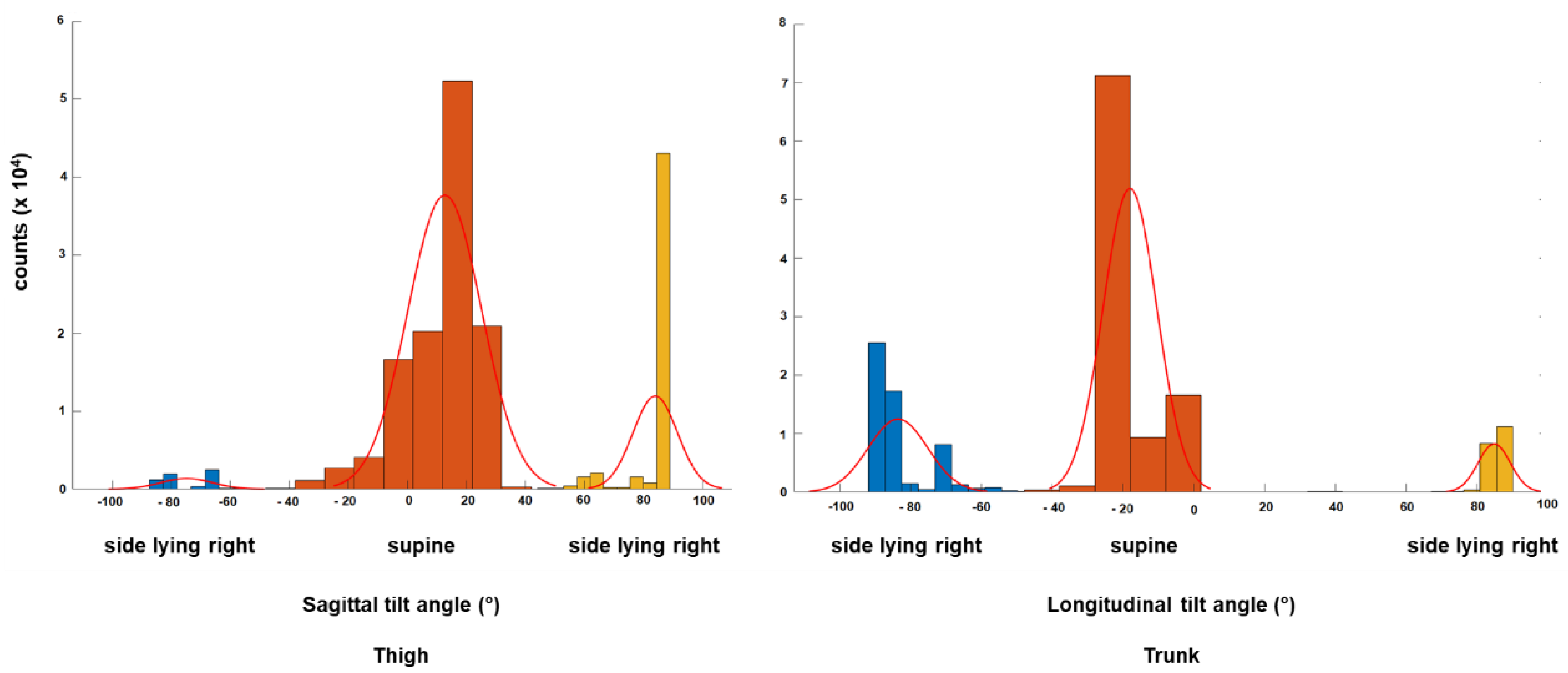
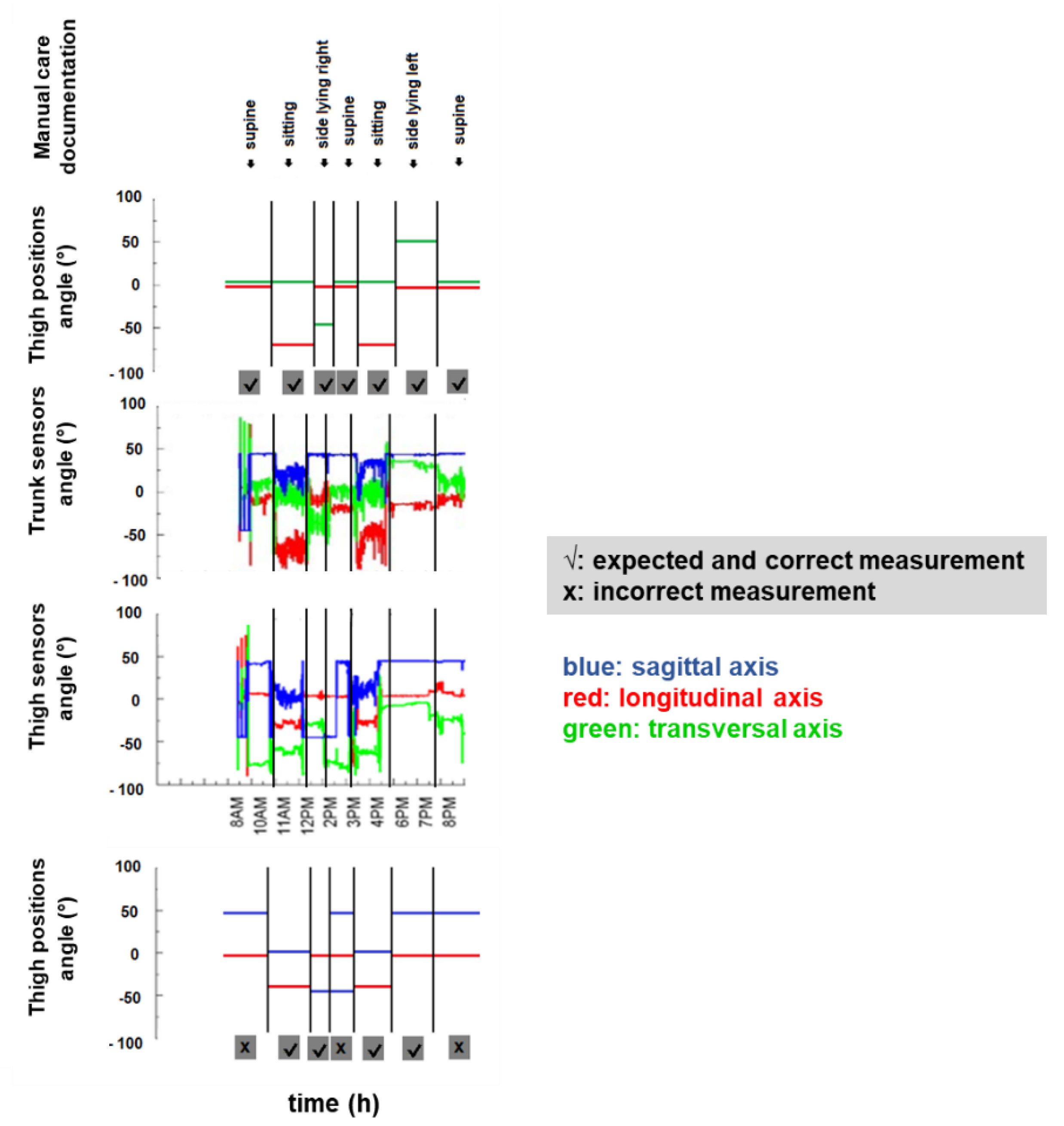
Mobilization, verticalization and position change are mandatory for severely affected neurological patients in early neurorehabilitation in order to improve neurological status and prevent complications. However, with the exception of hospitals and rehabilitation facilities, this activity is not usually monitored and so far the automated monitoring of position changes in immobile patients has not been investigated. Therefore, we investigated whether accelerometers on the upper trunk could reliably detect body position changes in immobile patients. Thirty immobile patients in early neurorehabilitation (Barthel Index ≤ 30) were enrolled. Two tri-axial accelerometers were placed on the upper trunk and on the thigh. Information on the position and position changes of the subject were derived from accelerometer data and compared to standard written documentation in the hospital over 24 h. Frequency and duration of different body positions (supine, sidelying, sitting) were measured. Data are presented as mean ± SEM. Groups were compared using one-way ANOVA or Kruskal-Wallis-test. Differences were considered significant if p < 0.05. Trunk sensors detected 100% and thigh sensors 66% of position changes (p = 0.0004) compared to standard care documentation. Furthermore, trunk recording also detected additional spontaneous body position changes that were not documented in standard care (81.8 ± 4.4% of all position changes were documented in standard care documentation) (p < 0.0001). We found that accelerometric trunk sensors are suitable for recording position changes and mobilization of severely affected patients. Our findings suggest that using accelerometers for care documentation is useful for monitoring position changes and mobilization frequencies in and outside of hospital for severely affected neurological patients. Accelerometric sensors may be valuable in monitoring continuation of care plans after intensive neurorehabilitation.
Keywords: accelerometric trunk sensors; accelerometry; changes of body positions in immobile patients; early neurorehabilitation; monitoring mobilization frequency; polyneuropathy; quantification of body position and mobility; traumatic brain injury; stroke accelerometric trunk sensors; accelerometry; changes of body positions in immobile patients; early neurorehabilitation; monitoring mobilization frequency; polyneuropathy; quantification of body position and mobility; traumatic brain injury; stroke