Article

Towards an Improved LAI Collection Protocol via Simulated and Field-Based PAR Sensing
1
Chester F. Carlson Center for Imaging Science, Rochester Institute of Technology, 54 Lomb Memorial Drive, Rochester, NY 14623, USA
2
Department of Geography, University College London, Pearson Building, Gower Street, London WC1E 6BT, UK
*
Author to whom correspondence should be addressed.
Sensors 2016, 16(7), 1092; https://doi.org/10.3390/s16071092
Submission received: 7 June 2016 / Revised: 5 July 2016 / Accepted: 7 July 2016 / Published: 14 July 2016
(This article belongs to the Section Remote Sensors)

Abstract

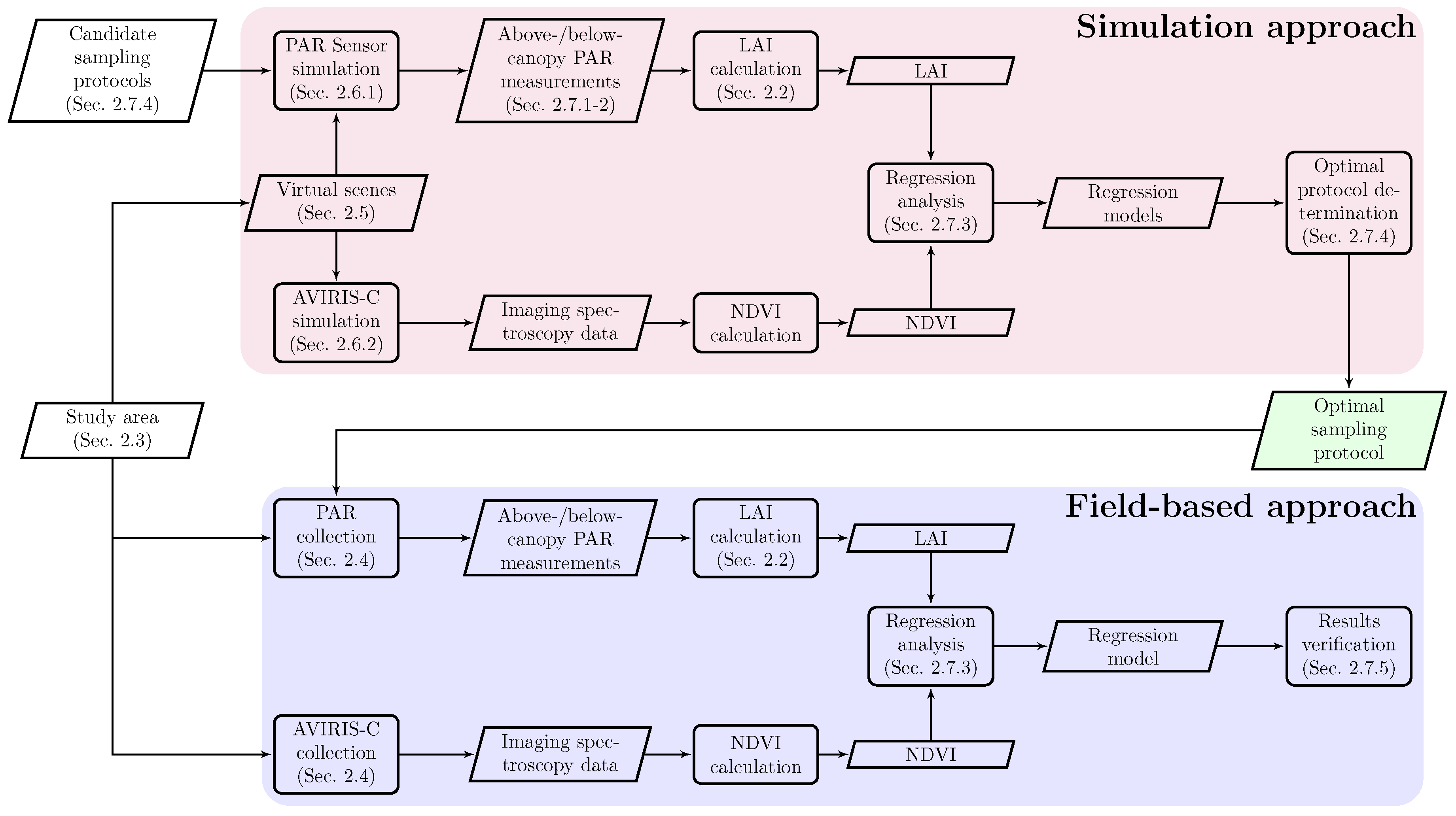
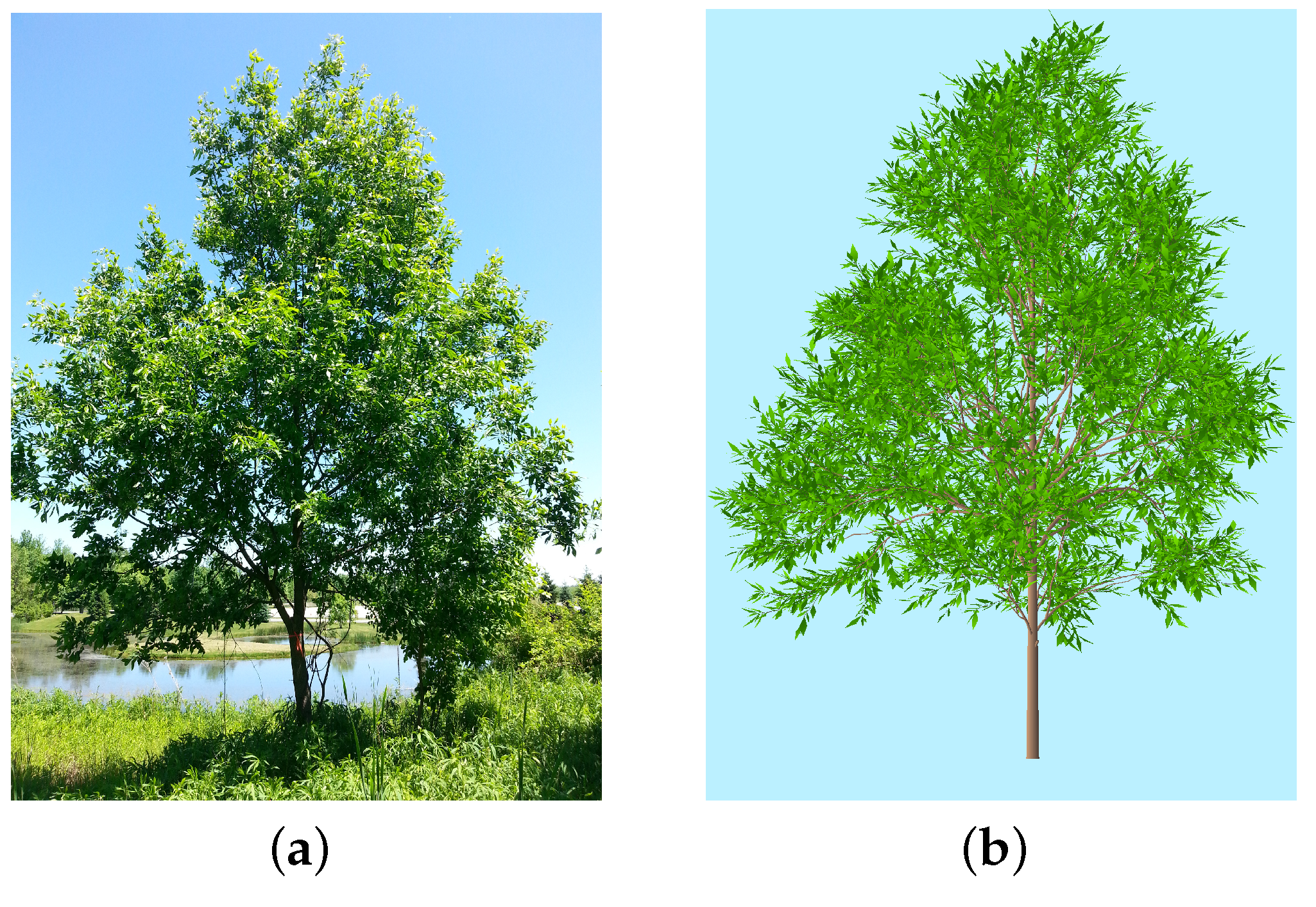
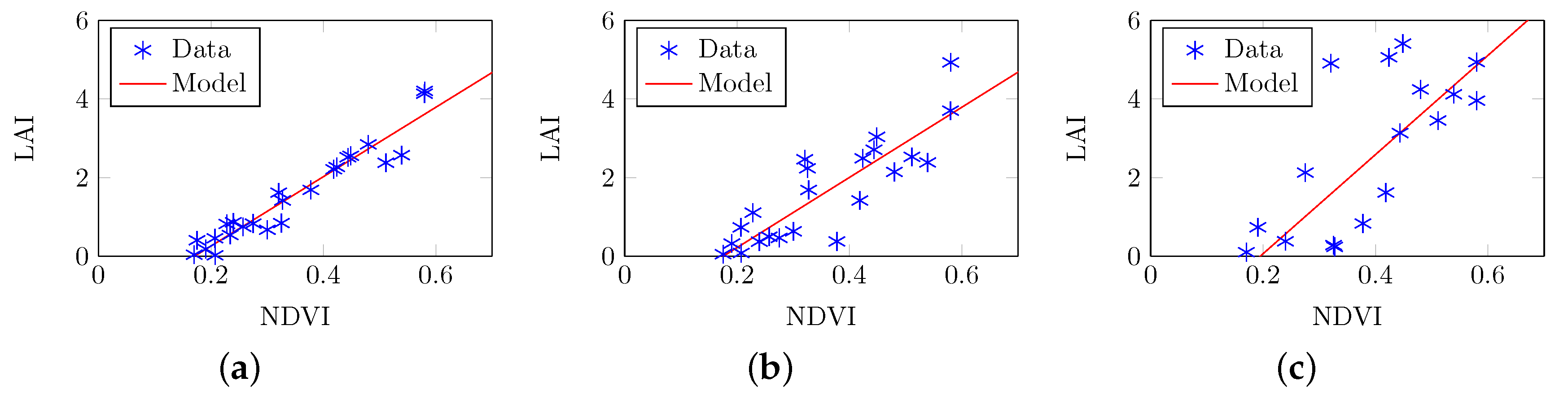
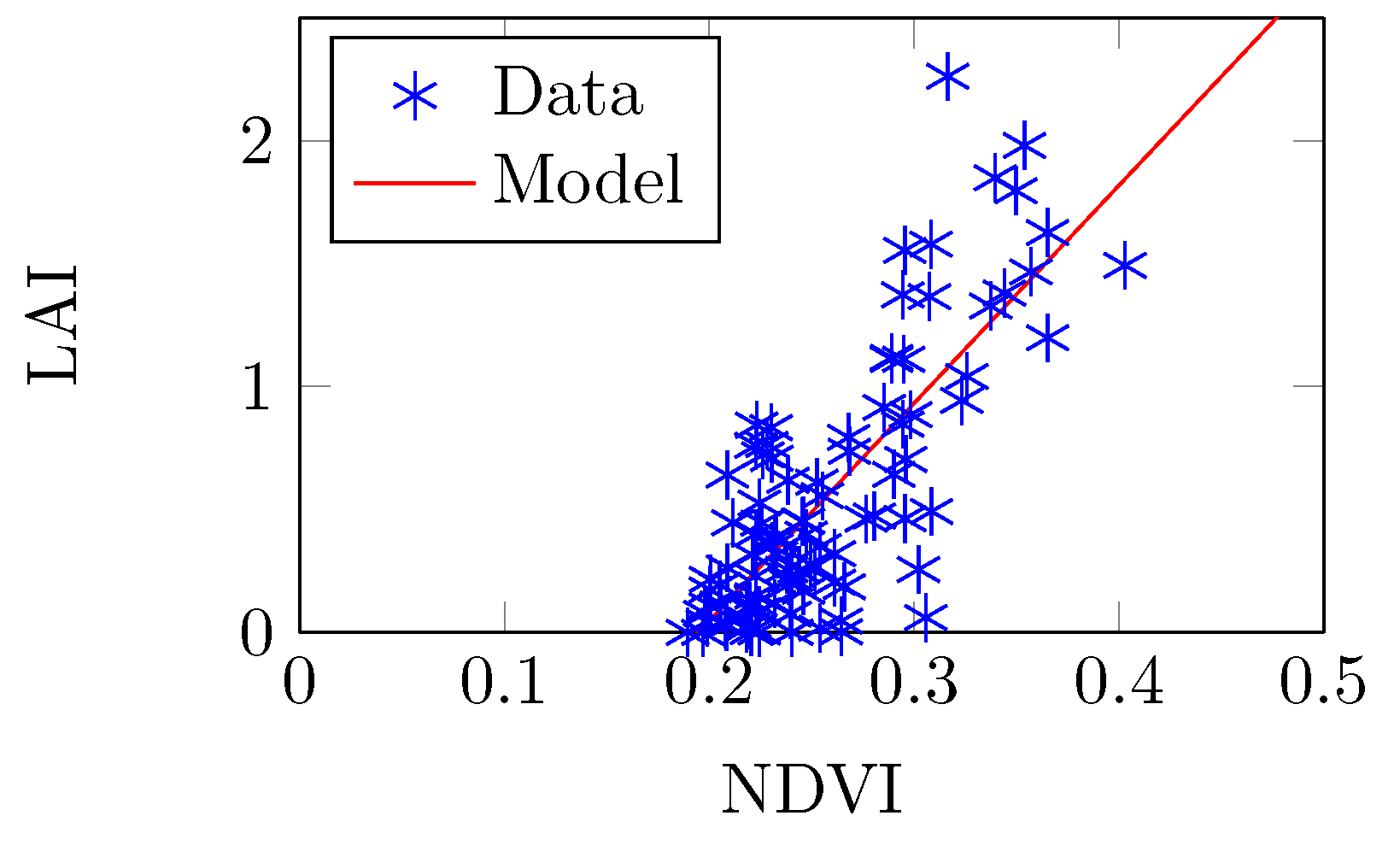
In support of NASA’s next-generation spectrometer—the Hyperspectral Infrared Imager (HyspIRI)—we are working towards assessing sub-pixel vegetation structure from imaging spectroscopy data. Of particular interest is Leaf Area Index (LAI), which is an informative, yet notoriously challenging parameter to efficiently measure in situ. While photosynthetically-active radiation (PAR) sensors have been validated for measuring crop LAI, there is limited literature on the efficacy of PAR-based LAI measurement in the forest environment. This study (i) validates PAR-based LAI measurement in forest environments, and (ii) proposes a suitable collection protocol, which balances efficiency with measurement variation, e.g., due to sun flecks and various-sized canopy gaps. A synthetic PAR sensor model was developed in the Digital Imaging and Remote Sensing Image Generation (DIRSIG) model and used to validate LAI measurement based on first-principles and explicitly-known leaf geometry. Simulated collection parameters were adjusted to empirically identify optimal collection protocols. These collection protocols were then validated in the field by correlating PAR-based LAI measurement to the normalized difference vegetation index (NDVI) extracted from the “classic” Airborne Visible Infrared Imaging Spectrometer (AVIRIS-C) data ( R 2 was 0.61). The results indicate that our proposed collecting protocol is suitable for measuring the LAI of sparse forest (LAI < 3–5 ( m 2 / m 2 )).
Keywords: HyspIRI; AVIRIS; DIRSIG; leaf area index; photosynthetically active radiation HyspIRI; AVIRIS; DIRSIG; leaf area index; photosynthetically active radiation
Graphical Abstract