Article

Benthic Foraminiferal-Based Ecological Indices to Monitor Coastal Habitat Health of Jobos Bay, Puerto Rico


by
Angelique Rosa Marín
1,2,*,
Pamela Hallock
1 and
Michael Martínez-Colón
2
1
College of Marine Science, University of South Florida, 830 1st St. S., St. Petersburg, FL 33701, USA
2
School of the Environment, Florida A&M University, 1515 S. MLK Blvd., Tallahassee, FL 32303, USA
*
Author to whom correspondence should be addressed.
Diversity 2026, 18(8), 462; https://doi.org/10.3390/d18080462
Submission received: 17 March 2026 / Revised: 12 April 2026 / Accepted: 18 July 2026 / Published: 30 July 2026
(This article belongs to the Section Marine Diversity)

Abstract

The Jobos Bay National Estuarine Research Reserve (JBNERR) includes the largest bay on the southern coast of Puerto Rico. The reserve includes diverse habitats ranging from mangrove forests, shallow lagoons, seagrass beds, cays and coral reefs, with a broad range of environmental gradients between the populated coastal plain and the oligotrophic Caribbean Sea. As the only research reserve in the region, resource managers seek cost-effective and reliable processes to restore and promote ecosystem health in the reserve. Benthic foraminiferal assemblages are widely applied bioindicators for assessing coastal environments, notably coral reefs and seagrass ecosystems. This study evaluated the applicability of three indices, the FoRAM Index (FI), the Epiphytic FoRAM Index (FI′), and the Long vs. Short Life-Span Index (ILS), to assess bayside and reef habitats bordering three cays of Jobos Bay. Surficial sediment samples were collected in 2018 and 2019. Environmental data included sediment composition (e.g., texture, total organic content) and water quality (e.g., nutrients and pH). From a total of 57 samples, 4671 individuals were counted, representing 35 genera. Cluster analysis based on genus-level relative abundances revealed four main groups: Dominant (>10%), Common (5–10%), Occasional (1–4%), and Rare (<1%). Dominant genera included Quinqueloculina (24%) and Amphistegina (18%). Common taxa included smaller rotaliids such as Rotorbinella (6%) and miliolids such as Pyrgo (5%). Twelve genera were occasional, including Triloculina (4%) and Elphidium (3%). Tests of 16 genera occurred rarely (<1%), including agglutinated taxa such as Textularia and stress-tolerant forms like Bolivina. In total, FI values ranged from 1.3 to 9.6, FI′ from 1.9 to 9.7, and ILS from 0.5 to 30.6. Bayside samples scored generally lower compared to reef samples. In summary, foraminiferal assemblages and associated bioindices indicated that environmental conditions supported Foraminifera that host algal symbionts in the reef environments and the prevalence of macroalgae and seagrass in the bayside benthos.

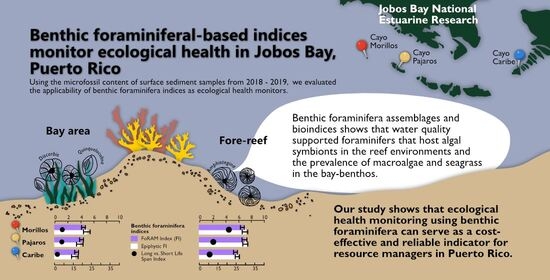
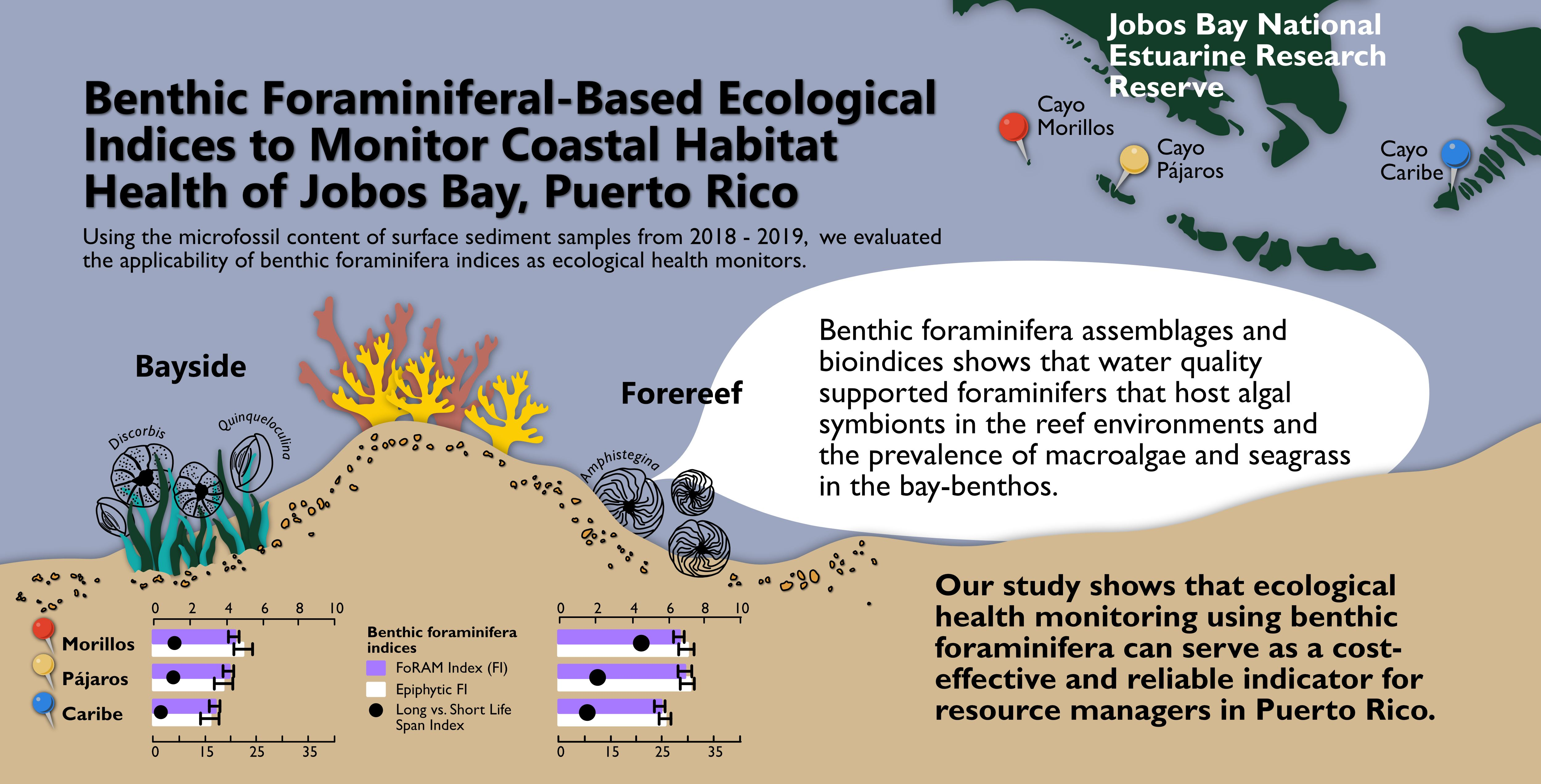
Graphical Abstract

1. Introduction

1.1. Modern Benthic Foraminifera as Bioindicators

Establishing effective and practical bioindicators for coastal environmental monitoring has been a scientific challenge [1,2,3,4]. Bioindicators are organisms that reflect and/or record the conditions in an environment [5,6,7]. Conditions can be characterized using their abundance, assemblage structure, morphologies or ecological requirements in an environment. From a coastal management and conservation perspective, the use of bioindicators presents an approach to evaluate habitat quality in an effective and specific way. To establish a bioindicator in a monitoring and management plan, background information regarding the environmental setting, biodiversity and community ecology is essential.
Modern benthic Foraminifera (aka “forams”) are among the most diverse and abundant shelled protist groups in the oceans. They have been used as indicators of environmental changes and pollutants for more than 70 years [8,9,10]. They are reliable bioindicators for numerous reasons: their tests can leave a record in the sediment, they have relatively fast turnover, they are sensitive or resilient to changes in their immediate environment (anthropogenic or natural stressors), they are niche-specific, and they are practical and cost-effective organisms. Taxa differ in ways of feeding, locomotion and substrate preference, and include opportunists, specialists, and a broad range of diversity across environmental gradients.
The rich diversity and particular ecologies of benthic forams provide unique opportunities to create metrics to inform coastal-habitat quality. Ecological indices have been created based on the quantification of foram morphotypes or functional groups for a variety of coastal habitats and geographic regions. Examples of indices created for non-reefal environments include the Foram-AMBI [11] and the Foram Stress Index [12], which were developed to assess environmental conditions based upon foraminiferal assemblages and their responses to stressors in soft sediments such as tidal and mud flats. The FoRAM Index (FI) [5] was developed to evaluate water-quality conditions in coral reef environments. It is based upon the proportions of three functional groups: larger benthic forams (LBF), which host algal endosymbionts; stress-tolerant forams (STF), which thrive under high fluxes of organic matter and intermittent low oxygen; and other smaller taxa (OSF) adapted to intermediate ranges of food availability and a wide variety of microhabitats.
The FI has been applied in tropical and subtropical regions worldwide, including Brazil [13,14], the Virgin Islands [15], several areas in the western and southwestern Caribbean [16,17,18,19,20], and into non-reefal environments, particularly in the western Atlantic and Mediterranean [21,22]. Researchers working in Mediterranean waters developed the Epiphytic FoRAM Index (FI′), which is a seagrass-adapted modification of the FI based on the Langer [23] morphotype classifications. The FI’ utilizes five categories considering the ecological functions of epiphytic forams in Posidonia oceanica meadows in the Mediterranean [24,25]. Similarly, the Long- vs. Short Life-Span Index (ILS) is a complementary index derived from the FI’ that distinguishes between epiphytic forams with short versus long life spans, emphasizing that long-lived taxa indicate relative community stability. Together, FI’ and ILS provide a framework for evaluating habitat quality and community-level responses to environmental stress in seagrass systems.
Studies in Puerto Rico have long utilized forams in the assessment of coastal health. The pioneering work by George Seglie [9,10] utilized forams as environmental indicators of organic-matter pollution. Modern benthic foraminiferal assemblages from La Parguera were used in the development of the FI [5], which compared favorably with other indicators in a subsequent study [7]. Studies of foram assemblages have been carried out in both Torrecillas lagoon (San Juan Bay Estuary) [26,27] and Jobos Bay, in southeast Puerto Rico [28,29].

1.2. Study Area and Research Objectives

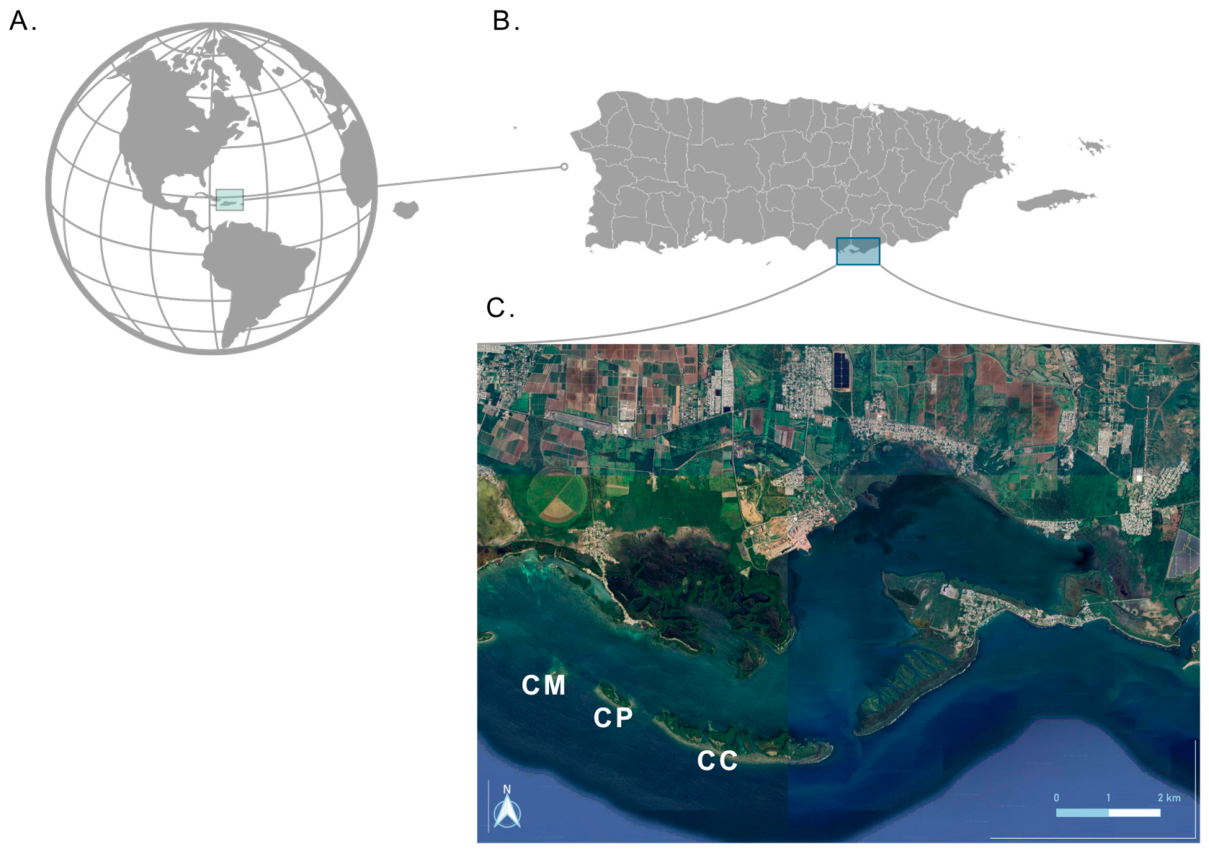
Jobos Bay, a National Estuarine Research Reserve (JBNERR), is a dynamic estuary composed of a complex network of coastal habitats including mangroves, extensive areas of minimally vegetated sediments, seagrasses, algal habitats and coral reefs [30]. Located in the second-largest coastal plain in Puerto Rico (Figure 1), the watershed historically has been impacted by pollutants from agricultural and industrial practices [31,32,33], in addition to a long history of hurricane-induced coastal alterations [33]. The estuary is susceptible to terrestrial runoff triggered by episodes of seasonal heavy rainfall, such that the influx of dissolved nutrients, among other pollutants, has affected the water quality [30]. Thus, reserve resource managers seek cost-effective tools to enhance coastal monitoring and management practices in response to watershed alterations and both point- and non-point sources of pollution.
The interconnected nature of coastal habitats and the management needs of the JBNERR provided an opportunity to further test and compare foraminiferal-based ecological indices. This study compared two major indices: the FI, which has been applied in coral-reef environments worldwide ([34] and references therein), and the seagrass-adapted index, the FI′ [24]. The objectives of this study were to: (a) characterize foraminiferal assemblages in the bayside and forereef zones of three cays: Cayo Morillo, Cayo Pájaros and Cayo Caribe (Figure 1C), using the FI and FI’ classifications; (b) compare both indices across habitats; and (c) examine relationships between these indices and environmental parameters.

2. Materials and Methods

2.1. Sample Collection and Analyses

A total of 58 sediment samples were collected (Appendix A, Table A1) as part of a broader seasonal study [28]. In summary, sampling took place in March, September, and December 2018, and in March, August, and December 2019. Water samples were analyzed for nutrients (NH4, PO4, NOx and NO2), total chlorophyll (TCHL) and suspended solids (TSS), in addition to physio-chemical parameters (temperature [Temp], pH, salinity [Sal] and dissolved oxygen [DO]) recorded with a multiparameter sonde (YSI-EXON2®). Surficial sediment samples (~20 g each) were collected in small plastic bags or Nalgene jars by scuba diving, snorkeling or using a small dredge, depending on depth and bottom type. In total, 41 surficial sediment samples were collected on the bay side and 17 in the fore reef. Samples were dried and split to assess benthic forams, sediment composition (organic carbon [%OC] and calcium carbonate [%CA]), and texture (grain-size and phi-values). A subsample of 3 g was used for analysis of benthic foraminiferal assemblages. These subsamples were wet-sieved over a 63 µm mesh sieve to remove finer grains, then the remaining sediments were dried in an oven at 60 °C for 24 h and reweighed. Foraminiferal tests were picked from the dried subsamples using a fine brush (18/0), organized, and glued onto cardboard micropaleontological slides for subsequent identification.

2.2. Foraminiferal-Based Ecological Indices

To apply the FI, the foraminiferal genera identified in each sample were categorized into one of three functional groups [5]: symbiont-bearing taxa (s), stress-tolerant taxa (o), and other smaller taxa (h) (Table 1). Note, Praezeres et al. [34] abbreviated these categories as LBF, STF, and OSF, but we use single-letter abbreviations [21] as described below for convenience in defining the formulas to follow.
To calculate the FI, the following equation was used:
FI = (10 * Ps) + (2 * Ph) + (Po),
where Ps = the proportion of symbiont-bearing specimens using the total number of forams (T) identified in the subsample, Ph = the proportion of other small forams in the subsample (i.e., primarily small, heterotrophic taxa), and Po = the proportion of stress-tolerant (also considered opportunistic) forams in the sample. The FI values (Table 2) were used to indicate if water quality conditions could support coral reef accretion in JBNERR.
To apply the FI′, the specimens were divided into five functional groups [24,35].
  • Morphotype A* (PA*): taxa with encrusting morphologies, mostly flat and permanently attached to a surface by an organic layer; their life spans can be as much as one year.
  • Morphotype SB (PSB): taxa are motile, symbiont-bearing taxa, also with a life span of up to a year.
  • Morphotype B (PB): taxa are temporarily motile, they use their pseudopodial network for locomotion and their life spans are ~2–5 months.
  • Morphotype C (PC): taxa are motile, and they possess multiple apertures through which they can extend their pseudopodia for locomotion and suspension from phytal substrata; their life spans are ~3–4 months.
  • Morphotype D* (PD*): taxa are permanently motile, characterized by having a single aperture from which the pseudopodial network extends; they tend to have relatively short life spans.
The FI′ is based on relative abundances of epiphytic morphotypes, in which sensitive/long-lived taxa are represented by A* and SB, while the opportunistic/short-lived taxa are represented by D*, and other small heterotrophic taxa are represented by B and C. To calculate the FI′, the following equation was used:
FI′ = 10 * (PA* + PSB) + PD* + 2 (PB + PC),
where PA* = the proportion of encrusting specimens using the total number of forams (T) counted in the sample, PSB = the proportion of symbiont-bearing forams in the sample, PB = small rotaliids in the sample, PD* = the proportion of smaller miliolids in the sample and PC = the proportion of opportunistic taxa in the sample. The criteria for the FI′ values (Table 2) were used to indicate if water quality conditions support seagrass health in JBNERR.
In modifying the FI to the FI′, a complementary index, the Long vs. Short Life-Span Index (ILS) [24] was developed to differentiate epiphytic taxa with long life spans (~1 year) from those with shorter life spans (<3–4 months) to evaluate the ecological stability of the habitat. The index scale ranges from 0 to 36 and is mathematically designed to obtain values close to 0 if Group D* is predominant. If Group(s) A* and SB are predominant, ILS values approach 36. The ecological premise is that dominance of long-life-span taxa indicates a more stable environment (Table 2). On the contrary, the dominance of short-life-span specimens suggests a stressed and changing environment. To calculate the ILS, the following equation was used:
ILS = [3.5 * (PA* + PSB) + 0.01]/(PD* + 0.01)

2.3. Statistical Analyses

The Paleontological Statistics Software Package for Education and Data Analysis (PAST) was used for all statistical analyses in this study [36]. A cluster analysis using the paired-group algorithm and the Bray–Curtis Similarity Index was applied to the relative abundances of foraminiferal genera. Four abundance categories were defined based on relative contributions to the assemblage: Dominant (>10%), Common (5–10%), Occasional (1–5%), and Rare (<1%). To assess relationships among environmental parameters, foraminiferal categories, and foram-based indices, Spearman’s rank-correlation coefficients (rs) were calculated (p < 0.05). A Principal Component Analysis (PCA) was also performed to explore patterns of association among environmental variables, foraminiferal categories, and index values. For both Spearman’s correlations and PCA, data were transformed by conversion to ranks prior to analysis.

3. Results

3.1. Distributions of Foraminiferal Genera

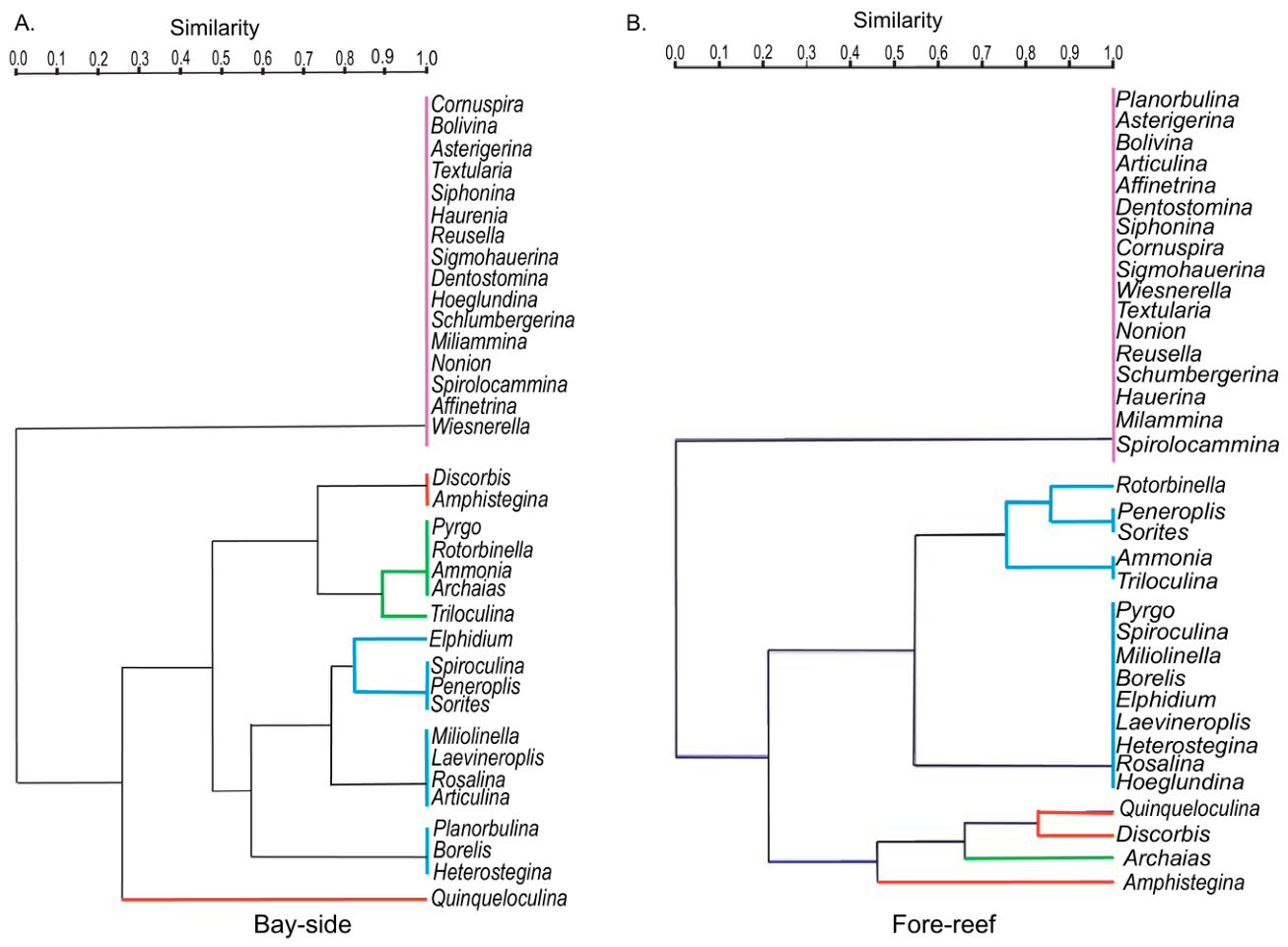
A total of 4671 foraminiferal tests, from 35 identified genera, were picked. Of those, 41 bayside samples yielded 3415 foraminiferal tests representing 33 genera, while 1379 specimens representing 28 genera were found in 17 forereef sediment samples. Overall, Quinqueloculina, Amphistegina and Discorbis were dominant, while smaller rotaliids such as Rotorbinella and Ammonia; miliolids, such as Pyrgo; and epiphytic, symbiont-bearing forms such as Archaias were common. Representatives of 12 genera were occasionally present, including Triloculina, Elphidium and Laevipeneroplis. Lastly, tests of 16 genera occurred rarely, including agglutinated taxa such as Textularia and Sigmohauerina; stress-tolerant forms such as Bolivina and Nonion; and other smaller genera such as Cornuspira and Hoeglundina.
Among the bayside stations, Quinqueloculina (26%) ranked as dominant, along with Amphistegina (>10%) and Discorbis (>10%). Archaias, Rotorbinella, Ammonia, Pyrgo and Triloculina ranked as common. Eleven genera ranked as occasional, including Elphidium, Spiroculina, Peneroplis, Sorites, and Miliolinella. Lastly, 16 genera occurred rarely, such as Cornuspira, Bolivina, Asterigerina, Textularia, and Siphonina. In the forereef samples, the same three taxa ranked as dominant (Figure 2B). Of note is that Archaias (7%), although being the only genus recorded as common, was also part of the main assemblage. A total of 14 genera, including rotaliids such as Rotorbinella; symbiont-bearers including Peneroplis; and smaller miliolids such as Pyrgo occurred occasionally. A total of 17 genera were recorded rarely (<1%), including Planorbulina, Articulina, Affinetrina, Nonion, and Textularia.

3.2. Foraminiferal Categories and Indices

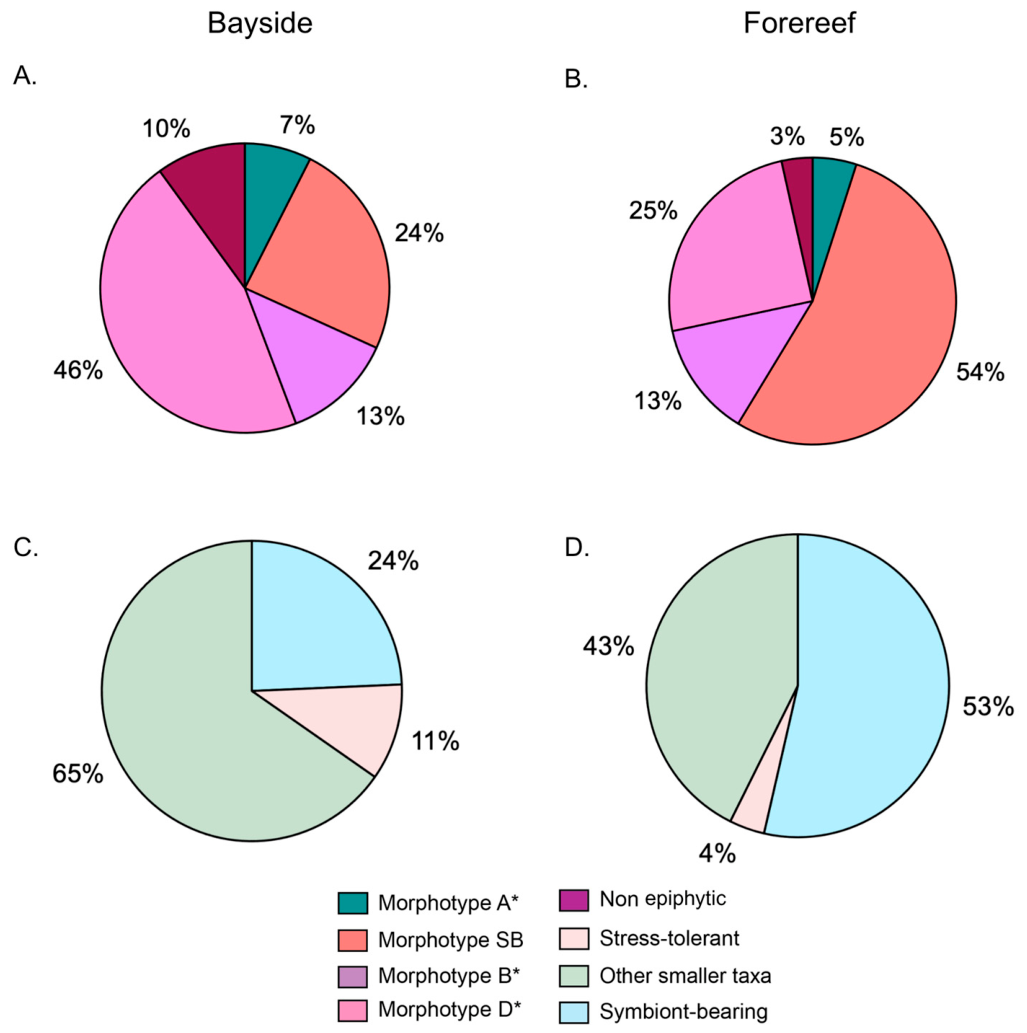
Comparison of the bayside and forereef samples revealed several notable differences (Figure 3). Based on the FI′ categories, the bayside assemblages were dominated (46%) by permanently motile genera, primarily smaller miliolids, especially Quinqueloculina (Morphotype D*), but also Morphotype B (13%), and Non-epiphytic taxa (10%). Similarly, the bayside FI data showed that nearly two-thirds were OSF taxa (65%), which included representatives of both Morphotypes B* and D*. Symbiont-bearing taxa (SBF and Morphotype SB) made up nearly one quarter (24%) of the specimens found. Stress-tolerant taxa (STF), especially Ammonia and Elphidium, were relatively common in the bayside samples (11%). Epiphytic Morphotype A*, notably Planorbulina, was slightly more common in the bayside samples, especially associated with seagrass and macroalgae (Figure 3A,C). In the forereef samples, based on the FI′ categories, just over half the specimens found were Morphotype SB (54%), especially Amphistegina, followed by Morphotype D* (25%), and Morphotype B* (13%). Similarly, based on the FI categories, just over half were SBF (53%). Other smaller taxa (OSF, especially FI′ Morphotype D*) made up nearly the other half (43%). Stress-tolerant taxa (STF), especially Ammonia and Elphidium, were only occasionally found in the forereef samples (4%) (Figure 3B,D).
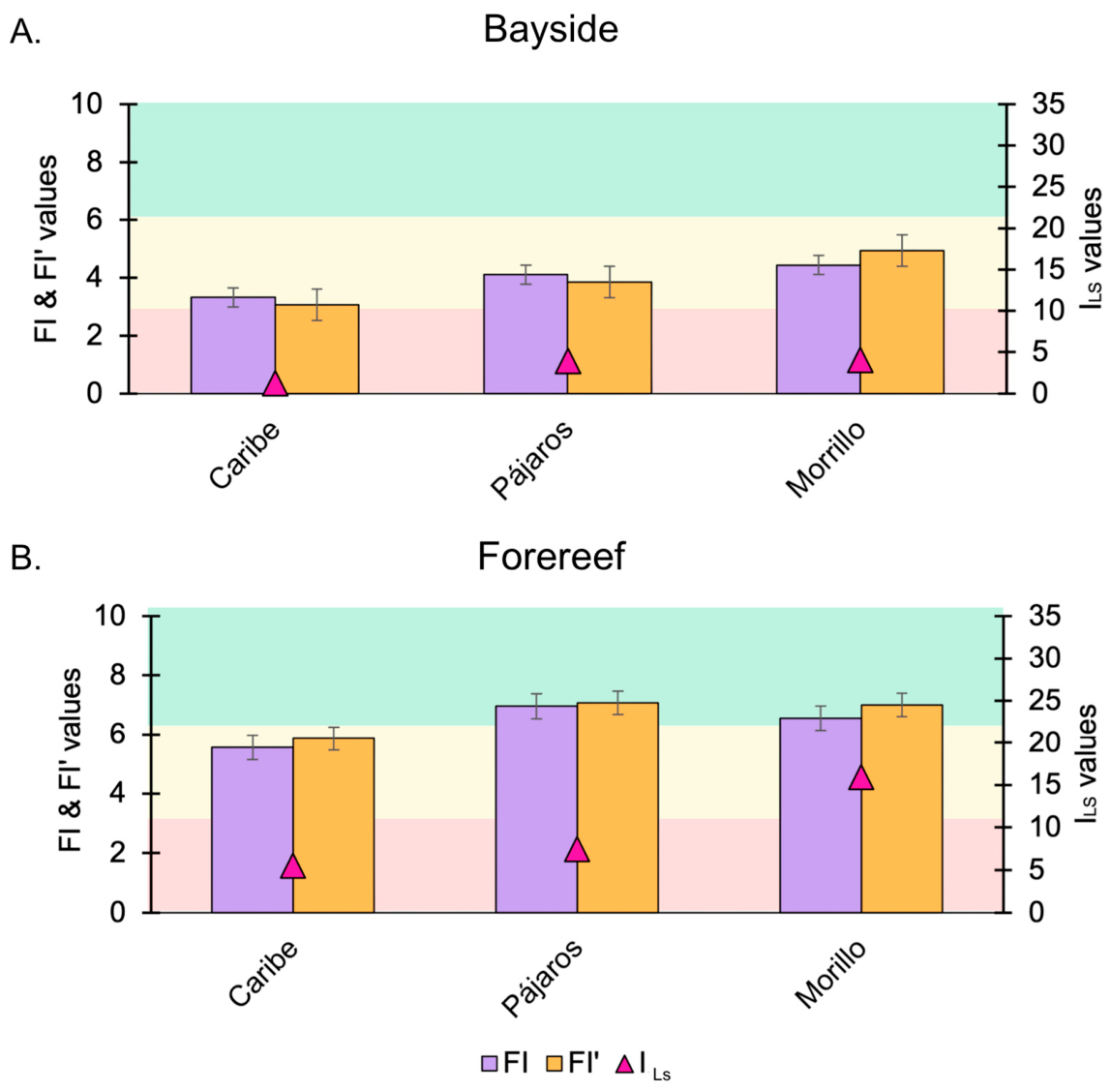
The distributions of the FI, FI′, and ILS indices by cay are shown in Figure 4A,B. In general, FI and FI’ mean values were higher in the forereef than in the bayside areas. In the bayside data, the magnitudes of FI and FI′ were very similar, with all values exceeding 3. In the forereef, both indices were also similar in magnitude, but with values exceeding 5. The FI and FI′ values for Cayo Caribe were consistently the lowest in both categories. In contrast, Cayo Pájaros and Cayo Morillo showed consistently higher values, with Cayo Pájaros presenting the highest FI and FI′ values in the forereef. The ILS values in the bayside were relatively consistent, and slightly higher at Cayo Pájaros and Cayo Morillo, whereas in the forereef habitat, ILS values were highest at Cayo Morillo. Error bars indicate low to moderate variability among samples.

3.3. Relationships Among Environmental Parameters, Foraminiferal Categories, and Indices

The full data set of the environmental parameters was published previously [28]. In summary, the environmental assessment in the cays showed that the nutrients, TCHL, TSS, Temp, and DO were typical for oligotrophic conditions. As expected, the highest temperatures were recorded during August and September (e.g., hurricane season), which coincided with the lowest salinities following episodes of heavy rain, when TSS were at their highest. The DO was fairly consistent over time. Nutrient concentrations, including NH4 and PO4-, were proportionally inverse. The bayside was dominated by fine sand or muddy sediments coupled with higher %OC, while in the forereef sites, coarser sediments (coarse to medium sand) and higher CaCO3 (%CA) were recorded.
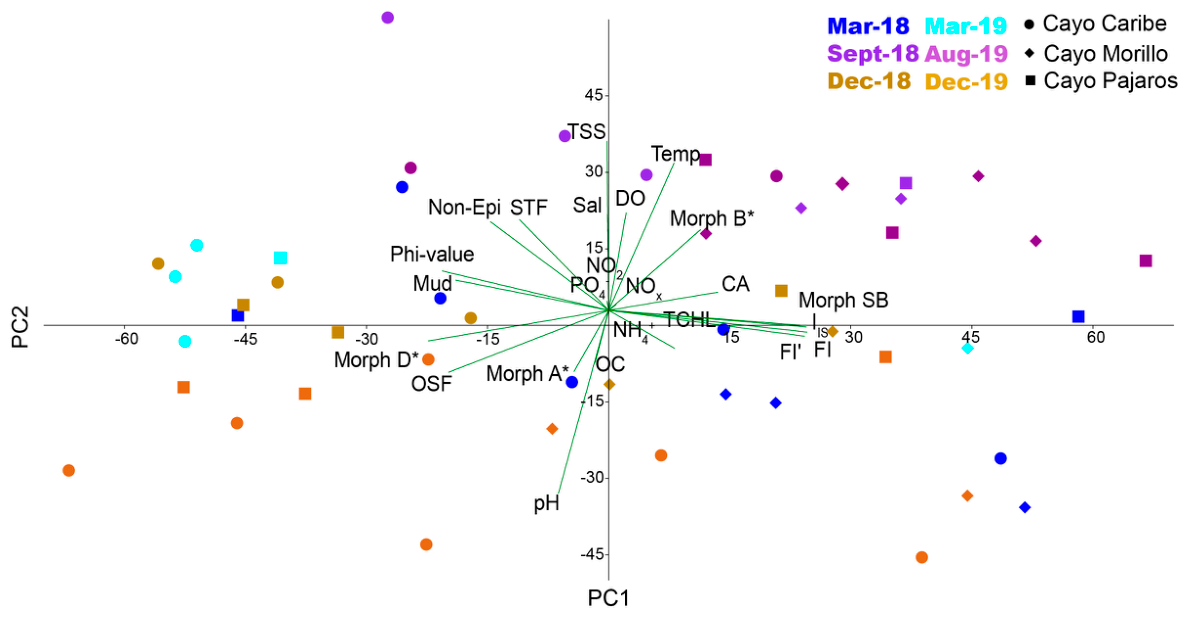
A PCA analysis summarized the relationships among environmental parameters, foraminiferal categories, and indices in both bayside and forereef areas (Figure 5). Up to 87% of the variance is explained in PC1 (66%) and PC2 (21%). Along PC1, variables related to fine sediments (mud content and phi values) were separated from %CA, symbiont-bearing taxa, and the FI, FI’, and ILS indices. Stress-tolerant taxa, other smaller taxa, and Morphotype D* plotted in the same direction as % mud and phi-value, whereas symbiont-bearing taxa and higher FI, FI’, and ILS values were associated with %CA and Temp. The PC2 further separated variables related to Temp, DO, and pH, contributing to additional differentiation among foraminiferal groups and environmental parameters.
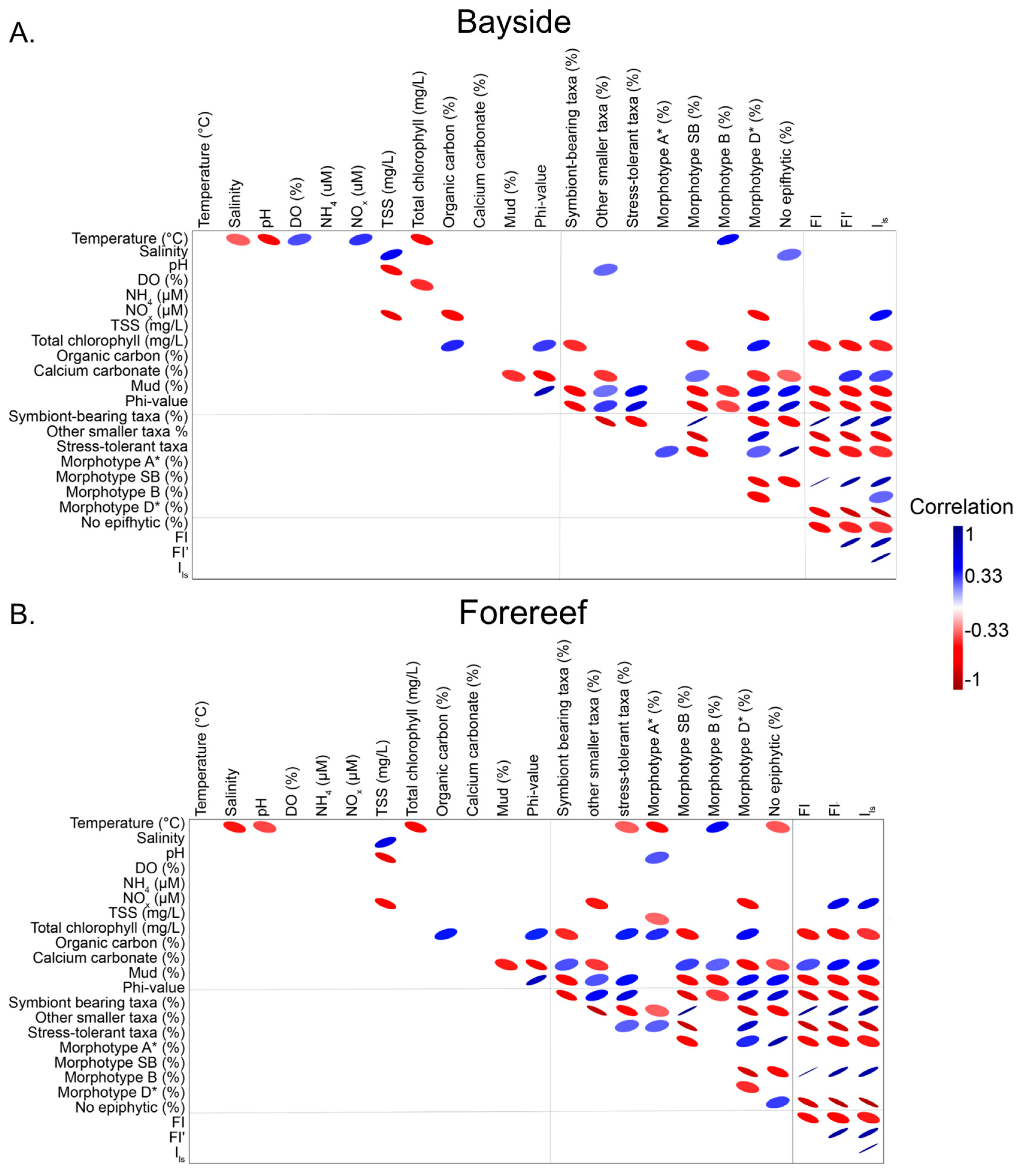
A variety of interesting correlations can be observed among environmental parameters, as well as among foraminiferal categories and index values (Appendix B, Figure A1A,B). Some notable examples were that symbiont-bearing taxa (Morphotype SB) and Morphotype B* negatively correlated with % mud and phi values, while the opposite was observed with other smaller and stress-tolerant taxa. Surprisingly, Morphotype A* also plotted slightly to the left of the PC1 axis and below the PC2 axis, indicating that encrusting taxa were living on phytal surfaces extending above the sediments, while stress-tolerant taxa were thriving in more organic-rich sediments beneath the seagrass and macroalgae.

4. Discussion

4.1. Taxonomic Patterns and Community Structure

Foraminiferal assemblages in the open bayside and forereef habitats in JBNERR were similar in taxonomic composition, with notable differences in relative abundance. The dominant genera overall were Amphistegina, Discorbis and Quinqueloculina, all abundant warm-water taxa (Figure 2). The dominance of Amphistegina and the common occurrence of Archaias in the Caribbean/forereef assemblages are consistent with suitable water quality and coarse sediment textures, reflecting hydrodynamic influence. Bayside assemblages were most dominated by Quinqueloculina, though the strong presence of Amphistegina indicates generally suitable water quality in the outer bay adjacent to the cays. The common occurrences of other stress-tolerant, smaller and epiphytic taxa reflect a diversity of microhabitats associated with seagrass meadows and other tropical shallow-water, non-reefal environments. For example, in their survey of potentially toxic pollutants in JBNERR, Shirey et al. [29] found the most diverse porcelaneous assemblages, including Triloculina and Quinqueloculina, in their least-impacted “outer bay” sites.
A commonly observed, but not as frequently discussed, characteristic of foraminiferal assemblages is the presence of rare taxa. One of the few studies that has specifically examined the influence of the composition of organic matter provides clues to why diversities of smaller taxa tend to increase as %OC declines [37]. The kinds of organic matter in sediments tend to vary by sources and proximity to nutrient sources. Yanko-Holmbach [37] found that benthic foraminiferal diversity increased with distance from a nutrient-laden freshwater source (i.e., a delta), where labile, N-rich organic matter was produced in excess by phytoplankton. In the delta, a low-diversity assemblage of stress-tolerant taxa dominated. With distance from the source, the remaining organic matter was both less abundant and less labile, and the diversity of smaller taxa increased as the food supply dwindled. That key study suggests another venue of research incorporating studies of foraminiferal assemblages with evaluation of the kinds of organics available in specific habitats or microhabitats. Especially in coastal and estuarine habitats, do different smaller taxa thrive on different organic sources, or on the microbial assemblages that feed on the less labile organic matter?
Another process that provides insights into the presence and diversity of rare taxa in benthic foraminiferal assemblages is sexual reproduction. Goldstein [38] documented the antiquity of gametogenesis and the fundamental mode of production of planktic propagules (though since lost in some lineages). Subsequent studies demonstrated that benthic forams can persist as propagules, disperse widely, and develop when conditions become favorable, even temporarily [39,40,41]. The propagules are distributed widely by local and regional currents. Studies demonstrated that shallow-water forams can emerge from sediments collected from much deeper offshore sites. Subsequently, Goldstein and Alve [42] experimentally documented recruitment from propagules in coastal sediments. Tidal pumping can be key to distributing propagules from open coastal environments far into estuarine sediments [43]. Mixing processes widely disperse dead tests and propagules or juveniles of diverse smaller taxa, thereby anomalously elevating both α- and β-diversities [44]. And if environmental conditions temporarily allow the propagules to develop into juveniles, and then environmental conditions become unfavorable, the result can be relatively abundant tiny tests in an environment otherwise dominated by stress-tolerant taxa, e.g., [20].
Our results revealed at least two important questions regarding foraminiferal assemblages in JBNERR that remain for further exploration. (1) Do the organic matter composition and local currents influence the distributions of rare taxa? (2) Does the lability of different types of organic matter influence the diversity of smaller taxa? Recognition of the roles of the composition of organic matter (e.g., N/C concentrations), of propagules in distributing potential recruits, and the potential of waves and currents to distribute foraminiferal tests provides rationale for focusing on the dominant and common taxa when assessing environments and associated foraminiferal assemblages. At the same time, the diversity of occasional and rare taxa in samples can provide information on both the diversity of microhabitats and the potential for physical exchange with other habitats. Thus, these processes highlight the importance of also considering dispersal and rare taxa when interpreting assemblage composition and foraminiferal-based indices.

4.2. Ecological Indices

This study presents the first application in the Caribbean of the FI′ and ILS indices, comparing them with the FI. The morphotype distributions explain the observed differences in their respective values between bayside and forereef habitats, thus reinforcing the capacity of combining functional classifications with index-based approaches. The application of the FI′ explores the feasibility of epiphytic morphotypes as indicators of environmental stability [24]. The relative abundance of Amphistegina in both the bayside and forereef samples indicated suitable water quality in both habitats. However, the index values were consistently lower in bayside samples, indicating that environmental conditions were more variable. These lower values are strongly influenced by the presence of seagrass beds in areas where Morphotype D* was prevalent. This distinction highlights that, despite the relatively small spatial scale between the bayside and forereef environments (~300–600 m), variability in physicochemical drivers can characterize such coastal/reef settings [45].
Among the cays, Cayo Caribe consistently showed the lowest index values, likely related to proximity to the Punta Pozuelo village. In contrast, Cayo Pájaros and Cayo Morillo exhibited somewhat higher FI and FI’ values, indicating that water-quality conditions supported healthy benthic environments and ecological stability. The FI interpretations of this study are similar to those of another study in La Parguera, Puerto Rico [7], where different indices were compared to determine habitat quality. Among the options, the FI was reported to be the best tool to distinguish environmental impact in coastal waters.
The distinction between long and short life spans is important because it provides insight into the structure and stability of foraminiferal assemblages and the environments in which the forams were living [24]. In the case of the former, the genera can persist and dominate assemblages when environmental conditions remain relatively stable over time, whereas in the latter, they tend to respond more rapidly to changing conditions and may increase in abundance or form blooms when conditions become temporarily favorable. The higher indices in the vicinities of Cayo Morillo and Cayo Pájaros indicated the predominance of long-lived taxa under more stable environmental conditions (similar to the FI). An important consideration is that, by definition [24], the ILS calculation only incorporates specific groups, namely Morphotypes A*, SB, and D. This makes the index a metric that is not dependent on the FI’ equation. Together, these patterns highlight the utility of the ILS as a complementary tool to FI and FI′, providing information on community and environmental stability.
While the FI was not originally designed for estuarine or other non-reefal habitats, it has been applied in a variety of warm-water locations worldwide (e.g., [34] and references therein). The FI was originally designed to reflect water quality that could cause coral reef degradation, which was why it was heavily weighted for species that host algal symbionts. However, Carnahan et al. [21] applied the FI in Biscayne Bay, Florida, USA, where differences in stress tolerance provided additional distinctions. Reduced salinity and agricultural runoff supported dominance by Ammonia in the eastern bay, while urban-related eutrophication at normal marine salinities also supported Cribroelphidium, Bolivina, and other stress-tolerant taxa. The diversity of miliolid tests, most of which were exceptionally small, indicated tidal transport of small tests or of propagules into the upper bay [21]. Environmental conditions, possibly during the dry season, allowed initiation of growth of propagules that was halted when runoff and oxygen depletion occurred. Stress-tolerant hyaline taxa appear to be more able to tolerate oxygen depletion, possibly because they can become dormant when environmental conditions decline [46]. This hypothesis should be further tested both experimentally and in field studies. Because the outer bay locations of JBNERR experience active exchange with Caribbean waters, they likely are not influenced by potentially toxic chemicals, hypoxia or reduced salinities, allowing miliolids to dominate the bayside samples [29]. In such environments, they can be highly diverse, reflecting variability in food supply and microenvironmental conditions.
Similarly, the FI’ was not originally developed for tropical seagrass habitats in the Caribbean, but rather for Mediterranean Posidonia oceanica meadows [24]. The FI′ subsequently has been applied in Posidonia habitats of southwestern Australia [45]. Our study tests the applicability of epiphytic forams as indicators of environmental variability in Caribbean coastal regions. For example, most of the genera identified fit well within the morphotype descriptions, supporting the general applicability of the index in JBNERR. However, the results also highlight the potential need to refine certain morphotype categories, as some morphotypes were represented by only one or two genera. This suggests that taxonomic or functional groups could be redefined to better reflect the foraminiferal assemblages present in tropical estuaries such as JBNERR.
An additional avenue for further exploration is the changing relationships between epiphytic foraminiferal assemblages and macrophytes. The invasive seagrass Halophila stipulacea, first reported in the Caribbean in 2002, is now widespread, displacing native seagrass species [47,48]. Given its more rapid decomposition [49], H. stipulacea supports fewer longer-lived epiphytes than the endemic T. testudinum. Previous studies have successfully applied the FI′ in Mediterranean seagrass systems to assess environmental stressors, including heavy metal contamination [25,35], supporting the potential of this approach while emphasizing the need for region-specific calibration. Overall, these findings indicate that the FI’ can be a useful framework for evaluating epiphytic foraminiferal assemblages in JBNERR, though region-specific refinements could more fully capture ecological variability in diverse seagrass habitats.

4.3. Environmental Parameters, Foraminiferal Categories and Indices

For this study, both expected and unexpected relationships were observed among environmental parameters, foraminiferal categories, and indices. Symbiont-bearing taxa showed negative correlations with sediment parameters, such as %OC and phi-size. These relationships are consistent with the ecological requirements of symbiont-bearing taxa [5,34]. This pattern is well represented by Amphistegina, one of the dominant genera in the overall assemblage in JBNERR. Small heterotrophic taxa and Morphotype D* were positively correlated with finer grains and higher %OC. This interpretation is consistent with other studies in JBNERR [27,28,29] that record the predominance of miliolids such as Quinqueloculina in areas with moderate organic matter and finer grains. An interesting observation from the correlation analysis is the lack of strong relationships between water quality parameters and foraminiferal categories or index values. However, this lack of correlation indicates that water quality in the outer bay was sufficient that Amphistegina and other genera that host algal symbionts could occur there at the shallow depths sampled, though at lower proportions than in the Caribbean waters offshore from the cays. The results from this study reveal that, where water quality is suitable, sediment composition and texture can play a stronger role in structuring foraminiferal assemblages than water-column parameters alone.
The PCA showed strong similarities among the ecological indices, symbiont-bearing taxa, and Morphotype SB. Among the environmental parameters, %CA emerged as a key parameter associated with these groups, indicating characteristics of forereef habitats. In contrast, the negative association of %CA with OSF, Morphotype D*, % mud, and phi-value indicates lower-energy environments with finer sediments, capturing conditions typical of bayside areas. Another interesting pattern revealed by the PCA is the separation between STF and OSF heterotrophic categories. This separation indicates that, even though these groups share similarities in habitat requirements, sediment characteristics may further differentiate them. As discussed previously, differences between stress-tolerant taxa and other small heterotrophic groups may reflect variability in quality and sources of organic matter, rather than simply percentages. This observation returns to the broader question of the different sources and types of organic matter present in JBNERR, and whether distinct heterotrophic foraminiferal groups show preferences for specific sources of organic matter.

5. Conclusions

  • Both the FoRAM Index (FI) and the Epiphytic FoRAM Index (FI′), when applied to foraminiferal assemblages in the open Jobos Bay near the cays and on the reef sides of the cays, indicate that water quality is suitable to support both algal symbiont-bearing genera and epiphytic genera.
  • The abundance of porcelaneous taxa, especially Quinqueloculina, indicates that waters in the study area are consistently of normal marine salinity.
  • The sites sampled in this study are outside the areas of the bay shown in previous studies to be moderately to heavily polluted.
  • This is the first study that applies the FI’ and ILS in Caribbean waters.
  • This study supports the usefulness of foraminiferal-based indices as management tools in Jobos Bay National Estuarine Research Reserve.
  • Future studies to understand how foraminiferal taxa respond to differences in the composition and lability of organic matter could further enhance interpretations of foraminiferal assemblages in Jobos Bay and worldwide.

Author Contributions

Conceptualization: A.R.M.; methodology, A.R.M. and M.M.-C.; validation, P.H. and M.M.-C.; formal analysis, A.R.M.; investigation, A.R.M., M.M.-C. and P.H.; resources, M.M.-C.; data curation, A.R.M.; writing—original draft preparation, A.R.M.; review and editing, A.R.M., M.M.-C. and P.H.; visualization, A.R.M.; supervision, P.H.; project administration, M.M.-C.; funding acquisition, M.M.-C. All authors have read and agreed to the published version of the manuscript.

Funding

This research was funded by Puerto Rico Sea Grant Puerto Rico (#NA18OAR4170089) and by the NOAA Educational Partnership Program with Minority Serving Institutions Cooperative Agreement (#NA16SEC4810009).

Data Availability Statement

The original data analyzed in this paper can be purchased through: https://www.proquest.com/docview/2778394123/abstract/D395EE9F19284F89PQ/1 URL (accessed on 17 July 2026) or https://www.researchgate.net/publication/403714270_ENVIRONMENTAL_ASSESSMENT_OF_CORAL_REEF_ECOSYSTEMS_AT_JOBOS_BAY_PUERTO_RICO/references. URL (accessed on 17 July 2026). https://doi.org/10.5281/zenodo.19541912. Rosa Marín A.; Martínez-Colón, M.; Dieppa, A.; Peterson, Z.; Keaton, D.; Cromaquise, M.; Medero, L.; Anderson, K. Hallock, P. Foraminiferal assemblage data and ecological indices from Jobos Bay, Puerto Rico (2018–2019) [Data set] 2026, Zenodo. URL (accessed on 17 July 2026).

Acknowledgments

We thank the Jobos Bay National Estuarine Research Reserve for permitting fieldwork and for the opportunity to contribute to the research needs of the reserve. We are grateful to Ángel Dieppa, Milton Muñoz Hincapié, Luis D. Ortiz Serrano, and Aitza Pabón for their collaboration and support during fieldwork, as well as for providing access to instruments and facilities. We also thank the undergraduate research assistants from the School of the Environment at Florida Agricultural and Mechanical University: Lexa Medero, Zakiya Peterson, Marcus, Kyle, and Dante, as well as volunteers such as Johannys Jiménez Collazo for their assistance with data collection and processing. Thanks to Sofía Barragán-Montilla for the development of the graphical abstract. A.R.M. is especially grateful to the GeoLatinas organization for providing a supportive space to develop and refine ideas. The authors acknowledge the research and financial support provided by Puerto Rico Sea Grant and the NOAA Center for Coastal and Marine Ecosystems (CCME) Program.

Conflicts of Interest

The authors declare no conflicts of interest. The funders had no role in the design of the study; in the collection, analyses, or interpretation of data; in the writing of the manuscript; or in the decision to publish the results.

Appendix A

Table A1. Sampling sites coordinates per reef: Latitude and Longitude in decimal degrees in Jobos Bay National Estuarine Research Reserve, Salinas, Puerto Rico. Stations with asterisk (*) indicates that the deep was greater than 9 meters.
ReefStationsDepth (m)LatitudeLongitude
Cayo MorrilloM1/24–617.9254167−66.273222
M44–617.9248333−66.273528
M5/64–617.9304722−66.270972
M74–617.9307778−66.271083
* M8>917.9315000−66.270806
Cayo PájarosP1/24–617.9226111−66.263472
* P4>917.9216389−66.263333
P5/64–617.9246944−66.260944
P74–617.9259722−66.260056
* P8>917.9273889−66.25675
Cayo CaribeC1/2217.9160556−66.216667
C4817.9123889−66.216472
C5/64–617.932472−66.195222
C94–617.9196667−66.218167
* C10>917.9197222−66.223972
C11217.9280278−66.215361
C124–617.9333889−66.220889
Table A2. Foraminiferal genera classified in the FI categories: Stress-tolerant taxa (STF), symbiont-bearing taxa (SBF) and other smaller taxa (OSF).
FI CategoryGenus-Level Taxa
Stress-tolerant
(STF)
Ammonia
Bolivina
Elphidium
Nonion
Textularia
Symbiont-bearing
(SBF)
Amphistegina
Archaias
Borelis
Heterostegina
Laevipeneroplis
Peneroplis
Sorites
Other smaller taxa
OSF
Affinetrina
Articulina
Cornuspira
Dentostomina
Discorbis
Hauerina
Hoeglundina
Miliammina
Planorbulina
Pseudohauerina
Pyrgo
Quinqueloculina
Reussella
Rosalina
Rotorbinella
Schlumbergerina
Sigmoihauerina
Siphonina
Spirolocammina
Spiroloculina
Triloculina
Wiesnerella
Table A3. Foraminiferal genera classified in the FI’ categories: Morphotype A*, Morphotype SB, Morphotype B*, Morphotype C, Morphotype D* and Non-epiphytic.
FI′ CategoryGenus-Level Taxa
Morphotype A*Planorbulina
Morphotype SBAmphistegina
Archaias
Borelis
Heterostegina
Laevipeneroplis
Peneroplis
Sorites
Morphotype B*Cornuspira
Discorbis
Reussella
Rotorbinella
Rosalina
Morphotype CBolivina
Nonion
Textularia
Morphotype D*Affinetrina
Articulina
Dentostomina
Hauerina
Hoeglundina
Miliammina
Miliolinella
Pseudohauerina
Pyrgo
Schlumbergerina
Sigmoihauerina
Siphonina
Spirolocammina
Spiroloculina
Triloculina
Wiesnerella
Non-epiphyticAmmonia
Elphidium
Table A4. Principal Component Analysis percentages of covariance–variance of the different components.
Principal ComponentsEigenvalue% Variance
PC11498.066
PC2469.821
PC3168.17
PC447.32
PC543.72
PC611.91
PC75.70
PC83.50
PC92.50
PC101.10
PC110.70
PC120.40
PC130.10
PC140.00

Appendix B

Figure A1. Spearman r (s) correlation (p-value = <0.05) between environmental parameters, foraminiferal morphotypes and indices in bayside (A) and forereef (B) areas. The ellipses represent the significant relationship between the variables with the p-value = <0.05. The flatter ellipses indicate stronger significant correlations; the wider ellipses indicate weaker but still significant correlations. Blue represents positive relationships, while red indicates negative relationships.
Diversity 18 00462 g0a1

References

  1. Messer, J.J.; Linthurst, R.A.; Overton, W.S. An EPA program for monitoring ecological status and trends. Environ. Monit. Assess. 1991, 17, 67–78. [Google Scholar] [CrossRef] [Scilit]
  2. Alve, E. Benthic foraminiferal responses to estuarine pollution: A review. J. Foramin. Res. 1995, 25, 190–203. [Google Scholar] [CrossRef] [Scilit]
  3. Jackson, L.E.; Kurtz, J.C.; Fisher, W.S. Evaluation Guidelines for Ecological Indicators; U.S. Environmental Protection Agency, Office of Research and Development: Research Triangle Park, NC, USA, 2000; 107p.
  4. Borja, A.; Muxika, I. Guidelines for the use of AMBI (AZTI’s Marine Biotic Index) in the assessment of the benthic ecological quality. Mar. Pollut. Bull. 2005, 50, 787–789. [Google Scholar] [CrossRef] [Scilit] [PubMed]
  5. Hallock, P.; Lidz, B.; Cockey-Burkhard, E.M.; Donnelly, K. Foraminifera as bioindicators in coral-reef assessment and monitoring: The FORAM Index. Environ. Monit. Assess. 2003, 81, 221–238. [Google Scholar] [CrossRef] [Scilit]
  6. Schönfeld, J.; Alve, E.; Geslin, E.; Jorissen, F.; Korsun, S.; Spezzaferri, S. The FOBIMO (FOraminiferal BIo-MOnitoring) initiative: Towards a standardized protocol for soft-bottom benthic foraminiferal monitoring studies. Mar. Micropaleontol. 2012, 94–95, 1–13. [Google Scholar] [CrossRef] [Scilit]
  7. Oliver, L.M.; Fisher, W.S.; Dittmar, J.; Hallock, P.; Campbell, J.; Quarles, R.L.; Harris, P.; LoBue, C. Contrasting responses of coral reef fauna and foraminiferal assemblages to human influence in La Parguera, Puerto Rico. Mar. Environ. Res. 2014, 99, 95–105. [Google Scholar] [CrossRef] [Scilit] [PubMed]
  8. Resig, J.M. Foraminiferal ecology around ocean outfalls off southern California. In Waste Disposal in the Marine Environment; Pearson, E.A., Ed.; Pergamon: London, UK, 1960; pp. 104–121. [Google Scholar]
  9. Seiglie, G.A. A preliminary note on the relationships between foraminifers and pollution in two Puerto Rican bays. Caribb. J. Sci. 1971, 11, 93–98. [Google Scholar]
  10. Seiglie, G.A. Foraminifers of Guayanilla Bay and their use as environmental indicators. Rev. Esp. Micropaleontol. 1975, 7, 453–487. [Google Scholar]
  11. Alve, E.; Korsun, S.; Schönfeld, J.; Dijkstra, N.; Golikova, E.; Hess, S.; Husum, K.; Panieri, G. Foram-AMBI: A sensitivity index based on benthic foraminiferal faunas from North-East Atlantic and Arctic fjords, continental shelves and slopes. Mar. Micropaleontol. 2016, 122, 1–12. [Google Scholar] [CrossRef] [Scilit]
  12. Dimiza, M.; Triantaphyllou, M.; Koukousioura, O.; Hallock, P.; Simboura, N.; Karageorgis, A.P.; Papathanasiou, E. The Foram Stress Index: A new tool for environmental assessment of soft-bottom environments using benthic foraminifera. A case study from the Saronikos Gulf, Greece, Eastern Mediterranean. Ecol. Indic. 2016, 60, 611–621. [Google Scholar] [CrossRef] [Scilit]
  13. Barbosa, C.F.; Prazeres, M.D.; Ferreira, B.P.; Seoane, J.C.S. Foraminiferal assemblage and reef check census in coral reef health monitoring of East Brazilian margin. Mar. Micropaleontol. 2009, 73, 62–69. [Google Scholar] [CrossRef] [Scilit]
  14. Kelmo, F.; Hallock, P. Responses of foraminiferal assemblages to ENSO climate patterns on bank reefs of northern Bahia, Brazil: A 17-year record. Ecol. Indic. 2013, 30, 148–157. [Google Scholar] [CrossRef] [Scilit]
  15. Oliver, L.M.; Fisher, W.S.; Fore, L.; Smith, A.; Bradley, P. Assessing land use, sedimentation, and water quality stressors as predictors of coral reef condition in St. Thomas, US Virgin Islands. Environ. Monit. Assess. 2018, 190, 213. [Google Scholar] [CrossRef] [Scilit] [PubMed]
  16. Velasquez, J.; Lopez-Angarita, J.; Sanchez, J.A. Evaluation of the FORAM index in a case of conservation: Benthic foraminifera as indicators of ecosystem resilience in protected and non-protected coral reefs of the southern Caribbean. Biodivers. Conserv. 2011, 20, 3591–3603. [Google Scholar] [CrossRef] [Scilit]
  17. Emrich, K.; Martínez-Colon, M.; Alegría, H. Is untreated sewage impacting coral reefs in Caye Caulker, Belize? J. Foraminifer. Res. 2017, 47, 20–33. [Google Scholar] [CrossRef] [Scilit]
  18. Sanchez, J.A.; Gomez-Corrales, M.; Gutierrez-Cala, L.; Vergara, D.C.; Roa, P.; Gonzalez-Zapata, F.L.; Gnecco, M.; Puerto, N.; Neira, L.; Sarmiento, A. Steady decline of corals and other benthic organisms in the SeaFlower Biosphere Reserve (Southwestern Caribbean). Front. Mar. Sci. 2009, 6, 73. [Google Scholar] [CrossRef] [Scilit]
  19. Patarroyo, G.D.; Torres, G.A.; Gómez, D.F. Foraminiferal assemblages as bioindicators in the western Caribbean: Albuquerque Cay (Colombia). J. Foraminifer. Res. 2024, 54, 36–48. [Google Scholar] [CrossRef] [Scilit]
  20. Patarroyo, G.D.; Torres, G.A.; Torres, J.M.; Gómez, D.F.; Bortolin, R.C. Benthic foraminifers as bioindicators in two Colombian reef settings: Old Providence Island and Cartagena Bay. Rev. Acad. Columbiana Cienc. Exastas Fis. Nat. 2025, 49, 193. [Google Scholar] [CrossRef] [Scilit]
  21. Carnahan, E.A.; Hoare, A.M.; Hallock, P.; Lidz, B.H.; Reich, C. Foraminiferal assemblages in Biscayne Bay, Florida, USA: Responses to urban and agricultural influence in a subtropical estuary. Mar. Pollut. Bull. 2009, 59, 221–233. [Google Scholar] [CrossRef] [Scilit] [PubMed]
  22. Koukousioura, O.; Dimiza, M.D.; Triantaphyllou, M.V.; Hallock, P. Living benthic foraminifera as an environmental proxy in coastal ecosystems: A case study from the Aegean Sea (Greece, NE Mediterranean). J. Mar. Syst. 2011, 88, 489–501. [Google Scholar] [CrossRef] [Scilit]
  23. Langer, M.R. Epiphytic foraminifera. Mar. Micropaleont. 1993, 20, 235–265. [Google Scholar] [CrossRef] [Scilit]
  24. Mateu-Vicens, G.; Khokhlova, A.; Sebastian-Pastor, T. Epiphytic foraminiferal indices as bioindicators in Mediterranean seagrass meadows. J. Foraminifer. Res. 2014, 44, 325–339. [Google Scholar] [CrossRef] [Scilit]
  25. Khokhlova, A.; Mateu-Vicens, G. Using epiphytic foraminifera to assess anthropogenic impact on Poisidonia oceanica meadows in Mallorca Island (Balearic Islands, Spain): A 60-year retrospective analysis. J. Foraminifer. Res. 2025, 55, 413–429. [Google Scholar] [CrossRef] [Scilit]
  26. Martínez-Colón, M.; Hallock, P.; Green-Ruíz, C.R.; Smoak, J.M. Benthic foraminifera as bioindicators of potentially toxic element (PTE) pollution: Torrecillas lagoon (San Juan Bay Estuary), Puerto Rico. Ecol. Indic. 2018, 89, 516–527. [Google Scholar] [CrossRef] [Scilit]
  27. Martínez-Colón, M.; Hallock, P.; Green-Ruíz, C.R.; Smoak, J.M. Temporal variability in potentially toxic elements (PTEs) and benthic Foraminifera in an estuarine environment in Puerto Rico. Micropaleontology 2018, 63, 357–381. [Google Scholar] [CrossRef] [Scilit]
  28. Rosa Marín, A.; Hallock, P.; Martínez-Colón, M. Benthic foraminiferal dynamics in reef-associated sediments of Jobos Bay, Puerto Rico: 2018–2019. J. Foraminifer. Res. 2024, 54, 95–106. [Google Scholar] [CrossRef] [Scilit]
  29. Shirey, B.G.; Martínez-Colón, M.; Jagoe, C.; Fajemila, O.T.; Dieppa, A.; Mwashote, B. Estuarine foraminifera as an effective measure of benthic ecological quality status in Jobos Bay, Puerto Rico. Micropaleontology 2025, 71, 167–181. [Google Scholar] [CrossRef] [Scilit]
  30. Zitello, A.G.; Whitall, D.R.; Dieppa, A.; Christensen, J.D.; Monaco, M.E.; Rohmann, S.O. Characterizing Jobos Bay, Puerto Rico: A Watershed Modeling Analysis and Monitoring Plan (Technical Memorandum NOS NCOOS 76, 2008). National Oceanic and Atmospheric Administration. URI. Available online: http://hdl.handle.net/1834/30800 (accessed on 17 July 2026).
  31. Alegria, H.; Martinez-Colon, M.; Birgul, A.; Brooks, G.; Hanson, L.; Kurt-Karakus, P. Historical sediment record and levels of PCBs in sediments and mangroves of Jobos Bay, Puerto Rico. Sci. Total Environ. 2016, 573, 1003–1009. [Google Scholar] [CrossRef] [Scilit] [PubMed]
  32. Martínez-Colón, M.; Alegría, H.; Huber, A.; Kubra-Gul, H.; Kurt-Karakus, P. Bioaccumulation and biomagnification of potential toxic elements (PTEs): An Avicennia germinansUca rapax trophic transfer story from Jobos Bay, Puerto Rico. Ecol. Indic. 2021, 121, 107038. [Google Scholar] [CrossRef] [Scilit]
  33. Tiong, E.J.; Culligan, N.; Liu, K.-B.; Martínez-Colón, M.; Bianchette, T.A. A 3700-year paleoenvironmental record from Jobos Bay, Puerto Rico: Applying multiple proxies to reconstruct late Holocene extreme events. Palaeogeogr. Palaeocl. 2025, 667, 112872. [Google Scholar] [CrossRef] [Scilit]
  34. Prazeres, M.; Martines-Colon, M.; Hallock, P. Foraminifera as bioindicators of water quality: The FoRAM Index revisited. Environ. Pollut. 2020, 257, 113612. [Google Scholar] [CrossRef] [Scilit] [PubMed]
  35. Khokhlova, A.; Gudnitz, M.N.; Ferriol, P.; Tejada, S.; Sureda, A.; Pinya, S.; Mateu-Vicens, G. Epiphytic foraminifers as indicators of heavy-metal pollution in Posidonia oceanica seagrass meadows. Ecol. Indic. 2022, 140, 109006. [Google Scholar] [CrossRef] [Scilit]
  36. Hammer, O.; Harper, D.A.T.; Ryan, P.D. PAST: Paleontological Statistics Software Package for Education and Data Analysis. 9. Palaeontologia Electronica 2010. Available online: http://palaeo-electronica.org (accessed on 17 July 2026).
  37. Yanko-Hombach, V.; Kondariuk, T.; Montnenko, I. Benthic foraminifera indicate environmental stress from river discharge to marine ecosystems: Example from the Black Sea. J. Foraminifer. Res. 2017, 47, 70–92. [Google Scholar] [CrossRef] [Scilit]
  38. Goldstein, S.T. Gametogenesis and the antiquity of reproductive pattern in the Foraminiferida. J. Foraminifer. Res. 1997, 27, 319–328. [Google Scholar] [CrossRef] [Scilit]
  39. Alve, E.; Goldstein, S.T. Resting stage in benthic foraminiferal propagules: A key feature for dispersal? Evidence from two shallow-water species. J. Micropaleontol. 2002, 21, 95–96. [Google Scholar] [CrossRef] [Scilit]
  40. Alve, E.; Goldstein, S.T. Propagule transport as a key method of dispersal in benthic foraminifera (Protista). Limnol. Oceanogr. 2003, 48, 2163–2170. [Google Scholar] [CrossRef] [Scilit]
  41. Alve, E.; Goldstein, S.T. Dispersal, survival and delayed growth of benthic foraminiferal propagules. J. Sea. Res. 2010, 63, 36–51. [Google Scholar] [CrossRef] [Scilit]
  42. Goldstein, S.T.; Alve, E. Experimental assembly of foraminiferal communities from coastal propagule banks. Mar. Ecol. Prog. Ser. 2011, 437, 1–11. [Google Scholar] [CrossRef] [Scilit]
  43. Weinmann, A.E.; Goldstein, S.T. Landward-directed dispersal of benthic foraminiferal propagules at two shallow-water sites in the Doboy Sound area (Georgia, USA). J. Foraminifer. Res. 2017, 47, 325–336. [Google Scholar] [CrossRef] [Scilit]
  44. Li, T.; Li, B.; Lin, Z.; Xie, W.; Yang, C. Drift drives foraminiferal community assembly on a carbonate platform. Ecol. Evol. 2025, 15, e71604. [Google Scholar] [CrossRef] [Scilit] [PubMed]
  45. Buosi, C.; Tecchiato, S.; Ibba, A.; Cherchi, A.; Bachis, M.; De Muro, S. Foraminiferal biotopes in a shallow continental shelf environment: Esperance Bay (southwestern Australia). J. Sea Res. 2020, 158, 101859. [Google Scholar] [CrossRef] [Scilit]
  46. Ross, B.; Hallock, P. Dormancy in the Foraminifera: A review. J. Foraminifer. Res. 2016, 46, 358–368. [Google Scholar] [CrossRef] [Scilit]
  47. Ruiz, H.; Ballantine, D.; Sabater, J. Continued spread of the seagrass Halophila stipulacea in the Caribbean: Documentation in Puerto Rico and the British Virgin Islands. Gulf Caribb. Res. 2017, 28, SC5–SC7. [Google Scholar] [CrossRef] [Scilit]
  48. Kaldy, J.E.; Sullivan, C.; Dieppa, A.; Cosme, I.C.; Lugo, M.O.; Schiebout, M. First record of phytomyxid infection of the non-native seagrass Halophila stipulacea in Puerto Rico. Bot. Mar. 2023, 66, 93–97. [Google Scholar] [CrossRef] [Scilit] [PubMed]
  49. Winters, G.; Beer, S.; Willette, D.A.; Viana, I.G.; Chiquillo, K.L.; Beca-Carretero, P.; Villamayor, B.; Azcárate-García, T.; Shem-Tov, R.; Mwabvu, B.; et al. The tropical seagrass Halophila stipulacea: Reviewing what we know from its native and invasive habitats, alongside identifying knowledge gaps. Front. Mar. Sci. 2020, 7, 300. [Google Scholar] [CrossRef] [Scilit]
Figure 1. Location of Jobos Bay National Estuarine Research Reserve: (A) Caribbean region, (B) Puerto Rico and (C) Jobos Bay, Puerto Rico, and the offshore cays: Cayo Morillo (CM), Cayo Pájaros (CP) and Cayo Caribe (CC) (17° 56′ N, 66° 15′ W).
Diversity 18 00462 g001
Figure 2. Cluster analysis at the genus level with a paired-group (average) algorithm using Bray–Curtis similarity. Dendrograms showing (A) the bayside foraminiferal assemblage and (B) the forereef assemblage. Clusters are representative of foraminiferal counts from all samples from 2018 and 2019. Dominant genera (>10% of the assemblage) are noted by red lines; commonly recorded genera (>5–10%) are noted by green lines; blue lines indicate occasionally occurring taxa (1–5%); and rarely recorded taxa (<1%) are the uppermost groups noted by purple lines.
Diversity 18 00462 g002
Figure 3. Foraminiferal group distributions from the bayside (A,C) and forereef (B,D) sites based on the categories of the FI’ and FI. (A) (bayside) and (B) (forereef) demonstrate Epiphytic Morphotypes A*, SB, B and D*. The “Non-epiphytic group” is the benthic genera not considered to be associated with macroalgae or seagrasses. (C) (bayside) and (D) (forereef) show categories from the FI: Symbiont-bearing taxa (SBF), Other small taxa (OSF), and Stress-tolerant taxa (STF).
Diversity 18 00462 g003
Figure 4. Foraminiferal-based indices including the FoRAM Index (FI), Epiphytic FoRAM Index (FI’) and Long vs. Short Life-Span Index (ILS) in (A) bayside and (B) forereef sites. The Y-axis on the left side is the scale for the FI and FI′, and the Y-axis scale on the right side is for the ILS. The horizontal bars in green (FI and FI′ > 6), yellow (FI and FI′ = 6–3) and pink (FI and FI′ < 2) represent the interpretation of the FI and FI′ indices (Table 2).
Diversity 18 00462 g004
Figure 5. Principal Component Analysis (PCA) illustrating the multivariate relationships among environmental parameters, foraminiferal categories, and the ecological indices FI, FI’, and ILS across bayside and forereef environments. Eigenvalues and the percentage of variance explained by the principal components are shown in Appendix A, Table A4.
Diversity 18 00462 g005
Table 1. The foraminiferal-based indices applied and the ecological characteristics of foraminiferal categories. A full list of how genera were categorized is provided in Appendix A, Table A2 and Table A3.
HabitatIndexCategoryMotilityLife SpanExamples
ReefFoRAM Index
[5,21]
Stress-tolerantMotile3–4 monthsAmmonia
Symbiont-bearingSessile, intermittently motile6–12 monthsAmphistegina
Other smaller taxaPermanently motile2–5 monthsQuinqueloculina
Seagrasses, macrophytesEpiphytic FoRAM Index
[24]
Morphotype A*Encrusting1 yearPlanorbulina
Morphotype SBSessile, intermittently motile1–2 yearsArchaias
Morphotype BTemporarily motile2–5 monthsRotorbinella
Morphotype CMotile3–4 monthsElphidium
Morphotype D*Permanently motile2–5 monthsTriloculina
Table 2. Foraminiferal-based ecological indices (FI, FI′ and ILS) and their value ranges used to interpret ecological quality in reef and seagrass habitats. Values in green indicate suitable conditions for reef growth, in yellow conditions are marginal for reef development and in red values indicate stressed conditions.
IndexValuesEcological Interpretation
FoRAM Index [5,21]FI > 6
FI 4–6
Water quality conducive to reef growth.
Possible decline in water quality.
FI = 2–4Water quality marginal for coral reefs.
FI < 2Water quality unfavorable for coral reefs.
Epiphytic FoRAM Index
[24]
FI′ > 6Seagrass meadows: favorable environment.
FI′ = 3–6Moderate environmental state.
FI′ < 2High environmental stress.
Long vs. Short
Life-Span Index
[24]
ILS > 25Relatively stable ecological conditions. Assemblage dominated by sensitive and long-lived taxa.
ILS < 10Stressed ecological conditions. Assemblage dominated by shorter-lived stress-tolerant and opportunistic taxa
Disclaimer/Publisher’s Note: The statements, opinions and data contained in all publications are solely those of the individual author(s) and contributor(s) and not of MDPI and/or the editor(s). MDPI and/or the editor(s) disclaim responsibility for any injury to people or property resulting from any ideas, methods, instructions or products referred to in the content.