Article

Natural Treefall Gaps Drive Harvestmen Beta Diversity and Community Structure in an Atlantic Forest Remnant

by
Alessandra R. S. de Andrade
1,2,*,
Elmo B. A. Koch
3,*,
Tércio da S. Melo
2,4,
Marcelo C. L. Peres
4,
Kátia R. Benati
2 and
Jacques H. C. Delabie
4,5
1
Programa de Pós-graduação em Ecologia e Biomonitoramento, Universidade Federal da Bahia, Salvador 40170115, Bahia, Brazil
2
Centro de Ecologia e Conservação Animal, Universidade Católica do Salvador, Avenida Professor Pinto de Aguiar, Salvador 41740090, Bahia, Brazil
3
Programa de Pós-Graduação em Ecologia e Evolução, Universidade Estadual de Feira de Santana, Feira de Santana 44036900, Bahia, Brazil
4
Laboratório de Mirmecologia, Convênio Universidade Estadual de Feira de Santana/Comissão Executiva do Plano da Lavoura Cacaueira, Ilhéus 44036900, Bahia, Brazil
5
Departamento de Ciências Agrárias e Ambientais, Universidade Estadual de Santa Cruz, Ilhéus 45662900, Bahia, Brazil
*
Authors to whom correspondence should be addressed.
Diversity 2026, 18(7), 403; https://doi.org/10.3390/d18070403
Submission received: 16 May 2026 / Revised: 22 June 2026 / Accepted: 30 June 2026 / Published: 1 July 2026
(This article belongs to the Special Issue Arachnida Diversity and Conservation)

Abstract

Naturally formed treefall gaps represent primary sources of environmental heterogeneity in tropical forests, yet their role in driving the components of beta diversity in specialized leaf-litter fauna remains poorly understood. We investigated the influence of natural treefall gaps on harvestmen (Arachnida: Opiliones) community structure and beta diversity partitioning in a well-preserved Atlantic Forest remnant in southern Bahia, Brazil. Using standardized nocturnal searches and leaf-litter sampling, we recorded 845 individuals across 23 species. Coverage-based rarefaction indicated higher estimated richness in gaps, although observed alpha diversity did not differ significantly among habitats. Community composition differed significantly along the gap–forest gradient, driven mainly by litter depth and microclimatic variation. Indicator species analysis identified Protimesius sp. (Stygnidae) as a robust gap-specialist. Beta diversity partitioning revealed that turnover accounted for 79.5% of total dissimilarity, while nestedness contributed 20.5%. Treefall gaps exhibited the highest internal beta diversity and species exclusivity, supporting their role as dynamic environmental filters that enhance regional diversity. Our findings highlight the ecological importance of natural disturbance and litter structure in maintaining biodiversity patterns in tropical forests.

1. Introduction

Natural disturbances play a central role in maintaining the structure and diversity of tropical forests by generating spatial heterogeneity and promoting successional dynamics [1,2]. Among these disturbances, treefall gaps are particularly important, as they alter light availability, temperature, and humidity, thereby creating microhabitats distinct from the surrounding forest matrix [3,4,5].
Treefall gaps have long been associated with increased species diversity through mechanisms such as the Intermediate Disturbance Hypothesis [6]. Environmental differences in treefall gaps may contrast with ‘background’ conditions of intact forest canopy and influence species composition and richness [7,8,9,10]. However, recent advances in community ecology emphasize that changes in species composition, rather than richness alone, are often more informative for understanding biodiversity patterns [11]. In this context, beta diversity partitioning provides a powerful framework to disentangle whether differences among communities are driven by species replacement or nestedness [12,13].
Harvestmen (Arachnida: Opiliones) are excellent model organisms for studying the effects of habitat heterogeneity due to their high sensitivity to microclimatic variations, particularly humidity and temperature [14,15]. As strictly predatory or omnivorous components of the cryptozoic fauna, these organisms play a critical role in nutrient cycling and energy transfer on the forest floor [15]. Because they lack a highly waxy cuticle and are prone to rapid desiccation, their spatial distribution is tightly bound to microhabitat constraints, making them excellent bioindicators for structural forest changes and canopy disruption [15]. Their low mobility and specific niche requirements make them prone to rapid community shifts when environmental conditions are altered [16]. Studies have shown that habitat heterogeneity promotes high beta diversity in harvestmen assemblages, with strong species turnover sustaining distinct communities even at small spatial scales [17]. In the Atlantic Forest, this pattern is closely associated with structural and microclimatic variables such as litter depth and canopy cover, which are directly influenced by gap formation [18,19,20].
A modern approach to understanding these spatial patterns involves the partitioning of beta diversity into two distinct components: species turnover (replacement) and nestedness (loss or gain of species) [11,12]. Turnover occurs when species are replaced by others along environmental gradients, reflecting niche-based processes. In contrast, nestedness occurs when the species composition of a site is a subset of more diverse sites, often reflecting filtering or extinction-colonization dynamics [21]. Discriminating between these components is crucial for conservation strategies, as it reveals whether a habitat (like a treefall gap) supports a unique set of species or merely a subset of the forest fauna.
Despite the known importance of gaps, few studies have explicitly tested how these disturbances drive the components of beta diversity in harvestmen assemblages within the Atlantic Forest. In this study, we evaluate the influence of natural treefall gaps on the community structure and beta diversity of harvestmen in a well-preserved remnant of the Atlantic Forest in southern Bahia, Brazil. We hypothesized that (i) treefall gaps harbor distinct communities compared to the forest edge and interior due to environmental filtering and (ii) the beta diversity between these habitats is driven primarily by turnover rather than nestedness, reflecting the role of gaps in increasing regional diversity through species replacement.

2. Materials and Methods

2.1. Study Area

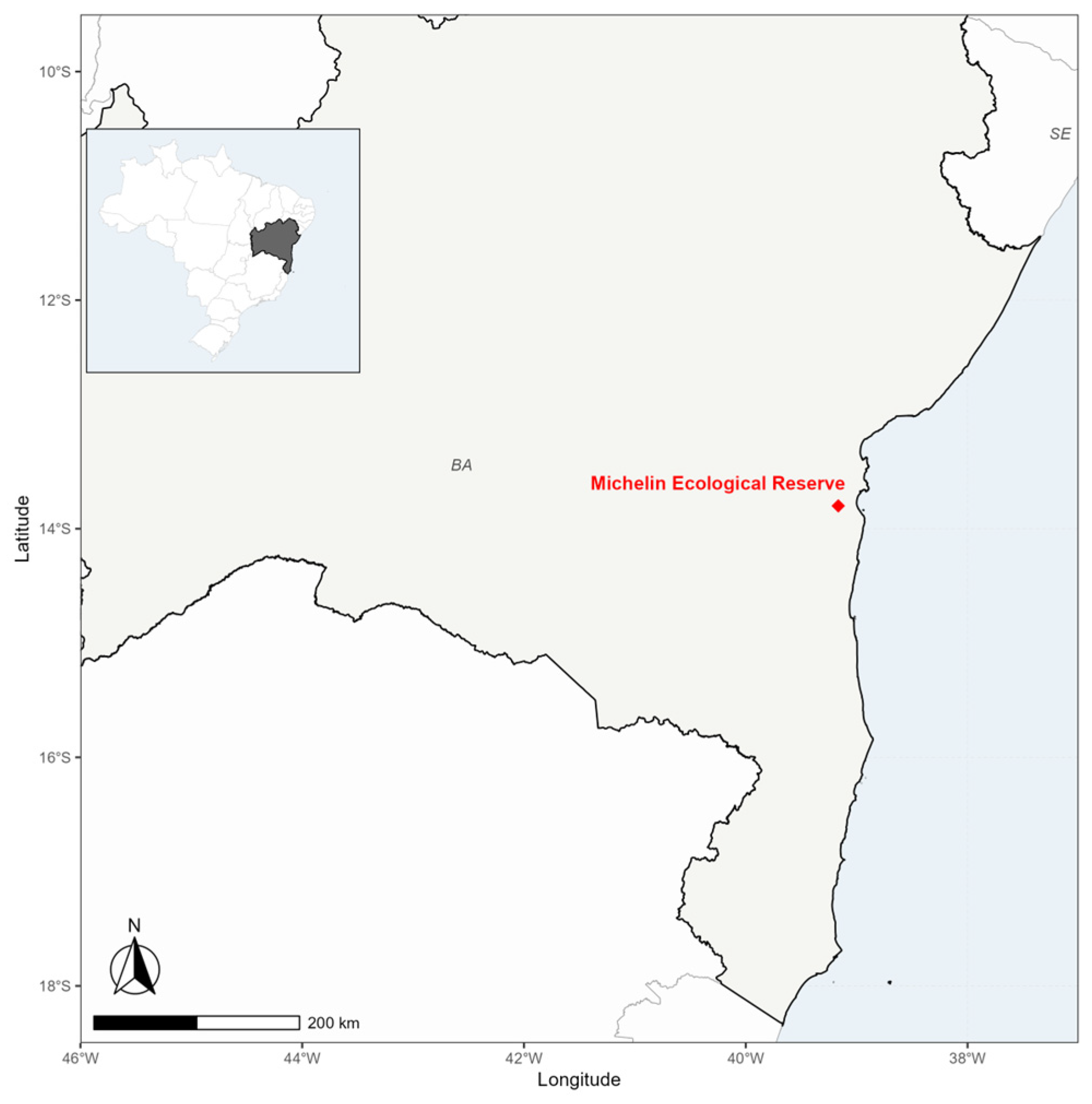
The study was conducted in a well-preserved remnant of the Atlantic Forest located in southern Bahia, Brazil (13°48′ S, 39°10′ W; Figure 1). This region is characterized by high biological importance and endemism, situated within the “Uruçuca-Itabuna” center of endemism. The climate is classified as Af (tropical rainforest) according to the Köppen–Geiger system, with an average annual temperature of 24 °C and annual precipitation exceeding 2000 mm, without a well-defined dry season. Rain is distributed across all months, although both annual totals and monthly patterns show considerable variability. The highest rainfall levels are usually recorded from February to July, aligning with the austral winter season.
The vegetation is characterized as Ombrophilous Dense Forest, featuring a high canopy and an abundance of epiphytes and lianas [22]. The Floresta da Vila 5, one of the forest areas within the Reserva Ecológica da Michelin, was selected as the study site for the present research. It comprises approximately 180 hectares distributed across five hills located south of the river, with elevations ranging from 160 to 288 m, and represents the most well-preserved forest sector of the reserve.
Vegetation structure varies along a successional gradient. Younger stands are characterized by slender trees with canopy heights of 10–13 m, whereas more mature areas exhibit a well-developed upper canopy exceeding 17–20 m, indicating greater structural complexity. The forest includes representative plant species from genera such as Sloanea, Caryocar, Virola, Eriotheca, Licania, and Copaifera, reflecting advanced successional stages and high ecological value.
The Rio das Matas flows through the central portion of the area, forming small waterfalls and cascades. Additionally, numerous springs and small streams sustain moisture-dependent vegetation, including bryophytes and ferns, highlighting the ecological and hydrological importance of this forest system [23].

2.2. Sampling Design

To evaluate the effect of environmental heterogeneity on harvestmen communities, we established a sampling design comprising three distinct habitat types (treatments): (i) Natural Treefall Gaps (Forest Clearing): areas where the canopy was naturally opened due to the fall of one or more trees; (ii) Forest Edge: areas located within a 10 m buffer from the gap boundary; and (iii) Adjacent Forest (Interior): areas of closed-canopy forest located at least 50 m away from the gap and edge. We selected five replicates for each habitat type, totaling 15 sampling sites (5 Gaps, 5 Edges, 5 Interior).
A total of 25 treefall gaps were initially identified, all exhibiting broadly similar structure on the forest floor. From this set, five gaps were selected to represent disturbances in an early stage of regeneration. The selection followed established criteria in studies of forest gap dynamics, including (i) origin from natural treefall by uprooting, ensuring a consistent disturbance mechanism; (ii) minimum area of 25 m2, in accordance with the definition proposed by [24]; (iii) classification within a similar size class (<150 m2), following [25]; and (iv) location within forest sectors presenting relatively homogeneous canopy height in the surrounding matrix, as recommended by [26], in order to minimize structural variability unrelated to gap formation.
The characterization of these gaps as being in an early successional stage was based on field indicators widely used in the literature, including low levels of decomposition of fallen woody material, with trunks and branches still structurally intact; recent accumulation of leaf litter with limited incorporation into the soil; high light availability at the forest floor due to the absence of developed secondary vegetation; and initial regeneration marked by sparse herbaceous cover and the early establishment of pioneer seedlings.

2.3. Harvestmen Sampling

At each sampling site, harvestmen were collected using two complementary methods to ensure a representative characterization of the local fauna: (1) Standardized Nocturnal Manual Search: Two researchers conducted active searches for two hours per site (totaling four person-hours per site) during the period of peak harvestmen activity (19:00 to 22:00 h). Searches were performed on the ground, tree trunks, and shrubs up to 2 m high; (2) Leaf Litter Collection: We collected leaf litter within 1 m2 (four leaf litter samples 50 × 50 cm) plots per site. The material was sieved and carefully inspected manually during the daytime for the presence of small, litter-dwelling harvestmen, ensuring the capture of cryptic species resting within the leaf layer. Sampling was conducted across 15 sampling sites during eight field campaigns carried out at bimonthly intervals between July 2009 and October 2010.
Specimens were preserved in 70% ethanol and identified to the lowest possible taxonomic level (genus or species) by taxonomic specialists. Collected harvestmen were identified to species and deposited in the Arachnology Sector of the National Museum Rio de Janeiro, Brazil (MNRJ, curator Adriano B. Kury).

2.4. Environmental Characterization

To identify the drivers of community structure, we measured the following microclimatic and structural variables at each site: (1) Microclimate: Soil and air temperature (°C), relative humidity (%), and ambient luminosity (lux) using digital sensors. (2) Habitat Structure: Leaf litter depth (measured at four points per plot), percentage of leaf litter cover, herbaceous vegetation cover, and the volume of fallen logs and branches (m3) (Supplementary Table S1). To capture maximum microclimatic contrast and environmental stress caused by canopy openness, environmental variables (ambient luminosity, temperature, and humidity) were recorded at each site during peak daytime solar radiation (11:00 h to 13:00 h).

2.5. Data Analysis

Harvestmen species richness was estimated using rarefaction and extrapolation curves based on Hill numbers (q = 0) to compare the three habitats at an equal sampling effort (coverage-based and size-based rarefaction). To test for significant differences in species richness and abundance across the gap-forest gradient, we employed the non-parametric Kruskal–Wallis test, as the small sample size (N = 5) and data distribution did not meet the assumptions of normality. When significant, the Dunn’s post hoc test with Benjamini–Hochberg adjustment was applied for pairwise comparisons.
To evaluate shifts in community composition (abundance-based) among habitats, we used Permutational Multivariate Analysis of Variance (PERMANOVA), followed by Non-Metric Multidimensional Scaling (NMDS) based on the Bray–Curtis distance matrix [27]. To identify which species were significantly associated with specific habitats (indicators), we performed an Indicator Species Analysis (IndVal) using the multipatt function, with 999 permutations. Additionally, the degree of species exclusivity and sharing among habitats was visualized using a Venn diagram.
To test our primary hypothesis, we partitioned the total beta diversity (βsor) into its two additive components: Turnover (βsim), representing species replacement due to environmental filtering; and Nestedness (βsne), representing species loss or gain along a gradient [13]. This partitioning was performed allowing us to determine if treefall gaps harbor unique assemblages or are merely subsets of the forest interior fauna.
The influence of environmental variables (litter depth, luminosity, and temperature) on harvestmen richness and abundance was evaluated using Generalized Linear Models (GLMs). For richness, a Poisson distribution was used, while for abundance, a quasi-Poisson distribution was applied to account for overdispersion. To identify the specific microclimatic or structural factors driving multivariate community shifts, a Distance-Based Redundancy Analysis (db-RDA) was performed [28]. Prior to performing the db-RDA, the highly skewed ambient luminosity data was log-transformed [log10(x + 1)], and all environmental vectors were normalized using z-score standardization to ensure homoscedasticity and prevent model distortion by extreme outliers.
All statistical analyses were performed in R software (v. 4.6.0) [29]. In addition to the base functions, we used the packages “iNEXT” [30] for diversity estimates, “betapart” [31] for beta diversity partitioning, “vegan” [32] for multivariate ordination and PERMANOVA, “indicspecies” [33] for indicator species analysis, and “ggplot2” [34] and “ggVennDiagram” [35] for high-resolution data visualization.

3. Results

3.1. Harvestmen Diversity and Sampling Effort

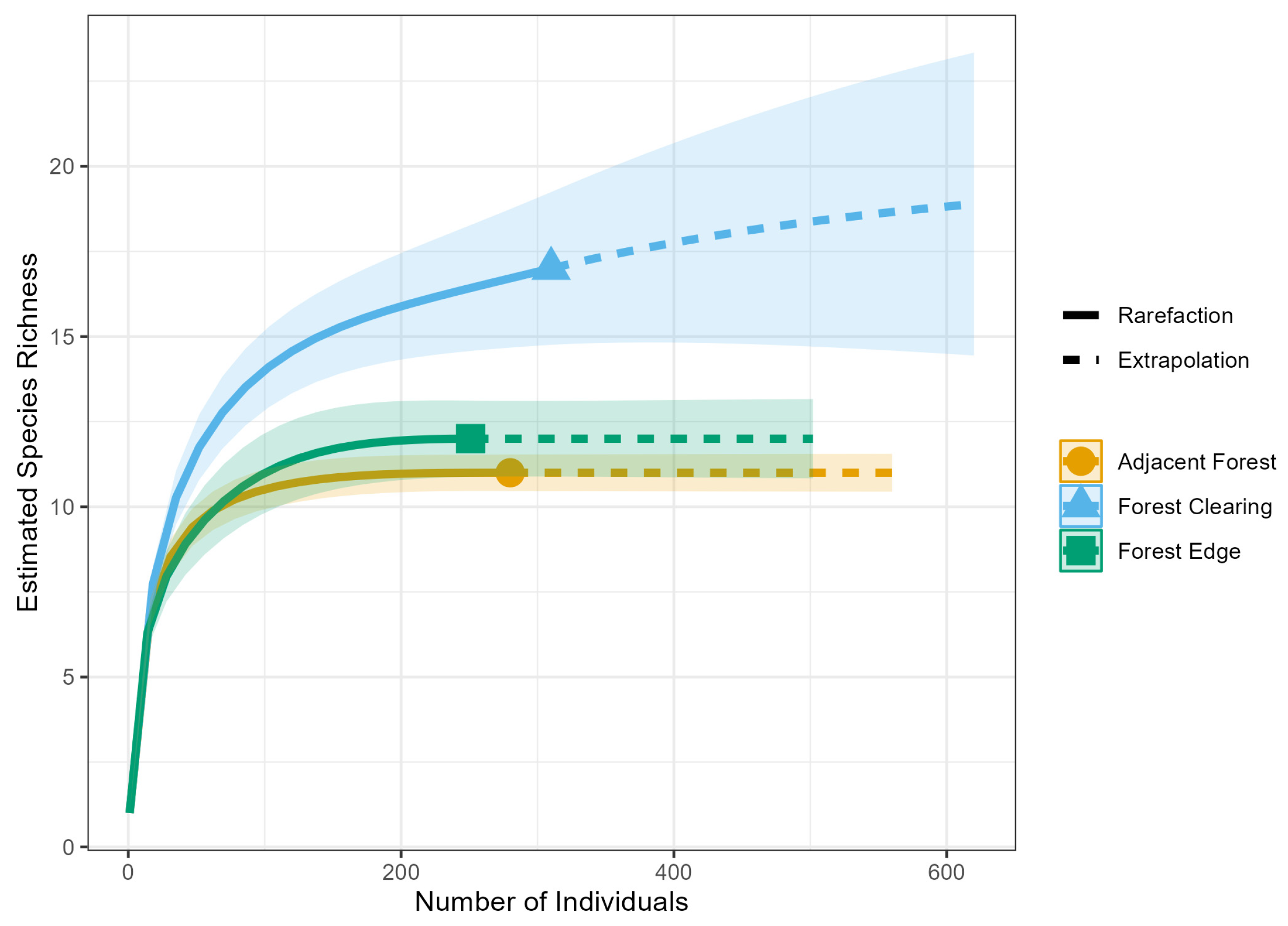
A total of 845 individuals belonging to 23 species and six families were recorded (Supplementary Table S2). Natural treefall gaps (Forest Clearing) accounted for the highest richness and abundance (S = 17; N = 312), followed by Forest Edge (S = 12; N = 251) and Adjacent Forest (S = 11; N = 282). Rarefaction and extrapolation curves reached a clear asymptote for Adjacent Forest and Forest Edge (Figure 2). Although natural treefall gaps (Forest Clearing) showed a trend toward higher estimated richness, the non-parametric Kruskal–Wallis test revealed no significant differences in observed species richness (H = 3.02, p = 0.22) or total abundance (H = 0.85, p = 0.65) among the three habitats.

3.2. Community Structure and Habitat Segregation

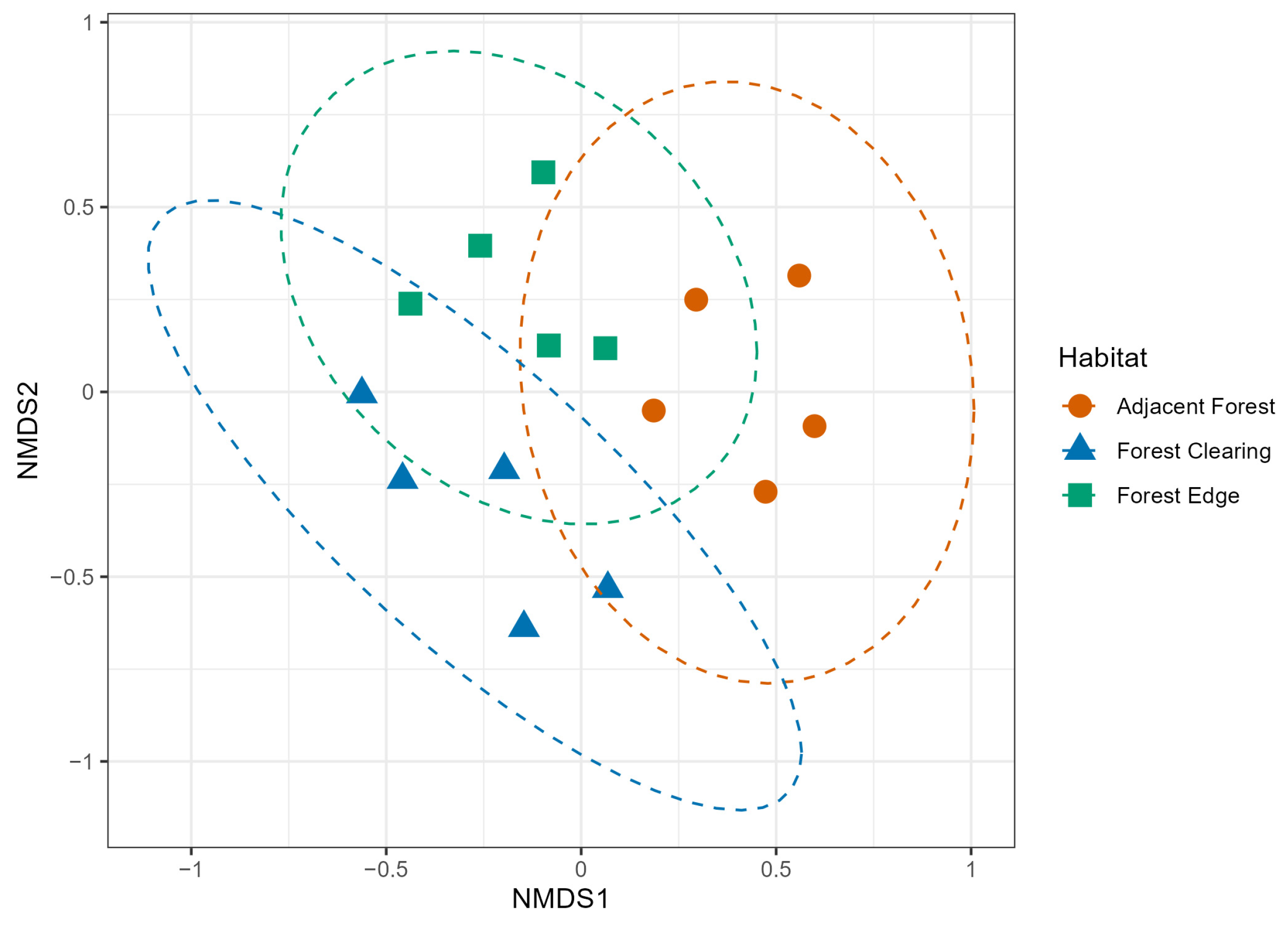
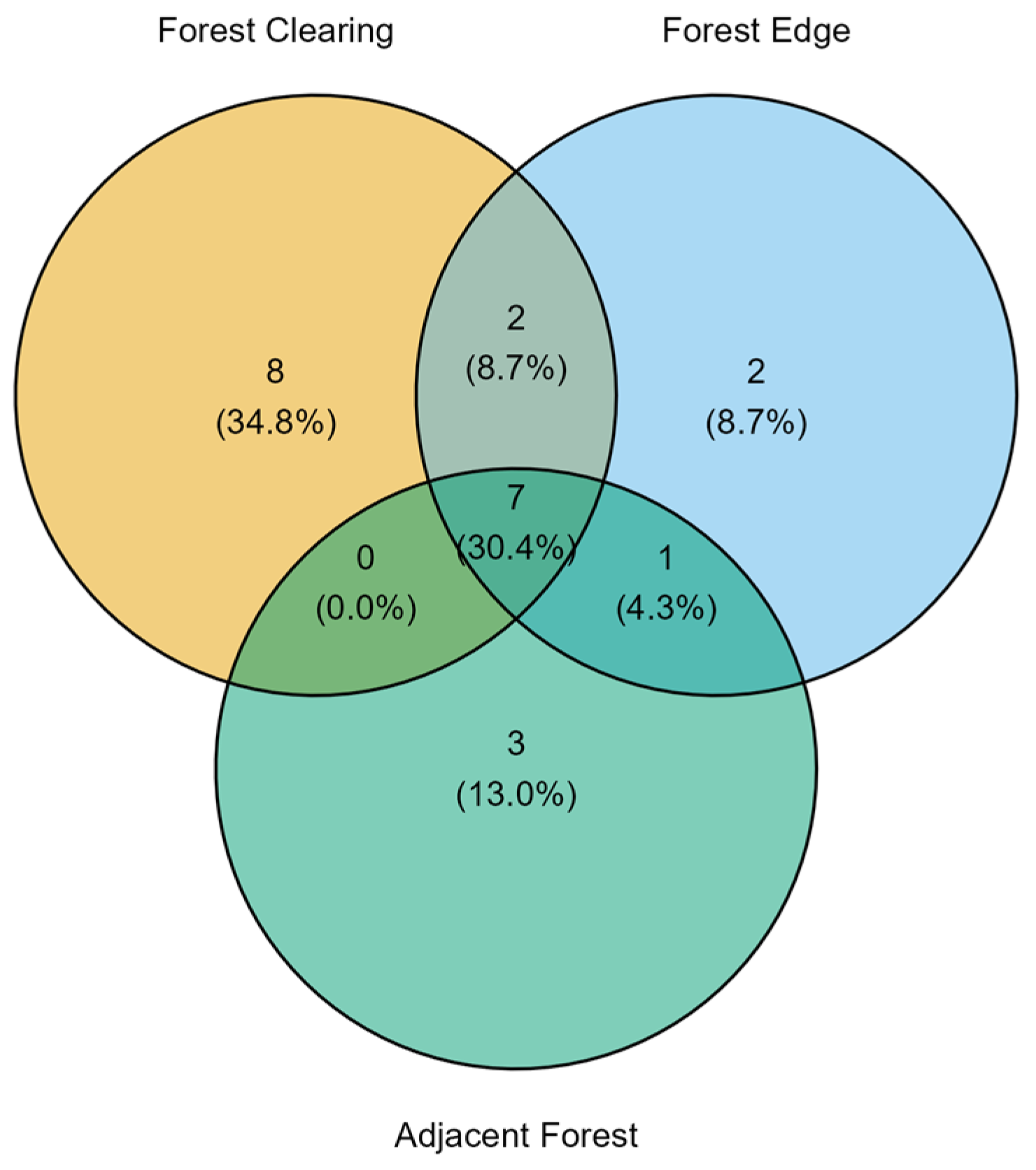
Natural treefall gaps formed a relatively distinct cluster compared to adjacent forest habitats, with significant differences in community composition among habitats (F2,12 = 4.21, p < 0.001). The NMDS ordination revealed a marked compositional differentiation in harvestmen communities across the gap-forest gradient (Figure 3). Forest edge samples occupied an intermediate position in the ordination space while still differing from the adjacent forest interior (Figure 3). The Venn diagram corroborated this high spatial variation, showing that eight species were exclusive to natural treefall gaps (forest clearing), while three species were exclusive to the forest interior and two were found only in the forest edge, with only a small fraction of the regional pool being shared among all three environments (Figure 4).
The Indicator Species Analysis (IndVal) identified Protimesius sp. as a significant indicator of natural treefall gaps (IndVal = 0.89, p = 0.012). This species showed high specificity (A = 1.0) and fidelity (B = 0.8) to the “Forest Clearing” habitat, marking it as a gap-specialist taxon. No significant indicators were identified for the forest interior or edge, where communities appeared more heterogeneous.

3.3. Beta Diversity Partitioning: Turnover vs. Nestedness

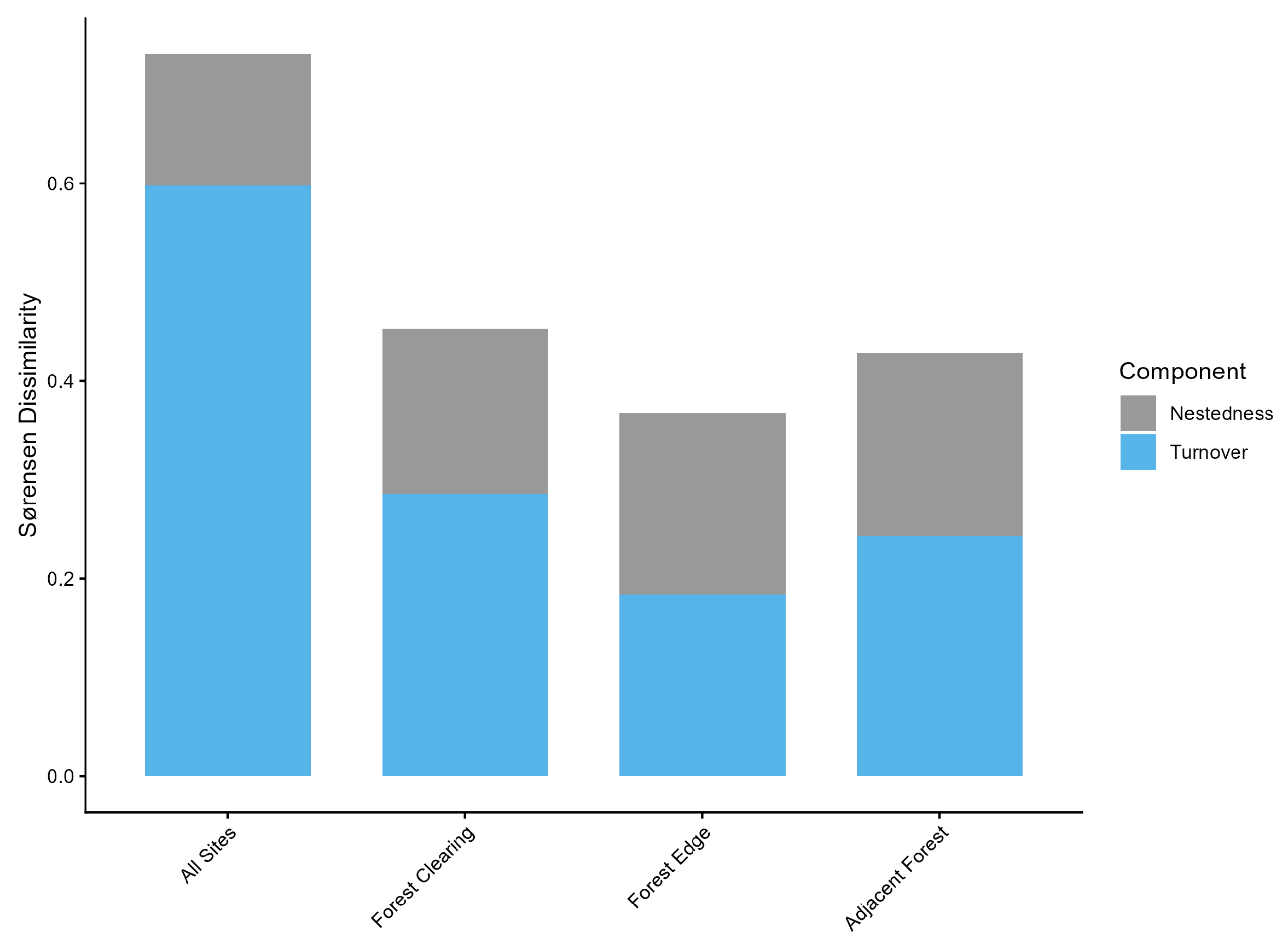
The multi-site beta diversity analysis showed high overall dissimilarity among all sites (βsor = 0.78), driven predominantly by the turnover component (79.5%), while nestedness accounted for only 20.5% (Figure 5). When analyzed by habitat, natural treefall gaps exhibited the highest internal beta diversity (βsor = 0.65) compared to the forest edge (βsor = 0.48) and adjacent forest (βsor = 0.42). This indicates that individual gaps are highly heterogeneous and harbor distinct sets of species even within the same forest matrix.

3.4. Environmental Drives

The Generalized Linear Models (GLMs) revealed that leaf litter depth was a significant positive predictor of harvestmen abundance (t = 2.59, p = 0.025), while no single variable significantly predicted species richness in isolation (Luminosity p = 0.45; Temperature p = 0.61).
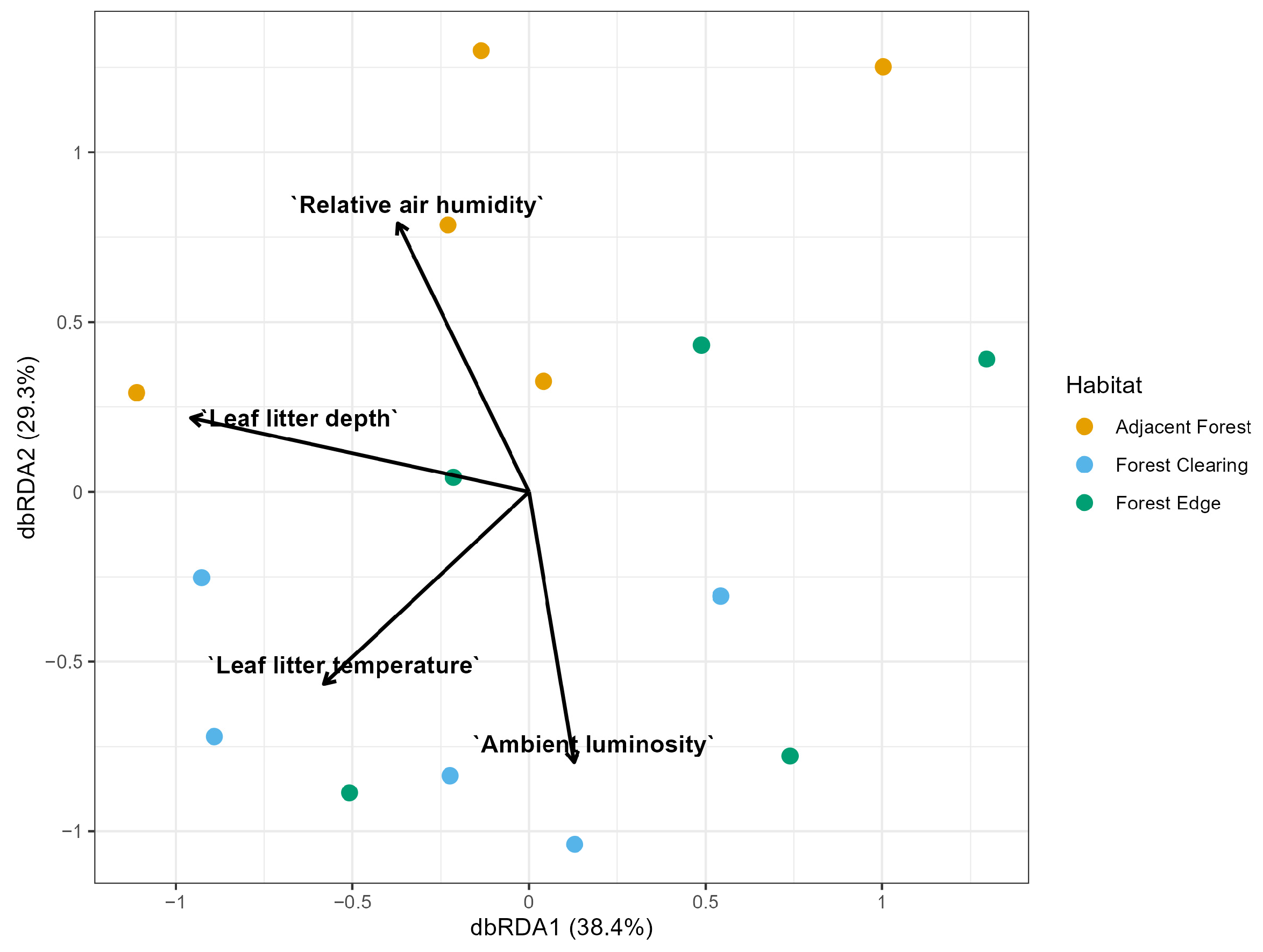
The db-RDA model significantly explained the variation in community composition (F = 1.64, p = 0.046). Among the tested variables, leaf litter depth was the most influential driver of community shifts across the habitats (F = 2.41, p = 0.035). Ambient luminosity and leaf litter temperature contributed to the model’s overall structure but did not reach individual significance, suggesting that the structural complexity of the forest floor is the primary filter for harvestmen in these environments.
The comparison between the full environmental models and their respective null models demonstrated the superior fit of the former, as evidenced by the reduction in residual deviance (Supplementary Table S3). Furthermore, the db-RDA triplot illustrates the strong association between site distribution and environmental gradients, where the increase in leaf litter depth and luminosity clearly segregates gap communities from the more homogeneous forest interior sites (Figure 6).

4. Discussion

The most striking finding of our study is that while natural treefall gaps do not significantly alter the number of species (richness) or individuals (abundance) compared to the forest interior, they promote a radical shift in species identity. The patterns revealed by both the NMDS ordination and the Venn diagram provide clear evidence of a structured compositional gradient across the gap–edge–forest continuum. Despite the absence of significant differences in species richness among habitats, the distribution of species across these environments indicates substantial variation in community composition. Only seven species were shared among all three habitats, representing 30.4% of the total recorded richness, whereas a considerable proportion of the assemblage (56.5%) consisted of habitat-exclusive species. The remaining species were shared only between adjacent habitats (namely, forest edge and interior, and edge and gaps), while no species were simultaneously shared between forest interior and gaps. This pattern reinforces the interpretation that species turnover occurs along gradients of structural and climatic variation between habitats. This is evidenced by the high rate of turnover (~80%) and the identification of Protimesius sp. as a robust gap indicator. Such patterns suggest that the “disturbance” caused by canopy opening does not lead to a loss of diversity or a process of biotic impoverishment but rather creates a specialized niche that maintains regional (gamma) diversity through environmental filtering [12,21].
The role of Protimesius sp. (Family: Stygnidae) as a gap specialist is biologically significant. Stygnids are often found in leaf litter but are known for being more resilient to drier conditions compared to other more hygrophilic harvestmen families [15]. The high specificity of this taxon to gaps suggests it can exploit the increased primary productivity and heat of the gaps, where higher luminosity and litter temperature act as barriers to forest-interior specialists. Additionally, the accumulation of coarse woody debris and heterogeneous litter substrates commonly found in treefall gaps may provide a greater diversity of shelter sites and foraging opportunities, potentially benefiting species capable of exploiting structurally complex microhabitats.
Although harvestmen are strictly nocturnal organisms, daytime microclimatic conditions exert a powerful environmental filtering effect. During the day, treefall gaps reach physiological extremes of elevated temperature and low humidity, forcing leaf-litter fauna to seek microstructural refugia within the remaining substrate. Therefore, daytime environmental traits dictate the physiological boundaries and immediate survival of these organisms, ultimately structuring the nocturnal foraging assemblages that we observed. This finding is further supported by the db-RDA, which shows gap-associated species plotting in the same direction as temperature and luminosity vectors. Similar patterns have been reported for arthropod communities in disturbed tropical environments, where functional traits mediate species responses to environmental gradients [36].
This compositional uniqueness driven by elevated turnover is not restricted to the local scale. Similar patterns have been observed at broader spatial scales, where species turnover dominates harvestmen beta diversity across forest fragments, accounting for most of the compositional dissimilarity (>90%) [17]. This reinforces the idea that environmental heterogeneity consistently promotes species replacement as a key mechanism structuring assemblages, from fine-scale disturbances such as treefall gaps to landscape-level gradients.
Interestingly, while we expected microclimate (light and temperature) to be the main driver, our statistical models identified leaf litter depth as the primary predictor for abundance and community composition. Harvestmen are highly dependent on the litter layer for shelter, humidity maintenance, and prey availability [15,18]. Moreover, deeper leaf litter provides greater physical space and structural complexity within the interstitial layers. This structural arrangement increases space availability, which is biologically critical for harvestmen during highly vulnerable life stages, such as molting, where individuals require vertical clearance to safely hang down from twigs or leaves within the litter matrix. Thus, deeper litter layers act both as a microclimatic buffer and a physical sanctuary for development. In treefall gaps, the accumulation of organic matter from the fallen trees, combined with increased primary productivity in the understory, likely creates a complex litter structure that supports higher abundances and a distinct set of specialist species [19,37].
The distinct community composition observed in treefall gaps is likely a reflection of the biological traits of certain specialist taxa. Species of the family Cosmetidae, such as Metavononoides sp.1, often exhibit higher tolerance to environmental variation and are known to exploit more open habitats within the forest matrix [15,19]. Conversely, the presence of Gonyleptidae specialists in the forest interior, where leaf litter depth and humidity are more stable, underscores the role of the canopy cover in providing a climatic buffer for hygrophilic lineages.
The high turnover observed suggests that gaps act as selective filters, favoring species with physiological or behavioral adaptations to increased solar radiation and lower moisture levels, buffering the physiological stress caused by increased temperature in the gaps. Although the present study did not directly evaluate functional traits, the observed patterns suggest that characteristics related to physiological tolerance to hydric stress, microhabitat use, and reproductive behavior may be selectively favored along the gap–forest gradient [15,18]. Habitat heterogeneity in treefall gaps may directly influence harvestmen reproductive behaviors. The accumulation of decaying wood and loose soil inside gaps may provide suitable oviposition sites in certain specialized lineages [15,18], whereas aggregation behaviors commonly associated with stable forest-interior environments may be less favored under the greater thermal and humidity fluctuations characteristic of canopy openings. Future studies adopting a trait-based approach could help identify the mechanisms underlying species turnover in these environments.
The significant influence of litter depth, rather than luminosity alone, suggests that the physical structure of the habitat provides a “buffer” that allows certain species to thrive in the environment of a gap. This aligns with studies showing that harvestmen respond more strongly to microhabitat structure than to broad climatic gradients in fragmented landscapes [16].
This result is consistent with the scale-dependent framework proposed by [38], who demonstrated that, at fine spatial scales, the structure and availability of microhabitats are the primary drivers of harvestmen diversity and composition, whereas broader-scale variables tend to play a secondary role. In particular, their findings indicate that vegetation complexity and substrate diversity generate a mosaic of ecological niches capable of sustaining distinct assemblages. In this context, our results refine this perspective by identifying leaf litter depth as a key structural component driving species sorting within this gradient, especially under the contrasting environmental conditions created by treefall gaps. Deeper litter layers likely enhance habitat suitability by buffering microclimatic extremes, increasing refuge availability, and creating a greater diversity of microhabitats for shelter, foraging, molting, and reproduction [15,18]. Consequently, gaps may selectively favor species capable of exploiting these structurally complex environments while excluding taxa more dependent on the stable conditions characteristic of closed-canopy forests [36,38]. As a result, the ecological importance of gaps lies not in increasing local richness but in promoting species replacement and enhancing beta diversity across the forest mosaic [11,12,13].
From a conservation perspective, our results indicate that maintaining natural disturbance regimes is crucial. The stochastic formation of treefall gaps represents an intrinsic ecological process that enhances forest structural complexity by generating spatial and temporal heterogeneity in both habitat structure and microclimatic conditions [3,4]. These dynamic patches create novel environmental settings that allow the establishment and persistence of specialized species in more open and variable conditions, which are typically absent from closed-canopy environments. As a result, treefall gaps promote species addition while also driving compositional shifts, ultimately increasing overall forest richness and contributing disproportionately to regional diversity through elevated compositional heterogeneity [14].

5. Conclusions

This study highlights the role of natural treefall gaps as key drivers of spatial turnover in harvestmen communities. Our results demonstrate that the increased structural complexity of the leaf litter acts as a critical environmental filter in all habitats, shaping both species richness and community composition of Opiliones. Variations in litter depth influence resource availability and microhabitat conditions, selecting for species and contributing to the differentiation of assemblages across habitats. Within this context, the formation of treefall gaps emerges as a natural and inherently stochastic process that enhances forest structural and climatic heterogeneity. By creating a mosaic of environmental conditions (ranging from closed-canopy forest to more high-luminosity patches), gaps facilitate the establishment of species adapted to distinct ecological niches. This process promotes species replacement through the addition of gap-associated taxa and the absence of forest-interior specialists, resulting in pronounced compositional gradients without necessarily altering alpha richness. Such patterns are supported by the high number of habitat-exclusive species and by the identification of Protimesius sp. as a consistent indicator of gap environments, reinforcing the role of environmental filtering in structuring these communities. Consequently, treefall gaps contribute to the maintenance of regional diversity by increasing compositional heterogeneity and sustaining a broader spectrum of ecological strategies within the forest matrix. From a conservation perspective, our findings underscore the importance of preserving natural disturbance regimes that allow for the continuous formation of treefall gaps. Management strategies for Atlantic Forest remnants should therefore prioritize not only the protection of closed-canopy areas but also the maintenance of these dynamic patches, which are essential for sustaining structurally complex habitats and ensuring the persistence of specialized species, that would otherwise be absent from the matrix.

Supplementary Materials

The following supporting information can be downloaded at: https://www.mdpi.com/article/10.3390/d18070403/s1, Table S1: Mean and standard deviation (SD) of environmental variables measured in the three habitat types in the Atlantic Forest. AF = adjacent forest; FC = natural treefall gaps (forest clearing); and FE = forest edge; Table S2: Abundance of harvestmen species in the three habitat types in the Atlantic Forest. AF = adjacent forest; FC = natural treefall gaps (forest clearing); and FE = forest edge. Microhabitats evaluated: 1-Herbaceous vegetation; 2-Trunks; 3-Rocks; 4-leaf litter and ground; 5-Ravines; 6-Tabular roots (“buttresses”); Table S3: Summary of GLM parameters for richness and abundance, including comparisons with null models (AIC and Deviance values).

Author Contributions

Conceptualization, A.R.S.d.A., M.C.L.P. and J.H.C.D.; methodology, A.R.S.d.A., M.C.L.P., K.R.B. and T.d.S.M.; investigation, A.R.S.d.A., M.C.L.P., K.R.B. and T.d.S.M.; formal analysis, E.B.A.K.; data curation, A.R.S.d.A. and T.d.S.M.; writing—original draft preparation, A.R.S.d.A., M.C.L.P. and J.H.C.D.; writing—review and editing, A.R.S.d.A., E.B.A.K. and T.d.S.M.; supervision, J.H.C.D. All authors have read and agreed to the published version of the manuscript.

Funding

Conselho Nacional de Desenvolvimento Científico e Tecnológico [133102/2012-2].

Institutional Review Board Statement

Not applicable.

Data Availability Statement

The data presented in this study are available on request from the corresponding author. The data are not publicly available due to institutional data policy and ongoing research.

Acknowledgments

The authors would like to thank the Catholic University of Salvador (UCSal), specifically the Centro de Ecologia e Conservação Animal, and Lacerta Ambiental for facility and logistic support. The authors express their appreciation to the Michelin Ecological Reserve and to Kevin Flesher for the support provided during the research development. We are grateful to Abel Pérez González and Adriano B. Kury for their invaluable assistance in the taxonomic identification of harvestmen. This study was partially supported by research grants from CAPES, FAPESB and CNPq. During the preparation of this manuscript, the authors used Gemini 3 (Google) to assist with English language editing. The authors reviewed and edited the output and take full responsibility for the content of this publication.

Conflicts of Interest

The authors declare no conflicts of interest.

References

  1. Pickett, S.T.; White, P.S. The Ecology of Natural Disturbance and Patch Dynamics; Academic Press: Orlando, FL, USA, 1985. [Google Scholar]
  2. Chazdon, R.L. Second Growth: The Promise of Tropical Forest Regeneration in an Age of Deforestation; University of Chicago Press: Chicago, IL, USA, 2014. [Google Scholar]
  3. Denslow, J.S. Tropical rain forest gaps and tree species diversity. Annu. Rev. Ecol. Syst. 1987, 18, 431–451. [Google Scholar] [CrossRef]
  4. Montgomery, R.A.; Chazdon, R.L. Light gradient partitioning by tropical tree seedlings in the canopy and understory of a tropical rain forest. Oecologia 2002, 131, 165–174. [Google Scholar] [CrossRef] [PubMed]
  5. Tabarelli, M.; Mantovani, W. A regeneração de uma floresta tropical montana após corte raso e queima (São Paulo-Brasil). Rev. Bras. Botânica 1999, 22, 217–226. [Google Scholar] [CrossRef]
  6. Connell, J.H. Diversity in tropical rain forests and coral reefs. Science 1978, 199, 1302–1310. [Google Scholar] [CrossRef] [PubMed]
  7. Basu, P. Seasonal and spatial patterns in ground foraging ants in a rain forest in the Western Ghats, India. Biotropica 1997, 29, 489–500. [Google Scholar] [CrossRef]
  8. Patrick, M.; Fowler, D.; Dunn, R.R.; Sanders, N.J. Effects of Treefall Gap Disturbances on Ant Assemblages in a Tropical Montane Cloud Forest. Biotropica 2012, 44, 472–478. [Google Scholar] [CrossRef]
  9. Peres, M.C.L.; Benati, K.R.; Andrade, A.R.S.; Guimaraes, M.V.A.; Melo, T.S.; Brescovit, A.D.; Delabie, J.H.C. Tree-fall gaps effect on spider (Araneae) assemblages in an Atlantic Forest landscape in northeastern Brazil. Open J. Anim. Sci. 2014, 4, 118–133. [Google Scholar] [CrossRef]
  10. Zhang, Y.; Zhou, Z.; Junggebauer, A.; Pollierer, M.M.; Scheu, S. Effects of tree fall on soil Collembola: Disentangling the role of gap formation and deadwood addition. Geoderma 2025, 455, 117217. [Google Scholar] [CrossRef]
  11. Socolar, J.B.; Gilroy, J.J.; Kunin, W.E.; Edwards, D.P. How should beta-diversity inform biodiversity conservation? Trends Ecol. Evol. 2016, 31, 67–80. [Google Scholar] [CrossRef] [PubMed]
  12. Baselga, A. Partitioning the turnover and nestedness components of beta diversity. Glob. Ecol. Biogeogr. 2010, 19, 134–143. [Google Scholar] [CrossRef]
  13. Baselga, A. The relationship between species replacement and nestedness components of beta diversity for abundance data. Glob. Ecol. Biogeogr. 2013, 22, 299–309. [Google Scholar] [CrossRef]
  14. Schnitzer, S.A.; Carson, W.P. Treefall gaps and the maintenance of species diversity in a tropical forest. Ecology 2001, 82, 913–919. [Google Scholar] [CrossRef]
  15. Pinto-da-Rocha, R.; Machado, G.; Giribet, G. (Eds.) Harvestmen: The Biology of Opiliones; Harvard University Press: Cambridge, MA, USA, 2007. [Google Scholar] [CrossRef]
  16. Bragagnolo, C.; Pinto-da-Rocha, R.; Antunes, A.Z.; Otto, R.L. Harvestmen in an Atlantic forest fragmented landscape: Role of habitat patches and matrix. Biol. Conserv. 2007, 137, 237–247. [Google Scholar] [CrossRef]
  17. Andrade, A.R.S.D.; Lira, A.F.D.A.; Salomao, R.P.; Alvarado, F.; DeSouza, A.M.; DaSilva, M.B.; Delabie, J.H.C. Environmental drivers of harvestmen assemblages (Arachnida: Opiliones) from Neotropical rainforest landscapes. Austral Entomol. 2022, 61, 480–493. [Google Scholar] [CrossRef]
  18. Curtis, D.J. Machado Gecology. In Harvestmen: The Biology of Opiliones; Pinto-da-Rocha, R., Machado, G., Giribet, G., Eds.; Harvard University Press: Cambridge, MA, USA, 2007; pp. 280–308. [Google Scholar]
  19. Peres, M.C.; Pinto-da-Rocha, R.; Machado, G. The spider and harvestman fauna (Arachnida) of an Atlantic Forest fragment in the state of São Paulo, Brazil. Biota Neotrop. 2010, 10, 113–121. [Google Scholar]
  20. Mestre, L.A.M.; Pinto-da-Rocha, R. Population dynamics of harvestmen (Arachnida, Opiliones) in a Brazilian Atlantic forest. J. Arachnol. 2004, 32, 208–220. [Google Scholar] [CrossRef]
  21. Wright, S.; Reeves, J.H. On the measurement and interpretation of nestedness of species assemblages. Oecologia 1992, 92, 416–428. [Google Scholar] [CrossRef] [PubMed]
  22. Thomas, W.W.; Carvalho, A.M.V.; Amorim, A.M.; Garrison, J.; Arbeláez, A.L. Plant endemism in two forests in southern Bahia, Brazil. Biodivers. Conserv. 1998, 7, 311–322. [Google Scholar] [CrossRef]
  23. Michelin. Reserva Ecológica Michelin: Sobre a Reserva. Available online: https://www.michelin.com.br/corporativo/reserva-ecologica-michelin/sobre/a-reserva (accessed on 27 April 2026).
  24. Runkle, J.R. Gap regeneration in some old-growth forests of the eastern United States. Ecology 1981, 62, 1041–1051. [Google Scholar] [CrossRef]
  25. Brokaw, N.V.L. The definition of treefall gap and its effect on measures of forest dynamics. Biotropica 1982, 14, 158–160. [Google Scholar] [CrossRef]
  26. Tabarelli, M.; Mantovani, W. Clareiras naturais e a riqueza de espécies pioneiras em Floresta Atlântica Montana. Rev. Bras. De Biol. 1999, 59, 251–261. [Google Scholar] [CrossRef]
  27. Anderson, M.J. A new method for non-parametric multivariate analysis of variance. Austral Ecol. 2001, 26, 32–46. [Google Scholar] [CrossRef]
  28. Legendre, P.; Anderson, M.J. Distance-based redundancy analysis: Testing multispecies responses in complex ecostatistical designs. Ecol. Monogr. 1999, 69, 1–24. [Google Scholar] [CrossRef]
  29. R Core Team. R: A Language and Environment for Statistical Computing, Version 4.6.0; R Foundation for Statistical Computing: Vienna, Austria, 2026. Available online: https://www.R-project.org/ (accessed on 15 May 2026).
  30. Hsieh, T.C.; Ma, K.H.; Chao, A. iNEXT: An R package for rarefaction and extrapolation of species diversity (Hill numbers). Methods Ecol. Evol. 2016, 7, 1451–1456. [Google Scholar] [CrossRef]
  31. Baselga, A.; Orme, C.D.L. betapart: An R package for the study of beta diversity. Methods Ecol. Evol. 2012, 3, 808–812. [Google Scholar] [CrossRef]
  32. Oksanen, J.; Blanchet, F.G.; Friendly, M.; Kindt, R.; Legendre, P.; Mcglinn, D.; Stevens, M.H.H. Vegan: Community Ecology Package. 2019. Available online: https://cran.r-project.org/web/packages/vegan/index.html (accessed on 15 May 2026).
  33. De Cáceres, M.; Legendre, P. Associations between species and groups of sites: Indices and statistical inference. Ecology 2009, 90, 3566–3574. [Google Scholar] [CrossRef] [PubMed]
  34. Wickham, H. ggplot2: Elegant Graphics for Data Analysis; Springer: New York, NY, USA, 2016. [Google Scholar] [CrossRef]
  35. Gao, C.-H.; Yu, G.; Cai, P. ggVennDiagram: An Intuitive, Easy-to-Use, and Highly Customizable R Package to Generate Venn Diagram. Front. Genet. 2021, 12, 1598. [Google Scholar] [CrossRef] [PubMed]
  36. Tourinho, A.L.; Fagner, I.F.; Almeida, G.; Neyra, M.C.; Lira, A.F.A. Tree Diversity and Microhabitat Structure Drive Harvestmen Assemblages in Amazonian Rainforest. Diversity 2025, 17, 737. [Google Scholar] [CrossRef]
  37. Uehara-Prado, M. The effect of treefall gaps on sap-feeding butterfly (Lepidoptera: Nymphalidae) community in a south-eastern Brazilian Atlantic Forest. J. Trop. Ecol. 2005, 21, 271–276. [Google Scholar] [CrossRef]
  38. Rodrigues, A.B.; Abbad, E.L.; Colmenares, P.A.; Tourinho, A.L.; Baccaro, F.B.; Dambros, C.S. Vegetation structure and soil composition influence Opiliones diversity across spatial scales in Amazonia. Biotropica 2025, 57, e70108. [Google Scholar] [CrossRef]
Figure 1. Geographic location of the study area (map of Brazil highlighting the state of Bahia; regional map of Bahia with the red diamond indicating the Michelin Ecological Reserve (REM), located in the southern Bahia region of Brazil). The area comprises a mosaic of well-preserved Atlantic Forest fragments.
Diversity 18 00403 g001
Figure 2. Sample-size-based rarefaction and extrapolation curves. Species richness (Hill number q = 0) of harvestmen across three habitat types in the Atlantic Forest: Forest Clearing (natural treefall gaps), Forest Edge, and Adjacent Forest (interior). Solid lines represent rarefaction, dashed lines represent extrapolation, and the shaded areas denote 95% confidence intervals.
Diversity 18 00403 g002
Figure 3. Non-metric Multidimensional Scaling (NMDS) ordination. Comparison of harvestmen community structure based on Bray–Curtis dissimilarity. The separation of the clusters highlights the distinct composition of natural treefall gaps (Forest Clearing) compared to the forest interior (Adjacent Forest) and edge environments. Stress = 0.14.
Diversity 18 00403 g003
Figure 4. Venn diagram illustrating harvestmen species exclusivity and sharing among habitats. The colors correspond to the standardized palette used throughout the study: Forest Clearing (orange), Forest Edge (blue), and Adjacent Forest (green). The numbers represent the total count of species unique to each habitat or shared between them. The high number of exclusive species in natural treefall gaps (orange circle) reinforces the high species turnover observed in the study area.
Diversity 18 00403 g004
Figure 5. Partitioning of multi-site beta diversity. Sørensen dissimilarity (βsor) components (Turnover vs. Nestedness) for all sites combined and for each habitat separately. The dominance of the turnover component (blue bars) across all groups indicates high species replacement as the primary driver of community differentiation.
Diversity 18 00403 g005
Figure 6. Distance-based Redundancy Analysis (db-RDA) triplot. Relationship between environmental variables and harvestmen community structure. The arrows represent the influence of Ambient Luminosity, Leaf Litter Temperature, Leaf Litter Depth, and Relative Air Humidity. Points represent sampling sites, categorized by habitat type.
Diversity 18 00403 g006
Disclaimer/Publisher’s Note: The statements, opinions and data contained in all publications are solely those of the individual author(s) and contributor(s) and not of MDPI and/or the editor(s). MDPI and/or the editor(s) disclaim responsibility for any injury to people or property resulting from any ideas, methods, instructions or products referred to in the content.