
Biocontrol Potential of Arthrobotrys thaumasius Isolated from Banana Roots (Musa spp. L.) Against Root-Knot Nematodes of the Genus Meloidogyne

 , ,
, ,
Abstract
1. Introduction
2. Materials and Methods
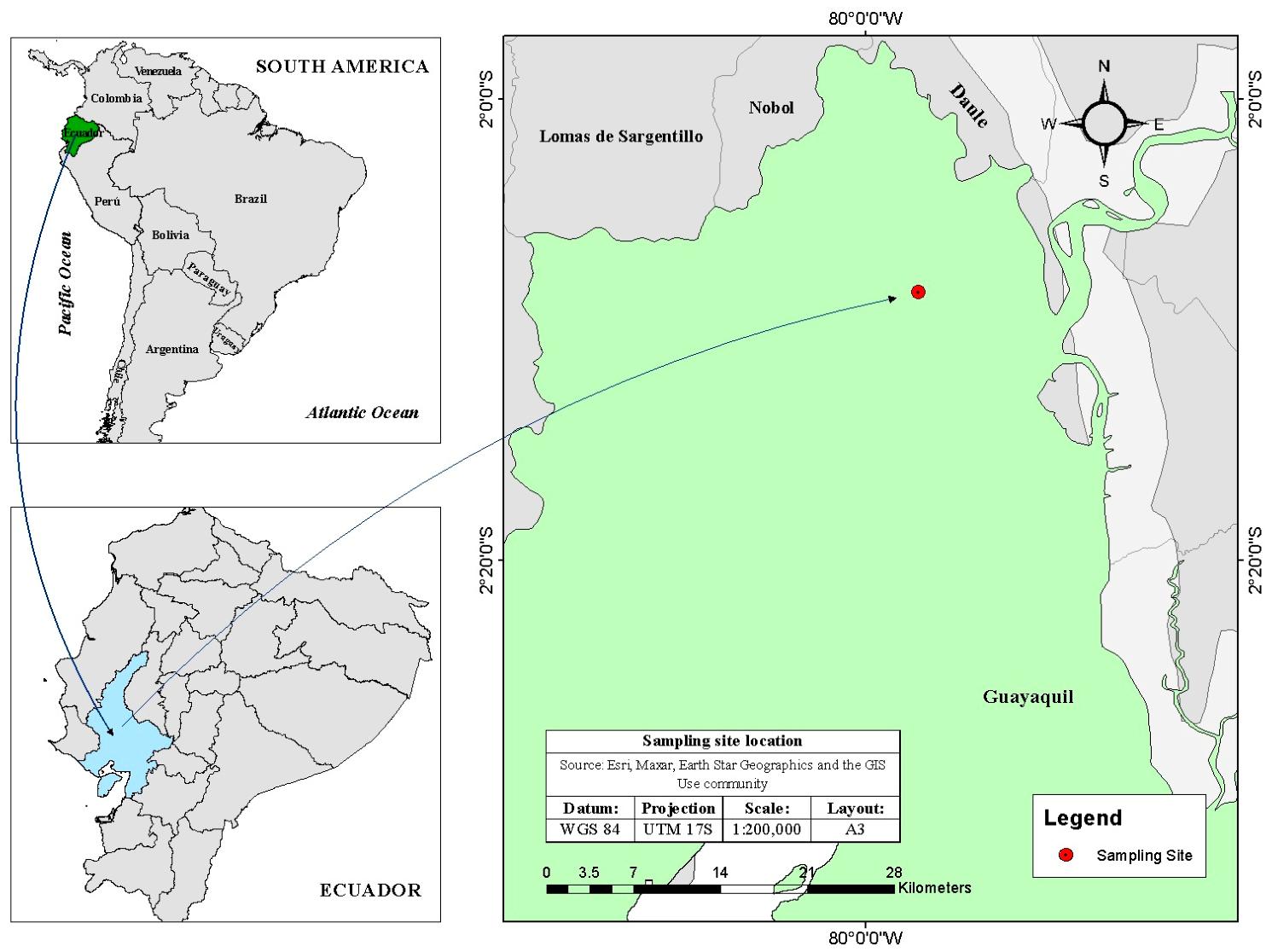
2.1. Study Site, Isolation, and Preservation
2.2. Genomic DNA Extraction and PCR Amplification
2.3. Growth Dynamics on Different Culture Media in Petri Dishes
2.4. Evaluation of A. thaumasius Against Meloidogyne sp.
2.5. Statistical Analysis
3. Results and Discussion
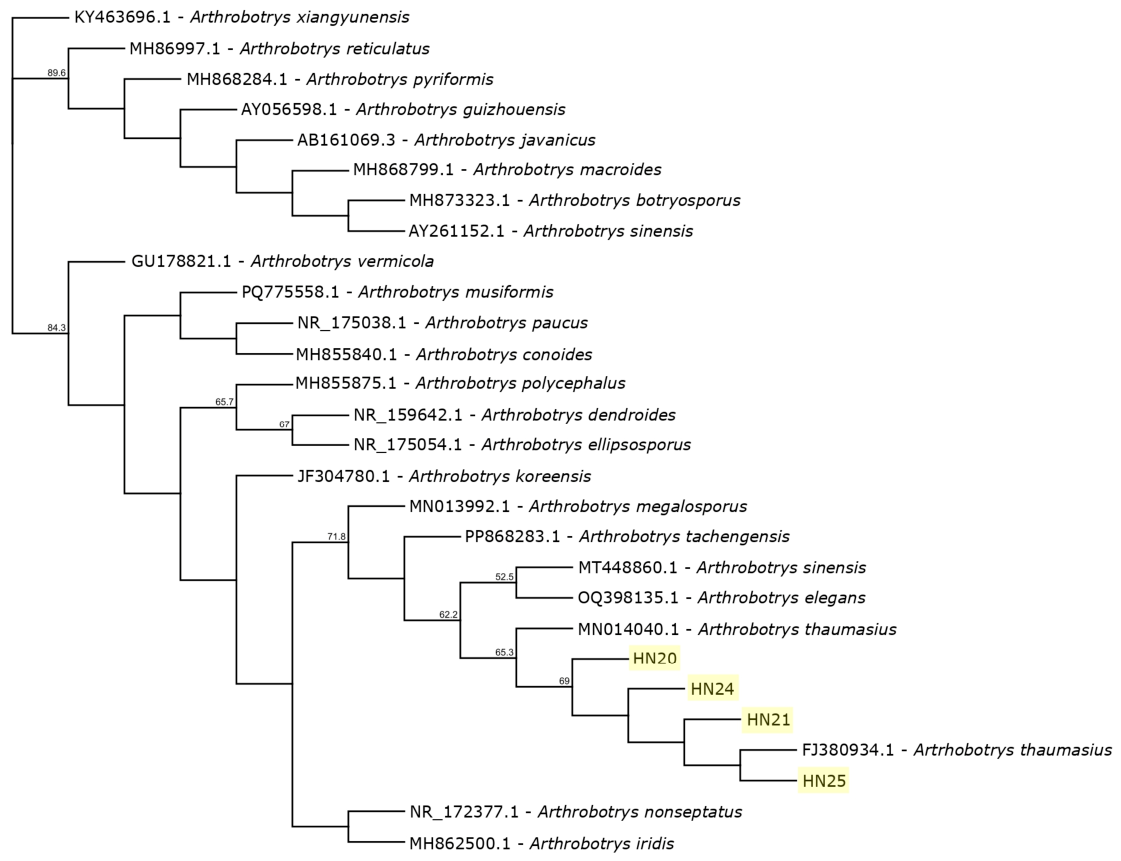
3.1. Phylogenetic Analysis
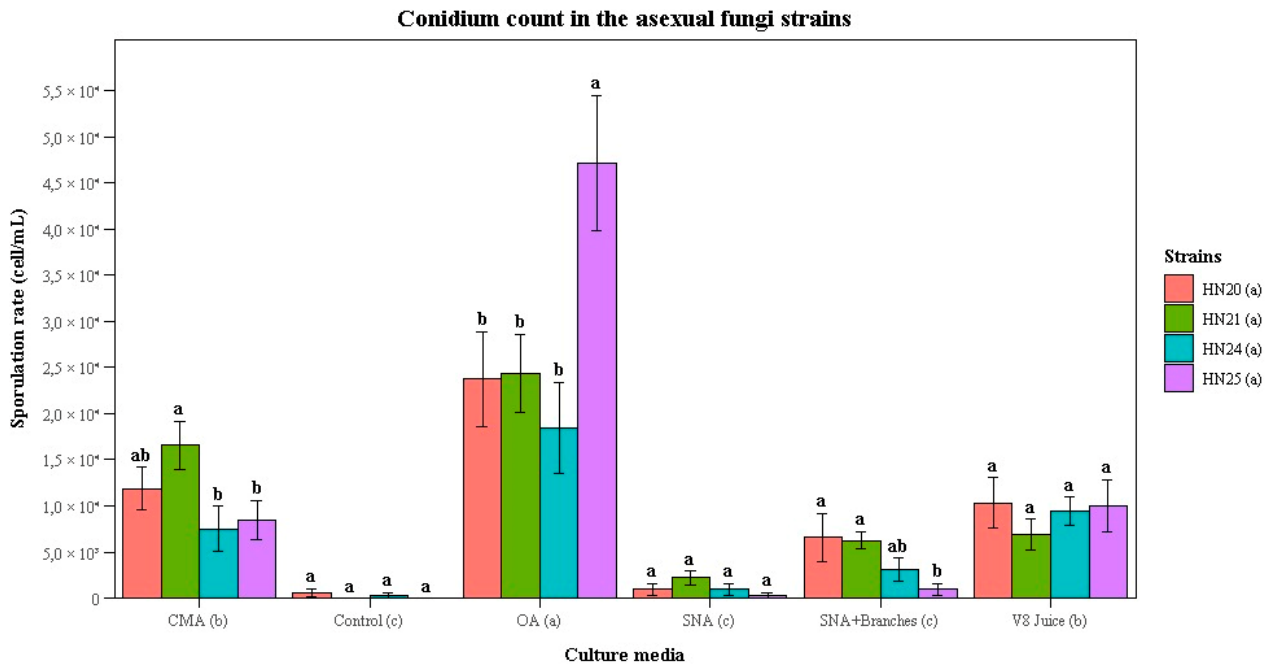
3.2. Growth Dynamics
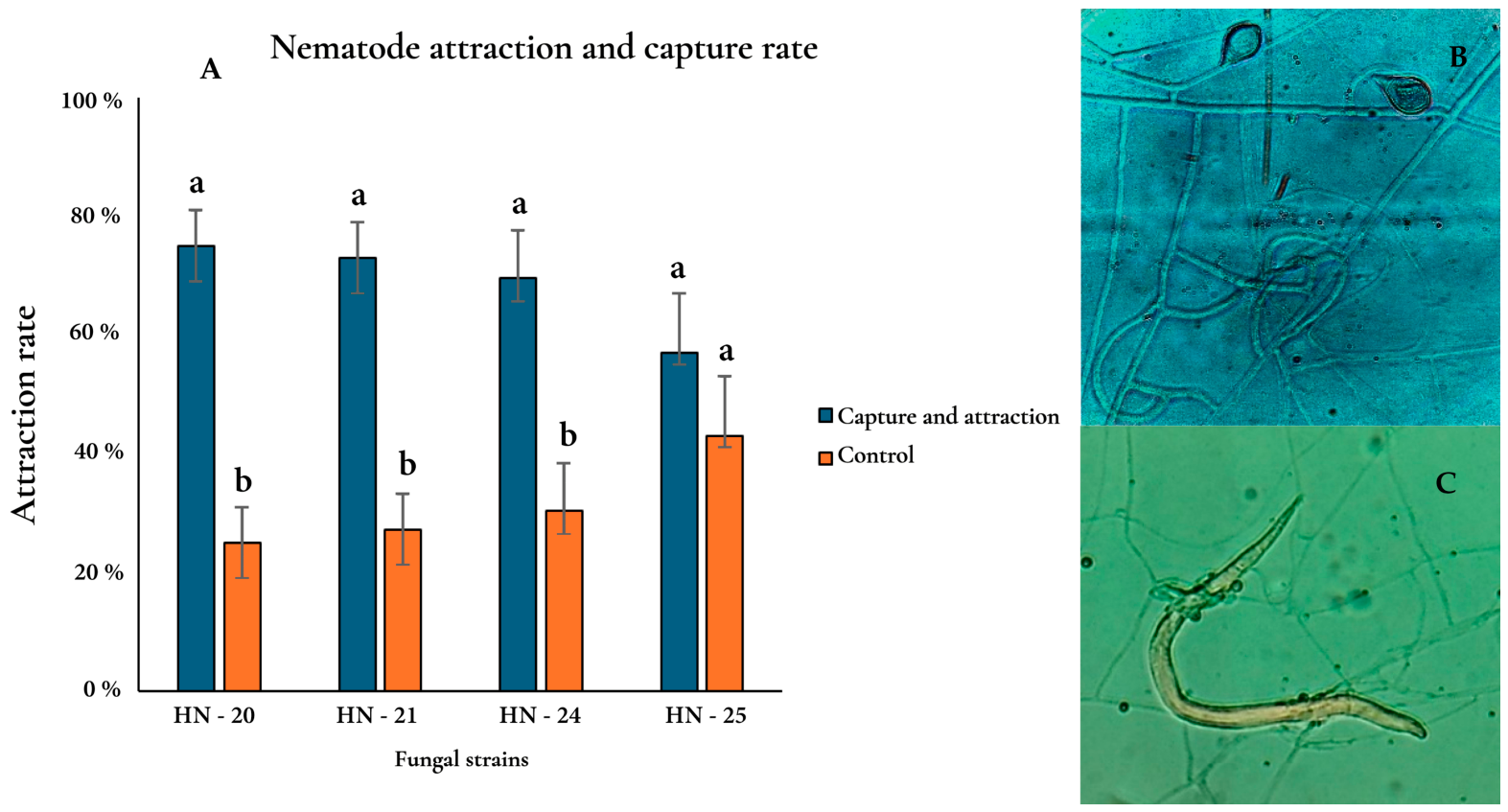
3.3. Nematode Capture
4. Conclusions
Author Contributions
Funding
Data Availability Statement
Conflicts of Interest
References
- Decraemer, W.; Hunt, D.J. Structure and Classification. In Plant Nematology; Perry, R.N., Moens, M., Eds.; CAB International: Wallingford, UK, 2006; pp. 3–32. [Google Scholar]
- Pulavarty, A.; Egan, A.; Karpinska, A.; Horgan, K.; Kakouli-Duarte, T. Plant Parasitic Nematodes: A Review on Their Behaviour, Host Interaction, Management Approaches and Their Occurrence in Two Sites in the Republic of Ireland. Plants 2021, 10, 2352. [Google Scholar] [CrossRef] [Scilit]
- Westerdahl, B.B. Scenarios for Sustainable Management of Plant Parasitic Nematodes. Indian Phytopathol. 2021, 74, 469–475. [Google Scholar] [CrossRef] [Scilit]
- Páez, A.R. Plant-Parasitic Nematodes and Their Management: A Focus on New Nematicides. In Nematodes—Ecology, Adaptation and Parasitism; IntechOpen: London, UK, 2023. [Google Scholar]
- Sikora, R.A.; Coyne, D.; Hallmann, J.; Timper, P. Reflections and Challenges: Nematology in Subtropical and Tropical Agriculture. In Plant Parasitic Nematodes in Subtropical and Tropical Agriculture; CABI Books; CAB International: Wallingford, UK, 2018; pp. 1–19. [Google Scholar]
- Jones, J.T.; Haegeman, A.; Danchin, E.G.J.; Gaur, H.S.; Helder, J.; Jones, M.G.K.; Kikuchi, T.; Manzanilla-López, R.; Palomares-Rius, J.E.; Wesemael, W.M.L.; et al. Top 10 Plant-Parasitic Nematodes in Molecular Plant Pathology. Mol. Plant Pathol. 2013, 14, 946–961. [Google Scholar] [CrossRef] [Scilit]
- Moens, M.; Perry, R.N.; Starr, J.L. Meloidogyne Species—A Diverse Group of Novel and Important Plant Parasites. In Root-Knot Nematodes; Perry, R.N., Starr, J.L., Moens, M., Eds.; CABI International: Wallingford, UK, 2009; pp. 1–17. [Google Scholar]
- Devran, Z.; Göknur, A. Molecular Diagnosis and Differentiation of Meloidogyne arenaria, Meloidogyne javanica and Meloidogyne incognita Using SNP-Based KASP Assays. Crop Prot. 2023, 174, 106388. [Google Scholar] [CrossRef] [Scilit]
- Topalović, O.; Geisen, S. Nematodes as Suppressors and Facilitators of Plant Performance. New Phytol. 2023, 238, 2305–2312. [Google Scholar] [CrossRef] [Scilit]
- Calderón, J.; Miño-Castro, G.; Llumiquinga, P.; Abbas, M.; Gutiérrez-Gutiérrez, C.; Segovia-Salcedo, M.; Proaño, K. Distribution of Meloidogyne spp. in Agricultural Crops of Ecuador: A Literature Review (1976–2021). CABI Rev. 2022, 17, 1–13. [Google Scholar] [CrossRef]
- Waele, D.D.; Elsen, A. Challenges in Tropical Plant Nematology. Annu. Rev. Phytopathol. 2007, 45, 457–485. [Google Scholar] [CrossRef] [Scilit]
- Yadav, H.; Roberts, P.A.; Lopez-Arredondo, D. Combating Root-Knot Nematodes (Meloidogyne spp.): From Molecular Mechanisms to Resistant Crops. Plants 2025, 14, 1321. [Google Scholar] [CrossRef] [Scilit] [PubMed]
- Wram, C.L.; Zasada, I.A. Short-Term Effects of Sublethal Doses of Nematicides on Meloidogyne incognita. Phytopathology 2019, 109, 1605–1613. [Google Scholar] [CrossRef] [Scilit]
- Desaeger, J.; Dickson, D.W.; Locascio, S.J. Methyl Bromide Alternatives for Control of Root-Knot Nematode (Meloidogyne spp.) in Tomato Production in Florida. J. Nematol. 2017, 49, 140–149. [Google Scholar] [CrossRef] [Scilit] [PubMed]
- Haydock, P.P.J.; Woods, S.R.; Grove, I.G.; Hare, M.C. Chemical Control of Nematodes. In Plant Nematology; CABI Books; CAB International: Wallingford, UK, 2013; pp. 459–479. [Google Scholar]
- Forghani, F.; Hajihassani, A. Recent Advances in the Development of Environmentally Benign Treatments to Control Root-Knot Nematodes. Front. Plant Sci. 2020, 11, 1125. [Google Scholar] [CrossRef] [Scilit]
- Vera-Morales, M.; López Medina, S.E.; Naranjo-Morán, J.; Quevedo, A.; Ratti, M.F. Nematophagous Fungi: A Review of Their Phosphorus Solubilization Potential. Microorganisms 2023, 11, 137. [Google Scholar] [CrossRef] [Scilit]
- Wang, S.; Liu, X. Tools and Basic Procedures of Gene Manipulation in Nematode-Trapping Fungi. Mycology 2023, 14, 75–90. [Google Scholar] [CrossRef] [Scilit]
- Su, H.; Zhao, Y.; Zhou, J.; Feng, H.; Jiang, D.; Zhang, K.-Q.; Yang, J. Trapping Devices of Nematode-Trapping Fungi: Formation, Evolution, and Genomic Perspectives. Biol. Rev. Camb. Philos. Soc. 2017, 92, 357–368. [Google Scholar] [CrossRef] [Scilit] [PubMed]
- Vidal-Diez de Ulzurrun, G.; Hsueh, Y.-P. Predator-Prey Interactions of Nematode-Trapping Fungi and Nematodes: Both Sides of the Coin. Appl. Microbiol. Biotechnol. 2018, 102, 3939–3949. [Google Scholar] [CrossRef] [Scilit] [PubMed]
- Vera-Morales, M.; Castañeda-Ruiz, R.F.; Sosa, D.; Arias-Vega, C.; Quevedo, A.; Ratti, M.F. Compuestos bioactivos de bacterias y hongos en el control de nematodos fitopatógenos: Mecanismos de acción, interacciones y aplicaciones. Sci. Agropecu. 2024, 15, 143–157. [Google Scholar] [CrossRef] [Scilit]
- Jiang, X.; Xiang, M.; Liu, X. Nematode-Trapping Fungi. Microbiol. Spectr. 2017, 5, 963–974. [Google Scholar] [CrossRef] [Scilit]
- Zhang, F.; Boonmee, S.; Bhat, J.D.; Xiao, W.; Yang, X.-Y. New Arthrobotrys Nematode-Trapping Species (Orbiliaceae) from Terrestrial Soils and Freshwater Sediments in China. J. Fungi 2022, 8, 671. [Google Scholar] [CrossRef] [Scilit] [PubMed]
- Fenibo, E.O.; Ijoma, G.N.; Matambo, T. Biopesticides in Sustainable Agriculture: Current Status and Future Prospects. In New and Future Development in Biopesticide Research: Biotechnological Exploration; Mandal, S.D., Ramkumar, G., Karthi, S., Jin, F., Eds.; Springer Nature: Singapore, 2022; pp. 1–53. [Google Scholar]
- Hastuti, L.D.; Putri, Q.; Priyani, N.; Kesuma, S. Efficacy of Fungal Bioconsortia Comprising Trichoderma yunnnanense and Arthrobotrys thaumasius in the Management of Meloidogyne hapla Infestations in Tomato Cultivation. Int. J. Agric. Biol. 2024, 32, 461–467. [Google Scholar] [CrossRef] [Scilit]
- Duddington, C.L. Notes on the Technique of Handling Predacious Fungi. Trans. Br. Mycol. Soc. 1955, 38, 97–103. [Google Scholar] [CrossRef] [Scilit]
- Barron, G.L. The Nematode-Destroying Fungi—Topics in Mycobiology, No. 1; Biological Publications Ltd.: Guelph, ON, Canada, 1977. [Google Scholar]
- Cooke, R.C.; Godfrey, B.E.S. A Key to the Nematode-Destroying Fungi. Trans. Br. Mycol. Soc. 1964, 47, 61–74. [Google Scholar] [CrossRef] [Scilit]
- Drechsler, C. Some Hyphomycetes That Prey on Free-Living Terricolous Nematodes. Mycologia 1937, 29, 447–552. [Google Scholar] [CrossRef] [Scilit]
- Rubner, A. Revision of predacious Hyphomycetes in the Dactylella-Monacrosporium complex. Stud. Mycol. 1996, 39, 1–134. [Google Scholar]
- Cenis, J.L. Rapid Extraction of Fungal DNA for PCR Amplification. Nucleic Acids Res. 1992, 20, 2380. [Google Scholar] [CrossRef] [Scilit]
- White, T.J.; Bruns, T.; Lee, S.; Taylor, J. Amplification and Direct Sequencing of Fungal Ribosomal RNA Genes for Phylogenetics. In PCR Protocols; Innis, M.A., Gelfand, D.H., Sninsky, J.J., White, T.J., Eds.; Academic Press: San Diego, CA, USA, 1990; pp. 315–322. [Google Scholar]
- Sanger, F.; Nicklen, S.; Coulson, A.R. DNA Sequencing with Chain-Terminating Inhibitors. Proc. Natl. Acad. Sci. USA 1977, 74, 5463–5467. [Google Scholar] [CrossRef] [Scilit]
- Guindon, S.; Dufayard, J.-F.; Lefort, V.; Anisimova, M.; Hordijk, W.; Gascuel, O. New Algorithms and Methods to Estimate Maximum-Likelihood Phylogenies: Assessing the Performance of PhyML 3.0. Syst. Biol. 2010, 59, 307–321. [Google Scholar] [CrossRef] [Scilit]
- Hussain, M.; Zouhar, M.; Ryšánek, P. Attraction of Root Knot Nematodes, Meloidogyne incognita, to Living Mycelium of Nematophagous Fungi. Pak. J. Zool. 2018, 50, 2073–2078. [Google Scholar] [CrossRef] [Scilit]
- Castagnone-Sereno, P.; Esparrago, G.; Abad, P.; Leroy, F.; Bongiovanni, M. Satellite DNA as a Target for PCR-Specific Detection of the Plant-Parasitic Nematode Meloidogyne hapla. Curr. Genet. 1995, 28, 566–570. [Google Scholar] [CrossRef] [Scilit]
- Hsueh, Y.-P.; Gronquist, M.R.; Schwarz, E.M.; Nath, R.D.; Lee, C.-H.; Gharib, S.; Schroeder, F.C.; Sternberg, P.W. Nematophagous Fungus Arthrobotrys oligospora Mimics Olfactory Cues of Sex and Food to Lure Its Nematode Prey. eLife 2017, 6, e20023. [Google Scholar] [CrossRef] [Scilit]
- Rubner, A. Predacious Fungi from Ecuador. Mycotaxon 1994, 51, 143–151. [Google Scholar] [CrossRef] [Scilit]
- Vera-Morales, M.; Quevedo, A.; Peñaherrera, S.; Serrano, L.; Sosa, D.; Ratti, M.F.; Castañeda-Ruiz, R.F.; Magdama, F. Dinámica de Crecimiento, Esporulación y Captura de Hongos Asexuales Sobre Meloidogyne sp., In Vitro. Sci. Agropecu. 2024, 15, 121–132. [Google Scholar] [CrossRef] [Scilit]
- Singh, U.B.; Sahu, A.; Singh, R.K.; Singh, D.P.; Meena, K.K.; Srivastava, J.S.; Renu; Manna, M.C. Evaluation of Biocontrol Potential of Arthrobotrys oligospora against Meloidogyne graminicola and Rhizoctonia solani in Rice (Oryza sativa L.). Biol. Control 2012, 60, 262–270. [Google Scholar] [CrossRef] [Scilit]
- Wang, F.-H.; Xu, Q.; Wang, B.; Wang, K.-Y.; Xue, Y.-J.; Cai, B.; Wang, F.; Liu, Y.; Cai, K.; Cao, X. Isolation, Identification and Characterisation of the Nematophagous Fungus Arthrobotrys thaumasia (Monacrosporium thaumasium) from China. Biocontrol Sci. Technol. 2017, 27, 378–392. [Google Scholar] [CrossRef] [Scilit]
- Orozco A, M.; Jiménez R, A.; Acuña N, O.; Álvarez C, V. Determinación del crecimiento de hongos nematófagosen diversas fuentes de carbono. Agron. Costarric. 2015, 39, 143–152. [Google Scholar]
- Quevedo, A.; Vera-Morales, M.; Espinoza-Lozano, F.; Castañeda-Ruiz, R.F.; Sosa Del Castillo, D.; Magdama, F. Assessing the Predatory Activity of Arthrobotrys oligosporus Strain C-2197 as Biocontrol of the Root-Knot Nematode Meloidogyne spp. Rev. Bionatura 2021, 6, 1586–1592. [Google Scholar] [CrossRef] [Scilit]
- Kumar, D.; Singh, K.P.; Jaiswai, R.K. Screening of Different Media and Substrates for Cultural Variability and Mass Culture of Arthrobotrys dactyloides Drechsler. Mycobiology 2005, 33, 215–222. [Google Scholar] [CrossRef] [Scilit]
- Qi, Y.; Zhao, H.; Zhang, Z.; Ouyang, Y.; Zhang, X. Biological Characteristics and Fungicide Screening of Bipolaris Oryzae Causing Leaf Spot on Banana in China. Microorganisms 2025, 13, 1285. [Google Scholar] [CrossRef] [Scilit] [PubMed]
- Suresh, S.; Annaiyan, S.; Shobana, C.S.; AlGarawi, A.M.; Hatamleh, A.A.; Arokiyaraj, S. Isolation, Characterization, and Predatory Activity of Nematode-Trapping Fungus, Arthrobotrys oligospora PSGSS01. J. King Saud Univ. Sci. 2024, 36, 103297. [Google Scholar] [CrossRef] [Scilit]
- Soares, P.L.M.; Nozaki, M.d.H.; Barbosa, B.F.F.; Santos, J.M.d.; Barbosa, J.C. Crescimento e esporulação de duas espécies de Arthrobotrys corda em diferentes meios de cultura e dois ambientes. Biosci. J. 2009, 25, 68–74. [Google Scholar]
- Zhu, M.-C.; Li, X.-M.; Zhao, N.; Yang, L.; Zhang, K.-Q.; Yang, J.-K. Regulatory Mechanism of Trap Formation in the Nematode-Trapping Fungi. J. Fungi 2022, 8, 406. [Google Scholar] [CrossRef] [Scilit]
- Nordbring-Hertz, B.; Jansson, H.-B.; Tunlid, A. Nematophagous Fungi. In Encyclopedia of Life Sciences; John Wiley & Sons, Ltd.: Hoboken, NJ, USA, 2006. [Google Scholar]
- Yang, J.; Wang, L.; Ji, X.; Feng, Y.; Li, X.; Zou, C.; Xu, J.; Ren, Y.; Mi, Q.; Wu, J.; et al. Genomic and Proteomic Analyses of the Fungus Arthrobotrys oligospora Provide Insights into Nematode-Trap Formation. PLoS Pathog. 2011, 7, e1002179. [Google Scholar] [CrossRef] [Scilit]
- Pereira, C.G.; Varejão, J.O.S.; Barros, A.F.; de Paiva, W.F.; Balbino, H.M.; Rodrigues, D.; de Queiroz, M.E.L.R.; de Freitas, L.G.; Varejão, E.V.V. Identification and Fumigant Effects of Nematicidal Volatile Organic Compounds Produced by Nematophagous Fungi against Root-Knot Nematodes. BioControl 2026. [Google Scholar] [CrossRef] [Scilit]
- Zhang, J.; Wei, L.; Zhang, H.; Ma, X.; Sun, Y.; Li, R.; Zhang, C.; Cai, X.; Qiao, J.; Meng, Q. Proteomic Insights into Nematode-Trapping Fungi Arthrobotrys Oligospora after Their Response to Chitin. J. Vet. Res. 2025, 69, 71–82. [Google Scholar] [CrossRef] [Scilit]
- Andersson, K.-M.; Kumar, D.; Bentzer, J.; Friman, E.; Ahrén, D.; Tunlid, A. Interspecific and Host-Related Gene Expression Patterns in Nematode-Trapping Fungi. BMC Genom. 2014, 15, 968. [Google Scholar] [CrossRef] [Scilit]
- Yang, C.-T.; Vidal-Diez de Ulzurrun, G.; Gonçalves, A.P.; Lin, H.-C.; Chang, C.-W.; Huang, T.-Y.; Chen, S.-A.; Lai, C.-K.; Tsai, I.J.; Schroeder, F.C.; et al. Natural Diversity in the Predatory Behavior Facilitates the Establishment of a Robust Model Strain for Nematode-Trapping Fungi. Proc. Natl. Acad. Sci. USA 2020, 117, 6762–6770. [Google Scholar] [CrossRef] [Scilit]
- Kuo, C.-Y.; Tay, R.J.; Lin, H.-C.; Juan, S.-C.; Vidal-Diez de Ulzurrun, G.; Chang, Y.-C.; Hoki, J.; Schroeder, F.C.; Hsueh, Y.-P. The Nematode-Trapping Fungus Arthrobotrys oligospora Detects Prey Pheromones via G Protein-Coupled Receptors. Nat. Microbiol. 2024, 9, 1738–1751. [Google Scholar] [CrossRef] [Scilit] [PubMed]
- Kassam, R.; Yadav, J.; Chawla, G.; Kundu, A.; Hada, A.; Jaiswal, N.; Bollinedi, H.; Kamil, D.; Devi, P.; Rao, U. Identification, Characterization, and Evaluation of Nematophagous Fungal Species of Arthrobotrys and Tolypocladium for the Management of Meloidogyne incognita. Front. Microbiol. 2021, 12, 790223. [Google Scholar] [CrossRef] [Scilit] [PubMed]
- Eken, C.; Uysal, G.; Demir, D.; Caliskan, S.; Sevindik, E.; Caglayan, K. First report of the nematode-trapping fungus Arthrobotrys thaumasia in Türkiye and its biocontrol potential against Meloidogyne incognita. J. Phytopathol. 2024, 172, e13354. [Google Scholar] [CrossRef] [Scilit]



| HN20 | Colony Diameter per Day (mm) | ||||
|---|---|---|---|---|---|
| 1 | 2 | 3 | 4 | 5 | |
| Jugo v8 | 10.3 ± 0.3 a | 21.4 ± 0.6 a | 35.6 ± 0.5 a | 48.5 ± 0.7 a | 62.0 ± 0.9 a |
| SNA + Ramas | 13.3 ± 0.3 bc | 26.8 ± 0.6 b | 44.0 ± 0.4 b | 59.3 ± 0.9 c | 74.4 ± 0.5 c |
| OA | 12.4 ± 0.6 b | 27.8 ± 1.7 b | 41.3 ± 1.3 b | 54.9 ± 2.0 b | 67.6 ± 2.1 b |
| CMA | 14.0 ± 1.2 c | 30.8 ± 1.8 c | 47.9 ± 1.8 c | 60.6 ± 2.6 c | 82.0 ± 3.9 d |
| SNA | 14.6 ± 0.5 c | 31.0 ± 0.7 c | 49.9 ± 0.8 c | 67.9 ± 0.6 d | 83.3 ± 1.8 d |
| Control | 13.9 ± 0.6 c | 31.4 ± 1.3 c | 49.1 ± 2.8 c | 67.3 ± 2.7 d | 79.9 ± 1.3 d |
| HN21 | Colony Diameter per Day (mm) | ||||
|---|---|---|---|---|---|
| 1 | 2 | 3 | 4 | 5 | |
| Jugo v8 | 8.3 ± 0.9 a | 20.0 ± 1.1 a | 32.4 ± 1.0 a | 46.0 ± 1.8 a | 59.4 ± 3.4 a |
| SNA + Ramas | 12.9 ± 0.8 b | 28.9 ± 1.8 bc | 43.4 ± 1.0 bc | 60.6 ± 1.4 c | 76.1 ± 2.1 c |
| OA | 13.4 ± 0.9 bc | 27.0 ± 3.1 b | 40.3 ± 2.2 b | 54.9 ± 2.9 b | 67.4 ± 3.0 b |
| CMA | 15.8 ± 0.6 c | 33.4 ± 0.6 d | 48.0 ± 1.2 d | 65.1 ± 0.3 c | 82.0 ± 1.2 cd |
| SNA | 14.6 ± 1.1 bc | 32.8 ± 2.1 cd | 47.1 ± 2.3 d | 65.0 ± 2.3 c | 82.4 ± 2.4 d |
| Control | 13.0 ± 1.9 b | 30.1 ± 2.1 bcd | 46.0 ± 2.6 cd | 64.4 ± 2.6 c | 77.3 ± 3.7 cd |
| HN24 | Colony Diameter per Day (mm) | ||||
|---|---|---|---|---|---|
| 1 | 2 | 3 | 4 | 5 | |
| Jugo v8 | 8.0 ± 0.4 a | 19.1 ± 1.1 a | 30.8 ± 0.6 a | 44.1 ± 1.5 a | 58.1 ± 0.9 a |
| SNA + Ramas | 12.6 ± 0.5 b | 29.6 ± 0.9 bc | 43.9 ± 1.7 c | 60.5 ± 0.9 c | 77.0 ± 2.3 c |
| OA | 10.1 ± 0.9 a | 27.4 ± 0.9 b | 40.1 ± 0.8 b | 53.5 ± 2.2 b | 68.5 ± 3.9 b |
| CMA | 13.0 ± 2.0 bc | 31.6 ± 2.3 cd | 47.0 ± 2.7 cd | 66.5 ± 1.0 d | 83.3 ± 3.0 d |
| SNA | 14.0 ± 1.0 bc | 33.4 ± 1.3 d | 46.4 ± 1.4 c | 65.3 ± 2.1 d | 82.0 ± 1.9 cd |
| Control | 15.0 ± 0.7 c | 32.1 ± 0.8 cd | 50.1 ± 1.4 d | 68.0 ± 1.5 d | 80.5 ± 1.4 cd |
| HN25 | Colony Diameter per Day (mm) | ||||
|---|---|---|---|---|---|
| 1 | 2 | 3 | 4 | 5 | |
| Jugo v8 | 11.5 ± 1.2 a | 27.1 ± 0.8 a | 35.9 ± 1.5 a | 49.9 ± 1.4 a | 64.3 ± 0.9 a |
| SNA + Ramas | 14.1 ± 1.0 a | 30.1 ± 0.6 abc | 41.0 ± 0.8 bc | 57.6 ± 0.8 b | 73.8 ± 1.0 b |
| OA | 11.9 ± 1.8 a | 28.1 ± 1.3 ab | 39.0 ± 2.7 ab | 52.1 ± 2.0 a | 63.3 ± 2.8 a |
| CMA | 13.9 ± 1.1 a | 33.1 ± 1.4 c | 47.1 ± 1.5 de | 65.1 ± 1.1 cd | 83.3 ± 1.0 d |
| SNA | 14.0 ± 1.9 a | 32.0 ± 2.1 c | 43.6 ± 2.6 cd | 61.8 ± 2.8 bc | 77.3 ± 2.7 bc |
| Control | 14.1 ± 1.0 a | 31.1 ± 1.8 bc | 49.3 ± 1.8 e | 67.1 ± 2.3 d | 80.1 ± 1.2 cd |
Disclaimer/Publisher’s Note: The statements, opinions and data contained in all publications are solely those of the individual author(s) and contributor(s) and not of MDPI and/or the editor(s). MDPI and/or the editor(s) disclaim responsibility for any injury to people or property resulting from any ideas, methods, instructions or products referred to in the content. |
© 2026 by the authors. Licensee MDPI, Basel, Switzerland. This article is an open access article distributed under the terms and conditions of the Creative Commons Attribution (CC BY) license.
Share and Cite
Carpio, G.; de la Cruz, A.; Ratti, M.F.; Castañeda-Ruiz, R.F.; Vera-Morales, M. Biocontrol Potential of Arthrobotrys thaumasius Isolated from Banana Roots (Musa spp. L.) Against Root-Knot Nematodes of the Genus Meloidogyne. Diversity 2026, 18, 335. https://doi.org/10.3390/d18060335
Carpio G, de la Cruz A, Ratti MF, Castañeda-Ruiz RF, Vera-Morales M. Biocontrol Potential of Arthrobotrys thaumasius Isolated from Banana Roots (Musa spp. L.) Against Root-Knot Nematodes of the Genus Meloidogyne. Diversity. 2026; 18(6):335. https://doi.org/10.3390/d18060335
Chicago/Turabian StyleCarpio, Giovanna, Alejandra de la Cruz, María F. Ratti, Rafael F. Castañeda-Ruiz, and Marcos Vera-Morales. 2026. "Biocontrol Potential of Arthrobotrys thaumasius Isolated from Banana Roots (Musa spp. L.) Against Root-Knot Nematodes of the Genus Meloidogyne" Diversity 18, no. 6: 335. https://doi.org/10.3390/d18060335
APA StyleCarpio, G., de la Cruz, A., Ratti, M. F., Castañeda-Ruiz, R. F., & Vera-Morales, M. (2026). Biocontrol Potential of Arthrobotrys thaumasius Isolated from Banana Roots (Musa spp. L.) Against Root-Knot Nematodes of the Genus Meloidogyne. Diversity, 18(6), 335. https://doi.org/10.3390/d18060335