Article

Freshwater Gastrotrichs as Prey: First Documented Evidence of Cyclopoid Copepod Predation

by
Francesco Saponi
1,2,3,
Luca Vecchioni
4 and
M. Antonio Todaro
2,3,*
1
Department of Earth and Marine Sciences, University of Palermo, Viale delle Science, 90128 Palermo, Italy
2
National Biodiversity Future Center (NBFC), Piazza Marina 61, 90133 Palermo, Italy
3
Department of Life Sciences, University of Modena e Reggio Emilia, Via G. Campi, 213/D, 41125 Modena, Italy
4
Department of Biological, Chemical and Pharmaceutical Sciences and Technologies (STEBICEF), University of Palermo, Via Archirafi 18, 90123 Palermo, Italy
*
Author to whom correspondence should be addressed.
Diversity 2026, 18(6), 319; https://doi.org/10.3390/d18060319
Submission received: 4 May 2026 / Revised: 25 May 2026 / Accepted: 26 May 2026 / Published: 27 May 2026
(This article belongs to the Special Issue 2026 Feature Papers by Diversity's Editorial Board Members)

Abstract

Gastrotrichs (Phylum Gastrotricha) are widespread and species-rich components of benthic and periphytic communities, where they are thought to contribute substantially to food-web functioning by linking the microbial loop to higher trophic levels through their feeding on detritus, bacteria, microalgae, and fungi, and serve as prey for larger animals. Despite the well-recognized role as primary consumers, their position as potential prey remains largely unresolved, with documented predators so far restricted to carnivorous protists. Here, we report the first documented case of metazoan predation on a freshwater gastrotrich, in which a cyclopoid copepod actively captures and partially consumes a chaetonotid species. The interaction was first detected under minimally disturbed conditions and subsequently replicated in controlled experimental settings. Predation was documented through in vivo video recordings and supported by species-level identification of both predator and prey. These findings expand the currently recognized trophic interactions involving freshwater gastrotrichs and provide new insight into their ecological role within aquatic food webs.

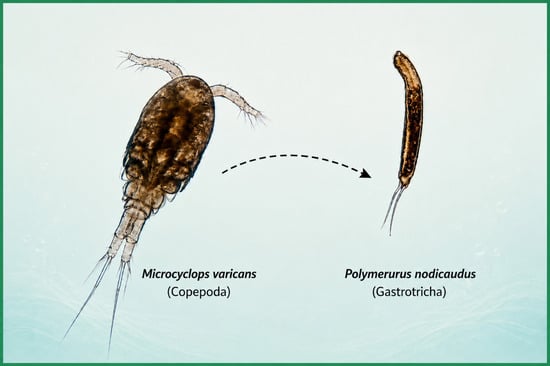
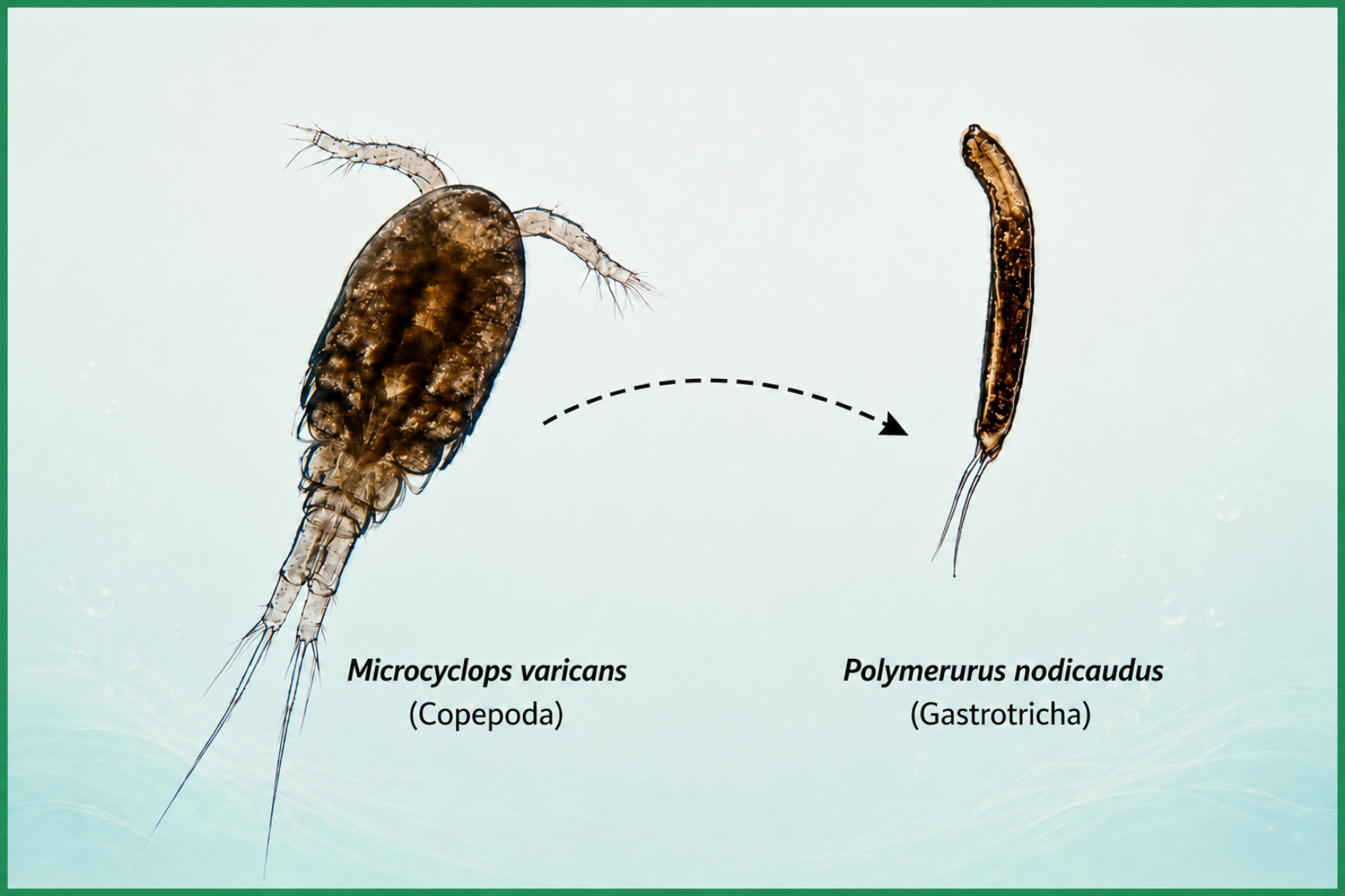
Graphical Abstract

1. Introduction

Gastrotricha is a phylum of microscopic benthic invertebrates found in virtually all aquatic ecosystems. To date, more than 900 species have been described, divided into two orders: Macrodasyida (ca. 380 species), occurring mainly in marine and brackish environments, and Chaetonotida (ca. 520 species), inhabiting both marine and freshwater habitats [1,2,3,4,5,6,7]. Despite their diversity and widespread distribution, gastrotrichs remain relatively understudied, particularly with regard to their ecological role [8].
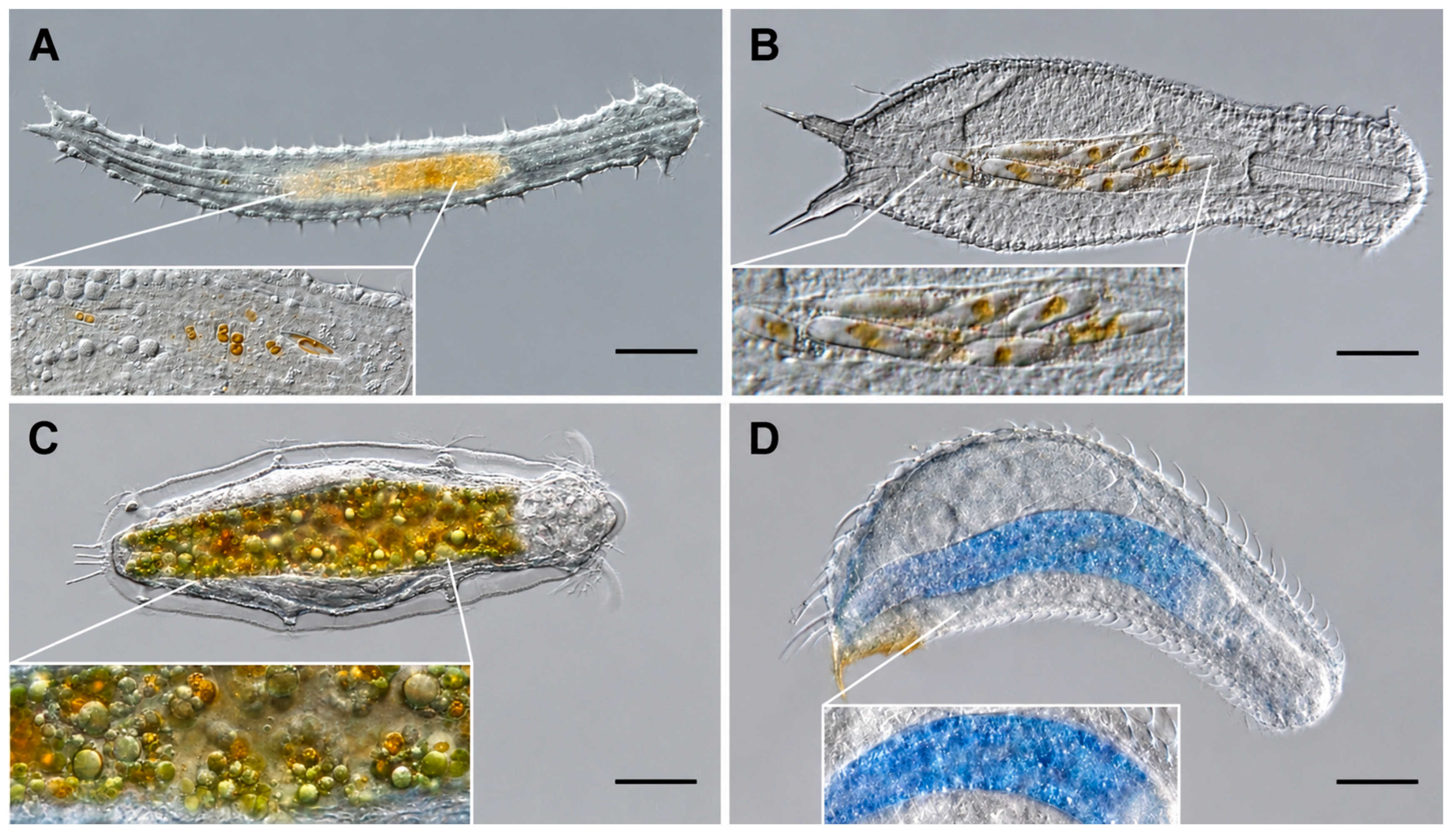
Current evidence suggests that gastrotrichs, like other meiofaunal taxa, play an important role in aquatic food webs by linking the microbial loop to higher trophic levels. This interpretation is mainly based on the gut content analyses, which typically reveal microalgae and biodetritus, the latter likely enriched with bacteria and microfungi [1,9,10,11] (Figure 1). However, while gastrotrichs are generally regarded as primary consumers, their role as prey remains largely unresolved, limiting our understanding of their actual position within freshwater trophic networks.
Reports of predation on gastrotrichs are scarce and mostly anecdotal, involving amoebas [12], heliozoans [13], and cnidarians [12]. To date, the only well-documented case is a photographic record of a dileptid ciliate engulfing a specimen of the marine species Paraturbanella teissieri Swedmark, 1954 [14].
No confirmed cases of metazoan predation on a freshwater gastrotrich have so far been documented. Among potential metazoan predators, cyclopoid copepods are known to exploit a broad spectrum of small aquatic organisms [15]. In this context, the aim of the present study was to document and experimentally confirm a previously unreported predator–prey interaction between a freshwater gastrotrich and a cyclopoid copepod. By describing the behavioural sequence and the pattern of prey exploitation, we provide the first direct evidence of metazoan predation on freshwater gastrotrichs and discuss its potential ecological implications for meiofaunal food webs.
This study is part of a large Italian biodiversity project (NBFC—National Biodiversity Future Center) and falls under the mission of Spoke 3, focusing on terrestrial and freshwater biodiversity, representing the fifth contribution dealing with freshwater gastrotrichs. Previous studies addressed faunistic, taxonomic, and phylogenetic aspects of these organisms [2,5,16,17].

2. Material and Methods

2.1. Study Site and Sampling

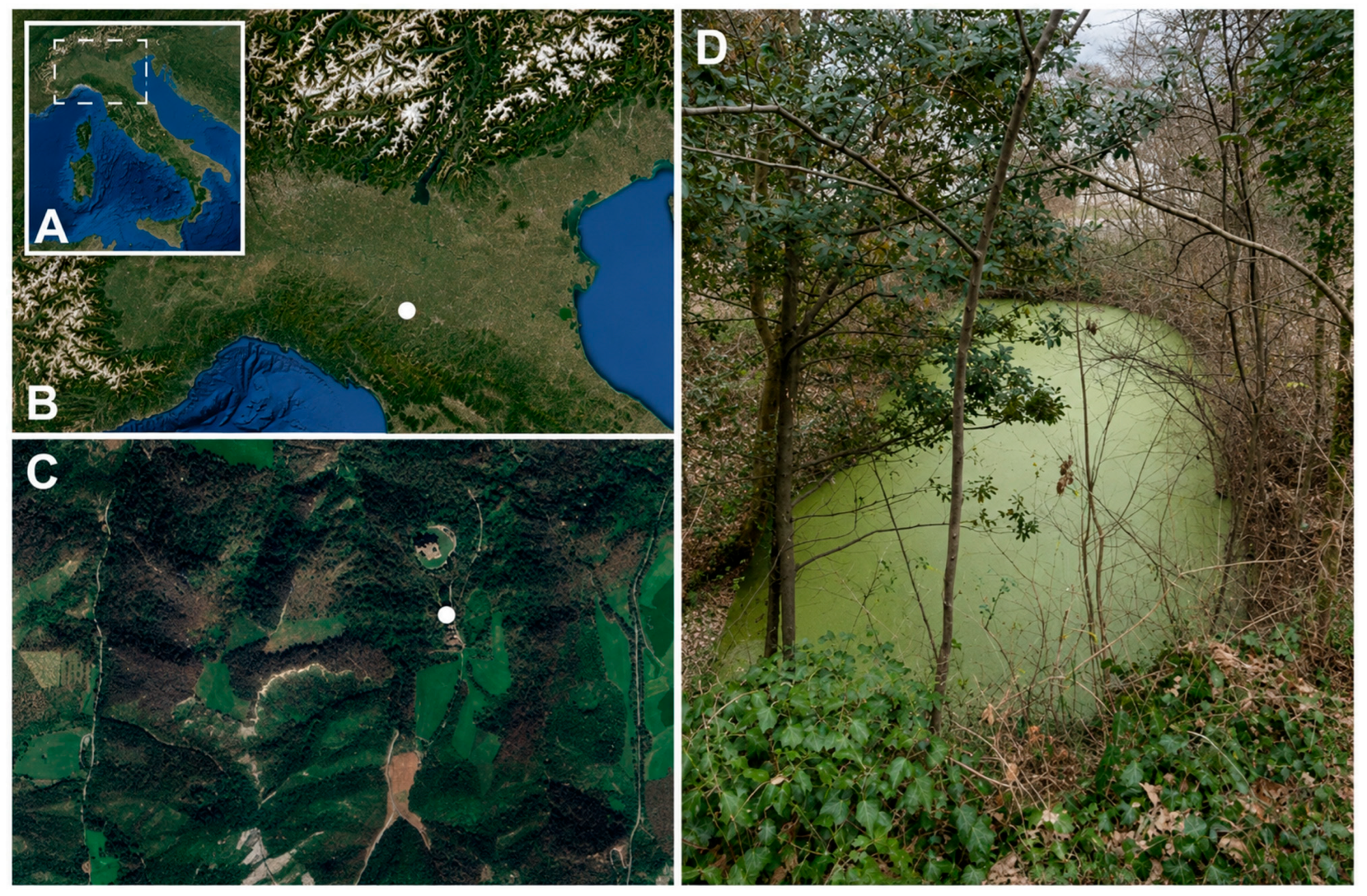
The material examined in this study was collected in February 2026 from a small pond known as “Stagno del Drago” (“Dragon’s Pond”) (Figure 2), located at approximately 250 m a.s.l. within the mesophilous oak-dominated woodland of the protected area “Oasi di Bianello”, Quattro Castella, in the province of Reggio Emilia, Italy (44°37′35.71″ N; 10°28′7.06″ E). The site is an artificial pond, originally used as a livestock watering basin and later renaturalized. At full capacity, it covers an area of about 75 m2, although it is subject to partial desiccation during summer. The pond is surrounded by arboreal vegetation dominated by oak species and hosts amphibians such as Pelophylax sp., Rana dalmatina Fitzinger, 1839, Bufo viridis (Laurenti, 1768), and Triturus carnifex (Laurenti, 1768) [18]. At the time of sampling, the water surface was entirely covered by common duckweeds. The basic physicochemical parameters of the water were measured using a YSI-63 multiparametric probe (Xylem Analytics, Weilheim, Germany): temperature was 10 °C, salinity 0.4 ppt, and conductivity 745 μS cm−1. Sampling was carried out by collecting bottom sediment using a plankton net with a 29 µm mesh size [16,19]. The collected material, consisting of detritus, water, and small amounts of plant debris, was stored in two 500 mL plastic jars and transported to the laboratory in Modena. There, samples were maintained under controlled conditions (18 °C; 12 h light/dark cycle) and examined for gastrotrichs within ten days of collection.

2.2. Sample Processing and Predation Documentation

Small subsamples (approximately 15 mL) of water and sediment mix were transferred to Petri dishes (9 cm in diameter) and observed under a Wild M8 stereomicroscope (Heerbrugg, Switzerland) in search for gastrotrichs. During the examination of a Petri dish, a cyclopoid copepod was observed preying on a gastrotrich specimen identifiable as belonging to the genus Polymerurus Remane, 1927, based on its large size and long, segmented furca. To confirm that this interaction was not incidental, we conducted a series of controlled predation experiments in which pairs of the two organisms were placed together in an observation chamber created ad hoc (see below). For these experiments, six specimens each of gastrotrichs and copepods, preliminarily identified based on their general morphology, were isolated from the original sample material and maintained separately in filtered pond water without the addition of food until use in the predation experiments. Additional gastrotrich specimens were collected for species-level identification, while others were preserved in absolute ethanol for future molecular analyses. The identification of the species of the copepod was carried out on the specimens used in the predation trials.

2.3. Species Identification

Gastrotrichs were individually picked using a hand-made glass micropipette and transferred on a microscope slide, in a drop of 1% MgCl2 solution. Morphological analysis and photographic vouchering were conducted on living, relaxed animals using a Nikon Eclipse Ni-U (Tokyo, Japan) microscope equipped with differential interference contrast Nomarski optics (DIC) and a Nikon Digital Sight 10 (Tokyo, Japan) digital camera, controlled through the Nikon NIS-Elements D software (v.4.6).
Copepod specimens were identified based on the combination of diagnostic morphological characters, including the overall cyclopoid habitus, the segmentation and armature of the antennule, antenna and swimming legs, the structure of the maxilla and maxilliped, and the shape and ornamentation of the caudal rami and genital double-somite, following Einsle (1993) [20] and Mirabdullayev & Defaye (2022) [21]. Specimens were dissected, mounted in lactic acid medium, and examined under a Leica MZ125 (Leica Microsystems, Wetzlar, Germany) light microscope.

2.4. Predation Experiments

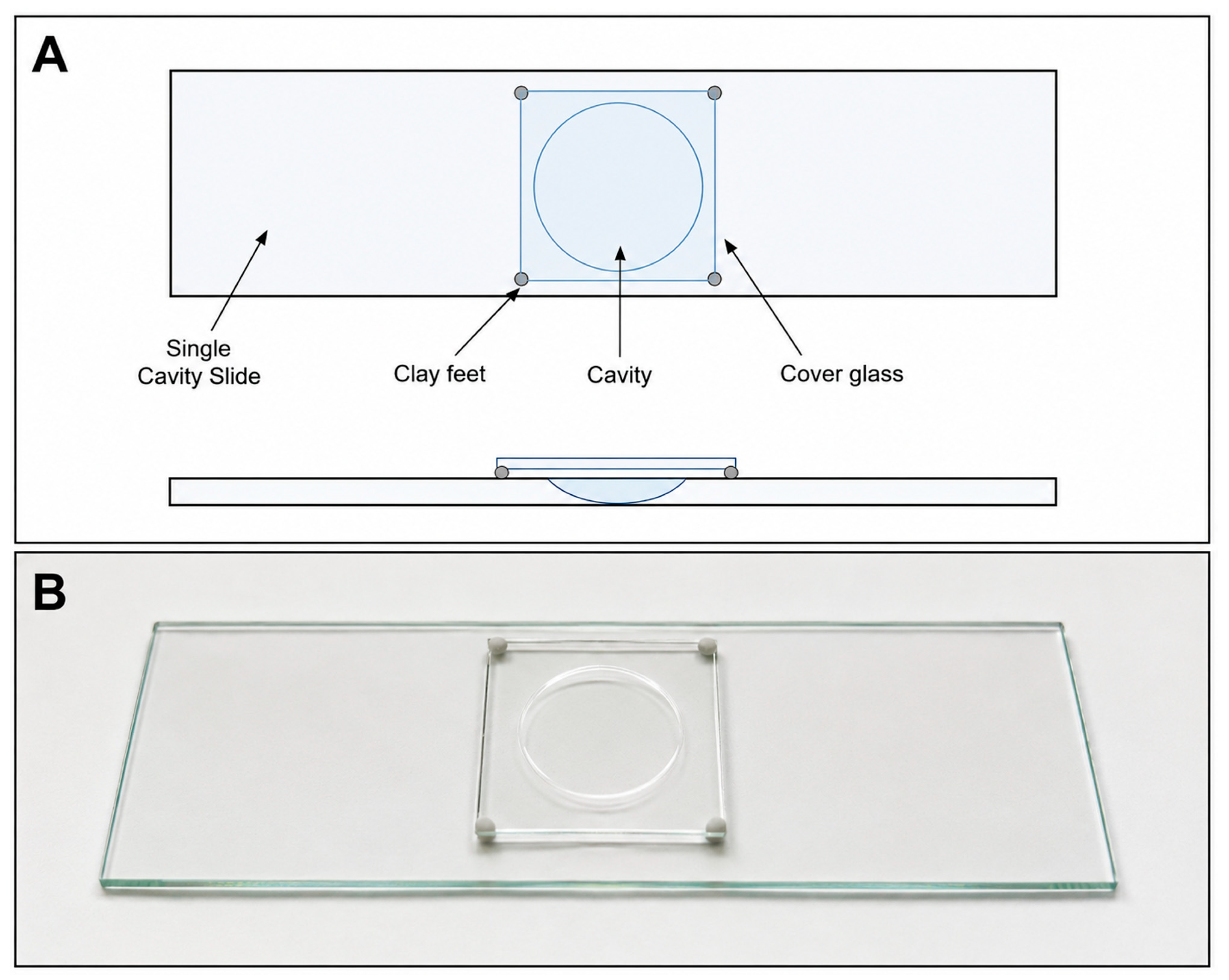
The predation chamber (Figure 3) was assembled using a pre-cleaned, single-well concavity glass microscope slide (BRAND®, Manchester, MI, USA). The well was filled with a small aliquot of the original water, previously filtered through a 0.2 µm Minisart® (Sartorius, Göttingen, Germany) membrane. In each independent trial, a single gastrotrich specimen was introduced into the chamber and allowed to acclimate for approximately 2 min before a single cyclopoid copepod was added. The copepods used differed in sex and developmental stage, including an adult male, an adult female, a gravid female, and a late copepodite. Shortly after introducing the copepod, the chamber was loosely sealed with a 20 × 20 mm coverslip, supported at the corners by small sticky clay feet to ensure stability. The prepared slide was then placed under the microscope, and the gastrotrich specimen was monitored and video-recorded for any potential predation events. Predation events were video-recorded using the same microscope, camera, and software system described above, acquiring AVI-format videos at 30 frames s−1. Afterward, the predator was retrieved from the cavity slide, fixed in 70% ethanol, and sent out for identification (see above).

3. Results

3.1. Species Identification

Gastrotricha: The description is based on three specimens collected during the same sampling event. The body is slender, with a total length measuring 380–417 µm, of which approximately 115 µm corresponds to the iconic, bamboo-like segmented furca; each segment bears short, symmetrically arranged setae along the posterior margin. Body width at head/neck/trunk/furcal base, measured at U5/U16/U40/U70, is 42–44 µm/28–38 µm/51–60 µm/24–31 µm, respectively. The head is pentalobate and carries a distinct cephalion, epipleurae, hypopleurae, and a lamelliform hypostomion. The dorsolateral cuticular covering consists of polygonal scales, varying in size according to body region; each scale bears a short, simple, and slender spine. A group of longer spines occurs dorsally in the caudal region (U65), and six pairs of ventral spines protrude within the intrafurcal space. The ventral interciliary field is entirely covered by small scales, morphologically similar to the dorsal ones and each provided with a distinct spine, followed posteriorly by a pair of large oval, keeled perianal scales, each bearing a pronounced posterior spine. The mouth is large, 10–12 µm in diameter; the pharynx is robust, cylindrical, 63–72 µm long and 25–28 µm wide. The pharyngo-intestinal junction is located at U19. The intestine, broader anteriorly, gradually tapers toward the caudal end; the anus opens ventrally at U69.
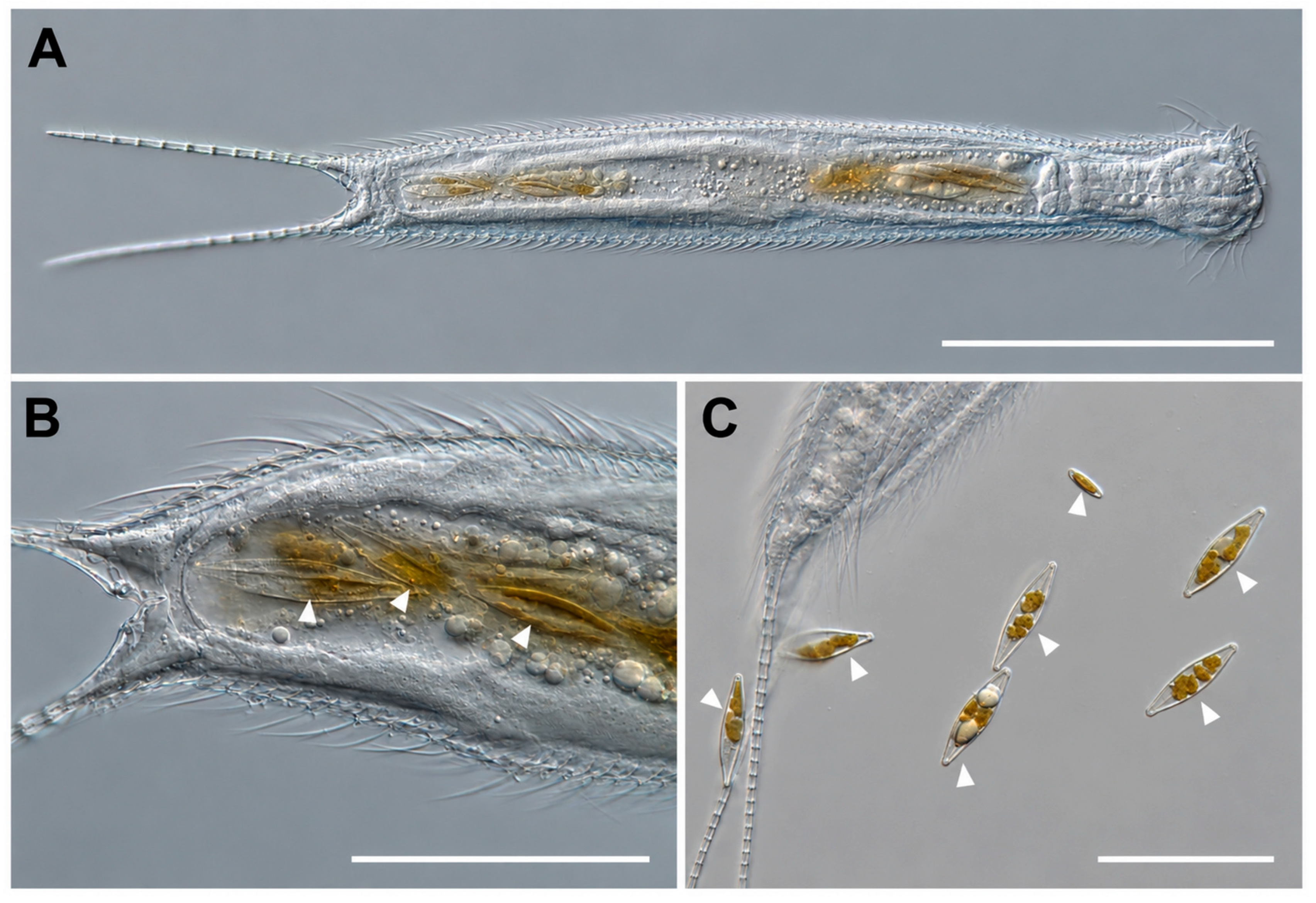
The morphometric data reported above match the diagnostic features of Polymerurus nodicaudus (Voigt, 1901) (Figure 4), a widely distributed species repeatedly recorded in Italy, including the Emilia–Romagna region, where the present sampling was conducted [2,22,23].
Copepoda: The morphometric characteristics of the examined cyclopoid specimens match the diagnostic characters reported for Microcyclops varicans (Sars, 1863) in the recent redescription provided by Mirabdullayev & Defaye (2022) [21]. Microcyclops varicans is a widely distributed freshwater cyclopoid [20]. In Italy, M. varicans is considered a relatively common component of freshwater zooplankton and has been documented across multiple regions, from northern to southern areas, occurring in both permanent and temporary waters. Within the Emilia–Romagna region, the species has been recorded in small ponds, floodplain water bodies, and artificial basins, often associated with vegetated margins and detritus-rich substrates [21]. It is an opportunistic feeder, exhibiting omnivorous to predatory habits and preying on a wide range of microinvertebrates [24,25]. Its broad ecological tolerance and wide distribution make it a typical representative of cyclopoid communities in shallow freshwater systems.

3.2. Predation Experiments

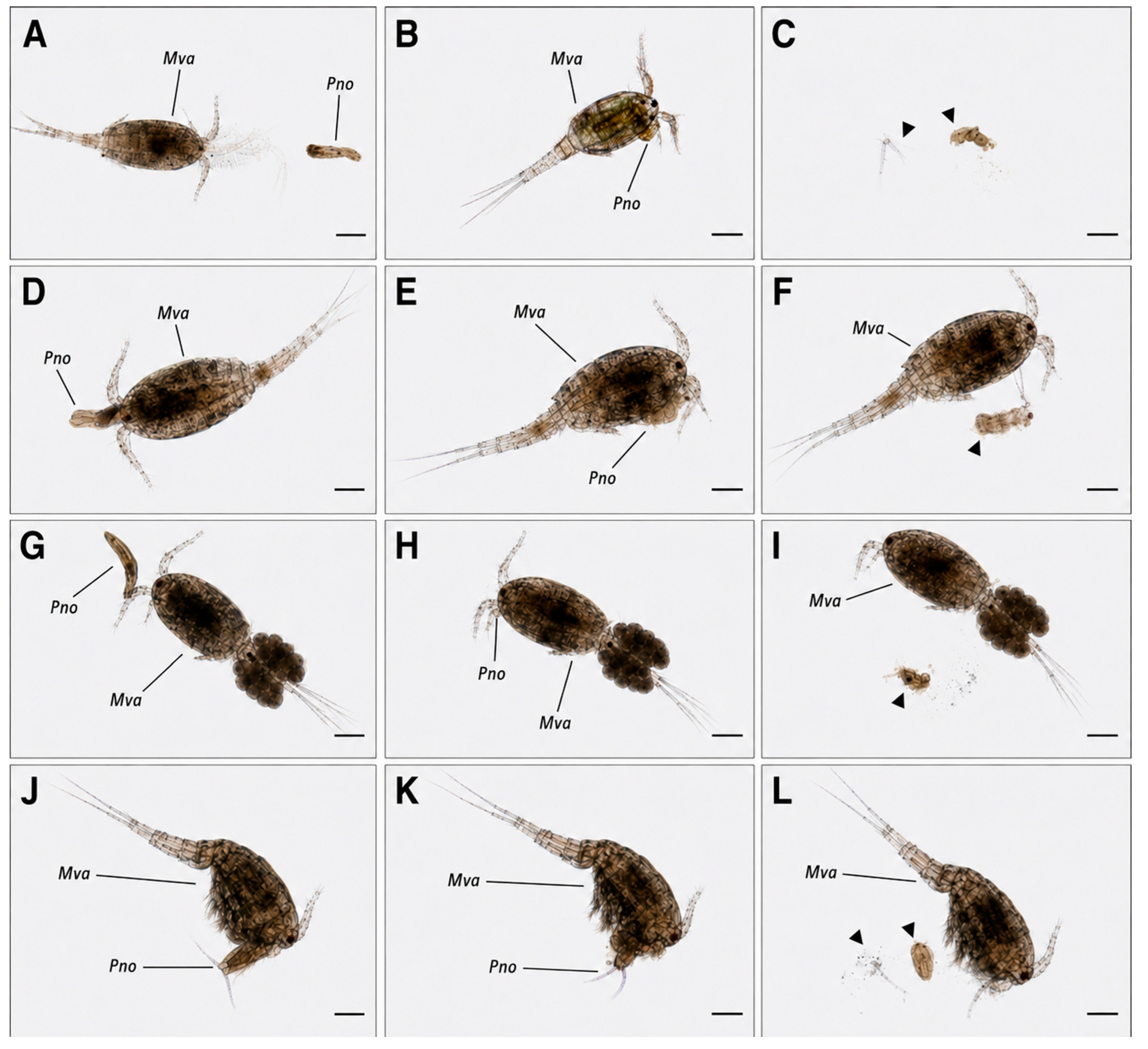
Predation was consistently observed in all four experimental trials, occurring irrespective of the predator’s age or sex (Figure 5). At the beginning of each trial, gastrotrichs were actively crawling on the substrate by means of their locomotory cilia. Approximately 6–11 min after the introduction of the predator into the experimental chamber, the copepod approached the prey and initiated contact using its oral appendages (Figure 5A,D,G,J). This interaction was immediately followed by a sudden cessation of movement in the gastrotrich, indicating rapid immobilization.
The copepod then secured the prey beneath its anterior region, firmly grasping and restraining it with its mouth appendages. During this phase, the predator manipulated the gastrotrich with its appendages (Figure 5B,E,H,K), likely facilitating feeding. After the feeding phase, the copepod moved away, leaving behind only small prey remains. In all cases, the posterior end bearing the furca remained clearly recognizable, whereas the head region was also present but was not easily discernible on one occasion, indicating that consumption was substantial but incomplete (Figure 5C,F,I,L).
In a single instance, the adult cyclopoid male deviated from this pattern by capturing the prey and carrying it away rather than consuming it in situ (Figure 5J–L).

4. Discussion

The initial examination of freshwater samples was conducted without narcotization or manipulation of the fauna; thus, the observed predator–prey interactions likely approximate natural conditions. Subsequent repeated observations under controlled conditions confirmed that the interaction between the copepod and the gastrotrich was not incidental, but occurred consistently and followed a similar behavioural sequence.
The predation events observed indicate that feeding by Microcyclops varicans on Polymerurus nodicaudus results in partial rather than complete consumption, with approximately 30–75% of the prey body length, excluding the furca, being consumed according to visual estimates based on video recordings. Most events, from initial contact to disengagement, lasted between 5 and 15 s, whereas a single event, associated with a higher degree of prey consumption, extended to approximately 80 s (Table 1). Neither handling time nor consumption level appeared to be related to the predator’s sex or developmental stage. Because only a single trial was conducted for each predator category, the present observations do not allow for statistical comparisons among sexes or developmental stages. Nevertheless, predation was consistently observed across all tested copepod categories, suggesting that the ability to exploit gastrotrich prey is not limited to a specific sex or ontogenetic stage.
The observed pattern raises questions about the mechanisms shaping the interaction between predator and prey. One possible explanation lies in the spiny cuticular armature of Polymerurus nodicaudus, which may reduce palatability or impose mechanical constraints on ingestion. Similar defensive effects have been documented in copepod–rotifer systems, where spines and rigid projections hinder capture and handling [26].
Alternatively, the observed pattern of partial consumption may be consistent with selective exploitation of the most accessible or energetically profitable portions of the prey, as predicted by optimal foraging theory [27,28,29,30,31,32]. In all observed cases, consumption primarily involved the trunk region, which contains the bulk of soft tissues as well as the reproductive structures and developing eggs (e.g., [33,34,35]). Gastrotrich eggs are rich in energetic reserves [11], making this region particularly profitable compared to terminal structures such as the furca, which are non-fleshy and consistently left behind.
Partial consumption may also reflect constraints related to prey handling and digestion. Handling time is a critical component of predation, and prey requiring prolonged manipulation may be abandoned before complete ingestion, especially when prey density is high. In the present study, P. nodicaudus, one of the largest freshwater gastrotrichs, occurred at relatively high numbers, potentially favouring selective feeding. Moreover, physiological limitations such as gut capacity or digestion rate may restrict the amount of tissue that can be processed within a given time frame [36,37].
Finally, although highly speculative given the limited observations available, incomplete consumption could also reflect aspects of copepod foraging behaviour analogous to surplus killing. Under conditions of high prey availability, predators may damage or partially consume multiple prey items without fully exploiting each of them, thereby maximizing energy intake rates [38,39]. Although this phenomenon is better documented in larger predators, similar dynamics may operate at microscopic scales.
Overall, these observations suggest that partial consumption of P. nodicaudus arises from a combination of prey morphology, energetic profitability, and predator handling constraints. At present, however, the available observations are insufficient to discriminate among these alternative explanations.

5. Conclusions

Cyclopoid copepods are known to exploit a broad spectrum of food resources, including a variety of small aquatic invertebrates. Nevertheless, predation on gastrotrichs has remained undocumented until now [15,24,25,40,41,42,43,44,45,46,47,48]. This study provides the first documented evidence of metazoan predation on a freshwater gastrotrich, demonstrating that the cyclopoid copepod Microcyclops varicans can actively prey upon Polymerurus nodicaudus under both natural and experimental conditions. These findings highlight that freshwater gastrotrichs may represent a previously overlooked prey resource within meiofaunal food webs, contributing to the transfer of energy from microbial resources toward higher trophic levels.
Future research should assess how widespread such interactions are across habitats and taxa, and whether cyclopoid copepods exhibit prey selectivity toward different gastrotrich species based on body size, morphology, or defensive traits. More broadly, the experimental approach adopted here may offer a simple and effective framework for investigating predator–prey interactions among meiofaunal organisms.

Author Contributions

Conceptualization, F.S. and M.A.T.; methodology and data acquisition, all authors; resources, F.S. and M.A.T.; writing—original draft preparation, F.S. and M.A.T.; writing—review and editing, all authors. All authors have read and agreed to the published version of the manuscript.

Funding

This research benefited from a grant from the National Recovery and Resilience Plan (NRRP), Mission 4 Component 2 Investment 1.4—Call for tender No. 3138 of 16 December 2021, rectified by Decree n. 3175 of 18 December 2021 of the Italian Ministry of University and Research, funded by the European Union—Next-GenerationEU. Project Code CN_00000033, Concession Decree No. 1034 of 17 June 2022 adopted by the Italian Ministry of University and Research, CUP E93C22001090001, Project title “National Biodiversity Future Center-NBFC”.

Institutional Review Board Statement

Not applicable.

Data Availability Statement

The data supporting this study are available within the article. Supplementary video materials cannot be provided through the journal platform; however, they are available from the corresponding author upon reasonable request.

Conflicts of Interest

The authors declare no conflicts of interest.

References

  1. Balsamo, M.; Artois, T.; Smith, J.P.S.; Todaro, M.A.; Guidi, L.; Leander, B.S.; Van Steenkiste, N.W.L. The curious and neglected soft-bodied meiofauna: Rouphozoa (Gastrotricha and Platyhelminthes). Hydrobiologia 2020, 847, 2613–2644. [Google Scholar] [CrossRef]
  2. Saponi, F.; Todaro, M.A. Status of the Italian Freshwater Gastrotricha Biodiversity, with the Creation of an Interactive GIS-Based Web Map. Diversity 2024, 16, 17. [Google Scholar] [CrossRef]
  3. Cesaretti, A.; Kosakyan, A.; Saponi, F.; Todaro, M.A. Improved taxonomic and gene sampling advance the knowledge of deep relationships within Macrodasyida (Gastrotricha). Cladistics 2025, 42, 24–45. [Google Scholar] [CrossRef]
  4. Kosakyan, A.; Gammuto, L.; Cesaretti, A.; Saponi, F.; Serra, V.; Petroni, G.; Macher, J.N.; Wallnoefer, O.; Plazzi, F.; Todaro, M.A. From Rigid Order to Radical Variation: Mitogenome Evolution in the Main Lineages of a Lesser-Known Animal Phylum (Gastrotricha). Genome Biol. Evol. 2026, 18, evag001. [Google Scholar] [CrossRef]
  5. Saponi, F.; Cesaretti, A.; Kosakyan, A.; Serra, V.; Todaro, M.A. Phylogenetic position of Setopus (Gastrotricha, Paucitubulatina) among planktonic Gastrotricha, with the description of a new species. Zool. Anz. 2026, 321, 248–261. [Google Scholar] [CrossRef]
  6. Souid, A.; Gammoudi, M.; El Cafsi, M.; Cesaretti, A.; Kosakyan, A.; Saponi, F.; Todaro, M.A. A new Tetranchyroderma species (Gastrotricha, Macrodasyida) from Tunisia, with its phylogenetic position based on molecular markers. Zootaxa 2026, 5799, 349368. [Google Scholar] [CrossRef]
  7. Wallnoefer, O.; Kosakyan, A.; Cesaretti, A.; Saponi, F.; Gammuto, L.; Serra, V.; Petroni, G.; Plazzi, F.; Todaro, M.A. A phylogenomic framework of Gastrotricha evolutionary relationships. Mol. Phylogenet. Evol. 2026, 220, 108601. [Google Scholar] [CrossRef]
  8. Araujo, T.Q.; Minowa, A.K.; Garraffoni, A.R.S. Trends on Gastrotricha research: A bibliometric analysis. Biologia 2024, 79, 2095–2107. [Google Scholar] [CrossRef]
  9. Balsamo, M.; Todaro, M.A. Gastrotricha. In Freshwater Meiofauna Biology and Ecology; Rundle, S.D., Robertson, A.I., Schmid-Araya, J.M., Eds.; Backhuys Publisher: Leiden, The Netherlands, 2002; pp. 45–61. [Google Scholar]
  10. Todaro, M.A.; Hummon, W.D. An overview and a dichotomous key to genera of the phylum Gastrotricha. Meiofauna Mar. 2008, 16, 3–20. [Google Scholar]
  11. Kieneke, A.; Schmidt-Rhaesa, A. Gastrotricha and Gnathifera. In Handbook of Zoology: Gastrotricha, Cycloneuralia and Gnathifera; Schmidt-Rhaesa, A., Ed.; Walter de Gruyter GmbH: Berlin, Germany; Boston, MA, USA, 2015; Volume 3, pp. 1–135. [Google Scholar]
  12. Brunson, R.B. The Life History and Ecology of Two North American Gastrotrichs. Trans. Am. Microsc. Soc. 1949, 68, 1–20. [Google Scholar] [CrossRef]
  13. Boove, E.C.; Cordell, D.L. Feeding on gastrotrichs by the heliozoon Actinophrys sol. Trans. Am. Microsc. Soc. 1971, 90, 365–369. [Google Scholar] [CrossRef]
  14. Todaro, M.A.; Luporini, P. Not too big for its mouth: Direct evidence of a macrodasyidan gastrotrich preyed in nature by a dileptid ciliate. Eur. Zool. J. 2022, 89, 785–790. [Google Scholar] [CrossRef]
  15. Brandl, Z. Freshwater Copepods and Rotifers: Predators and their Prey. Hydrobiologia 2005, 546, 475–489. [Google Scholar] [CrossRef]
  16. Gammuto, L.; Serra, V.; Petroni, G.; Todaro, M.A. Molecular phylogenetic position and description of a new genus and species of freshwater Chaetonotidae (Gastrotricha: Chaetonotida: Paucitubulatina), and the annotation of its mitochondrial genome. Invertebr. Syst. 2024, 38, IS23059. [Google Scholar] [CrossRef]
  17. Saponi, F.; Kosakyan, A.; Cesaretti, A.; Todaro, M.A. A contribution to the taxonomy and phylogeny of the genus Chaetonotus (Gastrotricha, Paucitubulatina, Chaetonotidae), with the description of a new species from Italian inland waters. Eur. Zool. J. 2024, 91, 1078–1092. [Google Scholar] [CrossRef]
  18. Oasi LIPU di Bianello. Comune di Quattro Castella. Available online: http://www.bianello.it/oasi-lipu-di-bianello/ (accessed on 27 February 2026).
  19. Todaro, M.A.; Sibaja-Cordero, J.A.; Segura-Bermúdez, O.A.; Coto-Delgado, G.; Goebel-Otárola, N.; Barquero, J.D.; Cullell-Delgado, M.; Dal Zotto, M. An Introduction to the Study of Gastrotricha, with a Taxonomic Key to Families and Genera of the Group. Diversity 2019, 11, 117. [Google Scholar] [CrossRef]
  20. Einsle, U. Crustacea Copepoda. Calanoida und Cyclopoida. In Süsswasserfauna Mitteleuropas; Gustav Fischer Verlag: Stuttgart, Germany, 1993. [Google Scholar]
  21. Mirabdullayev, I.M.; Defaye, D. A redescription of Microcyclops varicans (G.O. Sars, 1863) (Crustacea: Copepoda: Cyclopidae). Invertebr. Zool. 2022, 19, 305–311. [Google Scholar] [CrossRef]
  22. Schwank, P. Gastrotricha und Nemertini. In Süsswasserfauna von Mitteleuropa; Schwörbel, J., Zwick, P., Eds.; Gustav Fischer Verlag: Stuttgart, Germany; New York, NY, USA, 1990. [Google Scholar]
  23. Balsamo, M.; d’Hondt, J.L.; Grilli, P. Phylum Gastrotricha. In Keys to Paleartic Fauna: Thorp and Covich’s Freshwater Invertebrates; Thorp, J.H., Rogers, D.C., Eds.; Academic Press: Cambridge, MA, USA, 2019; pp. 149–218. [Google Scholar] [CrossRef]
  24. Brandl, Z. Feeding strategies of planktonic cyclopoids in lacustrine ecosystems. J. Mar. Syst. 1998, 15, 87–95. [Google Scholar] [CrossRef]
  25. Calbert, A.; Carlotti, F.; Gaudy, R. The feeding ecology of the copepod Centropages typicus (Kröyer). Prog. Oceanogr. 2007, 72, 137–150. [Google Scholar] [CrossRef]
  26. Stemberger, R.S.; Gilbert, J.J. Defenses of planktonic rotifers against predators. In Predation: Direct and Indirect Impacts on Aquatic Communities; Kerfoot, W.C., Sih, A., Eds.; University Press of New England: Hanover, NH, USA, 1987; pp. 227–239. [Google Scholar]
  27. Cook, R.M.; Cockrell, B.J. Predator ingestion rate and its bearing on feeding time and the theory of optimal diets. J. Anim. Ecol. 1978, 47, 529–547. [Google Scholar] [CrossRef] [PubMed]
  28. DeBenedictis, P.A.; Gill, F.B.; Hainsworth, F.R.; Pyke, G.H.; Wolf, L.L. Optimal meal size in hummingbirds. Am. Nat. 1978, 112, 301–316. [Google Scholar] [CrossRef]
  29. Sih, A. Optimal behavior: Can foragers balance two conflicting demands? Science 1980, 210, 1041–1043. [Google Scholar] [CrossRef]
  30. Sih, A. Optimal foraging: Partial consumption of prey. Am. Nat. 1980, 116, 281–290. [Google Scholar] [CrossRef]
  31. Formanowicz, D.R. Foraging Tactics of an Aquatic Insect: Partial Consumption of Prey. Anim. Behav. 1984, 32, 774–781. [Google Scholar] [CrossRef]
  32. Stephens, D.W.; Krebs, J.R. Foraging Theory; Princeton University Press: Princeton, NJ, USA, 1986. [Google Scholar]
  33. Hummon, M.R. Reproduction and sexual development in a freshwater gastrotrich. 1. Oogenesis of parthenogenetic eggs (Gastrotricha). Zoomorphology 1984, 104, 33–41. [Google Scholar] [CrossRef]
  34. Hummon, M.R. Reproduction and sexual development in a freshwater gastrotrich. 2. Kinetics and fine structure of postparthenogenic sperm formation. Cell Tissue Res. 1984, 236, 619–628. [Google Scholar] [CrossRef]
  35. Hummon, M.R. Reproduction and sexual development in a freshwater gastrotrich. 3. Postparthenogenic development of primary oocytes and the X-body. Cell Tissue Res. 1984, 236, 629–636. [Google Scholar] [CrossRef]
  36. Holling, C.S. Some characteristics of simple types of predation and parasitism. Can. Entomol. 1959, 91, 385–398. [Google Scholar] [CrossRef]
  37. Jeschke, J.M.; Kopp, M.; Tollrian, R. Predator functional responses: Discriminating between handling and digesting prey. Ecol. Monogr. 2002, 72, 95–112. [Google Scholar] [CrossRef]
  38. Oksanen, T.; Oksanen, L.; Fretwell, S.D. Surplus killing in the hunting strategy of small predators. Am. Nat. 1985, 126, 328–346. [Google Scholar] [CrossRef] [PubMed]
  39. Zimmermann, B.; Sand, H.; Wabakken, P.; Liberg, O.; Andreassen, H.P. Predator-dependent functional response in wolves: From food limitation to surplus killing. J. Anim. Ecol. 2015, 84, 102–112. [Google Scholar] [CrossRef]
  40. Fryer, G. The feeding mechanism of some freshwater cyclopoid copepods. Proc. Zool. Soc. Lond. 1957, 129, 1–25. [Google Scholar] [CrossRef]
  41. Fryer, G. The food of some freshwater cyclopoid copepods and its ecological significance. J. Anim. Ecol. 1957, 26, 263–286. [Google Scholar] [CrossRef] [PubMed]
  42. McQueen, D.J. Reduction of zooplankton standing stocks by predaceous Cyclops bicuspidatus thomasi in Marion Lake, British Columbia. J. Fish. Res. Board Can. 1969, 26, 1605–1618. [Google Scholar] [CrossRef]
  43. Anderson, R.S. Predator–prey relationships and predation rates for crustacean zooplankters from some lakes in western Canada. Can. J. Zool. 1970, 48, 1229–1240. [Google Scholar] [CrossRef]
  44. Brandl, Z.; Fernando, C.H. Prey selection by the cyclopoid copepods Mesocyclops edax and Cyclops vicinus. Verh. Int. Ver. Theor. Angew. Limnol. 1978, 20, 2505–2510. [Google Scholar] [CrossRef]
  45. Kerfoot, W.C. Combat between predatory copepods and their prey: Cyclops, Epischura, and Bosmina. Limnol. Oceanogr. 1978, 23, 1089–1102. [Google Scholar] [CrossRef]
  46. Williamson, C.E. Behavioral interactions between a cyclopoid copepod predator and its prey. J. Plankton Res. 1983, 5, 701–711. [Google Scholar] [CrossRef]
  47. Williamson, C.E. Laboratory and field experiments on the feeding ecology of the cyclopoid copepod Mesocyclops edax. Freshw. Biol. 1984, 14, 575–585. [Google Scholar] [CrossRef]
  48. Zánkai, N.P. Predation of Cyclops vicinus (Copepoda: Cyclopoida) on small zooplankton animals in Lake Balaton (Hungary). Arch. Hydrobiol. 1984, 99, 360–378. [Google Scholar]
Figure 1. Gastrotrich diversity across habitats, highlighting their role as primary consumers at the base of aquatic food webs: (A) Turbanella sp., a marine interstitial macrodasyidan; (B) Xenotrichula intermedia Remane, 1934, a marine interstitial chaetonotidan; (C) Kijanebalola devestiva Todaro, Perissinotto & Bownes, 2013, a planktonic freshwater chaetonotidan; (D) Chaetonotus cf. gastrocyaneus Brunson, 1950, an epibenthic freshwater chaetonotidan. In panels (AC), both main images and insets reveal gut contents composed of diatoms and biodetritus, reflecting microphagous feeding. In (D), the gut displays a characteristic bluish coloration, indicating ingestion of cyanobacteria. Scale bars: (A) 100 µm; (BD) 50 µm. Differential interference contrast (DIC) microscopy.
Diversity 18 00319 g001
Figure 2. Sampling site: (A) Map of Italy, with a white dashed square indicating the area enlarged in (B). (B) Satellite view of northern Italy, with the sampling area marked by a white dot. (C) Aerial view of the “Oasi del Bianello” protected area, with the sampling site indicated by a white dot. (D) Photograph of the sampling biotope.
Diversity 18 00319 g002
Figure 3. Predation chamber: (A) Schematic representation of the setup: the cover glass is set in place over the cavity by the clay feet at the corners. (B) Actual chamber with prey and predator inside.
Diversity 18 00319 g003
Figure 4. One of the gastrotrich specimens identified as Polymerurus nodicaudus: (A) Habitus; the gut appears green due to the presence of ingested diatoms, shown in detail in (B,C). (B) Close-up of the posterior region of the body, with diatoms clearly visible within the gut (arrowheads). (C) Diatoms expelled from the body as a result of compression by the coverslip (arrowheads). Differential interference contrast (DIC, Nomarski) microscopy. Scale bars (A) = 100 µm; (B,C) = 50 µm.
Diversity 18 00319 g004
Figure 5. Sequential frames from video recordings illustrating predation on Polymerurus nodicaudus (Pno) by Microcyclops varicans (Mva). The sequences represent different sexes and developmental stages of the predator: adult male (AC), adult female (DF), gravid female (GI), and late copepodite (JL). In each sequence, the first frame (A,D,G,J) shows the attack phase, the second (B,E,H,K) the grasping and manipulation of the prey with the oral appendages, during which the gastrotrich is immobilized and positioned beneath the anterior region of the predator, and the third (C,F,I,L) the remains following partial consumption, typically consisting of the head and/or the posterior furcal region (arrowheads). Scale bars = 100 µm.
Diversity 18 00319 g005
Table 1. Summary of predation event characteristics for Microcyclops varicans feeding on Polymerurus nodicaudus, including predator developmental stage and sex, time to first contact, handling time, and consumption.
Predator Sex/AgeTime to First Contact
(Minutes)
Handling Time
(Seconds)
Estimated Prey
Consumption (%)
Adult male~6~13~50
Adult female~11~15~30
Adult gravid female~7~5~40
Late Copepodite~9~80~75
Disclaimer/Publisher’s Note: The statements, opinions and data contained in all publications are solely those of the individual author(s) and contributor(s) and not of MDPI and/or the editor(s). MDPI and/or the editor(s) disclaim responsibility for any injury to people or property resulting from any ideas, methods, instructions or products referred to in the content.